As enterprise networks continue to evolve toward higher bandwidth and lower latency, 10Gb Ethernet connectivity has become increasingly important across data centers, campus networks, and edge computing environments. Many organizations are now upgrading from traditional SFP 1G infrastructure to SFP+ 10G deployments in order to support virtualization, cloud applications, Wi-Fi 6/6E access points, and growing east-west traffic demands.
Among the available copper-based 10G solutions, Cisco SFP-10G-T-100 remains a widely recognized option for enabling 10GBase-T connectivity over standard RJ45 Ethernet cabling. Its ability to support up to 100m transmission distances using Cat6a or Cat7 cables makes it especially attractive for enterprises seeking to reuse existing copper infrastructure without immediately transitioning to fiber-based architectures.
However, as network expansion projects scale, many IT teams and procurement managers face several practical challenges related to original Cisco modules, including higher deployment costs, supply chain limitations, and compatibility planning across multi-vendor environments. These factors have increased interest in reliable third-party compatible alternatives that can deliver stable interoperability while improving operational flexibility.
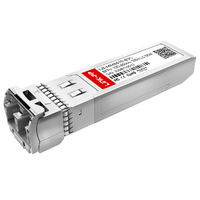
LINK-PP compatible alternatives for Cisco SFP-10G-T-100 are becoming an increasingly relevant option for organizations looking to balance network performance, deployment scalability, and long-term infrastructure efficiency. When properly validated for compatibility and thermal performance, these alternatives can support enterprise-grade networking requirements while helping reduce overall infrastructure expenditure.
This article explores the technical characteristics of Cisco SFP-10G-T-100, common deployment considerations, differences between original and compatible modules, and the key factors enterprises should evaluate when selecting a LINK-PP compatible solution for modern 10Gb Ethernet environments.
📜 What Is Cisco SFP-10G-T-100?
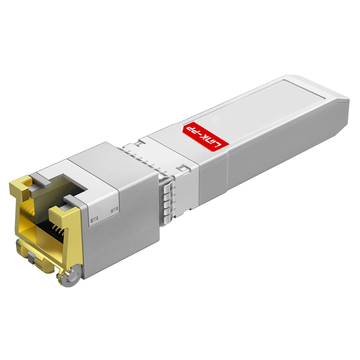
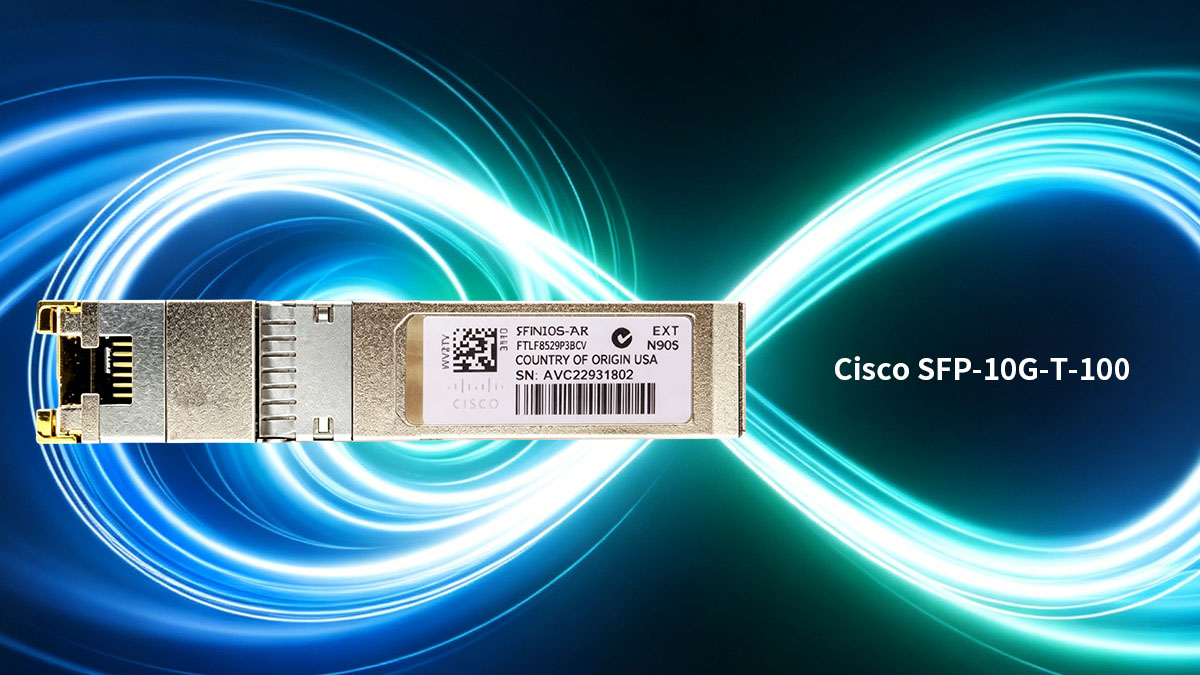
Cisco SFP-10G-T-100 is a 10 Gigabit Ethernet (10GbE) copper transceiver module designed to enable high-speed data transmission over standard twisted-pair Ethernet cabling. It is widely used in enterprise and data center environments where 10G connectivity is required without replacing existing RJ45-based copper infrastructure.
Core Function and Role in 10G Networks
In modern network architectures, Cisco SFP-10G-T-100 serves as a bridge between high-speed switching equipment and copper Ethernet cabling. It is designed to support flexible migration from 1G to 10G without requiring major physical layer redesign.
Its primary functions include:
- Enabling 10Gbps data transmission over RJ45 interfaces
- Supporting backward compatibility with lower Ethernet speeds
- Providing plug-and-play integration with Cisco SFP+ ports
- Extending 10G connectivity up to 100 meters using structured cabling
This makes it especially suitable for enterprise environments that prioritize infrastructure reuse and incremental network upgrades.
Key Technical Characteristics
To better understand its positioning in 10GBase-T deployments, it is important to break down its core technical attributes and operational parameters.
| Parameter | Specification | Description |
|---|---|---|
| Data Rate | 10Gbps | Supports full-duplex 10 Gigabit Ethernet transmission |
| Interface | RJ45 (Copper) | Uses standard twisted-pair Ethernet cabling |
| Maximum Distance | Up to 100m | Dependent on Cat6a/Cat7 cabling quality |
| Form Factor | SFP+ | Hot-swappable module design |
These specifications highlight its role as a copper-based 10G solution optimized for flexible enterprise deployment scenarios.
The module’s ability to operate over existing structured cabling is one of its defining advantages, especially in environments where fiber deployment may introduce additional cost or complexity.
Typical Application Scenarios
Cisco SFP-10G-T-100 is commonly deployed in network environments where high bandwidth is required over relatively short distances. Its usage is particularly common in structured enterprise networks.
Typical deployment scenarios include:
- Server-to-switch connections in data centers
- Aggregation layers in enterprise campus networks
- High-performance workstation connectivity
- Network upgrades from 1G to 10G without cabling replacement
These scenarios benefit from its ability to deliver higher throughput while maintaining compatibility with existing copper infrastructure.
📜 Why Cisco SFP-10G-T-100 Remains Relevant in Modern Networks
Cisco SFP-10G-T-100 continues to be widely used because many enterprise and data center environments still rely heavily on copper-based Ethernet infrastructure. Even as fiber adoption increases, 10GBase-T over RJ45 remains a practical and cost-effective option for short-range, high-performance connectivity.
Advantages of 10GBase-T Technology in Existing Infrastructure
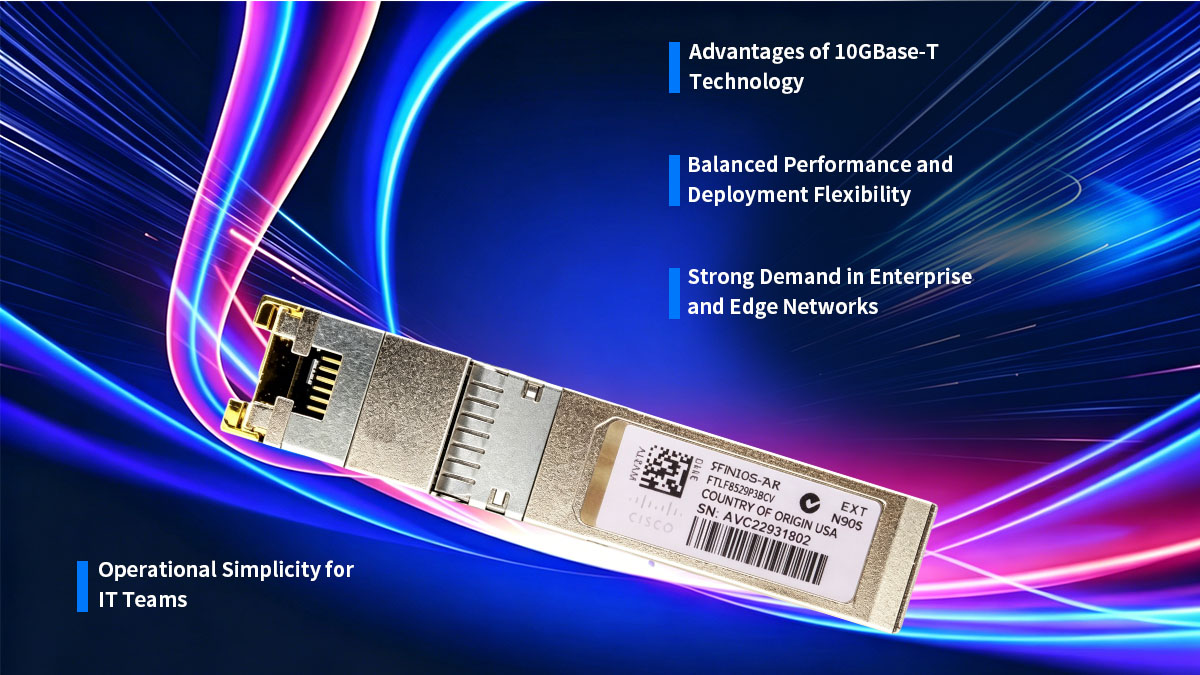
Cisco SFP-10G-T-100 remains attractive mainly because it enables 10G performance over familiar copper cabling. This allows organizations to extend network capabilities without redesigning their physical layer.
The key advantages of 10GBase-T deployment include:
- Reuse of existing Cat6a/Cat7 structured cabling
- Simplified migration from 1G to 10G environments
- Reduced dependency on fiber patching and transceiver complexity
- Easier endpoint connectivity for RJ45-based devices
These benefits make it especially relevant in enterprise environments where infrastructure stability is prioritized over full-scale modernization.
Balanced Performance and Deployment Flexibility
In many real-world deployments, Cisco SFP-10G-T-100 provides a balance between performance and operational convenience. While fiber solutions may offer lower latency and power consumption, copper-based modules offer greater flexibility in edge and access-layer deployments.
A comparison of typical operational considerations highlights this balance:
| Factor | 10GBase-T (Copper) | Fiber 10G Modules |
|---|---|---|
| Cabling Type | RJ45 twisted pair | Optical fiber |
| Installation Complexity | Low | Moderate to high |
| Reusability of Infrastructure | High | Low (requires fiber layout) |
| Distance Range | Up to 100m | Varies (longer range possible) |
After evaluating these factors, many organizations continue to select copper-based modules for environments where simplicity and reuse are more critical than maximum optical efficiency.
Strong Demand in Enterprise and Edge Networks
Cisco SFP-10G-T-100 remains relevant because enterprise network traffic continues to grow rapidly due to virtualization, cloud adoption, and high-density wireless access points. These workloads often require 10G uplinks at the edge and access layers.
Common drivers of continued usage include:
- Expansion of Wi-Fi 6/6E access networks
- Increased server virtualization density
- Growth of east-west data center traffic
- Edge computing and distributed workloads
These trends ensure that 10G copper connectivity remains a foundational requirement in many network designs.
Operational Simplicity for IT Teams
Another reason for sustained relevance is the operational simplicity offered by RJ45-based 10G connectivity. Many IT teams prefer copper transceivers in environments where ease of troubleshooting and standardized cabling practices are important.
Key operational benefits include:
- Familiar RJ45 interface reduces training overhead
- Simplified cable testing and diagnostics
- Straightforward replacement and maintenance procedures
- Compatibility with widely available network tools
This reduces operational friction, especially in distributed enterprise environments with limited on-site engineering resources.
📜 Common Challenges with Original Cisco SFP-10G-T-100 Modules
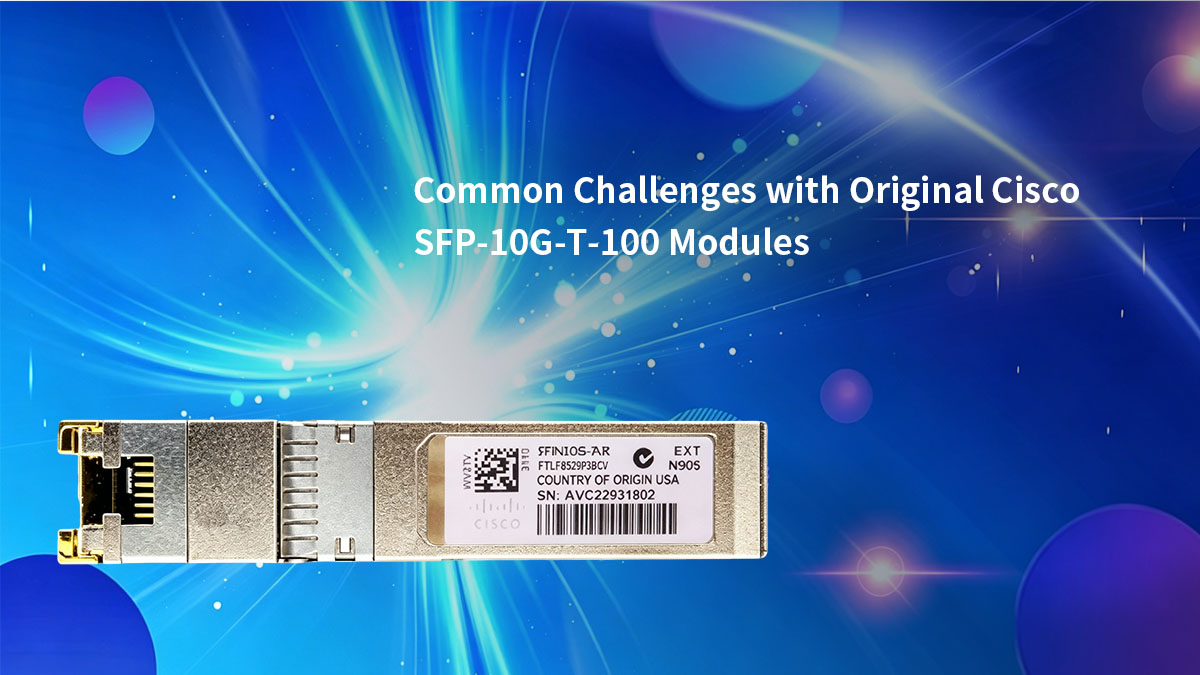
Cisco SFP-10G-T-100 is widely used in 10GBase-T deployments, but in real-world procurement and network operations, enterprises often encounter several practical limitations. These challenges are mainly related to cost control, supply stability, and compatibility planning in complex infrastructures. Understanding these issues helps organizations make more informed decisions when scaling 10G copper networks.
Procurement and Budget Constraints
In many enterprise environments, procurement cost becomes the first limiting factor when deploying original Cisco SFP-10G-T-100 modules at scale. While performance is reliable, pricing structure and lifecycle costs can significantly impact overall project budgets.
This challenge is typically reflected in several operational areas:
- Higher branded transceiver pricing compared to alternative options
- Large-scale deployment budget pressure in multi-switch environments
- Inventory planning challenges for spare modules and future expansion
After reviewing these factors, it becomes clear that cost is not only a per-unit concern but also a strategic planning issue for IT procurement teams. In larger deployments, even small price differences per module can translate into substantial infrastructure expenditure.
Supply Chain and Lead-Time Issues
Beyond pricing considerations, availability and lead time are also common challenges associated with original Cisco modules. Procurement cycles are often dependent on regional distribution networks and inventory conditions, which can introduce unpredictability into deployment timelines.
Typical supply-related issues include:
- Limited stock availability in certain geographic regions
- Project delays caused by procurement and approval cycles
- Impact on planned network expansion schedules
These constraints can directly affect infrastructure rollout speed. In time-sensitive projects such as data center expansion or campus network upgrades, delays in module delivery may slow down the entire deployment process, even if switching hardware is already in place.
Compatibility Restrictions in Multi-Vendor Networks
Modern enterprise networks increasingly rely on multi-vendor architectures to improve flexibility and reduce dependency on a single ecosystem. However, Cisco SFP-10G-T-100 modules are primarily optimized for Cisco environments, which can introduce compatibility considerations in heterogeneous deployments.
Key limitations in this area include:
- Vendor lock-in considerations in Cisco-centric deployments
- Interoperability concerns when integrating third-party equipment
- Firmware validation requirements across different hardware and software versions
These factors often require additional validation work during network design and deployment. IT teams may need to perform compatibility testing before full-scale rollout to ensure stable operation across mixed infrastructure environments.
📜 LINK-PP Compatible Alternatives for Cisco SFP-10G-T-100
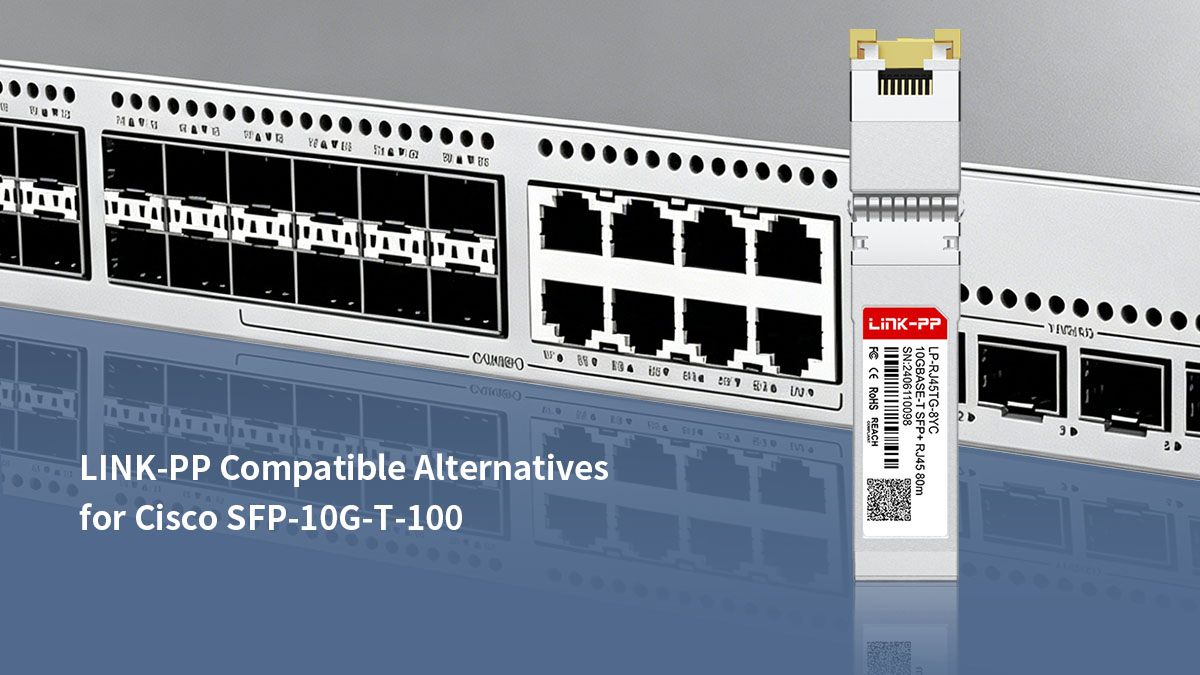
As enterprises look for more flexible and scalable ways to deploy 10GBase-T networks, LINK-PP compatible transceivers for Cisco SFP-10G-T-100 have become a widely considered alternative. These solutions are designed to deliver comparable functionality while improving sourcing flexibility and supporting cost-efficient network expansion.
Overview of LINK-PP Compatible Solutions
LINK-PP compatible SFP-10G-T-100 modules are engineered to operate within Cisco SFP+ ports while supporting standard 10GBase-T copper connectivity. They are programmed and tested to align with Cisco system recognition requirements, enabling seamless integration in most deployment scenarios.
Key characteristics of these compatible modules include:
- Support for 10Gbps Ethernet transmission over RJ45 interfaces
- Compatibility with Cisco switching and routing platforms
- Compliance with IEEE 802.3an 10GBase-T standards
- Hot-swappable SFP+ form factor for flexible deployment
From a deployment perspective, these features allow IT teams to maintain existing network architectures while introducing more flexible sourcing options.
Key Advantages of LINK-PP Alternatives
LINK-PP compatible modules are often selected in environments where scalability, supply continuity, and cost optimization are important. Their value is primarily reflected in operational efficiency rather than changes to network architecture.
The main advantages include:
- More flexible sourcing options for large-scale deployments
- Improved availability compared to single-vendor procurement channels
- Stable interoperability in Cisco-based environments
- Support for phased network expansion strategies
After evaluating these benefits, many organizations find that compatible solutions provide a practical balance between performance consistency and deployment flexibility, especially in distributed enterprise networks.
Performance and Operational Considerations
While compatible modules are designed to match functional requirements, performance consistency and operational behavior remain key evaluation factors. In most enterprise use cases, LINK-PP alternatives are built to support stable 10GBase-T transmission under standard operating conditions.
Important considerations include:
- Signal integrity performance over Cat6a/Cat7 cabling
- Thermal behavior in high-density switch environments
- Power consumption relative to original modules
- Long-term operational stability under continuous load
These factors are particularly relevant in data center environments where port density and sustained throughput are critical to network reliability.
Deployment Compatibility in Cisco Environments
One of the main strengths of LINK-PP compatible modules is their focus on Cisco system interoperability. They are designed to function within Cisco SFP+ ports without requiring changes to existing network configurations.
Typical compatibility scenarios include:
- Cisco enterprise switch access and aggregation layers
- Data center top-of-rack switch deployments
- Campus network edge connectivity
- Mixed infrastructure environments with existing Cisco hardware
In these environments, compatible modules allow organizations to extend 10G connectivity while maintaining operational consistency across network layers.
📜 Technical Factors to Evaluate Before Deployment
Before deploying Cisco SFP-10G-T-100 or its LINK-PP compatible alternatives, it is important to evaluate several technical factors that directly impact performance stability and long-term network reliability. These considerations are especially critical in 10GBase-T environments where copper transmission, power usage, and platform compatibility all influence operational outcomes.
Switch and Platform Compatibility
The first and most important consideration is ensuring that the transceiver is fully compatible with the target Cisco switching or routing platform. Even though SFP+ copper modules are generally standardized, real-world deployment success depends on specific hardware and software validation.
Key compatibility checkpoints include:
- Cisco switch series compatibility verification to confirm supported SFP+ transceiver types
- Software and firmware considerations to ensure proper module recognition and functionality
- Port auto-negotiation behavior to maintain stable link establishment and speed detection
After reviewing these factors, it becomes clear that compatibility is not only a hardware issue but also a system-level requirement involving firmware versions and platform-specific support matrices. Proper validation reduces the risk of link instability or module rejection during deployment.
Copper Cabling Requirements
Copper cabling plays a decisive role in the performance of 10GBase-T connections, especially when using modules like Cisco SFP-10G-T-100. The quality, category, and installation standards of cabling directly influence signal integrity and maximum achievable distance.
Important cabling considerations include:
- Cat6 vs Cat6a vs Cat7 comparison in terms of shielding and transmission stability
- Distance limitations for 10GBase-T, typically up to 100m under optimal conditions
- Electromagnetic interference considerations in industrial or high-density environments
To better understand cabling selection impact, the following comparison highlights key differences:
| Cable Type | 10G Support | Typical Max Distance | Shielding Level |
|---|---|---|---|
| Cat6 | Limited | ~55m (varies by environment) | Moderate |
| Cat6a | Full support | Up to 100m | High |
| Cat7 | Full support | Up to 100m | Very high |
After evaluating these parameters, Cat6a is generally considered the minimum recommended standard for stable 10GBase-T performance in enterprise environments.
Power Consumption and Heat Management
Another critical technical factor is the higher power consumption and thermal output associated with copper-based 10G transceivers. Compared with fiber modules, SFP-10G-T-100 devices generate more heat, which can affect system stability in dense deployments.
Key thermal considerations include:
- Higher thermal output of copper transceivers compared to fiber alternatives
- Airflow planning in dense switch environments to prevent localized overheating
- Rack-level thermal optimization strategies to maintain stable operating temperatures
In practical deployment scenarios, these factors often require careful planning of port density and chassis ventilation. Without proper thermal management, performance degradation or thermal throttling may occur under sustained high-load conditions.
📜 Deployment Best Practices for Stable 10GBase-T Connectivity
Deploying Cisco SFP-10G-T-100 or compatible LINK-PP modules in a production network requires more than basic installation. Stable 10GBase-T performance depends on correct handling procedures, disciplined cabling practices, and continuous monitoring of operational conditions. When these elements are properly managed, networks can achieve consistent throughput and long-term reliability.
Proper Installation Procedures
Correct installation is the foundation of stable 10GBase-T connectivity. Even though SFP+ modules are designed for hot-swappable operation, careful handling during installation significantly reduces the risk of link errors or hardware stress.
Key installation practices include:
- Hot-swapping precautions to ensure modules are inserted or removed only under safe operating conditions
- Cable insertion and retention checks to confirm RJ45 connectors are fully seated and locked
- Port status verification steps to confirm link establishment and negotiated speed after installation
After following these procedures, network administrators should always validate link status at both the switch and endpoint level. This ensures that the module is functioning correctly within the expected 10GbE parameters.
Optimizing Network Performance
Once installation is complete, network performance depends heavily on cabling quality and physical layout. 10GBase-T is sensitive to cable length, interference, and installation practices, making structured cabling discipline essential.
Key optimization practices include:
- Avoiding excessive cable lengths beyond recommended 100m limits
- Minimizing signal degradation by using high-quality Cat6a or Cat7 cabling
- Maintaining clean structured cabling environments with proper separation from power lines
These practices help preserve signal integrity and reduce retransmission or error rates. In environments with high port density, consistent cabling standards are especially important to ensure uniform performance across all connections.
Monitoring and Troubleshooting Recommendations
Even with proper installation and cabling, ongoing monitoring is essential for maintaining stable 10GBase-T operations. Continuous observation of link health, temperature, and power usage helps identify issues before they impact network performance.
Common monitoring and troubleshooting focus areas include:
- Identifying link instability symptoms such as intermittent disconnections or speed renegotiation
- Monitoring temperature and power usage to detect abnormal thermal conditions in SFP+ cages
- Diagnosing compatibility-related errors that may arise from firmware mismatches or module recognition issues
After implementing monitoring practices, IT teams can respond more quickly to performance anomalies and reduce downtime caused by undetected issues.
📜 Cisco SFP-10G-T-100 vs Fiber-Based 10G Transceivers
When designing 10Gb Ethernet networks, a key architectural decision is whether to use copper-based modules like Cisco SFP-10G-T-100 or fiber-based 10G optical transceivers. Both technologies support high-speed connectivity, but they differ significantly in performance characteristics, deployment flexibility, and infrastructure requirements.
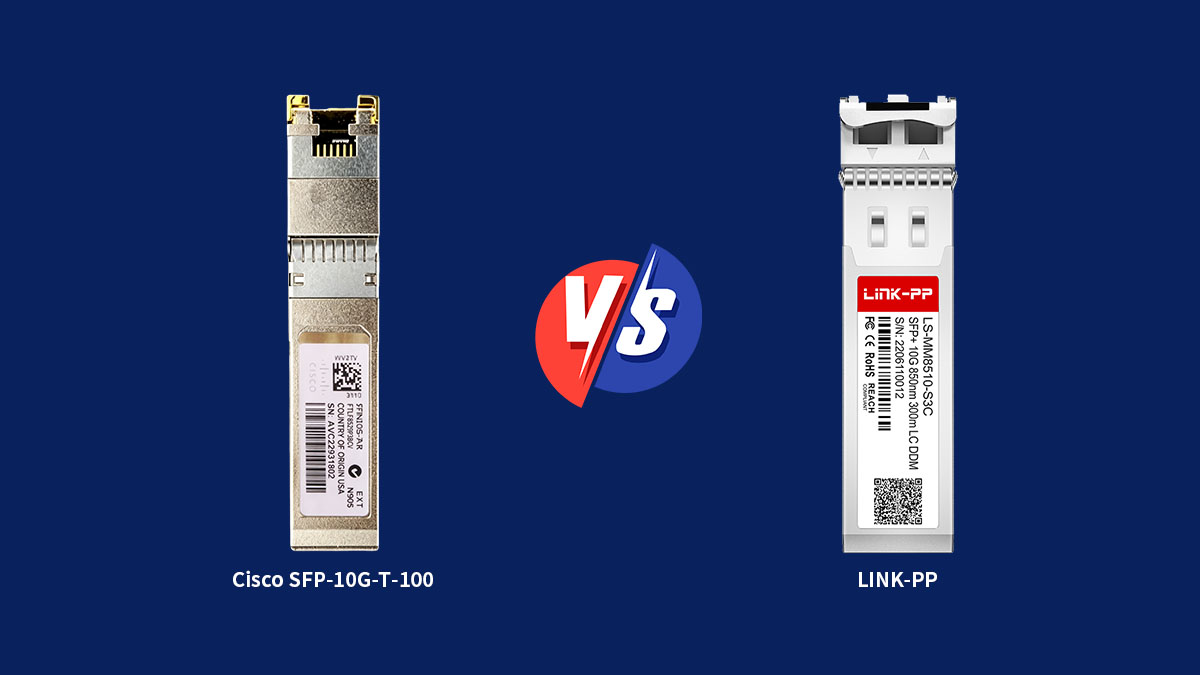
Understanding these differences helps organizations select the most suitable solution based on distance, environment, and long-term scalability needs.
Copper vs Fiber Transmission Comparison
Copper and fiber-based 10G transceivers are optimized for different operational priorities. Copper focuses on infrastructure reuse and simplicity, while fiber emphasizes performance efficiency and long-distance transmission.
The main differences can be understood through several key technical aspects:
- Latency characteristics influenced by electrical vs optical signal transmission
- Power efficiency differences due to higher energy consumption in copper PHY processing
- Cabling flexibility comparison between RJ45 structured cabling and optical fiber links
To better illustrate these differences, the following comparison provides a clearer technical overview:
| Factor | Copper (SFP-10G-T-100) | Fiber 10G Transceivers |
|---|---|---|
| Signal Type | Electrical (RJ45) | Optical (fiber) |
| Typical Latency | Slightly higher | Lower and more stable |
| Power Consumption | Higher | Lower |
| Cabling Flexibility | High reuse of existing cables | Requires fiber infrastructure |
After reviewing these factors, copper is generally preferred for flexibility and ease of deployment, while fiber is optimized for performance consistency and scalability.
Ideal Use Cases for Copper Modules
Copper-based 10G modules such as Cisco SFP-10G-T-100 are best suited for environments where existing RJ45 infrastructure can be leveraged and where deployment simplicity is a priority.
Typical use cases include:
- Short-range enterprise deployments within 100m distances
- Existing RJ45 infrastructure utilization in office and campus networks
- Cost-sensitive network expansion projects where fiber deployment is not required
In these scenarios, copper modules provide a practical balance between performance and infrastructure reuse. They are especially effective in access-layer networks where high-speed connectivity is required without significant physical upgrades.
When Fiber May Be the Better Choice
While copper offers flexibility, fiber-based 10G transceivers (such as Cisco SFP-10G-SR) become more advantageous in environments where performance consistency, distance, or density requirements are more demanding.
Fiber is typically preferred in the following cases:
- Long-distance transmission requirements beyond 100m
- High-density low-power data center environments where thermal efficiency is critical
- EMI-sensitive installations such as industrial or high-interference environments
In these situations, fiber provides more stable signal integrity and reduced susceptibility to environmental interference, making it a more scalable long-term solution.
📜 Future Trends in 10G Copper Networking
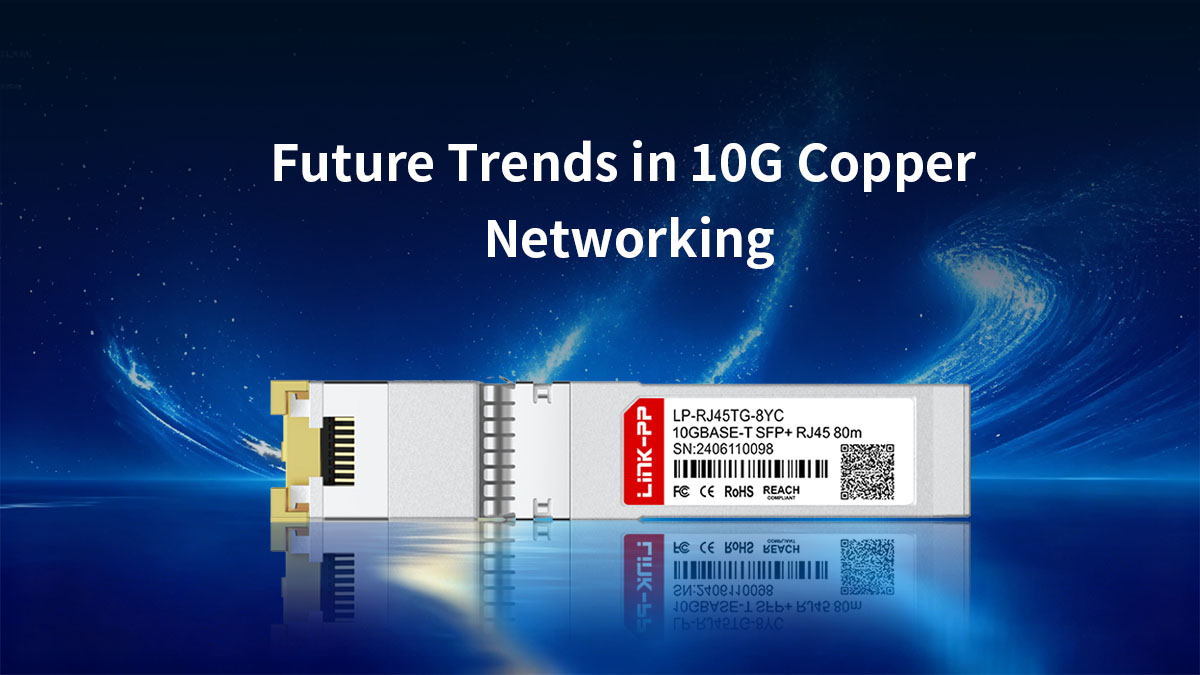
10G copper networking continues to evolve as enterprise infrastructures shift toward higher bandwidth demands and more distributed computing models. While newer Ethernet standards are emerging, 10GBase-T solutions such as Cisco SFP-10G-T-100 remain an important part of access-layer design due to their flexibility and compatibility with existing RJ45-based infrastructure.
Evolution of Enterprise Ethernet Infrastructure
Enterprise Ethernet infrastructure is moving toward more flexible and layered architectures where copper and fiber technologies coexist rather than compete. This hybrid approach allows organizations to optimize performance, cost, and deployment efficiency across different network segments.
Key trends shaping this evolution include:
- Continued coexistence of copper and fiber in layered network architectures
- Increasing demand for hybrid network designs that combine different media types
- Expansion of edge computing deployments requiring localized high-speed connectivity
After reviewing these trends, it is clear that copper-based 10G solutions remain relevant at the network edge, where short-distance connectivity and infrastructure reuse are still highly valuable.
Impact of Higher-Speed Ethernet Technologies
As Ethernet standards progress toward SFP28 25G, QSFP+ 40G, and beyond, the role of 10GBase-T is gradually shifting rather than disappearing. Instead of being replaced entirely, it is being repositioned within enterprise network hierarchies.
Important transition trends include:
- Migration toward 25G and 40G architectures in data center backbone layers
- Ongoing relevance of 10GBase-T in access and distribution layers
- Gradual transition strategies that avoid full infrastructure replacement
In practical deployments, 10G copper remains a stable intermediate layer that bridges legacy 1G systems and higher-speed uplinks, allowing organizations to upgrade incrementally rather than overhaul entire infrastructures.
Increasing Demand for Compatible Optical and Copper Modules
Alongside evolving network architectures, the market for compatible transceiver modules is also expanding. Enterprises are increasingly seeking flexible sourcing options that support scalability and reduce dependency on single-vendor supply chains.
Key developments in this area include:
- Growth of third-party compatible transceiver markets for both copper and optical modules
- Increased focus on operational flexibility in multi-vendor network environments
- Stronger emphasis on supply chain resilience and procurement continuity
These trends are driving broader adoption of compatible solutions, especially in large-scale deployments where cost efficiency and availability are critical operational factors.
📜 How to Select a Reliable Cisco SFP-10G-T-100 Alternative Supplier
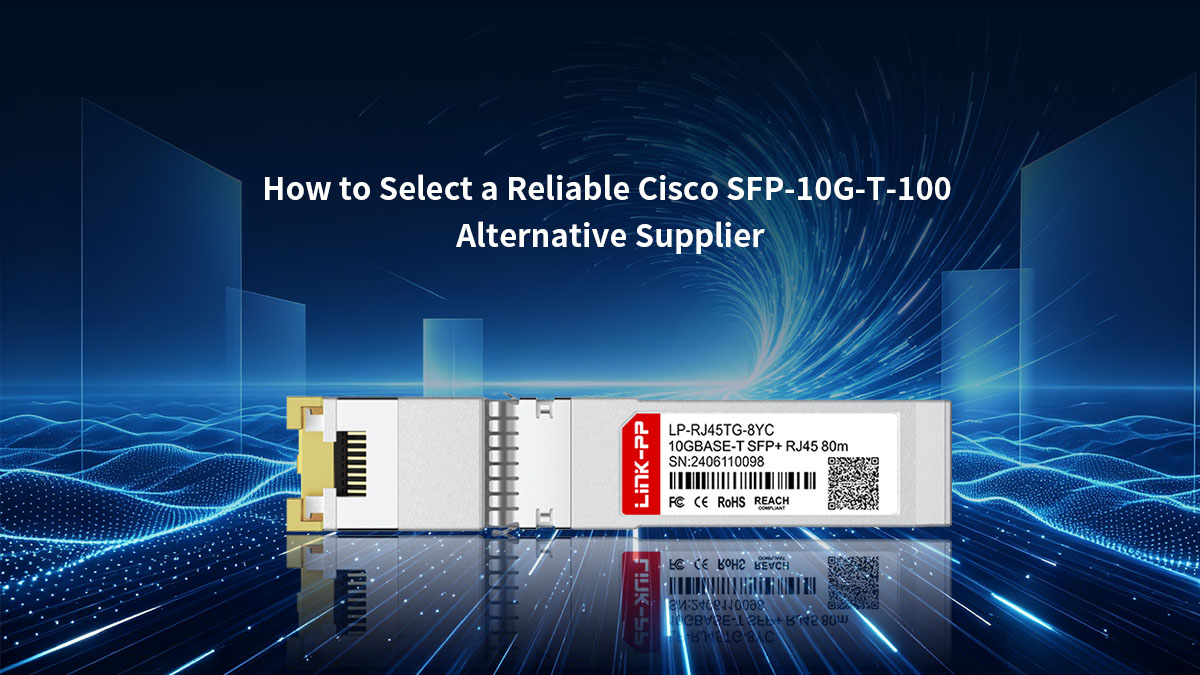
When organizations consider compatible alternatives for Cisco SFP-10G-T-100, selecting a reliable supplier becomes a critical decision that directly impacts network stability, lifecycle cost, and long-term scalability. The right supplier should not only provide compatible hardware but also ensure consistent performance, validation quality, and technical support across deployment stages.
Quality Assurance and Testing Standards
Quality assurance is the foundation of any reliable compatible transceiver supply. Without proper validation, even technically compatible modules may introduce instability in real-world network conditions.
Key quality-related evaluation factors include:
- Compatibility validation procedures to ensure correct operation with Cisco platforms
- Environmental and stress testing under temperature, humidity, and load conditions
- Compliance certifications aligned with industry networking and safety standards
After reviewing these factors, it becomes clear that rigorous testing is essential for maintaining stable performance in enterprise-grade deployments. Suppliers that invest in structured validation processes are more likely to deliver consistent interoperability across diverse network environments.
Technical Support and Lifecycle Services
Beyond hardware quality, technical support plays a major role in ensuring smooth deployment and long-term operation. In complex network environments, compatibility questions and configuration adjustments often arise during installation and scaling phases.
Important service capabilities include:
- Deployment consultation to support planning and integration strategies
- Firmware and compatibility assistance for resolving system recognition or interoperability issues
- Long-term supply continuity to ensure consistent module availability across network expansion cycles
These services are particularly important in multi-site enterprise deployments where standardized configuration and predictable lifecycle management are required.
Evaluating Total Deployment Value
When selecting an alternative supplier, focusing only on unit price can lead to incomplete decision-making. A more effective approach is to evaluate total deployment value, which includes performance stability, operational risk, and scalability potential.
Key evaluation dimensions include:
- Balancing cost, reliability, and scalability across the entire deployment lifecycle
- Reducing operational risks related to compatibility failures or inconsistent module performance
- Supporting future network growth plans without requiring frequent infrastructure redesign
After considering these aspects, organizations can better align procurement decisions with long-term network strategy rather than short-term cost optimization alone.
📜 Conclusion
Cisco SFP-10G-T-100 remains a widely used 10GBase-T copper transceiver for enterprise and data center networks, offering reliable RJ45-based connectivity over existing structured cabling. At the same time, LINK-PP compatible alternatives provide a practical option for organizations seeking greater flexibility in sourcing, cost efficiency, and scalable deployment across Cisco environments without compromising core network performance requirements.
To better summarize the most important insights from this article, the following points highlight the essential considerations when evaluating Cisco SFP-10G-T-100 and its compatible alternatives:
- Cisco SFP-10G-T-100 supports stable 10Gbps copper connectivity over Cat6a/Cat7 cabling up to 100m
- 10GBase-T remains highly relevant in enterprise access layers due to infrastructure reuse and deployment simplicity
- LINK-PP compatible modules offer flexible sourcing and stable interoperability in Cisco-based networks
- Proper evaluation of compatibility, cabling quality, and thermal conditions is essential for deployment stability
- Supplier selection plays a critical role in ensuring long-term supply continuity and operational reliability
These core points reinforce that both original and compatible solutions can coexist effectively within modern hybrid network architectures.
As enterprise networks continue evolving toward higher bandwidth and hybrid infrastructures, choosing the right transceiver strategy becomes increasingly important. Cisco SFP-10G-T-100 continues to serve as a dependable option for copper-based 10G deployments, while LINK-PP compatible solutions provide additional flexibility for scaling and procurement optimization.
For organizations planning network expansion or cost-optimized upgrades, exploring verified compatible options from a reliable source is a practical next step. The LINK-PP Official Store offers a range of tested and compatible transceiver solutions designed to support stable 10G connectivity across Cisco network environments, helping enterprises build scalable and resilient infrastructure for future growth.