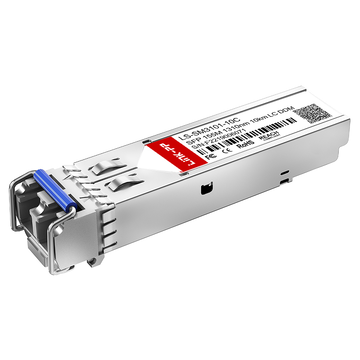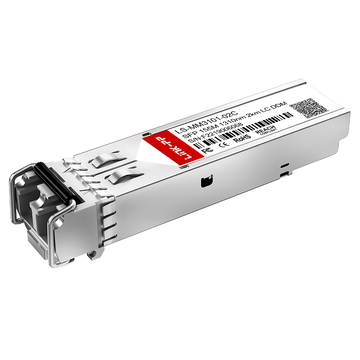
Ever needed to connect a legacy Cisco switch to a new fiber run, or deploy 100Mbps links in an industrial setting? These scenarios demand reliable transceiver modules. Choosing the right one is critical, not just for performance, but for ensuring the physical layer of your network is built on a stable and compatible foundation.
When dealing with 100M fiber connectivity on Cisco equipment, one model number that consistently causes confusion — and is essential to understand — is the GLC-GE-100FX. Its name seems to promise Gigabit speeds, yet it operates strictly within the 100BASE-FX standard. This quirk makes it a unique bridge between legacy infrastructure and modern switching platforms.
In this article, we will demystify the Cisco GLC-GE-100FX, exploring its specifications, ideal use cases, and the nuances of its compatibility with various switch models. Furthermore, we will guide you through the available replacement solutions, helping you navigate the market for compatible alternatives that can keep your network running without breaking the bank.
? What Is Cisco GLC-GE-100FX
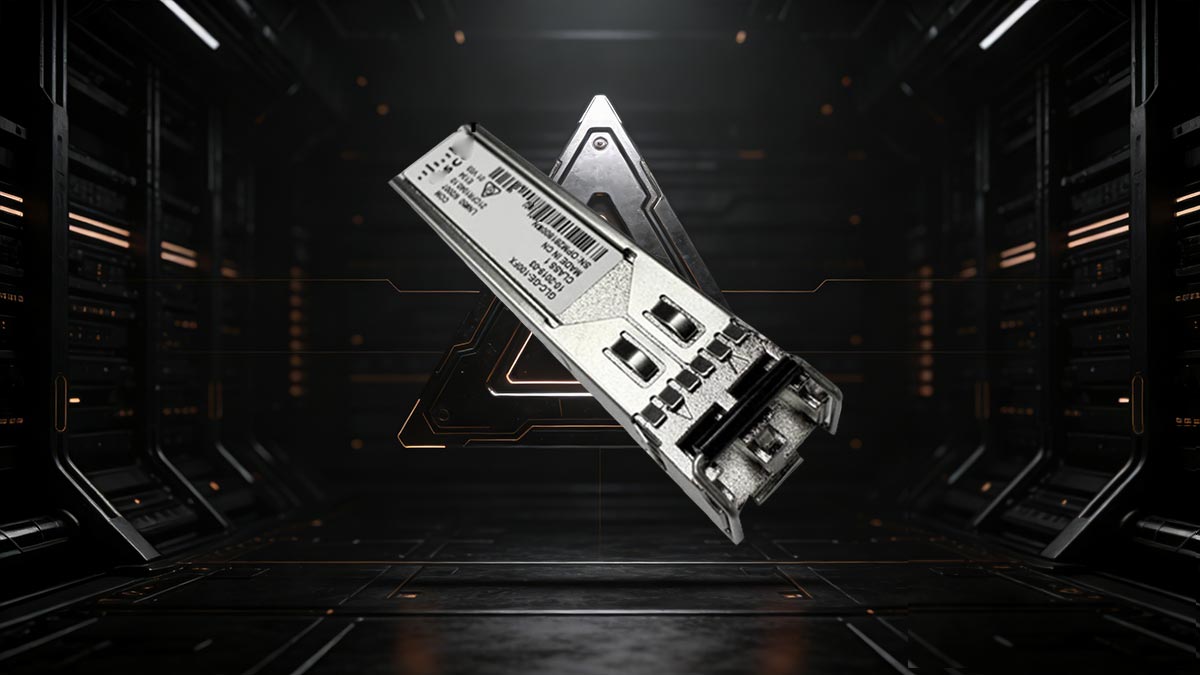
The Cisco GLC-GE-100FX is a 100M SFP transceiver module that supports 100BASE-FX Fast Ethernet links over multimode fiber. Let’s break down its core functions, design, and typical use cases so you can better understand how it fits within Cisco’s transceiver lineup.
Overview of Cisco GLC-GE-100FX
Cisco GLC-GE-100FX is a Fast Ethernet fiber SFP transceiver that supports the 100BASE-FX standard. It is typically used to provide 100Mbps optical uplinks on compatible Cisco switches and routers, enabling stable fiber connections in campus networks, industrial sites, and long-running infrastructures where Fast Ethernet is still in service.
Unlike Gigabit SFP modules, this module is built specifically for 100Mbps operation over fiber, which makes it valuable for environments that must interconnect with older fiber endpoints, legacy access switches, media converters, or specialized industrial Ethernet devices that do not support 1G.
Key Features of the GLC-GE-100FX Module
To better illustrate the capabilities of the Cisco GLC-GE-100FX module, the following table breaks down its primary features and the benefits they provide in a real-world network environment.
| Feature | Description | Benefits |
| Data Rate | Supports 100 Mb/s Fast Ethernet (100BASE-FX standard). | Ideal for legacy networks that still use Fast Ethernet but require fiber connectivity. |
| Fiber Type | Designed for multimode fiber (MMF), compatible with 50/125µm and 62.5/125µm cores. | Enables flexible deployment in existing fiber infrastructures without major recabling. |
| Connector Type | Uses an LC duplex connector for transmitting and receiving optical signals. | Provides a compact, space-saving interface for high-density fiber panels. |
| Transmission Distance | Operates up to 2km over standard multimode fiber. | Supports longer-distance connections than copper cables, improving network reach. |
| Wavelength | Utilizes a 1310nm laser light source. | Ensures stable signal transmission with minimal attenuation and low power consumption. |
| Hot-Swappable Design | The SFP can be inserted or removed without shutting down the system. | Simplifies maintenance and upgrades, minimizing network downtime. |
When to Use 100BASE-FX SFP
Even though 1G SFP and 10G SFP+ transceivers dominate modern designs, 100BASE-FX SFP modules remain relevant in several real-world situations:
- You’re supporting legacy Fast Ethernet fiber endpoints. If the far-end switch, router, or device only supports 100BASE-FX, using a 1G optic won’t magically upgrade it — and can cause link failures or forced configuration workarounds.
- Industrial or OT environments require stability over speed. Many industrial Ethernet devices (controllers, gateways, hardened switches) prioritize long lifecycle, predictable behavior, and fiber immunity to EMI rather than higher throughput.
- You’re maintaining mixed-speed access networks. In older buildings or distributed campus environments, some segments may still run at 100Mbps due to existing hardware constraints or cost-controlled upgrades.
- You need fiber’s physical advantages, not bandwidth. Fiber can be the right medium for electrical isolation, long cable runs (within FX limits), and resistance to interference — even when 100Mbps is sufficient.
? GLC-GE-100FX Specifications and Technical Details
Understanding the technical specifications of the GLC-GE-100FX SFP is essential for ensuring it meets your network's performance requirements and integrates seamlessly with your existing hardware. The following details break down the core optical and operational parameters that define this specific SFP module.
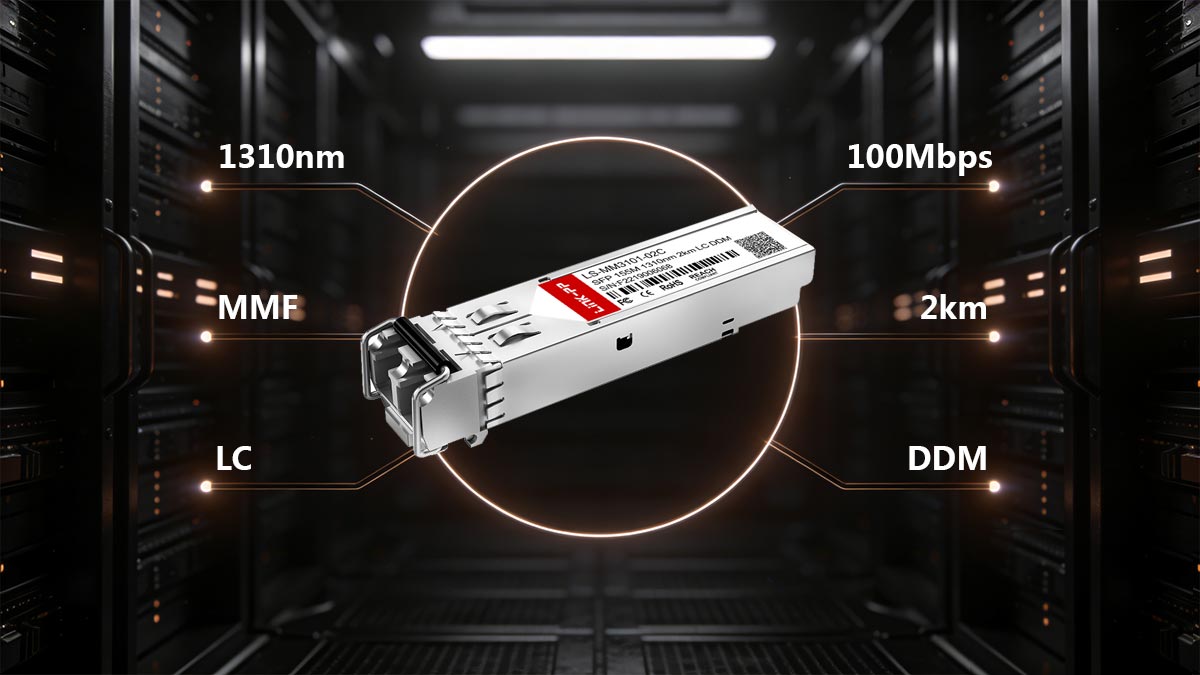
Port Type and Optical Interface
The Cisco GLC-GE-100FX is a small form-factor pluggable transceiver module designed to support 100BASE-FX Fast Ethernet fiber connectivity. It uses a hot-swappable SFP form factor, allowing it to be installed or replaced without shutting down the switch.
This module provides a duplex LC optical interface, which is commonly used in enterprise fiber networks due to its compact design and reliability. The LC connector supports bidirectional communication over two fiber strands — one for transmission (TX) and one for reception (RX). Because of its SFP format, the GLC-GE-100FX can be installed in a wide range of Cisco switches that support SFP ports configured for Fast Ethernet operation.
Wavelength and Optical Parameters
The GLC-GE-100FX operates using a 1310nm wavelength laser, which is optimized for stable transmission over multimode fiber. At this wavelength, the module can transmit signals up to 2km, depending on fiber quality and type (typically 50/125µm or 62.5/125µm).
It offers a low optical power budget, reducing energy consumption while maintaining high signal quality with minimal attenuation and dispersion. The laser type typically used is an FP laser or its low-power equivalents, designed to ensure consistent and reliable operation within temperature and distance limits defined by Cisco quality standards.
Speed and Duplex Configuration
The Cisco GLC-GE-100FX supports 100Mbps Fast Ethernet data transmission, conforming to the IEEE 802.3 100BASE-FX standard. Unlike Gigabit SFP modules, this transceiver is specifically designed for networks operating at Fast Ethernet speeds.
The module typically operates in full-duplex mode, enabling simultaneous transmission and reception of data. Full-duplex communication improves network efficiency and eliminates collisions that can occur in half-duplex environments.
In most Cisco switches, the port connected to the GLC-GE-100FX can be configured through the CLI to ensure it operates at 100Mbps full duplex, allowing seamless integration with legacy Fast Ethernet fiber infrastructure.
? GLC-GE-100FX SFP Compatibility with Cisco Switches
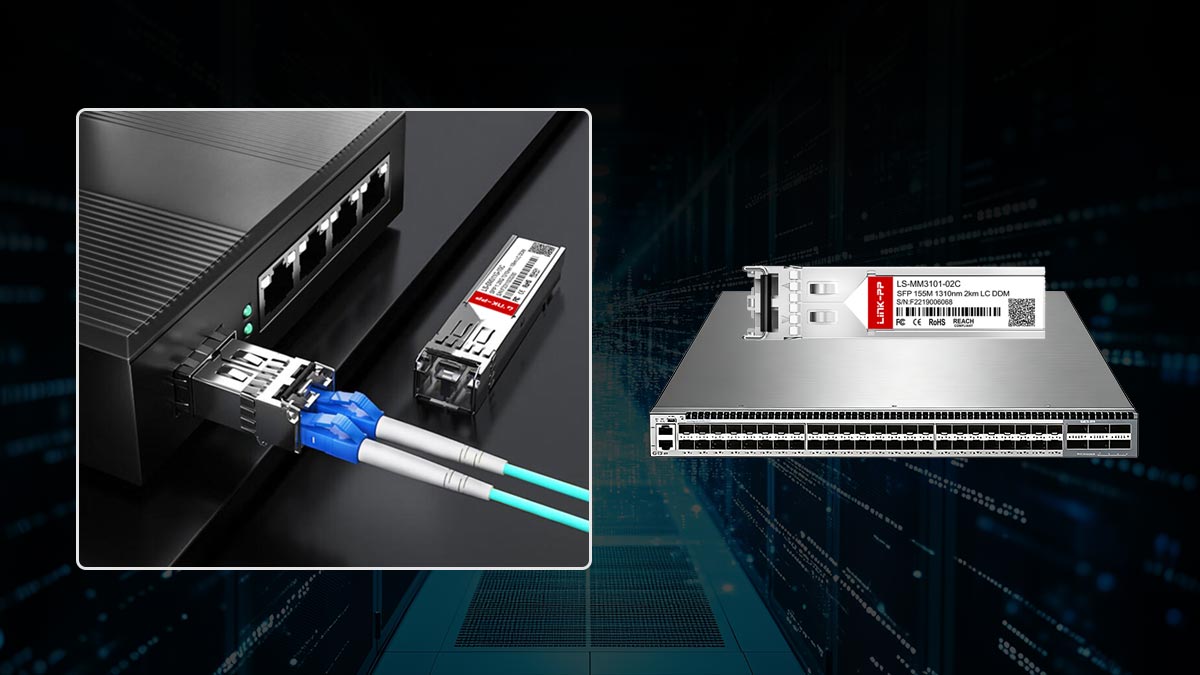
The Cisco GLC-GE-100FX SFP module is designed to integrate seamlessly into a wide range of Cisco networking environments, but its compatibility is primarily determined by the specific switch platform and its operating system. Before deployment, it is essential to verify that your particular switch model supports this 100BASE-FX module to ensure optimal performance and prevent hardware recognition issues.
Compatible Cisco Catalyst Models
The GLC-GE-100FX module is supported across many Cisco Catalyst switches that feature SFP ports designed for 100Mbps or dual‑rate operation. Key compatible models include the Catalyst 2960, 2960X, 3560, 3750, 3850, and 4500 series, among others. These switches recognize the module automatically when running appropriate IOS or IOS‑XE versions. In managed environments, the GLC-GE-100FX enables flexible fiber uplinks between wiring closet switches and aggregation layers while maintaining energy efficiency and consistent performance.
Support in Nexus and Industrial Series
Beyond Catalyst models, the GLC-GE-100FX is also compatible with selected Cisco Nexus data center switches and Industrial Ethernet (IE) series switches such as the IE‑2000, IE‑3000, and IE‑4000 families. These deployments typically use the module in hardened or latency-sensitive environments. In industrial applications, the 100BASE‑FX link provides stable communication over multimode fiber, even in high‑temperature or electromagnetic interference conditions.
Checking Compatibility via Cisco SFP Matrix
Cisco maintains an official SFP Compatibility Matrix, which is the most reliable source for verifying support. This matrix lists approved transceiver models for each switch or router platform, along with recommended software releases. Network engineers should consult this matrix before installation to avoid interoperability issues or unsupported transceivers being rejected by the device.
Common Firmware Requirements
To ensure stable operation and full functionality of the GLC-GE-100FX, compatible Cisco switches must run firmware that explicitly supports 100BASE‑FX SFP modules. While most modern IOS and IOS-XE versions include this support natively, older releases may require updates or specific feature sets. Before installation, network administrators should verify the following:
- Minimum IOS/NX-OS Version: Confirm that the switch operates on a Cisco software release listed in the official compatibility matrix. Some early versions may not properly recognize 100Mbps SFP modules.
- DDM and Autonegotiation Support: Use firmware versions that include proper handling for Digital Diagnostics Monitoring (DDM) and non‑autonegotiating fiber links to prevent link errors.
- Firmware Updates: Regularly update to the latest stable image to maintain security fixes, enhanced optical diagnostics, and consistent transceiver interoperability.
? GLC-GE-100FX Fiber Compatibility and Cabling Requirements
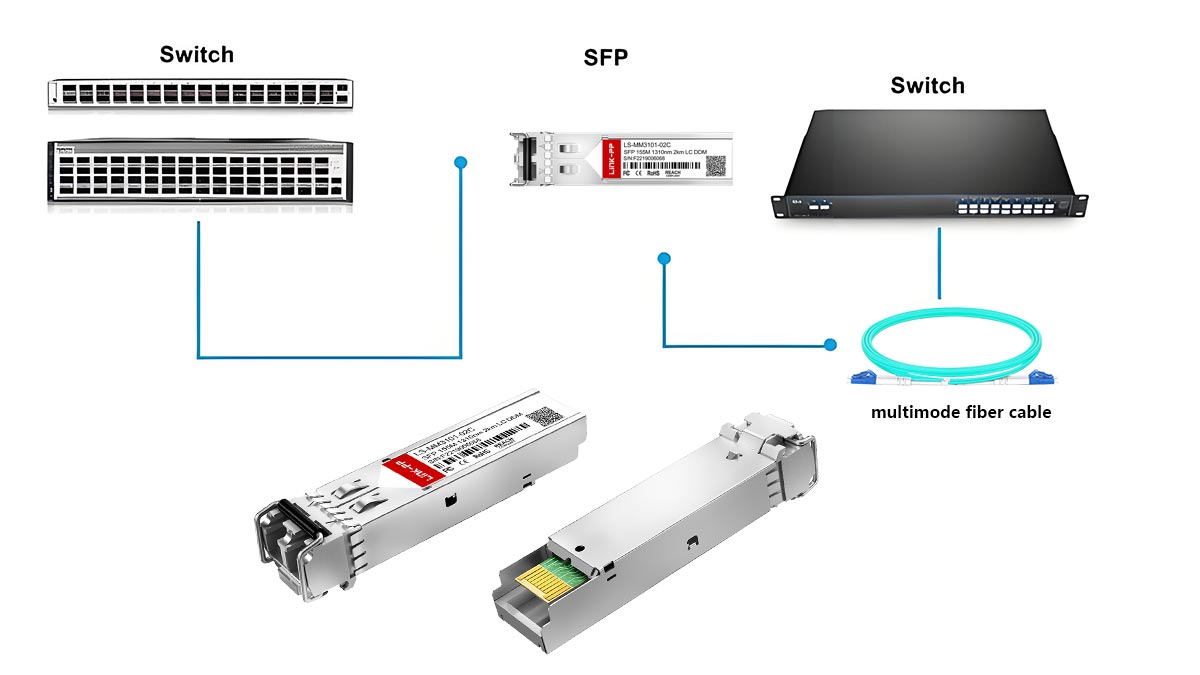
Proper fiber compatibility and correct cabling are essential to ensure stable performance when deploying the Cisco GLC-GE-100FX module. Because this SFP module is designed specifically for 100BASE-FX Ethernet applications, it requires particular fiber types and connectors to operate correctly. Understanding the supported fiber media and following cabling best practices helps prevent signal loss, link instability, and deployment issues in enterprise or industrial networks.
Supported Fiber Types for GLC-GE-100FX
The Cisco GLC-GE-100FX module is designed to operate over multimode fiber (MMF) and supports the 100BASE-FX standard defined by IEEE 802.3. It typically works with fiber types such as OM1 (62.5/125µm) and OM2 (50/125µm) multimode cables. These fiber types are commonly used in legacy campus networks, industrial environments, and short-to-medium distance enterprise connections.
With a transmission wavelength of 1310nm, the module generally supports distances of up to 2km when deployed over compatible multimode fiber. However, the actual distance may vary depending on factors such as fiber quality, connector condition, and overall optical link budget. Because the module is optimized for multimode operation, it is not typically intended for single-mode fiber deployments unless specific media converters or compatibility solutions are used.
Connector Types Used by GLC-GE-100FX
The GLC-GE-100FX module uses a duplex LC connector interface, which is standard for most modern SFP optical transceivers. LC connectors are compact, reliable, and widely adopted in enterprise networking equipment, making them suitable for high-density switch environments.
A duplex LC interface requires two fiber strands — one for transmitting (TX) and one for receiving (RX). These connectors are commonly used with LC-LC fiber patch cables, which simplify installation when connecting switches, patch panels, or fiber distribution frames. When deploying the module, it is important to ensure the transmit and receive fibers are correctly aligned, as reversed polarity can prevent the link from establishing.
Cabling Best Practices for GLC-GE-100FX Deployments
To achieve reliable connectivity with the GLC-GE-100FX module, following several fiber cabling best practices is recommended.
First, always use high-quality multimode fiber cables that meet the required specifications for 100BASE-FX transmission. Poor-quality or damaged cables can introduce attenuation and degrade optical performance.
Second, maintain proper fiber cleanliness and connector care. Dust or contamination on LC connectors can significantly affect signal quality, so cleaning connectors before installation is highly recommended. Using protective dust caps when connectors are not in use can also help maintain optimal performance.
Finally, ensure that the overall fiber link — including patch panels, jumpers, and intermediate connections — remains within the module’s maximum supported distance and optical power budget. Keeping cable runs organized, avoiding tight bends, and properly labeling fiber paths will help maintain stable network operation and simplify troubleshooting in large deployments.
? GLC-GE-100FX vs Other 100BASE SFP Modules
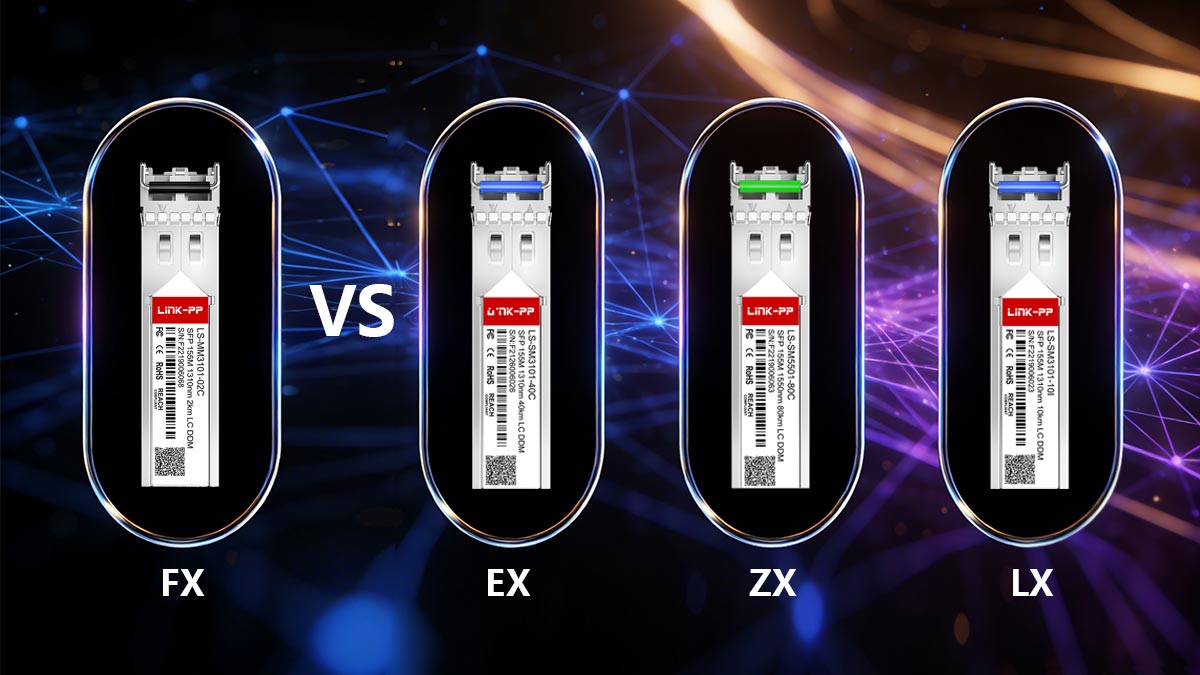
When selecting a 100BASE SFP module for a fiber network, it is important to understand how the Cisco GLC-GE-100FX compares with other similar Fast Ethernet optical transceivers. Although these modules share the same 100Mbps transmission speed, they differ in wavelength, transmission distance, and supported fiber types, which directly affects deployment scenarios.
The GLC-GE-100FX is typically optimized for short-to-medium distance multimode fiber (MMF) connections, while other modules such as the GLC-FE-100LX, GLC-FE-100EX, and GLC-FE-100ZX are designed for longer-distance single-mode fiber (SMF) links. Understanding these differences helps network engineers choose the most appropriate SFP for their infrastructure.
The following table highlights the key technical differences between the Cisco GLC-GE-100FX and other common 100BASE SFP modules.
| Feature | GLC-GE-100FX | GLC-FE-100LX | GLC-FE-100EX | GLC-FE-100ZX |
| Wavelength | 1310nm | 1310nm | 1310nm | 1550nm |
| Fiber Type | Multimode | Single-mode | Single-mode | Single-mode |
| Max Distance | Up to 2km | Up to 10km | Up to 40km | Up to 80km |
| Typical Use Case | Campus networks, short-distance industrial links | Building-to-building connections | Metropolitan access networks | Long-distance backbone or carrier networks |
GLC-GE-100FX vs GLC-FE-100LX
The GLC-GE-100FX is primarily designed for multimode fiber environments, supporting transmission distances of up to 2km at 1310nm. This makes it ideal for enterprise campus networks, factory floors, and industrial switching environments where fiber runs are relatively short.
In contrast, the GLC-FE-100LX is optimized for single-mode fiber deployments, extending transmission distances up to 10km. While it can also operate over multimode fiber using a mode-conditioning patch cable, it is mainly used for inter-building connectivity or longer access links. Compared to the GLC-GE-100FX, the 100BASE LX module provides greater reach but may require different fiber infrastructure.
GLC-GE-100FX vs GLC-FE-100EX
The GLC-FE-100EX significantly increases the transmission range compared to the GLC-GE-100FX. Designed for single-mode fiber, it supports distances of up to 40km, making it suitable for metro networks or extended enterprise connectivity.
While both modules operate at 100Mbps, their deployment environments differ substantially. The GLC-GE-100FX is better suited for short-range multimode applications, whereas the 100BASE EX is intended for long-haul single-mode fiber links where greater optical power and sensitivity are required.
GLC-GE-100FX vs GLC-FE-100ZX
The GLC-FE-100ZX is designed for very long-distance fiber connections, operating at a 1550nm wavelength and supporting distances up to 80km over single-mode fiber. This makes it suitable for carrier-grade networks, backbone infrastructure, and remote site connectivity.
Compared to the GLC-GE-100FX, the 100BASE ZX module uses a different wavelength and higher optical power budget to achieve much longer reach. However, such long-distance capabilities are usually unnecessary in typical campus or industrial environments where the GLC-GE-100FX offers a simpler and more cost-effective solution for shorter fiber links.
? Third-Party Compatible Alternatives to Cisco GLC-GE-100FX
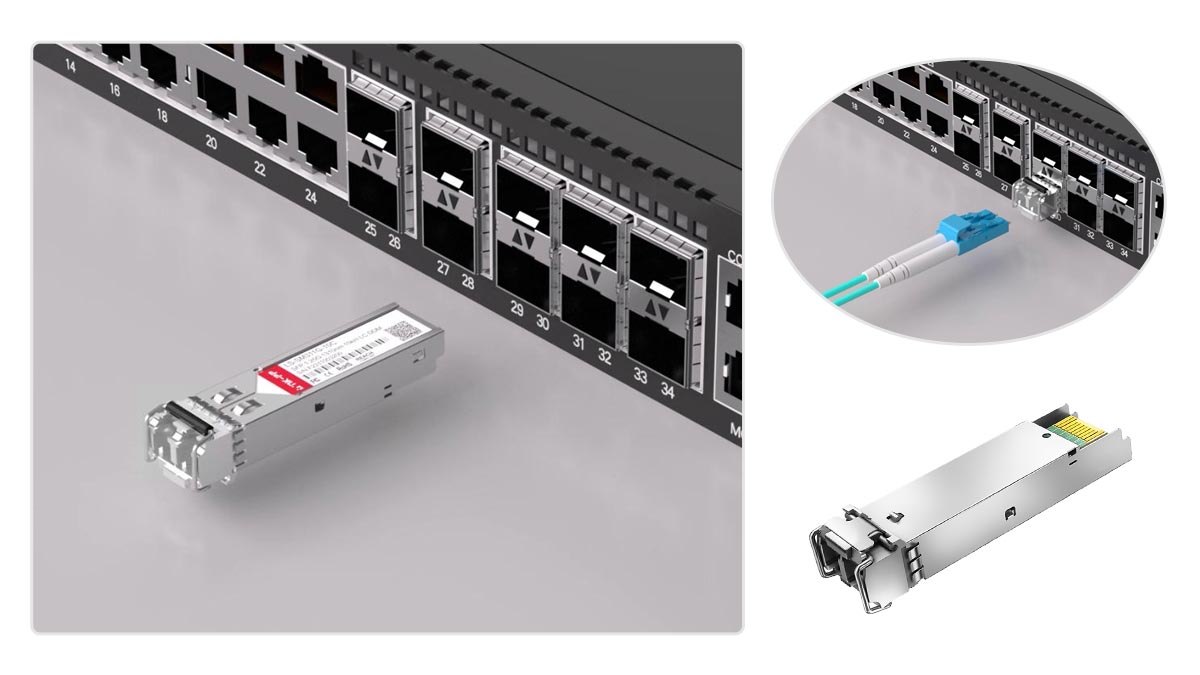
While the original Cisco GLC-GE-100FX transceiver is a reliable and high-quality component, network administrators often seek third-party alternatives to optimize budget without compromising network performance. The market offers a wide range of compatible 100BASE-FX SFP modules that are built to meet or exceed original specifications, providing a cost-effective solution for network expansions and maintenance.
Benefits of Third-Party Compatible SFP Modules
Third-party compatible SFP modules offer several practical advantages for network operators and IT departments. One of the most significant benefits is cost efficiency. Compatible optics are often priced substantially lower than OEM modules, allowing organizations to scale network deployments without dramatically increasing hardware budgets.
Another advantage is broader availability and supply flexibility. Third-party vendors frequently maintain larger inventories and faster delivery cycles, which can be especially useful when replacing failed modules or expanding existing infrastructure quickly.
In addition, many reputable third-party manufacturers perform compatibility testing with major Cisco platforms such as Catalyst, Nexus, and Industrial Ethernet switches. As a result, these modules can deliver stable performance comparable to Cisco-branded optics while maintaining full support for standard networking protocols.
What to Look for in GLC-GE-100FX Compatible Modules
When selecting a compatible alternative to the Cisco GLC-GE-100FX module, several key factors should be considered to ensure reliable operation within your network environment.
Standard Compliance: Check that the module supports 100BASE-FX, operating at 100 Mbps over multimode fiber with a 1310nm wavelength.
Connector Type: Ensure it features LC duplex connectors, matching the interface used by the Cisco GLC-GE-100FX.
Hardware Compatibility: Confirm the module is encoded or programmed for seamless integration with Cisco switches to avoid compatibility warnings or port shutdowns.
Optical Specifications: Review details such as transmission distance, support for Digital Diagnostics Monitoring (DDM), and operating temperature range, especially for industrial or outdoor environments.
Vendor Quality and Testing: Choose compatible modules from suppliers that perform thorough interoperability testing and quality control to minimize potential network issues.
Recommended Alternatives to Cisco GLC-GE-100FX
Several third-party compatible SFP modules can serve as reliable replacements for the Cisco GLC-GE-100FX. These alternatives are designed to meet the same 100BASE-FX optical standards while maintaining compatibility with Cisco networking equipment.
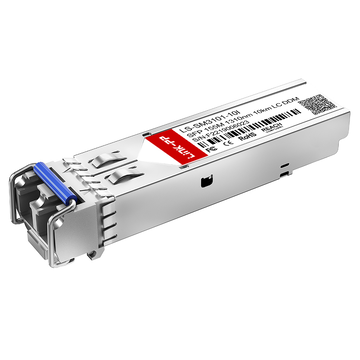
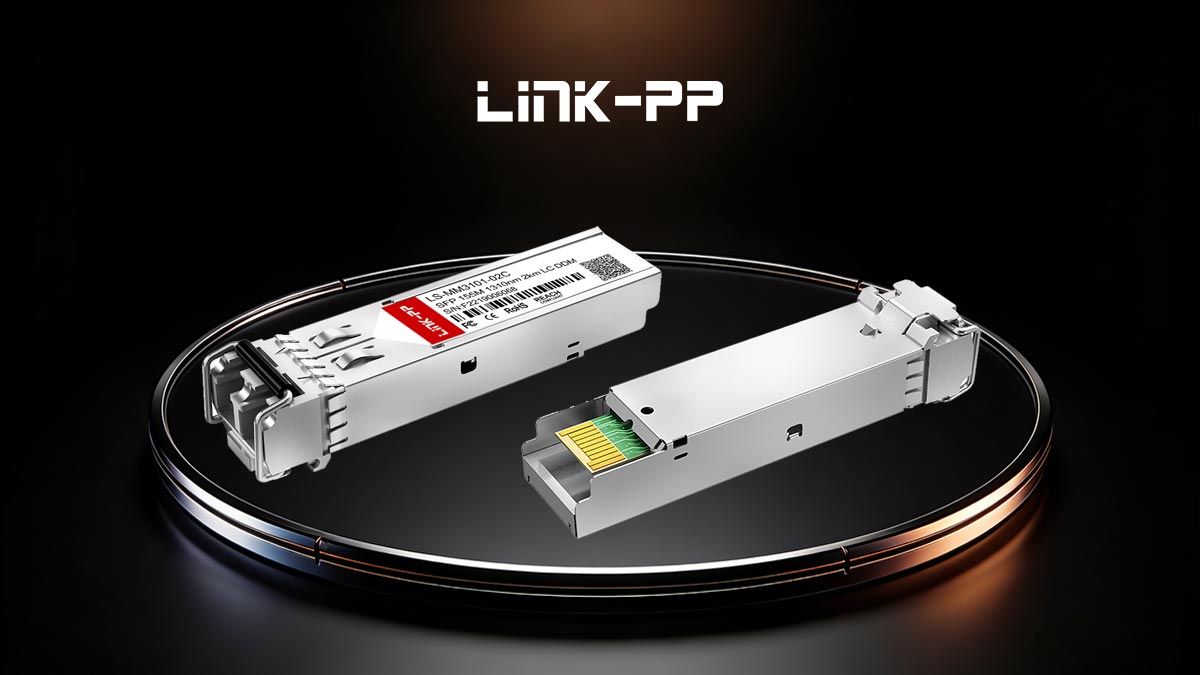
One example is the LINK-PP LS-MM3101-02C 100BASE SFP, a Cisco-compatible optical transceiver designed for 100Mbps Fast Ethernet over multimode fiber. This module typically operates at a 1310nm wavelength, supports LC duplex connectors, and can deliver transmission distances of up to 2km, depending on the fiber type used.
The LS-MM3101-02C 100BASE SFP is engineered to function seamlessly with many Cisco switches that support 100BASE-FX SFP modules. It undergoes compatibility testing to ensure proper identification by Cisco systems and stable link performance in enterprise and industrial network environments.
By selecting a high-quality compatible module such as the LINK-PP LS-MM3101-02C, organizations can maintain reliable fiber connectivity while significantly reducing the overall cost of network upgrades or replacements.
? How to Verify GLC-GE-100FX Compatibility Before Buying

Before purchasing a Cisco GLC-GE-100FX module, it is important to verify that it is fully compatible with your existing networking equipment. Compatibility depends on factors such as switch models, firmware versions, and supported SFP interfaces. Taking a few simple verification steps in advance can help prevent deployment issues and ensure stable network performance.
Checking Cisco Hardware Compatibility Lists for GLC-GE-100FX
One of the most reliable ways to confirm compatibility is by reviewing Cisco’s official Hardware Compatibility Lists (HCL) or SFP compatibility matrix. These resources show which Cisco switches and routers support the GLC-GE-100FX module and under what conditions. By searching for your specific device model in the compatibility documentation, you can quickly determine whether the module is supported and if there are any configuration limitations.
Using CLI Commands to Identify GLC-GE-100FX Support
Cisco devices also provide command-line tools that help verify SFP compatibility. Commands such as show inventory, show interfaces status, or show idprom interface can display installed transceivers and supported interface types. These commands allow network administrators to confirm whether the switch recognizes the GLC-GE-100FX module and whether the port is configured correctly for 100BASE-FX operation.
Firmware and IOS Requirements for GLC-GE-100FX
Firmware and operating system versions can affect whether a device properly supports certain SFP modules. Some Cisco switches require a minimum IOS or NX-OS version to recognize and operate the GLC-GE-100FX module. Before purchasing, it is recommended to check your device’s current software version and compare it with Cisco’s documented requirements to ensure the module will function as expected.
Common Compatibility Issues with GLC-GE-100FX
When deploying GLC-GE-100FX modules, users frequently encounter compatibility problems related to unsupported switch models, outdated firmware, or mismatched optical parameters between the transceiver and existing fiber infrastructure. Additional issues can arise from using non-Cisco switches that may not properly negotiate with the module, incorrect VLAN configurations that prevent traffic flow, or failure to recognize that some older switch models require specific port configurations to support 100BASE-FX optics.
? Final Thoughts on GLC-GE-100FX and Alternatives
Navigating the complexities of network hardware, especially when bridging the gap between legacy systems and modern infrastructure, can be challenging. The Cisco GLC-GE-100FX holds a unique and critical position for administrators needing reliable 100Mbps fiber connectivity. Its ability to seamlessly integrate Fast Ethernet links into Cisco switch platforms makes it an indispensable tool for specific scenarios, from industrial environments to campus network extensions.
However, maintaining a network doesn't always require the OEM price tag. As we've explored, high-quality third-party compatible modules offer a compelling value proposition. They provide the same stringent optical specifications, seamless compatibility, and robust performance as the Cisco-branded option, but at a fraction of the cost. By choosing a trusted compatible alternative, you can effectively manage your budget while ensuring your network remains stable and reliable.
Ready to optimize your network with cost-effective, high-performance transceiver modules? Explore our range of rigorously tested, Cisco compatible transceivers designed to meet your exact needs. Visit the LINK-PP Official Store to find the perfect module for your deployment.