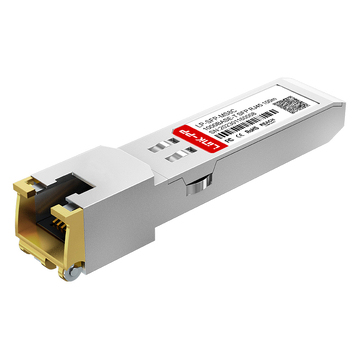
1000BASE-LX SFP is a Gigabit Ethernet optical transceiver designed for long-distance fiber links, typically up to 10km over single-mode fiber. It operates at a 1310nm wavelength and is widely used in enterprise, campus, and access networks where copper cabling or short-reach multimode optics are no longer sufficient.
In real-world deployments, 1000BASE-LX SFP is often chosen not because it is the newest technology, but because it solves a very specific problem: stable 1G connectivity over extended fiber distances using existing single-mode infrastructure. This makes it a practical option for building-to-building links, backbone extensions, and networks that do not yet require a full upgrade to 10G.
However, despite its long-standing presence in Gigabit Ethernet standards, 1000BASE-LX SFP is frequently misunderstood. Questions around supported fiber types, actual transmission distance, compatibility with modern switches, and whether it still makes sense today are common among network engineers and system integrators.
This guide explains what a 1000BASE-LX SFP is, how it works, where it fits in modern networks, and how to choose the right module for your scenario. By the end of this article, you will clearly understand when 1000BASE-LX SFP is the right choice—and when alternative solutions may be more suitable.
? What Is a 1000BASE-LX SFP?
A 1000BASE-LX SFP is a Gigabit Ethernet optical module designed to transmit data at 1Gbps over long-distance fiber links, typically up to 10km using single-mode fiber (SMF).
It complies with the IEEE 802.3z 1000BASE-LX standard and is widely used in networks that require stable 1G connectivity beyond the reach of copper or short-range multimode optics.
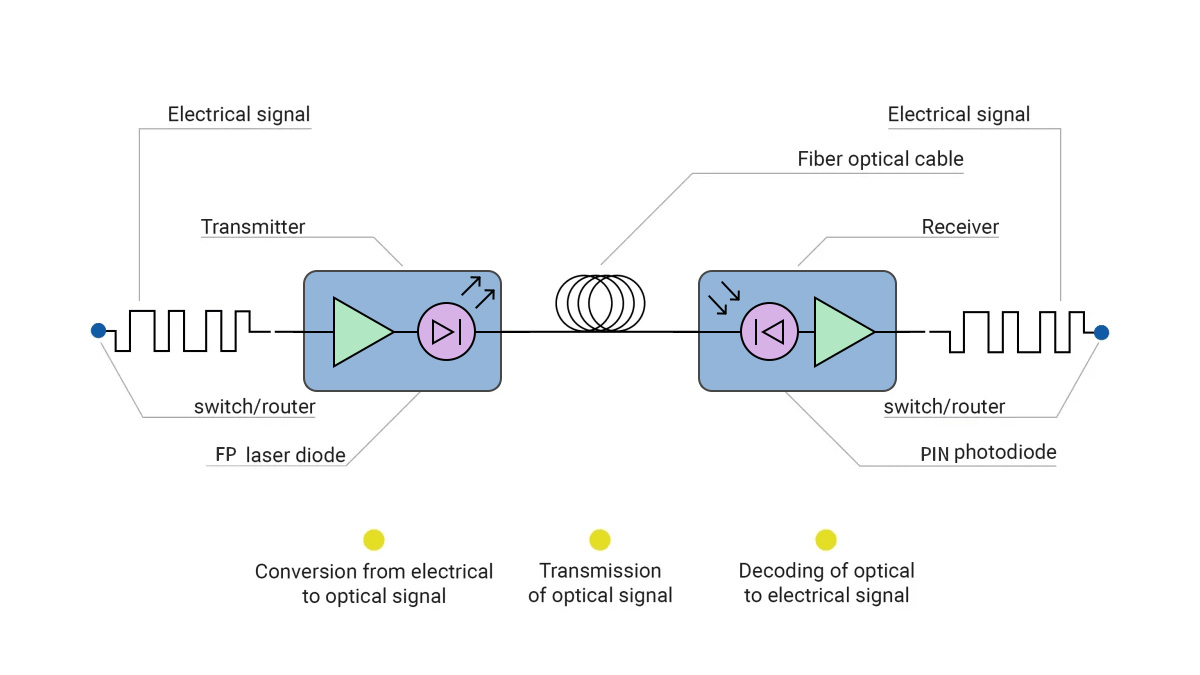
From a functional perspective, a 1000BASE-LX SFP converts electrical signals from a network switch or router into optical signals for fiber transmission, and then converts them back at the receiving end. This makes it a core building block for Gigabit Ethernet deployments where distance, signal stability, and fiber infrastructure are key considerations.
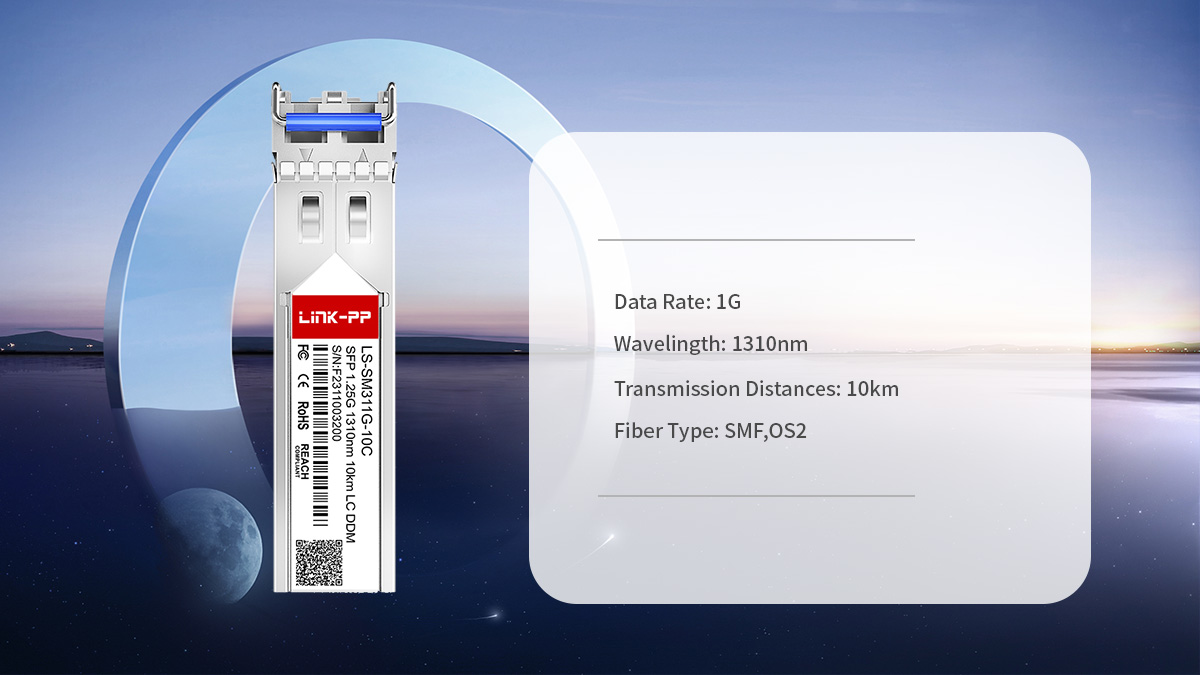
Key Characteristics of 1000BASE-LX SFP
-
Data rate: 1Gbps (Gigabit Ethernet)
-
Standard: IEEE 802.3z (1000BASE-LX)
-
Operating wavelength: 1310nm
-
Typical transmission distance: Up to 10km over single-mode fiber
-
Form factor: SFP (Small Form-factor Pluggable)
-
Hot-swappable: Yes, supports live insertion and removal
These characteristics define where 1000BASE-LX SFP fits best: networks that need longer reach than multimode solutions without moving to higher-speed optics.
What Does “LX” Mean in 1000BASE-LX?
“LX” stands for long wavelength and extended reach within the Gigabit Ethernet standard.
Unlike 1000BASE-SX, which operates at 850nm and is optimized for short distances on multimode fiber, 1000BASE-LX uses a 1310nm laser that performs better over longer distances and single-mode fiber.
This wavelength choice is the main reason why 1000BASE-LX SFP can support kilometer-level links while maintaining low signal attenuation and stable optical performance.
Where 1000BASE-LX SFP Fits in a Network
1000BASE-LX SFP is typically used in scenarios where:
-
Copper Ethernet cannot meet distance requirements
-
Multimode fiber links are too short or impractical
-
Single-mode fiber infrastructure already exists
-
1G bandwidth is sufficient for the application
In these cases, 1000BASE-LX SFP provides a cost-effective and technically mature solution for extending Gigabit Ethernet over fiber.
? How Does a 1000BASE-LX SFP Work?
A 1000BASE-LX SFP works by converting electrical Ethernet signals into optical signals at a 1310nm wavelength, transmitting them over fiber, and then converting them back into electrical signals at the receiving end. This electrical-to-optical conversion is what allows Gigabit Ethernet traffic to travel far beyond the distance limits of copper cabling.
Inside the SFP module, the process is fully integrated and standardized, which ensures interoperability across compliant switches and routers. From a network design perspective, this means the module functions as a transparent optical interface rather than a protocol-aware device.
Signal Transmission Process
The operation of a 1000BASE-LX SFP can be broken down into three core steps:
-
Electrical input from the switch
The host device sends a 1Gbps electrical Ethernet signal to the SFP interface. -
Optical conversion and transmission
A laser operating at 1310nm converts the electrical signal into an optical signal and launches it into the fiber. -
Optical reception and electrical output
At the far end, the receiving SFP detects the optical signal and converts it back into an electrical Ethernet signal.
This end-to-end process happens continuously and in real time, enabling full-duplex Gigabit Ethernet communication over fiber links up to 10km.
Why 1310nm Is Used for 1000BASE-LX
The 1310nm wavelength is chosen because it offers low attenuation and stable performance over single-mode fiber at kilometer-level distances.
Compared with 850nm wavelengths used in short-reach optics, 1310nm experiences less signal loss and is less sensitive to modal dispersion, making it better suited for long-distance links.
This wavelength also aligns well with existing single-mode fiber infrastructure, which is why 1000BASE-LX SFP is commonly deployed in campus backbones and access networks.
Interaction with Fiber Types
Although 1000BASE-LX SFP is primarily designed for single-mode fiber, its working principle allows limited use over multimode fiber under specific conditions:
-
Single-mode fiber provides optimal performance and maximum reach
-
Multimode fiber may be used for shorter distances
-
Mode conditioning cables are recommended to reduce signal distortion on MMF
These considerations are not related to the protocol itself, but to how the optical signal behaves inside different fiber types.
Why the Working Principle Matters for Network Design
Understanding how a 1000BASE-LX SFP works helps clarify when it is the right choice:
-
It extends Gigabit Ethernet beyond copper distance limits
-
It enables long-reach 1G links without moving to 10G optics
-
It integrates cleanly into standard SFP-based network hardware
For networks where distance, fiber availability, and cost must be balanced, the working mechanism of 1000BASE-LX SFP explains why it remains a practical and widely used solution.
? Supported Fiber Types for 1000BASE-LX SFP
1000BASE-LX SFP is primarily designed for single-mode fiber, but it can also operate over multimode fiber under specific conditions.
Understanding this distinction is critical, because fiber type directly affects transmission distance, signal quality, and long-term link stability.
| Fiber Type | Core Size | Supported | Deployment Notes |
|---|---|---|---|
| OS1 / OS2 Single-Mode Fiber | 9/125 μm | Yes | Native and recommended fiber type |
| OM1 Multimode Fiber | 62.5/125 μm | Yes | Mode conditioning patch cord recommended |
| OM2 Multimode Fiber | 50/125 μm | Yes | Mode conditioning patch cord recommended |
| OM3 / OM4 Multimode Fiber | 50/125 μm | Limited | Not commonly recommended for LX deployments |
In practice, single-mode fiber delivers the most stable performance, while multimode fiber should only be used when distance is short and proper conditioning is applied.
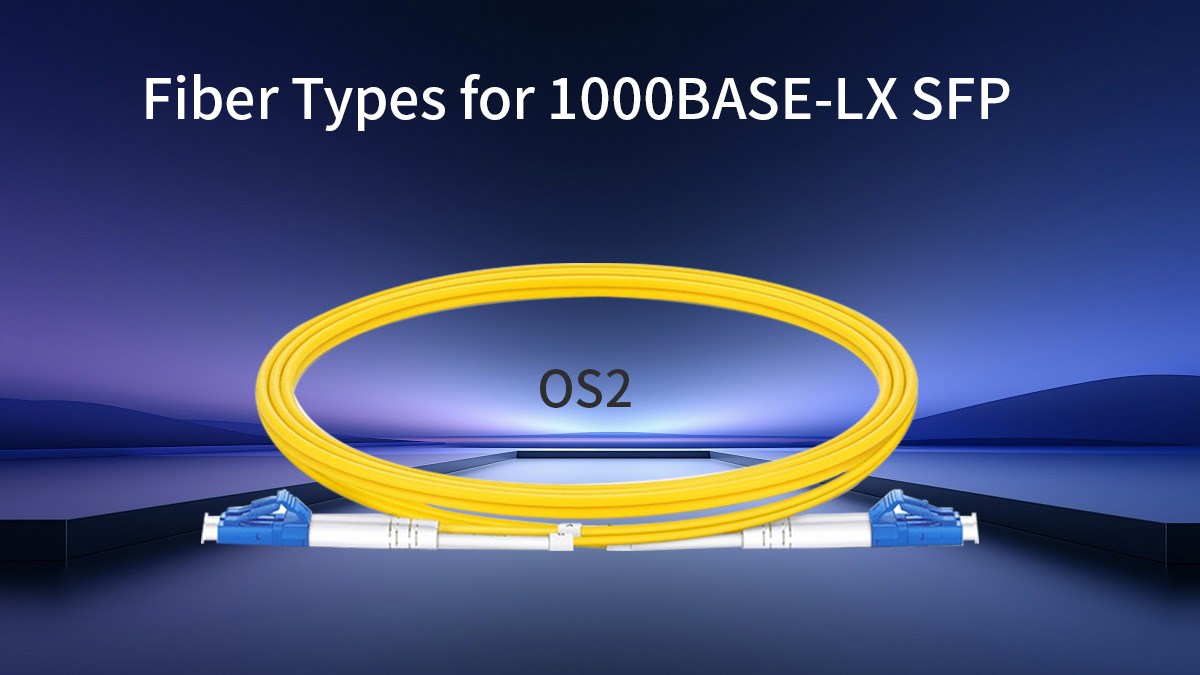
Single-Mode Fiber (SMF)
Single-mode fiber is the recommended and standard fiber type for 1000BASE-LX SFP.
When used with SMF, the module can achieve its full specified reach—typically up to 10km—while maintaining stable optical performance.
Key reasons SMF works best with 1000BASE-LX SFP include:
-
Optimized operation at a 1310nm wavelength
-
Low attenuation over long distances
-
Minimal modal dispersion
-
Predictable and repeatable link performance
In practical deployments, this makes single-mode fiber the default choice for campus backbones, building-to-building connections, and access network links using 1000BASE-LX optics.
Multimode Fiber (MMF)
1000BASE-LX SFP can operate over multimode fiber, but with important limitations.
Because the module uses a long-wavelength laser optimized for SMF, direct operation on MMF may introduce signal distortion, especially over longer distances.
When multimode fiber is used:
-
Transmission distance is significantly shorter than on SMF
-
Performance depends on core size (50/125µm vs 62.5/125µm)
-
Link stability can vary between environments
For this reason, multimode fiber should be considered a conditional option, not the primary design choice for 1000BASE-LX SFP links.
Mode Conditioning Cables and Why They Matter
Mode conditioning cables are used to improve signal quality when running 1000BASE-LX SFP over multimode fiber.
They work by offsetting the laser launch position, reducing modal dispersion inside the fiber core.
Mode conditioning is typically recommended when:
-
1000BASE-LX SFP is connected to legacy multimode fiber
-
The link length approaches the upper limits of MMF support
-
Stable operation is required without replacing existing fiber
While this approach can extend compatibility, it adds complexity and is generally less robust than a native single-mode deployment.
Choosing the Right Fiber Type
From a network design perspective, the fiber choice for 1000BASE-LX SFP can be summarized as follows:
-
Use single-mode fiber for maximum distance, stability, and future-proofing
-
Use multimode fiber only when SMF is unavailable and link distance is short
-
Consider mode conditioning as a workaround, not a long-term strategy
Selecting the correct fiber type ensures that 1000BASE-LX SFP delivers the performance it was designed for, without introducing avoidable operational risks.
? Transmission Distance of 1000BASE-LX SFP
The typical transmission distance of a 1000BASE-LX SFP is up to 10km when used with single-mode fiber under standard conditions.
This distance is defined by the IEEE 802.3z specification and reflects an optical budget that balances signal power, attenuation, and receiver sensitivity.
In practice, however, the achievable distance is not a fixed number. It depends on fiber type, link quality, and the overall optical environment of the network.
| Fiber Type | Wavelength | Typical Distance | Practical Considerations |
|---|---|---|---|
| Single-Mode Fiber (SMF) | 1310nm | Up to 10km | Standard IEEE-defined reach |
| Multimode Fiber (MMF) | 1310nm | Up to 550m | Mode conditioning required |
| OM1 / OM2 MMF | 1310nm | 220–550m | Distance varies by core size |
For deployments approaching the maximum distance, fiber quality, connector loss, and environmental factors should always be evaluated.
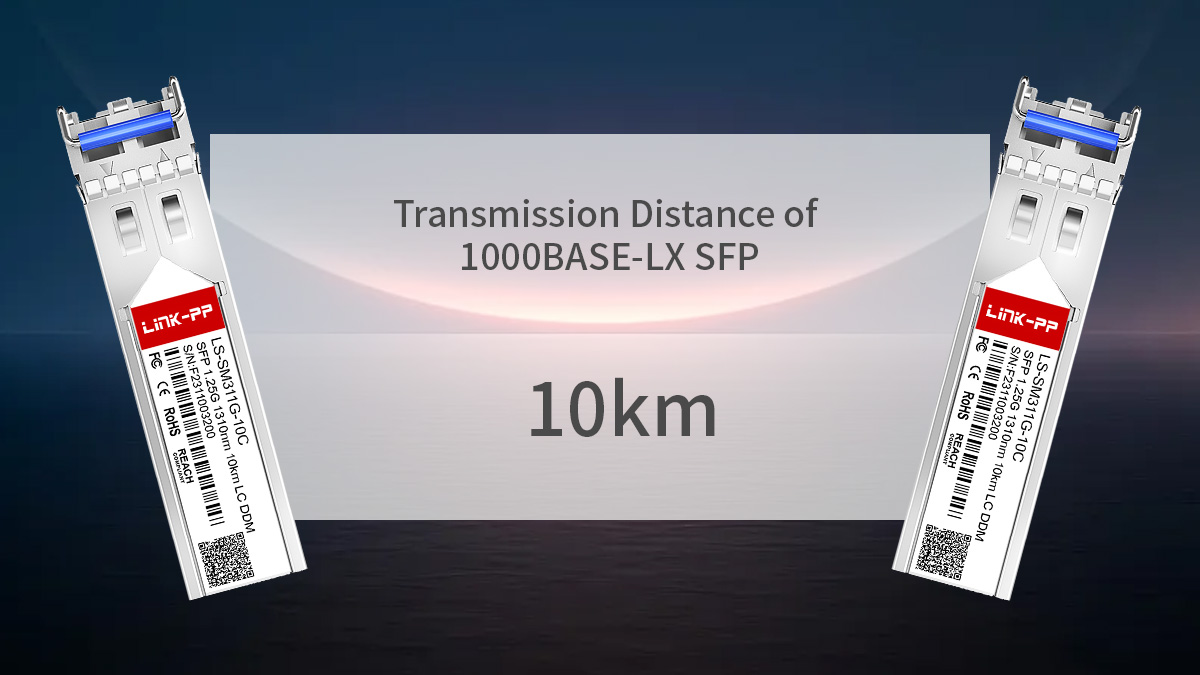
Standard Distance on Single-Mode Fiber
When deployed over single-mode fiber, 1000BASE-LX SFP is designed to deliver consistent performance across long links:
-
Typical maximum reach: up to 10km
-
Operating wavelength: 1310nm
-
Designed for point-to-point fiber links
-
Stable performance in enterprise and access networks
This makes it suitable for most campus backbones and inter-building connections without requiring additional amplification or advanced optical tuning.
Practical Distance on Multimode Fiber
Although not its primary design target, 1000BASE-LX SFP can operate over multimode fiber at much shorter distances:
-
Reach is significantly reduced compared with SMF
-
Performance varies based on fiber core size and quality
-
Modal dispersion becomes a limiting factor
For this reason, multimode deployments are usually restricted to short links and should be carefully validated during planning.
Factors That Affect Real-World Transmission Distance
Even when using single-mode fiber, several factors can influence how close a deployment gets to the theoretical 10km limit:
-
Fiber attenuation caused by length, splices, and connectors
-
Optical loss from patch panels and intermediate connections
-
Transmitter and receiver performance variations between vendors
-
Environmental conditions such as temperature and installation quality
These factors explain why two networks using the same 1000BASE-LX SFP may experience different maximum link distances.
When Distance Becomes a Design Constraint
Understanding transmission distance helps determine whether 1000BASE-LX SFP is the right solution:
-
It is ideal for long 1G links within a 10km range
-
It may not be sufficient for metro-scale connections
-
It avoids the cost and complexity of higher-power optics
When distance requirements exceed what 1000BASE-LX SFP can reliably support, alternative solutions—such as extended-reach or higher-speed optics—should be considered.
? Common Applications of 1000BASE-LX SFP
1000BASE-LX SFP is commonly used in networks that require stable 1Gbps connectivity over long-distance fiber links, especially where single-mode fiber infrastructure is already in place. Its role is not to maximize bandwidth, but to provide reliable, predictable Gigabit Ethernet connectivity across distances that copper or short-reach optics cannot support.
Thanks to its long reach and stable optical characteristics, 1000BASE-LX SFP is widely used across enterprise, campus, and service provider networks.
| Application Scenario | Fiber Type | Typical Distance | Why LX Is Used |
|---|---|---|---|
| Campus backbone networks | SMF | 2–10km | Reliable long-distance links |
| Building-to-building connections | SMF / MMF | 500m–5km | Flexible fiber support |
| ISP access networks | SMF | 5–10km | Cost-effective Gigabit access |
| Industrial Ethernet environments | SMF | 1–10km | EMI resistance and stability |
These scenarios highlight why 1000BASE-LX remains relevant where 1Gbps bandwidth is sufficient but distance matters.
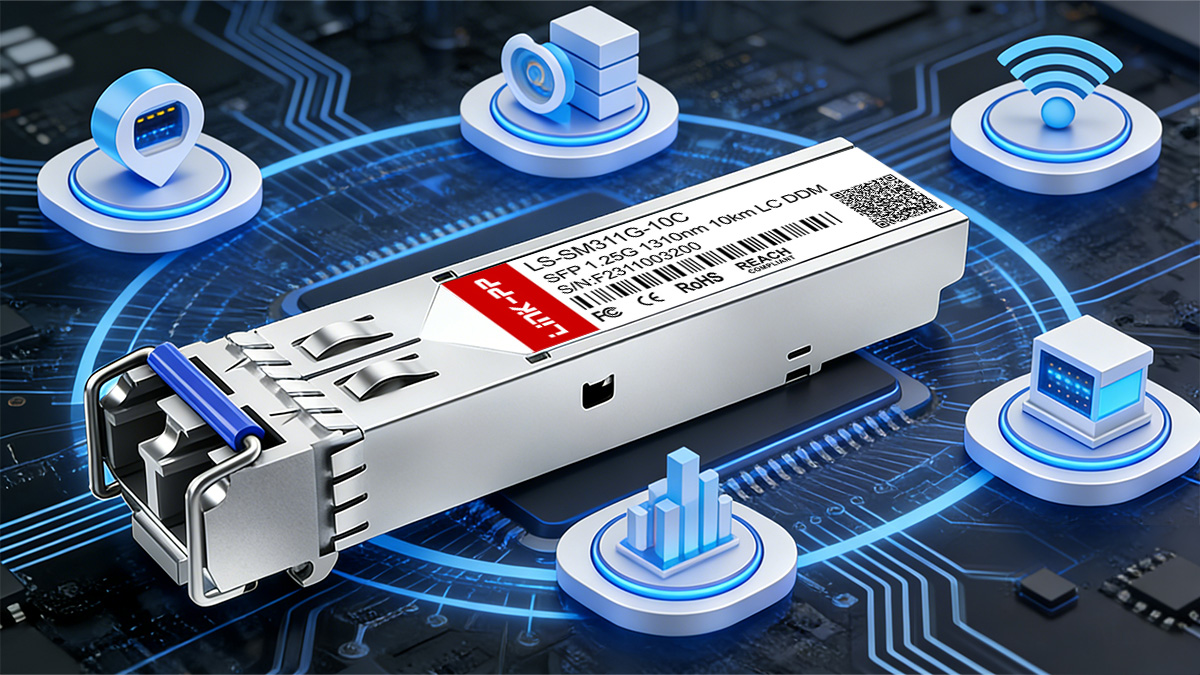
Campus and Enterprise Backbone Links
In enterprise and campus networks, 1000BASE-LX SFP is frequently deployed to connect:
-
Core switches and distribution switches
-
Different buildings within the same campus
-
Data closets separated by long fiber runs
These backbone links often span hundreds of meters to several kilometers, making 1000BASE-LX SFP a practical choice when 1G bandwidth is sufficient and long-term stability is a priority.
Building-to-Building Fiber Connections
Inter-building connections are one of the most common use cases for 1000BASE-LX SFP.
Single-mode fiber allows links to run up to 10km without signal regeneration, which is ideal for:
-
Office parks and industrial campuses
-
Hospitals and educational institutions
-
Warehouses and manufacturing facilities
In these environments, reliability and distance matter more than peak throughput.
Access and Aggregation Networks
In access-layer and aggregation-layer deployments, 1000BASE-LX SFP is often used to:
-
Aggregate edge switches back to a central location
-
Extend network access to remote facilities
-
Support ISP or enterprise access networks
These links benefit from the balance between reach, cost, and compatibility that 1000BASE-LX SFP provides.
Legacy Infrastructure and Gradual Upgrades
1000BASE-LX SFP plays an important role in networks that are evolving gradually rather than upgrading all at once.
It is commonly found in environments where:
-
Single-mode fiber is already installed
-
Network hardware supports SFP but not SFP+
-
A full 10G upgrade is not yet justified
In such cases, 1000BASE-LX SFP helps extend the life of existing infrastructure while maintaining dependable connectivity.
Industrial and Specialized Environments
Because of its optical stability and predictable behavior, 1000BASE-LX SFP is also used in:
-
Industrial Ethernet networks
-
Transportation and utility systems
-
Outdoor or harsh operating environments
These applications value long-distance fiber links and consistent performance over raw bandwidth.
? 1000BASE-LX vs 1000BASE-SX SFP
The primary difference between 1000BASE-LX and 1000BASE-SX SFP lies in wavelength, supported fiber type, and transmission distance.
Both are Gigabit Ethernet standards, but they are designed for very different network scenarios.
| Feature | 1000BASE-LX SFP | 1000BASE-SX SFP |
|---|---|---|
| Wavelength | 1310nm | 850nm |
| Fiber Type | Single-mode & Multimode | Multimode only |
| Maximum Distance | Up to 10km | Up to 550m |
| Typical Cost | Medium | Lower |
| Best Use Case | Campus and metro links | Short-range data center links |
From a design perspective, LX is chosen for distance and flexibility, while SX is favored for short, cost-sensitive deployments.
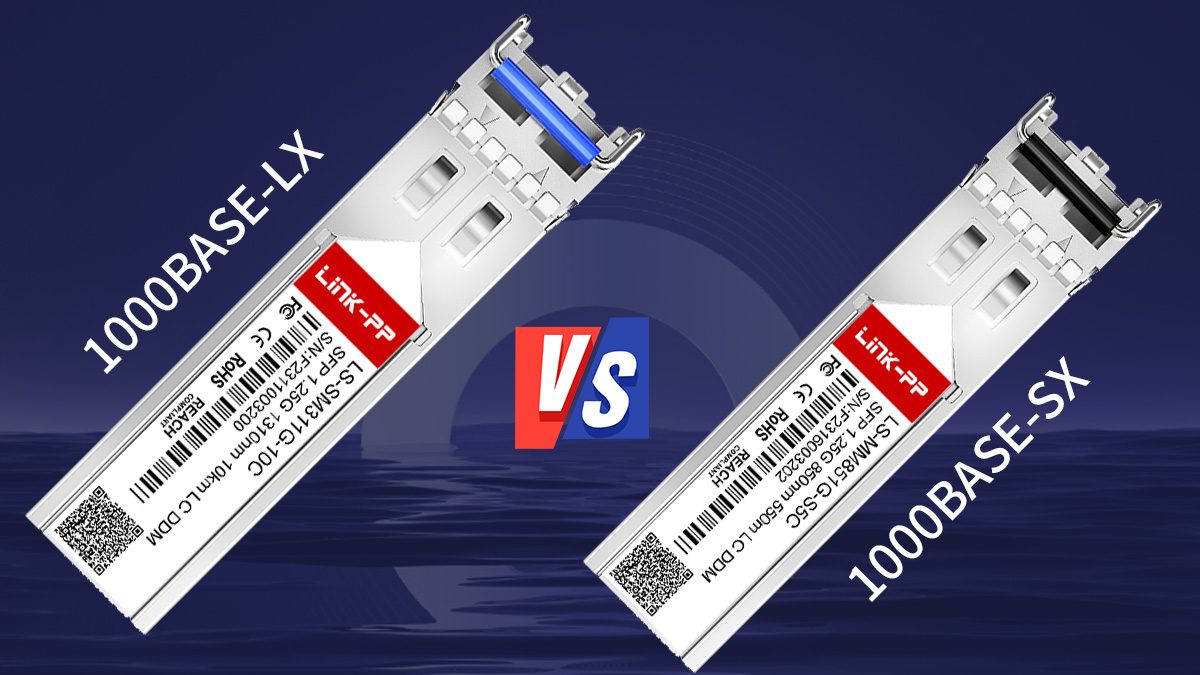
Core Technical Differences
At a technical level, 1000BASE-LX and 1000BASE-SX differ in several key aspects:
-
Wavelength
-
1000BASE-LX operates at 1310nm
-
1000BASE-SX operates at 850nm
-
-
Primary fiber type
-
LX is optimized for single-mode fiber
-
SX is optimized for multimode fiber
-
-
Typical transmission distance
-
LX supports links up to 10km on SMF
-
SX is typically limited to a few hundred meters on MMF
-
These differences directly influence where each module performs best.
Practical Deployment Differences
From a deployment perspective, the two modules serve distinct roles:
-
1000BASE-LX is suited for long-distance links between buildings or network segments
-
1000BASE-SX is designed for short, high-density connections within a building or data center
-
LX prioritizes reach and fiber compatibility, while SX prioritizes lower cost and short-range efficiency
As a result, LX and SX are not interchangeable in most real-world designs.
Cost and Infrastructure Considerations
Cost is often a deciding factor when choosing between LX and SX:
-
SX modules are generally less expensive
-
Multimode fiber is commonly used inside buildings
-
LX becomes more cost-effective when long distances or existing SMF are involved
Choosing SX for a long-distance link can lead to performance limitations, while choosing LX for very short links may be unnecessary.
Quick Selection Guide
A simplified way to choose between the two:
-
Choose 1000BASE-LX SFP if:
-
The link distance exceeds typical MMF limits
-
Single-mode fiber is already installed
-
Long-term scalability and stability matter
-
-
Choose 1000BASE-SX SFP if:
-
The link is short and confined within a building
-
Multimode fiber is readily available
-
Cost optimization is a priority
-
Why the Difference Matters
Understanding the difference between 1000BASE-LX and 1000BASE-SX SFP helps avoid common design mistakes:
-
Overestimating SX transmission distance
-
Using LX unnecessarily on short links
-
Mixing fiber types without proper planning
By aligning the transceiver choice with fiber infrastructure and distance requirements, network designers can achieve both reliable performance and cost efficiency.
? Compatibility and Interoperability Considerations
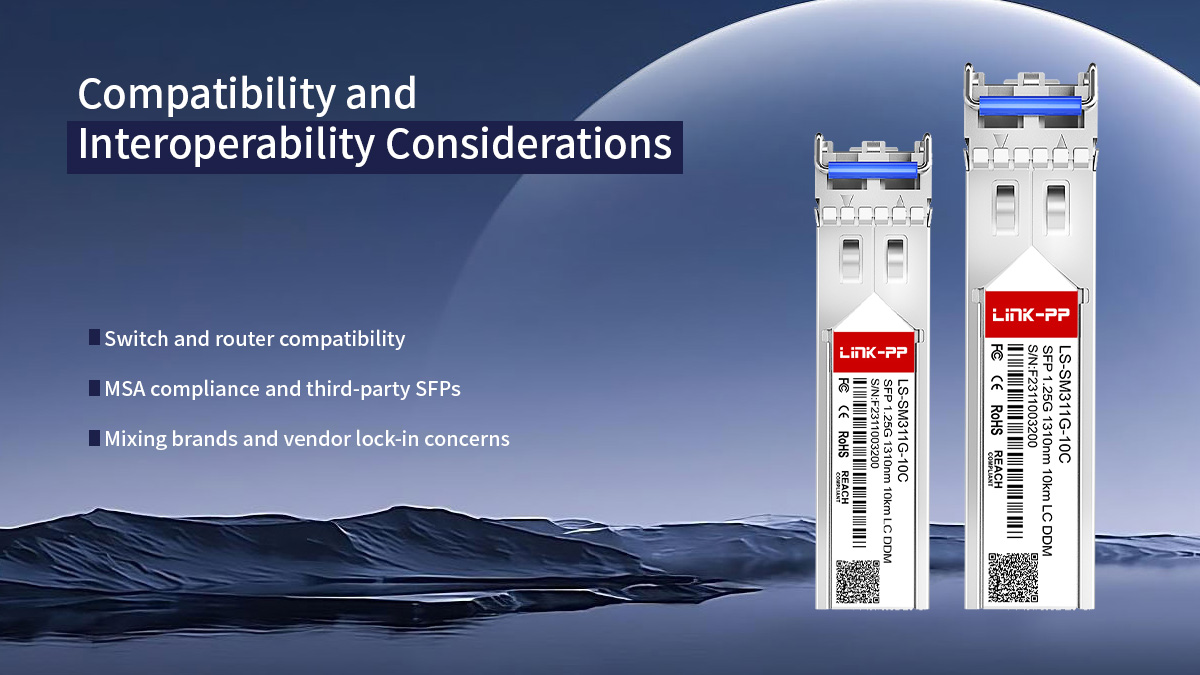
1000BASE-LX SFP is designed to be interoperable across compliant network devices, but real-world compatibility still depends on standards compliance, vendor implementation, and switch policies. Understanding these factors helps avoid link failures and unnecessary vendor lock-in.
Standards and MSA Compliance
At the foundation level, compatibility is defined by standards:
-
1000BASE-LX is specified under IEEE 802.3z
-
Most modern SFP modules follow MSA (Multi-Source Agreement) specifications
-
MSA-compliant modules are designed to work across different vendors’ hardware
When both the switch and the SFP module adhere to these standards, basic interoperability is typically reliable.
Switch and Vendor Compatibility
Despite standardization, some switch vendors implement additional checks:
-
Certain switches may restrict or warn against third-party SFPs
-
Others allow third-party modules but flag them with system messages
-
Firmware versions can affect module recognition and behavior
This means compatibility is not only a hardware issue, but also a software and policy consideration.
Mixing Vendors in the Same Link
1000BASE-LX SFP modules from different vendors can usually interoperate on opposite ends of a link, as long as both comply with the same standard.
However, best practices include:
-
Matching wavelength and distance specifications on both ends
-
Avoiding mismatched optical power levels
-
Verifying link performance during initial deployment
This approach reduces the risk of intermittent or unstable connections.
Coding, EEPROM, and OEM Lock-In
Some vendors use module coding to enforce OEM ecosystems:
-
EEPROM coding may limit recognition by certain switches
-
“Vendor-locked” environments can reject uncertified modules
-
Third-party modules are often programmed for specific platforms
Understanding these mechanisms is essential when planning cost-effective deployments using non-OEM SFPs.
Practical Compatibility Best Practices
To ensure smooth interoperability with 1000BASE-LX SFP:
-
Confirm switch support for standard SFP modules
-
Check vendor documentation for third-party module policies
-
Test modules in the target environment before large-scale rollout
-
Keep firmware up to date on network devices
Following these steps minimizes deployment risk while preserving flexibility in sourcing optical modules.
? Advantages and Limitations of 1000BASE-LX SFP
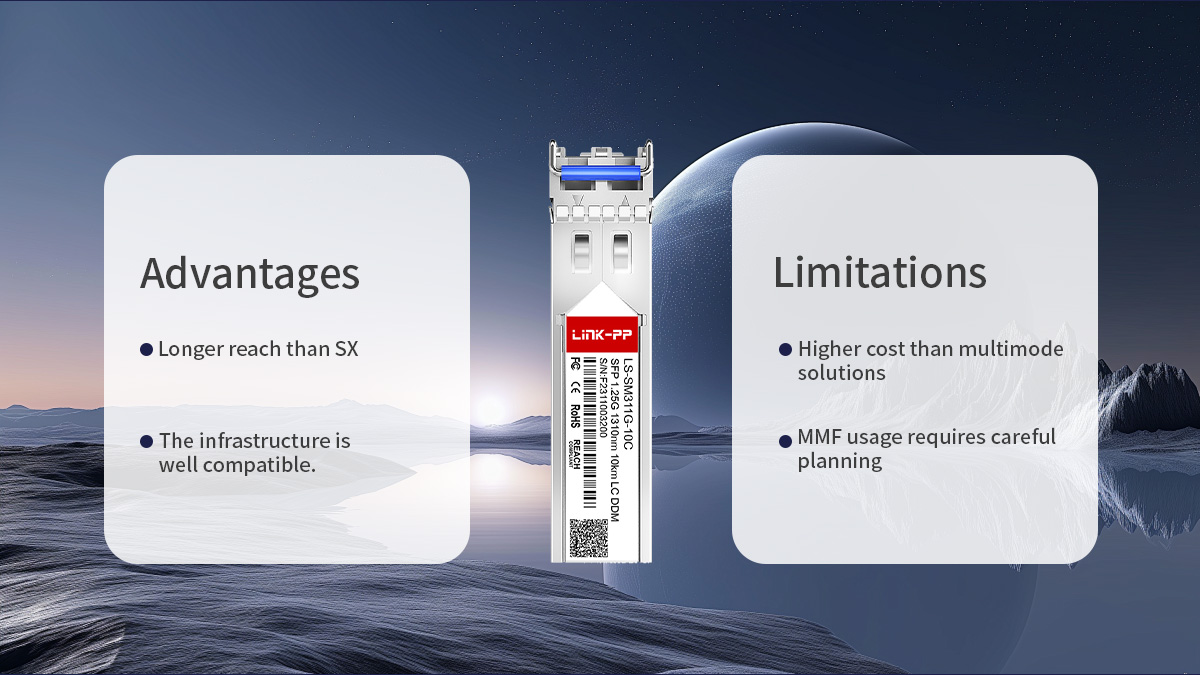
1000BASE-LX SFP is valued for its long transmission distance and stable performance, but it is not the best choice for every Gigabit Ethernet scenario. Understanding both its strengths and limitations helps avoid overengineering or misapplication.
Key Advantages
The main advantage of 1000BASE-LX SFP is its ability to deliver reliable 1Gbps connectivity over long fiber distances.
Key benefits include:
-
Long reach on single-mode fiber
Supports links up to 10km without additional optical amplification. -
Stable optical performance
1310nm wavelength provides low attenuation and consistent signal quality. -
Broad compatibility
Works with most SFP-based switches and routers when standards-compliant. -
Mature and well-understood technology
Widely deployed with predictable behavior in real-world networks. -
Cost-effective for long 1G links
Avoids the higher cost and power consumption of higher-speed optics.
These advantages make 1000BASE-LX SFP especially suitable for backbone and inter-building connections.
Key Limitations
Despite its strengths, 1000BASE-LX SFP has limitations that should be considered during network planning.
Common constraints include:
-
Limited bandwidth
Fixed at 1Gbps, which may not meet modern high-traffic requirements. -
Higher cost than short-reach options
Typically more expensive than 1000BASE-SX modules. -
Less ideal for short distances
Overkill for in-rack or same-room connections. -
Multimode fiber complexity
MMF deployments may require mode conditioning and careful validation.
These limitations do not reduce its reliability, but they define where it makes the most sense.
When the Trade-Off Makes Sense
1000BASE-LX SFP is a strong choice when:
-
Distance is the primary constraint
-
Single-mode fiber infrastructure already exists
-
1Gbps throughput is sufficient for the application
-
Stability and predictability are more important than peak speed
In contrast, networks requiring higher bandwidth or ultra-short links may benefit more from alternative solutions.
? LINK-PP 1000BASE-LX SFP Solution for Gigabit Networks
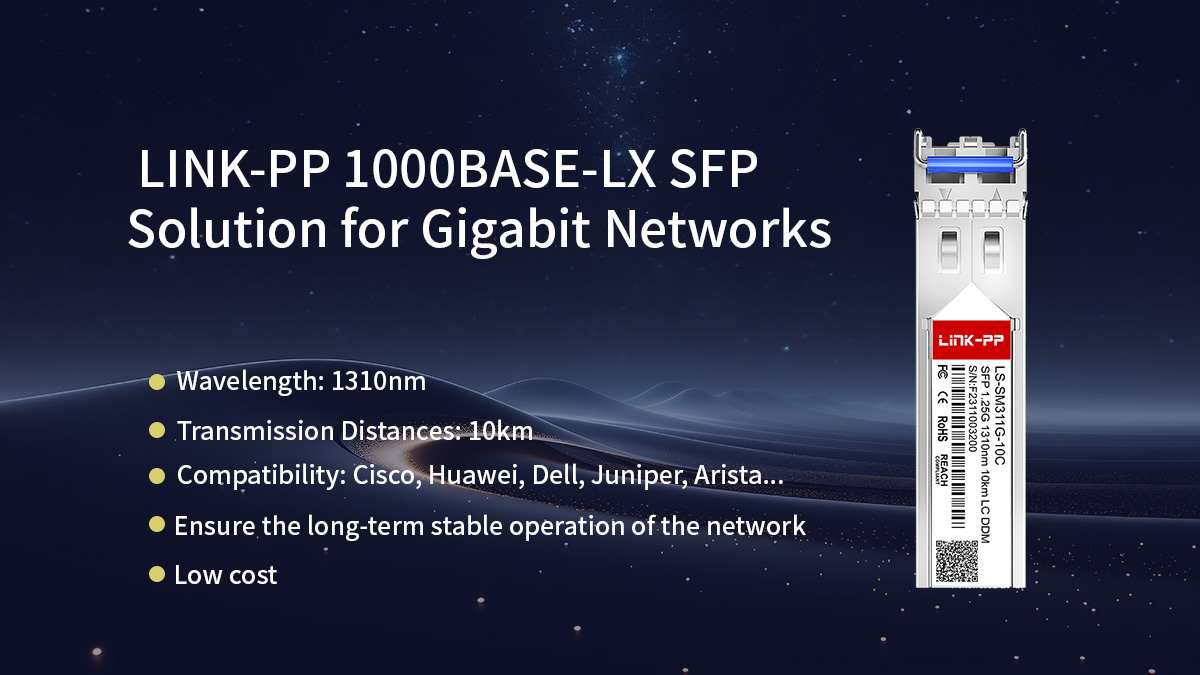
LINK-PP 1000BASE-LX SFP is designed to provide a stable, standards-compliant Gigabit Ethernet solution for long-distance fiber deployments, especially in multi-vendor network environments. Its positioning is straightforward: deliver reliable 1G optical connectivity over single-mode fiber without unnecessary complexity or vendor lock-in.
| LINK-PP Model | Fiber Type | Distance | Compatibility | Recommended Scenario |
|---|---|---|---|---|
| LINK-PP LS-SM311G-10C | Single-Mode | Up to 10km | Cisco, HPE, Generic | Campus backbone |
| LINK-PP LS-MM851G-S5C | Multimode | Up to 550m | Multi-vendor | Enterprise access |
By aligning with IEEE standards and common switch platforms, LINK-PP modules simplify deployment while maintaining cost efficiency.
Typical Network Challenges Addressed
In real deployments, 1000BASE-LX links often face practical challenges beyond basic distance requirements:
-
Maintaining stable performance over long single-mode fiber runs
-
Ensuring compatibility with switches from different vendors
-
Controlling costs in large-scale or repeat deployments
-
Avoiding interoperability issues caused by proprietary optics
LINK-PP’s 1000BASE-LX SFP is engineered to address these common pain points rather than introducing additional configuration overhead.
Core Technical Characteristics
LINK-PP 1000BASE-LX SFP modules follow mainstream industry specifications:
-
IEEE 802.3z compliant for 1000BASE-LX
-
1310nm wavelength optimized for single-mode fiber
-
Up to 10km transmission distance on SMF
-
MSA-compliant SFP form factor for broad hardware support
-
Hot-swappable design for operational flexibility
These characteristics ensure that the module behaves predictably in standard Gigabit Ethernet environments.
Compatibility Across Network Platforms
Interoperability is a key design focus of LINK-PP optical modules.
LINK-PP 1000BASE-LX SFPs are built to integrate smoothly with a wide range of SFP-enabled switches and routers, including equipment commonly found in enterprise, campus, and access networks.
From a deployment perspective, this means:
-
Easier integration into existing infrastructures
-
Reduced dependency on OEM-branded optics
-
Greater flexibility during expansion or hardware refresh cycles
This is particularly valuable in networks where equipment from multiple vendors is already in use.
Deployment Scenarios Where LINK-PP Fits Best
LINK-PP 1000BASE-LX SFP is typically deployed in scenarios such as:
-
Campus backbone fiber links
-
Building-to-building connections over SMF
-
Access and aggregation layer fiber uplinks
-
Long-distance 1G links where 10G is unnecessary
In these use cases, the focus is on reliability, compatibility, and cost-efficiency, rather than maximum throughput.
Practical Positioning in Modern Networks
Rather than replacing higher-speed optics, LINK-PP 1000BASE-LX SFP complements them.
It is well suited for maintaining and extending Gigabit Ethernet infrastructure where:
-
Fiber distance exceeds multimode limits
-
Network traffic profiles remain within 1Gbps
-
Long-term operational stability is required
This makes it a pragmatic choice for networks that value balanced performance over headline speeds.
? FAQs About 1000BASE-LX SFP
Can 1000BASE-LX SFP work with multimode fiber?
Yes, but only for short distances and under specific conditions. While 1000BASE-LX SFP is designed for single-mode fiber, it can operate over multimode fiber with reduced reach, often requiring a mode conditioning cable to maintain signal quality.
What is the maximum distance of a 1000BASE-LX SFP?
Up to 10km when used with single-mode fiber under standard conditions. Actual distance may be shorter depending on fiber quality, connectors, and overall link loss.
Is 1000BASE-LX SFP compatible with all SFP ports?
It is compatible with most SFP ports that support Gigabit Ethernet and follow IEEE 802.3z and MSA standards. However, some switches may restrict or warn against third-party SFP modules due to vendor policies.
Can I mix different brands of 1000BASE-LX SFP on the same link?
Yes, in most cases. As long as both modules comply with the same standard and specifications, cross-vendor interoperability is generally reliable. Testing is recommended for critical links.
When should I choose 1000BASE-LX instead of 1000BASE-SX?
Choose 1000BASE-LX when you need longer transmission distance or when single-mode fiber is already installed. For short links on multimode fiber, 1000BASE-SX is usually more cost-effective.
Is 1000BASE-LX SFP still a good choice today?
Yes, when 1Gbps bandwidth is sufficient and long-distance fiber connectivity is required. It remains relevant for campus networks, access links, and environments where a full 10G upgrade is unnecessary.
Do 1000BASE-LX SFP modules support hot swapping?
Yes. 1000BASE-LX SFP modules are hot-swappable, allowing installation or replacement without powering down the network device.
? Summary
1000BASE-LX SFP remains a practical and reliable solution for Gigabit Ethernet networks that require long-distance fiber connectivity.
With support for up to 10km transmission over single-mode fiber, stable 1310nm optical performance, and broad interoperability, it continues to serve an important role in campus backbones, building-to-building links, and access networks.
While it is not designed for high-bandwidth applications, 1000BASE-LX SFP excels where distance, stability, and existing fiber infrastructure matter more than raw speed. When selected with the correct fiber type and deployed within its intended range, it delivers predictable performance with minimal operational complexity.
For networks that need dependable 1G optical links without moving to higher-speed optics, LINK-PP 1000BASE-LX SFP provides a standards-compliant and cost-effective option. You can explore compatible models and technical details through the LINK-PP Official Store, making it easier to match the right module to your specific deployment requirements.