In today’s carrier networks, optical components are no longer just interchangeable parts — they are strategic assets that directly influence performance, scalability, and cost efficiency. Among these, the XCVR-A10Y31 has emerged as a critical SFP transceiver module for operators seeking reliable, high-speed connectivity within Ciena environments. As network demands continue to grow, understanding how this module fits into modern infrastructure is essential for making informed sourcing and deployment decisions.
At the same time, rising pressure on both CapEx and OpEx has pushed telecom operators to look beyond OEM-only procurement models. Ciena XCVR-A10Y31 compatible solutions offer a compelling balance between performance and cost, but their real value depends on factors such as compatibility accuracy, quality assurance, and long-term reliability. This makes it crucial to evaluate not just the specifications, but also the broader economic and operational impact of deploying these transceiver modules in carrier-grade networks.
❄️ What is XCVR-A10Y31 SFP Transceiver Module
The XCVR-A10Y31 is a high-performance 1G SFP fiber optic SFP module designed to meet the rigorous demands of carrier-grade optical networks. It serves as a critical interface component, converting electrical signals into optical signals to facilitate high-speed data transmission across fiber optic cabling. Engineered for reliability, this module is specifically tailored to function within the high-density switching and routing environments typical of modern telecommunications infrastructure.

Overview of Ciena XCVR-A10Y31 SFP Specifications
To understand the operational value of the XCVR-A10Y31, one must look at the technical standards that define its performance. These specifications ensure that the module can handle the high throughput requirements of service provider networks while maintaining signal integrity over distance.
- Optical Performance and Wavelength: The XCVR-A10Y31 is primarily engineered for precision at the 1310nm wavelength, a standard choice for balancing fiber attenuation and dispersion. By operating in this "second window" of optical fiber transmission, the module ensures that signal degradation is kept to a minimum, allowing for clear, high-speed data transport across regional and metro network links.
- Single-Mode Fiber (SMF) Integration: Optimized for use with Single-Mode Fiber, this transceiver is capable of supporting significantly longer transmission distances compared to multi-mode alternatives. The narrow core of SMF allows the 1310nm laser to travel with high directional stability, making it the ideal solution for carrier-grade deployments that require reliable connectivity over spans reaching up to 10km or more.
- Form Factor and Hot-Swappability: Built to the standard SFP MSA (Multi-Source Agreement), the XCVR-A10Y31 features a compact design that allows for high port density on line cards. Its hot-swappable nature means network technicians can replace or upgrade modules without powering down the host equipment, minimizing potential service disruptions.
- Digital Diagnostics Monitoring (DDM/DOM): A standout feature is the inclusion of real-time diagnostic capabilities. This allows network administrators to monitor parameters such as optical output power, input power, temperature, and supply voltage, which is essential for proactive maintenance and troubleshooting in complex carrier environments.
Compatibility with Ciena Platforms
Compatibility is the most crucial factor for the XCVR-A10Y31, as it is purpose-built to integrate seamlessly with the Ciena ecosystem. Unlike generic optics, these modules must interact perfectly with the proprietary operating systems and hardware management interfaces found in Ciena’s specialized networking equipment.
The module is engineered to be fully recognized by Ciena’s 6500 Packet-Optical Platform, the Waveserver series, and various 5100/3900 Service Aggregation Switches. Achieving true compatibility involves more than just physical fit; the module’s EEPROM must be programmed with specific vendor code that the Ciena host system identifies during the initial "handshake." This ensures that the system does not trigger "unsupported transceiver" alarms, which can disable ports or limit management functionality. Furthermore, the firmware of the XCVR-A10Y31 is optimized to sync with Ciena’s software-defined networking (SDN) controllers, allowing for automated provisioning and accurate telemetry reporting across the entire network fabric.
❄️ XCVR-A10Y31 in Modern Optical Infrastructure: Beyond a Standard Transceiver
In today’s data-driven landscape, the XCVR-A10Y31 is far more than a simple pluggable component; it acts as a fundamental building block for scalable and resilient optical networks. By providing a standardized yet high-performance interface, it enables carriers to bridge the gap between complex switching logic and the physical fiber plant, ensuring that modern infrastructure can handle exponential traffic growth without compromising reliability.

How Optical Modules Shape Network Economics
Optical modules like the XCVR-A10Y31 are pivotal in determining the total cost of ownership (TCO) for large-scale networks. While the initial purchase price is a factor, the real economic impact lies in the module’s reliability and power consumption. A high-quality transceiver reduces the frequency of truck rolls for field replacements and minimizes the energy overhead in dense central offices, directly protecting the provider’s bottom line.
Furthermore, the ability to source XCVR-A10Y31 compatible transceivers allows operators to break free from vendor lock-in, introducing competitive pricing into the procurement cycle. This flexibility enables more aggressive network expansion projects by freeing up capital that would otherwise be tied up in premium-priced OEM hardware, effectively shifting the economic scale in favor of the service provider.
Where the XCVR-A10Y31 Module Fits in Carrier Architectures
Within a carrier-grade architecture, the XCVR-A10Y31 typically resides at the access and aggregation layers, serving as the critical hand-off point between local service delivery and the core transport network. It is frequently deployed in edge routers and multiservice provisioning platforms (MSPPs) to aggregate various data streams into a coherent optical signal ready for long-haul transmission.
Its role is essential for maintaining the "any-to-any" connectivity required in modern Software-Defined Networking (SDN). By providing a stable physical interface that supports advanced telemetry, the XCVR-A10Y31 ensures that the control plane has accurate visibility into the health of the optical link, allowing for dynamic rerouting and more efficient bandwidth management across the carrier's footprint.
Evolution from Legacy to High-Efficiency Optics
The transition from legacy optical components to high-efficiency modules like the XCVR-A10Y31 marks a significant shift in transceiver technology. Older generations often suffered from higher heat dissipation and less sophisticated laser drivers, which limited port density and increased failure rates. Modern XCVR-A10Y31 designs utilize advanced Integrated Circuits (ICs) that deliver superior signal-to-noise ratios while operating within a much tighter thermal envelope.
This evolution is not just about raw speed; it is about "efficiency per bit." By adopting these refined optical designs, carriers can populate line cards to their maximum capacity without risking thermal shutdowns. This increased density allows for a smaller physical footprint in the data center, reducing the need for expensive cooling infrastructure and supporting a more sustainable, "green" networking model.
Why Compatibility Drives Deployment Decisions
In a Ciena-centric environment, compatibility is the primary driver behind deployment strategy because it dictates the level of automation and monitoring available to the operator. A truly XCVR-A10Y31 compatible module ensures that the network management system (NMS) can fully interact with the transceiver’s internal diagnostics. Without this seamless integration, operators lose the ability to perform remote troubleshooting, leading to increased operational complexity.
Ultimately, deployment decisions hinge on the confidence that a module will perform exactly like an original part under all load conditions. Choosing a validated, compatible XCVR-A10Y31 ensures that the hardware remains transparent to the software layer. This transparency is vital for rapid service rollouts, as it eliminates the need for manual configuration or the risk of port-level rejections that can stall critical infrastructure projects.
❄️ XCVR-A10Y31 Performance Deep Dive: What Actually Impacts ROI
The true return on investment for the XCVR-A10Y31 is measured by its performance under stress and its long-term reliability in live environments. Beyond the initial purchase price, the ROI is fundamentally driven by how well the module maintains signal integrity and energy efficiency over its multi-year lifecycle.

Throughput vs Stability in Real-World Environments
In a laboratory setting, achieving maximum throughput is standard, but real-world carrier environments introduce variables like fiber bends, patch panel attenuation, and temperature fluctuations. The XCVR-A10Y31 is engineered to maintain a consistent bit rate even when the optical budget is pushed to its limits. Its high-quality TOSA (Transmitter Optical Sub-Assembly) ensures a stable extinction ratio, which prevents data packets from being dropped during peak traffic periods.
Stability is the silent partner of throughput; a module that provides high speeds but requires frequent soft-resets is an operational liability. By utilizing high-grade internal components, the XCVR-A10Y31 offers superior Mean Time Between Failures (MTBF). This reliability ensures that the throughput remains "always-on," protecting the carrier's Service Level Agreements (SLAs) and preventing the indirect costs associated with network jitter and packet retransmissions.
Latency Sensitivity in Carrier Networks
For modern applications like 5G backhaul, high-frequency trading, and real-time cloud computing, latency is a critical metric. In these scenarios, the internal processing time of the transceiver — specifically the delay introduced during electrical-to-optical conversion — must be negligible. The XCVR-A10Y31 utilizes optimized chipsets designed to minimize serialized delay, ensuring that data moves through the SFP interface at near-light speeds.
The following table illustrates how latency performance across different network tiers impacts the overall efficiency and ROI of the deployment:
| Application Tier | Latency Requirement | XCVR-A10Y31 Role | ROI Impact |
| 5G Backhaul | Ultra-Low (<1ms) | Minimizes signal jitter at the edge | High; enables premium 5G services |
| Enterprise Cloud | Low (<5ms) | Ensures rapid data synchronization | Moderate; maintains client SLAs |
| Standard Internet | Standard (<20ms) | Provides stable, consistent routing | Low; optimizes basic connectivity |
Power Efficiency and Its Cost Implications
Power efficiency is often overlooked during procurement, yet it is a primary driver of OpEx. A single XCVR-A10Y31 module consumes relatively little power, but when scaled across a chassis containing hundreds of ports, the cumulative energy demand is significant. High-efficiency modules are designed to operate at lower voltages and dissipate less heat, which reduces the load on the facility’s cooling systems.
Lower heat dissipation also extends the lifespan of the host Ciena equipment. Excess heat is a leading cause of premature failure in line cards and adjacent optics; therefore, by selecting a power-optimized XCVR-A10Y31, operators can lower their monthly electricity bills while simultaneously deferring the cost of hardware replacements.
❄️ XCVR-A10Y31 Ciena Compatibility: Hidden Factors That Affect Network Stability
True compatibility for the XCVR-A10Y31 extends far beyond physical dimensions; it is an intricate alignment of software handshakes and hardware signaling. Achieving network stability requires addressing the "invisible" layers of the transceiver — specifically how its internal logic interacts with Ciena’s sophisticated management software to prevent unexpected port flaps or system-wide alarms.

Coding Accuracy and EEPROM Programming
The first line of defense for network stability lies within the module's EEPROM (Electrically Erasable Programmable Read-Only Memory). This chip contains the vendor-specific identification strings that Ciena host devices query upon insertion to verify the module’s authenticity and operational parameters.
- Vendor Code Replication: For an XCVR-A10Y31 to be truly compatible, the EEPROM must be coded with precise hexadecimal values that mirror the OEM’s signatures. Inaccurate coding can lead to the system flagging the module as "unrecognized," which may result in the port being administratively shut down or limited to basic functionality.
- Checksum Integrity: Beyond simple identification, the EEPROM must maintain perfect checksum data. If the internal data structure is corrupted or improperly formatted, the host switch may struggle to read the Digital Diagnostic Monitoring (DDM) data, leaving network administrators blind to the module’s real-time health and performance metrics.
Firmware Synchronization Challenges
Firmware acts as the operational bridge between the optical hardware and the software intelligence of the host system. For the XCVR-A10Y31, the firmware must be perfectly synchronized with Ciena’s specific communication protocols, particularly the I2C (Inter-Integrated Circuit) bus timing. If the transceiver's internal clock or response time deviates from the host’s polling interval, it can trigger intermittent "port flapping," where the link repeatedly drops and recovers without a clear physical cause.
These synchronization challenges often surface during system upgrades or under high-traffic loads when the host CPU is under stress. A carrier-grade XCVR-A10Y31 module ensures that its micro-code is optimized to handle the rapid telemetry requests from Ciena’s management software. This precision prevents data collisions on the management bus, ensuring that the module remains visible and controllable even during complex network reconvergence events.
Risks of Partial Compatibility
Partial compatibility is perhaps the most dangerous state for a carrier-grade network. This occurs when an XCVR-A10Y31 module appears to work initially but fails to support certain advanced features or fails under specific load conditions.
- Functional "Gray Zones": A partially compatible module might pass traffic but fail to report accurate laser bias current or temperature alerts. This lack of transparency prevents the network management system from executing proactive protection switching, turning a minor hardware drift into a major service outage.
- Systemic Instability: In some cases, poor compatibility can cause "interrupt storms" within the switch’s CPU. When the host equipment repeatedly tries to reconcile conflicting data from a non-compliant transceiver, it can consume excessive processing power, leading to sluggish management response times or even chassis-level reboots in extreme scenarios.
Validation Strategies Before Deployment
To prevent network issues, a solid validation strategy is essential before any XCVR-A10Y31 module enters your live environment. Instead of trusting a label, operators should perform a "plug-and-play" test in a controlled environment that mimics their real-world Ciena setup. This step ensures that the hardware and software talk to each other perfectly before they are responsible for actual customer data.
The most effective strategy involves testing the module under stress and through system reboots. You should verify that the Ciena switch recognizes the module instantly and that the diagnostic data — like temperature and laser power — is reading accurately. By catching small coding errors or hardware glitches in the lab, you avoid the high cost and headache of sending a technician to a remote site to fix a failed link later.
❄️ XCVR-A10Y31 Cost Engineering: Breaking Down Price vs Value
Cost engineering for the XCVR-A10Y31 involves a sophisticated analysis that looks beyond the sticker price to evaluate the total economic benefit of the module. By balancing upfront acquisition costs with long-term operational reliability, network operators can achieve a procurement strategy that maximizes value without compromising the integrity of the Ciena infrastructure.

Why Third-Party Compatible Modules Cost Less
Third-party XCVR-A10Y31 modules offer significant savings primarily because they bypass the high brand premiums and extensive sales overhead associated with original equipment manufacturers (OEMs). While the internal hardware components often come from the same high-end semiconductor foundries used by OEMs, third-party providers focus their investment on specialized coding and direct-to-consumer distribution, passing the resulting "brand-name" savings directly to the operator.
CapEx vs OpEx Trade-Off Analysis
When evaluating the XCVR-A10Y31, it is vital to weigh immediate Capital Expenditure (CapEx) against ongoing Operational Expenditure (OpEx). While a lower-priced module reduces the initial investment required to light up a fiber link, it only provides true value if its power efficiency and reliability keep maintenance costs low. A well-engineered compatible module achieves this by minimizing power draw and preventing the "truck rolls" associated with field failures, ensuring that low CapEx does not lead to an OpEx spike.
Cost Leakage in Poor Procurement Decisions
Cost leakage occurs when procurement teams prioritize the absolute lowest price for XCVR-A10Y31 modules without vetting their technical stability, leading to hidden expenses. These "leakages" manifest as increased troubleshooting hours, premature hardware replacements, and the loss of revenue-generating services due to link instability. By investing in carrier-grade compatible modules that are pre-validated for Ciena environments, organizations can plug these financial leaks and ensure their budget is spent on growth rather than repair.
❄️ XCVR-A10Y31 Sourcing Models: From Spot Buying to Strategic Procurement
Efficiently acquiring the XCVR-A10Y31 requires a transition from reactive, short-term purchasing to a proactive procurement strategy. By evaluating how these modules are sourced, organizations can move beyond simple price-chasing and instead build a resilient supply chain that supports continuous network uptime and financial predictability.

The Risks of One-Off Purchasing
Engaging in "spot buying" or one-off purchasing for the XCVR-A10Y31 often exposes a network to significant variability in hardware quality and firmware versions. When modules are sourced haphazardly from different vendors to meet immediate needs, the lack of consistency can lead to "mixed-batch" instability, where different units behave inconsistently under the same Ciena OS environment. This reactive approach also leaves the organization vulnerable to sudden price spikes and inventory shortages, potentially stalling critical expansion projects during periods of high market demand.
Building Long-Term Supplier Relationships
Moving toward a strategic procurement model involves cultivating deep partnerships with suppliers who specialize in Ciena-compatible ecosystems. A long-term relationship ensures that the XCVR-A10Y31 modules you receive are consistently programmed, tested, and held to a unified quality standard, which drastically simplifies lifecycle management. Beyond technical consistency, established partners often provide better technical support, extended warranties, and priority access to stock, turning the supplier into an extension of the network engineering team rather than just a hardware vendor.
Forecasting Demand in Dynamic Networks
In the high-growth environment of carrier networks, forecasting demand for components like the XCVR-A10Y31 is essential for maintaining operational momentum. By analyzing past deployment rates and upcoming project pipelines, procurement teams can establish buffer stocks or scheduled delivery agreements to mitigate the impact of global supply chain fluctuations. Strategic forecasting ensures that network engineers always have high-quality, pre-validated optics on hand, allowing for rapid service activation and reducing the "lead-time lag" that can delay revenue generation.
❄️ XCVR-A10Y31 Quality Control: What Separates Carrier-Grade from Commodity
In the optical market, the distinction between a carrier-grade XCVR-A10Y31 and a generic commodity module lies in the rigor of the underlying quality control process. While they may look identical on the surface, carrier-grade optics undergo exhaustive testing protocols designed to eliminate "infant mortality" failures and ensure long-term performance under the extreme conditions of a live telecommunications environment.

Burn-In Testing and Reliability Screening
One of the most vital steps in high-end manufacturing is the burn-in process, which is designed to identify and weed out defective components before they ever reach a customer’s data center. For the XCVR-A10Y31, this involves operating the module under full load for an extended duration.
- Accelerated Aging: By running the transceiver at elevated temperatures for 24 to 48 hours, manufacturers can simulate weeks of real-world use. This stress test forces weak laser diodes or unstable chipsets to fail in the factory rather than in a critical Ciena switch port, ensuring that only the most resilient units are shipped.
- Performance Stabilization: Constant monitoring during the burn-in period ensures that the optical output power remains stable over time. A module that exhibits power fluctuations or "drift" during this phase is rejected, as such instability would inevitably lead to intermittent link failures in the field.
Signal Integrity and Error Rate Standards
Carrier-grade XCVR-A10Y31 modules are held to much stricter Signal Integrity (SI) standards than budget alternatives. This is typically measured through eye-diagram analysis and Bit Error Rate (BER) testing, ensuring the module can distinguish between "0" and "1" even in the presence of electrical noise.
To meet these standards, the module must demonstrate a BER of 10⁻¹² or better, meaning fewer than one bit in a trillion is transmitted incorrectly. This level of precision is achieved through superior PCB layout design and the use of high-quality TOSA/ROSA (Transmitter/Receiver Optical Sub-Assemblies) that maintain a wide "eye opening" in signal testing. This ensures that the data remains crisp and readable even after traveling through kilometers of single-mode fiber.
Environmental Stress Testing
Because carrier equipment is often housed in non-controlled or harsh environments, the XCVR-A10Y31 must be able to withstand significant environmental fluctuations. Environmental Stress Screening (ESS) subjects the module to rapid temperature cycling and humidity tests to ensure the physical integrity of the optical seals and internal components.
A carrier-grade module must maintain its performance profile whether it is operating in a freezing remote terminal or a sweltering, high-density central office. Quality control teams verify that the 1310nm laser wavelength does not shift outside of its tolerance window during these temperature swings, which is critical for maintaining compatibility with the tight filter requirements of Ciena’s packet-optical platforms.
❄️ XCVR-A10Y31 Deployment Tips: Reducing Failure Rates in the Field
Even the highest quality XCVR-A10Y31 module can underperform if the deployment process is flawed. To safeguard your investment, it is essential to follow standardized installation and maintenance protocols that mitigate physical risks and software conflicts. By focusing on precision during the initial rollout, carriers can drastically reduce the incidence of early-life failures and ensure long-term link stability across the Ciena fabric.

Pre-Deployment Testing Frameworks
Before sending an XCVR-A10Y31 to a remote site, it should pass through a rigorous pre-deployment staging process. This "lab-first" approach allows engineers to identify any potential incompatibilities with specific software releases or hardware revisions used in the local network segment.
- Loopback Stress Testing: Utilizing a physical loopback cable allows technicians to verify the module's transmit and receive capabilities at full capacity. This confirms that the internal laser and receiver are functioning within expected parameters before the module is integrated into a multi-kilometer link.
- CLI Verification: Once inserted into a test chassis, the module should be checked via the Ciena Command Line Interface (CLI). Engineers must confirm that the system correctly identifies the part number, serial number, and that no "unsupported transceiver" warnings are triggered, ensuring a smooth "plug-and-play" experience in the field.
Avoiding Common Installation Mistakes
The physical handling of the XCVR-A10Y31 is often the most overlooked factor in field reliability. Minor errors during installation can lead to permanent hardware damage or degraded signal quality that mimics a faulty component.
- Fiber End-Face Cleanliness: Contamination is the leading cause of optical failure. Technicians must use specialized cleaning tools for both the fiber jumpers and the SFP port itself, as even microscopic dust particles can cause signal reflection (ORL) or permanent "burn-in" damage to the 1310nm laser interface.
- Proper Seating and ESD Safety: Ensuring the module is fully latched into the SFP slot is critical for maintaining a stable electrical connection with the host backplane. Furthermore, technicians should always use ESD (Electrostatic Discharge) wrist straps, as the sensitive integrated circuits inside the XCVR-A10Y31 can be irreparably damaged by static electricity during handling.
Monitoring Optical Health Post-Deployment
Once the XCVR-A10Y31 is live, the work shifts toward proactive monitoring. Utilizing the Digital Diagnostics Monitoring (DDM) capabilities of the module is essential for identifying potential issues before they result in a service outage. By setting up automated alerts within Ciena’s management platform, operators can track real-time metrics such as Tx/Rx power levels and internal temperature.
This continuous data stream allows for the establishment of performance baselines. For example, a gradual decline in Rx power may indicate a dirty connector or a failing fiber splice rather than a problem with the module itself. Having this visibility enables "preventative truck rolls," where technicians can clean or repair the physical plant during scheduled maintenance windows rather than during an emergency midnight outage.
❄️ Conclusion: Maximizing ROI with the Right XCVR-A10Y31 Compatible Module

In the competitive landscape of optical networking, maximizing ROI is not achieved by simply cutting costs, but by investing in components that offer a perfect equilibrium between affordability and carrier-grade reliability. The XCVR-A10Y31 serves as a vital artery in Ciena-based infrastructures, and as we have explored, the long-term value of this module is determined by its coding precision, thermal efficiency, and consistent performance under real-world stress. By moving away from commodity-grade optics and adopting a strategic sourcing mindset, network operators can build a more resilient, scalable, and cost-effective fiber plant.
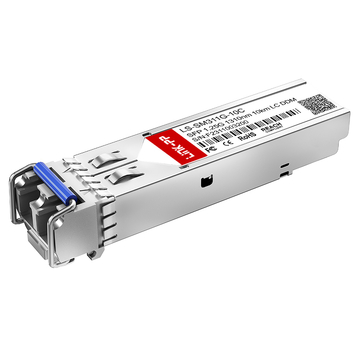
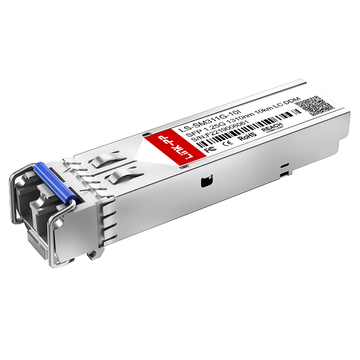
For organizations looking to optimize their network economics without compromising on quality, high-performance third-party solutions like the LINK-PP LS-SM311G-10C 1000BASE-LX/LH fiber SFP provide an ideal alternative. Engineered to meet and exceed the requirements of the XCVR-A10Y31, this module is specifically designed for seamless integration into Ciena platforms.
The LS-SM311G-10C offers several key features that drive superior ROI:
- Precision 1310nm Optics: Optimized for Single-Mode Fiber (SMF), it supports stable transmissions up to 10km, ensuring link consistency across metro and regional spans.
- Full Ciena Stack Compatibility: Pre-programmed with accurate EEPROM coding to ensure immediate recognition and full DDM/DOM telemetry support within Ciena software environments.
- Industrial-Grade Reliability: Every unit undergoes rigorous burn-in and environmental stress testing to minimize the risk of infant mortality and field failures.
- Exceptional Power Efficiency: Designed with advanced low-power chipsets that reduce heat dissipation, lowering OpEx and extending the lifespan of your host equipment.
Ultimately, the strength of your network is only as good as its most frequent point of failure. Choosing a validated, high-efficiency compatible module ensures that your infrastructure remains a high-performance asset rather than a maintenance liability.
Ready to upgrade your infrastructure with carrier-grade optics? Explore our full range of optical transceiver solutions and secure the best value for your deployment at the LINK-PP Official Store.