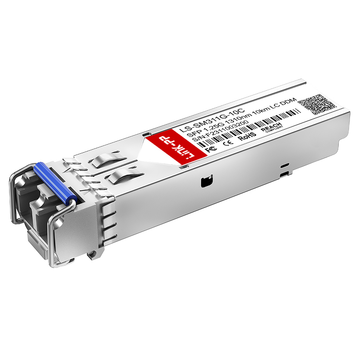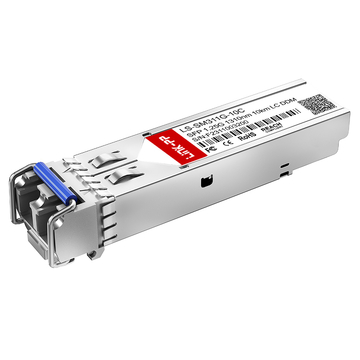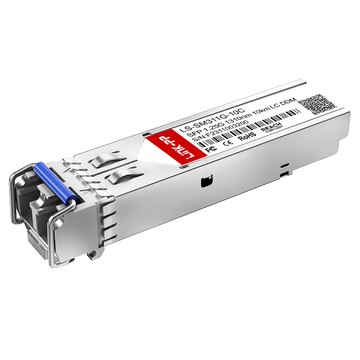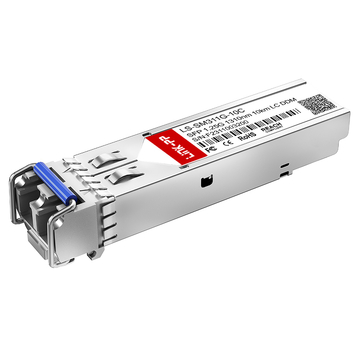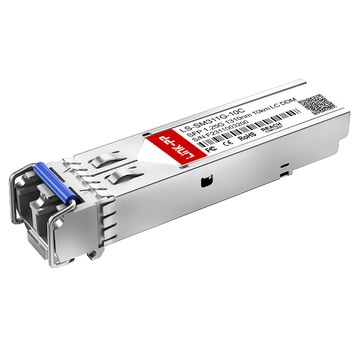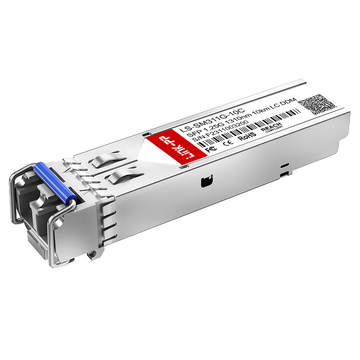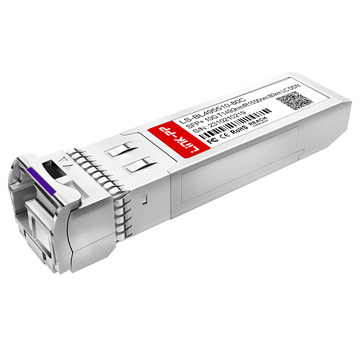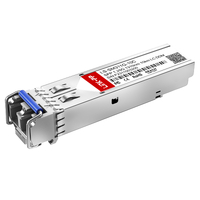
The Calix 100-01662 optical transceiver is widely used in modern fiber access and aggregation networks where stable Gigabit Ethernet connectivity is required. As fiber infrastructure continues to expand in enterprise, telecom, and service provider environments, understanding the technical foundation of key optical modules becomes increasingly important for ensuring network reliability and performance consistency.
Among 1000BASE-LX SFP modules, the Calix 100-01662 stands out for its 1310nm long-wavelength operation and support for single-mode fiber transmission up to 10km. These characteristics make it suitable for deployments that require predictable optical performance across medium to long distances, especially in distributed network architectures where link stability is critical.
This article provides a detailed technical breakdown of the Calix 100-01662 to help engineers and network planners evaluate its capabilities and deployment suitability. It covers key specification domains including:
- Optical transmission parameters such as wavelength, distance, and link budget behavior
- Electrical and power characteristics relevant to system integration
- Mechanical and environmental operating conditions for real-world deployment
- Compatibility, standards compliance, and diagnostic monitoring functions
Together, these sections provide a complete technical reference for understanding how the module performs within fiber network infrastructures and how its parameters influence overall system design decisions.
🔔 Overview of Calix 100-01662 Module
The Calix 100-01662 is a 1000BASE-LX small form-factor pluggable (SFP) optical transceiver designed for stable Gigabit Ethernet transmission over single-mode fiber. It is primarily used in access, aggregation, and enterprise fiber networks where predictable optical performance and standardized interoperability are required.
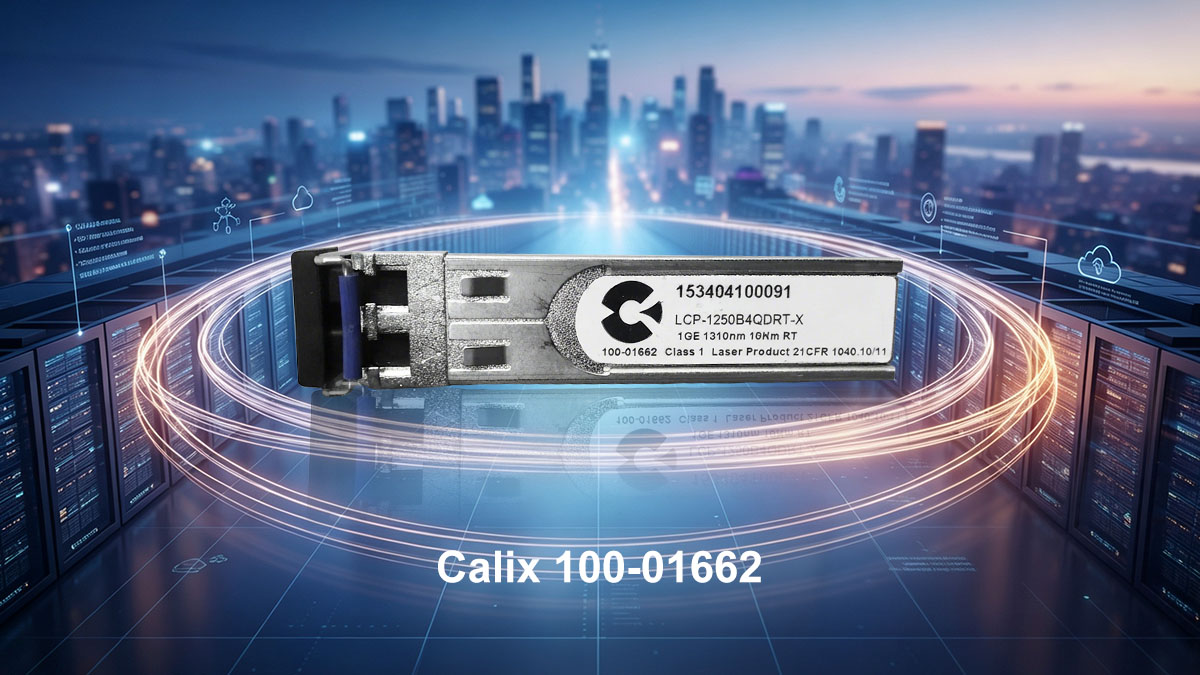
Product Positioning in Fiber Networks
The Calix 100-01662 is positioned as a long-reach Gigabit Ethernet optical module optimized for carrier-grade and enterprise access environments.
It is commonly deployed to extend network connectivity between switches, routers, and optical distribution points where copper Ethernet is not feasible.
Key positioning characteristics include:
- Designed for 1.25Gbps Gigabit Ethernet (1000BASE-LX) operation
- Optimized for single-mode fiber (SMF) transmission environments
- Targeted at access and aggregation network layers
- Used in point-to-point fiber link architectures
These attributes make it suitable for structured fiber deployments requiring stable long-distance connectivity.
Functional Design and Internal Architecture
The module integrates optical transmission and reception functions into a compact SFP form factor, enabling direct installation into standard SFP ports on networking equipment.
Its functional design is based on a dual-path optical system:
- A 1310nm DFB laser transmitter for stable long-wavelength signal output
- A PIN photodiode receiver for accurate signal detection on the return path
- A duplex LC interface separating transmit (TX) and receive (RX) channels
- An I²C-based management interface for device monitoring and configuration
This architecture ensures consistent optical performance while maintaining compatibility with standard Ethernet switching hardware.
🔔 Optical Transmission Specifications
The optical transmission performance of the Calix 100-01662 defines its suitability for long-reach Gigabit Ethernet over single-mode fiber. These parameters directly determine link distance, signal stability, and overall optical budget design in real-world deployments.
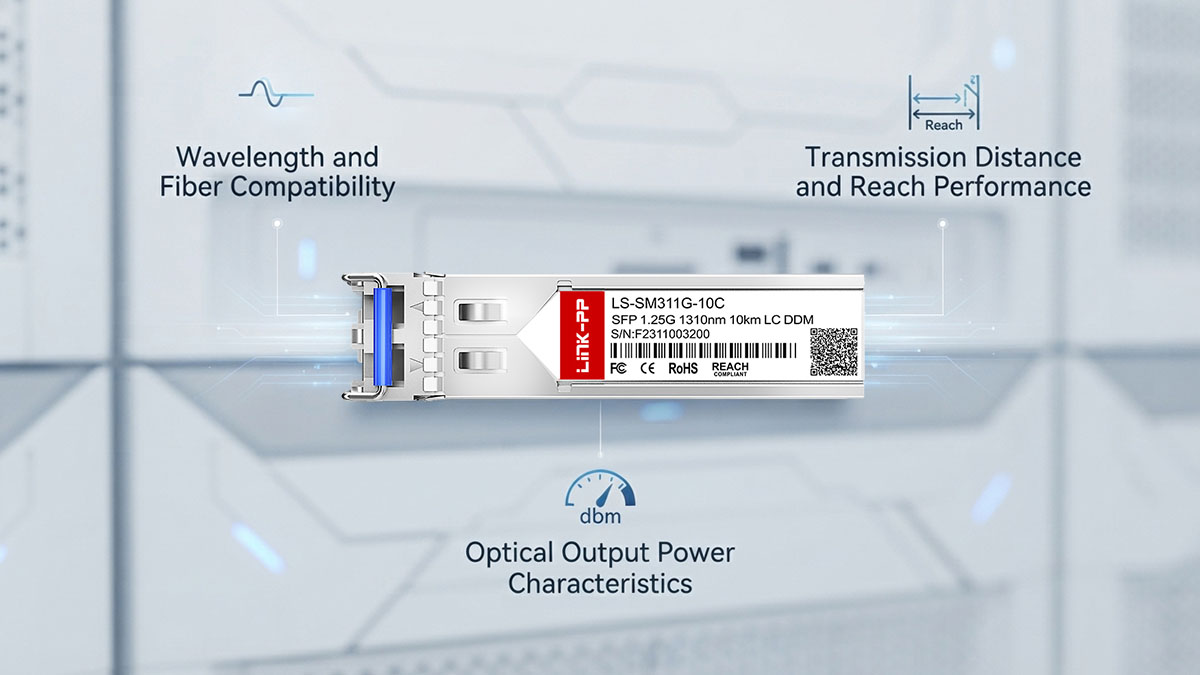
Wavelength and Fiber Compatibility
The Calix 100-01662 operates at a center wavelength of 1310nm, which is a standard transmission window for 1000BASE-LX applications.
This wavelength selection is optimized for low attenuation and controlled dispersion in single-mode fiber (SMF), enabling stable transmission over extended distances.
Key characteristics include:
- Operating wavelength: 1310nm, within the second optical window
- Supported fiber type: single-mode fiber (typically OS2 grade)
- Optimized for long-distance transmission with reduced chromatic dispersion
- Suitable for structured campus and metro access fiber links
The use of 1310nm ensures compatibility with standard SMF infrastructure while maintaining consistent signal integrity across varying deployment conditions.
Transmission Distance and Reach Performance
The module is designed to support optical transmission distances up to 10km under standard link conditions.
This reach is achieved through a balance of optical output power, receiver sensitivity, and fiber attenuation characteristics.
Typical deployment considerations include:
- Maximum reach: up to 10km over compliant single-mode fiber
- Performance depends on fiber quality and splice/connector losses
- Real-world distance may vary based on link budget margin
- Suitable for access network interconnects and distributed switching architectures
In practical network design, engineers must always account for additional losses introduced by connectors, patch panels, and aging fiber to ensure stable operation within the intended range.
Optical Output Power Characteristics
The transmit section of the Calix 100-01662 uses a 1310nm distributed feedback (DFB) laser, providing stable and coherent optical output.
This ensures reliable signal propagation over long distances with minimal degradation.
Key attributes include:
- Controlled optical launch power within SFP MSA-defined range
- Stable output characteristics across operating temperature range
- Designed to maintain signal integrity over fiber attenuation
- Optimized for interoperability with standard 1000BASE-LX receivers
Proper control of output power is essential to prevent receiver overload on short links while maintaining sufficient signal strength for longer spans.
Receiver Sensitivity and Signal Detection
The receiver subsystem is responsible for detecting and converting incoming optical signals into electrical data with minimal error.
Its sensitivity defines the weakest optical signal level the module can reliably interpret.
Key points include:
- High-sensitivity photodiode receiver design
- Optimized for low-noise signal conversion
- Capable of maintaining link stability near maximum transmission distance
- Supports robust performance under variable optical conditions
Receiver sensitivity plays a critical role in ensuring that the module can maintain a stable bit error rate (BER) even when optical power levels fluctuate due to environmental or infrastructure factors.
Optical Link Budget Considerations
The overall performance of the Calix 100-01662 depends on maintaining a balanced optical link budget between transmitter output and receiver sensitivity.
In practical deployment design, the following factors must be considered:
- Fiber attenuation typically around 0.35dB/km at 1310nm
- Connector insertion loss at each interface point
- Splice loss in long-distance fiber runs
- Recommended system margin for aging and environmental variation
A properly engineered link budget ensures stable operation under real-world conditions and reduces the risk of intermittent link failures.
When designed correctly, the module can maintain reliable Gigabit Ethernet transmission across its full supported distance range while preserving signal integrity and network stability.
🔔 Electrical and Power Characteristics
The electrical and power behavior of the Calix 100-01662 directly affects its integration into high-density switching systems. These parameters determine compatibility with host devices, power efficiency, and thermal stability under continuous operation.
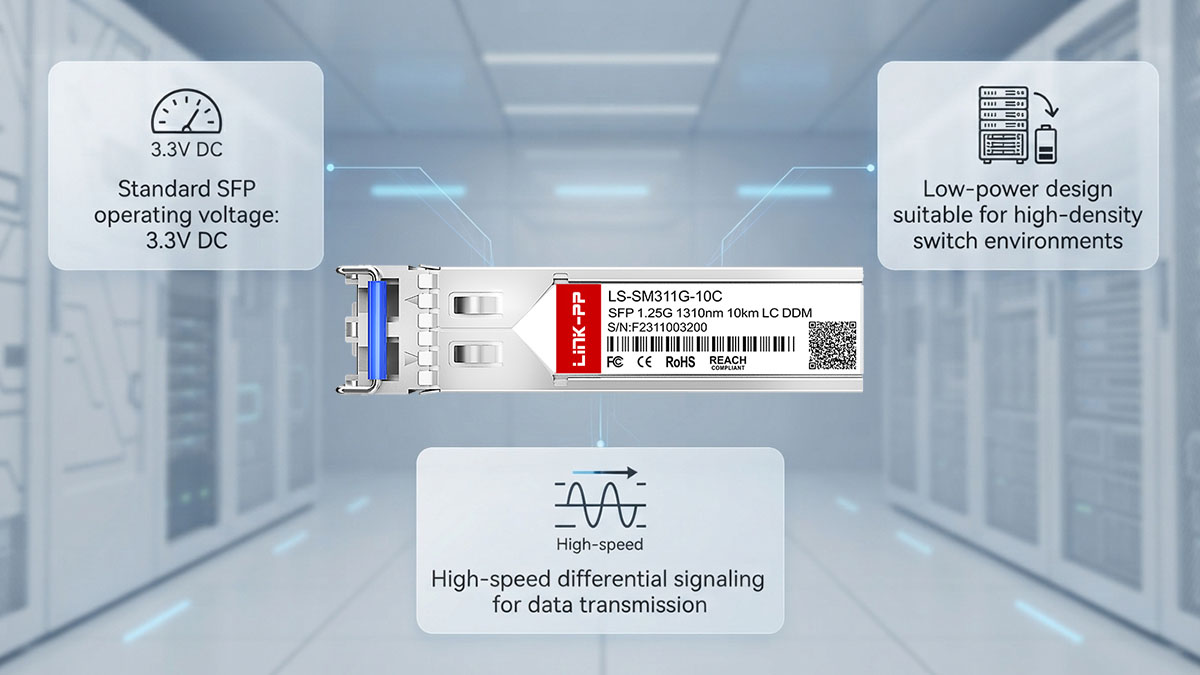
Supply Voltage Requirements
The Calix 100-01662 operates using a standardized low-voltage power supply designed for SFP modules.
This ensures compatibility across a wide range of networking equipment while maintaining stable optical performance.
Key characteristics include:
- Nominal supply voltage: 3.3V DC
- Tight voltage tolerance required for stable laser operation
- Internal regulation circuitry to maintain consistent electrical performance
- Compliance with SFP Multi-Source Agreement (MSA) power specifications
Stable voltage delivery is essential, as fluctuations can directly impact laser output stability and receiver sensitivity.
Power Consumption Behavior
The module is designed for low power consumption, making it suitable for high-density deployment environments such as aggregation switches and access nodes.
Power usage is influenced by operating conditions and system load.
Key points include:
- Optimized for low-power Gigabit Ethernet operation
- Power consumption varies depending on transmit activity and temperature
- Efficient design supports dense port configurations in switching equipment
- Reduced thermal output improves overall system energy efficiency
In large-scale deployments, cumulative power efficiency becomes critical for minimizing cooling requirements and maintaining system stability.
Signal Interface and Electrical Design
The Calix 100-01662 uses high-speed differential signaling to ensure reliable data transmission between the host system and the optical module.
This design minimizes noise interference and maintains signal integrity.
Key characteristics include:
- Differential electrical interface for high-speed data lanes
- Controlled impedance design for signal stability
- EMI-resistant architecture to reduce external interference impact
- Compliance with SFP MSA electrical interface standards
These electrical design features ensure consistent performance even in environments with high electromagnetic activity, such as telecom racks and dense switching fabrics.
EMI Performance and Signal Integrity
Electromagnetic interference (EMI) control is critical in maintaining reliable operation of optical transceivers in densely packed networking equipment.
The Calix 100-01662 incorporates shielding and layout optimizations to reduce EMI susceptibility.
Key considerations include:
- Metal housing for physical EMI shielding
- Grounding design to minimize electrical noise coupling
- Isolation between electrical and optical subsystems
- Stable operation in multi-port high-density switch environments
Proper EMI management ensures that signal degradation and bit errors are minimized, even when multiple transceivers operate in close proximity.
Thermal-Electrical Interaction
Electrical power consumption is closely linked to thermal behavior, which in turn affects long-term stability.
The module is designed to maintain performance consistency across varying temperature conditions.
Important aspects include:
- Power dissipation contributes to internal module temperature
- Thermal stability ensures consistent laser output characteristics
- Integrated monitoring via DOM supports real-time temperature tracking
- System-level cooling design impacts overall electrical efficiency
Maintaining balanced electrical and thermal conditions is essential for ensuring reliable long-term operation in continuous network environments.
🔔 Physical and Mechanical Parameters
The physical and mechanical design of the Calix 100-01662 defines how the module integrates into networking hardware and how reliably it performs under real-world handling conditions. These parameters are essential for ensuring mechanical stability, high-density deployment capability, and long-term durability in telecom and enterprise environments.
Form Factor and Connector Type
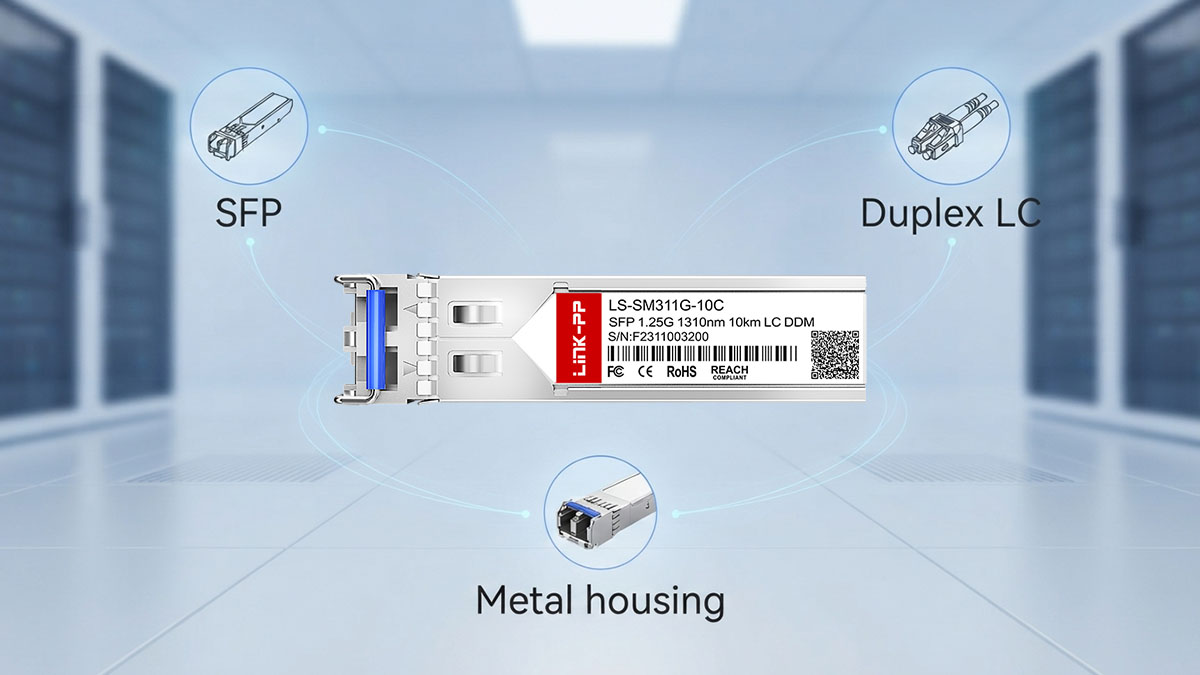
The Calix 100-01662 uses a standardized SFP form factor combined with a duplex LC optical interface, enabling compatibility with a wide range of networking devices.
This design supports compact installation while maintaining reliable optical separation between transmit and receive channels.
Key characteristics include:
- Hot-pluggable Small Form-factor Pluggable (SFP) module design
- Duplex LC connector providing independent TX and RX fiber paths
- Compact footprint suitable for high-density switch and router ports
- Standardized mechanical interface ensuring broad interoperability
The combination of SFP packaging and LC duplex connectivity allows the module to be easily integrated into modern fiber architectures without requiring specialized hardware modifications.
Packaging and Hot-Swap Design
The module is engineered with a robust metal enclosure and hot-swap capability to support continuous network operation and simplified maintenance procedures.
This design ensures both mechanical protection and operational flexibility in live network environments.
Key features include:
- Metal housing providing electromagnetic shielding and physical protection
- Hot-swappable insertion and removal without system downtime
- Secure latch mechanism ensuring stable engagement with host port
- Precision alignment structure for reliable optical and electrical contact
The hot-swap capability is particularly important in production networks, where minimizing service interruption is a critical operational requirement.
Mechanical Durability Standards
The Calix 100-01662 is built to withstand repeated handling and deployment in demanding telecom environments, where modules may undergo frequent maintenance cycles.
Its mechanical design focuses on long-term reliability under physical stress conditions.
Key durability aspects include:
- Rated for multiple insertion and extraction cycles without performance degradation
- Resistance to vibration commonly encountered in rack-mounted systems
- Shock tolerance suitable for transport and installation environments
- Compliance with industry mechanical reliability and SFP MSA standards
These durability characteristics ensure that the module maintains consistent physical and optical performance throughout its operational lifecycle, even under frequent service interventions and high-density deployment conditions.
🔔 Environmental Operating Conditions
The environmental operating conditions of the Calix 100-01662 define the physical limits under which the module can maintain stable optical output, electrical performance, and long-term reliability. These conditions are especially important in fiber access and aggregation networks where equipment may operate continuously under varying thermal and humidity environments.
Temperature Range
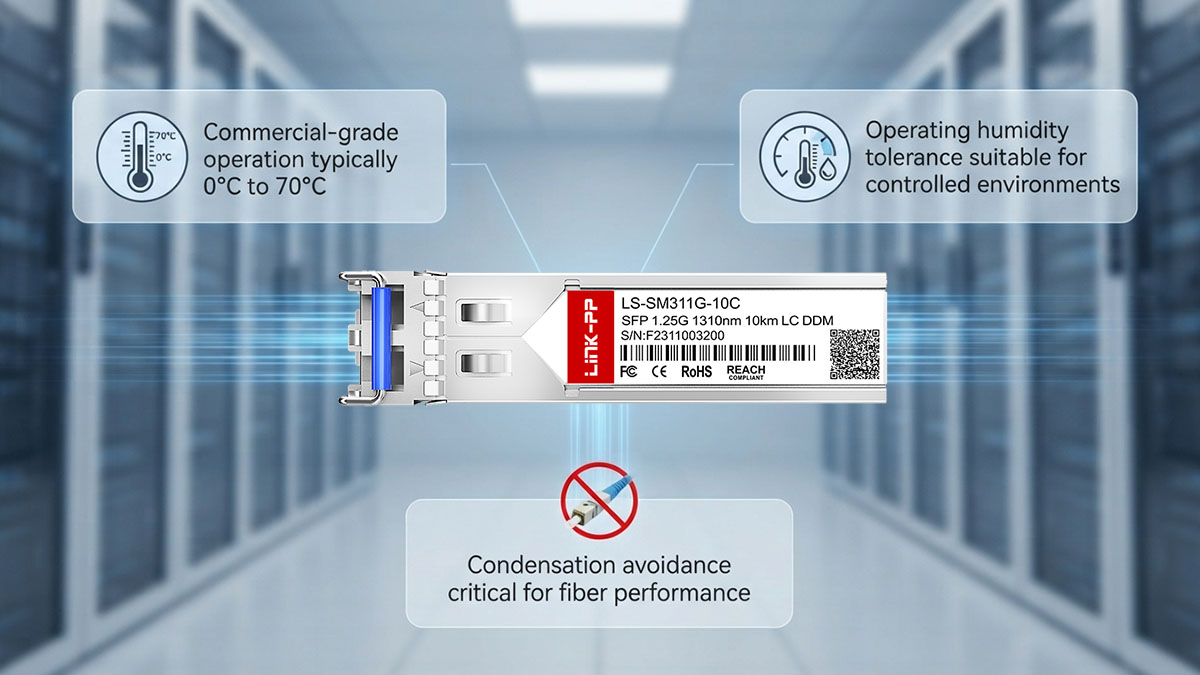
The operating temperature range of the Calix 100-01662 is a key factor that directly influences optical stability and system reliability. Within the specified limits, the module maintains consistent laser performance and receiver sensitivity without signal degradation.
Key characteristics include:
- Commercial-grade operation typically ranges from 0°C to 70°C
- Designed for stable performance in controlled indoor networking environments
- Extended temperature variants may support industrial-grade deployments
- Thermal conditions directly impact laser wavelength stability and output power consistency
Maintaining operation within the recommended temperature range ensures that optical link performance remains predictable, especially in high-density switching environments where heat accumulation can occur.
Humidity and Storage Conditions
Humidity control is essential for protecting optical components and maintaining signal integrity over long deployment cycles. The Calix 100-01662 is designed to operate reliably in controlled moisture environments while minimizing the risk of condensation-related degradation.
Key considerations include:
- Suitable for controlled indoor humidity environments commonly found in telecom rooms and data centers
- Storage conditions designed to prevent oxidation and optical interface contamination
- Condensation avoidance is critical to maintaining consistent fiber coupling performance
- Sealed module structure helps reduce environmental exposure during normal operation
Proper humidity management ensures that optical interfaces remain clean and stable, which is essential for maintaining low insertion loss and consistent link quality.
Industrial vs Commercial Grade Variants
Different deployment environments place different demands on optical transceivers, especially in terms of temperature tolerance, mechanical resilience, and long-term stability. The Calix 100-01662 may be deployed in either commercial or industrial-grade scenarios depending on infrastructure design and environmental exposure. The comparison below highlights the key differences between these two deployment categories.
Before selecting a variant type, it is important to understand how environmental conditions affect operational reliability and lifecycle performance. The following table summarizes the main distinctions:
| Category | Commercial Grade | Industrial Grade |
|---|---|---|
| Temperature Range | Typically 0°C to 70°C | Extended range (often -40°C to 85°C) |
| Deployment Environment | Enterprise networks, data centers | Outdoor cabinets, harsh telecom sites |
| Thermal Tolerance | Designed for controlled cooling environments | Designed for unstable or extreme thermal conditions |
| Reliability Focus | Stable indoor operation and efficiency | High resilience under environmental stress |
| System Design Dependency | Relies on HVAC-controlled racks | Operates in limited or no climate control enclosures |
| Cost and Complexity | Lower system integration complexity | Higher design requirements for environmental protection |
In practical deployments, commercial-grade modules are generally sufficient for controlled indoor networking environments where temperature and humidity are regulated. Industrial-grade variants, however, are selected when equipment must operate in exposed or thermally unstable locations, ensuring continued optical performance even under extreme environmental stress conditions.
🔔 Digital Diagnostics and Monitoring
The digital diagnostics and monitoring capabilities of the Calix 100-01662 provide real-time visibility into the operational health of the optical transceiver. These functions are essential for maintaining stable Gigabit Ethernet links, enabling proactive maintenance, and reducing the risk of unexpected network downtime in fiber-based infrastructures.
DOM/DDM Functionality
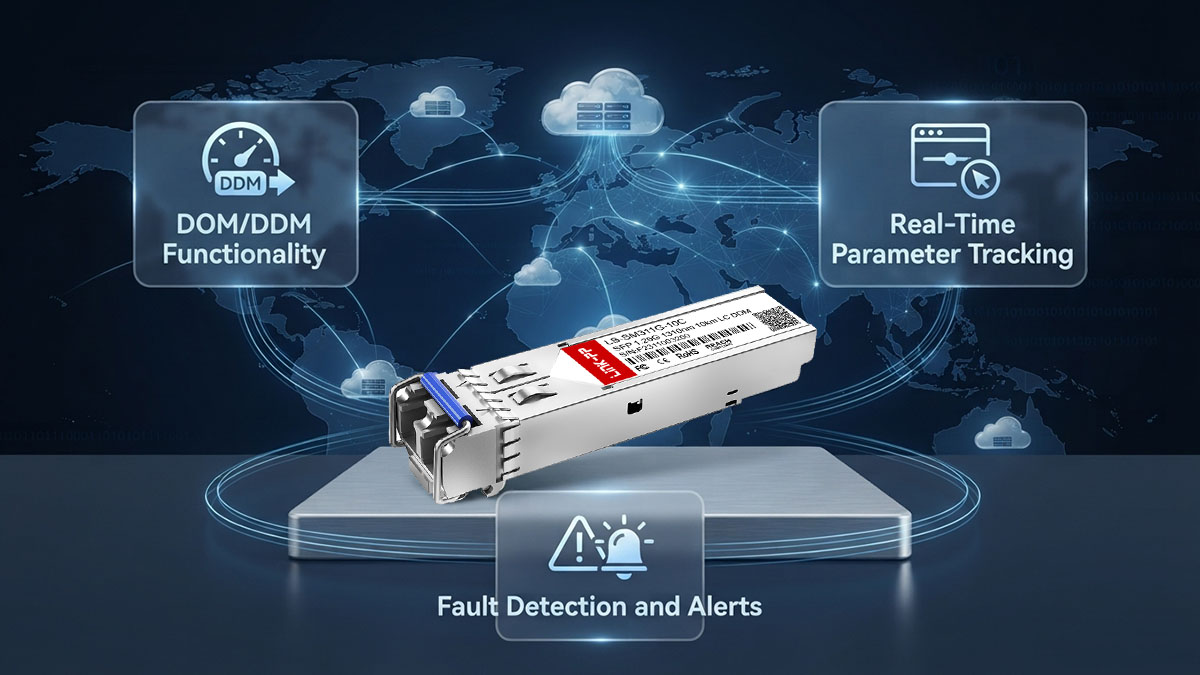
Digital Optical Monitoring (DOM), also referred to as Digital Diagnostic Monitoring (DDM), is implemented through an I²C management interface in the Calix 100-01662. This allows the host system to continuously access key performance metrics of the optical module during operation.
Key characteristics include:
- Digital Optical Monitoring (DOM) implemented via standard I²C interface
- Provides continuous access to internal module operating parameters
- Enables real-time visibility into optical and electrical performance conditions
- Fully compatible with SFP MSA management specifications
This functionality allows network devices to actively monitor transceiver behavior without interrupting data transmission, improving overall system observability.
Real-Time Parameter Tracking
The Calix 100-01662 supports continuous monitoring of multiple critical operating parameters. These measurements help ensure that the module remains within safe and optimal operating conditions throughout its lifecycle.
Key tracked parameters include:
- Transmit optical power levels for evaluating signal output strength
- Receive optical power levels for assessing incoming signal quality
- Internal temperature monitoring for thermal stability analysis
- Supply voltage tracking to ensure electrical stability within required limits
- Laser bias current monitoring for assessing transmitter health and degradation trends
By analyzing these parameters in real time, network systems can detect performance deviations early and maintain stable optical link conditions across the network.
Fault Detection and Alert Mechanisms
In addition to real-time monitoring, the Calix 100-01662 incorporates threshold-based alerting mechanisms to identify potential performance issues before they lead to link failure.
These diagnostic features include:
- Configurable threshold alarms for optical power degradation
- Early warning indicators for abnormal temperature or voltage levels
- Monitoring of laser bias current shifts as a predictor of transmitter aging
- Support for pre-failure detection in high-reliability network environments
These alert mechanisms enable network administrators to implement proactive maintenance strategies, reducing unplanned outages and improving overall network resilience.
Operational Impact of Monitoring Functions
The integration of DOM/DDM functionality significantly enhances the operational value of the Calix 100-01662 in modern fiber networks. Instead of relying solely on reactive troubleshooting, operators gain continuous insight into module performance trends.
Key benefits include:
- Improved fault isolation during network troubleshooting
- Early detection of optical degradation before service impact occurs
- Enhanced lifecycle management of optical transceivers
- Reduced maintenance costs through predictive diagnostics
As a result, these monitoring capabilities play a critical role in ensuring long-term stability and reliability in Gigabit Ethernet optical deployments.
🔔 Protocol Compatibility and Network Integration
The protocol compatibility and network integration characteristics of the Calix 100-01662 determine how effectively the module can operate within standardized Gigabit Ethernet environments. These factors are essential for ensuring seamless interoperability across different networking platforms and maintaining stable optical link performance in mixed infrastructure deployments.
Supported Ethernet Standards
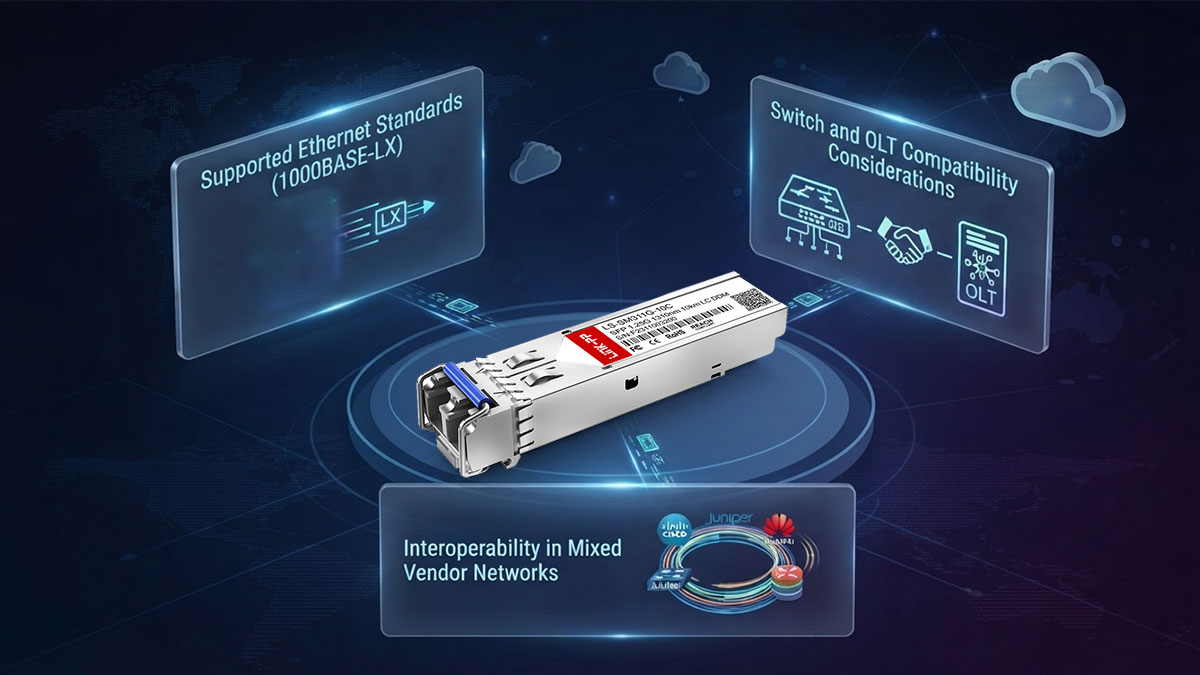
The Calix 100-01662 is fully aligned with IEEE 802.3 Gigabit Ethernet standards, specifically the 1000BASE-LX optical specification. This ensures that the module can reliably transmit and receive Ethernet frames at the required physical layer without protocol-level conflicts.
Key characteristics include:
- Fully compliant with IEEE 802.3 Gigabit Ethernet specifications
- Standard operating line rate of 1.25Gbps for optical transmission
- Optimized for long-wavelength 1310nm single-mode fiber operation
- Designed for stable data transmission over extended distances up to 10km
This standard compliance ensures predictable performance and broad compatibility within Ethernet-based optical transport systems.
Switch and OLT Compatibility Considerations
Compatibility with switches, routers, and optical line terminals (OLT) depends on both hardware and firmware-level integration factors. While the Calix 100-01662 follows SFP Multi-Source Agreement (MSA) standards, correct system recognition is essential for proper operation.
Key considerations include:
- Compatibility relies on adherence to SFP MSA electrical and mechanical standards
- EEPROM coding must be correctly configured for device identification and recognition
- Most standard SFP-enabled ports support physical integration without modification
- Vendor-specific restrictions may influence acceptance in certain managed platforms
Proper identification ensures that the host system can enable optical interfaces without disabling ports or triggering compatibility warnings.
Interoperability in Mixed Vendor Networks
In heterogeneous network environments, where equipment from multiple vendors coexists, interoperability becomes a critical design consideration. The Calix 100-01662 is generally capable of operating across such environments, provided that optical and protocol conditions are properly aligned.
Key aspects include:
- Multi-vendor deployments require strict optical link budget alignment
- Differences in port configuration may affect recognition and performance behavior
- Compatibility testing is recommended before large-scale heterogeneous deployment
- Digital Diagnostic Monitoring (DDM) assists in validating real-time performance alignment across platforms
Careful validation in mixed environments helps ensure stable Gigabit Ethernet connectivity and minimizes risks related to configuration mismatches or optical power imbalance.
🔔 Reliability, Compliance, and Standards
The reliability and compliance characteristics of the Calix 100-01662 define its suitability for carrier-grade and enterprise fiber networks. These factors ensure that the module meets internationally recognized standards for optical safety, electrical interoperability, and long-term operational stability in Gigabit Ethernet environments.
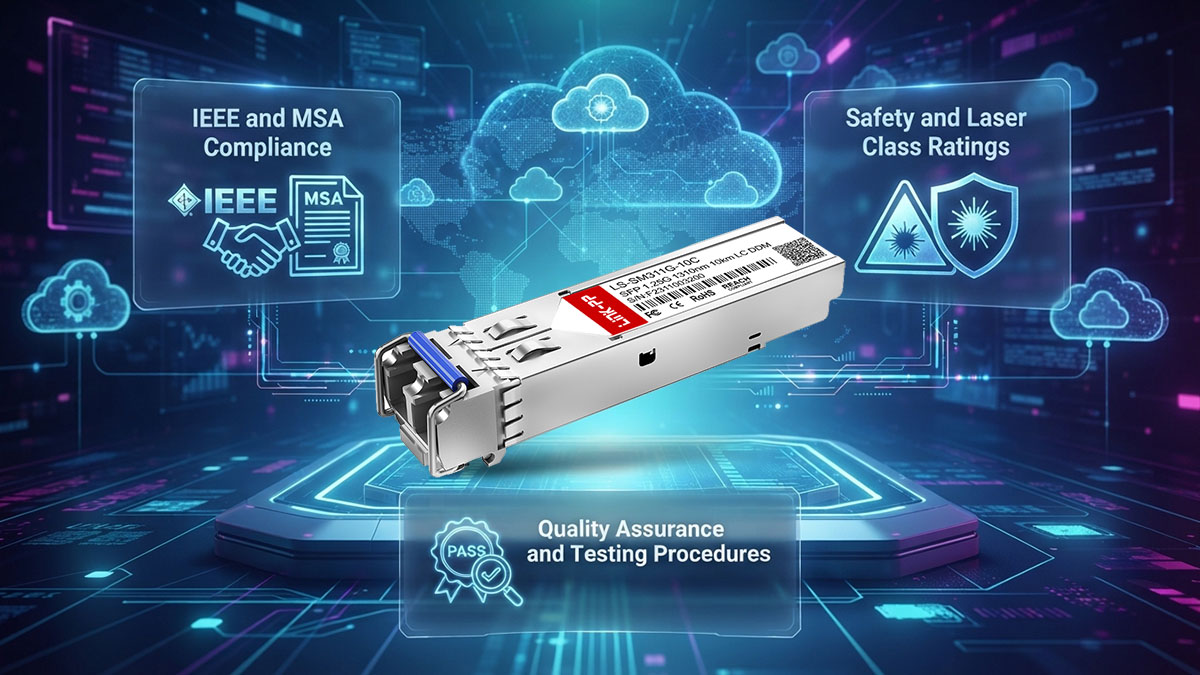
IEEE and MSA Compliance
The Calix 100-01662 is designed in accordance with widely adopted industry standards that govern both optical transmission and physical module design. This ensures predictable behavior across compliant networking equipment and simplifies system integration.
Key compliance aspects include:
- Fully compliant with Small Form-factor Pluggable Multi-Source Agreement (SFP MSA)
- Aligned with IEEE 802.3 Gigabit Ethernet physical layer specifications
- Standardized mechanical and electrical interface for broad interoperability
- Supports consistent operation across MSA-compliant host devices
This standards alignment ensures that the module can be deployed in diverse network infrastructures while maintaining consistent performance expectations.
Safety and Laser Class Ratings
Optical safety is a critical requirement for any fiber transceiver operating in telecom and enterprise environments. The Calix 100-01662 is classified under internationally recognized laser safety standards to ensure safe handling and operation.
Key safety characteristics include:
- Classified as a Class 1 laser product under IEC 60825 standards
- Designed for eye-safe operation under normal operating conditions
- Enclosed optical design minimizes exposure to laser emission
- Compliant with global safety requirements for optical networking equipment
This classification ensures that the module can be safely used in environments where technicians may interact with active fiber systems during installation or maintenance.
Quality Assurance and Testing Procedures
To ensure long-term reliability and consistent performance, the Calix 100-01662 undergoes a series of manufacturing and validation processes. These procedures are designed to verify both optical performance and environmental resilience before deployment.
Key quality assurance measures include:
- Optical power calibration performed during manufacturing to ensure output accuracy
- Bit Error Rate (BER) testing to validate data transmission integrity under defined conditions
- Environmental stress screening to evaluate performance under thermal and mechanical stress
- Multi-stage inspection processes to confirm compliance with design specifications
These testing procedures help ensure that each module meets required performance thresholds and can operate reliably in real-world network conditions.
🔔 Conclusion
The Calix 100-01662 optical transceiver is a 1000BASE-LX SFP module designed for stable Gigabit Ethernet transmission over 1310nm single-mode fiber up to 10km. Across its optical, electrical, mechanical, and compliance characteristics, it demonstrates a balanced design optimized for reliable performance in access, aggregation, and enterprise fiber network environments where consistent link quality and standardized interoperability are essential.
To summarize the most critical aspects of the Calix 100-01662 technical parameters, the key points can be condensed as follows:
- Optical performance centered on 1310nm wavelength for long-reach single-mode fiber transmission
- Gigabit Ethernet operation at 1.25Gbps compliant with IEEE 802.3 1000BASE-LX standards
- SFP MSA-compliant design ensuring broad compatibility across network devices
- Integrated DOM/DDM monitoring for real-time diagnostics of optical power, temperature, and voltage
- Hot-swappable SFP form factor with LC duplex interface for flexible deployment
- Defined environmental tolerance supporting stable operation in controlled network conditions
- Class 1 laser safety compliance ensuring secure deployment in enterprise environments
These characteristics collectively define the module as a stable and standardized optical connectivity component in modern fiber infrastructure.
For network operators and system integrators, selecting a compatible and standards-compliant optical transceiver is essential for maintaining infrastructure efficiency and minimizing deployment risk. Ensuring alignment with optical budget requirements, environmental conditions, and host device compatibility is key to achieving optimal performance.
For further technical reference and compatible optical solutions, you may explore the LINK-PP Official Store, which provides a wide range of optical transceivers and connectivity products designed for modern Gigabit and high-speed fiber networks.