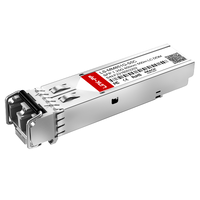
In the realm of embedded systems, FPGA network design, and enterprise switch deployment, understanding the physical layer (PHY) and Media Access Control (MAC) interfaces is critical to ensuring network interoperability. A frequent engineering pitfall—often discussed in networking forums and hardware design communities—is the assumption that all Gigabit SFP ports and internal Ethernet traces operate identically.
Although SGMII and 1000BASE-X share the same underlying Physical Coding Sublayer (PCS) and serialization technology, their signaling protocols are distinct. Mixing these standards without proper hardware bridging leads to failed auto-negotiation, dropped packets, and dead links. This is particularly evident when attempting to run multi-rate 1000BASE-T Copper SFP transceivers in switch ports hardwired exclusively for 1000BASE-X.
To provide a definitive resource for hardware engineers and network architects, this guide explores the technical intricacies of both interfaces. We will analyze the core mechanisms of:
- Signaling and Encoding: How 8b/10b encoding and clock recovery function across both standards.
- Auto-Negotiation Logic: Why SGMII can support 10 Mbps and 100 Mbps, while 1000BASE-X cannot.
- Hardware Interoperability: How to prevent SFP module mismatches in production environments.
- Embedded Design Choices: Selecting the optimal MAC-to-PHY interface for FPGA and PCB architectures.
By examining the precise specifications defined by the IEEE and industry standards, this article will help you eliminate ambiguity in your next Gigabit Ethernet deployment or hardware design cycle.
🔷 What is 1000BASE-X?
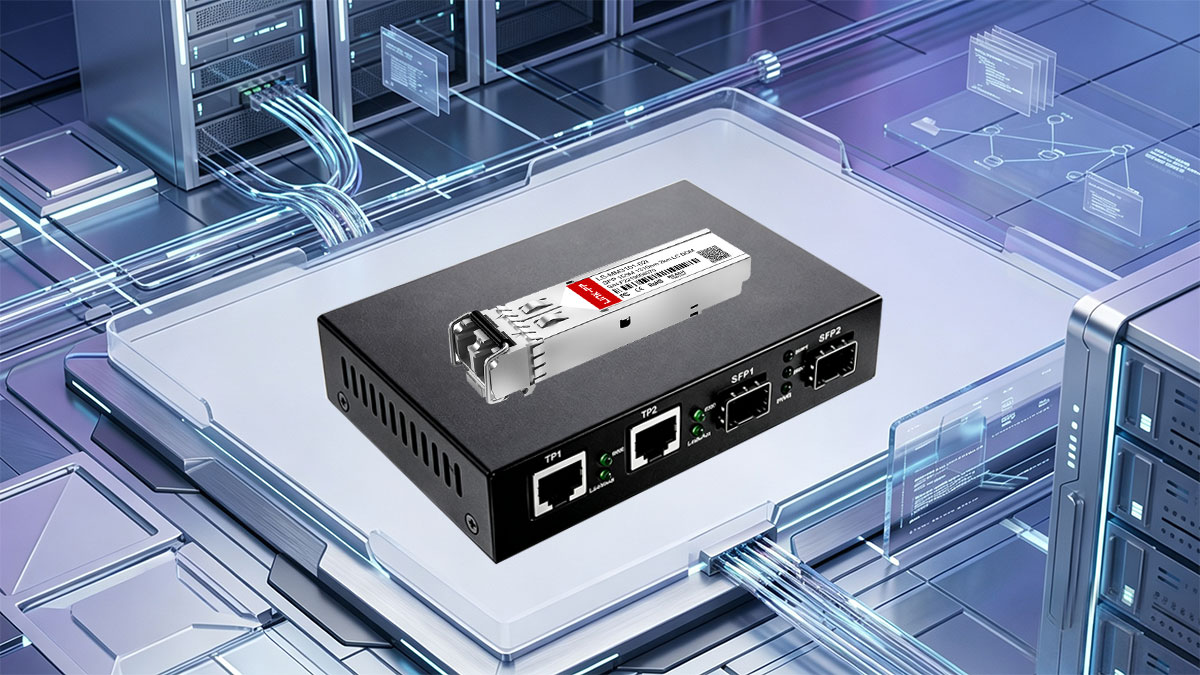
The "X" in 1000BASE-X serves as a placeholder for various Gigabit Ethernet media types, most notably 1000BASE-SX (short-wavelength multi-mode fiber), 1000BASE-LX (long-wavelength single-mode fiber), and 1000BASE-CX (short-haul copper twinaxial cable). From a hardware architecture perspective, the MAC (Media Access Control) sends 8b/10b encoded data directly to the Physical Coding Sublayer (PCS), which then serializes the data stream to be transmitted over the physical medium.
Because the standard was engineered specifically for Gigabit-class fiber optics, its architecture prioritizes high-speed throughput over backward compatibility. This results in several distinct operational characteristics:
- Primary Use Case: 1000BASE-X is the standard interface for direct fiber optic SFP (Small Form-factor Pluggable) transceivers. In a typical network switch, the SFP port is wired directly to the switch's MAC using 1000BASE-X signaling, allowing the SFP module to act as a straightforward electro-optical converter.
- Speed Capability: It is strictly a 1000 Mbps (1 Gbps) interface. While it does support auto-negotiation (defined in IEEE 802.3 Clause 37), this negotiation is limited strictly to duplex mode (full vs. half-duplex) and flow control parameters. It cannot scale down to 10 Mbps or 100 Mbps because the protocol does not support data replication or clock rate adjustment.
- Implementation Complexity: Low. Because 1000BASE-X does not need to handle multi-rate Ethernet translation, its logic is relatively simple. This "dumb" pass-through design minimizes the silicon required on the transceiver, making standard 1000BASE-X fiber SFP modules highly affordable and reducing logic utilization in custom FPGA designs.
In short, 1000BASE-X is highly efficient for pure Gigabit environments but requires careful consideration when integrating with legacy network infrastructure that demands multi-rate support.
🔷 What is SGMII?
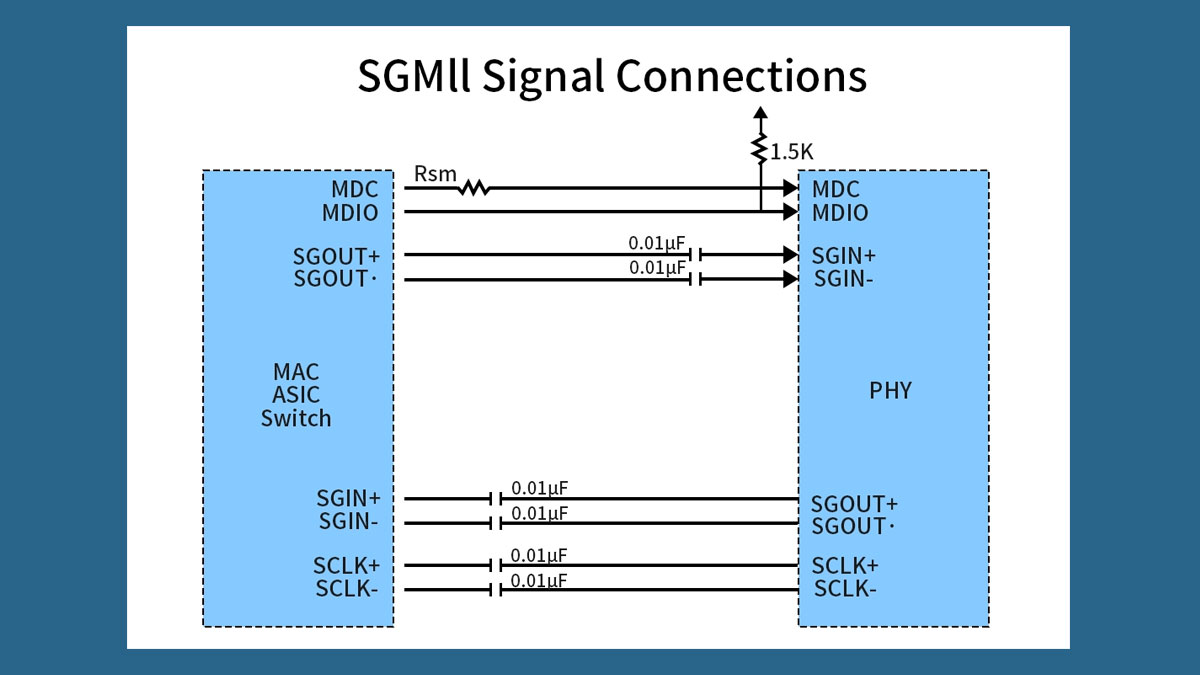
Before the widespread adoption of serial interfaces, connecting a MAC to a PHY required parallel interfaces like GMII (Gigabit Media Independent Interface), which consumed up to 24 separate pins. As network switches and ASICs grew in port density, routing dozens of parallel traces per port across a PCB became a severe engineering bottleneck. SGMII solved this by serializing the data stream. By using differential signaling (TX and RX pairs, plus an optional clock pair), SGMII reduces the pin count to just 4 or 6 pins per port, drastically simplifying board design.
While SGMII uses the same physical PCS (Physical Coding Sublayer) and 1.25 Gbaud SERDES rate as 1000BASE-X, its protocol logic is entirely different, prioritizing flexibility over a fixed-speed constraint. Here are the defining characteristics of SGMII:
- Primary Use Case: SGMII is the industry-standard interface for internal PCB routing between an internal MAC and an external PHY chip. Furthermore, it is the foundational signaling protocol used inside multi-rate 1000BASE-T Copper RJ45 SFP modules, bridging the switch's internal architecture to the external copper cabling.
- Multi-Rate Speed Capability: SGMII supports tri-speed operation: 10 Mbps, 100 Mbps, and 1000 Mbps. Because the underlying hardware clock remains fixed at 1.25 Gbaud, SGMII cannot physically slow down its transmission rate. Instead, it achieves slower speeds through precise data replication. To operate at 100 Mbps, each data payload is repeated 10 times. To operate at 10 Mbps, the payload is repeated 100 times. The receiving MAC or PHY then samples the repeated data to recover the original slower-speed signal.
- Implementation Complexity: High. While SGMII saves physical pins on a chip, it requires a larger logic footprint inside the silicon. The protocol mandates modified auto-negotiation logic—specifically, passing the PHY's resolved speed and duplex status back to the MAC over the serial link—as well as the logic required to handle the aforementioned bit duplication and extraction.
Ultimately, SGMII is the bridge that allows modern, high-speed Gigabit networking hardware to gracefully interact with older Fast Ethernet (100 Mbps) and traditional Ethernet (10 Mbps) devices without requiring separate, dedicated legacy ports.
🔷 Core Differences: SGMII vs. 1000BASE-X
The frequent confusion between SGMII and 1000BASE-X stems from their physical similarities. If you probe the differential traces of both interfaces on a PCB, you will measure the exact same 1.25 Gbps symbol rate. The divergence lies entirely in the protocol layer—specifically, how the payload is constructed and how auto-negotiation is handled between connected devices.
To provide a clear distinction for hardware selection and network troubleshooting, the following table outlines the precise technical parameters of both interfaces.
SGMII vs. 1000BASE-X Comparison Table
| Feature / Parameter | SGMII | 1000BASE-X |
|---|---|---|
| Standard Origin | Cisco Specification | IEEE 802.3z |
| Primary Application | Internal MAC-to-PHY communication; Multi-rate Copper SFPs | Direct MAC-to-Fiber communication; Gigabit Optical SFPs |
| Supported Speeds | 10 Mbps, 100 Mbps, 1000 Mbps | 1000 Mbps (Fixed) |
| Line Rate & Encoding | 1.25 Gbaud (8b/10b Encoding) | 1.25 Gbaud (8b/10b Encoding) |
| Mechanism for Slower Speeds | Data Payload Replication (10x or 100x) | Not Supported |
| Auto-Negotiation Logic | Modified Clause 37 (Passes link speed and duplex state from PHY to MAC) | Standard IEEE 802.3 Clause 37 (Negotiates Duplex and Flow Control only) |
| Logic Complexity | Higher (Requires data replication and extraction logic) | Lower (Pass-through logic) |
When analyzing the table above, two critical engineering distinctions emerge:
- The Auto-Negotiation Disconnect: 1000BASE-X uses IEEE 802.3 Clause 37 auto-negotiation purely to agree on duplex modes and pause frames (flow control) with the link partner. It assumes the speed is always 1000 Mbps. SGMII hijacks this Clause 37 mechanism. Instead of talking to a link partner across a cable, the SGMII PHY uses the auto-negotiation registers to inform the internal MAC about the actual copper link status (e.g., "I just connected to a legacy router at 100 Mbps, Half-Duplex").
- Data Handling at Slower Speeds: If you force a 1000BASE-X port to connect to a 10/100 Mbps device, the link will fail because 1000BASE-X expects a continuous, native 1 Gbps data stream. SGMII solves this by keeping the SERDES rate at 1.25 Gbps but repeating the actual data frames, allowing the receiving MAC to discard the redundant bits and recover the slower 10/100 Mbps payload.
Understanding these core differences is the first step in diagnosing why a multi-rate SFP module may fail to initialize in a standard optical switch port.
🔷 How Signaling Works in SGMII and 1000BASE-X
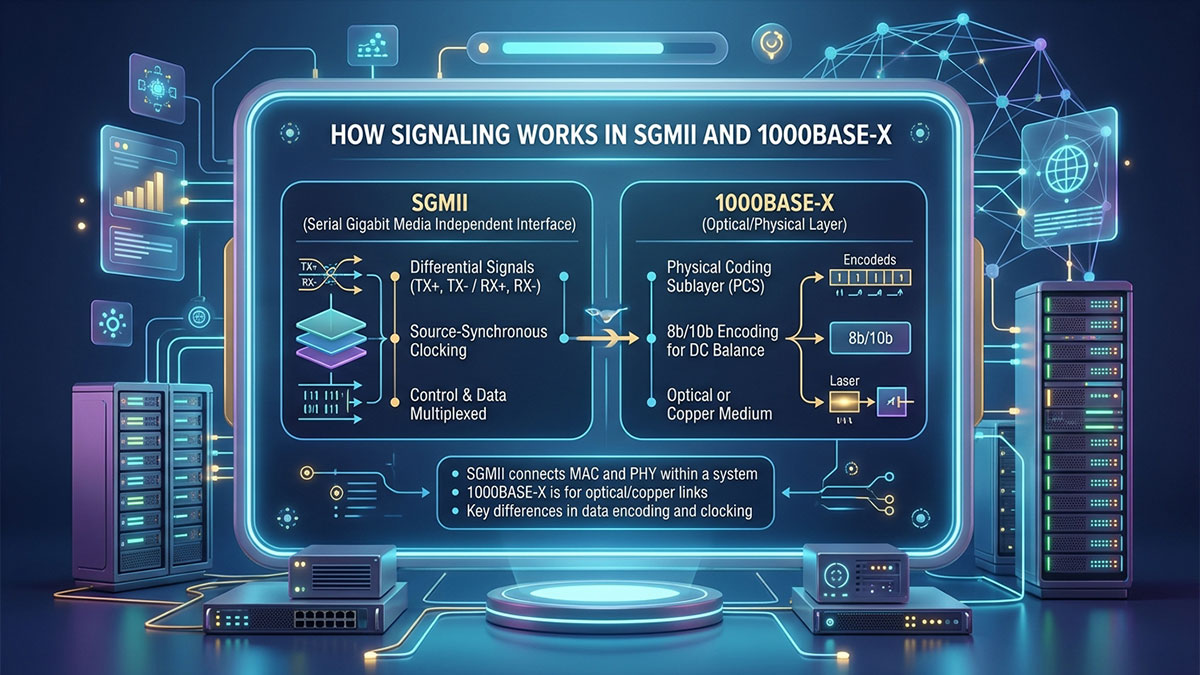
To understand why these two interfaces are not universally interchangeable, hardware engineers must examine the signaling pipeline from the Media Access Control (MAC) layer down to the Physical Medium Attachment (PMA). While an oscilloscope measuring the differential pairs of either interface will show an identical 1.25 Gbps signal, the data encapsulated within those electrical pulses behaves very differently.
The Shared Foundation: 8b/10b Encoding and 1.25 Gbaud SERDES
Both SGMII and 1000BASE-X rely on a Serializer/Deserializer (SERDES) architecture to convert parallel data from the MAC into a high-speed serial stream. To achieve a 1000 Mbps (1 Gbps) data throughput, the signaling must account for encoding overhead.
Micro-Definition: 8b/10b Encoding is a line code that maps 8-bit data bytes into 10-bit symbols. This ensures DC balance (an equal number of ones and zeros) and provides frequent voltage transitions necessary for the receiver's Clock and Data Recovery (CDR) circuit to remain synchronized without a separate clock line. Because of this 25% overhead (10 bits transmitted for every 8 bits of data), the physical line rate operates at 1.25 Gbaud (1000 Mbps × 1.25).
Both interfaces also utilize special K-characters (such as the K28.5 comma character) for word alignment and link synchronization.
1000BASE-X Signaling: The Pass-Through Protocol
The 1000BASE-X signaling pipeline is highly linear, designed for efficiency over optical fiber. Because the medium (fiber) does not change speeds, the signaling protocol assumes a constant 1 Gbps data rate.
- Data Transmission: The MAC sends Gigabit Ethernet frames to the PCS, which encodes them using 8b/10b and passes them directly to the optical transceiver. There is no buffering or speed translation.
- Standard Clause 37 Auto-Negotiation: Defined by IEEE 802.3z, 1000BASE-X uses a 16-bit base page exchanged during link initialization. This exchange purely negotiates duplex mode (Full/Half) and symmetric/asymmetric Pause frames (Flow Control). Speed negotiation is completely absent from this register.
SGMII Signaling: Data Replication and Modified Negotiation
SGMII introduces complex logic into the signaling path to accommodate 10BASE-T and 100BASE-TX copper networks without altering the underlying 1.25 Gbaud SERDES clock rate. It achieves this via two primary mechanisms:
- Symbol Replication: SGMII cannot slow down its electrical clock. If the external PHY connects to a 100 Mbps device, the internal SGMII link to the MAC still transmits at 1.25 Gbps. To bridge this gap, SGMII repeats every encoded data byte 10 times. For a 10 Mbps link, every byte is repeated 100 times. The receiving MAC samples the incoming stream, discards the redundant symbols, and extracts the valid 10/100 Mbps frame.
- Modified Auto-Negotiation (Link Status Relay): SGMII hijacks the 16-bit auto-negotiation base page used in 1000BASE-X. Instead of negotiating with a link partner, the SGMII PHY uses this register to unilaterally inform the MAC about the external copper link's status. The PHY populates specific bits within the 16-bit word to indicate the resolved speed (10, 100, or 1000 Mbps) and duplex state, ensuring the MAC adjusts its symbol extraction logic accordingly.
This fundamental difference in signaling logic explains why directly connecting a pure 1000BASE-X MAC to an SGMII PHY (without an intermediate bridging core) results in persistent link failures at sub-gigabit speeds.
🔷 Compatibility Between SGMII and 1000BASE-X
In real-world network engineering, the SGMII vs. 1000BASE-X compatibility debate almost exclusively centers around Small Form-factor Pluggable (SFP) transceiver modules. Network switches and FPGA development boards expose SERDES traces to an SFP cage, leaving the host MAC dependent on the inserted module's capabilities.
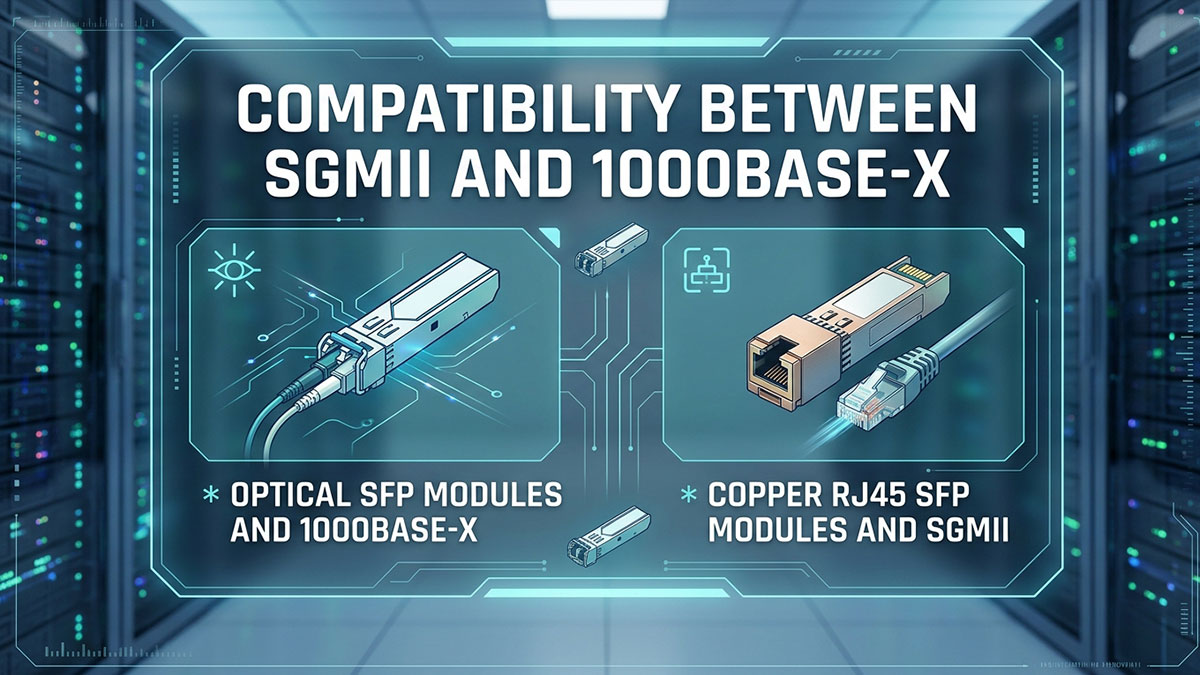
Because the physical form factor of the SFP cage is identical for both standards, mismatches between the host port's signaling protocol and the SFP module's internal logic are a primary cause of link failures. Understanding how optical and copper modules interact with these interfaces is essential for ensuring reliable Gigabit Ethernet connectivity.
Optical SFP Modules and 1000BASE-X
Standard optical SFP transceivers (such as 1000BASE-SX for multi-mode fiber or 1000BASE-LX for single-mode fiber) are the native medium for the 1000BASE-X protocol. These optical modules are relatively simple devices; from a signaling perspective, they act as passive electro-optical converters.
- Native Operation: When an optical SFP is inserted into a switch port configured for 1000BASE-X, the host MAC transmits standard IEEE 802.3z 8b/10b encoded data. The SFP simply converts these electrical voltage transitions into optical laser pulses.
- The SGMII Mismatch: If you plug a standard 1000BASE-X optical SFP into a host port configured strictly for SGMII, the link will generally fail to initialize. The SGMII MAC will attempt to use its modified auto-negotiation to query the module for copper link status, which the optical SFP cannot provide. To force compatibility, engineers must manually disable auto-negotiation on the SGMII port and hardcode the link to 1000 Mbps Full-Duplex.
Copper RJ45 SFP Modules and SGMII
Copper SFP transceivers (1000BASE-T) introduce significant complexity because they must convert the host's serial interface into the complex multi-level signaling (PAM-5) required for CAT5e/CAT6 twisted-pair cabling. To achieve this, every Copper SFP contains an internal PHY chip.
Multi-Rate Copper SFPs are transceivers designed to negotiate speeds of 10, 100, and 1000 Mbps with end devices (like legacy routers or IP cameras) while maintaining a high-speed connection to the host switch.
The compatibility of a Copper SFP depends entirely on how its internal PHY bridges to the host switch's MAC:
- SGMII Host to SGMII SFP: This is the ideal scenario for multi-rate support. The host MAC understands SGMII, and the SFP's PHY communicates using SGMII. If the SFP connects to a 100 Mbps device, the PHY informs the MAC via the modified Clause 37 auto-negotiation, and the MAC adjusts its symbol extraction logic to handle the slower speed.
- 1000BASE-X Host to SGMII SFP (The Failure State): If you insert a pure SGMII Copper SFP into a switch port hardwired for 1000BASE-X, the link will only function if the external device operates at exactly 1 Gbps. If a 100 Mbps device is connected, the SFP will send replicated data symbols to the switch, but the 1000BASE-X MAC will process them as corrupt 1 Gbps frames, resulting in a dropped link.
- The Solution: MAC/PHY Bridge Modules: To resolve this incompatibility, transceiver manufacturers developed "Smart" Copper SFPs containing an integrated MAC/PHY bridge. These advanced modules handle the SGMII speed translation entirely within the SFP housing. They present a standard, fixed 1000BASE-X interface to the host switch, while seamlessly managing 10/100 Mbps negotiation with the external copper cable.
For hardware designers and network architects, verifying whether a host port supports native SGMII or requires a MAC/PHY bridged 1000BASE-X transceiver is the definitive step in avoiding multi-rate Ethernet compatibility issues.
🔷 SGMII vs. 1000BASE-X in FPGA and Embedded System Design
For hardware engineers utilizing System-on-Chip (SoC) architectures or FPGAs (such as AMD/Xilinx or Intel/Altera families), deciding which Gigabit physical layer interface to implement is a critical early-stage design choice. The decision directly impacts the Bill of Materials (BOM), IP core licensing costs, and routing complexity on the printed circuit board (PCB).
MAC-to-PHY Connections
At the board level, routing either interface requires careful attention to high-speed signal integrity. Both SGMII and 1000BASE-X utilize a 1.25 Gbps SERDES, requiring AC-coupled, 100-ohm differential pairs for transmit (TX) and receive (RX).
- Internal PHY Routing (SGMII): When building a device with standard RJ45 ports, the FPGA's internal MAC must connect to an external physical layer transceiver (PHY) chip mounted on the PCB (e.g., a Marvell Alaska or Texas Instruments DP83867). SGMII is the industry standard for this board-level MAC-to-PHY interconnect, drastically reducing pin count compared to parallel GMII traces.
- Direct-to-SFP Routing (1000BASE-X): If the embedded device relies strictly on fiber optic connections, the FPGA’s high-speed transceiver pins (such as Xilinx GTX/GTH transceivers) can be routed directly to an SFP cage. Configured as 1000BASE-X, the FPGA bypasses the need for an external onboard PHY chip entirely, reducing BOM costs and saving PCB real estate.
Ethernet IP Core Configuration
Within the FPGA development environment (such as Vivado or Quartus), the MAC and PCS/PMA layers are typically instantiated using vendor-provided IP cores. While the physical transceiver hardware is the same, the IP core configuration must precisely match the intended protocol.
PCS/PMA IP Core refers to the digital logic blocks that handle the Physical Coding Sublayer (8b/10b encoding) and the Physical Medium Attachment (serialization/deserialization) before data hits the analog transceiver.
When generating an IP core (e.g., the 1G/2.5G Ethernet PCS/PMA or SGMII core in Xilinx Vivado), the engineer must explicitly define the standard. Selecting "1000BASE-X" activates the standard IEEE 802.3 Clause 37 auto-negotiation state machine. Selecting "SGMII" modifies the state machine to listen for the specific PHY link-status control words and activates the 10x/100x symbol oversampling logic necessary for slower speeds.
Resource Utilization and Complexity
A crucial factor in embedded design is the logic footprint—how many Look-Up Tables (LUTs) and Flip-Flops (FFs) the protocol consumes inside the FPGA.
- 1000BASE-X Efficiency: Because it operates at a fixed 1 Gbps rate, 1000BASE-X is highly resource-efficient. Data passes directly from the MAC through the PCS to the SERDES without requiring buffering or clock rate adjustments.
- SGMII Overhead: SGMII consumes a significantly larger logic footprint. To handle 10/100 Mbps data replication while keeping the SERDES at 1.25 Gbps, the IP core must implement clock domain crossing (CDC) FIFOs, gearboxes for byte extraction, and complex state machines to interpret the PHY's modified auto-negotiation registers. In resource-constrained FPGAs, this added overhead can be a limiting factor.
Design Validation Tips
Debugging a failed Gigabit Ethernet link on a custom PCB requires distinguishing between analog signal integrity issues and digital protocol mismatches. To validate an SGMII or 1000BASE-X design, employ the following strategies:
- Verify the Reference Clock: Both interfaces require a highly stable, low-jitter reference clock (typically 125 MHz or 156.25 MHz, depending on the PLL architecture). Excessive phase noise here will cause persistent 8b/10b disparity errors.
- Probe the Auto-Negotiation Registers: If the physical link is up but data is not passing, read the Management Data Input/Output (MDIO) registers. For 1000BASE-X, check Registers 4 and 5 to ensure Clause 37 base pages are exchanging successfully. For SGMII, verify that the external PHY is correctly asserting its resolved speed (Bit 10 and 11 in the PHY specific status register) and that the FPGA MAC is acknowledging it.
- Utilize Eye Diagram Tools: Use on-chip debugging tools (such as Xilinx IBERT) to sweep the SERDES transceiver parameters. Ensure the receiver eye is wide open at 1.25 Gbps to rule out PCB trace impedance anomalies before troubleshooting the MAC/PHY logic layer.
🔷 Frequently Asked Questions About SGMII vs. 1000BASE-X
When deploying Gigabit Ethernet hardware or troubleshooting persistent link failures, network engineers and PCB designers frequently encounter the same core roadblocks. Below are definitive, technically precise answers to the most common questions regarding these two interfaces.
1. Is SGMII the Same as 1000BASE-X?
No. While they are physically identical at the electrical layer—both utilizing a 1.25 Gbps serial link with 8b/10b encoding—they are not logically interchangeable. 1000BASE-X is an IEEE 802.3z standard designed for fixed-speed (1000 Mbps) optical fiber communication. SGMII (Serial Gigabit Media Independent Interface) is a MAC-to-PHY interconnect protocol that uses symbol replication and modified auto-negotiation to achieve 10/100/1000 Mbps backward compatibility over that same 1.25 Gbps physical link.
2. Can a 1000BASE-X Port Support an RJ45 SFP?
Yes, but with strict operational limitations. If you plug a standard multi-rate RJ45 Copper SFP into a port hardwired for 1000BASE-X, the link will only initialize if the external device operates exactly at 1000 Mbps. Because 1000BASE-X lacks speed auto-negotiation logic, any attempt to connect a 10 Mbps or 100 Mbps legacy device will result in a failed link. To achieve multi-rate support on a 1000BASE-X port, you must procure a specific "Smart" Copper SFP equipped with an internal MAC/PHY bridge that translates SGMII from the copper side to 1000BASE-X on the host side.
3. Why Does My Copper SFP Require SGMII?
Copper Ethernet (10BASE-T, 100BASE-TX, 1000BASE-T) inherently requires multi-rate speed negotiation to interact with various network environments. The host switch's serial interface must be able to adapt if the external copper cable connects to a slower device. SGMII provides the necessary digital logic—specifically, passing PHY link-state data back to the MAC and handling 10x/100x symbol duplication—to allow a continuous 1.25 Gbps serial host interface to communicate with slower external copper connections without dropping the link.
4. Can FPGA SerDes Switch Between SGMII and 1000BASE-X?
Yes. The physical hardware (the FPGA's high-speed gigabit transceivers, such as AMD/Xilinx GTH/GTX or Intel/Altera F-Tile blocks) is completely identical for both standards. The transition is handled entirely in the digital logic domain within the PCS/PMA IP core. By dynamically reconfiguring the IP core's control registers via an interface like AXI4-Lite or MDIO, an FPGA can switch its SERDES port from a fixed 1000BASE-X fiber link to a multi-rate SGMII MAC-to-PHY link without requiring any physical hardware modifications.
5. Which Interface Should I Choose for New Designs?
The choice dictates your hardware Bill of Materials (BOM) and FPGA logic footprint:
- Choose 1000BASE-X for high-speed backplane interconnects, direct fiber SFP cages, or purely Gigabit applications. It minimizes logic utilization, simplifies clocking, and reduces IP licensing overhead.
- Choose SGMII if your embedded device requires interfacing with a multi-rate copper PHY (such as a Marvell Alaska or TI DP83867) to provide user-facing RJ45 ports. The added logic overhead is mandatory to ensure strict 10/100/1000 Mbps backward compatibility in consumer or enterprise environments.
🔷 Conclusion: Choosing the Right Interface for Reliable Gigabit Ethernet Connectivity
Designing a robust Gigabit Ethernet architecture requires aligning the digital protocol layer with the physical realities of the network deployment. Misunderstanding the signaling differences between these two 1.25 Gbaud SERDES interfaces leads to inevitable link failures, particularly when deploying multi-rate SFP modules into fixed-speed optical switch ports. By analyzing the data encapsulation and auto-negotiation logic, hardware engineers can make precise, cost-effective design choices.
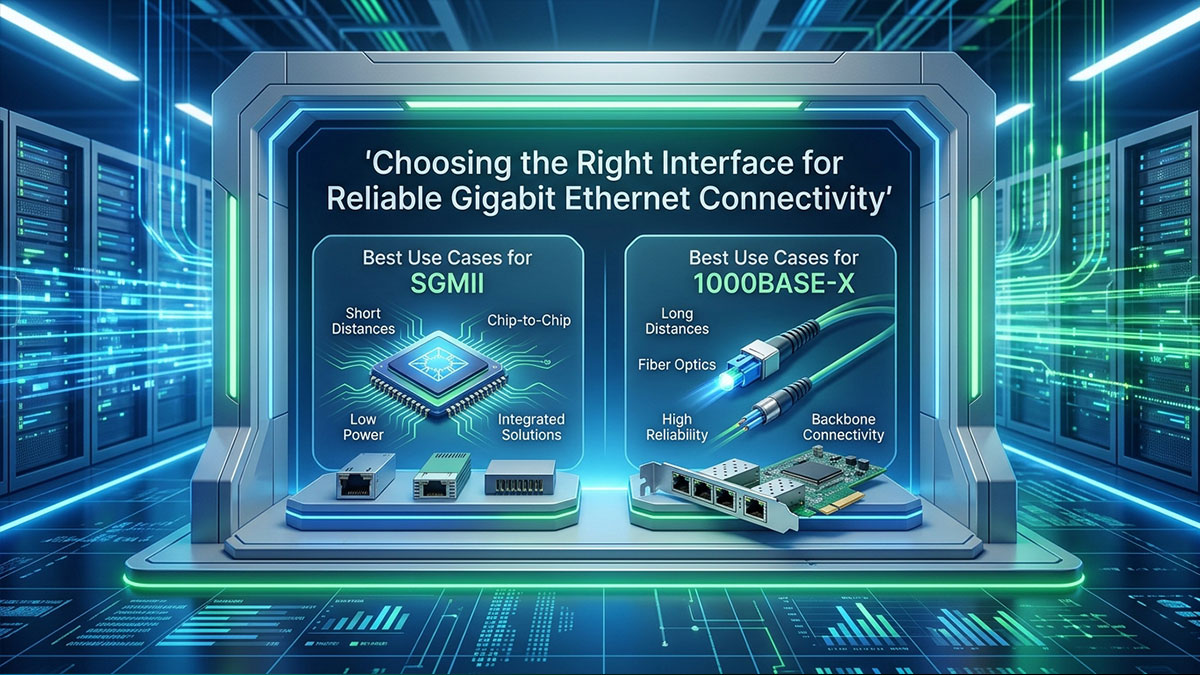
Best Use Cases for SGMII
SGMII should be implemented when backward compatibility and multi-rate flexibility are non-negotiable requirements. Its reliance on symbol replication and modified link-state auto-negotiation makes it ideal for:
- Consumer and Enterprise Copper Ports: Designing standard RJ45 ports where users may connect legacy 10BASE-T or 100BASE-TX devices.
- Internal MAC-to-PHY Interconnects: Routing high-speed serial traces from an SoC or FPGA MAC to a discrete onboard PHY chip (such as those from Texas Instruments or Marvell) while maintaining a low pin count.
- Multi-Rate Copper SFP Modules: Ensuring that transceiver modules can negotiate speeds with external devices without breaking the 1.25 Gbps host switch link.
Best Use Cases for 1000BASE-X
1000BASE-X is the preferred standard when the network environment operates strictly at Gigabit speeds. Its pass-through logic and standard Clause 37 negotiation offer a highly efficient, low-latency data path suitable for:
- Direct Optical Networking: Driving native fiber optic SFP cages (1000BASE-SX/LX/ZX) where speed step-down is physically impossible and unnecessary.
- FPGA Resource Optimization: Conserving critical logic resources (LUTs and FFs) in embedded designs by bypassing the clock-domain crossing and data-replication logic required by SGMII.
- High-Speed Backplanes: Facilitating fixed-speed, chip-to-chip, or board-to-board communication within server chassis or telecom racks.
Final Recommendation for Network Equipment Designers
For network equipment designers, the rule of thumb is straightforward: match the interface to the medium's volatility. If the link speed is guaranteed to remain at 1 Gbps, 1000BASE-X minimizes design complexity and logic utilization. If the port must adapt to unknown external legacy hardware, the added logic overhead of SGMII is a mandatory investment for system stability.
When moving from the schematic phase to physical production, sourcing the right hardware—whether it is multi-rate SFP transceivers, discrete PHY components, or RJ45 jacks with integrated magnetics (ICMs)—is just as critical as your digital logic configuration. To ensure your hardware meets strict signaling tolerances and guarantees compatibility across both SGMII and 1000BASE-X architectures, browse the enterprise-grade networking components available at the LINK-PP Official Store.