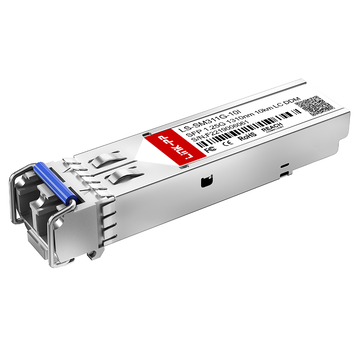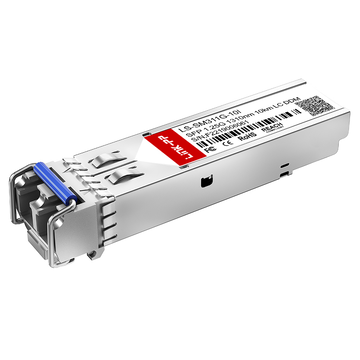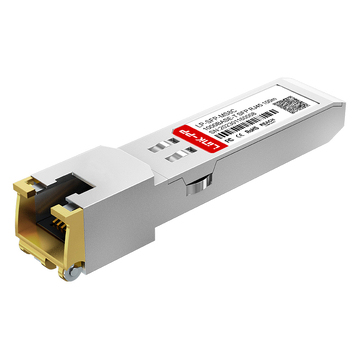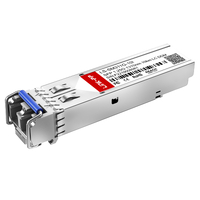
The increasing demand for reliable industrial networking has made optical transceivers a critical component in modern Ethernet infrastructure. Among these, the Moxa SFP-1GLXLC-T stands out as a rugged, industrial-grade 1GbE fiber optic SFP module designed for stable long-distance fiber transmission in harsh environments. Unlike standard commercial modules, it is engineered to maintain consistent performance under extreme temperature variations, vibration, and electrical noise commonly found in industrial deployments.
In practical network design, selecting the right fiber SFP module is not only about data rate or distance—it is fundamentally about environmental resilience and long-term stability. This is where industrial temperature specifications become essential. The Moxa SFP-1GLXLC-T is widely used in systems where network downtime is not acceptable, such as factory automation, transportation infrastructure, and outdoor communication cabinets.
This article provides a detailed, datasheet-driven breakdown of the Moxa SFP-1GLXLC-T, covering its technical specifications, optical performance, industrial temperature capabilities, and real-world application scenarios. It also explains how to evaluate compatibility, deployment considerations, and troubleshooting factors, helping engineers and network planners make informed decisions in demanding industrial environments.
📜 Overview of Moxa SFP-1GLXLC-T
The Moxa SFP-1GLXLC-T is a Gigabit Ethernet SFP transceiver designed for industrial networking environments where stability, distance, and temperature resilience are critical. It provides a straightforward solution for extending Ethernet connections over single-mode fiber while maintaining consistent performance in electrically noisy or environmentally challenging conditions.
In practical terms, this module is positioned as a 1000BASE-LX optical transceiver operating at 1Gbps over long-distance single-mode fiber links. Its design focuses on reliability in industrial deployments rather than just raw transmission capability, making it suitable for mission-critical communication systems that require predictable uptime and signal integrity.
What Is the Moxa SFP-1GLXLC-T?
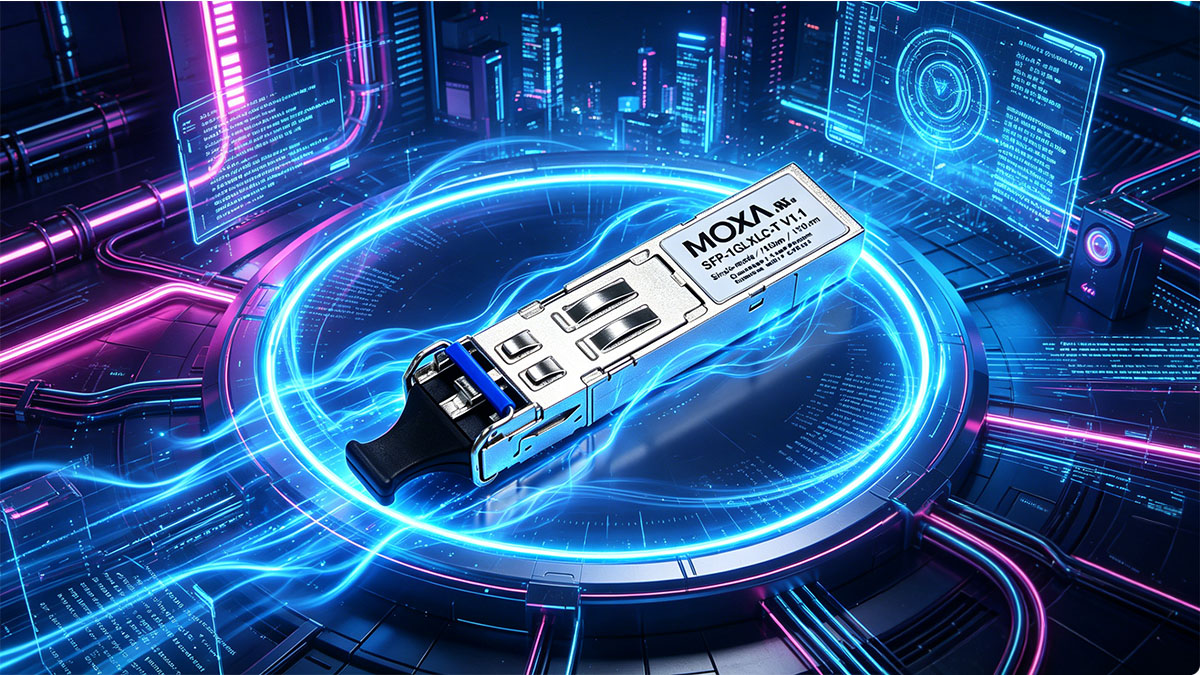
The Moxa SFP-1GLXLC-T is a hot-pluggable Small Form-factor Pluggable (SFP) module that converts electrical Ethernet signals into optical signals for transmission over fiber optic cabling. It is compliant with the IEEE 802.3z Gigabit Ethernet standard, ensuring compatibility with a wide range of industrial switches and networking devices.
From a functional perspective, this module is used to extend network connectivity beyond the limitations of copper Ethernet. Single-mode fiber support allows it to achieve long-distance transmission, typically up to 10km, depending on fiber quality and link conditions.
It is commonly deployed in environments where electromagnetic interference (EMI) would degrade copper-based communication, such as industrial plants, substations, and transportation systems.
Key Features at a Glance
The value of the Moxa SFP-1GLXLC-T becomes clearer when its core specifications are examined in a structured way. These features define its suitability for industrial-grade networking applications rather than general commercial use.
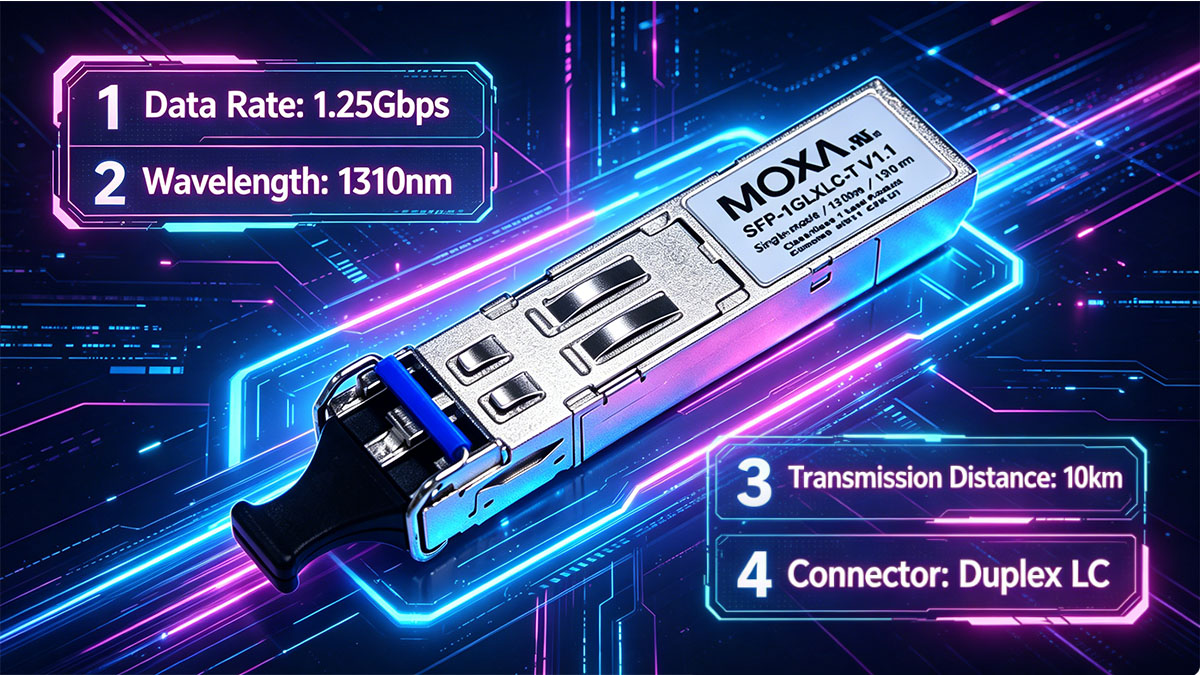
The following table summarizes its key operational characteristics:
| Parameter | Specification | Relevance |
|---|---|---|
| Data Rate | 1.25Gbps (1GbE) | Supports standard Gigabit Ethernet transmission |
| Wavelength | 1310nm | Optimized for long-distance single-mode fiber |
| Transmission Distance | Up to 10km | Suitable for campus and industrial site links |
| Connector Type | LC Duplex | Industry-standard fiber interface |
| Hot-Pluggable | Yes | Enables live installation without downtime |
Each of these parameters contributes to its role in long-distance, stable optical communication. In particular, the 1310nm wavelength and single-mode fiber compatibility are key to achieving low-loss transmission over extended distances.
Beyond raw specifications, the hot-pluggable design is especially important in industrial environments. It allows network operators to replace or install modules without shutting down the system, which is essential in continuous-operation facilities.
📜 Moxa SFP-1GLXLC-T Datasheet Breakdown
A datasheet is the most reliable reference for understanding how the Moxa SFP-1GLXLC-T performs under real-world industrial conditions. It defines not only optical and electrical limits, but also environmental tolerances that determine whether the module can operate continuously in demanding deployments. In this section, we break down the key datasheet parameters into practical engineering perspectives to help clarify how each specification affects network design decisions.
Optical Specifications
Optical performance is the core of any fiber transceiver, and for the Moxa SFP-1GLXLC-T, it is optimized for stable long-distance single-mode transmission. These parameters directly influence link budget, signal integrity, and maximum deployment distance.
The table below summarizes the key optical characteristics:
| Parameter | Specification | Functional Impact |
|---|---|---|
| Wavelength | 1310nm | Optimized for low attenuation in single-mode fiber |
| Fiber Type | Single-mode fiber (SMF) | Enables long-distance transmission up to 10km |
| Transmission Distance | Up to 10km | Suitable for campus and industrial backbone links |
| Optical Interface | LC Duplex | Standardized connector for reliable coupling |
These values indicate that the module is designed for predictable attenuation behavior over medium-range industrial fiber links. The 1310nm wavelength is particularly important because it offers a balance between cost efficiency and signal stability over kilometers of fiber, making it widely used in Gigabit Ethernet deployments.
Electrical and Interface Specifications
Beyond optical transmission, the electrical interface defines how the module interacts with networking equipment. These parameters ensure compatibility and consistent data throughput.
The key electrical characteristics are summarized below:
| Parameter | Specification | Functional Impact |
|---|---|---|
| Data Rate | 1.25Gbps | Supports full Gigabit Ethernet throughput |
| Protocol Standard | IEEE 802.3z | Ensures interoperability across vendors |
| Interface Type | SFP MSA compliant | Enables hot-swappable modular design |
| Power Consumption | Low power design | Reduces heat in dense switch environments |
A key advantage of SFP modules like the Moxa SFP-1GLXLC-T is their MSA compliance. This ensures that the electrical interface and physical form factor are standardized, allowing broad compatibility across industrial switches, provided coding and firmware restrictions are not enforced by specific vendors.
Low power consumption is another important aspect, especially in high-density deployments where multiple transceiver modules operate in confined enclosures. Reduced power draw directly translates into lower thermal load, which is critical in sealed industrial cabinets.
Environmental Specifications (Industrial Temperature Performance)
One of the most defining features of the Moxa SFP-1GLXLC-T is its ability to operate reliably under extreme environmental conditions. Unlike commercial-grade modules, it is designed for industrial temperature ranges, making it suitable for outdoor and high-stress installations.
The environmental parameters are typically defined as follows:
| Parameter | Specification | Deployment Impact |
|---|---|---|
| Operating Temperature | -40°C to 75°C | Ensures functionality in extreme climates |
| Storage Temperature | -40°C to 85°C | Safe handling and logistics resilience |
| Humidity Tolerance | Up to 95% non-condensing | Suitable for humid industrial environments |
These specifications are particularly important in applications such as outdoor cabinets, transportation systems, and energy infrastructure. Temperature extremes can significantly affect optical performance, especially laser stability and receiver sensitivity. Industrial-grade design ensures that performance remains stable even when environmental conditions fluctuate rapidly.
From a deployment perspective, the extended operating temperature range allows engineers to eliminate additional cooling or heating systems in many cases, simplifying infrastructure design and reducing maintenance requirements.
Compliance and Industry Standards
Compliance ensures that the module meets global interoperability and safety requirements, which is essential for integration into multi-vendor networks.
Key compliance aspects include:
- IEEE 802.3z Gigabit Ethernet standard compliance
- SFP Multi-Source Agreement (MSA) compatibility
- RoHS environmental compliance for hazardous substance restrictions
These standards ensure that the Moxa SFP-1GLXLC-T can be deployed in global industrial environments without regulatory or interoperability concerns. IEEE compliance guarantees Ethernet-level compatibility, while MSA ensures physical and electrical form factor consistency across vendors.
RoHS compliance further supports its use in environmentally regulated industries, particularly in regions with strict electronic waste and material restrictions.
📜 Understanding Industrial Temperature SFP Modules
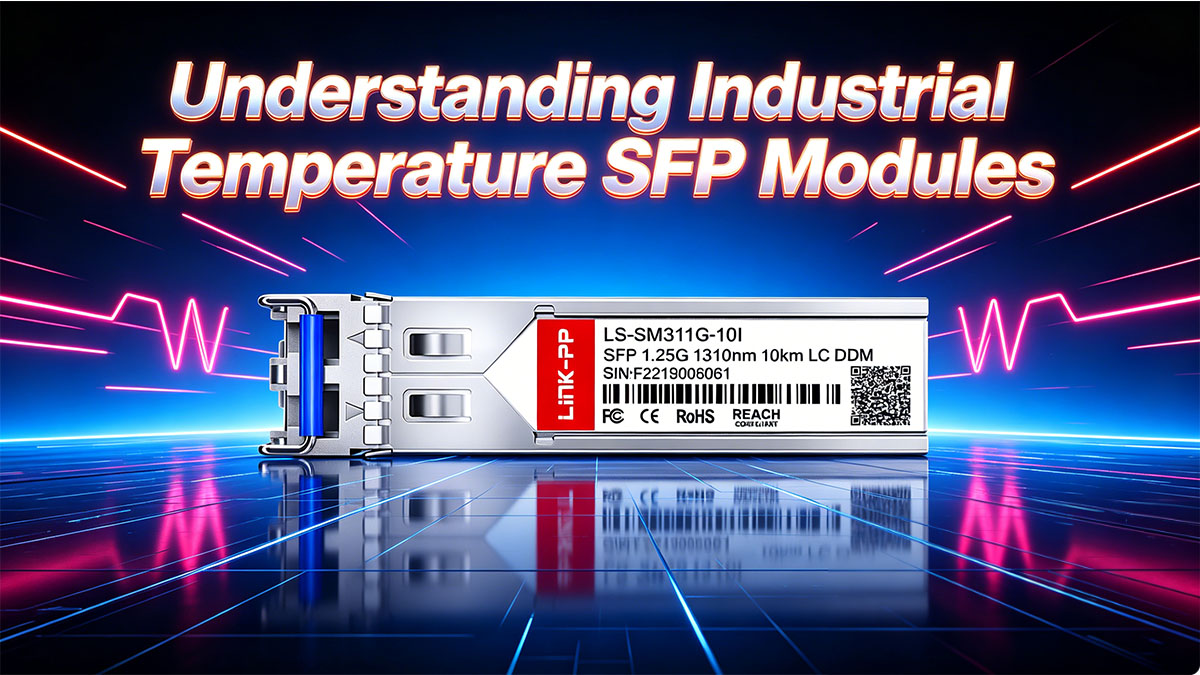
Industrial temperature SFP modules are designed for network environments where standard commercial transceivers would fail due to environmental stress. The Moxa SFP-1GLXLC-T belongs to this category, meaning its core value is not only in optical performance, but in its ability to operate reliably under extreme heat, cold, and fluctuating field conditions.
In real-world deployments, temperature is often one of the most underestimated factors affecting fiber network stability. While data rate and distance are usually the focus, environmental tolerance often determines whether a link remains stable year-round. This is where industrial-grade SFP modules become essential.
What Defines Industrial Temperature Range?
The key difference between industrial and commercial SFP modules lies in their operating temperature range. This range directly impacts where and how the module can be deployed.
A simplified comparison helps clarify the distinction:
| Module Type | Operating Temperature Range | Typical Use Case |
|---|---|---|
| Commercial SFP | 0°C to 70°C | Data centers, indoor enterprise networks |
| Industrial SFP | -40°C to 75°C | Outdoor, factory, transportation systems |
The Moxa SFP-1GLXLC-T falls into the industrial category, supporting operation from -40°C to 75°C. This extended range ensures stable performance in environments where temperature swings are not only common but unavoidable.
From an engineering standpoint, achieving this range requires reinforced component selection, tighter thermal design tolerances, and more robust calibration of optical components. These enhancements help maintain laser stability, receiver sensitivity, and signal integrity across wide temperature fluctuations.
Why Industrial Temperature Matters
Temperature directly affects multiple physical properties of optical transceivers, including laser output, semiconductor behavior, and signal-to-noise ratio. Even small variations can lead to degraded performance or intermittent link failures in sensitive networks.
In practical deployments, industrial temperature capability is critical in several scenarios:
- Outdoor communication cabinets exposed to seasonal weather changes
- Factory floors with high heat output from machinery
- Railway and transportation systems operating in open environments
- Energy and utility substations with minimal climate control
Each of these environments introduces different thermal stress patterns. For example, outdoor enclosures may experience rapid day-night temperature shifts, while industrial plants often deal with sustained high ambient heat. Without industrial-grade design, these conditions can lead to increased bit error rates or complete link instability.
Another important advantage is system simplification. By using industrial temperature SFP modules, engineers can often eliminate auxiliary cooling or heating systems inside network enclosures. This reduces both infrastructure complexity and long-term maintenance requirements.
📜 Performance Characteristics in Real-World Deployments
In practical industrial networking, datasheet values only represent part of the story. The real performance of the Moxa SFP-1GLXLC-T is defined by how consistently it maintains signal integrity, link stability, and low error rates under non-ideal field conditions such as vibration, electromagnetic interference, and temperature fluctuation.
Unlike controlled lab environments, industrial deployments introduce multiple simultaneous stress factors. Therefore, the performance of a 1G SFP module must be evaluated not only by distance and bandwidth, but also by its resilience in operational scenarios where conditions continuously change.
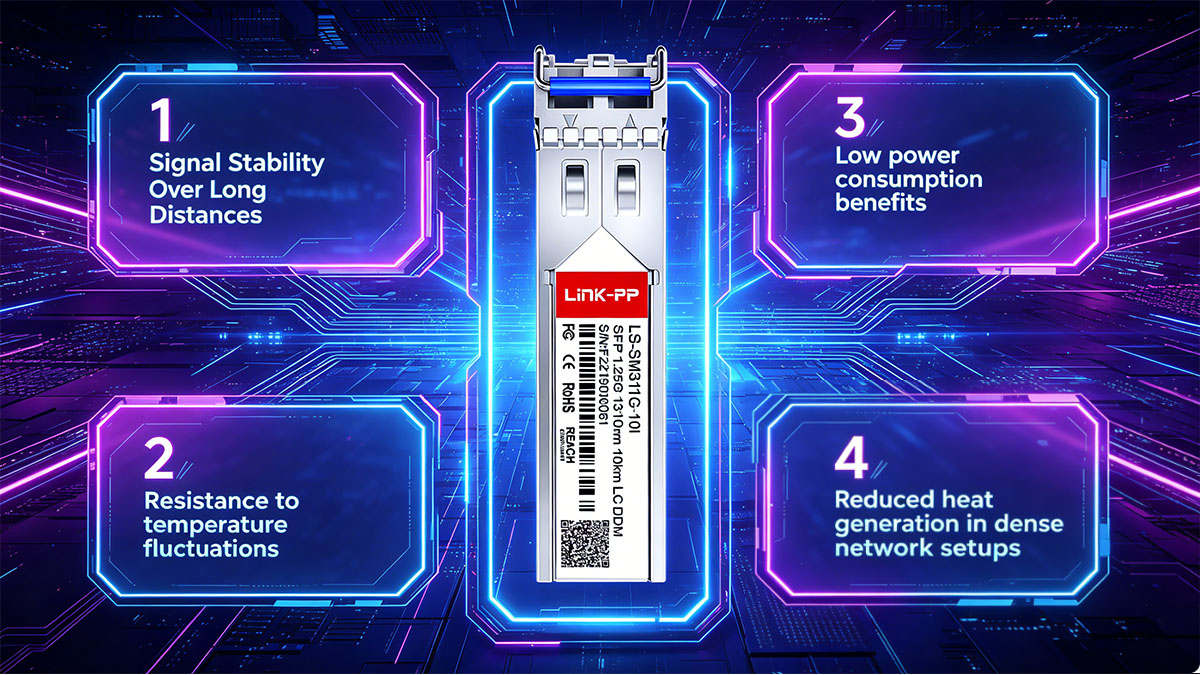
Signal Stability Over Long Distances
For single-mode fiber links, maintaining signal stability over distance is primarily governed by optical attenuation, dispersion, and link budget margin. The Moxa SFP-1GLXLC-T, operating at 1310nm over SMF, is optimized for stable transmission up to 10km, provided that fiber quality and splicing conditions are properly managed.
A simplified view of key optical constraints is shown below:
| Factor | Impact on Performance | Practical Consideration |
|---|---|---|
| Fiber Attenuation | Reduces received optical power | Typically ~0.35dB/km at 1310nm |
| Connector Loss | Adds insertion loss at endpoints | Keep LC connectors clean and properly seated |
| Splice Loss | Weakens signal continuity | High-quality fusion splicing recommended |
| Link Margin | Determines reliability buffer | Ensure minimum 3–6dB safety margin |
These factors collectively determine whether the link operates reliably over time. Even though the module supports up to 10km, real-world deployments often require careful margin planning to account for aging fiber, connector contamination, and environmental stress.
Reliability in Harsh Environments
Industrial environments introduce conditions that directly affect electronic and optical stability. These include electromagnetic interference (EMI), mechanical vibration, and rapid thermal cycling. The Moxa SFP-1GLXLC-T is engineered to mitigate these risks through robust internal design and industrial-grade component selection.
Key reliability factors include:
- EMI resistance for operation near heavy machinery and power systems
- Mechanical stability to withstand vibration in transport and industrial equipment
- Thermal resilience for fluctuating outdoor and indoor conditions
- Stable optical alignment under continuous environmental stress
In environments such as manufacturing plants or railway systems, these factors significantly reduce the likelihood of intermittent link drops or degraded throughput. Unlike copper-based connections, fiber-based SFP links are inherently immune to EMI, but the transceiver itself must still maintain internal stability under these conditions.
A major advantage of industrial-grade modules is reduced failure probability over long operational cycles. This is especially important in remote infrastructure, where maintenance visits are costly or operationally disruptive.
Power Efficiency and Thermal Management
Power consumption plays a critical role in dense network architectures, especially when multiple SFP modules operate within confined switch enclosures. The Moxa SFP-1GLXLC-T is designed with low power consumption characteristics to minimize heat generation and improve system stability.
A comparison of key operational impacts is shown below:
| Aspect | Effect of Low Power Design | System-Level Benefit |
|---|---|---|
| Heat Output | Reduced internal thermal load | Improved switch longevity |
| Power Budget | Lower per-port consumption | Enables higher port density |
| Cooling Requirement | Less dependency on active cooling | Simplifies enclosure design |
| Stability | Reduced thermal drift risk | More consistent optical performance |
Lower thermal output is particularly important in sealed industrial cabinets where airflow is limited. Excess heat can accelerate component aging and negatively impact optical alignment stability over time.
From a deployment perspective, efficient thermal behavior allows engineers to design simpler enclosures without complex cooling systems. This not only reduces installation cost but also improves overall system reliability by eliminating moving cooling components such as fans.
📜 Typical Applications of Moxa SFP-1GLXLC-T
The Moxa SFP-1GLXLC-T is widely deployed in environments where network reliability, long-distance fiber transmission, and industrial temperature tolerance are all critical requirements. Rather than being limited to traditional IT networks, it is primarily designed for operational technology (OT) systems where downtime can directly impact safety, production, or infrastructure stability.
In real-world scenarios, its value becomes most evident in systems that require stable 1GbE connectivity across distributed sites, often under harsh or uncontrolled environmental conditions.

Industrial Automation Networks
Industrial automation is one of the most common application areas for the Moxa SFP-1GLXLC-T. In modern factories, Ethernet-based communication is used to connect PLCs, controllers, sensors, and supervisory systems across large production floors.
Typical deployment scenarios include:
- PLC-to-switch backbone connections in production lines
- Ethernet uplinks between industrial control cabinets
- Data aggregation from distributed machine clusters
- Factory-wide SCADA communication networks
These environments require deterministic and stable communication rather than just high bandwidth. The 1Gbps capability of the module is sufficient for most control and monitoring traffic, while fiber connectivity ensures immunity to electromagnetic interference generated by heavy machinery.
Transportation and Railway Systems
Transportation infrastructure demands extremely high network reliability due to continuous operation and strict safety requirements. The Moxa SFP-1GLXLC-T is commonly used in railway signaling systems, roadside communication networks, and intelligent traffic management systems.
Key application scenarios include:
- Railway signaling and control communication backbones
- Trackside monitoring and surveillance networks
- Intelligent transportation system (ITS) data links
- Station-to-control-center fiber connectivity
A key advantage in these environments is its ability to operate under extreme temperature conditions. Trackside enclosures and outdoor cabinets are often exposed to direct sunlight, freezing temperatures, and humidity fluctuations. Industrial-grade SFP modules ensure stable optical performance despite these environmental challenges.
Additionally, fiber-based communication eliminates susceptibility to electrical noise from traction power systems, which is critical for maintaining signal integrity in railway environments.
Energy and Utility Infrastructure
Energy and utility networks rely heavily on distributed monitoring and control systems. These include power generation facilities, substations, and renewable energy installations such as solar and wind farms.
The Moxa SFP-1GLXLC-T is typically deployed in:
- Electrical substation communication networks
- Smart grid monitoring systems
- SCADA backbone links between remote facilities
- Renewable energy site connectivity (solar/wind farms)
In these environments, long-distance fiber links are often required to connect geographically dispersed assets. The module's ability to support up to 10km transmission makes it suitable for inter-building or inter-substation connectivity.
A critical requirement in energy infrastructure is operational continuity. Even brief network interruptions can disrupt monitoring systems or delay fault detection. Industrial temperature resilience ensures that communication remains stable in both outdoor and semi-controlled environments.
Outdoor and Harsh Environment Deployments
Beyond structured industrial systems, the Moxa SFP-1GLXLC-T is also widely used in standalone outdoor deployments where environmental conditions are unpredictable and often extreme.
Typical use cases include:
- Oil and gas pipeline monitoring systems
- Mining operation communication networks
- Remote environmental sensing stations
- Outdoor security and surveillance systems
These environments often lack climate control and expose equipment to wide temperature swings, dust, humidity, and vibration. Industrial-grade SFP modules are essential to ensure that optical links remain operational under these unpredictable conditions.
A key design advantage in these scenarios is reduced maintenance frequency. Since physical access to remote sites is often difficult or costly, network components must operate reliably for long periods without intervention. The robustness of industrial SFPs directly contributes to lower operational overhead and improved system uptime.
📜 Compatibility and Interoperability Considerations
In industrial networking design, optical performance alone is not enough to guarantee successful deployment. Compatibility and interoperability determine whether the Moxa SFP-1GLXLC-T can function seamlessly within mixed-vendor environments, legacy infrastructure, and modern industrial Ethernet systems. These factors are often the deciding point in real-world integration projects.
Because SFP modules are widely standardized through MSA and IEEE specifications, many devices can physically accept the module. However, electrical compatibility, firmware recognition, and vendor-specific coding rules can still influence whether the link will operate correctly.
Moxa Device Compatibility
The most reliable and straightforward deployment scenario for the Moxa SFP-1GLXLC-T is within Moxa's own industrial Ethernet ecosystem. Moxa designs its switches and routers to fully support its optical transceivers, ensuring plug-and-play functionality without additional configuration.
Common compatible device categories include:
- Industrial Ethernet switches
- Managed and unmanaged DIN-rail switches
- Industrial routers and gateways
- Edge connectivity platforms in SCADA systems
In these environments, compatibility is typically ensured through factory-tested firmware and validated optical performance profiles. This reduces the risk of link negotiation issues or unsupported module detection.
Third-Party Compatibility
Thanks to adherence to the SFP Multi-Source Agreement (MSA), the Moxa SFP-1GLXLC-T is mechanically and electrically compatible with many third-party networking devices. This includes switches and routers from various industrial and enterprise vendors.
However, interoperability is influenced by several practical factors:
| Compatibility Factor | Description | Potential Impact |
|---|---|---|
| MSA Compliance | Standardized form factor and interface | Ensures physical insertion compatibility |
| EEPROM Coding | Vendor-specific identification data | May affect device recognition |
| Firmware Restrictions | Manufacturer lock policies | Can block unsupported optics |
| Optical Budget Matching | Power levels must align with port specs | Impacts link stability |
Even when a module fits physically, some devices may reject it due to EEPROM coding restrictions. This is especially common in enterprise-grade switches that enforce vendor-locked optics policies.
Common Compatibility Challenges
In mixed-vendor environments, several compatibility issues may arise even when using fully standards-compliant hardware. These challenges are not unique to the Moxa SFP-1GLXLC-T but are common across all industrial SFP deployments.
Typical issues include:
- Module not recognized by switch firmware due to vendor coding mismatch
- Link failure caused by mismatched optical power levels between devices
- Incompatibility between single-mode fiber assumptions and existing cabling
- Firmware restrictions blocking third-party optical modules
- Auto-negotiation inconsistencies in legacy network equipment
Each of these issues can result in partial or complete link failure, even when the physical connection appears correct.
In practice, the most common problem is vendor verification blocking rather than optical incompatibility. This is why compatibility validation is often performed during the network design phase rather than after installation.
📜 Installation and Deployment Best Practices
Proper installation and deployment of the Moxa SFP-1GLXLC-T directly impacts link stability, optical performance, and long-term reliability. Even though SFP modules are designed for hot-pluggable operation, industrial environments introduce additional risks such as electrostatic discharge, fiber contamination, and mechanical stress. A structured deployment approach helps minimize these risks and ensures consistent network behavior.
In practical industrial networking, most performance issues are not caused by the module itself, but by installation practices and fiber handling quality. Therefore, attention to detail during deployment is essential.
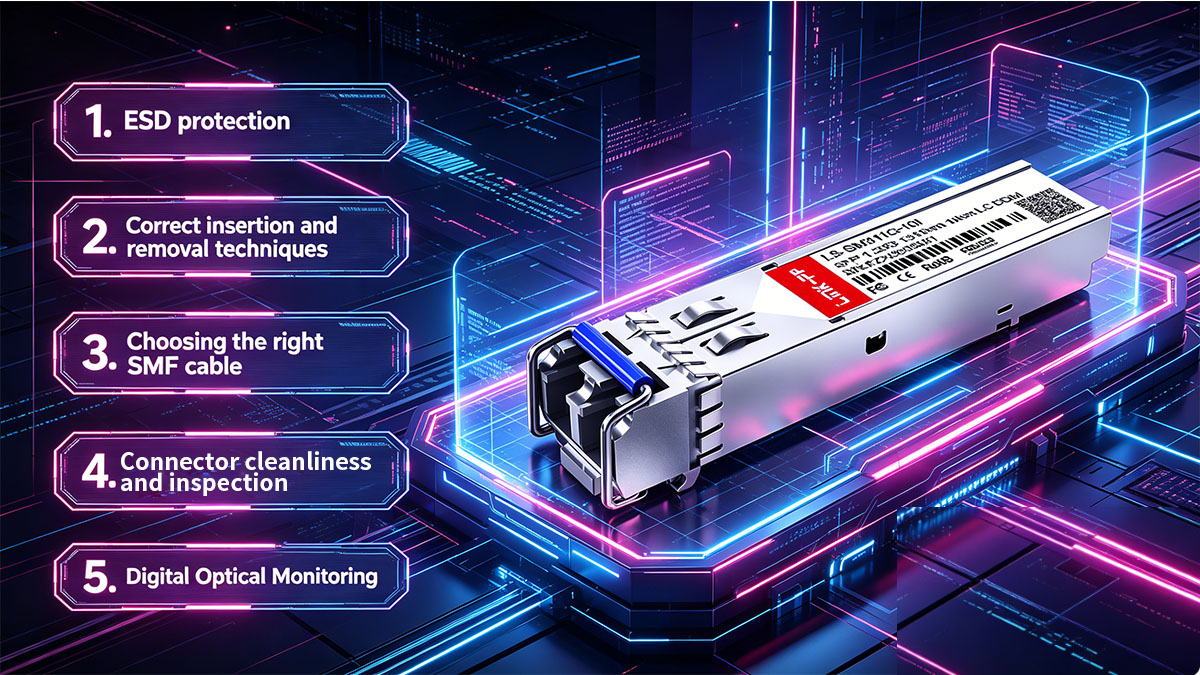
Proper Handling and Installation
SFP modules are sensitive electronic and optical devices, and improper handling can lead to immediate or long-term performance degradation. Before installation, basic electrostatic and mechanical precautions should always be followed.
Key installation practices include:
- Use proper ESD (electrostatic discharge) protection such as grounded wrist straps
- Avoid direct contact with optical connectors or exposed fiber interfaces
- Insert the module firmly into the SFP slot until it locks in place
- Do not force insertion if alignment is not correct
- Ensure the switch or router port is clean and free from dust or debris
From an operational perspective, one of the most common issues in the field is contamination during handling. Even microscopic dust particles can significantly reduce optical signal quality, especially in long-distance single-mode fiber links.
Hot-swappable design allows installation without system shutdown, but in critical industrial systems, it is still recommended to follow controlled maintenance procedures to avoid accidental link interruptions.
Fiber Cabling Considerations
Fiber infrastructure plays a major role in determining the actual performance of the Moxa SFP-1GLXLC-T. Even if the module is fully functional, poor cabling practices can introduce significant signal loss or instability.
Important cabling guidelines include:
- Use single-mode fiber (SMF) that matches 1310nm transmission requirements
- Maintain proper LC duplex connector alignment
- Avoid excessive bending radius to prevent signal attenuation
- Ensure all connectors are clean before insertion
- Use high-quality fusion splicing for long-distance runs
A simplified comparison of fiber-related loss factors is shown below:
| Factor | Impact on Link Performance | Mitigation Method |
|---|---|---|
| Connector contamination | Increased insertion loss | Regular cleaning and inspection |
| Fiber bending | Signal attenuation or reflection | Maintain minimum bend radius |
| Poor splicing | Unstable signal transmission | Use certified fusion splicing |
| Mismatched fiber type | Link failure or instability | Verify SMF compatibility |
In long-distance deployments approaching 10km, even small losses accumulate and can reduce the overall link margin. Therefore, fiber quality and installation precision are just as important as the transceiver specifications.
Monitoring and Maintenance
After installation, ongoing monitoring and maintenance are essential to ensure long-term network stability. Industrial environments are dynamic, and factors such as vibration, temperature changes, and dust accumulation can gradually affect optical performance.
Key maintenance practices include:
- Periodic inspection of fiber connectors for dust or damage
- Monitoring optical power levels if Digital Optical Monitoring (DOM) is available
- Tracking link stability and error rates through network management systems
- Replacing damaged patch cables before they cause link degradation
- Maintaining spare validated SFP modules for critical nodes
In advanced deployments, DOM data can provide real-time insights into Tx/Rx power levels, temperature, and voltage. This allows predictive maintenance strategies, reducing unexpected downtime in mission-critical systems.
From a lifecycle management perspective, proactive monitoring is significantly more effective than reactive troubleshooting, especially in remote or hard-to-access industrial sites.
📜 Comparing Industrial vs Commercial SFP Modules
In practical network design, selecting between industrial and commercial SFP modules is a decision that directly impacts system stability, environmental resilience, and lifecycle cost. While both module types may appear similar in form factor and basic functionality, their engineering priorities are fundamentally different. The Moxa SFP-1GLXLC-T represents the industrial category, optimized for harsh environments where commercial-grade optics would struggle to maintain stable performance.
Key Differences
The most important differences between industrial and commercial SFP modules can be understood through three core dimensions: temperature tolerance, physical robustness, and overall cost structure. These factors determine where each type of module is suitable for deployment.
A structured comparison helps clarify these distinctions:
| Factor | Industrial SFP (e.g., Moxa SFP-1GLXLC-T) | Commercial SFP |
|---|---|---|
| Temperature Range | -40°C to 75°C | 0°C to 70°C |
| Build Quality | Reinforced components for harsh environments | Standard electronic-grade components |
| Durability | High resistance to vibration, EMI, and thermal cycling | Designed for stable indoor environments |
| Cost Structure | Higher initial cost, optimized for long lifecycle | Lower initial cost, optimized for volume deployment |
From an engineering perspective, temperature range is often the most visible difference, but not the most critical one. The real distinction lies in how components behave under continuous stress. Industrial modules are designed to maintain stable optical alignment and signal integrity even when environmental conditions fluctuate significantly.
When to Choose Industrial-Grade SFPs
Industrial-grade SFP modules are not required for every network. However, in environments where stability and uptime are critical, they become the preferred and often necessary choice.
Typical scenarios where industrial SFPs such as the Moxa SFP-1GLXLC-T are recommended include:
- Harsh environmental conditions with extreme temperature variation
- Outdoor installations exposed to weather, dust, or humidity
- Industrial automation systems requiring continuous uptime
- Transportation and railway communication networks
- Energy, utility, and infrastructure monitoring systems
In these environments, environmental unpredictability is the primary challenge. Temperature swings, vibration, and electromagnetic interference can all affect network stability. Industrial SFPs are specifically designed to mitigate these risks through reinforced hardware design and extended operating tolerances.
Beyond environmental factors, mission-critical applications are another key driver for selecting industrial-grade optics. In systems such as SCADA networks, railway signaling, or power grid monitoring, even short communication interruptions can have significant operational consequences. Industrial SFPs reduce this risk by providing consistent optical performance under stress conditions.
📜 Common Issues and Troubleshooting Tips
Even though the Moxa SFP-1GLXLC-T is designed for stable industrial operation, real-world deployments can still encounter issues related to fiber quality, environmental conditions, compatibility, or installation practices. In most cases, these problems are not caused by the module itself but by system-level factors such as cabling, configuration, or physical maintenance.

Understanding common failure patterns helps engineers quickly isolate problems and restore link stability with minimal downtime.
Link Failure or No Signal Detection
One of the most frequent issues in SFP-based networks is a complete loss of link or failure to detect the transceiver. This typically occurs at the physical or compatibility layer rather than the optical transmission level.
Common causes include:
- Incorrect fiber type (using multimode fiber instead of single-mode fiber)
- Reversed TX/RX connections on LC duplex connectors
- Dust or contamination on optical interfaces
- Module not properly seated in the SFP slot
- Switch firmware not recognizing the transceiver
A structured troubleshooting approach can help isolate the issue:
| Check Point | Expected Condition | Action if Failed |
|---|---|---|
| Fiber Type | Single-mode (SMF) | Replace with correct fiber type |
| Connector Alignment | TX ↔ RX correctly matched | Reconnect and verify polarity |
| Physical Installation | Fully inserted and locked | Re-seat module firmly |
| Port Status | SFP detected in system | Check compatibility or firmware |
In many cases, simply cleaning the fiber connectors and re-seating the module resolves the issue. However, persistent detection problems may indicate firmware-level compatibility restrictions.
Temperature-Related Performance Issues
Although the Moxa SFP-1GLXLC-T supports an industrial temperature range of -40°C to 75°C, extreme environmental conditions or poor enclosure design can still impact performance.
Typical symptoms include intermittent link drops, increased error rates, or unstable throughput.
Key contributing factors include:
- Excessive heat buildup in sealed network cabinets
- Direct exposure to sunlight in outdoor enclosures
- Insufficient airflow or passive cooling design
- Operation near upper or lower temperature limits for extended periods
Troubleshooting steps often focus on environmental correction rather than module replacement:
- Improve ventilation or add thermal management inside enclosures
- Relocate equipment away from direct heat sources if possible
- Use temperature monitoring tools to track internal cabinet conditions
- Verify that ambient temperature remains within specification limits
From a system engineering perspective, thermal stability is just as important as optical performance. Even fully compliant industrial modules can experience degraded performance if operated continuously at extreme temperature thresholds.
Performance Degradation and Signal Loss
Gradual performance degradation is often more difficult to detect than complete link failure. In fiber networks, this usually manifests as increased latency, packet loss, or reduced throughput rather than total disconnection.
Common causes include:
- Fiber attenuation due to aging or physical damage
- Dirty or oxidized connectors increasing insertion loss
- Excessive bending or mechanical stress on fiber cables
- Accumulated splice losses in long-distance links
A simplified diagnostic checklist includes:
- Inspect all LC connectors for dust or scratches
- Measure optical power levels if monitoring tools are available
- Verify that total link loss remains within optical budget
- Replace suspected patch cables or connectors if degradation is detected
In industrial environments, vibration and dust accumulation are often underestimated contributors to long-term signal degradation. Regular inspection and cleaning can significantly extend network stability.
📜 Conclusion
The Moxa SFP-1GLXLC-T is a 1GbE industrial-grade optical transceiver designed for long-distance single-mode fiber communication in harsh environments, combining stable optical performance with an extended industrial temperature range of -40°C to 75°C. Unlike standard commercial SFP modules, it is engineered for environments where network reliability, environmental resilience, and long-term operational stability are more critical than cost efficiency or indoor optimization. From datasheet specifications to real-world deployment behavior, it consistently demonstrates its value in industrial Ethernet infrastructures such as automation systems, transportation networks, and energy facilities.
Core Takeaways
To summarize the most important insights from this guide, the key characteristics of the Moxa SFP-1GLXLC-T can be distilled into the following points:
- Industrial temperature support ensures stable operation in extreme environments ranging from -40°C to 75°C
- 1310nm single-mode fiber design enables reliable long-distance transmission up to 10km
- Robust industrial engineering improves resistance to vibration, EMI, and thermal fluctuations
- MSA compliance supports broad interoperability, though vendor compatibility should still be validated
- Best suited for mission-critical networks where uptime and stability are more important than initial cost
These points highlight that the module is not simply a connectivity component, but a reliability-focused building block in industrial network design. Its value becomes most evident in systems where downtime is not an option and environmental conditions cannot be fully controlled.
Final Perspective and Practical Direction
In modern industrial networking, selecting the right SFP module is a strategic decision that affects system resilience, maintenance cost, and long-term scalability. The Moxa SFP-1GLXLC-T stands out as a dependable choice for engineers who need predictable performance in demanding environments rather than laboratory-ideal conditions.
For professionals planning industrial Ethernet deployments or upgrading existing fiber infrastructure, it is essential to evaluate not only optical specifications but also environmental suitability, lifecycle reliability, and compatibility constraints.
For further exploration of compatible industrial networking components and optical transceiver solutions, the LINK-PP Official Store provides a wide range of industrial-grade SFP modules designed to support stable and scalable network architectures across diverse application scenarios.