Modern digital infrastructure depends on different types of area network to connect users, devices, applications, storage systems, and cloud platforms. Whether you are building a small office LAN, a university campus network, a metropolitan fiber backbone, or an AI data center cluster, the underlying network architecture directly affects performance, scalability, latency, and reliability.
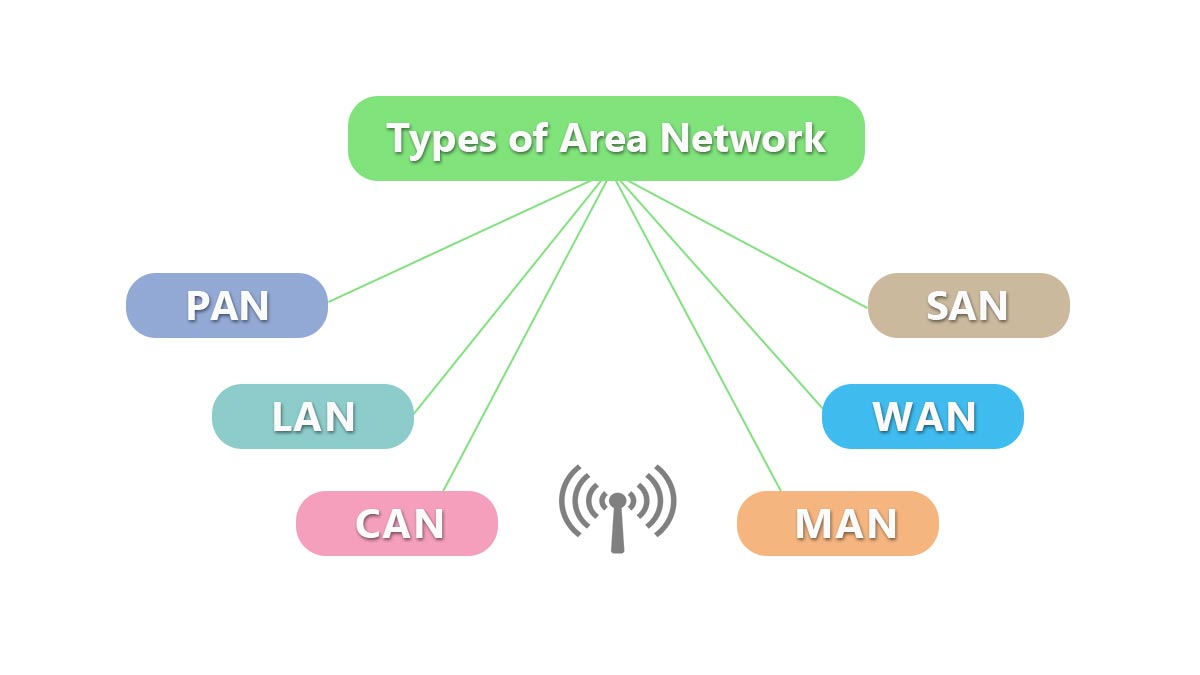
The most common area network types include:
- PAN (Personal Area Network)
- LAN (Local Area Network)
- CAN (Campus Area Network)
- MAN (Metropolitan Area Network)
- WAN (Wide Area Network)
- SAN (Storage Area Network)
Each network type is designed for a different physical coverage area and operational purpose. A PAN may only connect personal devices within a few meters, while a WAN can span countries or even global cloud infrastructure. As networks grow in size and bandwidth demand, traditional copper connections often become insufficient. This is where optical transceiver modules play a critical role.
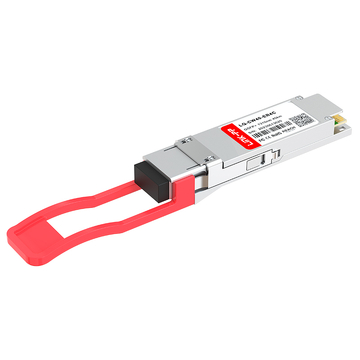
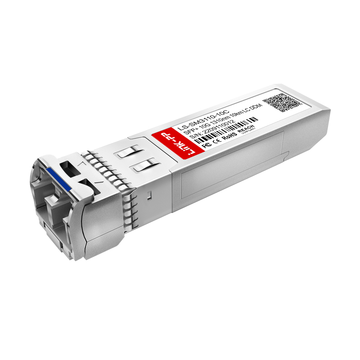
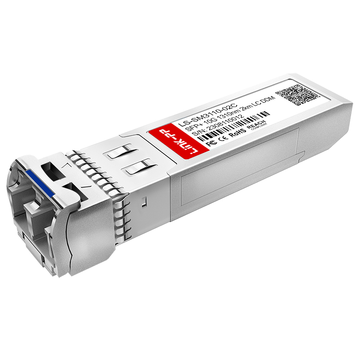
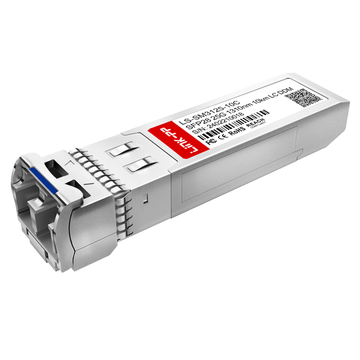
Optical modules enable high-speed data transmission over fiber optic cabling. Technologies such as SFP 1G, SFP+ 10G, SFP28 25G, QSFP28 100G, QSFP-DD 400G and beyond are now essential transceivers in enterprise LANs, campus networks, metro fiber systems, storage fabrics, and modern AI cluster networking environments.
In practical deployments, the relationship between area network types and optical modules is closely tied to:
- transmission distance
- network bandwidth
- latency requirements
- fiber type
- switch architecture
- scalability needs
For example:
- A small LAN may use short-range 10G or 25G optical modules for switch-to-server connectivity.
- A MAN typically relies on long-range single-mode optics and CWDM/DWDM technologies.
- A SAN uses specialized Fibre Channel optical transceivers for ultra-low-latency storage traffic.
- Large-scale AI clusters increasingly depend on 400G and 800G optical interconnects to support GPU communication.
Understanding how these network types relate to optical technology is becoming increasingly important in the era of cloud computing, edge infrastructure, hyperscale data centers, and generative AI.
In this guide, you will learn:
- the major types of area network
- how PAN, LAN, CAN, MAN, WAN, and SAN differ
- which optical modules are commonly used in each environment
- how to select the right transceiver based on network requirements
- why fiber optics are now foundational to modern enterprise and AI infrastructure
Whether you are a network engineer, IT manager, data center architect, student, or fiber optic buyer, this article will help you connect networking theory with real-world optical deployment strategies.
🔵 What Are the Types of Area Network?
Area networks are communication systems designed to connect devices within a specific geographic area. Different network types are classified based on their coverage range, performance requirements, and intended use.
The most common types of area network include:
| Network Type | Full Name | Typical Coverage | Common Use Cases |
|---|---|---|---|
| PAN | Personal Area Network | 1–10 meters | Bluetooth devices, wearables |
| LAN | Local Area Network | Home, office, building | Ethernet and Wi-Fi networks |
| CAN | Campus Area Network | Multiple buildings | Universities and business parks |
| MAN | Metropolitan Area Network | City-wide | Metro fiber and ISP networks |
| WAN | Wide Area Network | Regional or global | Internet and cloud infrastructure |
| SAN | Storage Area Network | Data center environment | Enterprise storage systems |
These network types are essential in modern IT infrastructure because each serves a different connectivity purpose. For example, LANs support local business networks, while WANs connect distributed offices and cloud platforms across large distances.
As network bandwidth and transmission requirements continue to grow, fiber optic infrastructure has become increasingly important. This is where optical modules play a critical role.
Optical modules, such as SFP, SFP+, QSFP28, and QSFP-DD transceivers, enable high-speed data transmission over fiber optic cabling. Different network types require different optical technologies depending on factors such as:
- transmission distance
- bandwidth
- latency
- scalability
- fiber type
For example:
- LANs commonly use short-range Ethernet optics.
- MANs and WANs rely on long-range single-mode transceivers.
- SANs use specialized Fibre Channel modules.
- AI clusters increasingly depend on 400G and 800G optical interconnects.
Understanding the relationship between area network types and optical modules helps businesses design faster, more scalable, and more reliable network infrastructures.
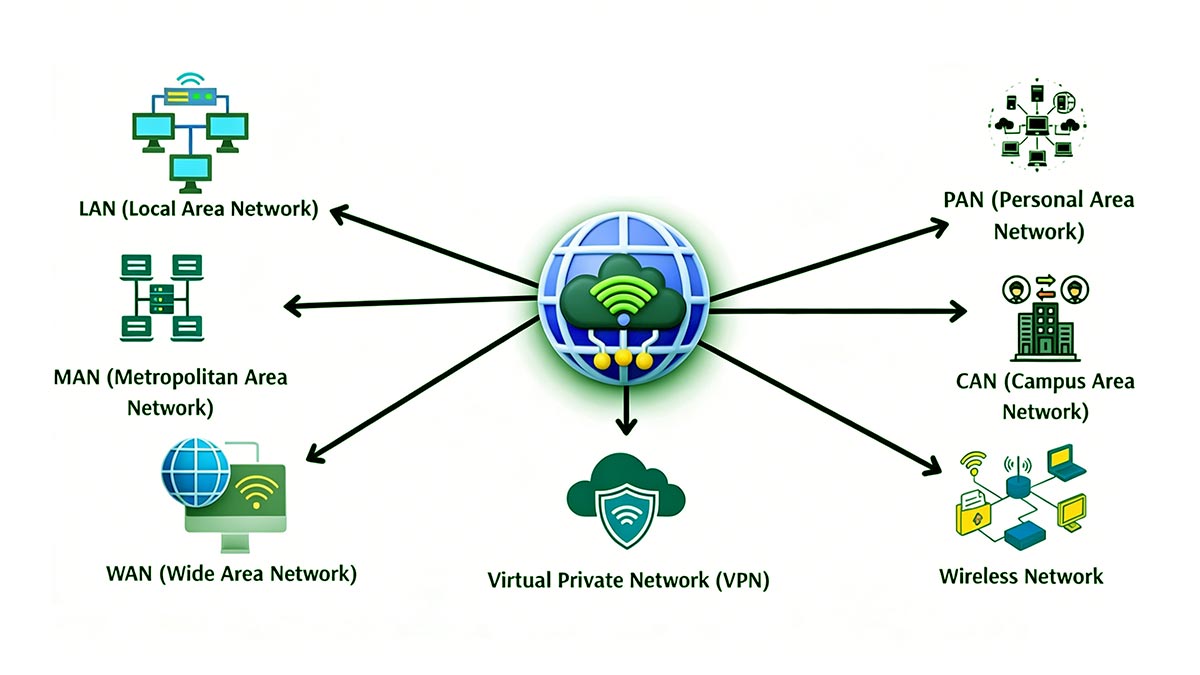
🔵 PAN, LAN, CAN, MAN, WAN, and SAN Explained
Different types of area network are designed for different communication distances and operational needs. From personal device connectivity to global enterprise infrastructure, each network type serves a specific role in modern networking.
1. PAN (Personal Area Network)
A PAN is the smallest type of network, typically covering a range of a few meters around a single user.
Common PAN technologies include:
- Bluetooth
- USB
- NFC
- personal Wi-Fi hotspots
Typical use cases:
- wireless headphones
- smartwatches
- smartphone tethering
- peripheral device connections
PANs usually do not require optical modules because transmission distances are very short.
2. LAN (Local Area Network)
A LAN connects devices within a limited area such as a home, office, school, or data center.
LANs are the most common enterprise network type and typically use:
- Ethernet
- Wi-Fi
- fiber optic uplinks
Typical use cases:
- office networks
- enterprise IT infrastructure
- server rooms
- AI cluster networking
Modern LANs increasingly rely on optical modules like:
- SFP
- SFP+
- SFP28
- QSFP28
to support high-speed fiber connectivity between switches and servers.
3. CAN (Campus Area Network)
A CAN connects multiple LANs across a campus or group of nearby buildings.
Coverage typically includes:
- universities
- hospitals
- factories
- business parks
CANs usually use fiber optic backbones to support:
- high bandwidth
- centralized IT management
- long-distance building interconnects
Common optical modules include:
4. MAN (Metropolitan Area Network)
A MAN spans a city or metropolitan region and is commonly operated by telecom providers, governments, or large enterprises.
Typical MAN applications include:
- metro Ethernet
- smart city infrastructure
- ISP aggregation networks
- municipal fiber systems
Because MANs require longer transmission distances, they often use:
- single-mode fiber
- CWDM transceivers
- DWDM transceivers
- long-range transceivers
5. WAN (Wide Area Network)
A WAN connects networks across regions, countries, or globally.
The internet itself is the largest WAN in the world.
WANs are commonly used for:
- cloud connectivity
- enterprise branch networking
- telecom backbone infrastructure
- hyperscale data center interconnection
WAN environments depend heavily on advanced optical technologies such as:
- coherent optics
- DWDM systems
- 400G ZR modules
- long-haul transceivers
These technologies support high-capacity communication over hundreds or thousands of kilometers.
6. SAN (Storage Area Network)
A SAN is a dedicated high-speed network designed specifically for storage traffic.
Unlike LANs or WANs, SANs focus on:
- low latency
- high reliability
- storage performance
- data availability
Typical SAN deployments are found in:
- enterprise data centers
- cloud platforms
- virtualization environments
- AI storage clusters
SANs commonly use:
- Fibre Channel
- NVMe over Fabrics
- dedicated storage switches
Optical modules used in SANs include:
- 16G FC (such as DS-SFP-FC16G-SW)
- 32G FC (sucha as DS-SFP-FC32G-SW)
- 64G Fibre Channel transceivers
These optical interconnects help ensure fast and stable communication between servers and storage arrays.
🔵 How Optical Modules Support Different Network Types
Optical modules enable high-speed data transmission over fiber optic cabling and are essential in modern LAN, CAN, MAN, WAN, SAN, and AI network infrastructures. Different network types require different optical technologies based on transmission distance, bandwidth, fiber type, and network architecture.
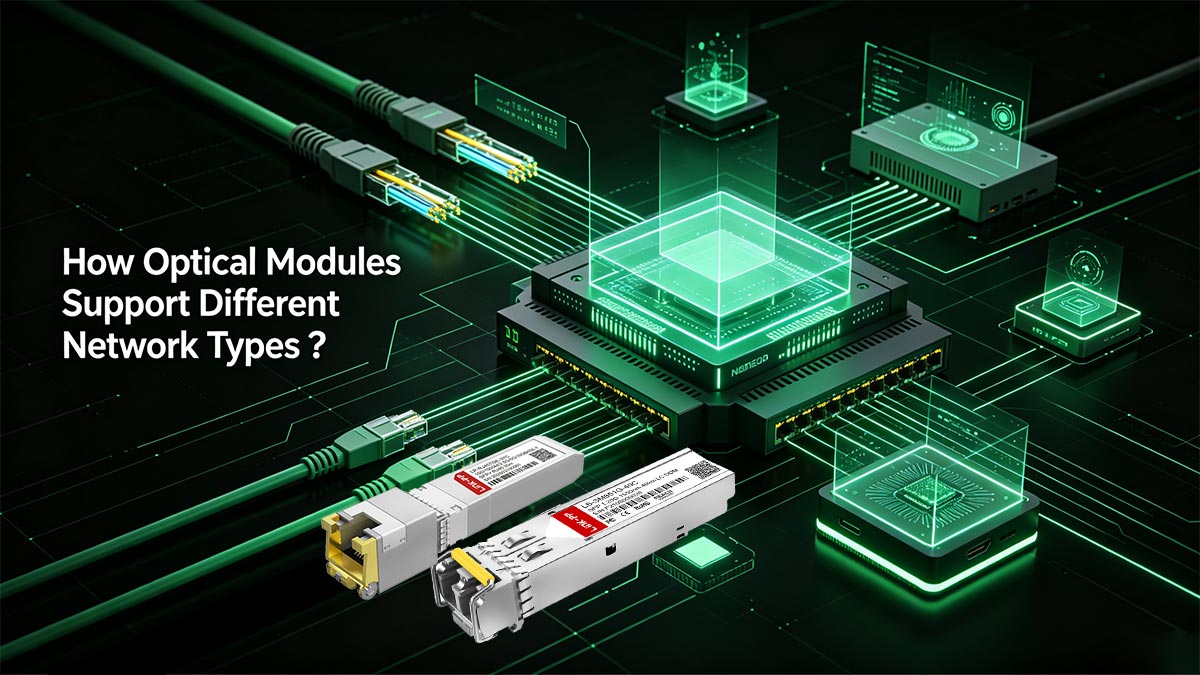
Optical transceivers convert electrical signals from switches, routers, and servers into optical signals for fiber transmission.
Distance Determines Optical Reach
Network coverage directly affects optical module selection.
| Optical Type | Typical Distance | Common Applications |
|---|---|---|
| SR (Short Reach) | Up to 100 m | LANs and data centers |
| LR (Long Reach) | Up to 10 km | Campus networks |
| ER (Extended Reach) | Up to 40 km | Metro networks |
| ZR / Coherent | 80 km+ | WAN and telecom backbone |
LANs and AI clusters commonly use short-range optics, while MANs and WANs require long-range and coherent optical technologies.
Bandwidth Influences Module Speed
Higher-performance networks require higher-speed optical modules.
Common Ethernet optical speeds include:
- 10G
- 25G
- 100G
- 400G
- 800G
For example:
- Enterprise LANs often use SFP+ or SFP28 modules.
- AI clusters rely on 400G and 800G QSFP-DD or OSFP optics.
- WAN providers use high-capacity coherent transceivers.
Fiber Type Affects Compatibility
Optical modules must match the fiber infrastructure.
| Fiber Type | Typical Use Cases |
|---|---|
| Multimode Fiber (MMF) | LANs, SANs, data centers |
| Single-Mode Fiber (SMF) | CANs, MANs, WANs |
SR optics typically use multimode fiber, while LR, ER, and DWDM optics usually require single-mode fiber.
Network Architecture Shapes Optical Design
Different network types prioritize different performance goals:
- LANs focus on cost-effective high-speed connectivity.
- SANs require low latency and high reliability.
- MANs and WANs prioritize long-distance transmission.
- AI networks demand ultra-high bandwidth and low latency.
Common optical module types include:
| Network Type | Typical Optical Modules |
|---|---|
| LAN | SFP, SFP+, SFP28 |
| AI/Data Center | QSFP28, QSFP-DD |
| CAN | 10G LR, 25G LR |
| MAN/WAN | CWDM, DWDM, coherent optics |
| SAN | Fibre Channel transceivers |
Choosing the right optical module improves scalability, performance, and long-term network reliability.
🔵 Optical Modules for LAN and Campus Networks
LAN and campus networks are among the most common environments for optical module deployment. As bandwidth demands continue to grow, fiber optic transceivers help provide faster, lower-latency, and more scalable Ethernet connectivity between switches, servers, and storage systems.
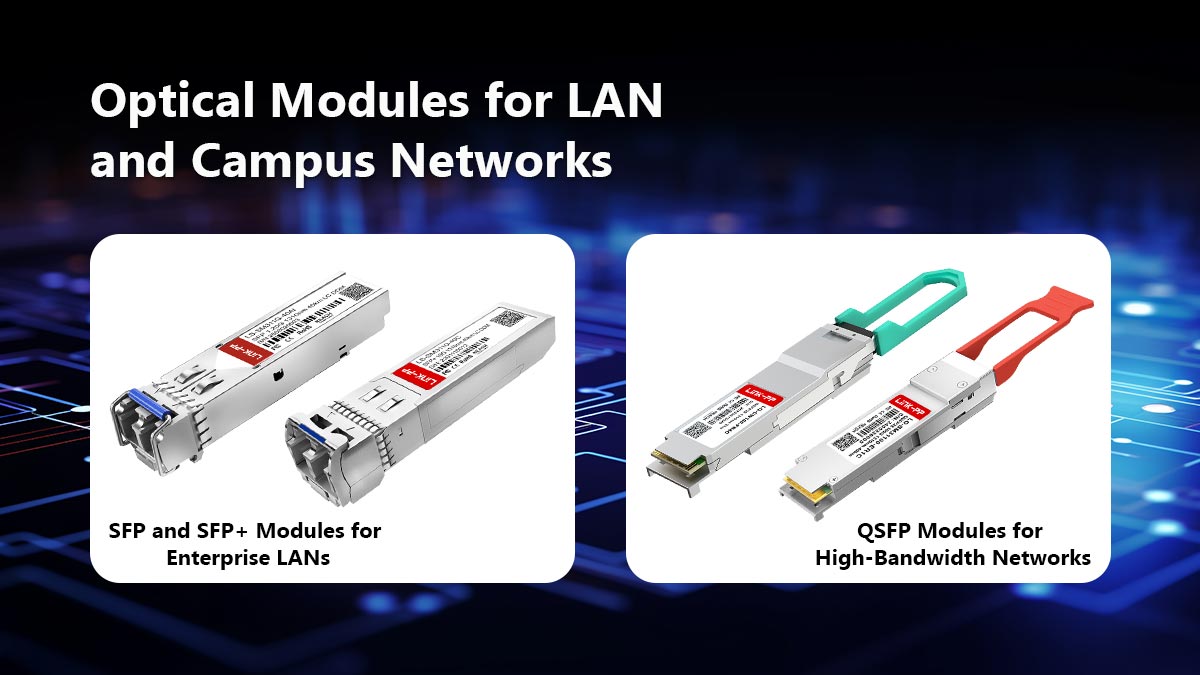
Commonly used optical modules include:
- SFP
- SFP+
- SFP28
- QSFP28
- QSFP-DD
These modules support applications ranging from standard enterprise networking to high-density AI data center infrastructure.
SFP and SFP+ Modules for Enterprise LANs
SFP-based modules are widely used for:
- switch uplinks
- server connectivity
- enterprise fiber backbones
- access layer aggregation
| Module Type | Speed | Typical Application |
|---|---|---|
| SFP | 1G | Standard Ethernet |
| SFP+ | 10G | Enterprise LANs |
| SFP28 | 25G | High-performance server access |
Short-range SR optics are commonly used with multimode fiber, while LR optics support longer campus links over single-mode fiber.
QSFP Modules for High-Bandwidth Networks
QSFP modules provide higher bandwidth and port density for:
- data centers
- campus core networks
- AI clusters
- hyperscale environments
| Module Type | Speed |
|---|---|
| QSFP+ | 40G |
| QSFP28 | 100G |
| QSFP-DD | 400G |
| OSFP | 800G |
These modules help reduce cable complexity while supporting large-scale network growth.
Common Deployment Scenarios
Optical modules in LAN and campus environments are commonly used for:
- switch-to-switch uplinks
- building-to-building fiber links
- server and storage connectivity
- AI and GPU cluster networking
For example:
- SR optics are ideal for short-distance LAN deployments.
- LR optics are commonly used for campus backbone connections.
- QSFP-DD and OSFP modules support high-speed AI and cloud networking.
Choosing the correct optical module depends on transmission distance, bandwidth, fiber type, and future scalability requirements.
🔵 Optical Modules for MAN and WAN Connectivity
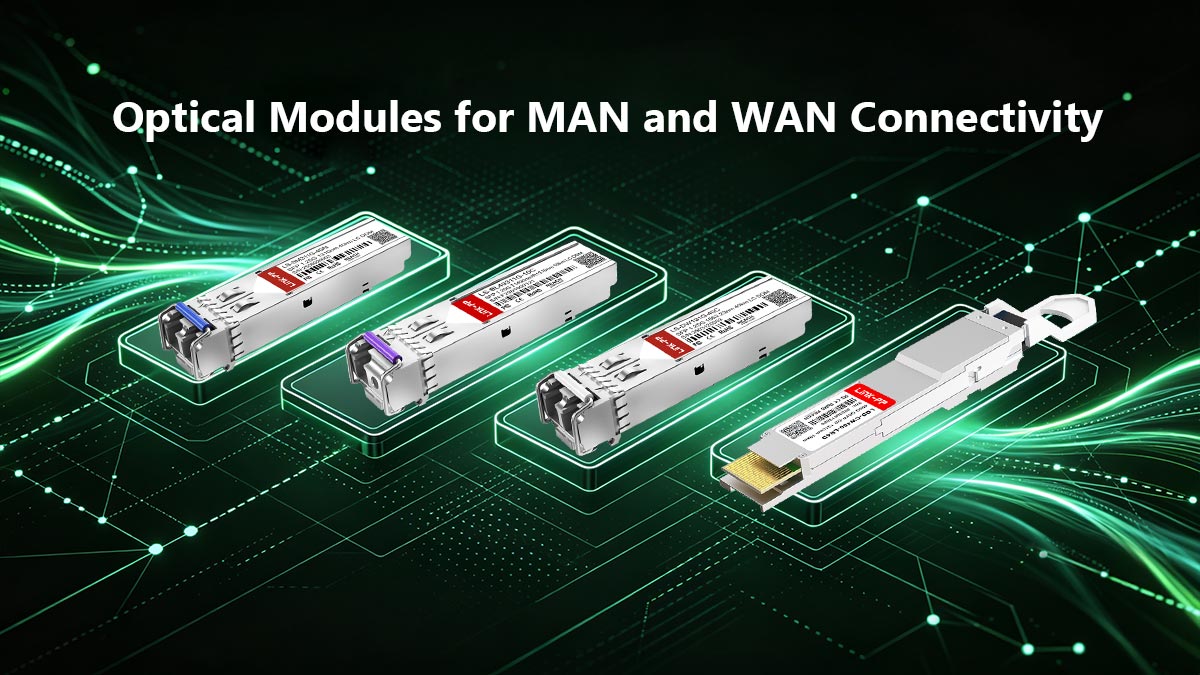
MAN (Metropolitan Area Network) and WAN (Wide Area Network) infrastructures require optical modules designed for longer transmission distances, higher reliability, and carrier-grade performance. Unlike short-range LAN environments, metro and wide-area networks must support stable high-speed communication across cities, regions, and global backbone systems.
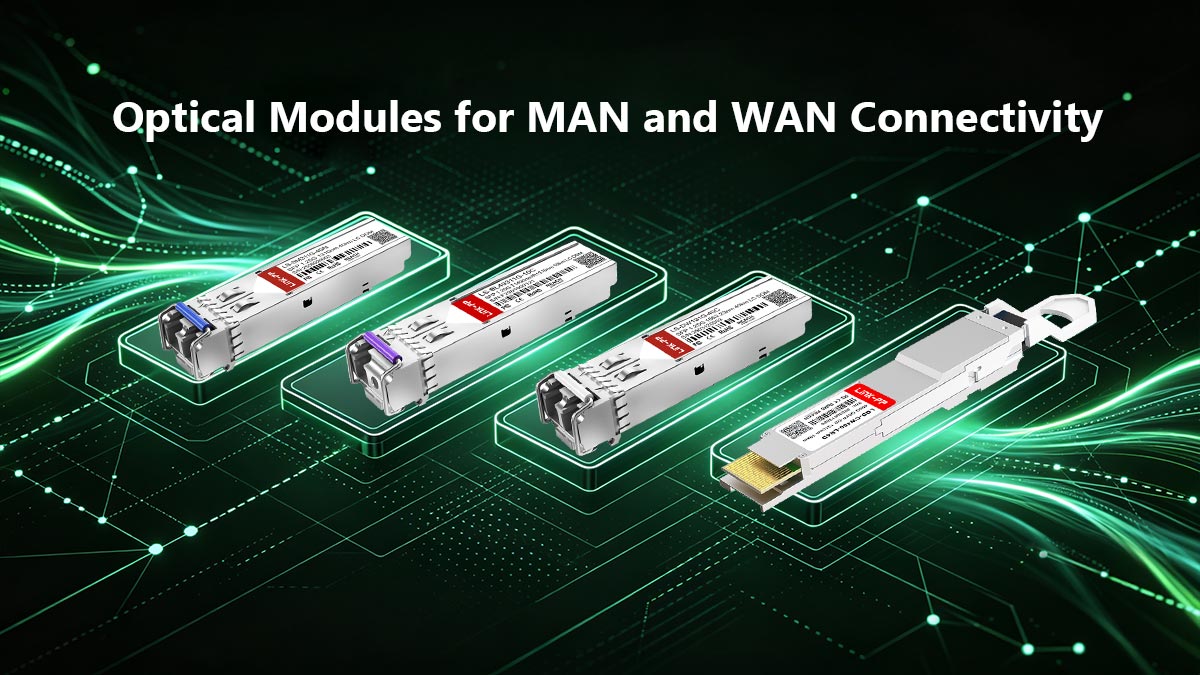
To achieve this, service providers and enterprises commonly use long-range optical technologies such as LR, ER, BiDi, DWDM, and coherent optics.
LR and ER Optical Modules
LR (Long Reach) and ER (Extended Reach) transceivers are widely used in metro and enterprise backbone networks.
| Optical Type | Typical Distance | Common Applications |
|---|---|---|
| LR | Up to 10 km | Campus and metro links |
| ER | Up to 40 km | Carrier and regional networks |
These modules typically operate over single-mode fiber and support high-speed Ethernet connections between buildings, data centers, and telecom aggregation points.
Common examples include:
- SFP+ 10GBASE-LR
- SFP28 25G LR
- QSFP28 100G LR4
- QSFP 40G ER4
BiDi Optical Modules
BiDi (Bidirectional) optical modules transmit and receive signals on different wavelengths using a single fiber strand.
Key advantages include:
- reduced fiber usage
- simplified cabling
- lower infrastructure cost
BiDi optics are commonly deployed in:
- campus networks
- metro Ethernet
- enterprise WAN links
- fiber-limited environments
DWDM Optical Modules
DWDM (Dense Wavelength Division Multiplexing) technology enables multiple optical signals to travel simultaneously over a single fiber pair using different wavelengths.
DWDM optics are widely used in:
- telecom backbone infrastructure
- metro transport networks
- hyperscale data center interconnects
- cloud provider WANs
Benefits include:
- ultra-high bandwidth capacity
- efficient fiber utilization
- long-distance transmission scalability
Coherent Optics for Modern WANs
Coherent optics are advanced transceivers designed for ultra-long-distance, high-capacity communication.
Modern coherent modules support:
- 100G
- 400G
- 800G transport networks
Common technologies include:
- 400G ZR
- ZR+
- CFP2-DCO
- coherent DWDM systems
These optics are essential for:
- carrier-grade WAN infrastructure
- submarine cable systems
- inter-data-center connectivity
- AI cloud backbone networks
Compared with traditional optics, coherent technology provides:
- better signal integrity
- longer transmission reach
- higher spectral efficiency
- improved network scalability
As cloud computing, AI workloads, and global data traffic continue to expand, MAN and WAN networks increasingly depend on advanced optical modules to deliver reliable long-distance connectivity and massive bandwidth capacity.
🔵 Optical Modules in SAN and AI Cluster Networking
Modern SAN (Storage Area Network) and AI cluster infrastructures depend heavily on high-speed optical interconnects to deliver low latency, fast data transfer, and scalable performance. As enterprise storage systems and AI workloads continue to grow, fiber optic networking has become essential for maintaining reliable communication between servers, GPUs, switches, and storage arrays.
Optical Modules in SAN Environments
SANs are dedicated networks designed specifically for storage traffic. Unlike traditional LANs, SANs prioritize:
- ultra-low latency
- high reliability
- fast data access
- continuous availability
Most SAN deployments use:
- Fibre Channel
- NVMe over Fabrics (NVMe-oF)
- high-speed Ethernet storage networks
Common SAN optical modules include:
| Module Type | Typical Speed |
|---|---|
| 16G FC SFP+ | 16G |
| 32G FC SFP28 | 32G |
| 64G FC | 64G |
These transceivers enable high-performance communication between storage arrays, servers, and virtualization platforms in enterprise data centers and cloud environments.
Optical Modules in AI Cluster Networking
AI clusters require extremely high bandwidth and low-latency communication between GPUs and compute nodes. Large-scale AI training workloads generate massive east-west traffic that traditional network architectures cannot efficiently support.
To meet these demands, AI networks commonly deploy:
- 100G QSFP28
- 400G QSFP-DD
- 800G OSFP
- InfiniBand optical modules
- high-speed Ethernet optics
These optical interconnects are critical for:
- GPU-to-GPU communication
- distributed AI training
- high-performance computing (HPC)
- large language model (LLM) infrastructure
Modern AI data centers often use spine-leaf architectures combined with fiber optic cabling to reduce latency and improve scalability.
Why Low Latency Matters
In SAN and AI environments, network latency directly affects application performance.
For example:
- SAN latency impacts database response times and storage access efficiency.
- AI cluster latency affects GPU synchronization and training speed.
High-speed optical modules help minimize bottlenecks by providing:
- faster data transmission
- higher throughput
- stable long-distance connectivity
- reduced signal interference
As AI infrastructure and enterprise storage continue to evolve, optical networking technologies are becoming foundational components of modern high-performance computing environments.
🔵 How to Choose the Right Optical Module by Network Type
Choosing the right optical module depends on the network type, transmission distance, bandwidth requirements, fiber infrastructure, and application environment. Selecting the correct transceiver helps ensure stable performance, scalability, and long-term compatibility.
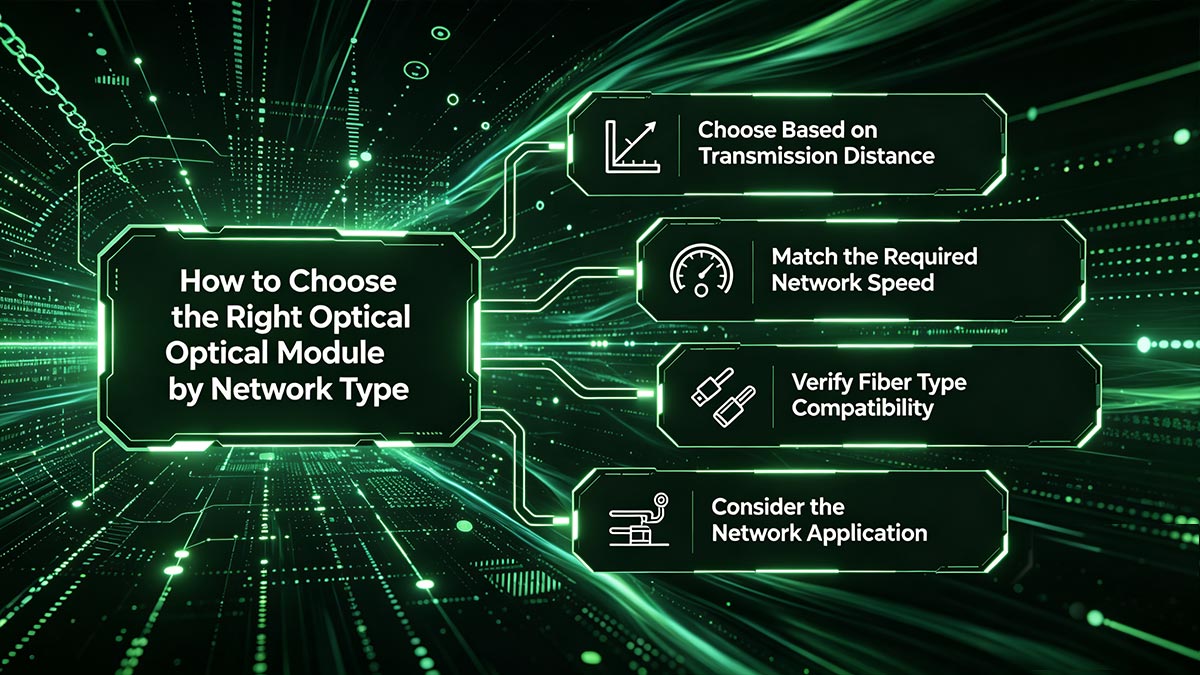
The following factors are the most important when evaluating optical modules.
Choose Based on Transmission Distance
Distance is one of the first considerations when selecting an optical module.
| Distance Requirement | Common Optical Type | Typical Network |
|---|---|---|
| Up to 100 m | SR optics | LAN, SAN, AI clusters |
| Up to 10 km | LR optics | Campus and enterprise networks |
| Up to 40 km | ER optics | MAN and regional WAN |
| 80 km+ | ZR/coherent optics | Carrier WAN infrastructure |
Short-range optics are typically used inside data centers, while long-range optics support metro and wide-area connectivity.
Match the Required Network Speed
Different applications require different Ethernet or Fibre Channel speeds.
| Network Environment | Common Speeds |
|---|---|
| Enterprise LAN | 1G, 10G, 25G |
| Data Center | 25G, 100G, 400G |
| AI Cluster | 400G, 800G |
| SAN | 16G FC, 32G FC, 64G FC |
| WAN | 100G, 400G coherent |
Higher-speed modules improve scalability and reduce network bottlenecks in high-density environments.
Verify Fiber Type Compatibility
Optical modules must match the fiber cabling used in the network.
| Fiber Type | Typical Optics |
|---|---|
| Multimode Fiber (MMF) | SR transceivers |
| Single-Mode Fiber (SMF) | LR, ER, DWDM, coherent optics |
Using incompatible fiber and optics can lead to signal loss or failed links.
Consider the Network Application
Different network types prioritize different performance goals.
| Network Type | Recommended Optical Modules |
|---|---|
| LAN | SFP, SFP+, SFP28 |
| Campus Network | 10G/25G LR optics |
| MAN/WAN | ER, DWDM, coherent optics |
| SAN | Fibre Channel transceivers |
| AI Cluster | QSFP28, QSFP-DD, OSFP |
For example:
- SR optics are ideal for short-distance server connectivity.
- LR optics work well for building-to-building campus links.
- Coherent optics are preferred for long-distance carrier networks.
- 400G and 800G modules are increasingly important in AI infrastructure.
By evaluating distance, speed, fiber type, and application requirements together, organizations can select optical modules that deliver reliable and scalable network performance.
🔵 Common Mistakes When Matching Area Network Types and Optical Modules
Selecting the wrong optical module can lead to network instability, poor performance, or unnecessary infrastructure costs. Although many transceivers share similar form factors, they are not universally interchangeable across all network environments.

Here are some of the most common mistakes when matching optical modules to different area network types.
1. Choosing the Wrong Transmission Reach
One of the most common errors is selecting optics that do not match the required transmission distance.
For example:
- Using SR optics for long campus links may cause signal loss.
- Deploying LR or ER modules for very short connections can increase costs unnecessarily.
As a general rule:
- SR optics are best for short-distance LAN and data center links.
- LR and ER optics are better suited for campus, metro, and WAN environments.
2. Mixing Multimode and Single-Mode Fiber
Optical modules must match the correct fiber type.
| Fiber Type | Compatible Optics |
|---|---|
| Multimode Fiber (MMF) | SR modules |
| Single-Mode Fiber (SMF) | LR, ER, DWDM optics |
A common mistake is connecting SR transceivers to single-mode fiber or using LR optics on incompatible multimode infrastructure without proper design considerations.
This can result in:
- unstable links
- high error rates
- reduced transmission distance
3. Ignoring Device Compatibility
Not all switches, routers, or servers support every optical module.
Some network vendors restrict compatibility through firmware validation or vendor coding requirements.
Before deployment, verify:
- switch compatibility
- supported transceiver types
- speed matching
- firmware requirements
This is especially important in enterprise, SAN, and AI networking environments using high-speed 100G, 400G, or 800G optics.
4. Overlooking Bandwidth and Future Scalability
Another common mistake is selecting optics only for current bandwidth needs.
For example:
- deploying 10G infrastructure in rapidly growing AI environments
- underestimating future storage traffic in SAN networks
Choosing scalable optical platforms can reduce future upgrade costs and improve long-term network flexibility.
5. Using the Wrong Optical Technology for the Network Type
Different area networks require different optical solutions.
Examples include:
- LANs typically use Ethernet SR/LR optics.
- SANs often require Fibre Channel transceivers.
- WANs rely on DWDM and coherent optics for long-distance transport.
Using the wrong optical technology may limit performance, reliability, or interoperability.
Carefully matching the optical module to the network type, fiber infrastructure, and application requirements helps ensure stable, efficient, and scalable network operation.
🔵 FAQs About Area Network Types and Optical Modules
Q1: What are the main types of area network?
The main types of area network are PAN (Personal Area Network), LAN (Local Area Network), CAN (Campus Area Network), MAN (Metropolitan Area Network), WAN (Wide Area Network), and SAN (Storage Area Network). Each network type is designed for different coverage areas and connectivity requirements.
Q2: What is the difference between LAN and WAN?
A LAN connects devices within a limited area such as an office or building, while a WAN connects networks across large geographic regions such as cities, countries, or global cloud infrastructure.
Q3: Why are optical modules important in modern networks?
Optical modules enable high-speed data transmission over fiber optic cabling. They support higher bandwidth, lower latency, longer transmission distances, and better scalability compared with traditional copper connections.
Q4: Which optical modules are commonly used in LAN networks?
LAN environments commonly use:
- SFP
- SFP+
- SFP28
- QSFP28
These modules support Ethernet speeds from 1G to 100G and are widely used in enterprise switches and data centers.
Q5: What optical modules are used for WAN and metro networks?
MAN and WAN infrastructures commonly use:
- LR optics
- ER optics
- DWDM transceivers
- coherent optics
- 400G ZR modules
These technologies support long-distance, carrier-grade fiber communication.
Q6: What is the difference between SR and LR optical modules?
SR (Short Reach) modules are designed for short-distance communication over multimode fiber, typically inside LANs and data centers. LR (Long Reach) modules support longer transmission distances over single-mode fiber.
Q7: Can optical modules work with both multimode and single-mode fiber?
No. Optical modules are designed for specific fiber types. SR optics usually use multimode fiber, while LR, ER, and DWDM optics typically require single-mode fiber.
Q8: What optical modules are commonly used in AI cluster networking?
AI clusters commonly use:
- 100G QSFP28
- 400G QSFP-DD
- 800G OSFP
- InfiniBand optical modules
These high-speed optics support low-latency GPU communication and distributed AI training workloads.
Q9: What optical modules are used in SAN environments?
SANs commonly use Fibre Channel optical transceivers such as:
- 16G FC
- 32G FC
- 64G FC
These modules provide reliable, low-latency storage connectivity in enterprise data centers.
🔵 Conclusion: Matching Network Scope to the Right Optical Technology
Different types of area network are designed for different communication distances, bandwidth requirements, and operational goals. From small PAN environments to large-scale WAN and AI infrastructures, each network type depends on the right combination of fiber infrastructure and optical modules to deliver reliable connectivity.
In general:
- PAN networks rarely require optical transceivers.
- LANs commonly use SFP, SFP+, and QSFP optics for high-speed Ethernet connectivity.
- Campus networks often rely on LR optics and single-mode fiber for building-to-building communication.
- MAN and WAN infrastructures use ER, DWDM, and coherent optics for long-distance transport.
- SAN environments depend on low-latency Fibre Channel transceivers.
- AI clusters increasingly require 400G and 800G optical modules to support large-scale GPU communication.
Choosing the correct optical technology depends on several key factors:
- transmission distance
- bandwidth requirements
- fiber type
- switch compatibility
- scalability needs
- application environment
As cloud computing, enterprise networking, and AI workloads continue to evolve, optical modules are becoming increasingly important for building scalable and future-ready network infrastructures.
Whether you are designing a business LAN, expanding a campus backbone, deploying metro fiber, or building an AI data center, selecting the right optical transceiver can significantly improve network performance, reliability, and long-term upgrade flexibility.
For businesses and network engineers looking for reliable fiber connectivity solutions, the LINK-PP Official Store offers a wide range of Ethernet and Fiber Channel optical modules, including:
- SFP and SFP+ transceivers
- 25G and 100G optics
- 400G QSFP-DD modules
- AI networking optical solutions
- enterprise and telecom fiber connectivity products
Choosing high-quality, compatible optical modules helps ensure stable operation across modern LAN, MAN, WAN, SAN, and AI networking environments.