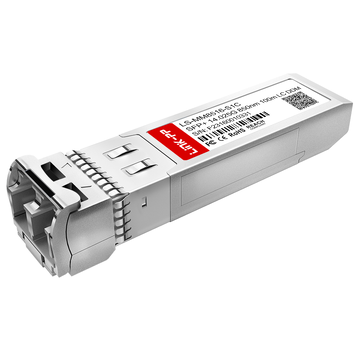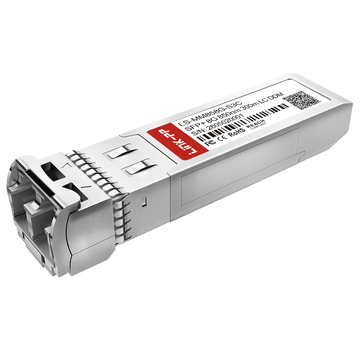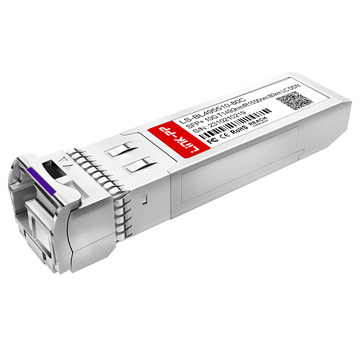
Cisco DS-SFP-FC8G-SW is an 8Gbps Fibre Channel shortwave SFP+ transceiver widely used in enterprise storage area networks (SANs) to support high-speed, low-latency optical connectivity between switches and storage systems. It plays a critical role in maintaining stable data transmission in legacy 8G FC infrastructures, especially in Cisco MDS-based environments.
- Cisco DS-SFP-FC8G-SW is primarily deployed in 8G Fibre Channel SAN environments requiring stable short-range optical links
- It is commonly used in Cisco MDS switches and compatible storage networking hardware
- Procurement teams often reassess sourcing strategies due to long-term cost and supply constraints
- Demand for compatible alternatives is growing as organizations optimize infrastructure budgets
In this context, understanding the specifications, deployment role, and sourcing challenges of Cisco DS-SFP-FC8G-SW becomes essential for making informed procurement decisions. Many enterprises are now exploring compatible transceivers that maintain equivalent performance while improving cost efficiency and supply flexibility.
This article provides a procurement-focused analysis of Cisco DS-SFP-FC8G-SW, including its technical role, alternative options, and key evaluation criteria for selecting reliable replacement solutions in modern SAN environments.
👛 Understanding Cisco DS-SFP-FC8G-SW in Fibre Channel Networks
Cisco DS-SFP-FC8G-SW is an 8Gbps shortwave Fibre Channel SFP+ transceiver designed to deliver reliable optical connectivity in storage area networks (SANs). It is primarily used to connect switches and storage devices over multimode fiber, ensuring stable high-speed data transmission in enterprise environments.
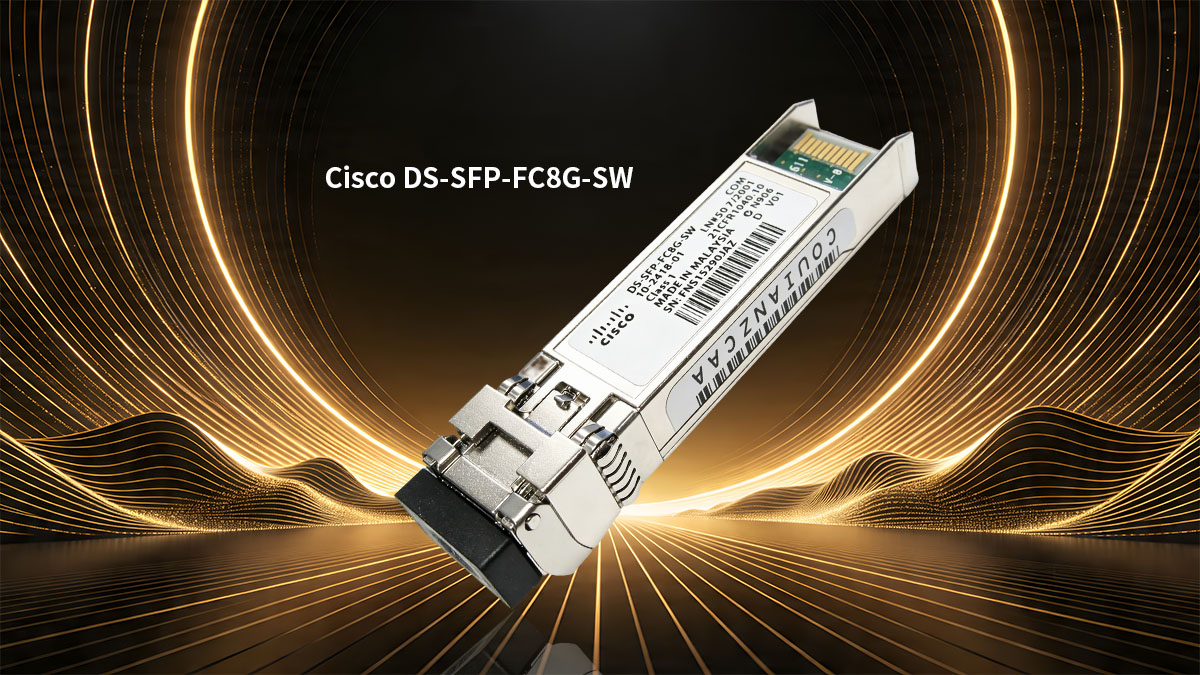
Core Specifications and Performance Characteristics
Cisco DS-SFP-FC8G-SW is defined by a set of standardized optical and electrical parameters that ensure stable operation in 8G Fibre Channel networks.
Before reviewing the details, it is important to understand that these specifications directly impact link distance, signal integrity, and compatibility with existing SAN infrastructure.
- Data rate: 8Gbps Fibre Channel
- Wavelength: 850nm (shortwave operation)
- Transmission medium: Multimode fiber (MMF)
- Maximum reach: up to 150m on OM3 fiber, up to 190m on OM4 fiber
- Connector type: LC duplex
- Form factor: Hot-pluggable SFP+
These parameters make the module suitable for short-reach intra-data center connections where low latency and stable throughput are essential. Its standardized design also ensures consistent performance across compatible Cisco switching platforms.
In addition to basic transmission capabilities, the module is engineered for interoperability within Fibre Channel environments, allowing seamless integration into existing storage networks without requiring architectural changes.
Role in Storage Area Networks (SANs)
Cisco DS-SFP-FC8G-SW is primarily used to enable high-speed communication between storage arrays, servers, and Fibre Channel switches within SAN environments. Its role is critical in maintaining data availability and minimizing latency in enterprise storage operations.
The module supports the foundational requirements of SAN architecture, where consistent and lossless data transport is essential for mission-critical workloads.
- Enables server-to-storage communication over Fibre Channel fabrics
- Supports low-latency data transfer for high-performance applications
- Maintains deterministic traffic behavior in storage networks
- Works as part of Cisco MDS switching ecosystems
Because SAN environments rely heavily on stable optical links, this transceiver ensures predictable connectivity that aligns with enterprise-grade storage performance requirements.
In modern data centers, even as higher-speed Fibre Channel standards are introduced, 8G modules like DS-SFP-FC8G-SW continue to support legacy systems that remain operational and mission-critical.
Common Deployment Environments
Cisco DS-SFP-FC8G-SW is typically deployed in environments where established Fibre Channel infrastructure is still in active use and stability is prioritized over bandwidth upgrades.
These environments often include:
- Enterprise data centers with Cisco MDS SAN switches
- Storage networks supporting virtualization platforms
- Backup and disaster recovery systems relying on Fibre Channel connectivity
- Hybrid infrastructures combining legacy and upgraded storage systems
In these deployments, the module is favored for its compatibility and predictable behavior across existing hardware ecosystems.
It is also commonly found in environments where gradual infrastructure upgrades are planned, allowing organizations to maintain operational continuity while transitioning toward higher-speed Fibre Channel technologies.
👛 Why Consider Alternatives to Cisco DS-SFP-FC8G-SW
Cisco DS-SFP-FC8G-SW remains a stable and widely deployed 8G Fibre Channel transceiver, but many procurement teams evaluate alternatives due to cost pressure, supply constraints, and long-term infrastructure planning. In enterprise SAN environments, these factors often have a direct impact on scalability and operational efficiency.
From a sourcing perspective, alternatives are not only about reducing cost—they are also about ensuring continuous availability, flexible inventory management, and lifecycle stability across storage networks.
Cost Efficiency and Budget Constraints
The primary reason organizations consider alternatives is the significant cost difference between OEM transceiver modules and compatible options. Cisco-branded transceivers are typically positioned at a premium price level, which becomes a major factor in large-scale deployments.
Before reviewing the breakdown, it is important to recognize that optical transceivers are often deployed in volume, meaning even small per-unit savings can scale into substantial budget optimization.
- OEM modules generally carry higher unit pricing compared to third-party equivalents
- Large SAN deployments may require tens or hundreds of modules per environment
- Budget optimization becomes critical in infrastructure expansion or refresh cycles
- Cost savings can be redirected to higher-level storage or networking upgrades
These financial considerations make compatible alternatives an attractive option for organizations seeking to balance performance requirements with infrastructure spending efficiency.
In many cases, the performance difference between certified compatible modules and OEM products is minimal when sourced from reliable manufacturers, further reinforcing the cost-value advantage.
Supply Chain and Availability Challenges
Another major factor driving alternative adoption is supply chain variability. Cisco DS-SFP-FC8G-SW, as a legacy 8G Fibre Channel module, may face availability limitations depending on region, distributor stock levels, or product lifecycle status.
Before examining specific challenges, it is important to understand that enterprise procurement often requires consistent availability to avoid network downtime risks.
- Extended lead times for OEM procurement channels
- Occasional stock shortages in global distribution networks
- Product lifecycle transitions affecting long-term availability
- Dependence on authorized sourcing channels for original modules
These issues can create operational risks, particularly in environments where spare modules are required for rapid replacement or expansion.
As a result, organizations often seek alternative sourcing strategies to ensure continuity of supply, especially for legacy SAN infrastructures that cannot easily transition to newer hardware generations.
Maintenance and Scalability Considerations
Beyond cost and availability, long-term maintenance strategy plays a key role in evaluating alternatives. As SAN environments evolve, IT teams must balance legacy system support with infrastructure scalability.
Before listing key considerations, it is important to highlight that optical transceivers are consumable components in many enterprise environments, requiring ongoing replacement planning.
- Maintaining spare inventory for mission-critical SAN links
- Supporting mixed-generation infrastructure during upgrade cycles
- Reducing dependency on single-vendor procurement channels
- Enabling scalable expansion without excessive capital investment
These factors make alternative modules attractive for organizations managing hybrid or aging Fibre Channel environments.
In addition, scalability becomes a central concern when expanding storage networks. Using cost-efficient compatible modules allows organizations to scale port deployments more flexibly without being constrained by OEM pricing structures.
👛 Key Criteria for Evaluating Compatible Alternatives
Selecting a compatible replacement for Cisco DS-SFP-FC8G-SW requires more than matching basic specifications. In enterprise Fibre Channel environments, compatibility, reliability, and lifecycle stability must all be assessed together to ensure uninterrupted SAN performance.
A well-evaluated alternative should deliver equivalent optical performance while maintaining seamless interoperability with Cisco switching platforms and existing storage infrastructure.
Compatibility with Cisco Devices
The most critical factor when evaluating alternatives is whether the module operates correctly within Cisco MDS switches and related Fibre Channel hardware. Even if optical specifications match, improper coding or firmware mismatch can cause link failures.
Before reviewing the key points, it is important to note that Cisco systems often enforce strict transceiver validation rules.
- EEPROM coding must be Cisco-compatible for proper recognition
- The module should be tested with Cisco MDS switch platforms
- Port compatibility must ensure no warning or shutdown behavior
- Firmware interaction should not trigger vendor restrictions
A properly compatible module should function as a direct replacement without requiring configuration changes or manual overrides. This ensures operational stability in production SAN environments.
Performance Equivalence
Beyond compatibility, performance consistency is essential. A valid alternative must match the optical and transmission characteristics of Cisco DS-SFP-FC8G-SW to avoid degradation in Fibre Channel traffic.
Before listing key parameters, it is important to understand that even minor optical deviations can impact SAN stability under load.
- Data rate must support 8Gbps Fibre Channel standards
- Wavelength should remain at 850nm for shortwave MMF transmission
- Transmission distance must match OM3/OM4 multimode fiber ranges
- Bit error rate (BER) should remain within acceptable enterprise thresholds
| Parameter | Cisco DS-SFP-FC8G-SW | Compatible Alternative Requirement |
|---|---|---|
| Data Rate | 8Gbps | 8Gbps compliant |
| Wavelength | 850nm | 850nm ± tolerance |
| Fiber Type | Multimode | Multimode (OM3/OM4) |
| Reach | Up to 150–190m | Equivalent performance range |
These benchmarks ensure that alternative modules deliver the same operational reliability as OEM units in real-world SAN traffic conditions.
Quality Assurance and Testing Standards
Quality validation is a decisive factor when choosing non-OEM transceivers. Without proper testing, even technically compatible modules may introduce instability under sustained workload conditions.
Before outlining the criteria, it is important to recognize that enterprise SANs require predictable, continuous uptime.
- Compliance with Multi-Source Agreement (MSA) standards
- Factory-level optical performance testing for each unit
- Burn-in testing to detect early-life failures
- Interoperability testing with Cisco switching environments
These quality assurance processes help ensure that alternative modules behave consistently in production environments. Reliable vendors typically provide test reports or validation documentation as part of their quality assurance framework.
Warranty and Technical Support
After compatibility and performance, post-deployment support becomes a key differentiator. Enterprise environments require assurance that modules can be replaced or supported quickly in case of failure.
Before reviewing specific support aspects, it is important to emphasize that downtime in SAN environments can directly impact business-critical applications.
- Availability of replacement or advanced warranty services
- Technical support for deployment and troubleshooting
- Clear return and failure handling policies
- Access to engineering-level assistance when needed
Strong warranty and support structures reduce operational risk and provide confidence when deploying compatible transceivers at scale.
👛 Original vs Compatible Modules: A Practical Comparison
When evaluating Cisco DS-SFP-FC8G-SW sourcing strategies, the choice between original OEM modules and compatible alternatives is often driven by a balance of cost, performance assurance, and operational flexibility. Both options can function in Fibre Channel environments, but they differ in procurement economics and lifecycle strategy.
In enterprise SAN deployments, this comparison is not purely technical—it directly influences budget planning, supply chain resilience, and long-term infrastructure scalability.
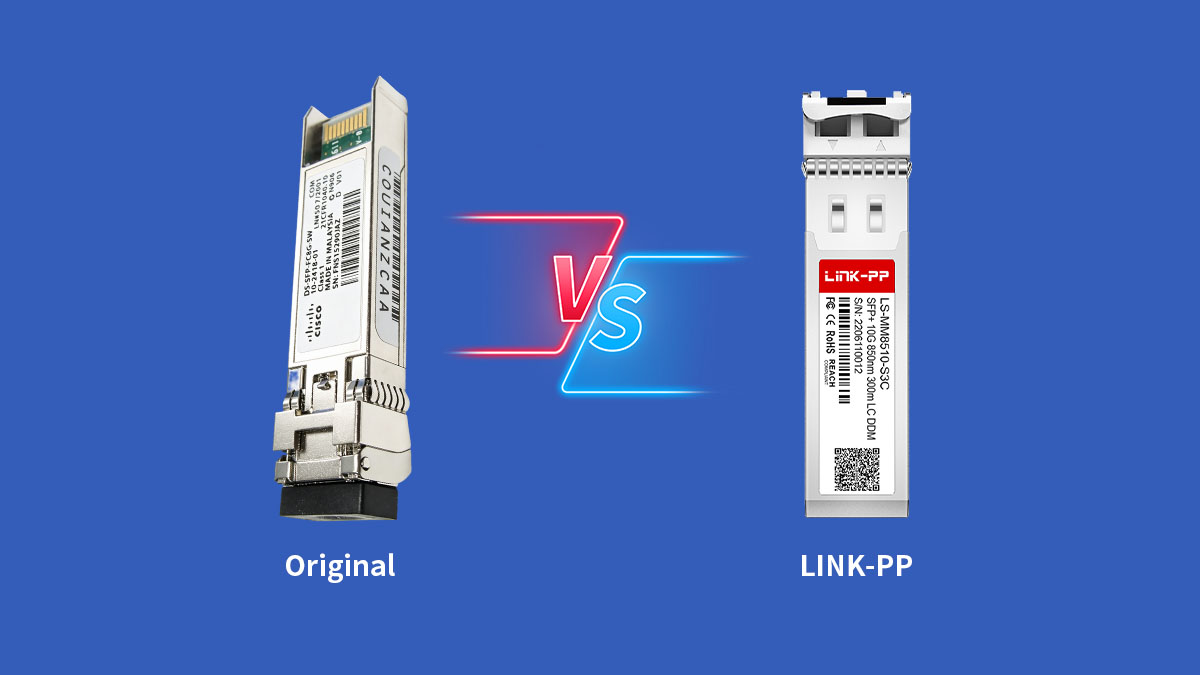
Cost vs Value Analysis
Cost structure is usually the most visible difference between original and compatible optical modules. However, the real evaluation goes beyond unit price and includes total cost of ownership across deployment scale and lifecycle duration.
Before breaking down the comparison, it is important to recognize that Fibre Channel modules are often deployed in large quantities, amplifying even small price differences.
- OEM modules (Cisco original) typically carry premium pricing due to brand assurance and vendor control
- Compatible modules are generally positioned at a lower cost point while maintaining functional equivalence
- Large-scale SAN deployments can generate significant cumulative savings with compatible sourcing
- Budget optimization can support broader infrastructure investments such as storage expansion or redundancy upgrades
In practice, organizations often adopt a mixed procurement model, using OEM modules for critical paths and compatible modules for standard connectivity layers to optimize cost efficiency.
Performance and Reliability Differences
From a technical standpoint, both original and compatible Cisco DS-SFP-FC8G-SW modules are designed to support identical 8Gbps Fibre Channel standards. However, differences may exist in validation depth, manufacturing control, and vendor certification.
Before listing key points, it is important to emphasize that real-world performance depends heavily on supplier quality and testing standards.
- OEM modules are fully validated within Cisco ecosystems for guaranteed interoperability
- High-quality compatible modules can deliver equivalent optical performance under standard workloads
- Signal integrity, wavelength stability, and error rates are typically comparable when properly manufactured
- Variability risk is higher in low-quality or uncertified third-party sources
In most enterprise environments, performance differences are minimal when compatible modules are sourced from reputable vendors with strict quality control processes.
Risk Mitigation Strategies
Selecting between original and compatible modules is not a binary decision—it often involves risk balancing based on application criticality and operational requirements.
Before reviewing mitigation approaches, it is important to understand that SAN environments require high availability and predictable behavior.
- Use OEM modules in mission-critical or latency-sensitive storage paths
- Deploy certified compatible modules in non-critical or scalable network segments
- Maintain a validation process for testing compatibility before full deployment
- Standardize procurement from trusted suppliers with documented testing procedures
| Factor | OEM Modules | Compatible Modules |
|---|---|---|
| Cost | High | Lower |
| Compatibility Assurance | Fully guaranteed | Vendor-dependent |
| Performance Consistency | Very stable | Stable with quality vendors |
| Procurement Flexibility | Limited | High |
| Scalability Advantage | Moderate | High |
These strategies allow organizations to reduce risk while still benefiting from cost efficiency and supply flexibility.
👛 Top Alternative Options for Cisco DS-SFP-FC8G-SW
When organizations evaluate sourcing strategies for Cisco DS-SFP-FC8G-SW, alternative options typically fall into three main categories: compatible 8G Fibre Channel modules, refurbished original units, and longer-term migration paths to other high-speed transceivers. Each option serves different operational and budget priorities within SAN environments.
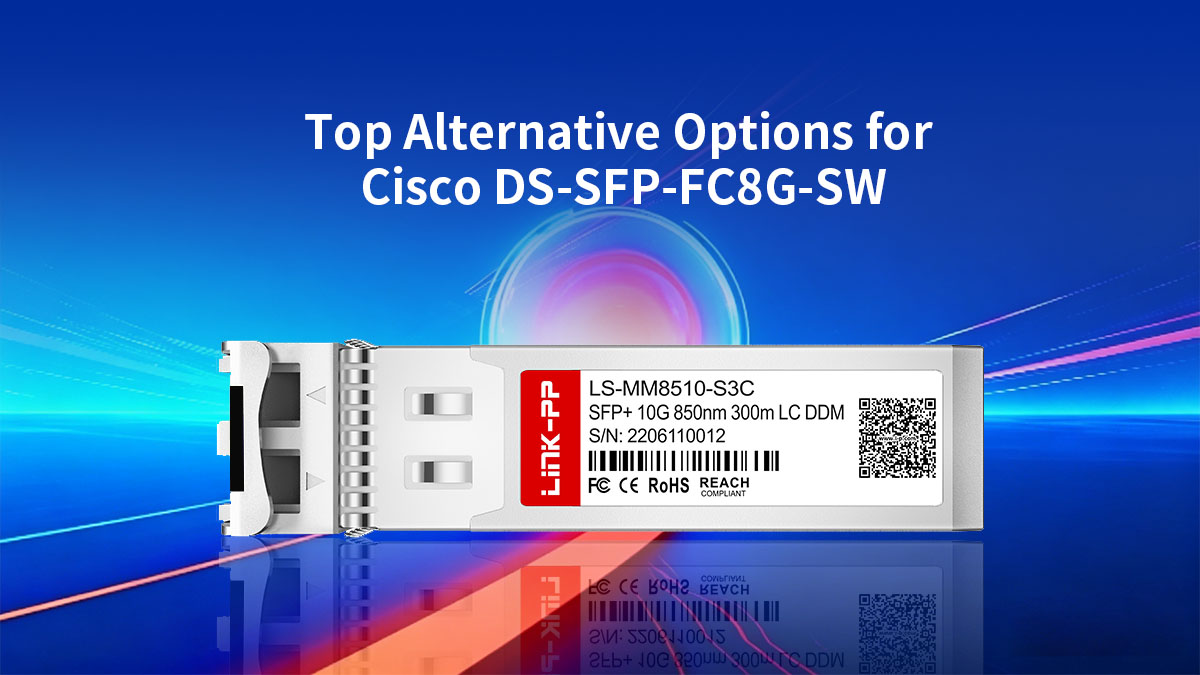
Understanding these alternatives helps procurement teams align technical requirements with lifecycle planning and inventory strategy.
Third-Party Compatible 8G FC SFP+ Modules
The most commonly adopted alternative is the Cisco-compatible 8G Fibre Channel SFP+ transceiver. These modules are designed to match the original DS-SFP-FC8G-SW specifications while offering improved cost efficiency and procurement flexibility.
Before reviewing key characteristics, it is important to note that compatibility depends heavily on vendor quality and coding accuracy.
- Fully compliant with 8Gbps Fibre Channel standards
- Operating wavelength typically 850nm for multimode fiber
- Designed for Cisco MDS switch compatibility via coded EEPROM
- Supports plug-and-play installation in most SAN environments
- Available in large volumes for scalable deployment scenarios
These modules are widely used in enterprise SANs where maintaining performance parity with OEM hardware is required while optimizing infrastructure costs. High-quality compatible options can deliver stable performance when sourced from tested and certified manufacturers.
Refurbished or Pre-Owned Original Modules
Another sourcing option is refurbished or pre-owned Cisco DS-SFP-FC8G-SW modules. These are original OEM units that have been previously deployed, then tested and reintroduced into the supply chain.
Before outlining considerations, it is important to understand that refurbished optics are typically used in cost-sensitive or non-critical environments.
- Lower cost compared to brand-new OEM modules
- Original Cisco manufacturing and firmware assurance
- Availability depends on secondary market supply
- Typically tested for basic functionality before resale
| Factor | Refurbished OEM | New Compatible Module |
|---|---|---|
| Origin | Cisco original | Third-party manufacturer |
| Cost Level | Medium | Low |
| Supply Stability | Limited | High |
| Warranty Coverage | Variable | Vendor-dependent |
| Risk Level | Moderate (wear-related) | Low–moderate (quality-dependent) |
While refurbished modules offer the advantage of original hardware authenticity, their long-term reliability may vary depending on prior usage conditions and testing standards. As a result, they are often deployed in non-critical or backup roles within SAN infrastructure.
Migration to Higher-Speed Alternatives
A more strategic alternative is transitioning away from 8G Fibre Channel entirely by adopting higher-speed transceivers such as 16G (like DS-SFP-FC16G-SW) or 32G (like DS-SFP-FC32G-SW) SFP+ modules. This approach focuses on long-term infrastructure modernization rather than direct replacement.
Before examining key considerations, it is important to note that migration requires compatibility planning across both hardware and storage architecture.
- Enables higher bandwidth for modern storage workloads
- Reduces the need for frequent incremental upgrades
- Improves scalability for virtualization and cloud environments
- Requires compatible switches, HBAs, and fiber infrastructure
However, migration is not always immediately feasible due to cost, compatibility constraints, or phased upgrade strategies. Many enterprises therefore maintain 8G environments while gradually introducing higher-speed layers in parallel.
This approach allows organizations to extend the lifecycle of existing Cisco DS-SFP-FC8G-SW deployments while preparing for future infrastructure evolution.
👛 How to Identify a Reliable Supplier
Selecting a reliable supplier for Cisco DS-SFP-FC8G-SW alternatives is a critical procurement step that directly affects network stability, compatibility, and long-term operational risk. In Fibre Channel environments, even small inconsistencies in transceiver quality can lead to link errors or unexpected downtime.
A trustworthy supplier should demonstrate consistent product validation, transparent specifications, and proven interoperability in enterprise SAN deployments.
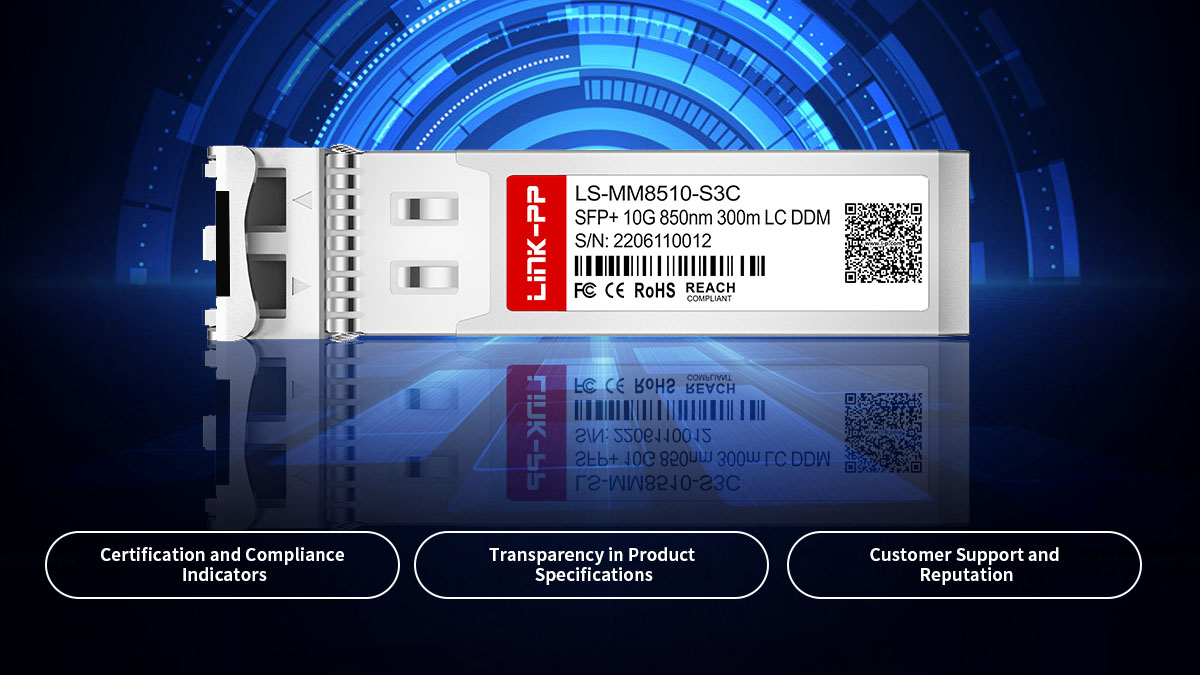
Certification and Compliance Indicators
A reliable supplier must be able to demonstrate that their products meet recognized industry standards. These certifications help ensure that compatible modules behave consistently in Cisco-based environments.
Before reviewing specific indicators, it is important to note that certification is often the first filter in eliminating low-quality sources.
- Compliance with Multi-Source Agreement (MSA) standards for optical transceivers
- ISO-certified manufacturing or quality management systems
- Evidence of optical performance testing at production level
- Documented compatibility testing with Cisco MDS switches
These indicators confirm that the supplier follows structured manufacturing and validation processes rather than producing unverified or generic components. In enterprise procurement, certification reduces the risk of interoperability issues and premature module failure.
Transparency in Product Specifications
Clear and accurate technical documentation is another key signal of supplier reliability. Incompatible or low-quality vendors often provide vague or incomplete specifications, which increases deployment uncertainty.
Before listing key expectations, it is important to emphasize that transparency directly impacts procurement confidence.
- Detailed datasheets including wavelength, reach, and data rate
- Explicit mention of Cisco DS-SFP-FC8G-SW compatibility support
- Clear coding information for switch recognition
- Availability of test reports or performance validation summaries
| Specification Area | Reliable Supplier Behavior | Risk Indicator |
|---|---|---|
| Compatibility Info | Clearly stated Cisco support | Vague or missing details |
| Optical Specs | Fully documented (850nm, 8Gbps, etc.) | Partial or inconsistent data |
| Testing Evidence | Provided on request | Not available |
| Product Identification | Clear model mapping | Generic labeling |
Suppliers that provide complete technical transparency enable IT teams to reduce deployment uncertainty and ensure consistent SAN performance.
Customer Support and Reputation
Beyond technical specifications, supplier reputation and support capability play a significant role in long-term procurement success. Fibre Channel environments often require rapid troubleshooting and replacement support.
Before reviewing key factors, it is important to recognize that SAN downtime can have immediate business impact.
- Responsive technical support for installation and compatibility issues
- Proven track record in enterprise networking or optical transceiver supply
- Positive feedback from data center and storage infrastructure customers
- Clear communication channels for warranty or replacement handling
A reliable supplier typically maintains long-term relationships with enterprise clients and demonstrates consistency in delivery performance and post-sales support.
👛 Deployment Best Practices for Compatible Modules
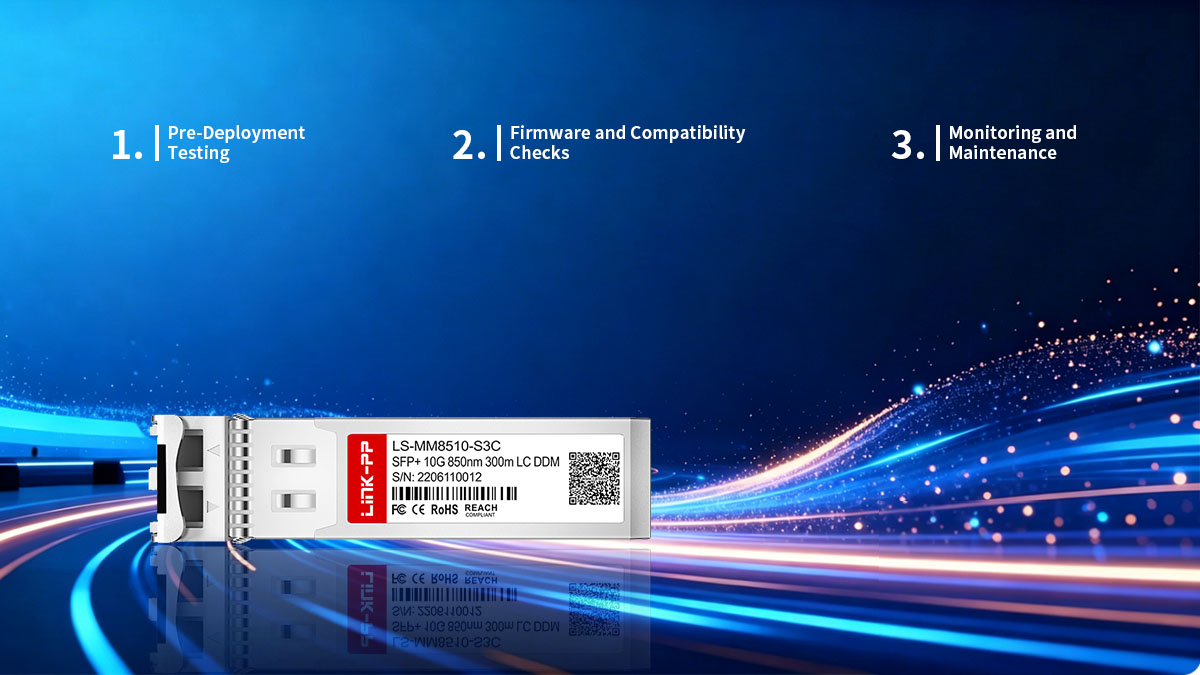
Deploying compatible alternatives to Cisco DS-SFP-FC8G-SW in Fibre Channel environments requires careful validation and controlled rollout to ensure stable SAN performance. While high-quality compatible modules are designed for interoperability, deployment practices play a decisive role in avoiding link instability and maintaining predictable storage connectivity.
A disciplined deployment approach helps ensure that compatibility, performance, and reliability are consistent across the entire network infrastructure.
Pre-Deployment Testing
Before introducing compatible modules into a production SAN, validation in a controlled environment is essential. This step ensures that the module behaves correctly with Cisco switching hardware under real operating conditions.
Before listing key actions, it is important to recognize that Fibre Channel networks are sensitive to optical inconsistencies and misconfigurations.
- Test modules on representative Cisco MDS switch models
- Verify link establishment and stability under sustained traffic load
- Check for error counters such as CRC or signal loss
- Confirm proper module recognition without system warnings
These tests help identify potential compatibility issues early, reducing the risk of production downtime. A small-scale pilot deployment is often recommended before full rollout across the SAN environment.
Firmware and Compatibility Checks
Switch firmware plays a critical role in determining whether compatible transceivers are accepted and properly initialized. Even fully compliant modules may behave differently depending on firmware policies.
Before reviewing specific considerations, it is important to understand that Cisco systems may enforce transceiver validation rules at the software level.
- Ensure Cisco MDS firmware supports third-party optics if applicable
- Review release notes for known compatibility restrictions
- Align module deployment with approved transceiver policies
- Avoid mixing unsupported firmware versions across switches
| Check Area | Recommended Action | Risk if Ignored |
|---|---|---|
| Switch Firmware | Use supported stable version | Module rejection or warning messages |
| Compatibility Policy | Enable third-party support if needed | Port shutdown or limited functionality |
| Software Consistency | Standardize across fabric | Inconsistent behavior in SAN |
| Validation Logs | Monitor during installation | Undetected errors or instability |
Proper firmware alignment ensures that compatible modules function predictably within Cisco environments and reduces unnecessary troubleshooting efforts after deployment.
Monitoring and Maintenance
After deployment, ongoing monitoring is essential to maintain SAN stability and detect early signs of performance degradation. Fibre Channel networks rely on continuous visibility into link health and optical behavior.
Before listing monitoring practices, it is important to highlight that optical transceivers are subject to wear and environmental variation over time.
- Monitor optical power levels and signal integrity regularly
- Track error counters such as CRC, link resets, and frame loss
- Maintain spare inventory for rapid replacement of failed modules
- Implement periodic inspection of high-traffic SAN links
Consistent monitoring allows IT teams to identify degradation trends before they impact production workloads. In addition, maintaining spare compatible modules ensures fast recovery in case of unexpected hardware failure.
Proactive maintenance also supports long-term stability in mixed environments where OEM and compatible modules coexist.
👛 Conclusion
Cisco DS-SFP-FC8G-SW remains a widely deployed 8G Fibre Channel SFP+ transceiver in enterprise SAN environments, but procurement strategies are increasingly shifting toward compatible and alternative sourcing models. When properly evaluated, Cisco DS-SFP-FC8G-SW alternatives can deliver equivalent optical performance while improving cost efficiency, supply availability, and deployment flexibility without compromising core Fibre Channel connectivity requirements.
To summarize the key insights from this analysis:
- Cisco DS-SFP-FC8G-SW is primarily used for 8Gbps shortwave Fibre Channel connectivity in Cisco MDS-based SAN environments
- Compatible 8G FC SFP+ modules can provide comparable performance when sourced from qualified and tested manufacturers
- Key evaluation factors include Cisco device compatibility, optical performance consistency, and quality assurance standards
- Supply chain stability and cost optimization are major drivers behind adopting alternative transceiver options
- Deployment success depends on proper testing, firmware alignment, and ongoing SAN monitoring practices
From a long-term infrastructure standpoint, organizations typically adopt a balanced sourcing strategy:
- Use OEM modules for highly critical or sensitive SAN paths
- Deploy certified compatible modules for scalable and cost-optimized expansion
- Maintain inventory flexibility to reduce dependency on single-vendor supply chains
- Plan gradual evolution toward higher-speed Fibre Channel technologies where applicable
This approach allows enterprises to maintain operational stability while optimizing procurement efficiency across legacy and evolving storage environments.
For organizations evaluating reliable alternatives to Cisco DS-SFP-FC8G-SW, the key priority is not only price comparison but also consistent quality validation, compatibility assurance, and long-term supply reliability.
Choosing a trusted supplier with strict testing processes and proven interoperability support can significantly reduce deployment risks and improve SAN lifecycle efficiency. For procurement teams seeking verified and compatible Fibre Channel transceiver solutions, exploring established optical networking providers such as LINK-PP Official Store can help ensure stable performance, tested compatibility, and scalable sourcing options for enterprise environments.