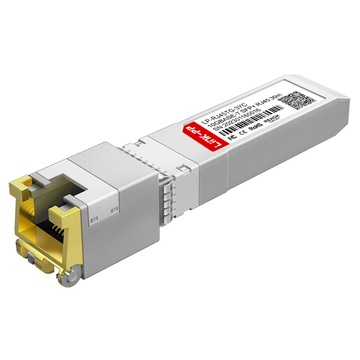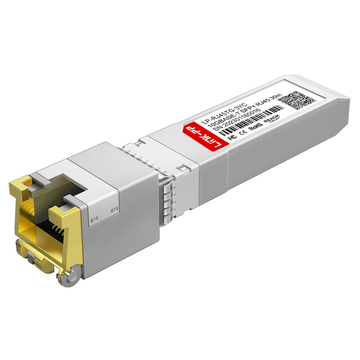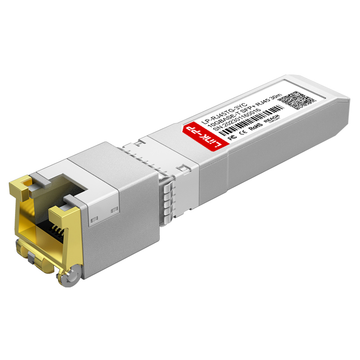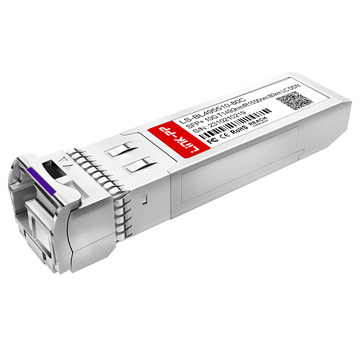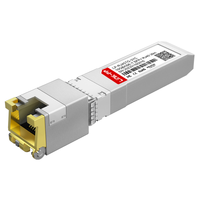
As more enterprise networks transition from traditional SFP 1G to SFP+ 10G infrastructure, many IT teams face the same practical challenge: how to deploy higher-speed connectivity without completely rebuilding existing copper cabling environments. That is exactly where the 813874-B21 HPE 10GBase-T SFP+ Transceiver enters the conversation.
Unlike fiber-based SFP+ optics that require LC fiber infrastructure, the 813874-B21 allows administrators to deliver 10 Gigabit Ethernet over standard RJ45 copper connections, making it attractive for short-range server rooms, enterprise access layers, and mixed copper environments already using Cat6a or Cat7 cabling. With support for up to 10 Gb/s transmission speeds and a maximum reach of 30 meters, it is designed as a practical bridge between legacy copper deployments and modern 10GbE networking requirements.
However, the real-world search intent behind “HPE 813874-B21” goes far beyond basic specifications. Most buyers are actually trying to answer more critical deployment questions:
-
Will HPE 813874-B21 work with my switch or server?
-
Is it compatible with non-HPE networking equipment?
-
Does it support 1GbE fallback or auto-negotiation?
-
Why is the official HPE module so expensive compared to third-party alternatives?
-
Is RJ45 SFP+ better than DAC or fiber for my environment?
-
Are there heat, power, or stability limitations with 10GBase-T SFP+ modules?
These are important questions because 10GBase-T SFP+ transceivers behave differently from standard optical 10G SFP+ modules. Power consumption, thermal output, cable quality, firmware compatibility, and switch support all directly impact deployment success.
In this guide, we will break down everything you need to know about the HPE 813874-B21 — including technical specifications, compatibility considerations, real-world limitations, Reddit user feedback, common deployment issues, and how it compares with DAC cables, fiber optics, and third-party compatible transceivers.
Whether you are upgrading an HPE server environment, validating interoperability before purchase, or simply trying to determine whether RJ45-based 10GbE is the right choice for your network, this compatibility guide will help you make a more informed decision.
🔶 What Is HPE 813874-B21?
The HPE 813874-B21 is a 10GBase-T SFP+ RJ45 transceiver that allows enterprise switches, servers, and network adapters with SFP+ ports to connect directly to standard copper Ethernet cabling.
In simple terms, it converts an SFP+ networking port into a traditional RJ45 Ethernet connection capable of supporting 10 Gigabit Ethernet (10GbE) speeds.
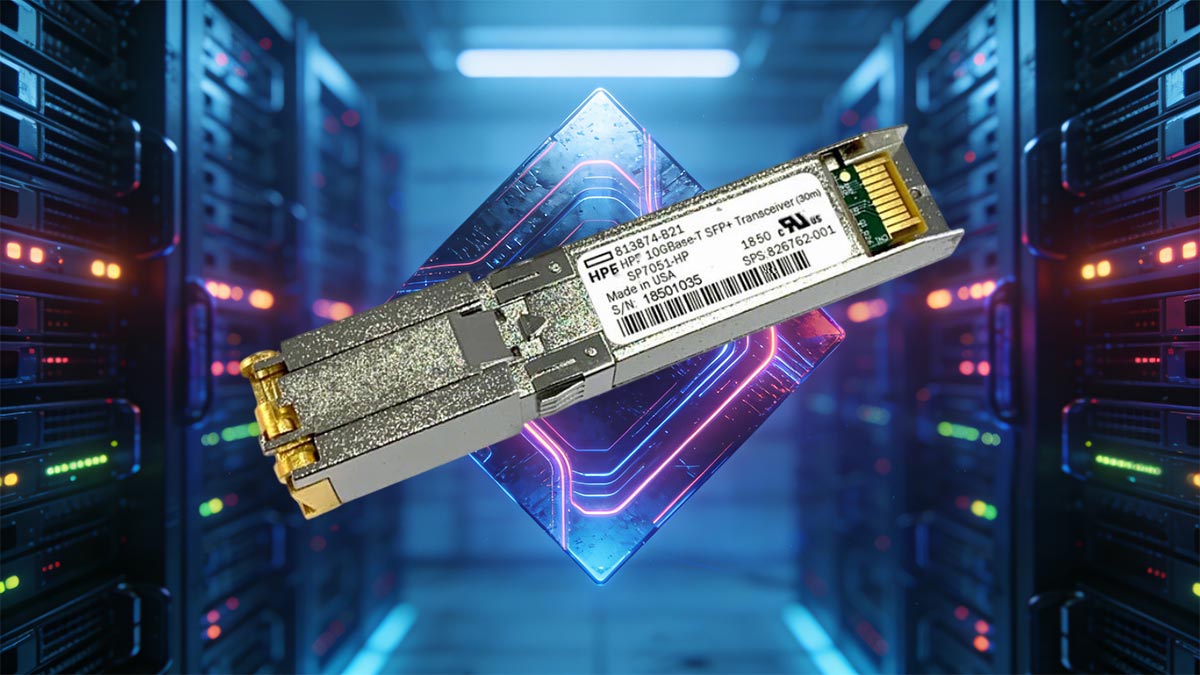
Instead of using fiber optic cables, the module enables organizations to deploy 10GbE over familiar Ethernet infrastructure such as:
-
Cat6a cables
-
Cat7 cables
-
RJ45 patch panels
-
Existing copper network runs
This makes the HPE 813874-B21 especially attractive for enterprises upgrading from 1GbE to 10GbE without completely rebuilding their cabling environment.
Understanding 10GBase-T SFP+
The HPE 813874-B21 is based on the 10GBase-T Ethernet standard, which enables 10 Gigabit Ethernet (10GbE) communication over traditional twisted-pair copper Ethernet cabling.
The module uses the SFP+ form factor, a compact hot-swappable transceiver interface widely used in enterprise networking equipment such as:
-
Data center switches
-
Server network adapters
-
Storage networking hardware
-
Enterprise aggregation switches
Unlike optical SFP+ modules that rely on fiber optic cables and LC connectors, the HPE 813874-B21 uses a standard RJ45 Ethernet connector, allowing administrators to connect existing copper Ethernet infrastructure directly to an SFP+ port.
In simple terms, the module acts as a bridge between:
-
Modern SFP+ networking hardware
-
Traditional RJ45 Ethernet cabling
This allows organizations to upgrade to 10GbE speeds without immediately replacing their existing copper network infrastructure.
Why Enterprises Still Use RJ45 for 10GbE
Although fiber optics dominate modern high-density data centers, many enterprises still depend heavily on copper Ethernet infrastructure.
Replacing an entire copper network with fiber can involve:
-
Higher installation costs
-
New patch panels
-
Fiber management complexity
-
Infrastructure downtime
-
Additional training and maintenance
Because of this, many organizations choose RJ45-based 10GbE solutions as a more practical upgrade path.
The HPE 813874-B21 allows enterprises to continue using:
-
Cat6a cabling
-
Cat7 cabling
-
Existing Ethernet wall runs
-
Standard RJ45 patch panels
-
Copper-based network layouts
This is especially valuable in environments where:
-
Cable distances are relatively short
-
Fiber deployment is unnecessary
-
Existing copper infrastructure is already well established
For many IT teams, RJ45-based 10GbE offers a balance between performance, cost efficiency, and deployment simplicity.
Common Deployment Scenarios
The HPE 813874-B21 is most commonly used in short-range enterprise networking environments where copper Ethernet infrastructure already exists.
Typical deployment scenarios include:
1. Server-to-Switch Upgrades
Organizations upgrading servers from 1GbE to 10GbE often use RJ45 SFP+ modules to avoid replacing existing Ethernet cabling.
2. Top-of-Rack Networking
Short-distance rack-to-rack connections are common use cases for 10GBase-T SFP+ modules.
3. Enterprise Copper Environments
Businesses with large installed bases of Cat6a/Cat7 cabling can extend the life of their existing infrastructure while increasing network bandwidth.
4. Temporary or Transitional Deployments
Some organizations use RJ45 SFP+ modules during phased migrations from copper to fiber networking.
5. Lab and Test Environments
Because RJ45 Ethernet is familiar and flexible, these modules are also popular in:
-
IT testing labs
-
Development environments
-
Proof-of-concept deployments
-
Small-scale 10GbE upgrades
However, for longer-distance networking or high-density switch environments, many enterprises still prefer DAC cables or optical SFP+ transceivers because of their lower heat output and better scalability.
🔶 HPE 813874-B21 Key Specs and Technical Overview
The HPE 813874-B21 is designed for short-range 10GbE copper Ethernet connectivity using the SFP+ interface. While compact in size, its technical specifications directly affect network performance, cabling requirements, and thermal behavior in enterprise deployments.
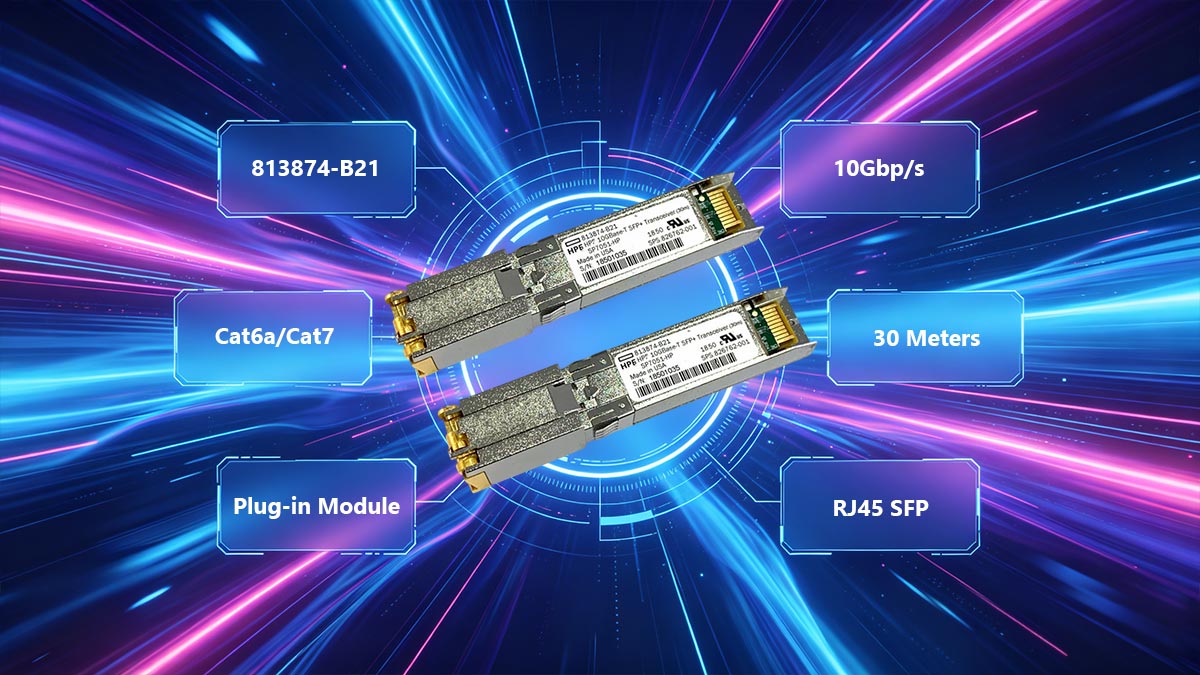
Core Specifications
Below are the main specifications of the HPE 813874-B21 10GBase-T SFP+ Transceiver.
|
Specification |
Details |
|---|---|
|
Product Name |
HPE 10GBase-T SFP+ Transceiver |
|
Part Number |
813874-B21 |
|
Form Factor |
SFP+ |
|
Ethernet Standard |
10GBase-T |
|
Connector Type |
RJ45 |
|
Maximum Speed |
10 Gb/s |
|
Duplex Mode |
Full Duplex |
|
Hot Swappable |
Yes |
|
Cable Type |
Cat6a / Cat7 |
|
Maximum Distance |
30 meters |
The module is designed to deliver 10 Gigabit Ethernet over copper cabling while using a standard SFP+ networking interface.
Cabling and Distance Requirements
The HPE 813874-B21 uses:
-
Cat6a cabling
-
Cat7 cabling
-
Standard RJ45 Ethernet connectivity
For stable 10GbE operation, high-quality cabling is important. HPE specifies a maximum transmission distance of: Up to 30 meters at 10GbE
This shorter range exists because RJ45-based 10GBase-T SFP+ modules operate within tighter thermal and power limits than native 10GBase-T switch ports.
Using lower-quality or older cabling may result in:
-
Unstable links
-
Reduced throughput
-
Speed negotiation problems
For enterprise environments, Cat6a is typically the recommended minimum for reliable 10GbE performance.
Power Consumption and Heat Output
Compared with optical SFP+ transceivers, RJ45 10GBase-T modules consume more power and generate more heat.
The HPE 813874-B21 typically operates around:
-
~2.3W typical power consumption
-
Up to ~2.5W maximum power consumption
This is significantly higher than many fiber-based SFP+ optics.
Because of the additional electrical processing required for copper Ethernet signaling, RJ45 SFP+ modules usually produce:
-
Higher thermal output
-
Increased power demand
-
Greater cooling requirements
These thermal characteristics are one of the key tradeoffs of using copper-based 10GbE transceivers instead of DAC or optical fiber solutions.
🔶 813874-B21 10GBase-T SFP+ Transceiver Compatibility: Which Devices Support It?
One of the most common reasons users search for the HPE 813874-B21 is compatibility validation.
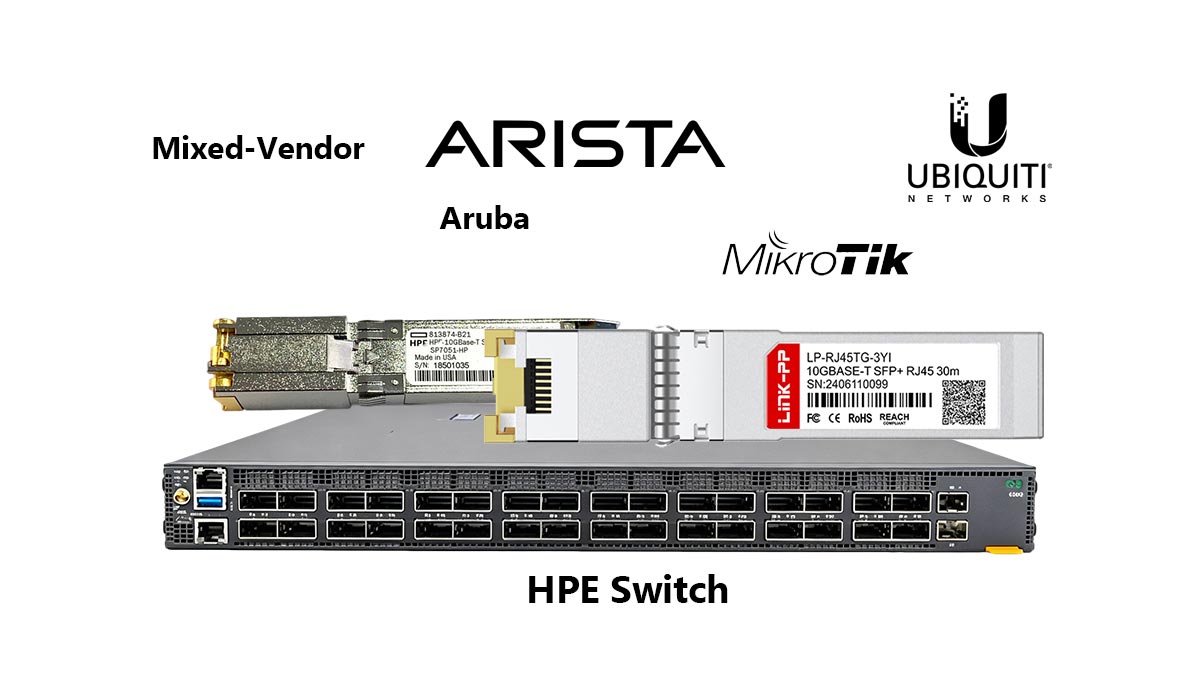
Unlike standard optical SFP+ modules, RJ45 10GBase-T SFP+ transceivers place higher demands on switch ports and network adapters due to their increased power consumption and thermal requirements. Because of this, compatibility often depends on:
-
Device firmware
-
Port power limits
-
Vendor validation policies
-
Platform-specific support lists
For enterprise deployments, verifying compatibility before purchase is extremely important.
HPE Switch and Server Compatibility
The HPE 813874-B21 is primarily designed for selected:
-
HPE enterprise switches
-
HPE BladeSystem environments
-
HPE Synergy platforms
-
HPE FlexFabric networking deployments
-
Certain HPE SFP+ server adapters
In most cases, the module is intended for use within validated HPE networking ecosystems rather than as a universal SFP+ transceiver.
Administrators commonly test the module with HPE adapters such as:
-
530SFP+
-
534FLR-SFP+
-
546SFP+
-
560SFP+
-
562SFP+
However, support may vary depending on:
-
NIC firmware version
-
Server generation
-
SFP+ port power capability
-
Platform thermal design
Even when the module physically fits, stable operation is not always guaranteed unless the platform officially supports RJ45 10GBase-T SFP+ modules.
Aruba and Mixed-Vendor Support
Compatibility with Aruba and third-party networking equipment varies significantly by platform.
Some Aruba switches successfully operate with the HPE 813874-B21, while others may:
-
Display unsupported transceiver warnings
-
Disable the port
-
Restrict functionality
-
Experience link instability
Mixed-vendor environments can also produce inconsistent results depending on:
-
Switch chipset
-
Firmware policies
-
Auto-negotiation behavior
-
Port power allocation
Real-world administrator feedback shows that some third-party switches and appliances can operate normally with RJ45 SFP+ modules, while others reject them entirely.
Because of this, mixed-vendor deployments should always be tested before production rollout.
Why Some Devices Reject RJ45 SFP+ Modules
RJ45 10GBase-T SFP+ transceivers are more demanding than standard optical modules.
Compared with fiber optics, they require:
-
More electrical signal processing
-
Higher power consumption
-
Greater heat dissipation
As a result, some devices enforce strict validation policies for supported transceivers.
Common reasons devices reject RJ45 SFP+ modules include:
1. Firmware Restrictions
Some vendors only allow approved transceivers through firmware validation.
2. Power Limitations
Certain SFP+ ports cannot provide sufficient power for RJ45 10GBase-T modules.
3. Thermal Constraints
High-density switches may limit copper SFP+ deployment because of heat generation.
4. Vendor Locking
Some enterprise platforms intentionally restrict unsupported third-party modules.
These restrictions explain why compatibility validation is often the most important part of deploying the HPE 813874-B21 in enterprise networks.
🔶 Is HPE 813874-B21 Compatible with 1GbE or Non-HPE Networks?
One of the biggest real-world concerns surrounding the HPE 813874-B21 is whether it works reliably outside fully validated HPE 10GbE environments.
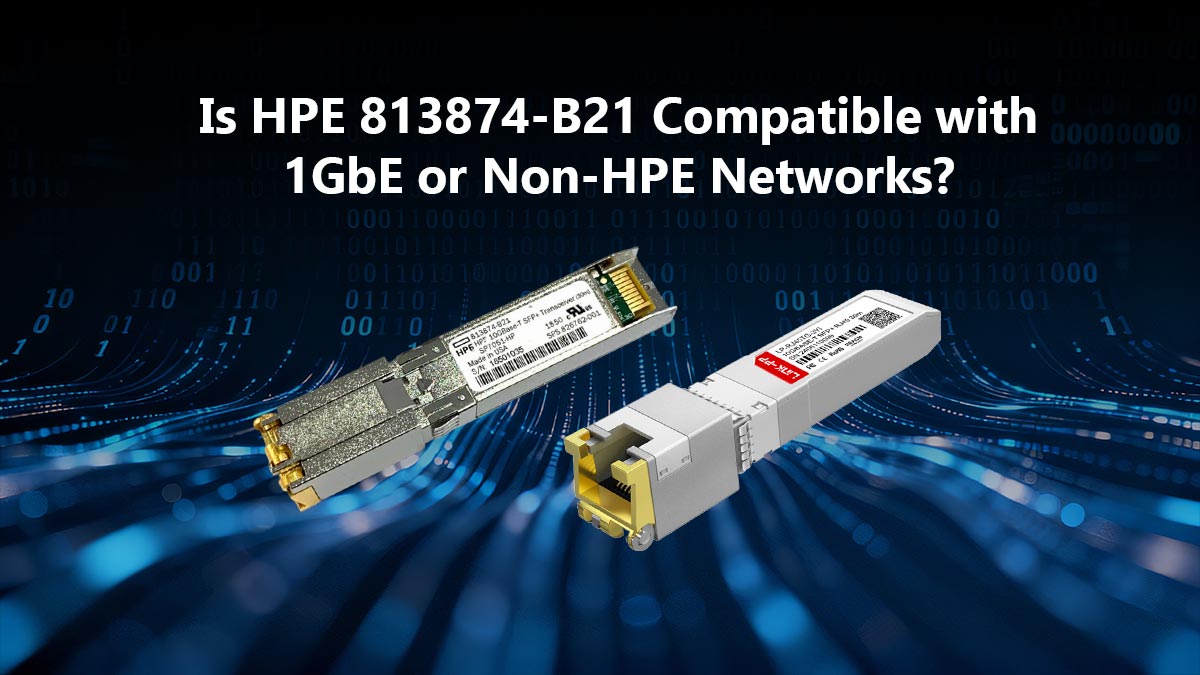
Many buyers assume that because the module uses a standard RJ45 Ethernet connector, it will automatically function with:
-
1GbE switches
-
Mixed-speed networks
-
Generic SFP+ ports
-
Non-HPE devices
In practice, compatibility is far less predictable.
Unlike standard 1G RJ45 SFP modules, the HPE 813874-B21 is primarily optimized for 10GbE full-duplex operation, and real-world deployments often depend heavily on switch firmware, NIC behavior, and vendor-specific implementation.
Does It Support 1GbE?
In most cases, the safest answer is: Not reliably as a general 1GbE fallback solution.
Although some 10GBase-T technologies support auto-negotiation, many administrators report inconsistent results when using the HPE 813874-B21 in:
-
1GbE environments
-
Mixed-speed networks
-
Unmanaged switches
-
Legacy Ethernet infrastructure
Common issues include:
-
No link detection
-
Failed speed negotiation
-
Link flapping
-
Intermittent connectivity
-
Reduced stability under load
The module behaves primarily as a 10GbE SFP+ transceiver, not as a flexible multi-speed RJ45 adapter.
For environments that require guaranteed 1GbE operation, a dedicated 1G RJ45 SFP module is usually the safer option.
Common Problems in Mixed-Vendor Networks
Non-HPE interoperability can vary significantly depending on the switch or NIC vendor.
Some mixed-vendor deployments work normally, while others experience:
-
Unsupported transceiver warnings
-
Port shutdowns
-
Thermal-related instability
-
Auto-negotiation failures
-
Firmware rejection
-
Inconsistent link behavior
This is especially common with:
-
Older SFP+ switches
-
Generic network adapters
-
Non-validated firmware versions
-
Platforms with strict vendor enforcement
Because RJ45 10GBase-T SFP+ modules operate close to the power and thermal limits of the SFP+ standard, vendors often implement stricter compatibility controls than they do for optical transceivers.
Real-World User Feedback
Reddit and enterprise networking forums show highly mixed real-world experiences with the HPE 813874-B21.
Some users report successful operation in:
-
Aruba environments
-
Mixed-vendor labs
-
Short-range enterprise deployments
-
Third-party SFP+ switches
Others report persistent issues such as:
-
Failure to negotiate 1GbE links
-
Unsupported module errors
-
Excessive heat generation
-
Unstable performance in unmanaged environments
A common theme across user feedback is that: Compatibility depends heavily on the specific switch model, firmware version, and network design.
This explains why so many administrators specifically search for:
-
“813874-B21 1GbE compatibility”
-
“813874-B21 unsupported transceiver”
-
“813874-B21 Aruba support”
-
“813874-B21 mixed-vendor issues”
In real-world deployments, testing before production rollout is strongly recommended.
🔶 HPE 813874-B21 vs. DAC vs. Fiber vs. Compatible Alternatives
When evaluating the HPE 813874-B21, most buyers are not only comparing specifications — they are comparing deployment cost, flexibility, heat output, and long-term infrastructure strategy.
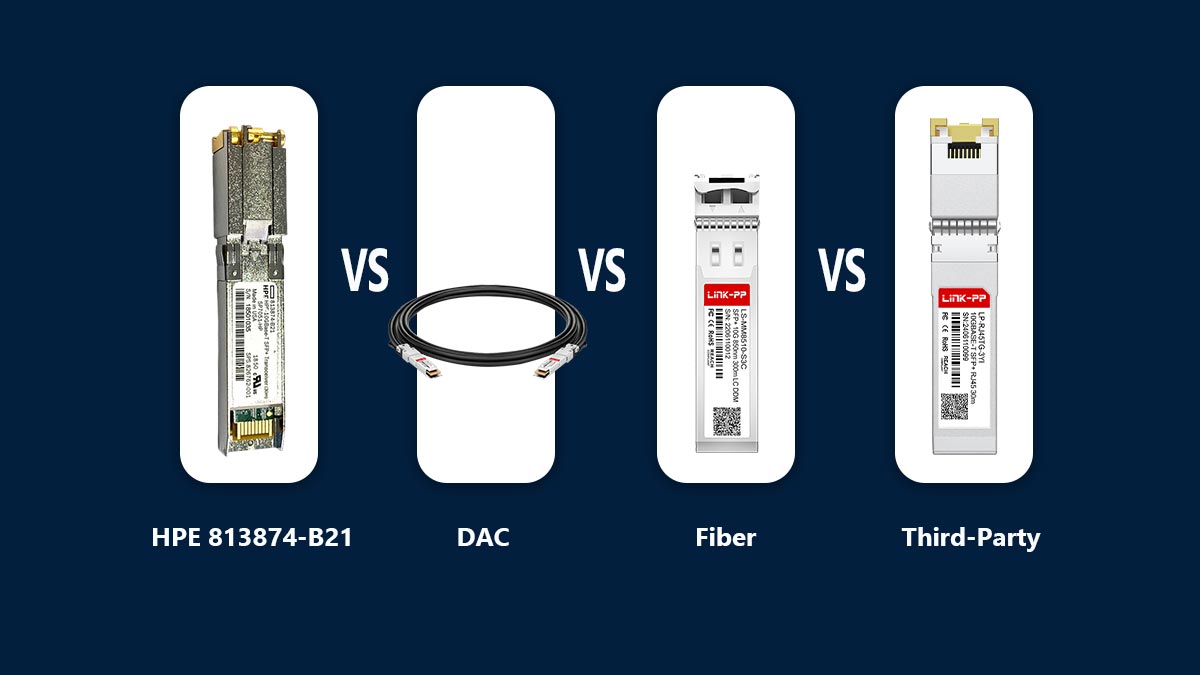
The right option depends largely on:
-
Connection distance
-
Existing cabling infrastructure
-
Budget
-
Port density
-
Thermal considerations
-
Deployment flexibility
RJ45 vs. DAC
DAC (Direct Attach Copper) cables are one of the most common alternatives to RJ45 SFP+ modules.
Both use copper-based connectivity, but they serve different purposes.
|
Feature |
HPE 813874-B21 RJ45 |
DAC Cable |
|---|---|---|
|
Connection Type |
RJ45 Ethernet |
Twinax Copper |
|
Typical Distance |
Up to 30m |
1–7m |
|
Flexibility |
High |
Limited |
|
Power Consumption |
Higher |
Very Low |
|
Heat Output |
Higher |
Very Low |
|
Installation |
Standard Ethernet cabling |
Fixed cable assembly |
|
Cost |
Higher |
Lowest |
DAC cables are typically preferred for:
-
Short rack-to-rack connections
-
Data center top-of-rack networking
-
Low-power deployments
-
High-density switch environments
The HPE 813874-B21 becomes more useful when organizations already have structured RJ45 cabling installed and need greater deployment flexibility.
RJ45 vs. Fiber SFP+
Fiber SFP+ optics remain the dominant choice for scalable enterprise 10GbE networking.
Compared with RJ45 SFP+ modules, fiber optics usually offer:
-
Longer transmission distance
-
Lower power consumption
-
Lower heat generation
-
Better scalability
-
Higher switch density support
|
Feature |
HPE 813874-B21 RJ45 |
Fiber SFP+ |
|---|---|---|
|
Medium |
Copper Ethernet |
Fiber Optic |
|
Connector |
RJ45 |
LC |
|
Typical Distance |
Up to 30m |
300m+ |
|
Heat Output |
Higher |
Lower |
|
Power Consumption |
Higher |
Lower |
|
Infrastructure Cost |
Lower if copper already exists |
Higher initial deployment |
|
Scalability |
Moderate |
Excellent |
Fiber optics are generally preferred for:
-
Enterprise backbone networking
-
Long-distance connections
-
High-density deployments
-
Modern data centers
RJ45 SFP+ modules are typically chosen when preserving existing copper infrastructure is the priority.
OEM vs. Third-Party Compatible Modules
One of the biggest discussions around the HPE 813874-B21 is pricing.
Official OEM HPE modules are often significantly more expensive than compatible third-party alternatives.
The higher OEM cost typically reflects:
-
Vendor validation
-
Enterprise certification
-
Firmware assurance
-
Official support coverage
-
Certified interoperability
However, many organizations choose compatible modules to reduce deployment costs.
|
Option |
Typical Pricing Logic |
|---|---|
|
OEM HPE Module |
Premium enterprise pricing |
|
Third-Party Compatible Module |
Lower cost, higher value |
|
Generic Multi-Vendor Module |
Lowest cost, varying quality |
Compatible modules are popular in:
-
Budget-conscious deployments
-
Lab environments
-
Mixed-vendor networks
-
Non-critical infrastructure
For organizations operating under strict enterprise support requirements, OEM modules may still be preferred despite the higher cost.
Which Option Is Best for Your Deployment?
The best choice depends on the specific networking environment.
|
Deployment Scenario |
Recommended Option |
|---|---|
|
Existing RJ45 infrastructure |
HPE 813874-B21 or compatible RJ45 module |
|
Lowest-cost short-range connectivity |
DAC cable |
|
Long-distance enterprise networking |
Fiber SFP+ |
|
High-density switching |
Fiber optics or DAC |
|
Enterprise support requirement |
OEM HPE module |
|
Budget-focused deployment |
Third-party compatible module |
In practical deployments:
-
DAC is usually the most cost-efficient for short rack connections.
-
Fiber is the preferred long-term enterprise solution.
-
RJ45 SFP+ modules are most valuable when organizations want to reuse existing copper Ethernet infrastructure without major rewiring.
🔶 Common Problems and Troubleshooting for 813874-B21 HPE 10GBase‑T SFP+ Transceiver
Like many 10GBase-T RJ45 SFP+ transceivers, the HPE 813874-B21 can experience deployment issues related to power consumption, heat generation, firmware validation, and copper Ethernet signaling.
Most real-world problems reported by administrators involve:
-
Unsupported transceiver warnings
-
Excessive heat buildup
-
Link instability
-
Auto-negotiation failures
-
Poor cable quality
-
Firmware-related compatibility issues
Understanding these common problems can significantly reduce deployment time and troubleshooting effort.
Unsupported Transceiver Errors
One of the most frequently reported issues is the appearance of:
-
Unsupported transceiver warnings
-
Invalid module messages
-
Port-disabled errors
These warnings occur because some switches and NICs only allow vendor-approved SFP+ modules through firmware validation.
Common causes include:
-
Strict vendor locking policies
-
Unsupported firmware versions
-
Third-party transceivers
-
Non-validated switch platforms
In some environments, the port may still function despite the warning. In others, the device may completely disable the transceiver.
Typical troubleshooting steps include:
-
Updating switch firmware
-
Verifying the supported transceiver list
-
Enabling unsupported transceiver settings if available
-
Using vendor-coded compatible modules
Heat and Thermal Problems
RJ45 10GBase-T SFP+ modules generate significantly more heat than optical SFP+ transceivers.
The HPE 813874-B21 requires additional electrical signal processing for copper Ethernet communication, which increases:
-
Power consumption
-
Thermal output
-
Cooling requirements
Common symptoms of overheating include:
-
Random link drops
-
Port shutdowns
-
Reduced stability
-
Intermittent disconnects
Thermal problems are especially common in:
-
High-density switches
-
Poorly ventilated racks
-
Environments using multiple RJ45 SFP+ modules simultaneously
Proper airflow and spacing are important for stable long-term operation.
Link Drops and Negotiation Failures
Another common issue involves unstable network connectivity.
Administrators may experience:
-
Link flapping
-
Failed auto-negotiation
-
Intermittent packet loss
-
Speed mismatch problems
-
No link detection
In many cases, these issues are caused by:
Poor Cable Quality
10GbE copper networking is sensitive to cable quality. Older or lower-grade Ethernet cables may not reliably support 10GbE speeds.
Excessive Cable Length
The HPE 813874-B21 is typically designed for distances up to 30m. Longer cable runs may reduce stability.
Firmware Mismatch
Older switch firmware may not fully support newer RJ45 SFP+ modules.
Mixed-Speed Environments
Some devices struggle with 1GbE fallback or multi-speed auto-negotiation behavior.
Best Practices for Stable Deployment
To improve stability and reduce troubleshooting issues, administrators should follow several best practices when deploying the HPE 813874-B21.
1. Use High-Quality Cabling
Recommended options include:
-
Cat6a
-
Cat7
Avoid older or damaged Ethernet cables for 10GbE deployments.
2. Keep Cable Runs Short
Staying within recommended distance limits helps improve signal stability and reduce packet errors.
3. Maintain Proper Cooling
Ensure adequate airflow around switches and avoid overloading high-density SFP+ environments with multiple heat-intensive RJ45 modules.
4. Update Firmware
Using current firmware versions can improve transceiver support, negotiation behavior, and stability.
5. Validate Before Production Deployment
Testing the module in the target environment before large-scale rollout can help identify:
-
Thermal issues
-
Negotiation problems
-
Vendor restrictions
-
Cable-related instability
Proper planning is especially important for enterprise 10GbE copper networking environments.
🔶 FAQs About 813874-B21 HPE 10GBase‑T SFP+ Transceiver
1. What is HPE 813874-B21?
HPE 813874-B21 is a 10GBase-T SFP+ RJ45 transceiver that enables 10 Gigabit Ethernet connectivity over copper Ethernet cabling using an SFP+ port.
2. Does HPE 813874-B21 support 1GbE?
Not reliably in most environments. The module is primarily designed for 10GbE full-duplex operation, and many users report inconsistent 1GbE auto-negotiation behavior.
3. What is the maximum distance of HPE 813874-B21?
The module typically supports up to 30 meters using properly rated Cat6a or Cat7 Ethernet cabling.
4. Should I use Cat6a or Cat7 with HPE 813874-B21?
Both Cat6a and Cat7 are supported. Cat6a is the most commonly recommended option for stable 10GbE performance in enterprise copper networking environments.
5. Why does HPE 813874-B21 run hotter than optical SFP+ modules?
RJ45 10GBase-T transceivers require more electrical signal processing than optical modules, which increases power consumption and heat generation.
6. Is DAC better than RJ45 SFP+?
DAC cables are usually cheaper, lower power, and ideal for short rack-level connections. RJ45 SFP+ modules are more flexible when existing Ethernet cabling infrastructure already exists.
7. Is HPE 813874-B21 hot-swappable?
Yes. The module supports hot-swappable installation in compatible SFP+ networking equipment.
8. Does HPE 813874-B21 work with non-HPE switches?
Sometimes. Compatibility depends on the switch model, firmware, and vendor validation policies. Some non-HPE devices work normally, while others may reject the module.
9. What are the most common HPE 813874-B21 deployment issues?
Common issues include:
-
Unsupported transceiver warnings
-
Heat buildup
-
Link instability
-
Auto-negotiation failures
-
Cable quality problems
-
Firmware-related compatibility issues
🔶 Should You Choose HPE 813874-B21 or a Compatible Alternative?
The best choice depends on your network environment, budget, and deployment goals.
For some organizations, the official HPE 813874-B21 is worth the premium because it offers enterprise validation and vendor-backed support. For others, compatible third-party modules provide similar functionality at a much lower cost.
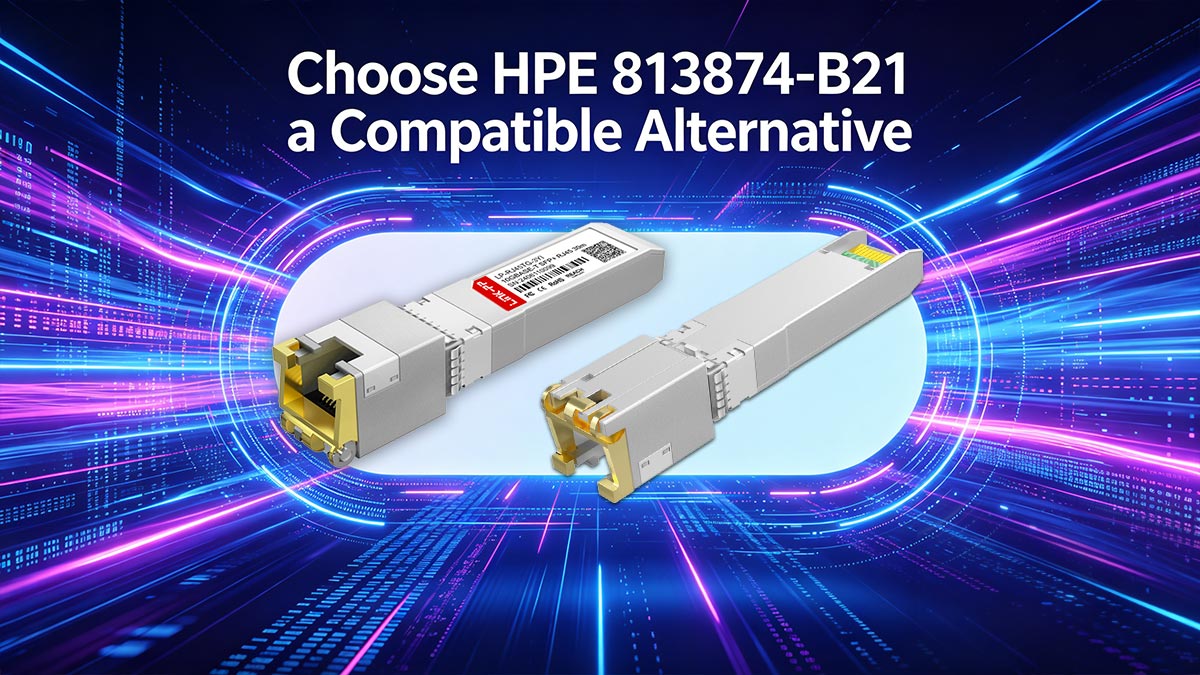
The key decision factors are usually:
-
Existing infrastructure
-
Enterprise support requirements
-
Budget sensitivity
-
Network vendor mix
-
Copper vs. fiber strategy
Best Choice for HPE Enterprise Environments
Organizations running primarily HPE infrastructure often prefer the official HPE module for:
-
Vendor-certified interoperability
-
Enterprise support contracts
-
Firmware validation
-
Standardized procurement policies
The official HPE 813874-B21 is positioned as a premium enterprise transceiver and is commonly priced near $950+.
For mission-critical enterprise deployments where official validation matters, OEM hardware may still be the safest option.
Best Option for Mixed-Vendor Networks
Mixed-vendor environments often prioritize flexibility over OEM certification.
In these deployments, administrators frequently choose:
-
Multi-vendor coded modules
-
Reprogrammable compatible transceivers
-
Lower-cost third-party options
Real-world Reddit feedback shows that some administrators achieved more stable results using compatible RJ45 SFP+ modules than DAC cables in certain mixed-vendor environments.
However, testing before production deployment is still strongly recommended because RJ45 10GBase-T SFP+ modules can behave differently across platforms.
Final Recommendation
|
Deployment Type |
Recommended Option |
|---|---|
|
HPE-only enterprise infrastructure |
OEM HPE 813874-B21 |
|
Budget-focused deployment |
Third-party compatible module |
|
Mixed-vendor environment |
Compatible multi-vendor module |
|
Short rack-level connections |
DAC cable |
|
Long-distance enterprise networking |
Fiber SFP+ optics |
|
Existing Cat6a/Cat7 infrastructure |
RJ45 SFP+ transceiver |
If your environment already uses copper Ethernet infrastructure and requires short-range 10GbE connectivity, the HPE 813874-B21 or a compatible RJ45 SFP+ alternative can be a practical solution.
For organizations looking for reliable HPE-compatible transceivers, DAC cables, and enterprise networking optics at a more competitive cost, the LINK-PP Official Store provides a wide range of HPE-compatible networking solutions for modern 10GbE deployments.