As enterprise networks, cloud infrastructure, and data-intensive applications continue to grow, commercial Ethernet environments require higher bandwidth, faster data transmission, and more efficient connectivity solutions. Traditional network modules designed for lower speeds are increasingly unable to meet the demands of modern data centers and large-scale enterprise deployments. This shift toward high-speed networking has accelerated the adoption of 100-gigabit Ethernet technologies across commercial environments.
Among the key components enabling this transition is the 100G QSFP transceiver. Designed to support 100-gigabit data rates while maintaining compact size and energy efficiency, 100G QSFP modules have become a widely deployed solution for high-capacity Ethernet connectivity. From enterprise data centers to cloud service provider infrastructures, the 100G QSFP plays a critical role in delivering scalable, reliable, and high-performance network communication.
🎾What is a 100G QSFP Transceiver

Before exploring its capabilities and applications, it is important to understand what a 100G QSFP transceiver is and how it functions within Ethernet networks. These optical transceiver modules serve as the interface that enables high-speed data transmission between network devices such as switches, routers, and servers.
Basic Definition of 100G QSFP
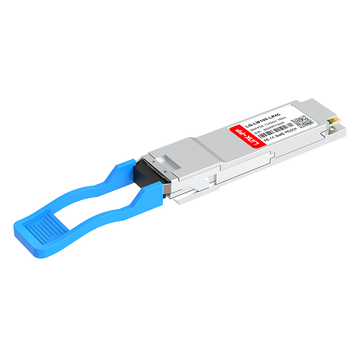
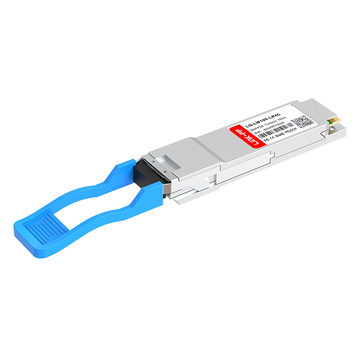
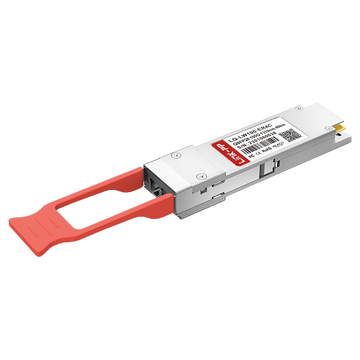
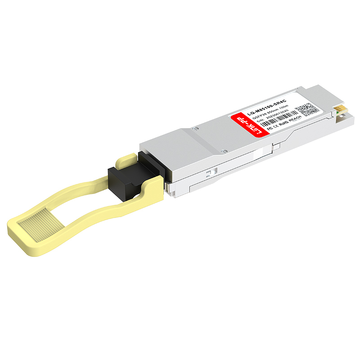
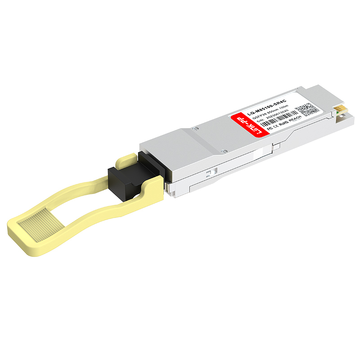
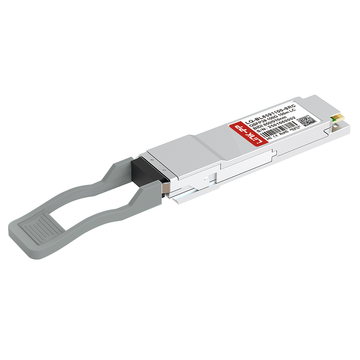
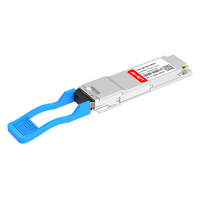
A 100G QSFP transceiver is a hot-pluggable optical module designed to support 100-Gigabit Ethernet data transmission. QSFP stands for Quad Small Form-factor Pluggable, indicating that the module integrates four high-speed transmission channels within a compact QSFP28 form factor.
Each channel typically carries 25Gbps of data, and when combined, they provide a total bandwidth of 100Gbps. These transceivers convert electrical signals generated by networking equipment into optical signals for transmission through fiber-optic cables, and then convert incoming optical signals back into electrical signals at the receiving end.
Because of their compact size and high bandwidth capability, 100G QSFP modules allow network equipment manufacturers to design switches and routers with higher port density, enabling more connections within the same hardware footprint.
Overview of 100G QSFP Standard
The development and standardization of 100G QSFP modules are largely guided by industry organizations such as the IEEE (Institute of Electrical and Electronics Engineers) and various MSA (Multi-Source Agreement) groups. These standards define key specifications, including electrical interfaces, optical characteristics, transmission distances, and interoperability requirements to ensure reliable performance across different networking platforms.
Several standardized 100G QSFP module types have been introduced to support different networking environments and transmission distances. For example, 100GBASE-SR4 modules are designed for short-range connections over multi-mode fiber (MMF) and are commonly used for high-density links within data centers. In contrast, 100GBASE-LR4 modules support long-range transmission over single-mode fiber (SMF), making them suitable for inter-building connections or longer-distance network links.
By adhering to these standardized specifications, 100G QSFP transceivers enable interoperability between networking equipment from different vendors, while also simplifying deployment and network upgrades in commercial Ethernet infrastructures.
🎾Key Features of 100G QSFP for High-Speed Commercial Ethernet
The 100G QSFP transceiver stands out as one of the most efficient and scalable solutions for modern network infrastructures. Its design integrates advanced optical and electrical technologies to deliver high performance, density, and reliability in commercial Ethernet environments.

Compact Form Factor Enabling High Port Density
One of the most significant advantages of 100G QSFP transceivers is their compact Quad Small Form-factor Pluggable (QSFP) design, which allows networking equipment to support a large number of high-speed ports within a limited hardware space. Compared with earlier optical modules, the QSFP form factor integrates four high-speed lanes into a single pluggable module, reducing the physical footprint required for high-capacity connectivity.
This compact design enables switches and routers to achieve high port density, which is particularly important in modern data centers where rack space and power efficiency are critical considerations. By deploying 100G QSFP modules, network operators can significantly increase bandwidth capacity without expanding the physical infrastructure of their networking equipment.
High Signal Integrity and Low Latency Performance
Maintaining reliable signal transmission at 100-gigabit speeds requires advanced optical and electrical design. 100G QSFP transceivers are engineered with optimized signal processing and high-quality optical components to ensure high signal integrity, minimizing transmission errors and signal degradation across fiber links.
In addition to signal stability, these modules are designed to support low-latency data transmission, which is essential for latency-sensitive applications such as cloud computing, real-time data analytics, financial trading systems, and large-scale distributed computing environments. The combination of strong signal integrity and low latency helps ensure consistent network performance even in highly demanding Ethernet infrastructures.
High Bandwidth and Data Throughput Capability
The primary advantage of 100G QSFP modules lies in their ability to deliver 100Gbps of aggregate bandwidth, significantly increasing the data throughput capacity of Ethernet networks. This is typically achieved by combining four parallel lanes operating at approximately 25Gbps each, allowing the module to transmit large volumes of data simultaneously.
Such high bandwidth capability makes 100G QSFP transceivers ideal for environments that handle massive data traffic, including enterprise data centers, cloud service provider networks, and large-scale aggregation layers. By enabling faster data transfer and reducing potential bottlenecks, these modules play a crucial role in supporting the performance requirements of modern commercial Ethernet connectivity.
🎾Common Types of 100G QSFP Used in Ethernet Connectivity

To support a wide range of networking environments and transmission distances, several types of 100G QSFP transceivers have been developed under IEEE and MSA standards. Each module type is designed for specific fiber types, transmission distances, and deployment scenarios such as short-range data center links or long-distance metropolitan networks.
Understanding the differences between these modules helps to select the most appropriate solution for your network infrastructure. The following table summarizes several commonly used 100G QSFP transceiver types and their key characteristics.
| Module Type | Fiber Type | Transmission Distance | Wavelength | Connector | Typical Application |
| 100G SR4 | Multimode (OM3/OM4) | Up to 100m (OM4) | 850nm | MPO/MTP | Short-range data center links |
| 100G LR4 | Single-mode | Up to 10km | 1295 - 1310nm | LC Duplex | Campus or metro backbone |
| 100G ER4 | Single-mode | Up to 40km | 1295 - 1310nm | LC Duplex | Long-distance enterprise or metro networks |
| 100G ZR4 | Single-mode | Up to 80km | 1295 - 1310nm | LC Duplex | Metro and long-haul optical links |
| 100G CWDM4 | Single-mode | Up to 2km | 1270 - 1330nm | LC Duplex | Medium-distance data center interconnects |
| 100G SWDM4 | Multimode (OM3/OM4) | Up to 150m (OM4) | 850 - 940nm | LC Duplex | Data center short links using duplex MMF |
QSFP 100G SR4
The QSFP 100G SR4 module is designed for short-range optical communication over multi-mode fiber (MMF). It typically uses an MPO/MTP connector and operates with four parallel optical lanes, each transmitting 25Gbps.
This SFP module supports transmission distances of up to 70m on OM3 fiber and 100m on OM4 fiber, making it ideal for high-density interconnections inside data centers. Because of its cost-effectiveness and low power consumption, 100G SR4 is widely used for top-of-rack (ToR) to aggregation switch connectivity.
QSFP 100G LR4
The QSFP 100G LR4 transceiver is intended for long-range transmission over single-mode fiber (SMF) using wavelength-division multiplexing technology. It typically supports transmission distances of up to 10km and uses a duplex LC connector.
LR4 modules combine four optical wavelengths around the 1310nm range, enabling the four 25Gbps channels to be multiplexed onto a single pair of fibers. This makes LR4 an efficient solution for data center interconnects (DCI), campus networks, and enterprise backbone links.
QSFP 100G ER4
The QSFP 100G ER4 module extends transmission capability beyond LR4 by supporting distances of up to 40km over single-mode fiber. Like LR4, it also uses four wavelengths multiplexed onto a duplex LC fiber pair.
ER4 modules are commonly deployed in metro networks, large enterprise networks, and carrier infrastructure, where longer transmission distances are required without the need for optical amplification equipment.
QSFP 100G ZR4
The QSFP 100G ZR4 transceiver is optimized for ultra-long-distance optical transmission, typically supporting distances of up to 80km over single-mode fiber. These modules are often used in metropolitan area networks (MANs) and service provider backbone networks.
ZR4 modules operate using advanced optical amplification and high-performance receivers to maintain signal quality over extended fiber spans. They are particularly useful for long-distance interconnections between data centers or regional network hubs.
QSFP 100G CWDM4
The QSFP 100G CWDM4 module uses Coarse Wavelength Division Multiplexing (CWDM) technology to transmit four optical signals over a single pair of single-mode fibers. Each lane operates at approximately 25Gbps, and the wavelengths are spaced across the 1270 - 1330nm range.
CWDM4 modules typically support transmission distances of up to 2km, making them a cost-effective solution for data center interconnect (DCI) environments where longer reach than SR4 is needed but full LR4 capability is unnecessary.
QSFP 100G SWDM4
The QSFP 100G SWDM4 module is designed for high-speed transmission over multi-mode fiber using shortwave wavelength division multiplexing (SWDM). Unlike SR4, which requires parallel fibers through an MPO connector, SWDM4 uses multiple wavelengths over a duplex LC connection, allowing it to operate over existing duplex multi-mode fiber infrastructure.
SWDM4 modules can typically support transmission distances of up to 100 - 150m depending on fiber type, making them suitable for modernizing legacy data center cabling systems while upgrading to 100G Ethernet speeds.
🎾Typical Use Cases of 100G QSFP in Commercial Ethernet
As commercial Ethernet networks continue to scale in size and complexity, 100G QSFP transceivers have become a critical component for delivering high-bandwidth connectivity across various network environments. Their ability to support high-speed data transmission while maintaining compact form factors makes them well-suited for modern network infrastructures.
From enterprise data centers to large-scale cloud platforms, 100G QSFP modules enable organizations to build scalable, high-performance Ethernet architectures capable of handling rapidly increasing data traffic.

Enterprise Data Center Connectivity
One of the most common deployment environments for 100G QSFP modules is within enterprise data centers. As organizations generate and process growing volumes of data, the need for faster communication between servers, storage systems, and network switches has become increasingly important.
In this environment, 100G QSFP transceivers are typically used to support high-speed interconnections between top-of-rack (ToR) switches, aggregation switches, and core network layers. Short-range modules such as 100G SR4 or SWDM4 are often deployed within the same data center hall to provide fast server-to-switch or switch-to-switch connectivity.
By enabling high-bandwidth communication between critical infrastructure components, 100G QSFP modules help reduce network congestion and improve the overall efficiency of enterprise data center operations.
Cloud Service Provider Infrastructure
Large-scale cloud service providers rely heavily on high-capacity networking to support services such as cloud computing, storage platforms, streaming applications, and distributed workloads. In these environments, massive volumes of data must move continuously between servers, storage clusters, and data center locations.
100G QSFP transceivers provide the bandwidth necessary to support these high-performance cloud infrastructures. They are frequently used for data center interconnect (DCI) links, connecting multiple data centers within a region or across metropolitan networks.
Modules such as 100G LR4 or CWDM4 are commonly used in these deployments because they allow efficient long-distance transmission over single-mode fiber, ensuring reliable connectivity between geographically distributed cloud facilities.
High-Capacity Aggregation Layers
In large enterprise networks and service provider environments, the aggregation layer plays a crucial role in consolidating traffic from multiple access switches before forwarding it to the core network. As more devices and applications generate traffic, aggregation points must support significantly higher bandwidth capacities.
100G QSFP modules are widely used in these high-capacity aggregation layers to handle large volumes of data traffic efficiently. By enabling multiple 10G or 25G access connections to be aggregated into a single 100G uplink, these modules help simplify network architecture while improving throughput.
This capability makes 100G QSFP transceivers particularly valuable in environments such as large campus networks, enterprise backbones, and service provider edge networks, where reliable high-speed traffic aggregation is essential for maintaining network performance.
🎾Compatibility Considerations When Deploying 100G QSFP Modules

Successfully integrating 100G QSFP modules into an existing network requires careful attention to compatibility. Overlooking these factors can lead to link failures, suboptimal performance, or even hardware damage, negating the benefits of high-speed Ethernet. Ensuring seamless operation involves verifying not just physical connectivity, but also the deeper layers of hardware and software interoperability across your network ecosystem.
Switch and Router Compatibility
The most fundamental level of compatibility exists between the QSFP module and the host device, such as a switch, router, or network interface card. It is essential to verify that the specific module form factor (QSFP28) is supported by the line card or port's physical specifications.
Beyond the physical slot, the device's ASIC and PHY (Physical Layer) components must be capable of supporting the specific protocol and data rate of the module, whether it's for native 100G Ethernet or breakout applications like 4x25G. Always consult the manufacturer's hardware compatibility list to confirm support for both the module type (e.g., SR4, LR4).
MSA Standards and Vendor Interoperability
The Multi-Source Agreement (MSA) standards ensure that all compliant 100G QSFP modules share the same basic form factor and electrical interface. However, interoperability between a module from one vendor and a switch from another is not guaranteed solely by MSA compliance.
While many vendors test their equipment with a range of transceivers, "vendor lock-in" can occur due to coding practices or proprietary features. To ensure multi-vendor interoperability, network operators often rely on third-party optics that are explicitly designed and tested to be compatible with major switching platforms, or they may use transceivers programmed with vendor-specific codes to ensure the host device recognizes them as genuine.
Firmware and Platform Support
Even when hardware specifications align, the host platform's firmware and operating system play a critical role in compatibility. A switch may physically accept a 100G QSFP module, but its software image might lack the necessary drivers or protocol support to initialize and manage it.
This is particularly relevant for quality transceiver modules with digital diagnostics monitoring (DOM) capabilities, which require specific firmware to report accurate metrics like temperature and optical power. Before deployment, ensure that the network device is running a firmware version that officially supports the intended 100G QSFP module to guarantee stable performance and accurate monitoring.
🎾Selecting the Right 100G QSFP for Commercial Ethernet Networks

Choosing the appropriate 100G QSFP module is vital for achieving reliable network performance, scalability, and cost efficiency. The right selection depends not only on data rate requirements but also on transmission distance, fiber type, connector compatibility, and overall infrastructure design. Careful evaluation of these factors ensures optimal link performance and long-term operational stability.
Required Transmission Distance
Transmission range is one of the most important criteria in selecting a 100G QSFP module. Short-reach applications within data centers usually rely on QSFP 100G SR4 or SWDM4 modules, which operate effectively over multimode fiber up to a few hundred meters. For inter-building or metro connections, longer-reach variants such as QSFP 100G LR4, ER4, or ZR4 are required, supporting distances from 10km up to 80km or beyond. Matching module type to the intended distance prevents signal degradation and avoids unnecessary power consumption.
Fiber Type: Single-Mode vs Multi-Mode
The type of optical fiber used — single-mode (SMF) or multi-mode (MMF) — directly affects module selection and cost structure. Multi-mode fiber is common in short-range data center environments due to its lower transceiver cost and simplified cabling. Single-mode fiber, however, is better suited for long-haul or campus-wide deployments where higher precision and minimal signal loss are essential. Selecting a QSFP module that aligns with the existing fiber infrastructure minimizes upgrade complexity and ensures long-term compatibility.
Connector Type and Cabling Infrastructure
Connector interfaces determine how well a transceiver integrates with the physical cabling system. Most 100G QSFP SR4 modules use MPO/MTP connectors for parallel fiber transmission, while LR4 and CWDM4 types often employ duplex LC connectors for single-mode fiber. Assessing the site’s current cabling design — trunk cables, patch panels, and connector standards — helps avoid signal mismatch and reduces deployment time. Future scalability should also be considered when choosing connector types to accommodate evolving bandwidth requirements.
🎾Future Trends of 100G QSFP Technology in Commercial Ethernet

As commercial Ethernet networks scale, 100G QSFP (QSFP28) is shifting from being the “new standard” to becoming the dependable workhorse that supports large installed bases. The next few years will be defined by higher-speed uplinks (200G/400G+) while 100G continues to anchor access, aggregation, and migration paths.
Transition Toward 200G and 400G Networking
Commercial networks are accelerating toward 200G/400G in spine-leaf cores, inter-DC connectivity, and bandwidth-hungry AI/HPC clusters — driven by higher east–west traffic and the need to reduce cost-per-bit at scale. Vendors are already positioning 200G/400G optics as mainstream options alongside 100G portfolios, signaling that higher-speed layers will increasingly sit “above” 100G in modern architectures.
That said, 100G QSFP remains strategically important during this transition because it’s a proven density-and-power sweet spot for many enterprise and cloud edge designs. In practice, many teams adopt a phased approach: deploy 200G/400G on core/backbone links first, while keeping 100G on ToR uplinks, aggregation, and legacy interconnects until the refresh cycle naturally completes.
Role of 100G QSFP in Hybrid Network Architectures
Hybrid architectures (mixing on-prem, colocation, and cloud) often require consistent, interoperable link speeds to simplify operations. 100G QSFP provides that “common denominator,” allowing organizations to maintain standardized connectivity across mixed switch generations, multiple sites, and diverse vendor ecosystems — especially where interoperability and predictable supply matter more than peak headline bandwidth.
You’ll also see 100G used as a practical demarcation layer in multi-speed designs: for example, 400G in the core, 100G in aggregation, and 25G/10G at the access layer. This creates a clean upgrade ladder — teams can modernize the backbone without forcing an immediate, expensive edge-wide optics replacement.
Long-Term Relevance of 100G Ethernet Connectivity
Even as 200G/400G adoption grows, 100G Ethernet will stay relevant for a long time because of its massive installed base, mature standards, and broad platform support across enterprise cores, distribution layers, and service-provider edge deployments. Many environments simply won’t saturate 100G links consistently, making 100G the rational choice for balancing performance, power, and total cost of ownership.
Additionally, 100G remains a “high-availability comfort zone” for operations teams: established testing practices, well-understood cabling/connector ecosystems, and widely documented deployment patterns. That combination keeps 100G QSFP a stable option for refreshes where reliability and compatibility are the top priorities.
🎾Conclusion: Maximizing Network Efficiency with 100G QSFP Solutions

100G QSFP transceivers continue to be a practical foundation for commercial Ethernet — delivering high-density connectivity, mature interoperability, and scalable performance across data centers, cloud infrastructure, and aggregation networks. As networks evolve toward 200G/400G, the most efficient strategy is often a tiered upgrade approach: push higher speeds into the backbone first, while using 100G QSFP to standardize edge and aggregation links and protect prior infrastructure investments.
Ready to upgrade your network with a high-quality, reliable optics transceiver? To explore reliable and cost-effective 100G QSFP solutions, visit the LINK-PP Official Store for certified optical transceiver modules designed to optimize your network infrastructure.