



































As modern data centers and enterprise networks continue to scale, the demand for reliable and high-speed optical connectivity has grown significantly. 100G Ethernet has become a standard for backbone networks, cloud infrastructure, and large-scale data transmission, requiring optical modules that can deliver both high bandwidth and stable long-distance performance.
Among the various 100G optical solutions available, QSFP-100G-LR4-S transceivers are widely used for long-distance single-mode fiber connections. Designed to support 100Gbps transmission over distances up to 10km, these modules provide an efficient and cost-effective solution for interconnecting switches, routers, and data center aggregation layers. Understanding the features and capabilities of the QSFP-100G-LR4-S module is essential when selecting a compatible transceiver for Cisco networking environments.
? What Is a QSFP-100G-LR4-S Transceiver
QSFP-100G-LR4-S transceiver is a high-speed optical module designed for 100-Gigabit Ethernet transmission over single-mode fiber. It uses four optical lanes and wavelength multiplexing technology to deliver reliable long-distance data communication in modern network infrastructures.
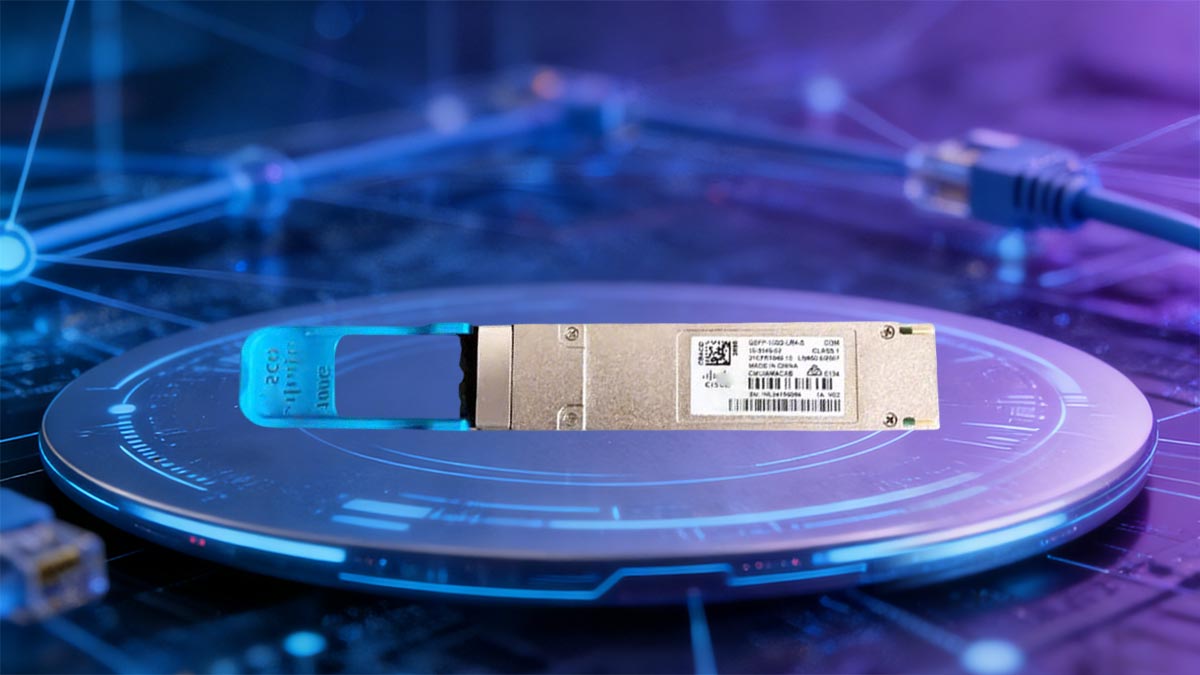
Overview of QSFP-100G-LR4-S Optical Transceivers
The QSFP-100G-LR4-S is a QSFP28 transceiver that supports 100Gbps Ethernet connectivity. It complies with the IEEE 802.3ba 100GBASE-LR4 standard, enabling data transmission over single-mode fiber (SMF) for distances of up to 10km.
This module integrates four independent optical channels, each carrying 25Gbps, which are multiplexed onto a single fiber pair using Wavelength Division Multiplexing (WDM) technology. The compact QSFP28 form factor allows high port density in switches and routers, making it particularly suitable for data center interconnects, campus networks, and metro networks where long-distance communication is required.
Key Technology Behind QSFP-100G-LR4-S Modules
The QSFP-100G-LR4-S module relies on advanced optical technology to enable stable and efficient 100Gbps transmission over single-mode fiber.
One of the core technologies used in this module is LWDM (LAN Wavelength Division Multiplexing). Instead of transmitting data over a single wavelength, the module combines four independent optical signals onto one pair of fibers. These wavelengths typically operate at 1295nm, 1300nm, 1305nm, and 1310nm, each carrying 25Gbps of data. By multiplexing these four wavelengths together, the transceiver achieves a total data rate of 100Gbps while maintaining reliable long-distance performance.
In addition, DFB (Distributed Feedback) lasers are commonly used to generate precise and stable optical signals for each wavelength channel. On the receiving side, PIN photodiodes convert the incoming optical signals back into electrical signals for processing by the networking equipment. These technologies work together to ensure consistent signal quality, low latency, and reliable high-speed transmission in modern 100G networks.
Typical Applications of QSFP-100G-LR4-S in 100G Networks
The QSFP-100G-LR4-S transceiver is commonly used in network scenarios where long-distance 100G connectivity is required.
One of the primary use cases is data center interconnect (DCI), where the module connects different data center buildings or campuses over several kilometers of fiber infrastructure. It also plays a key role in aggregation and core layers of enterprise networks, enabling high-speed links between switches and routers.
In addition, telecom operators and cloud service providers deploy QSFP-100G-LR4-S modules in metro and backbone networks to support high-capacity data traffic. Its ability to transmit over single-mode fiber with long reach makes it an ideal solution for environments that require both high bandwidth and extended transmission distance.
? Advantages of QSFP-100G-LR4-S Cisco Compatible Modules
Cisco QSFP-100G-LR4-S compatible modules provide a practical and cost-efficient alternative to original brand transceivers while maintaining high performance and reliability. For many enterprises and data center operators, these modules offer the same functionality as OEM optics but with greater flexibility and significantly lower deployment costs.

Cost Savings compared to OEM transceivers
One of the most significant advantages of QSFP-100G-LR4-S Cisco compatible modules is their cost efficiency. Original equipment manufacturer (OEM) optical transceivers are often priced significantly higher due to brand premiums and vendor-specific supply chains.
Cisco compatible modules are designed to deliver the same performance and standards compliance while being offered at a more competitive price. By choosing compatible optics, organizations can reduce their overall network upgrade or expansion costs without compromising performance. This cost advantage becomes even more noticeable in large-scale deployments where dozens or even hundreds of optical transceivers are required.
Full Interoperability with Cisco Networking Devices
High-quality Cisco compatible QSFP-100G-LR4-S modules are engineered to work seamlessly with Cisco switches and routers. They are programmed with the necessary firmware and identifiers to ensure that the networking devices recognize the module as a supported transceiver.
This interoperability ensures stable link establishment, accurate monitoring through Digital Optical Monitoring (DOM) features, and smooth operation across different Cisco platforms. As a result, network administrators can deploy compatible modules with confidence while maintaining the same level of functionality as OEM optics.
High Bandwidth and Long-distance Reach
The QSFP-100G-LR4-S module supports 100Gbps Ethernet transmission over single-mode fiber, providing high bandwidth for modern data center and enterprise networking environments. By utilizing four optical lanes and wavelength multiplexing technology, the module can efficiently handle large volumes of data traffic.
With a typical transmission distance of up to 10km, QSFP-100G-LR4-S modules are ideal for data center interconnects, campus networks, and metropolitan network links. This long reach allows organizations to connect geographically separated network segments while maintaining high-speed performance.
Quality Assurance and Compatibility Testing
Reputable third-party suppliers of Cisco compatible QSFP-100G-LR4-S modules perform rigorous testing to ensure reliability and compatibility before shipment. These tests often include optical signal verification, temperature stability checks, and interoperability validation with Cisco networking equipment.
Many manufacturers also follow international standards and quality control procedures to ensure consistent product performance. As a result, properly tested compatible modules can deliver dependable operation in demanding network environments while meeting the expectations of enterprise and data center deployments.
? QSFP-100G-LR4-S Specifications You Should Know Before Selection
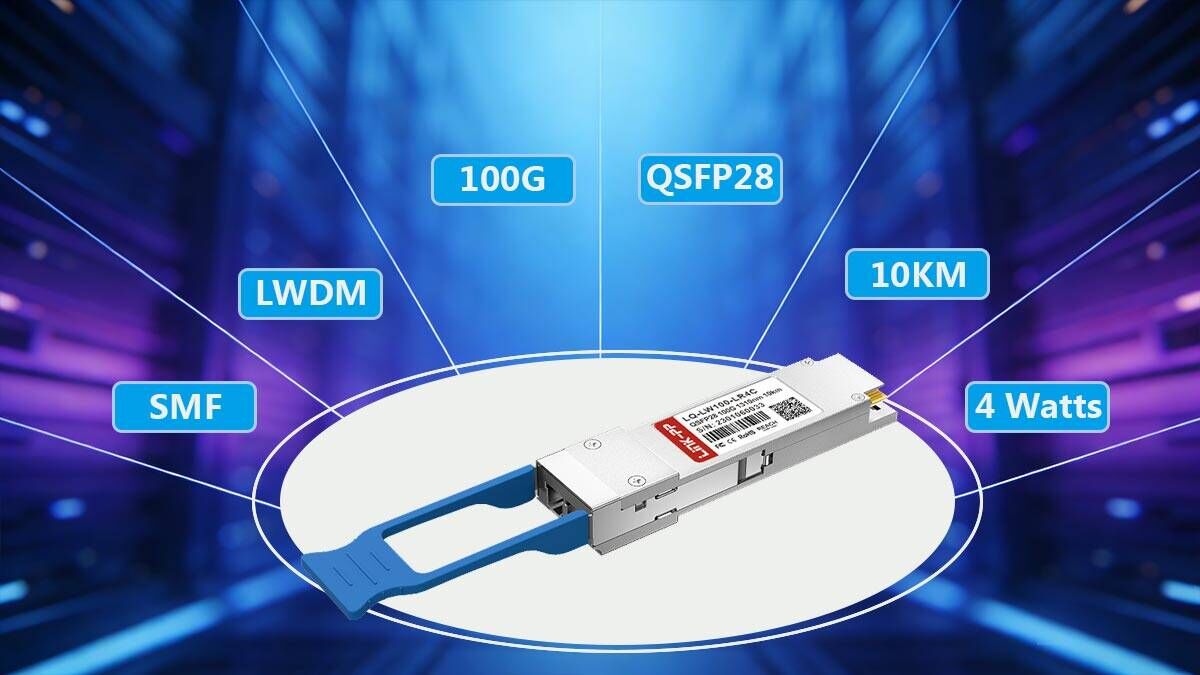
Before selecting a QSFP 100GBASE LR4 Cisco compatible module, it is important to understand the key technical specifications that determine its performance and suitability for your network environment. These specifications include transmission distance, optical wavelength characteristics, interface type, and operating conditions, all of which directly affect deployment reliability and compatibility.
Transmission Distance and Optical Standard
The QSFP-100G-LR4-S transceiver is designed to support 100-Gigabit Ethernet (100GBASE-LR4) transmission over single-mode fiber (SMF). According to the IEEE 802.3ba standard, this module can typically achieve a maximum transmission distance of up to 10km, making it suitable for long-range network connections.
This transmission capability makes the QSFP-100G-LR4-S ideal for data center interconnects (DCI), enterprise campus networks, and metro access networks where devices must be connected across multiple buildings or facilities. By supporting the 100GBASE-LR4 standard, the module ensures interoperability with other compliant networking equipment.
Wavelength and Interface Type
The QSFP-100G-LR4-S module uses LWDM (LAN Wavelength Division Multiplexing) technology to transmit data across four optical channels over a pair of single-mode fibers. Each channel operates at a different wavelength, typically 1295nm, 1300nm, 1305nm, and 1310nm, with each channel carrying 25Gbps of data.
These four wavelengths are multiplexed together to achieve the total 100Gbps transmission rate. On the physical interface side, the module commonly uses a duplex LC connector, which simplifies fiber deployment and supports long-distance single-mode fiber connections in modern networking environments.
Power Consumption and Operating Conditions
Power efficiency is another important specification when selecting 100G QSFP optical modules. The QSFP-100G-LR4-S transceiver typically has a power consumption of around 4 watts, which helps reduce heat generation and power requirements in high-density switch environments.
In terms of operating conditions, most QSFP-100G-LR4-S modules support a commercial temperature range of 0°C to 70°C, ensuring stable performance in standard data center environments. Reliable thermal design and power efficiency are essential for maintaining consistent signal quality and preventing overheating in large-scale network deployments.
? QSFP-100G-LR4-S Cisco Compatible Module Selection Criteria
To ensure reliable performance in Cisco networking environments, several key factors should be evaluated when choosing a QSFP-100G-LR4-S Cisco compatible module. These criteria help guarantee proper compatibility, stable optical performance, and long-term network reliability.

Compatibility with Cisco Switch Models
The first factor to consider when selecting a QSFP-100G-LR4-S Cisco compatible module is its compatibility with your specific Cisco switch or router model. Different Cisco platforms, such as the Cisco Nexus series, Catalyst switches, and ASR routers, may have unique firmware or hardware requirements for optical transceivers.
A properly coded compatible module is programmed with identifiers that allow the Cisco device to recognize it as a supported transceiver. This ensures that the module can be detected correctly by the system, enabling features such as Digital Optical Monitoring (DOM) and preventing compatibility warnings or port shutdown issues.
Before purchasing, it is recommended to verify that the module supplier provides compatibility information for your exact Cisco device model.
Optical Performance and Stability
High optical performance is essential for maintaining stable 100G data transmission over long distances. A reliable QSFP-100G-LR4-S module should provide consistent optical output power, receiver sensitivity, and low signal loss to ensure stable connectivity across single-mode fiber links.
Stable performance also depends on the quality of the optical components used in the module, including DFB lasers, photodiodes, and internal optical assemblies. High-quality components help minimize signal degradation, reduce bit error rates, and ensure consistent data transmission even in demanding network environments.
For large-scale deployments, choosing modules with proven stability helps prevent network interruptions and reduces long-term maintenance costs.
Quality Testing and Certification
Another key criterion when selecting a QSFP-100G-LR4-S Cisco compatible module is the level of testing and certification performed by the manufacturer. Reputable suppliers conduct comprehensive testing to verify optical performance, compatibility, and reliability before shipping the product.
These tests often include the interoperability test with Cisco switches, optical spectrum test, eye pattern test, bit error rate test and temperature test to ensure long-term stability. In addition, many high-quality modules comply with international standards such as RoHS, CE, and FCC, ensuring safety and environmental compliance.
By choosing modules from suppliers that perform strict quality control and certification procedures, organizations can ensure reliable operation and reduce the risk of compatibility issues in their 100G network infrastructure.
? QSFP-100G-LR4-S Fiber and Infrastructure Requirements

The performance of a QSFP-100G-LR4-S transceiver largely depends on the fiber infrastructure used in the network. Understanding the appropriate fiber types, connector interfaces, and transmission considerations helps ensure reliable 100G connectivity and stable long-distance communication.
Recommended Single-Mode Fiber for QSFP-100G-LR4-S
QSFP-100G-LR4-S modules are designed for single-mode fiber (SMF) operation and are typically deployed over OS2 cabling for long-reach data center interconnect and campus/backbone links.
- Fiber Type: Use OS2 single-mode fiber as the standard choice for new builds, especially when planning for longer runs or future upgrades.
- Installation Quality: Ensure fiber is properly routed and protected — tight bends, micro-bends, or poorly managed slack can add loss and create intermittent performance problems at higher speeds.
- Cleanliness and Handling: SMF links are more sensitive to contamination and reflections than many short-reach multimode use cases. Clean endfaces and inspect connectors during installation and troubleshooting to avoid avoidable link loss.
Connector Types Used with QSFP-100G-LR4-S
Most QSFP-100G-LR4-S transceivers use a duplex LC interface (LC/UPC) and connect through standard duplex SMF patch cords.
- Common Connector Format: LC duplex on the transceiver side is the typical interface for LR4-class QSFP28 optics, making it easy to integrate with standard SMF patching.
- Polarity Considerations: Duplex links require correct Tx/Rx polarity end-to-end. If the link doesn’t come up, polarity mismatch is a simple but common cause — especially when patch panels or cross-connects are involved.
- Patch Panel Compatibility: If your infrastructure uses higher-density connectors (e.g., MPO trunks), you’ll generally need appropriate breakout/cassette solutions to present LC duplex at the equipment ports while maintaining correct polarity and low loss.
Distance and Signal Integrity Considerations for QSFP-100G-LR4-S
Even if the fiber type and connectors are correct, overall signal integrity depends on staying within the optical link budget and keeping reflections and attenuation under control.
- Distance planning: LR4 optics are built for long-reach SMF links, but real-world maximum reach depends on total insertion loss from fiber length, splices, patch panels, and connector pairs.
- Loss budget management: Minimize unnecessary connection points — each connector pair, splice, and patch panel adds loss, which can reduce margin and increase the chance of link flaps or higher error rates.
- Reflection and return loss: Excessive reflections (often from poor connector condition, mismatched polish types, or dirty endfaces) can degrade performance. Use consistent connector standards and keep endfaces clean to maintain stable operation.
- Verification and testing: For production deployments, validate with optical power measurements and/or certification testing to confirm the link has adequate margin. If troubleshooting, checking Rx optical power, inspecting connectors, and confirming polarity are usually the fastest ways to isolate physical-layer issues.
? QSFP-100G-LR4-S vs Other 100G Transceivers

When selecting a 100G optical module, QSFP-100G-LR4-S is often the “balanced” choice for long-reach single-mode links, while QSFP-100G-SR4 prioritizes low-cost short-reach multimode, and QSFP-100G-ER4 targets extended single-mode distances. The right transceiver module option depends mainly on fiber type (MMF vs SMF), required reach, and total link budget/margin.
To make the differences between these transceivers clearer, the table below compares LR4 with SR4 and ER4 across the key specifications.
| Feature | QSFP-100G-LR4-S | QSFP-100G-SR4 | QSFP-100G-ER4 |
| Transmission Medium | Single-mode fiber | Multi-mode fiber | Single-mode fiber |
| Reach Distance | Up to 10km | Up to 100m (OM4) / 70m (OM3) | Up to 40km |
| Center Wavelength | 1310nm | 850nm | 1310nm |
| Transmitter Type | 4 x LAN WDM EML | VCSEL 850nm | 4 x EML |
| Connector Type | Duplex LC | MPO/MTP | Duplex LC |
| Optical Standard | IEEE 802.3ba 100GBASE-LR4 | IEEE 802.3bm 100GBASE-SR4 | IEEE 802.3ba 100GBASE-ER4 |
| Cost Level | Medium | Low | High |
| Best-Fit Scenarios | Data center interconnect (moderate reach), campus/core links | Intra–data center short links, ToR/EoR runs | Metro/campus long runs, extended DCI where 10km isn’t enough |
QSFP-100G-LR4-S vs QSFP-100G-SR4
? Core Difference: SMF long reach vs MMF short reach. SR4 is purpose-built for short intra–data center distances over multimode fiber, while LR4 is designed for longer links over single-mode fiber.
? Fiber and Cabling Impact: SR4 uses MMF and usually requires MPO/MTP cabling (parallel optics). LR4 uses SMF with duplex LC, often easier to patch in traditional structured cabling environments.
? Distance and Flexibility: If your link might grow beyond a typical data hall run — or you need building-to-building connectivity — LR4 is generally the safer long-term choice. SR4 is excellent when distances are clearly short and the MMF/MPO plant is already in place.
? Operational Considerations: SR4 deployments often involve polarity management and MPO cleanliness; LR4 relies on SMF cleanliness and stable insertion loss, but LC patching can be simpler for many teams.
QSFP-100G-LR4-S vs QSFP-100G-ER4
? Core Difference: standard long reach vs extended reach. LR4 typically targets up to 10km over SMF, while ER4 is intended for much longer SMF distances (commonly up to 40km).
? Link Budget and Margin: ER4 generally provides a larger optical budget to handle longer fiber runs and more loss. If your real-world path includes many patch panels, splices, or uncertain routing, ER4 can offer extra cushion — at a higher cost.
? Cost and Power Trade-offs: ER4 optics are usually more expensive and may draw more power, which matters in dense switch environments. LR4 is often the more efficient choice when 10km-class reach is sufficient.
? Engineering Discipline: Longer-reach optics make link design more sensitive to overall loss/reflection management. If you don’t truly need extended distance, LR4 often delivers a smoother balance of performance and operational simplicity.
When QSFP-100G-LR4-S Is the Best Choice
QSFP-100G-LR4-S is typically the best fit when you want a reliable 100G QSFP28 option that works well for mid-to-long single-mode links without paying the premium of extended-reach optics.
It’s an especially strong choice when:
- You have (or plan to deploy) OS2 single-mode fiber and prefer duplex LC patching.
- Your distances are commonly beyond SR4 practicality, but within 10km-class reach.
- You’re building scalable 100G connectivity for DCI, campus backbones, aggregation-to-core, or longer leaf-spine uplinks where SMF is the standard.
- You want a cost-effective, widely adopted long-reach architecture without overbuying ER4-class optics.
? QSFP-100G-LR4-S Cisco Compatible Module FAQs

What is the maximum distance of Cisco QSFP-100G-LR4-S compatible module?
In typical deployments, QSFP-100G-LR4-S supports up to 10km over single-mode fiber (OS2 SMF) under the IEEE 100GBASE-LR4 standard. Actual achievable distance can be lower if the total insertion loss is high due to multiple patch panels, splices, or dirty/poor-quality connectors.
Are QSFP-100G-LR4-S compatible modules safe for Cisco devices?
Yes, when sourced from a reputable third-party supplier, Cisco QSFP-100G-LR4-S compatible modules are designed to be firmware-coded for Cisco recognition and to operate within standard optical and electrical limits. To reduce risk, choose transceiver modules that have passed interoperability testing on Cisco platforms and include DOM/DDM support for monitoring.
Can QSFP-100G-LR4-S work with third-party switches?
It depends on the coding/EEPROM programming and the third-party switch’s transceiver policy. Many vendors offer the same hardware in different “coded” versions (Cisco, Arista, Juniper, etc.), so you’ll typically need a version explicitly coded for the target brand/model—or a switch that supports open optics without strict vendor enforcement.
How to verify QSFP-100G-LR4-S compatibility before purchase?
To verify QSFP-100G-LR4-S compatibility before purchase, first confirm your exact Cisco switch/router model and software version, then make sure the module is explicitly coded/tested for that platform and supports the required standard. Ask the supplier for a compatibility list or test evidence (interoperability/DOM readings on the same Cisco model), and if the deployment is large, validate with a small pilot to check link stability and error counters before buying in volume.
? Conclusion: How to Select the Right QSFP-100G-LR4-S Compatible Module

Choosing the right QSFP-100G-LR4-S Cisco compatible module starts with understanding your optical infrastructure, including whether you are using OS2 single-mode fiber, required link distances (up to 10km), and the number of 100G ports you plan to light up. Aligning these factors with 100GBASE-LR4 specifications ensures you select optics that can deliver stable, long-distance 100G connectivity across your data center, campus, or metro environment.
From there, prioritize modules that are explicitly coded for your Cisco platform, support DOM, and have been verified through interoperability and stress testing on the same switch families you run in production. This reduces the risk of link errors, unexpected alarms, or port shutdowns and helps you maintain a consistent operational experience comparable to OEM modules, while benefiting from better cost-efficiency.
You should also evaluate supplier quality by checking their testing procedures (optical performance, BER, temperature, and Cisco interoperability), certifications, warranty policies, and technical support responsiveness. Working with a vendor that can provide detailed compatibility lists and real-world deployment references will further increase confidence when deploying large volumes of QSFP-100G-LR4-S compatible modules in critical network paths.
If you are planning a 100G upgrade or expanding long-distance single-mode links in Cisco-based networks, consider sourcing rigorously tested QSFP-100G-LR4-S compatible optics from trusted suppliers. For more information, detailed specifications, and QSFP-100G-LR4-S Cisco compatible transceiver solutions, you can visit the LINK-PP Official Store to explore suitable options for your network infrastructure.







