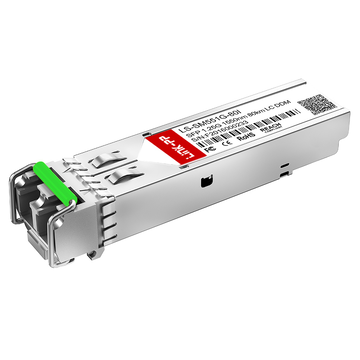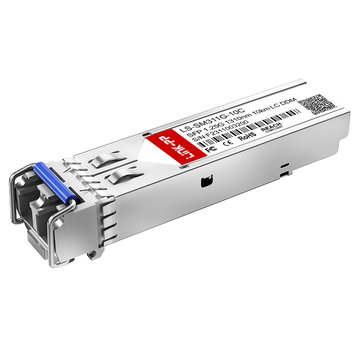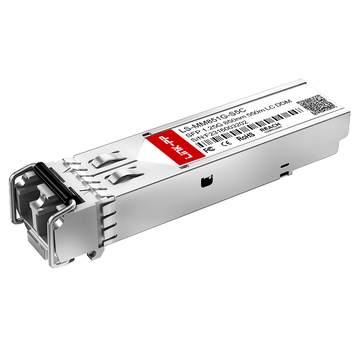
As enterprise networks grow beyond a single building, connecting devices across greater distances becomes a challenge. Copper cabling maxes out at 100 meters, and standard multimode SX optics transceivers fall short when linking separate facilities. LX/LH transceivers address this gap by providing extended reach for Gigabit Ethernet links, making them a practical solution for scaling local area networks across campuses or industrial sites.
LX/LH transceiver modules operate at a 1310nm wavelength and support both multimode and single‑mode fiber deployments. This dual compatibility allows network teams to use the same transceiver type for short internal connections and long‑haul building‑to‑building links. By bridging the distance limitations of standard optics, LX/LH technology enables reliable LAN expansion without requiring costly infrastructure overhauls.
✳️ Understanding LX/LH SFP Transceivers
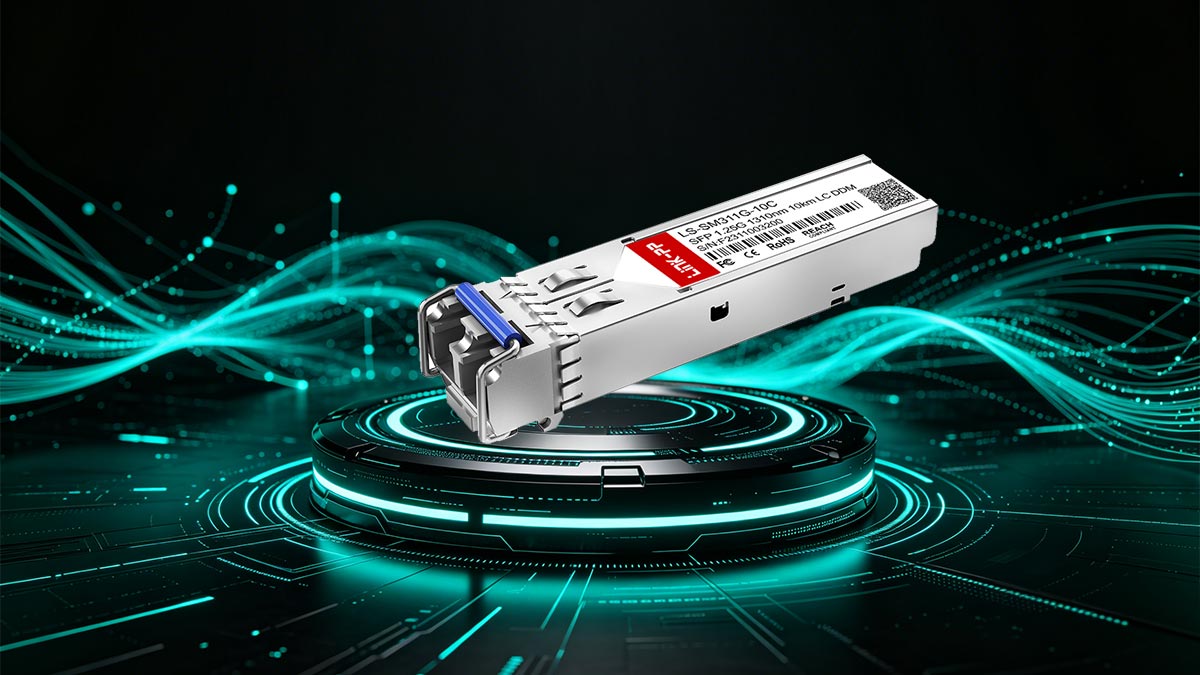
LX/LH SFP transceivers are compact, hot-swappable optical modules designed to enable Gigabit Ethernet connectivity over extended fiber distances. They serve as the backbone of modern network infrastructures, where reliable long-range data transmission is essential for performance and scalability. Understanding their function and specifications is key to deploying networks that balance distance, signal quality, and cost.
What LX/LH Means in Fiber Optics
The designation LX/LH combines two related technical specifications into a single, practical interface standard.
LX (Long Wavelength): This refers to the IEEE 802.3z standard for 1000BASE-LX. It defines the use of a long-wavelength laser (1310 nm) optimized primarily for transmission over single-mode fiber. In practical implementations, LX typically supports distances of at least 5km, with many modules reaching 10km on SMF.
LH (Long Haul): This is an industry extension, not a strict IEEE standard. It indicates that the transceiver uses enhanced optics to achieve extended distances beyond standard LX capabilities. Depending on the manufacturer, LH can support 10km, 20km, or more on single-mode fiber.
This combined LX/LH label assures network engineers that the fiber optic SFP module complies with the LX standard while providing the extended reach of LH-rated equipment.
How LX/LH Transceivers Differ from SX Modules
While both LX/LH and SX (1000BASE-SX) are Gigabit SFP transceivers, they are optimized for entirely different optical budgets and fiber types. The primary distinction lies in their wavelength and the resulting distance capabilities. The following table provides a concise comparison of their core operational parameters before further details are provided.
| Feature |
LX/LH Transceiver |
SX Transceiver |
| Standard |
1000BASE-LX/LH |
1000BASE-SX |
| Wavelength |
1310nm (Single-mode optimized) |
850nm (Multimode optimized) |
| Fiber Type |
Single-mode (SMF) & Multimode (MMF) |
Multimode (MMF) only |
| Max Distance (SMF) |
10km to 40km |
Not Supported |
| Max Distance (MMF) |
Up to 550m (Mode-Conditioning) |
Up to 550m |
As highlighted in the table above, the wavelength is the fundamental differentiator. SX modules use an 850nm VCSEL laser, which is inexpensive but suffers from high modal dispersion over distance, limiting use to short intra-building links. In contrast, LX/LH uses a 1310nm FP or DFB laser, which is far more stable over long distances and virtually eliminates modal dispersion on single-mode fiber.
A secondary, often overlooked difference is the requirement for mode-conditioning patch cables when connecting an LX/LH transceiver to legacy multimode fiber. Unlike SX SFP modules, the smaller spot size of the LX laser can cause signal distortion at the core of older MMF unless the launch is properly offset.
Typical Wavelength Ranges and Transmission Modes
The operational behavior of LX/LH transceivers is defined by their 1310nm wavelength, which dictates two distinct transmission modes depending on the connected fiber plant:
1. Single-Mode Fiber (SMF) Operation (Long-Haul Mode)
- Core Size: 9/125µm.
- Mechanism: The 1310nm signal travels almost entirely down the narrow core with minimal reflection. This results in low attenuation and zero modal dispersion.
- Outcome: This is the native transmission mode for which the LX standard was designed. It enables the LH (Long Haul) distances of 10km to 40km without repeaters.
2. Multimode Fiber (MMF) Operation (Legacy Mode)
- Core Size: 50/125µm or 62.5/125µm.
- Mechanism: Because 1310nm is not the optimal wavelength for MMF (850nm is), the light travels less efficiently. Without intervention, differential mode delay can limit the link to just a few dozen meters on older 62.5µm fiber.
- Mitigation: To achieve the rated distance of 550m on MMF, a mode conditioning patch cord is required. This cord contains a single-mode-to-multimode offset splice that excites the fiber core in a way that mimics a standard multimode launch, stabilizing the signal.
Common Standards and Compliance
LX/LH SFP transceivers adhere to several industry standards, ensuring interoperability and reliability across various network devices.
- IEEE 802.3z (1000BASE-LX) defines performance parameters for Gigabit Ethernet long-wavelength optics.
- Compliance with MSA (Multi-Source Agreement) standards guarantees compatibility with switches and routers from different vendors.
- Modules often meet RoHS and laser safety (Class 1) certifications, ensuring environmental safety and regulatory compliance.
These standards make LX/LH transceivers dependable and versatile choices for enterprise, campus, and industrial networking systems worldwide.
✳️ LX/LH SFP Transceiver Modules in Network Architecture
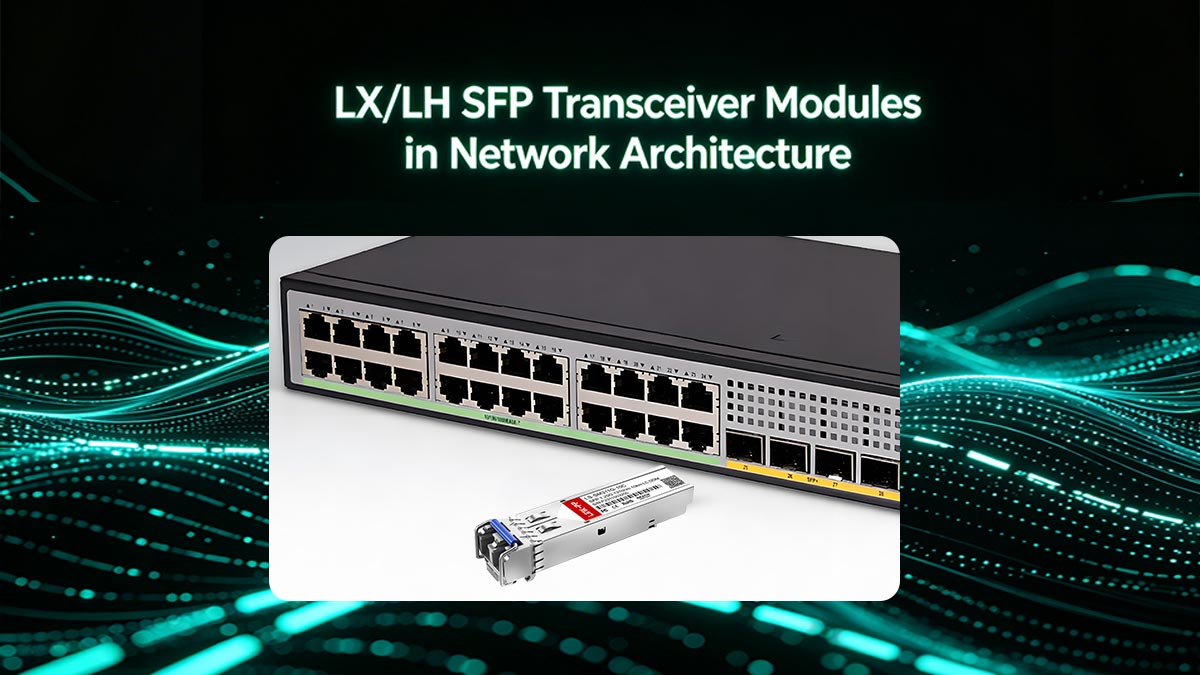
LX/LH SFP transceivers play a pivotal role in modern network design by bridging the gap between short-range connections and long-distance communication needs. Integrated within switches, routers, and fiber infrastructures, these modules enable stable Gigabit Ethernet links that extend the physical boundaries of local area networks (LANs).
Role of Transceivers in Extending LAN Reach
The fundamental role of an LX/LH transceiver in network architecture is to eliminate the distance barrier between logical segments of a Local Area Network (LAN). In traditional hierarchical network design, connecting buildings or remote closets often requires additional intermediate switches or expensive media converters, which introduce points of failure and management complexity.
LX/LH optics transceivers simplify this topology. They allow a network architect to establish a direct, native Gigabit Ethernet link between two switches located up to 10 kilometers apart without any active signal regeneration in between. This capability is essential for maintaining a flat Layer 2 network adjacency across a campus environment. By extending the LAN's physical reach while preserving a single logical broadcast domain, LX/LH transceivers ensure that latency sensitive applications and security policies can be enforced consistently from the core switch directly to the edge of the property.
Integrating LX/LH Modules within Switch Infrastructures
Integration of LX/LH modules into existing switch infrastructure is generally seamless because they conform to the SFP Multi-Source Agreement (MSA). However, proper deployment relies on understanding port compatibility and uplink strategy. The following points outline the key considerations for successful integration:
- Port Compatibility: LX/LH modules are designed for standard SFP ports that support Gigabit Ethernet. They will not operate in SFP+ ports that are locked strictly to 10-Gigabit speeds unless the switch specifically supports dual-rate (1G/10G) negotiation on that port. Network administrators should verify that the switch line card or fixed-configuration switch explicitly lists 1000BASE-LX support.
- Uplink vs. Downlink Placement: In a typical enterprise architecture, LX/LH modules are most commonly deployed on uplink ports connecting distribution switches in separate buildings back to a centralized core switch. They are rarely used for direct client connectivity due to cost and power considerations, with the exception of specialized long-range security cameras or industrial equipment.
Multimode vs. Single-Mode Deployment Scenarios
LX/LH transceivers are designed primarily for single-mode fiber (SMF) but can also operate on multimode fiber (MMF) under specific conditions:
- Single-Mode Fiber (SMF): Offers long-haul connectivity up to 10km, making it ideal for backbone or campus links.
- Multimode Fiber (MMF): Can be used for shorter runs (up to 550m) when equipped with mode conditioning patch cords to prevent differential mode delay.
- Deployment flexibility: Enables network designers to upgrade existing multimode infrastructures gradually toward single-mode implementations.
This versatility allows organizations to optimize cost and performance based on existing infrastructure and distance requirements.
Cabling Considerations and Distance Limitations
When deploying LX/LH transceivers, correct cabling design ensures optimal signal transmission and reliability:
- Use LC connectors and low-loss single-mode fibers for distances beyond 2km.
- Verify fiber polarity and channel alignment to prevent cross-connection errors.
- For multimode links, insert mode conditioning cables between transceiver and patch panel to maintain signal stability.
- Avoid excessive fiber splices or connector points, as each introduces additional optical loss.
Typically, LX/LH transceivers support:
- Up to 550m on multimode fiber (OM2/OM3).
- Up to 10km on standard single-mode fiber (9/125µm).
✳️ Key Benefits of LX/LH Optical Transceivers in Network Expansion
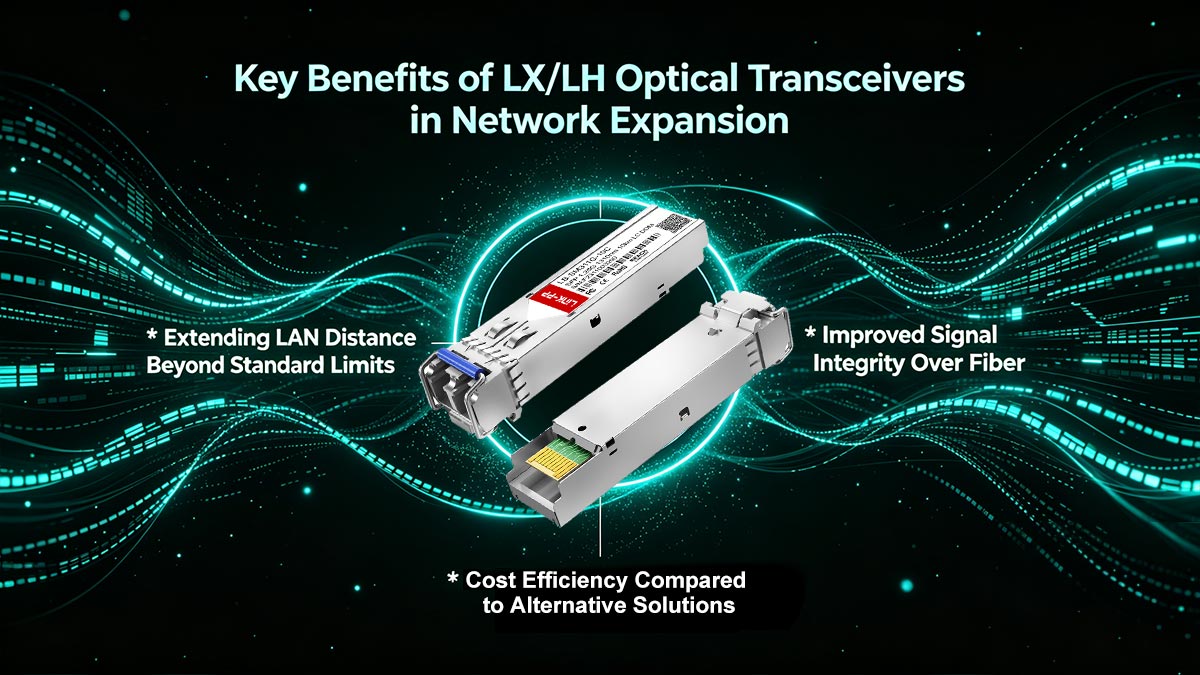
LX/LH optical transceivers provide a practical and efficient way to extend LAN connectivity across long distances. Their dual compatibility with multimode and single-mode fiber makes them adaptable to both legacy and new installations. The three core benefits are extended reach, robust signal quality, and lower overall cost.
Extending LAN Distance Beyond Standard Limits
LX/LH modules extend Gigabit Ethernet links up to 10km over single-mode fiber, far beyond the 100-meter limit of copper module or the 550-meter range of SX SFP. This enables direct switch-to-switch connections between remote buildings without intermediate active hardware. The result is a flatter, lower-latency network where distant endpoints perform as if locally connected.
Improved Signal Integrity Over Fiber
Fiber optic transmission with LX/LH is immune to electromagnetic interference, eliminating the noise and errors common in copper-based long-distance solutions. The 1310 nm wavelength experiences less attenuation over distance, delivering a cleaner signal to the receiver. This translates to fewer packet drops and a more stable link across the extended LAN.
Cost Efficiency Compared to Alternative Solutions
LX/LH SFP modules offer a balanced price point between short-reach SX SFP (like SFP-1G-SX) and premium long-haul alternatives like ZX SFP (like GLC-ZX-SM-RGD) , often costing 20 - 30% less for equivalent distances. Hot-swappable design simplifies upgrades without downtime, while compatibility with existing multimode fiber (via mode conditioning) avoids full cabling overhauls. Overall, they provide superior ROI for mid-range extensions compared to leased lines or active optical equipment.
✳️ Common Use Cases for LX/LH Transceivers in Enterprise Networks
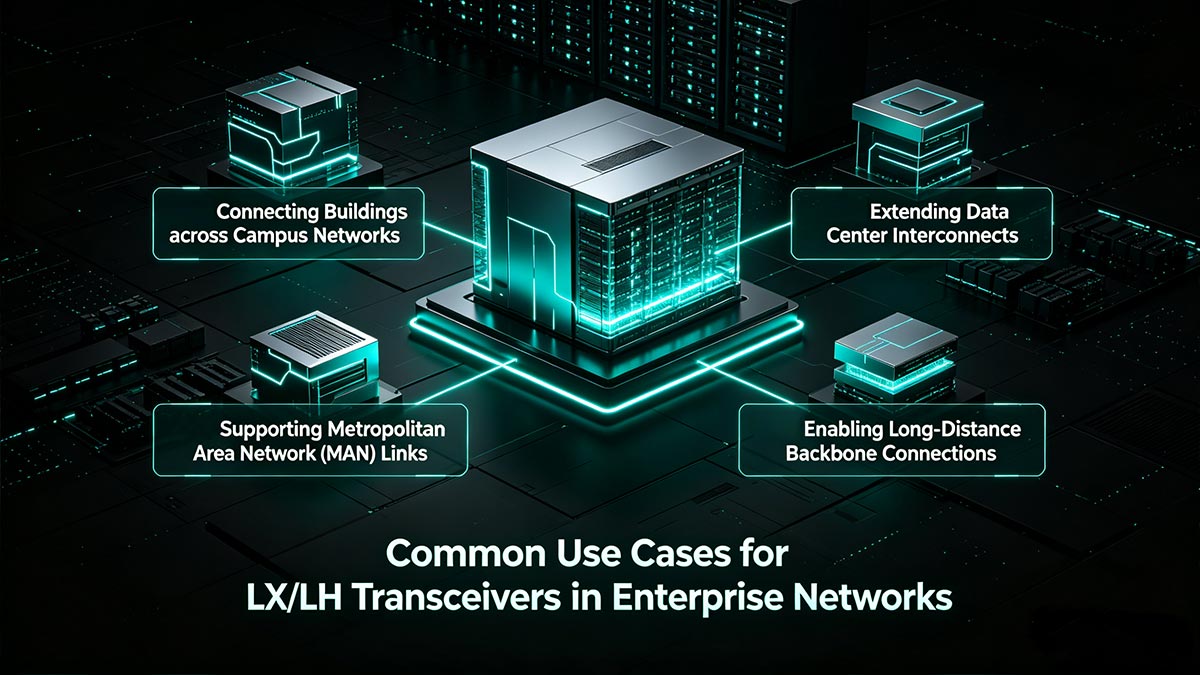
LX/LH transceivers are widely deployed in enterprise networks where reliable long-distance fiber connectivity is essential. They enable seamless communication across multiple sites, extending the reach of LANs and supporting high-performance data transfer over longer distances than standard transceivers. Below are the primary use cases that demonstrate their versatility in modern network infrastructures.
Connecting Buildings across Campus Networks
LX/LH transceivers are ideal for linking multiple buildings within a corporate or university campus. By leveraging single-mode fiber, these transceivers can span distances up to 10km or more, ensuring that network services remain consistent and high-speed across different structures. This capability eliminates the need for costly and complex workarounds such as multiple network hops or signal boosters.
Additionally, these transceivers simplify network management by providing a single, unified backbone. IT teams can deploy high-speed connections between administrative offices, lecture halls, research labs, and data centers without compromising signal quality, enabling seamless access to shared resources and centralized systems.
Extending Data Center Interconnects
Data centers often require robust connections to ensure redundancy and high availability. LX/LH modules are commonly used to extend interconnects between co-located or geographically separated data centers. Their long-reach capabilities allow enterprises to maintain synchronized data replication, support disaster recovery strategies, and balance loads between multiple facilities.
Furthermore, using LX/LH transceivers for data center links reduces the need for additional intermediate networking devices. This direct connectivity not only simplifies the architecture but also lowers latency and improves overall system reliability, making it easier to manage large-scale IT operations.
Supporting Metropolitan Area Network (MAN) Links
For enterprises with regional networks, LX/LH transceivers play a crucial role in connecting multiple sites across a city or metropolitan area. By integrating with the existing fiber infrastructure, these modules provide consistent bandwidth over distances typically ranging from several kilometers to tens of kilometers. This is especially useful for businesses with branch offices, production facilities, or research sites that need to communicate efficiently with headquarters.
In addition, LX/LH transceivers enable high-speed data transmission over a metropolitan network without extensive infrastructure upgrades. Their compatibility with standard network equipment ensures that companies can scale their MANs as demand grows, supporting applications such as VoIP, video conferencing, and real-time data analytics across urban locations.
Enabling Long-Distance Backbone Connections
Enterprise networks often require long-distance backbone connections to link remote sites or regional offices. LX/LH transceivers facilitate these backbones by providing reliable optical links that maintain high signal integrity over tens of kilometers. This capability is essential for enterprises that rely on centralized servers and cloud-based applications across multiple locations.
Moreover, these transceivers help reduce network downtime and signal degradation by offering stable performance over extended distances. They are particularly beneficial in scenarios where traditional copper-based connections would be insufficient or economically impractical, ensuring that the backbone infrastructure can support future network growth.
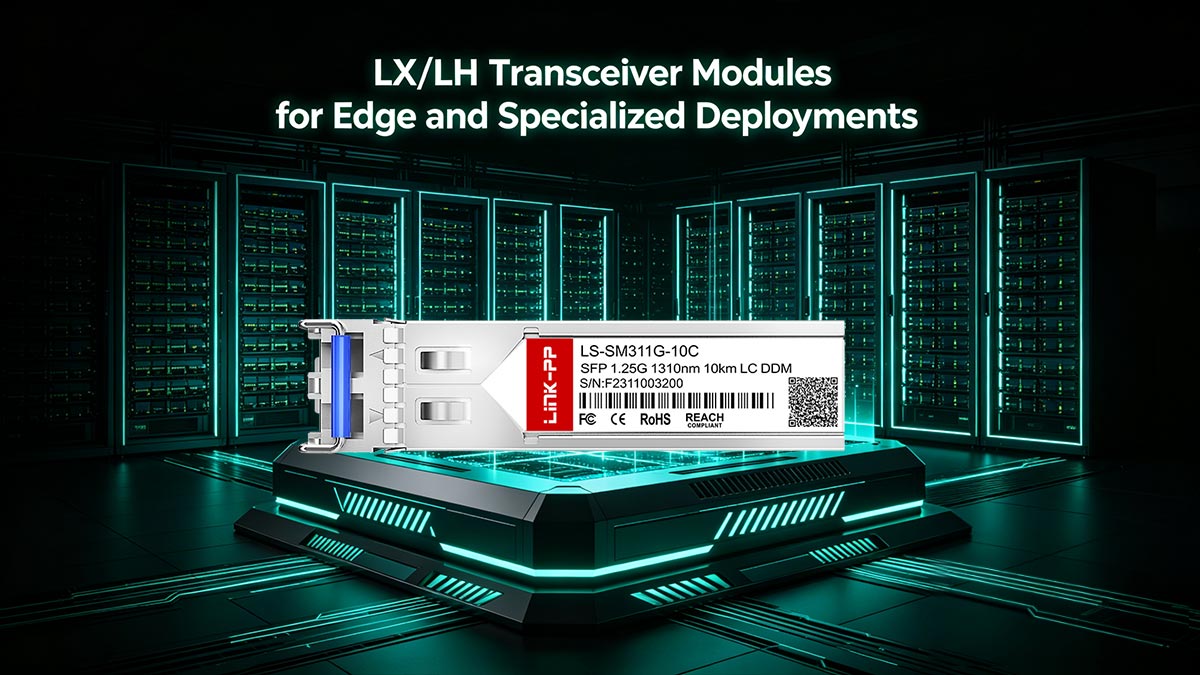
✳️ LX/LH Transceiver Modules for Edge and Specialized Deployments
LX/LH transceivers are not only suitable for core enterprise networks but also excel in edge and specialized deployments where reliability and long-distance performance are critical. They provide robust fiber connectivity for industrial sites, urban infrastructure, and security networks, enabling organizations to extend their network reach into challenging environments.
Industrial Networking in Harsh Environments
In industrial settings, LX/LH transceivers are designed to withstand extreme temperatures, vibration, and electrical interference. Factories, manufacturing plants, and energy facilities often require long-distance fiber connections to link control systems, sensors, and monitoring devices. LX/LH modules ensure that these critical networks remain operational, supporting real-time communication and automated processes without interruptions.
Moreover, these transceivers offer enhanced durability and resistance to environmental hazards, reducing the risk of downtime caused by equipment failure. Their ability to operate over single-mode fiber across extended distances simplifies network design in sprawling industrial complexes, providing a cost-effective solution for reliable connectivity in harsh conditions.
Smart City Infrastructure Connectivity
LX/LH transceivers play a key role in smart city initiatives, linking traffic management systems, public Wi-Fi networks, and IoT devices across urban environments. By using long-reach fiber connections, cities can integrate distributed sensors, street lighting, and environmental monitoring systems into a centralized network platform. This capability enables real-time data collection, analytics, and efficient resource management.
Additionally, the compatibility of LX/LH modules with existing network infrastructure allows municipalities to scale and upgrade their smart city networks without extensive rewiring. Their high-speed performance ensures that bandwidth-intensive applications, such as video analytics and public safety monitoring, operate smoothly across a citywide network.
Surveillance and Security Network Expansion
Security and surveillance networks require high-bandwidth, low-latency connections to transmit video and sensor data across multiple locations. LX/LH transceivers enable enterprises to extend their surveillance networks over long distances without compromising signal quality. This is especially critical for large campuses, transportation hubs, or government facilities where centralized monitoring must cover widespread areas.
These transceivers also support the integration of multiple security systems, such as access control, alarms, and IP cameras, onto a single fiber backbone. By providing reliable and stable optical links, LX/LH modules help maintain continuous surveillance, improve response times, and enhance overall situational awareness for security personnel.
✳️ Installation and Deployment of LX/LH SFP Transceivers
Proper installation and deployment of LX/LH SFP transceivers are critical to ensure reliable network performance and long-term stability. By following best practices, network administrators can minimize signal loss, avoid hardware conflicts, and maximize the lifespan of both the transceivers and the fiber infrastructure.
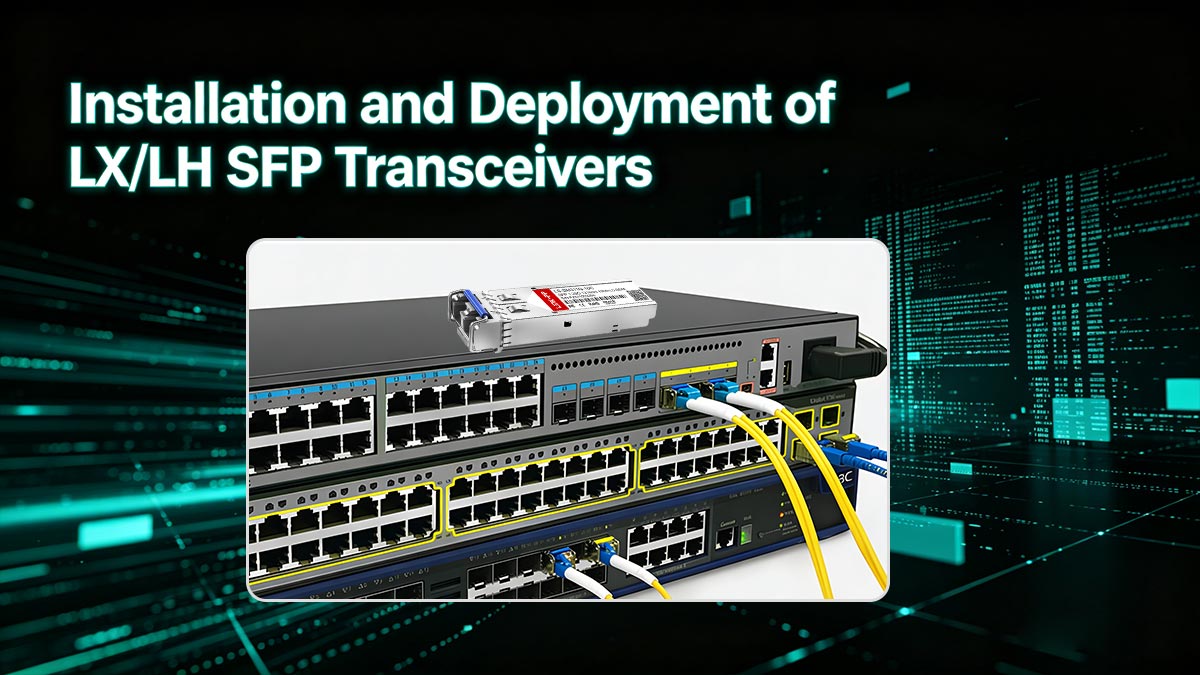
Step-by-Step Installation Process
The installation begins with powering down the network device, such as a switch or router, to prevent potential damage. Once the device is safely powered off, the LX/LH transceiver is carefully inserted into the appropriate SFP slot, ensuring alignment with the connector key. After insertion, the device can be powered on, and the transceiver’s link status should be checked to confirm successful installation.
Next, fiber optic cables are connected, with careful attention to the transmit (TX) and receive (RX) ports to maintain proper signal direction. Once connected, IT staff should monitor link activity and perform a basic data transfer test to verify that the module is functioning correctly. Following these steps minimizes the risk of physical damage and ensures a stable optical connection.
Compatibility Checks with Switches and Routers
Before deployment, it is essential to verify that the LX/LH transceiver is compatible with the network hardware. Different switches and routers may have restrictions on supported SFP modules, and using an unsupported module can lead to errors or reduced performance. Consulting the manufacturer’s compatibility list ensures that the module will function properly with the intended device.
Firmware versions and driver support also play a role in transceiver compatibility. Even if the physical module fits, outdated firmware may prevent the device from recognizing or fully utilizing the transceiver. Ensuring both hardware and software compatibility avoids connectivity issues and improves network stability.
Best Practices for Fiber Cabling
Proper fiber cabling practices are critical for maintaining signal integrity and maximizing the performance of LX/LH transceivers. Cables should be carefully routed to avoid sharp bends, kinks, or excessive tension, all of which can cause signal loss or damage the fiber. Using proper bend-radius guidelines and securing cables with cable management systems helps protect the network infrastructure.
Additionally, fiber connectors should be kept clean and free from dust or contaminants. Even small particles on the connector end-face can significantly degrade signal quality. Using inspection tools and cleaning kits ensures optimal performance and minimizes troubleshooting needs later on.
Avoiding Common Deployment Mistakes
Common deployment mistakes include swapping transmit and receive connections, using incompatible modules, or exceeding recommended cable lengths. Each of these errors can cause intermittent connectivity issues or complete signal failure. Following a checklist approach during installation reduces the likelihood of such mistakes.
Another frequent issue is neglecting environmental considerations, such as temperature or humidity, which can affect transceiver performance. Installing modules in compliance with manufacturer specifications and monitoring environmental conditions ensures stable operation and extends the lifespan of the equipment.
✳️ Troubleshooting LX/LH Transceivers in Network Environments
Even with careful installation, network issues can arise when using LX/LH transceivers. Troubleshooting these modules effectively requires understanding common failure points, monitoring performance, and applying corrective measures promptly. Proactive maintenance and diagnostics help minimize downtime and ensure consistent LAN performance.
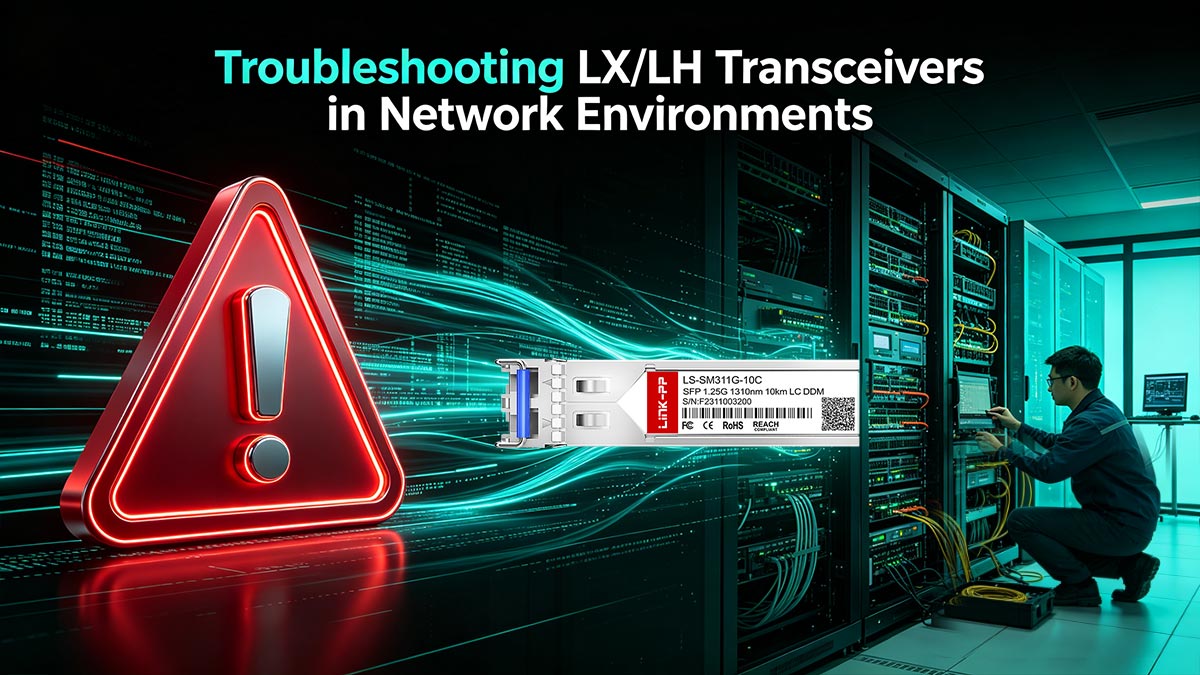
Diagnosing Signal Loss and Connectivity Issues
Signal loss can be caused by dirty fiber connectors, bent cables, or physical damage along the optical path. Inspecting connectors with a fiber microscope and testing cable continuity with optical power meters can quickly identify the source of the problem. Early detection prevents long-term network degradation and reduces the risk of service interruptions.
Connectivity issues may also arise from mismatched transceiver types or incompatible devices. Verifying that the LX/LH modules are supported by the network equipment and checking that transmit and receive ports are correctly connected are essential troubleshooting steps to restore proper communication.
Common Configuration Errors
Misconfigured settings, such as incorrect speed, duplex mode, or VLAN assignments, can disrupt transceiver performance. Ensuring that switch ports are correctly configured for the installed LX/LH modules helps avoid intermittent connectivity and packet loss. Documenting standard configuration templates can streamline future deployments.
Firmware or driver mismatches may also affect transceiver operation. Updating network devices to the latest supported versions ensures full compatibility and optimal module functionality. Regularly reviewing and applying manufacturer recommendations reduces the risk of configuration-related errors.
Monitoring Performance and Diagnostics Tools
Network monitoring software and SNMP based tools allow IT teams to track transceiver performance in real time. Metrics such as signal strength, error rates, and link uptime help identify potential issues before they escalate. Continuous monitoring ensures that the network remains stable and that any deviations are promptly addressed.
Diagnostic tools like optical time-domain reflectometers (OTDR) or SFP-specific management utilities provide detailed insights into fiber integrity and transceiver status. These tools are invaluable for maintaining high performance in complex or long-distance network deployments.
Maintenance Tips for Long-Term Reliability
Regular cleaning of fiber connectors and inspection of transceivers prevents dust accumulation, which can significantly impair signal quality. Scheduled maintenance routines, including verifying cable paths and checking for wear, prolong the operational lifespan of LX/LH modules.
Keeping spare transceivers on hand and maintaining a record of network configurations also supports rapid replacement and minimal downtime. Proactive maintenance planning ensures that enterprise networks remain resilient and reliable over time.
✳️ Conclusion: Enhancing LAN Scalability with LX/LH Optical Solutions
LX/LH transceivers are a cornerstone for enterprises looking to extend their networks with confidence. They combine long-distance reach with strong signal integrity, making it easier to connect multiple buildings, link data centers, or support campus and metropolitan networks without the usual limitations of standard fiber connections.
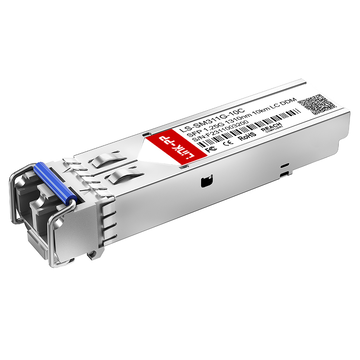
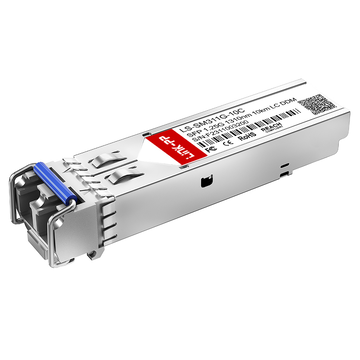
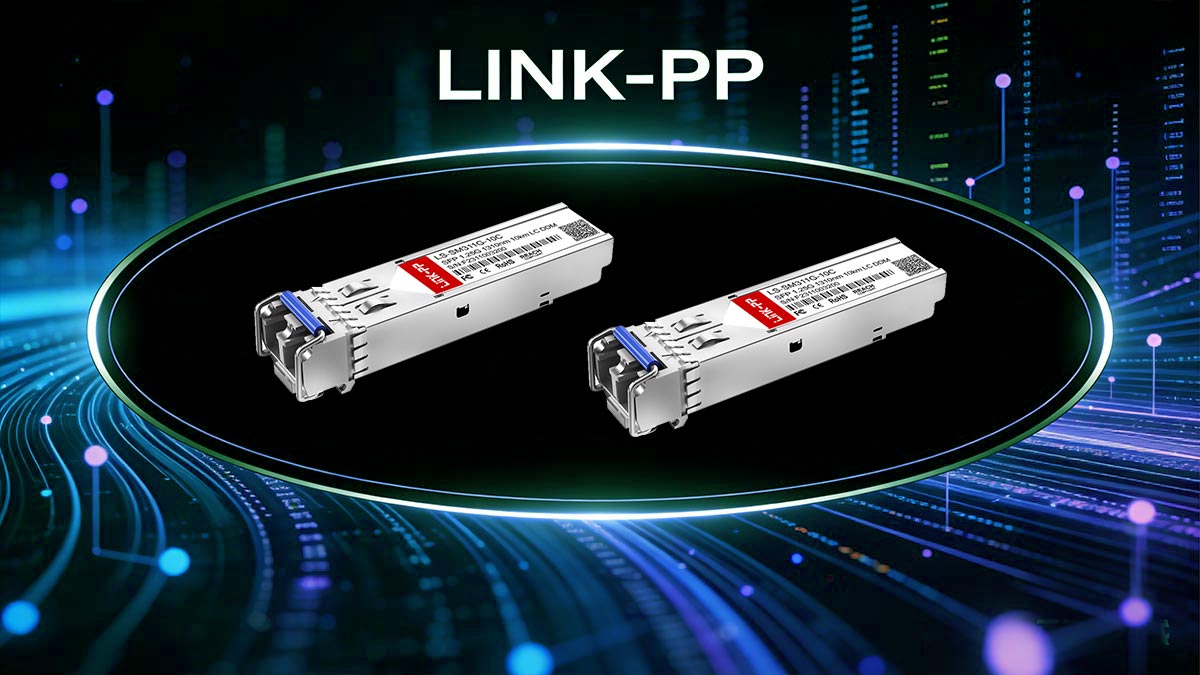
For organizations that need a dependable and high-performance module, the LINK-PP LS-SM311G-10C 1000BASE-LX/LH fiber SFP (compatible with Cisco GLC-LH-SM, Arista SFP-1G-LX et al.) stands out as a versatile choice. Its reliability, broad compatibility, and ease of deployment make it an excellent option for keeping critical networks running smoothly while future-proofing infrastructure for growth.
If you’re looking to explore more options for scalable, long-distance network connectivity, the LINK-PP Official Store offers a wide selection of high-quality optical modules. From expanding LANs to supporting specialized deployments, the right transceivers can make all the difference in building a network that is both dependable and ready to grow with your business needs.