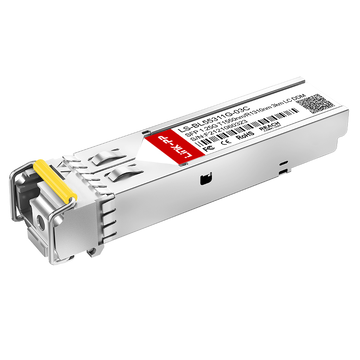
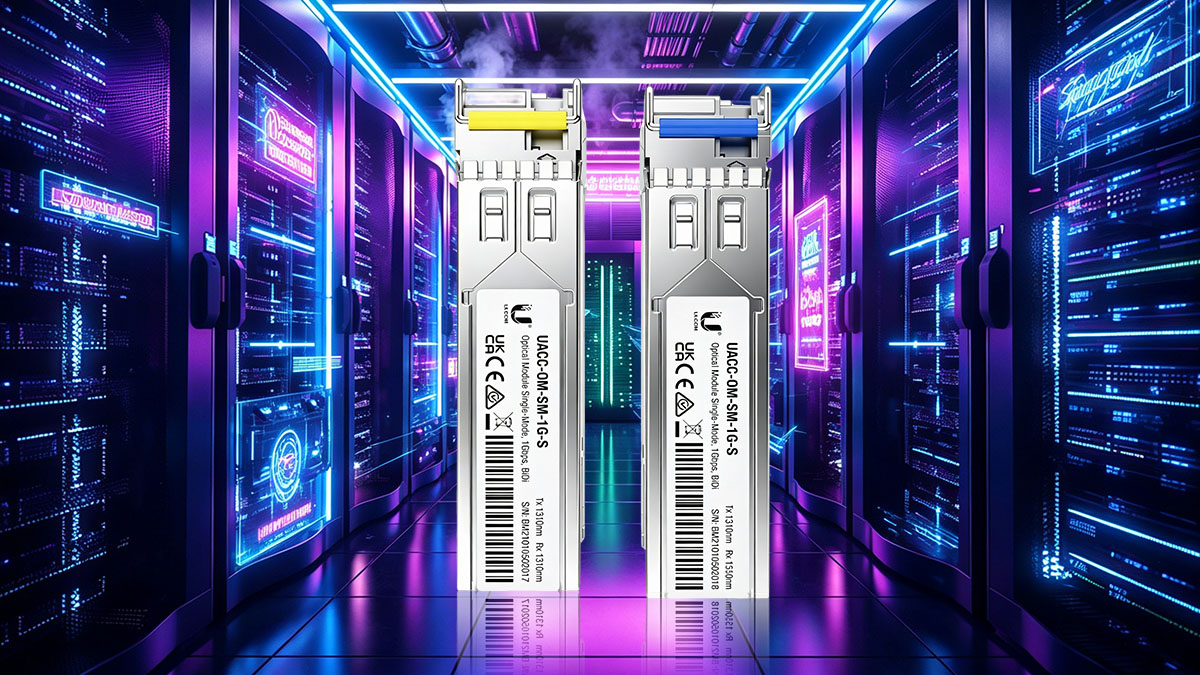
The Ubiquiti UACC-OM-SM-1G-S-2 is a two-pack version of the UACC-OM-SM-1G-S 1G BiDi SFP optical transceivers designed for single-mode fiber networks that provide efficient, cost-effective, and space-saving connectivity over distances up to 3 km. The paired transceivers use complementary transmit and receive wavelengths to enable bidirectional communication over a single fiber strand. They are widely used in enterprise networks, ISP access layers, and inter-building links where fiber resources are limited but stable Gigabit performance is required.
The paired transceivers stand out because it uses BiDi (bidirectional) technology, allowing data transmission in both directions over a single fiber strand using paired wavelengths (1310nm and 1550nm). This significantly reduces fiber usage compared to traditional dual-fiber SFP solutions while maintaining reliable network performance.
In practical deployments, the UACC-OM-SM-1G-S-2 is often selected for scenarios where:
- Fiber infrastructure is limited or expensive to expand
- Simple and scalable Gigabit links are required
- Compatibility with Ubiquiti UniFi or Edge devices is preferred
From a procurement and deployment perspective, understanding its pairing requirements, distance limitations, and compatibility factors is essential before integration into any production network. This guide will break down these key aspects step by step to help ensure correct selection and stable long-term operation.
☑️ Understanding Ubiquiti UACC-OM-SM-1G-S-2 Basics
The Ubiquiti UACC-OM-SM-1G-S-2 is a pair of BiDi (bidirectional) SFP optical modules designed for Gigabit Ethernet transmission over a single strand of single-mode fiber. It is primarily used in network environments where fiber resources are limited but stable, point-to-point connectivity is required over short to medium distances up to 3km.
Core Specifications and Architecture
The value of the UACC-OM-SM-1G-S-2 lies in its simple but efficient optical design, which enables full-duplex communication using wavelength division over one fiber strand.
Before evaluating deployment scenarios, it is important to understand its fundamental technical characteristics:
- Data rate: 1.25Gbps (Gigabit Ethernet compliant)
- Fiber type: Single-mode fiber (OS2 recommended)
- Wavelength pairing: One transceiver operates at 1310nm TX / 1550nm RX, while the complementary transceiver operates at 1550nm TX / 1310nm RX
- Transmission distance: up to 3km
- Connector type: LC simplex interface
- Form factor: Standard SFP (hot-swappable)
- Operating mode: BiDi single-fiber full-duplex communication
To better understand how it compares to traditional dual-fiber modules, the key differences can be summarized below.
| Feature | UACC-OM-SM-1G-S-2 (BiDi) | Standard 1G SFP (Dual Fiber) |
|---|---|---|
| Fiber usage | Single fiber strand | Two fiber strands |
| Wavelength setup | Paired (1310/1550nm) | Identical TX/RX pairs |
| Cabling complexity | Lower | Higher |
| Infrastructure efficiency | Higher | Standard |
| Deployment flexibility | Limited by pairing | More flexible |
After reviewing these specifications, the key takeaway is that the paired transceivers are optimized for fiber conservation rather than maximum deployment flexibility.
How BiDi Technology Works
The operational principle of the UACC-OM-SM-1G-S-2 is based on BiDi optical transmission, which allows two-way communication over a single fiber strand using different wavelengths.
This working mechanism can be broken down as follows:
- One module transmits at 1310nm and receives at 1550nm
- The paired module transmits at 1550nm and receives at 1310nm
- Both ends operate simultaneously without interference
- Wavelength separation ensures full-duplex data flow
This approach removes the need for a second fiber core, effectively doubling fiber efficiency in constrained environments.
To better understand its practical value, consider the following functional advantages:
- Reduces fiber consumption by 50% compared to duplex SFPs
- Simplifies physical cabling in dense network environments
- Enables rapid deployment where spare fiber is unavailable
- Maintains stable Gigabit performance without protocol changes
In deployment terms, the most critical requirement is correct pairing. Each module must be installed with its complementary wavelength counterpart; otherwise, optical communication will not establish.
☑️ Key Advantages of UACC-OM-SM-1G-S-2
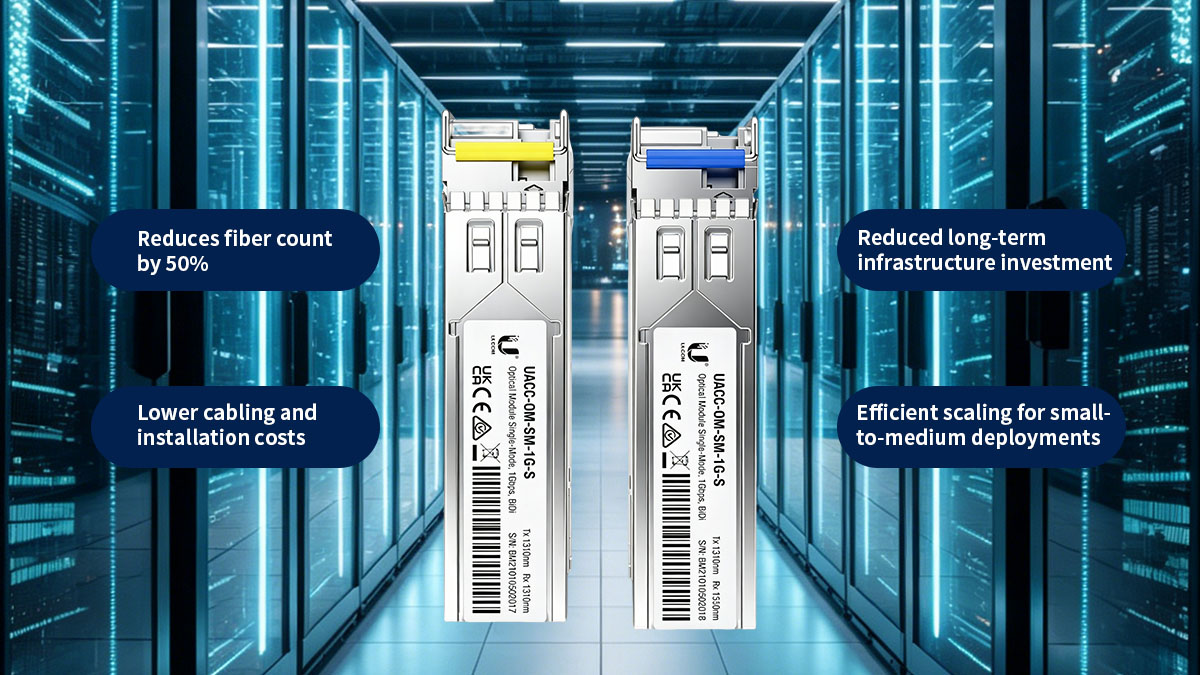
The main value of the Ubiquiti UACC-OM-SM-1G-S-2 lies in its ability to reduce fiber usage while maintaining stable Gigabit performance. In practical deployments, it is selected not only for technical compatibility but also for infrastructure efficiency and long-term cost control.
Fiber Infrastructure Optimization
The most immediate advantage of this BiDi module is its ability to operate over a single fiber strand, which significantly reduces physical cabling requirements in network design.
This makes it particularly useful in environments where fiber availability is limited or expansion is costly. The optimization benefits can be summarized as follows:
- Uses only one fiber instead of two for full-duplex communication
- Reduces demand for additional fiber trenching or leasing
- Simplifies patch panel and cable management structures
- Improves utilization of existing fiber infrastructure
After considering these points, the key takeaway is that the paired transceivers directly increase the efficiency of existing fiber deployments without requiring structural network changes.
Cost Efficiency in Network Expansion
Beyond physical optimization, the UACC-OM-SM-1G-S-2 also contributes to lower overall deployment costs, especially in scaled network environments.
This cost advantage comes from both hardware and operational factors:
- Fewer fiber strands reduce installation material costs
- Lower labor requirements for fiber deployment and maintenance
- Reduced need for additional optical infrastructure components
- Efficient reuse of existing single-mode fiber links
From a deployment perspective, these factors make it a practical option for organizations looking to expand network reach without significantly increasing infrastructure spending.
Compatibility with Ubiquiti Ecosystem
Another key advantage is its native compatibility with Ubiquiti networking equipment, particularly within UniFi and Edge series environments.
This compatibility ensures smoother integration and reduces configuration complexity, which is important in managed network deployments.
Key benefits include:
- Plug-and-play operation in supported Ubiquiti SFP ports
- Optimized performance alignment with UniFi switches and routers
- Reduced risk of firmware or compatibility conflicts
- Simplified deployment in standardized network architectures
After evaluating these points, it becomes clear that the module is not only a physical connectivity solution but also part of a tightly integrated ecosystem designed for operational simplicity.
Deployment Stability in Real-World Networks
In addition to cost and compatibility benefits, the UACC-OM-SM-1G-S-2 provides stable optical performance when deployed within its design parameters.
This stability is especially important in continuous network operations such as enterprise or ISP environments.
Key stability factors include:
- Consistent 1.25Gbps throughput under normal conditions
- Reliable transmission over distances up to 3km
- Reduced signal degradation when paired correctly
- Stable performance in temperature-variable environments
In practical terms, this ensures predictable behavior in production networks where uptime and link stability are critical.
☑️ Selection Criteria for UACC-OM-SM-1G-S-2
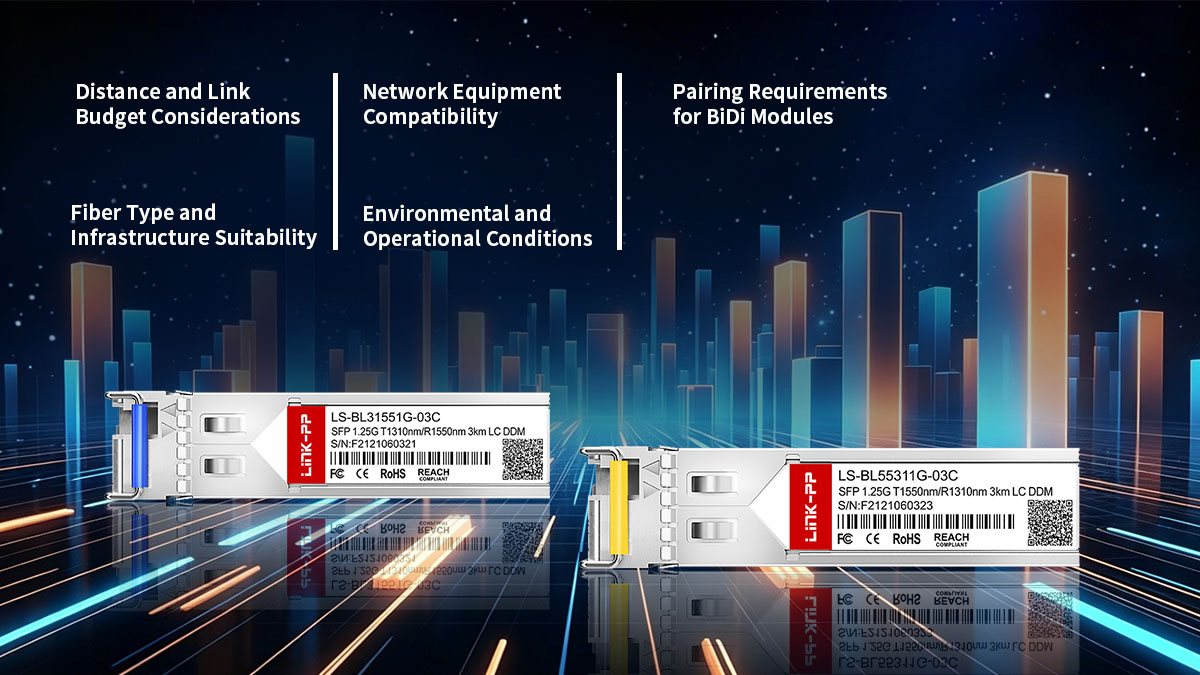
Choosing the Ubiquiti UACC-OM-SM-1G-S-2 correctly requires more than checking basic compatibility. In real deployments, performance stability depends on matching distance, fiber type, equipment support, and correct BiDi pairing. A structured evaluation helps avoid link failures and ensures long-term reliability.
Distance and Link Budget Considerations
The most important selection factor is whether the optical link distance fits within the module’s 3km design range. Exceeding this range or ignoring loss factors can lead to unstable connections or complete link failure.
Before deployment, the following parameters should be evaluated:
- Maximum supported transmission distance: up to 3km
- Fiber attenuation rate based on cable quality
- Connector and splice loss in the link path
- Environmental conditions affecting signal stability
In practical terms, even if the physical distance is under 3km, excessive loss in connectors or poor fiber quality can reduce effective performance. Therefore, margin planning is always recommended.
Network Equipment Compatibility
Another critical factor is ensuring that the module is supported by the target networking hardware. Although it is designed for Ubiquiti systems, compatibility still depends on SFP port behavior and firmware recognition.
Key compatibility checks include:
- Availability of standard 1G SFP slots on switches or routers
- Support for third-party or vendor-coded optical modules
- Firmware restrictions that may block non-approved optics
- Proper detection of DDM (Digital Diagnostic Monitoring), if enabled
In most cases, Ubiquiti devices provide smooth integration, but verification at the hardware level is still essential in mixed vendor environments.
Pairing Requirements for BiDi Modules
Unlike standard SFP modules, BiDi optics require precise pairing to function correctly. The UACC-OM-SM-1G-S-2 operates using complementary wavelengths, meaning incorrect pairing will result in no link establishment.
To ensure proper operation, the following rules must be followed:
- Always install complementary TX/RX wavelength pairs (1310nm ↔ 1550nm)
- Avoid using identical modules on both ends of a link
- Clearly label each end to prevent installation errors
- Verify correct orientation before activation
After applying these rules, the most important takeaway is that BiDi performance depends entirely on correct matching, not just physical compatibility.
Fiber Type and Infrastructure Suitability
The performance of the paired transceivers is closely tied to the quality and type of fiber used in the network. While it supports standard single-mode fiber, not all fiber installations provide optimal results.
Key considerations include:
- Recommended fiber type: OS2 single-mode fiber
- Avoidance of multimode fiber (not compatible)
- Proper cleaning of LC connectors before installation
- Ensuring minimal bending radius to prevent signal loss
In real-world deployments, fiber condition often has a greater impact on performance than the optical module itself. This makes infrastructure assessment a necessary step before selection.
Environmental and Operational Conditions
Finally, operating conditions should be considered to ensure stable long-term performance, especially in outdoor cabinets with proper protection.
Important environmental factors include:
- Temperature range compatibility with deployment site
- Protection against dust and moisture in exposed installations
- Vibration resistance in industrial or rack-mounted setups
- Adequate airflow in high-density switch environments
After evaluating these conditions, it becomes clear that stable performance depends not only on the module specification but also on the surrounding physical environment.
☑️ Deployment Scenarios and Use Cases
The Ubiquiti UACC-OM-SM-1G-S-2 is primarily used in environments where single-fiber efficiency, stable Gigabit connectivity, and cost-controlled fiber deployment are required. Its BiDi design makes it especially suitable for structured point-to-point links across enterprise, ISP, and edge network environments.
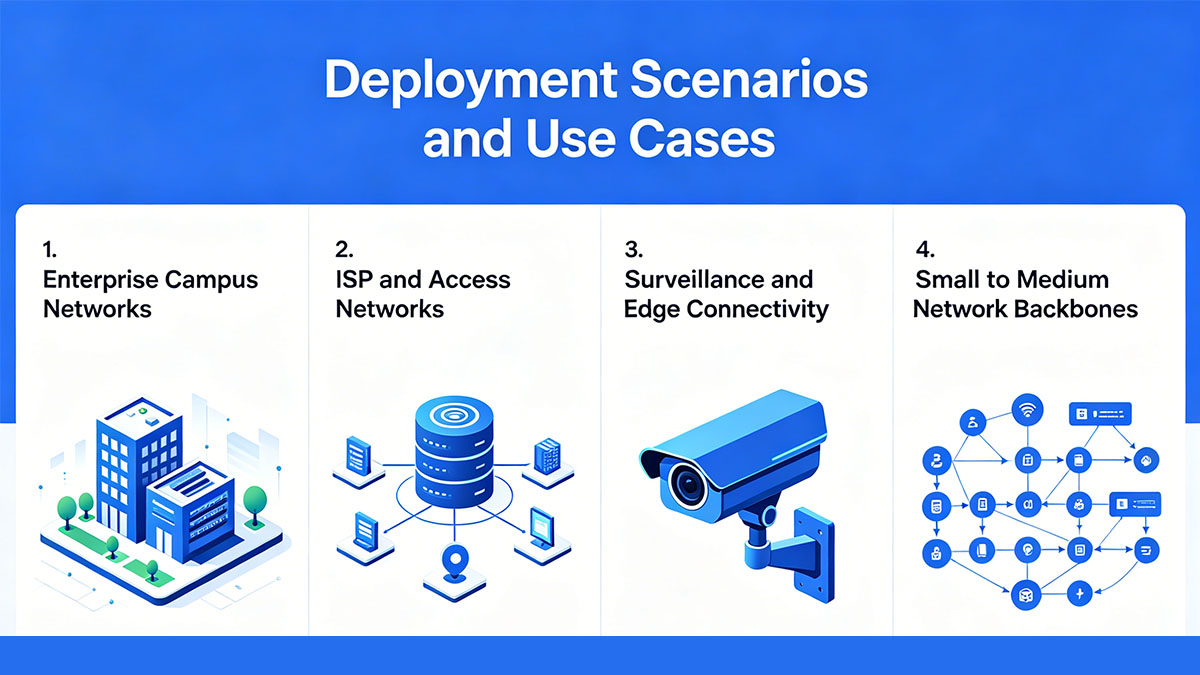
Enterprise Campus Networks
In enterprise environments, the paired transceivers are commonly deployed to connect separate buildings within a campus where laying additional fiber is costly or physically constrained.
Typical deployment characteristics include:
- Inter-building backbone links over single-mode fiber
- Centralized network aggregation between buildings
- Replacement of legacy dual-fiber connections
- Efficient use of limited existing fiber ducts
From a practical perspective, the key advantage in enterprise networks is infrastructure simplification. Instead of maintaining multiple fiber strands per link, administrators can consolidate connectivity using single-fiber BiDi links without changing network architecture.
ISP and Access Networks
Internet service providers often use the UACC-OM-SM-1G-S-2 in access layer deployments where fiber resources must be distributed across multiple endpoints.
Common use cases include:
- Fiber-to-the-node (FTTN) or fiber distribution points
- Last-mile connectivity in residential or commercial areas
- Aggregation of customer access nodes
- Extension of existing fiber infrastructure without new cabling
After evaluating ISP environments, the key benefit becomes clear: the module enables efficient scaling of access networks without proportional increases in fiber deployment costs or complexity.
Surveillance and Edge Connectivity
Another widely used scenario is in distributed surveillance and edge device networks, where stable Gigabit connectivity is required over moderate distances.
Typical applications include:
- IP camera backhaul connections across buildings or sites
- Remote monitoring stations in industrial environments
- Edge switch uplinks to central network hubs
- Security infrastructure in campuses or facilities
In these deployments, reliability and simplicity are more important than bandwidth scalability. The module’s stable 1.25Gbps performance ensures consistent video and data transmission without requiring dual-fiber infrastructure.
Small to Medium Network Backbones
For smaller organizations or distributed branch networks, the paired transceivers provide a practical way to build simple backbone links without investing in complex fiber infrastructure.
Typical scenarios include:
- Branch office to headquarters connectivity
- Small data center interconnects
- Temporary or rapidly deployed network extensions
- Budget-sensitive network upgrades from copper to fiber
After reviewing these scenarios, the main takeaway is that the module is best suited for controlled, point-to-point Gigabit links where fiber efficiency and deployment simplicity are priorities rather than high-capacity scaling.
☑️ Installation and Configuration Best Practices
Proper installation and configuration of the Ubiquiti UACC-OM-SM-1G-S-2 is critical for achieving stable link performance and avoiding avoidable optical issues. Although the module is designed for plug-and-play operation, real-world deployment quality heavily depends on fiber handling, pairing accuracy, and verification steps.

Physical Installation Guidelines
Correct physical handling of the fiber SFP module and fiber interface is the foundation of a stable optical link. Small installation errors can lead to signal degradation or complete link failure.
Before installation, the following practices should be applied:
- Ensure switch or router is powered and SFP slot is clean and undamaged
- Insert the module gently into the SFP port until fully seated
- Avoid touching LC connector tips to prevent contamination
- Confirm correct orientation of LC simplex connectors for BiDi pairing
After installation, it is important to verify that both ends of the link are properly inserted and physically secured. A loose connection is one of the most common causes of intermittent link issues.
Fiber Cleaning and Inspection Procedures
Optical performance is highly sensitive to contamination, making fiber cleanliness a critical factor in deployment success.
Recommended procedures include:
- Use fiber cleaning tools before every connection
- Inspect LC connectors using a fiber inspection scope when available
- Remove dust caps only immediately before connection
- Avoid repeated unplugging without cleaning
After applying these steps, it is important to understand that even microscopic dust particles can cause insertion loss, especially in BiDi systems where signal integrity depends on precise wavelength transmission.
Pairing and Link Activation Process
Because the UACC-OM-SM-1G-S-2 is a BiDi module, correct pairing is essential before any link can be established. Unlike standard SFPs, incorrect wavelength alignment will result in a complete failure to communicate.
A proper activation sequence should include:
- Confirm correct complementary pair (1310nm ↔ 1550nm)
- Install one module at each end of the fiber link
- Ensure fiber polarity matches TX/RX configuration
- Power on devices and wait for link negotiation
After these steps, link LEDs should indicate successful optical synchronization. If no link is detected, pairing or fiber orientation should be rechecked first.
Link Verification and Diagnostic Checks
Once the link is active, verification ensures that performance meets expected standards and no hidden issues are present.
Key validation steps include:
- Check link status on switch or router interface
- Verify stable 1.25Gbps negotiation rate
- Monitor optical power levels using DDM (if supported)
- Confirm absence of packet loss or CRC errors
In operational environments, optical power monitoring is particularly useful for detecting early degradation caused by fiber aging or connector contamination.
Ongoing Maintenance and Stability Practices
Long-term stability depends on consistent maintenance and environmental control. Even well-installed links can degrade over time if not properly maintained.
Best practices include:
- Periodic inspection of fiber connectors and patch panels
- Avoid excessive bending or stress on fiber cables
- Maintain stable temperature in networking environments
- Replace damaged or aging patch cords promptly
After reviewing these practices, the key insight is that optical network reliability is not only determined at installation but also maintained through consistent physical and environmental care.
☑️ Common Mistakes to Avoid
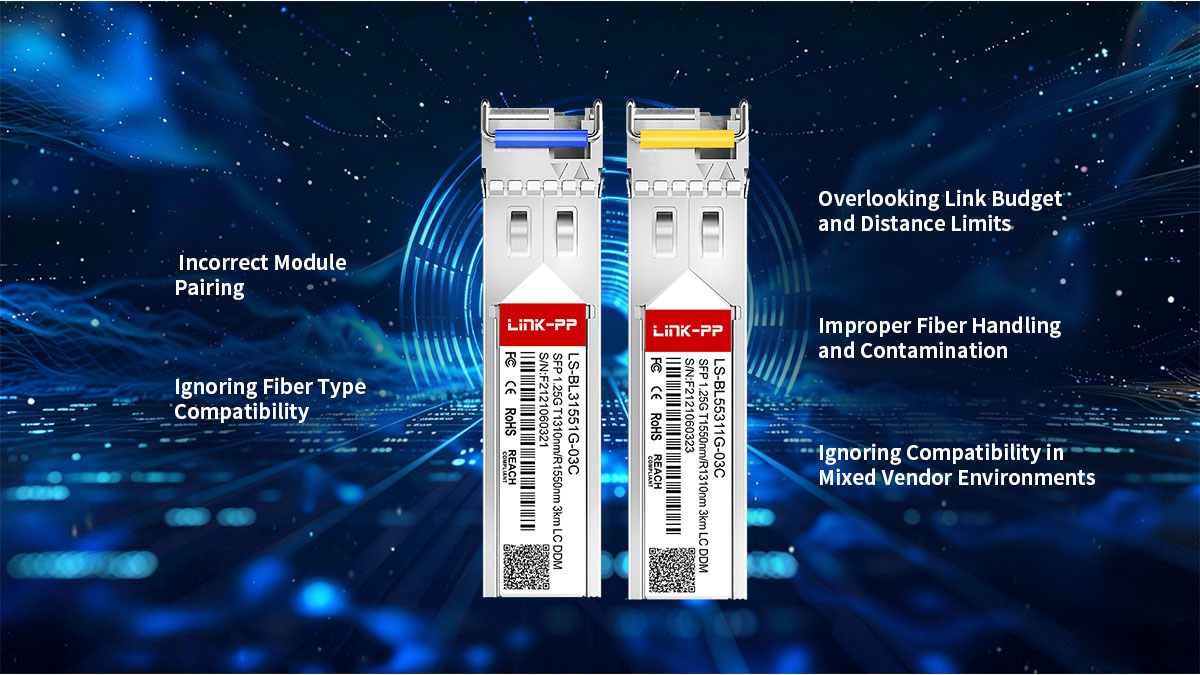
When deploying the Ubiquiti UACC-OM-SM-1G-S-2, many link issues are not caused by the module itself but by incorrect installation choices, mismatched components, or overlooked physical constraints. Avoiding these mistakes is essential for ensuring stable BiDi fiber performance.
Incorrect Module Pairing
One of the most frequent and critical errors is using mismatched BiDi modules. Since this transceiver relies on complementary wavelengths, improper pairing will prevent any link from forming.
Common pairing mistakes include:
- Installing identical wavelength modules on both ends
- Mixing up 1310nm/1550nm TX-RX orientation
- Using unverified third-party BiDi pairs without validation
- Failing to label matched pairs during installation
After considering these issues, the key point is clear: BiDi systems depend entirely on correct wavelength matching, and even a single mismatch results in complete communication failure.
Ignoring Fiber Type Requirements
Another common issue is using incorrect fiber types or poor-quality cabling. The UACC-OM-SM-1G-S-2 is designed specifically for single-mode fiber, and deviations from this requirement can significantly impact performance.
Mistakes in this category include:
- Using multimode fiber instead of single-mode (OS2)
- Mixing different fiber grades within the same link
- Using old or degraded fiber infrastructure without testing
- Ignoring insertion loss caused by poor connectors or splices
In real deployments, fiber quality often has a greater impact on stability than the optical module itself, making proper cable selection a critical step.
Overlooking Link Budget and Distance Limits
Although the module supports up to 3km, real-world performance depends on total optical loss across the entire link. Ignoring this can lead to unstable or degraded connections.
Typical planning errors include:
- Assuming maximum distance without calculating loss margin
- Ignoring connector and splice attenuation
- Deploying near the limit without safety buffer
- Failing to account for future fiber degradation
After evaluating these factors, it becomes clear that distance rating should be treated as a guideline, not a guaranteed operating threshold.
Improper Fiber Handling and Contamination
Optical connections are highly sensitive to physical contamination and mechanical stress. Even minor handling mistakes can significantly degrade signal quality.
Common handling mistakes include:
- Touching LC connector tips with bare hands
- Connecting fiber without cleaning connectors
- Leaving dust caps off when not in use
- Excessive bending or twisting of fiber cables
In practice, contamination-related issues are among the most difficult to diagnose because they often cause intermittent rather than complete failures.
Ignoring Compatibility in Mixed Vendor Environments
While the module is designed for Ubiquiti ecosystems, it is sometimes deployed in mixed network environments where compatibility is not fully verified.
Typical mistakes include:
- Using unsupported switches without SFP validation
- Ignoring firmware restrictions on third-party optics
- Assuming all SFP ports behave identically across vendors
- Failing to test interoperability before full deployment
After reviewing these scenarios, the key takeaway is that compatibility should always be validated in advance, especially in heterogeneous network infrastructures.
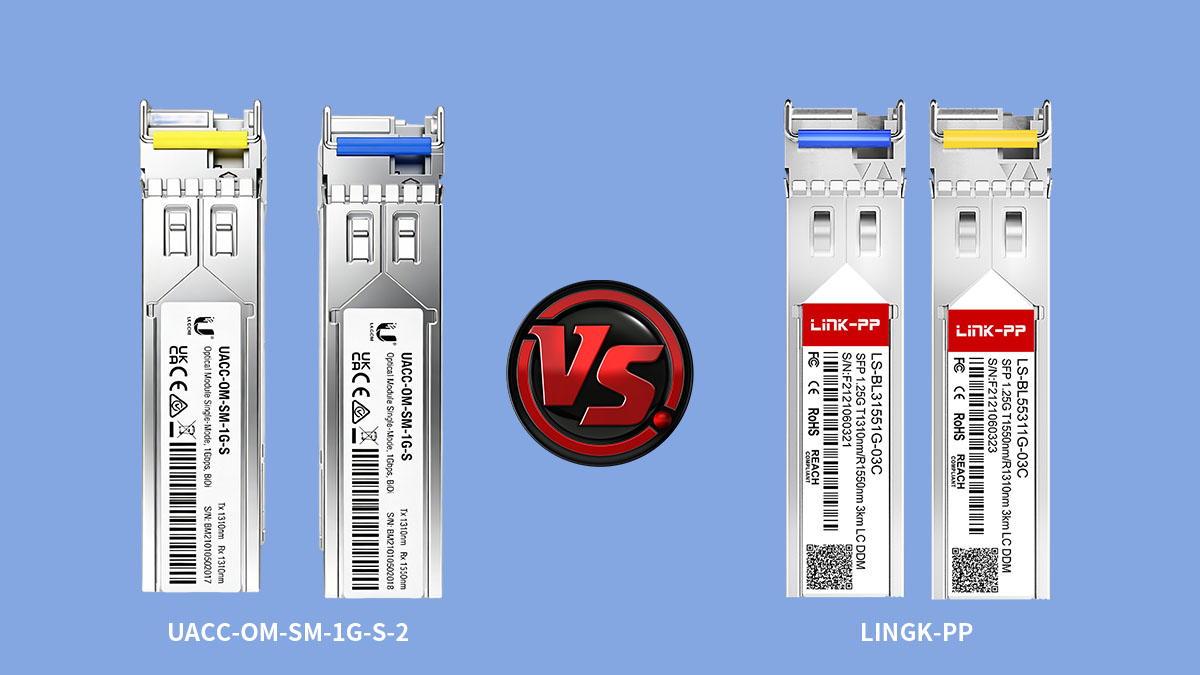
☑️ UACC-OM-SM-1G-S-2 vs Standard 1G SFP Modules
When selecting optical transceivers for Gigabit networks, the Ubiquiti UACC-OM-SM-1G-S-2 is often compared with standard dual-fiber 1G SFP modules. The key difference is not just hardware design, but how each approach impacts fiber usage, deployment complexity, and scalability in real-world networks.
BiDi vs Dual-Fiber Architecture
The most fundamental difference lies in how data is transmitted across fiber infrastructure. BiDi modules use a single fiber strand, while standard SFPs require two separate fibers for full-duplex communication.
To better understand the architectural differences, the comparison below highlights key characteristics:
| Feature | UACC-OM-SM-1G-S-2 (BiDi) | Standard 1G SFP |
|---|---|---|
| Fiber usage | Single fiber strand | Dual fiber strands |
| Transmission method | Wavelength division (1310/1550nm) | Separate TX/RX fibers |
| Cabling complexity | Lower | Higher |
| Infrastructure demand | Reduced | Standard |
| Deployment flexibility | Requires matching pair | More flexible |
After reviewing this comparison, the key insight is that BiDi design prioritizes fiber efficiency, while standard SFPs prioritize simplicity and interchangeability.
Infrastructure Efficiency and Deployment Impact
In practical deployments, fiber availability and infrastructure constraints often determine which module type is more suitable. This is where BiDi modules like the UACC-OM-SM-1G-S-2 offer a clear advantage.
Key efficiency differences include:
- Reduced fiber consumption by 50% in point-to-point links
- Lower demand for additional fiber installation or leasing
- Simplified patch panel design and cable routing
- Better utilization of existing single-mode fiber infrastructure
After evaluating these factors, it becomes clear that BiDi modules are especially valuable in environments where fiber expansion is limited or cost-sensitive.
Performance and Reliability Considerations
From a performance perspective, both module types support stable 1G transmission, but their reliability characteristics differ based on deployment accuracy and fiber quality.
Key observations include:
- Both support stable 1.25Gbps Gigabit Ethernet performance
- BiDi performance is highly dependent on correct pairing
- Standard SFPs are less sensitive to installation errors
- Fiber quality has equal impact on both solutions
After analyzing these points, the main conclusion is that performance differences are minimal when properly installed, but BiDi systems introduce more dependency on installation precision.
☑️ Future Trends in BiDi Optical Modules
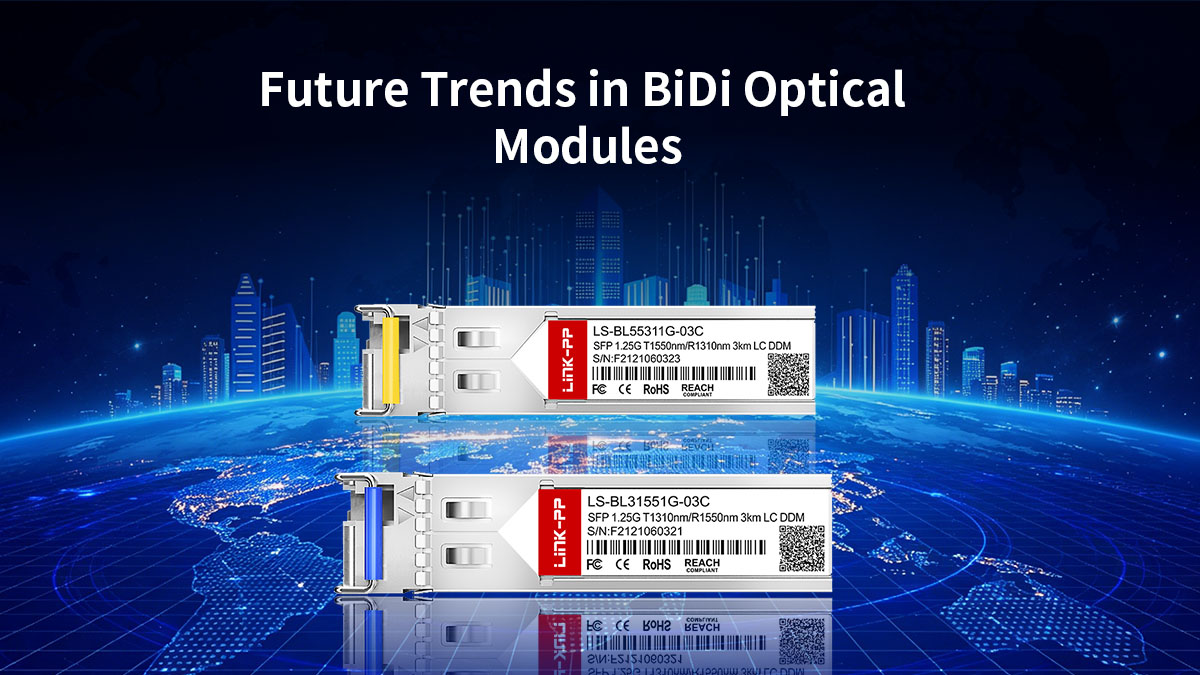
The Ubiquiti UACC-OM-SM-1G-S-2 represents a mature stage of 1G BiDi technology, but the broader direction of optical networking is clearly moving toward higher efficiency, higher speeds, and smarter management. BiDi modules are expected to play an even more important role as fiber infrastructure continues to face scalability and cost pressures.
Increasing Demand for Fiber Efficiency
The growing pressure on fiber infrastructure is one of the main forces driving continued adoption of BiDi optical modules. As networks expand, the need to maximize existing fiber resources becomes more critical than ever.
This demand is primarily driven by:
- Rapid growth of bandwidth-intensive applications such as video streaming, cloud services, and real-time communication
- Expansion of distributed enterprise networks requiring more interconnection points
- Limited availability of new fiber routes in densely populated urban areas
- Rising cost of fiber leasing and civil construction work
After considering these factors, the key insight is that fiber efficiency is no longer optional—it is a structural requirement for scalable network design.
In this context, BiDi solutions like the UACC-OM-SM-1G-S-2 remain relevant because they directly address the constraint of limited fiber availability without requiring major infrastructure redesign.
Evolution Toward Higher Speeds
While 1G BiDi modules are widely deployed today, the industry is steadily transitioning toward higher-speed optical solutions, including SFP+ 10G and SFP28 25G BiDi technologies.
This evolution is shaped by several trends:
- Increasing adoption of high-bandwidth applications in enterprise and ISP environments
- Migration of backbone networks from 1G to multi-gigabit architectures
- Development of compact BiDi form factors supporting higher data rates
- Demand for more efficient use of existing fiber even at higher speeds
A key consideration in this transition is backward compatibility. Many networks still rely on existing 1G infrastructure, meaning:
- 1G BiDi modules remain essential for legacy system integration
- Mixed-speed environments require careful planning of optical links
- Gradual upgrades are preferred over full infrastructure replacement
After evaluating these dynamics, it becomes clear that 1G BiDi modules are not being replaced immediately but are instead forming part of a layered upgrade path toward higher-speed optical networking.
Integration with Smart Network Management
Another significant trend is the increasing integration of optical transceivers into intelligent network management systems. This shift is transforming how fiber links are monitored, maintained, and optimized.
Key developments include:
- Enhanced monitoring of optical power levels through DDM (Digital Diagnostic Monitoring)
- Real-time visibility into link health and performance metrics
- Automated alerts for signal degradation or fiber faults
- Centralized management of optical infrastructure in software-defined networks
After reviewing these capabilities, the main takeaway is that optical modules are no longer passive components—they are becoming active data points in network intelligence systems.
Automation also plays a growing role in this evolution:
- Automatic detection of module type and compatibility
- Simplified provisioning in large-scale deployments
- Reduced manual intervention in troubleshooting processes
- Integration with orchestration platforms for dynamic network adjustments
In future deployments, BiDi modules like the UACC-OM-SM-1G-S-2 are expected to benefit from these advancements, improving both operational efficiency and long-term network reliability.
☑️ Conclusion
The Ubiquiti UACC-OM-SM-1G-S-2 is a purpose-built BiDi fiber optic SFP module designed for efficient single-fiber Gigabit connectivity, making it especially suitable for environments where fiber resources are limited but stable 1G performance is still required. Across enterprise, ISP, and edge deployments, its value comes from reducing fiber usage while maintaining reliable optical transmission over distances up to 3km.
To summarize the most important points from this guide:
- The UACC-OM-SM-1G-S-2 uses BiDi technology to enable full-duplex communication over a single fiber strand
- Proper wavelength pairing (1310nm/1550nm) is essential for successful operation
- It is best suited for point-to-point Gigabit links within short to medium distances
- Fiber quality, installation accuracy, and compatibility directly impact performance stability
- Compared with standard SFP modules, it significantly reduces fiber infrastructure requirements
After reviewing these key points, the main conclusion is that the paired transceivers are not just transceivers, but a strategic choice for optimizing fiber efficiency in constrained network environments.
In real-world network planning, success with the UACC-OM-SM-1G-S-2 depends on balancing three factors:
- Correct technical selection based on distance and fiber type
- Strict adherence to BiDi pairing rules
- Proper installation and ongoing fiber maintenance
When these conditions are met, the module delivers stable, predictable performance suitable for long-term deployment in structured network architectures.
As network infrastructure continues to evolve toward higher density and greater efficiency, BiDi-based solutions remain an important part of Gigabit connectivity strategies, especially where fiber expansion is limited or cost-sensitive.
For organizations planning deployments or evaluating compatible optical transceivers, sourcing consistency and product reliability are critical factors. Platforms such as the LINK-PP Official Store provide access to compatible optical solutions designed to support stable integration across a wide range of networking environments, helping ensure both performance consistency and long-term availability.