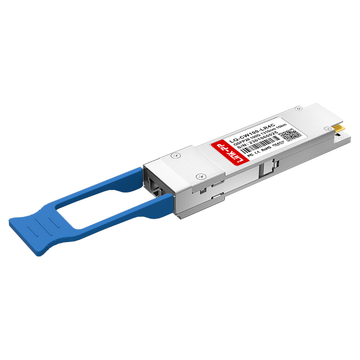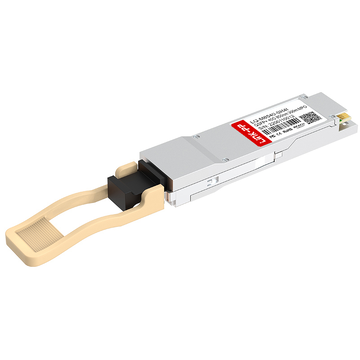
As data center networks continue to move toward higher bandwidth and lower-latency connectivity, 100G optical transceivers have become an important part of modern network infrastructure. For Fortinet-based environments, the FN-TRAN-QSFP28-CWDM4 is designed to provide 100Gbps connectivity over single-mode fiber, making it suitable for data center links where reliable high-capacity transmission and practical reach are required. However, the technical capability of a 100G module is only one part of the deployment decision.
The price of FN-TRAN-QSFP28-CWDM4 can vary considerably depending on factors such as OEM status, compatible coding, optical components, supplier, quantity, warranty, and availability. As a result, comparing the listed unit price alone may not provide an accurate picture of the actual value or total deployment cost. Understanding what drives FN-TRAN-QSFP28-CWDM4 pricing is therefore essential when evaluating different 100G CWDM4 solutions.
This guide examines the key factors that influence FN-TRAN-QSFP28-CWDM4 pricing and its overall data center value, including:
- Core100G CWDM4 specifications and their impact on cost
- OEM versus compatible pricing considerations
- Fortinet platform, fiber, and QSFP28 compatibility
- Infrastructure, installation, and lifecycle costs
- Practical steps for evaluating price before deployment
By connecting technical requirements with pricing and deployment considerations, this guide helps network professionals make a more informed assessment of FN-TRAN-QSFP28-CWDM4 solutions and select an option that aligns with both performance requirements and data center cost objectives.
🚀 FN-TRAN-QSFP28-CWDM4 Overview and Core Specifications
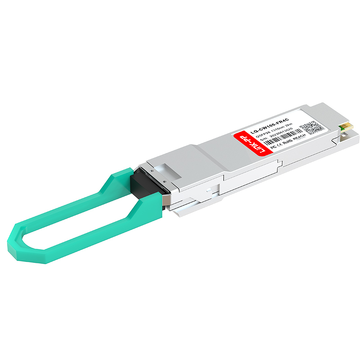
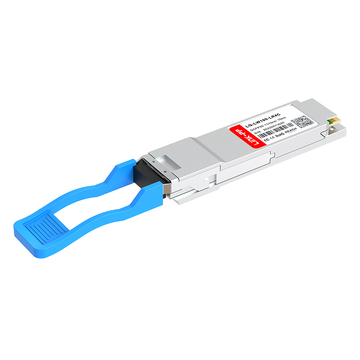
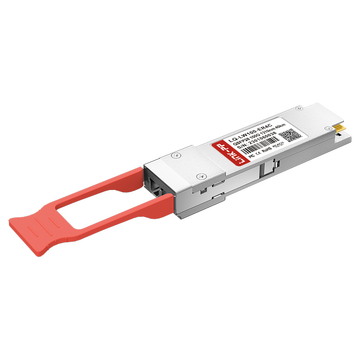
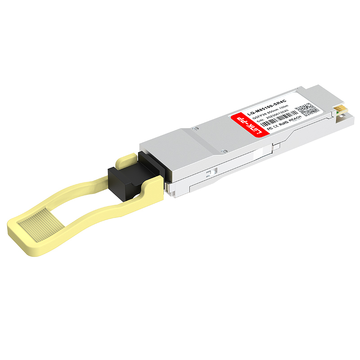
The FN-TRAN-QSFP28-CWDM4 is a 100Gbps QSFP28 optical transceiver designed for high-speed data transmission over single-mode fiber. Its 100G CWDM4 architecture, duplex LC interface, and 2km reach make it particularly suitable for data center and enterprise network links where moderate-distance 100G connectivity is required.
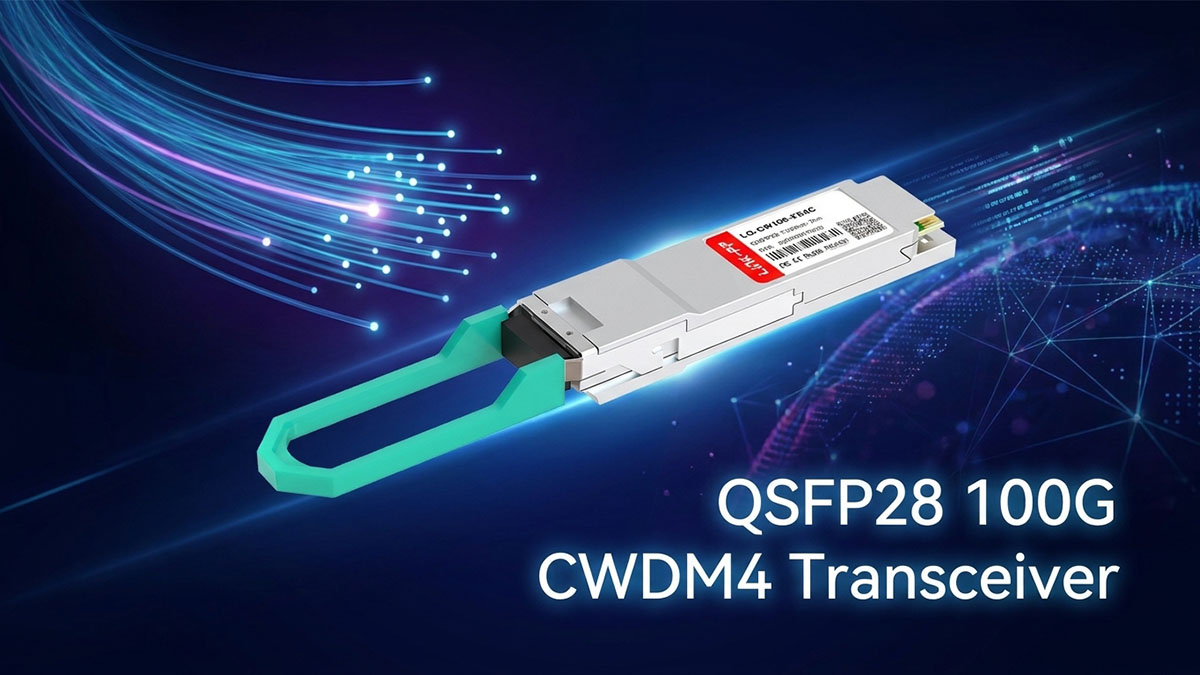
FN-TRAN-QSFP28-CWDM4 100G CWDM4 Architecture
The FN-TRAN-QSFP28-CWDM4 uses the QSFP28 form factor and 100GBase-CWDM4 architecture to deliver 100Gbps Ethernet connectivity through four optical wavelengths. Rather than relying on a single optical channel, the module distributes the 100G signal across four wavelength lanes and combines them over a single-mode fiber link.
Its main architectural characteristics include:
- 100Gbps data rate: Provides high-capacity Ethernet connectivity for 100G network interfaces.
- QSFP28 form factor: Fits the standardized QSFP28 interface used by many 100G networking platforms.
- CWDM4 technology: Uses four wavelength channels in the1310nm optical region to support100G transmission.
- Single-mode fiber: Designed for SMF infrastructure rather than short-reach multimode fiber.
- Duplex LC interface: Uses two LC connections for transmitting and receiving optical signals.
- 2km reach: Provides a practical transmission distance for many data center and enterprise interconnects.
This architecture allows the FN-TRAN-QSFP28-CWDM4 to combine high bandwidth with a relatively simple duplex-fiber connection, making it different from100G solutions that require parallel multimode-fiber lanes.
Key Technical Specifications That Affect Pricing
The technical specifications of the FN-TRAN-QSFP28-CWDM4 directly influence its application range and, consequently, its market value. A module designed for100Gbps CWDM4 transmission over2km SMF requires different optical components and testing requirements from shorter-reach or longer-distance100G solutions.
The key specifications to evaluate include:
- Data rate: 100Gbps
- Optical technology: 100GBase-CWDM4
- Wavelength: Four CWDM wavelengths in the1310nm region
- Transmission distance: Up to 2km
- Fiber type: Single-mode fiber
- Connector: Duplex LC
- Form factor: QSFP28
- Operating temperature: 0°C to70°C for the standard commercial-temperature version
- Application: High-speed100G Ethernet connectivity
These specifications are important when comparing FN-TRAN-QSFP28-CWDM4 prices because a lower-priced module is only a meaningful alternative when it provides the required optical performance, reach, interface, and host compatibility.
FN-TRAN-QSFP28-CWDM4 Specification Summary
The following table summarizes the primary technical parameters that should be confirmed when evaluating the FN-TRAN-QSFP28-CWDM4 for a data center deployment.
| Parameter | Key Specification | Pricing Relevance |
|---|---|---|
| Data Rate | 100Gbps | Defines the network capacity provided by the module |
| Form Factor | QSFP28 | Determines compatibility with the host100G port |
| Optical Technology | 100GBase-CWDM4 | Determines the optical architecture and component requirements |
| Fiber | Single-mode fiber | Affects cabling and infrastructure requirements |
| Reach | Up to 2km | Defines the practical deployment distance |
| Connector | Duplex LC | Determines the required fiber interface |
These specifications also explain why FN-TRAN-QSFP28-CWDM4 should be evaluated as a complete optical solution rather than simply as a100G transceiver with a quoted unit price. For data center applications, the combination of CWDM4 optics,2km SMF reach, QSFP28 form factor, and duplex LC connectivity determines whether the module can integrate efficiently into the existing network infrastructure.
🚀 What Determines FN-TRAN-QSFP28-CWDM4 Price?
The FN-TRAN-QSFP28-CWDM4 price is determined by more than its 100Gbps capacity. OEM status, optical component quality, Fortinet-compatible coding, supplier inventory, order quantity, warranty, and lead time can all influence the final quoted cost. Therefore, a meaningful price comparison should evaluate the complete product and service package rather than the unit price alone.
OEM Fortinet Pricing Factors
The OEM version typically carries additional costs associated with the original vendor ecosystem, including product qualification, branded hardware, distribution, warranty, and technical support. These factors can make the listed price higher than that of a compatible alternative even when both modules provide the same basic 100G CWDM4 connectivity.
The main OEM pricing factors include:
- Fortinet branding and product qualification: Original modules are designed and validated for the vendor's networking ecosystem.
- Vendor-specific coding: The module's EEPROM configuration can be programmed to support recognition by compatible Fortinet platforms.
- Warranty and support: OEM pricing may incorporate the manufacturer's warranty and support services.
- Distribution costs: Authorized distribution channels can add logistics, inventory, and channel-management costs.
- Product availability: Limited inventory or longer supply cycles can affect current market quotations.
- Product lifecycle: Availability, replacement planning, and remaining product lifecycle can influence the price of established transceiver models.
As a result, an OEM FN-TRAN-QSFP28-CWDM4 quotation should be evaluated in terms of both the hardware itself and the vendor services attached to it.
Optical Component and CWDM4 Technology Costs
The optical architecture is another important contributor to FN-TRAN-QSFP28-CWDM4 pricing. A100G CWDM4 module must manage four optical wavelength channels while maintaining the required transmission performance over single-mode fiber, so its optical components and manufacturing tests can affect cost.
Important cost-related technical factors include:
- Four-lane optical architecture: The100G signal is distributed across four optical channels.
- CWDM wavelength management: Multiple wavelengths must operate within the specified optical ranges.
- Laser components: Transmit-side optical devices must meet the required wavelength and performance characteristics.
- Receiver components: The receive path must maintain appropriate sensitivity and signal integrity.
- Optical testing: Manufacturing validation helps ensure that each module meets its specified transmission parameters.
- Thermal performance: Component selection and design must support stable operation within the specified temperature range.
These technical requirements help explain why different100G optical modules can have different prices even when their headline data rate is identical. The FN-TRAN-QSFP28-CWDM4 should therefore be compared with alternatives that have equivalent reach, fiber type, optical architecture, and performance requirements.
Quantity and Supply Chain Effects
The quantity required for a deployment can also have a significant effect on the effective FN-TRAN-QSFP28-CWDM4 price. A single replacement module and a large data center rollout do not necessarily receive the same commercial quotation because inventory, logistics, and supplier pricing structures can differ.
When evaluating a quotation, consider:
- Single-module pricing: Relevant for testing, expansion, or replacement requirements.
- Project quantities: Larger deployments may support more competitive per-unit pricing.
- Distributor inventory: In-stock modules may have different pricing from products requiring replenishment.
- Lead time: Shorter availability can carry a premium when deployment schedules are tight.
- Regional logistics: Shipping, customs, taxes, and local distribution can affect the delivered cost.
- Volume quotation: Suppliers may offer different pricing tiers based on the required quantity.
Therefore, the most useful price comparison should use the same quantity, delivery requirements, warranty conditions, and technical specifications. This makes it easier to determine whether a lower FN-TRAN-QSFP28-CWDM4 quotation represents a genuine cost advantage or simply reflects differences in supply and service conditions.
🚀 FN-TRAN-QSFP28-CWDM4 Price Comparison: OEM vs Compatible
The FN-TRAN-QSFP28-CWDM4 price difference between OEM and compatible solutions can be substantial, but the lower unit price of a compatible module should be evaluated alongside coding, optical performance, testing, warranty, and support. For data center deployments, the right comparison is therefore not simply OEM versus compatible by price, but equivalent specifications and service conditions versus total deployment cost.
OEM FN-TRAN-QSFP28-CWDM4 Pricing
OEM FN-TRAN-QSFP28-CWDM4 modules are generally positioned at a higher price point because the quoted cost can include original-vendor qualification, branded hardware, distribution, warranty, and ecosystem support. Actual quotations can also vary according to distributor inventory, region, quantity, and commercial terms.
When evaluating OEM pricing, consider:
- List price versus actual quotation: Published prices may differ from current distributor or project quotations.
- Original-vendor qualification: The module is intended for use within the manufacturer's supported hardware ecosystem.
- Vendor-specific support: Warranty and technical support can contribute to the overall cost.
- Inventory availability: Stock shortages or limited distribution can affect market pricing.
- Quantity: Larger deployments may receive different commercial terms than individual module requirements.
- Lifecycle considerations: Availability of future replacements can be relevant for long-term data center planning.
For this reason, an OEM quotation should be assessed against the exact deployment requirement rather than treated as a universal market price.
Compatible FN-TRAN-QSFP28-CWDM4 Pricing
Compatible FN-TRAN-QSFP28-CWDM4 solutions are typically positioned at a lower hardware price by focusing on equivalent optical specifications and host compatibility without carrying the full cost structure of the original vendor channel. However, compatibility and quality verification remain essential when comparing these alternatives.
Key factors include:
- Fortinet-compatible coding: EEPROM configuration should support recognition by the intended Fortinet platform.
- Equivalent optical specifications: Verify100Gbps transmission, CWDM4 architecture,2km SMF reach, and the appropriate LC interface.
- Optical testing: Confirm that the supplier validates transmitter and receiver performance before shipment.
- DOM/DDM functionality: Check whether required monitoring parameters are supported.
- Warranty: Compare warranty duration and replacement procedures rather than focusing only on the module price.
- Supplier testing and support: Technical assistance can reduce deployment and troubleshooting risks.
A compatible solution therefore represents a meaningful cost alternative only when its technical specifications and host compatibility have been verified for the intended deployment.
OEM vs Compatible Cost Comparison
The following comparison highlights the major factors that should be considered when assessing the difference between OEM and compatible FN-TRAN-QSFP28-CWDM4 solutions.
| Cost Factor | OEM Module | Compatible Module |
|---|---|---|
| Hardware Price | Typically higher | Typically lower |
| Vendor Coding | Native vendor configuration | Fortinet-compatible coding |
| Optical Testing | Vendor qualification | Supplier-specific testing |
| Warranty | OEM policy | Supplier-specific policy |
| Technical Support | Vendor ecosystem | Supplier-dependent |
| Large Deployment Cost | Generally higher | Potentially lower |
The table shows why the quoted module price alone does not determine the better value. A compatible FN-TRAN-QSFP28-CWDM4 with verified coding, optical testing, appropriate warranty, and reliable availability may reduce the overall hardware cost while still meeting the requirements of a100G data center link.
🚀 How FN-TRAN-QSFP28-CWDM4 Specifications Affect Data Center Costs
The specifications of the FN-TRAN-QSFP28-CWDM4 directly affect data center costs because they determine the required fiber infrastructure, transmission distance, port compatibility, and overall deployment design. Evaluating these specifications before deployment can prevent unnecessary infrastructure upgrades and avoid selecting a more expensive optical solution than the network actually requires.
2km Reach and SMF Infrastructure
The 2km transmission reach and single-mode fiber requirement make the FN-TRAN-QSFP28-CWDM4 well suited to moderate-distance100G data center and enterprise links. When compatible SMF infrastructure is already available, the module can be deployed without introducing a different fiber architecture.
The main infrastructure considerations include:
- Single-mode fiber: Existing SMF cabling can be used when it meets the required optical specifications.
- 2km reach: Provides sufficient distance for many data center interconnects and campus-oriented links.
- Duplex LC connectivity: Requires appropriate LC fiber patch cords and compatible patch-panel interfaces.
- Existing infrastructure: Reusing suitable cabling can reduce installation and migration costs.
- New cabling requirements: A deployment that lacks appropriate SMF may require additional cabling, termination, testing, and installation expenses.
Therefore, the practical cost advantage of the FN-TRAN-QSFP28-CWDM4 depends partly on how closely its optical requirements match the existing data center infrastructure.
QSFP28 Port Compatibility
QSFP28 port compatibility is another important cost consideration because the FN-TRAN-QSFP28-CWDM4 must operate correctly with the host networking equipment. Verifying compatibility before deployment helps prevent costs associated with unsupported modules, port limitations, or unexpected replacement requirements.
Before deployment, confirm:
- QSFP28 interface availability: The target device must provide an appropriate100G QSFP28 port.
- Platform support: Verify that the specific Fortinet hardware model supports the required transceiver.
- Transceiver recognition: Confirm that the module can be correctly recognized by the host system.
- Firmware requirements: Check whether the installed software or firmware version imposes transceiver compatibility requirements.
- Network-endpoint compatibility: Ensure that the optical characteristics of both ends of the link are appropriate for the planned connection.
A module with an attractive unit price can become more expensive in practice if it requires troubleshooting, replacement, or additional hardware because compatibility was not verified in advance.
CWDM4 vs Other100G Optical Options
The FN-TRAN-QSFP28-CWDM4 should also be compared with other100G optical technologies based on actual distance and fiber requirements. Selecting the correct optical architecture can reduce unnecessary infrastructure costs while ensuring that the link meets its performance requirements.
| 100G Optical Option | Typical Fiber | Relative Reach/Application | Cost Consideration |
|---|---|---|---|
| CWDM4 | SMF | Up to 2km | Suitable for moderate-distance100G links |
| SR4 | MMF | Short-reach data center links | Can leverage existing multimode infrastructure |
| LR4 | SMF | Longer-distance links | Higher reach can increase optical cost |
| FR4 | SMF | Longer data center interconnects | Appropriate when greater reach is required |
The key point is that a higher-priced optic is not necessarily more cost-effective, just as a lower-priced module is not automatically the better choice. If a2km SMF link meets the deployment requirement, FN-TRAN-QSFP28-CWDM4 can provide an appropriate balance between100G capacity, transmission distance, and optical infrastructure requirements. Conversely, applications with significantly different distance or fiber requirements should be evaluated against other100G solutions rather than selected solely according to module price.
🚀 FN-TRAN-QSFP28-CWDM4 Total Cost of Deployment
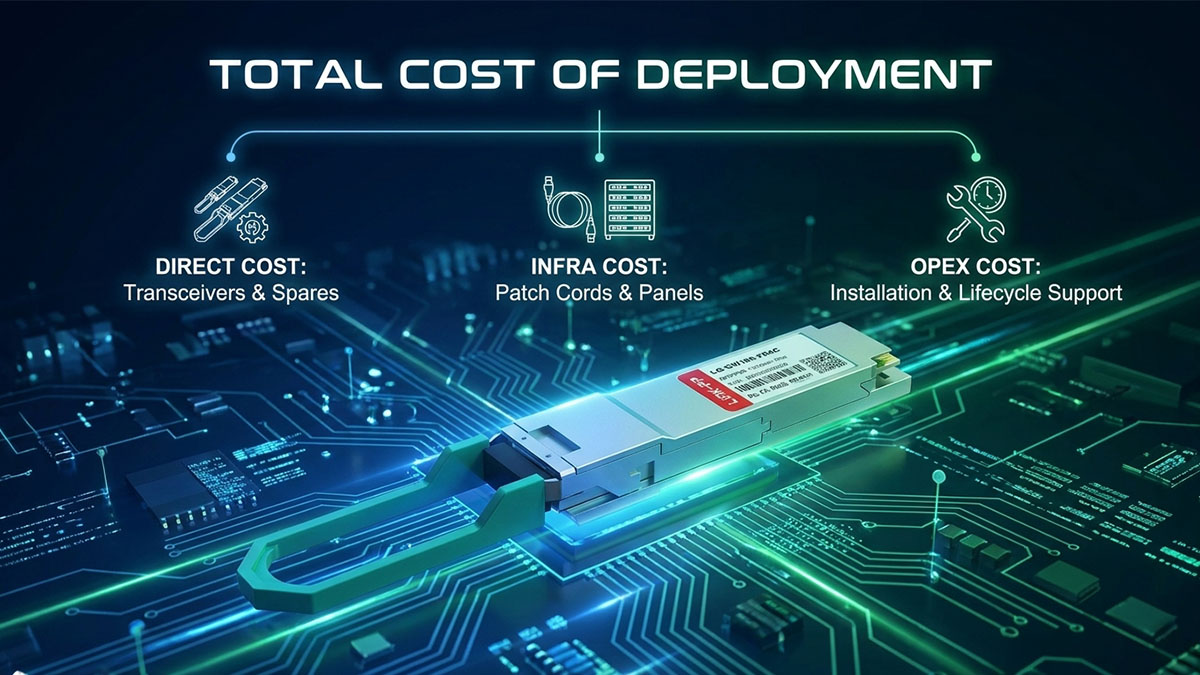
The FN-TRAN-QSFP28-CWDM4 total cost of deployment extends beyond the transceiver unit price. A realistic cost assessment should include the optical modules, fiber infrastructure, installation, spare inventory, warranty, support, and potential lifecycle expenses. This broader view provides a more accurate basis for comparing OEM and compatible100G solutions.
Direct Hardware Costs
The transceiver itself is normally the most visible part of the deployment budget, but the required quantity and associated optical accessories can significantly affect the final hardware cost. For a multi-link data center project, even a small difference in per-module pricing can become substantial across the complete installation.
The direct hardware cost can include:
- FN-TRAN-QSFP28-CWDM4 modules: Calculate the required number of100G links and the corresponding number of transceivers.
- Spare modules: Maintain replacement units for operational continuity and unexpected failures.
- Optical accessories: Include compatible LC fiber patch cords and other required connection components.
- Deployment quantity: Compare quotations using the same number of modules to obtain a meaningful per-unit cost.
- Shipping and logistics: Include applicable delivery and regional distribution costs when calculating the effective price.
The resulting hardware budget should therefore be based on the complete quantity required for the project rather than the advertised price of a single FN-TRAN-QSFP28-CWDM4 module.
Infrastructure and Installation Costs
Infrastructure costs depend heavily on whether the data center already has suitable single-mode fiber and duplex LC connectivity. Existing infrastructure can reduce deployment expenses, while a new fiber path may require additional materials and labor.
Typical infrastructure and installation costs include:
- SMF cabling: Required when the existing fiber infrastructure does not meet the deployment requirements.
- LC patch cords: Needed to establish the duplex optical connection.
- Rack and patch-panel requirements: Additional components may be necessary for structured fiber deployment.
- Installation labor: Includes fiber installation, termination, patching, and equipment configuration.
- Testing and validation: Optical link testing can help verify that the completed connection meets the required performance.
Evaluating these costs together with the module price helps determine whether FN-TRAN-QSFP28-CWDM4 can be integrated into the existing infrastructure efficiently or whether additional network investment is required.
Operational and Lifecycle Costs
Operational and lifecycle costs can become more important than the initial module price in long-term data center deployments. Warranty coverage, replacement availability, spare inventory, and troubleshooting requirements can all influence the actual cost of maintaining a100G link.
Important lifecycle factors include:
- Warranty: Review coverage period and replacement conditions.
- Replacement lead time: Consider how quickly failed modules can be replaced.
- Spare inventory: Determine an appropriate number of backup transceivers for critical links.
- Troubleshooting costs: Account for potential labor associated with diagnosing module, fiber, or compatibility issues.
- Lifecycle availability: Check whether the selected solution can remain available for future expansion and replacement.
A solution with a slightly higher initial price may therefore provide better long-term value if it offers reliable testing, warranty coverage, and replacement availability.
Example100G Deployment Cost Model
A simple cost model can make FN-TRAN-QSFP28-CWDM4 deployment comparisons more consistent. Instead of evaluating only the quoted module price, calculate the complete project cost across hardware, infrastructure, installation, and ongoing support.
The basic model can be expressed as:
Total deployment cost = transceiver cost + fiber infrastructure + installation + support + spare inventory
For example, a deployment assessment should consider:
- Transceiver cost: Required module quantity × effective unit price.
- Fiber infrastructure: New SMF cabling, LC patch cords, and patch-panel requirements.
- Installation: Labor, configuration, and optical link testing.
- Support: Warranty and technical assistance requirements.
- Spare inventory: Additional modules reserved for replacement.
This approach becomes increasingly important as the number of100G links grows. A difference in unit pricing that appears small for one module can produce a significant budget difference across dozens or hundreds of connections. Evaluating the FN-TRAN-QSFP28-CWDM4 on a total-deployment basis therefore provides a more reliable measure of its actual data center cost.
🚀 How to Evaluate FN-TRAN-QSFP28-CWDM4 Price Before Procurement
The best way to evaluate FN-TRAN-QSFP28-CWDM4 price is to compare technically equivalent modules under the same quantity, compatibility, warranty, delivery, and deployment conditions. A lower quoted price is only advantageous when the module meets the required100G CWDM4 specifications and can operate reliably in the target Fortinet environment.
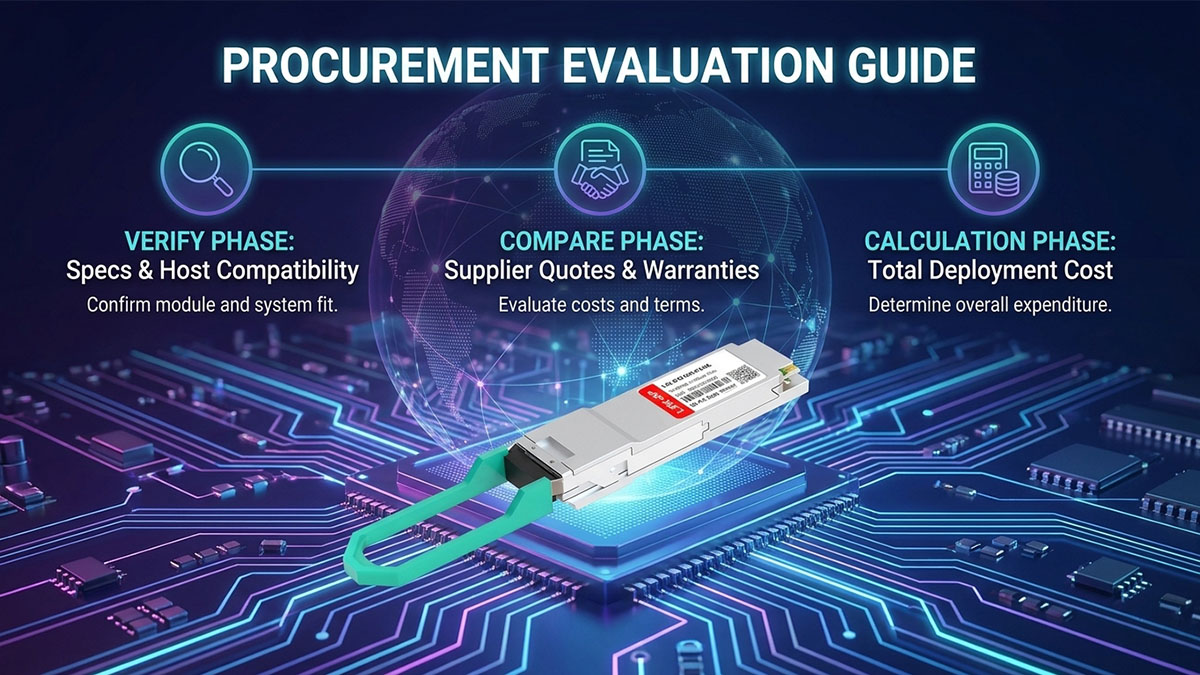
Step 1 — Confirm the Required Optical Specification
The first step is to establish the exact optical requirements before comparing quotations. This prevents technically different100G transceivers from being compared as if they were interchangeable.
Confirm the following specifications:
- Data rate: 100Gbps
- Optical standard: 100GBase-CWDM4
- Transmission distance: Up to 2km
- Fiber type: Single-mode fiber
- Connector: Duplex LC
- Form factor: QSFP28
- Operating environment: Confirm the required temperature range for the deployment.
Once these parameters are fixed, price comparisons can focus on modules that actually satisfy the same network requirements.
Step 2 — Verify Host Compatibility
The next step is to confirm that the FN-TRAN-QSFP28-CWDM4 is suitable for the intended Fortinet equipment. A competitive quotation has limited value if the module cannot be recognized or operated correctly by the target platform.
The compatibility check should cover:
- Exact Fortinet device model
- 100G QSFP28 port support
- Supported transceiver specifications
- Firmware or software requirements
- EEPROM and vendor coding
- DOM/DDM requirements
- Remote-end optical compatibility
This step is particularly important when comparing OEM and compatible modules because two products with similar optical specifications may differ in host recognition and management functionality.
Step 3 — Compare Supplier Pricing
After technical requirements and compatibility have been established, compare supplier quotations using consistent commercial conditions. The objective is to identify the effective cost of equivalent solutions rather than simply selecting the lowest displayed number.
Consider:
- OEM pricing
- Compatible pricing
- Required quantity
- Availability and lead time
- Shipping and regional costs
- Warranty terms
- Technical support
- Replacement conditions
For larger data center deployments, request pricing based on the actual project quantity because per-unit costs can differ significantly between individual modules and larger orders.
Step 4 — Compare Quality and Warranty
Price should also be evaluated against the quality assurance and support provided by each supplier. This is especially important for100G optical links because an initial hardware saving can be offset by troubleshooting or replacement costs if the module does not perform as expected.
Review these factors before selecting a quotation:
- Optical testing: Determine whether transmitter and receiver performance is tested.
- Compatibility testing: Confirm testing with the intended Fortinet platform where applicable.
- DOM functionality: Verify whether required diagnostic monitoring is available.
- Warranty duration: Compare coverage periods between suppliers.
- Replacement policy: Check how defective modules are handled.
- Technical support: Assess the availability of assistance during deployment and troubleshooting.
A module with a slightly higher quoted price may provide better overall value when stronger testing, warranty, and replacement support reduce operational risk.
Step 5 — Calculate Total Deployment Cost
The final evaluation should compare the total cost required to deploy and maintain the FN-TRAN-QSFP28-CWDM4 rather than focusing exclusively on its unit price. This is particularly important when multiple100G links are being installed.
Calculate the major cost components:
- Module cost: Quantity multiplied by the effective unit price.
- Fiber infrastructure: SMF cabling, LC patch cords, and related components.
- Installation: Deployment, configuration, and optical testing.
- Support: Warranty and technical assistance.
- Spare inventory: Additional modules maintained for replacement.
This final calculation provides a more realistic basis for evaluating FN-TRAN-QSFP28-CWDM4 pricing. By comparing equivalent technical specifications, verified compatibility, supplier services, and complete deployment costs together, data center teams can identify the solution that delivers the required100G connectivity without allowing an apparently low module price to create higher costs later.
🚀 When Is FN-TRAN-QSFP28-CWDM4 a Cost-Effective 100G Solution?
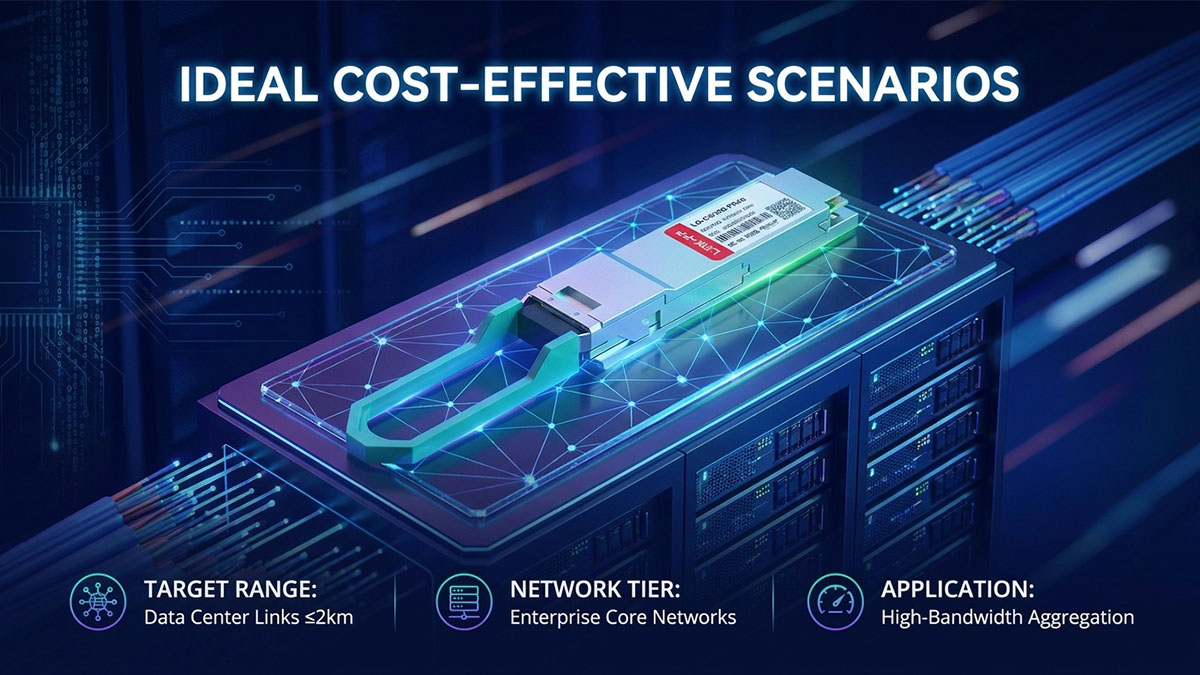
The FN-TRAN-QSFP28-CWDM4 is a cost-effective100G solution when the network requires 100Gbps connectivity over single-mode fiber for links up to 2km and the existing infrastructure supports its QSFP28 and duplex LC requirements. Its value is strongest when the deployment does not require the additional reach or different fiber architecture offered by other100G optical solutions.
Suitable Deployment Scenarios
The FN-TRAN-QSFP28-CWDM4 can provide practical cost efficiency in environments where its optical specifications closely match the network requirements. Reusing suitable infrastructure can further reduce the overall deployment cost.
Typical scenarios include:
- Data center interconnects within2km: Suitable for moderate-distance connections between data center network devices or facilities.
- Enterprise core networks: Provides100G capacity for high-bandwidth core and aggregation links.
- Fortinet-based data center networks: Appropriate when the target platform supports the required100G QSFP28 transceiver.
- Campus/data center links: Can support higher-capacity connections where SMF infrastructure is already available.
- High-bandwidth aggregation: Provides100Gbps connectivity for aggregating multiple high-speed network links.
These scenarios are particularly attractive when existing single-mode fiber and LC connectivity can be reused. In such cases, the deployment can avoid unnecessary infrastructure changes while providing the required100G bandwidth.
Situations Where Another100G Optic May Be More Appropriate
The FN-TRAN-QSFP28-CWDM4 is not automatically the most economical choice for every100G network. A different optical solution may provide better overall value when the required distance, fiber type, connector architecture, or host interface differs from its specifications.
Consider another100G optic when:
- The link is a very short multimode-fiber connection: A100G SR4 solution may better match an existing MMF infrastructure.
- The transmission distance exceeds2km: A longer-reach100G optic may be more appropriate than trying to extend a2km CWDM4 link beyond its intended range.
- A different connector architecture is required: The physical fiber infrastructure may favor another100G optical design.
- The platform does not support the required QSFP28 optic: Host compatibility should take priority over the module's nominal price.
- The network has different optical requirements: The selected module should match the actual wavelength, fiber, reach, and interoperability requirements.
Ultimately, the cost-effectiveness of FN-TRAN-QSFP28-CWDM4 depends on specification alignment rather than price alone. When a deployment needs100Gbps capacity,2km SMF transmission, and compatible QSFP28 connectivity, this CWDM4 solution can offer a practical balance between optical performance, infrastructure requirements, and total deployment cost.
🚀 Conclusion
The FN-TRAN-QSFP28-CWDM4 is a100G QSFP28 CWDM4 solution designed for high-capacity transmission over single-mode fiber up to 2km. Evaluating its value requires more than comparing the listed module price. Optical specifications, Fortinet compatibility, OEM versus compatible options, fiber infrastructure, warranty, quantity, and lifecycle costs all contribute to the actual deployment cost.
The key considerations can be summarized as follows:
- 100G CWDM4: Confirm the required100Gbps optical architecture and application.
- 2km SMF reach: Ensure the transmission distance and fiber infrastructure match the deployment.
- Fortinet compatibility: Verify the host platform, QSFP28 port, coding, and monitoring requirements.
- OEM vs compatible: Compare equivalent specifications, testing, warranty, and support alongside price.
- Total deployment cost: Include modules, cabling, installation, spares, and lifecycle requirements.
For data center teams evaluating FN-TRAN-QSFP28-CWDM4 pricing, a technically verified compatible solution can provide a practical way to control100G network costs when it meets the required specifications and platform requirements. For additional Fortinet-compatible optical options and technical information, explore the LINK-PP Official Store to compare suitable transceiver solutions for your network deployment.