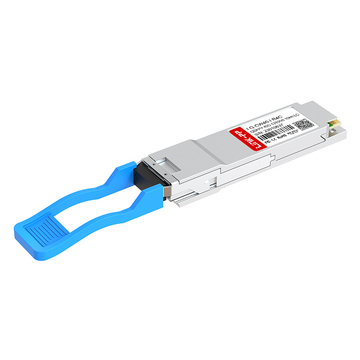
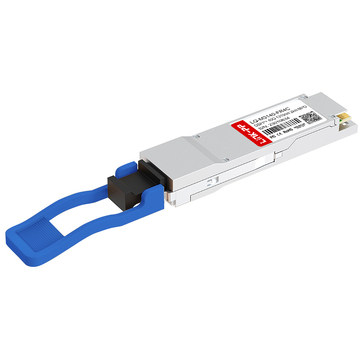
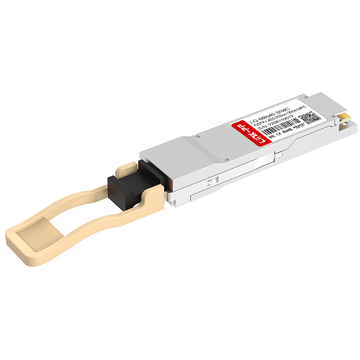
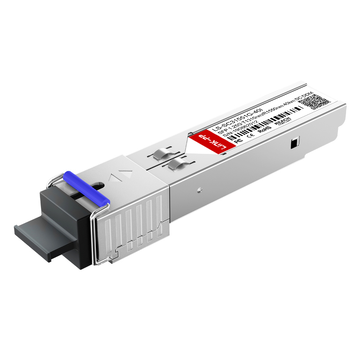
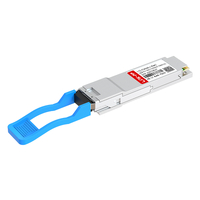
When upgrading a network to support higher bandwidth, many IT teams encounter the same question: what is the most practical way to deploy reliable 40G connectivity without dramatically increasing costs? As data centers expand and network traffic continues to grow, 10G links are often no longer sufficient for core switching, aggregation layers, or high-density server environments.
In these scenarios, Cisco QSFP 40G optical transceivers are frequently considered a standard solution. Designed to deliver 40-gigabit Ethernet connections, Cisco QSFP 40G modules are widely used in enterprise switches and data center infrastructure to support high-speed data transmission across different network distances.
However, once organizations begin planning large-scale deployments, another important question often arises: are there viable alternatives to original Cisco QSFP 40G modules that still provide the required performance and compatibility? Understanding the types of Cisco QSFP 40G optics — and the available alternatives — can help you make an informed purchasing decision.
? Why Businesses are Considering Cisco QSFP 40G Alternatives
Over the past few years, more companies have begun looking beyond original Cisco QSFP 40G modules when upgrading their 40G network infrastructure. While Cisco transceivers are widely trusted for quality and performance, several practical factors are driving this exploration of third-party compatible alternatives.

The Growing Demand for 40G Network Connectivity
The rapid growth of cloud computing, virtualization, and large-scale data processing has significantly increased the demand for high-speed network connections. Many enterprise networks and data centers are transitioning from 10G to 40G Ethernet to handle higher traffic volumes and reduce network congestion.
Cisco QSFP 40G modules are commonly deployed in core switches, aggregation layers, and high-performance data center environments. Their ability to support large bandwidth and stable transmission makes them essential for applications such as server clustering, storage networks, and high-density switching platforms.
Cost Challenges of Original Cisco QSFP 40G Modules
Although Cisco QSFP 40G transceivers are known for their reliability and integration with Cisco networking equipment, the cost of original vendor modules can be a significant factor for many organizations. When deploying dozens or even hundreds of optical modules in a data center, the total investment can quickly increase.
For companies that need to scale their infrastructure while controlling operational expenses, purchasing only original Cisco optics may not always be the most economical approach. This is particularly true for growing businesses or service providers that must balance performance with long-term cost efficiency.
Benefits of Cisco QSFP 40G Compatible Transceivers
Because of these cost considerations, many businesses are turning to Cisco QSFP 40G compatible transceivers as an alternative. High-quality compatible modules are designed to match the specifications of Cisco optics while maintaining interoperability with Cisco switches and networking equipment.
These alternatives often provide several advantages, including lower upfront costs, wider vendor availability, and flexible purchasing options. When sourced from reliable third-party suppliers like LINK-PP that follow strict testing and quality standards, Cisco QSFP 40G compatible modules can deliver reliable performance while helping organizations optimize their networking budgets.
? Cisco QSFP 40G Module Overview for First-Time Buyers
If you’re buying optics for the first time, a Cisco QSFP 40G module can feel like a small part with an outsized impact on network performance and stability. In simple terms, it’s the plug-in transceiver that makes 40G links possible between Cisco switches (and other supported gear). Before comparing original vs compatible options, it helps to understand what the module actually does, what’s inside it, and where it’s typically deployed.

What the Cisco QSFP 40G Transceiver Does
The Cisco QSFP 40G transceiver is a hot-pluggable QSFP+ module that provides the physical layer connection for 40-Gigabit Ethernet. Its job is to convert signals so network devices can transmit data reliably over the chosen medium:
- Electrical-to-optical Conversion (and back): The switch outputs electrical signals; the QSFP module converts them into optical signals for fiber transmission. At the other end, the receiving module performs the reverse conversion.
- 40G Lane Structure: QSFP 40G transceiver is often “quad-lane,” meaning the module may use four lanes (commonly 4×10G lanes) to deliver an aggregate 40G link, depending on the optic type and interface.
- Operational Convenience: QSFP 40G modules are designed to be hot-swappable, allowing you to install, replace, or upgrade optics with minimal disruption — useful in data centers where uptime matters.
For first-time buyers, the key takeaway is that a QSFP 40G module isn’t just a “cable accessory” — it directly determines reach (distance), fiber type, connector style, power draw, and interoperability with your switching platform.
Key Components Inside a Cisco QSFP 40G Module
To the naked eye, a 40G module looks like a simple piece of metal. However, beneath the surface lies a sophisticated assembly of precision components working in harmony to transmit data at incredible speeds.
For first-time buyers, understanding these internal parts is crucial because the quality of these components is what separates a reliable module from one that will fail under load. Here is a breakdown of what lives inside a typical Cisco QSFP 40G transceiver:
- Printed Circuit Board (PCB): This is the brain and nervous system of the module. The PCB houses the integrated circuits that manage data encoding, signal conditioning, and laser driver controls. High-quality PCBs use premium substrates and precise trace routing to ensure signal integrity at 40G speeds, preventing data loss or corruption.
- Laser Diode (Transmitter): This is the light source. Depending on the module type (SR, LR, etc.), the laser will be either a Vertical-Cavity Surface-Emitting Laser (VCSEL) for short distances or a Fabry-Perot (FP) / Distributed Feedback (DFB) laser for longer distances. The precision and purity of this laser determine how far the signal can travel and how much power it retains.
- Photodetector (Receiver): On the receiving end, a photodetector (usually a PIN photodiode) captures incoming light signals and converts them back into electrical current. Its sensitivity is vital; a poor-quality detector will miss weak signals, causing link errors and dropouts.
- Optical Subassembly (TOSA & ROSA): These are the mechanical housings that hold the lasers and detectors. The Transmitter Optical Subassembly (TOSA) contains the laser and couples its light into the fiber, while the Receiver Optical Subassembly (ROSA) houses the detector and focuses incoming light onto it. These components must be hermetically sealed in many modules to prevent dust and humidity from interfering with the optics.
- Mux/DeMux (Wavelength Splitter): Found specifically in long-reach modules like the 40G-LR4, this component performs a critical task. On the transmit side, it combines (multiplexes) four distinct wavelengths of light into a single fiber. On the receive side, it separates (demultiplexes) those four wavelengths back to the detectors. This is a highly precise optical component that adds significant cost and complexity.
- Controller/Memory Chip (EEPROM): This small chip stores the module's vital data, including the serial number, part number, and manufacturing details. Most importantly, it holds the digital diagnostics monitoring (DDM) data, allowing the switch to monitor real-time parameters like temperature, voltage, and optical power. For Cisco modules, this chip also contains specific coding that the switch checks to verify if the part is an "original" Cisco product.
Typical Network Applications of Cisco QSFP 40G
Cisco QSFP 40G modules are most commonly used anywhere a network needs higher throughput per port without jumping immediately to 100G. Typical scenarios include:
- Data Center Switch Uplinks and Spine-leaf Interconnects: 40G links are frequently used for switch-to-switch connections where multiple 10G server links aggregate upstream.
- Aggregation/Core Connections in Enterprise Networks: When distribution-layer traffic grows beyond what 10G uplinks can comfortably handle, 40G becomes a practical step up.
- High-density Virtualization and Compute Clusters: East-west traffic between servers can be heavy in virtualized environments; 40G helps reduce congestion and improve application responsiveness.
For first-time buyers, the most important part is matching the module to the application context: short intra-rack connections vs cross-row links vs campus/building interconnects will immediately narrow down the right type of Cisco QSFP 40G (and whether an alternative compatible module makes sense).
? Popular Cisco QSFP 40G Modules and Their Differences

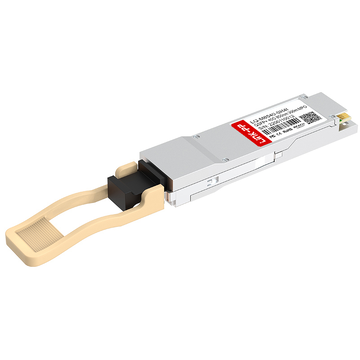
Among the most commonly deployed Cisco QSFP 40G options, SR4, LR4, and SR BiDi (SR BD) are often compared because they target very different link scenarios. In short: SR4 is cost-effective for short multimode runs, LR4 is built for long single-mode distances, and SR BiDi extends multimode reach using duplex LC cabling instead of MPO, which can simplify cabling in many existing environments.
Here is a quick at-a-glance comparison of the SR4, LR4, and SR BiDi modules.
| Feature | Cisco QSFP-40G-SR4 | Cisco QSFP-40G-LR4 | Cisco QSFP-40G-SR-BD |
| Fiber Type | Multimode | Single-mode | Multimode |
| Wavelength | 850nm | 1310nm | 850nm, 880nm, 910nm, 940nm |
| Max Distance | Up to 150m | Up to 10km | Up to 350m |
| Connector | MTP/MPO | LC duplex | LC duplex |
| Use Case | Short-reach links within data centers, switch-to-switch connections | Long-distance data center interconnects, campus backbones | Extended multimode reach for high-density data center environments |
Cisco QSFP 40G SR4 for Short-Reach Networks
QSFP 40G SR4 is the go-to choice for short-range, high-density connections inside data centers — especially where racks, rows, or pods need high throughput but not long distance. “SR4” typically indicates short reach and four-lane parallel optics, which is why it commonly uses an MTP/MPO connector.
What makes QSFP-40G-SR4 popular:
- Efficient for short runs: Ideal for switch-to-switch uplinks within the same room/row.
- Parallel optics architecture: Uses multiple lanes to achieve 40G, which aligns well with high port density designs.
- Often budget-friendly vs long-reach optics: In many deployments, SR4 is the most cost-effective path to 40G when MPO cabling is already in place.
What first-time buyers often overlook:
- Cabling complexity: MPO links require correct polarity and proper trunk/patch planning. Mistakes here can cause link failures even if optics are correct.
- Cleaning and handling: MPO endfaces are more sensitive — poor cleaning practices can lead to intermittent issues.
Cisco QSFP 40G LR4 for Long-Distance Links
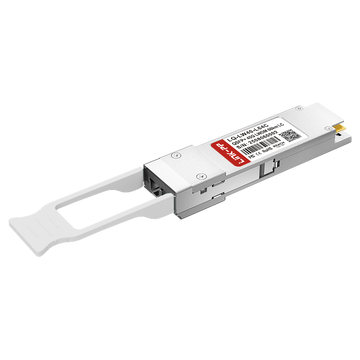
QSFP 40G LR4 is designed for longer-distance 40G Ethernet over single-mode fiber, typically using an LC duplex connector. It’s commonly selected when 40G links must traverse larger spaces — between floors, buildings, or across a campus.
Why QSFP-40G-LR4 stands out:
- Distance capability: A strong option when multimode reach isn’t enough.
- LC duplex simplicity: Uses widely available LC cabling — often easier to deploy than MPO in enterprise environments.
- Good fit for structured cabling: Many organizations already have SMF runs or plan to standardize on SMF for future upgrades.
Key buyer considerations:
- Higher total cost: LR4 optics and SMF deployments tend to cost more than short-reach MMF options.
- Link budget planning matters: Patch panels, splices, and dirty connectors can eat into the optical budget quickly at longer distances.
Cisco QSFP 40G SR BD for Extended Multimode Reach
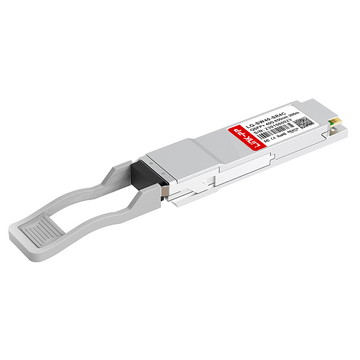
QSFP 40G SR BiDi (SR BD) is often chosen when teams want 40G over multimode fiber but prefer the LC duplex cabling format instead of MPO. BiDi (bidirectional) transceivers transmit and receive using two wavelengths over the same pair of fibers, which is why they can run 40G on duplex MMF.
Where QSFP-40G-SR-BD helps most:
- Upgrading existing 10G MMF LC infrastructure: If your environment is built around LC duplex cabling, SR BiDi can reduce the need to re-cable to MPO.
- Simplified patching: LC duplex patch cords are familiar and easier to manage for many teams.
- Practical MMF extension: Provides a useful middle ground when SR4 cabling requirements are a barrier.
Important compatibility notes:
- BiDi must match on both ends: You typically need BiDi optics at both ends of the link (and the same BiDi “type”/wavelength pairing).
- Not interchangeable with SR4/LR4: Even if distances look similar on paper, the signaling method and cabling differ.
? Cisco QSFP 40G Alternative Specifications Buyers Should Review

Before purchasing a Cisco QSFP 40G compatible alternative, buyers should take time to review several key specifications that determine network compatibility and performance. These specs not only affect how far and how fast data can travel, but also influence power efficiency, heat management, and long-term stability. Selecting the right combination of optical parameters ensures optimal operation and maximum lifespan for your networking hardware.
Transmission Distance and Media Type
The first decision is always how far the link must run and what cabling you already have. Cisco QSFP 40G optical transceivers are typically designed for either multimode fiber (MMF) or single-mode fiber (SMF), and the module’s reach rating assumes specific fiber grades and a reasonable optical loss budget.
Key buyer checks:
? Match the module to the fiber type:
- MMF is common inside data centers (short runs).
- SMF is preferred for longer distances (campus/building links).
? Confirm the “real” distance, not the ideal one:
- Patch panels, splices, and extra connectors add insertion loss. A “150 m” design becomes risky if your cabling path is messy or aging.
? Don’t ignore connector format:
- Some 40G MMF options require MPO/MTP (parallel optics), while others (like BiDi variants) use LC duplex, which can significantly affect cabling cost and installation complexity.
Wavelength and Interface Standards
Wavelength and standards are what make a QSFP module more than “just 40G.” They determine whether the optic will behave correctly with your fiber plant and whether it will interoperate reliably with the switch port on both ends.
What to review:
? Wavelength and optic type:
- Short-reach multimode fiber transceivers commonly operate around 850nm.
- Long-reach single-mode fiber transceivers commonly use 1310nm (often with multiple wavelengths in the same module for certain long-reach designs).
- Look for alignment with relevant 40G Ethernet standards (and the appropriate QSFP+ electrical/management specs). Standards compliance matters even more when mixing vendors or using third-party compatibles.
? Breakout and lane behavior:
- Some environments use 40G-to-4×10G breakout (via fanout cables/transceivers). If you plan to break out ports, make sure the module and switch platform support the intended mode and cabling type.
Power Consumption and Thermal Range
Power and heat are often overlooked until links start flapping in a dense switch or a hot aisle. QSFP modules operate in tight spaces, and high temperatures can reduce optical margin, shorten module life, or trigger port errors.
What to validate:
? Maximum power draw:
- Higher power fiber transceivers generate more heat. In high-density switches, a rack full of higher-power optics can push the chassis thermal envelope.
? Operating temperature range:
- Confirm the module supports the environment — especially if your gear sits in less controlled spaces (edge rooms, telecom closets, or older data halls).
? Airflow and port adjacency considerations:
- Even if a module is “within spec,” crowded front-panel layouts and poor airflow can create hot spots. This is one reason reputable vendors emphasize thermal testing and burn-in.
Bandwidth and Data Rate Performance
“40G” should mean 40G, but performance still depends on how the module handles signaling, error tolerance, and link stability across your actual cabling conditions.
What to check:
? Supported data rate and Ethernet mode:
- Ensure the transceiver is fully qualified for 40‑Gigabit Ethernet operation on your platform, not just loosely compatible.
? Link performance indicators:
- Optical budget / receive sensitivity (how much loss the link can tolerate).
- Transmit power range (enough output without overdriving).
- Error performance expectations (stable BER under normal conditions).
? DOM/DDM availability:
- Monitoring doesn’t improve performance directly, but it makes performance measurable — allowing you to verify whether the link is operating with healthy optical headroom.
? How to Ensure Cisco QSFP 40G Alternative Compatibility with Your Device
When selecting a Cisco QSFP 40G alternative, compatibility is one of the most critical factors to evaluate. Even if a module meets the same technical specifications as an original Cisco optic, it must still function properly with the switch hardware and operating system in your network. By verifying device support, consulting compatibility lists, and ensuring firmware alignment, buyers can significantly reduce the risk of deployment issues.

Cisco Switches Supporting Cisco QSFP 40G Modules
Before selecting a Cisco QSFP 40G alternative, it is important to confirm that your Cisco switch model supports QSFP+ 40G transceivers. Many Cisco platforms are designed to work with QSFP 40G modules, including data center switches and high-performance aggregation switches.
Common Cisco switch series that support QSFP 40G interfaces include:
- Cisco Nexus 3000, 5000, 7000, and 9000 Series
- Cisco Catalyst 9000 Series switches
- Cisco ASR and certain Cisco UCS networking platforms
Each switch model may support different types of 40G QSFP modules, such as SR4, LR4, or SR-BD. Therefore, network administrators should review the specific port capabilities and supported transceiver types listed for their switch model before purchasing compatible alternatives.
Checking Cisco QSFP 40G Compatibility Lists
Cisco publishes official compatibility matrices that list supported transceiver models for each switch platform. These documents are extremely useful for verifying whether a particular QSFP 40G module — or its compatible equivalent — will function correctly with a given device.
When reviewing compatibility lists, buyers should check:
- Supported QSFP module types (SR4, LR4, etc.).
- Interface standards and connector types (MPO or LC).
- Maximum supported transmission distances.
- Required hardware revisions or module variants.
Many reputable third-party suppliers design their Cisco QSFP 40G compatible alternatives specifically to match Cisco’s coding and interface specifications. Choosing products that clearly state compatibility with your exact Cisco device model significantly reduces the risk of deployment problems.
Firmware and OS Compatibility for Cisco QSFP 40G
In addition to hardware compatibility, the firmware and operating system version running on your Cisco equipment can affect whether a transceiver is recognized properly. Some Cisco devices require certain NX-OS or IOS versions to support specific QSFP 40G modules.
Network administrators should verify:
- The current firmware or OS version installed on the switch.
- Whether the firmware supports the intended QSFP 40G module type.
- If any updates or patches are recommended for transceiver support.
Updating the device firmware to a stable, supported version often resolves compatibility detection issues and ensures the transceiver operates at the correct data rate and power parameters.
Avoiding Compatibility Issues with Cisco QSFP 40G Alternatives
Selecting high-quality Cisco QSFP 40G alternatives from reputable suppliers like LINK-PP is the best way to prevent compatibility problems. Professional manufacturers typically perform extensive testing to ensure their modules work seamlessly with major Cisco switch platforms.
To minimize risks, buyers should look for vendors that offer:
- Cisco-coded transceivers designed for specific switch models.
- Multi-stage compatibility testing with Cisco equipment.
- Digital diagnostic monitoring (DDM) support.
- Clear compatibility documentation and technical assistance.
Working with trusted suppliers that provide guaranteed compatibility and technical support allows businesses to confidently deploy Cisco QSFP 40G alternatives while maintaining network stability and performance.
? Key Factors to Evaluate Before Buying Cisco QSFP 40G Alternatives
Selecting the right Cisco QSFP 40G alternative involves more than simply choosing a lower-cost module. Buyers should carefully evaluate product quality, manufacturing reliability, and vendor support to ensure long-term network stability. By reviewing several key factors before purchasing, businesses can confidently deploy compatible QSFP 40G transceivers without sacrificing performance or reliability.

Cisco QSFP 40G Quality and Manufacturing Standards
The quality of a Cisco QSFP 40G compatible module largely depends on the manufacturer’s design process and component standards. High-quality alternatives are typically produced using advanced optical components, strict assembly procedures, and precision calibration.
Reliable manufacturers follow recognized industry standards such as:
- MSA (Multi-Source Agreement) compliance, ensuring interoperability between different vendors.
- High-grade optical components, including lasers, photodiodes, and DSP chips.
- Precision assembly and automated calibration to guarantee signal integrity and consistent performance.
QSFP modules built under strict manufacturing standards can deliver the same data rate performance, transmission distance, and operational stability as original Cisco transceivers while maintaining cost efficiency.
Warranty and Technical Support for Cisco QSFP 40G Modules
Another important factor when purchasing Cisco QSFP 40G alternatives is the level of warranty and technical support offered by the supplier. Optical transceivers are critical network components, and dependable after-sales service can significantly reduce operational risk.
Buyers should prioritize vendors that provide:
- Comprehensive product warranties covering manufacturing defects.
- Responsive technical support teams capable of troubleshooting compatibility or deployment issues.
- Pre-sales consultation to help customers select the correct module specifications.
- Fast replacement or RMA services in case of hardware failure.
Strong customer support ensures that network administrators receive timely assistance if compatibility or performance issues arise during deployment.
Testing and Certification of Cisco QSFP 40G Alternatives
Reliable Cisco QSFP 40G alternatives should undergo multiple testing procedures before shipment to ensure stable performance, signal integrity, and compatibility with networking equipment. These tests help verify that the modules meet industry standards and can operate reliably in high-speed 40G network environments.
Key testing processes typically include:
- Compatibility Testing – Ensures the module can be correctly recognized and operate smoothly with Cisco switches and networking devices.
- Optical Spectrum Test – Verifies that the laser wavelength and optical spectrum meet required specifications for stable fiber transmission.
- Eye Pattern Test – Evaluates signal integrity and waveform quality to confirm reliable high-speed data transmission.
- Bit Error Rate (BER) Test – Measures transmission accuracy to ensure extremely low data error rates during operation.
- Temperature Test – Confirms that the module maintains stable performance across the typical operating temperature range of networking equipment.
? Summary: Where to Buy Reliable Cisco QSFP 40G Alternatives

Cisco QSFP 40G alternatives provide a cost-effective way for businesses to upgrade network bandwidth while maintaining reliable performance and compatibility with Cisco equipment. By choosing modules that follow MSA standards, undergo strict testing, and come from reputable manufacturers, organizations can achieve stable 40G connectivity without the high cost of original vendor modules.
For businesses looking for dependable solutions, LINK-PP offers high-quality Cisco QSFP 40G compatible transceivers designed for reliable performance and verified compatibility with major Cisco switches. Their products are manufactured under strict quality standards and thoroughly tested to ensure stable network operation. You can explore available models and technical specifications through the LINK-PP Official Store to find the right QSFP 40G transceiver alternative for your network deployment.