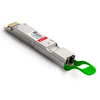
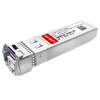
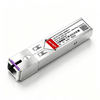
Gigabit Ethernet is still everywhere — campus access networks, legacy server racks, IP surveillance backbones, and countless switch-to-switch uplinks inside wiring closets. In these environments, fiber is often preferred over copper because it resists electromagnetic interference, supports cleaner signal integrity over distance, and keeps cabling lightweight and manageable. That’s where 1000BASESX SFP becomes a common “default choice” for short-range optical connectivity.
Even though 1000BASESX SFP is widely used, selecting the right module is not always as simple as picking any SX part number. Real-world purchasing decisions often involve questions like: Is my fiber OM1 or OM3? Will the module be coded for my switch brand? Do I need DDM/DOM? What distance can I reliably achieve in my building? A mismatch in any of these details can lead to unstable links, unexpected errors, or unnecessary troubleshooting after installation.
In this article, we’ll first clarify what 1000BASESX SFP actually means, then walk through why correct selection matters, which specs to verify, how to confirm compatibility, what fiber requirements to meet, and how to avoid common buying mistakes. You’ll also get practical installation and maintenance tips to ensure smooth deployment and long-term link reliability.
? What is 1000BASESX SFP
At its core, 1000BASESX SFP refers to a Gigabit Ethernet optical transceiver designed for short-range transmission over multimode fiber. It combines a standardized Ethernet optical interface (1000BASE-SX) with the compact, hot-pluggable SFP module form factor used in many network devices.

Defining the 1000BASE-SX SFP
1000BASESX is a 1G SFP module primarily intended for short-distance links using 850nm wavelength over multimode fiber. The “SX” typically implies “short wavelength,” which differentiates it from long-wavelength options (like LX) that are commonly used for longer distances over single-mode fiber.
The “SFP” describes the physical module type: a compact transceiver you can insert into an SFP port on a switch, router, media converter, or server NIC. This modular approach makes it easy to swap optics, change fiber runs, or standardize spares — without replacing the entire device. In most deployments, a 1000BASESX SFP uses an LC duplex connector and operates as a two-fiber link (one strand for transmit, one for receive).
Transmission Standards Behind 1000BASE SX SFP
1000BASESX SFP is built on the IEEE 802.3 Gigabit Ethernet family, which defines how 1Gbps traffic is encoded, transmitted, and recovered at the physical layer. In practice, this standardization is the reason SX optics from different vendors can interoperate — as long as the host device accepts the module electrically and logically (some platforms enforce vendor coding or firmware checks).
From a transmission perspective, 1000BASE-SX typically relies on multimode fiber’s ability to carry light efficiently across short distances in a building or data hall. Because multimode fiber supports multiple propagation modes, performance depends heavily on fiber grade (OM1/OM2/OM3/OM4), link length, and installation quality.
Typical Application Scenarios for 1000BASESX SFP
1000BASESX SFP is most often deployed wherever short-reach, cost-effective 1GbE fiber links are needed inside buildings or across a local campus. Because it runs on multimode fiber (MMF) and is widely supported by network equipment, it’s a practical choice for upgrading copper uplinks, extending connections beyond copper distance limits, and building stable fiber paths in environments with dense cabling or electrical noise.
Common application scenarios include:
- Access-to-Distribution Uplinks (Wiring Closet to Aggregation Switch): Connecting access switches on different floors or closets back to a distribution layer over MMF for reliable 1GbE uplinks.
- Switch-to-Switch Links Inside a Data Room: Creating short backbone links between switches in the same room or adjacent racks, especially when fiber routing is cleaner than copper.
- Server-to-Switch Connections (1GbE NIC Uplinks): Linking servers with 1GbE SFP ports to top-of-rack or aggregation switches using MMF patching for stable connectivity.
- Campus/Building Interconnects Over Existing MMF: Leveraging pre-installed multimode cabling between nearby buildings or zones where distances stay within SX limits.
- High-EMI or Industrial Areas: Using fiber instead of copper in places with strong electromagnetic interference (e.g., near motors, elevators, manufacturing equipment) to reduce error rates and instability.
? Why Choosing the Right 1000BASESX SFP Matters
The importance of selecting the right 1000BASE-SX SFP transceiver module extends far beyond simply establishing a network connection. A carefully chosen module ensures optimal performance and reliability, while a poor choice can lead to chronic network issues and unnecessary operational expenses.

Network Stability and Performance Impact
Choosing the right 1000BASESX SFP directly affects link reliability, error rates, and the overall user experience on the network. If the module’s optical power, receiver sensitivity, or supported distance doesn’t align with your real cabling conditions, you may see intermittent issues such as CRC errors, packet drops, link flaps, or unstable auto-negotiation behavior — problems that are often difficult to diagnose once the cabling is already in production.
In addition, multimode fiber performance is closely tied to fiber grade and modal dispersion. A module that works flawlessly on OM3 at a certain distance may behave differently on older OM1/OM2 infrastructure, especially on longer runs. Selecting a module that truly fits your fiber plant and distance budget helps ensure consistent throughput, low latency variation, and predictable performance during peak traffic.
Compatibility with Existing Equipment
Not all network devices treat SFP modules the same way. Many switches and routers accept standards-based optics broadly, while others enforce strict checks such as vendor identification, EEPROM coding, whitelist policies, or firmware-level validation. If a module is not coded or validated for your platform, the device may reject it, disable the port, display persistent alarms, or operate in a limited/unsupported state — even when the optical specifications are technically correct.
Compatibility also includes practical factors beyond “will the port light up.” You need to confirm items like supported DOM/DDM reporting, correct transceiver type recognition, and stable behavior across reboots or firmware upgrades. Picking an SFP that is known to work with your specific switch/router model avoids deployment delays, surprise incompatibility messages, and unnecessary returns or replacements.
? Key Technical Specifications to Check When Buying 1000BASESX SFP
Before you place an order, it’s important to confirm the core technical parameters that determine whether a 1000BASESX SFP will work reliably in your exact link. These specs help you avoid the most common problems — distance mismatches, fiber incompatibility, connector issues, and missing monitoring features.

Wavelength and Transmission Distance
A typical 1000BASESX SFP operates at an 850nm wavelength and is designed for short-reach transmission over multimode fiber (MMF). When evaluating distance, don’t rely on a single “maximum range” number — actual performance depends on both the fiber grade (OM level) and overall link quality (patch cords, connectors, splices, and cleanliness).
In practical terms, you should match the module’s supported distance to your real cable route length, including patch panels and cross-connects. If your link is close to the distance limit, it’s wise to leave margin for aging, connector loss, or future re-patching. Also, make sure both ends of the link use compatible optics (SX-to-SX), since mixing optical types can lead to unstable operation or a link that never comes up.
Fiber Type Compatibility (OM1/OM2/OM3/OM4)
1000BASE SX SFP modules are intended for multimode fiber, but multimode is not “one-size-fits-all.” The OM rating (OM1/OM2/OM3/OM4) affects bandwidth, modal dispersion, and achievable distance at 1GbE. Older buildings often have OM1, while newer installations commonly use OM2, OM3 or OM4 to support higher performance and easier future upgrades.
When buying, confirm which OM type your existing cabling uses and choose a module that supports the distance you need on that fiber. If your infrastructure includes mixed fiber grades, document which runs are which — because a module that performs perfectly on an OM3 backbone may not deliver the same stability on an older OM1 segment at longer lengths. Getting this right prevents “mystery” issues like intermittent errors that only appear on certain routes or after re-cabling.
Connector Type (LC Duplex)
Most 1000BASE SX SFP modules use an LC duplex interface, which is compact and widely adopted in enterprise and data center environments. “Duplex” means two fibers are used: one for transmit (Tx) and one for receive (Rx). This is the default expectation for standard SX links, so connector mismatch is one of the easiest issues to avoid — but also one of the most disruptive when overlooked.
Before purchasing, verify that your patch cords, patch panels, and wall outlets are all terminated for LC duplex (or that you have the correct conversion jumpers). It’s also worth confirming polarity management (Tx/Rx orientation), especially in structured cabling environments. If your link doesn’t come up after installation, polarity and connector type are among the first things you’ll want to rule out quickly.
Digital Diagnostic Monitoring (DDM) Support
Digital diagnostic monitoring provides real-time optical and module operating information such as Tx power, Rx power, module temperature, and supply voltage. While a basic SX link can function without DDM, having it greatly improves troubleshooting and proactive maintenance — especially in larger networks with many fiber links.
If your switch/router supports DDM, choosing an SFP with DDM allows you to spot issues early: gradual Rx power drops from dirty connectors, abnormal temperature trends, or power levels approaching threshold alarms. This reduces downtime and prevents “replace parts until it works” troubleshooting. When buying, confirm both sides: the module must support DDM and your host device must be able to read and report those diagnostics in its CLI/web interface or monitoring system.
? 1000BASESX SFP Module Compatibility Overview

Although 1000BASESX SFP modules follow the same 850nm Gigabit Ethernet standard, real-world compatibility can still vary from one switch or router to another. The difference usually comes down to how the device identifies and authorizes the transceiver — such as vendor coding, EEPROM information, firmware policies, and whether DDM/DOM functions are supported correctly.
OEM vs. Third-Party 1000BASE-SX SFP
OEM optics are the original branded transceivers provided by switch or router manufacturers, and they are often the most straightforward option when you need official vendor support or must follow strict procurement standards. Third-party 1000BASE-SX SFP — such as LINK-PP 1000BASE-SX modules — can offer a more budget-friendly alternative, especially when they are vendor-coded for the target platform, validated through compatibility testing, and backed by consistent quality control.
The table below highlights the key differences between OEM and third-party options to help you decide which approach fits your network best.
| Feature |
OEM 1000BASE-SX SFP |
Third-Party LINK-PP 1000BASE-SX SFP |
| Compatibility Guarantee |
100% compatible with the brand’s own devices |
Compatible with multiple vendor devices through custom-coded firmware |
| Firmware and Identification |
Strict vendor lock-in; non-OEM optics may trigger warnings |
Custom-coded EEPROM ensures recognition and interoperability without error messages |
| Flexibility |
Best suited for networks standardized on a single vendor |
Allows mixed environments, enabling easier upgrades or replacements across different platforms |
| Cost |
Premium price due to brand markup |
Significant savings — typically 30-70% lower than OEM |
Vendor Coding and Firmware Compatibility
Many switches and routers read identification data stored in the SFP’s EEPROM (vendor name, part number, wavelength, supported features, etc.). Some devices simply display this information, while others enforce it — meaning the port might refuse to come up, show “unsupported transceiver,” or generate alarms if the module’s identity/coding does not match what the device expects.
Firmware also matters. A module that works on one software version may trigger warnings after an upgrade if the vendor tightens transceiver checks or changes how it validates EEPROM fields. That’s why “compatible” should mean compatible with your device model + your firmware train, not just “SX is SX.” If you have planned upgrades, it’s smart to standardize on an optics module with stable coding profiles and keep records of where each coded batch is deployed.
How to Verify Switch and Router Support
To avoid downtime and returns, verify compatibility using practical checks before purchasing in bulk:
- Confirm port type and speed support: Ensure the device port is truly 1G SFP capable (not SFP+ only, or a combo port with special limitations).
- Use vendor documentation where possible: Check your switch/router transceiver support list or compatibility matrix for 1000BASE-SX.
- Provide exact device details to the supplier: Share the vendor + model + firmware version and request the matching coding profile for that platform.
- Run a small pilot first: Test 1–2 modules on the real device, verify the link comes up cleanly, and monitor CRC/errors/link flaps over time.
- Check logs and DOM/DDM (if needed): Confirm there are no “unsupported” messages, and that optical diagnostics (Tx/Rx power, temperature) display correctly if your operations depend on monitoring.
? Fiber Requirements for 1000BASESX SFP
Selecting the correct fiber infrastructure is essential to ensure optimal performance of the 1000BASE-SX SFP transceiver. Because these modules operate over multimode fiber at short wavelengths, the fiber type, bandwidth, and patch cord quality all directly affect transmission distance and signal stability.

Supported Multimode Fiber Standards
1000BASESX SFP modules are designed specifically for multimode fiber (MMF) and typically support OM1, OM2, OM3, and OM4 fiber standards. OM1 fiber use larger core sizes (usually 62.5 μm) and is commonly found in legacy network installations, but they support shorter transmission distances. For example, OM1 typically supports up to about 275m, while OM2 can reach around 550m at Gigabit speeds.
Modern networks often deploy OM3 or OM4 laser-optimized multimode fibers, which allow transmission distances of up to 550m and provide significantly better performance for high-speed data applications. Choosing the appropriate fiber standard ensures that the optical module operates within its designed specifications.
Bandwidth and Modal Dispersion Factors
Bandwidth capacity and modal dispersion are key factors that influence signal quality when using multimode fiber with 1000BASESX SFP modules. Modal dispersion occurs when different light modes travel through the fiber at slightly different speeds, which can cause signal spreading and limit transmission distance.
Higher-grade fibers such as OM3 and OM4 are designed with optimized refractive index profiles that reduce modal dispersion and increase effective bandwidth. As a result, these fibers provide more stable performance and better support for high-speed data transmission. When planning a network upgrade or deployment, considering the fiber’s modal bandwidth specification can help prevent signal degradation and ensure reliable Gigabit connectivity.
Choosing the Right Fiber Patch Cords
The selection of fiber patch cords also plays an important role in maintaining stable optical connections for 1000BASE-SX SFP modules. Since these modules typically use LC duplex connectors, the patch cords should match this interface type to ensure proper connectivity. In addition, the patch cords must be multimode fiber with the correct core size and grade (such as OM3 or OM4) to match the installed cabling infrastructure.
High-quality patch cords with low insertion loss and proper polishing help minimize signal attenuation and improve link reliability. Using certified, well-manufactured fiber patch cables can significantly reduce the risk of connection issues and maintain consistent network performance.
? Common Mistakes When Buying 1000BASESX SFP
When purchasing 1000BASESX SFP modules, many buyers focus only on price or basic specifications while overlooking critical compatibility and infrastructure factors. Understanding the most common mistakes can help prevent network issues, reduce troubleshooting time, and ensure stable long-term performance.

Ignoring Compatibility Coding
One of the most common mistakes is ignoring vendor compatibility coding. Many network equipment manufacturers, such as Cisco, Juniper, Dell, or Arista, implement specific firmware coding requirements in their switches and routers to recognize supported SFP transceiver modules.
If an optical module is not properly coded for the target device, the switch may reject it, disable the port, or display compatibility warnings. Buyers should always confirm that the 1000BASESX SFP is coded for the specific brand and model of their networking equipment, or choose a reputable third-party supplier (like LINK-PP) that provides guaranteed compatibility and re-coding support.
Overlooking Fiber Type Requirements
Another frequent issue is failing to consider the type of fiber infrastructure already deployed in the network. Although 1000BASE-SX SFP modules are designed for multimode fiber, different fiber standards such as OM1, OM2, OM3, and OM4, support different transmission distances and performance levels.
Using the wrong fiber type can significantly reduce the maximum link distance or cause signal degradation. For example, older OM1 fiber may only support shorter distances compared to OM3 or OM4. Before purchasing modules, it is important to verify the installed fiber type and ensure the optical module specifications match the network cabling environment.
Choosing Price Over Quality
Selecting the cheapest option without evaluating product quality is another mistake that can lead to long-term problems. Low-quality or poorly manufactured SFP modules may suffer from inconsistent optical power levels, higher failure rates, or inadequate thermal management. These issues can cause intermittent connectivity problems and increase maintenance costs.
Instead of focusing solely on price, buyers should prioritize modules that meet industry standards, provide reliable performance, and come from trusted manufacturers or suppliers that offer proper testing, certification, and warranty support.
? Installation and Maintenance Tips for 1000BASESX SFP

Proper installation and routine maintenance are essential to ensure stable performance and long service life of 1000BASESX SFP modules. By following correct handling procedures, maintaining clean fiber connections, and regularly monitoring optical signals, network administrators can minimize failures and maintain optimal link performance.
Proper Handling and ESD Protection
1000BASE-SX SFP modules are sensitive electronic components that must be handled carefully during installation. Always use anti-static precautions such as wearing an electrostatic discharge (ESD) wrist strap or working on an anti-static surface, to prevent electrostatic discharge from damaging the module's internal circuitry.
Avoid touching the optical ports, electrical contacts, or exposed components directly. When installing the SFP module into a switch or router, gently insert it into the SFP slot until it clicks securely into place, ensuring the device is powered according to the manufacturer's recommended procedures.
Cleaning and Inspection of LC Connectors
Clean fiber connectors are critical for maintaining reliable optical transmission. Dust, oil, or debris on LC connectors can cause signal loss, reflection, or intermittent connectivity. Before connecting the 1000BASE SX cable to a SFP module, inspect the LC connectors using a fiber inspection scope if available.
Use proper fiber cleaning tools such as lint-free wipes, fiber cleaning pens, or isopropyl alcohol to remove contaminants. Additionally, always keep protective dust caps on both the SFP ports and fiber connectors when they are not in use to prevent contamination.
Monitoring Optical Power Levels
Regularly monitoring optical power levels helps ensure that the 1000BASE-SX link operates within the recommended transmit and receive ranges. Many quality 1000BASESX SFP modules support Digital Diagnostic Monitoring (DDM), which allows administrators to check real-time parameters such as transmit power, receive power, temperature, and voltage through network management interfaces.
By reviewing these values periodically, potential issues such as fiber attenuation, connector contamination, or aging components can be detected early, helping prevent unexpected network downtime.
? Where to Buy Reliable 1000BASESX SFP Transceiver

Choosing a reliable supplier is just as important as selecting the right technical specifications for a 1000BASE-SX SFP transceiver. A trusted supplier can ensure consistent product quality, strict compatibility testing, and dependable long-term network performance.
When buying 1000BASESX SFP modules, it is recommended to choose vendors that provide standardized manufacturing, compatibility coding for major switch brands, and comprehensive quality control. Reliable suppliers usually perform rigorous testing, including interoperability verification, optical performance testing, and environmental reliability checks. This helps ensure that the module will operate smoothly with mainstream networking equipment from vendors such as Cisco, Juniper, Arista, and others.
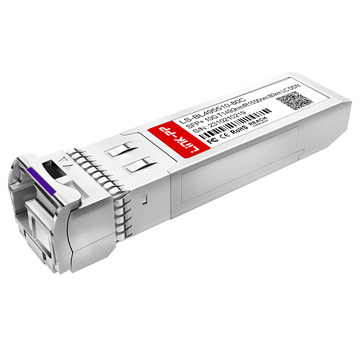
Among the available options on the market, the LINK-PP LS-MM851G-S5C 1000BASE-SX SFP Transceiver is a dependable choice for enterprise and data center networks. Designed for Gigabit Ethernet applications, this module operates at an 850nm wavelength and supports transmission distances of up to 550m over multimode fiber. It features an LC duplex connector, supports Digital Diagnostic Monitoring (DDM), and is manufactured under strict quality standards to ensure stable performance and long service life. The module is also carefully coded and tested for compatibility with a wide range of networking devices, making it a reliable solution for network upgrades and infrastructure expansion.
For businesses and network engineers looking for high-quality optical modules, LINK-PP provides both performance reliability and strong compatibility assurance. To learn more about the LS-MM851G-S5C 1000BASE-SX SFP Transceiver and other optical modules, visit the LINK-PP Official Store and explore the full range of professional fiber transceiver solutions.