Are you struggling to maintain ultra-low latency while connecting your high-capacity Palo Alto Networks firewalls? As modern data centers scale up to meet massive traffic demands, finding a reliable, high-speed connection that doesn't compromise on signal integrity can be a major challenge. That is exactly where the PAN-QSFP28-DAC-5M comes into play as a robust, cost-effective solution for your short-range 100G network architecture.
But what actually happens beneath the surface of this 5-meter passive copper cable to ensure such seamless hardware interoperability? From its specific 26AWG wire gauge requirements to complex PAN-OS software integration, every technical detail plays a critical role in preventing link flaps and data bottlenecks. Let’s dive deep into the essential hardware specs, signaling standards, and compliance protocols that make this specific cable a backbone for optimized firewall connectivity.
📑 Introduction to the Technical Specifications of PAN-QSFP28-DAC-5M
Understanding the foundational hardware specifications of high-speed interconnects is essential for building a resilient data center fabric. The PAN-QSFP28-DAC-5M serves as a critical localized link, combining standardized industry protocols with specialized enterprise firewall requirements. Exploring these baseline technical features reveals how this copper cable achieves optimal efficiency without the need for active optical components.
Architectural Classification: Defining the 100G QSFP28 Passive Standard
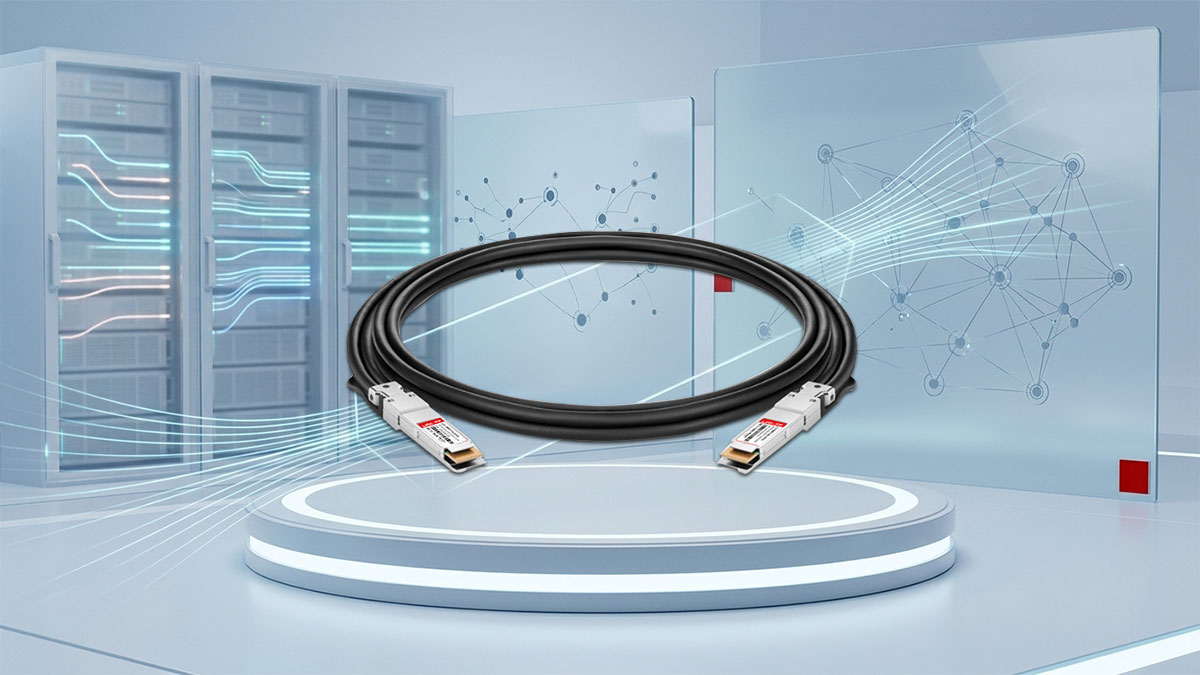
The PAN-QSFP28-DAC-5M operates as a passive direct attach copper cable engineered specifically for 100-Gigabit Ethernet applications. By utilizing the Quad Small Form Factor Pluggable (QSFP) architecture, it integrates four high-speed transmitting and receiving channels into a single compact interface. Because it is a passive assembly, it routes electrical signals directly across the copper pairs without incorporating power-consuming optical transceivers or amplifiers.
This passive design drastically reduces the overall hardware power consumption and minimizes potential thermal issues within high-density network racks. Furthermore, the standardized architectural classification ensures full compliance with mainstream industry form factors, making it a highly reliable choice for short-range top-of-rack deployments. Network engineers can safely deploy these cables to establish immediate, high-throughput connections between adjacent hardware units.
Hardware Interoperability Across Palo Alto Networks Firewalls
Achieving seamless hardware interoperability is a primary requirement when linking mission-critical security appliances. A standards-compliant PAN-QSFP28-DAC-5M is specifically pre-programmed and tested to ensure flawless compatibility with Palo Alto Networks enterprise firewalls. This targeted engineering eliminates typical component errors and ensures the firewall recognizes the cable instantly upon insertion.
When plugged into supported high-density slots, such as those found on the PA-5450 or PA-7000 Series, the cable establishes a secure physical link without requiring custom interface overrides. This hardware synergy prevents unexpected link drops and ensures consistent port behavior under heavy traffic loads. Consequently, administrators can confidently scale their security infrastructure knowing the physical layer perfectly matches their firewall hardware.
Physical Layer Baseline: Defining the Boundaries of 5-Meter Link Budgets
Deploying a passive copper cable over a 5-meter distance pushes the absolute physical boundaries of high-speed electrical signaling. At 100Gbps speeds, high-frequency signals degrade rapidly over copper, making strict physical layer baselines crucial for data integrity. Managing the link budget efficiently requires careful calibration of wire thickness, insulation, and shield shielding to counteract attenuation.
To illustrate how the physical layer baseline manages these strict signal boundaries over its maximum distance, the comprehensive specifications are detailed in the table below.
| Physical Layer Parameter | Target Specification | Operational Significance |
| Maximum Link Length | 5m (16.4 feet) | Defines the maximum physical reach for passive copper before signal attenuation requires active boosting. |
| Copper Conductor Gauge | 26AWG | Provides a thicker copper core to reduce electrical resistance and support longer 5m transmission limits. |
| Operating Frequency Range | Up to 12.89GHz per lane | Supports the high-frequency Nyquist rate necessary for clean 25Gbps NRZ signaling per channel. |
| Cable Attenuation (Max) | ~22dB at 12.89GHz | Represents the allowable signal loss over the entire 5m length that the receiving port must tolerate. |
| Shielding Type | Twinaxial (Twinax) Shielded | Utilizes independent foil shielding for each differential pair to eliminate external electromagnetic interference (EMI). |
| Bending Radius (Minimum) | 10x Outer Diameter | Ensures the internal copper structures are not warped during installation, preserving signal pathways. |
📑 Bandwidth and Signaling Specifications for PAN-QSFP28-DAC-5M
The transmission performance of high-speed enterprise links depends entirely on advanced data modulation and efficient lane architecture. Striking the perfect balance between raw data throughput and error correction is vital for maintaining firewall stability. Examining these core signaling behaviors highlights how the cable achieves massive data transfer speeds without sacrificing signal clarity over its 5-meter reach.
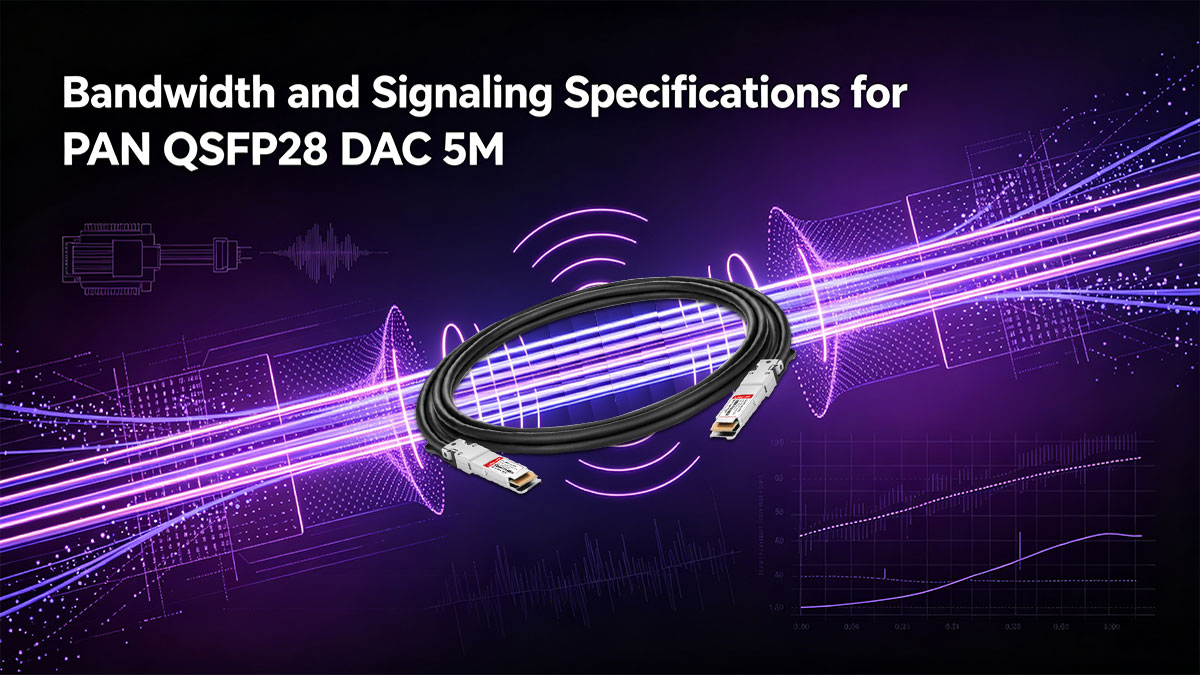
100Gbps Total Aggregate Bandwidth Capabilities
The primary function of the PAN-QSFP28-DAC-5M is to deliver a massive 100Gbps total aggregate bandwidth across a single physical link. This staggering throughput allows the cable to handle dense data center traffic, large-scale cloud applications, and rapid virtualization workloads simultaneously. By deploying this high-capacity pipeline, network administrators can easily eliminate data bottlenecks at the core security layer.
Providing a full 100Gbps capacity ensures that next-generation Palo Alto Networks firewalls can process deep packet inspection without physical port limitations. This massive bandwidth helps future-proof the network infrastructure as data demands continue to climb over time. Ultimately, this high-speed capability keeps enterprise environments running smoothly during peak traffic periods.
NRZ Modulation on 4x 25Gbps Independent Electrical Lanes
To achieve its impressive aggregate throughput, the PAN-QSFP28-DAC-5M splits the 100Gbps signal into four independent electrical lanes. Each individual lane operates at a data rate of 25Gbps, running concurrently to maximize efficiency. These four distinct pathways allow for clean, organized data separation across the internal copper twinaxial pairs.
The signaling on these four lanes relies on Non-Return-to-Zero (NRZ) modulation, a widely trusted and straightforward encoding format. NRZ modulation uses two distinct voltage levels to represent binary ones and zeros, minimizing the complexity of the internal physical layer design. This reliable modulation method ensures low-error data transitions while keeping the hardware highly power-efficient.
RS-FEC Requirements and Link Bit Error Rate Specs
Operating 25Gbps NRZ lanes over a 5-meter passive length introduces natural signal degradation that requires Reed-Solomon Forward Error Correction (RS-FEC). Palo Alto Networks firewalls mandate RS-FEC compliance on host ports to automatically detect and correct bit errors without resending packets. This mathematical correction mechanism is essential for maintaining a stable link over the cable's maximum distance.
By implementing strict RS-FEC protocols, the system successfully maintains a pristine link Bit Error Rate (BER) specification. This advanced error correction layer guarantees that minor signal drops do not escalate into catastrophic packet loss or link flapping. Consequently, the combination of high-quality copper and active host-side correction keeps your firewall data stream incredibly secure.
Ultra-Low Latency Advantages and Propagation Delay Metrics
One of the greatest benefits of the PAN-QSFP28-DAC-5M is its native ultra-low latency architecture compared to active optical cables. Because the passive copper design bypasses the need for optical-to-electrical conversions, data travels at near-light speeds through the cable. This near-instantaneous transmission makes it an ideal choice for time-sensitive financial transactions and real-time cloud computing.
The physical propagation delay metrics of this 5-meter copper assembly are practically negligible, measuring only a few nanoseconds total. Minimizing this transmission delay ensures that firewall processing engines receive and inspect packets without added hardware lag. For networks where microseconds matter, this passive copper link delivers superior, uncompromised speed.
📑 Physical Dimensions and Mechanical Specs of PAN-QSFP28-DAC-5M
The structural durability and physical layout of a high-speed copper assembly directly impact its long-term deployment stability. Mechanical specifications must balance robust cable thickness with the flexibility required to route through dense server racks safely. Examining these physical dimensions highlights how the design safeguards internal copper pairs while maintaining a highly secure physical connection.
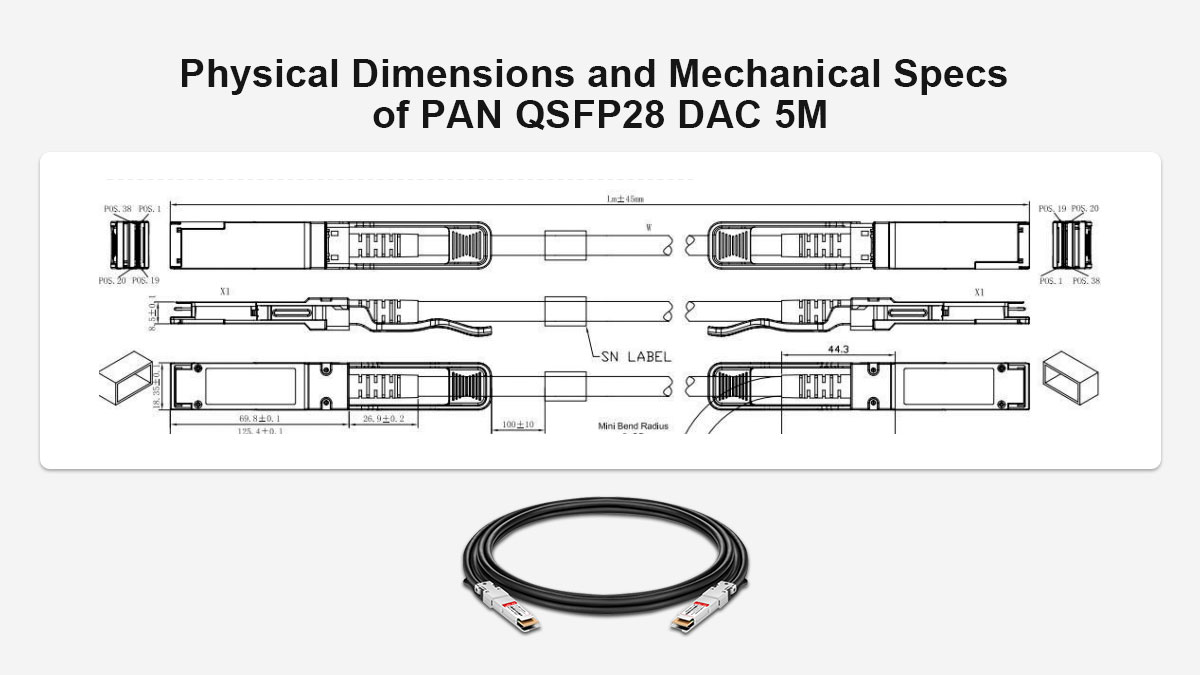
Wire Gauge Requirements for 5-Meter Transmission
Managing high-frequency signals over a 5-meter copper distance requires a substantial conductor thickness to prevent severe signal drop. The PAN-QSFP28-DAC-5M addresses this challenge by utilizing a heavy-duty 26AWG (American Wire Gauge) core. This specific wire gauge provides the ideal cross-sectional area to keep electrical resistance minimal across the entire length.
The following points outline the critical structural advantages of using this precise wire gauge:
- Thicker Conductor Core: Reduces natural signal attenuation significantly over the 5-meter run.
- Structural Stability: Prevents internal copper stretching during tight pull-through installations.
- Skin Effect Mitigation: Optimizes high-frequency pathing along the outer edges of the wire.
- Thermal Dissipation: Provides better heat management compared to thinner 30AWG alternatives.
Jacket Materials, Outer Diameter, and Cable Flexibility Ratings
Protecting the internal twinaxial lanes requires a tough outer jacket that can withstand tight bends and high rack temperatures. The PAN-QSFP28-DAC-5M features an outer jacket made of premium, flame-retardant PVC or Low Smoke Zero Halogen (LSZH) material. Due to the thick 26AWG wiring inside, the overall outer diameter is carefully optimized to maintain reasonable flexibility.
The physical properties and flexibility limits of this outer jacket are characterized below:
- Outer Diameter Size: Measures approximately 7.5mm to accommodate all shielded internal pairs.
- Flame-Retardant Jacket: Protects critical data infrastructure from accidental fire hazards.
- Bend Radius Limits: Requires a minimum bend radius of 10 times the cable OD.
- Space Management: Fits smoothly into standard vertical or horizontal cable managers.
Latch Mechanism and Retention Force for Secure Port Interlocking
Heavy data cables are susceptible to accidental dislodging caused by routine maintenance vibrations or gravity inside network racks. To prevent this, the PAN-QSFP28-DAC-5M features a highly resilient, zinc die-cast connector housing equipped with a secure pull-tab latch mechanism. This design ensures that once the connector clicks into the firewall port, it remains locked in place until intentionally released.
The specific retention force and mechanical latch properties include the following details:
- Die-Cast Zinc Shell: Offers superior mechanical durability and excellent EMI shielding.
- Color-Coded Pull Tab: Enables quick, effortless unlatching in packed, high-density environments.
- High Retention Force: Withstands a minimum pull-out force of 90 Newtons to prevent accidental disconnection.
- Mating Cycle Lifespan: Rated for over 100 insertions and extractions without mechanical degradation.
📑 Electrical Properties and Signal Integrity Data of PAN-QSFP28-DAC-5M
Maintaining exceptional signal integrity is paramount when transmitting high-frequency data over passive copper mediums. Electrical properties must be carefully regulated to prevent data corruption and ensure clean waveform deliveries at the receiving firewall port. Analyzing these underlying electrical metrics reveals how the cable limits noise and maximizes efficiency across a 5-meter span.
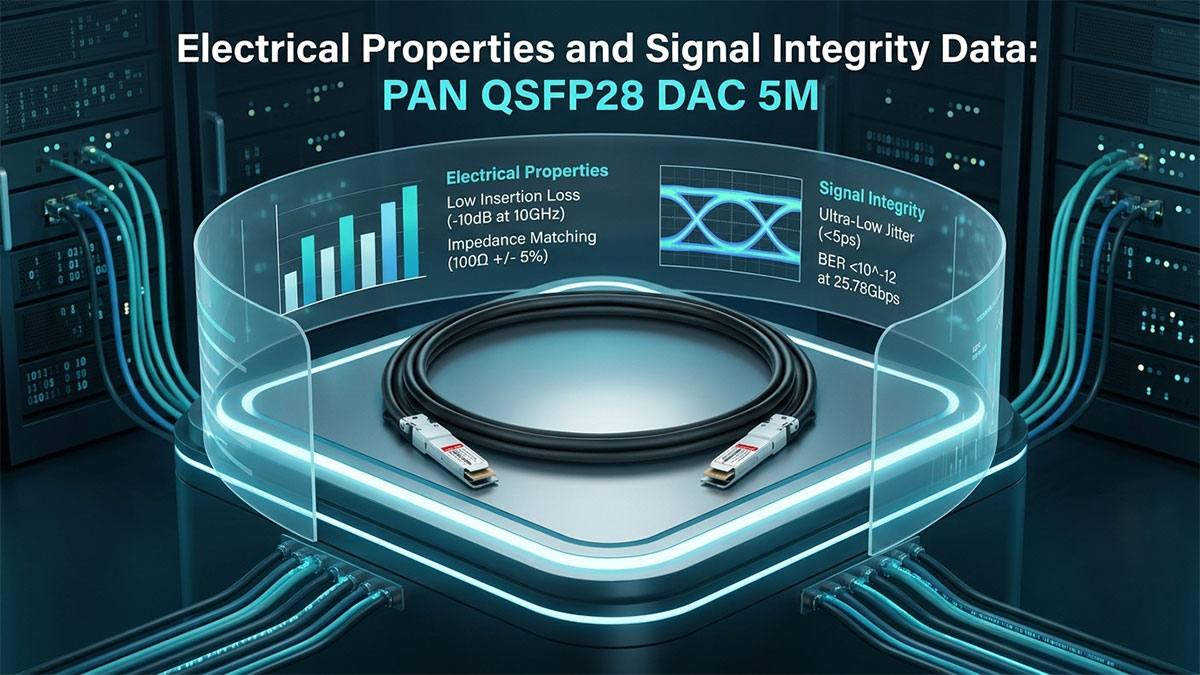
Voltage Ratings and Operating Current Thresholds
Because the PAN-QSFP28-DAC-5M is a passive cable assembly, it does not active draw substantial power from the host security appliance. However, it still operates within strict low-voltage limits to safely read the integrated EEPROM chip inside the connector shell. This memory map chip operates seamlessly on a standard 3.3V power supply provided directly by the host port.
The maximum operating current for this passive hardware remains incredibly low, typically staying well below 50mA per connector end. This negligible power consumption profile helps keep firewall chassis temperatures low and saves valuable power grid overhead in crowded data centers. Consequently, the cable offers a highly sustainable electrical footprint during long-term operational cycles.
Differential Impedance and Crosstalk Mitigation Techniques
Preserving stable impedance boundaries across the entire 5-meter twinaxial line is critical for preventing signal reflections and data distortion. The PAN-QSFP28-DAC-5M relies on precise physical spacing and high-grade insulation to isolate the high-speed channels. Advanced shielding methodologies are built directly into the copper pairs to block both internal and external electrical noise.
To understand how the cable maintains electrical balance and prevents channel interference, refer to the detailed performance specifications outlined below.
| Electrical Parameter | Target Value / Limit | Mitigation & Design Purpose |
| Differential Impedance | 100Ω ± 5Ω | Matches the standard host PCB impedance to eliminate harmful signal reflections along the path. |
| Common Mode Impedance | 25Ω to 35Ω | Absorbs common mode noise variations to keep the differential data stream clean and readable. |
| Near-End Crosstalk (NEXT) | Less than -30dB | Prevents transmitting signals on one lane from leaking into adjacent receiving lanes at the connector head. |
| Far-End Crosstalk (FEXT) | Less than -35dB | Minimizes cumulative noise interference as signals arrive at the far end of the 5-meter run. |
Insertion Loss and Return Loss Budgets for 5m Passive Lines
Insertion loss represents the natural decrease in signal strength that happens when high-frequency data moves along a 5-meter copper pathway. At a 12.89GHz Nyquist frequency, the PAN-QSFP28-DAC-5M is engineered to stay safely within the maximum insertion loss budget mandated by industry standards. This controlled attenuation ensure that the receiving firewall port can easily interpret incoming data packets.
Simultaneously, return loss budgets are strictly managed to limit the amount of electrical energy that bounces back toward the transmitter source. By optimizing internal circuit transitions inside the QSFP28 housing, the cable maintains high return loss margins across all active lanes. This strict electrical management guarantees a highly reliable data link, keeping packet transmission smooth and error-free.
📑 Industry Compliance and Standard Specifications of PAN-QSFP28-DAC-5M
Adhering to global networking and safety standards guarantees that high-speed hardware functions uniformly across diverse enterprise environments. Industry compliance ensures that data transmission protocols, mechanical form factors, and environmental impacts meet strict global benchmarks. Exploring these regulatory frameworks demonstrates how the cable achieves safe, standardized, and highly predictable performance metrics.
SFF-8665 and SFF-8636 Memory Map Specifications
The mechanical and electrical architecture of the PAN-QSFP28-DAC-5M strictly follows the SFF-8665 specification. This industry-standard defines the precise physical dimensions, pinning configurations, and mating interfaces for the QSFP28 connector shell. By adhering to this standard, the cable guarantees a perfect physical fit into any compliant host transceiver slot.
Simultaneously, the internal EEPROM management relies on the SFF-8636 memory map specification. This protocol organizes how diagnostic data, vendor IDs, and serial numbers are stored and retrieved by the host firewall. Because the digital data mapping is highly standardized, the firewall can instantly read the cable's performance capabilities upon insertion.
IEEE 802.3bj 100GBASE-CR4 Protocol Standards
For raw data transmission, the PAN-QSFP28-DAC-5M fully complies with the IEEE 802.3bj 100GBASE-CR4 protocol standard. This specific Ethernet benchmark regulates 100Gbps signaling over four lanes of physical twinaxial copper wiring. Following this framework ensures that the cable satisfies all global guidelines for high-speed local area networks.
The 100GBASE-CR4 standard strictly dictates the maximum allowable signal loss and cross-lane timing variations over passive copper. By meeting these rigorous requirements, the cable maintains flawless packet synchronization and data integrity over its full 5-meter reach. This complete protocol alignment provides a reliable backbone for next-generation network infrastructures.
RoHS, CE, and FCC Environmental Safety Certifications
Beyond raw networking performance, the physical construction of the PAN-QSFP28-DAC-5M meets strict global environmental and safety standards. The cable carries full RoHS compliance, ensuring it is built entirely free of hazardous substances like lead, mercury, and cadmium. This green manufacturing approach protects both the environment and the data center technicians who handle the hardware.
Additionally, the assembly boasts CE and FCC certifications, validating that it passes rigorous electrical safety and electromagnetic interference testing. These certifications guarantee that the cable will not emit harmful radio frequency noise that could disrupt nearby server rack hardware. Consequently, enterprise businesses can safely deploy these cables globally, knowing they meet all legal and environmental safety mandates.
📑 PAN-OS Integration and Firewall Software Specs for PAN-QSFP28-DAC-5M
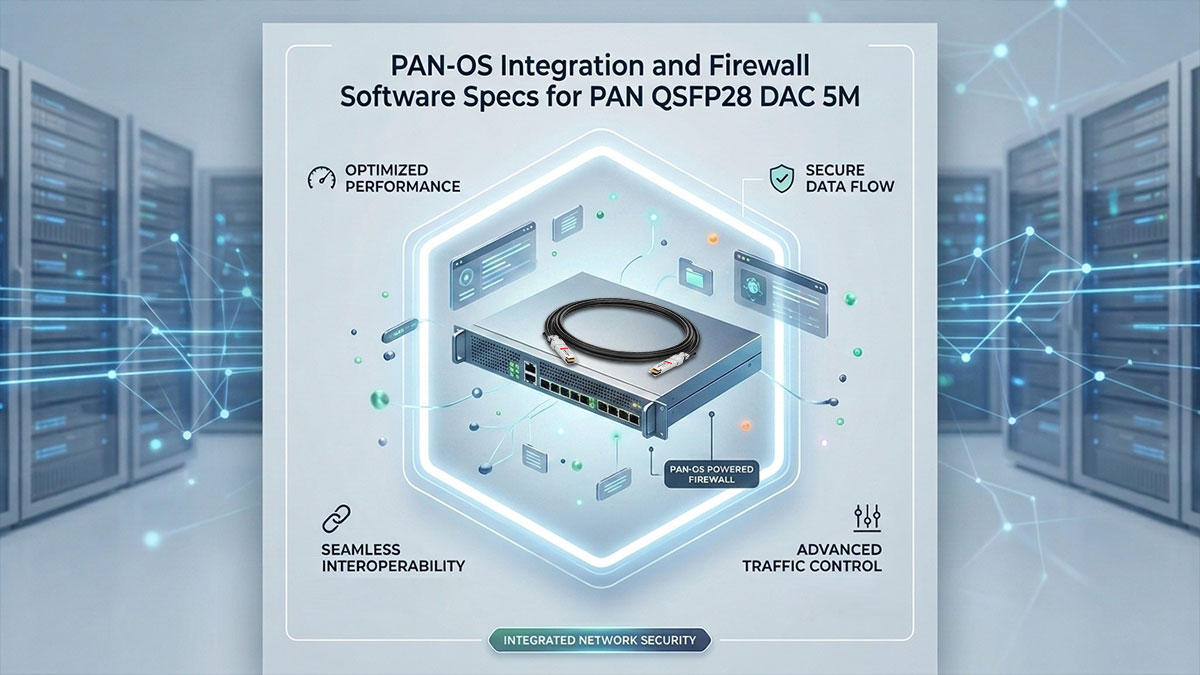
Deploying high-speed hardware requires seamless coordination with PAN-OS to ensure accurate port provisioning and precise policy enforcement. Palo Alto Networks incorporates automated system telemetry to discover, monitor, and manage 100G copper connections seamlessly. Examining these genuine PAN-OS software specifications shows how the operating system tracks link uptime and simplifies day-to-day administrative tasks.
EEPROM Coding and Transceiver Identification in PAN-OS
Upon inserting the PAN-QSFP28-DAC-5M into a compatible firewall port, PAN-OS immediately reads the industry-standard SFF-8636 memory map on the internal EEPROM chip. This chip contains static vendor data, part numbers, and serial codes that identify the cable as a compliant accessory. This automated hardware handshake ensures that the firewall natively provisions the physical interface to run at 100Gbps without requiring manual configuration overrides.
Once this standard identification process finishes, the PAN-OS WebUI and system logs update to reflect a valid, connected 100GBASE-CR4 link. If an unsupported or improperly coded cable is used, the system may log an unrecognized transceiver alert or log a warning entry within the system logs. This clear visibility guarantees that administrators can quickly verify if the physical layer meets standard operational profiles.
CLI Diagnostics: Monitoring Port Status, Speed, and Duplexing
Network engineers can leverage the PAN-OS Command Line Interface (CLI) to extract real-time diagnostic telemetry from the physical link. Running the operational command show transceiver ethernetX/Y allows administrators to view the digital optical monitoring (DOM) data and link parameters directly. This immediate software visibility helps technical support teams isolate physical layer issues and verify connection integrity within seconds.
The CLI output provides highly specific data regarding the health and status of the connection. Technicians can easily monitor port operational status, configured speed, and duplexing parameters to ensure the link operates at a full 100Gbps. Having access to these direct operational metrics ensures that any physical layer fault over the 5-meter distance can be quickly isolated during troubleshooting.
Link Aggregation Specifications and LACP Link Flap Prevention
To maximize available throughput, the PAN-QSFP28-DAC-5M can be bundled into an Aggregate Interface (AE) group managed by the Link Aggregation Control Protocol (LACP). PAN-OS treats these physical links as member ports of a single logical channel, allowing for balanced traffic distribution across multiple 100G paths. This deployment strategy drastically boosts overall bandwidth while providing robust physical redundancy at the security perimeter.
Because high-speed copper links rely on stable physical connections, standard LACP timers (fast or slow) are utilized to manage state synchronization between the firewall and the peer switch. If a port experiences physical instability, standard LACP protocol timers control how quickly the member link is removed from the active bundle to prevent packet corruption. This adherence to IEEE 802.1AX standards ensures predictable failover behavior without causing widespread disruption to the firewall's core routing table.
📑 Conclusion: Optimizing 100G Firewall Connectivity with the PAN-QSFP28-DAC-5M
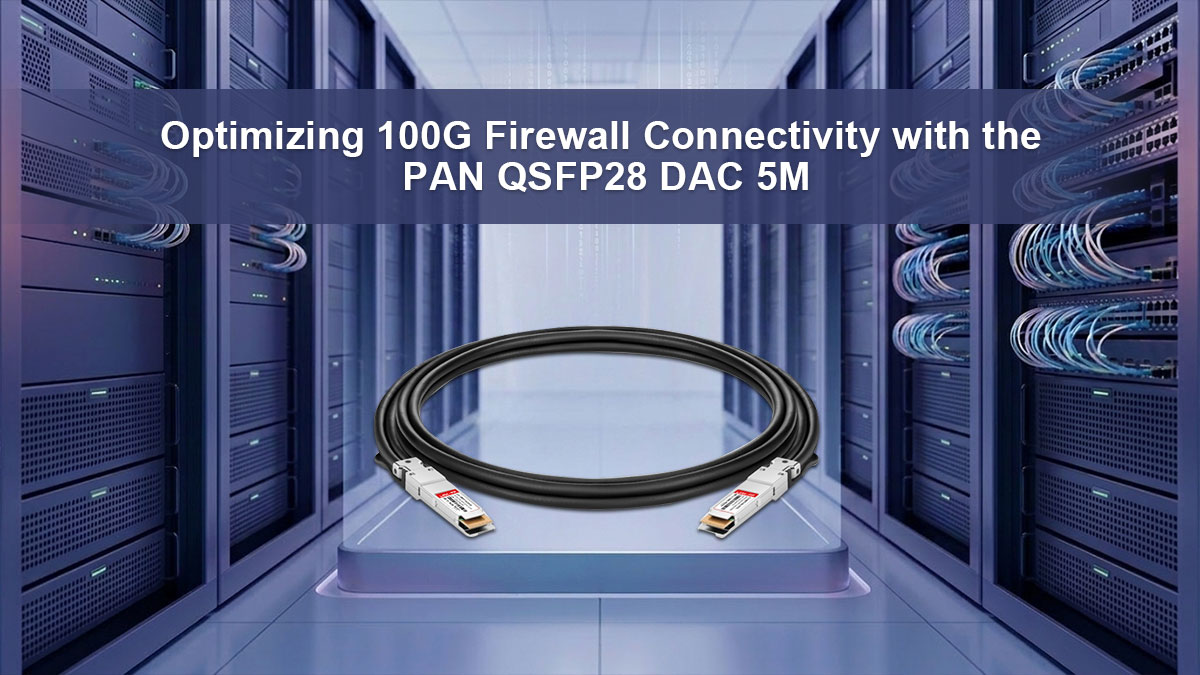
Deploying the PAN-QSFP28-DAC-5M offers a highly efficient, low-latency pathway to maximize your data center's 100Gbps network infrastructure. By combining robust 26AWG copper wiring with strict IEEE 802.3bj 100GBASE-CR4 compliance, this passive interconnect guarantees pristine signal integrity over its full 5-meter span. Furthermore, seamless PAN-OS software integration provides administrators with reliable CLI diagnostics and predictable LACP aggregate throughput without any complex manual configurations.
Investing in high-quality, standardized physical layers is the definitive step to preventing costly packet corruption and unexpected interface link drops. If you are ready to enhance your network perimeter with premium components built for rigorous enterprise environments, explore your options at the LINK-PP Official Store. Securing the right hardware compatibility today ensures your high-capacity firewalls maintain maximum security uptime and peak transmission speeds for years to come.