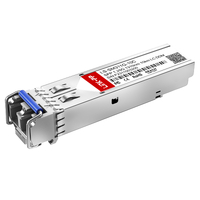






























Are you trying to figure out how the MGBLX1 SFP module fits into your small business ecosystem to boost network performance? As data demands grow, understanding the hardware architecture, MSA compliance, and hot-swappable design of this transceiver is essential for building a reliable infrastructure. How does this tiny component seamlessly interface with your switches to deliver stable Gigabit Ethernet throughput?
To get the most out of your deployment, have you looked into the specific optical transmission specs, single-mode fiber distances, and laser wavelengths that drive this technology? From transmitter power boundaries to commercial temperature limits, every technical metric plays a critical role in preventing signal loss and maximizing uptime. Let’s dive into the core specifications, media types, and environmental standards that define this essential small business hardware.
🔽 Understanding the Cisco MGBLX1 Form Factor and Architecture
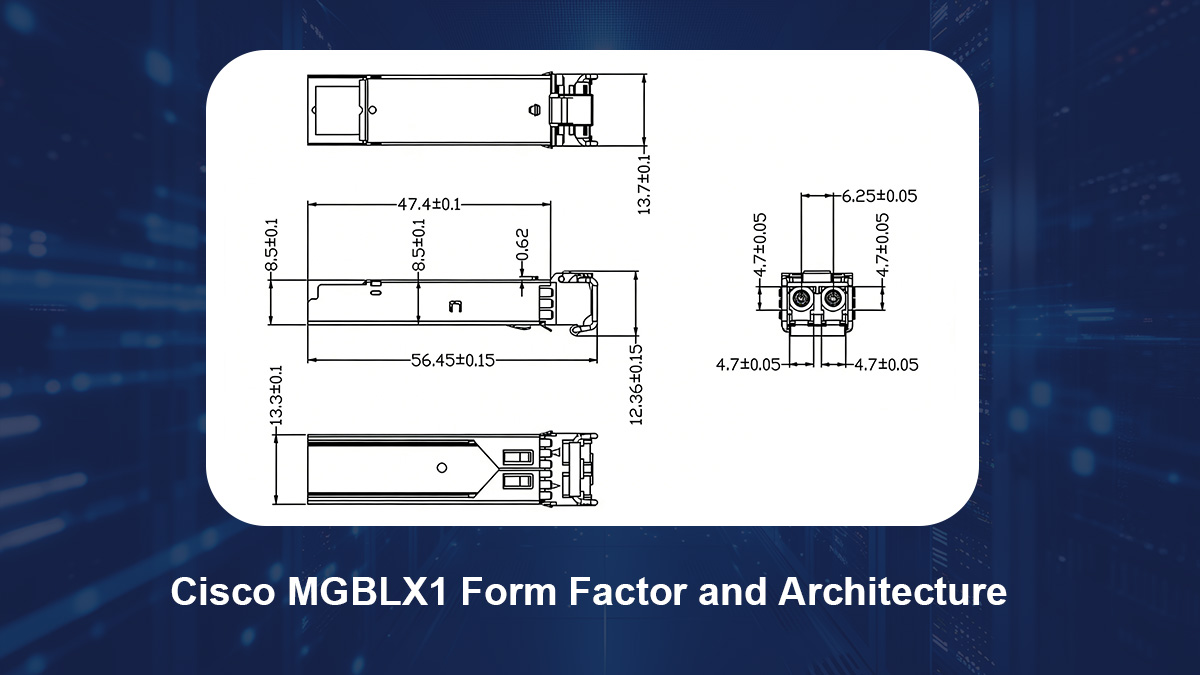
The Cisco MGBLX1 is a dedicated 1000BASE-LX SFP transceiver engineered to bridge electrical switch backplanes with long-reach optical transport networks. Analyzing its physical form factor and internal architecture reveals the mechanical and electrical engineering choices that guarantee hardware interoperability. A precise breakdown of these structural parameters ensures system administrators can optimize line-card density and maintain continuous link availability.
Role of the MGBLX1 Module within the Small Business Ecosystem
Operating as a high-density 1000BASE-LX SFP transceiver, the MGBLX1 provides critical media conversion layer functionality within the Cisco Small Business managed switch portfolio. It acts as a physical-layer (Layer 1) interface that translates parallel electrical buses into serial optical streams for long-haul transmission.
This module allows enterprise networks to scale seamlessly by extending localized LAN topologies into wide-area campus environments without necessitating chassis overhauls. By facilitating direct fiber-optic links between core switches and remote edge nodes, the transceiver ensures high-speed, point-to-point data transmission across the core infrastructure.
SFP Multi-Source Agreement (MSA) Compliance Metrics
The architectural integrity of the MGBLX1 relies on strict adherence to the SFP Multi-Source Agreement (MSA) standards. This compliance dictates rigid physical dimensions, pin-out configurations, and low-voltage electrical interfaces to eliminate proprietary hardware restrictions.
By meeting these standardized MSA metrics, the 1000BASE-LX SFP module guarantees uniform EEPROM memory map layouts, allowing host switches to accurately read diagnostics and vendor data. This universal alignment ensures predictable electrical impedance and seamless cross-platform interoperability in any standardized SFP slot.
Hot-Swappable Input/Output Mechanical Design
The MGBLX1 features an advanced hot-swappable input/output (I/O) mechanical design that permits insertion and extraction while the host system is fully energized. This hot-pluggable architecture relies on a staggered pin alignment where ground contacts engage before power rails, preventing transient electrical surges from damaging the circuitry.
The physical housing is equipped with a secure bale-clasp latching mechanism that prevents accidental disconnection due to cable tension or cabinet vibration. This robust mechanical framework allows network administrators to perform live upgrades, port provisioning, and routine component replacements without disrupting the active data plane.
Duplex LC Connector Interface and Geometry Specs
For optical termination, the MGBLX1 utilizes a highly precise duplex LC connector interface that adheres to strict physical geometry specifications. The small form-factor LC housing uses 1.25mm ceramic ferrules, doubling port density compared to legacy SC connectors on high-density enterprise switch faces.
The mechanical interface features an internal spring-loaded alignment mechanism that ensures sub-micron physical contact between the fiber core and the internal optical sub-assemblies (OSA). This exact geometric tolerance minimizes back-reflection and insertion loss, which are vital for maintaining the strict optical power budgets required by 1000BASE-LX transmission profiles.
🔽 Cisco MGBLX1 Media Types and Cabling Specifications
Selecting the correct fiber-optic media and understanding its physical properties is essential for achieving optimal data integrity over long distances. The Cisco MGBLX1 1000BASE-LX SFP transceiver relies on precise cabling parameters to ensure efficient light propagation and minimal signal degradation. A technical review of these media specifications allows network engineers to correctly plan their infrastructure layout and avoid common deployment pitfalls.
Core/Cladding Diameters for Single-Mode Fiber (SMF) Compatibility
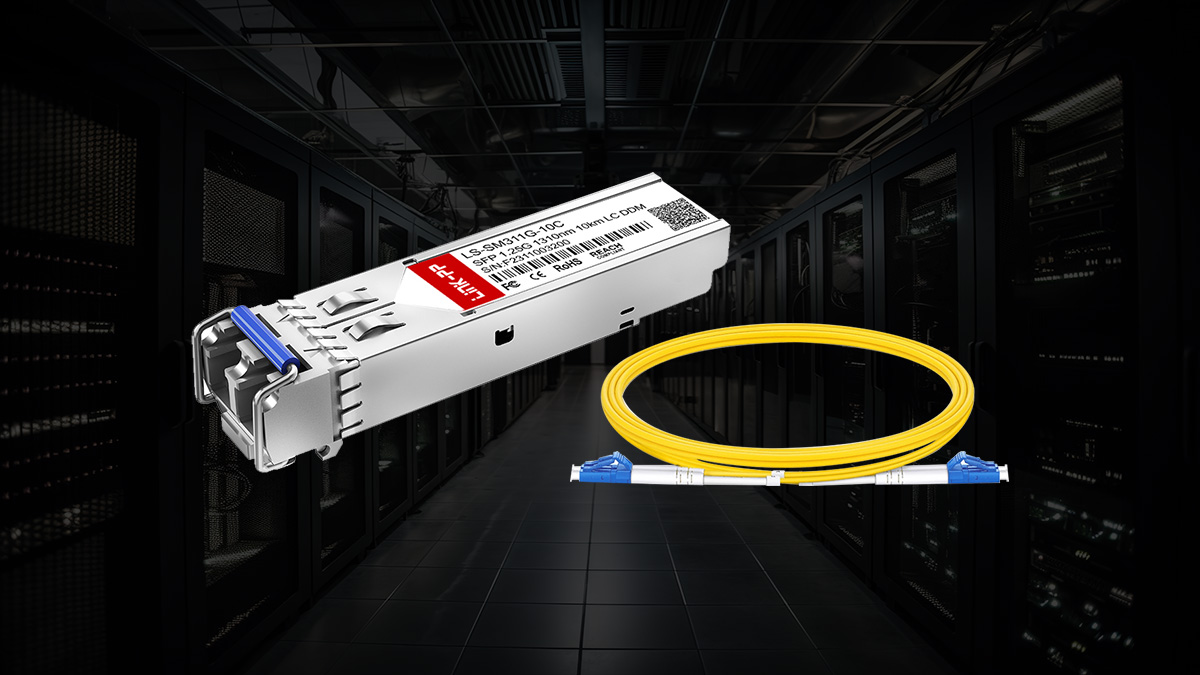
The MGBLX1 transceiver is primarily engineered for seamless compatibility with standard Single-Mode Fiber (SMF). This media typically features a microscopic 9µm light-carrying core surrounded by a 125µm protective glass cladding, often abbreviated as 9/125µm fiber.
This narrow core design allows only a single spatial mode of light to travel down the cable, which virtually eliminates modal dispersion over long distances. By matching the 1000BASE-LX SFP module with these precise core/cladding dimensions, the network maintains structural stability and excellent signal clarity.
Maximum Transmission Distance and Link Length Limits
When deployed over standard single-mode cabling, the MGBLX1 module can achieve a maximum transmission distance of up to 10km (6.2 miles). However, reaching this upper link length limit depends heavily on the physical condition of the fiber pathway and physical connection points. Real-world installations often introduce structural impairments that can attenuate the optical signal and shorten the effective reach.
The following table outlines the primary physical factors that restrict transmission distance and dictate the ultimate boundaries of your link length:
| Link Restriction Factor | Technical Impact on MGBLX1 Transmission |
| Fiber Attenuation | Natural glass impurities cause light loss, typically rated at 0.35dB/km for a 1310nm wavelength. |
| Splice & Connector Loss | Every fusion splice or duplex LC patch panel connection introduces localized signal insertion loss. |
| Chromatic Dispersion | Light pulses naturally spread out over long distances, causing potential bit errors if limits are exceeded. |
Theoretical vs. Practical Link Budget Boundaries
Calculating the link budget for the MGBLX1 requires a clear understanding of the difference between mathematical theory and real-world deployment. Theoretically, the link budget is simply the maximum allowable light loss calculated by subtracting the receiver sensitivity from the transmitter power.
In practical enterprise environments, engineers must incorporate a safety margin — typically 2.0dB to 3.0dB — to account for component aging and unexpected cable repairs. Relying strictly on theoretical limits without this operational buffer can lead to intermittent packet dropouts and degraded 1000BASE-LX SFP performance over time.
🔽 Optical Transmission and Laser Specifications of MGBLX1
The optical transmitter defines the core performance boundaries of any long-reach fiber-optic communication link. Inside the Cisco MGBLX1 1000BASE-LX SFP transceiver, highly calibrated laser components convert electrical data into precise pulses of light. Understanding these exact laser dynamics allows network professionals to guarantee optimal signal integrity and predictable performance across the network infrastructure.
Transmitter Central Wavelength Range (1310nm)
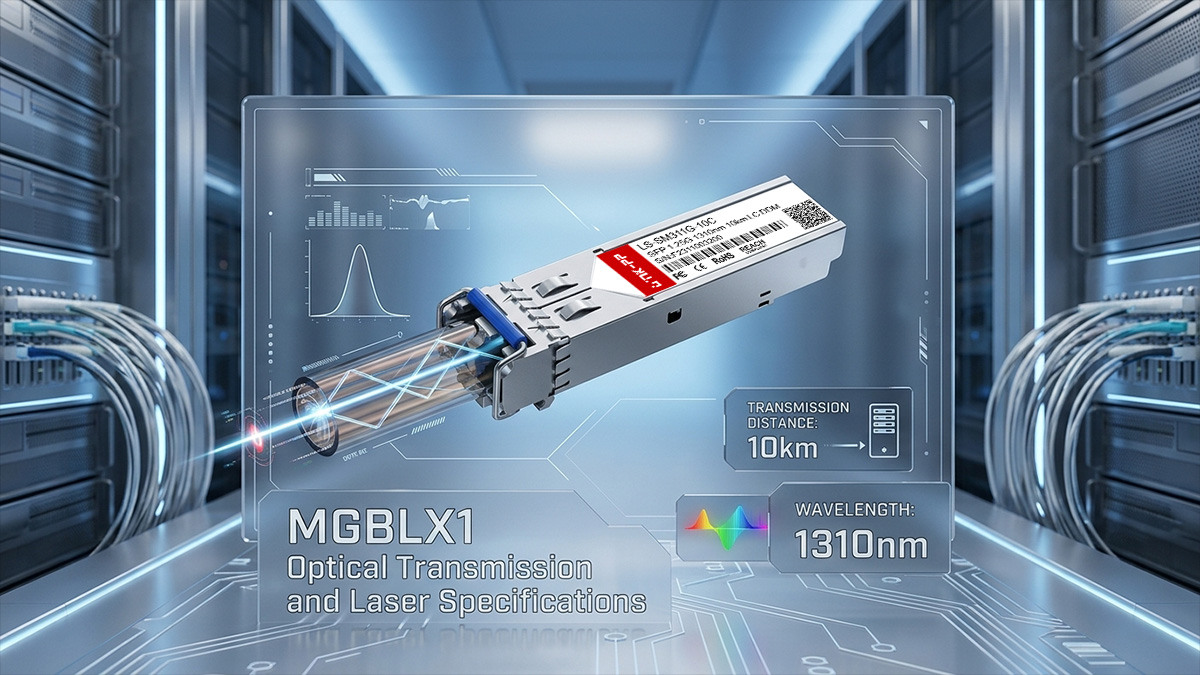
The MGBLX1 transceiver relies on a Fabry-Perot (FP) semiconductor laser that is strictly tuned to a central wavelength of 1310nm. This specific spectral band is selected because standard single-mode glass fiber naturally exhibits exceptionally low optical attenuation around the 1310nm region. By operating within this narrow wavelength window, the 1000BASE-LX SFP module minimizes overall signal loss as light travels down the cable run.
Maintaining this precise central frequency ensures maximum compatibility with existing long-haul telecommunications standards and fiber networks. The 1310nm band allows the light pulses to travel efficiently across kilometers of fiber without suffering from severe signal fading. Consequently, this specific wavelength choice provides the physical foundation for the module's stable and predictable long-distance performance.
Average Optical Transmit Power (TX) Boundaries
The average optical transmit power of the MGBLX1 module represents the amount of light energy injected directly into the connected single-mode fiber core. This launch power typically operates within a strictly defined range, usually spanning from a minimum of -9.5dBm to a maximum of -3dBm. Keeping the transmit power bounded within these thresholds ensures that the light signal is strong enough to travel long distances without being completely absorbed by the glass.
If the launch power falls below the minimum boundary, the light pulse will fade out before reaching the remote destination switch. Conversely, exceeding the maximum transmit power limit can overload the receiving component on the opposite end, causing severe data distortion. Network engineers must verify these TX boundaries during physical layer testing to guarantee stable, continuous link operations.
Worst-Case Optical Link Power Budget Analysis
A worst-case optical link power budget analysis evaluates the performance of the MGBLX1 under the most punishing physical operating conditions. This calculation subtracts the absolute lowest receiver sensitivity from the absolute minimum transmit power to establish a baseline safety margin. For a standard 1000BASE-LX SFP module, this worst-case calculation typically yields a usable power budget of approximately 10.5dB.
When designing a network layout, all potential loss factors — such as cable attenuation, patching panels, and fusion splices — must be added together to ensure they do not exceed this 10.5 dB limit. If the total calculated physical loss approaches this boundary, the link leaves zero room for component aging or minor fiber bends. Incorporating a worst-case analysis ensures that the optical connection remains functional even as the physical hardware degrades over time.
Optical Extinction Ratio and Pulse Shape Specs
The optical extinction ratio is a critical metric that measures the MGBLX1 laser's ability to cleanly differentiate between a digital "1" and a digital "0". It is expressed as the power ratio between the laser’s peak high state and its absolute low state, with standard compliance requiring a minimum ratio of 9dB. A high extinction ratio means the receiving module can easily distinguish the distinct transitions in the incoming data stream.
Pulse shape specifications further define the geometric symmetry and rise/fall times of the transmitted light waves to prevent inter-symbol interference. This 1000BASE-LX SFP transceiver is engineered to match a strict eye-diagram mask, which guarantees that the light pulses turn on and off cleanly without ringing. These precise pulse shapes ensure that high-speed data translates accurately at 1000Mbps without dropping critical packets.
🔽 Optical Receiver Characteristics of the MGBLX1 Module
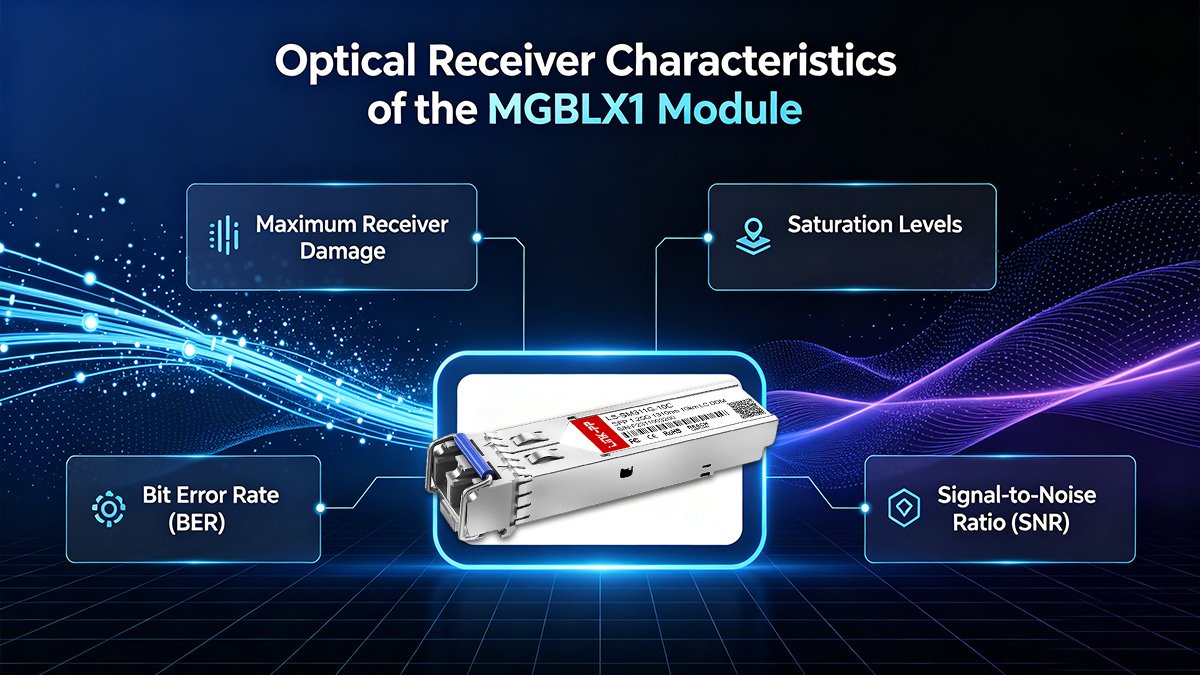
The performance of an optical link depends as much on the receiving components as it does on the transmitter. Inside the Cisco MGBLX1 1000BASE-LX SFP transceiver, an advanced optical receiver converts incoming light pulses back into clean electrical signals for the host switch. Analyzing these specific receiver parameters ensures that incoming data streams are processed accurately without signal corruption over long distances.
Receiver Sensitivity Thresholds for 1000BASE-LX
Receiver sensitivity defines the minimum amount of optical power that the MGBLX1 module requires to accurately decode an incoming signal. For standard 1000BASE-LX SFP hardware, this sensitivity threshold typically sits at around -20dBm. If the incoming light drops below this critical level, the receiver will struggle to distinguish data pulses from background thermal noise.
Maintaining a signal level safely above this minimum threshold is vital for preventing packet loss across long-distance single-mode fiber runs. Network engineers must carefully calculate fiber attenuation to guarantee that light arriving at the remote port meets this baseline specification. When the incoming power is optimal, the module achieves highly reliable, high-speed data translation.
Maximum Receiver Damage and Saturation Levels
While the receiver must be sensitive enough to detect weak signals, it also features strict boundaries regarding maximum incoming light power. The saturation level represents the upper limit of optical power — typically around -3dBm — before the internal photodiode becomes overwhelmed. Exceeding this saturation threshold leads to severe signal distortion, resulting in immediate packet dropouts and data stream errors.
Furthermore, there is a separate, absolute maximum receiver damage threshold that must never be crossed to prevent permanent hardware destruction. If a high-power laser is connected directly to the MGBLX1 receiver without proper attenuation, the intense thermal energy can permanently fry the sensitive internal optics. Utilizing inline optical attenuators on very short fiber runs is a standard industry practice to keep power safely within these safe operational boundaries.
Receiver Central Wavelength Operating Window
The optical receiver inside the MGBLX1 module is engineered with a precisely calibrated wavelength operating window to ensure flawless signal reception. Although it is fundamentally optimized to pair with a 1310nm transmitter, the internal photodetector possesses a wide spectral tolerance to accommodate minor variations in incoming light. This flexible design allows the receiver to capture optical pulses accurately even if the remote laser source experiences minor operational shifts.
This wide operational window ensures that the 1000BASE-LX SFP transceiver can seamlessly interface with a variety of compliant standard-matching lasers without losing link stability. The internal optical sub-assembly is designed to maximize responsiveness within this target spectrum while filtering out unwanted modal noise. Consequently, this accommodating wavelength window provides exceptional deployment flexibility across diverse small business fiber infrastructures.
Bit Error Rate (BER) and Signal-to-Noise Ratio (SNR) Metrics
The ultimate measure of the MGBLX1 receiver's performance relies on maintaining a strict balance between data accuracy and signal clarity. To guarantee enterprise-grade data integrity, the 1000BASE-LX SFP module adheres to rigid electrical performance metrics during high-speed operations.
The receiver evaluates and maintains signal quality through the following specific operational benchmarks:
- Target Bit Error Rate: The system maintains a strict BER of 10⁻¹² or better.
- Bit Accuracy: This ratio ensures no more than one corrupted bit occurs per one trillion transmitted bits.
- Minimum Signal-to-Noise Ratio: The receiver requires a high SNR to cleanly isolate data from background noise.
- Jitter Control: Maintaining low electrical jitter prevents time-alignment errors during data decoding.
🔽 Environmental Specifications and Deployment Reliability of MGBLX1
Deploying networking hardware requires careful consideration of the physical environments where switches and transceivers operate. The Cisco MGBLX1 1000BASE-LX SFP transceiver is engineered to maintain high structural reliability and operational stability under specific atmospheric conditions. Understanding these strict environmental boundaries allows network administrators to prevent hardware degradation and guarantee a long operational lifespan for their equipment.
Operating Temperature Ranges (Commercial 0°C to 70°C)
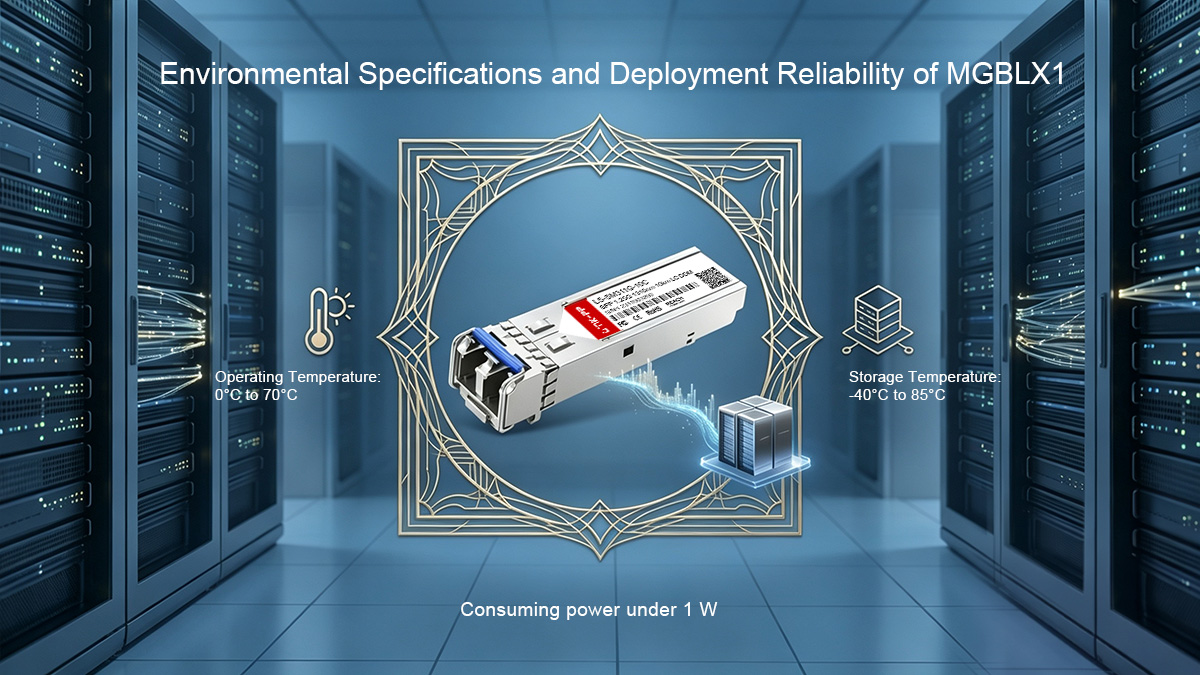
The MGBLX1 transceiver is built to operate within a standard commercial temperature range spanning from 0°C to 70°C (32°F to 158°F). Maintaining ambient server room temperatures within this specific window is critical for keeping the internal optical components properly calibrated. If the operating environment drops below freezing or exceeds the upper thermal boundary, the module's performance can degrade rapidly.
When temperatures climb too close to the 70°C limit, the internal laser transmitter can experience increased thermal stress, leading to output power fluctuations. This variance can directly impact the stability of your 1000BASE-LX SFP link, resulting in intermittent packet loss or complete connection drops. Therefore, ensuring adequate airflow around the host switch chassis is essential for keeping the module within its safe operational sweet spot.
Storage Temperature and Relative Humidity (Non-Condensing) Limits
Before deployment, the MGBLX1 module must be kept under regulated conditions to prevent environmental degradation of its sensitive internal optics. The hardware supports a broad storage temperature range from -40°C to 85°C, ensuring it survives transport and warehousing without structural damage. However, atmospheric moisture levels must be monitored carefully during both storage and active deployment to avoid internal condensation.
The transceiver requires strict adherence to distinct relative humidity boundaries depending on its operational state. While the module can handle a storage humidity range of 5% to 90% non-condensing, its active operating humidity window is tighter, requiring 10% to 85% non-condensing. Exceeding these moisture thresholds can cause liquid to condense inside the duplex LC interface, fogging the lenses and causing catastrophic signal attenuation on your 1000BASE-LX SFP link.
Power Consumption and Heat Dissipation Metrics per SFP Port
Energy efficiency is a key design factor for the MGBLX1, especially when fully populating a high-density small business switch line card. This 1000BASE-LX SFP transceiver is engineered to consume minimal electrical power, typically drawing less than 1 Watt of electricity per active port. This low power draw reduces the overall strain on the host switch's internal power supply unit during peak traffic periods.
Because electrical consumption directly correlates with thermal output, low power usage results in minimal localized heat dissipation. Minimizing heat generation within the individual SFP ports prevents the formation of destructive thermal hotspots inside the switch chassis. This efficient thermal profile ensures that nearby modules remain cool, thereby maximizing the collective reliability and uptime of the entire network node.
🔽 Cisco MGBLX1 Hardware Performance and Data Rates
Evaluating the raw processing power and standardized benchmarks of a transceiver is critical for predicting its impact on network traffic. The Cisco MGBLX1 1000BASE-LX SFP transceiver is engineered to deliver high-speed, predictable data throughput without introducing performance bottlenecks. Examining these underlying hardware metrics allows network architects to ensure continuous compatibility and flawless frame transmission across the local infrastructure.

Gigabit Ethernet Throughput (1000Mbps) Baseline
The core function of the MGBLX1 transceiver is to provide a reliable Gigabit Ethernet throughput baseline of exactly 1000Mbps. This bidirectional data rate ensures that upstream and downstream traffic can move simultaneously at wire speed without dropping frames. By maintaining this steady, unthrottled transmission speed, the module effectively prevents data bottlenecks at the switch's uplink port.
This consistent 1000Mbps capacity is vital for modern small business networks handling high-bandwidth applications like voice, video, and large data backups. Because the underlying hardware is dedicated to full-duplex operation, it eliminates collision domains entirely on the optical link. Consequently, businesses can expect predictable data delivery speeds even during periods of peak network activity.
IEEE 802.3z Gigabit Ethernet Standard Compliance
The hardware architecture of the MGBLX1 is strictly engineered to comply with the IEEE 802.3z Gigabit Ethernet standard. This specific industry regulation defines the physical layer specifications for data transmission over fiber-optic cabling, specifically categorizing this module as a 1000BASE-LX solution. Adhering to this universal framework ensures that the module speaks the exact same signaling language as any other compliant device.
Because it follows these rigid IEEE guidelines, the 1000BASE-LX SFP transceiver guarantees seamless interoperability across diverse networking environments. This standard compliance dictates how data is encoded, mapped, and transmitted into light waves, protecting the system from proprietary communication errors. This level of standardization provides enterprise-level stability, ensuring the module functions perfectly within any compliant Cisco or multi-vendor matrix.
Port Latency and Frame Transmission Benchmarks
In high-performance networking, low port latency is just as important as raw throughput for maintaining a smooth user experience. The MGBLX1 module features highly optimized internal sub-assemblies that process and convert signals with near-zero delay. This ultra-low latency ensures that incoming data packets are serialized and shot down the single-mode fiber almost instantly.
Maintaining exceptional frame transmission benchmarks prevents timing errors and minimizes packet jitter across long-distance runs. The transceiver handles standard Ethernet frame sizes effortlessly, processing everything from small control packets to jumbo frames without degrading speed. These strict performance benchmarks guarantee that time-sensitive business applications, such as VoIP and live server connections, operate without noticeable lag.
Electrostatic Discharge (ESD) Protection Thresholds
Physical reliability also extends to protecting the internal semiconductor circuitry from sudden electrical hazards during installation or maintenance. The MGBLX1 transceiver is integrated with robust electrostatic discharge (ESD) protection mechanisms built directly into its input/output pins. These specialized defensive components are designed to absorb and divert unexpected voltage spikes safely away from the delicate laser optics.
By meeting high structural ESD protection thresholds, the 1000BASE-LX SFP hardware can safely withstand routine handling by IT technicians. This protection is especially vital in dry, static-prone server room environments where hot-swapping modules is a frequent occurrence. Investing in such rugged electrical shielding ensures the transceiver maintains a long operational lifespan and suffers fewer premature hardware failures.
🔽 Summary of Cisco MGBLX1 Specs for Small Business Networks

In conclusion, the Cisco MGBLX1 stands out as a highly reliable, high-performance optical component tailored for expanding small business network infrastructures. By combining low power consumption, strict MSA compliance, and standard 1000BASE-LX throughput, this transceiver guarantees stable Gigabit connectivity up to 10km over single-mode fiber. Understanding these technical baselines allows businesses to build a robust, future-proof communications core.
To quickly review the essential metrics that define this 1000BASE-LX SFP transceiver, consider the following key operational specifications:
- Data Rate Baseline: Full-duplex Gigabit Ethernet throughput at exactly 1000Mbps.
- Optical Spectrum Window: Operates at a precise 1310nm central laser wavelength.
- Max Link Distance: Achieves up to 10km over standard 9/125µm single-mode fiber.
- Standard Compliance: Fully adheres to IEEE 802.3z and SFP MSA specifications.
- Thermal Boundaries: Designed for commercial operating environments from 0°C to 70°C.
- Form Factor Interface: Utilizes a space-saving duplex LC connector mechanical layout.
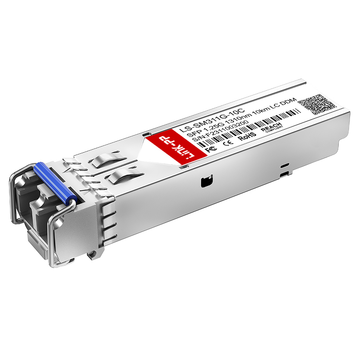
If you are looking to scale your network infrastructure cost-effectively without sacrificing enterprise-grade reliability, choosing a high-quality third-party compatible option is a smart alternative. The LINK-PP LS-SM311G-10C 1000BASE-LX SFP transceiver offers seamless compatibility with Cisco switches, matching every technical spec of the original MGBLX1 hardware. Visit the LINK-PP Official Store today to explore premium optical modules designed to maximize your network performance and uptime.