



































As enterprises and network operators continue to balance performance, flexibility, and cost, the 1000BASE-TX SFP module has become an increasingly discussed option for copper-based Gigabit connectivity. Unlike traditional fiber SFP, these modules enable seamless integration with existing RJ45 infrastructure, making them attractive for upgrades without major rewiring. However, many buyers are surprised to find that the price of a 1000BASE-TX SFP is often higher than expected, raising questions about what truly drives its cost.
Understanding the pricing behind 1000BASE-TX SFP modules is essential for making cost-effective decisions. From hardware complexity and compatibility requirements to market supply factors and vendor differences, multiple variables influence both current pricing and future trends. This article breaks down the real cost structure, compares alternatives, and provides practical guidance to help you choose the right transceiver module without overspending.
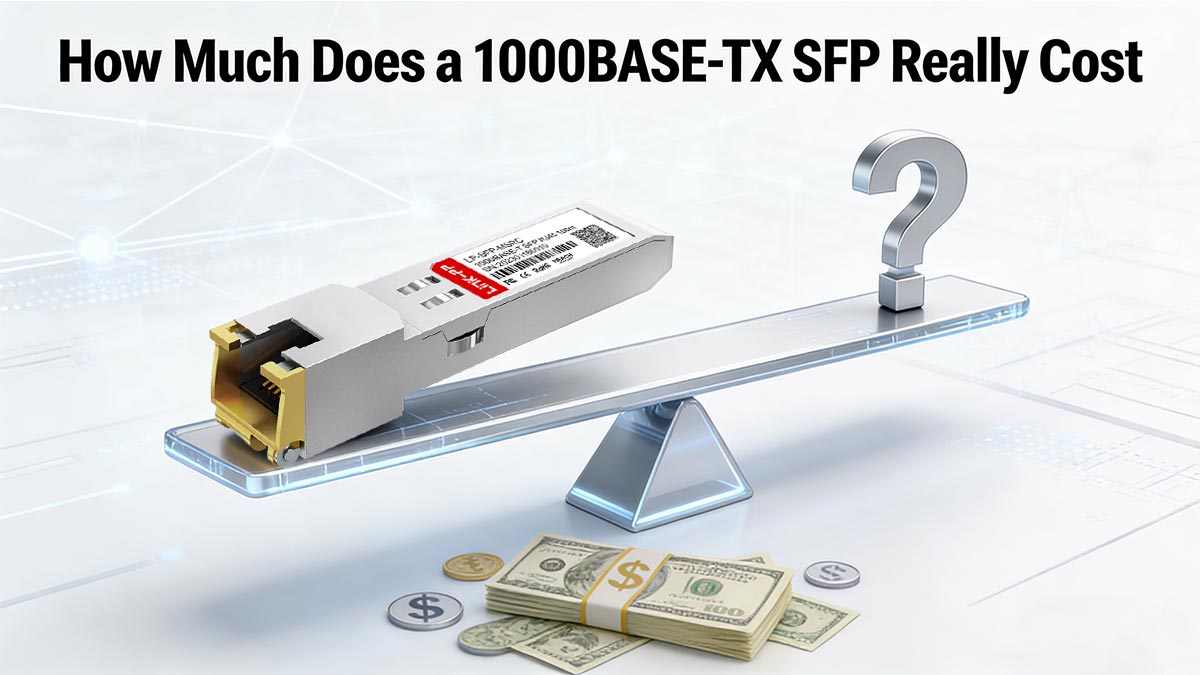
? How Much Does a 1000BASE-TX SFP Really Cost
The 1000BASE-TX SFP market exhibits a broad price spectrum influenced by brand, compatibility, and component quality. While pricing tends to cluster within identifiable ranges, buyers should understand that lower cost doesn’t always equate to lower value and higher cost doesn’t always guarantee superior performance. Below, we break down typical costs and explain what price points generally mean in practice.
Typical Price Range across Different Brands
For most well‑known OEM brands (such as Cisco, Juniper, HPE, etc.), the 1000BASE‑TX SFP modules typically range from $40 to $90 per unit. These modules often include full vendor compatibility coding, comprehensive testing, and qualified support, which contributes to their higher price.
In contrast, reputable third‑party compatible modules usually sell between $15 and $40 per unit. Although cheaper, many of these still pass basic interoperability tests, making them suitable for cost‑conscious deployments — provided compatibility with your equipment is verified.
What is Considered A “Reasonable” Price Today
A “reasonable” price for a 1000BASE‑TX SFP balances cost, compatibility, and reliability rather than simply being the lowest available. Prices around $20 to $45 for a quality third‑party compatible module hit a practical sweet spot for many environments.
Extreme outliers should be treated with caution:
- Below $15: Modules in this range may lack proper vendor coding or have inferior component quality, increasing the risk of intermittent issues.
- Above $90–$100: Premium pricing at this level often reflects strong vendor branding or extended warranties, but the performance advantage over mid‑range options is typically minimal.
Why Prices Vary So Much for the Same Product
Price variation for 1000BASE‑TX SFP modules stems from multiple factors tied to manufacturing, testing, and market positioning:
? Brand Licensing & Compatibility Coding
- OEM brands invest in official vendor compatibility codes and extensive interoperability testing, which increases cost.
- Third‑party suppliers may offer basic compatibility without full coding, reducing price but also potentially limiting support.
? Component Quality & Testing Rigor
- Higher‑grade internal components and stricter quality control (eye pattern testing, temperature testing, bit error rate testing, etc.) raise manufacturing costs.
- Basic modules may skip some of these processes to hit lower price points, at the expense of long‑term reliability.
? Warranty, Support & Vendor Reputation
- Modules backed by strong warranties and responsive support channels often command a premium.
- Lesser‑known brands without clear support benefits can undercut prices but may leave buyers without recourse if problems arise.
Understanding these drivers helps clarify why two 1000BASE‑TX SFP modules that appear similar can differ significantly in price — and why paying slightly more upfront can sometimes yield better total value.
? Why Is the 1000BASE-TX SFP Price Higher Than Expected
At first glance, a 1000BASE-TX SFP may seem like a simple 1G copper SFP module, yet its price is often noticeably higher than many fiber optic 1G SFP modules. This is mainly due to the additional electronic components, higher power requirements, and more complex engineering involved. Understanding these underlying factors helps explain why the cost is not just a matter of branding, but of real technical differences.
Built-in PHY Chip and Power Consumption Impact
Unlike fiber SFP modules, a 1000BASE-TX SFP must include a built-in PHY (physical layer) chip to handle electrical signal processing over twisted-pair copper cables. This chip performs tasks such as signal encoding/decoding, echo cancellation, and noise filtering, all of which require more advanced silicon and increase the overall bill of materials.
In addition, these PHY chips consume significantly more power than optical transceivers. Higher power consumption introduces extra design considerations:
- Thermal management components (heat dissipation structures, shielding).
- Power regulation circuits within the module.
- Stricter compliance with SFP power budgets.
These factors not only raise manufacturing costs but also limit how cheaply such modules can be produced without compromising stability.
Hardware Complexity Compared to Fiber SFP Modules
From a hardware perspective, 1000BASE-TX SFP modules are more complex than typical fiber SFP modules. While fiber modules primarily convert electrical signals to optical signals (and vice versa), copper SFPs must handle full Ethernet PHY functionality within a much smaller form factor.
Key complexity drivers include:
- Multi-stage signal processing for copper transmission.
- Support for auto-negotiation and link training.
- Integration of magnetics and filtering components.
This added complexity increases both design difficulty and component count, which directly impacts production cost.
Moreover, maintaining stable performance over varying cable lengths (up to 100 meters) and different environmental conditions requires tighter engineering tolerances. This makes manufacturing and quality control more demanding compared to simpler fiber optic transceivers.
Compatibility Engineering Costs
Another major cost driver is compatibility engineering, especially for enterprise network environments. Different switch vendors (Cisco, HPE, Juniper, etc.) often require specific EEPROM coding and strict validation to ensure modules are recognized and function properly.
To achieve this, manufacturers must invest in:
- Vendor-specific firmware coding and testing.
- Interoperability validation across multiple switch models.
- Continuous updates to support new hardware platforms.
This engineering effort adds hidden costs that are not immediately visible in the hardware itself. Modules that are fully compatible and widely tested typically cost more, but they significantly reduce the risk of deployment issues.
In contrast, lower-cost modules may skip extensive compatibility validation, which can lead to problems such as link instability or device rejection. This is why well-tested 1000BASE-TX SFP modules often command a higher — but more justified — price.
? 1000BASE-TX SFP vs Fiber SFP: Which One Saves More Money?
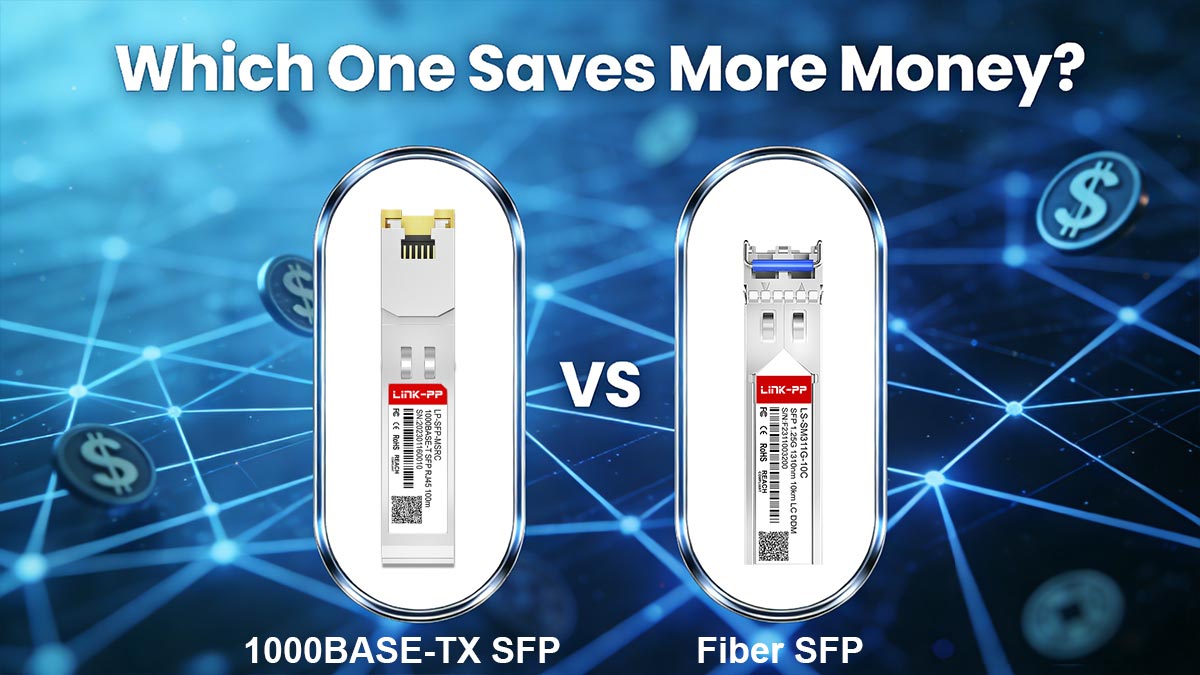
When comparing 1000BASE-TX SFP and fiber SFP modules, the cost difference is not limited to the module itself — it extends to cabling, infrastructure, and long-term operational expenses. Copper SFP modules typically have a higher unit price, but they can leverage existing RJ45 cabling, which reduces deployment costs. Fiber SFP modules, on the other hand, are cheaper per module but often require new fiber infrastructure and additional accessories. Ultimately, the more cost-effective option depends on your specific deployment scenario, distance requirements, and existing network setup.
To better understand the cost differences, the table below provides a quick side-by-side comparison:
| Cost Factor | 1000BASE-TX SFP | Fiber SFP (e.g., SFP-1G-SX/SFP-1G-LX) |
| Module Price | Moderate to high | Low to moderate |
| Cabling Cost | Low (Cat5e/Cat6 cables are inexpensive) | High (Fiber cabling and termination cost more) |
| Deployment Complexity | Low | Medium |
| Power Consumption | Higher | Lower |
| Max Distance | Up to 100m | 550m – 10km+ |
| Use Case | Short-distance, copper-based networks | High-density, long-distance optical networks |
Upfront Module Cost Comparison
From a pure hardware perspective, fiber SFP modules are generally cheaper than 1000BASE-TX SFP transceivers. Entry-level fiber modules can cost as low as $5–$20, while most copper SFP modules fall in the $15–$40 range for third-party options and higher for OEM versions. This price difference is largely due to the added PHY chip and complexity inside copper modules.
However, focusing only on module price can be misleading. While fiber modules are cheaper upfront, they often require additional components such as fiber patch cords, connectors, and sometimes new interface panels. In contrast, 1000BASE-TX SFP transceivers can plug directly into existing Ethernet infrastructure, which may offset their higher initial cost.
Cabling and Infrastructure Costs
One of the biggest advantages of 1000BASE-TX SFP is the ability to reuse existing Cat5e or Cat6 copper cabling. In environments where structured cabling is already in place, this can significantly reduce deployment costs, especially for short-distance connections within offices or data centers.
Fiber deployments, while offering better performance over longer distances, typically involve higher infrastructure costs:
- Fiber cables and patch cords.
- Optical distribution frames (ODF) or patch panels.
- Additional installation and termination work.
These added costs make fiber SFP less economical for short-range scenarios but more attractive for long-distance or high-performance applications.
ROI Comparison for Different Scenarios
The return on investment (ROI) varies depending on the deployment scenario. For short-distance connections (within 100 meters), 1000BASE-TX SFP modules often provide better overall value due to lower infrastructure costs and easier deployment. They are ideal for enterprise offices, access layers, and environments with existing copper cabling.
For long-distance or high-density environments, fiber optic SFP module usually delivers better ROI over time. Their lower power consumption, longer transmission distance, and scalability make them more suitable for data centers and backbone networks. Although the initial setup cost may be higher, the long-term efficiency and performance benefits often justify the investment.
? How to Choose the Right 1000BASE-TX SFP Without Overpaying
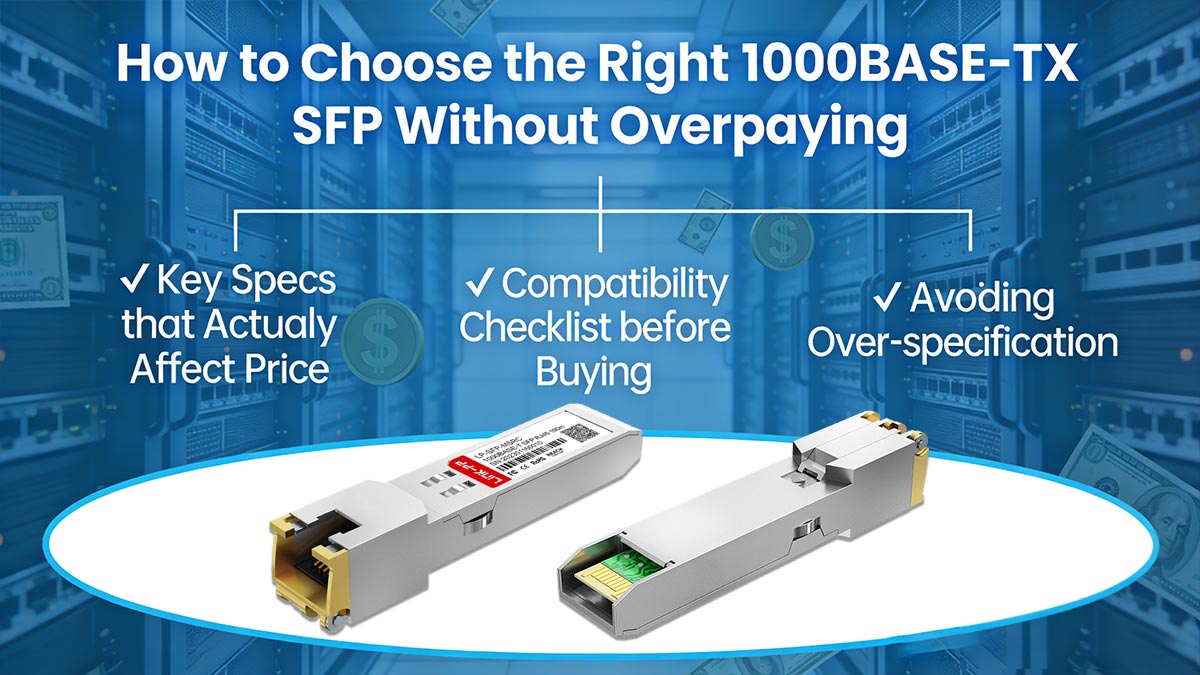
Choosing the right 1000BASE-TX SFP is not just about finding the lowest price — it’s about selecting a module that meets your technical needs without unnecessary cost. Many buyers overspend due to over-specification or poor compatibility planning. By focusing on the right specifications and verifying compatibility upfront, you can significantly reduce both upfront and long-term costs.
Key Specs that Actually Affect Price
Not all specifications have the same impact on price. Understanding which ones truly matter can help you avoid paying for features you don’t need. The following specs are the main price drivers:
? Power Consumption (e.g., 1W vs 1.5W+)
Lower power modules are typically more expensive due to better chip design and efficiency. They are important in high-density switch environments where power budgets are limited.
? Temperature Range (Commercial vs Industrial)
Industrial-grade modules (e.g., -40°C to 85°C) cost significantly more than standard commercial versions (0°C to 70°C). Unless you are deploying in harsh environments, commercial-grade is usually sufficient.
? Compatibility Coding (Vendor-specific EEPROM)
Modules coded for specific brands (Cisco, HPE, etc.) may cost more due to additional engineering and testing. Generic or multi-compatible modules are often cheaper but may carry some risk.
In most enterprise or office environments, a standard commercial-grade module with proper vendor compatibility is enough. Paying extra for industrial temperature or ultra-low power only makes sense in niche scenarios.
Compatibility Checklist before Buying
Compatibility issues are one of the most common causes of wasted spending. Before purchasing a 1000BASE-TX SFP, it’s essential to verify that the module will work seamlessly with your existing equipment.
Key checks include:
? Switch/Router Model Support
Confirm that the module is explicitly tested or listed for your device model, not just the brand.
? Vendor Lock-in Requirements
Some switches enforce strict compatibility checks. Make sure the module includes correct coding or supports reprogramming if needed.
Skipping these checks may lead to modules being rejected by the device or causing unstable links, resulting in replacement costs that exceed any initial savings.
Avoiding Over-specification
A common mistake is buying 1000BASE-TX SFP modules with higher specifications than necessary, which directly increases costs without delivering real benefits. For example, choosing industrial-grade modules or extended features for a standard indoor network often leads to unnecessary spending.
To avoid over-specification:
- Match the module to your actual deployment scenario (office, data center, industrial site).
- Avoid paying extra for features you won’t use, such as extended temperature ranges.
- Focus on reliability and compatibility, not just premium branding.
In most cases, a well-tested mid-range 1000BASE-TX SFP from a reputable supplier provides the best balance between cost and performance.
? Where to Buy 1000BASE-TX SFP at the Best Price
Finding the best price for a 1000BASE-TX SFP is not just about choosing the cheapest option — it’s about balancing cost, reliability, and compatibility. Different purchasing channels offer varying price levels, support quality, and risk factors. By understanding where to buy and how to evaluate suppliers, you can secure better value without compromising network performance.
OEM vs Third-party Suppliers
OEM (original equipment manufacturer) suppliers such as Cisco, HPE, or Juniper typically offer fully certified 1000BASE-TX SFP modules with guaranteed compatibility. However, these modules often come at a premium price, sometimes 2 – 3 times higher than equivalent third-party options. The higher cost reflects brand assurance, official support, and strict quality control.
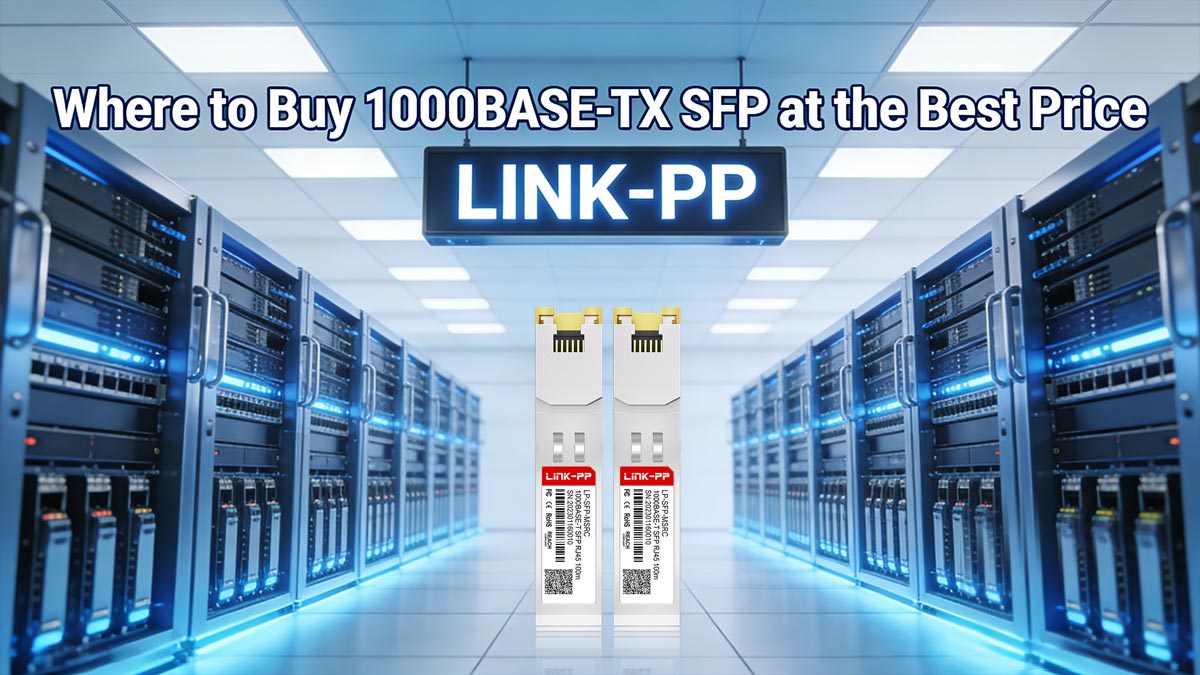
In contrast, third-party compatible suppliers provide significantly more cost-effective alternatives (like compatible Allied Telesis AT-SPTX from LINK-PP), usually priced in the $15 – $40 range. Many reputable third-party vendors offer modules that are pre-coded and tested for major brands, delivering comparable performance at a fraction of the cost. For most enterprise and SMB deployments, these suppliers represent the best balance between price and reliability — provided they are carefully vetted.
How to Evaluate Trustworthy Sellers
Not all vendors offering low prices are reliable, so evaluating the seller is critical before making a purchase. A trustworthy supplier should demonstrate both product quality and strong customer support.
Key factors to consider include:
- Compatibility Guarantees: Sellers should clearly state supported switch brands/models and offer replacement if compatibility issues arise.
- Testing and Certification: Look for suppliers that perform interoperability testing and comply with standards (e.g., CE, RoHS).
- Warranty and Return Policy: A minimum 1–3 year warranty is a good indicator of product confidence and quality.
- Customer Reviews and Industry Reputation: Verified reviews, case studies, or long-term presence in the networking market add credibility.
Choosing a reliable seller reduces the risk of hidden costs such as downtime, replacements, or troubleshooting efforts later on.
Recommended 1000BASE TX SFP Module
For buyers looking for a cost-effective yet reliable option, the LINK-PP LP-SFP-MSRC 1G copper SFP is a strong candidate. It is designed to support standard 1000BASE-T connectivity over RJ45 interfaces while maintaining stable performance across typical enterprise environments.
Key advantages of this module include:
- Broad compatibility with major switch vendors.
- Stable performance with standard Cat5e/Cat6 cabling (up to 100m).
- Competitive pricing within the mid-range segment.
- Reliable build quality suitable for long-term deployment.
This type of module is particularly suitable for users who want to avoid OEM-level pricing while still ensuring dependable operation. When sourced from a reputable third-party supplier, it offers an excellent balance between cost savings and network stability.
? What Factors Affect 1000BASE-TX SFP Price the Most
The price of a 1000BASE-TX SFP is influenced by a combination of technical, manufacturing, and market-related factors. While many modules may look similar on the surface, differences in brand positioning, testing standards, and supply conditions can lead to noticeable price gaps. Understanding these key factors helps buyers better evaluate pricing and avoid unnecessary costs.
Brand and Compatibility Coding
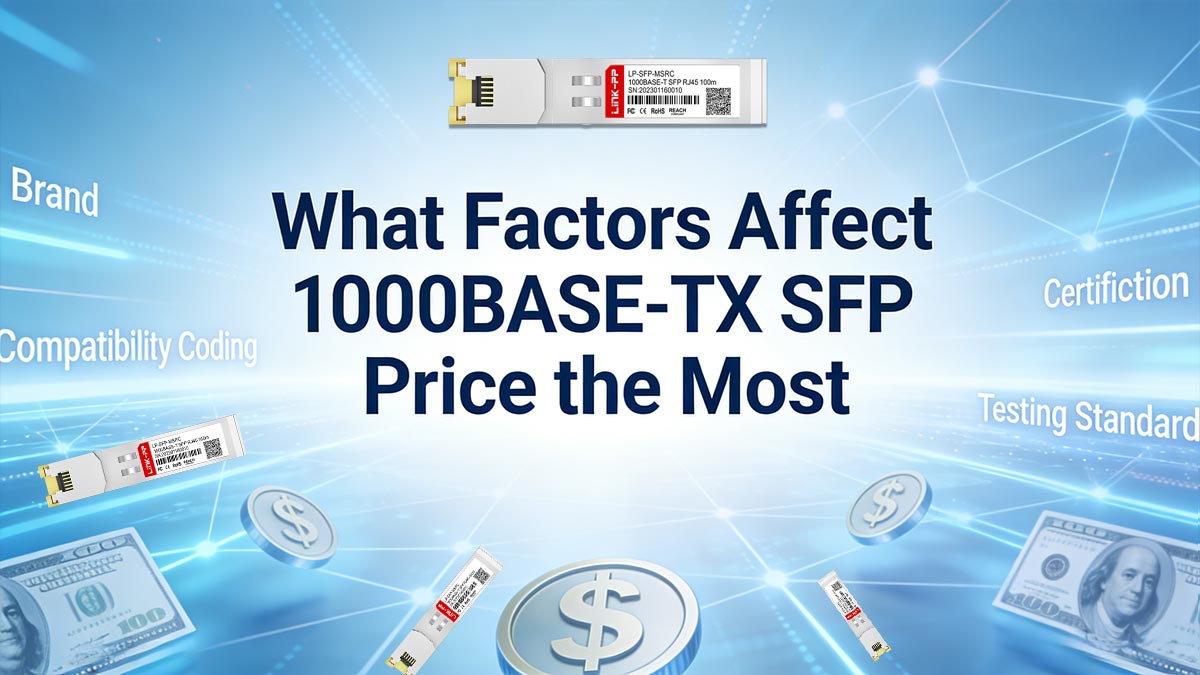
Brand plays a significant role in pricing, especially when it comes to OEM versus third-party modules. OEM-branded SFP modules are typically priced higher due to official vendor support and guaranteed compatibility, while third-party modules are more affordable but rely on multi-vendor compatibility coding. Additionally, modules that are specifically coded and tested for certain switch brands (e.g., Cisco, HPE) often cost more because of the extra engineering and validation work involved.
Certification and Testing Standards
1000BASE-TX SFP modules that undergo stricter certification and testing processes tend to have higher prices. This includes compliance with standards such as CE, RoHS, and FCC, as well as additional interoperability testing, burn-in testing, and environmental validation. Vendors that invest more in quality assurance can offer more reliable products, but these processes increase production costs, which are reflected in the final price.
Supply Chain and Component Availability
The availability of key components — especially PHY chips — has a direct impact on pricing. Fluctuations in semiconductor supply, manufacturing capacity, and global logistics can cause price volatility. During periods of tight supply or increased demand, prices may rise, while stable supply chains typically lead to more competitive pricing. External factors such as shipping costs and geopolitical conditions can also indirectly influence the overall cost of 1000BASE-TX SFP modules.
? 1000BASE-TX SFP Price Trends: Should You Buy Now or Wait?
The price of 1000BASE-TX SFP modules has become more stable in recent years, but it is still influenced by supply chain dynamics and market demand. While there are no extreme price swings, small fluctuations can impact bulk purchasing decisions. Understanding current trends can help you decide whether to buy immediately or wait for better opportunities.
Recent Price Movements in the Market
In the current market, prices for 1000BASE-TX SFP modules have shown moderate stabilization, especially for third-party products, which commonly stay within the $15–$40 range. OEM modules remain relatively high but have also seen slight adjustments due to increased competition from compatible suppliers.
Compared to previous years, when supply chain disruptions caused noticeable price increases, the market has become more predictable. However, minor fluctuations still occur depending on vendor inventory levels and short-term demand spikes.
Impact of Supply Chain Changes
The availability of key components, particularly PHY chips, continues to influence pricing trends. Improvements in global semiconductor supply have helped ease pricing pressure, leading to more consistent module availability and fewer sudden price increases.
That said, supply chains are still sensitive to external factors such as logistics costs, regional manufacturing shifts, and geopolitical conditions. Any disruption in these areas can quickly translate into price changes, especially for bulk orders or specific compatibility-coded modules.
Technology Shifts Affecting Demand
As networks gradually transition toward high-speed transceivers (such as 2.5G SFP, 10G SFP+, 25G SFP28, 40G QSFP+ and beyond), the demand for 1G copper SFP modules is becoming more niche but stable. This shift can have two opposing effects: reduced demand may lead to gradual price decreases, but lower production volumes can also limit cost reductions.
Additionally, fiber adoption in modern data centers continues to grow, which may further reduce the long-term demand for copper-based SFP modules. However, 1000BASE-TX SFP modules remain relevant in legacy systems and cost-sensitive deployments, maintaining steady baseline demand.
Timing Your Purchase for Better Deals
For most buyers, the current market conditions suggest that waiting for significant price drops may not yield substantial savings. Prices are already relatively stable, and any short-term reductions are typically incremental rather than dramatic.
A more practical strategy is to:
- Purchase during bulk discounts or promotional periods.
- Work with suppliers offering flexible pricing for volume orders.
- Monitor inventory cycles from preferred vendors.
In general, if you have an immediate deployment need, buying now is a reasonable choice. Delaying purchases only makes sense if you are planning large-scale procurement and can take advantage of negotiated pricing or seasonal deals.
? Final Tips for Choosing Cost-Effective 1000BASE-TX SFP
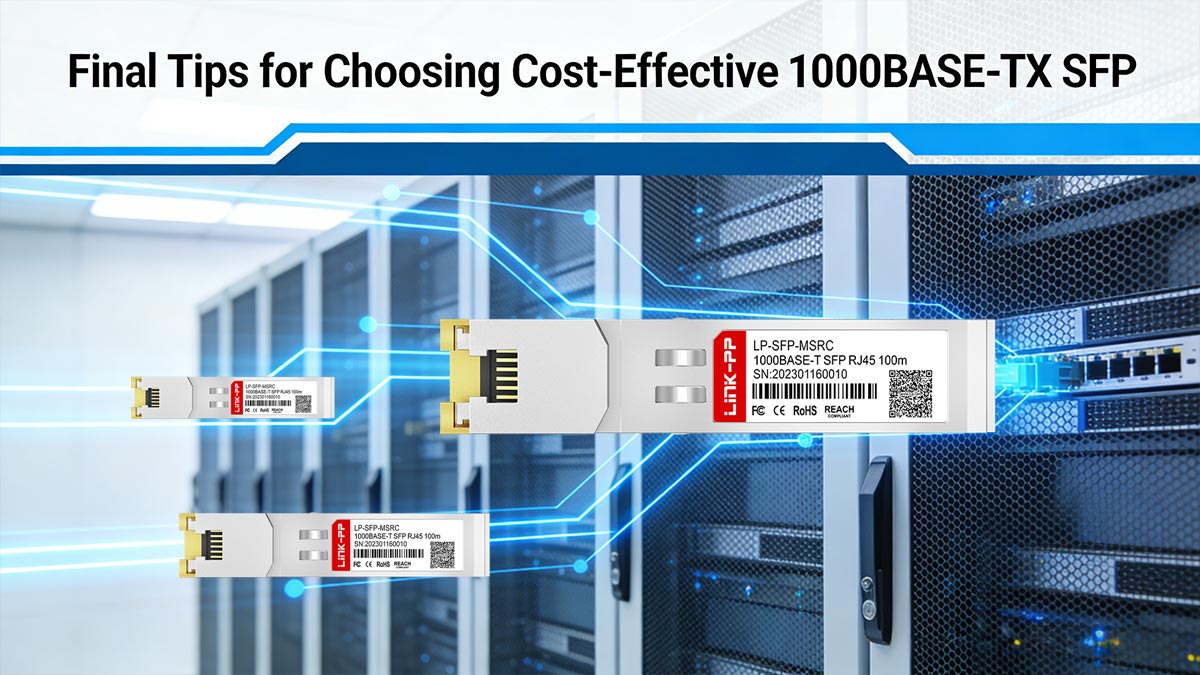
Choosing a cost-effective 1000BASE-TX SFP is about balancing price, compatibility, and reliability. Avoid focusing only on the lowest price — modules that are slightly more expensive but well-tested can save you more in the long run.
Key tips to remember:
- Choose only the specs you actually need (avoid over-specification).
- Always verify compatibility with your switch or router.
- Consider the total cost, including cabling and stability.
- Buy from trusted suppliers, not just the cheapest option.
If you are looking for reliable and competitively priced 1000BASE-TX SFP modules, consider sourcing at the LINK-PP Official Store, where you can find well-tested products that balance performance, compatibility, and cost-effectiveness for your network deployments.







