In the realm of long-haul telecommunications, achieving reliable data transmission over vast distances is a primary challenge for network architects. The 120km SFP optical module has emerged as a cornerstone technology for these requirements, enabling high-performance connectivity across significant geographic spans without the need for costly intermediate amplification or repeaters. Whether supporting metropolitan area networks (MANs) or remote industrial sites, these transceiver modules are essential for maintaining signal integrity over extended fiber links.
However, sourcing the right 120km fiber SFP involves more than just matching a distance rating; it requires a strategic evaluation of optical budgets, wavelength stability, and supplier reliability. This article provides a comprehensive breakdown of the critical factors involved in selecting, testing, and deploying 120km SFP modules for robust long-haul fiber infrastructure.
? What is A 120km SFP and Why It Matters for Long-Haul Networks
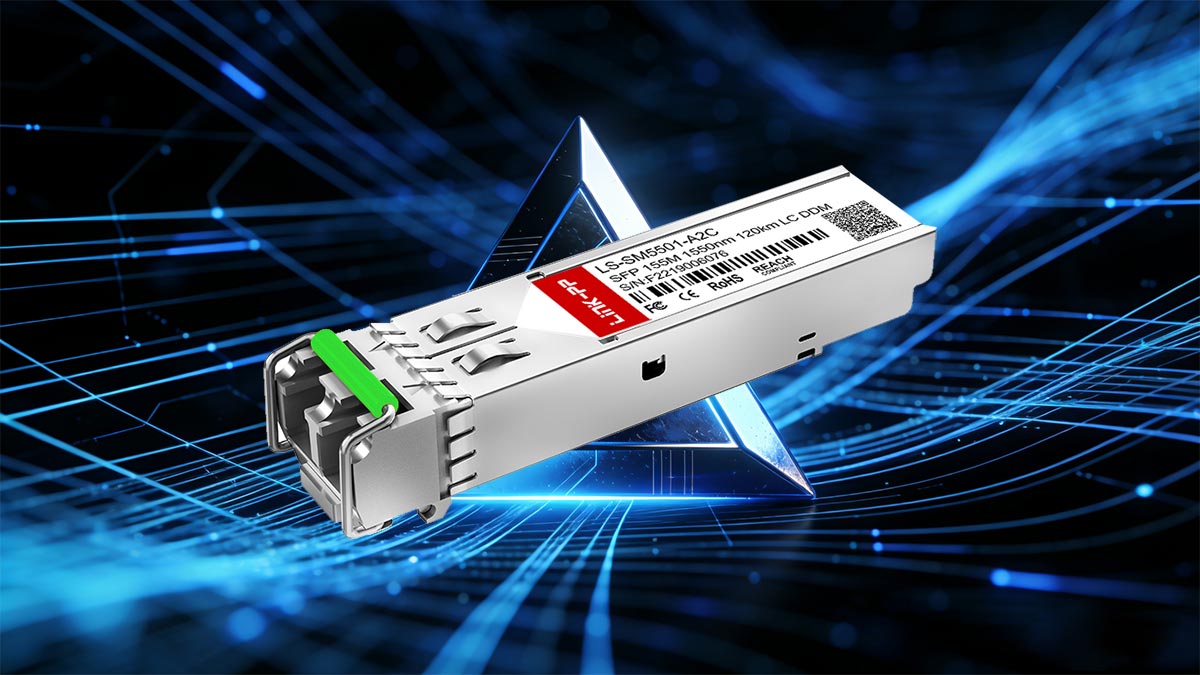
A 120km SFP is a high-performance optical transceiver designed to transmit and receive data over single-mode fiber across distances reaching up to 120km. These modules are critical for long-haul networking as they bridge the gap between distant nodes without requiring expensive intermediate repeaters or optical amplification.
Definition of 120km SFP
A 120km SFP is a hot-pluggable, compact optical transceiver utilized in data communication and telecommunications. Unlike standard short-reach modules, these are specifically engineered with high-power transmitters — often using EML (Electro-absorption Modulated) Lasers — and highly sensitive APD (Avalanche Photodiode) receivers. This hardware configuration allows the module to overcome the significant signal attenuation that occurs naturally over long stretches of fiber optic cable.
Technically, the "120km" designation refers to the maximum theoretical distance the module can cover under ideal fiber conditions. These modules typically operate at the 1550nm wavelength, which lies in the "C-band" of the optical spectrum where optical fiber exhibits the lowest attenuation. To achieve this distance, they boast a substantial optical power budget, often exceeding 30dB to 32dB, ensuring the signal remains readable even after traversing 120km of glass.
Key Industries Using 120km SFP Optical Modules
The deployment of 120km SFP optical modules is prevalent in sectors where geographic reach is as important as data throughput. These industries rely on the ultra-long-reach capabilities to maintain seamless operations across expansive territories.
- Telecommunications & ISPs: Used primarily for backhaul connections between regional hubs or connecting rural communities to a central metropolitan core.
- Utility Companies: Power, oil, and gas industries use these modules to monitor pipelines and electrical grids that span hundreds of miles of remote terrain.
- Government & Municipalities: Essential for connecting city-wide surveillance systems or regional government offices into a single, cohesive private network.
- Transportation: Used in railway and highway communication systems to facilitate signaling and data transfer between distant stations and control centers.
When to Choose 120km Over Other Distances
Choosing a 120km SFP is a strategic decision based on the specific "link budget" of a fiber route rather than just the physical distance. While an 80km SFP might suffice for a 75km span on a high-quality, new fiber line, older fiber or lines with numerous splices and patches introduce higher decibel (dB) loss. In such cases, a 120km SFP is chosen to provide the necessary "headroom" to ensure signal stability despite high attenuation.
Furthermore, the 120km transceiver module is often a more cost-effective solution than the alternative of installing mid-span equipment. By using a 120km SFP, network engineers can avoid the capital and operational expenses associated with:
- Installing and powering intermediate optical amplifiers (EDFAs).
- Securing and maintaining remote "hut" locations for regenerators.
- Increasing the complexity of the network management system with additional active devices.
? Key Technical Specifications of 120km SFP
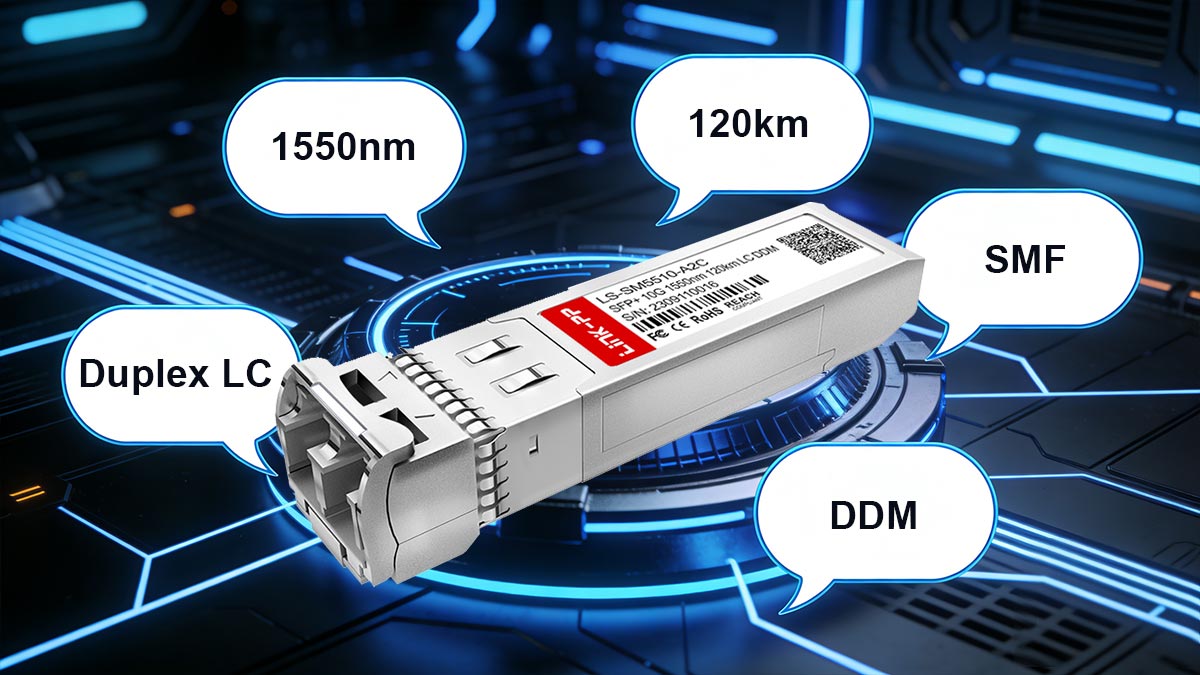
A 120km SFP is far more than a standard optical module — it’s a purpose-built component designed to push signals across distances where attenuation and dispersion would otherwise render communication impossible. Achieving such reach requires tight control over optical parameters, from laser characteristics to optical budget. Every specification, whether it’s the operating wavelength or the supported fiber type, plays a direct role in determining whether a link will perform reliably over its full intended span.
To give a sense of the key parameters involved, the table below outlines the typical specifications you’ll encounter when evaluating 120km fiber optic SFP module.
| Specification | Typical Requirement | Description |
| Form Factor | SFP (or SFP+ for 10G) | Hot-swappable, industry-standard interface. |
| Data Rate | 1G or 10G | Defines the bandwidth capacity of the link. |
| Wavelength | 1550nm (EML laser) | Optimized for low attenuation in single-mode fiber. |
| Fiber Type | Single-Mode Fiber | Required to support long-distance transmission. |
| Connector Type | Duplex LC | Standard dual-fiber interface for send/receive. |
| Transmit Power | ﹣1 to +5dBm (varies by rate) | Higher output compensates for long-haul loss. |
| Optical Budget | 30 - 32dB | Determines total allowable loss on the fiber path. |
| DOM Support | Yes | Enables real-time monitoring of optical parameters. |
| Compliance | IEEE 802.3, SFP MSA | Meets global interoperability and safety standards. |
Wavelength and Optical Budget Requirements
The choice of 1550nm is no coincidence. At this wavelength, single-mode fiber offers its lowest attenuation — around 0.2dB per kilometer — which is essential when you’re trying to carry a signal 120km. But low loss alone isn’t enough. Over such a distance, chromatic dispersion becomes a serious challenge, blurring pulses together and making them impossible to distinguish at the receiver. That’s why 120km modules almost always use an EML laser rather than a simpler DFB laser. The EML keeps the signal spectrally tight, reducing dispersion-related penalties.
What really determines whether a link will actually work is the optical budget. This is essentially the difference between the module’s transmit power and its receive sensitivity. For a 1G 120km SFP, you’ll typically see a budget upwards of 32dB, meaning the total loss from fiber attenuation, connectors, and splices must stay under that number. Exceed it, and the receiver simply won’t see a clean signal — no amount of tweaking will bring the link up.
Supported Data Rates
While both 1G and 10G versions exist, they behave quite differently in practice. 120km 1G SFP modules are relatively forgiving. Their larger optical budget and lower data rate give them more tolerance for dispersion, connector imperfections, or less-than-ideal fiber conditions. They’re a solid choice when you need reliability over raw throughput.
10G 120km SFP modules (like LINK-PP LS-SM5510-A2C), on the other hand, operate at the edge of what’s physically possible over standard fiber. To make 10G work across that distance, these modules typically use an APD receiver, which provides much better sensitivity than a standard PIN photodiode. Even then, they’re more sensitive to fiber quality, dispersion, and link loss. It’s worth noting that a 10G module rated for 80km won’t simply work for a 120km link — the optical budget and dispersion compensation are specifically tuned for the stated maximum distance.
Connector Types and Fiber Compatibility
Physically, these modules use duplex LC connectors — the de facto standard for single‑mode fiber connections. The connector interface itself needs to be stable and low-loss, because every tenth of a decibel matters when you’re operating near the edge of the optical budget. On the fiber side, there’s no flexibility: 120km transmission requires single‑mode fiber. Multimode fiber is out of the question, as its modal dispersion would make the signal unusable within a few hundred meters.
One detail that sometimes catches people off guard is dispersion compensation. Even with an EML laser, the accumulated chromatic dispersion over 120km of single-mode fiber can exceed 2000 ps/nm. In some deployments — especially those using older fiber or carrying 10G traffic — external dispersion compensation may be needed. It’s not always a given that the module alone can handle the entire link budget.
DOM (Digital Optical Monitoring) Features
For short links, the DOM feature is often treated as a nice‑to‑have. For a 120km link, it’s effectively mandatory. DOM gives you real‑time visibility into exactly what the module is doing: transmit and receive power, laser bias current, temperature, and supply voltage. This isn’t just about troubleshooting — it’s about knowing whether your link is operating within its design parameters from day one.
The received optical power reading, for instance, tells you instantly whether your loss budget is being met. If you see a value approaching the module’s sensitivity limit, you know you have a problem before it causes intermittent errors. Temperature monitoring is equally critical, because the wavelength of an EML laser drifts with temperature; if the module overheats, the signal can shift enough to increase dispersion or even fall outside the receiver’s window. In long‑haul networks, DOM turns a black‑box component into something you can actively manage and trust.
? Performance Factors to Evaluate When Sourcing 120km SFP
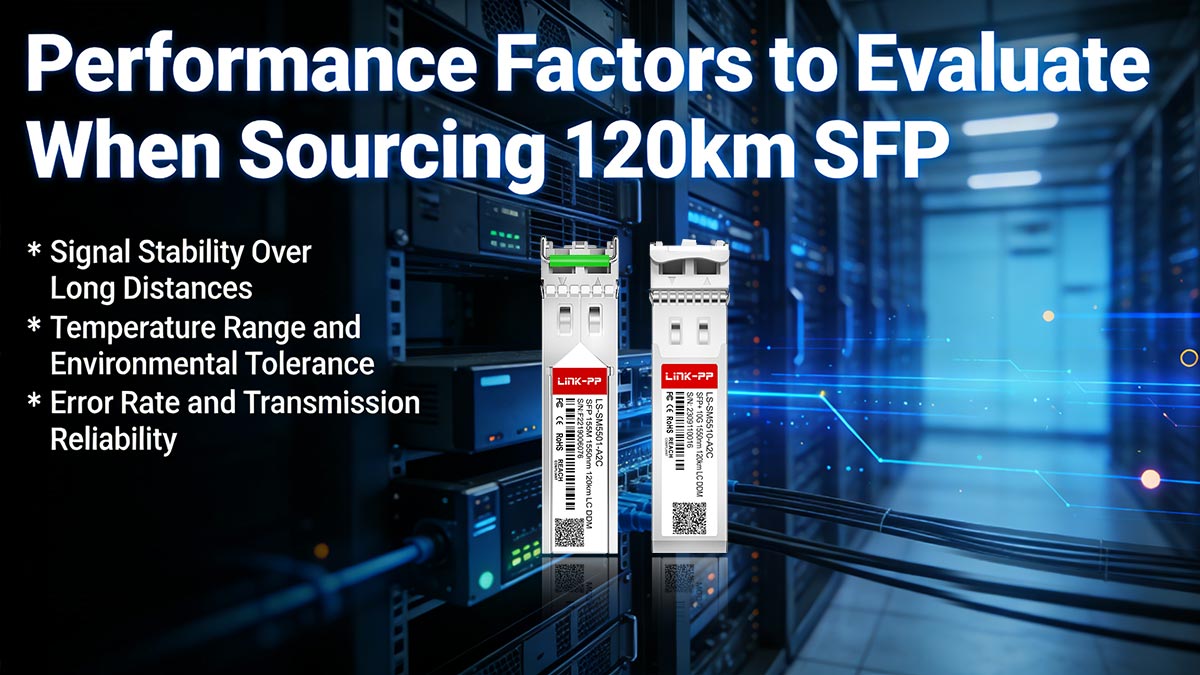
When selecting 120km SFP optical transceivers, evaluating performance metrics beyond basic specifications is essential. Factors such as signal stability, environmental adaptability, and bit error rate directly influence the reliability and operating cost of long-haul links.
Signal Stability Over Long Distances
Signal stability is one of the most critical aspects of long-haul optical transmission. Over 120km of fiber, the optical signal experiences attenuation, dispersion, and noise accumulation that can degrade data integrity. High-quality transmitters with strong laser output and sensitive receivers are vital to maintain clean signal levels across such spans. Ensuring proper dispersion compensation and using low-loss connectors also help minimize jitter and maintain signal fidelity.
Temperature Range and Environmental Tolerance
120km SFP modules often operate in outdoor or industrial environments where temperature fluctuations are significant. Choosing modules rated for ﹣40°C to +85°C ensures stable optical output and minimal drift in laser wavelength or bias current. Industrial-grade designs with robust thermal management, metal housings, and humidity protection allow continuous operation in remote or unregulated environments such as telecom towers or field cabinets.
Error Rate and Transmission Reliability
For mission-critical networks, low bit error rate (BER) is a decisive performance indicator. A quality 120km SFP should maintain a BER of ≤10⁻¹², ensuring minimal retransmissions and packet loss even at maximum reach. Error-correction mechanisms, stable laser modulation, and precise wavelength control all contribute to maintaining error-free transmission.
? Pricing Breakdown of 120km SFP Modules
Pricing for 120km SFP modules varies widely depending on technical specifications and brand positioning. Understanding what drives these cost differences helps procurement teams balance budget constraints against the need for reliable long-haul performance.
Factors Affecting SFP Module Cost
Several elements directly impact the cost of a 120km SFP module:
- Data Rate: 10G SFP+ typically costs significantly more than 1G SFP due to the more complex components required, including APD receivers and higher-grade EML lasers.
- Optical Components: The use of EML lasers and APD photodiodes — both essential for 120km reach — adds to the bill of materials compared to shorter-reach modules.
- Temperature Grade: Industrial-grade modules (-40°C to 85°C) command a premium over commercial-grade (0°C to 70°C) due to more rigorous component selection and testing.
- Brand: Original equipment manufacturer (OEM) modules from major networking brands carry the highest price tag, often 2 - 3 times that of third-party alternatives.
- Compliance and Certification: Modules that undergo additional testing or carry certifications like MSA (Multi-Source Agreement) compliance or specific platform compatibility tend to be priced higher.
OEM vs. Third-Party Pricing Comparison
OEM modules — those sold under the same brand as the networking equipment — offer guaranteed compatibility and direct vendor support, but this assurance comes at a steep premium. A branded 10G 120km SFP from a major manufacturer can easily cost several hundred to over a thousand dollars per unit. Third-party or compatible modules, on the other hand, are typically priced between 30% and 70% less while still adhering to the same MSA specifications. Many reputable third-party vendors also provide rigorous testing to ensure compatibility with specific switch brands. The trade-off comes down to whether the organization values the simplicity of single-vendor support or is willing to validate third-party alternatives to achieve significant cost savings.
? Supplier Selection Criteria for 120km SFP Procurement
Choosing the right supplier for 120km SFP modules involves more than comparing price tags. Given the critical nature of long-haul links, supplier reliability directly impacts network uptime, deployment timelines, and long-term maintainability. A thoughtful evaluation of certifications, inventory capabilities, and support structures helps ensure that the chosen partner can deliver consistent quality both now and years down the road.
Manufacturer Certifications and Quality Standards
Certifications serve as a reliable indicator of whether a supplier follows disciplined manufacturing and testing processes. When evaluating potential vendors, look for:
- ISO 9001: Certifies that the manufacturer adheres to standardized quality management practices throughout production.
- RoHS Compliance: Ensures modules meet environmental regulations regarding hazardous substances — important for organizations with sustainability or regulatory requirements.
- MSA Compliance: Confirms the module adheres to Multi-Source Agreement specifications, guaranteeing mechanical and electrical interoperability with standard networking equipment.
- Platform-Specific Testing: Some third-party suppliers go beyond MSA compliance by testing modules in actual switches from brands like Cisco, Juniper, or Arista, providing an additional layer of compatibility assurance.
Lead Time and Inventory Availability
Lead times vary significantly between supplier types and can directly impact project schedules. When evaluating a supplier’s ability to meet delivery requirements, consider the following:
- OEM vendors typically produce modules against demand, especially for specialized 120km SFP modules, often resulting in lead times of four weeks or more.
- Third-party suppliers generally maintain larger finished‑goods inventories and can offer shorter lead times than OEMs, though exact availability depends on the specific module and current stock levels.
- Inventory transparency matters — reliable suppliers can provide clear information on stock status and may offer buffer stock to support urgent replenishment needs.
Understanding a supplier’s stocking strategy upfront helps avoid unexpected delays and ensures that replacement units remain accessible throughout the network’s lifecycle.
Technical Support and After-Sales Service
Long-haul links are often mission-critical, and when issues arise, responsive technical support becomes essential. Key aspects to evaluate include:
- Pre-Sales Engineering: Suppliers that offer assistance with link budget calculations, compatibility verification, and deployment planning help reduce the risk of configuration errors.
- Warranty Coverage: Standard warranties typically range from 1 to 3 years for 120km SFP modules, while some vendors offer 3-5 years warranties. Pay attention to whether the warranty covers both defects and premature failure in the field.
- Technical Support Accessibility: Look for vendors that provide direct access to engineering staff rather than only tier-1 support. For 120km modules, which often require precise troubleshooting, having knowledgeable support personnel makes a significant difference.
Suppliers that treat support as a partnership rather than a transactional service are generally better suited for long-term procurement relationships.
? Testing and Quality Assurance for 120km SFP Modules
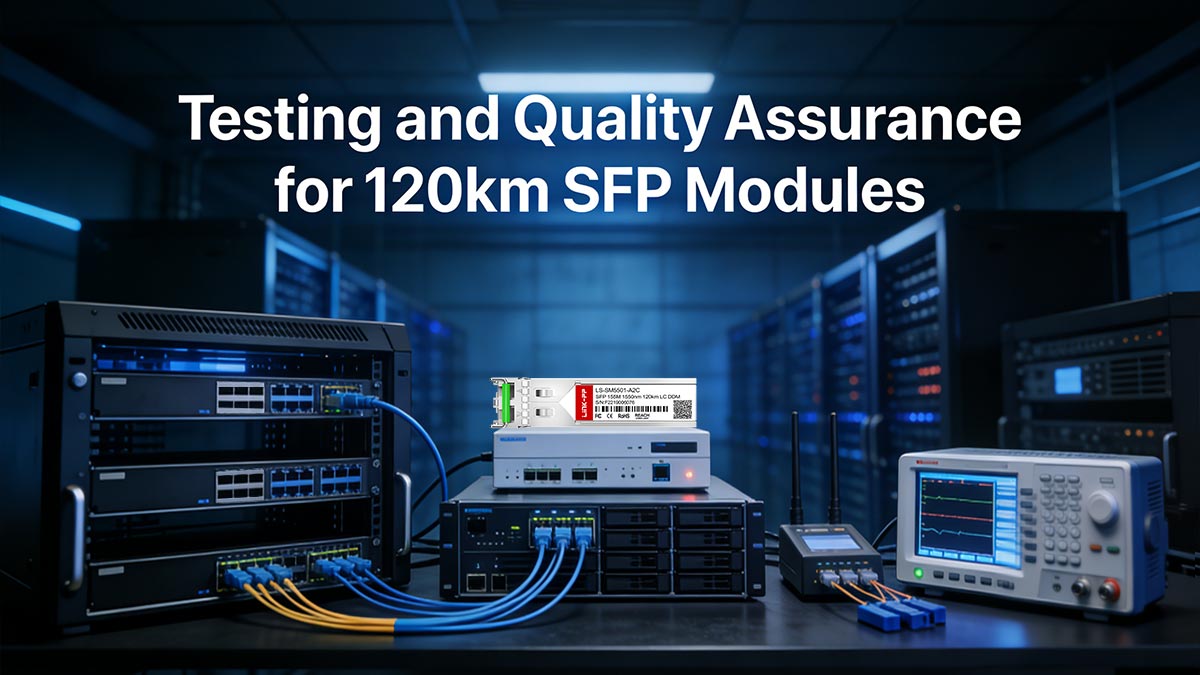
Given the demanding nature of 120km transmission, rigorous testing and quality assurance are essential to ensuring modules perform reliably over years of operation. Unlike short-range optics, long-haul modules must survive tighter optical budgets, wider temperature ranges, and extended burn-in periods. A supplier’s commitment to comprehensive testing — both at the factory and in the field — directly translates to fewer deployment issues and lower long-term maintenance costs.
Factory Testing Procedures
Reputable manufacturers (like LINK-PP) subject 120km SFP modules to a series of stringent tests before modules leave the production line. Key factory testing stages include:
- Optical Parameter Verification: Each module is tested for transmit power, receive sensitivity, extinction ratio, and center wavelength to ensure they fall within specified ranges.
- Temperature Cycling: Modules are run through thermal chambers that cycle between low and high temperature extremes (e.g., -40°C to 85°C for industrial-grade) to validate performance under environmental stress and identify early failures.
- Burn-In Testing: Modules operate continuously for an extended period — typically 24 to 48 hours — under elevated temperatures to weed out infant mortality issues before shipping.
- Bit Error Rate (BER) Testing: Modules are tested with actual traffic patterns to confirm error‑free performance across the full optical budget and temperature range.
- Compatibility Verification: For third-party suppliers, factory testing often includes plugging modules into actual switches (such as Cisco, Juniper, or Arista) to validate platform‑specific compatibility and DOM functionality.
Field Testing and Validation Methods
Once modules arrive on-site, field testing helps confirm that the entire link — including fiber infrastructure — is operating as designed. Common field validation practices include:
- DOM-Based Monitoring: Using the module’s built-in DOM capabilities to verify real‑time transmit and receive power levels against the calculated link budget. If receive power falls too close to the sensitivity limit, immediate investigation is warranted.
- Optical Time-Domain Reflectometer (OTDR) Testing: Deploying an OTDR to characterize the fiber span, identifying splices, connectors, or bends that introduce excessive loss or reflections.
- End-to-End BER Testing: Running actual traffic or dedicated test patterns across the link for a sustained period (e.g., 24 hours) to confirm error‑free performance under real operating conditions.
- Redundant Link Validation: For critical routes, testing both primary and redundant paths ensures failover mechanisms function as expected before the link is placed into production.
Compliance with Industry Standards
Adherence to established industry standards provides a baseline for quality and interoperability. Key standards relevant to 120km SFP modules include:
- MSA (Multi-Source Agreement): Ensures mechanical form factor, electrical interface, and management interface compatibility across vendors.
- IEEE 802.3: Defines Ethernet physical layer standards; for 120km modules, relevant specifications include 1000BASE-EZX for 1G and 10GBASE-ZR for 10G.
- ITU-T G.652: Specifies standard single-mode fiber characteristics, ensuring the module is designed for the fiber types commonly used in long-haul deployments.
? Deployment Considerations for 120km SFP in Long-Haul Fiber
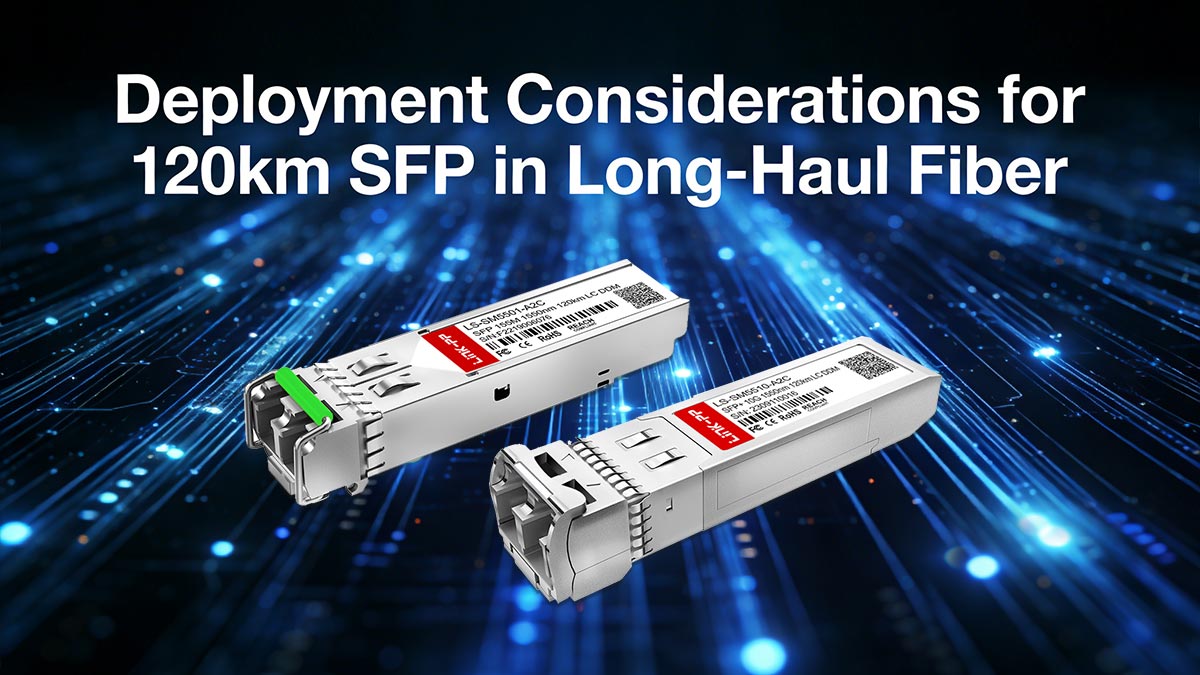
Deploying 120km SFP modules requires more than just plugging in modules — success depends on careful planning around fiber infrastructure, power calculations, and physical installation. Getting these details right ensures the link performs reliably over its full intended lifespan.
Fiber Type Selection
Single-mode fiber (SMF) is the only practical choice for 120km transmission. Multimode fiber cannot support distances beyond a few hundred meters. Standard G.652 fiber is the most common and works well with 1550nm wavelengths. If deploying over older or non-standard fiber, confirm the fiber type and dispersion characteristics, as these may affect whether additional compensation is needed.
Link Budget Calculation Basics
The link budget determines whether the receiver will see a usable signal. Key elements to account for:
- Fiber Attenuation: 0.22 - 0.25dB/km at 1550nm.
- Connector Losses: 0.3 - 0.5dB per mating pair.
- Splice Losses: 0.1 - 0.2dB per splice.
- Safety Margin: Add 2 - 3dB to accommodate future degradation.
Calculate total loss, subtract from transmit power, and ensure the result is above the module’s receive sensitivity. Validate with DOM readings after installation.
Amplification and Dispersion Compensation
Most 120km SFP transceivers operate without external components, but some scenarios require them. Optical amplification (EDFAs) helps when link loss exceeds the module’s budget. Dispersion compensation may be needed for 10G links over G.652 fiber, as chromatic dispersion accumulates to around 2000ps/nm over 120km — some modules tolerate this, others may require external dispersion compensation modules (DCMs).
Installation Best Practices
Proper installation practices can prevent many link performance issues.
- Always clean connectors and ferrules before insertion to avoid insertion loss and back reflection.
- Use low-loss fusion splicing and maintain consistent cable bend radius to minimize optical degradation.
- After installation, perform OTDR (Optical Time Domain Reflectometer) and BER (Bit Error Rate) tests to validate optical continuity and signal quality.
Following these procedures ensures that the 120km SFP operates within its designed parameters, supporting stable long-haul transmission with minimal maintenance needs.
? Conclusion: How to Choose the Right 120km SFP for Reliable Long-Haul Fiber
Selecting the right 120km SFP comes down to balancing technical requirements, performance reliability, and total cost of ownership. Start by confirming the module’s specifications — wavelength, optical budget, and DOM support — align with your fiber infrastructure and distance needs. Pay close attention to real-world performance factors like signal stability, temperature tolerance, and bit error rates, especially if the deployment involves outdoor or unenclosed environments.
Pricing varies widely between OEM and third-party options, but reputable third-party suppliers often deliver the same reliability at a fraction of the cost. Equally important is choosing a supplier with strong quality assurance practices, transparent testing procedures, and responsive technical support. Finally, a successful deployment hinges on proper link budget calculations, clean installation practices, and ongoing monitoring through DOM.
When you’re ready to source 120km SFP modules that combine quality, performance, and value, visit the LINK-PP Official Store to explore a comprehensive selection backed by rigorous testing.