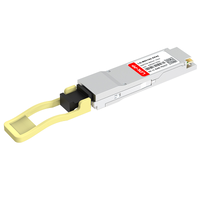
In modern enterprise networking, speed, reliability, and scalability form the foundation of daily operations. As organizations upgrade their infrastructures to meet growing data demands, choosing the right optical transceiver becomes critical. Among the wide range of 10G SFP+ module solutions available today, the MA-SFP-10GB-SR stands out for its balance of high performance, compatibility, and cost efficiency.
This multimode SFP module is an essential component in connecting network switches, servers, and storage systems over short distances while maintaining low latency and energy consumption. In this article, we’ll explore everything you need to know about the MA-SFP-10GB-SR — from its specifications and cable requirements to its compatibility with Cisco Meraki devices.
♣️ Introduction to the MA-SFP-10GB-SR Transceiver
To make sure you’re choosing the right module, it’s worth understanding what the MA-SFP-10GB-SR is built for in the first place. Next, we’ll walk through its role in 10GbE links, the standards behind it, and the handful of specs that tend to make or break real-world compatibility.

What is the MA-SFP-10GB-SR
MA-SFP-10GB-SR refers to an SFP+ form-factor, 10-Gigabit Ethernet short-reach (SR) optical transceiver built for multimode fiber (MMF) links. In real deployments, it’s commonly used to connect switches to switches, switches to servers, or switches to storage devices across short distances — think data hall rows, wiring closets, or campus distribution points where multimode fiber is already installed.
At a functional level, the transceiver converts electrical 10G signals from a network device into optical signals for transmission over fiber, and then converts them back to electrical signals at the receiving end. SR modules like this are typically selected when you need high bandwidth, low latency, and stable link behavior over short-to-medium multimode runs, without the added cost and complexity of long-reach single-mode optics.
For compatibility, the name matters because “MA-SFP-10GB-SR” is often associated with a vendor-coded or platform-targeted variant of a generic 10GBASE SR SFP module — meaning the optics may be programmed (EEPROM coding) to be recognized by specific switch families. That’s why a compatibility guide is valuable: two modules can share the same “SR” optical behavior, yet differ in how smoothly they’re accepted by certain hardware.
MA-SFP-10GB-SR Optical Standards and Protocols
Most MA-SFP-10GB-SR modules are designed around 10GBASE-SR, the short-reach 10GbE optical specification defined under IEEE 802.3ae. In plain terms, that means the transceiver is built to deliver 10-Gigabit Ethernet over multimode fiber using an 850nm light source — exactly the kind of link you’d expect for switch-to-switch or switch-to-server connections inside a data center or wiring closet.
On the “protocols” side, what matters isn’t application-layer networking, but how the module and the switch port talk to each other. MA-SFP-10GB-SR transceivers typically follow the SFP+ MSA management interface, allowing the host device to read module identity and capability data from its onboard memory (EEPROM) and to manage the link at the physical layer. Many modules also support DOM/DDM (Digital Optical Monitoring), which exposes operational telemetry like temperature, voltage, and optical Tx/Rx power — useful for verifying link health and tracking down intermittent issues.
Real-world compatibility often comes down to a very practical detail: platform recognition. Even when a module is optically compliant with IEEE 802.3ae (10GBASE-SR), some switches enforce checks based on the transceiver’s reported vendor fields and compliance codes. That’s why “standards compliance” and “device acceptance” are both part of the compatibility equation — you need the optics to match the fiber and the module to be recognized cleanly by the hardware.
Overview of MA-SFP-10GB-SR Technical Specifications
When planning compatibility, you don’t need every datasheet line — but you do need the specs that directly affect link success and operational stability. For MA-SFP-10GB-SR modules, the most important specs typically include:
Form Factor: SFP+ (10G). This matters because 1G SFP and 10G SFP+ are physically similar but not functionally interchangeable for 10G operation.
Data Rate: 10 Gbps (10GbE). Some optics support multiple rates, but MA-SFP-10GB-SR modules are primarily deployed for 10G.
Wavelength: Typically 850nm, optimized for multimode fiber transmission.
Fiber Type: Multimode fiber (OM3/OM4) is the common target. Using the wrong fiber type is a top cause of failed deployments.
Connector Type: Most commonly LC duplex, which affects patch cord selection and panel compatibility.
Transmission Distance: SR modules are designed for short-to-medium distances; exact limits depend heavily on whether you use OM3 or OM4 and on link quality.
Transmitter Type: MA-SFP-10GB-SR typically uses an 850nm VCSEL transmitter, which is specifically optimized for multimode fiber. They’re efficient, stable over short distances, and cost-effective compared with long-reach laser designs.
DOM/DDM Support (if available): Many quality 10GBASE SR SFP modules support digital optical monitoring, enabling visibility into optical power, temperature, and voltage — useful for troubleshooting and proactive maintenance.
♣️ Benefits of Using MA-SFP-10GB-SR in Enterprise Networks
The MA-SFP-10GB-SR transceiver offers a range of advantages that make it an ideal choice for modern enterprise networks. From delivering high-speed connectivity to lowering upgrade costs and ensuring dependable data center performance, it helps businesses maintain robust and agile network infrastructures.

High-Speed Data Transmission
One of the primary advantages of the MA-SFP-10GB-SR is its ability to deliver 10-Gigabit Ethernet connectivity, enabling significantly faster data transfer compared to SFP 1G SX modules. This high bandwidth is essential for supporting modern enterprise workloads such as virtualization, cloud applications, real-time analytics, and high-volume data processing.
The module operates over 850nm wavelength multimode fiber, allowing rapid communication between switches, servers, and storage systems within short-to-medium range network segments. By enabling low-latency, high-throughput links, MA-SFP-10GB-SR helps enterprises maintain smooth network performance even under heavy traffic conditions.
Cost-Effective Network Upgrades
Another major benefit of the MA-SFP-10GB-SR is its ability to support affordable network upgrades. Organizations that already use multimode fiber infrastructure — such as OM3 or OM4 cabling — can deploy this module without the need for expensive single-mode fiber installations.
Compared to long-range optical transceivers, short-range modules like MA-SFP-10GB-SR typically have lower acquisition costs and reduced deployment complexity. This makes them ideal for enterprises looking to transition from 1G to 10G while minimizing capital expenditure and maximizing the value of their existing cabling infrastructure.
Reliable Performance in Data Centers
Data centers require network components that can deliver consistent and stable performance across dense switching environments. The MA-SFP-10GB-SR is designed to provide reliable optical communication with low error rates, ensuring dependable connectivity between servers, aggregation switches, and storage networks.
In addition, the module’s hot-swappable SFP+ form factor allows for the installation or replacement of transceivers without shutting down network equipment. This flexibility helps reduce downtime and simplifies maintenance operations, making the MA-SFP-10GB-SR a dependable choice for enterprise and data center deployments.
♣️ MA-SFP-10GB-SR Fiber Cable Requirements
To ensure optimal performance, the MA-SFP-10GB-SR transceiver must be paired with the correct type of multimode fiber (MMF). The choice of fiber cable directly affects signal quality, transmission range, and overall network efficiency.

OM3 vs OM4 Multimode Fiber
For MA-SFP-10GB-SR, the most common cabling choices are OM3 and OM4 multimode fiber. Both are laser-optimized for 850nm optics, but OM4 is built with a higher effective bandwidth, which generally translates to more headroom at 10G — especially as link budgets get tight due to patch panels, connectors, and real-world losses.
In other words, OM3 is often “good enough” for many short data center runs, while OM4 is the safer pick when you want extra distance margin, cleaner signal performance, or you’re planning for denser patching and growth.
Here’s a quick side-by-side comparison:
| Feature | OM3 Multimode Fiber | OM4 Multimode Fiber |
| Core Size | 50/125µm | 50/125µm |
| Bandwidth | 2000MHz·km | 4700MHz·km |
| Maximum Distance | Up to 300m | Up to 400m |
| Attenuation | 3.5dB/km | 3.0dB/km |
| Jacket Color | Aqua | Aqua (or Violet in some cases) |
| Cost | Slightly lower | Slightly higher |
Maximum Transmission Distance
For the MA-SFP-10GB-SR multimode transceiver, “maximum distance” is not just a single fixed number — it’s the result of fiber modal bandwidth, optical power budget and total channel loss. In clean, standards-aligned deployments, the commonly referenced reach targets are:
- OM3: Up to 300m
- OM4: Up to 400m
What actually limits the distance?
1️⃣ Modal Dispersion (Bandwidth Limit of MMF)
Multimode fiber carries light in multiple modes; as distance increases, pulses spread out (dispersion), reducing the receiver’s ability to reliably distinguish bits. OM4 provides a higher effective modal bandwidth than OM3, which is why it generally supports longer 10G SR runs.
2️⃣ Optical Power Budget (Tx/Rx Limits)
Even if the fiber bandwidth is sufficient, the link must also satisfy the module’s transmit (Tx) output range and receiver (Rx) sensitivity/overload limits. The practical engineering check is:
- Total channel attenuation + penalties ≤ available power budget − engineering margin
Where total attenuation includes:
- fiber loss (dB/km at 850nm)
- connector loss (each mated pair adds insertion loss)
- any measured penalties from poor polishing, contamination, or micro-bends
3️⃣ Channel Construction (How Many “Things” the Light Passes Through)
Two links can be the same length but behave very differently if one has multiple cross-connects (extra patch panels and jumpers). More transitions means more loss and more reflection risk, shrinking your safety margin.
Best Practices for Fiber Selection
Choosing the right fiber for the MA-SFP-10GB-SR depends on current network needs and future scalability goals. Here are a few practical recommendations:
- Match the fiber to the distance. Use OM3 for moderate-length intra-building links and OM4 for slightly longer inter-rack or cross-floor connections.
- Ensure connector quality. Use LC duplex connectors with proper polishing and cleaning to minimize insertion loss.
- Plan for upgrades. If higher-speed modules like 40G QSFP+ or 100G QSFP28 are anticipated, OM4 provides better long-term value.
- Maintain environmental control. Avoid sharp cable bends, dust contamination, and excessive tension, which can degrade optical performance.
Together, these practices help deliver consistent, error-free data transmission and maximize the service life of both the MA-SFP-10GB-SR and the fiber infrastructure supporting it.
♣️ MA-SFP-10GB-SR Compatibility with Meraki Devices
The MA-SFP-10GB-SR transceiver is specifically designed to work with Cisco Meraki networking equipment, providing seamless 10GbE connectivity in cloud-managed environments. Its compatibility with multiple Meraki switch models and straightforward deployment process make it a reliable choice for enterprises using Meraki infrastructure.

Supported Cisco Meraki Switch Models
The MA-SFP-10GB-SR module is compatible with a wide range of Cisco Meraki switches that support SFP+ 10GbE uplink ports. These typically include models from the Meraki MS series, such as the MS225, MS250, MS350, MS355, MS390, MS410, and MS425.
These switches use SFP+ ports to provide high-speed uplinks between access switches, distribution layers, and core network devices. By installing MA-SFP-10GB-SR modules in these ports, organizations can establish 10Gbps multimode fiber links that support high-capacity data flows within campus networks and data centers.
Firmware and Software Compatibility
For optimal performance, it is important to ensure that the Meraki switch firmware is up to date and supports the MA-SFP-10GB-SR transceiver. Cisco Meraki regularly updates its firmware through the Meraki Dashboard, which manages device compatibility and ensures that supported optical modules function properly.
Most Meraki switches automatically detect supported transceivers and display their status within the dashboard interface. Firmware updates may also include improvements related to optical module recognition, stability, and link performance, helping maintain reliable operation when using SFP+ modules.
Plug-and-Play Deployment with Meraki Hardware
One of the advantages of using MA-SFP-10GB-SR with Meraki devices is its plug-and-play installation process. The transceiver can be inserted directly into a compatible SFP+ port while the switch is running, thanks to the hot-swappable design of the SFP+ form factor.
Once installed, the Meraki Dashboard automatically detects the module and brings the port online once the fiber connection is established. This simplified deployment process reduces configuration complexity and allows IT teams to quickly expand network capacity without extensive manual setup or downtime.
♣️ MA-SFP-10GB-SR Troubleshooting Common Compatibility Issues
Although the MA-SFP-10GB-SR transceiver is designed for seamless integration with compatible networking devices, occasional connectivity or compatibility issues may still occur. Understanding the common causes and applying proper troubleshooting steps can help quickly identify problems and restore stable 10GbE connections.

Device Not Recognizing MA-SFP-10GB-SR
One common issue occurs when a network device fails to recognize the installed MA-SFP-10GB-SR module. This can happen due to unsupported hardware models, outdated firmware, or improperly seated transceivers.
To resolve this problem, administrators should first ensure that the switch model supports 10G SFP+ transceivers and specifically lists the MA-SFP-10GB-SR as a compatible module. Reseating the transceiver and confirming that the module is fully inserted into the SFP+ port can also resolve detection issues. Additionally, updating the device firmware through the network management interface — such as the Meraki Dashboard for Cisco Meraki switches — may improve module recognition and compatibility.
Link Failure or Packet Loss
Another common problem is link failure or intermittent packet loss after installing the transceiver. These issues are often related to fiber cable problems, incorrect cabling types, or exceeding the supported transmission distance.
Network administrators should verify that the correct multimode fiber (OM3 or OM4) is being used and that the cable length remains within the recommended distance limits for 10GBASE-SR connections. It is also important to check that the LC fiber connectors are clean and properly aligned, as dust or contamination can degrade optical signals. If packet loss continues, testing with a known working fiber cable or replacing the module may help isolate the root cause.
Diagnostic Tools and Commands
Most enterprise switches provide built-in diagnostic tools that can help identify optical module issues. Administrators can use command-line interface (CLI) commands or management dashboards to check the status of the installed transceiver.
Typical diagnostics include viewing transceiver details, optical power levels, temperature readings, and interface status. For example, commands that display interface statistics or SFP module information can reveal whether the module is detected correctly and whether the optical signal strength falls within acceptable ranges. Using these tools allows IT teams to quickly pinpoint configuration errors, hardware faults, or signal quality problems affecting the MA-SFP-10GB-SR connection.
♣️ How to Choose a Reliable MA-SFP-10GB-SR Compatible Module
Selecting a reliable MA-SFP-10GB-SR compatible module ensures consistent performance, stable connectivity, and long-term network reliability. Understanding the differences between OEM and third-party transceivers, as well as assessing quality standards and support, can help you make an informed purchase decision.

OEM vs Third-Party Transceivers
When choosing an MA-SFP-10GB-SR compatible module, organizations often decide between OEM transceivers and third-party compatible modules. The Cisco MA-SFP-10GB-SR is the original transceiver designed and certified by Cisco for use with Meraki and Cisco networking equipment. It offers guaranteed compatibility, full vendor support, and seamless integration with Cisco hardware and software environments.
However, OEM modules typically come with a significantly higher price point, which can increase the cost of large-scale deployments. In contrast, third-party alternatives such as the LINK-PP SFP-10G-SR provide similar functionality and performance at a more competitive price. High-quality third-party modules are usually pre-coded for Cisco/Meraki compatibility, allowing them to function properly in supported devices.
While both options support 10GBASE-SR transmission over multimode fiber, the key differences often lie in cost, vendor support, and branding. Many enterprises choose reliable third-party compatiable modules like LINK-PP when they need to scale network infrastructure while maintaining budget efficiency, provided that the modules are tested for compatibility with Cisco Meraki devices.
Quality Standards and Certifications
A reliable MA-SFP-10GB-SR compatible module should comply with recognized industry standards and quality certifications. These include compliance with the SFP+ MSA and IEEE 802.3ae standard for 10GBASE-SR, which ensures interoperability and stable optical communication.
Additionally, reputable manufacturers often provide certifications such as RoHS, CE, and FCC, indicating that the product meets safety, environmental, and electromagnetic compatibility requirements. Many high-quality modules are also subjected to extensive interoperability testing with various network switches to guarantee consistent performance across different hardware platforms.
Selecting MA-SFP-10GB-SR modules that meet these standards helps ensure stable signal transmission, lower failure rates, and improved long-term reliability within enterprise networks.
♣️ MA-SFP-10GB-SR Pricing and Availability
The MA-SFP-10GB-SR transceiver is widely available in the networking market due to its popularity in enterprise and data center environments. Pricing can vary significantly depending on factors such as brand, compatibility coding, vendor reputation, and warranty coverage.

Factors Affecting MA-SFP-10GB-SR Price
Several factors influence the price of MA-SFP-10GB-SR transceivers in the market. One of the most significant factors is whether the module is an OEM-branded product or a third-party compatible alternative. OEM modules from major vendors typically command higher prices due to brand value and official support, while high-quality third-party compatible modules often provide similar performance at a lower cost.
Other factors include manufacturing quality, compliance with industry standards, compatibility testing, and warranty duration. Modules that undergo extensive testing and provide full interoperability with Cisco Meraki switches tend to offer greater reliability, which can affect pricing. Additionally, supply chain conditions and global demand for optical components may also influence market availability and cost.
Where to Buy MA-SFP-10GB-SR Modules
MA-SFP-10GB-SR modules can be purchased from authorized networking equipment vendors, specialized optical transceiver manufacturers, and online networking marketplaces. When selecting a supplier, it is important to choose vendors that provide verified compatibility, product testing documentation, and strong after-sales support.
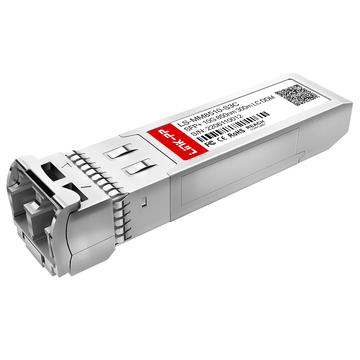
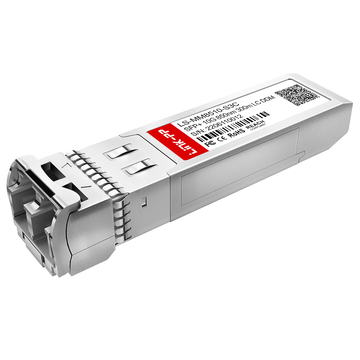
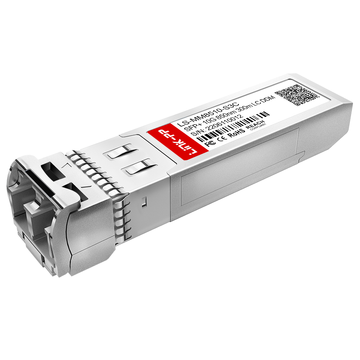
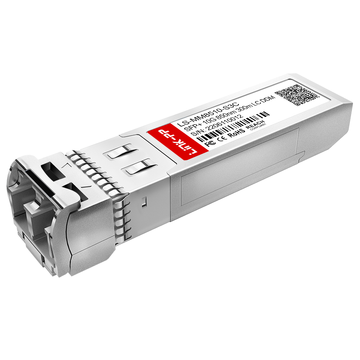
For organizations looking for a cost-effective and reliable MA-SFP-10GB-SR compatible solution, the LINK-PP LS-MM8510-S3C 10GBASE-SR SFP+ module is a strong option. This module is designed to support 10GBASE-SR connectivity over multimode fiber, offers full compliance with IEEE standards, and is rigorously tested for compatibility with Cisco and Meraki networking devices. With high manufacturing quality and competitive pricing, it provides an efficient alternative for enterprises deploying or expanding 10GbE networks.
♣️ Conclusion: Key Takeaways on MA-SFP-10GB-SR Compatibility
The MA-SFP-10GB-SR transceiver remains one of the most practical and widely deployed solutions for building reliable 10GbE multimode fiber connections in enterprise and data center networks. As discussed throughout this guide, successful deployment depends on several key factors — understanding the module’s technical specifications, selecting the correct OM3 or OM4 multimode fiber, verifying compatibility with Cisco Meraki switches, and following best practices for installation and troubleshooting. When these elements are aligned, MA-SFP-10GB-SR modules can deliver stable, low-latency, and high-bandwidth connectivity for switch uplinks, server aggregation, and storage networking.
Equally important is choosing a trusted transceiver supplier that provides tested compatibility, strong quality standards, and dependable support. High-quality compatible modules can offer the same optical performance as OEM solutions while significantly reducing deployment costs, making them an attractive option for organizations scaling their network infrastructure. If you are looking for reliable and cost-effective 10GBASE-SR transceivers for Cisco devices, explore the full range of solutions available at the LINK-PP Official Store to find enterprise-grade optical modules for your network upgrade.