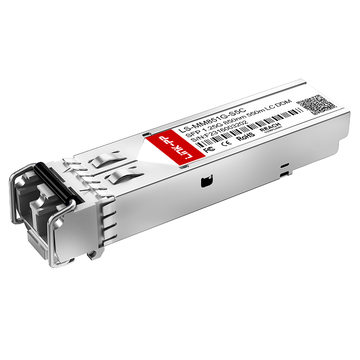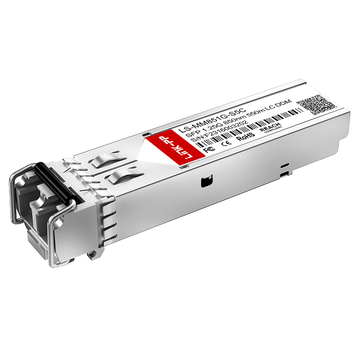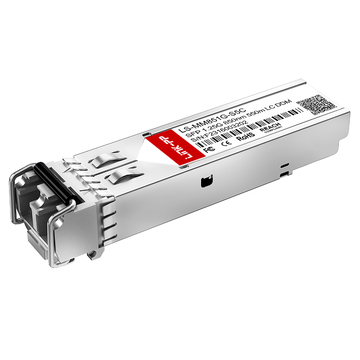
The Cisco MGBSX1 is a 1000BASE-SX SFP transceiver designed for short-reach Gigabit Ethernet links over multimode fiber. Operating at an 850 nm wavelength and supporting distances of up to 500 meters, it is widely used in building-to-building and intra-campus networks where reliable, cost-effective fiber connectivity is required.
As a Small Form-Factor Pluggable (SFP) module, MGBSX1 is hot-swappable and compliant with industry standards, allowing network switches to be upgraded or expanded without service interruption. It is commonly deployed with Cisco 100, 200, 300, and 500 Series switches, providing flexible fiber uplinks between floors, wiring closets, and network segments within the same site.
Beyond understanding the original Cisco module, many network engineers and procurement teams also evaluate Cisco-compatible alternatives to balance cost, availability, and deployment scale. This guide explains what Cisco MGBSX1 is, breaks down its technical specifications and typical use cases, and outlines compatibility considerations and validated alternatives, helping you make informed decisions when selecting Gigabit SX SFP transceivers for production networks.
♦️What Is Cisco MGBSX1 SFP?
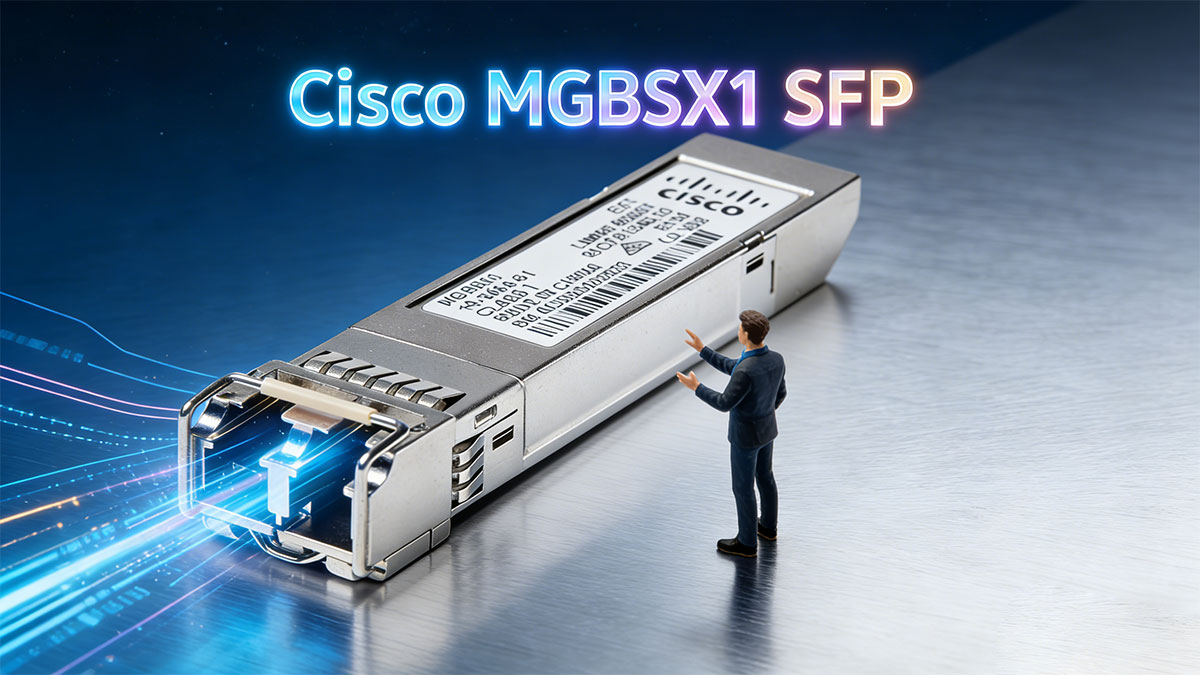
The Cisco MGBSX1 SFP is designed for Gigabit Ethernet (1GbE) connectivity over multimode fiber (MMF). It operates at a typical wavelength of 850 nm and supports link distances of up to 500 meters, making it well suited for short-reach fiber deployments within buildings or across small campus environments.
As a Small Form-Factor Pluggable (SFP) module, the MGBSX1 is hot-swappable, allowing network engineers to add or replace fiber uplinks without powering down switches. It uses a duplex LC connector and conforms to the IEEE 802.3z 1000BASE-SX standard, ensuring predictable performance and interoperability at the physical layer.
Cisco positions the MGBSX1 for use with its 100, 200, 300, and 500 Series switches, where it provides a simple and flexible way to add fiber connectivity or an additional Gigabit Ethernet port on a port-by-port basis. This modular design enables organizations to scale network capacity gradually—“pay as you populate”—while maintaining consistent link quality and vendor-supported compatibility.
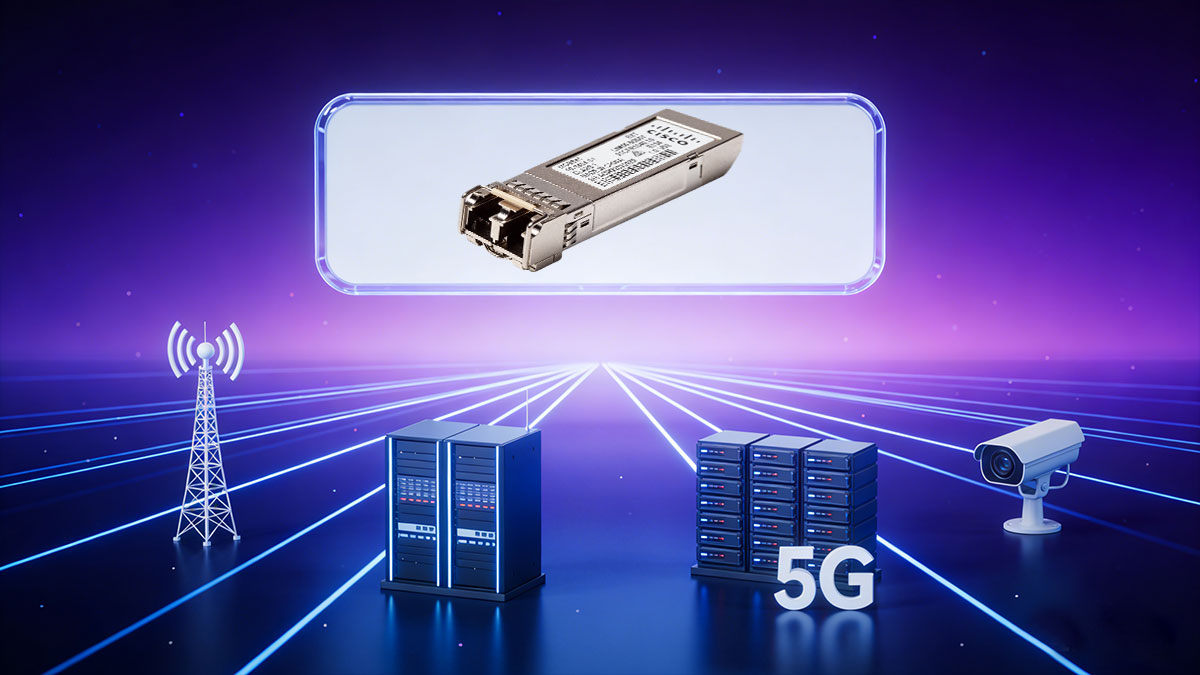
In practical deployments, the Cisco MGBSX1 is commonly used for switch-to-switch links, floor-to-floor connections, and short-distance inter-building links within the same site. Its balance of standardized optics, ease of installation, and stable Gigabit performance makes it a widely adopted choice for enterprise access and aggregation networks.
How the MGBSX1 SFP Transceiver Works
At the physical layer, the MGBSX1 converts electrical Gigabit Ethernet signals from the switch into optical signals for transmission over multimode fiber—and converts received optical signals back into electrical form.
Key functional components include:
-
850 nm VCSEL laser transmitter optimized for MMF
-
Photodiode receiver tuned for short-reach optical links
-
SFP electrical edge connector that interfaces with the host switch
-
Integrated spring latch for secure insertion and easy removal
As a hot-pluggable SFP module, the MGBSX1 can be installed or replaced without powering down the switch, helping maintain network availability during upgrades or maintenance.
♦️ Cisco MGBSX1 Key Specifications Explained
The Cisco MGBSX1 is engineered to meet the requirements of Gigabit Ethernet over multimode fiber, following the 1000BASE-SX standard. Understanding its key specifications helps network engineers and procurement teams verify whether it fits a specific deployment scenario, especially for short-reach fiber links inside buildings or small campuses.
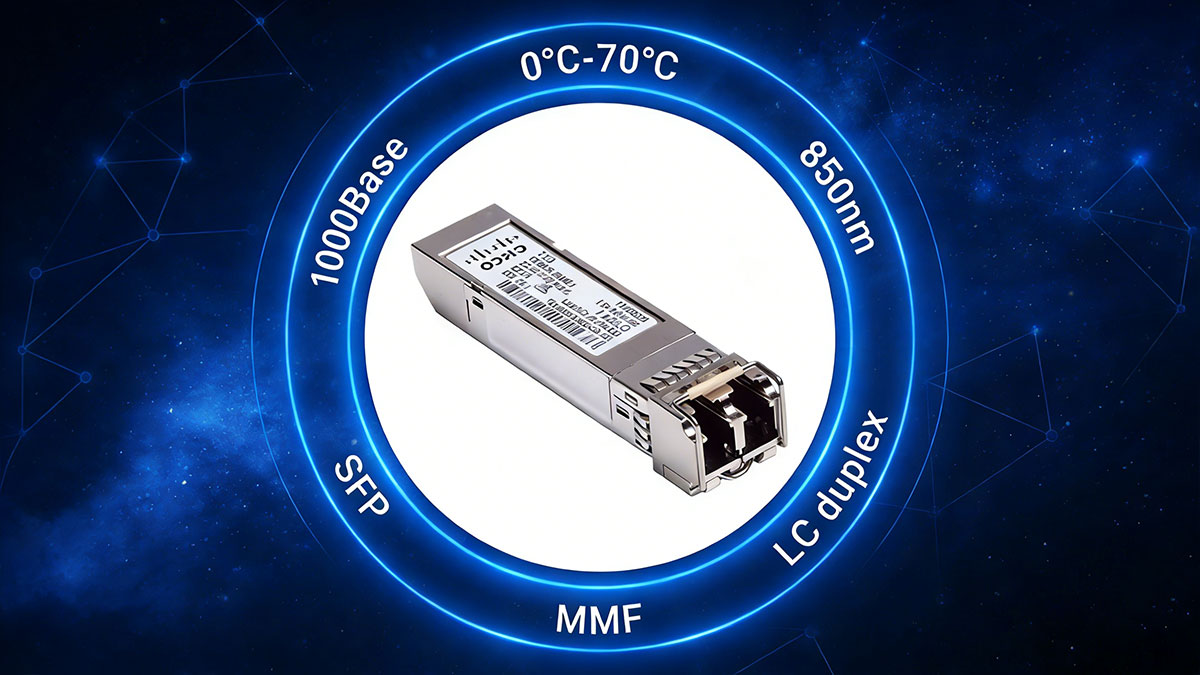
At the physical layer, MGBSX1 uses multimode fiber (MMF) with a duplex LC connector, operating at a nominal wavelength of 850 nm. This combination is optimized for short distances while keeping optical power levels within safe and standardized ranges. In typical enterprise environments using OM2/OM3 multimode fiber, the module supports link lengths of up to 500 meters, which is sufficient for most floor-to-floor or building-to-building connections on the same site.
From a performance perspective, Cisco specifies conservative optical power and receiver thresholds to ensure stable links and predictable margins. The defined average output power and receiver sensitivity allow reliable operation without excessive signal loss, while the receiver overload limit protects the optical interface from damage in short, high-power links.
Environmental and mechanical specifications are equally important in production networks. The MGBSX1 follows the standard SFP form factor, consumes up to 1 W of power, and is designed to operate across a typical enterprise temperature range of 0°C to 70°C. Compliance with international EMI and laser safety standards ensures it can be deployed globally without regulatory concerns.
Optical & Performance Specifications
| Parameter | MGBSX1 1000BASE-SX |
|---|---|
| Ethernet Standard | 1000BASE-SX |
| Fiber Type | Multimode Fiber (MMF) |
| Connector | Duplex LC |
| Wavelength (Tx/Rx) | 850 nm |
| Maximum Distance | Up to 500 m |
| Average Output Power | −9.5 dBm to −4 dBm |
| Receiver Sensitivity | −20 dBm (typical) |
| Receiver Overload | −0 dBm |
Environmental & Mechanical Specifications
| Parameter | Value |
|---|---|
| Dimensions (W × H × D) | 13.4 × 8.5 × 56.5 mm |
| Weight | 0.018 kg (0.63 oz) |
| Max Power Consumption | 1 W |
| Operating Temperature | 0°C to 70°C (32°F to 158°F) |
| Storage Temperature | −40°C to 85°C |
| Operating Humidity | 10%–85% (non-condensing) |
| Storage Humidity | 5%–90% (non-condensing) |
Compliance & Safety Standards
-
EMC Compliance
-
FCC Part 15 Class B
-
EN55022 / CISPR 22 Class B
-
VCCI Class B
-
-
Laser & Electrical Safety
-
FDA 21 CFR 1040.10 and 1040.11
-
EN60950
-
IEC / EN 60825-1, 60825-2
-
These specifications make the MGBSX1 optical module a stable, standards-compliant choice for 1G multimode fiber links, while also providing a clear baseline for evaluating Cisco-compatible alternatives with equivalent optical and environmental characteristics in later sections.
♦️ Key Features of Cisco MGBSX1
The Cisco MGBSX1 1000BASE-SX SFP is designed to deliver reliable Gigabit fiber connectivity while keeping installation and maintenance simple. Its feature set reflects Cisco’s focus on operational stability, safety, and flexibility in enterprise and small campus networks.
Core Hardware and Design Features
-
Hot-swappable design
The MGBSX1 can be inserted or removed while the switch is powered on, enabling upgrades or replacements without disrupting network services. -
Integrated spring latch mechanism
A built-in spring latch allows quick, secure module removal, reducing the risk of connector damage during maintenance and simplifying work in high-density switch environments. -
Low-insertion-loss duplex LC interface
The duplex LC receptacle ensures stable optical coupling with minimal signal loss, supporting consistent link quality over multimode fiber. -
Low electromagnetic interference (EMI)
Designed to meet FCC Part 15 Class B requirements, the MGBSX1 minimizes electromagnetic emissions, making it suitable for noise-sensitive enterprise installations. -
Standards-compliant laser safety
The module meets FDA and IEC (International Electrotechnical Commission) eye safety standards, ensuring safe operation and global regulatory compliance.
Deployment and Operational Highlights
-
Adds fiber connectivity to Cisco 100–500 Series switches
Enables simple expansion from copper to fiber for uplinks or switch-to-switch connections. -
Optimized for building and small campus networks
Provides a high-performance Gigabit Ethernet link for connections between floors, wiring closets, or nearby buildings. -
Minimal downtime during maintenance
Hot-swappability and tool-free removal help maintain network availability during routine changes. -
Port-by-port flexibility
Supports a “pay as you populate” model, allowing organizations to choose fiber interfaces only where needed and scale capacity gradually.
Together, these features make the MGBSX1 SFP module a practical and dependable 1G multimode SFP solution, balancing ease of use, regulatory compliance, and performance for enterprise access and aggregation networks.
♦️ Cisco MGBSX1 Compatibility and Interoperability
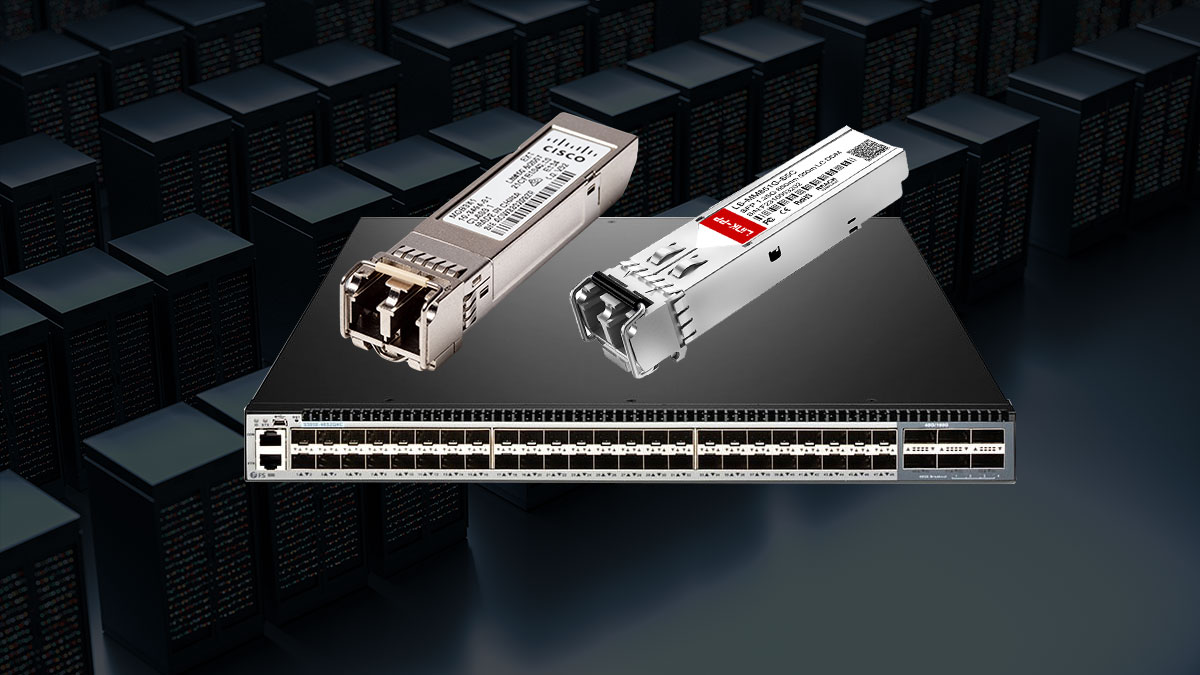
Compatibility is a critical consideration when deploying MGBSX1 SFP transceivers, as it directly affects link stability, supportability, and post-deployment maintenance. While the SFP form factor follows industry standards, real-world interoperability can vary depending on platform and firmware behavior.
Cisco Platform Compatibility
The Cisco MGBSX1 is officially validated for use with Cisco 100, 200, 300, and 500 Series switches. On these platforms, it provides full support for 1000BASE-SX Gigabit Ethernet over multimode fiber, with predictable performance and vendor-backed reliability.
Using Cisco-branded optics minimizes the risk of compatibility warnings, port shutdowns, or unsupported module messages in production environments.
SFP MSA Standards and Interoperability
From a physical and electrical perspective, the MGBSX1 complies with SFP Multi-Source Agreement (MSA) specifications and the IEEE 802.3z 1000BASE-SX standard. This standardization enables basic interoperability across compliant hosts and optics at the hardware level.
However, MSA compliance alone does not guarantee acceptance by all switch firmware.
Vendor ID and Firmware Enforcement
Many Cisco switches implement vendor ID and EEPROM checks at the firmware level. These mechanisms allow the device to identify whether a module is Cisco-branded or third-party compatible. Depending on the platform and software version, non-Cisco optics may trigger warning messages or be restricted.
This behavior is intended to ensure operational consistency but can affect procurement strategies when considering alternative SFP modules.
When to Test Third-Party Compatible SFP Modules
For networks where uptime and stability are critical, follow these best practices:
-
Use Cisco-branded MGBSX1 modules for guaranteed compatibility and full vendor support
-
If deploying compatible third-party SFP optical transceiver, always test them in a staging or lab environment before production rollout
-
Verify correct multimode fiber type (MMF), connector cleanliness, and duplex polarity to prevent false compatibility issues
By validating interoperability in advance, organizations can avoid unexpected downtime and reduce the risk of post-deployment support issues when using Cisco MGBSX1 or compatible alternatives.
♦️ Compatible Alternatives to Cisco MGBSX1
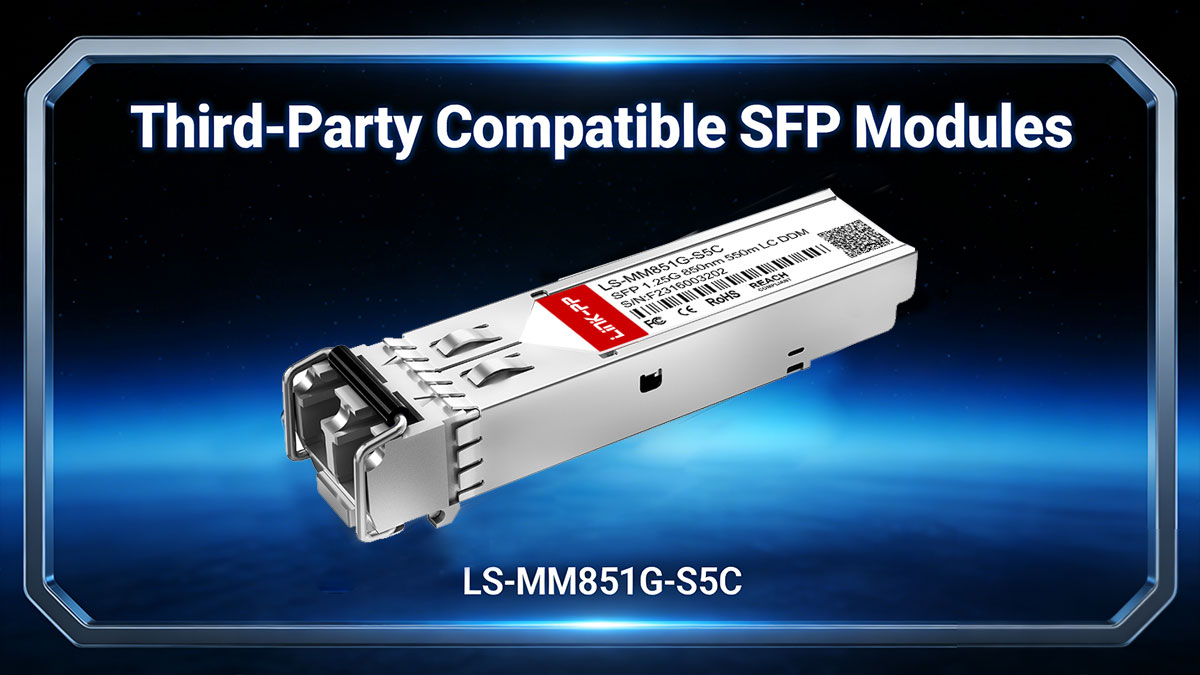
When planning a deployment of MGBSX1 1000BASE-SX SFP transceivers, many organizations evaluate compatible alternatives to balance cost, delivery time, and inventory flexibility. A “Cisco-compatible SFP” refers to a third-party transceiver that matches the physical, electrical, and optical specifications of a Cisco OEM SFP part and is coded to operate reliably with Cisco switches.
What Is a “Cisco-Compatible SFP”?
A Cisco-compatible SFP is an SFP transceiver module that:
-
Follows the SFP MSA form factor and IEEE 1000BASE-SX optical standard
-
Uses the same wavelength (850 nm) and connectivity (duplex LC) as the Cisco MGBSX1
-
Is EEPROM-coded to be recognized by Cisco hardware (or accepted without error)
-
Provides equivalent optical performance (reach, power, sensitivity) for a given fiber type
Compatible modules are often manufactured and tested to behave like the original Cisco part but are sold at a lower price or with different stocking options.
Advantages of Using Compatible Alternatives
Cost Savings
Third-party optics typically offer lower unit cost than OEM equivalents, especially when purchasing in volume.
Improved Availability and Lead Time
OEM stockouts or long lead times can delay deployments. Compatible alternatives often have wider availability and shorter delivery windows.
Inventory Flexibility
Mixing OEM and compatible modules allows organizations to optimize inventory, keeping a small OEM stock for critical links while using compatible modules where appropriate.
Scalability
For large rollouts, compatible alternatives can help reduce per-port spend while still meeting performance requirements.
Key Parameters for Evaluating Compatible SFP Modules
Before selecting a Cisco-compatible alternative, verify the following:
-
Standards Compliance — Must support the IEEE 1000BASE-SX profile (850 nm, MMF).
-
Optical Specifications — Match the MGBSX1’s Tx power, Rx sensitivity, and reach (up to ~500 m) within link budget tolerances.
-
Fiber Type and Connector — Multimode fiber (OM3/OM4) with duplex LC.
-
EEPROM Coding — Compatible modules should use Cisco-recognizable vendor IDs or be accepted by the intended switch platform.
-
Environmental Ratings — Operating temperature and humidity must meet your deployment conditions.
-
Diagnostics Support (DOM) — If you rely on optical monitoring, confirm that DOM/SFF-8472 status is supported and readable on your devices.
Below is a validated alternative that meets these criteria and aligns with MGBSX1 specifications.
Compatible Alternative: LINK-PP LS-MM851G-S5C
LINK-PP LS-MM851G-S5C is a Cisco-compatible 1000BASE-SX SFP transceiver designed to provide the same optical performance and form-factor as the Cisco MGBSX1. It is suitable for multimode fiber environments where cost efficiency and predictable interoperability are required.
Specifications Comparison
| Parameter | Cisco MGBSX1 | LINK-PP LS-MM851G-S5C |
|---|---|---|
| Standard | 1000BASE-SX | 1000BASE-SX |
| Fiber Type | Multimode fiber (MMF) | MMF |
| Wavelength | 850 nm | 850 nm |
| Connector | Duplex LC | Duplex LC |
| Max Distance | Up to 500 m | Up to 500 m |
| Hot-swappable | Yes | Yes |
| Compliance | FCC/EN/VCCI safety standards | FCC/EN/VCCI, IEC safety |
Compatibility Statement
The LINK-PP LS-MM851G-S5C is engineered to be Cisco MGBSX1 compatible and is tested to conform with the same optical and electrical requirements, making it suitable for deployment in Cisco switches that accept MGBSX1-equivalent modules.
Typical Use Cases
-
Fiber uplinks in enterprise access/distribution layers
-
Short-reach links in wiring closets or between floors
-
Campus or SMB networks requiring Gigabit MMF connections
-
Scenarios where OEM stock is limited or cost optimization is a priority
Product Reference (for documentation & procurement)
? LINK-PP LS-MM851G-S5C Compatible Cisco MGBSX1
By selecting a compatible alternative that is engineered to match the MGBSX1 specification, organizations can achieve cost efficiency, maintain performance, and reduce dependency on a single OEM supply channel—provided compatibility is verified and tested in staging before full production deployment.
♦️ Installation Tips and Common Pitfalls
Correct installation of the 1G SFP Modules is essential to ensure stable links and to avoid unnecessary troubleshooting, returns, or misapplication. The following best practices address the most common issues encountered in real-world deployments.
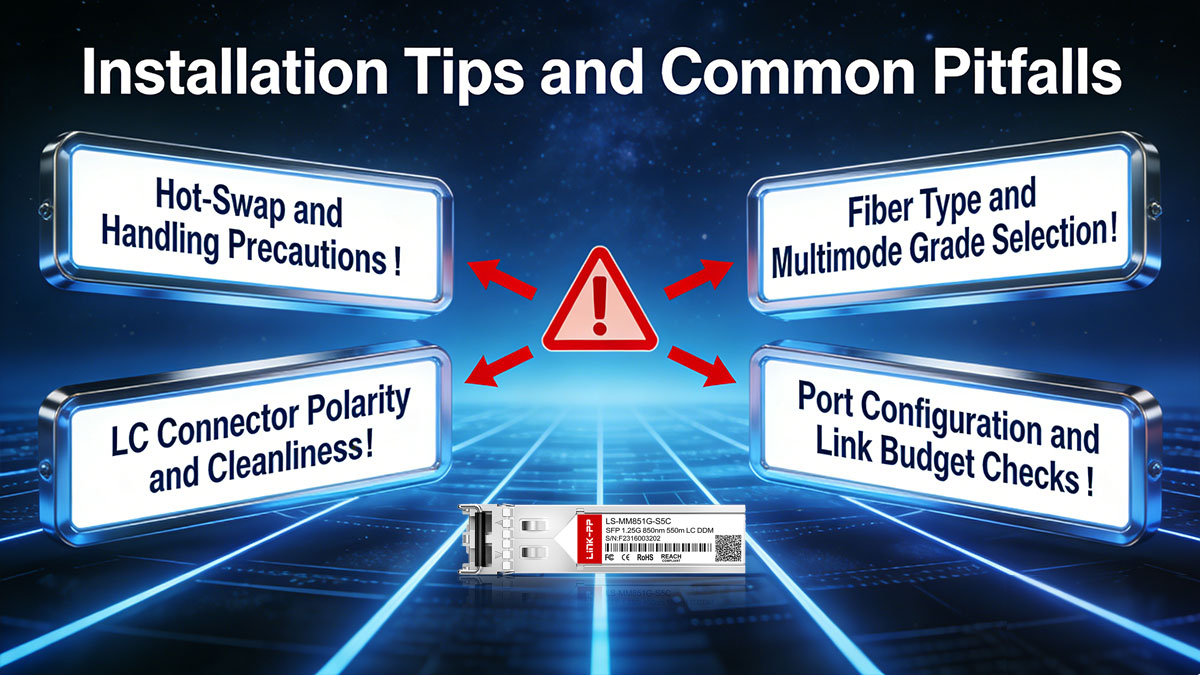
Hot-Swap and Handling Precautions
-
Hot-swappable, but handle carefully
The 1000BASE-SX SFP supports hot insertion and removal. However, always follow switch vendor guidelines and avoid inserting or removing modules under mechanical stress. -
Observe ESD precautions
Handle SFP modules in an ESD-safe environment and avoid touching the optical or electrical contacts to prevent latent damage.
Fiber Type and Multimode Grade Selection
-
Use multimode fiber only
MGBSX11000BASE-SX is designed for multimode fiber (MMF). Single-mode fiber (SMF) will not work and will result in link failure. -
Verify MMF grade
Common supported MMF types include OM2, OM3, and OM4.-
OM2: suitable for shorter runs
-
OM3 / OM4: recommended for better margin and cleaner signal quality
Always confirm that the fiber plant supports the required distance within the optical budget.
-
LC Connector Polarity and Cleanliness
-
Check duplex LC polarity
Ensure correct Tx-to-Rx polarity. Reversed fiber pairs are a frequent cause of “link down” conditions even when optics are functioning normally. -
Inspect and clean connectors
Dirty or contaminated LC connectors can significantly degrade optical performance. Clean both the module interface and patch cords before installation.
Port Configuration and Link Budget Checks
-
Verify switch port speed and mode
Confirm that the switch port is configured for 1G operation and not forced to an unsupported speed or disabled state. -
Check optical power and link budget
Ensure that total link loss (fiber attenuation, connectors, patch panels) stays within the supported optical power budget. Excessive attenuation or unexpected high power levels may cause unstable links.
By following these installation guidelines and avoiding common pitfalls, network teams can achieve reliable Gigabit fiber links with Cisco MGBSX1 or compatible alternatives, while minimizing deployment issues and post-installation support overhead.
♦️ FAQ: MGBSX1 SFP Transceiver
1. What is the difference between Cisco MGBSX1 and GLC-SX-MMD?
Both Cisco MGBSX1 and GLC-SX-MMD are 1000BASE-SX multimode SFP transceivers operating at 850 nm. The main difference lies in target platforms and validation: MGBSX1 is positioned for Cisco 100–500 Series switches, while GLC-SX-MMD is commonly used in enterprise and data center-class Cisco switches. Optical performance is similar, but official support and compatibility depend on the specific switch family.
2. Do I have to use an original Cisco MGBSX1 module?
Using an Cisco original MGBSX1 ensures full vendor support and eliminates firmware compatibility concerns. However, Cisco-compatible SFP modules that meet the same optical and electrical specifications can also work reliably, provided they are tested and validated on the target platform before production deployment.
3. How is the maximum transmission distance calculated?
The maximum distance (up to 500 m) depends on the optical link budget, which includes fiber attenuation, connector loss, splice loss, and patch panel loss. Higher-quality multimode fiber (such as OM3 or OM4) and clean connectors help achieve stable operation closer to the maximum rated distance.
4. Does MGBSX1 SFP support DOM (Digital Optical Monitoring)?
DOM support depends on the specific module revision and switch platform. Some Cisco SFPs provide basic DOM information, such as temperature and optical power, while others may not expose full diagnostics. Always verify DOM support in the official datasheet or switch CLI if monitoring is required.
5. Can Cisco MGBSX1 be used in non-Cisco equipment?
Physically, the MGBSX1 follows the SFP MSA form factor, but firmware interoperability is not guaranteed on non-Cisco devices. It is best used in supported Cisco switches. For non-Cisco platforms, a vendor-neutral or platform-specific SFP is usually a safer choice.
6. How do different MMF grades affect transmission distance?
Different multimode fiber grades support different effective distances:
-
OM2: shorter reach, typically suitable for basic in-building links
-
OM3 / OM4: better bandwidth and signal quality, recommended for approaching the 500 m limit
Actual distance depends on installation quality and link loss, not fiber grade alone.
7. How can I verify that a compatible SFP module is safe to use?
To reduce risk, choose compatible modules that:
-
Match 1000BASE-SX specifications (850 nm, MMF, LC)
-
Are coded and tested for Cisco compatibility
-
Have been validated in a staging environment before production
-
Come from vendors that provide clear specifications and compliance documentation
8. When should I choose SX instead of LX optics?
Choose SX (1000BASE-SX) when link distances are short (within a building or small campus) and multimode fiber is available. Choose LX (1000BASE-LX) when longer distances or single-mode fiber are required. SX optics are typically more cost-effective for localized deployments.
♦️ Conclusion: Choosing the Right Cisco MGBSX1 Alternative
The Cisco MGBSX1 1000BASE-SX SFP transceiver remains a proven solution for Gigabit Ethernet connectivity over multimode fiber, especially in enterprise access, distribution, and small campus networks. Its compact SFP form factor, hot-swappable design, and compliance with 1000BASE-SX standards make it a dependable choice for short-range fiber links where stability and simplicity matter.
By clearly understanding optical specifications, supported MMF types, distance limitations, and platform compatibility, network teams can deploy Cisco MGBSX1 SFP—or equivalent compatible alternatives—with confidence, minimizing interoperability risks and avoiding unnecessary troubleshooting during rollout.
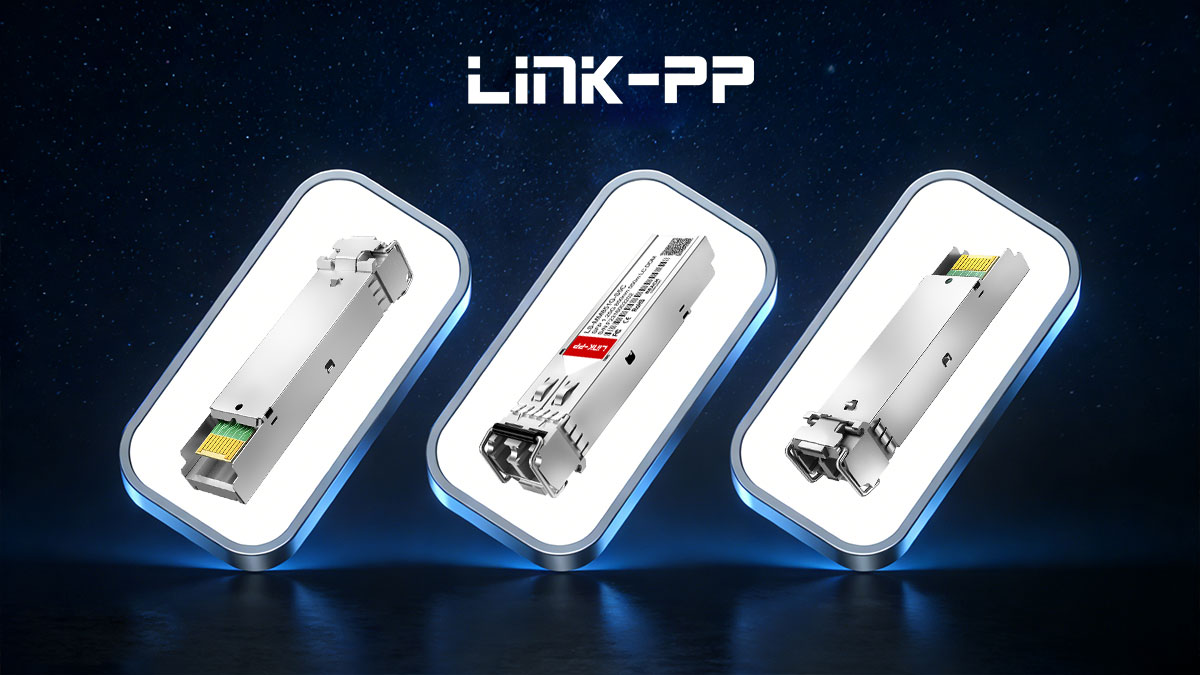
If you are evaluating MGBSX1 SFP modules or looking for Cisco-compatible Gigabit SFP alternatives for your network upgrade:
-
? Visit the LINK-PP Official Store to explore Cisco-compatible SFP transceivers engineered for reliable interoperability
-
? Review detailed specifications to ensure alignment with your fiber type, distance, and switch platform
-
? Validate optics in a test or staging environment before large-scale deployment to ensure smooth production rollout
Choosing the right 1000BASE-SX SFP transceiver from the start helps ensure long-term network stability, predictable performance, and lower total cost of ownership—without compromising compatibility or reliability.