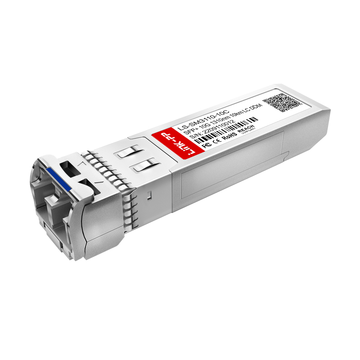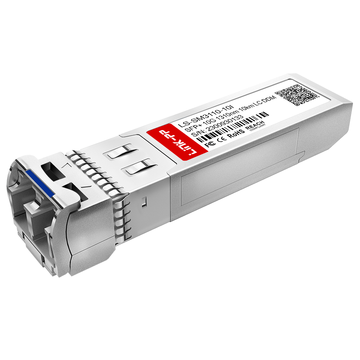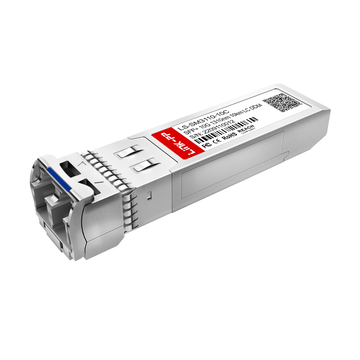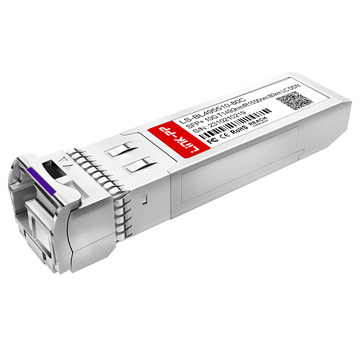
In today’s enterprise networking landscape, 10G Ethernet remains a foundational transmission standard across data centers, campus networks, and aggregation layers. Despite the rapid evolution toward higher speeds such as SFP28 25G and QSFP28 100G, 10G infrastructure—especially in the form of 10G LR Cisco optical transceiver modules—continues to play a critical role in long-reach connectivity. Its balance of performance, stability, and deployment maturity ensures that it remains widely adopted in both legacy systems and ongoing network expansions.
At the same time, a clear market shift has emerged around the cost structure of SFP 10G LR Cisco modules. Enterprises are increasingly comparing OEM Cisco optics with Cisco-compatible alternatives, as significant price gaps directly influence procurement strategies and lifecycle budgeting. Factors such as global supply chain fragmentation, vendor coding policies, and multi-source manufacturing ecosystems have further intensified attention on sourcing efficiency and cost optimization in this segment.
This article provides a structured analysis of the pricing gap and sourcing landscape of 10G LR Cisco compatible optical modules. It aims to help readers understand how technical standards, market dynamics, and procurement strategies intersect in real-world deployments. The key topics covered include:
- Technical positioning and deployment scenarios of 10G LR Cisco modules
- Structural reasons behind OEM vs compatible pricing differences
- Global sourcing channels and supply chain characteristics
- Compatibility, risk factors, and deployment considerations
- Cost optimization strategies for enterprise network planning
By breaking down these dimensions, this article offers a practical reference framework for network architects, procurement teams, and IT decision-makers seeking to balance performance reliability with cost efficiency in large-scale optical network deployments.
💭 Understanding 10G LR Cisco Optical Modules
10G LR Cisco optical modules are long-reach SFP+ transceivers designed for reliable 10Gbps data transmission over single-mode fiber. In practical enterprise networks, they are widely used because they provide a stable balance between transmission distance, compatibility with Cisco switching platforms, and predictable performance in structured cabling environments.
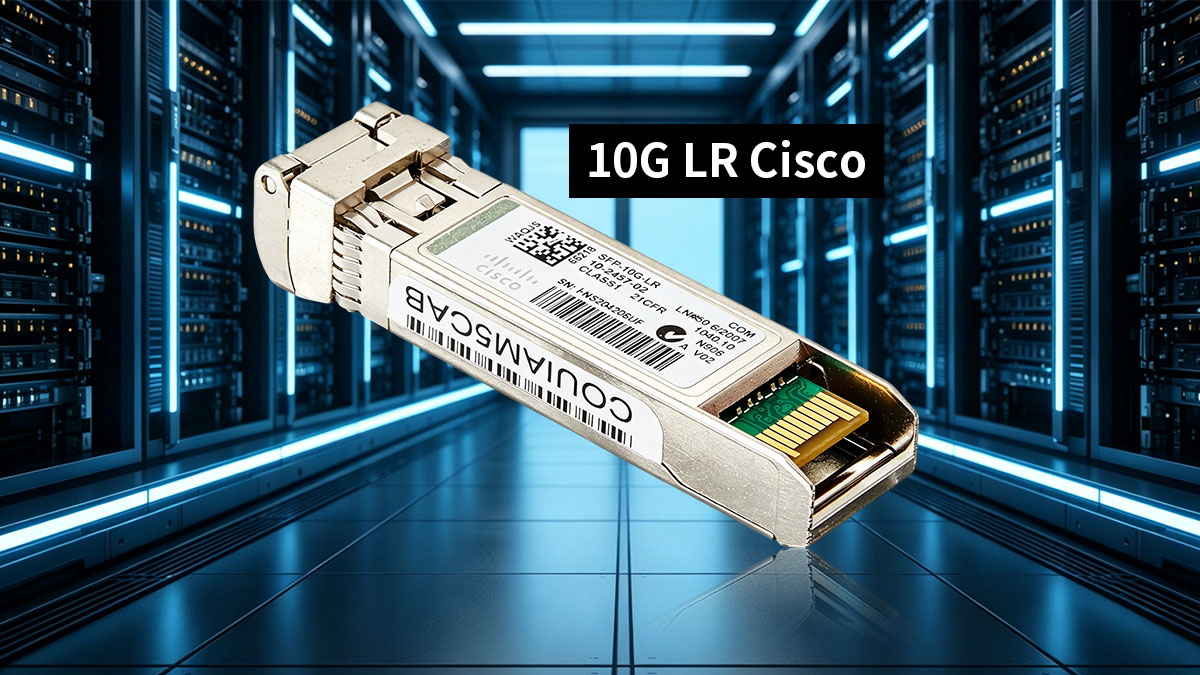
What Is a 10G LR Cisco Transceiver
A 10G LR Cisco transceiver is a long-range optical module that operates at 1310nm wavelength and supports transmission distances up to 10km over single-mode fiber. It is commonly deployed in enterprise backbone links and data center interconnects where medium-to-long distance connectivity is required.
To better understand its core technical profile, the key parameters are summarized below.
Before reviewing the specification details, it is important to note that these values define the baseline compatibility and deployment boundary for most Cisco-based optical networks.
| Parameter | Specification |
|---|---|
| Data Rate | 10Gbps |
| Wavelength | 1310nm |
| Transmission Distance | Up to 10km |
| Fiber Type | Single-mode fiber (SMF) |
After reviewing these parameters, it becomes clear that 10G LR modules are optimized for medium-range enterprise and metro-scale optical links rather than short-range intra-rack connectivity.
Core Enterprise Deployment Scenarios
10G LR Cisco modules are typically used in structured network environments where stable long-distance connectivity is required between switches, routers, and aggregation layers.
These deployment scenarios usually include:
- Data center interconnects between separate buildings or halls
- Campus backbone links connecting multiple network distribution points
- Metro aggregation layers where 10km optical reach is required
- Enterprise disaster recovery connections between primary and secondary sites
Each of these use cases relies on consistent optical performance over distance. In particular, campus and inter-building connections often depend on the predictable signal integrity of 10G LR optics to maintain uninterrupted service continuity.
Key Technical Specifications
Beyond basic transmission parameters, 10G LR Cisco modules include several technical characteristics that influence network design decisions. These specifications determine not only compatibility but also operational stability under different environmental conditions.
The most critical technical aspects include:
- Power consumption and thermal behavior
- Digital Diagnostics Monitoring (DDM/DOM) support
- Signal sensitivity and receiver performance thresholds
- Compliance with IEEE 802.3ae 10GBASE-LR standard
To provide a clearer comparison of how these specifications typically align in deployment planning, the table below outlines their functional impact.
| Technical Aspect | Operational Impact |
|---|---|
| Power Consumption | Affects switch thermal load and energy efficiency |
| DOM/DDM Support | Enables real-time optical diagnostics |
| Receiver Sensitivity | Determines link stability over distance |
| Standard Compliance | Ensures interoperability across Cisco platforms |
After evaluating these specifications, it becomes evident that 10G LR modules are designed not only for distance coverage but also for operational visibility and long-term network reliability.
Cisco Original vs Compatible Ecosystem
In real-world procurement environments, 10G LR Cisco optical modules exist in two primary categories: Cisco original OEM modules and Cisco-compatible third-party alternatives. Both categories serve the same functional purpose but differ significantly in pricing structure, supply chain origin, and firmware recognition behavior.
From a technical standpoint, both types generally comply with the same optical standards, but compatibility handling at the device firmware level can vary depending on platform configuration.
The ecosystem differences can be summarized as follows:
- OEM Cisco modules are manufactured and certified under Cisco’s controlled ecosystem
- Compatible modules are produced by third-party manufacturers aligned with IEEE standards
- Both can support similar optical performance when properly validated
- Compatibility behavior may depend on Cisco switch firmware and coding rules
After understanding these distinctions, it becomes clear that the choice between OEM and compatible modules is less about raw optical capability and more about cost structure, sourcing flexibility, and network policy requirements.
💭 Why the 10G LR Cisco Price Gap Exists
The price gap between OEM Cisco 10G LR optical modules and Cisco-compatible alternatives is primarily driven by differences in branding, supply chain structure, certification costs, and vendor ecosystem control. While both categories often deliver similar optical performance under IEEE standards, their commercial positioning and lifecycle costs diverge significantly, creating a noticeable pricing spread in enterprise procurement.

OEM Branding and Licensing Costs
One of the most direct reasons for the pricing gap is the premium associated with the Cisco brand and its controlled ecosystem. Cisco original modules are not only hardware products but also part of a tightly managed certification and validation framework that increases overall cost.
This cost structure is typically shaped by:
- Intellectual property licensing and ecosystem integration
- Product certification and compatibility validation within Cisco platforms
- Enterprise-grade support and warranty inclusion
- Brand positioning within high-reliability network infrastructures
These factors collectively increase the final unit price, even when the underlying optical hardware is technically comparable to non-branded alternatives.
Hardware Manufacturing Cost Structure
Beyond branding, differences in manufacturing pipelines also contribute to the price gap between OEM and compatible 10G LR Cisco modules. Although both categories rely on similar optical principles, their production strategies and component sourcing models are not identical.
The main cost drivers include:
- Use of original Cisco-qualified components and suppliers
- Higher levels of factory testing and quality assurance cycles
- Controlled production batches with stricter traceability requirements
- Higher failure tolerance thresholds in enterprise certification processes
To better illustrate how manufacturing priorities differ, the comparison below highlights key structural cost influences.
| Cost Factor | OEM Cisco Modules | Compatible Modules |
|---|---|---|
| Component Sourcing | Cisco-qualified suppliers | Multi-vendor sourcing |
| Testing Depth | Extensive validation cycles | Standardized optical testing |
| Production Scale | Controlled batches | High-volume manufacturing |
| Cost Efficiency Focus | Reliability-first | Cost-optimization-first |
After comparing these structures, it becomes clear that OEM pricing reflects a reliability-maximized production philosophy, while compatible modules are typically optimized for cost efficiency and scalability.
Supply Chain and Distribution Layers
Another major contributor to the price gap is the complexity of global distribution networks. OEM Cisco modules typically move through multiple authorized distribution layers, each adding incremental cost to the final market price.
Key supply chain characteristics include:
- Authorized distributor networks with controlled pricing policies
- Regional pricing adjustments based on market segmentation
- Inventory holding and logistics overhead across global warehouses
- Limited flexibility in direct factory-to-enterprise procurement
In contrast, Cisco-compatible modules often benefit from a more streamlined supply chain structure, with fewer intermediary layers and more direct manufacturing-to-distribution pathways, which helps reduce overall cost accumulation.
Software Compatibility and Vendor Lock-In
Cisco network platforms may apply compatibility controls at the firmware or EEPROM level, which influences how optical modules are recognized and used within the system. This creates a form of vendor ecosystem control that indirectly affects pricing dynamics.
The key mechanisms include:
- EEPROM coding validation for module identification
- Platform-level warnings or restrictions for non-certified optics
- Firmware-based compatibility checks in certain Cisco devices
- Enterprise preference for certified modules to avoid operational risk
Because OEM modules are fully validated within Cisco’s ecosystem, they avoid compatibility concerns entirely. Compatible modules, while functionally equivalent in many cases, must account for additional engineering and validation processes to ensure smooth interoperability, which still allows them to maintain a lower overall cost structure despite added engineering complexity.
💭 OEM vs Compatible 10G LR Cisco Modules
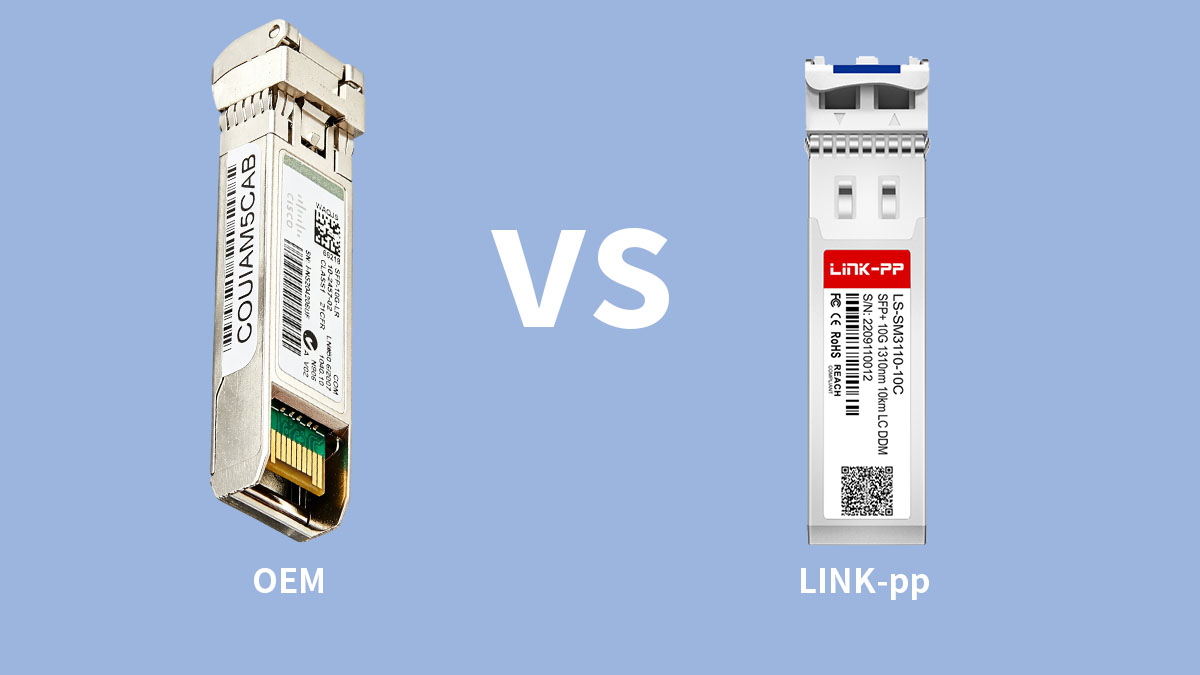
The comparison between OEM Cisco LR 10G modules and compatible alternatives is primarily defined by differences in cost structure, validation depth, and ecosystem integration rather than fundamental optical performance. In most enterprise deployments, both options can support the same 10Gbps LR transmission standard, but their operational positioning within a network lifecycle differs significantly.
Technical Performance Comparison
In practical deployment scenarios, OEM and compatible 10G LR Cisco modules typically deliver similar optical transmission performance when both are properly manufactured and validated. However, differences may appear in consistency, tolerance margins, and long-term stability under high-density network conditions.
Before examining specific metrics, it is important to understand that both categories are designed to meet the same IEEE 802.3ae 10GBASE-LR standard, meaning baseline interoperability is technically achievable.
| Performance Dimension | OEM Cisco Modules | Compatible Modules |
|---|---|---|
| Data Rate Stability | Highly consistent | Generally stable, varies by vendor |
| Optical Signal Quality | Strictly controlled | Dependent on manufacturing QA |
| Link Reliability | Enterprise-optimized | Vendor-dependent consistency |
| Long-Term Drift Behavior | Minimal deviation | Slight variation possible |
After reviewing these factors, it becomes clear that the main difference lies not in capability, but in consistency assurance across large-scale deployments.
Reliability and Quality Assurance
Reliability is one of the most important differentiators between OEM and compatible optical modules, especially in mission-critical environments where downtime costs are high. OEM modules undergo stricter validation cycles that align with Cisco’s internal hardware qualification standards.
Key reliability-related factors include:
- Extended burn-in testing under variable temperature conditions
- Strict component sourcing control from approved vendors
- Multi-stage failure screening before shipment
- Long-term lifecycle consistency validation
Compatible modules, on the other hand, often rely on standardized industry testing procedures rather than vendor-specific certification frameworks. While many high-quality suppliers achieve comparable reliability levels, the validation process is typically less restrictive.
After understanding these differences, enterprises often evaluate reliability in terms of network criticality rather than raw optical capability.
Compatibility Validation Standards
Compatibility validation determines how well a module integrates into Cisco switching and routing environments, particularly at the firmware recognition level. This is a key area where OEM and compatible modules may behave differently.
Typical validation considerations include:
- Cisco IOS/IOS-XE platform recognition behavior
- EEPROM coding and module identification alignment
- Cross-platform interoperability across Cisco device families
- Firmware update sensitivity and compatibility stability
OEM modules are fully embedded within Cisco’s validation ecosystem, meaning they are recognized natively without additional configuration concerns. Compatible modules, however, rely on manufacturer-level coding strategies to ensure seamless integration across different Cisco platforms.
Warranty and Support Differences
Support coverage and lifecycle assurance represent another major distinction between OEM and compatible 10G LR Cisco modules. These differences can directly influence long-term operational risk management.
Key differences include:
- OEM modules are covered under Cisco’s unified hardware support framework
- Compatible modules are typically supported by third-party vendors with independent policies
- Replacement cycles and RMA processes vary significantly by supplier
- Enterprise SLA integration is more standardized in OEM ecosystems
While OEM support provides tighter integration with Cisco network services, compatible modules often compensate with flexible replacement models and cost-efficient lifecycle management approaches.
Price Comparison Analysis
The most visible difference between OEM and compatible 10G LR Cisco modules is pricing, which can vary significantly depending on sourcing channel, region, and procurement volume. This gap is driven not only by manufacturing cost differences but also by ecosystem positioning and support structure.
Before reviewing the comparison, it is important to note that pricing ranges are typically influenced by contract scale and distribution model.
| Category | Typical Price Level | Key Cost Drivers |
|---|---|---|
| OEM Cisco Modules | High | Branding, certification, support integration |
| Compatible Modules | Lower to mid-range | Manufacturing efficiency, simplified supply chain |
After analyzing pricing structures, it becomes evident that the cost advantage of compatible modules is primarily achieved through reduced ecosystem overhead and more flexible manufacturing and distribution models, rather than differences in optical functionality.
💭 Global Sourcing Landscape for 10G LR Cisco Compatible Modules
The global sourcing landscape for 10G LR Cisco compatible modules is shaped by a highly distributed manufacturing ecosystem, where production, testing, and distribution are often split across multiple regions. This structure creates significant differences in lead time, pricing transparency, and quality consistency, making sourcing strategy a critical factor in enterprise procurement decisions.
Major Manufacturing Regions
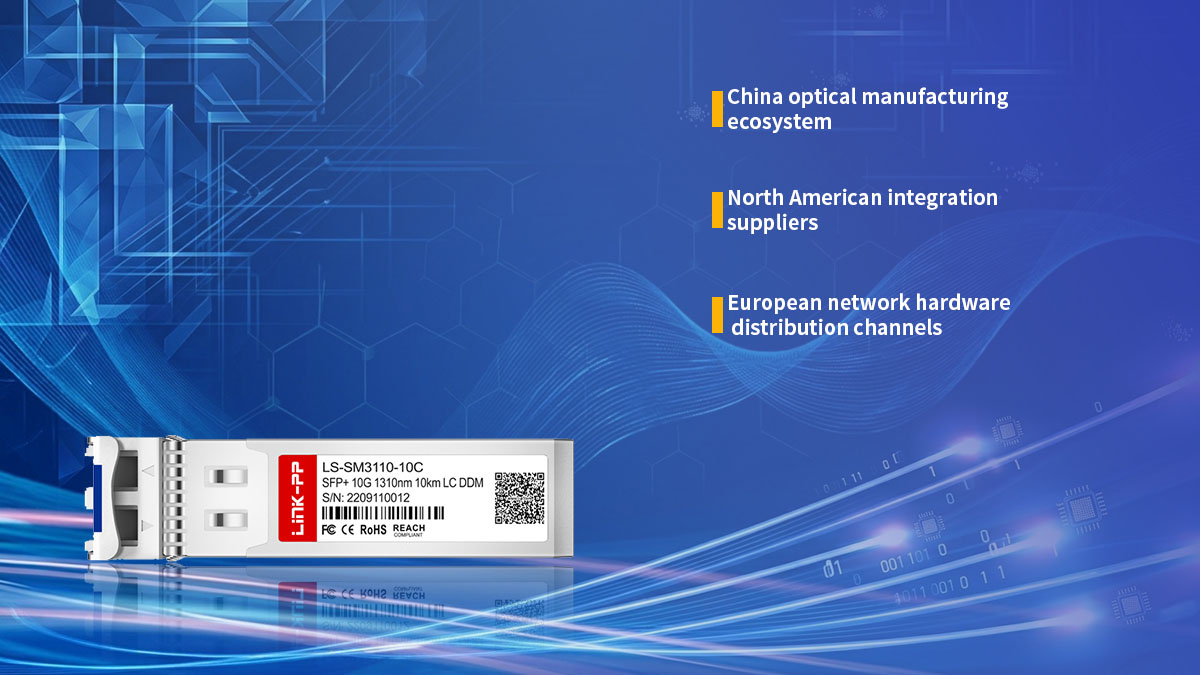
The majority of Cisco-compatible 10G LR optical modules are produced in a concentrated set of global manufacturing hubs, with Asia—particularly China—playing the dominant role in optical component assembly and module integration.
Key regional characteristics include:
- Large-scale optical component manufacturing clusters
- Mature supply chain for lasers, TOSA/ROSA components, and packaging
- High production scalability supporting bulk enterprise demand
- Strong ecosystem of ODM and OEM-compatible factories
Other regions such as North America and Europe typically focus more on distribution, system integration, and specialized niche production rather than large-scale module manufacturing.
Direct Factory vs Distributor Sourcing
Sourcing 10G LR Cisco compatible modules can generally follow two main pathways: direct factory sourcing or distributor-based procurement. Each approach offers different trade-offs in terms of transparency, flexibility, and supply consistency.
Before comparing these models, it is important to recognize that sourcing structure significantly impacts both cost efficiency and delivery reliability.
| Sourcing Model | Advantages | Limitations |
|---|---|---|
| Direct Factory | Lower cost, faster customization | Requires higher technical validation effort |
| Distributor Channel | Easier logistics, pre-tested inventory | Higher price due to multi-layer margins |
After reviewing these differences, it becomes evident that enterprises often balance both models depending on deployment scale and urgency requirements.
Risks in the Compatible Optics Market
While the Cisco-compatible optics market offers strong cost advantages, it also introduces several sourcing risks that must be carefully managed. These risks are primarily related to quality inconsistency and supply chain transparency.
Common risk factors include:
- Inconsistent EEPROM programming leading to compatibility issues
- Variation in optical performance across production batches
- Presence of rebranded or refurbished modules in secondary markets
- Limited traceability in non-certified supply channels
These risks do not eliminate the value of compatible modules, but they emphasize the importance of supplier qualification and technical validation before deployment.
Evaluating Supplier Credibility
Selecting a reliable supplier is a key step in ensuring stable deployment of 10G LR Cisco compatible modules. Supplier credibility is typically assessed through technical, operational, and documentation-based indicators.
Key evaluation criteria include:
- Availability of standardized optical testing reports
- Compliance with quality certifications such as ISO-based manufacturing systems
- Transparent production traceability and batch identification
- Demonstrated compatibility testing across Cisco platforms
Strong suppliers usually provide consistent documentation and testing evidence that supports deployment confidence across different network environments. After evaluating these factors, enterprises can significantly reduce operational risk while maintaining cost efficiency advantages.
💭 Key Technical Factors Before Deployment
Before deploying 10G LR Cisco compatible modules in a production network, it is essential to validate several technical factors that directly affect link stability, device compatibility, and long-term operational reliability. While these modules generally follow the same 10Gbps LR standard, real-world performance depends heavily on platform behavior, fiber infrastructure quality, and environmental conditions.
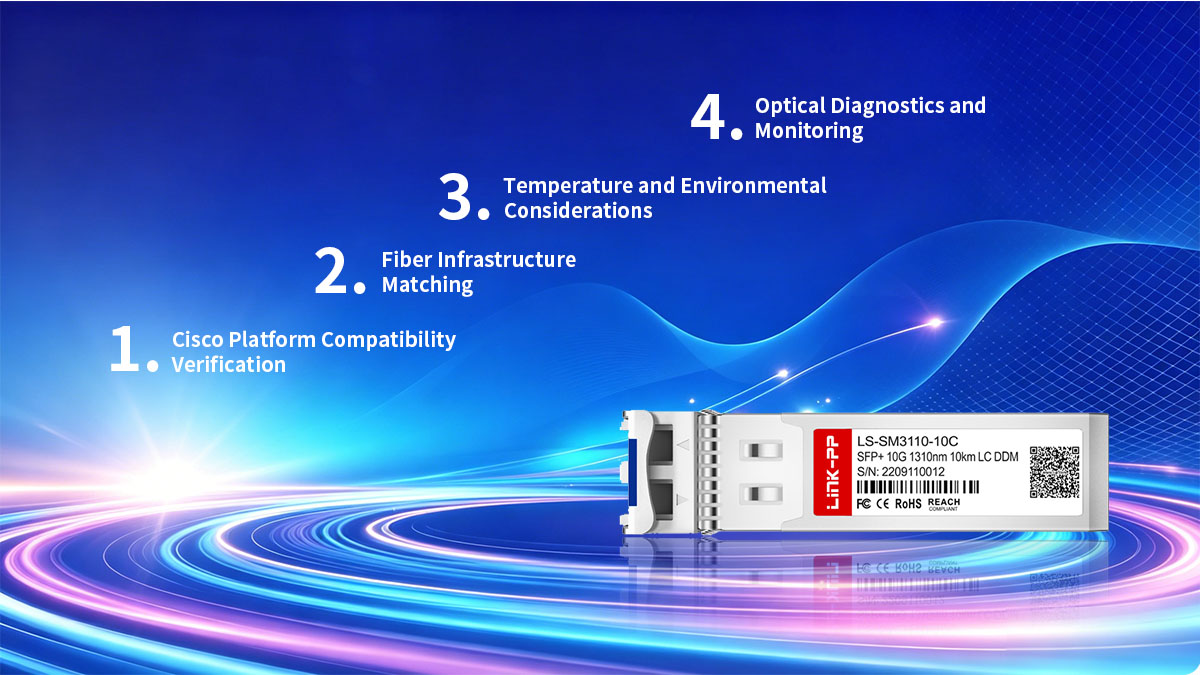
Cisco Platform Compatibility Verification
Compatibility with Cisco switching and routing platforms is one of the most critical deployment checks for 10G LR modules. Even when optical specifications are aligned, different Cisco device families may handle module recognition differently at the firmware level.
Before listing key verification steps, it is important to understand that compatibility issues are often caused not by optics performance, but by system-level identification and validation rules.
Typical compatibility verification points include:
- Cisco switch or router model support matrix confirmation
- IOS / IOS-XE firmware version compatibility review
- EEPROM coding alignment with Cisco recognition logic
- Behavior under “unsupported transceiver” detection scenarios
After reviewing these factors, it becomes clear that ensuring platform-level compatibility is as important as validating optical performance itself.
Fiber Infrastructure Matching
Proper matching between optical modules and fiber infrastructure is essential for maintaining stable 10km transmission performance in 10G LR deployments. Even high-quality modules cannot compensate for incorrect fiber selection or poor cabling conditions.
Key infrastructure considerations include:
- Use of single-mode fiber (SMF) compliant with long-reach transmission
- Correct connector type alignment (typically LC duplex interfaces)
- Accurate link budget calculation including attenuation margins
- Verification of fiber cleanliness and physical condition
These factors collectively determine whether the optical link can maintain consistent signal integrity across its full designed transmission distance.
Temperature and Environmental Considerations
Environmental conditions play a significant role in the stability and lifespan of 10G LR Cisco compatible modules, especially in dense rack environments or edge deployments where cooling efficiency may vary.
Before examining specific conditions, it is important to note that optical transceivers are sensitive to both thermal load and airflow patterns.
Key environmental factors include:
- Operating temperature range compliance (commercial vs industrial grade)
- Heat accumulation in high-density switch configurations
- Airflow direction and rack cooling efficiency
- Deployment in outdoor cabinets or edge network locations
After considering these factors, it becomes clear that thermal stability directly impacts optical signal consistency and module longevity.
Optical Diagnostics and Monitoring
Modern 10G LR Cisco modules typically support Digital Optical Monitoring (DOM/DDM), which provides real-time visibility into key optical parameters. This capability is critical for proactive network maintenance and performance optimization.
Important diagnostic parameters include:
- Transmit optical power (Tx Power)
- Receive optical power (Rx Power)
- Bias current levels of the laser diode
- Module operating temperature
Before listing how these metrics are used, it is important to recognize that they enable early detection of degradation trends rather than only reacting to failures.
| Diagnostic Parameter | Operational Purpose |
|---|---|
| Tx Power | Indicates signal strength being transmitted |
| Rx Power | Measures received signal quality |
| Bias Current | Reflects laser operational stability |
| Temperature | Helps assess thermal stress impact |
After analyzing these monitoring capabilities, enterprises can significantly improve predictive maintenance strategies and reduce unexpected network disruptions.
💭 Cost Optimization Strategies for Enterprises
Cost optimization in 10G LR Cisco compatible deployments is not only about selecting lower-priced modules, but about designing a balanced procurement and lifecycle strategy that reduces total network expenditure while maintaining acceptable levels of performance and reliability. In enterprise environments, the most effective approach combines technical validation, sourcing diversification, and long-term inventory planning.
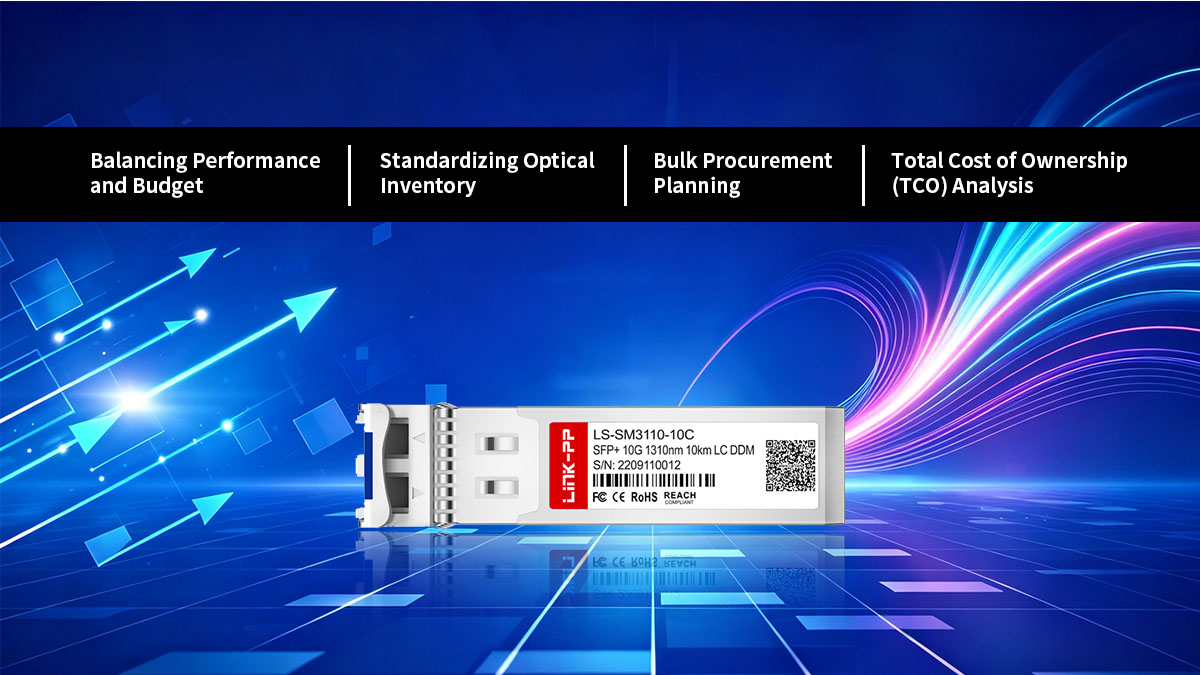
Balancing Performance and Budget
The most effective cost optimization strategy begins with aligning optical performance requirements with actual business-critical needs. Not every link in a network requires OEM-grade optics, especially when deployment environments are stable and risk exposure is low.
Before outlining practical methods, it is important to understand that cost efficiency is achieved by segmenting network roles rather than applying a single procurement standard.
Typical segmentation strategies include:
- Mission-critical backbone links using higher-assurance modules
- Aggregation and distribution layers using validated compatible modules
- Access-level or short-term links optimized for cost efficiency
- Reserved OEM usage for compliance-sensitive environments
After applying this segmentation model, enterprises can significantly reduce overall optical spending without compromising core network stability.
Standardizing Optical Inventory
Inventory standardization is another key lever for reducing long-term operational costs. Without a standardized approach, enterprises often face increased spare part complexity and inefficient stock utilization.
Before listing standardization methods, it is important to note that simplification of module types directly reduces both procurement and maintenance overhead.
Key standardization strategies include:
- Reducing the number of module variants used across platforms
- Selecting multi-platform compatible optical models where possible
- Aligning procurement with a limited set of validated suppliers
- Maintaining consistent labeling and tracking systems for inventory
These practices help streamline warehouse management and reduce emergency procurement scenarios that often carry higher costs.
Bulk Procurement Planning
Bulk procurement plays a significant role in optimizing unit pricing and reducing supply chain volatility. However, it requires careful demand forecasting and deployment planning to avoid overstocking or obsolescence risks.
Before reviewing specific methods, it is important to understand that bulk purchasing is most effective when aligned with predictable network expansion cycles.
Key planning strategies include:
- Forecasting demand based on multi-year infrastructure roadmaps
- Consolidating orders to achieve volume-based pricing advantages
- Coordinating procurement cycles with deployment phases
- Maintaining buffer stock for critical network segments
After applying these strategies, enterprises can stabilize procurement costs while improving supply continuity for large-scale deployments.
Total Cost of Ownership (TCO) Analysis
A comprehensive cost optimization strategy must extend beyond initial module pricing and incorporate total cost of ownership across the full lifecycle of deployment. This includes maintenance, replacement frequency, and operational disruption costs.
Before presenting key cost components, it is important to recognize that the lowest unit price does not always translate into the lowest long-term cost.
| TCO Component | Cost Impact Area |
|---|---|
| Initial Purchase Cost | Hardware acquisition expenditure |
| Maintenance Cost | Troubleshooting and replacement operations |
| Downtime Cost | Network disruption and service impact |
| Inventory Holding Cost | Spare module storage and management |
After evaluating these components, it becomes evident that enterprises achieve optimal cost efficiency by balancing upfront savings with long-term operational stability rather than focusing solely on unit pricing.
💭 Conclusion
The growing demand for cost-efficient enterprise networking has made 10G LR Cisco compatible optical modules an increasingly important part of modern infrastructure planning. While OEM Cisco optics continue to provide strong ecosystem integration and standardized support, compatible alternatives have rapidly matured in terms of performance consistency, interoperability, and supply chain reliability. As a result, the decision between OEM and compatible modules is now more closely tied to deployment strategy, operational risk tolerance, and long-term budget management rather than basic optical functionality alone.
Throughout this article, several critical factors have emerged as central to successful 10G LR Cisco deployment planning:
- The pricing gap is largely driven by branding, certification, and distribution structure rather than transmission capability
- Compatibility validation remains essential for stable operation across Cisco platforms and firmware environments
- Supplier credibility and manufacturing transparency directly influence long-term deployment reliability
- Inventory standardization and lifecycle planning can significantly reduce operational overhead
- Total cost evaluation should include maintenance, scalability, and replacement efficiency instead of focusing only on initial hardware pricing
As enterprise networks continue balancing legacy 10G infrastructure with gradual migration toward higher-speed architectures, 10G LR Cisco compatible modules are expected to remain highly relevant across campus, aggregation, and interconnect environments. Their combination of scalability, deployment flexibility, and cost efficiency continues to support a wide range of real-world networking requirements.
For organizations evaluating sourcing strategies and compatibility-focused optical networking solutions, LINK-PP Official Store provides access to a broad portfolio of Cisco-compatible optical modules designed for enterprise and data center deployments. With increasing emphasis on interoperability validation, supply chain consistency, and lifecycle optimization, reliable sourcing partners are becoming an important part of long-term network infrastructure planning.