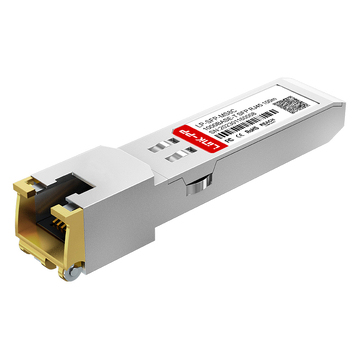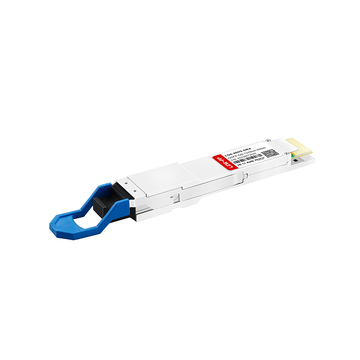
Have you ever wondered how the internet instantly connects your home computer to a server across the globe? Behind this seamless connectivity lies a sophisticated infrastructure of optical networks tailored for different distances: MAN vs LAN vs WAN. While local area networks (LAN) link devices within a single room or building, metropolitan networks (MAN) span across entire cities, and wide area networks (WAN) bridge continents through transoceanic cables.
But how do network engineers decide which fiber cables, optical transceivers, and laser wavelengths to use across these varying distances? As data speeds upgrade from 10G to 800G and beyond, managing signal loss and optical reach becomes a complex engineering challenge. Understanding the precise boundaries and technological differences of each network scope is essential for building the high-speed infrastructure of tomorrow.
⏳ Defining the Physical Boundaries of MAN vs LAN vs WAN
Every network architecture is fundamentally constrained by the physical space it must occupy. Mapping out these geographical limits helps engineers choose the right hardware and prevent data degradation over distance. Exploring these physical boundaries reveals how network scales transition from individual rooms to interconnected global continents.
Geographic Coverage Limits for Short, Medium, and Long-Haul Scales
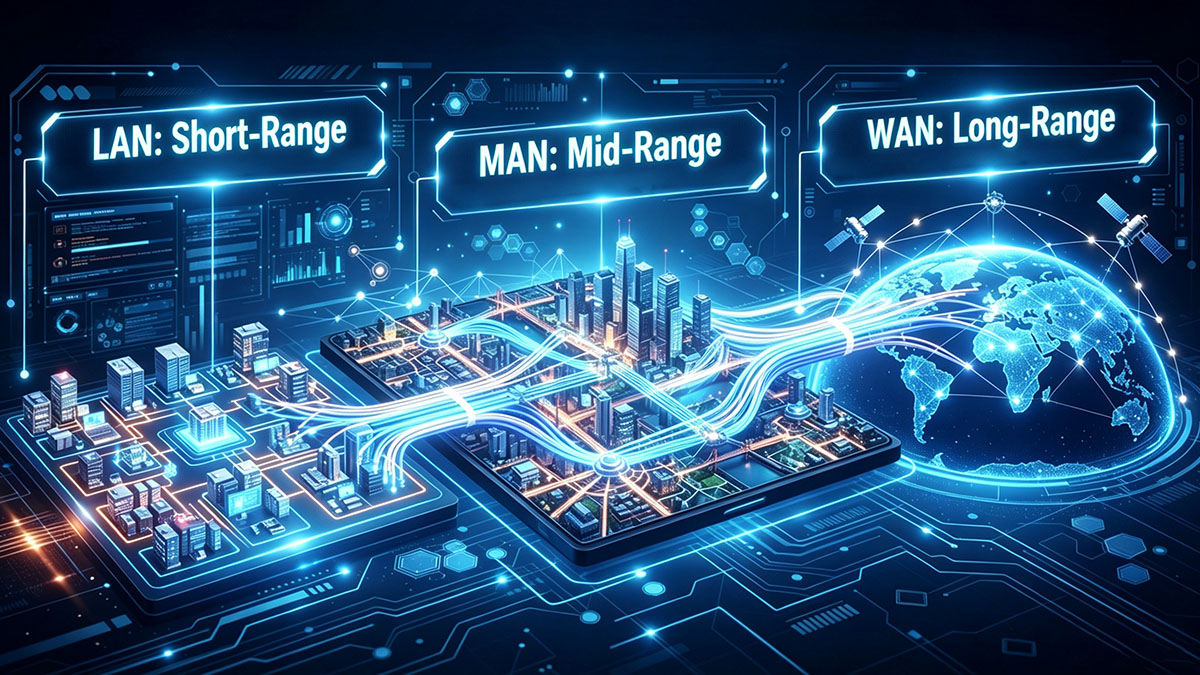
Network classifications are primarily defined by the physical distance their signals must travel. A Local Area Network (LAN) typically handles short-haul communication, with common implementations staying within a few hundred meters, though single-mode fiber can extend LANs to several kilometers within a campus. In contrast, Metropolitan Area Networks (MAN) cover medium-haul scales up to 80km, while Wide Area Networks (WAN) manage long-haul routes stretching thousands of kilometers.
Selecting the wrong infrastructure for these distances can cause severe signal degradation or link failure. Short-range hardware cannot push data across a city, and long-haul equipment is far too expensive for a single office building. Therefore, matching the specific geographic coverage limit to the appropriate network scale is the first step in successful network deployment.
Determining Boundary Points: Where LAN Ends and MAN Begins
Identifying the exact point where a LAN ends and a MAN begins is crucial for enterprise network planning. The boundary usually sits at the building’s main distribution frame or data center edge where internal private cables meet public infrastructure. Beyond this physical demarcation line, data shifts from short-range internal links to high-capacity city-wide fiber routes.
This transition point also marks a major change in network ownership and management. While a company completely controls its own internal LAN setup, crossing into the MAN layer requires handoffs to local service providers. Managing this delicate boundary requires specialized transceivers that can handle the sudden jump in distance and optical requirements.
Interconnecting Metropolitan Hubs into Global Wide-Area Structures
To create a truly global wide-area network, multiple regional MAN nodes must be linked together across massive distances. These metropolitan hubs act as regional collection points, gathering local data traffic and funneling it into the massive WAN backbone. This interconnection transforms isolated city networks into an integrated, worldwide digital ecosystem.
The physical links used in these global WAN structures often include undersea fiber-optic cables running across ocean floors. Passing data between these massive metropolitan hubs requires immense coordination and specialized signal boosting. Without this efficient tier-based bridging, international communication across different network scopes would be impossible.
How Distance and Footprint Shape Modern Network Topologies
The physical footprint of a deployment directly dictates the structural design and layout of the entire network. Short-range LAN environments usually rely on star or mesh topologies to connect high densities of nearby user devices. However, as the geographic footprint expands into city-wide MANs, topologies often shift to resilient ring designs to protect against accidental fiber cuts.
For long-distance WAN structures, point-to-point and core-connectivity topologies become the standard due to the extreme distances between nodes. Every added kilometer introduces more signal attenuation and dispersion, forcing engineers to adjust the physical layout of their hardware. Ultimately, geographical distance remains the most powerful factor shaping how modern network topologies are built.
⏳ Fiber Optics and Cable Mediums in MAN vs LAN vs WAN
The physical choice of glass fiber determines exactly how far and how fast data can travel across different network scopes. Selecting the wrong cable medium can lead to severe signal degradation or unnecessary infrastructure costs. Understanding the specific fiber types used in MAN vs LAN vs WAN deployments is crucial to matching physical capabilities with geographic requirements.
Multi-Mode Fiber Utilization in Enterprise LAN Scopes
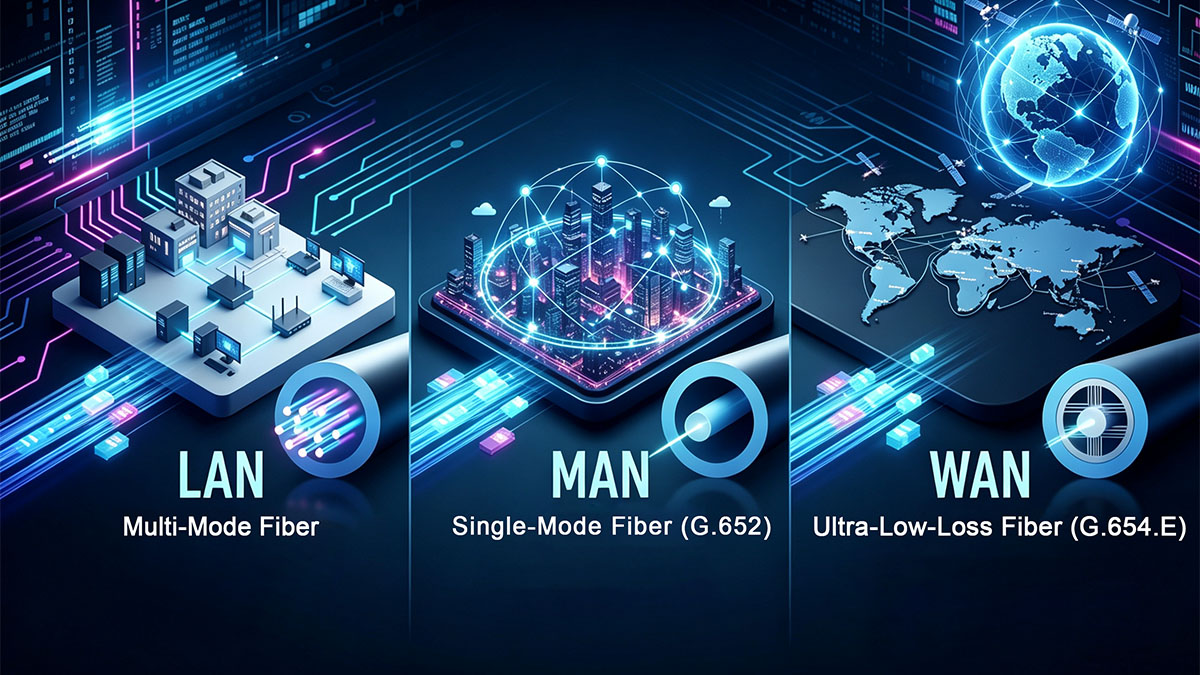
Multi-mode fiber is the go-to standard for short-distance transmissions within enterprise LAN environments. Featuring a relatively wide core, these cables allow multiple light modes to travel simultaneously over short distances. This design makes it highly cost-effective for connecting servers and switches within a single building or localized data center.
However, multi-mode fiber suffers from modal dispersion, meaning different light rays spread out and blur together over longer distances. Because of this limitation, its effective reach is typically restricted to less than 550m. As a result, it remains strictly contained within local boundaries rather than spanning across city networks.
Single-Mode Fiber (G.652) Deployment for City-Wide MAN Networks
When data needs to leave the building and enter a city-wide MAN, network operators transition to single-mode fiber, specifically the G.652 standard. This fiber type features a much narrower core that allows only a single pathway for light to travel, virtually eliminating modal dispersion. It serves as the economic backbone for most metropolitan networks, easily carrying high-speed data across tens of kilometers.
The G.652 fiber is optimized for performance around the 1310nm and 1550nm wavelength windows. This optimization ensures that data traveling between city corporate offices and regional data hubs experiences minimal signal distortion. Its balance of affordable manufacturing and excellent mid-range performance makes it ideal for metropolitan infrastructure.
Ultra-Low-Loss Fiber (G.654.E) for Long-Distance WAN Subsea Links
Spanning across continents and oceans requires a highly specialized cable medium designed for extreme long-haul WAN scopes. For these massive distances, engineers deploy G.654.E ultra-low-loss single-mode fiber. This fiber features an enlarged effective core area that can handle higher optical power levels without causing signal distortion.
The main advantage of G.654.E fiber is its incredibly low attenuation rate, which allows light to travel much further before needing amplification. This characteristic is critical for transoceanic subsea links where placing physical amplifiers on the ocean floor is deeply complex and expensive. By minimizing signal loss at the physical layer, this medium forms the foundation of global long-haul connectivity.
Analyzing Attenuation and Signal Loss Across Different Fiber Mediums
The physical properties of each fiber medium directly dictate how much light fades, or attenuates, over a given distance. While some fibers are built to maximize cost efficiency over short distances, others are optimized to maintain signal integrity over thousands of kilometers.
To clarify how these performance metrics vary by network scope, the table below outlines the core characteristics, typical reach, and attenuation levels of each primary fiber type:
| Fiber Type | Primary Network Scope | Core Diameter | Typical Optical Reach | Attenuation Rate |
| Multi-Mode (OM3/OM4/OM5) | Local Area Network (LAN) | 50μm | Up to 550m | ≈2.0 to 3.0dB/km (at 850nm) |
| Standard Single-Mode (G.652) | Metropolitan Area Network (MAN) | 9μm | Up to 40 - 80km | ≈0.18 to 0.22dB/km (at 1550nm) |
| Ultra-Low-Loss (G.654.E) | Wide Area Network (WAN) | 9μm | Beyond 100km | ≈0.15 to 0.17dB/km (at 1550nm) |
⏳ Optical Transceiver Selection Strategies for MAN vs LAN vs WAN
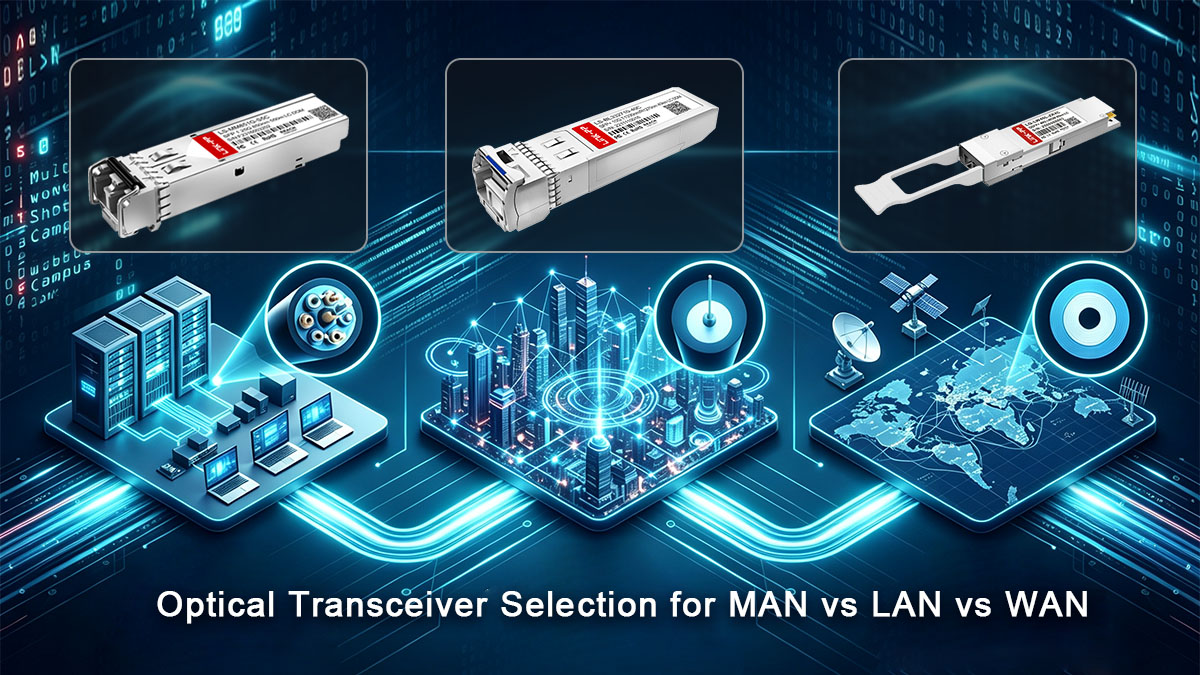
Choosing the right optical transceiver is a critical decision that bridges the gap between hardware interfaces and physical fiber mediums. Different network environments require distinct laser powers and internal technologies to transmit data successfully without errors. Navigating the choices across MAN vs LAN vs WAN ensures that network operators maximize bandwidth while keeping hardware deployment costs under control.
Short-Range (SR) Optics Transceivers for High-Density LAN Topologies
Short-Range (SR) transceivers are the primary choice for managing high-density connection points within a localized Local Area Network (LAN). These modules typically utilize low-cost Vertical-Cavity Surface-Emitting Lasers (VCSELs) to push data across multi-mode fiber patches. Because the target distances are short, usually under 300m, these optics focus heavily on power efficiency and low thermal output rather than raw laser power.
In massive data centers and enterprise campus environments, thousands of these short-reach modules are packed closely together in network racks. Their lower production cost allows companies to scale up their internal connectivity without breaking the budget. For localized infrastructure, prioritizing these affordable, short-range optics is the standard approach for managing high-density data traffic.
Extended-Reach (ER) and ZR Modules for Metro MAN Spans
As data exists localized hubs and enters a city-wide Metropolitan Area Network (MAN), standard short-range optics can no longer pierce through the increased physical distance. Network operators instead turn to Extended-Reach (ER) and ZR optical modules designed specifically for single-mode fiber infrastructure. These specialized transceivers feature highly stable lasers capable of traveling up to 40km or 80km across metro spans without requiring mid-route amplification.
Deploying ZR modules allows separate municipal data centers to communicate directly over long distances as if they were in the same building. This direct connectivity eliminates the need for expensive inline optical amplification equipment along the city roads. By choosing these mid-range optics, engineers can build resilient, high-speed metropolitan rings that efficiently handle massive regional traffic demands.
Coherent Optical Transceivers for Ultra-Long-Haul WAN Infrastructure
Connecting cities across continents within a Wide Area Network (WAN) requires an entirely different class of hardware known as coherent optical transceivers. Unlike simpler modules that merely turn a laser light on and off, coherent optics modulate the amplitude, phase, and polarization of light simultaneously. This advanced technique allows an immense amount of data to be packed into a single optical signal and transmitted over thousands of kilometers.
These long-haul WAN transceivers also feature integrated digital signal processors that actively correct data distortions caused by extreme distances. Because they are designed to cross oceans and mountain ranges, they represent the highest tier of optical engineering and cost. For true wide-area connectivity, coherent technology is absolutely indispensable for maintaining clear communication lines across the globe.
⏳ Wavelength and Spectrum Allocation in MAN vs LAN vs WAN
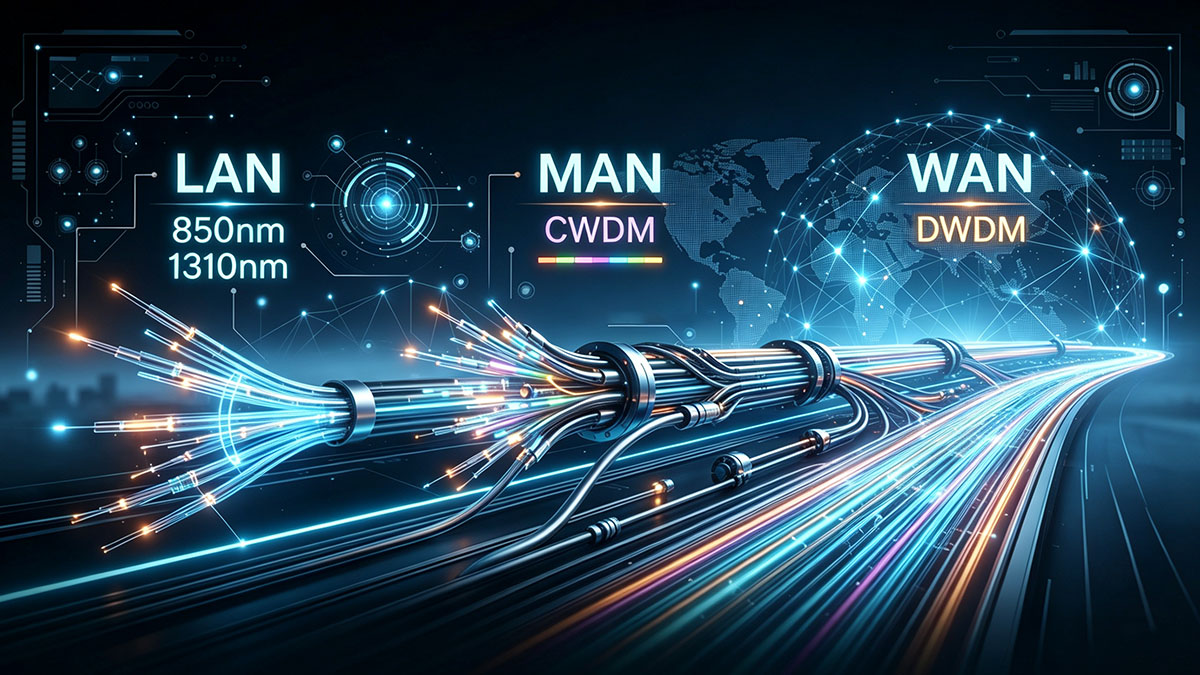
Optical networks rely on different wavelengths of light to transmit data efficiently through glass fibers without interfering with one another. As network boundaries expand, the choice of spectrum shifts from basic single-wavelength channels to complex, multi-channel multiplexing techniques. Mapping out these frequency allocations across MAN vs LAN vs WAN environments helps engineers maximize fiber capacity while minimizing structural deployment costs.
850nm and 1310nm Wavelength Dominance in Short-Distance LAN Links
Short-distance Local Area Network (LAN) setups primarily use the 850nm and 1310nm wavelengths because they match perfectly with affordable laser hardware. The 850nm spectrum is ideal for multi-mode fibers inside a single building, while 1310nm provides a cleaner signal for slightly longer campus spans. Relying on these standard frequencies allows enterprises to build highly reliable, low-cost internal networks.
The primary characteristics and advantages of using these specific wavelengths in short-range environments include the following points:
- Low-cost lasers: They work with inexpensive VCSEL hardware.
- Sufficient reach: They easily cover distances up to a few kilometers.
- High availability: They are compatible with standard enterprise network switches.
Coarse Wavelength Division Multiplexing (CWDM) in Cost-Effective MANs
Metropolitan Area Networks (MAN) require more bandwidth than a single building but must remain within a reasonable budget. Coarse Wavelength Division Multiplexing (CWDM) solves this by squeezing up to 18 separate channels onto a single fiber pair using wide channel spacing. This technology allows city networks to multiply their data capacity without upgrading the physical cables running under the streets.
Key highlights of deploying this specific multiplexing strategy in cost-effective metropolitan setups include:
- Wide channel spacing: Channels are spaced 20nm apart to allow cheaper filters.
- Uncooled lasers: The system does not require expensive temperature control hardware.
- Medium-range efficiency: It offers excellent scaling for distances up to 80km.
Dense Wavelength Division Multiplexing (DWDM) in High-Capacity C-Band WANs
When data must travel across massive Wide Area Network (WAN) scopes, network operators switch to Dense Wavelength Division Multiplexing (DWDM). This advanced technology tightly packs over 80 channels into the highly efficient C-band spectrum around 1550nm. By narrowing the gaps between light channels, DWDM allows an incredible amount of data to travel simultaneously over global distances.
The core reasons why this dense spectrum allocation is critical for long-haul wide-area infrastructures include:
- Ultra-narrow spacing: Channels are packed closely at 0.8nm or 0.4nm intervals.
- Amplifier compatibility: It matches perfectly with standard Erbium-Doped Fiber Amplifiers (EDFA).
- Massive data scaling: It maximizes the bandwidth capacity of expensive subsea cables.
The Shift Toward L-Band Spectrum Optimization for Enterprise WAN Scopes
As global data traffic continues to skyrocket, many traditional C-band WAN channels are becoming completely full. To combat this saturation, modern enterprise wide-area networks are expanding their operations into the neighboring L-band spectrum. Opening up this extra frequency window effectively doubles the available optical highways on existing fiber-optic lines.
The main benefits and drivers behind transitioning toward this expanded optical spectrum include:
- Capacity doubling: It utilizes the 1565nm to 1625nm window for new traffic.
- Fiber conservation: It prevents the extreme cost of laying new physical cables.
- Future-proof scaling: It ensures global backbone networks can handle next-generation data loads.
⏳ Signal Modulation and Processing Across MAN vs LAN vs WAN
Raw optical signals must be shaped and digitally manipulated to ensure they carry data reliably across different distances. As network footprints expand, the methods used to encode digital bits onto lightwaves become increasingly sophisticated to fight noise and distortion. Comparing these processing techniques across MAN vs LAN vs WAN layers highlights how math and physics combine to protect data integrity at high speeds.
How NRZ and PAM4 Modulation Dictate Distance in High-Sped LAN Fabrics
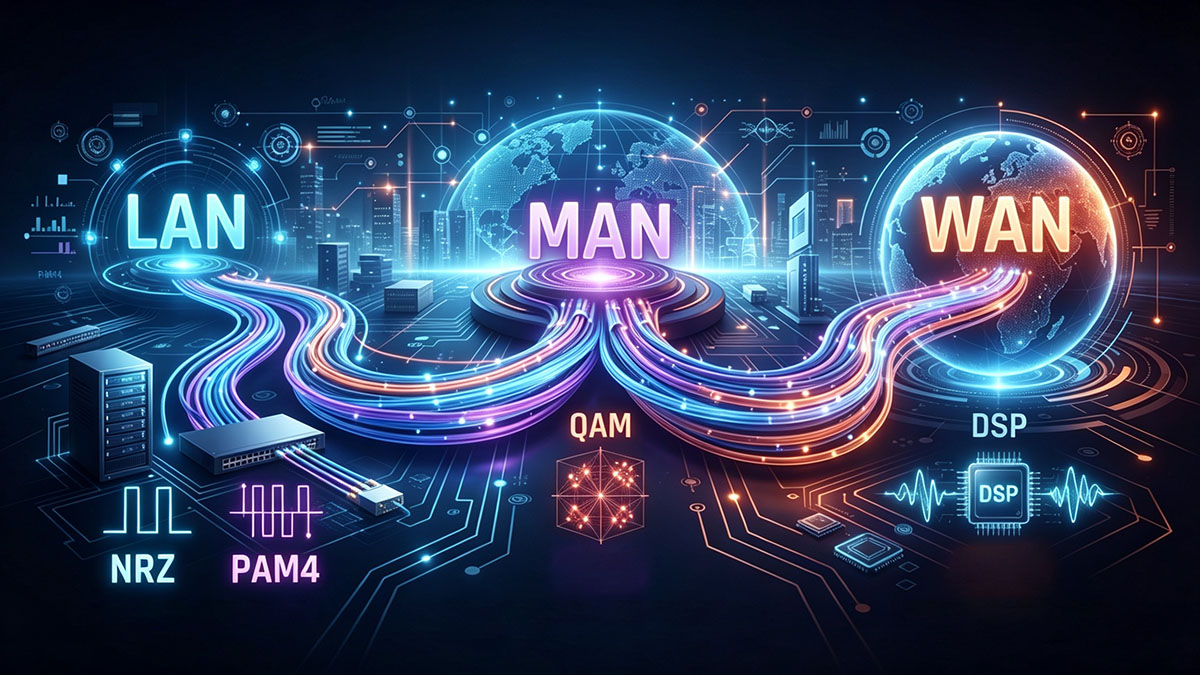
High-speed Local Area Network (LAN) fabrics rely on simple yet fast modulation formats to move data inside data centers. Traditional Non-Return-to-Zero (NRZ) uses two voltage levels to represent bits, while Pulse Amplitude Modulation 4-Level (PAM4) doubles the data rate by using four signal levels. However, because PAM4 packs more information into the same space, it is highly sensitive to signal degradation over long distances.
The key operational impacts of using these modulation formats in short-range layouts include:
- Lower hardware costs: Simple signaling keeps transceiver chipsets affordable.
- Reduced latency: Minimal processing allows instant data transfers.
- Strict distance limits: High noise sensitivity restricts usage to short runs.
Utilizing Higher-Order QAM to Optimize Reach in Converged Metro MAN Layers
Metropolitan Area Network (MAN) links must balance high bandwidth demands with the physical realities of city-wide spans. To achieve this, metro transceivers utilize higher-order Quadrature Amplitude Modulation (QAM), which combines both phase and amplitude changes to encode data. This allows operators to fine-tune the modulation scheme to match the exact physical condition of a specific city fiber route.
The primary advantages of applying this flexible modulation strategy across metro layers are:
- Dynamic capacity tuning: Engineers can trade speed for better signal stability.
- Spectral efficiency: It crams massive data pools into limited fiber channels.
- Mid-range optimization: It bridges the gap between basic LAN and complex WAN tech.
The Role of DSP in Mitigating Chromatic Dispersion Across Long-Haul WAN Links
When light travels across massive Wide Area Network (WAN) spans, different frequencies arrive at the destination at slightly different times, creating a blur known as chromatic dispersion. To fix this, long-haul transceivers deploy powerful Digital Signal Processors (DSPs) at the receiving end. These specialized microchips use advanced mathematics to reconstruct the distorted lightwaves back into clean digital data.
The vital functions performed by advanced DSP units in global wide-area frameworks include:
- Electronic dispersion correction: It eliminates the need for physical compensation fibers.
- Real-time signal tracking: The chip continuously adjusts for environmental fiber shifts.
- Extreme distance enablement: It allows clear communication across transoceanic pathways.
Extending Optical Reach Boundaries via FEC Implementations Across Network Scopes
Forward Error Correction (FEC) is a digital processing technique that adds redundant error-checking code to a data stream before it is transmitted. If a signal suffers degradation or noise during transit, the receiver uses this extra code to instantly find and fix the corrupted bits. This algorithmic safety net effectively extends the physical optical reach of all network scopes without requiring cleaner fiber or stronger lasers.
The core benefits of integrating error-correcting algorithms into modern optical hardware are:
- Higher noise tolerance: Networks run error-free even with weaker optical signals.
- Extended laser lifespan: Transmitters can run at lower, safer power levels.
- Universal deployment: It boosts performance across LAN, MAN, and WAN boundaries.
⏳ Optical Link Budgets and Power Constraints in MAN vs LAN vs WAN
Every fiber-optic connection requires a carefully calculated optical link budget to guarantee that signals arrive with enough strength to be read accurately. If the optical power drops too low due to physical obstructions or extreme distances, the entire connection will fail. Managing these tight power boundaries across MAN vs LAN vs WAN environments determines whether a network operates cleanly or suffers from constant data drops.

Calculating Insertion Loss and Power Margin in Short-Range LANs
When designing a short-range Local Area Network (LAN), engineers must calculate the total insertion loss caused by physical connection points. This loss accumulates quickly from internal patch panels, cable splices, and fiber connectors within the facility.
To prevent communication errors, a healthy power margin must be maintained above the minimum operational threshold. This extra power buffer ensures the local network continues to run smoothly even as the physical hardware ages over time.
Managing Optical Amplification (EDFA/Raman) in Mid-Distance MANs
Metropolitan Area Network (MAN) spans often rely on high-power transceivers to directly drive signals across the city without any mid-route boosting. However, when a metropolitan route features extreme distances or high-loss paths, operators must deploy optical amplification technologies like Erbium-Doped Fiber Amplifiers (EDFA) or Raman amplifiers.
These inline devices directly boost the light signal inside the fiber without converting it back into electrical data first. Strategically introducing these amplifiers when facing complex MAN paths keeps the optical power levels perfect over expanded regional rings.
Overcoming Nonlinear Effects in High-Power, Long-Distance WAN Backbones
Long-distance Wide Area Network (WAN) backbones require high transmitter power to push dense data channels across oceans and continents. However, pumping excessive laser power into a single fiber core triggers destructive nonlinear effects such as Four-Wave Mixing (FWM).
These physical distortions can generate completely new wavelength components, accidentally mixing different data channels together and corrupting the information. Engineers must carefully balance the overall laser power to maximize distance while preventing these complex fiber distortions from destroying long-haul WAN traffic.
Receiver Sensitivity vs Transmitter Launch Power in Network Scopes
The ultimate success of any optical connection depends on the relationship between transmitter launch power and receiver sensitivity. The transmitter must launch the light strong enough to survive the trip, while the receiver must be sensitive enough to detect faint incoming light.
This delicate power balance changes drastically as you scale up your physical deployment. While long-haul architectures push both metrics to their absolute physical limits, short-distance LANs optimize power to save energy and prevent receiver overload or saturation.
⏳ The Trade-Off Between Bandwidth Scaling and Optical Reach in MAN vs LAN vs WAN
In optical networking, maximizing both transmission speed and physical distance simultaneously represents a constant engineering battle. As bandwidth scales up to handle massive data loads, the physical distance a signal can travel before degrading shrinks significantly. Balancing this fundamental trade-off across MAN vs LAN vs WAN environments dictates how next-generation hardware is deployed without losing signal integrity.
Managing the Shortened Reach of 10G to 100G Upgrades in Enterprise LANs
Upgrading internal enterprise Local Area Network (LAN) fabrics from 10G to 100G drastically increases data capacity across the campus. However, this massive speed boost significantly reduces the allowable optical reach over existing multimode fiber cables.
To maintain reliable connectivity at 100G, engineers must deploy advanced multi-lane optics or transition to higher-grade cabling like OM4 or OM5. Carefully managing this shortened distance boundary prevents critical data drops within high-density internal data centers.
Overcoming High-Speed Attenuation for 400G Transport in Metro MANs
Deploying 400G transport links across a Metropolitan Area Network (MAN) introduces severe high-speed attenuation challenges due to faster pulse rates. The delicate optical signals experience rapid distortion as they travel across city-wide single-mode fiber routes.
To overcome this localized performance drop, network operators utilize highly optimized PAM4 or coherent transceivers designed specifically for metro spans. These specialized modules ensure that 400G streams can successfully bridge separate municipal hubs without requiring expensive infrastructure overhauls.
Deploying 800G and 1.6T Speeds Over Transoceanic WAN Distances
Pushing data at extreme speeds like 800G and 1.6T over a long-haul Wide Area Network (WAN) requires cutting-edge optical innovations. At these massive capacities, traditional transmission methods fail completely across transoceanic subsea distances.
Global service providers solve this limitation by combining ultra-low-loss G.654.E fiber with high-baud-rate coherent digital signal processors. This powerful hardware combination allows terabit-scale traffic to cross vast oceanic trenches while actively correcting for extreme distance-induced distortion.
Balancing Channel Capacity and Optical Reach in High-Speed Data Transmission
Achieving the perfect balance between raw channel capacity and physical optical reach is the ultimate goal of modern network design. Engineers must constantly calculate whether to prioritize faster data rates over shorter runs or slower, more stable streams over long distances.
This ongoing technological compromise directly shapes the physical architecture of all interconnected network scopes. By selecting the right modulation, fiber mediums, and transceiver power, operators can successfully scale up global bandwidth while respecting physical distance limits.
⏳ Final Thoughts on Navigating Optical Reach Limits in MAN vs LAN vs WAN
Successfully navigating the physical and technical complexities of MAN vs LAN vs WAN architectures is the key to building efficient, future-proof network infrastructure. As we push the boundaries of data transmission speeds up to 1.6T, understanding the critical balance between physical distance, fiber mediums, and optical power constraints becomes more vital than ever. Matching the right optical modules to your specific network scope ensures maximum bandwidth capacity without risking signal degradation or receiver overload.
To optimize your network setup and guarantee seamless data transport over any distance, choosing industry-proven hardware is essential. Explore a comprehensive selection of high-performance optical modules tailored for local enterprise networks, city-wide metro spans, and long-haul backbones. Visit the LINK-PP Official Store today to discover premium, reliable optical transceiver modules designed to conquer your toughest optical reach challenges.