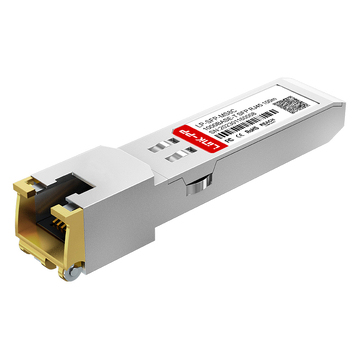
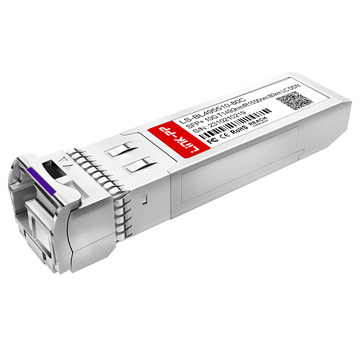
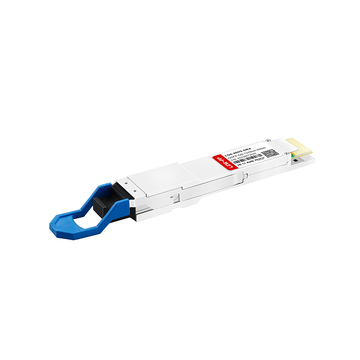
As enterprise networks continue to scale, backbone infrastructure must support higher bandwidth, longer distances, and predictable performance — all while staying within budget. 40GBASE-LR4 has become a widely adopted solution for long-reach 40G Ethernet transmission over single-mode fiber, offering a balance between performance and cost.
However, deploying 40GBASE-LR4 is not just a technical decision — it is also a financial one. From transceiver pricing and fiber infrastructure to installation and long-term maintenance, multiple cost factors must be carefully evaluated. This article examines the key considerations for budgeting 40GBASE-LR4 in enterprise backbone networks, enabling organizations to optimize both performance and investment.
? What is 40GBASE-LR4

40GBASE-LR4 is a 40-Gigabit Ethernet optical transceiver designed for long-distance transmission over single-mode fiber (SMF). It uses wavelength division multiplexing (WDM) to send multiple signals over a single fiber pair, enabling high-speed transceivers connectivity across distances of up to 10km. This makes it a practical choice for enterprise backbone networks that require both reach and bandwidth.
Key Technical Standards behind 40G LR4
40GBASE-LR4 is defined under the IEEE 802.3ba standard and operates by multiplexing four independent optical lanes, each carrying 10Gbps, into a single composite signal. These lanes typically use wavelengths in the 1271nm to 1331nm range, leveraging wavelength division multiplexing to efficiently utilize fiber capacity. The modules commonly adopt QSFP+ form factors and use duplex LC connectors, making them compatible with standard enterprise optical interfaces.
In addition to transmission structure, the standard specifies strict requirements for optical power budgets, receiver sensitivity, and dispersion tolerance to ensure stable performance over long distances. These parameters are critical for maintaining signal integrity across up to 10km of single-mode fiber, especially in environments with varying attenuation and connector losses. Compliance with these standards ensures interoperability between vendors and predictable link performance.
How 40GBASE-LR4 Fits into Enterprise Infrastructure
Within enterprise networks, QSFP 40GBASE-LR4 is primarily deployed in the core and aggregation layers, where long-distance, high-capacity links are essential. It is commonly used for interconnecting data centers, linking campus buildings, or connecting distribution switches to core switches. Because it operates over single-mode fiber, it aligns well with existing backbone cabling systems, reducing the need for major infrastructure upgrades.
From a deployment perspective, 40GBASE-LR4 integrates seamlessly with modern network equipment that supports QSFP+ ports. This allows enterprises to upgrade bandwidth from 10G to 40G without significantly increasing fiber counts or changing physical layouts. It also supports gradual scaling strategies, enabling organizations to expand network capacity while maintaining compatibility with current infrastructure investments.
Key Benefits for Enterprise Backbone Networks
One of the main advantages of QSFP+ 40GBASE-LR4 is its ability to deliver high bandwidth over long distances using only a duplex fiber pair, unlike parallel optics solutions that require multiple fibers. This simplifies cabling design, reduces fiber management complexity, and lowers installation costs, particularly in large campus or metro environments. It also provides a clean upgrade path from legacy 10G links without overhauling the entire physical layer.
Another key benefit is its reliability and scalability for enterprise backbone applications. With well-defined standards and widespread vendor support, 40GBASE-LR4 ensures consistent performance and interoperability. Additionally, its long-reach capability makes it suitable for future network expansion, allowing enterprises to design flexible, high-capacity backbones that can accommodate increasing traffic demands without frequent reconfiguration.
? Estimating 40GBASE-LR4 Module Costs

Estimating the cost of 40GBASE-LR4 transceiver modules is a key step in planning enterprise backbone deployments. While prices have become more competitive over time, they can still vary significantly depending on vendor, purchase volume, and additional requirements. A clear understanding of pricing factors helps organizations make more cost-effective procurement decisions.
Average Market Prices of 40GBASE-LR4 Transceivers
In today’s market, 40GBASE-LR4 transceivers typically fall within a broad price range, depending on brand and specifications. Third-party QSFP LR4 40G compatible modules (like QSFP-40G-LR4) are often available in the range of approximately $150 to $400 per unit, while original equipment manufacturer (OEM) modules can range from $800 to over $2,000. This gap reflects differences in branding, certification, and support services.
It is important to note that pricing can fluctuate based on supply chain conditions, regional availability, and technological shifts toward higher-speed alternatives like 100G QSFP28 or 200G QSFP-DD. As a result, enterprises should regularly benchmark prices across suppliers and consider both short-term procurement needs and long-term cost trends when estimating budgets.
Price Differences Between Vendors
Significant price differences exist between OEM vendors and third-party suppliers. OEM modules, typically offered by major networking brands, command higher prices due to guaranteed compatibility, warranty coverage, and integrated support services. These modules are often preferred in environments with strict vendor policies or compliance requirements.
In contrast, third-party compatible optical modules provide a more cost-efficient alternative while maintaining comparable performance in many cases. However, enterprises must carefully evaluate vendor reputation, quality assurance processes, and compatibility testing to avoid potential risks such as interoperability issues or reduced reliability.
How Quantity Affects Unit Pricing
The number of transceivers purchased can have a substantial impact on unit pricing. Bulk orders often qualify for tiered discounts, with larger volumes leading to significantly lower per-unit costs. For example, purchasing dozens or hundreds of modules can reduce pricing by 10% to 30% or more compared to small-volume orders.
From a budgeting perspective, consolidating procurement into larger purchase cycles can improve cost efficiency. Enterprises planning phased deployments should consider aligning purchasing strategies with project timelines to take advantage of volume discounts without overstocking unused inventory.
Hidden Costs to Consider
Beyond the listed module price, several indirect expenses influence the total cost. These include shipping, import duties, firmware licensing, and sometimes network reconfiguration or testing fees. Additionally, enterprises should factor in spare optical module purchases for redundancy and replacement cycles. Accounting for these hidden costs upfront ensures the total project budget accurately reflects real-world deployment conditions.
? Calculating Total Deployment Costs for 40GBASE-LR4

Estimating the total cost of deploying 40GBASE-LR4 in an enterprise backbone involves more than just transceiver pricing. A complete budget must account for auxiliary hardware, installation efforts, ongoing maintenance, and contingency reserves. By evaluating each of these elements systematically, organizations can build an accurate cost model and avoid unexpected financial strain during rollout.
Hardware Costs: Transceivers, Switches, and Adapters
Hardware represents the most visible portion of the total deployment cost. This includes not only QSFP+ LR4 transceivers but also compatible switches that support QSFP+ ports. In some cases, existing equipment may need to be upgraded or replaced to accommodate 40G connectivity, which can significantly increase upfront investment.
Additionally, enterprises may need adapters or breakout solutions depending on their network design. Compatibility between hardware components is critical, and choosing certified or tested combinations can help avoid performance issues. Factoring in spare modules for redundancy and future expansion is also a common practice that impacts overall hardware costs.
Cabling and Installation Expenses
Cabling is another major cost component, particularly for long-distance backbone links. 40GBASE-LR4 requires single-mode fiber, which may already exist in some enterprise environments but could require new deployment in others. Costs include fiber cables, patch panels, connectors, and cable management systems, all of which contribute to the total infrastructure expense.
Installation costs can vary depending on the complexity of the environment. Labor for fiber routing, termination, testing, and certification must be considered, especially in large campuses or multi-building deployments. In some cases, additional expenses such as trenching, conduit installation, or data center modifications may further increase the overall cost.
Maintenance and Support Fees
Ongoing maintenance and support are essential for ensuring long-term network reliability. These costs may include vendor support contracts, firmware updates, and replacement services for failed components. OEM support packages tend to be more expensive but offer faster response times and guaranteed compatibility.
Enterprises using third-party 40G LR4 transceivers (such as QSFP-LR4-40G) may experience lower initial costs but should still plan for operational support, including troubleshooting and periodic testing. Regular maintenance activities, such as optical link inspection and performance monitoring, also contribute to the total cost over the lifecycle of the deployment.
Contingency Budget Planning
A well-structured budget should always include a contingency reserve to account for unforeseen expenses. These may arise from project delays, unexpected infrastructure challenges, or changes in network requirements during deployment. Allocating an additional 10% to 20% of the total budget is a common practice to mitigate such risks.
Contingency planning also provides flexibility for future adjustments, such as scaling network capacity or replacing underperforming components. By incorporating a buffer into the budget, enterprises can ensure smoother project execution and avoid financial strain caused by unplanned costs.
? 40GBASE-LR4 Cabling and Fiber Requirements

40GBASE-LR4 is designed for long-reach 40GbE links over single-mode fiber (SMF), making it a common fit for enterprise backbone connections between buildings, floors, and data center zones. Because LR4 QSFP uses multiple optical lanes carried on a duplex SMF pair, link performance depends heavily on fiber type, connector quality, and total optical loss. Getting cabling requirements right up front prevents avoidable spend on rework, excessive patching, or premature upgrades.
Choosing Single-Mode Fiber for Enterprise Backbones
For enterprise backbones, OS2 single-mode fiber is the default choice for 40GBASE-LR4 because it supports low attenuation over long distances and provides the most flexibility for future upgrades (including QSFP 100G or QSFP 400G options that also commonly rely on SMF). LR4 optics (like 40G-QSFP-LR4) typically operate around the 1310nm window, where OS2 performs consistently across campus and metro-style enterprise deployments.
From a practical cabling perspective, LR4 usually runs over a duplex SMF pair with LC connectors (via the transceiver interface), so planning should include:
- Fiber plant standardization (OS2 end-to-end) to avoid mixed-fiber surprises and troubleshooting complexity.
- High-quality termination and cleaning practices, since connector contamination and poor end-face condition can materially increase insertion loss.
- Patch panel and cross-connect discipline, limiting unnecessary intermediate connections that accumulate loss and add operational risk.
Maximum Reach and Signal Loss Considerations
While 40GBASE-LR4 is commonly associated with a “10km class” reach, real-world reach is governed by your optical loss budget, not just distance. Even relatively short links can fail if the path includes too many patch panels, aged connectors, tight bends, or marginal splices. To determine feasibility, enterprises often model the link by summing its main sources of optical loss, namely:
- Fiber Attenuation (driven by length and fiber condition)
- Connector Insertion Loss (every mated pair adds loss)
- Splice Loss (fusion splices are usually low, but still cumulative)
- Engineering Margin (to cover aging, contamination, and measurement variance)
Good design habits include:
- Keeping the number of connector pairs as low as operationally feasible.
- Avoiding “patch-on-patch” routing that stacks multiple panels.
- Enforcing bend-radius rules and using bend-insensitive routing practices where appropriate.
- Documenting links and validating with OLTS/OTDR testing so you’re not guessing during cutover.
In budgeting terms, paying for better installation quality and testing often costs less than chasing intermittent link issues later — especially in backbone segments that carry aggregated traffic.
Cost Implications of Fiber Types and Lengths
When budgeting for 40GBASE-LR4 cabling, the fiber itself is only part of the cost. What usually drives the total price is how far you have to run it and how complicated the path is.
Longer distance = more materials and labor. More meters of fiber means higher cable cost, but it also often means more work pulling cable through trays, risers, or conduit. For inter-building links, construction work (trenches, ducts, permits) can quickly become the biggest expense.
More “stops” along the way increase both cost and risk. Every patch panel, cross-connect, or extra pair of connectors adds:
- hardware (panels, cassettes, jumpers),
- installation time,
- and a little signal loss.
That’s why a “short” link with lots of patching can cost more — and perform worse — than a longer link with a clean, direct path.
Fiber choice affects future upgrade costs. In enterprise backbones, OS2 single-mode fiber often costs a bit more upfront than other options, but it’s commonly the safer long-term bet because it can support longer runs and future speeds without re-cabling. Replacing fiber later is usually far more expensive than choosing the right fiber at the start.
A practical way to estimate cabling budget is to think in two layers: (1) the distance and pathway build, and (2) the number of connection points (patch panels/connectors). Keeping routes straightforward and minimizing unnecessary patching often saves money while improving reliability.
? Comparing 40GBASE-LR4 to Alternative Solutions

40GBASE-LR4 is widely recognized for its long-reach capability and reliability in enterprise backbones, but it’s not the only 40G transceiver option available. Alternatives such as 40GBASE-SR4 and 40GBASE-ER4 serve different distance, power, and cost requirements. Understanding these distinctions helps network engineers optimize both performance and investment efficiency.
The following table summarizes the key differences among these three 40G optical transceivers:
| Feature | 40GBASE-LR4 | 40GBASE-SR4 | 40GBASE-ER4 |
| Fiber Media | Single-mode (SMF) | Multimode (MMF) | Single-mode (SMF) |
| Maximum Reach | Up to 10km | Up to 150m | Up to 40km |
| Power Consumption | Moderate | Low | High |
| Connector Type | LC duplex | MPO/MTP | LC duplex |
| Typical Use Case | Campus / metro backbone | Data center interconnect | Long-haul / telecom networks |
| Cost | Medium | Low | High |
40G LR4 vs. 40G SR4 Modules
40G SR4 modules (like QSFPP-40GBASE-SR4) are primarily designed for short-range communication within data centers, typically supporting distances up to 150m over OM4 multimode fiber. They are generally more cost-effective than LR4 modules due to simpler optics and lower power requirements. However, SR4 requires MPO/MTP connectors and parallel fiber infrastructure, which may increase cabling complexity in some environments.
In contrast, 40G LR4 modules support much longer transmission distances — up to 10km — using single-mode fiber and LC connectors. This makes LR4 more suitable for campus backbones or inter-building links. While LR4 has a higher upfront cost than SR4, it offers greater flexibility and scalability for expanding enterprise networks beyond a single data center.
40G LR4 vs. 40G ER4 Transceivers
40G ER4 transceivers (like QSFP-40G-ER4) extend the reach significantly, supporting distances up to 40km over single-mode fiber. This makes them ideal for telecom-grade applications or geographically dispersed enterprise networks. However, this extended reach comes at a premium, with higher module costs and increased power consumption.
Compared to ER4, 40G LR4 provides a more cost-efficient solution for most enterprise backbone scenarios where distances do not exceed 10km. LR4 strikes a practical balance by delivering sufficient reach for metropolitan or campus environments without the excessive cost and complexity associated with ER4 deployments.
When to Choose 40GBASE-LR4 Transceiver Solutions
40GBASE-LR4 is the optimal choice when enterprises require reliable medium-to-long-distance connectivity without incurring the high costs of long-haul optics. It is particularly well-suited for campus networks, inter-building links, and metro-area backbones where distances fall within the 1-10km range.
Organizations should choose LR4 when they prioritize scalability, standardized LC connectivity, and compatibility with existing single-mode fiber infrastructure. It becomes especially advantageous in scenarios where SR4 cannot meet distance requirements and ER4 would be unnecessarily expensive.
? Budgeting Strategies for 40GBASE-LR4 Procurement

Effective budgeting for 40GBASE-LR4 procurement requires a strategic approach that balances performance needs with cost control. Enterprises should focus on aligning purchases with actual network demands while taking advantage of market opportunities to reduce expenses. Proper planning can significantly lower upfront and long-term costs without compromising network reliability.
Prioritizing Critical Backbone Links
Not all network links require immediate upgrades to QSFP+ 40G LR4, so prioritizing critical backbone connections is essential. Enterprises should first identify high-traffic or latency-sensitive links — such as core-to-aggregation or inter-building connections — and allocate budget accordingly. By focusing on these key areas, organizations can maximize performance improvements while avoiding unnecessary spending on less critical segments.
Timing Purchases to Reduce Costs
The timing of procurement can have a noticeable impact on overall costs. Market prices for optical transceivers often fluctuate due to supply chain conditions, vendor promotions, or technology lifecycle changes. Enterprises can reduce expenses by planning purchases during promotional periods, end-of-quarter sales, or when newer technologies push down the price of existing 40G modules.
Leveraging Volume Discounts
Bulk purchasing is one of the most effective ways to reduce per-unit costs of 40GBASE-LR4 QSFP+ transceivers. Vendors typically offer tiered pricing models, where larger order quantities result in significant discounts. By consolidating procurement across departments or planning future expansion needs in advance, organizations can negotiate better pricing and improve overall budget efficiency.
? Optimizing Network Design to Reduce 40GBASE-LR4 Expenses

Beyond procurement strategies, optimizing network design plays a crucial role in controlling 40GBASE-LR4 deployment costs. A well-designed architecture can reduce the number of required components and improve resource utilization. This not only lowers initial investment but also minimizes ongoing operational expenses.
Minimizing the Number of Required Transceivers
Design teams should evaluate opportunities to consolidate links through denser aggregation layers or upgraded chassis-based switches. Using higher-port-density hardware can reduce the number of individual transceivers needed for interconnection, lowering both equipment and power costs. A detailed audit of link utilization often reveals redundant connections that can be merged or repurposed.
Efficient Link Aggregation and Routing
Implementing link aggregation (LAG) and dynamic routing protocols helps optimize bandwidth utilization without deploying excess optical links. By combining multiple logical connections into fewer physical pathways, the network maintains high throughput and redundancy at a lower hardware footprint. Careful configuration of routing metrics and load-balancing parameters ensures both performance and cost efficiency.
Reducing Redundant or Overprovisioned Links
Many enterprises deploy more 40G links than necessary to account for peak loads or redundancy. A data-driven capacity analysis, including historical traffic patterns and growth projections, helps determine the true number of links required. Right-sizing backbone capacity eliminates idle transceivers while maintaining acceptable redundancy levels.
Planning for Modular and Scalable Architecture
Adopting a modular and scalable network design allows organizations to expand incrementally rather than overinvesting upfront. By deploying infrastructure that supports future upgrades — such as modular switches and flexible fiber layouts — enterprises can add 40GBASE-LR4 capacity as needed. This approach spreads costs over time and ensures that investments align closely with business growth.
? Wrapping Up: 40GBASE-LR4 Budgeting Essentials in Enterprise Backbones

Effective budgeting for 40GBASE-LR4 deployment goes beyond simple price comparison—it requires a holistic view of network performance, scalability, and total cost of ownership. From estimating transceiver and cabling expenses to evaluating alternative technologies, each decision should align with both immediate connectivity needs and future growth plans. Enterprises that approach budgeting strategically can deliver high-speed, high-reliability backbones while keeping expenditures under control.
Moreover, optimizing network design and procurement timing can unlock significant savings without compromising performance. Selecting trusted suppliers for 40GBASE-LR4 modules plays a major role in long-term success, ensuring consistent quality and after-sales support. For organizations seeking dependable and cost-effective optical transceivers, exploring the LINK-PP Official Store is a great starting point for building a future-ready enterprise backbone network.