In modern network infrastructure, choosing the right fiber optic solution is critical to achieving reliable performance and scalability. Among the available options, MMF SMF are the two primary fiber types used across data centers, enterprise networks, and telecommunications systems. Understanding the fundamental differences between MMF SMF is essential for network designers and buyers who want to balance speed, distance, and cost effectively.
As network demands continue to grow with higher data rates and longer transmission requirements, the decision between MMF SMF becomes more strategic than ever. Each fiber type offers distinct advantages depending on the application, making it important to evaluate their performance, cost implications, and compatibility. This guide provides a clear comparison of MMF SMF to help you select the most suitable fiber for your network needs.
? MMF SMF Overview: Understanding the Basics of Fiber Types
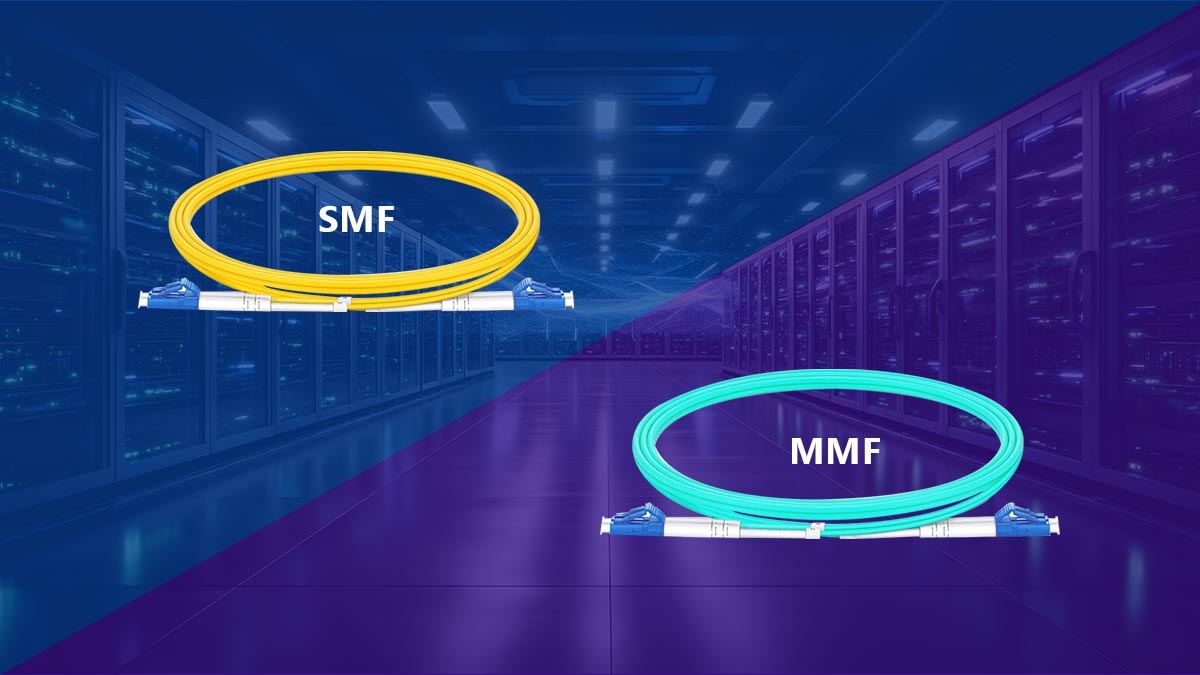
Multimode fiber (MMF) and single-mode fiber (SMF) are the two types of optical fiber cable used in modern network infrastructure. While both transmit data as light signals, they differ significantly in core size, transmission behavior, supported distance, and ideal deployment scenarios. Understanding these fundamentals is the first step toward choosing the right fiber type for your network.
What Is Multimode Fiber (MMF)
Multimode fiber features a larger core diameter, typically 50 or 62.5 microns, which allows multiple light modes or paths to travel simultaneously. This larger core makes it easier to couple light from transmitters, such as VCSELs (Vertical-Cavity Surface-Emitting Lasers), resulting in lower initial transceiver costs.
However, the multiple light paths create modal dispersion, where different modes arrive at the receiver at slightly different times, which ultimately limits the transmission distance and bandwidth. MMF is commonly used in short-distance applications like data center racks, building backbone, and LANs, and is categorized by OM (Optical Multimode) standards such as OM1, OM2, OM3, OM4, and OM5.
What Is Single-mode Fiber (SMF)
Single-mode fiber has a much smaller core diameter, approximately 9 microns, which is so narrow that it only allows a single mode of light to propagate in a straight line. This design virtually eliminates modal dispersion, allowing the signal to travel over vastly longer distances with significantly lower signal loss.
While the fiber itself is cost-effective, the transceivers used with SMF — typically relying on more expensive laser diodes like DFB (Distributed Feedback Lasers) — are more precise and costly. SMF is well-suited for long-haul telecommunications, high-speed campus backbone, and any networks requiring distances exceeding a few thousand meters, and it is classified under OS (Optical Single-mode) standards like OS1 and OS2.
Core Differences Between MMF and SMF
The fundamental differences between MMF SMF extend beyond simple physical characteristics to dictate their roles in networking. At its core, the distinction lies in how each fiber handles light propagation: MMF uses a larger core that supports multiple light paths, making it easier to work with but prone to signal distortion over distance, while SMF uses a smaller core that supports a single, precise light path, ensuring signal integrity over kilometers.
This leads to a trade-off where MMF offers lower initial hardware costs but limited reach, whereas SMF requires a higher upfront investment in optics but delivers superior performance for long-distance and high-bandwidth applications.
To illustrate these distinctions clearly, the table below summarizes the core differences between MMF SMF.
| Feature | MMF (Multimode Fiber) | SMF (Single-mode Fiber) |
| Core Diameter | 50µm or 62.5µm | 9µm |
| Light Paths | Multiple modes | Single mode |
| Light Source | LED or VCSEL | DFB or FP |
| Distance | Short range (up to 550m) | Long range (up to 100+km) |
| Bandwidth | Lower | Higher |
| Use Case | LANs, data center racks, building backbone | Telecom, campus backbone, data center interconnect, long-haul networks |
? MMF SMF Performance: Comparing Bandwidth, Distance and Signal
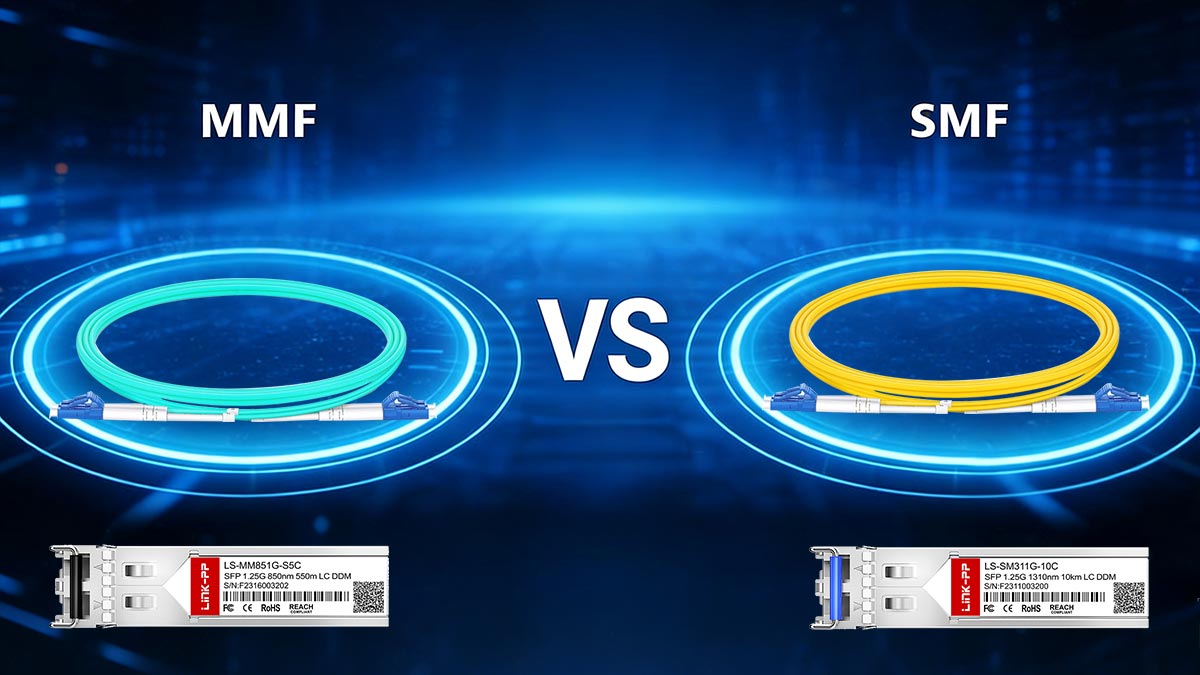
Evaluating the performance of MMF SMF requires a balance between speed requirements and the physical layout of your network. While MMF excels in high-speed, short-range applications using cost-effective light sources, SMF offers virtually unlimited bandwidth and superior signal integrity over vast distances.
Bandwidth Capabilities of MMF vs SMF
Multimode fiber is categorized by "OM" (Optical Multimode) ratings, with OM3, OM4, and OM5 being the most common for high-speed data. While MMF can support 100G and 400G speeds, its bandwidth is limited by modal dispersion. In contrast, single-mode fiber (OS1/OS2) has an effectively "infinite" bandwidth potential. Because it carries only a single mode of light, it avoids the timing issues that limit MMF, making it the only choice for Terabit-scale transmissions.
Transmission Distance Limitations
Distance is the primary differentiator between the two types. MMF is designed for short-reach connectivity, typically limited to 300m to 500m for 10Gbps, and even shorter distances (up to 100m) for 40/100Gbps. SMF, however, is built for the long haul. It can transmit data at high speeds over distances ranging from 10km to 40km, and even up to 100km or more with specialized amplification, making it the standard for WANs and telco infrastructure.
Signal Attenuation and Dispersion
Signal quality is affected by attenuation (signal loss) and dispersion (signal spreading). MMF has higher attenuation — roughly 3.0dB/km — and suffers from modal dispersion due to multiple light paths reflecting inside its wide core. SMF has a much lower attenuation rate, typically 0.2 to 0.4dB/km. By eliminating modal dispersion, SMF maintains signal clarity over much longer runs, requiring fewer repeaters or regenerators.
Performance in High-Speed Networks
In modern data center environments, both MMF SMF fibers play vital roles. MMF is the workhorse for "Top-of-Rack" (ToR) switching and server-to-switch links where distances are minimal. However, as networks migrate toward 400GBASE and 800GBASE, the industry is seeing a shift toward SMF even for shorter distances, as the performance overhead of SMF provides better reliability and lower latency for next-generation hardware.
? MMF SMF Cost Analysis: Initial Investment vs Long-Term Value
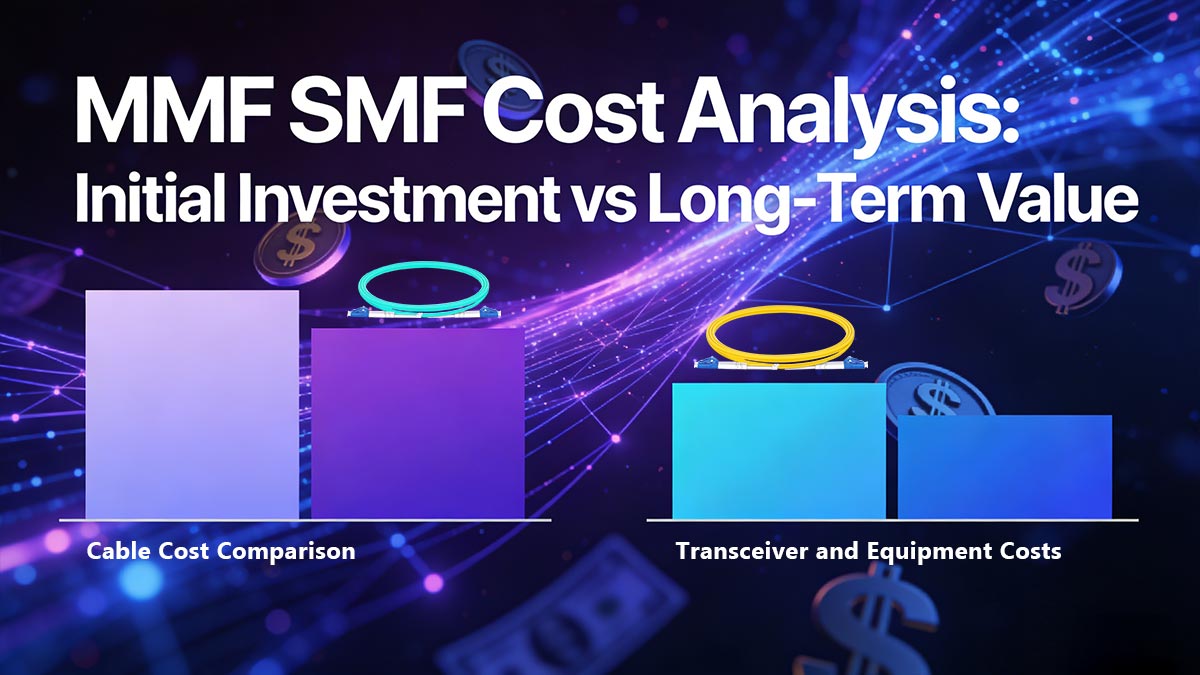
When budgeting for a fiber rollout, the "cost" involves much more than just the price of the MMF SMF fiber cable. While MMF systems generally offer a lower entry price for short-range local networks, SMF provides a more scalable and future-proof foundation that can often lead to lower total costs as network demands increase.
Cable Cost Comparison
Counterintuitively, single-mode fiber cable is usually cheaper to manufacture than multimode fiber cable. This is because the core of SMF is much thinner, and the manufacturing process is more standardized. MMF cable requires a complex "graded-index" core to manage modal dispersion, which makes the raw glass more expensive. However, in a typical project budget, the cable cost is often overshadowed by the cost of the electronics.
Transceiver and Equipment Costs
The primary reason MMF is often "cheaper" for local networks is the cost of transceivers. MMF transceiver uses inexpensive LED or VCSEL (Vertical-Cavity Surface-Emitting Laser) light sources. SMF requires high-precision, narrow-spectrum lasers to inject light into its tiny 9-micron core. Consequently, the Single mode transceivers can be 2 to 4 times more expensive than multimode transceivers, significantly increasing the initial hardware investment.
Installation and Maintenance Expenses
MMF is generally more forgiving during installation because its large core makes it easier to align connectors and perform field terminations. SMF requires high-precision splicing equipment and specialized testing tools, which can increase labor costs. However, SMF systems often require less maintenance over time because they involve fewer active components (like signal boosters) over long distances.
Total Cost of Ownership Over Time
When considering TCO, SMF often emerges as the winner for growing enterprises. While the initial transceiver cost is higher, SMF does not need to be replaced when upgrading from 10G SFP+ to 100G QSFP28 or 400G QSFP-DD; you simply swap the end-point electronics. MMF users may find that their older cabling (like OM1 or OM2) cannot support modern speeds, forcing a costly and disruptive "rip-and-replace" of the entire physical infrastructure.
? MMF SMF Use Cases: Which Fiber Fits Your Network Needs
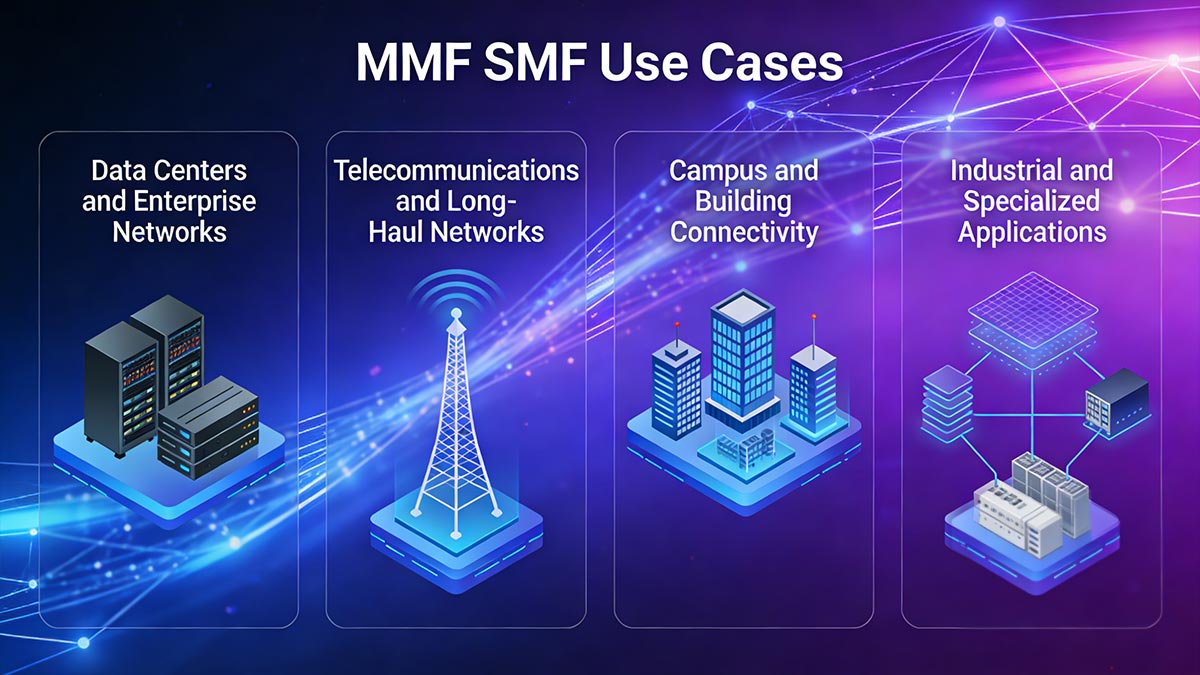
Choosing between MMF SMF depends less on which option is “better” in general and more on how your network is built, how far signals must travel, and how much future scalability you need. In practice, MMF is often preferred for shorter, high-density environments with controlled costs, while SMF is the stronger fit for long-distance transmission, backbone infrastructure, and networks designed for long-term expansion.
Data Centers and Enterprise Networks
In data centers and enterprise environments, MMF is commonly used for short-range, high-speed links between servers, switches, storage systems, and patch panels. Its ability to support fast transmission over relatively short distances makes it a practical choice for structured cabling inside racks, rows, and equipment rooms. For organizations running 10G, 40G, or 100G links within a confined footprint, MMF often delivers the right balance of performance and cost, especially when paired with lower-cost optics for short reaches.
SMF, however, is becoming more attractive in larger enterprise networks and modern hyperscale-style data centers where future migration paths matter. If an enterprise expects longer internal runs, inter-building connectivity, or an eventual shift to higher-speed architectures, SMF can provide greater flexibility and reduce the need for re-cabling later. In other words, MMF is often ideal for dense, short-distance internal connections, while SMF is better suited for enterprises planning for growth, backbone consolidation, and higher-capacity upgrades over time.
Telecommunications and Long-Haul Networks
Telecommunications providers and carrier networks rely heavily on SMF because long-distance transmission is one of its core strengths. In metro, regional, and long-haul deployments, signals often need to travel across many kilometers while maintaining integrity and minimizing loss. SMF supports this requirement far better than MMF, making it the standard choice for telecom backbones, fiber-to-the-home infrastructure, intercity routes, and wide-area transport networks.
MMF has only limited relevance in this category because its practical transmission distance is much shorter, and modal dispersion becomes a constraint over longer runs. Telecom operators usually prioritize maximum reach, low attenuation, and compatibility with wavelength-division multiplexing technologies, all of which align more naturally with SMF. For service providers, internet exchanges, and network operators building resilient large-scale infrastructure, SMF is not just a good option but typically the required one.
Campus and Building Connectivity
Campus networks, hospitals, universities, office parks, and multi-building commercial sites often use a combination of MMF and SMF depending on the segment of the network. MMF works well inside individual buildings where link distances are relatively short, such as connections between telecom rooms, floor distribution switches, or local equipment closets. It can offer a cost-efficient solution for internal building distribution when the network design stays within supported distance limits.
For connections between separate buildings, however, SMF is usually the more practical choice. Outdoor runs, underground ducts, and longer campus backbone links demand higher distance capability and stronger long-term adaptability. Even when current bandwidth needs are moderate, many organizations choose SMF for campus backbones because it supports future service expansion without replacing the cable plant. A common strategy is to use MMF for short indoor horizontal or local backbone links and SMF for inter-building and campus-wide backbone infrastructure.
Industrial and Specialized Applications
Industrial facilities, transportation systems, utilities, surveillance networks, and defense-related environments often place unique demands on fiber infrastructure. In these settings, cable routes may span large plants, outdoor areas, substations, tunnels, or remote control stations, which makes SMF especially valuable for reliable long-distance communication. It is frequently used in manufacturing backbones, railway signaling systems, oil and gas operations, and utility monitoring networks where reach, stability, and low signal loss are critical.
MMF can still be useful in specialized short-range industrial applications, especially within control rooms, production cells, or localized automation systems where devices are clustered closely together. In these cases, MMF may provide a practical and economical option for linking controllers, switches, and monitoring equipment over shorter distances. Still, when the environment is complex, spread out, or expected to scale, SMF is generally the safer long-term investment. For specialized networks, the choice often comes down to operating distance, environmental conditions, and how critical uninterrupted communication is to the application.
? MMF SMF Compatibility: Equipment and Infrastructure Considerations
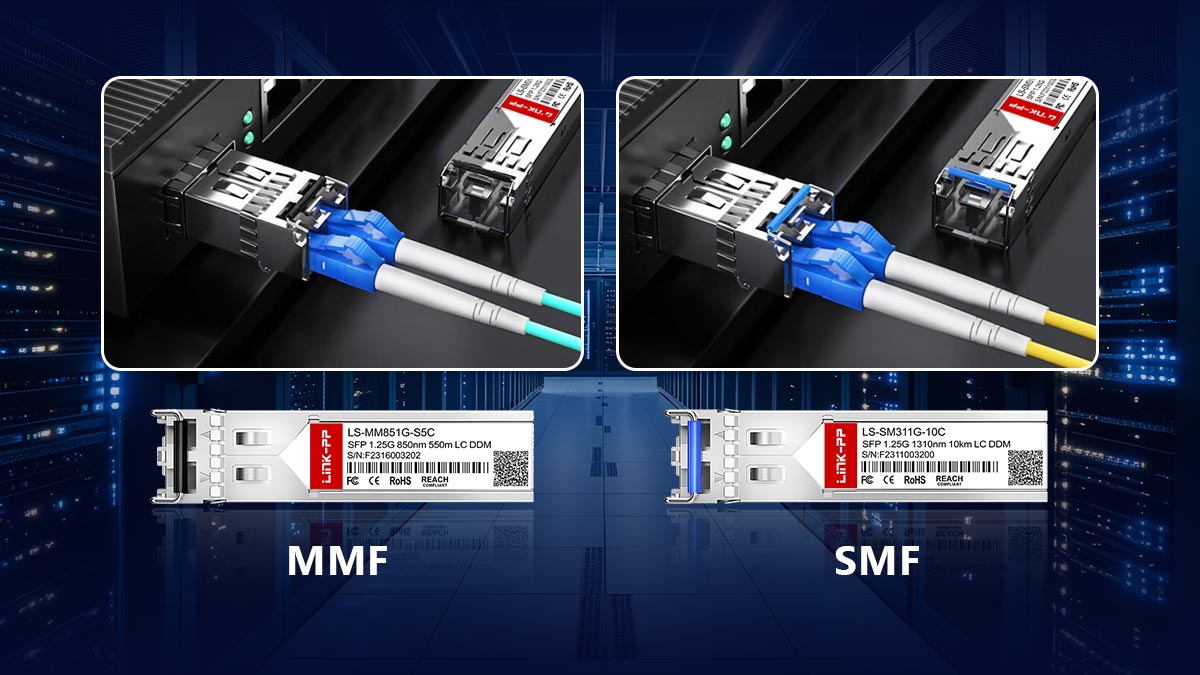
Successful fiber deployment depends heavily on ensuring that the fiber media, transceivers, and hardware are fully compatible. Understanding the physical and optical requirements of MMF SMF is essential to avoid signal loss and hardware damage during installation.
Compatibility with Network Hardware
The most critical compatibility factor is the matching of the optical transceiver module to the fiber type. Network switches and routers are generally "fiber agnostic" because they use modular slots (SFP, SFP+, SFP28, QSFP+, QSFP28), but the transceiver inserted into that slot must match the cable.
A multimode SFP transceiver (using an LED or VCSEL light source) cannot drive a signal through a single-mode fiber effectively, and vice versa. Using single-mode SFP modules on multimode fiber typically requires a mode conditioning patch cord to prevent differential mode delay (DMD), which can otherwise degrade the signal.
Connector Types and Standards
While MMF and SMF use similar physical connector bodies — such as LC, SC, and MPO — they are differentiated by their polishing standards: UPC (Ultra Physical Contact) and APC (Angled Physical Contact).
- UPC (Blue for SMF; Beige/Aqua/Lime for MMF): These connectors are polished with a slight spherical curvature to minimize the air gap between fiber cores. UPC is standard for all Multimode applications and many single-mode data networks.
- APC (Green for SMF only): These feature an 8-degree angled end-face polish. This angle causes reflected light to be absorbed into the fiber cladding rather than reflecting back to the source, offering superior Return Loss performance.
Compatibility Warning: APC connectors are almost exclusively used with single-mode fiber in high-precision environments like FTTX or CATV. It is critical never to mate a UPC connector with an APC connector; the physical mismatch will create a massive air gap, leading to high insertion loss and potential permanent damage to the fiber end-faces.
Upgrading Existing Infrastructure
When upgrading a network from 10G to 40G, 100G, or beyond, the existing infrastructure often dictates the path forward. For MMF-based facilities, this often involves moving from LC duplex connectors to MPO/MTP multi-fiber connectors to support parallel optics.
However, many organizations find that at speeds of 400G and 800G, the distance limitations of older MMF (like OM3) become a bottleneck, necessitating a strategic "over-build" with single-mode fiber to ensure the infrastructure can support future hardware generations without replacing the physical cabling again.
Interoperability Challenges
Interoperability issues most frequently arise in mixed-vendor environments. Even if the fiber types match, transceivers from different manufacturers must adhere strictly to Multi-Source Agreements (MSA) to ensure they function correctly across a link.
Furthermore, mixing different grades of multimode fiber (e.g., splicing older 62.5µm OM1 with modern 50µm OM4) results in significant attenuation due to core diameter mismatches, which can effectively shut down network communication.
? MMF SMF Standards: Industry Specifications and Compliance
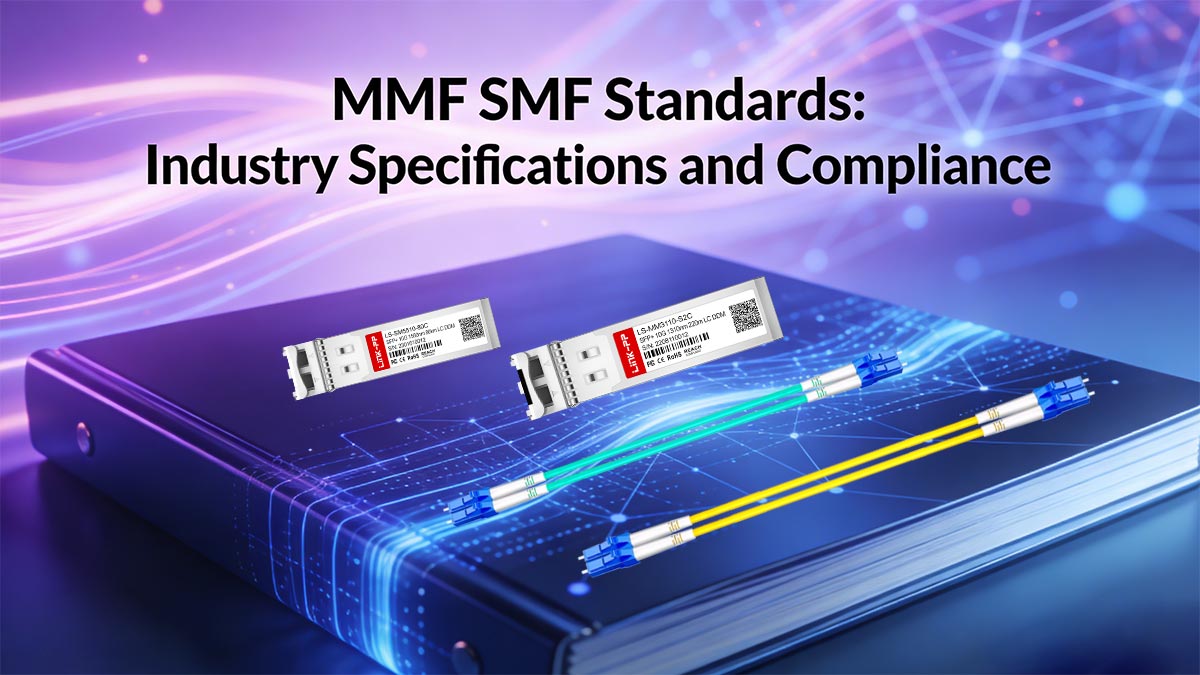
Adhering to international standards ensures that your fiber optic infrastructure is reliable, safe, and capable of supporting the advertised bandwidth. These specifications provide a universal language for manufacturers and engineers to guarantee performance across diverse global networks.
ISO/IEC and TIA Standards Overview
The two primary bodies governing MMF SMF fiber optics are the International Organization for Standardization (ISO/IEC) and the Telecommunications Industry Association (TIA). Standards such as TIA-568 and ISO/IEC 11801 define the structured cabling requirements for commercial buildings. These standards dictate everything from the maximum allowable pull tension during installation to the specific "link budgets" (allowable signal loss) required for a network to function at 10Gbps or 100Gbps.
OM and OS Fiber Classifications
Fiber is classified into optical multimode (OM) and optical single-mode (OS) categories based on its modal bandwidth and attenuation characteristics.
- OM1 & OM2: Legacy multimode (orange/grey) largely phased out for modern high-speed data.
- OM3 & OM4: Laser-optimized multimode (aqua/violet) designed for 10G to 100G speeds using 850nm VCSELs.
- OM5: The newest multimode standard (lime green), designed for Shortwave Wavelength Division Multiplexing (SWDM).
- OS1 & OS2: Single-mode classifications. OS2 is a modern type built for outdoor and long-distance networks. It transmits data with less signal loss over longer distances than the OS1 cables used mainly for indoor applications.
Compliance Requirements for Different Industries
Different sectors have unique compliance hurdles. For example, in healthcare and government sectors, fiber installations must often meet strict fire-safety ratings (such as OFNP/Plenum or LSZH/Low Smoke Zero Halogen) to comply with local building codes. In data centers, compliance with ANSI/TIA-942 is essential, as it specifies the architectural requirements for "Tier" rated facilities, ensuring that the fiber choice supports the necessary redundancy and path diversity.
Importance of Certified Components
Using certified components — those tested by third parties like UL or ETL — is the best way to protect a network investment. Certified patch cords and trunks come with test reports (Insertion Loss and Return Loss testing) proving they meet or exceed the OM/OS standards. Using non-certified, "bargain" fiber can lead to intermittent "soft failures" that are difficult to troubleshoot, such as CRC errors or packet loss caused by poor-quality glass or substandard connector polishing.
? MMF SMF Selection Guidelines for Buyers
Selecting the right fiber type involves more than comparing specifications — it requires aligning your network goals, budget, and scalability plans. Buyers should evaluate performance, compatibility, and long-term value before investing in MMF SMF infrastructure. The following guidelines outline how to make an informed and future-ready choice.
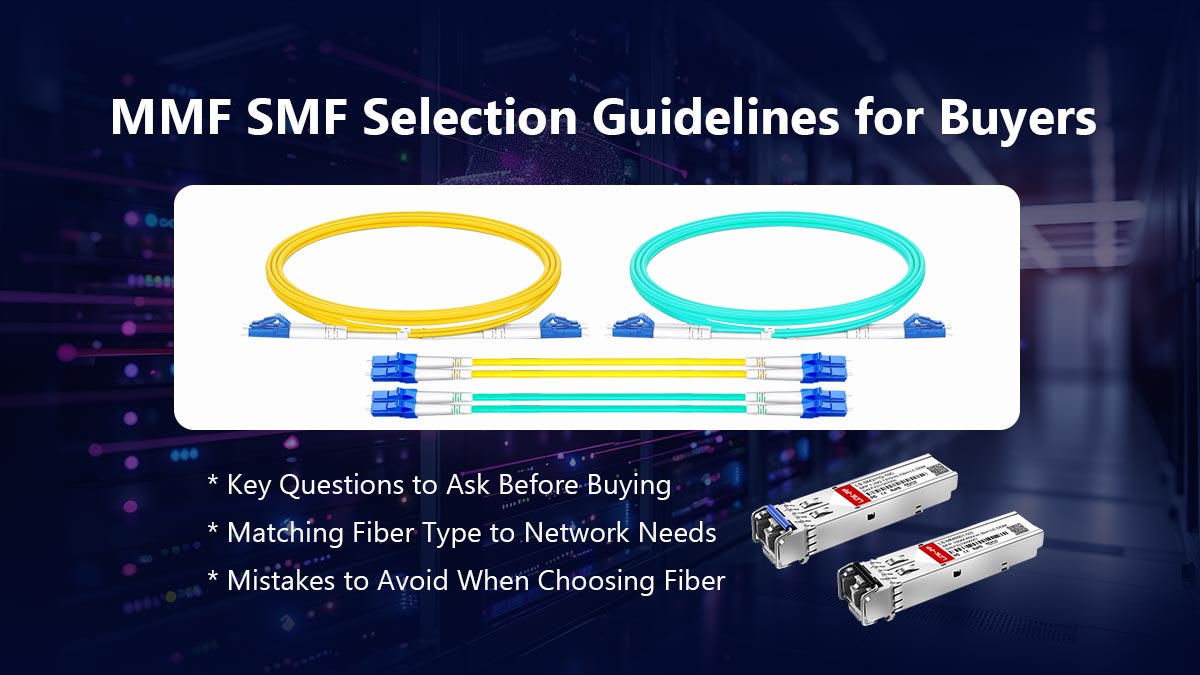
Key Questions to Ask Before Buying
Before purchasing, clarify your network’s operational priorities. Ask:
- What transmission distances do I need to support — short-range internal links or long-haul connections?
- What data speeds (10G, 40G, 100G, or higher) are required?
- Will my network expand in the next 3–5 years, and can the chosen fiber support that growth?
- What type of transceivers and connectors are already in my existing equipment?
Thinking through these questions ensures that your fiber strategy aligns with both current and future needs.
Matching Fiber Type to Network Needs
For short-range, high-density networks — such as data centers, enterprise LANs, and building backbones — MMF is often the most cost-efficient and practical option. It pairs well with affordable short-reach transceivers and simplifies installation.
If your network spans longer distances, supports carrier-grade backbones, or requires ultra-low signal loss, SMF is the better choice. With support for long-reach optics and higher bandwidth, SMF delivers superior scalability and future-proof performance.
A hybrid strategy can also be effective: using MMF for internal connections and SMF for external or inter-building links to balance cost and performance.
Mistakes to Avoid When Choosing Fiber
New buyers often underestimate compatibility and environmental factors. Avoid mixing MMF and SMF components without proper converters or hybrid transceivers. Always verify that your chosen fiber complies with industry standards (OM/OS classification) and pairs correctly with your transceiver’s optical specifications.
Also, don’t overlook cable routing and installation conditions — temperature, bending radius, and outdoor exposure can all affect long-term performance. Partnering with a reliable vendor that provides certified products and technical support can significantly reduce these risks.
? Conclusion: Aligning Your Network with the Right MMF SMF Fiber
In the debate between MMF SMF fiber, there is no universal "better" option — only the one that best aligns with your network’s distance, speed, and budget requirements. Multimode remains the king of the short-range local area network, providing reliable, cost-effective performance. Meanwhile, single-mode stands as the indispensable foundation for long-haul connectivity and the future of ultra-high-bandwidth transmission.
Selecting the right cable is only the first step. To bring your fiber infrastructure to life, you need high-performance optical transceiver modules that guarantee stability and compatibility. Whether you are building a 10G enterprise network or a 400G hyperscale data center, the quality of your transceivers determines the ultimate reliability of your link.
Looking for the perfect match for your fiber network?
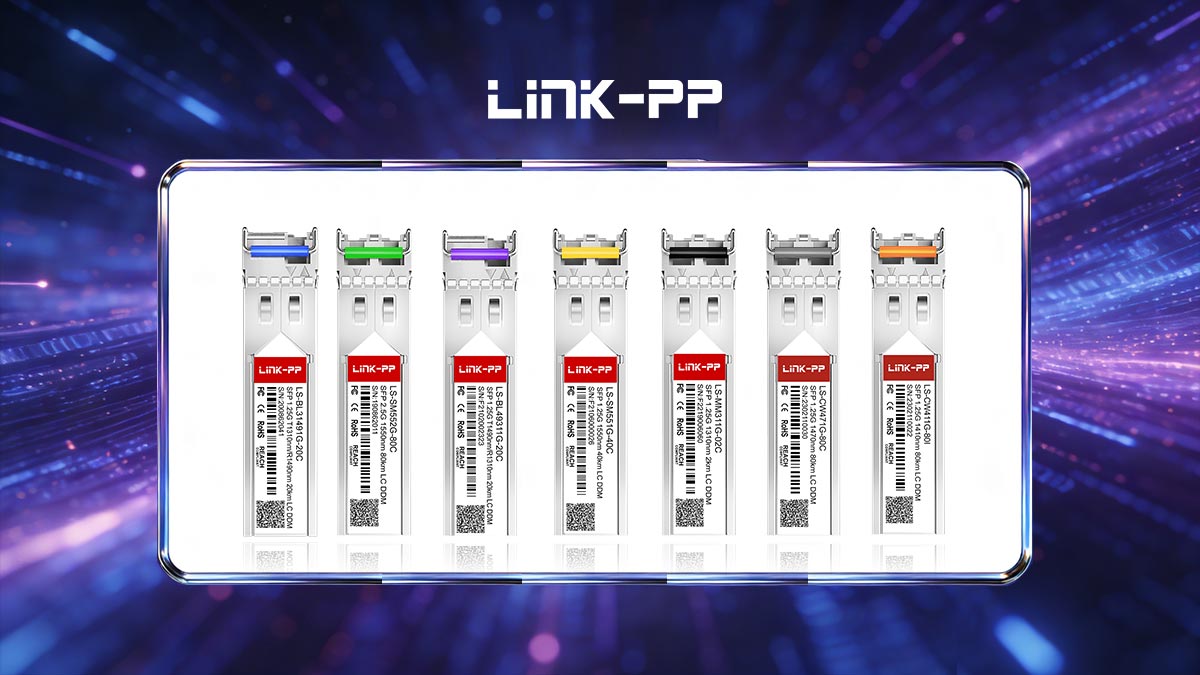
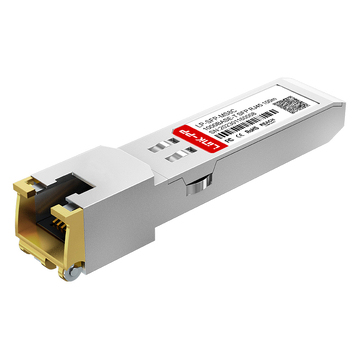
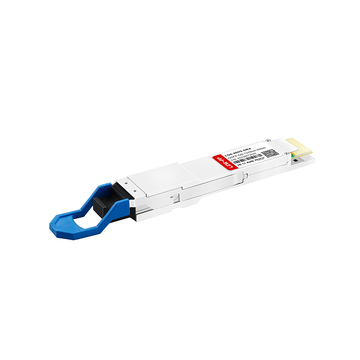
At LINK-PP Official Store, we provide a comprehensive range of enterprise-grade MMF SMF optical modules — from fiber SFP and SFP+ to high-speed QSFP+, QSFP28 and QSFP-DD solutions. Our modules are rigorously tested to ensure 100% compatibility with leading network hardware brands, helping you build a stable and more cost-effective network infrastructure.