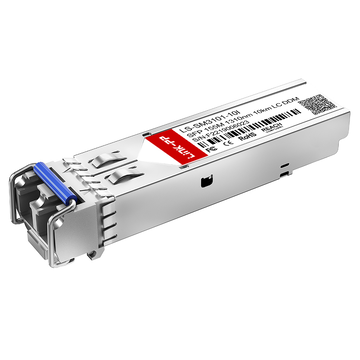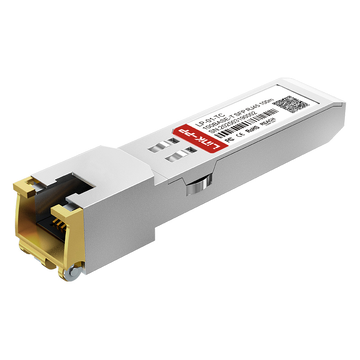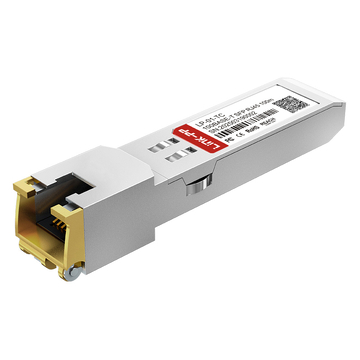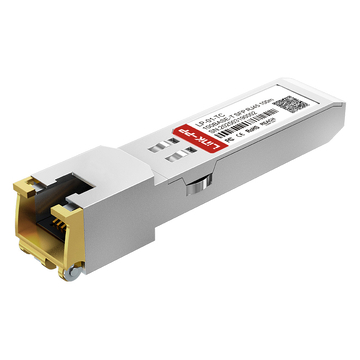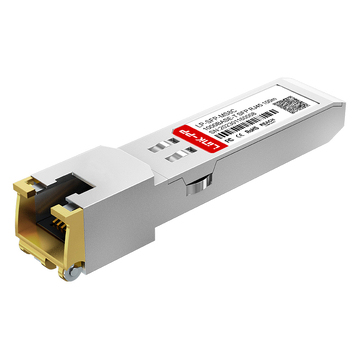
100BASE TX remains one of the most widely deployed Fast Ethernet standards in legacy and access-layer networks. When switches provide SFP slots instead of fixed RJ45 ports, a 100BASE TX Copper SFP module enables direct 100Mbps copper connectivity over standard twisted-pair cabling. This makes it possible to extend, adapt, or maintain existing 100BASE TX infrastructure without replacing switching hardware.
In practical deployments, 100BASE TX Copper SFP modules are commonly used to connect industrial controllers, IP cameras, legacy enterprise devices, and edge access equipment that still operate at 100Mbps. They provide RJ45 electrical interfaces through standard SFP form factors, allowing flexible port configuration while reusing Cat5 or higher copper cabling up to 100m.
This guide explains how 100BASE TX Copper SFP modules work, their key technical specifications, compatibility considerations, and how to select the right module based on network environment, cabling conditions, and long-term upgrade planning.
📕What Is 100BASE TX and Why It Still Matters
100BASE TX is a Fast Ethernet standard defined under IEEE 802.3u that delivers 100Mbps data transmission over copper twisted-pair cabling. Although Gigabit and higher speeds dominate modern core networks, 100BASE TX continues to play a critical role in access-layer, industrial, and legacy infrastructure where 100Mbps bandwidth is sufficient and stability is prioritized over speed.
Overview of 100BASE TX Standard
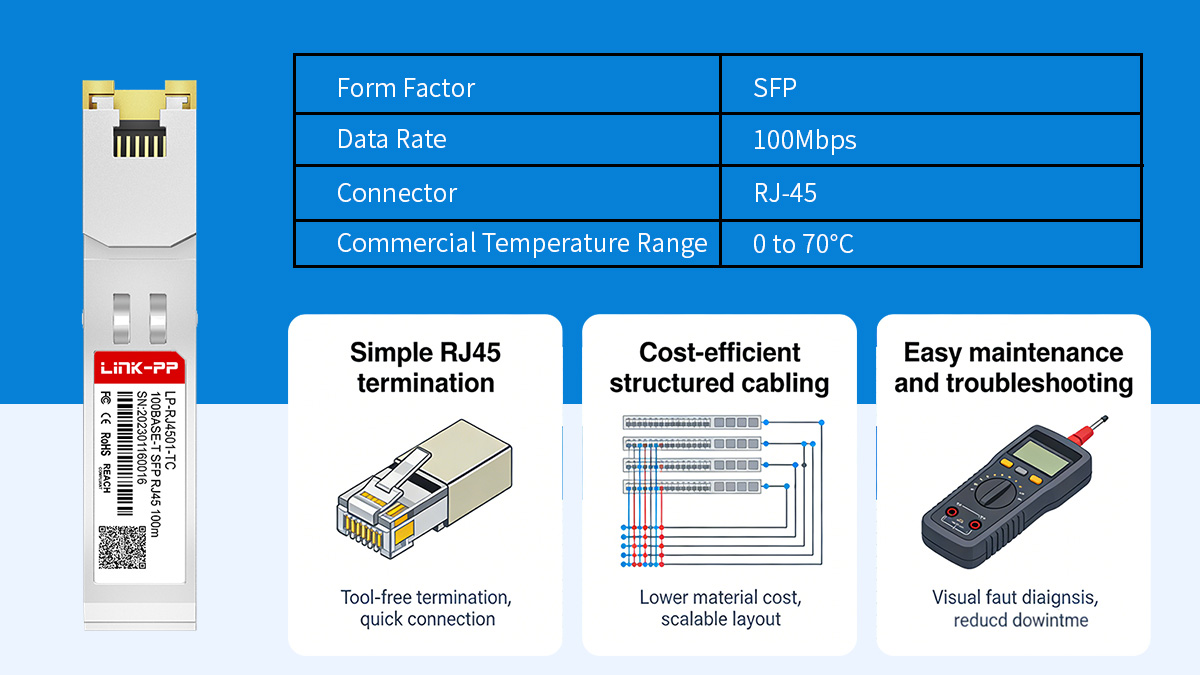
100BASE TX is a Fast Ethernet specification defined by IEEE 802.3u, designed to provide 100Mbps Ethernet communication over twisted-pair copper cable. It remains one of the most widely implemented Fast Ethernet physical layer standards.
Its core technical characteristics include:
-
Data Rate: Fixed 100Mbps transmission speed
-
Transmission Medium: Category 5 (Cat5) or higher UTP/STP copper cable
-
Maximum Distance: Up to 100m per Ethernet channel
-
Signaling Method: MLT-3 encoding at 125MHz
-
Wire Pair Usage: Two pairs (one for transmit, one for receive in full-duplex)
-
Duplex Modes: Supports half-duplex and full-duplex operation
-
Connector Type: Standard RJ45 interface
-
Auto-Negotiation: Supports speed and duplex auto-negotiation
Technically, 100BASE TX operates at a 125MHz signaling rate but transmits data at 100Mbps due to its encoding scheme. In full-duplex mode, separate transmit and receive pairs eliminate collisions, improving efficiency compared to legacy shared Ethernet hubs.
Because it uses standardized structured cabling and electrical signaling, 100BASE TX provides predictable performance within the defined 100m distance limit, making it stable for access-layer and industrial Ethernet environments.
Where 100BASE TX Is Commonly Used
100BASE TX continues to be relevant wherever 100Mbps bandwidth meets application requirements and upgrading to Gigabit is unnecessary or impractical.
Typical deployment scenarios include:
-
Enterprise legacy switch ports
Older access switches with 100M interfaces still operate reliably in branch offices and SMB environments. -
Industrial Ethernet systems
PLCs, HMIs, and factory automation devices often use 100Mbps interfaces for deterministic and stable communication. -
IP surveillance networks
Many IP cameras operate below 100Mbps bandwidth consumption, making 100BASE TX sufficient for edge connectivity. -
Embedded and IoT devices
Access control systems, sensors, and other edge equipment frequently integrate 100M Ethernet PHY chips.
In these environments, replacing all infrastructure for higher speeds would increase cost and complexity without meaningful performance gain.
Advantages of Copper Ethernet in 100Mbps Networks
For short-distance structured cabling environments, copper Ethernet remains practical and efficient.
The core advantages of 100BASE TX include:
-
Simple Cabling Infrastructure
-
Uses standard Cat5/Cat5e/Cat6 cabling
-
No need for fiber termination tools
-
Easy field repair and replacement
-
-
Lower Deployment Complexity
-
RJ45 connectors are widely supported
-
No optical cleaning procedures required
-
No optical power budget calculations
-
-
Cost-Efficient Maintenance
-
Copper patch cords are inexpensive
-
Troubleshooting can be performed with basic cable testers
-
No need for optical diagnostic tools
-
-
Stable Performance at 100m
-
Fully standardized 100m maximum channel length
-
Predictable signal performance in structured cabling systems
-
For networks that prioritize reliability, simplicity, and compatibility over higher throughput, 100BASE TX remains a technically sound and economically rational choice.
📕What Is a 100BASE TX Copper SFP Module
A 100BASE TX Copper SFP module is a small form-factor pluggable transceiver that converts an SFP slot into a standard RJ45 Ethernet port supporting 100Mbps Fast Ethernet over twisted-pair copper cabling. It enables switches and routers with SFP interfaces to connect directly to 100BASE TX devices without requiring fixed copper ports.
In practical deployments, it is commonly used to add flexible 100M RJ45 connectivity to aggregation or access switches that primarily provide fiber SFP slots.
Basic Working Principle
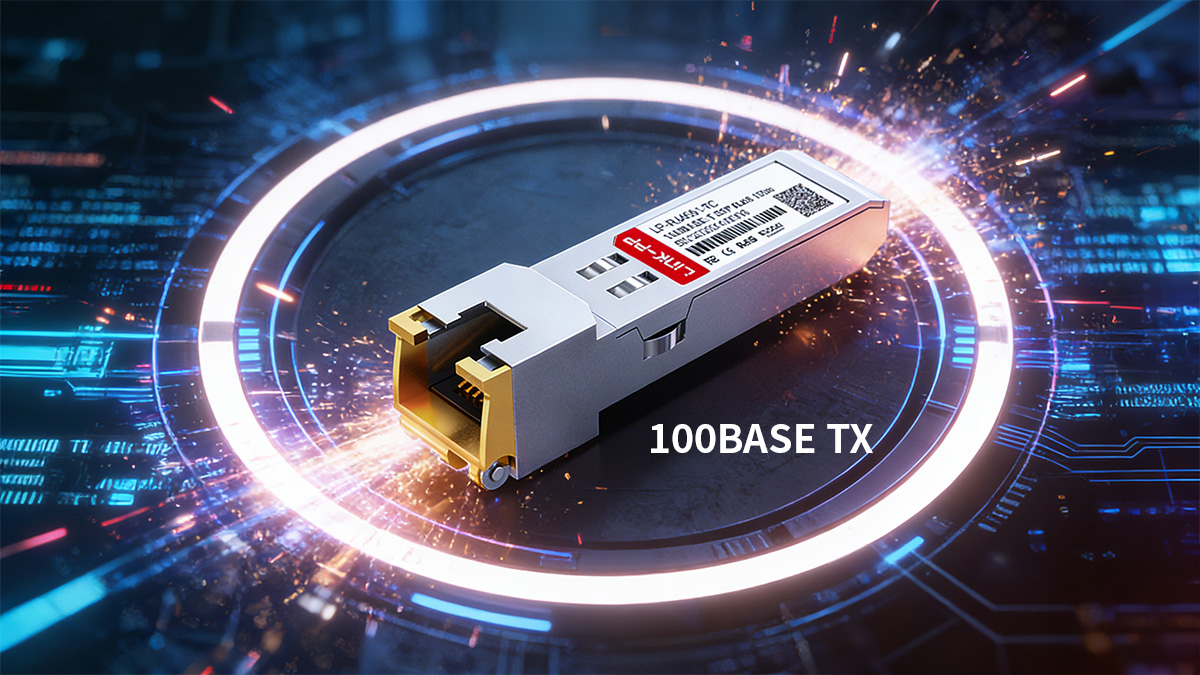
A 100BASE TX Copper SFP functions as an electrical PHY interface inside the SFP form factor. Instead of converting electrical signals to optical signals (as fiber SFP modules do), it maintains electrical-to-electrical signal processing.
Its operational process includes:
-
Signal Interface Conversion
-
The switch SFP cage provides a serialized electrical interface.
-
The module integrates a Fast Ethernet PHY chip that converts this interface into 100BASE TX electrical signaling.
-
-
Copper Ethernet Transmission
-
Uses two twisted pairs for data transmission and reception.
-
Supports full-duplex communication to eliminate collisions.
-
-
Auto-Negotiation Handling
-
Automatically negotiates speed and duplex with the connected device.
-
Typically locks at 100Mbps but may support fallback depending on design.
-
Unlike fiber modules, no laser, photodiode, or optical components are involved. This reduces complexity and removes optical power considerations from deployment planning.
Key Technical Specifications
A 100BASE TX Copper SFP module is designed for stable 100Mbps Ethernet transmission within structured cabling limits.
| Parameter | Specification |
|---|---|
| Data Rate | 100Mbps |
| Interface | RJ45 |
| Max Distance | 100m |
| Cabling Requirement | Cat5 or higher |
Because it relies on copper twisted-pair transmission, the maximum supported distance is limited to 100m, consistent with IEEE 802.3u standards. Performance beyond this distance may lead to packet loss or link instability.
Additional technical considerations may include:
-
Power consumption typically higher than optical 100M SFP modules
-
Operating temperature ranges (commercial 0°C to 70°C, industrial -40°C to 85°C)
-
Support for MDI/MDI-X auto crossover
When deployed in high-density switches, thermal performance should be evaluated, as copper SFP modules generally generate more heat than passive optical variants.
Compatibility with Switches and Routers
Not all SFP ports support 100Mbps operation. Compatibility depends on the hardware design of the host device.
Before deployment, verify the following:
-
Port Speed Support
The SFP slot must support 100Mbps operation. Some SFP ports are 1G-only and may not downshift to 100M. -
Auto-Negotiation Behavior
Some switches require manual configuration to enable 100Mbps mode. -
Vendor Encoding or Firmware Requirements
Certain network brands validate SFP EEPROM information. Compatibility-coded modules may be required. -
Industrial Equipment Considerations
Industrial switches often support 100M SFP modules explicitly, making them common in automation networks.
If the SFP port does not support 100Mbps signaling at the MAC/PHY level, the module will not establish a link even if physically inserted.
For this reason, confirming port specifications is the most critical step before selecting a 100BASE TX Copper SFP module.
📕100BASE TX Copper SFP vs Fiber SFP Modules
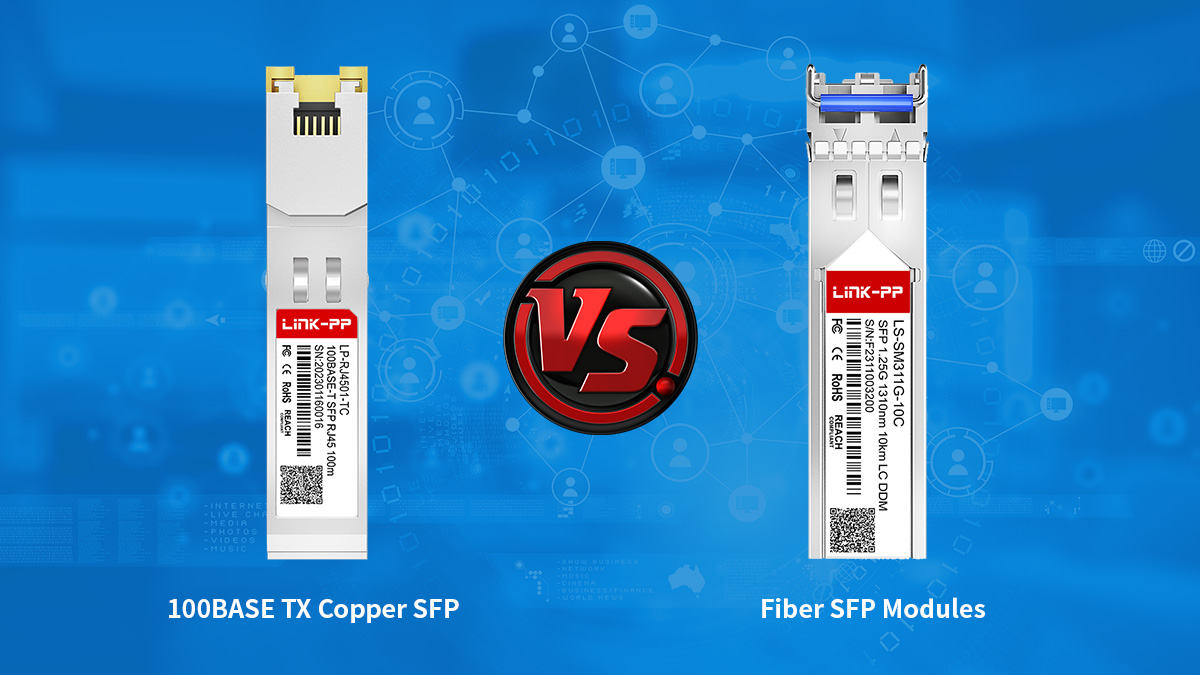
A 100BASE TX Copper SFP differs fundamentally from fiber SFP modules in transmission medium, electrical characteristics, deployment complexity, and environmental behavior. The choice between copper and fiber depends on distance, interference conditions, infrastructure availability, and long-term scalability requirements.
For short-distance structured cabling environments, copper SFP modules are often practical. For longer distances or electrically noisy environments, fiber SFP modules provide stronger isolation and stability.
Copper vs Fiber Transmission Differences
The core technical difference lies in how data is transmitted: electrical signaling over twisted-pair cable versus optical signaling over fiber.
| Feature | 100BASE TX Copper SFP | 100M Fiber SFP (e.g., 100BASE FX) |
|---|---|---|
| Transmission Medium | Twisted-pair copper | Multimode fiber |
| Max Distance | 100m | Up to 2km |
| EMI Immunity | Moderate | Very high |
| Signal Type | Electrical | Optical |
Copper transmission is more susceptible to electromagnetic interference (EMI), especially in industrial environments with heavy machinery. Fiber transmission is immune to EMI and does not conduct electricity, making it suitable for high-voltage or high-interference areas.
In terms of latency, differences are negligible at 100Mbps for typical enterprise deployments.
Deployment Scenarios Comparison
The suitability of copper versus fiber depends largely on physical layout and environmental conditions.
100BASE TX Copper SFP is typically preferred when:
-
The distance is within 100m
-
Existing Cat5/Cat5e infrastructure is available
-
Deployment simplicity is prioritized
-
Equipment cabinets are centrally located
Fiber SFP modules are preferred when:
-
Distance exceeds 100m
-
Electrical isolation is required
-
High EMI environments exist
-
Outdoor or campus backbone links are involved
In industrial automation, copper may be sufficient inside control cabinets, while fiber is often used between buildings or across factory floors.
Cost and Infrastructure Considerations
From an infrastructure perspective, copper often reduces immediate deployment complexity if structured cabling is already installed.
Key comparison factors include:
-
Cabling Availability
-
Copper: Reuses existing RJ45 patch panels
-
Fiber: Requires fiber patch panels and connectors
-
-
Installation Complexity
-
Copper: Plug-and-play RJ45 termination
-
Fiber: Requires cleaning and inspection procedures
-
-
Maintenance Requirements
-
Copper: Basic cable testers sufficient
-
Fiber: Optical power meters or inspection scopes recommended
-
-
Scalability Planning
-
Copper 100M links may limit future bandwidth expansion
-
Fiber infrastructure supports easier upgrades to 1G or higher
-
For networks designed to remain at 100Mbps for the foreseeable future, 100BASE TX Copper SFP modules provide a straightforward solution. For networks anticipating bandwidth growth or extended distances, fiber-based SFP modules may offer better long-term flexibility.
📕Key Factors When Selecting a 100BASE TX Copper SFP
Selecting a 100BASE TX Copper SFP module requires verifying port compatibility, cabling conditions, thermal limits, and environmental requirements. Because Fast Ethernet operates within strict physical-layer constraints, mismatches in speed support or cable quality are the most common causes of deployment failure.
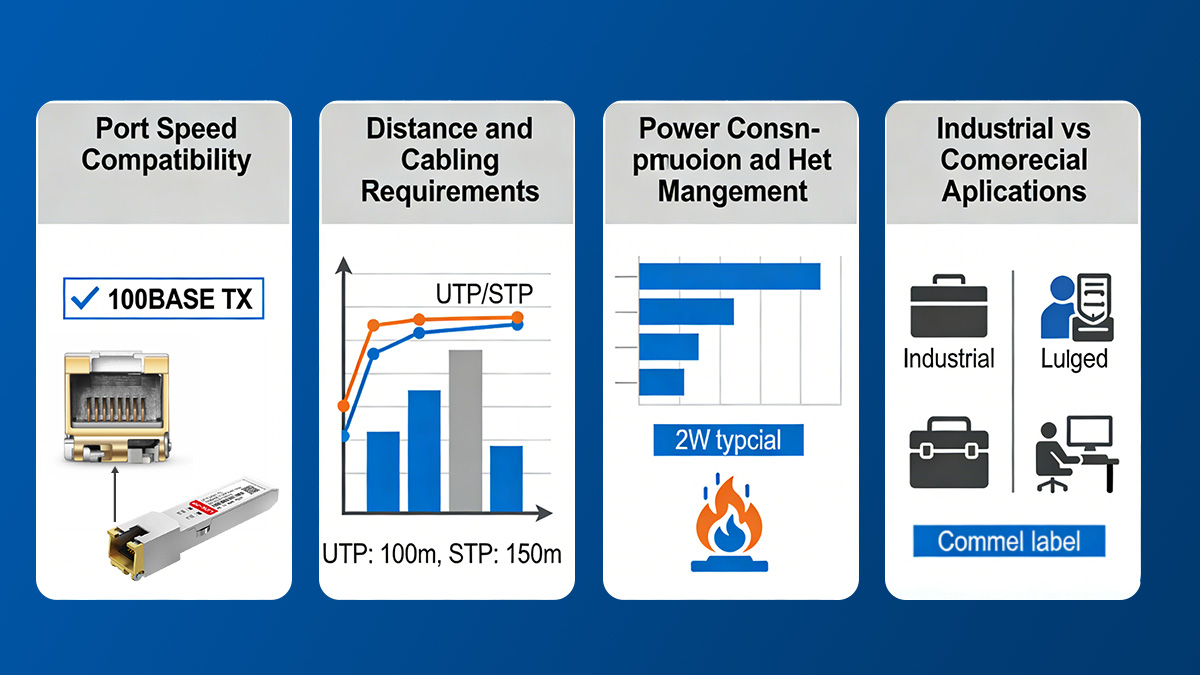
The following factors determine whether a 100M RJ45 SFP module will operate reliably in your network.
Port Speed Compatibility
The most critical requirement is that the SFP slot must support 100Mbps operation at the hardware level.
Before deployment, confirm:
-
SFP Port Speed Specification
Some SFP slots are 1G-only and do not support 100M signaling. -
Backward Compatibility Behavior
Certain 1G ports can downshift to 100Mbps, but not all switch chipsets support this. -
Manual Speed Configuration
In some switches, auto-negotiation must be enabled or the port manually forced to 100Mbps full-duplex. -
Vendor EEPROM Validation
Some network brands require coded or compatible modules to pass firmware checks.
If the host port does not electrically support 100BASE TX signaling, the module will not establish a link even though it physically fits in the SFP cage.
Distance and Cabling Requirements
100BASE TX performance depends heavily on cable quality and length. The IEEE standard defines a strict maximum channel length of 100m.
| Cable Type | Supported Distance | Deployment Recommendation |
|---|---|---|
| Cat5 | Up to 100m | Minimum requirement |
| Cat5e | Up to 100m | Preferred for stability |
| Cat6 | Up to 100m | Improved noise margin |
While all three categories support 100Mbps at 100m, higher-grade cables offer better resistance to interference and improved long-term stability.
When evaluating cabling:
-
Verify total channel length (including patch cords)
-
Avoid sharp bends and excessive bundling
-
Ensure proper termination and crimping quality
-
Test with a certified cable tester when possible
Exceeding 100m may result in packet errors, link drops, or auto-negotiation instability.
Power Consumption and Heat Management
Copper SFP modules typically consume more power than equivalent optical 100M SFP modules because they integrate active PHY circuitry and signal processing components.
Consider the following:
-
Switch Power Budget
High-density switches with multiple copper SFP modules may experience higher cumulative power draw. -
Thermal Conditions
Copper modules generate more heat than passive fiber modules. -
Airflow Direction
Proper front-to-back or back-to-front airflow improves module longevity.
In compact industrial switches, thermal accumulation can impact reliability if multiple electrical SFP modules are installed side by side.
Industrial vs Commercial Applications
Environmental conditions strongly influence module selection.
Commercial-grade modules typically operate within 0°C to 70°C, suitable for climate-controlled data rooms and office environments.
Industrial-grade modules are designed for harsher conditions:
-
Operating range from -40°C to 85°C
-
Enhanced resistance to vibration
-
Improved tolerance to electrical noise
Industrial automation cabinets, outdoor enclosures, and manufacturing floors often require extended temperature-rated 100BASE TX Copper SFP modules to maintain stable 100Mbps Ethernet links.
Selecting the correct temperature rating ensures long-term operational stability and reduces unexpected link failures.
📕Typical Application Scenarios
A 100BASE TX Copper SFP module is most suitable in environments where 100Mbps bandwidth is sufficient, copper cabling is already deployed, and flexible port configuration is required. It is commonly used to extend RJ45 connectivity from SFP-based switches without replacing existing infrastructure.
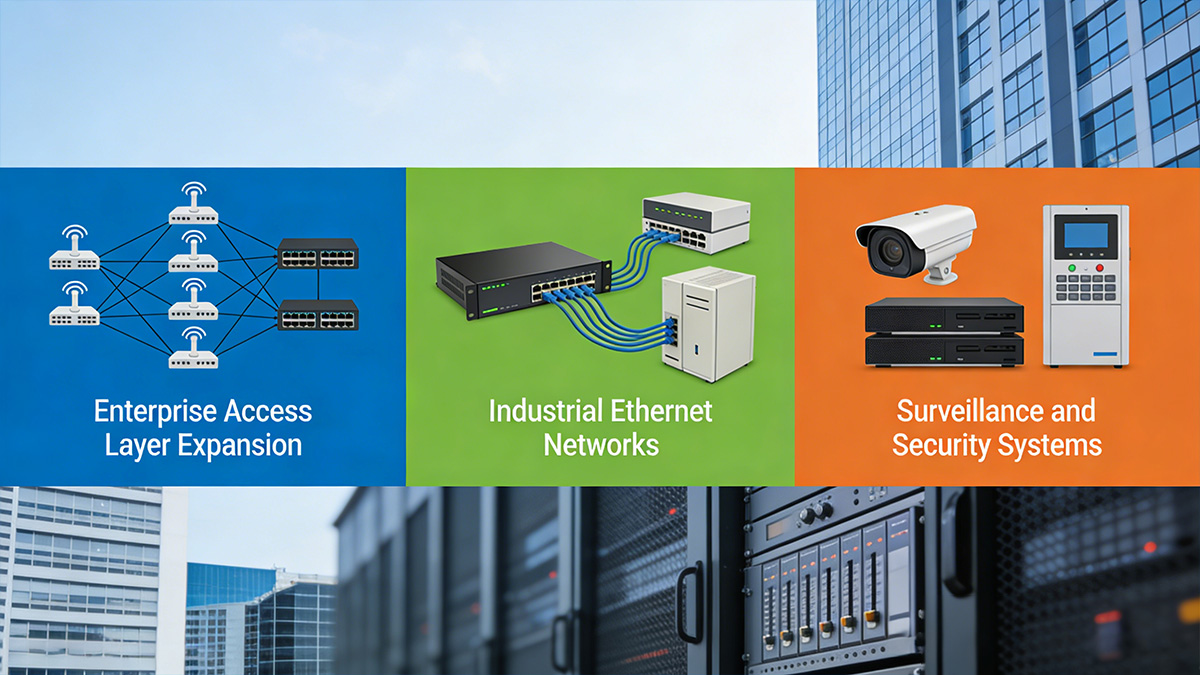
Below are the most practical and technically relevant deployment scenarios.
Enterprise Access Layer Expansion
In enterprise networks, many aggregation or distribution switches provide SFP slots instead of fixed copper ports. A 100BASE TX Copper SFP allows these slots to function as standard 100M RJ45 interfaces.
Typical use cases include:
-
Adding additional 100Mbps RJ45 ports without installing new switches
-
Connecting legacy PCs, printers, or VoIP devices
-
Supporting branch offices that still operate at Fast Ethernet speeds
-
Gradual migration from 100M to 1G networks
This approach allows flexible port allocation while maintaining compatibility with older Ethernet devices.
Industrial Ethernet Networks
Industrial automation environments frequently rely on 100Mbps Ethernet for deterministic communication between controllers and field devices.
Common applications include:
-
PLC to switch connectivity
-
HMI panels and industrial gateways
-
Machine vision systems operating below 100Mbps
-
Control cabinet internal networking
Within control cabinets, cable runs are typically well under 100m, making copper SFP modules technically sufficient. When paired with industrial-rated modules (-40°C to 85°C), they can withstand temperature fluctuations and electrical noise found in manufacturing environments.
Surveillance and Security Systems
IP surveillance deployments often use Fast Ethernet at the edge, especially when cameras operate below 100Mbps throughput.
Typical scenarios include:
-
Connecting IP cameras to access switches
-
Integrating NVR systems with 100M uplinks
-
Deploying edge switches in security rooms
-
Temporary or modular surveillance expansions
Because structured copper cabling is commonly pre-installed in buildings, 100BASE TX Copper SFP modules simplify integration without requiring fiber termination.
📕Installation and Deployment Best Practices
Proper installation of a 100BASE TX Copper SFP module ensures stable 100Mbps Ethernet connectivity and prevents common link failures caused by speed mismatch, poor cabling, or thermal overload. Because copper-based SFP modules rely on electrical signaling, attention to cabling integrity and port configuration is especially important.
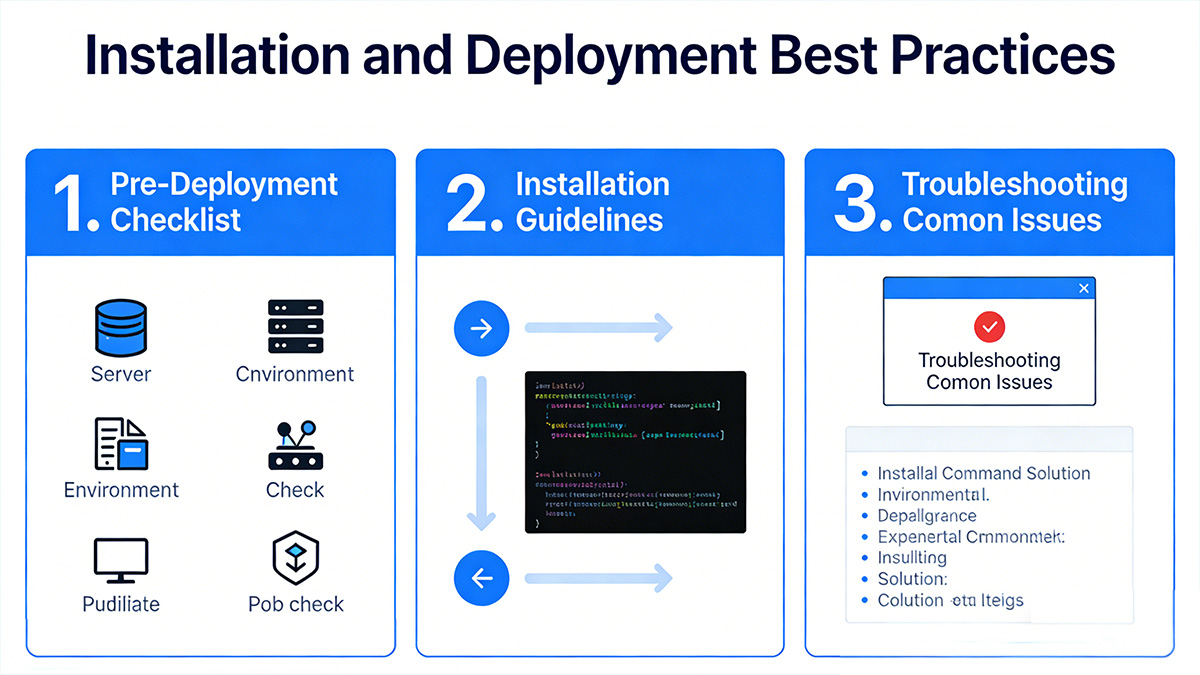
The following guidelines help ensure reliable deployment.
Pre-Deployment Checklist
Before inserting a 100BASE TX Copper SFP module, verify that the host device and cabling environment meet the required conditions.
Key validation steps include:
-
Confirm SFP Port Speed Support
-
Verify that the SFP slot supports 100Mbps operation.
-
Check whether manual speed configuration is required.
-
-
Inspect Copper Cabling
-
Ensure Cat5 or higher cable is used.
-
Confirm total channel length does not exceed 100m.
-
Check connectors for proper crimping and secure termination.
-
-
Verify Firmware and Compatibility
-
Confirm the switch firmware supports 100M copper SFP modules.
-
Validate compatibility if the device enforces vendor coding.
-
-
Check Power and Thermal Capacity
-
Review switch power budget if deploying multiple copper SFP modules.
-
Ensure adequate airflow in high-density configurations.
-
Completing these checks reduces the likelihood of link negotiation failures or intermittent packet loss.
Installation Guidelines
Installing a 100M RJ45 SFP module is straightforward, but proper handling improves reliability.
Follow these best practices:
-
Insert the Module Firmly
Slide the SFP transceiver into the cage until it clicks securely into place. -
Avoid Hot-Air Obstruction
Do not block switch ventilation areas with bundled copper cables. -
Use High-Quality Patch Cords
Poorly shielded or damaged patch cords may introduce signal degradation. -
Maintain Proper Cable Management
Avoid tight bends and excessive tension on RJ45 cables. -
Allow Auto-Negotiation to Complete
After connection, wait for the link LED to stabilize before testing traffic.
Because copper SFP modules integrate active PHY components, avoid frequent hot-plugging unless necessary.
Troubleshooting Common Issues
If a 100BASE TX Copper SFP link does not come up or experiences instability, the issue is typically related to one of three factors: speed mismatch, cabling problems, or compatibility limitations.
Below are the most common symptoms and likely causes:
| Symptom | Possible Cause | Recommended Check |
|---|---|---|
| Link LED off | Port does not support 100M | Verify SFP port specification |
| Link flapping | Cable exceeds 100m or poor termination | Test cable and measure length |
| Packet loss | Electrical interference or low-quality cable | Replace patch cord and inspect routing |
| Speed mismatch | Auto-negotiation failure | Manually set 100Mbps full-duplex |
Additional diagnostic steps:
-
Swap cables to isolate physical layer faults
-
Test the module in another known-compatible SFP port
-
Check switch logs for PHY or negotiation errors
-
Monitor interface statistics for CRC or alignment errors
Because 100BASE TX relies on electrical transmission, even minor cable defects can cause intermittent performance issues. Systematic isolation of variables is the most effective troubleshooting method.
📕How to Choose the Right 100BASE TX Copper SFP for Your Network
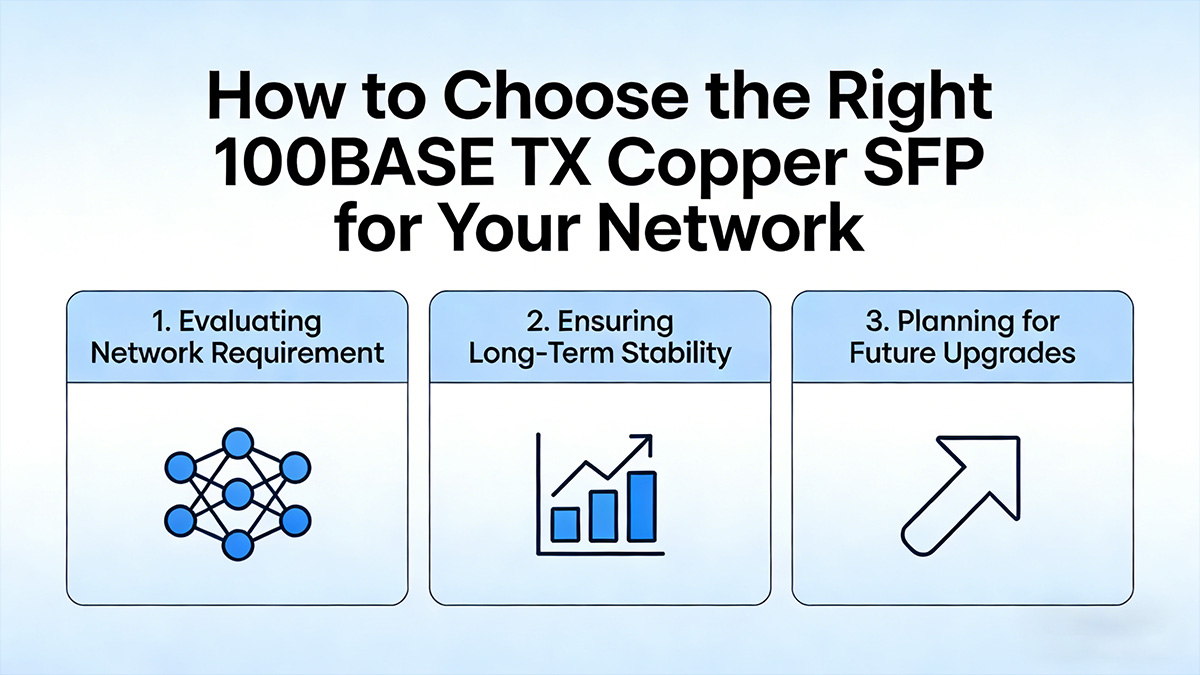
Choosing the correct 100BASE TX Copper SFP module depends on port compatibility, environmental conditions, cable infrastructure, and future network planning. Because 100Mbps Ethernet operates within defined physical-layer limits, verifying technical alignment with your switch and deployment scenario is more important than simply selecting an RJ45 SFP form factor.
The following evaluation framework helps ensure stable and predictable 100M connectivity.
Evaluating Network Requirements
Before selecting a module, clarify the operational requirements of the target port and connected device.
Focus on these decision points:
-
Host Port Capability
-
Does the SFP slot support 100Mbps operation?
-
Is it dual-rate (100M/1G) or fixed 1G-only?
-
-
Connected Device Speed
-
Is the endpoint fixed at 100BASE TX?
-
Does it rely on auto-negotiation?
-
-
Transmission Distance
-
Confirm total copper channel length ≤100m.
-
Account for patch panels and intermediate connections.
-
-
Bandwidth Demand
-
Is 100Mbps sufficient for the application workload?
-
Are there foreseeable traffic growth requirements?
-
If the endpoint device and the SFP slot both support 100M signaling, and the cable length remains within standard limits, a 100BASE TX Copper SFP module is technically appropriate.
Ensuring Long-Term Stability
Stable 100Mbps Ethernet performance depends on both module quality and environmental alignment.
The table below summarizes key selection criteria:
| Selection Factor | Why It Matters | What to Verify |
|---|---|---|
| Speed Support | Prevents link failure | 100Mbps compatibility in SFP slot |
| Temperature Range | Avoids thermal instability | Commercial (0°C–70°C) or Industrial (-40°C–85°C) |
| Power Consumption | Protects switch power budget | Per-port power rating |
| Compatibility Coding | Ensures module recognition | Vendor support or tested interoperability |
In industrial environments, extended temperature-rated modules reduce the risk of link drops during seasonal temperature fluctuations. In high-density switches, cumulative heat from multiple copper SFP modules should also be considered.
Selecting a technically aligned module minimizes CRC errors, negotiation instability, and intermittent link behavior.
Planning for Future Upgrades
While 100BASE TX remains widely deployed, long-term network scalability should be considered.
Evaluate:
-
Migration Path to 1G or Higher
If future bandwidth expansion is likely, verify whether the SFP slot supports dual-rate 100M/1G modules. -
Hybrid Infrastructure Strategy
Fiber uplinks combined with copper edge connections may offer balanced flexibility. -
Lifecycle of Connected Devices
If legacy equipment is expected to remain in service for years, maintaining 100M compatibility avoids unnecessary hardware replacement. -
Structured Cabling Quality
Higher-grade cabling (Cat5e/Cat6) simplifies future transitions to Gigabit Ethernet.
If the network is expected to remain at Fast Ethernet speeds for the foreseeable future, selecting a stable and compatible 100BASE TX Copper SFP module ensures reliable operation without introducing unnecessary complexity.
📕FAQ About 100BASE TX Copper SFP
Q1: Can a 100BASE TX Copper SFP operate in a Gigabit SFP port?
A: Only if the SFP port supports 100Mbps operation. Some 1G ports are dual-rate (100M/1G), while others are 1G-only.
Q2: What is the maximum supported distance?
A: Up to 100m over Cat5 or higher twisted-pair copper cable.
Q3: Does it support auto-negotiation?
A: Yes, most modules support auto-negotiation for duplex settings, but manual configuration may be required on certain switches.
Q4: Why is the link LED off after installation?
A: The SFP slot may not support 100Mbps, or the cable may be faulty or exceed 100m.
Q5: Is an industrial version necessary?
A: Industrial-grade modules are recommended for environments outside 0°C–70°C or where vibration and electrical noise are present.
Q6: Can it be used for new deployments?
A: Yes, if 100Mbps bandwidth meets the application requirement and future upgrades are not immediately planned.
📕Conclusion
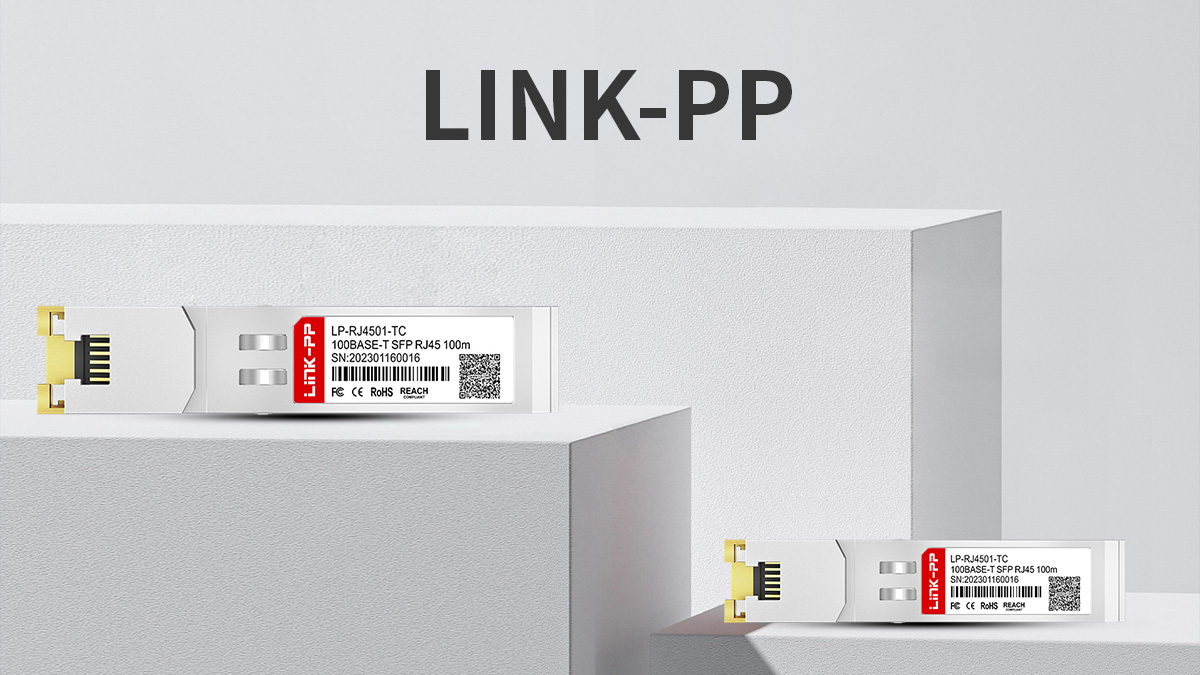
A 100BASE TX Copper SFP module provides a practical way to deliver 100Mbps Fast Ethernet over standard RJ45 copper cabling through an SFP slot. It is especially suitable for legacy device integration, industrial Ethernet environments, surveillance systems, and access-layer expansion where 100m distance and structured cabling are already in place.
By verifying SFP port speed compatibility, ensuring proper cable quality, selecting the appropriate temperature rating, and considering long-term network planning, you can achieve stable and predictable 100BASE TX connectivity without unnecessary infrastructure changes.
If you are evaluating reliable and compatible 100BASE TX Copper SFP solutions for enterprise or industrial networks, you can explore validated options and technical specifications at the LINK-PP Official Store to support your deployment requirements.