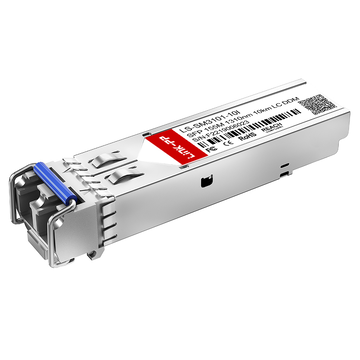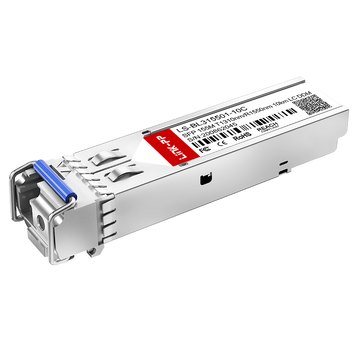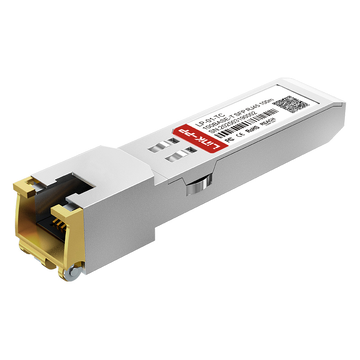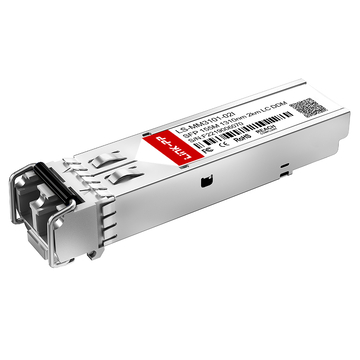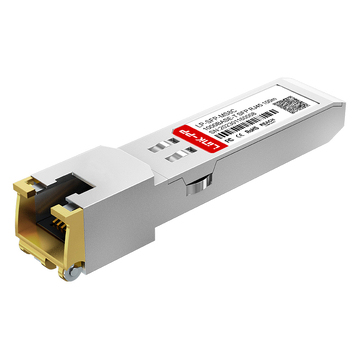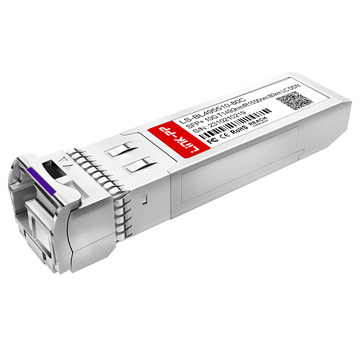
100Base-LX is a key Fast Ethernet standard that enables reliable, long-distance optical connectivity in enterprise, industrial, and legacy network environments. As networks continue to expand across campuses, access points, and industrial sites, the need for stable, cost-effective, and EMI-resistant fiber links has become increasingly important. 100Base-LX provides a standardized framework for optical communication over single-mode and multimode fibers, supporting predictable performance and interoperability with a wide range of equipment.
In practical deployments, choosing 100Base-LX SFP Transceiver can directly impact network reliability, budget efficiency, and operational simplicity. It allows network engineers to extend connectivity across multiple buildings or industrial zones without compromising signal integrity, while maintaining compatibility with legacy systems and minimizing the need for complex upgrades. Key parameters such as wavelength, transmission distance, and fiber type are defined by the standard, ensuring consistent behavior across diverse network setups.
This article explores what 100Base-LX is, its core technical characteristics, typical deployment scenarios, advantages and limitations, and best practices for integrating it into modern optical networks.
♻️ Introduction to 100Base-LX
100Base-LX provides reliable long-distance Fast Ethernet connectivity over fiber, making it suitable for legacy networks and industrial environments where stability and distance are priorities. It delivers consistent 100Mbps performance across single-mode fiber and supports multimode fiber with proper mode conditioning.
What is 100Base-LX
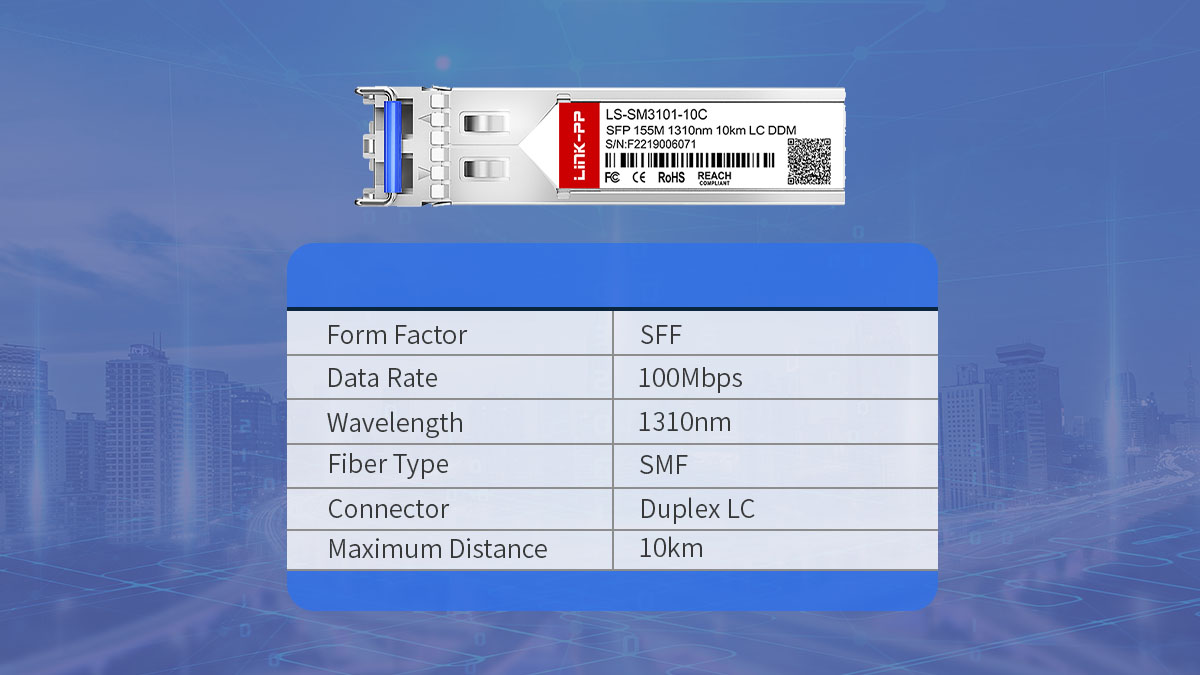
100Base-LX is a Fast Ethernet fiber standard defined under IEEE 802.3, specifically designed for longer-distance optical communication. It primarily operates over single-mode fiber (SMF) using a wavelength of 1310nm, supporting reliable data transmission over distances of up to 10 kilometers. When multimode fiber (MMF) is used, mode conditioning patch cables are required to minimize modal dispersion and maintain signal quality. The standard supports full-duplex operation, transmitting and receiving data simultaneously over two separate fibers, which ensures consistent BiDi communication.
Key Characteristics of 100Base-LX
100Base-LX combines moderate speed with extended reach, making it suitable for legacy networks and specialized deployment scenarios. Its main technical specifications include:
| Characteristic | Details |
|---|---|
| Data Rate | 100Mbps |
| Wavelength | 1310nm |
| Fiber Type | Single-mode (primary), Multimode (limited with mode conditioning) |
| Duplex Transmission | Full-duplex using separate transmit and receive fibers |
| Typical Distance | Up to 10km over SMF, ~2km over MMF with conditioning |
These characteristics allow 100Base-LX to deliver stable performance in environments where longer distances or electromagnetic interference (EMI) make copper-based solutions less reliable.
Why 100Base-LX Still Matters
100Base-LX remains relevant for several reasons:
-
Continued use in legacy infrastructure that still relies on 100Mbps connectivity.
-
Cost-effective deployment for low-bandwidth links that span multiple kilometers.
-
Reliable and stable operation in industrial or EMI-prone environments, such as factories, power substations, and campus networks.
By balancing distance, stability, and cost, 100Base-LX continues to provide a practical solution for specific network needs even as higher-speed standards dominate new deployments.
♻️ Technical Overview of 100Base-LX Optical Links
100Base-LX delivers efficient and reliable optical transmission by combining standardized physical layer architecture with appropriate fiber selection and optical modules. Understanding its technical structure is essential for planning, deployment, and troubleshooting.
Physical Layer Architecture
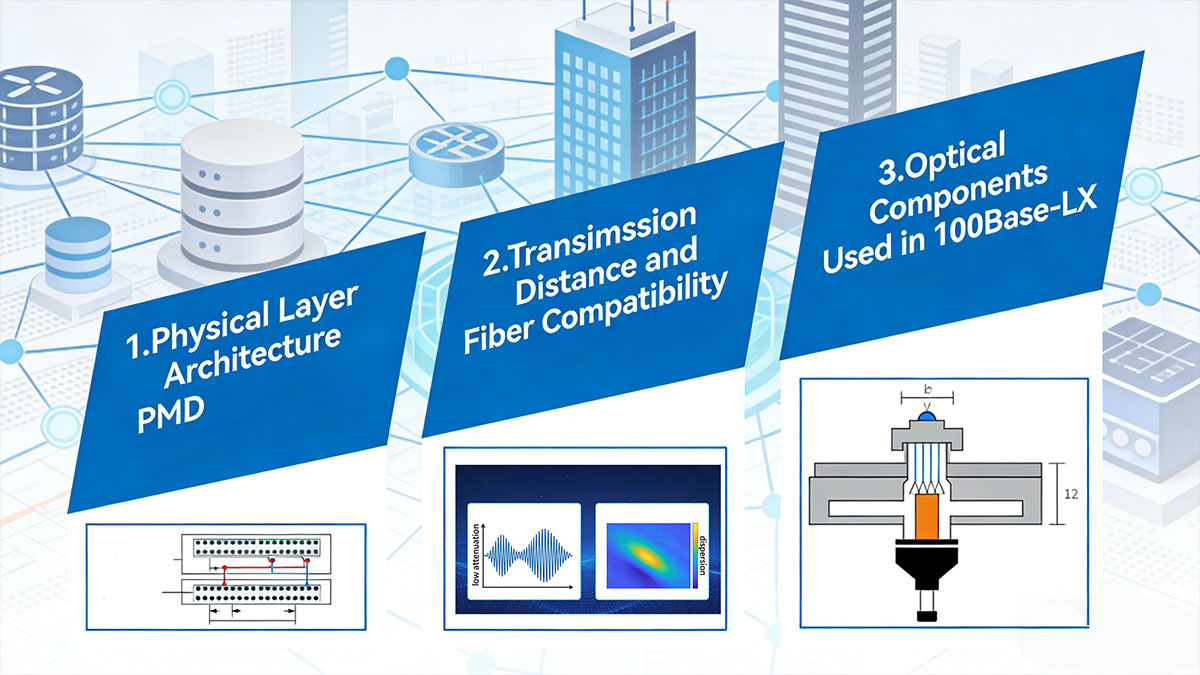
100Base-LX SFP achieves stable 100Mbps data transmission through a well-defined physical layer that interfaces directly with the MAC layer.
Key Points of the Physical Layer:
-
The Physical Medium Dependent (PMD) sublayer handles optical signal transmission and reception, ensuring correct wavelength, power levels, and signal integrity.
-
Data is encoded using 4B/5B encoding and transmitted via NRZI (Non-Return-to-Zero Inverted) signaling, which balances signal density and reduces errors.
-
The PMD layer communicates with the MAC layer to coordinate timing, flow control, and duplex operation, allowing seamless integration with Ethernet protocols.
This architecture ensures that 100Base-LX links maintain reliable data flow, even over extended distances or in environments prone to interference.
Transmission Distance and Fiber Compatibility
The choice of fiber type directly impacts link performance, attenuation, and maximum distance.
Single-Mode Fiber (SMF)
100Base-LX performs optimally over SMF, supporting distances up to 10 kilometers. Advantages include:
-
Low attenuation and minimal signal loss across long distances.
-
Reduced chromatic and modal dispersion, which maintains signal integrity.
-
Greater immunity to electromagnetic interference compared to copper.
Multimode Fiber (MMF)
When MMF is used, transmission distances are shorter, typically limited to around 2 kilometers. Maintaining performance requires mode conditioning patch cables to address modal dispersion.
| Fiber Type | Maximum Distance | Advantages | Considerations | Reference Models |
|---|---|---|---|---|
| SMF | Up to 10km | Low attenuation, minimal dispersion, long-distance reach | Requires proper connector alignment | Cisco GLC-FE-100LX-RGD |
| MMF | ~2km | Cost-effective for short links, easier termination | Modal dispersion, requires mode conditioning | LINK-PP LS-MM3101-02I |
Using the correct fiber type ensures that 100Base-LX links meet distance and reliability requirements without excessive signal degradation.
Optical Components Used in 100Base-LX
The physical layer relies on specific optical components to transmit and receive signals effectively:
-
Laser Sources: 100Base-LX uses either Fabry-Pérot (FP) or Distributed Feedback (DFB) lasers to generate stable 1310nm optical signals. DFB lasers provide better performance over longer distances and in temperature-sensitive environments.
-
Photodetectors: These convert incoming optical signals back into electrical signals for the MAC layer to process. Sensitivity and response time are critical for maintaining low error rates.
-
Optical Connectors: Standard connectors like LC and SC ensure proper fiber mating, low insertion loss, and mechanical stability, which are essential for consistent signal quality.
Selecting the right combination of fiber type and optical components is crucial for achieving reliable, long-distance 100Base-LX connectivity.
♻️ Core Deployment Scenarios for 100Base-LX
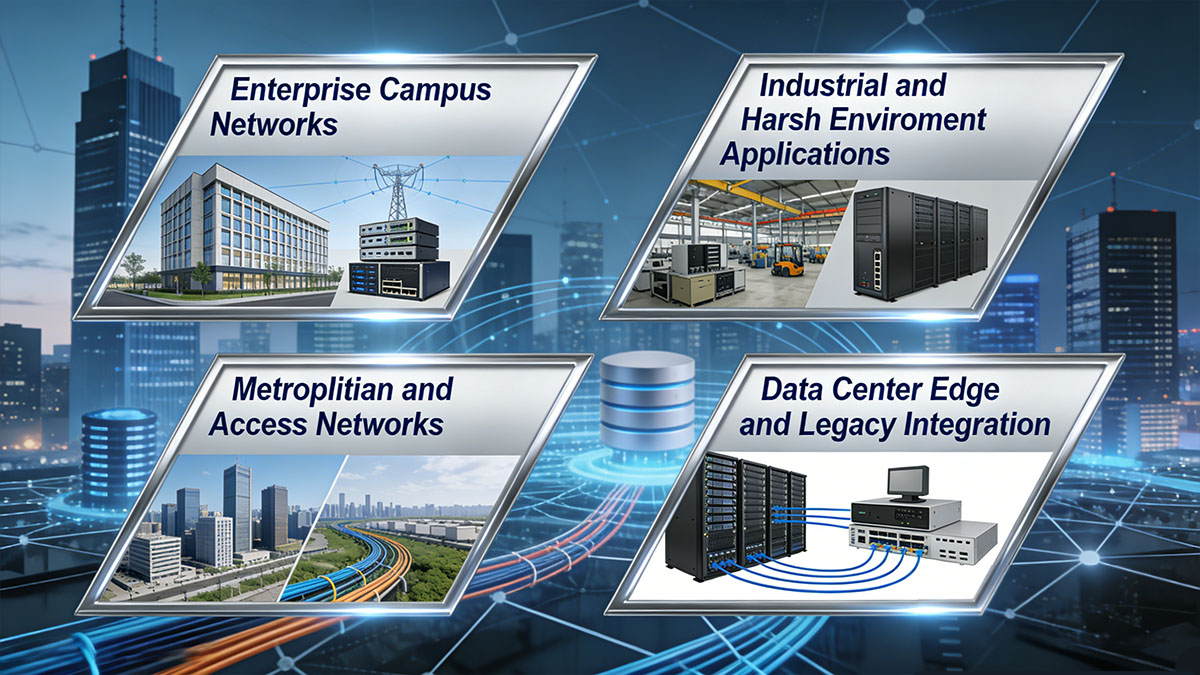
100Base-LX is widely deployed in scenarios where long-distance connectivity, stability, and interference immunity are prioritized over high bandwidth. Its versatility allows it to serve enterprise campuses, industrial facilities, metropolitan networks, and data center environments.
Enterprise Campus Networks
100Base-LX fiber SFP is particularly effective for connecting multiple buildings or sections of a campus network.
Building-to-Building Connectivity
For interconnecting campus buildings over several kilometers, 100Base-LX offers clear advantages over copper-based Ethernet:
-
Provides reliable long-distance links without repeaters.
-
Immune to electromagnetic interference (EMI), which is common in urban or industrial settings.
-
Supports full-duplex communication, ensuring consistent throughput for multiple applications.
Backbone Links in Large Facilities
Within large enterprise facilities, 100Base-LX can serve as a low-speed backbone at the aggregation layer:
-
Aggregates traffic from multiple access switches to distribution or core switches.
-
Maintains compatibility with legacy 100Mbps devices, avoiding costly network upgrades.
-
Offers predictable performance even in EMI-prone environments or over long runs of fiber.
Industrial and Harsh Environment Applications
100Base-LX is well-suited for environments where electromagnetic interference, electrical noise, or harsh conditions could affect traditional copper cabling.
Manufacturing Plants
-
Provides stable communication across factory floors.
-
Resistant to EMI from heavy machinery or industrial equipment.
-
Supports extended reach without signal degradation, reducing the need for multiple repeaters.
Power Utilities and Substations
-
Ensures reliable data transmission for monitoring and control systems.
-
Immune to electrical noise common in power distribution facilities.
-
Supports long-distance connectivity between remote substations and control centers.
Metropolitan and Access Networks
100Base-LX fiber optic SFP module can also be used in certain metropolitan or access network deployments, particularly where low-bandwidth links are sufficient.
Last-Mile Connectivity
-
Extends services from central offices to remote nodes over fiber.
-
Suitable for low-bandwidth applications such as voice, monitoring, or legacy data systems.
Fiber-to-the-Building (FTTB) Scenarios
-
Connects distribution points to buildings efficiently.
-
Provides a cost-effective solution for moderate-distance links without the need for extensive upgrades.
Data Center Edge and Legacy Integration
Even in modern data centers, 100Base-LX has a role in supporting legacy systems and management networks.
Connecting Legacy Equipment
-
Maintains interoperability with older switches, routers, or network appliances.
-
Allows hybrid networks to coexist, combining 100Base-LX with Gigabit or multi-gigabit infrastructure.
Out-of-Band Management Networks
-
Establishes dedicated low-speed links for management traffic separate from production networks.
-
Enhances network security and operational reliability by isolating control and monitoring data from high-speed traffic.
100Base-LX’s flexibility across these deployment scenarios demonstrates its continued relevance for long-distance, stable, and interference-resistant Ethernet connectivity.
♻️ Advantages of 100Base-LX in Deployment
100Base-LX provides a combination of long-distance capability, interference immunity, cost efficiency, and reliability that makes it well-suited for specific network scenarios, particularly in legacy, industrial, or low-bandwidth environments.
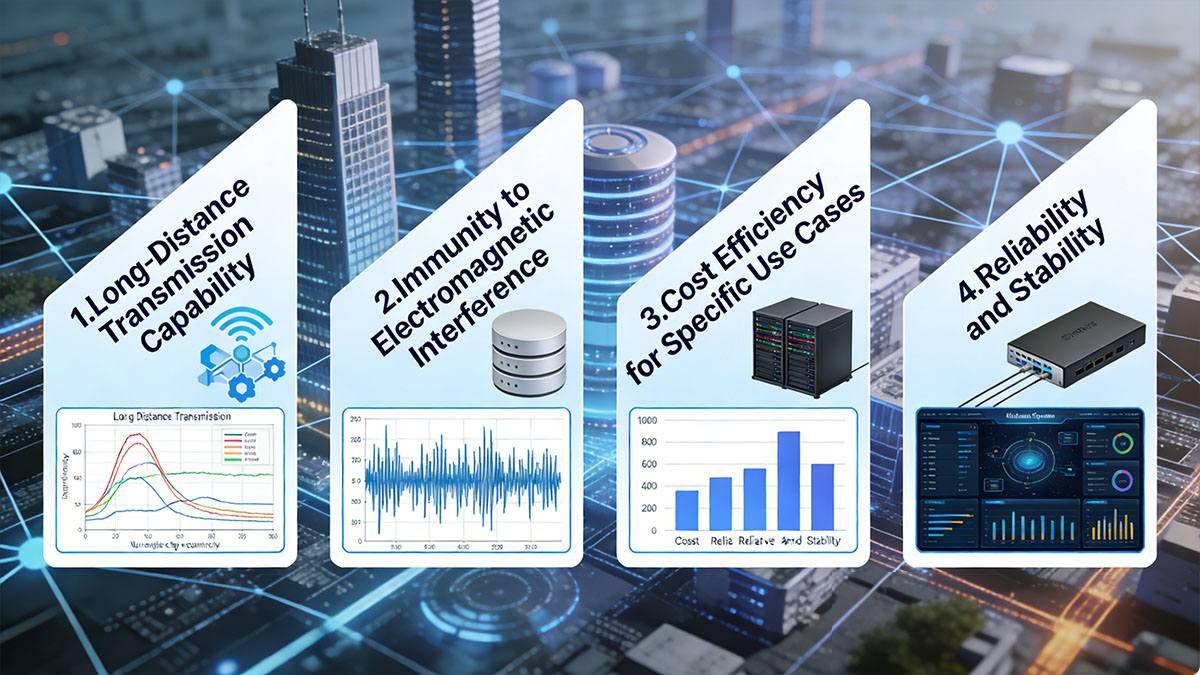
Long-Distance Transmission Capability
100Base-LX supports reliable communication over several kilometers, outperforming copper-based solutions in distance-sensitive applications.
| Feature | 100Base-LX | Copper Ethernet (100Base-TX) |
|---|---|---|
| Maximum Distance | Up to 10km (SMF) | Up to 100m |
| Signal Loss | Low | Higher, prone to attenuation |
| Duplex Support | Full-duplex | Full-duplex |
By enabling longer reaches without repeaters, 100Base-LX reduces infrastructure complexity and ensures stable data transmission over campus, industrial, and metropolitan links.
Immunity to Electromagnetic Interference
Fiber-based transmission makes 100Base-LX inherently resistant to EMI, making it ideal for industrial or outdoor environments.
-
Maintains consistent signal integrity even near heavy machinery or power equipment.
-
Eliminates network disruptions caused by electrical noise common in copper cabling.
-
Supports reliable operation in harsh environments without additional shielding.
Cost Efficiency for Specific Use Cases
100Base-LX can reduce overall deployment costs when applied to scenarios that do not require high bandwidth.
-
Lower upgrade cost for existing fiber infrastructure compared to replacing legacy equipment with Gigabit or higher-speed systems.
-
Reduced need for repeaters or signal amplifiers due to long-distance reach.
-
Efficient for connecting remote nodes or legacy systems where 100Mbps bandwidth is sufficient.
Reliability and Stability
As a mature technology, 100Base-LX offers proven reliability and minimal maintenance requirements:
-
Long operational history demonstrates consistent performance across multiple industries.
-
Fiber-based links are less susceptible to environmental degradation compared to copper.
-
Maintenance demands are low, supporting stable operations over extended periods.
These advantages make 100Base-LX a practical and dependable solution for networks where distance, interference resistance, cost, and operational stability are more critical than high throughput.
♻️ Limitations and Considerations
While 100Base-LX offers reliable long-distance connectivity and strong EMI immunity, it comes with inherent limitations that must be carefully considered during network planning and deployment. Understanding these constraints ensures that the standard is applied effectively and avoids operational issues.
Bandwidth Constraints
100Base-LX is limited to a data rate of 100Mbps, which can restrict its applicability in modern network environments.
-
Insufficient for high-throughput applications such as large-scale data transfer, video streaming, or cloud workloads.
-
May create bottlenecks in hybrid networks where other segments operate at Gigabit or multi-gigabit speeds.
-
Best suited for low-bandwidth links, legacy infrastructure, or management networks where stability outweighs speed.
Compatibility Challenges
Deploying 100Base-LX alongside modern equipment requires careful attention to interoperability.
-
Many contemporary switches and routers are optimized for Gigabit Ethernet or higher; backward compatibility must be explicitly supported.
-
Auto-negotiation between 100Base-LX devices and higher-speed interfaces may fail or require manual configuration.
-
Firmware or port configuration mismatches can result in link flaps or degraded performance, particularly in hybrid networks integrating both legacy and modern devices.
Fiber Type Mismatch
Proper fiber selection is critical to maintain link quality and avoid signal degradation.
| Fiber Type Pairing | Maximum Effective Distance | Considerations |
|---|---|---|
| SMF to SMF | Up to 10km | Optimal performance with minimal attenuation and dispersion |
| MMF to MMF | ~2km | Requires mode conditioning to reduce modal dispersion |
| SMF to MMF | Limited | High risk of signal loss and reflections; careful planning needed |
Mixing single-mode and multimode fibers without proper adaptation can introduce significant optical loss, impairing both reach and signal integrity. Careful cable selection and testing are essential to avoid such issues.
Deployment Complexity
100Base-LX requires specialized installation skills to ensure reliable operation:
-
Optical alignment between transmitters, fibers, and connectors is critical to minimize insertion loss and reflection.
-
Connectors, splices, and patch panels must be installed and maintained according to strict tolerances.
-
Testing tools such as optical power meters and OTDRs are necessary to validate link quality, detect faults, and ensure compliance with the optical budget.
By understanding these limitations—bandwidth, compatibility, fiber selection, and installation complexity—network engineers can make informed decisions about where and how to deploy 100Base-LX effectively, ensuring reliability while avoiding potential operational pitfalls.
♻️ Best Practices for Deploying 100Base-LX Links
Effective deployment of 100Base-LX requires careful planning, proper fiber selection, precise installation, and thorough testing. Following best practices ensures reliable performance, minimal downtime, and optimal use of existing infrastructure.
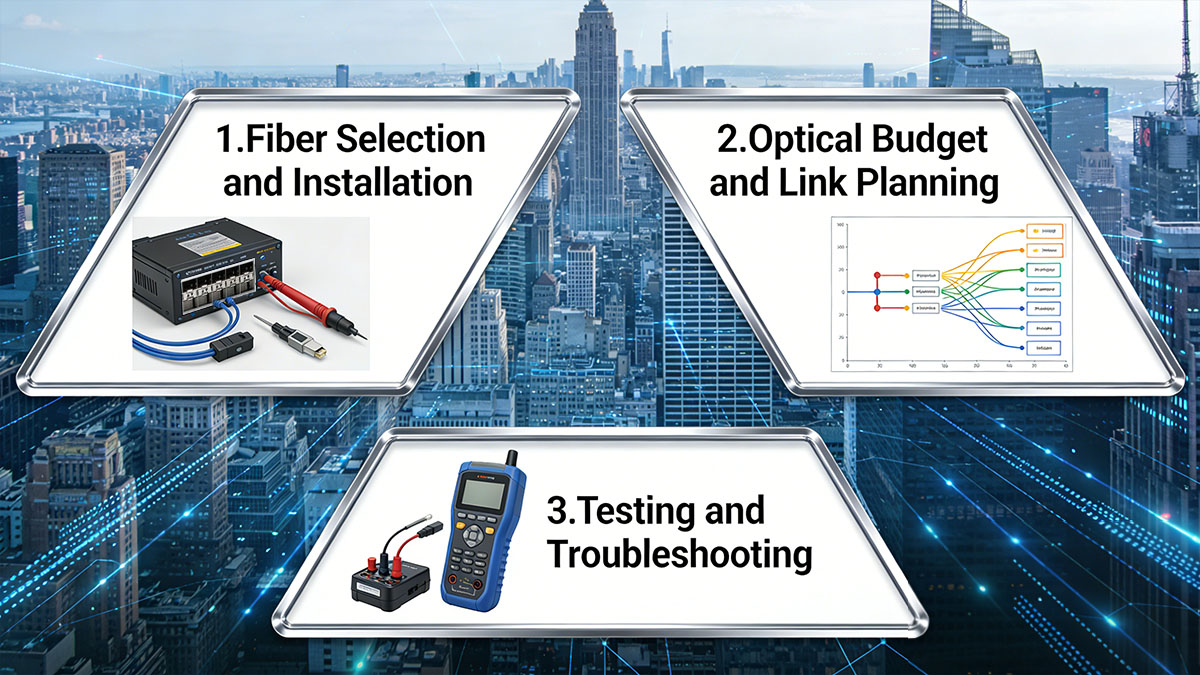
Fiber Selection and Installation
Choosing the appropriate fiber type and handling it correctly is essential for maintaining link quality.
-
Choosing the Right Fiber Type
-
Prefer single-mode fiber (SMF) for maximum distance and minimal signal loss.
-
Use multimode fiber (MMF) only when short-distance links are required, ensuring proper mode conditioning to reduce modal dispersion.
-
-
Cable Management and Routing
-
Avoid sharp bends, excessive tension, and tight bends that can increase attenuation.
-
Maintain organized cable routing with proper labeling to simplify maintenance and troubleshooting.
-
Ensure separation from high-voltage equipment or EMI sources where possible, even though fiber is immune to interference.
-
-
Optical Budget and Link Planning
-
Calculate the total link loss including fiber attenuation, connectors, splices, and patch panels.
-
Ensure the optical power budget of the transceiver supports the planned link distance with an adequate margin for future degradation.
-
Plan for redundancy or spare ports if critical links may require maintenance or unexpected rerouting.
-
Testing and Troubleshooting
Proactive testing and monitoring help prevent issues and maintain network reliability.
-
Common Issues
-
Signal attenuation due to fiber length, bends, or dirty connectors.
-
Misalignment or poor splicing at patch panels.
-
Connector contamination or scratches that cause reflection and loss.
-
-
Recommended Tools
-
Optical Power Meters: Measure the transmitted and received optical power to ensure signals are within the acceptable range.
-
OTDR (Optical Time-Domain Reflectometer): Detects faults, splices, bends, and connector reflections along the fiber link, helping to pinpoint problem areas.
-
Visual Fault Locators: Useful for identifying breaks or severe bends in short sections of fiber.
-
-
Best Practices
-
Clean all connectors before installation.
-
Test each link end-to-end after installation to verify loss and alignment.
-
Document all cable runs, test results, and connector types for future maintenance and troubleshooting.
-
By applying these best practices, 100Base-LX links can achieve their full potential for long-distance, reliable connectivity while minimizing maintenance issues and ensuring stable performance over time.
♻️ Comparing 100Base-LX with Other Fast Ethernet Standards
100Base-LX distinguishes itself from other Fast Ethernet standards primarily through its optical medium, long-distance capabilities, and immunity to interference. Comparing it with 100Base-FX and copper-based 100Base-TX helps clarify when 100Base-LX is the optimal choice.
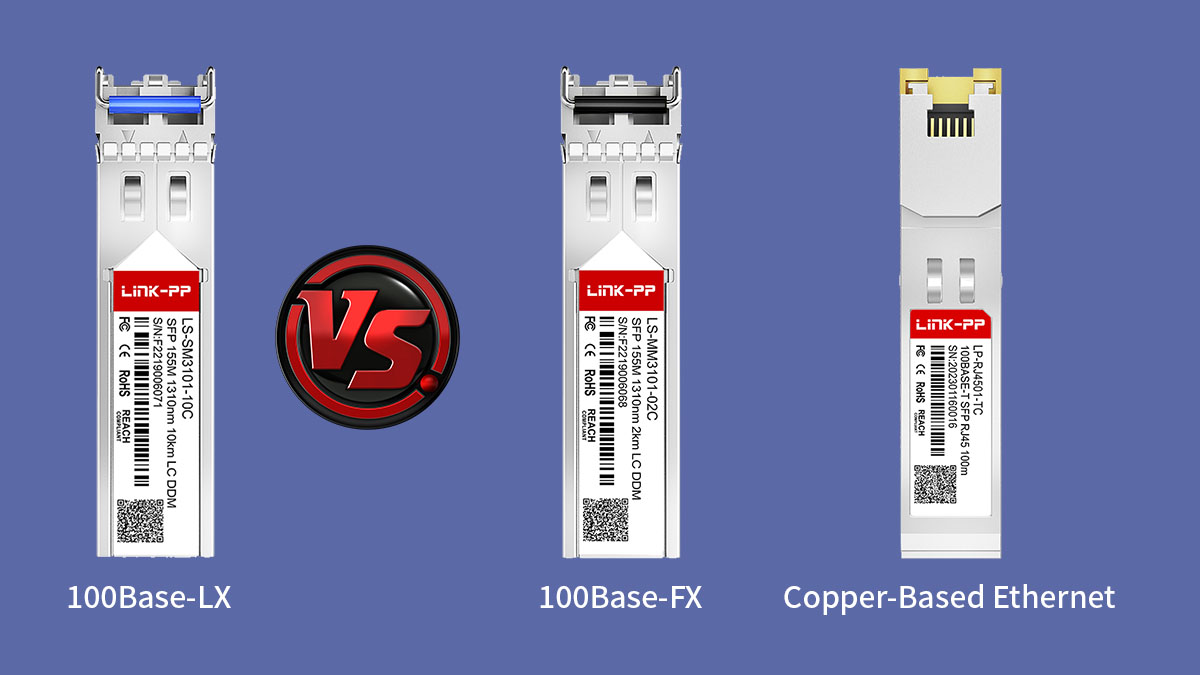
100Base-LX vs 100Base-FX
While both standards use fiber, key differences affect deployment decisions:
| Feature | 100Base-LX | 100Base-FX |
|---|---|---|
| Wavelength | 1310nm | 1300nm |
| Fiber Type | Primarily SMF, limited MMF | Multimode fiber only |
| Maximum Distance | Up to 10km (SMF) | Typically 2km (MMF) |
| Duplex Transmission | Full-duplex using two fibers | Full-duplex |
| Typical Use Case | Long-distance, legacy support | Short-distance campus or backbone links |
Key Takeaways: 100Base-LX supports longer links over single-mode fiber, while 100Base-FX is more suitable for short-range multimode applications. LX is preferred when distance or EMI immunity is critical.
100Base-LX vs Copper-Based Ethernet (100Base-TX)
Compared to copper Ethernet, 100Base-LX provides enhanced performance in certain environments:
| Feature | 100Base-LX | 100Base-TX (Copper) |
|---|---|---|
| Maximum Distance | Up to 10km (SMF) | 100 meters |
| EMI Immunity | High | Low |
| Installation Environment | Industrial, outdoor, campus | Offices, data centers |
| Cost Considerations | Lower for long-distance fiber | Lower for short distances |
Key Takeaways: 100Base-LX(such as Netgear 100BASE-BX) is ideal for long-distance or EMI-prone environments where 100Base-TX (such as the 100Mbps GLC-FE-T)cannot reliably perform. Copper Ethernet remains cost-effective for short-range connections.
When to Choose 100Base-LX
-
Networks requiring long-distance links without repeaters.
-
Environments with high electromagnetic interference.
-
Legacy systems that must maintain 100Mbps connectivity over fiber.
-
Applications needing stable, reliable links in industrial or outdoor settings.
By understanding these comparisons, network designers can determine when 100Base-LX provides clear advantages over fiber and copper alternatives, ensuring both performance and cost-effectiveness.
♻️ Future Outlook of 100Base-LX in Optical Networking
Although modern networks increasingly rely on Gigabit and multi-gigabit Ethernet, 100Base-LX (long distance 100M SFP) continues to maintain a niche role, particularly in legacy, industrial, and cost-sensitive deployments. Its continued relevance is defined by several factors, including support for existing infrastructure, coexistence with higher-speed standards, and specific deployment advantages.
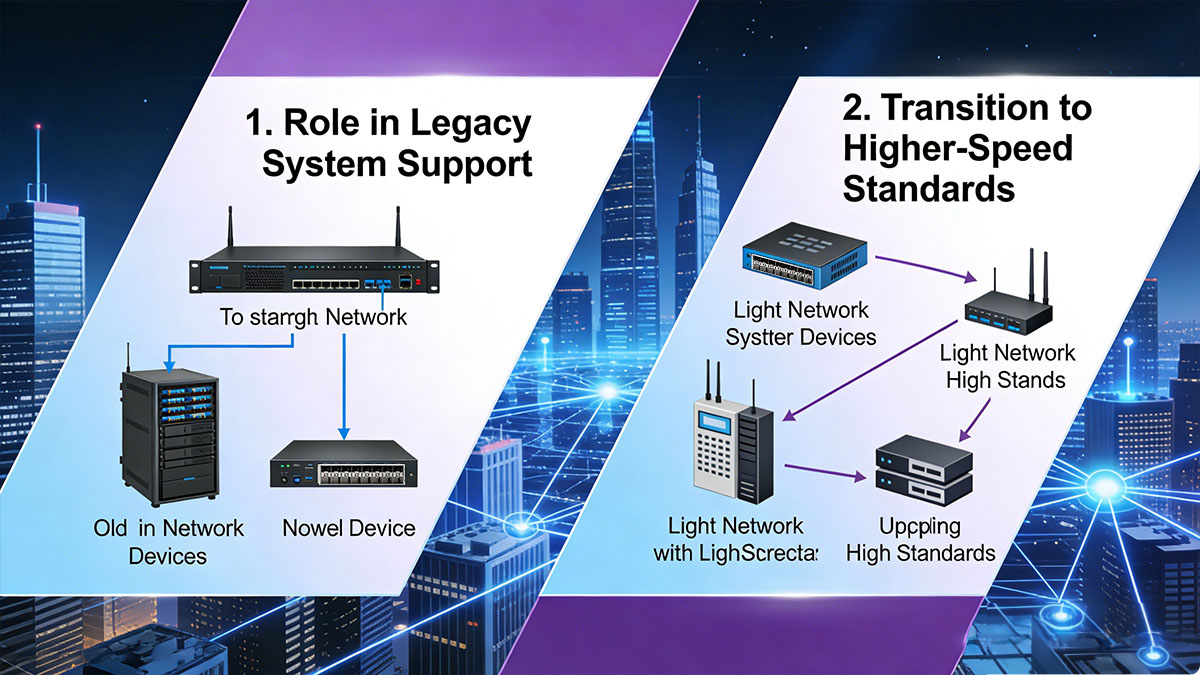
Role in Legacy System Support
100Base-LX remains important for networks that include older switches, routers, or monitoring devices:
-
Provides a cost-effective solution for maintaining legacy infrastructure without requiring a full network overhaul.
-
Supports hybrid network architectures where both 100Mbps and higher-speed links coexist.
-
Enables long-distance management or control links for equipment that does not demand high throughput.
Transition to Higher-Speed Standards
As networks evolve, migration paths from 100Base-LX to Gigabit or multi-gigabit fiber are increasingly relevant:
-
Existing fiber routes can often accommodate upgraded optical transceiver with minimal physical changes.
-
Transition strategies include using media converters or hybrid switches to bridge 100Mbps and Gigabit links during phased upgrades.
-
Planning upgrades requires careful consideration of optical budgets, fiber type, and duplex compatibility.
Coexistence Strategies in Hybrid Networks
In modern deployments, 100Base-LX can coexist with higher-speed fiber networks without causing interference or performance issues:
-
Legacy links can remain in operation for low-bandwidth or monitoring applications while new high-speed backbones handle bulk data traffic.
-
Segregating 100Base-LX links for out-of-band management or remote monitoring reduces the risk of network congestion.
-
Maintaining documentation of link types, fiber specifications, and transceiver capabilities ensures smooth coexistence and reduces troubleshooting complexity.
Despite the growth of high-speed Ethernet, 100Base-LX continues to offer value for specific use cases. Its long-distance reach, EMI immunity, and low maintenance requirements make it a practical choice for industrial networks, campus interconnections, and legacy system integration. Strategic deployment allows organizations to maximize the lifespan of existing infrastructure while preparing for gradual upgrades to higher-speed networks.
♻️ FAQs
What is the maximum distance of 100Base-LX?
100Base-LX supports up to 10km over single-mode fiber, while distances over multimode fiber are typically limited to around 2km with mode conditioning.
Can 100Base-LX run over multimode fiber?
Yes, but it requires mode conditioning patch cables to reduce modal dispersion and maintain signal quality.
Is 100Base-LX compatible with Gigabit Ethernet ports?
Compatibility depends on the device. Some Gigabit ports support backward compatibility with 100Mbps, but manual configuration may be required.
What type of connectors are used in 100Base-LX?
Common connectors include LC and SC, depending on the transceiver and network equipment.
Why choose 100Base-LX over copper Ethernet?
It is preferred for long-distance links and environments with high electromagnetic interference where copper is unreliable.
Does 100Base-LX support full-duplex communication?
Yes, it uses two fibers to enable simultaneous bidirectional data transmission.
Is 100Base-LX still used in modern networks?
Yes, primarily in legacy systems, industrial environments, and out-of-band management networks where high bandwidth is not required.
What are common issues in 100Base-LX links?
Typical issues include signal attenuation, dirty connectors, improper fiber selection, and lack of mode conditioning when using multimode fiber.
♻️ Conclusion
100Base-LX remains a practical and reliable solution for optical links that prioritize distance, stability, and cost efficiency over bandwidth. Its ability to deliver 100Mbps connectivity over distances up to 10km, combined with strong immunity to electromagnetic interference, makes it well-suited for enterprise campuses, industrial environments, metropolitan access networks, and legacy system integration.
While it is not designed for high-throughput modern applications, 100Base-LX continues to play an important role in hybrid network architectures, supporting low-bandwidth links, out-of-band management, and long-distance communication where upgrading to higher speeds is not immediately necessary. By understanding its strengths, limitations, and best deployment practices, network designers can make informed decisions and extend the lifecycle of existing infrastructure.
For organizations seeking reliable and cost-effective 100Base-LX optical solutions, explore high-quality transceivers and deployment options at the LINK-PP Official Store to support stable and efficient network operations.