Modern enterprise networks continue to face growing demands for bandwidth, low latency, and scalable connectivity. As organizations expand data center capacity, support virtualization platforms, and connect increasing numbers of devices, network architects must balance performance requirements with infrastructure efficiency. In many short-distance environments, optical networking remains a preferred solution for delivering reliable 10 Gigabit Ethernet connectivity while maintaining manageable deployment costs.
Among the available 10G optical technologies, SR 10G has become one of the most widely deployed options for short-reach applications. Based on the 10GBASE-SR standard, SR 10G solutions use multimode fiber and VCSEL-based transmission to support high-speed communication across enterprise data centers, campus networks, and server access layers. Its combination of performance, compatibility, and scalability makes it an important component of modern network design strategies.
This article explores the key aspects of SR 10G fiber solutions, including:
- The fundamentals of SR 10G technology and how it operates.
- Technical specifications, transmission distances, and fiber compatibility.
- Differences between OM1, OM2, OM3, OM4, and OM5 multimode fiber.
- Enterprise network design considerations and deployment best practices.
- Common use cases, operational advantages, and infrastructure planning.
- Comparisons with LR optics, DAC cables, and Active Optical Cables (AOC).
- Troubleshooting methods, monitoring approaches, and future networking trends.
By understanding these topics, network professionals can make informed decisions when designing efficient short-reach optical infrastructures for enterprise environments.
🔔 What Is SR 10G and How Does It Work?
SR 10G is a short-reach 10 Gigabit Ethernet optical transmission technology designed for high-speed data communication over multimode fiber. Based on the IEEE 10GBASE-SR standard, it is widely used in enterprise networks, data centers, and campus environments where transmission distances are relatively short but bandwidth requirements are high. By combining VCSEL laser technology with multimode fiber infrastructure, SR 10G delivers a cost-effective and reliable solution for short-distance optical connectivity.
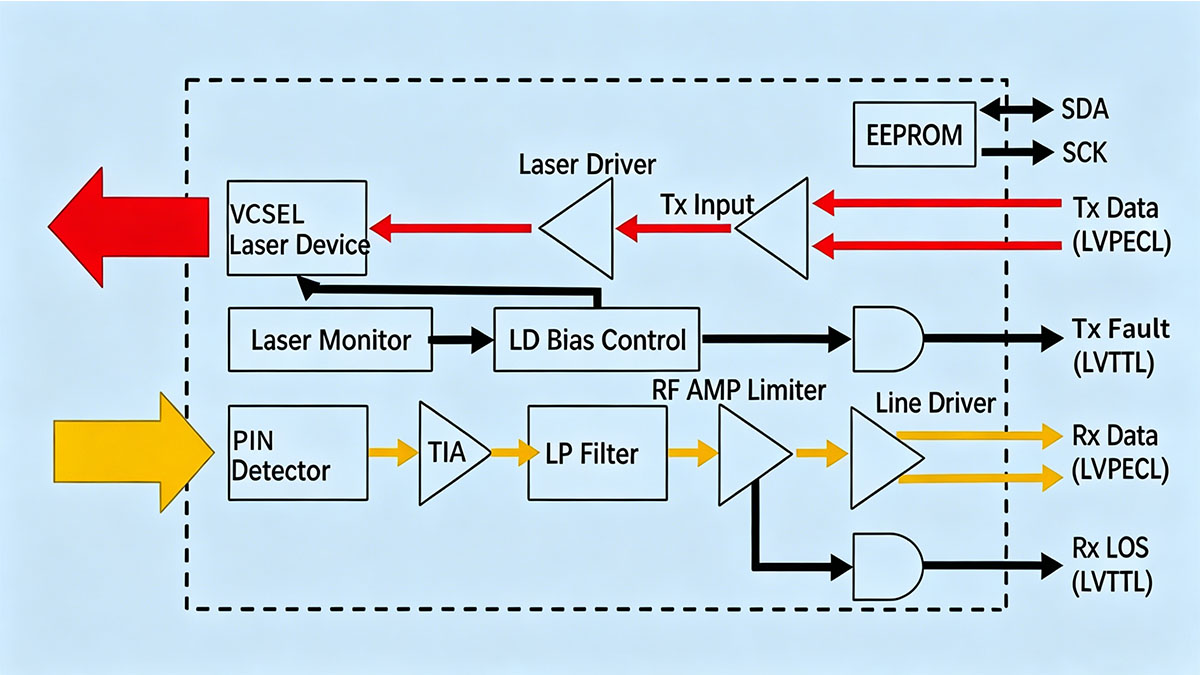
Definition of SR 10G Optical Technology
SR 10G refers to Short Reach 10 Gigabit Ethernet technology that enables high-speed optical communication across multimode fiber links. It is specifically optimized for short-distance applications, making it one of the most common optical standards in enterprise networking environments.
Several characteristics define SR 10G technology:
- Operates according to the IEEE 802.3ae 10GBASE-SR specification.
- Supports a line rate of 10Gbps.
- Utilizes an 850nm optical wavelength.
- Primarily designed for multimode fiber infrastructure.
- Delivers efficient connectivity between switches, servers, storage devices, and network aggregation points.
Unlike long-range optical technologies that require single mode fiber, SR 10G focuses on maximizing performance over shorter distances while reducing infrastructure complexity and deployment costs.
Core Components of an SR 10G Link
An SR 10G connection relies on multiple hardware components working together to establish a complete optical communication path. Each component contributes to overall link stability and transmission quality.
The primary elements of an SR 10G deployment include:
- SR 10G Transceivers
- Convert electrical signals into optical signals and vice versa.
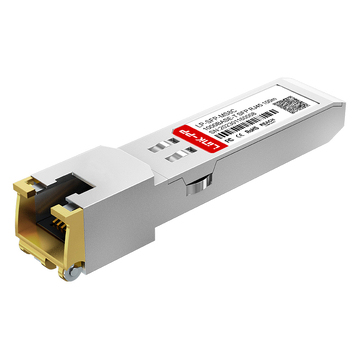
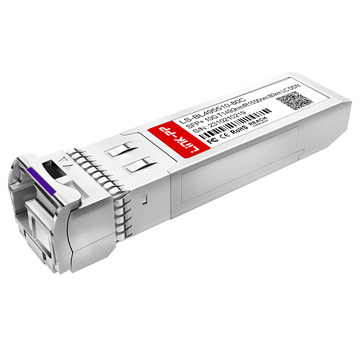
- Typically available in SFP+ form factors.
- Installed in switches, routers, servers, and storage systems.
- Multimode Fiber Cabling
- Provides the physical transmission medium.
- Common fiber types include OM3, OM4, and OM5.
- Supports short-distance high-bandwidth communication.
- Optical Connectors
- Commonly use LC duplex interfaces.
- Enable efficient fiber patching and equipment interconnection.
- Affect insertion loss and overall signal quality.
- Network Equipment
- Includes Ethernet switches, routers, network interface cards (NICs), and storage platforms.
- Provides the processing and forwarding functions necessary for network communication.
Together, these components form an integrated optical link capable of supporting reliable 10 Gigabit Ethernet traffic in demanding enterprise environments.
Transmission Principles Behind SR 10G
SR 10G works by transmitting data as pulses of light through multimode fiber. The process is designed to achieve high-speed communication while maintaining low latency and stable signal integrity over short distances.
The transmission process typically involves the following stages:
- A switch or server generates an electrical Ethernet signal.
- The SR 10G transceiver converts the electrical signal into optical pulses.
- A VCSEL (Vertical Cavity Surface Emitting Laser) emits light at an 850nm wavelength.
- The optical signal travels through multimode fiber toward the receiving device.
- The receiving transceiver converts the optical signal back into electrical data.
- The destination device processes the Ethernet traffic.
Several factors influence transmission quality:
- Fiber type and modal bandwidth.
- Total cable length.
- Connector cleanliness and insertion loss.
- Optical power levels.
- Patch panel and cabling design.
Because multimode fiber supports multiple light propagation paths, modal dispersion can occur as distance increases. This phenomenon gradually limits signal quality and defines the maximum reach supported by different multimode fiber categories.
🔔 Technical Specifications of SR 10G Solutions
The technical specifications of SR 10G determine how effectively a network can support high-speed data transmission over short distances. Factors such as wavelength, transmission speed, fiber compatibility, and reach limitations directly influence deployment planning and long-term network performance. Understanding these specifications helps organizations select the appropriate infrastructure while ensuring reliable 10 Gigabit Ethernet connectivity.
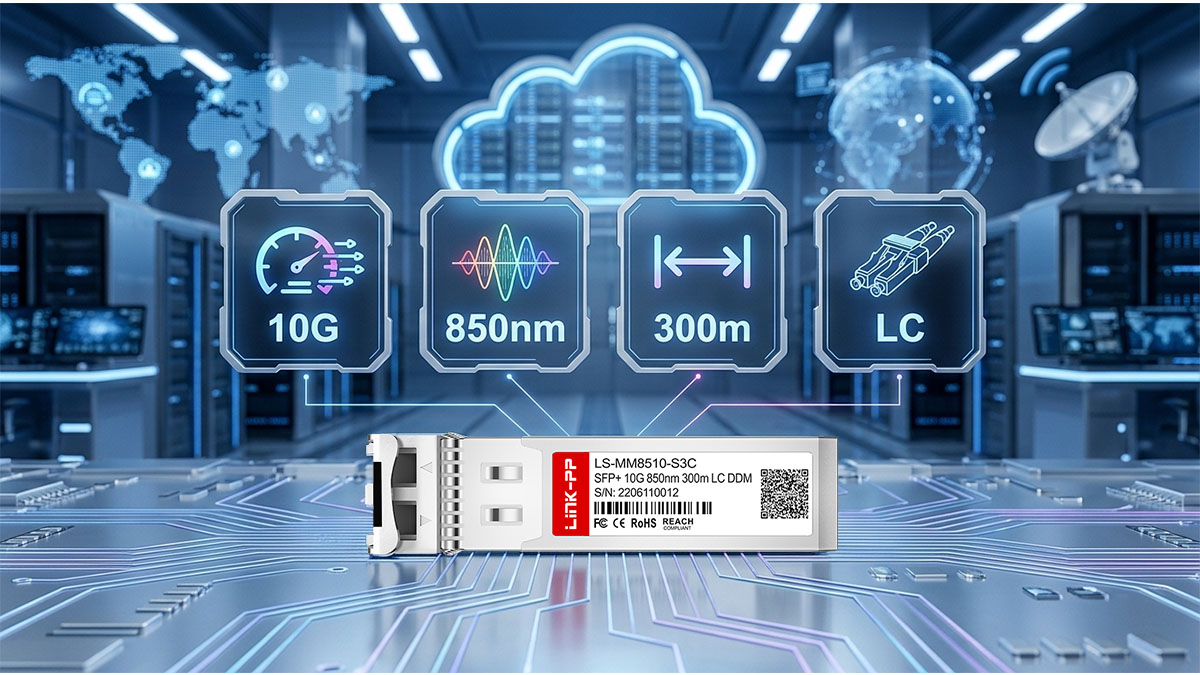
Key Optical and Network Parameters
SR 10G technology is built around a standardized set of optical and Ethernet specifications. These parameters ensure interoperability among transceivers, switches, servers, and cabling systems from different vendors.
The most important SR 10G characteristics include:
- Data Rate
- Supports 10 Gigabit Ethernet transmission.
- Provides a line speed of 10Gbps for high-bandwidth applications.
- Operating Wavelength
- Utilizes an 850nm optical wavelength.
- Optimized for multimode fiber communication.
- Fiber Compatibility
- Supports OM1, OM2, OM3, OM4, and OM5 multimode fiber.
- Performance varies depending on fiber type and modal bandwidth.
- Transmission Distance
- Designed primarily for short-reach connectivity.
- Maximum distance depends on the installed fiber infrastructure.
- Connector Interface
- Commonly uses LC duplex optical connectors.
- Supports standardized enterprise cabling architectures.
- Laser Technology
- Employs VCSEL transmitters.
- Enables efficient and cost-effective optical transmission.
Together, these parameters make SR 10G one of the most practical solutions for short-distance optical networking within modern enterprise environments.
SR 10G Performance Specifications
The following table summarizes the core technical specifications commonly associated with SR 10G transceivers and 10GBASE-SR deployments.
| Parameter Category | Typical Specification |
|---|---|
| Transmission Speed | 10Gbps |
| Optical Wavelength | 850nm |
| Fiber Type Support | OM1, OM2, OM3, OM4, OM5 |
| Maximum Distance | Up to 400m depending on fiber type |
| Connector Type | LC Duplex |
| Laser Technology | VCSEL |
| Ethernet Standard | IEEE 802.3ae 10GBASE-SR |
| Transmission Medium | Multimode Fiber |
These specifications represent typical deployment characteristics. Actual performance can vary depending on cable quality, connector condition, optical loss, and overall network design.
Understanding Distance Limitations
SR 10G is optimized for short-distance communication, but the maximum supported reach varies significantly based on the multimode fiber type used in the deployment. Fiber bandwidth and modal dispersion are the primary factors that influence achievable transmission distance.
The relationship between fiber type and transmission reach is illustrated below.
| Fiber Type | Typical Maximum SR 10G Distance |
|---|---|
| OM1 | 33m |
| OM2 | 82m |
| OM3 | 300m |
| OM4 | 400m |
| OM5 | 400m+ (depending on application design) |
These distance values provide general deployment guidelines for 10GBASE-SR environments. Higher-grade multimode fiber offers greater modal bandwidth, allowing optical signals to travel farther while maintaining signal integrity.
🔔 Multimode Fiber Options for SR 10G Deployments
Selecting the appropriate multimode fiber is one of the most important decisions when deploying SR 10G infrastructure. While all multimode fiber categories can support 10GBASE-SR to some extent, their bandwidth capabilities, transmission distances, and long-term scalability differ significantly. Understanding the strengths and limitations of each fiber type helps organizations optimize performance while preparing for future network growth.
Modern SR 10G deployments commonly utilize OM3, OM4, or OM5 fiber, although many enterprise environments still contain legacy OM1 and OM2 installations. Each fiber category serves different operational requirements and upgrade strategies.
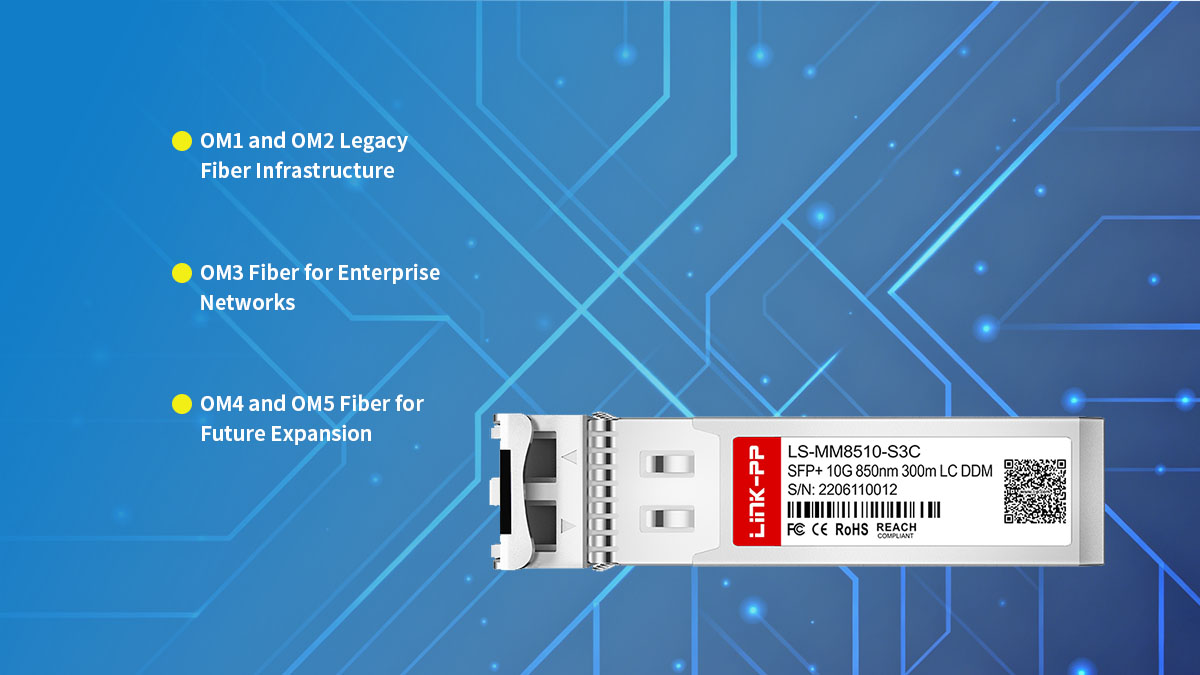
OM1 and OM2 Legacy Fiber Infrastructure
OM1 and OM2 multimode fibers were widely deployed before 10 Gigabit Ethernet became common in enterprise networks. While they can support SR 10G connectivity, their limited modal bandwidth restricts achievable transmission distances.
Organizations with existing OM1 or OM2 cabling may continue using these fibers for specific short-distance applications.
Key characteristics of OM1 and OM2 include:
- OM1 Fiber
- Typically features a 62.5µm core diameter.
- Supports SR 10G distances up to approximately 33m.
- Commonly found in older enterprise buildings.
- OM2 Fiber
- Utilizes a 50µm core diameter.
- Supports SR 10G transmission up to approximately 82m.
- Offers improved bandwidth compared to OM1.
- Typical Deployment Scenarios
- Legacy wiring closets.
- Older campus facilities.
- Limited-distance equipment interconnections.
Although existing OM1 and OM2 infrastructures can reduce immediate upgrade costs, organizations planning long-term network expansion often evaluate migration options due to the distance constraints associated with these fiber types.
OM3 Fiber for Enterprise Networks
OM3 has become one of the most widely deployed multimode fiber standards for SR 10G environments. As a laser-optimized multimode fiber (LOMMF), it was specifically developed to support VCSEL-based optical technologies such as 10GBASE-SR.
For many enterprise networks, OM3 provides an effective balance between performance, cost efficiency, and scalability.
Key advantages of OM3 fiber include:
- Supports SR 10G transmission distances up to 300m.
- Optimized for 850nm VCSEL laser operation.
- Provides significantly higher modal bandwidth than OM1 and OM2.
- Widely supported across networking platforms and optical transceivers.
- Suitable for structured enterprise cabling systems.
Common deployment environments include:
- Enterprise data centers.
- Campus distribution networks.
- Top-of-rack server connectivity.
- Storage area network (SAN) infrastructures.
Because of its broad industry adoption, OM3 remains a practical choice for organizations seeking reliable SR 10G connectivity without extensive infrastructure investment.
OM4 and OM5 Fiber for Future Expansion
OM4 and OM5 multimode fibers provide enhanced bandwidth performance and improved support for future Ethernet technologies. These fiber types are often selected when organizations prioritize long-term scalability and higher-speed migration paths.
Compared with OM3, both OM4 and OM5 enable greater transmission distances and additional flexibility for emerging network architectures.
Notable benefits include:
- OM4 Fiber
- Supports SR 10G distances up to 400m.
- Provides higher effective modal bandwidth than OM3.
- Enhances support for 40G and 100G optical applications.
- OM5 Fiber
- Extends multimode fiber capabilities through wideband operation.
- Supports Shortwave Wavelength Division Multiplexing (SWDM) technologies.
- Facilitates higher-speed network evolution without major cabling replacement projects.
- Long-Term Infrastructure Benefits
- Increased investment protection.
- Improved scalability for future bandwidth requirements.
- Greater flexibility for next-generation optical technologies.
Organizations designing new enterprise facilities frequently evaluate OM4 and OM5 as strategic infrastructure choices because cabling systems often remain in service much longer than the active networking equipment connected to them.
🔔 Enterprise Network Design Considerations for SR 10G
SR 10G plays a critical role in enterprise network architecture where short-reach, high-bandwidth connectivity is required between servers, switches, and aggregation layers. Designing an efficient SR 10G environment requires careful planning of topology, link density, redundancy, and physical layout to ensure stable performance and scalable growth.
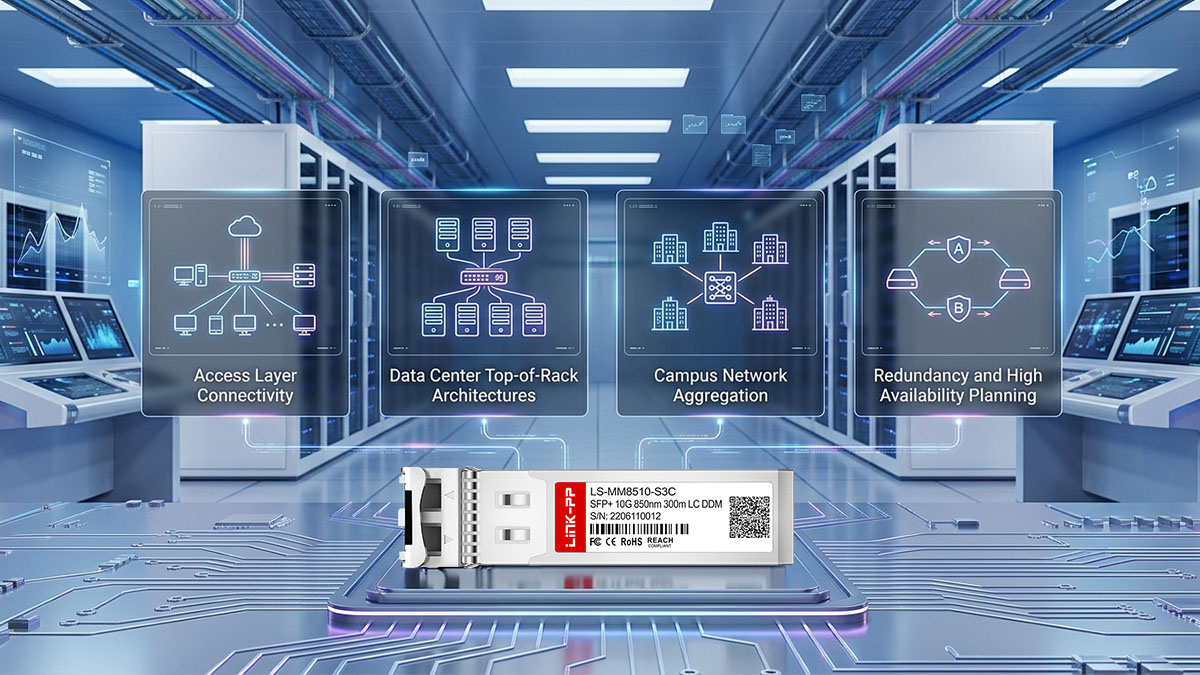
Access Layer Connectivity
SR 10G is widely used at the access layer to connect end devices such as servers, storage systems, and high-performance workstations to top-of-rack or access switches. At this level, the primary goal is to ensure consistent bandwidth availability and low-latency communication.
A properly designed access layer using SR 10G typically focuses on:
- Providing dedicated 10G links for high-demand servers.
- Ensuring uniform connectivity between compute nodes and access switches.
- Supporting virtualization workloads and distributed applications.
- Reducing bottlenecks in server-to-switch communication.
To achieve stable performance, network designers often prioritize:
- Short fiber runs within racks or adjacent racks.
- Consistent use of OM3 or OM4 multimode fiber.
- Standardized SFP+ SR transceiver deployment across devices.
When properly implemented, SR 10G at the access layer ensures predictable throughput for latency-sensitive enterprise applications while maintaining simplified cabling structures.
Data Center Top-of-Rack Architectures
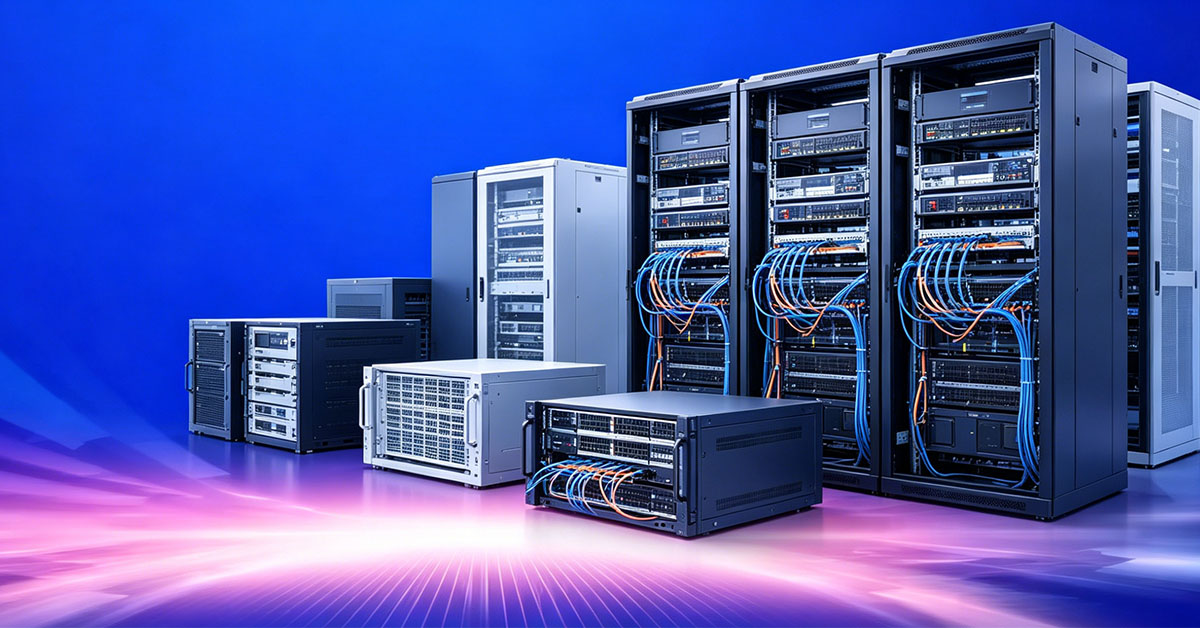
Top-of-Rack (ToR) architecture is one of the most common deployment models for SR 10G in modern data centers. In this design, each rack is equipped with a dedicated switch that connects directly to servers using short-reach optical links.
SR 10G is particularly well-suited for ToR environments due to its short-distance efficiency and high port density.
Key characteristics of SR 10G ToR deployments include:
- Centralized switching within each rack.
- Reduced cable lengths between servers and switches.
- Simplified horizontal cabling management.
- Improved airflow and reduced cable congestion.
Typical design practices include:
- Using LC duplex patch cords for consistent connectivity.
- Standardizing fiber routing within rack enclosures.
- Minimizing unnecessary patch panel layers.
- Ensuring proper cable separation for maintenance access.
This architecture improves operational efficiency by localizing traffic within each rack before aggregation, which reduces latency and enhances overall data center performance.
Campus Network Aggregation
Beyond data centers, SR 10G is also widely used in campus environments to support aggregation-layer connectivity between buildings or network distribution points within short distances. While not designed for long-haul transmission, SR 10G provides reliable performance for intra-campus links where distances remain within multimode fiber limits.
In campus aggregation designs, SR 10G is typically used for:
- Building-to-building connections within the same campus.
- Distribution switch interconnects.
- High-speed uplinks between network closets.
Key design considerations include:
- Ensuring fiber distance compliance with OM3 or OM4 limitations.
- Planning redundant pathways between buildings.
- Coordinating structured cabling across multiple facilities.
- Maintaining consistent optical performance across aggregation links.
Proper implementation ensures stable bandwidth availability for campus-wide services such as unified communications, learning platforms, and enterprise applications.
Redundancy and High Availability Planning
High availability is a fundamental requirement in enterprise network design, and SR 10G links are often configured with redundancy to ensure continuous operation in the event of a link failure.
Redundancy strategies typically include:
- Link aggregation (LACP) to combine multiple SR 10G links.
- Dual-homed server connectivity to separate switches.
- Redundant switch pairs in access and aggregation layers.
- Parallel fiber paths between critical network nodes.
Additional design practices involve:
- Avoiding single points of failure in fiber routing.
- Separating physical cable paths where possible.
- Using diverse patch panel routes for critical connections.
- Monitoring link health using optical diagnostics tools.
By incorporating redundancy at both physical and logical layers, enterprise networks can maintain high service availability even during maintenance activities or unexpected failures.
🔔 Advantages of SR 10G Fiber Solutions in Enterprise Environments
SR 10G fiber solutions are widely adopted in enterprise networks because they provide a balanced combination of performance, cost efficiency, and deployment simplicity. In environments where high-speed communication is required over short distances, SR 10G delivers stable 10Gbps connectivity without the complexity associated with long-reach optical systems.
These advantages are especially important in data centers, campus networks, and server aggregation layers where predictable performance and scalable infrastructure are essential.
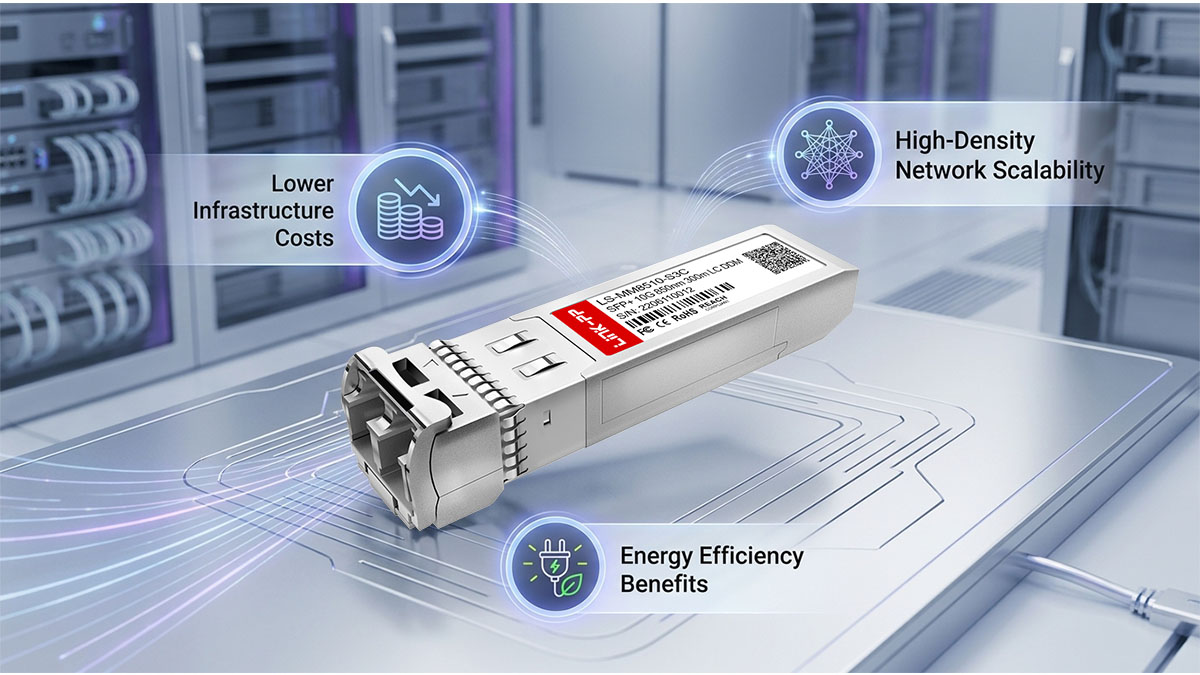
Lower Infrastructure Costs
SR 10G helps enterprises reduce overall network infrastructure costs by leveraging multimode fiber and short-reach optical components. Compared with long-range optical solutions, it avoids the need for more expensive single-mode optics and long-distance infrastructure design.
The cost advantages are mainly reflected in:
- Lower-cost multimode fiber cabling compared to single-mode alternatives.
- Reduced transceiver complexity due to VCSEL-based design.
- Simplified installation requirements in short-distance environments.
- Efficient reuse of existing multimode infrastructure in many buildings.
These factors make SR 10G particularly suitable for organizations upgrading legacy networks or expanding within existing facilities. The reduced cost per port enables broader 10GbE adoption across access and aggregation layers.
High-Density Network Scalability
SR 10G supports high-density network architectures that are common in modern data centers and enterprise environments. Its compact form factor and efficient cabling allow multiple high-speed links to be deployed within limited physical space.
Key scalability benefits include:
- Support for large numbers of SFP+ ports in switches.
- Efficient rack-level cabling with minimal space usage.
- Easy integration into top-of-rack and end-of-row designs.
- Scalable architecture for expanding server and storage clusters.
In high-density environments, SR 10G helps maintain clean and manageable cabling structures while supporting increasing bandwidth demands from virtualized and cloud-based workloads.
Energy Efficiency Benefits
Energy efficiency is another important advantage of SR 10G deployments. Compared to higher-power optical solutions or long-range transmission technologies, SR 10G transceivers typically consume less power while maintaining consistent performance.
Energy-related advantages include:
- Lower power consumption per transceiver module.
- Reduced cooling requirements in dense switch environments.
- Improved overall data center energy efficiency.
- Support for greener IT infrastructure strategies.
These characteristics make SR 10G suitable for organizations aiming to optimize operational costs while maintaining high-performance networking capabilities.
Simplified Operations and Maintenance
SR 10G networks are generally easier to operate and maintain due to their standardized architecture and widely adopted components. The use of multimode fiber and short-distance links reduces complexity in troubleshooting and infrastructure management.
Operational benefits include:
- Easier cable tracing and physical identification in short-reach environments.
- Simplified installation and replacement of optical modules.
- Standardized LC connector usage across most deployments.
- Reduced complexity in optical power budgeting.
In addition, SR 10G environments often integrate well with digital monitoring capabilities such as DOM (Digital Optical Monitoring), allowing administrators to track signal quality and detect potential issues before they impact performance.
🔔 Common Enterprise Use Cases for SR 10G
SR 10G is widely deployed across enterprise environments because it delivers reliable 10Gbps connectivity over short distances with predictable performance. Its compatibility with multimode fiber and standardized Ethernet design makes it suitable for a broad range of operational scenarios, particularly where high-speed links are required within buildings or across controlled campus areas.
In modern IT infrastructure, SR 10G is typically used wherever low-latency, high-bandwidth communication is needed between critical computing, storage, and networking resources.
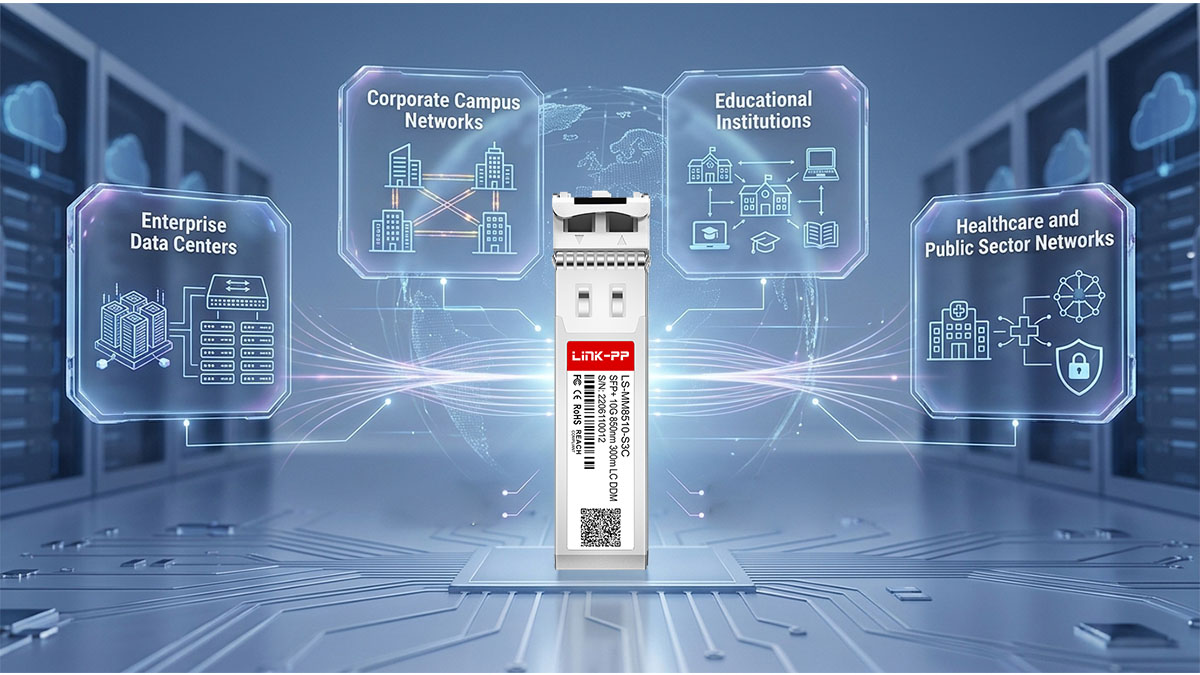
Enterprise Data Centers
SR 10G is a foundational connectivity option in enterprise data centers, where it supports high-density server and storage communication. It is commonly used to connect servers to top-of-rack switches and to enable efficient east-west traffic within virtualized environments.
Typical applications include:
- Server-to-switch connectivity in virtualization clusters.
- Storage area network (SAN) interconnections over Ethernet.
- High-speed communication between compute nodes.
- Internal traffic handling for cloud-based workloads.
In data center environments, SR 10G helps maintain predictable latency and bandwidth consistency, which is essential for applications such as distributed databases, virtualization platforms, and containerized services.
Corporate Campus Networks
SR 10G is also widely used in enterprise campus environments where multiple buildings or network closets require high-speed interconnection over relatively short distances. These deployments typically rely on structured multimode fiber infrastructure.
Common campus use cases include:
- Building distribution switch interconnections.
- High-speed uplinks between network aggregation points.
- Backbone connectivity within a single campus area.
- Inter-floor or intra-building network linking.
In these scenarios, SR 10G provides a cost-effective way to support increasing bandwidth demands from corporate applications, unified communications systems, and internal cloud services.
Educational Institutions
Educational environments benefit significantly from SR 10G deployments due to the increasing demand for digital learning platforms, research computing, and campus-wide connectivity. Universities and colleges often deploy SR 10G within data centers and across academic buildings.
Key applications include:
- High-speed connectivity for research clusters and computing labs.
- Campus backbone networks supporting multiple departments.
- Digital learning platforms and online education systems.
- Library and administrative system interconnection.
SR 10G enables educational institutions to support large numbers of users and bandwidth-intensive applications without requiring complex long-distance optical infrastructure.
Healthcare and Public Sector Networks
Healthcare and public sector organizations rely on SR 10G to support mission-critical applications that require stable and secure network performance. These environments often handle sensitive data and real-time systems where downtime or latency can have operational impact.
Typical deployment scenarios include:
- Hospital data center interconnects for electronic health records.
- Imaging systems requiring high-speed data transfer (e.g., MRI, CT scans).
- Interdepartmental communication systems.
- Government facility network aggregation layers.
SR 10G supports these use cases by providing consistent short-reach connectivity that ensures reliable performance for both clinical and administrative systems.
🔔 SR 10G vs Other 10G Optical Connectivity Options
SR 10G is one of several 10 Gigabit Ethernet connectivity solutions used in enterprise and data center environments. While it is optimized for short-reach multimode fiber links, other options such as LR optics, DAC cables, and Active Optical Cables (AOC) serve different distance and deployment requirements. Understanding these differences helps network designers select the most appropriate solution for specific infrastructure scenarios.
Each 10G connectivity type offers a distinct balance of reach, cost structure, and deployment flexibility.
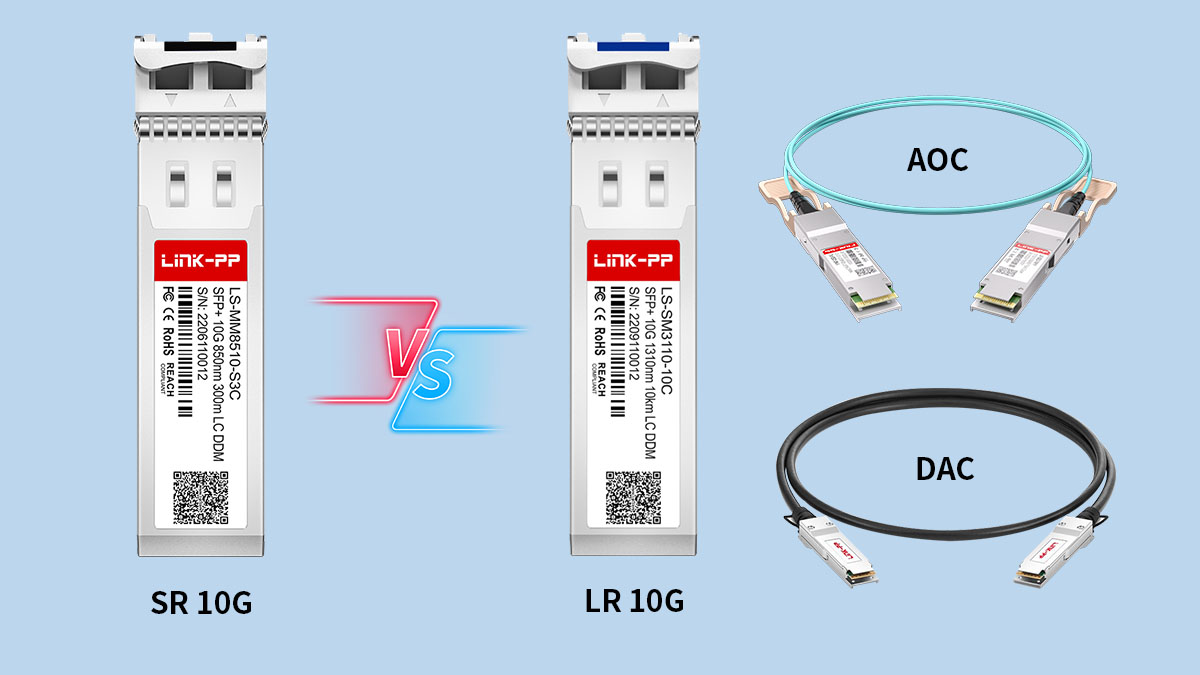
SR 10G vs LR 10G
SR 10G and LR 10G are both standardized 10GbE optical solutions, but they are designed for fundamentally different transmission distances and fiber types. SR 10G focuses on short-reach multimode fiber environments, while LR 10G is optimized for long-distance single-mode fiber links.
The comparison between the two can be summarized as follows:
| Feature | SR 10G | LR 10G |
|---|---|---|
| Fiber Type | Multimode fiber (OM1–OM5) | Single-mode fiber |
| Typical Reach | Up to ~400m | Up to 10km |
| Wavelength | 850nm | 1310nm |
| Deployment Focus | Data centers, campus buildings | Metro, long-distance links |
| Infrastructure Cost | Lower | Higher |
SR 10G is typically preferred for intra-building and data center applications due to its cost efficiency and compatibility with existing multimode infrastructure. In contrast, LR 10G is selected when network links must span longer distances beyond the physical limitations of multimode fiber.
SR 10G vs DAC Cables
Direct Attach Copper (DAC) cables represent a non-optical alternative for short-distance 10G connectivity. Unlike SR 10G, which uses optical transceivers and fiber, DAC cables transmit electrical signals directly over copper conductors.
Key differences include:
- DAC cables are generally limited to very short distances (typically up to 7m).
- SR 10G supports significantly longer reach using multimode fiber.
- DAC solutions do not require separate optical transceivers at both ends.
- SR 10G offers greater flexibility in structured cabling environments.
In practice, DAC cables are often used for very short rack-to-rack connections where cost minimization and simplicity are prioritized, while SR 10G is preferred when structured fiber infrastructure or longer reach is required.
SR 10G vs Active Optical Cables (AOC)
Active Optical Cables combine optical fiber with integrated transceivers in a single cable assembly. Like SR 10G, AOCs use optical transmission, but they are pre-terminated and do not require separate pluggable transceivers.
Key distinctions include:
- AOCs offer plug-and-play simplicity with fixed cable lengths.
- SR 10G provides modularity through replaceable transceivers and patch cords.
- AOCs reduce installation complexity but limit flexibility in cabling design.
- SR 10G supports structured cabling systems and easier component-level upgrades.
AOCs are often used in environments where simplicity and rapid deployment are prioritized, while SR 10G is favored in structured enterprise networks requiring long-term scalability and maintenance flexibility.
🔔 Best Practices for Designing an SR 10G Enterprise Network
Designing an SR 10G enterprise network requires more than simply deploying 10GBASE-SR transceivers. A stable and scalable architecture depends on proper fiber planning, loss budget control, structured cabling design, and forward-looking capacity planning. When these elements are aligned, SR 10G can deliver consistent performance across data centers, campus networks, and access layers.

Assess Existing Fiber Infrastructure
Before deploying SR 10G links, it is essential to evaluate the current fiber infrastructure to ensure compatibility and performance stability. Many enterprise environments already contain multimode fiber, but its condition and category directly affect SR 10G performance.
Key assessment activities include:
- Verifying fiber type (OM1, OM2, OM3, OM4, or OM5).
- Checking physical fiber condition for damage or aging.
- Measuring insertion loss across existing links.
- Inspecting connectors for contamination or wear.
- Confirming patch panel and cabling layout quality.
A structured evaluation helps identify whether existing cabling can support SR 10G or if targeted upgrades are required to meet distance and performance targets.
Plan for Future Bandwidth Growth
SR 10G is often deployed as part of a broader long-term network evolution strategy. Although it meets current 10GbE requirements, enterprise networks typically continue to scale toward higher speeds such as 25G, 40G, and beyond.
Effective planning strategies include:
- Selecting OM3 or OM4 fiber to support future high-speed upgrades.
- Designing cabling systems that minimize physical rework during upgrades.
- Reserving additional fiber strands for future expansion.
- Aligning switch architecture with scalable uplink design.
- Avoiding over-constrained point-to-point cabling layouts.
By anticipating future bandwidth growth, organizations can extend infrastructure lifespan and reduce migration complexity when upgrading beyond SR 10G.
Optimize Cable Management
Proper cable management plays a critical role in maintaining SR 10G signal quality and simplifying ongoing maintenance. Poor cabling practices can introduce unnecessary loss, airflow restrictions, and troubleshooting complexity.
Recommended practices include:
- Using structured cabling systems with clearly labeled fiber routes.
- Maintaining consistent LC duplex polarity and organization.
- Avoiding excessive bending or tight cable routing.
- Separating fiber paths from power cables to reduce interference risks.
- Utilizing patch panels for controlled interconnection points.
A well-organized cabling environment improves airflow within racks and ensures that SR 10G links remain stable and easier to maintain over time.
Implement Comprehensive Monitoring
Continuous monitoring is essential for maintaining the performance and reliability of SR 10G networks. Optical links can degrade over time due to dust, connector wear, or environmental changes, making visibility into signal quality important.
Key monitoring practices include:
- Using Digital Optical Monitoring (DOM) to track power levels.
- Monitoring link stability and error rates in real time.
- Setting threshold alerts for optical degradation.
- Periodically inspecting connectors and patch cords.
- Logging historical performance data for trend analysis.
When monitoring is properly implemented, potential issues can be identified before they impact network performance, reducing downtime and improving operational reliability.
By following these best practices, enterprise organizations can ensure that SR 10G deployments remain stable, scalable, and efficient across a wide range of networking environments.
🔔 Conclusion
SR 10G remains a foundational technology for short-reach enterprise optical networking, delivering reliable 10Gbps connectivity across data centers, campus networks, and high-density server environments. Its use of multimode fiber and 850nm VCSEL technology enables efficient short-distance transmission while maintaining a balance between performance, cost efficiency, and deployment simplicity. For many organizations, it continues to serve as a practical backbone for access-layer and aggregation-layer connectivity.
Across different deployment scenarios, SR 10G demonstrates consistent value in environments where scalability and predictable latency are essential. Its compatibility with OM3 and OM4 fiber, support for standardized SFP+ interfaces, and suitability for structured cabling systems make it a stable choice for both new installations and incremental network upgrades. When properly designed and maintained, SR 10G infrastructure can also support future transitions toward higher-speed Ethernet technologies.
Key takeaways for enterprise deployment include:
- SR 10G is optimized for short-reach, high-density optical links.
- Multimode fiber selection significantly impacts performance and scalability.
- Proper network design improves reliability and long-term operational stability.
- Monitoring and structured cabling practices are essential for maintaining link quality.
- SR 10G integrates effectively into both data center and campus architectures.
In practical deployments, selecting high-quality optical components is just as important as designing the network architecture itself. Reliable transceivers and compatible fiber solutions help ensure consistent performance across complex environments. Platforms such as the LINK-PP Official Store provide a reference point for exploring compatible optical modules and connectivity solutions that support SR 10G and broader enterprise networking requirements.