Modern enterprise networks are increasingly built around cloud-managed architectures to improve operational efficiency, scalability, and centralized visibility. In this context, optical transceivers such as Meraki 1000Base-SX Multi Mode modules have become essential components for enabling stable Gigabit Ethernet connectivity across campus networks, branch interconnections, and data distribution layers. As network environments grow more complex, ensuring consistent fiber performance and simplified management has become a fundamental requirement rather than an optional enhancement.
Within Cisco Meraki deployments, 1000Base-SX multi-mode optics are commonly used for short-reach fiber links that connect access switches, aggregation devices, and core switching layers. While the physical connectivity role is well understood, modern network operations also place strong emphasis on compatibility with the Meraki Cloud Dashboard. Administrators increasingly expect optical interfaces to provide not only reliable link performance but also meaningful visibility into interface health, diagnostics, and operational status within a unified cloud platform.
This article provides a structured exploration of Meraki 1000Base-SX Multi Mode compatibility in cloud-managed environments, focusing on the following key areas:
- Core principles of 1000Base-SX multi-mode fiber technology and its transmission behavior
- Compatibility requirements and validation considerations within Meraki switching platforms
- Cloud Dashboard integration for interface monitoring and network visibility
- Digital Optical Monitoring (DOM) capabilities and performance insights
- Deployment strategies, troubleshooting methods, and optimization practices
By examining these aspects in detail, the article helps build a clearer understanding of how optical transceivers integrate into Meraki cloud-managed networks and how they support long-term reliability, visibility, and operational efficiency in modern enterprise fiber infrastructures.
📰 Understanding Meraki 1000Base-SX Multi Mode Technology
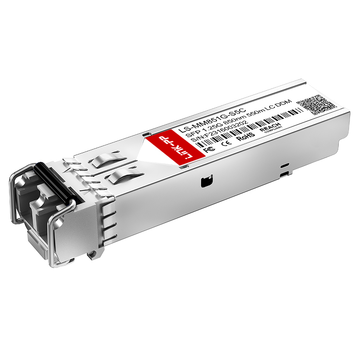
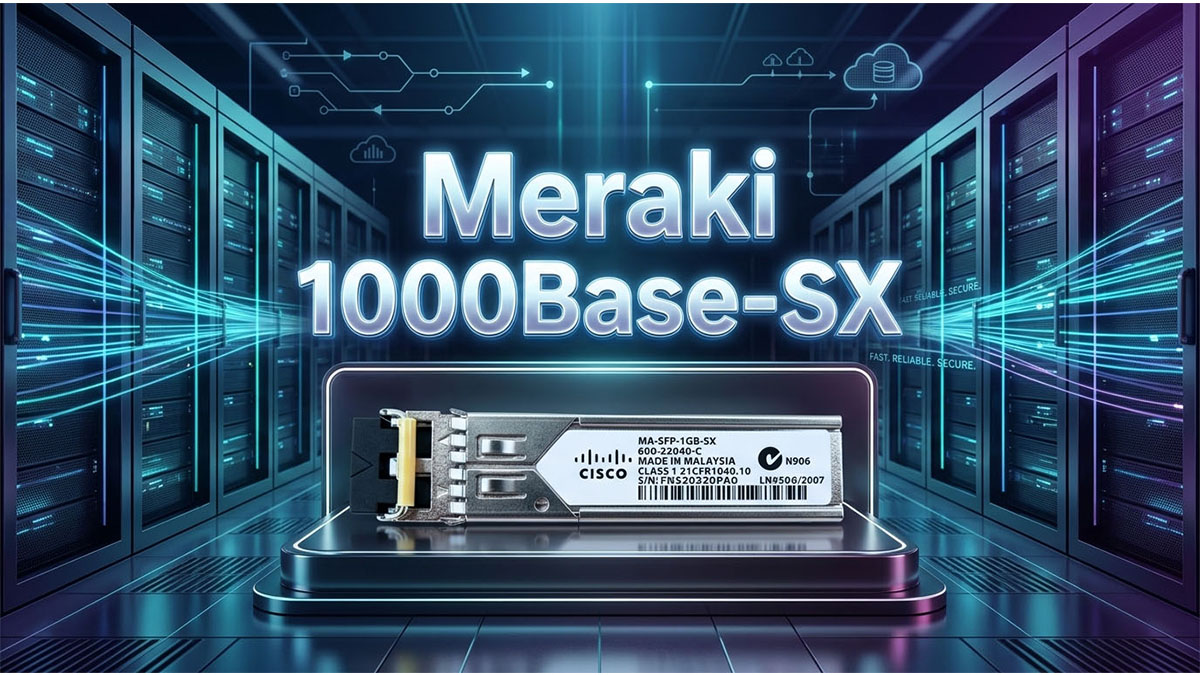
Meraki 1000Base-SX Multi Mode technology refers to a 1G SFP Ethernet optical solution designed for short-reach fiber connectivity using multi-mode fiber and 850nm wavelength transmission. In Meraki environments, it is commonly used to deliver stable 1Gbps links between switches and network devices within campus or building-scale deployments, where reliable and cost-efficient fiber interconnection is required.
What Is a 1000Base-SX Multi Mode Transceiver?
A 1000Base-SX multi-mode transceiver is a standard Gigabit SFP optical module that enables Ethernet communication over multi-mode fiber infrastructure. It is widely adopted in Meraki networks due to its simplicity, interoperability, and suitability for short-distance fiber links.
This type of transceiver is characterized by several core attributes:
- Operates at a fixed data rate of 1Gbps
- Uses 850nm wavelength optimized for multi-mode transmission
- Designed for short-reach connectivity in enterprise environments
- Commonly implemented in SFP form factor for Meraki switches
In practical deployments, it is typically selected when network design prioritizes reliable intra-building connectivity rather than long-distance transmission. Its role is especially important in access and aggregation layers where consistent Gigabit performance is required.
How Multi-Mode Fiber Supports Gigabit Connectivity
Multi-mode fiber enables 1000Base-SX operation by allowing multiple light modes to propagate through a larger core, which simplifies coupling and reduces deployment complexity in short-distance environments. This makes it a practical medium for enterprise and campus-scale fiber networks.
The performance of multi-mode fiber in Gigabit applications is influenced by several technical factors:
- Core diameter typically 50µm or 62.5µm depending on fiber type
- Higher-grade fibers such as OM3 and OM4 provide improved reach and bandwidth
- Modal dispersion affects signal quality over longer distances
- Optimized for 850nm wavelength operation used by SX optics
From a deployment perspective, fiber grade selection directly impacts achievable transmission distance and signal stability. Newer OM3/OM4 infrastructures are preferred in modern networks due to their ability to support more demanding bandwidth requirements while maintaining low signal degradation.
Typical Meraki Devices Supporting 1000Base-SX Connectivity
Meraki switches equipped with SFP ports commonly support 1000Base-SX transceivers, enabling flexible fiber uplinks across access, distribution, and aggregation layers in enterprise environments.
These devices are typically deployed in:
- Access-layer switching for end-user connectivity
- Aggregation switches consolidating multiple access segments
- Campus backbone interconnections between buildings
- Branch office uplinks requiring stable Gigabit fiber links
In these scenarios, 1000Base-SX modules (such as the MA-SFP-1GB-SX) provide a consistent and manageable solution for short-reach optical connectivity, while aligning with Meraki’s cloud-managed networking model. This ensures both physical layer stability and operational visibility through centralized management.
📰 Meraki 1000Base-SX Multi Mode Compatibility Fundamentals
Meraki 1000Base-SX Multi Mode compatibility is primarily determined by how optical transceivers are identified, validated, and operated within Meraki switch hardware and its cloud-managed firmware ecosystem. In practical terms, compatibility ensures that a 1000Base-SX SFP module can be correctly recognized, establish stable links, and provide consistent Gigabit performance without triggering system warnings or operational limitations in the Meraki Dashboard.
How Meraki Validates Optical Transceiver Compatibility
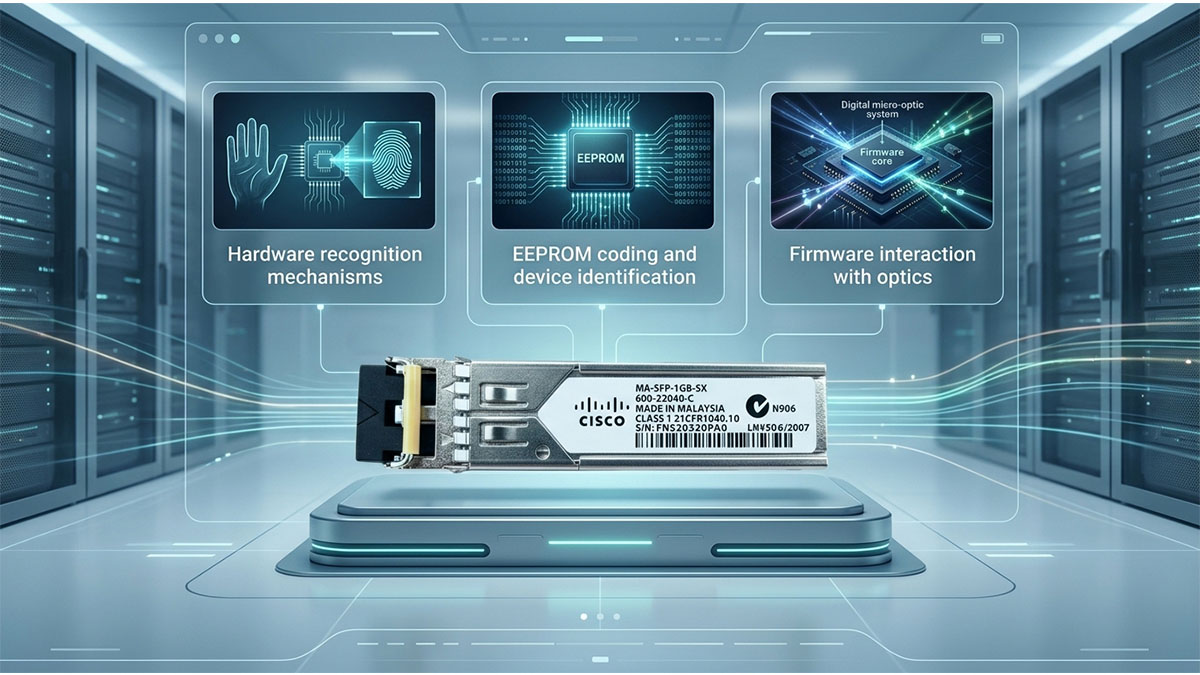
Meraki switches validate optical modules through hardware-level identification mechanisms combined with firmware-based checks. This process ensures that only supported or properly coded transceivers operate within the network environment.
Key validation mechanisms include:
- EEPROM-based identification of transceiver vendor and model
- Firmware-level compatibility verification during port initialization
- Link negotiation between optical module and switch port
- Continuous monitoring of interface status during operation
From a functional perspective, this validation process is designed to maintain network stability rather than restrict usage. If a module is properly coded and electrically compatible, it is more likely to operate without interruptions and appear correctly in the Meraki Cloud Dashboard.
Native Versus Compatible Optical Modules
Native and compatible optical modules differ mainly in how they are manufactured and how they interact with Meraki’s identification system, while both can potentially deliver similar network performance when properly implemented.
The comparison can be understood through several key aspects:
- Native modules are typically sourced directly from Cisco or Meraki-approved channels
- Compatible modules are designed by third-party manufacturers to match the same technical specifications
- Both types can support 1000Base-SX standards when correctly implemented
- Operational differences often appear in identification behavior rather than data transmission performance
In real-world deployments, the focus is less on branding and more on whether the module maintains stable optical performance, consistent link behavior, and accurate reporting within the management system.
Key Specifications to Verify Before Deployment
Before deploying Meraki 1000Base-SX Multi Mode transceivers, it is essential to validate key technical parameters to ensure compatibility and stable operation within the intended network environment.
Important specifications include:
- Operating wavelength, typically 850nm for 1000Base-SX
- Supported fiber type, including OM1, OM2, OM3, or OM4
- Maximum transmission distance based on fiber grade
- Connector type, commonly LC duplex in enterprise deployments
- Optical power budget for signal stability across links
- Operating temperature range for environmental suitability
These parameters directly influence link stability and long-term reliability. Mismatches in fiber type or power budget can lead to degraded performance, intermittent connectivity, or reduced transmission distance.
📰 The Role of the Meraki Cloud Dashboard in Optical Network Management
The Meraki Cloud Dashboard plays a central role in optical network management by providing a unified, real-time view of switch ports, fiber links, and transceiver health across distributed environments. In the context of Meraki 1000Base-SX Multi Mode deployments, it transforms traditional fiber connectivity into a fully observable and centrally managed component of the network, enabling faster troubleshooting and more efficient operational control.

Overview of the Meraki Cloud Dashboard
The Meraki Cloud Dashboard is a centralized management platform designed to simplify network operations by aggregating configuration, monitoring, and analytics into a single interface. For optical networking, it extends visibility beyond basic link status into deeper operational insights across the infrastructure.
Its core capabilities include:
- Centralized management of switches, ports, and network policies
- Real-time visibility into device and interface status
- Cloud-based logging and event tracking for network activity
- Remote configuration and monitoring without local access requirements
From an operational perspective, this centralized model reduces complexity in managing fiber-connected environments, especially when multiple sites or distributed campuses are involved.
How Optical Interfaces Are Displayed in the Dashboard
Optical interfaces in the Meraki Dashboard are represented at the port level, where administrators can monitor link state, performance behavior, and interface statistics. This visibility is critical for ensuring that 1000Base-SX multi-mode links maintain consistent operational performance.
Typical information displayed includes:
- Port link status (up/down state)
- Connection type and speed negotiation (e.g., 1Gbps fiber link)
- Traffic utilization and throughput trends
- Interface error counters and event history
This level of visibility allows network operators to quickly identify whether issues originate from physical fiber connections, transceiver behavior, or upstream network configuration.
Operational Benefits of Dashboard-Based Monitoring
Using the Meraki Cloud Dashboard for optical network management provides significant operational advantages, particularly in environments relying on 1000Base-SX multi-mode connectivity.
Key benefits include:
- Faster identification of fiber link issues through real-time alerts
- Reduced reliance on on-site diagnostics and manual testing
- Simplified visibility across multiple distributed network locations
- Improved coordination between physical infrastructure and logical network layers
By integrating optical interface monitoring into a cloud-based system, administrators can maintain a clearer understanding of network health while minimizing downtime and operational complexity. This approach is especially valuable in enterprise environments where uptime and consistency are critical performance requirements.
With dashboard-level visibility established, the next focus shifts to deeper optical performance insights enabled through Digital Optical Monitoring (DOM) capabilities.
📰 Digital Optical Monitoring (DOM) and Visibility Features
Digital Optical Monitoring (DOM) enhances Meraki 1000Base-SX Multi Mode deployments by providing real-time insight into the physical health of optical transceivers and fiber links. In cloud-managed environments, DOM enables administrators to move beyond basic link status and gain measurable visibility into optical performance, helping ensure stable Gigabit connectivity and early detection of potential issues.
What Is Digital Optical Monitoring?
Digital Optical Monitoring is a built-in diagnostic feature in supported SFP modules that continuously tracks optical and electrical parameters during operation. In Meraki networks, DOM data contributes to more accurate assessment of fiber link health and long-term stability.
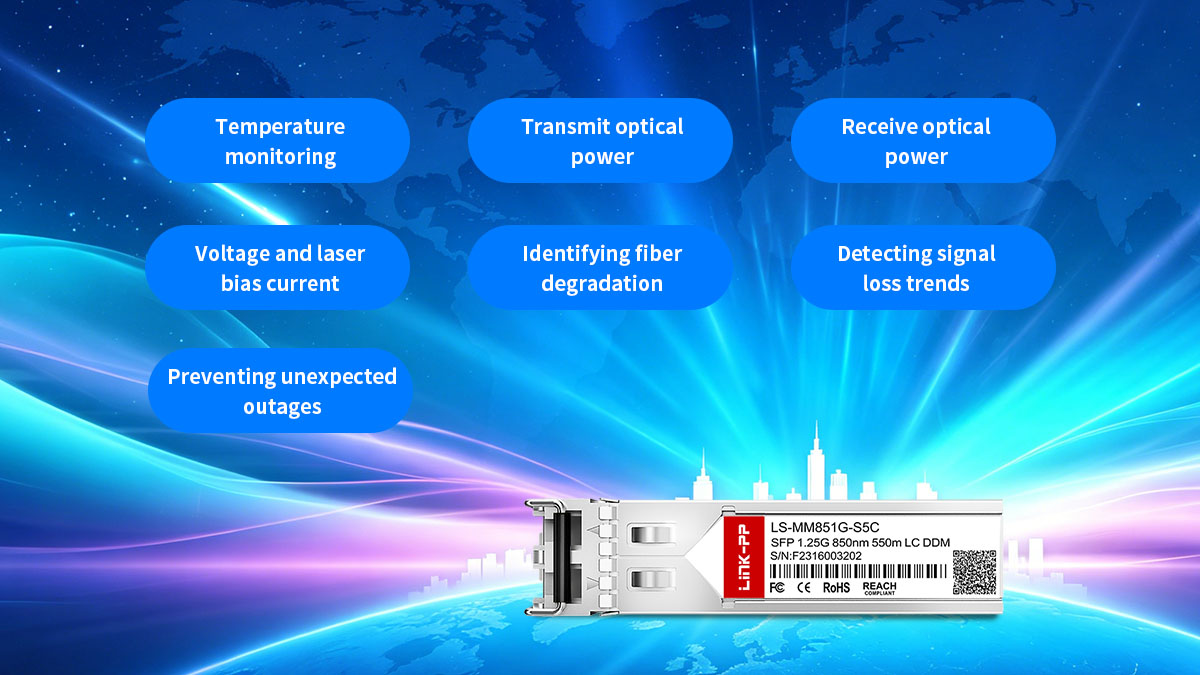
DOM typically provides the following core metrics:
- Transmit optical power (TX power)
- Receive optical power (RX power)
- Module temperature
- Supply voltage
- Laser bias current
These parameters collectively help determine whether a 1000Base-SX link is operating within safe optical thresholds or approaching potential degradation. When properly interpreted, DOM data becomes a proactive tool for maintaining network reliability rather than reacting to failures.
Optical Parameters Available Through Compatible Modules
Compatible 1000Base-SX multi-mode transceivers with DOM support can expose detailed optical parameters directly into the Meraki monitoring environment or via device-level diagnostics.
Key measurable parameters include:
- TX power levels indicating signal strength leaving the transceiver
- RX power levels reflecting signal quality received from the remote end
- Temperature readings showing thermal conditions inside the module
- Voltage stability indicating power supply consistency
- Bias current representing laser operational intensity
These values provide a granular view of link performance, allowing administrators to identify early signs of fiber attenuation, connector degradation, or environmental stress before they escalate into connectivity failures.
How DOM Data Supports Proactive Maintenance
DOM data is especially valuable for maintaining long-term stability in Meraki 1000Base-SX Multi Mode networks, where physical fiber conditions can gradually degrade without immediate link failure.
Its practical benefits include:
- Early detection of weakening optical signals before link loss occurs
- Identification of contaminated or aging fiber connectors
- Monitoring of temperature-related performance fluctuations
- Detection of abnormal power or laser behavior in transceivers
By analyzing trends over time, network operators can shift from reactive troubleshooting to proactive maintenance, reducing unplanned downtime and improving overall network resilience.
DOM Feature Comparison
Understanding the difference between basic monitoring and DOM-enabled visibility highlights why this feature is critical in optical network operations. The comparison below illustrates how DOM expands observability beyond standard link status information.
| Feature | Basic Monitoring | DOM-Enabled Monitoring |
|---|---|---|
| Link Status | Available | Available |
| TX Power Visibility | Not available | Available |
| RX Power Visibility | Not available | Available |
| Temperature Tracking | Not available | Available |
| Voltage Monitoring | Not available | Available |
| Predictive Diagnostics | Limited | Enhanced |
The table shows that DOM significantly extends visibility into the physical layer, enabling deeper analysis of optical link health beyond simple connectivity indicators.
📰 Optical Transmission Performance and Network Reliability
Optical transmission performance in Meraki 1000Base-SX Multi Mode networks directly determines link stability, data integrity, and long-term reliability across campus and enterprise environments. In practical deployments, maintaining consistent Gigabit performance depends on both physical fiber quality and proper alignment between transceivers, cabling, and environmental conditions.
Key Factors Affecting 1000Base-SX Link Performance
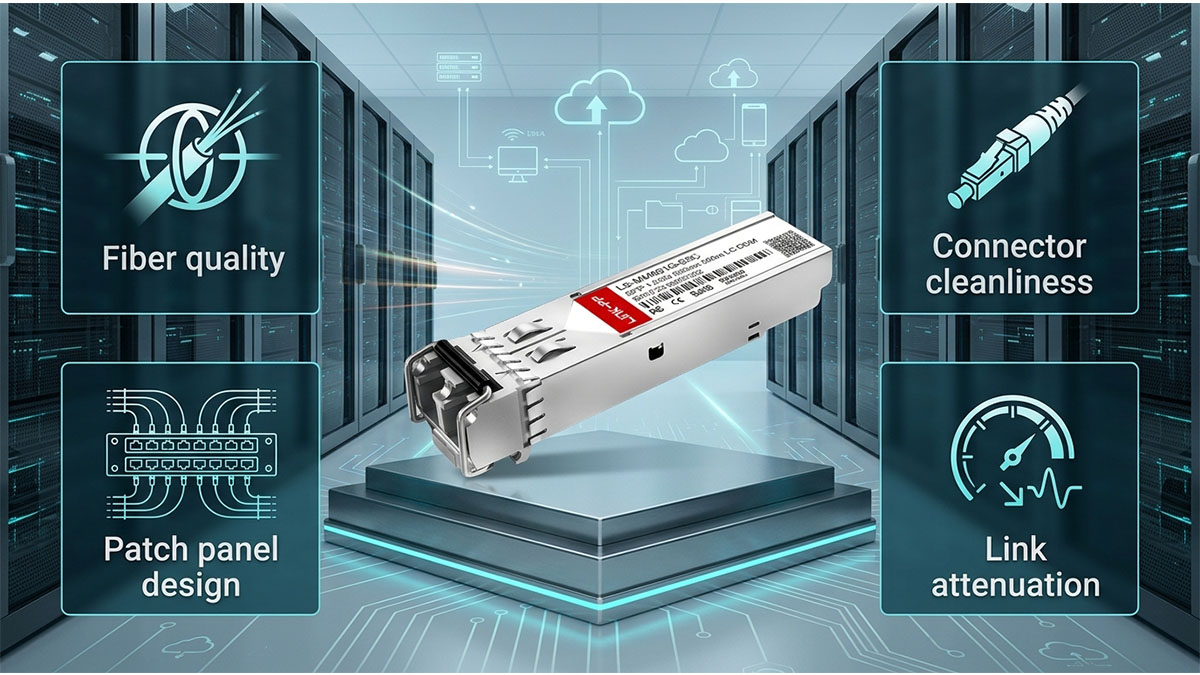
1000Base-SX performance is influenced by multiple physical-layer conditions that affect how efficiently optical signals travel across multi-mode fiber. In Meraki environments, these factors are critical for maintaining stable cloud-managed connectivity.
Key influencing factors include:
- Fiber quality and grade (OM1, OM2, OM3, OM4)
- Connector cleanliness and polishing quality
- Splice and patch panel integrity
- Overall link attenuation and insertion loss
Each of these elements contributes to signal strength and clarity. Even when using fully compatible Meraki 1000Base-SX modules, degraded fiber infrastructure can significantly reduce effective performance or introduce intermittent connectivity issues.
Understanding Distance and Optical Budget Limitations
The performance of 1000Base-SX multi-mode links is also constrained by optical power budget and fiber distance limitations. These constraints define how far a stable Gigabit connection can be maintained without signal degradation.
Typical considerations include:
- Maximum supported distance varies by fiber type and quality
- OM3 and OM4 fibers support longer reach compared to OM1 and OM2
- Optical power budget must remain within transmitter and receiver thresholds
- Excessive attenuation leads to reduced RX power and potential link instability
To ensure reliable operation, network design must carefully match transceiver capabilities with fiber infrastructure characteristics. Misalignment between optical budget and actual link distance is one of the most common causes of degraded performance in multi-mode deployments.
Environmental Factors Influencing Stability
Beyond fiber and optical specifications, environmental conditions also play a significant role in network reliability. In enterprise deployments using Meraki switches, these external factors can gradually impact signal quality over time.
Important environmental influences include:
- Temperature fluctuations affecting transceiver performance
- Dust or contamination on fiber connectors
- Physical stress from cable bending or improper routing
- Vibration or mechanical movement in cabling infrastructure
These conditions often lead to gradual signal degradation rather than immediate failure, making them harder to detect without monitoring tools such as DOM. Maintaining controlled environments and proper cable management is essential for long-term stability.
Performance Optimization Checklist
To ensure consistent optical performance in Meraki 1000Base-SX Multi Mode networks, several best practices can be applied across deployment and maintenance stages. These guidelines help reduce signal loss and improve overall reliability.
Key optimization areas include:
- Ensuring high-quality fiber installation with proper termination practices
- Regular inspection and cleaning of LC connectors
- Maintaining proper cable bend radius to avoid signal distortion
- Verifying optical power levels within acceptable thresholds
- Monitoring interface statistics through the Meraki Dashboard
These practices collectively help maintain stable Gigabit transmission and reduce the likelihood of performance degradation in production environments.
📰 Deploying Meraki 1000Base-SX Multi Mode Compatible Optics
Deploying Meraki 1000Base-SX Multi Mode compatible optics requires careful coordination between fiber infrastructure, switch configuration, and physical installation practices. In cloud-managed Meraki environments, correct deployment is essential not only for link establishment but also for ensuring stable visibility, accurate monitoring, and long-term operational reliability.

Pre-Deployment Planning Considerations
Effective deployment begins with structured planning to ensure that optical modules, fiber links, and network topology are properly aligned. This step helps prevent mismatches that could impact link stability or reduce performance.
Key planning considerations include:
- Mapping physical distances between network endpoints
- Verifying fiber type compatibility (OM1, OM2, OM3, OM4)
- Confirming switch SFP port availability and usage requirements
- Calculating optical budget based on link distance and attenuation
- Assessing future scalability needs within the network design
A well-prepared deployment plan reduces the likelihood of post-installation issues and ensures that Meraki 1000Base-SX modules operate within their optimal performance range.
Installation Best Practices
Proper installation of 1000Base-SX multi-mode optics is critical to achieving stable connectivity and avoiding avoidable performance degradation. Even small physical misconfigurations can significantly impact optical signal quality.
Recommended installation practices include:
- Inserting SFP modules firmly into compatible Meraki switch ports
- Using clean LC duplex connectors to prevent signal loss
- Verifying correct fiber polarity before final connection
- Avoiding excessive bending or stress on fiber cables
- Ensuring secure but not over-tightened cable routing
Each of these steps helps maintain signal integrity and ensures that the optical link initializes correctly during switch boot or interface activation.
Post-Deployment Verification Through the Dashboard
After installation, verifying link status and performance through the Meraki Cloud Dashboard is essential to confirm that the optical deployment is functioning as expected. This step ensures both physical and logical layers are operating correctly.
Key verification actions include:
- Checking port status to confirm link is operational
- Reviewing interface statistics for traffic flow validation
- Monitoring error counters for signs of degradation
- Confirming correct speed negotiation at 1Gbps
- Observing initial DOM readings for baseline performance
Establishing a performance baseline immediately after deployment is particularly important, as it provides a reference point for future troubleshooting and long-term network monitoring.
📰 Common Compatibility Challenges and Troubleshooting Methods
Even when using standards-compliant Meraki 1000Base-SX Multi Mode optics, compatibility and operational issues can still occur due to fiber conditions, coding differences, or configuration mismatches. In cloud-managed environments, these challenges typically manifest as link instability, missing interface visibility, or degraded performance rather than complete network failure. Understanding how to identify and resolve these issues is essential for maintaining stable Gigabit connectivity.

Optical Module Detection Issues
One of the most common problems in Meraki deployments is the failure of the switch to properly detect or initialize an inserted SFP module. This issue is often related to compatibility validation, firmware behavior, or module coding.
Typical symptoms include:
- SFP port showing “unsupported transceiver” or blank status
- No link detection even when fiber is physically connected
- Missing or incomplete interface information in the Dashboard
Common causes include:
- Incompatible EEPROM coding or vendor identification mismatch
- Outdated switch firmware affecting module recognition
- Improperly seated transceiver in the SFP slot
- Hardware limitations of specific switch models
Troubleshooting usually begins with reseating the module, verifying firmware version, and confirming that the optical transceiver matches 1000Base-SX specifications.
Link Establishment Problems
Another frequent issue involves the inability of the fiber link to establish a stable connection, even when the transceiver is recognized correctly. This typically points to physical-layer mismatches or installation errors.
Common symptoms include:
- Link status remains down despite active configuration
- Intermittent connectivity or frequent link flapping
- No traffic flow across the optical interface
Likely causes include:
- Incorrect fiber polarity (Tx/Rx reversal)
- Damaged or contaminated LC connectors
- Exceeding maximum supported distance for 1000Base-SX
- Fiber type mismatch between endpoints (e.g., OM2 vs OM4 inconsistencies)
Resolution often involves rechecking fiber routing, cleaning connectors, and validating distance against optical specifications.
Performance Degradation and Intermittent Connectivity
In some cases, the optical link remains active but performs poorly, with reduced throughput or unstable behavior. These issues are often more difficult to detect because the link does not fully fail.
Common indicators include:
- Fluctuating throughput levels in the Meraki Dashboard
- Increased interface error counters over time
- Sporadic packet loss or latency spikes
- Declining RX power levels reported via DOM
Contributing factors include:
- Gradual fiber degradation or aging infrastructure
- Dust accumulation on connectors or patch panels
- Micro-bending or stress on fiber cabling
- Environmental temperature variations affecting optics
In these scenarios, DOM data becomes particularly valuable for identifying early warning signs before full link failure occurs.
Dashboard-Based Troubleshooting Workflow
The Meraki Cloud Dashboard provides a structured approach to diagnosing optical issues without requiring direct physical access to devices. This centralized visibility simplifies root-cause analysis in distributed environments.
A typical troubleshooting workflow includes:
- Reviewing port status and recent interface events
- Checking historical traffic patterns for anomalies
- Analyzing error counters and retransmission indicators
- Evaluating DOM metrics for power and temperature irregularities
- Comparing affected links with stable baseline connections
By combining real-time data with historical trends, administrators can quickly isolate whether issues originate from optical modules, fiber infrastructure, or upstream network configuration. This approach significantly reduces mean time to resolution in cloud-managed Meraki environments.
📰 Comparing 1000Base-SX with Alternative Meraki Optical Connectivity Options
1000Base-SX Multi Mode optics are widely used in Meraki networks for short-reach Gigabit connectivity, but they are not the only optical option available. In real-world deployments, selecting the right optical technology depends on distance requirements, fiber infrastructure, and future scalability needs. Understanding how 1000Base-SX compares with alternatives helps ensure the most suitable design choice for different network scenarios.
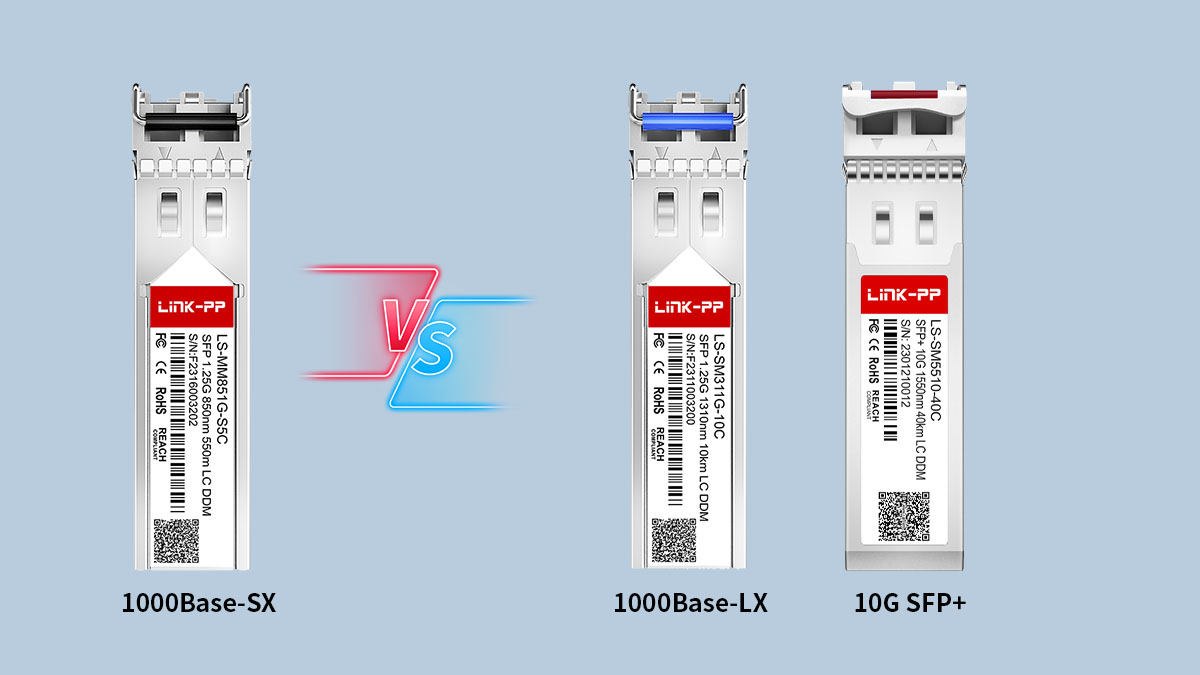
1000Base-SX vs 1000Base-LX
1000Base-SX and 1000Base-LX are both Gigabit Ethernet optical standards, but they are optimized for different fiber types and transmission distances. In Meraki environments, the choice between them is typically driven by existing fiber infrastructure and required reach.
Key differences include:
- 1000Base-SX uses multi-mode fiber with 850nm wavelength
- 1000Base-LX uses single-mode fiber with 1310nm wavelength
- SX is optimized for short-distance campus connectivity
- LX supports significantly longer distances across buildings or metro links
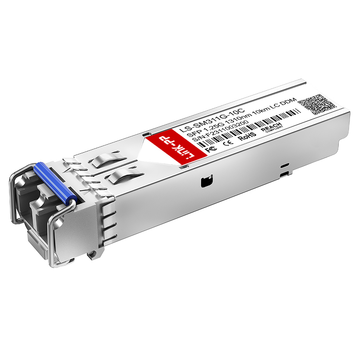
In practical deployments, 1000Base-SX module is preferred when multi-mode fiber is already installed, while 1000Base-LX module (such as the MA-SFP-1GB-LX10) is selected for longer backbone or inter-building connections where single-mode infrastructure is available.
1000Base-SX vs 10G SFP+ Solutions
As network demand increases, many environments transition from Gigabit to 10G optical solutions. Comparing 1000Base-SX with 10G SFP+ modules highlights the difference in performance and infrastructure requirements.
Key distinctions include:
- 1000Base-SX operates at 1Gbps, while 10G SFP+ modules support 10Gbps
- SX is suitable for access-layer connectivity and legacy networks
- 10G solutions require higher-grade fiber such as OM3 or OM4 for multi-mode operation
- Power consumption and heat output are generally higher in 10G modules
From a deployment perspective, 1000Base-SX remains relevant in environments where Gigabit performance is sufficient, while 10G SFP+ is used for high-bandwidth aggregation and core switching layers.
When 1000Base-SX Remains the Preferred Choice
Despite the availability of higher-speed technologies, 1000Base-SX continues to be widely used in Meraki networks due to its stability, simplicity, and compatibility with existing infrastructure.
It is commonly preferred in scenarios such as:
- Campus access-layer switching environments
- Networks with existing multi-mode fiber installations
- Cost-sensitive deployments requiring stable Gigabit performance
- Short-reach interconnects within the same building
Its continued relevance is largely driven by the large installed base of multi-mode fiber and the fact that many enterprise applications still operate efficiently at Gigabit speeds without requiring upgrades to higher bandwidth tiers.
Technology Comparison Table
To better understand the differences between common optical options, the following comparison summarizes key technical characteristics relevant to Meraki deployments.
| Technology | Fiber Type | Typical Speed | Typical Reach |
|---|---|---|---|
| 1000Base-SX | Multi-Mode | 1Gbps | Up to 550m |
| 1000Base-LX | Single-Mode | 1Gbps | Up to 10km |
| 10G SR | Multi-Mode | 10Gbps | Up to 400m |
| 10G LR | Single-Mode | 10Gbps | Up to 10km |
This comparison highlights how 1000Base-SX fits into the lower-cost, short-range segment of optical networking, while higher-speed and long-range alternatives are better suited for backbone and high-capacity environments.
📰 Security, Monitoring, and Operational Efficiency in Cloud-Managed Networks
In Meraki-based infrastructures, optical connectivity such as 1000Base-SX Multi Mode links does not operate in isolation. Instead, it is tightly integrated into a cloud-managed ecosystem that combines security enforcement, real-time monitoring, and operational automation. This integration allows organizations to maintain both physical-layer stability and network-wide visibility, improving overall efficiency in distributed enterprise environments.
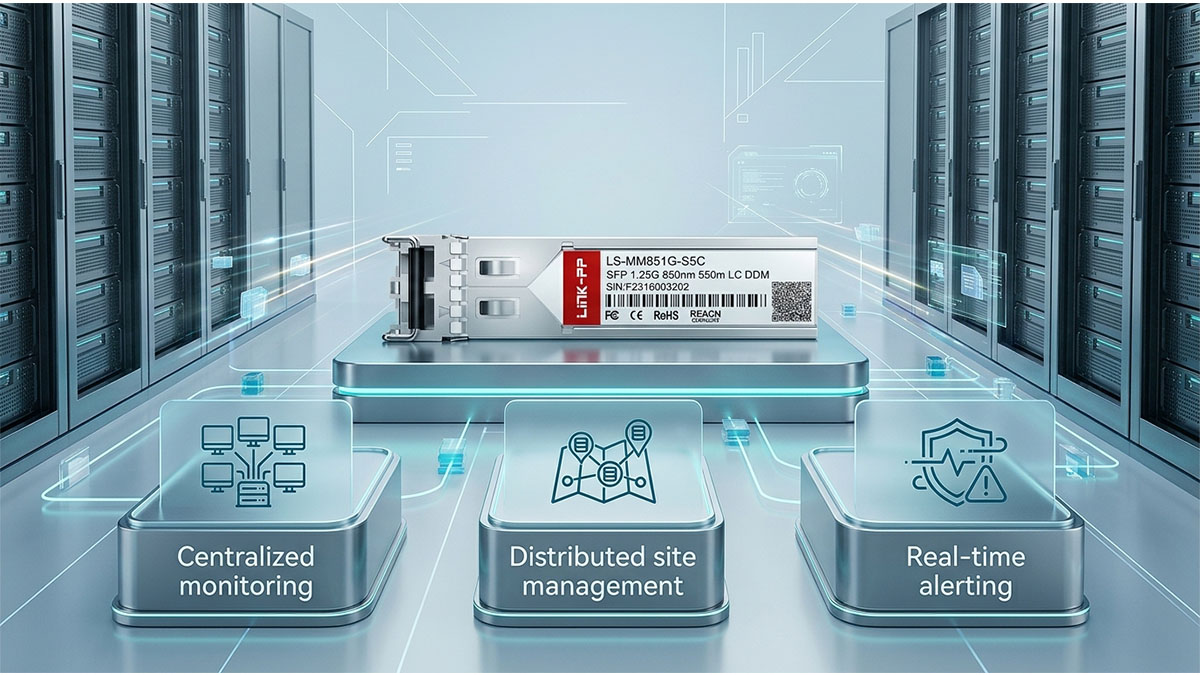
How Cloud Visibility Enhances Operational Control
Cloud visibility is a core advantage of the Meraki architecture, enabling administrators to manage optical links and network devices from a centralized dashboard. This is especially important for 1000Base-SX deployments, where multiple fiber links may span across buildings or campus segments.
Key operational benefits include:
- Centralized access to switch and port-level status across all sites
- Real-time visibility into link state and traffic behavior
- Simplified remote troubleshooting without on-site intervention
- Unified configuration management for distributed network infrastructure
This level of visibility reduces operational complexity and allows teams to respond faster to changes in network conditions, particularly in environments with large numbers of fiber-connected devices.
Integrating Optical Infrastructure into Network Health Monitoring
Optical links are fully integrated into Meraki’s broader network health monitoring framework, allowing 1000Base-SX connections to be evaluated alongside other network components. This integration ensures that physical-layer performance is directly reflected in overall network health metrics.
Key monitoring capabilities include:
- Continuous tracking of port status and traffic utilization
- Event logging for link changes, errors, and reconnections
- Performance baselines for long-term trend analysis
- Aggregated visibility across access, aggregation, and core layers
By correlating optical performance with broader network behavior, administrators can more easily identify whether issues originate from fiber infrastructure, switching hardware, or upstream network configuration.
Reducing Downtime Through Predictive Monitoring
One of the most important advantages of cloud-managed optical networks is the ability to reduce downtime through proactive and predictive monitoring. In 1000Base-SX environments, early detection of performance degradation can significantly improve network reliability.
Predictive monitoring supports:
- Early identification of declining optical signal strength
- Detection of intermittent link instability before full failure occurs
- Analysis of historical trends to anticipate hardware or fiber issues
- Automated alerts based on abnormal interface behavior
By leveraging these capabilities, organizations can transition from reactive troubleshooting to proactive maintenance strategies, minimizing service interruptions and improving user experience across the network.
📰 Conclusion
Meraki 1000Base-SX Multi Mode technology remains a foundational component in modern cloud-managed enterprise networks, especially for short-reach Gigabit Ethernet connectivity across campus and building-scale environments. When properly deployed, it delivers stable performance, predictable optical behavior, and seamless integration with Meraki’s cloud-based management ecosystem.
Across the full lifecycle of design, deployment, and operation, several key insights stand out:
- 1000Base-SX is best suited for short-distance multi-mode fiber environments where Gigabit connectivity is sufficient
- Compatibility within Meraki systems depends on proper optical coding, firmware behavior, and hardware recognition
- The Meraki Cloud Dashboard provides essential visibility into port status, traffic patterns, and interface health
- DOM-enabled monitoring significantly improves fault detection and long-term performance tracking
- Proper installation and fiber management practices directly influence link stability and reliability
From a strategic perspective, the value of 1000Base-SX is not only in its transmission capability but also in how effectively it integrates into a cloud-managed operational model. When combined with consistent monitoring and proactive maintenance, it helps maintain a stable and efficient network foundation for enterprise environments.
For organizations looking to optimize fiber infrastructure while maintaining compatibility and performance consistency, selecting reliable optical transceiver solutions is essential. Platforms such as the LINK-PP Official Store provide a wide range of compatible optical modules designed to support enterprise-grade networking requirements, helping ensure stable deployment across Meraki and other cloud-managed environments.