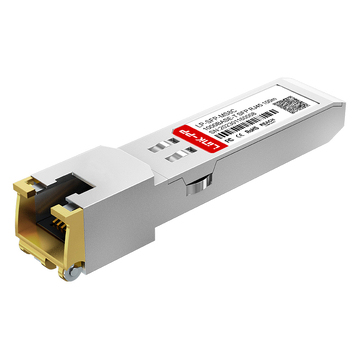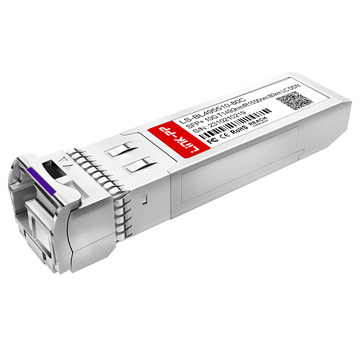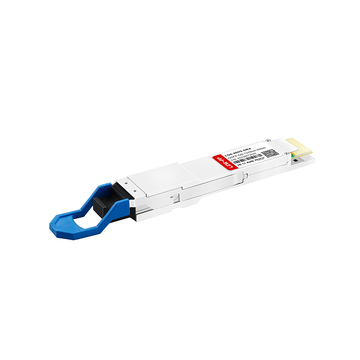
In today’s high-speed networking environment, data centers and enterprise networks face increasing demands for bandwidth, low latency, and scalability. SFP++, an enhanced form of the widely adopted SFP+ transceiver, has emerged as a key solution for organizations looking to optimize their network infrastructure without major overhauls. By supporting higher data rates such as 25Gbps and beyond, SFP++ enables more efficient use of existing switch ports while maintaining compatibility with a variety of optical and copper connections. Its compact design allows for dense port deployment, making it ideal for modern data center architectures, cloud services, and high-performance computing clusters. Understanding the technical specifications, deployment scenarios, and comparative advantages of SFP++ is crucial for IT professionals planning network upgrades or expansions. This guide explores the evolution of SFP technologies, compares SFP++ with other transceiver form factors, and provides insights into best practices, practical use cases, and emerging trends shaping the future of optical connectivity.
✳️ What is SFP++?
SFP++ is an advanced small form-factor pluggable transceiver designed to deliver higher bandwidth while retaining the compact footprint of SFP+ modules. It typically supports data rates up to 25Gbps and sometimes higher, making it ideal for modern data center, cloud, and high-performance computing environments that demand scalable, high-speed connectivity. SFP++ allows organizations to upgrade network capacity without extensive hardware replacement, providing a cost-efficient pathway for infrastructure evolution. Its ability to support both copper and optical links offers flexibility across deployment scenarios, from short inter-rack connections to longer optical spans, while maintaining low latency and high reliability.
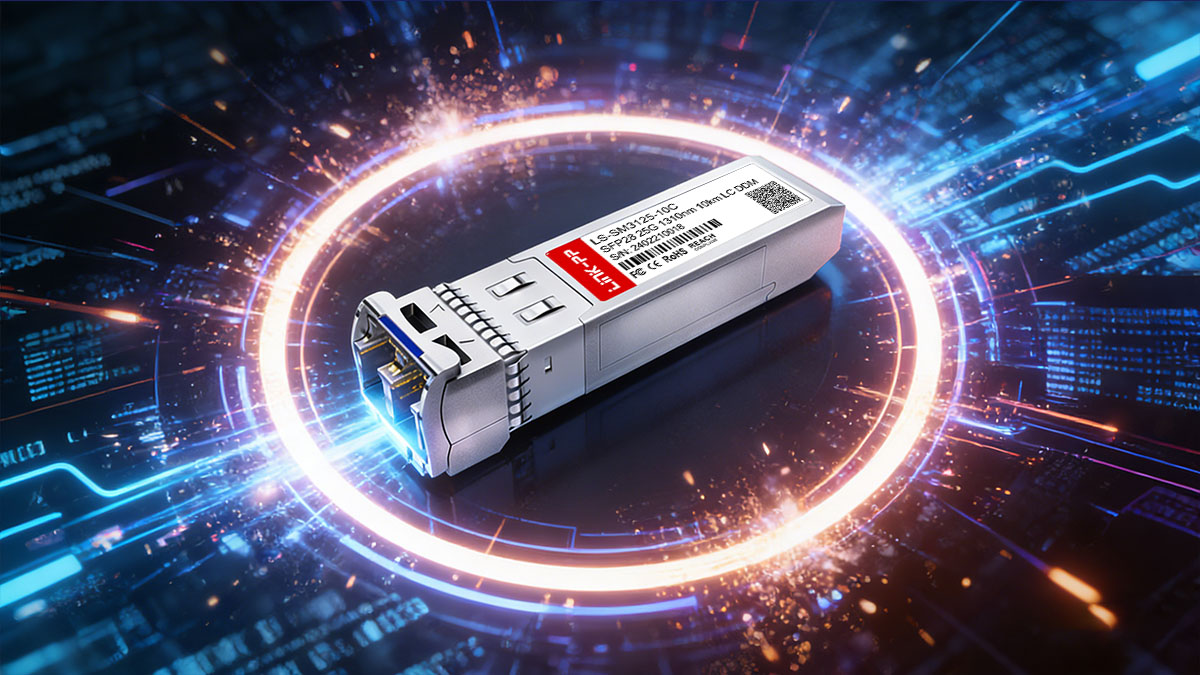
Definition and Core Concept
SFP++ represents the next step in the evolution of pluggable transceivers. Unlike SFP+, which is primarily limited to 10Gbps, SFP++ addresses the growing need for 25Gbps and beyond, bridging the gap between legacy infrastructure and emerging high-speed network standards. Its compact design ensures dense port deployment, enabling operators to maximize switch port utilization without increasing rack space. SFP++ modules are commonly integrated into top-of-rack switches, leaf-spine architectures, and HPC clusters, where both performance and scalability are critical. This combination of backward compatibility, bandwidth expansion, and form factor efficiency positions SFP++ as a practical solution for networks transitioning from 10G to 25G and even multi-lane 50G environments.
Key Technical Characteristics
The primary technical aspects of SFP++ can be summarized as follows:
- Data Rate Support: SFP++ modules typically handle 10–25Gbps, with some variants supporting advanced protocols such as 25G Ethernet, 32G Fibre Channel modules, or even custom multi-rate configurations.
- Form Factor: Identical in size to SFP+ modules, allowing direct insertion into SFP+ ports in many devices, though actual compatibility depends on switch firmware and vendor specifications.
- Media Flexibility: SFP++ supports short-reach copper twinax cables (DAC), active optical cables (AOC), and multimode or single-mode optical transceivers (SR/LR/ER), providing versatility for intra-rack, inter-rack, and long-distance connections.
- Power and Thermal Efficiency: While operating at higher speeds, SFP++ maintains relatively low power consumption, typically between 1–2.5W, and employs efficient thermal design suitable for high-density switch environments.
- Latency and Signal Integrity: Optimized for low latency, SFP++ is often used in environments where microseconds of delay can impact application performance, such as HPC, financial trading platforms, and real-time analytics clusters.
This combination of higher bandwidth, compact design, multi-media support, and operational efficiency makes SFP++ a highly versatile solution for organizations seeking to expand network capacity without sacrificing compatibility or increasing operational complexity.
✳️ Evolution of SFP Technologies
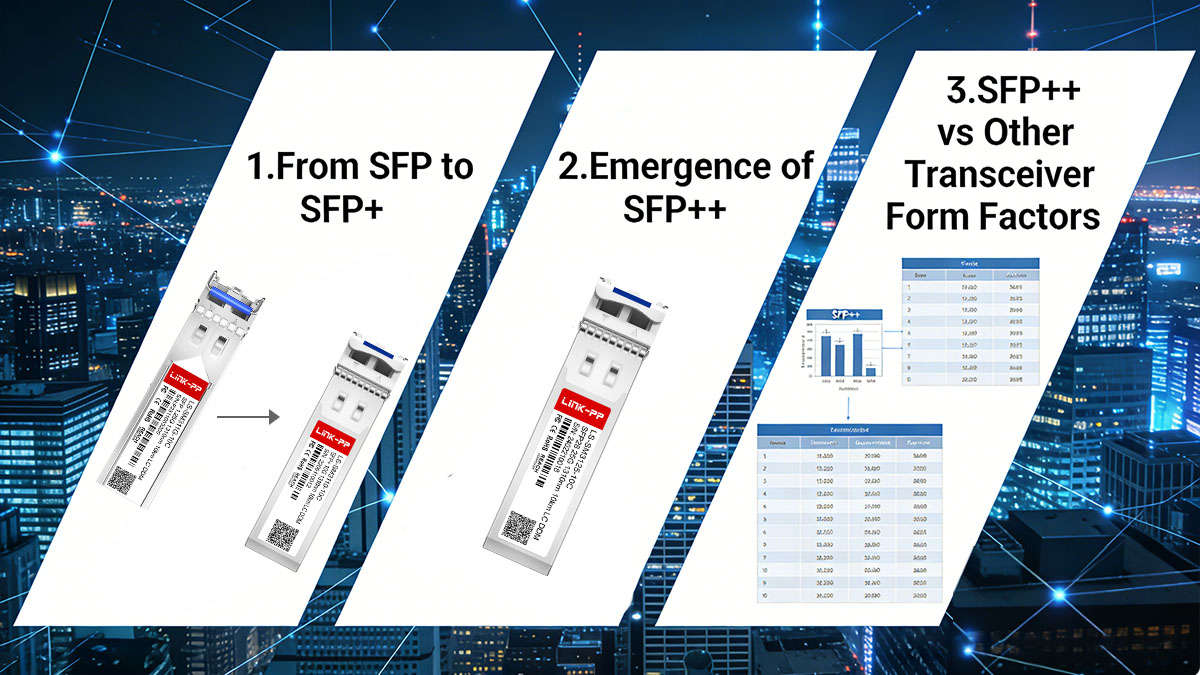
The evolution of SFP transceiver technologies reflects the continuous demand for higher network bandwidth and lower latency in modern infrastructures. Starting from standard SFP, moving to SFP+, and now to SFP++, each generation has addressed emerging performance requirements while balancing power, density, and compatibility. Understanding this evolution helps network engineers make informed decisions for upgrades and future-proofing.
From SFP to SFP+
SFP, or Small Form-Factor Pluggable transceivers, initially supported 1Gbps Ethernet and Fibre Channel applications, providing a compact and modular interface for network devices. As data center workloads increased, SFP+ emerged to support 10Gbps Ethernet and 8–16G Fibre Channel, offering higher throughput while retaining the same form factor. Key limitations of SFP+ included:
- Maximum standard speed capped at 10Gbps for Ethernet applications
- Limited efficiency in high-density 25GBASE or 40GBASE networks
- Power consumption and heat challenges when scaling port density
SFP+ allowed a smooth transition from 1000BASE to 10GBASE infrastructures but could not fully meet the growing demand for multi-lane 25Gbps connections, particularly in leaf-spine and HPC architectures.
Emergence of SFP++
SFP++ was developed to bridge the gap between SFP+ and higher-speed standards like SFP28, QSFP28, and emerging 25G/50G deployments. It allows network operators to:
- Upgrade bandwidth without changing the physical switch infrastructure
- Support both optical and copper interconnects
- Maintain port density while increasing throughput per link
The following table highlights the key differences across fiber SFP generations:
| Feature | SFP | SFP+ | SFP++ |
|---|---|---|---|
| Typical Data Rate | 1 Gbps | 10 Gbps | 10–25 Gbps |
| Supported Protocols | Ethernet, FC | Ethernet, FC | Ethernet, FC, multi-rate |
| Form Factor | Compact | Compact | Compact (same as SFP+) |
| Media Options | Copper, Optical | Copper, Optical | Copper, Optical, AOC |
| Use Cases | Standard LAN/WAN | 10G LAN/DC | 25G DC, HPC, Cloud |
SFP++ not only increases the available bandwidth but also allows a gradual upgrade path for existing SFP+ infrastructures. Its backward compatibility with SFP+ ports (in many cases) reduces operational disruption and maximizes hardware investment.
Strategic Role in Modern Networks
SFP++ has become essential in contemporary data center designs for several reasons:
- Supports spine-leaf architectures where high-speed uplinks are critical
- Enables efficient interconnects in HPC and AI clusters
- Provides a flexible bridge toward 25G, 50G, and beyond, without requiring immediate QSFP migration
By understanding this evolutionary path, IT professionals can strategically deploy SFP++ to balance performance, cost, and scalability, ensuring networks remain adaptable to future high-speed standards.
✳️ SFP++ vs Other Transceiver Form Factors
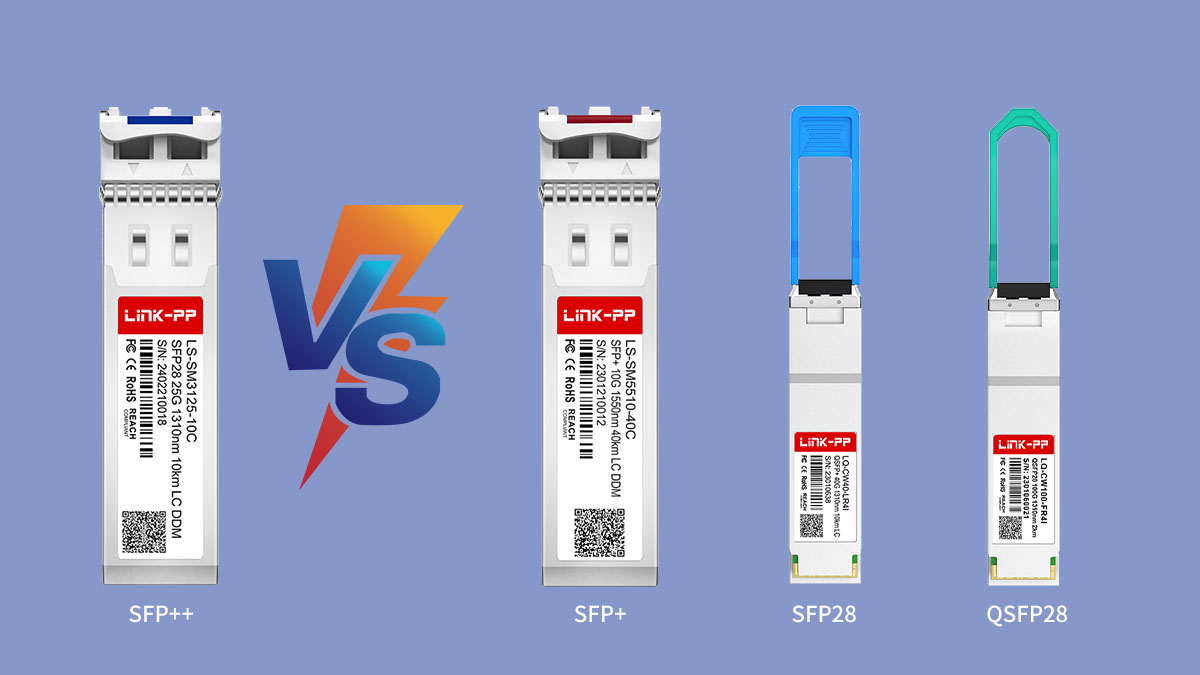
SFP++ occupies a unique position among optical transceiver modules, providing higher speeds while maintaining a compact form factor. Compared to SFP+, SFP28, and QSFP28, it offers a balance of bandwidth, density, and deployment flexibility, making it suitable for both legacy upgrades and modern high-speed networks. Understanding these differences helps network engineers select the right fiber optic SFP module for specific performance and scalability requirements.
SFP++ vs SFP+
SFP++ delivers higher data rates than SFP+, typically supporting 25Gbps compared to SFP+’s 10Gbps. While both share the same physical dimensions, SFP++ offers:
- Higher bandwidth per port for data-intensive applications
- Support for multi-rate and emerging protocols beyond standard 10G Ethernet
- Compatibility with some SFP+ ports, depending on switch firmware and vendor specifications
This makes SFP++ a natural upgrade for organizations looking to increase network capacity without replacing the underlying switch hardware.
SFP++ vs SFP28
Although SFP28 is optimized specifically for 25Gbps Ethernet, SFP++ modules often offer multi-rate capabilities, supporting both 10G and 25G links. Key differences include:
- SFP28 is standardized for 25Gbps, while SFP++ can support a broader range of speeds
- SFP++ provides flexibility for networks with mixed 10G and 25G infrastructure
- Both maintain compact form factors, but SFP28 may have stricter vendor interoperability requirements
SFP++ vs QSFP28
QSFP28 modules are designed for 100G or 4x25G aggregated links, offering higher total bandwidth but at the cost of larger size and lower port density per switch. SFP++ is preferred when:
- High port density is required within limited rack space
- Single 25G or 10–25G links suffice for the network workload
- Lower power consumption per port is a priority
The following table summarizes the key differences:
| Feature | SFP+ | SFP++ | SFP28 | QSFP28 |
|---|---|---|---|---|
| Typical Data Rate | 10 Gbps | 10–25 Gbps | 25 Gbps | 100 Gbps (4x25G) |
| Form Factor | Compact | Compact (same as SFP+) | Compact | Quad Small Form-Factor |
| Media Options | Copper, Optical | Copper, Optical, AOC | Copper, Optical | Copper, Optical |
| Port Density | High | High | High | Lower per switch |
| Use Cases | 10G LAN/DC | 25G DC, HPC, Cloud | 25G DC | Aggregated 100G links |
SFP++ provides a middle ground between SFP+ and QSFP28, combining high bandwidth, flexible deployment options, and compact design. It is particularly suitable for data centers requiring scalable upgrades and dense 25G interconnects without fully transitioning to quad-lane modules.
✳️ Technical Specifications of SFP++
SFP++ modules are designed to deliver high-speed connectivity with flexibility across media types and operational conditions. Their technical specifications make them suitable for modern data centers, cloud infrastructure, and high-performance computing clusters. Understanding these parameters helps network engineers choose the right SFP++ variant for specific deployment scenarios.
Data Rates and Protocol Support
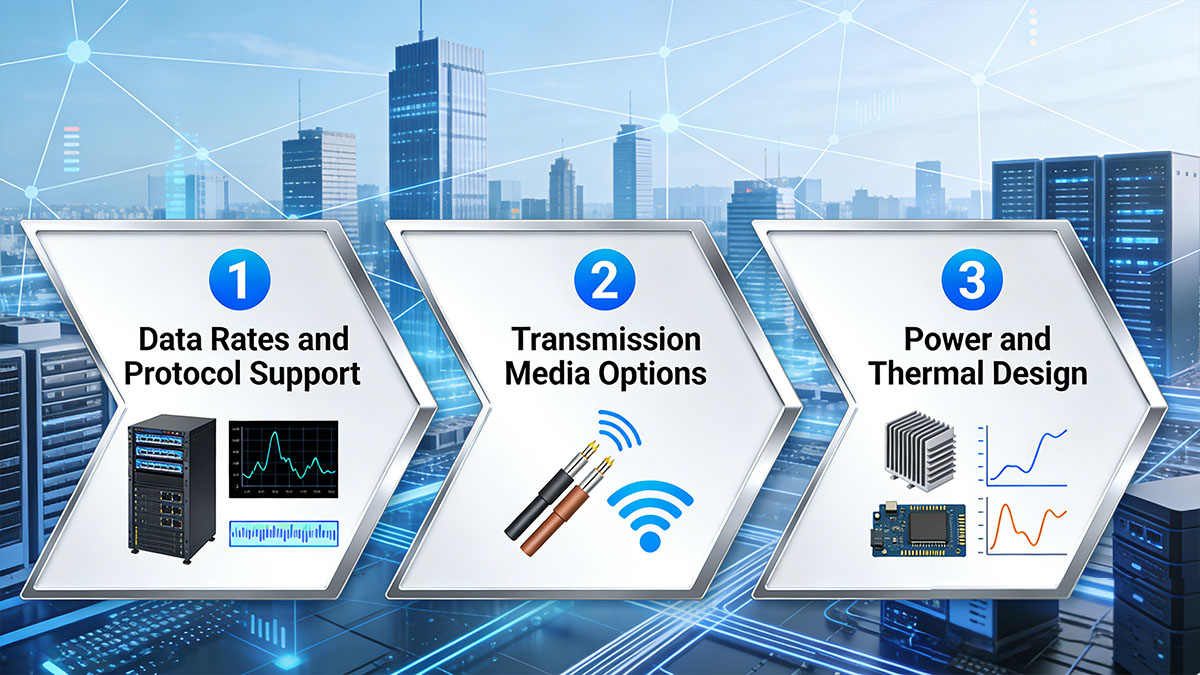
SFP++ supports multi-rate operation, typically from 10Gbps up to 25Gbps. Some variants also support specialized protocols such as 32G Fibre Channel or emerging 25G Ethernet standards, making them versatile across network applications. Key points include:
- Multi-rate capability allows backward compatibility with 10G infrastructure
- High-speed 25G links enable dense uplink deployment in leaf-spine architectures
- Supports both Ethernet and storage protocols, enabling unified networking solutions
Transmission Media Options
SFP++ can operate over different media types depending on distance and application needs. The main categories include:
- Direct Attach Copper (DAC): Cost-effective for short intra-rack connections (up to 5–7 meters)
- Active Optical Cable (AOC): Longer reach (up to 100 meters or more), low latency, lightweight cables
- Optical Transceivers: Multimode (SR) for short-distance and single-mode (LR/ER) for longer distances
| Media Type | Typical Distance | Use Case |
|---|---|---|
| DAC | 1–7 meters | Intra-rack, high-density links |
| AOC | 10–100 meters | Inter-rack, flexible cabling |
| SR (MMF) | 100–150 meters | Short-reach optical connectivity |
| LR/ER (SMF) | 2–40 km | Long-distance data center interconnect |
This diversity allows SFP++ to support both dense data center environments and longer spine-leaf or campus connections without changing the switch hardware.
Power and Thermal Design
SFP++ modules generally consume slightly more power than SFP+, typically ranging from 1.0 to 2.5 watts per port. Efficient thermal design ensures stable operation even in high-density deployments. Considerations include:
- Proper airflow and rack cooling to prevent thermal throttling
- Power budgeting when scaling multiple SFP++ ports in a single switch
- Some high-speed transceivers may require additional monitoring for optimal performance
Latency and Signal Integrity
SFP++ is engineered for low-latency operation, critical for high-performance workloads such as HPC clusters, AI training, and real-time analytics. Key factors affecting latency include:
- Media type selection (DAC generally has lower latency than optical links)
- Cable length and signal conditioning for longer optical runs
- Switch hardware optimization and firmware compatibility
By evaluating these technical specifications, network architects can select SFP++ modules that optimize performance, density, and energy efficiency for their specific deployment needs.
✳️ Key Advantages of SFP++
SFP++ offers a compelling balance of performance, flexibility, and efficiency, making it a preferred choice for modern data centers and enterprise networks. Its advantages extend beyond raw bandwidth, impacting port density, deployment flexibility, and overall operational efficiency.
Higher Bandwidth Efficiency
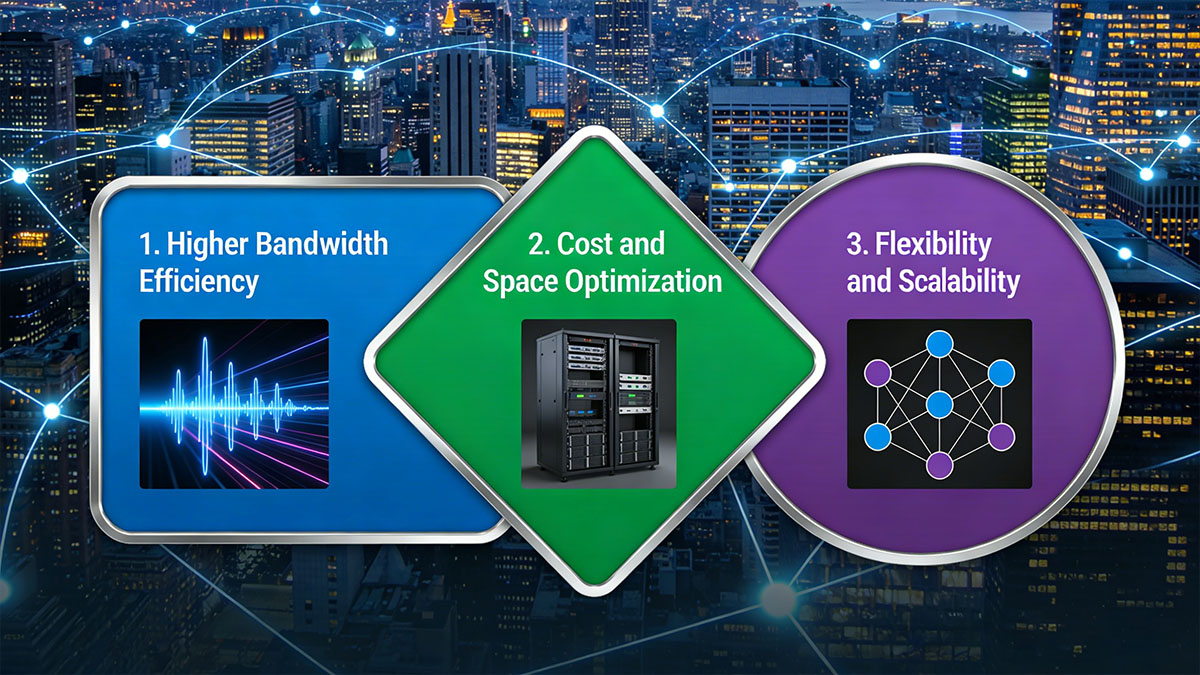
SFP++ significantly increases the available bandwidth per port compared to legacy SFP+ modules. This allows networks to handle high-throughput applications such as cloud computing, big data analytics, and AI workloads without upgrading switch hardware extensively. Key points include:
- Supports 25Gbps and multi-rate operation, allowing smooth transitions from 10G to 25G
- Enables high-performance uplinks in spine-leaf architectures for reduced bottlenecks
- Optimizes network throughput while minimizing port expansion
Cost and Space Optimization
The compact form factor of SFP++ allows for high-density port deployment, which reduces the need for additional switches and racks. This leads to cost savings in both hardware and operational expenses. Additional benefits include:
- Maintaining compatibility with existing SFP+ ports in many devices reduces hardware replacement costs
- Compact design lowers cabling complexity and simplifies rack management
- Enables incremental network upgrades without overhauling the entire infrastructure
Flexibility and Scalability
SFP++ provides versatile deployment options, supporting multiple media types and link distances, which ensures it can adapt to varying network requirements. Its scalability is particularly beneficial for growing data centers. Advantages include:
- Supports DAC, AOC, and optical modules, allowing deployment across short, medium, and long distances
- Compatible with multiple protocols, including Ethernet and Fibre Channel, for converged networks
- Facilitates incremental scaling, letting organizations add higher-speed links as demand grows
By combining higher bandwidth, port density, and deployment flexibility, SFP++ modules offer a practical and future-proof solution for organizations seeking to enhance network performance while controlling costs and operational complexity.
✳️ Common Use Cases of SFP++
SFP++ is widely adopted across data centers, enterprise networks, and high-performance computing environments due to its combination of high bandwidth, flexibility, and compact form factor. It provides reliable, scalable connectivity in scenarios where both performance and port density are critical.
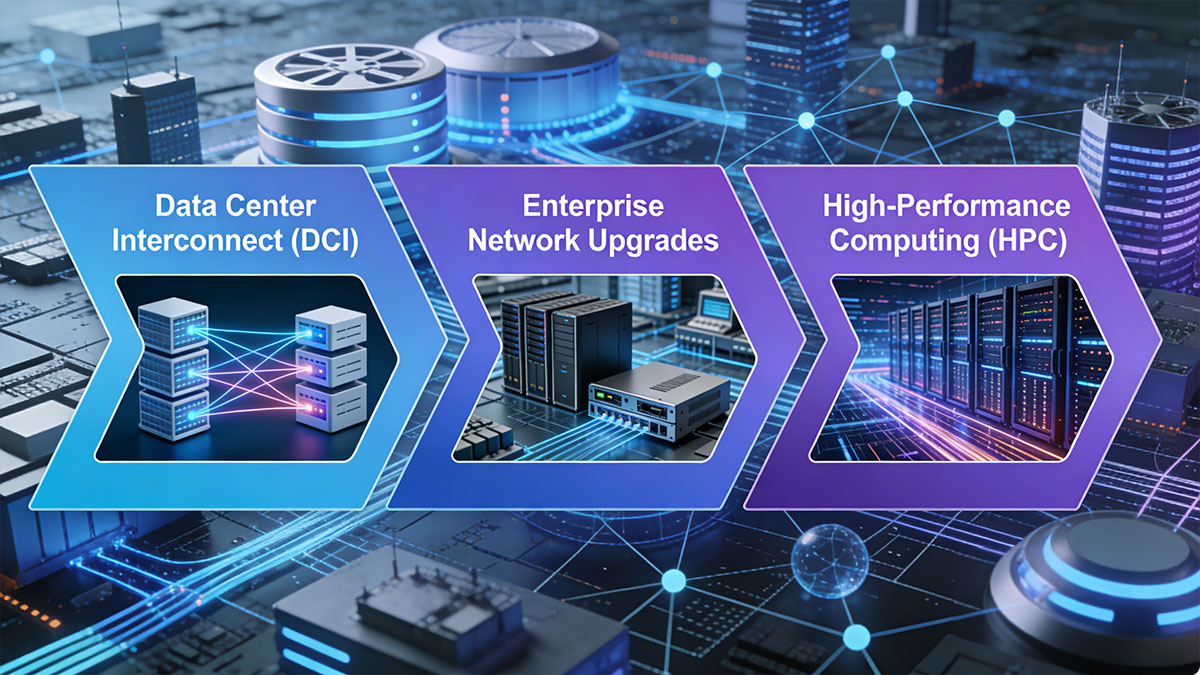
Data Center Interconnect (DCI)
SFP++ modules are frequently used for connecting multiple data centers or bridging racks within a single facility. They provide low-latency, high-speed links that are essential for modern workloads. Key benefits include:
- High-speed 25Gbps links for intra- and inter-rack connectivity
- Support for optical transceivers allowing distances from hundreds of meters to several kilometers
- Low latency and high signal integrity for latency-sensitive applications such as real-time analytics
Enterprise Network Upgrades
For enterprises transitioning from 10G to 25G networks, SFP++ provides a cost-effective upgrade path without the need to replace the entire switching infrastructure. Use cases include:
- Upgrading core and aggregation switches while maintaining existing SFP+ ports
- Deploying multi-rate SFP++ modules to support mixed 10G/25G devices
- Supporting converged Ethernet and storage networks for unified infrastructure
High-Performance Computing (HPC) Clusters
HPC and AI environments benefit from the low-latency and high-throughput capabilities of SFP++ modules. Typical deployment scenarios involve:
- Connecting compute nodes with high-speed, short-distance DAC or AOC links
- Enabling high-speed spine-leaf topologies in cluster environments
- Supporting workloads with heavy inter-node data transfers, such as AI training and scientific simulations
By addressing these scenarios, SFP++ helps organizations optimize network performance, simplify infrastructure scaling, and provide future-proof connectivity that aligns with evolving bandwidth demands.
✳️ Deployment Considerations for SFP++
Successful deployment of SFP++ modules requires careful planning to ensure optimal performance, compatibility, and long-term scalability. Ignoring these considerations can result in link failures, degraded throughput, or increased operational complexity.
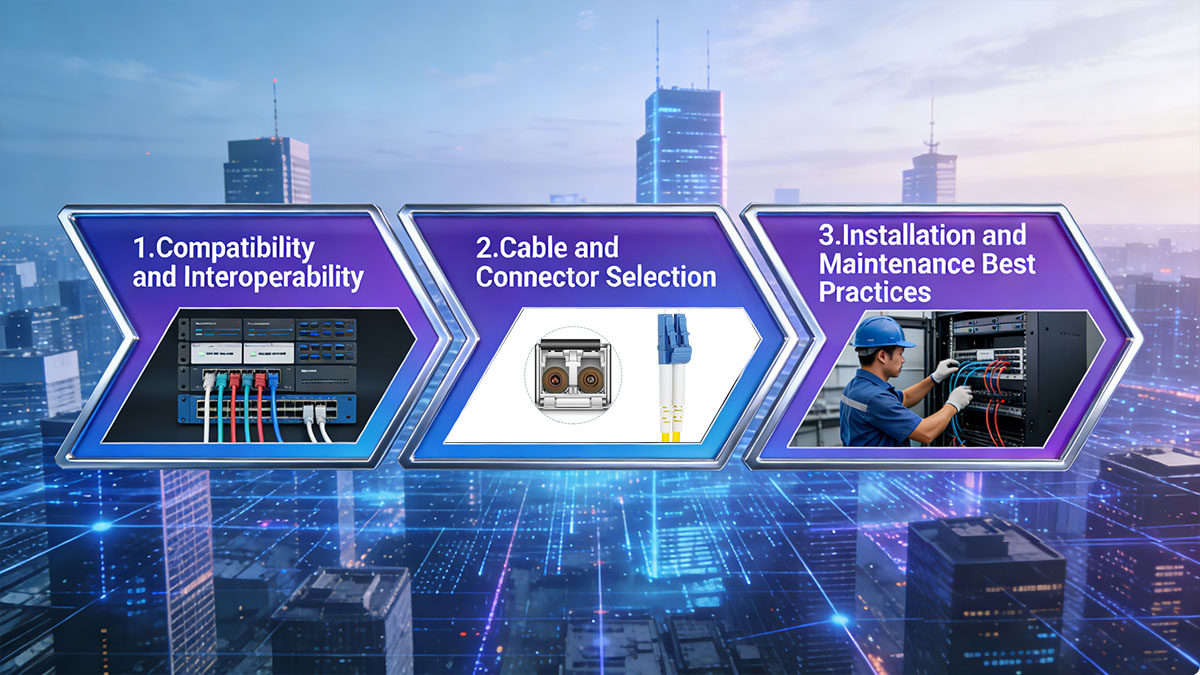
Compatibility and Interoperability
SFP++ is compatible with many SFP+ ports, but not all switches and transceivers guarantee full interoperability. Key points to consider include:
- Switch and Vendor Support: Verify that the switch firmware and vendor specifications officially support SFP++ modules. Some switches may limit data rate or disable certain features with non-certified modules.
- Multi-Rate Considerations: SFP++ can operate at 10G or 25G, but devices must negotiate rates properly. Misalignment can lead to link flaps or suboptimal performance.
- Protocol Compatibility: Ensure that the selected SFP++ module supports the required network protocols, such as Ethernet, Fibre Channel, or converged transport.
Cable and Connector Selection
Selecting the appropriate cable or connector is critical for achieving optimal performance and reliability with SFP++ modules. Deployment decisions should consider distance, density, latency requirements, and cost-efficiency:
- Direct Attach Copper (DAC): Best suited for short intra-rack connections where very low latency is critical and budget constraints are important. Its simplicity and low power usage make it ideal for high-density switch environments.Typical examples include passive 25G SFP28 DAC cables such as:Cisco SFP-H25GB-CU1M / NVIDIA MCP2M00-A001 / Juniper JNP-25G-DAC-1M.
- Active Optical Cable (AOC): Used for inter-rack or mid-range distances where flexibility and lightweight cabling are needed. AOCs reduce signal loss over longer distances than DAC while maintaining relatively low latency.Common examples include:Cisco SFP-25G-AOC1M / Arista CAB-SFP-SFP-25G-3M / Intel E25GSFP28AOC3M.
- Multimode Transceivers (SR): Preferred for short optical spans, especially when multiple connections must coexist in the same rack or pathway. Lower cost than single-mode options, but limited by modal dispersion over longer runs.Representative modules include:Cisco SFP-10G-SR / Cisco SFP-25G-SR-S / Arista SFP-25G-SR.
- Single-Mode Transceivers (LR/ER): Required for long-distance connections, such as data center interconnects or campus networks. Provides reliable high-speed links over tens of kilometers but requires precise alignment and higher-quality fiber.Typical examples include:Cisco SFP-10G-LR / Cisco SFP-25G-LR-S /Arista SFP-25G-ER40.
| Media Type | Max Distance | Typical Use Case | Latency Profile |
|---|---|---|---|
| DAC | 1–7 m | Intra-rack short links | Very low |
| AOC | 10–100 m | Inter-rack flexible cabling | Low |
| SR | 100–150 m | Short optical spans | Moderate |
| LR/ER | 2–40 km | Long-distance optical links | Low to moderate |
With this combination, the list provides guidance on when and why to use each media type, while the table offers a concise reference for distance, use case, and latency, ensuring engineers can make informed deployment decisions efficiently.
Installation and Maintenance Best Practices
Proper handling and monitoring are essential for reliable SFP++ operation:
- Handling Procedures: Avoid touching the optical connector tips; always use dust caps when modules are removed.
- Insertion and Removal: Follow vendor guidelines for insertion/removal to prevent mechanical damage.
- Performance Monitoring: Use switch diagnostics to track signal integrity, error rates, and thermal conditions.
- Power and Thermal Management: Plan airflow and rack layout to prevent heat accumulation, especially in high-density deployments.
- Firmware Updates: Keep switch and transceiver firmware up to date to ensure multi-rate negotiation and compatibility features function correctly.
By addressing these deployment considerations, network engineers can maximize the performance, reliability, and lifespan of SFP++ modules, ensuring that high-speed links operate efficiently under dense and demanding network conditions.
✳️ Challenges and Limitations of SFP++
SFP++ offers high-speed connectivity and deployment flexibility, but engineers must be aware of its technical constraints to ensure reliable and scalable network performance.
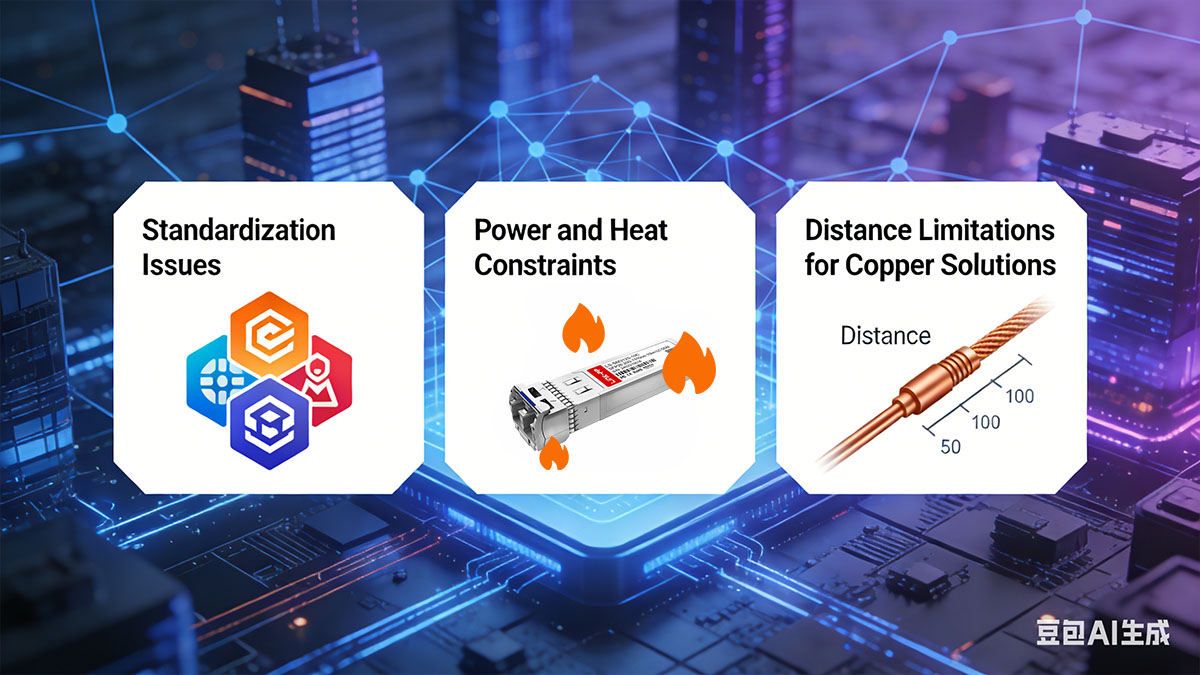
Standardization Issues
SFP++ lacks a single, universally accepted standard, which introduces potential interoperability challenges across different vendors and switch platforms.
- Vendor Variability: While many vendors produce SFP++ modules, differences in firmware implementation, electrical signaling, and multi-rate negotiation can lead to inconsistent performance. Some switches may partially support certain SFP++ modules, causing reduced data rates or disabled ports.
- Limited Multi-Rate Guarantee: Unlike fully standardized SFP28 modules, SFP++’s multi-rate operation (10G/25G) may behave differently depending on switch and transceiver combination. Network engineers must verify compatibility matrices and firmware updates to avoid unexpected link instability.
- Diagnostics and Monitoring Differences: Variations in Digital Diagnostics Monitoring (DDM) support across vendors can affect real-time monitoring of temperature, voltage, and optical power, complicating proactive network management.
Power and Heat Constraints
SFP++ modules consume more power than standard SFP+ devices due to higher signaling rates and signal conditioning requirements. Dense deployments exacerbate thermal challenges:
- Power Consumption: Typical SFP++ modules draw between 1.0–2.5W per port. In large-scale, high-density switches, cumulative power can stress power budgets and require careful planning of upstream power supplies.
- Thermal Management: High port density increases the risk of localized heat accumulation. Inadequate airflow can lead to thermal throttling, potentially reducing throughput or shortening module lifespan.
- Mitigation Strategies: Network architects must consider switch placement, airflow patterns, and active cooling solutions to maintain stable operating temperatures in data center racks.
Distance Limitations for Copper Solutions
Direct Attach Copper (DAC) cables are cost-effective and low-latency but have strict distance limitations, necessitating alternative solutions for longer connections:
- Short-Reach Constraints: Passive DAC cables typically support 1–5 meters, while active DACs extend reach up to 7 meters. Beyond these distances, signal attenuation and crosstalk can compromise reliability.
- Optical Necessity: For inter-rack or campus connections exceeding DAC limitations, Active Optical Cables (AOC) or optical transceivers (SR, LR, ER) are required. These options introduce higher cost, additional installation considerations, and potentially slightly increased latency.
- Planning Considerations: Network engineers must map physical layouts carefully to determine where copper can be used effectively and where optical links are mandatory, balancing performance, cost, and deployment complexity.
By understanding these technical limitations—standardization inconsistencies, power and thermal constraints, and copper distance restrictions—network teams can plan SFP++ deployments that maintain reliability, scalability, and long-term performance in dense, high-speed environments.
✳️ Future Trends of SFP++ Technology
SFP++ will continue to play a transitional and strategic role in networking, bridging current 10G/25G infrastructures to emerging high-speed standards while supporting evolving data center demands. Its future relevance depends on integration with higher-speed modules, AI/cloud workloads, and next-generation form factors.

Integration with 50G and Beyond
SFP++ serves as a stepping stone toward 50G and 100G network ecosystems, enabling incremental upgrades while maintaining compatibility with existing hardware:
- Role in Emerging 50G/100G Ecosystems: SFP++ can coexist with newer pluggable modules like SFP56 and QSFP56, providing flexible pathways for organizations gradually increasing per-port bandwidth. This reduces immediate capital expenditure while preparing the network for future high-throughput applications.
- Evolution Toward Higher-Speed Pluggable Modules: While SFP++ remains valuable for 25G links, ongoing research and deployment of SFP56 and QSFP56 modules offer double the per-lane throughput. SFP++ provides backward compatibility and an upgrade path that avoids wholesale infrastructure replacement.
Role in AI and Cloud Infrastructure
High-performance workloads in AI, machine learning, and cloud environments require extremely low latency and high throughput, areas where SFP++ continues to be relevant:
- Supporting Data-Intensive Workloads: SFP++ links can sustain large inter-node traffic, essential for AI training clusters, cloud storage synchronization, and real-time analytics.
- Demand for Low-Latency, High-Throughput Connectivity: DAC and AOC SFP++ implementations minimize latency in short- and mid-range deployments, enabling efficient leaf-spine topologies and reducing bottlenecks in high-performance computing environments.
Transition Toward Next-Gen Form Factors
As network speeds and architectural demands grow, SFP++ is gradually complemented or replaced by next-generation modules such as SFP56 and QSFP56:
- Comparison with SFP56, QSFP56, and Beyond: SFP56 provides standardized 50G per-lane performance with backward compatibility to SFP++ ports, while QSFP56 aggregates multiple lanes for 200GBASE/400GBASE links. These modules address ultra-high-speed aggregation and long-term scalability beyond SFP++ capabilities.
- Long-Term Relevance of SFP++: Despite emerging form factors, SFP++ will remain relevant in transitional networks, high-density 25G deployments, and scenarios where cost-effective, incremental upgrades are needed. Its compact size, low power, and multi-rate operation ensure a continued role in mid-tier and enterprise deployments before full adoption of higher-speed optics.
In summary, SFP++ acts as a bridge between legacy 10G/25G networks and future 50G/100G infrastructures. Its ability to support high-density, low-latency links while providing a flexible upgrade path ensures that it will continue to be strategically valuable in evolving data center, AI, and cloud environments.
✳️ Conclusion
SFP++ modules continue to serve as a vital link in modern high-speed networking, bridging 10G infrastructures with emerging 25G, 50G, and even 100G environments. Their combination of high bandwidth, compact form factor, multi-rate flexibility, and support for diverse media types makes them ideal for data centers, enterprise networks, and AI or cloud workloads. While challenges such as vendor variability, power consumption, and distance limitations exist, careful planning and deployment strategies can mitigate these risks, ensuring reliable, scalable, and cost-effective network performance.
As organizations plan network upgrades or expand high-density environments, SFP++ remains a practical solution for incremental scaling, low-latency connections, and dense port deployments. For reliable, high-quality SFP++ modules compatible with a wide range of network devices, visit the LINK-PP Official Store to explore available options and technical specifications.