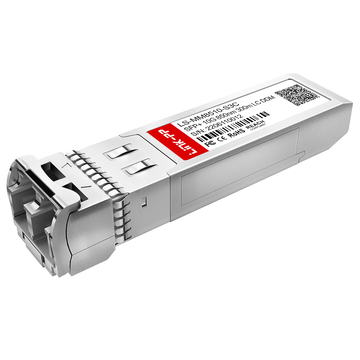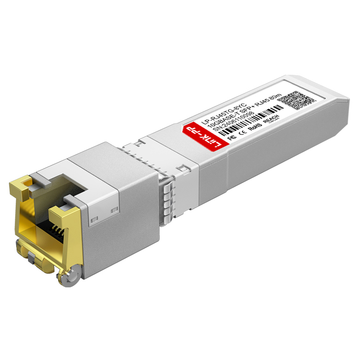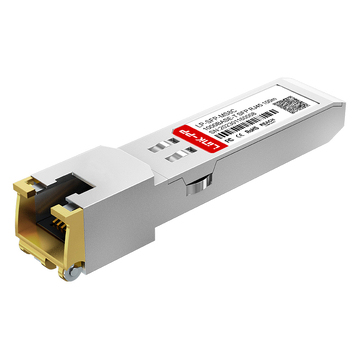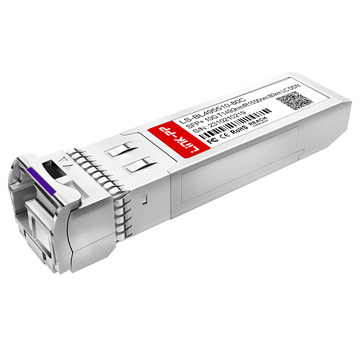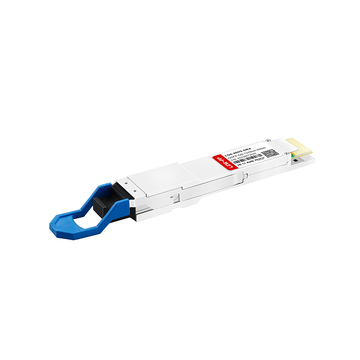






























As you build out a high-performance 10G network, choosing the right connectivity medium can drastically impact your deployment costs, power budget, and latency. The SFP 10GBASE-CX1 — commonly known as a direct-attach copper (DAC) Twinax cable — has become a staple in modern data centers. Operating over short distances, this hardware specification offers a highly efficient, plug-and-play alternative to expensive fiber optics and power-hungry standard copper cabling.
In Cisco network environments, the SFP 10GBASE-CX1 shines in high-density, short-range deployments like Top-of-Rack (ToR) switching, server-to-switch patching, and storage area networks (SAN). This guide explores the technical architecture of 10GBASE-CX1, compares it to alternative 10G media types, and breaks down the core use cases and hardware compatibility you need to know to optimize your network infrastructure.
📖 Technical Architecture and Core Specifications of SFP 10GBASE-CX1
The SFP 10GBASE-CX1 standard forms the foundation of short-range, high-speed copper connectivity within modern data centers. By integrating the 10G SFP+ transceiver module directly with a fixed copper cable, this architecture eliminates the need for separate optical modules and patch cords. This design provides a highly reliable, low-power, and cost-effective physical layer engineered specifically for localized 10-Gigabit Ethernet deployments.
Understanding Twinaxial Cabling and Signalling Mechanics
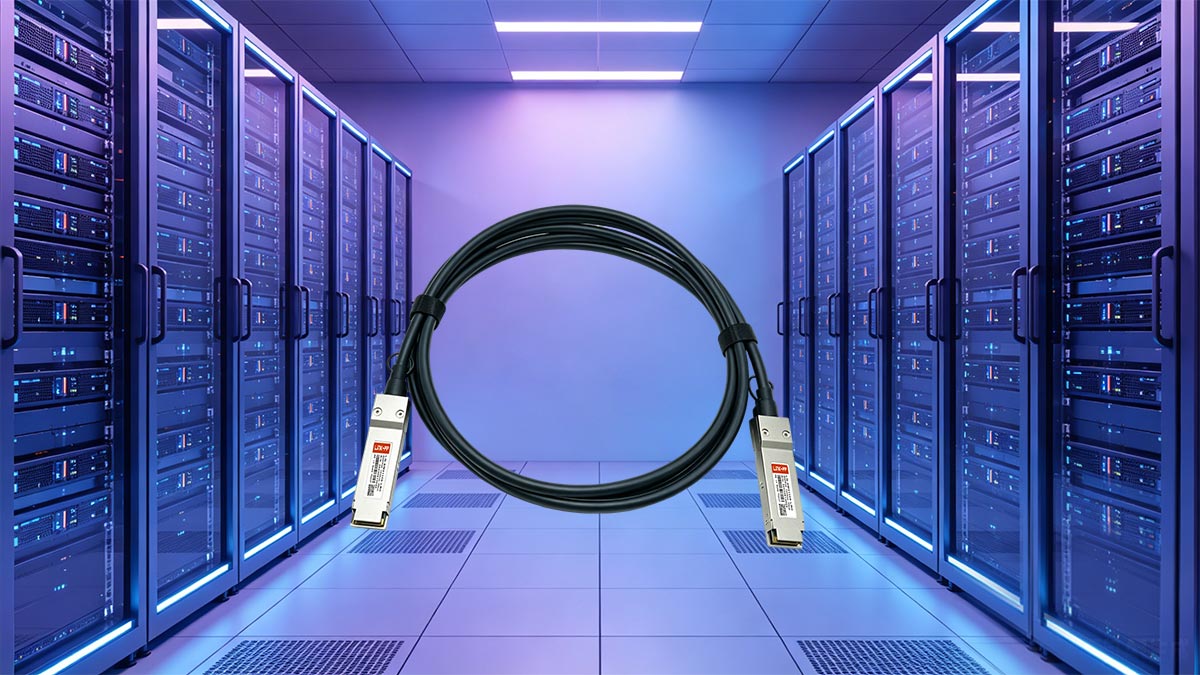
At the heart of the SFP 10GBASE-CX1 architecture is twinaxial (Twinax) cabling, a specialized copper medium designed to handle high-frequency data transmission. Unlike standard coaxial cable which uses a single conductor, Twinax features two inner conductors surrounded by a core dielectric and a shared braided shield. This unique construction is critical for maintaining high-speed signal integrity over copper.
- Differential Signaling: The two internal conductors transmit signals using differential signaling mechanics. One wire carries the positive signal while the other carries the negative inverted signal. This allows the receiving network interface to effectively cancel out electromagnetic interference (EMI) and cross-talk, which are prevalent in dense server racks.
- Passive Components: 10GBASE-CX1 SFP modules are primarily deployed as passive DAC (Direct Attach Copper) cables. Because they do not contain active electronics to amplify the signal, they rely entirely on the host switch or NIC's built-in Electronic Dispersion Compensation (EDC) to clear up signal distortions. This lack of active components results in near-zero power consumption and maximum hardware reliability.
Maximum Distance Limits and Signal Attenuation Factors
The performance of 10GBASE-CX1 SFP transceiver is strictly bound by physical length constraints, making it a specialized tool for localized patching. Because it is a copper-based medium running at incredibly high frequencies, signal degradation happens rapidly as length increases, restricting its deployment to immediate rack environments.
- 5-Meter Passive Physical Limit: Under standard operational guidelines for passive DAC Twinax cables, the maximum reliable transmission distance is 5 meters (approximately 16.4 feet). While the overarching theoretical specification can extend slightly further with active boosting, passive 10GBASE-CX1 cables are strictly capped at 5 meters to guarantee error-free data transmission without signal amplification.
- High-Frequency Attenuation: As data rates reach 10Gbps, skin effect and dielectric losses cause severe high-frequency signal attenuation. Essentially, the higher frequencies of the data stream fade faster than the lower frequencies, distorting the digital waveform and increasing the Bit Error Rate (BER) if the cable is too long.
- Wire Gauge (AWG) Impact: Cable thickness plays a massive role in combating this attenuation over different lengths. Shorter cables (1m to 3m) typically use thinner 30 AWG wiring for better flexibility, while longer variants (4m to 5m) require thicker 24 AWG or 26 AWG conductors to reduce electrical resistance and preserve signal integrity across the maximum allowable distance.
Compliance with IEEE 802.3 and SFP+ MSA Specifications
To guarantee seamless interoperability across diverse networking environments, SFP 10GBASE-CX1 conforms to strict international hardware and electrical standards. This standardized framework ensures that a Cisco switch can reliably connect to various server network interface cards without proprietary handshake issues.
The electrical signaling, media access control (MAC) parameters, and physical layer rules are derived from the IEEE 802.3ae standard, which first standardized 10-Gigabit Ethernet operation, and later refined by complementary specifications for copper media. This ensures uniform data framing and error-checking capabilities across all compliant devices.
Simultaneously, the physical form factor and mechanical dimensions adhere to the SFP+ Multi-Source Agreement (MSA), specifically outlined in documents like SFF-8431. The MSA defines the precise sizing of the connector housing, the pin configurations, and the I²C serial communication interface. Because of this strict compliance, network engineers can confidently deploy 10GBASE-CX1 cables knowing they will physically fit and electrically align with any standard SFP+ port.
📖 Comparing SFP 10GBASE-CX1 Against Alternative 10G Media Types
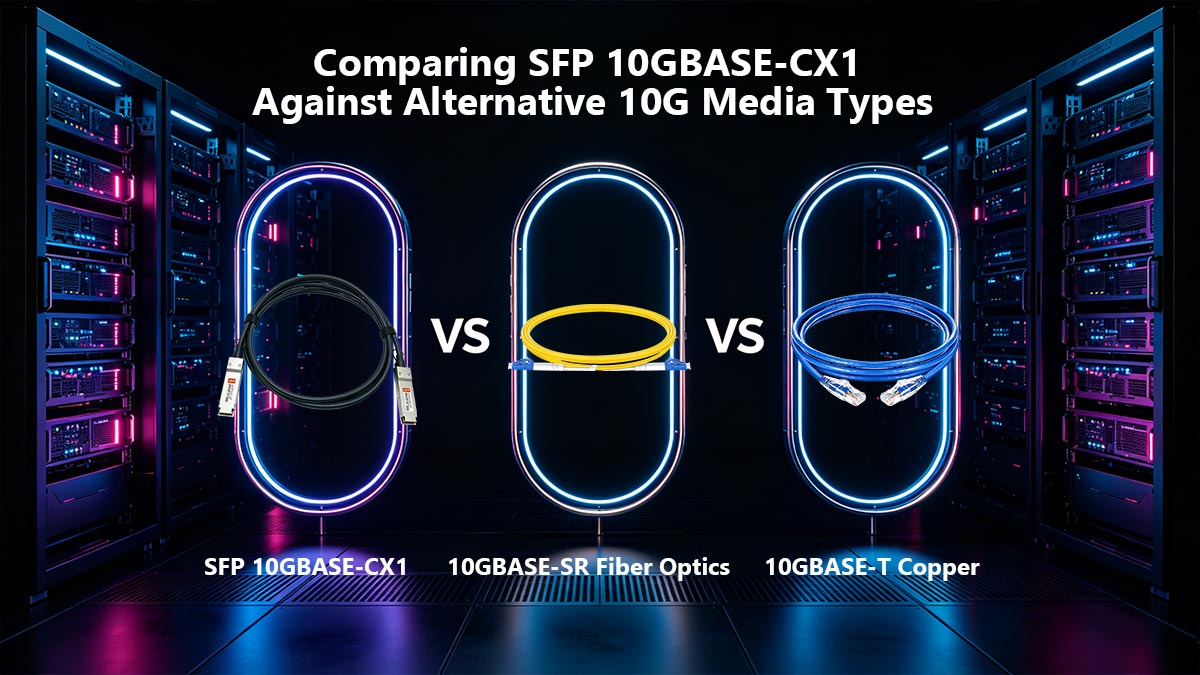
When designing a 10-Gigabit network infrastructure, selecting the right media type involves balancing performance, cost, and physical environment constraints. While SFP 10GBASE-CX1 offers a highly optimized solution for localized connections, it must compete with optical fiber and standard twisted-pair copper. Understanding how these technologies contrast in latency, power consumption, and flexibility is key to architecting an efficient data center network.
SFP 10GBASE-CX1 vs. 10GBASE-SR Fiber Optics: Latency and Cost
SFP 10GBASE-CX1 (Direct Attach Copper) and 10GBASE-SR fiber optics are both popular choices for SFP+ 10G networks, but they operate on entirely different physical principles. SFP 10G SR relies on multimode fiber cables and optical transceivers to convert electrical signals into light pulses. This conversion process introduces a tiny amount of electronic latency. In contrast, 10GBASE-CX1 transmits pure electrical signals directly over copper wire, bypassing the transceiver conversion delay and offering a near-zero latency advantage that is highly prized in high-frequency trading networks.
From a financial standpoint, 10GBASE-CX1 is drastically more economical for short runs because you purchase a single, integrated cable assembly rather than two separate optical modules and a fiber patch cord. The table below outlines the core differences in performance and deployment expenses between these two media types.
| Feature / Metric | SFP 10GBASE-CX1 (Passive DAC) | 10GBASE-SR Fiber Optics |
| Transmission Medium | Twinaxial Copper | Multimode Optical Fiber (OM3/OM4) |
| Hardware Components | Integrated Single Cable Assembly | 2x Transceivers + 1x Fiber Patch Cable |
| Latency | Ultra-low (Approx. 0.1μs per link) | Low (Approx. 1μs due to optical conversion) |
| Maximum Distance | Up to 5m | Up to 300m (OM3) / 400m (OM4) |
| Relative Cost | Low (Most cost-effective short-range option) | High (Driven by transceiver manufacturing costs) |
SFP 10GBASE-CX1 vs. 10GBASE-T Copper: Power Efficiency and Heat
Standard 10GBASE-T technology utilizes traditional RJ-45 copper patches (Category 6A or 7) to deliver 10G speeds over longer distances up to 100m. However, pushing such high frequencies over twisted-pair copper requires intensive digital signal processing (DSP) to mitigate crosstalk and echo, which consumes a massive amount of electrical power. SFP 10GBASE-CX1 completely bypasses the need for complex DSP because its shielded Twinax design natively blocks interference over short distances.
Consequently, passive 10GBASE-CX1 cables consume virtually zero power (around 0.25 watts per cable), whereas a 10GBASE-T SFP (like SFP-10G-T) can consume up to 2 to 5 watts. The following comparison highlights how this power gap affects overall data center thermal management.
| Feature / Metric | SFP 10GBASE-CX1 (Passive DAC) | 10GBASE-T Copper (RJ-45) |
| Power Consumption | approx 0.25 Watts per cable | 2.0 to 5.0 Watts per port |
| Heat Dissipation | Negligible thermal footprint | High thermal load (Requires robust cooling) |
| Cabling Medium | Twinaxial Copper | Cat 6A / Cat 7 Twisted Pair |
| Maximum Distance | Up to 5m | Up to 100m |
| Connector Type | SFP+ Direct Attach | Standard RJ-45 |
Cable Flexibility, Bend Radius, and Physical Deployment Constraints
While SFP 10GBASE-CX1 excels in power and cost efficiency, its physical properties introduce distinct deployment challenges. Twinaxial copper cables are noticeably thicker and stiffer than both multimode fiber optics and standard twisted-pair Ethernet cables. The heavy shielding and internal dual-conductor design mean that 10GBASE-CX1 cables have a much stricter minimum bend radius.
Bending a Twinax cable too sharply can permanently deform the internal core dielectric, causing an impedance mismatch that results in packet corruption or immediate link failure. Network engineers must carefully plan cable management paths within server racks, ensuring that tight corners are avoided and that there is adequate strain relief near the SFP+ switch ports to prevent mechanical damage.
Selecting the Right Media for Intrarack vs. Interrack Connectivity
The choice between SFP 10GBASE-CX1, 10GBASE-SR multimode fiber optics, and 10GBASE-T copper solution ultimately comes down to physical topology: specifically, whether you are wiring components inside a single rack (intrarack) or connecting separate rows of racks across the data center (interrack).
For intrarack applications, such as connecting a Top-of-Rack (ToR) Cisco Nexus switch to neighboring servers right below it, 10GBASE-CX1 is almost always the ideal choice due to its low cost, ultra-low latency, and minimal power consumption. However, for interrack or end-of-row (EoR) architectures where cable runs easily exceed 5 meters, 10GBASE-CX1 becomes physically non-viable. For those extended distances, network architects can transition to multimode fiber optics for its distance capabilities or a 10GBASE-T solution if utilizing pre-existing structured copper patches.
📖 Data Center Top-of-Rack (ToR) Applications for SFP 10GBASE-CX1
In modern data center design, the Top-of-Rack (ToR) deployment model represents the most common use case for SFP 10GBASE-CX1 cables. Placing the network switch at the top of the server cabinet allows short Twinax cables to handle all compute-to-switch traffic locally. This approach minimizes cable runs, drastically reduces deployment costs, and simplifies localized hardware management.
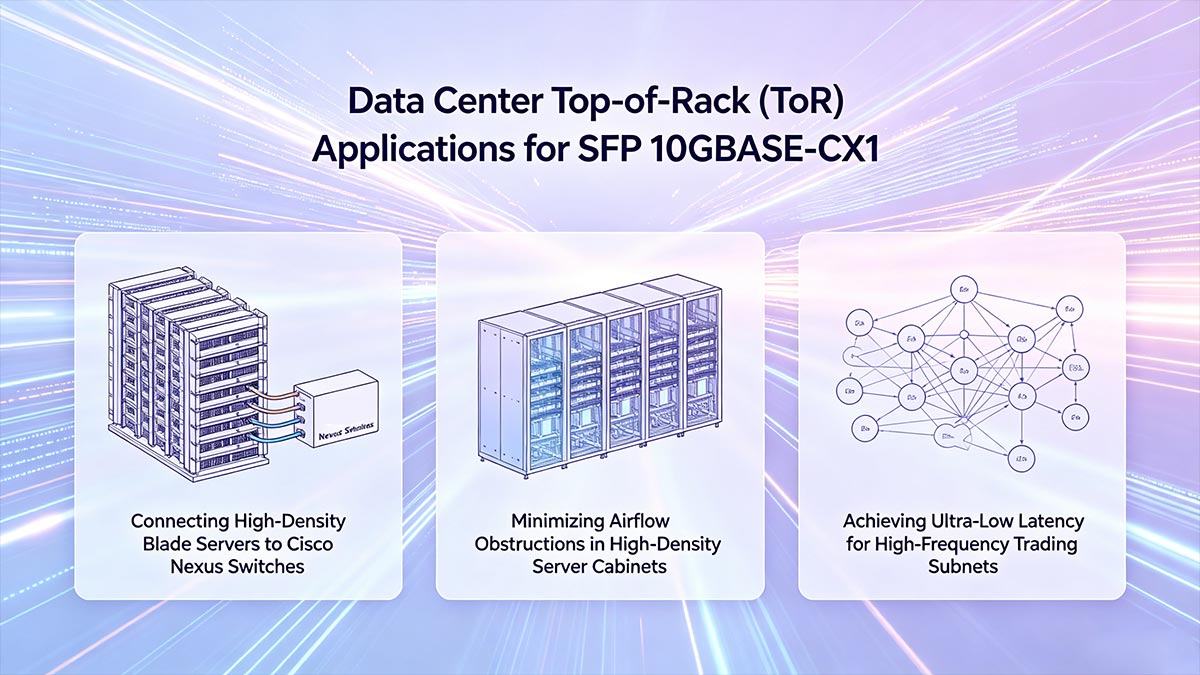
Connecting High-Density Blade Servers to Cisco Nexus Switches
Deploying high-density blade servers inside a standard chassis requires massive networking bandwidth back to the core infrastructure. SFP 10GBASE-CX1 provides the ideal physical link to bridge these blade server chassis enclosures directly to fixed-configuration Cisco Nexus switches positioned at the top of the same rack.
Using short, passive Twinax cables allows network administrators to populate every available SFP+ port on a Nexus switch without exceeding power budgets or heat thresholds. The plug-and-play simplicity of these integrated assemblies ensures rapid deployment and hot-swappable provisioning whenever compute nodes are added or replaced.
Minimizing Airflow Obstructions in High-Density Server Cabinets
Proper thermal management inside packed server cabinets relies on unimpeded, front-to-back airflow. Traditional RJ-45 Category 6A copper cables are notoriously thick and bulky; packing dozens of them into a single rack creates massive cable bundles that trap heat and exhaust air inside the cabinet.
SFP 10GBASE-CX1 Twinax cables offer a much thinner physical profile than standard twisted-pair alternatives. Choosing 30 AWG variants for short runs keeps cable paths clean, optimizes airflow pathways, and prevents thermal hot spots from damaging sensitive server components.
Achieving Ultra-Low Latency for High-Frequency Trading Subnets
In high-frequency trading (HFT) and financial subnets, every single microsecond of network transit delay directly impacts profitability. Standard optical transceivers and 10GBASE-T twisted-pair hardware introduce internal processing latency during digital signal conversions.
Because SFP 10GBASE-CX1 uses a direct, unamplified copper connection, it transmits electrical signals with near-zero transit delay. This native speed advantage makes it the ideal choice for interconnecting high-density algorithmic trading servers to low-latency Cisco Nexus switches within the same rack.
📖 Enterprise Core Integration and Distribution Layer Applications for SFP 10GBASE-CX1
Beyond the data center, SFP 10GBASE-CX1 plays a crucial role in enterprise campus networks at the core and distribution layers. When multiple campus backbone switches are co-located within the same central equipment rack, Twinax cabling offers a highly reliable method for handling massive aggregation traffic. It provides network engineers with a cost-effective strategy to eliminate localized bottlenecks without consuming expensive fiber optic switch ports.
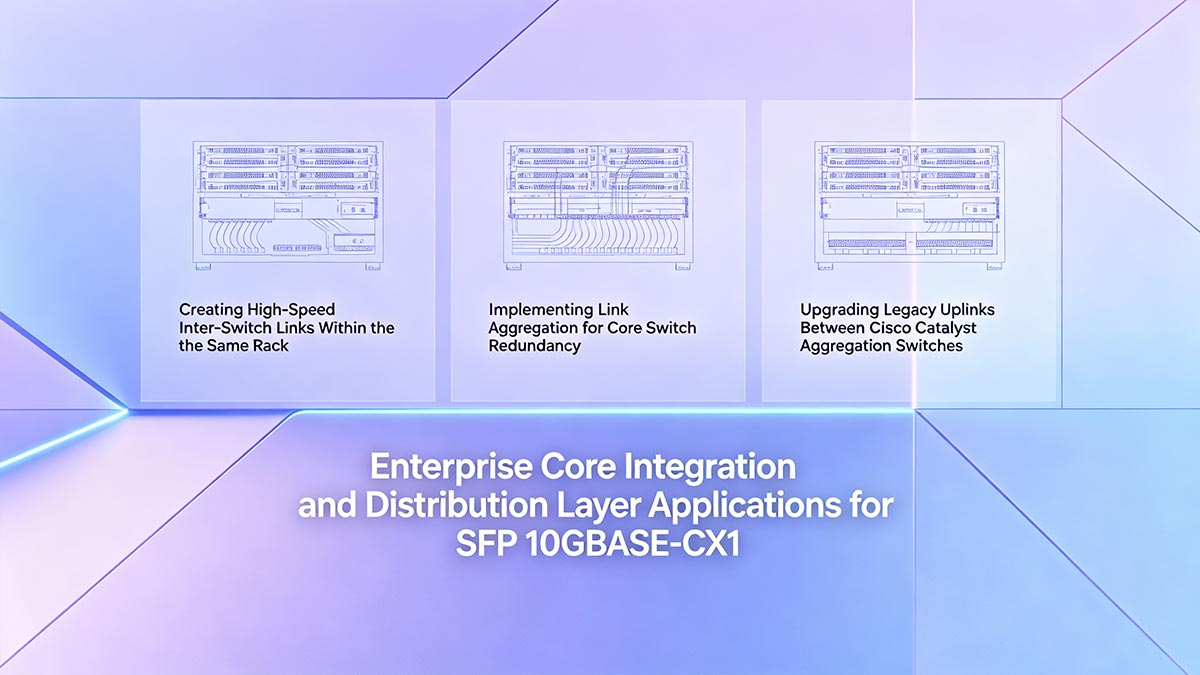
Creating High-Speed Inter-Switch Links (ISL) Within the Same Rack
In an enterprise network distribution layer, adjacent switches frequently need to pass enormous amounts of east-west traffic between different network segments. Using SFP 10GBASE-CX1 to build Inter-Switch Links (ISL) allows co-located Cisco Catalyst or Nexus switches to communicate at line-rate 10G speeds without any added latency.
By keeping these high-bandwidth links local to the rack, enterprises save their long-range fiber optics for runs that actually leave the main telecommunications room. This localized copper patching approach keeps the core infrastructure highly organized, exceptionally fast, and simple to maintain.
Implementing Link Aggregation (LACP) for Core Switch Redundancy
To prevent a single point of failure from dropping the entire enterprise network, engineers use the Link Aggregation Control Protocol (LACP) to bundle multiple physical ports into a single logical channel. SFP 10GBASE-CX1 is an excellent fit for grouping multiple 10G ports together between core switches sitting in the same cabinet.
Bundling multiple Twinax connections increases the total available uplink bandwidth while ensuring automatic hardware failover. If one cable is accidentally disconnected or suffers physical damage, the remaining 10GBASE-CX1 links instantly absorb the traffic with zero network downtime.
Upgrading Legacy Uplinks Between Cisco Catalyst Aggregation Switches
Many enterprise campus networks still rely on older Gigabit Ethernet (1G) uplinks between their distribution and core layers, creating severe network bottlenecks during peak operational hours. Upgrading these legacy links to 10G using traditional fiber modules can quickly become cost-prohibitive when dealing with dozens of switches.
SFP 10GBASE-CX1 offers a highly economical upgrade path for retrofitting legacy Cisco Catalyst aggregation stacks. Network administrators can swap out old 1G SFP modules for 10G Twinax DAC cables, immediately multiplying backbone performance by tenfold without needing to overhaul the existing rack layout or invest in costly new fiber plant infrastructure.
📖 Storage Area Network (SAN) and Backup Applications for SFP 10GBASE-CX1
In high-throughput storage environments, data availability and transfer speeds dictate overall system performance. SFP 10GBASE-CX1 provides an ultra-reliable, high-bandwidth interconnect well-suited for localized Storage Area Networks (SAN) and dedicated backup clusters. By utilizing these low-latency copper links, organizations can maximize data retrieval speeds and streamline intensive backup cycles within the same equipment rack.
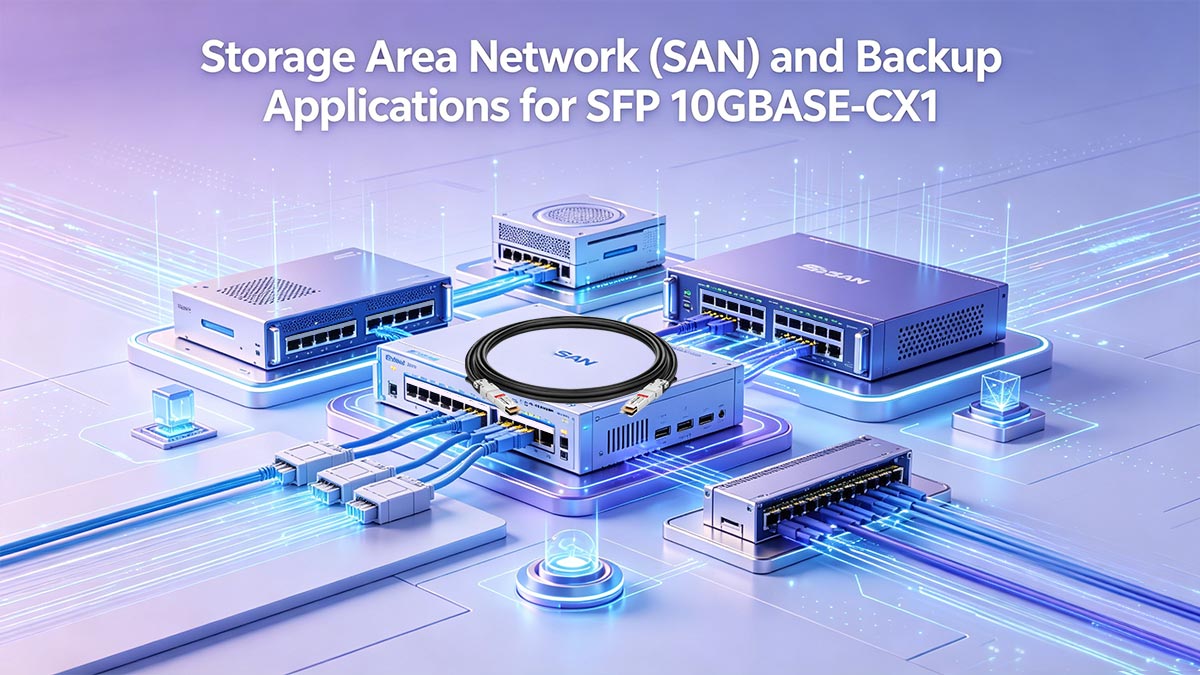
Interconnecting Cisco MDS Switches with High-Speed Flash Storage Arrays
Modern solid-state and all-flash storage arrays require massive, non-blocking pipelines to prevent input/output (I/O) bottlenecks. SFP 10GBASE-CX1 cables are frequently used to patch these high-speed flash arrays directly into dedicated storage directors, such as the Cisco MDS switch series.
Using Twinax cables for these short-range storage connections ensures that the extreme IOPS (Input/Output Operations Per Second) generated by flash drives are delivered to the storage switch without delay. This localized setup offers a highly stable fabric layer, avoiding the complexities and delicate nature of optical patch cords in high-density storage chassis.
Optimizing Throughput for iSCSI and Network Attached Storage (NAS)
For block-level data transfers over standard IP networks, protocols like iSCSI and high-performance Network Attached Storage (NAS) demand predictable, line-rate throughput. SFP 10GBASE-CX1 provides the steady 10-Gigabit pipeline necessary to handle heavy read and write requests coming from multi-tenant application servers.
Because Twinax cables do not suffer from the processing overhead or packet jitter occasionally found in power-heavy 10GBASE-T setups, iSCSI traffic remains perfectly smooth. This optimized throughput ensures that virtualized environments running on top of NAS or iSCSI volumes experience maximum responsiveness during peak workloads.
Ensuring Signal Integrity During Large-Scale Data Replication Cycles
Scheduled data backups and large-scale replication cycles push network interfaces to their absolute limits for hours at a time. The continuous, heavy electrical load can cause lesser-shielded cables to suffer from signal degradation or packet drops due to cross-talk from neighboring wires.
The robust, dual-conductor shielded design of SFP 10GBASE-CX1 guarantees excellent signal integrity during these long, intensive data dumps. By natively blocking external electromagnetic interference, Twinax cables prevent CRC errors and packet retransmissions, ensuring that backup windows are completed on time without data corruption.
📖 Hardware Compatibility and Cisco Platform Support for SFP 10GBASE-CX1
Seamless integration of SFP 10GBASE-CX1 components requires strict adherence to hardware and operating system compatibility matrices. Cisco platforms natively support these Direct Attach Copper (DAC) cables across their major enterprise and data center lines, provided the proper software release is utilized. Ensuring cross-vendor interoperability and utilizing onboard validation tools protects networks from configuration-induced port shutdowns and link failures.
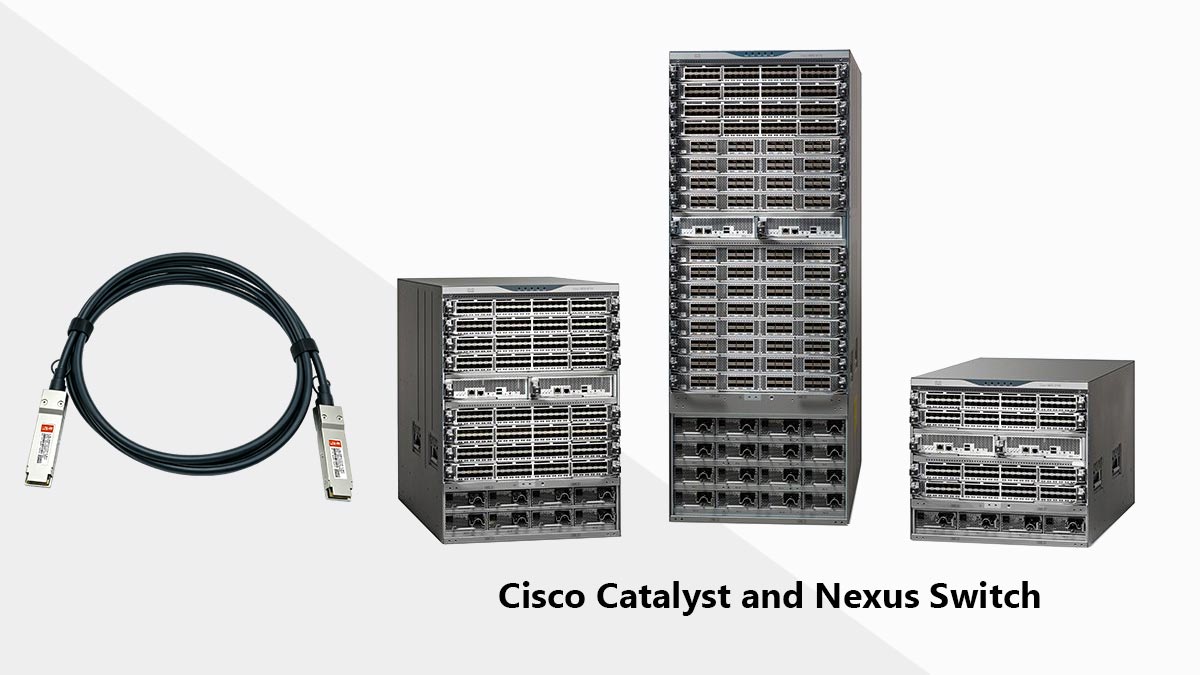
Supported Cisco Catalyst and Nexus Switch Series Matrix
Cisco provides broad hardware support for SFP 10GBASE-CX1 (often ordered under the base part number SFP-H10GB-CUxM) across its flagship switching portfolios. In data center environments, the entire Cisco Nexus Series (including the Nexus 9000, 7000, 5000, and 3000) offers native, wire-speed support for these Twinax cables on all SFP+ ports. For enterprise campus architectures, the Cisco Catalyst 9300, 9500, and legacy 3850/4500-X series support 10GBASE-CX1 modules, though administrators must verify minimum Cisco IOS-XE or NX-OS software release requirements via the official Cisco Compatibility Matrix to prevent unsupported transceiver errors.
IOS and NX-OS Command-Line Diagnostics for Transceiver Verification
When an SFP 10GBASE-CX1 cable is plugged into a Cisco port, the underlying operating system immediately queries the cable's internal EEPROM to verify its authenticity and capabilities. Network engineers can use the CLI command show interface Ethernetx/y transceiver (on NX-OS) or show idprom interface (on IOS) to read this hardware data. These commands expose vital identification tracking information, including the vendor name, Cisco part number, serial number, and exact physical cable length, confirming the link is recognized and ready for data transmission.
Handling Third-Party Compatibility and Part Number Variations
Connecting a Cisco switch to a non-Cisco device using a third-party or generic Twinax cable can trigger a "transceiver err-disabled" port shutdown condition due to vendor enforcement locks. To bypass this restriction in laboratory or non-production environments, engineers can input the global configuration command service unsupported-transceiver on Cisco IOS/IOS-XE platforms. Furthermore, it is critical to recognize Cisco's internal part number variations, where "SFP-H10GB-CU3M" indicates a standard passive cable, whereas active variants or different vendor equivalents may require explicit configuration adjustments to maintain link stability.
📖 Link Diagnostics and Troubleshooting of SFP 10GBASE-CX1
Maintaining link stability with SFP 10GBASE-CX1 cables requires a targeted approach to physical layer diagnostics. Because Twinax copper infrastructure behaves differently from fiber optics, standard debugging methods must be adapted to catch electrical faults and shielding issues. Utilizing specialized Cisco IOS and NX-OS command-line tools allows administrators to quickly isolate physical defects from configuration mismatches.
Understanding Why Copper Modules Do Not Support Digital Optical Monitoring
Network engineers often notice that running optical diagnostic commands on a 10GBASE-CX1 interface returns blank or unsupported fields. This occurs because Digital Optical Monitoring (DOM) is fundamentally designed to measure optical telemetry, such as laser transmit/receive power, bias current, and optical attenuation. Because a passive Direct Attach Copper (DAC) cable transmits purely electrical signals over copper wire and contains no internal lasers or optical photodetectors, it completely lacks the underlying hardware sensors required to generate DOM telemetry.
Diagnosing Physical Layer Errors: Impedance Mismatch and Cable Damage
Physical layer issues on Twinax links typically stem from rough handling, over-bending, or low-quality manufacturing. If an SFP 10GBASE-CX1 cable exceeds its minimum bend radius, the internal dual conductors can stretch or deform, creating a localized impedance mismatch. This structural defect reflects electrical signals back toward the transmitting port instead of letting them pass smoothly to the receiver, corrupting data packets and causing immediate packet drops.
Using Cisco CLI Commands to Monitor Packet Drops and CRC Errors
To catch intermittent data corruption on a Twinax link, administrators must look beyond basic up/down port status and closely monitor the hardware counters. Running the command show interface Ethernetx/y (on NX-OS) or show interfaces counters errors (on IOS) reveals real-time fault metrics. A steady rise in Cyclic Redundancy Check (CRC) errors, input errors, or runt packets strongly indicates an electrical or physical shielding problem within the 10GBASE-CX1 cable assembly itself.
Identifying Missing Link or Port Flapping Issues on Twinax Interfaces
When a 10GBASE-CX1 port fails to establish a link or constantly cycles between an up and down state (port flapping), the issue is usually an auto-negotiation or speed mismatch. Because passive Twinax cables do not actively negotiate speeds like twisted-pair copper, the switch and the attached server NIC must be explicitly configured to match. Forcing both ends to 10G speed and full duplex using the speed 10000 and duplex full interface commands is a standard troubleshooting step to stabilize a flapping or unresponsive Twinax connection.
📖 Key Takeaways on Integrating SFP 10GBASE-CX1 into Modern 10G Infrastructure
Integrating SFP 10GBASE-CX1 into your networking strategy offers a highly efficient path toward optimizing short-range performance. By balancing cost, speed, and power requirements, this media type serves as an indispensable tool for localized high-density interconnects. As you plan your next deployment, keep these core takeaways in mind:
- Unmatched Efficiency for Short Runs: For distances under 5m, passive Twinax DAC assemblies completely outperform fiber and 10GBASE-T copper by offering near-zero latency and negligible power consumption (approx 0.25W per cable).
- Ideal for Localized Racks: It remains the ideal choice for Top-of-Rack (ToR) server patching, localized inter-switch stacking, and connecting high-speed flash storage arrays within enterprise and data center environments.
- Physical Handling Matters: Due to the strict bend radius constraints of dual-conductor copper shielding, careful cable management and routing are vital to prevent impedance mismatches and packet corruption.
Ready to Optimize Your Network?
Building a reliable, cost-effective 10G infrastructure requires high-quality, precision-engineered hardware that guarantees complete platform compatibility. Explore fully compliant, rigorous-tested Twinax DAC assemblies designed to drop seamlessly into your Cisco environments by visiting the LINK-PP Official Store today. Find the perfect balance of performance and value for your network upgrade.