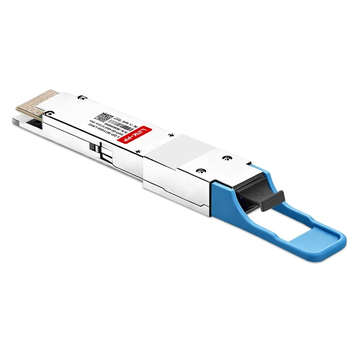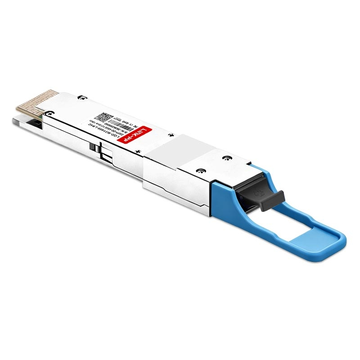
Are rapidly growing bandwidth demands stretching your data center interconnects to their absolute limits across metro distances? Many network engineers struggle to scale link capacity over 10km spans without running out of panel space or paying for expensive new fiber installations. The Cisco QDD-4X100G-LR-S optical module solves this challenge by packing high-density 400G performance into a single, highly efficient transceiver format.
How can enterprise networks seamlessly bridge legacy 100G routing infrastructure with next-generation 400G core switches? By leveraging a flexible 4x100G breakout architecture over single-mode fiber, organizations can maximize rack unit efficiency while significantly reducing power consumption. This approach provides a reliable, cost-effective pathway for eliminating long-distance bottlenecks between modern campus and cloud environments.
📍 Understanding the Role of QDD-4X100G-LR-S in Modern Networks
Modern enterprise networks and hyperscale data centers require massive throughput across long physical distances without compromising panel space. The Cisco QDD-4X100G-LR-S optical transceiver addresses these scaling demands by consolidating multiple 100G channels into a single 400G physical interface. By bridging high-density core routing with long-reach optical transport, it provides the fundamental backbone needed for modern data center interconnects (DCI).
What is the QDD-4X100G-LR-S Optical Module
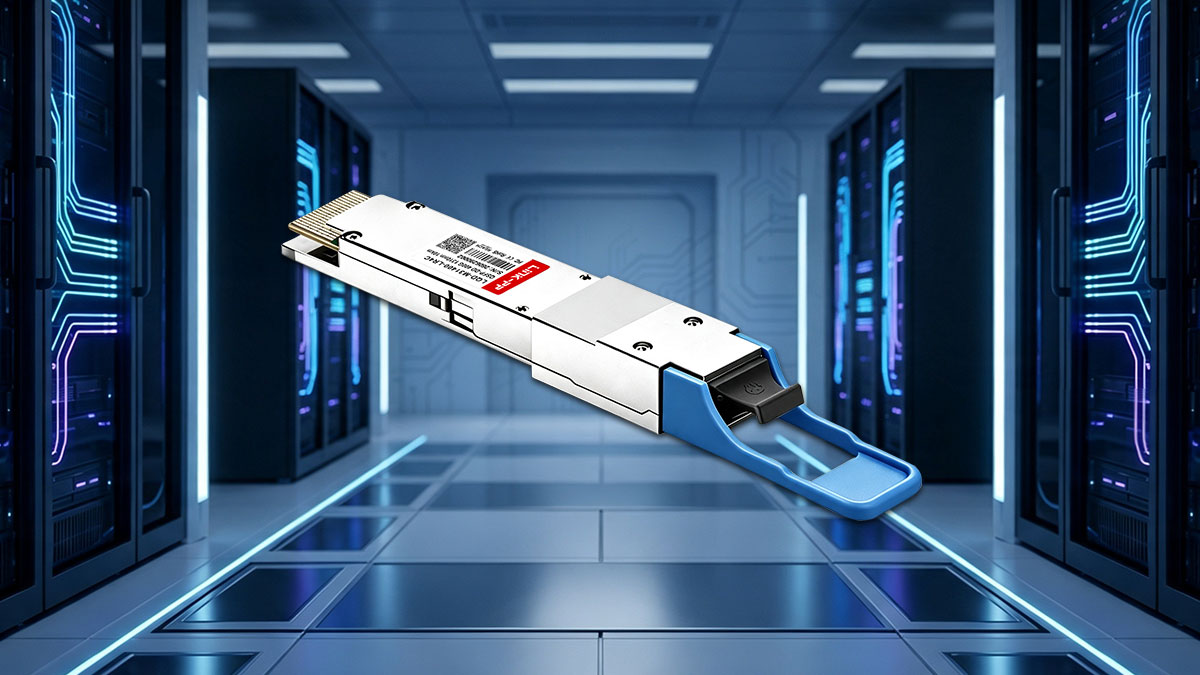
The QDD-4X100G-LR-S is a high-density 400G optical module engineered for long-reach data transmission over single-mode fiber (SMF) using four pairs of fiber with an MPO-12 connector interface. It operates using a 4x100G breakout architecture where four parallel lanes carry the 400-Gigabit Ethernet signal via one wavelength per lane up to 10km.
To deliver flexible connectivity, this transceiver seamlessly breaks out into single 100G connections, interoperating with QSFP-100G-DR (up to 500m), QSFP-100G-FR (up to 2km), and QSFP-100G-LR (up to 10km) modules. Rather than processing Forward Error Correction (FEC) onboard, the module relies on the host platform to perform FEC processing, ensuring streamlined optical design.
Why Network Engineers Prefer Cisco's 400G QSFP-DD Architecture
Network engineers favor Cisco's QSFP-DD (Quad Small Form-factor Pluggable Double Density) architecture because it doubles port density while maintaining backward compatibility with legacy QSFP transceivers. This allows organizations to scale total bandwidth dramatically without requiring a complete overhaul of their physical switch chassis.
By adopting the QSFP-DD footprint, network architectures benefit from optimized electrical signal integrity and robust thermal management. These design enhancements allow high-capacity modules like the QDD-4X100G-LR-S to run reliably under heavy traffic loads in dense rack environments.
The Evolution from 100G QSFP28 to High-Density 400G Formats
The transition from traditional 100G QSFP28 optics to high-density 400G QSFP-DD formats represents a major leap forward in optical efficiency. While 100G QSFP28 optics require a dedicated switch port for every individual 100Gbps link, 400G architectures quadruple faceplate bandwidth within the exact same rack space.
This evolutionary shift effectively resolves physical spatial bottlenecks in crowded meet-me rooms and core switching fabrics. Deploying 400G QSFP-DD transceivers like the QDD-4X100G-LR-S allows operators to streamline physical cabling infrastructure while maximizing power efficiency per gigabit.
Key Specifications that Define QDD-4X100G-LR-S Transceiver's Performance
Evaluating the physical, electrical, and optical standards of this transceiver highlights how it achieves high-density 4x100G transmission across extended distances.
The comprehensive technical metrics detailed below outline the core compliance and operational capabilities of the QDD-4X100G-LR-S module:
| Specification Metric | Parameter / Operational Value | Technical Significance |
| Form Factor | QSFP-DD | Ensures ultra-high port density with backward compatibility for QSFP ports |
| Optical Interface | 4x100GBASE-LR1 | Fully compliant with the IEEE 802.3cu standard for single-lambda 100G optics |
| Electrical Interface | 400GAUI-8 | Fully compliant with the IEEE 802.3bs standard across 8 electrical lanes |
| Connector Type | MPO-12 | Utilizes parallel single-mode fiber pairs to facilitate direct 4x100G breakout |
| Wavelength Architecture | Single wavelength per lane across 4 parallel lanes | Simplifies optical design by avoiding complex internal WDM multiplexing |
| Max Reach & Interoperability | Up to 10km | Delivers flexible DCI reach options across 100G-DR, 100G-FR, and 100G-LR endpoints |
| Error Correction | Host-side FEC (Forward Error Correction) | FEC processing is offloaded to the host platform to optimize module power |
📍 Decoding the Technical Specifications of QDD-4X100G-LR-S
A deep technical evaluation reveals why this QDD-4X100G-LR-S optical transceiver serves as a dependable workhorse for high-density network deployments. From its multi-lane wavelength design to its refined thermal profile, every engineering choice balances high throughput with minimal power overhead. Examining these specs provides a clear roadmap for optimizing hardware layouts across enterprise and carrier-grade networks.
Optical Wavelength and Parallel Lane Architecture
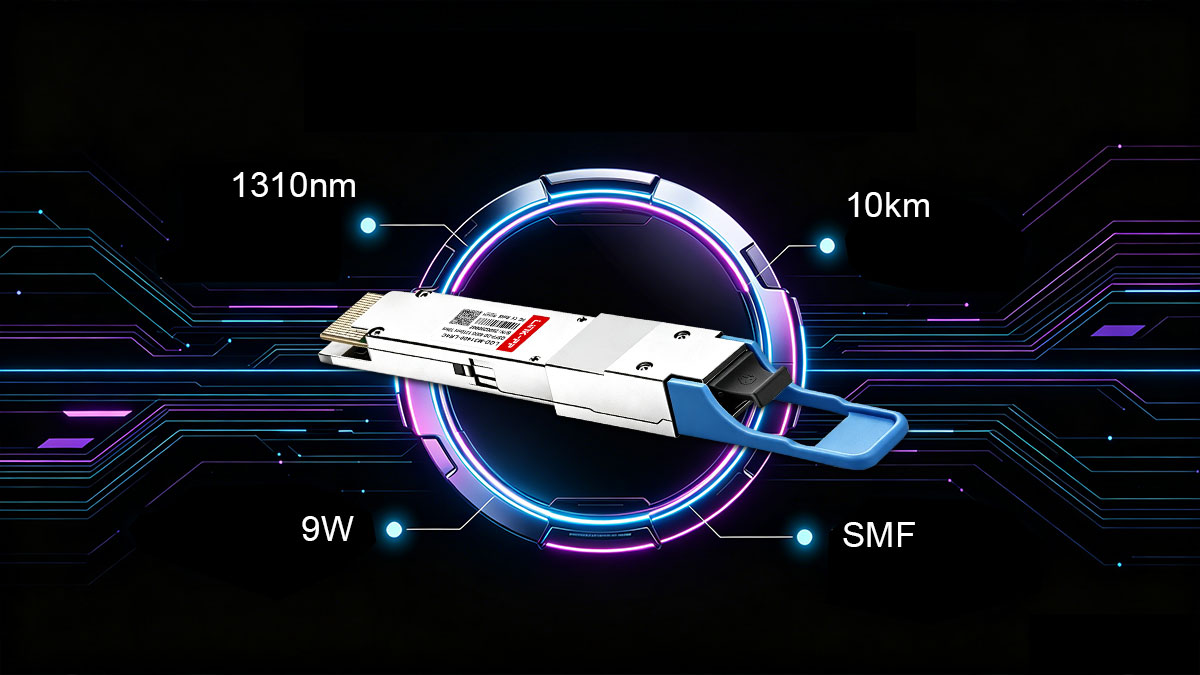
The QDD-4X100G-LR-S module utilizes a 400GBASE-PLR4 parallel architecture to transmit four independent 100G signals simultaneously. Instead of multiplexing multiple wavelengths onto a single fiber pair, it uses the 1310nm wavelength band across four separate spatial lanes.
Each lane carries a single-lambda 100Gbps PAM4 optical signal compliant with the IEEE 802.3cu standard for 100GBASE-LR1. This parallel approach eliminates the need for internal optical multiplexers, reducing module complexity while ensuring ultra-low dispersion over distance.
Power Consumption and Thermal Design Efficiencies
Energy efficiency is critical when populating high-density switch faceplates with dozens of 400G transceivers, as tightly packed optics generate significant heat that can degrade performance and shorten component lifespan. The QDD-4X100G-LR-S meets this demanding environment with a maximum power consumption of just 9W, a figure that stands out in the 400G QSFP-DD ecosystem and helps maintain stable operating temperatures even in fully populated line cards.
By offloading Forward Error Correction processing entirely to the host platform, the transceiver substantially reduces its internal ASIC computational burden and associated heat dissipation. This architectural choice not only lowers power draw but also simplifies the module's internal electronics, improving long-term reliability under continuous heavy traffic. Consequently, the modest power envelope allows network operators to deploy the densest port configurations without exceeding per-chassis thermal budgets or incurring additional cooling infrastructure costs.
Reaching the 10km Distance Limit over Single-Mode Fiber
Achieving reliable 10-kilometer link spans over standard single-mode fiber requires precise optical power budgets and superior signal integrity. The transceiver uses advanced PAM4 modulation combined with host-side FEC to maintain low bit error rates across long campus and metro interconnections.
Using four pairs of SMF terminated with an MPO-12 APC connector, the module maintains robust signal quality across the full 10km span. This makes the QDD-4X100G-LR-S module an ideal choice for bridging geographically separated data center facilities without intermediate amplification.
The Significance of the 4x100G Breakout Architecture
The 4x100G breakout capability transforms how network architects allocate faceplate bandwidth on high-density switches. By splitting a single 400GAUI-8 host interface into four discrete 100G links, a single switch port can drive four separate downstream devices.
This flexibility allows seamless interoperability with legacy 100G optics, including QSFP-100G-DR, QSFP-100G-FR, and QSFP-100G-LR endpoints. Ultimately, this architecture helps organizations scale bandwidth incrementally while avoiding expensive structural upgrades to their core networking gear.
📍How QDD-4X100G-LR-S Solves Long-Distance DCI Challenges
Connecting modern data centers across metro distances introduces severe technical hurdles, from optical attenuation to physical spatial constraints. The QDD-4X100G-LR-S optical transceiver addresses these scaling barriers directly by providing high-density 400G throughput over 10km spans. By rethinking how high-speed data is formatted and routed, it transforms long-distance data center interconnect performance while keeping infrastructure costs grounded.
Overcoming Signal Degradation across 10-kilometer Spans
Transmitting high-speed data over a 10-kilometer link usually exposes optical signals to noticeable attenuation and insertion losses across the fiber path. The QDD-4X100G-LR-S optical module counters these physical impairments by leveraging robust 100G PAM4 modulation per lane alongside host-side Forward Error Correction.
Host-platform FEC actively identifies and corrects bit errors caused by optical loss over the single-mode fiber path. This combination maintains ultra-clean signal integrity over the full 10km reach without requiring complex, power-hungry optical amplifiers along the line.
Mitigating Fiber Exhaustion in Enterprise Data Centers
Dark fiber leases across metropolitan areas represent one of the highest recurring operational expenses for enterprise data centers. Running separate fiber pairs for every individual 100G link quickly consumes available conduit capacity and exhausts fiber infrastructure.
Deploying the QDD-4X100G-LR-S module mitigates fiber exhaustion by aggregating four distinct 100G channels onto a single MPO-12 trunk cable. This enables network operators to quadruple payload capacity across existing single-mode fiber routes without leasing costly additional fiber strands.
Managing High Bandwidth Demands without Adding Physical Infrastructure
Rapid cloud adoption regularly forces organizations to scale bandwidth faster than physical rack space permits. Adding more switch chassis to accommodate growing traffic creates severe power, cooling, and spatial bottlenecks in data center facilities.
By utilizing the 4x100G breakout capabilities of the QDD-4X100G-LR-S, operators can multiply the effective 100G link count per physical port by four on existing 400G QSFP-DD switch faceplates. This approach satisfies surging bandwidth demands using existing footprint, avoiding expensive physical infrastructure expansions.
Reducing Latency in Campus and Metro-Area Interconnects
Real-time applications and synchronous database replication require minimal link latency across enterprise campus and metro-area interconnects. Traditional legacy transport systems often introduce processing delay through complex internal multiplexing and signal conversion stages.
The QDD-4X100G-LR-S transceiver eliminates unnecessary latency by utilizing a parallel single-mode fiber architecture with direct electrical-to-optical conversion. Removing internal WDM multiplexing components streamlines the optical path, ensuring ultra-fast data transport across 10km DCI links.
📍 Implementing QDD-4X100G-LR-S in Real-World Use Cases
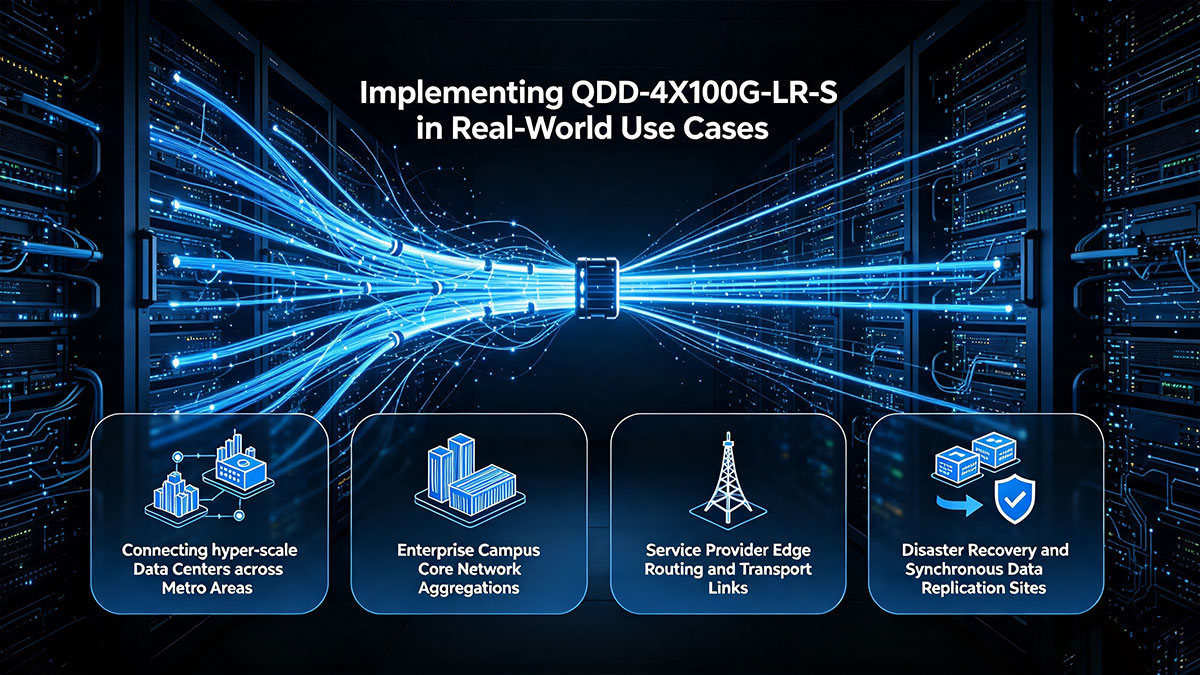
Deploying high-density optical transceivers into active production networks requires a clear understanding of practical architecture requirements. The QDD-4X100G-LR-S excels across various operational scenarios, ranging from hyper-scale data center interconnects to service provider edge routing. Analyzing real-world deployments demonstrates how this 400G module solves critical throughput and reach challenges in modern IT environments.
Connecting hyper-scale Data Centers across Metro Areas
Hyper-scale cloud providers rely on robust data center interconnect links to synchronize distributed compute clusters across metropolitan regions. Implementing the QDD-4X100G-LR-S allows operators to bridge distant facilities over single-mode fiber without relying on active optical line systems.
Key operational benefits delivered in hyperscale metro deployments include:
- High-density 400G links: Scales total bandwidth across metro sites efficiently.
- 10km optical reach: Bridges regional facilities without intermediate signal amplification.
- Streamlined breakout cabling: Connects directly into existing 100G distribution switches.
- Lowered operational cost: Reduces power consumption and leased dark fiber expenses.
Enterprise Campus Core Network Aggregations
Large enterprise campuses often face severe bandwidth contention when aggregating traffic from multiple buildings into a centralized core switch layer. Deploying the QDD-4X100G-LR-S optical transceiver on core switches allows network administrators to consolidate high-volume traffic streams over a unified 400G physical port.
This deployment model provides several strategic design advantages for campus environments:
- Flexible 4x100G breakout: Connects a single 400G port to four distinct building switches.
- Rack unit optimization: Maximizes faceplate density in space-constrained core closets.
- Seamless migration path: Integrates 100G QSFP28 switches into next-generation 400G cores.
- Simplified maintenance: Reduces physical patching points across the enterprise backbone.
Service Provider Edge Routing and Transport Links
Service providers require versatile, standardized optical modules at the provider edge to hand off gigabit connections to business customers and regional POPs. The compliance of the QDD-4X100G-LR-S with IEEE 802.3cu and 802.3bs standards ensures reliable multi-vendor interoperability across transport routing layers.
Service providers leverage this optics profile to address specific edge transport needs:
- Single-lambda 100G links: Interoperates smoothly with downstream 100GBASE-LR1 interfaces.
- Host-side FEC integration: Simplifies optical transceiver design while keeping power low.
- High port efficiency: Drives dense client handoffs from high-capacity edge routers.
- Predictable performance: Delivers stable signal quality over long-reach 10km spans.
Disaster Recovery and Synchronous Data Replication Sites
Disaster recovery architectures demand ultra-low latency and consistent throughput to maintain zero-loss synchronous database replication between primary and backup sites. The low-latency parallel design of the QDD-4X100G-LR-S module prevents data queuing bottlenecks across backup links.
Essential capabilities supporting synchronous replication and recovery workflows include:
- Deterministic low latency: Avoids signal delays by omitting internal WDM multiplexing.
- Robust 10km transmission: Connects geographically separated disaster recovery facilities safely.
- High availability: Provides multiple parallel 100G paths for resilient trunk redundant links.
- Real-time link stability: Maintains reliable throughput during massive data backup cycles.
📍 Designing High-Density DCI Architectures Around QDD-4X100G-LR-S
Building scalable data center interconnect networks requires aligning physical fiber infrastructure with modern high-density switching platforms. Incorporating optics into system designs ensures maximum throughput with minimal spatial overhead across extended distances. Careful topology design and cable planning unlock the full operational potential of high-capacity 400G deployments.
Spine-and-Leaf Network Topologies Optimized for 400G Breakout
Integrating high-density optics into modern spine-and-leaf fabrics allows network architects to aggregate massive north-south and east-west traffic flows seamlessly. Utilizing the QDD-4X100G-LR-S module on spine switches provides non-blocking 400G links that easily split into discrete 100G connections for leaf switches across the campus.
This topology eliminates traditional bandwidth bottlenecks while preserving faceplate port density on core chassis platforms. By distributing 4x100G breakout links across separate leaf nodes, engineers build highly redundant, fault-tolerant networks without adding extra switches.
Maximizing Physical Port Density and Rack Unit Efficiency
Data center rack space and power budgets are premium assets that directly impact long-term operational costs. Deploying transceivers like the QDD-4X100G-LR-S enables operators to pack up to four times the per-port bandwidth into a single rack unit (1RU) compared to legacy 100G architectures.
Consolidating multiple 100G links into a single 400G QSFP-DD slot slashes the required physical switch footprint in space-constrained facilities. This density advantage directly translates to lower thermal dissipation per gigabit and significantly reduced cooling overhead across the server room.
Migrating to MPO-12 Single-Mode Fiber for 400G Aggregation
When designing fiber distribution around the QDD-4X100G-LR-S, network architects must account for its MPO-12 APC interface, which requires four single-mode fiber pairs to carry parallel 100G signals over 10km spans. Adopting MPO-12 single-mode fiber cabling simplifies patch panel management and creates a flexible structured cabling backbone across extended distances.
This physical layer design allows easy breakout connections to downstream 100G-DR, 100G-FR, or 100G-LR switches without re-terminating fiber plant infrastructure, ensuring that the migration to 400G aggregation does not require a forklift upgrade of the existing fiber plant.
Managing Cable Density and Routing in Core Interconnect Spaces
The multi-lane design of the QDD-4X100G-LR-S reduces physical patch cable count by a factor of four compared to deploying four separate 100G optics, significantly streamlining cable management in meet-me rooms and central routing racks.
This consolidation minimizes physical stress on switch ports, improves rack airflow, and reduces the risk of human error during maintenance — critical advantages in space-constrained DCI hubs where every patch panel and cable trough must be meticulously organized for long-term serviceability.
By enabling systematic trunk tagging and clear cabling pathways, the module's breakout architecture ensures that 10km DCI channels remain easy to audit and troubleshoot over their operational lifetime, even as the network scales to hundreds of 400G interconnects.
📍 Bandwidth Scaling Solutions via QDD-4X100G-LR-S Breakout Routing
Scaling network capacity across enterprise data centers requires intelligent routing strategies that maximize hardware utilization. Implementing breakout routing allows organizations to expand bandwidth dynamically without replacing legacy switch gear. By logically partitioning high-speed physical ports, operators achieve granular traffic control and seamless network growth over long distances.
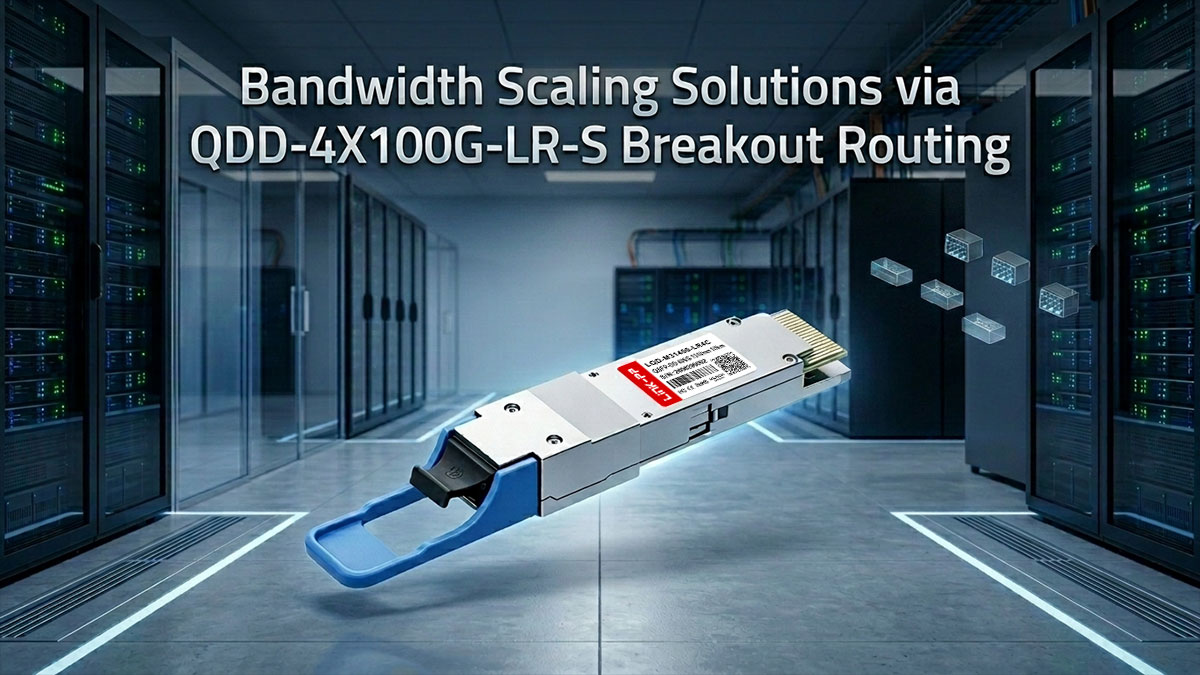
Aggregating Multiple 100G Switch Links into a Single 400G Port
Breakout routing transforms how a single 400G switch interface serves multiple downstream devices across core backbones. Configuring a switch port with the QDD-4X100G-LR-S splits a single 400GAUI-8 host slot into four independent 100G logical channels, each capable of driving a separate leaf switch up to 10km away.
This breakout model enables high-density 400G core switches to connect directly to legacy 100G distribution layers without requiring a full-scale hardware refresh. As a result, network engineers can scale total fabric throughput incrementally while preserving existing capital investments in 100G infrastructure.
Step-by-Step Physical Layer Grouping for 4x100G Breakout Cables
Establishing a reliable breakout connection starts with mapping the physical fiber channels correctly across the network path. An MPO-12 APC single-mode fiber patch cable splits the transceiver's four parallel optical lanes into four distinct LC duplex pairs, each carrying a dedicated 100G signal.
Each fiber pair attaches to a specific downstream 100G optic, such as a QSFP-100G-LR or QSFP-100G-DR module, up to 10km away. Proper port mapping in the network operating system ensures every 100G sub-interface routes traffic correctly without link flap errors.
Optimizing Load Balancing across High-Capacity Data Center Channels
Distributing data traffic evenly across breakout channels is essential to prevent individual link congestion and buffer drops. Modern routing platforms use Equal-Cost Multi-Path (ECMP) routing to balance data flows across the four discrete 100G lanes of the QDD-4X100G-LR-S optical module.
By spreading bursty enterprise traffic across parallel paths, the system maintains optimal latency and avoids localized micro-burst bottlenecks. Dynamic flow hashing further enhances link stability across heavily loaded data center interconnect channels.
Eliminating Throughput Bottlenecks between Core Routing Layers
Core-to-distribution routing layers often suffer from bandwidth mismatch when transitioning between modern 400G fabrics and legacy 100G switching infrastructure. Deploying the QDD-4X100G-LR-S transceiver eliminates these physical speed barriers by enabling a single 400G core port to drive four 100G distribution switches simultaneously.
The module's single-lambda 100G channels ensure smooth rate adaptation between 400G core switches and 100G distribution layers without requiring protocol conversion or store-and-forward delays. Removing these throughput bottlenecks optimizes packet delivery and guarantees predictable performance across campus networks.
📍 Optimizing Optical Telemetry for QDD-4X100G-LR-S Connections
Proactive monitoring and real-time telemetry are vital for maintaining link health across long-distance optical interconnects. Modern network operating systems leverage embedded diagnostic capabilities within transceivers to track physical layer performance continuously. Implementing automated optical monitoring ensures high availability and prevents unscheduled downtime across 10-kilometer data center interconnects.
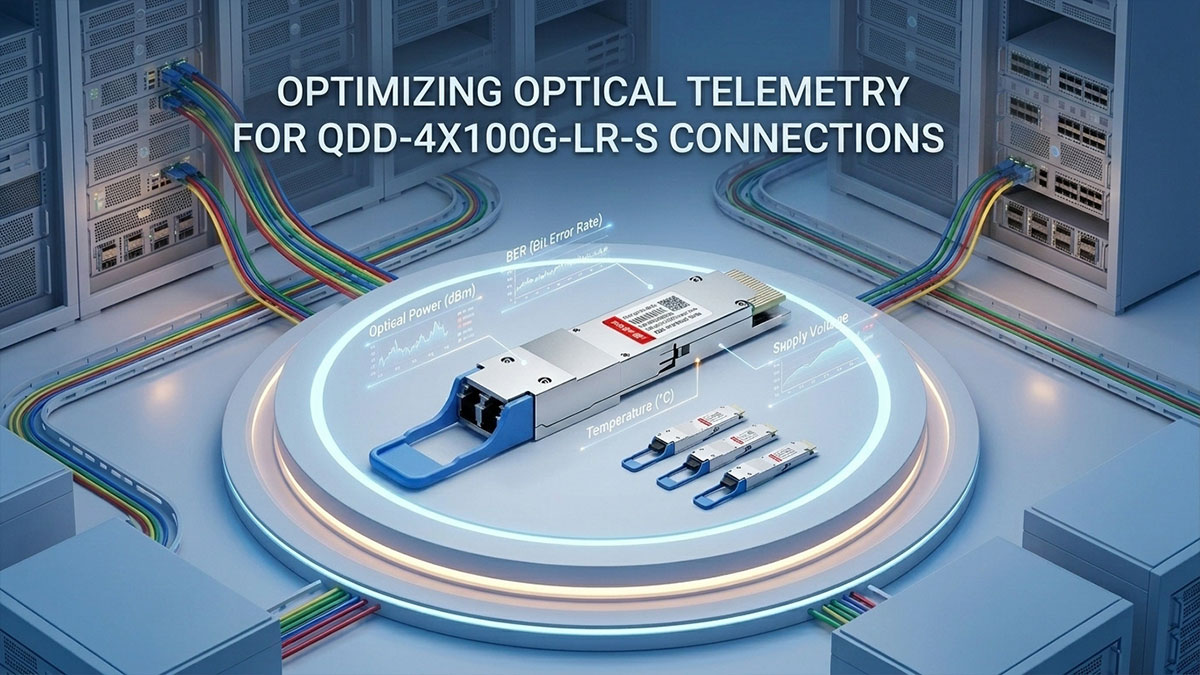
Real-time Link Health Monitoring over 10km Single-Mode Fiber
Maintaining stable data transmission across long-reach single-mode fiber requires continuous visibility into core physical layer metrics. Integrating the QDD-4X100G-LR-S transceiver with streaming network telemetry allows engineers to collect real-time diagnostic data directly from the optical layer.
Key operational metrics monitored in real-time include:
- Transmit (Tx) optical power: Ensures laser output remains within safe operating bounds.
- Receive (Rx) optical power: Detects excessive signal loss over the 10km link path.
- Module operating temperature: Prevents thermal throttling in dense switch racks.
- Laser bias current: Tracks laser diode health to anticipate hardware degradation.
Utilizing Digital Optical Diagnostics to Predict Fiber Link Degradation
Built-in Digital Optical Monitoring (DOM) capabilities enable network operators to detect early warning signs of physical layer degradation — such as declining receive optical power — before complete service outages occur. Analyzing DOM trends from the QDD-4X100G-LR-S optical module provides clear visibility into gradual link performance shifts along single-mode fiber paths, prompting timely investigation and remediation.
DOM-driven predictive workflows rely on tracking key indicators:
- Receive power degradation: Sustained Rx power decline may signal micro-bends, dirty MPO-12 connectors, or aging fiber splices, triggering pre-emptive maintenance alerts.
- Transmit power drift: Decreasing Tx output across any of the four 100G lanes may indicate laser diode aging, allowing operators to schedule transceiver replacement before failure occurs.
- Temperature and bias current trends: Rising module temperature or increasing bias current points to thermal stress or laser wear, enabling proactive cooling adjustments or hardware swaps.
Configuring Early-Warning Thresholds for Optical Power Levels
Configuring custom high and low alarm thresholds for optical power levels enables automated operational responses to physical layer shifts. When receive power on any of the four parallel 100G lanes drops near the minimum receiver sensitivity limit, the network management system triggers early alerts.
These automated warnings allow network engineers to re-route critical traffic flows before signal degradation causes packet drops or link flapping. Proactive threshold management preserves link stability across mission-critical enterprise interconnects.
Ensuring Link Stability During Peak Traffic Loads across DCI Channels
Bursty traffic spikes across high-capacity data center interconnect channels can elevate transceiver temperatures and increase bit error rates. Host-side Forward Error Correction monitoring works alongside telemetry streaming to track corrected and uncorrectable error counters during heavy traffic periods.
Evaluating error rates under maximum load guarantees that the QDD-4X100G-LR-S maintains robust signal integrity over its full 10km reach. This active validation process ensures reliable, uninterrupted throughput during peak operational windows.
📍 Conclusion: Overcoming Long-Distance DCI Bottlenecks with QDD-4X100G-LR-S
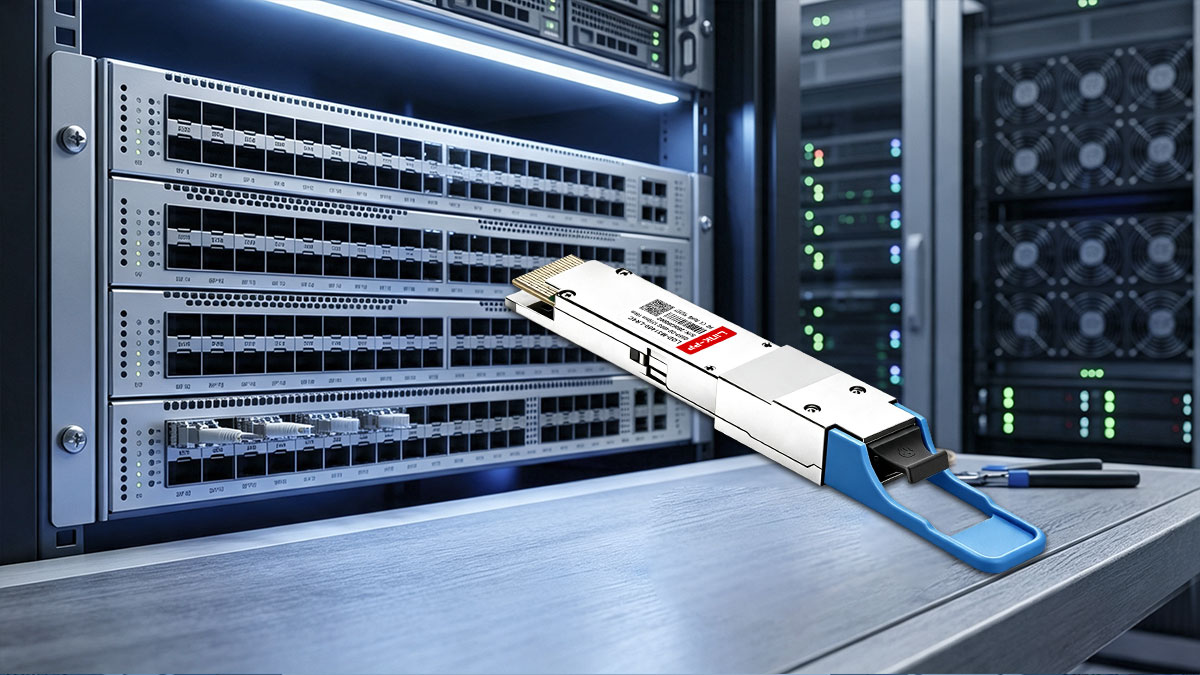
Scaling data center interconnects across 10-kilometer distances no longer requires sacrificing faceplate density or taking on exorbitant fiber costs. Deploying 400G QSFP-DD breakout architecture allows enterprise networks and hyperscale cloud providers to overcome physical space and optical attenuation limits seamlessly. Consolidating high-density routing into a single, power-efficient transceiver platform delivers a future-proof foundation for modern metro-area networks.
Integrating these high-capacity 400G optics across core infrastructures unlocks several decisive operational advantages:
- Quadrupled faceplate density: Packs maximum bandwidth into standard 1RU switch slots.
- 10km optical reach: Bridges regional data center sites reliably over single-mode fiber.
- Flexible 4x100G breakout: Connects 400G core switches directly to legacy 100G endpoints.
- Optimized thermal efficiency: Operates well within standard rack cooling and power budgets.
Whether you are expanding a campus backbone or optimizing long-reach interconnects, choosing reliable optical hardware is key to maintaining seamless performance. Fully tested alternatives — such as the LINK-PP LQD-M31400-LR4C 400G-PLR4, designed as a direct compatible option for the Cisco QDD-4X100G-LR-S — offer an efficient path to scaling your bandwidth without straining your budget. Head over to the LINK-PP Official Store to explore high-performance optical transceivers tailored to your DCI architecture needs.