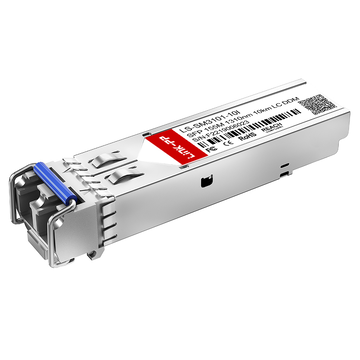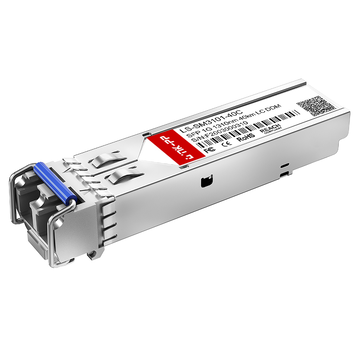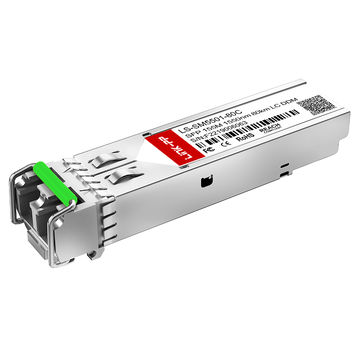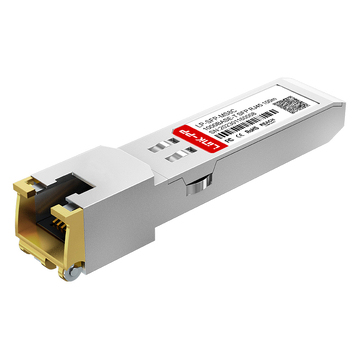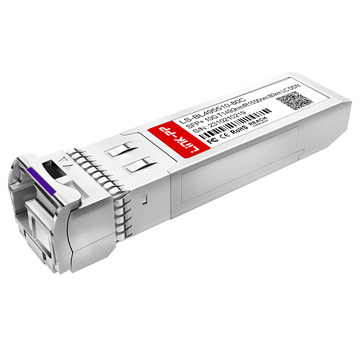






























Fast Ethernet remains relevant in industrial, legacy enterprise, and infrastructure networks where stable 100Mbps connectivity is still required. In these environments, fiber-based links can provide longer transmission distances and better immunity to electromagnetic interference than copper connections. However, selecting an appropriate optical transceiver requires careful attention to transmission distance, wavelength, fiber type, environmental conditions, and equipment compatibility.
The Cisco GLC-FE-100LX-RGD is designed for 100Mbps fiber Ethernet connectivity in applications where ruggedized operation is important. Understanding the GLC FE 100LX RGD datasheet provides a practical way to evaluate its optical, electrical, mechanical, and environmental characteristics before deployment. These specifications also help determine whether the module matches the existing fiber infrastructure and network equipment.
This article provides a detailed examination of the Cisco GLC-FE-100LX-RGD and its datasheet parameters, including:
- Core product characteristics and intended network role
- Optical transmission specifications and link performance
- Electrical, mechanical, and environmental characteristics
- Standards, compatibility, and fiber infrastructure requirements
- Typical industrial, transportation, and enterprise applications
- Key factors for evaluating the module before deployment
Together, these details provide a clearer technical basis for assessing the Cisco GLC-FE-100LX-RGD and determining where it can fit effectively within a Fast Ethernet network.
📡 Cisco GLC-FE-100LX-RGD Overview
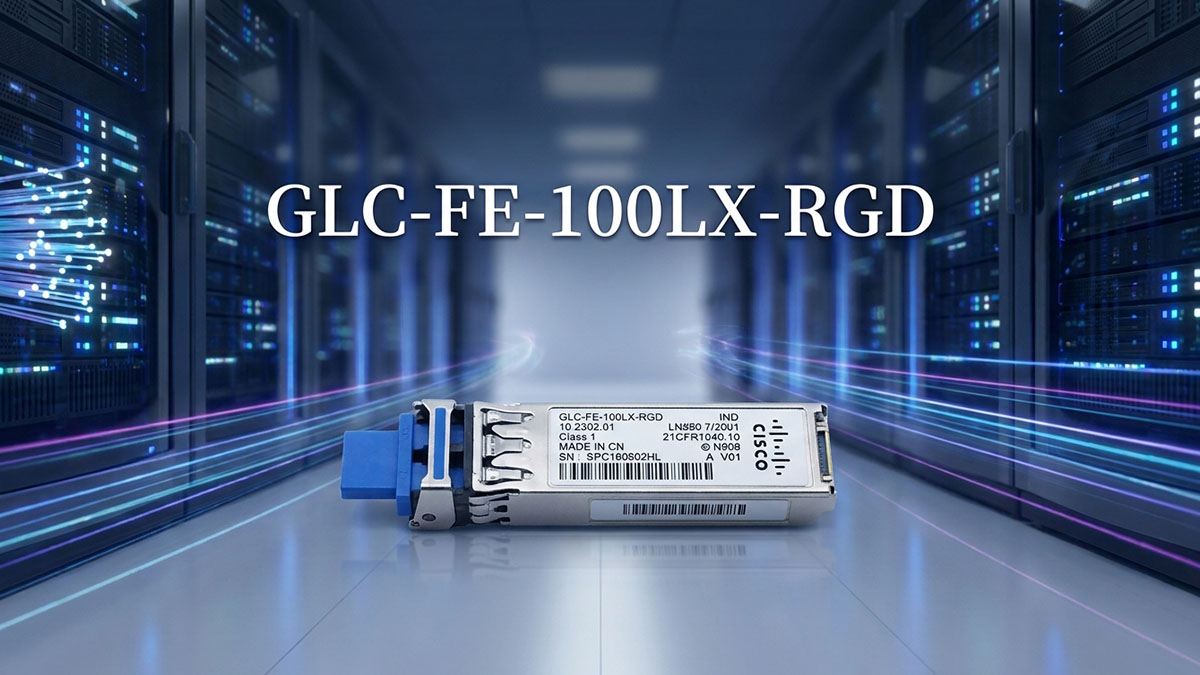
The Cisco GLC-FE-100LX-RGD is a ruggedized SFP transceiver designed to provide 100Mbps optical Ethernet connectivity over single-mode fiber. It is intended for network environments where Fast Ethernet remains in use and where operating conditions may be more demanding than those found in conventional office or data-center deployments. Its compact SFP form factor also allows it to be installed in compatible Cisco networking equipment without replacing the host platform.
Product Definition and Core Function
The Cisco GLC-FE-100LX-RGD functions as an optical interface between a compatible network device and a fiber-optic link. Its primary role is to convert 100Mbps electrical Ethernet signals from the host device into optical signals for transmission through fiber, while converting received optical signals back into electrical Ethernet data.
Its core characteristics can be summarized as follows:
- Transmission rate: 100Mbps Fast Ethernet
- Module type: SFP optical transceiver
- Fiber medium: Single-mode fiber (SMF)
- Operating wavelength: 1310nm
- Interface application: Fiber-based Ethernet connectivity
- Deployment focus: Industrial and other demanding network environments
These characteristics make the module particularly relevant to networks that need to extend 100Mbps Ethernet beyond the practical limitations of conventional copper cabling.
Key Characteristics of Cisco GLC-FE-100LX-RGD
The main distinction of the Cisco GLC-FE-100LX-RGD is its combination of Fast Ethernet optical connectivity and ruggedized operation. Rather than targeting high-speed data-center networks, it addresses applications where 100Mbps transmission and environmental resilience are more important than bandwidth scalability.
The key characteristics include:
- 100BASE-LX/LX10 optical Ethernet support: The module is designed for Fast Ethernet fiber links based on the 100BASE-LX/LX10 family of applications.
- SFP hot-swappable form factor: Its SFP design supports installation or replacement in compatible equipment without requiring a dedicated optical interface chassis.
- Single-mode fiber transmission: SMF provides the reach and optical characteristics required for extended-distance Ethernet connections.
- 1310nm optical operation: The 1310nm wavelength is commonly used for long-reach single-mode fiber Ethernet transmission.
- Ruggedized construction: The RGD designation indicates an industrial-oriented design intended for more demanding operating environments than standard commercial modules.
In practical deployments, these characteristics make the Cisco GLC-FE-100LX-RGD suitable when an existing network still depends on 100Mbps Ethernet but requires a reliable fiber interface for longer links or harsher operating conditions.
📡 Cisco GLC-FE-100LX-RGD Datasheet Technical Specifications
The Cisco GLC-FE-100LX-RGD datasheet defines the optical, electrical, mechanical, and environmental characteristics that determine how the module operates within a Fast Ethernet network. Among these specifications, data rate, wavelength, fiber type, transmission distance, and operating conditions are especially important because they directly affect link design and equipment compatibility.
Optical Interface Specifications
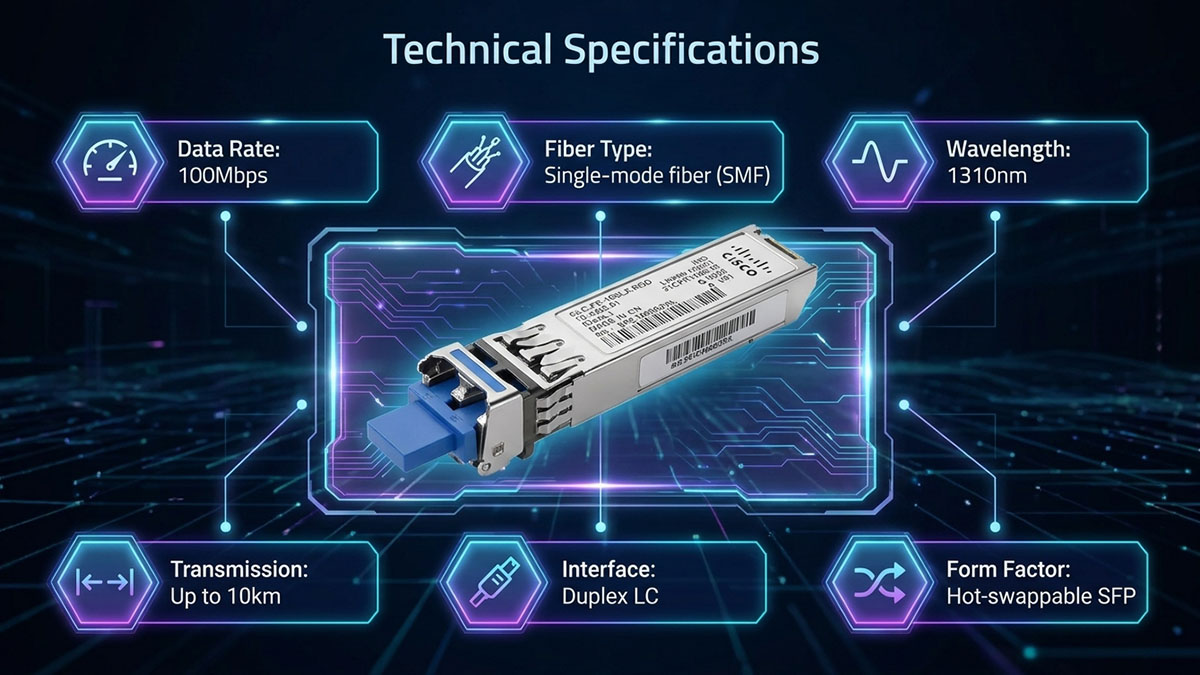
The optical interface of the Cisco GLC-FE-100LX-RGD is designed for 100Mbps fiber Ethernet connectivity using single-mode fiber. Its 1310nm optical wavelength and extended-reach capability make it suitable for fiber links that exceed the practical distance of conventional copper Fast Ethernet connections.
The principal optical parameters are summarized below:
| Parameter | Specification | Deployment Significance |
|---|---|---|
| Data Rate | 100Mbps | Defines Fast Ethernet transmission capacity |
| Wavelength | 1310nm | Determines optical operating band |
| Fiber Type | Single-mode fiber (SMF) | Supports extended-distance fiber links |
| Transmission Distance | Up to 10km | Determines the maximum specified link reach |
These values provide the basic optical profile needed when evaluating the module against an existing fiber plant. In particular, both endpoints should use compatible optical characteristics, while the actual link should remain within the specified transmission range and available optical power budget.
Optical Performance Parameters
Optical performance depends on more than wavelength and nominal transmission distance. The transmitter and receiver characteristics must provide sufficient margin to overcome attenuation introduced by the fiber, connectors, splices, and other passive components.
Key parameters to evaluate include:
- Optical transmit power: Determines the optical signal level launched into the fiber.
- Receiver sensitivity: Defines the minimum optical power required for reliable signal detection.
- Optical power budget: Represents the available margin between transmitter output and receiver sensitivity.
- Fiber attenuation: Reduces received optical power as link length increases.
- Connector and splice losses: Consume part of the available optical budget.
For deployment planning, the specified 10km reach should therefore be treated as a maximum reference rather than a guarantee that every 10km installation will operate identically. Fiber quality, connection losses, and the overall optical budget must also be considered.
Electrical Interface Characteristics
The electrical interface connects the optical transceiver to the host switch, router, or other compatible networking platform. Because the module uses the SFP form factor, the host device must provide an appropriate SFP slot and support the module's Fast Ethernet operation.
Important electrical and interface considerations include:
- Host interface: SFP electrical interface.
- Network speed: 100Mbps Fast Ethernet.
- Installation: Hot-pluggable SFP form factor.
- Host compatibility: Requires equipment with a compatible SFP interface and supported Fast Ethernet configuration.
- Signal conversion: Converts between the host's electrical Ethernet signals and the optical signals carried over fiber.
This electrical interface specification is important because an optical match alone does not guarantee successful operation. The host platform must also recognize and support the module.
Mechanical and Form Factor Specifications
The Cisco GLC-FE-100LX-RGD uses the standardized SFP form factor, allowing it to occupy a compact modular interface on compatible networking equipment. This design is particularly useful where network operators need to add or replace fiber connectivity without installing a separate optical device.
The main mechanical considerations are:
- Form factor: SFP.
- Installation method: Direct insertion into a compatible SFP port.
- Serviceability: Supports modular installation and replacement.
- Connector interface: Fiber-side connectivity uses an LC duplex connection.
- Space efficiency: Compact module dimensions allow high port density on supported network platforms.
The SFP architecture also simplifies network configuration because optical connectivity can be selected according to the required fiber type, wavelength, and transmission distance while retaining the same basic host interface.
Environmental Specifications
Environmental specifications are particularly important for the Cisco GLC-FE-100LX-RGD because its ruggedized design targets applications where conventional commercial-grade optics may not provide an adequate operating range. The exact temperature and environmental limits should be verified against the applicable Cisco datasheet or hardware documentation before deployment.
Relevant environmental factors include:
- Operating temperature: Verify that the module's rated range covers the installation environment.
- Storage temperature: Confirm that transportation and storage conditions remain within the specified limits.
- Humidity: Consider humidity exposure when deploying equipment in industrial or outdoor-adjacent locations.
- Environmental reliability: Ruggedized construction is intended to support operation in more demanding environments than standard commercial networking applications.
These environmental parameters should be evaluated together with enclosure conditions, airflow, equipment placement, and local temperature fluctuations. A module can meet its optical specifications while still requiring careful environmental planning to maintain reliable long-term operation.
📡 Cisco GLC-FE-100LX-RGD Optical Transmission Performance
The optical transmission performance of the Cisco GLC-FE-100LX-RGD is determined by its 100Mbps operating rate, 1310nm wavelength, single-mode fiber support, and specified transmission reach. These characteristics allow the module to extend Fast Ethernet connectivity over longer fiber links while maintaining the optical requirements expected by the network design.
Transmission Distance and Fiber Compatibility
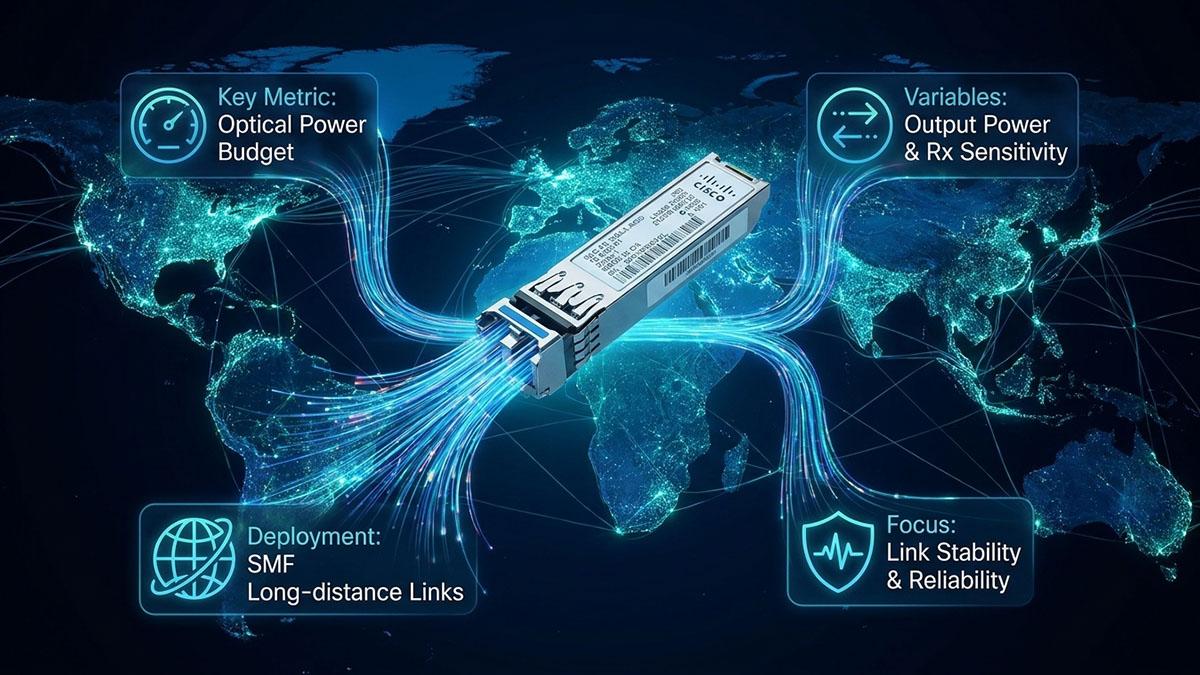
The Cisco GLC-FE-100LX-RGD is intended for extended-distance Fast Ethernet transmission over single-mode fiber, with a specified reach of up to 10km. This makes it more appropriate for longer fiber connections than short-reach multimode Fast Ethernet optics.
The primary fiber considerations include:
- Single-mode fiber: SMF is the appropriate fiber medium for the module's extended-reach optical link.
- 1310nm operation: The optical wavelength must be compatible with the fiber infrastructure and the transceiver at the remote end.
- Up to 10km reach: The specified distance provides a reference for long-distance Fast Ethernet deployments.
- LC duplex connectivity: Separate optical paths are used for transmission and reception.
- Link-end compatibility: Both endpoints should use compatible optical specifications and supported Ethernet interfaces.
The actual achievable distance depends on the complete optical path rather than fiber length alone. Fiber attenuation, connector losses, splice losses, and the available optical power margin should therefore be considered when designing a link approaching the maximum specified reach.
Optical Power Budget Analysis
The optical power budget is a key factor in determining whether a Cisco GLC-FE-100LX-RGD link can operate reliably across its planned distance. It represents the margin available between the transmitted optical signal and the minimum optical power that the receiver can reliably detect.
A practical link-budget assessment should account for:
- Transmitter optical output
- Receiver sensitivity
- Fiber attenuation over the planned distance
- Connector insertion losses
- Splice losses
- Additional system or maintenance margin
A link is generally viable when the total attenuation of the optical path remains below the available optical power budget with sufficient margin. This is particularly important for longer SMF links because every additional passive loss reduces the remaining margin.
For example, a 10km fiber route should not be evaluated simply by comparing its length with the module's nominal 10km specification. Engineers should calculate the expected attenuation of the complete path and verify that the resulting received optical power remains within the transceiver's operating limits.
Link Reliability Factors
Reliable optical transmission depends on the condition of the entire fiber link, not just the transceiver itself. Even when the Cisco GLC-FE-100LX-RGD meets the required data rate and transmission distance, poor fiber installation or excessive optical loss can reduce link stability.
Important reliability factors include:
- Fiber quality: Excessive attenuation, bending, contamination, or physical damage can degrade the optical signal.
- Connector condition: Dirty or poorly seated LC connectors can introduce unnecessary insertion loss.
- Splice quality: Poorly executed splices can consume a significant portion of the available optical margin.
- Wavelength matching: The transmitting and receiving optics must operate with compatible optical characteristics.
- Link budget: The calculated optical loss should remain within the module's supported power budget.
- Environmental conditions: Temperature and other operating conditions should remain within the module's rated limits.
Consequently, reliable deployment of the Cisco GLC-FE-100LX-RGD requires both correct transceiver selection and proper fiber-link engineering. Checking the complete optical path before activation helps reduce unexpected attenuation and intermittent Fast Ethernet connectivity.
📡 Cisco GLC-FE-100LX-RGD Standards and Compliance
The Cisco GLC-FE-100LX-RGD is intended for Fast Ethernet fiber networking and uses standardized Ethernet and SFP interfaces to support integration with compatible networking equipment. Its standards and compliance characteristics are important because they establish the expected protocol, physical interface, and operating requirements for deployment.
Ethernet Protocol Compatibility
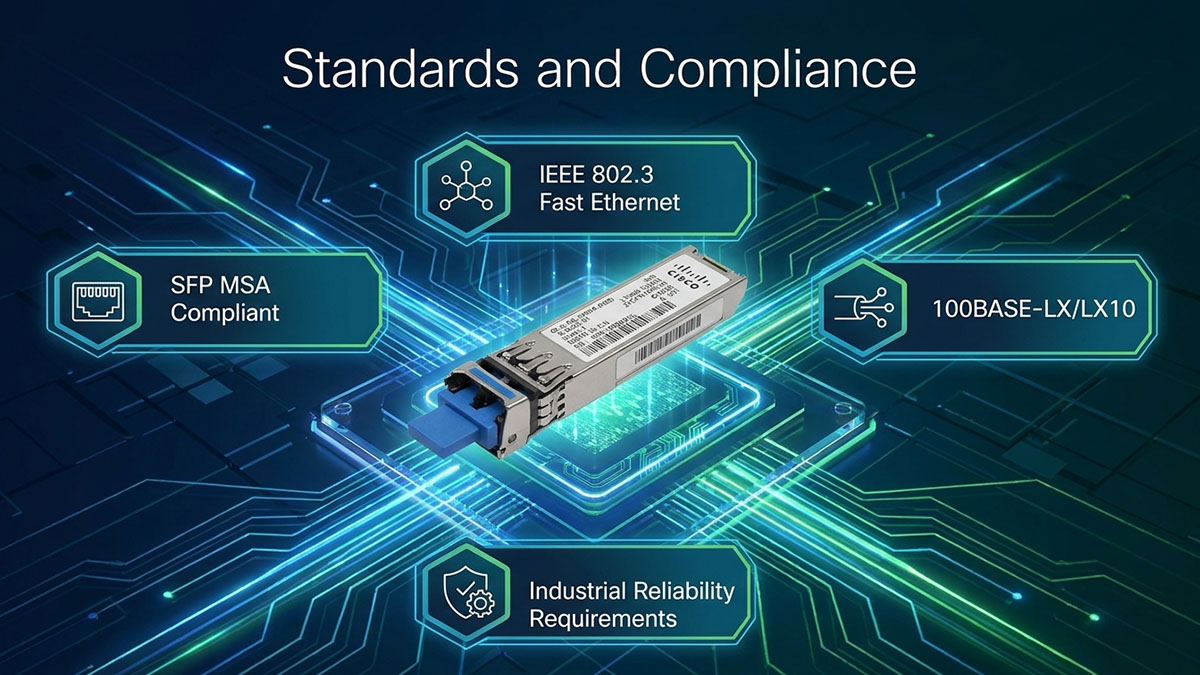
The module is designed for 100Mbps Fast Ethernet fiber connectivity based on the 100BASE-LX/LX10 application family. This allows it to serve as an optical interface for compatible Ethernet switches, routers, and industrial networking equipment.
Key protocol considerations include:
- 100Mbps Ethernet: Provides Fast Ethernet connectivity for networks operating at 100Mbps.
- 100BASE-LX/LX10: Defines the relevant long-reach optical Ethernet application.
- Single-mode fiber: Supports the fiber medium required for extended-distance operation.
- Duplex optical transmission: Uses separate transmit and receive paths for bidirectional Ethernet communication.
- Ethernet interoperability: The host platform and remote optical interface must support the same Ethernet operating requirements.
These standards make the Cisco GLC-FE-100LX-RGD suitable for extending existing Fast Ethernet infrastructure over fiber without changing the underlying Ethernet service.
SFP Interface Standards
The SFP interface provides the physical and electrical framework required for integrating the optical module with compatible network hardware. Standardized SFP characteristics also make the module architecture suitable for modular deployment and field replacement.
Important interface considerations include:
- SFP form factor: Provides a compact, modular optical interface.
- Host-side electrical interface: Connects the transceiver to the compatible SFP port of a network device.
- Hot-pluggable architecture: Allows supported modules to be installed or replaced without redesigning the host platform.
- Optical-side interface: Provides duplex fiber connectivity through the module's LC interface.
- Module identification: Compatible host equipment may use transceiver identification information to determine supported operating characteristics.
Compatibility should therefore be verified at both the physical SFP interface and the platform level. A device having an SFP port does not automatically guarantee support for every Fast Ethernet SFP module.
Industrial Reliability Requirements
The ruggedized design is one of the most important characteristics distinguishing the Cisco GLC-FE-100LX-RGD from conventional commercial Fast Ethernet optics. It is intended for applications where environmental conditions can be more demanding than those found in controlled enterprise spaces.
Industrial deployment considerations include:
- Extended temperature operation: The module should be selected according to the ambient temperature range of the installation site.
- Environmental resilience: Ruggedized construction is intended for applications exposed to more challenging operating conditions.
- Industrial Ethernet suitability: The module can support fiber connectivity in industrial network architectures where 100Mbps Ethernet remains in service.
- Long-term stability: Proper thermal management, fiber installation, and host-platform compatibility remain necessary even when using ruggedized hardware.
Therefore, standards compliance should not be evaluated independently from environmental specifications. For the Cisco GLC-FE-100LX-RGD, successful industrial deployment requires both a compatible Ethernet/SFP infrastructure and an operating environment that remains within the module's specified limits.
📡 Cisco GLC-FE-100LX-RGD Compatibility Considerations
The Cisco GLC-FE-100LX-RGD should be evaluated across three compatibility layers: the host networking platform, the fiber infrastructure, and the optical characteristics of the complete link. A module may have the correct SFP form factor but still require verification of platform support, fiber type, wavelength, transmission distance, and optical budget before deployment.
Cisco Platform Compatibility
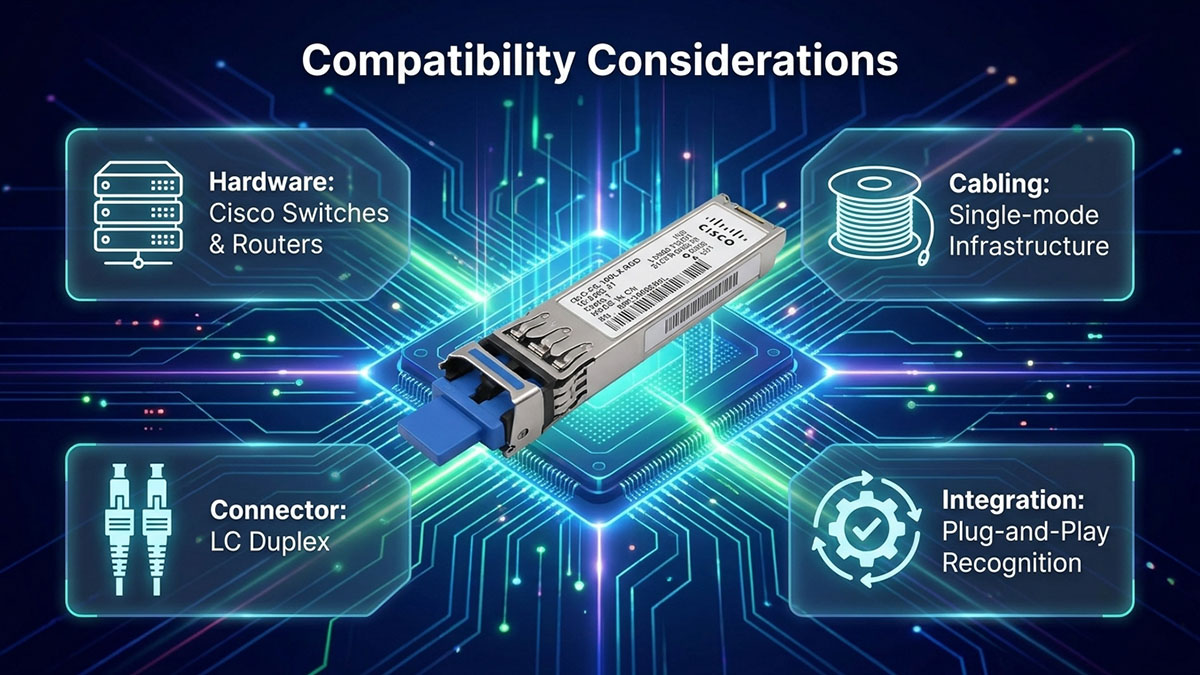
The Cisco GLC-FE-100LX-RGD requires a compatible Cisco networking device with an SFP interface that supports the module's 100Mbps Fast Ethernet operation. Physical port compatibility alone is not sufficient; platform support and software behavior should also be confirmed.
Key platform considerations include:
- SFP port support: Verify that the switch, router, or other host device supports the required SFP interface.
- Fast Ethernet support: Confirm that the host platform supports 100Mbps optical Ethernet operation.
- Module recognition: Check whether the platform can properly identify and initialize the installed transceiver.
- Software and firmware: Verify relevant platform documentation when module recognition or optical monitoring behavior depends on software support.
- Port configuration: Ensure that the interface is configured for the appropriate Ethernet mode and speed.
These checks are especially important when deploying the module in older network equipment, where port capabilities and software support may differ from those of newer platforms.
Fiber Infrastructure Compatibility
The fiber infrastructure must match the optical characteristics of the Cisco GLC-FE-100LX-RGD. Because the module is designed for extended-distance single-mode fiber transmission at 1310nm, the existing cabling should be evaluated against these requirements.
The main fiber compatibility factors are:
- Fiber type: Use single-mode fiber for the intended long-distance optical link.
- Wavelength: The fiber path and remote transceiver must support 1310nm operation.
- Connector: Verify compatibility with the module's duplex LC optical interface.
- Transmission distance: Ensure that the planned fiber route remains within the module's specified reach.
- Optical loss: Calculate fiber, connector, and splice attenuation before deployment.
- Remote-end transceiver: Confirm that the optical characteristics of the remote module are appropriate for the link.
A compatible fiber infrastructure should provide not only the correct physical medium but also sufficient optical margin. For longer links, loss testing can provide a more reliable assessment than relying on nominal cable distance alone.
Third-Party Compatible Module Considerations
When a compatible alternative is considered for one end of the link, optical specifications and host-device compatibility should be evaluated together. The alternative module should reproduce the essential operating characteristics required by the network rather than being selected solely because it has an SFP form factor.
Important evaluation points include:
- Data rate: Confirm 100Mbps Fast Ethernet operation.
- Wavelength: Verify compatibility with the 1310nm optical link.
- Fiber type: Confirm single-mode fiber support.
- Transmission distance: Ensure the alternative provides sufficient reach for the planned link.
- Optical power characteristics: Compare transmit power, receiver sensitivity, and overall link budget.
- Coding and platform compatibility: Verify that the host device can recognize and operate with the selected module.
- Testing and reliability: Consider module validation, optical testing, and environmental requirements before deployment.
The most reliable compatibility assessment therefore considers the host platform + transceiver + fiber infrastructure + remote endpoint as one complete system. This approach helps prevent situations where an apparently compatible SFP fails because of an overlooked platform, coding, or optical requirement.
📡 Cisco GLC-FE-100LX-RGD Applications
The Cisco GLC-FE-100LX-RGD is best suited to network environments that still rely on 100Mbps Ethernet but require fiber-based connectivity and greater environmental resilience. Its single-mode fiber support, 1310nm operation, and extended transmission capability make it applicable to industrial, transportation, and selected enterprise fiber networks.
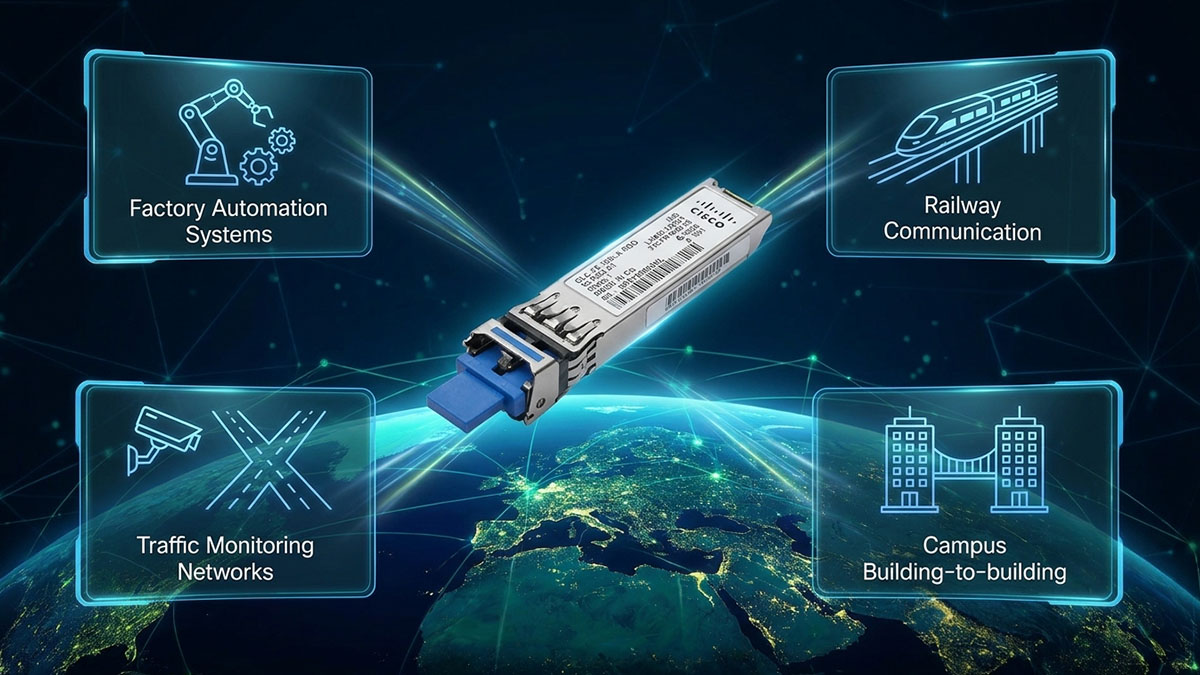
Industrial Ethernet Networks
The Cisco GLC-FE-100LX-RGD can be used in industrial Ethernet environments where reliable fiber connectivity is required between network devices operating at 100Mbps. Fiber also provides strong immunity to electromagnetic interference, which can be valuable around industrial machinery and electrical equipment.
Typical industrial applications include:
- Manufacturing facilities: Connecting industrial switches, control systems, and network cabinets across production areas.
- Factory automation systems: Providing fiber links between automation network segments where electrical interference may affect copper connections.
- Industrial control networks: Extending Ethernet connectivity between control equipment and aggregation points.
- Distributed equipment environments: Connecting network nodes across physically separated production or utility areas.
The ruggedized characteristics of the module are particularly relevant when network equipment operates outside conventional office conditions. However, the installation environment should still remain within the module's specified environmental limits.
Transportation and Outdoor Networks
Transportation and infrastructure networks can involve long cable routes, distributed equipment, temperature variation, and electrically noisy environments. In such situations, the Cisco GLC-FE-100LX-RGD can provide a fiber interface for compatible 100Mbps Ethernet equipment.
Potential applications include:
- Railway communication systems: Connecting distributed Ethernet equipment along transportation infrastructure.
- Traffic monitoring networks: Linking field equipment, monitoring devices, and network aggregation points over fiber.
- Outdoor infrastructure deployments: Extending Ethernet connectivity between separated equipment locations where fiber provides advantages over copper.
- Infrastructure control networks: Supporting communication between remote network nodes and centralized systems.
For these deployments, fiber-route distance, environmental exposure, connector protection, and optical link loss should be assessed together. The transceiver's ruggedized characteristics do not eliminate the need for appropriate enclosure, cabling, and installation practices.
Enterprise and Campus Fiber Networks
The Cisco GLC-FE-100LX-RGD can also serve in enterprise and campus environments where legacy 100Mbps Ethernet equipment remains operational. In these networks, replacing the entire infrastructure may not be practical, making an appropriate fiber SFP useful for extending the service life of compatible equipment.
Common scenarios include:
- Building-to-building connections: Extending Fast Ethernet connectivity between geographically separated facilities.
- Legacy Fast Ethernet extensions: Maintaining fiber connectivity for older switches and network devices.
- Long-distance fiber links: Connecting network segments beyond the typical reach of copper Ethernet.
- Harsh-area enterprise deployments: Providing optical connectivity in locations with less controlled environmental conditions.
These applications are most appropriate when the existing equipment, required bandwidth, and fiber infrastructure align with the module's specifications. For networks undergoing modernization, its 100Mbps capacity should also be considered against future bandwidth requirements before deployment.
📡 How to Evaluate Cisco GLC-FE-100LX-RGD Datasheet Before Deployment
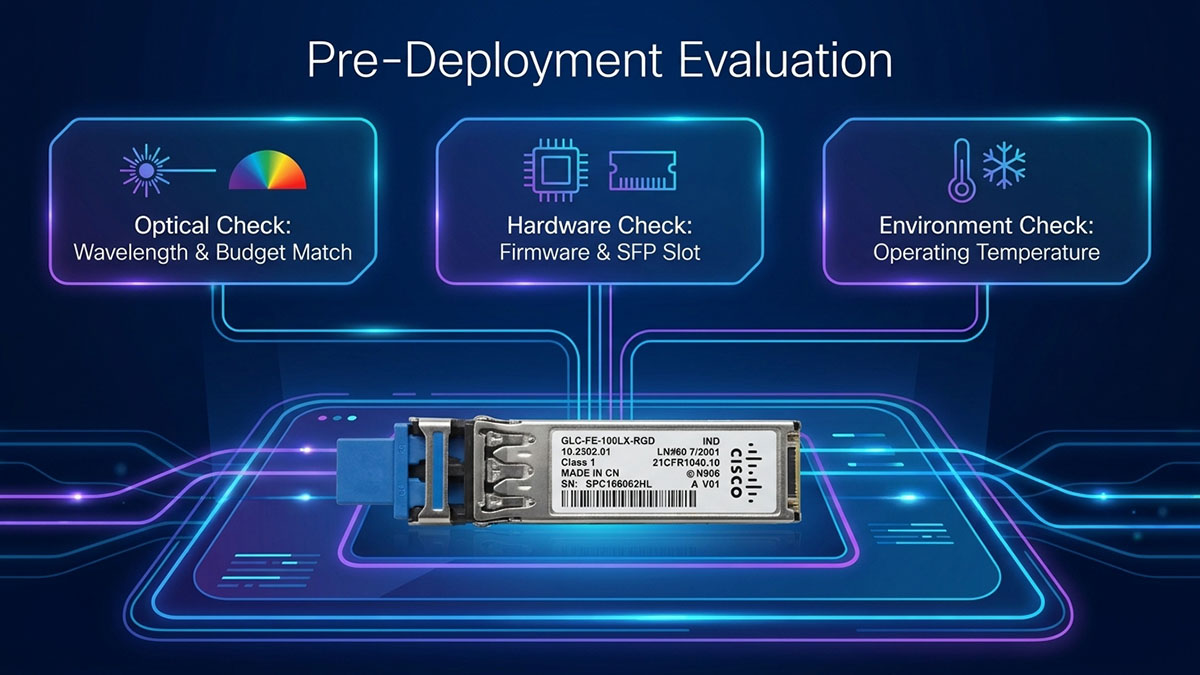
Evaluating the Cisco GLC-FE-100LX-RGD datasheet before deployment helps confirm that the module matches the planned fiber link, host equipment, and operating environment. The most important checks are optical parameters, hardware compatibility, and environmental requirements, followed by a complete assessment of the intended network path.
Verify Optical Parameters
The optical specifications should be checked first because they determine whether the module can physically support the planned fiber connection. The Cisco GLC-FE-100LX-RGD is intended for 100Mbps optical Ethernet over single-mode fiber, so the link design should match its optical characteristics.
Before deployment, verify:
- Data rate: Confirm that the network requires 100Mbps Fast Ethernet rather than a higher-speed interface.
- Wavelength: Check that the 1310nm optical wavelength is compatible with the remote endpoint.
- Fiber type: Confirm that the installed cable is suitable single-mode fiber.
- Transmission distance: Ensure that the planned fiber route remains within the module's specified reach.
- Optical power budget: Calculate expected fiber, connector, and splice losses to confirm adequate optical margin.
These checks establish whether the optical link is technically viable. For longer connections, actual attenuation and link-budget measurements are more useful than considering cable length alone.
Confirm Hardware Compatibility
The next step is to verify that the Cisco GLC-FE-100LX-RGD can operate correctly in the intended host equipment. An available SFP slot does not necessarily mean that every SFP module is supported.
The hardware evaluation should include:
- SFP slot: Confirm that the network device provides a compatible SFP interface.
- Fast Ethernet capability: Verify support for 100Mbps optical Ethernet.
- Platform support: Check the relevant Cisco platform documentation.
- Module recognition: Confirm that the host can identify and initialize the transceiver.
- Software or firmware: Review platform-specific requirements when recognition or monitoring depends on software support.
- Remote endpoint: Verify compatible optical and Ethernet characteristics at the opposite end of the link.
Completing these checks before installation reduces the risk of a physically compatible module being rejected, misidentified, or unable to establish the intended optical connection.
Assess Environmental Requirements
Environmental conditions should be evaluated carefully because the Cisco GLC-FE-100LX-RGD is intended for more demanding applications than conventional commercial optics. The installation environment must remain within the module's specified operating conditions.
Key factors include:
- Operating temperature: Compare expected ambient temperatures with the module's rated operating range.
- Storage conditions: Consider temperature and humidity during transportation or periods when equipment is not operating.
- Humidity exposure: Evaluate whether the installation location requires additional environmental protection.
- Equipment enclosure: Check ventilation, protection, and physical installation conditions.
- Industrial surroundings: Consider machinery, electromagnetic interference, vibration, and other site-specific conditions.
A complete deployment assessment should combine these environmental checks with optical and hardware verification. When the fiber path, host platform, and operating environment all satisfy the applicable specifications, the Cisco GLC-FE-100LX-RGD can be evaluated with much greater confidence for the intended Fast Ethernet application.
📡 Conclusion
The Cisco GLC-FE-100LX-RGD is a ruggedized 100Mbps Fast Ethernet SFP designed for fiber-based connectivity in industrial, transportation, and legacy enterprise environments. Understanding the Cisco GLC-FE-100LX-RGD datasheet is essential for confirming whether its optical characteristics, hardware interface, environmental capabilities, and transmission requirements match a planned network deployment.
Key Takeaways
The most important points to consider when evaluating the Cisco GLC-FE-100LX-RGD include:
- 100Mbps Fast Ethernet connectivity for compatible network platforms
- 1310nm optical operation over single-mode fiber
- Extended-distance fiber transmission capability
- SFP form factor for modular network integration
- Ruggedized characteristics for demanding operating environments
- Compatibility between the host platform, optical link, and remote transceiver
- Optical power budget and fiber-loss considerations before deployment
These factors should be evaluated together rather than individually. A suitable transmission distance or fiber type alone does not guarantee reliable operation if the host platform, optical budget, or environmental conditions are incompatible.
Final Summary
A careful review of the Cisco GLC-FE-100LX-RGD datasheet provides a practical foundation for making informed network deployment decisions. By verifying optical specifications, platform compatibility, fiber infrastructure, and environmental requirements in advance, network engineers can better determine whether this Fast Ethernet SFP fits the intended application and existing infrastructure.
For organizations evaluating compatible optical transceiver options, the LINK-PP Official Store provides additional solutions that can be assessed according to required data rate, wavelength, fiber type, transmission distance, and equipment compatibility. Reviewing these technical factors before deployment helps ensure that the selected optical solution aligns with both current network requirements and long-term infrastructure needs.