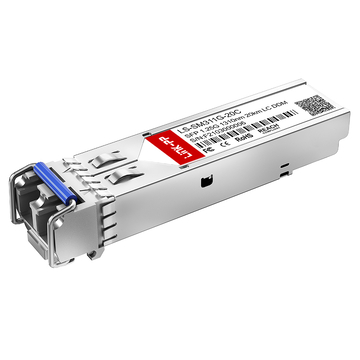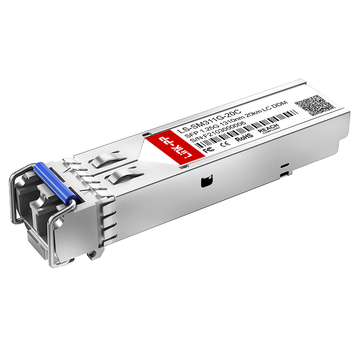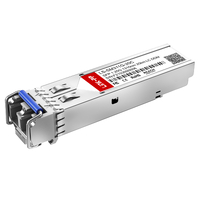
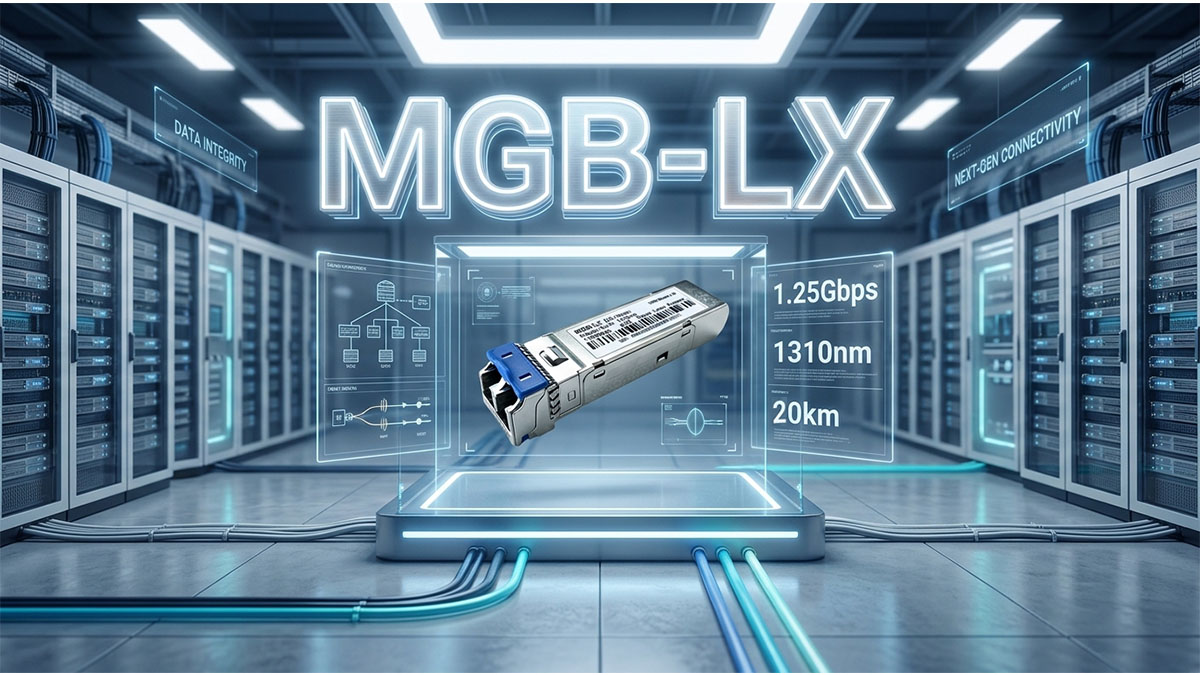
In today's data-driven enterprise environments, maintaining high-speed and reliable network backbones is essential for seamless operations. The MGB-LX transceiver plays a critical role in this infrastructure, serving as a standard 1000BASE-LX module that drives vital gigabit uplinks across campus networks. By utilizing a 1310nm wavelength to transmit data up to 20km over single-mode fiber, it reliably bridges the gap between core aggregation switches and distributed buildings.
However, scaling network infrastructure with original equipment manufacturer (OEM) optics often introduces restrictive capital expenses. This blog explores how third-party MGB-LX replacements offer a cost-effective alternative without compromising hardware parity, signal integrity, or critical diagnostic capabilities. By implementing these compliant modules, enterprise IT departments can significantly reduce total cost of ownership while maintaining carrier-grade performance in their fiber uplinks.
🔻 Understanding the Role of MGB-LX in Enterprise Network Uplinks
The MGB-LX transceiver is a foundational component in modern enterprise network design, specifically engineered to establish stable and efficient high-speed links. By bridging the gap between local access switches and the central core network, this module ensures that high-volume data flows smoothly across the entire facility. Recognizing its core technical capabilities is essential for IT teams looking to maintain optimal backbone performance while managing infrastructure costs.
Defining the Core Specifications of 1000BASE-LX Modules
The MGB-LX transceiver adheres to the standardized 1000BASE-LX specification, delivering highly dependable 1Gbps data rates over fiber optic cabling. It utilizes a standard Small Form-factor Pluggable (SFP) footprint, which allows network operators to hot-swap modules into switch ports without interrupting overall system power. This compact and versatile design guarantees straightforward integration into a wide variety of multi-vendor networking environments.
Engineered primarily for single-mode fiber (SMF), this module utilizes standard LC duplex connectors to ensure tight and accurate physical alignments at the port. This precise interface minimizes insertion loss and keeps connection points stable against physical vibration or temperature changes. These universally adopted hardware specifications make the transceiver a reliable choice for consistent, long-term network deployment.
Why the 1310nm 20km Architecture Dominates Campus Backbones
Operating at a 1310nm optical wavelength provides the ideal balance of low fiber attenuation and optimal signal clarity for campus-scale environments. This specific wavelength travels efficiently through single-mode fiber cores, experiencing minimal light scattering over extended physical distances. As a result, it maintains exceptional signal integrity without requiring complex or expensive optical amplification equipment along the path.
With a nominal transmission reach of up to 20km, the MGB-LX easily covers the physical footprint of spread-out corporate and industrial campuses. This extensive distance budget offers plenty of extra headroom to overcome signal losses caused by patch panels, fiber splices, and tight cable bends. Consequently, network engineers can confidently deploy this architecture to link separate, distant buildings back to a central server room.
The Critical Function of Gigabit Uplinks in Aggregation Layers
Aggregation switches serve as vital traffic hubs, collecting diverse data streams from local edge devices and directing them straight to the network core. Within this layer, gigabit uplinks powered by MGB-LX optics play a critical role in preventing data bottlenecks during peak operational hours. They provide a dedicated, high-capacity pathway that ensures real-time cloud applications, voice communications, and database syncs remain constantly responsive.
If these uplink paths are underpowered or unstable, traffic congestion at the aggregation level can quickly degrade user productivity across the entire organization. Utilizing dedicated fiber links effectively isolates backbone traffic from localized electrical noise and interference common in corporate buildings. Ultimately, these robust gigabit connections form the backbone infrastructure needed to sustain smooth and predictable enterprise-wide data distribution.
🔻 Evaluating Third-Party MGB-LX Replacements for Optical Infrastructure
As enterprises look to optimize their hardware budgets, third-party MGB-LX optical transceivers have emerged as a highly viable alternative to expensive OEM components. Evaluating these compatible optics requires a close look at industry standards, component quality, and real-time diagnostic capabilities to ensure seamless network integration. By properly vetting these alternatives, IT managers can confidently scale their fiber infrastructure without sacrificing link stability or performance.
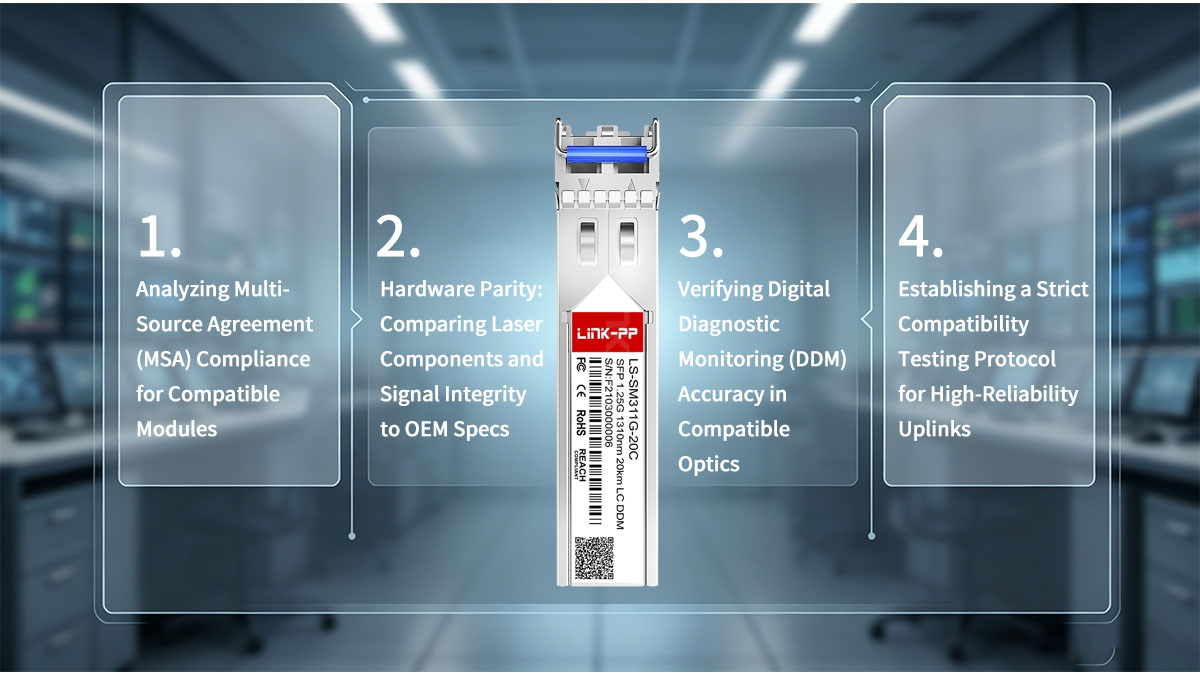
Analyzing Multi-Source Agreement (MSA) Compliance for Compatible Modules
Multi-Source Agreement (MSA) standards serve as the foundational blueprint for the third-party optics industry, ensuring hardware universality across different brands. A fully compliant MGB-LX alternative follows strict guidelines regarding the physical size, electrical interface, and signaling protocols of the module. This strict adherence guarantees that the transceiver will physically fit and electrically communicate with any standard SFP slot, regardless of the switch manufacturer.
Beyond physical dimensions, MSA compliance ensures that the internal EEPROM firmware is properly structured to converse with host systems. This prevents the host switch from rejecting the module or throwing generic software errors during initial boot-up. By choosing MSA-compliant alternatives, network engineers protect their infrastructure from restrictive vendor lock-in while maintaining complete operational flexibility.
Hardware Parity: Comparing Laser Components and Signal Integrity to OEM Specs
True hardware parity means that a third-party MGB-LX module utilizes high-quality internal components that match or exceed original equipment manufacturer standards. The core of these transceivers relies on premium 1310nm Fabry-Perot (FP) lasers and high-sensitivity PIN photodiodes to maintain crisp optical signaling. When these internal components match OEM grades, the module delivers identical light output power and receiver sensitivity.
This high component quality directly translates to robust signal integrity, keeping the shape of the optical eye diagram clean and distinct over long distances. It ensures that data packets are transmitted without suffering from excessive jitter or waveform distortion along the 20km fiber run. Investing in hardware-level parity guarantees that your alternative optics can handle the physical demands of continuous, long-term deployment.
Verifying Digital Diagnostic Monitoring (DDM) Accuracy in Compatible Optics
Digital Diagnostic Monitoring (DDM), also known as Digital Diagnostic Monitoring Interface (DDMI), is essential for tracking the real-time health of your optical uplinks. Accurate DDM telemetry allows network administrators to proactively detect dirty connectors, failing lasers, or unexpected voltage spikes before they trigger an actual network outage. High-quality third-party modules report these diagnostic data points directly to the switch operating system just like an OEM transceiver would.
To ensure your monitoring software receives precise telemetry, compatible optics must accurately report several critical operating thresholds. The following table highlights the vital parameters monitored by accurate DDM interfaces to maintain link health:
| Parameter | Operational Focus |
| Optical TX Power | Tracks the health and aging of the internal 1310nm laser component. |
| Optical RX Power | Monitors incoming light levels to detect fiber faults or dirty pins. |
| Transceiver Temperature | Prevents thermal overload inside high-density aggregation switches. |
| Supply Voltage | Ensures the switch chassis is providing stable internal electrical power. |
Establishing a Strict Compatibility Testing Protocol for High-Reliability Uplinks
Deploying third-party MGB-LX compatible transceivers into high-reliability environments requires a rigorous, systematic testing protocol before final network implementation. Compatible modules should undergo comprehensive host-matrix validation, where they are tested across various switch models and operating system firmware versions. This multi-platform testing ensures that the module's firmware does not trigger port-security blocks or command-line interface warnings.
Additionally, stress testing the optics under full data loads helps verify real-world stability and heat dissipation over extended hours. Engineers should monitor the link for any unexpected flap events or frame drops during these testing phases. Establishing this strict verification protocol allows enterprises to confidently roll out cost-effective optics while completely safeguarding network uptime.
🔻 Cost-Benefit Analysis of Using MGB-LX Alternatives for Network Uplinks
Managing an enterprise IT budget requires balancing high network performance with strict fiscal responsibility. Opting for alternative MGB-LX transceivers allows organizations to break free from artificial OEM price premiums without sacrificing optical reliability. Conducting a clear cost-benefit analysis reveals how these compatible modules can dramatically optimize both short-term spending and long-term infrastructure value.

Lowering Upfront CapEx on 1310nm 20km Optical Hardware
The most immediate advantage of deploying compatible MGB-LX modules is the massive reduction in upfront Capital Expenditure (CapEx). Original equipment manufacturers often mark up their optical components by several hundred percent over the actual manufacturing cost. Choosing high-quality third-party alternatives allows procurement managers to acquire the exact same 1310nm 20km capabilities at a fraction of the price.
These upfront savings become especially noticeable during large-scale network rollouts or hardware refresh cycles. Instead of overpaying for branded labels, engineering teams can secure the necessary fiber optics well within their allocated budgets. This immediate cost relief simplifies initial project approvals and ensures that physical deployment timelines are never delayed by funding shortages.
Comparing the Total Cost of Ownership of OEM vs. Third-Party Modules
Evaluating Total Cost of Ownership (TCO) requires looking past the initial purchase price to include ongoing maintenance, replacement costs, and warranty structures. OEM optics typically carry high-priced service contracts that add an expensive recurring burden to corporate operational budgets. In contrast, compatible MGB-LX modules offer an incredibly low TCO because they are affordable to replace and often come with multi-year warranties.
Because third-party transceivers are so cost-effective, organizations can easily buy extra units to keep on-site as immediate spares. This strategy eliminates the need for expensive overnight shipping fees or premium vendor support contracts when a replacement is required. Over a standard five-year hardware lifecycle, the cumulative savings on maintenance and spares heavily favor the alternative sourcing model.
How Third-Party Sourcing Frees Up IT Budget for Core Infrastructure
Every dollar saved by sourcing compatible MGB-LX optics transceivers can be strategically redirected to other critical areas of the IT ecosystem. Overpaying for basic transceiver modules frequently drains funds that could otherwise support major hardware upgrades. By optimizing transceiver procurement, organizations unlock capital to invest in higher-tier core switches, advanced security appliances, or next-generation software licenses.
This financial flexibility allows IT directors to maximize the overall value and capability of their entire network design. Instead of compromising on core processing power due to expensive optical accessories, they can build a much more resilient infrastructure. Ultimately, smart sourcing transforms accessory savings into a powerful driver for meaningful technological growth.
Evaluating the ROI of High-Density Gigabit Uplink Deployments
In high-density aggregation environments, where hundreds of gigabit uplinks are active simultaneously, the Return on Investment (ROI) of compatible optics multiplies rapidly. Branded OEM modules make populating high-port-count switches financially restrictive, often forcing companies to scale down their expansion plans. Utilizing alternative MGB-LX transceivers ensures that every available uplink port can be fully utilized without breaking the bank.
The ROI is clearly demonstrated by the rapid payback period and the immediate boost in total network switching capacity. Enterprises can achieve maximum data throughput and full link redundancy across their entire campus backbone right from day one. This scalable approach ensures that the physical network infrastructure can comfortably support business growth for years to come.
🔻 Validating Performance Metrics for MGB-LX Compatible Transceivers in Field Uplinks
Deploying third-party hardware requires absolute proof of its real-world capabilities through rigorous field validation. Testing compatible MGB-LX modules across actual production links ensures they meet strictly defined enterprise performance standards. By systematically auditing key operational metrics, engineering teams can verify that these cost-effective optics deliver the exact same reliability as OEM alternatives.
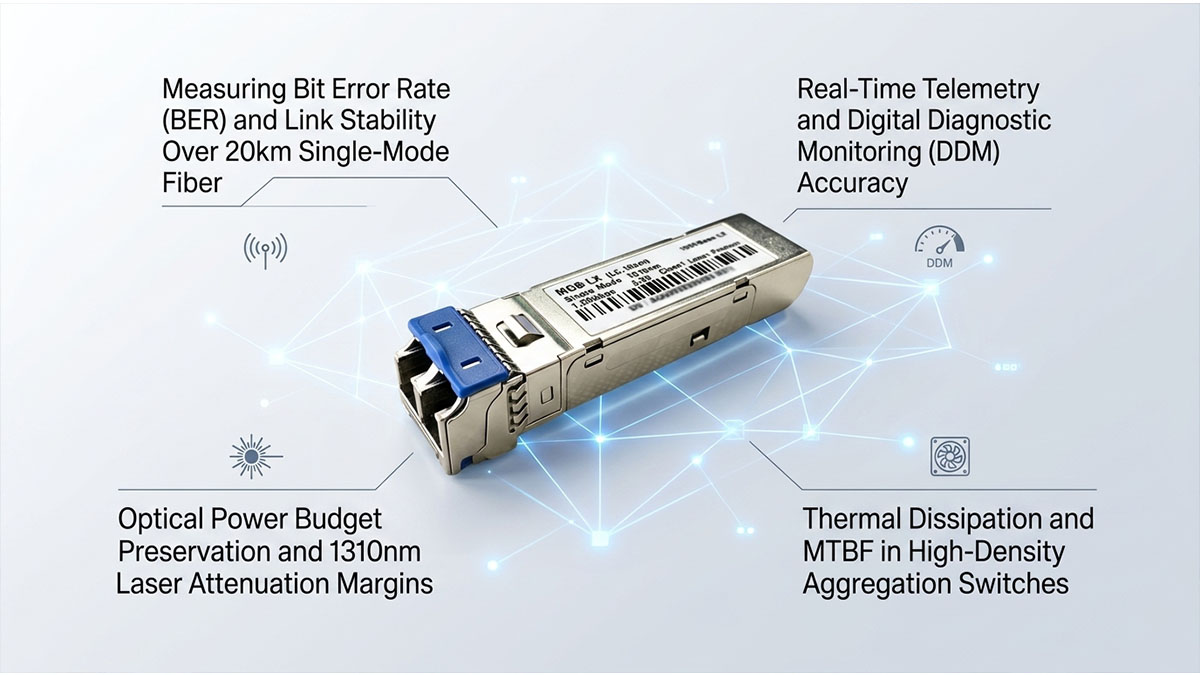
Measuring Bit Error Rate (BER) and Link Stability Over 20km Single-Mode Fiber
Verifying data integrity over long physical distances requires a thorough Bit Error Rate (BER) analysis under full traffic loads. This field test measures the precise percentage of corrupted packets transmitted over the maximum 20-kilometer fiber span. A consistently low BER confirms that the module maintains stable packet transmission without dropping connections.
Key verification points during this stability testing include:
- Zero packet loss during extended high-volume traffic runs.
- Stable frame delivery across the entire single-mode fiber length.
- No unexpected link flap events or sudden interface resets.
Optical Power Budget Preservation and 1310nm Laser Attenuation Margins
Maintaining an optimal optical power budget is essential for overcoming natural signal loss along the fiber path. The 1310nm laser must emit a consistently strong light output while the receiver module maintains a high level of sensitivity. Field validation checks this transmission margin to ensure the connection has enough headroom to handle dirty patches or aging cable splices.
Critical optical power metrics to observe include:
- Sufficient launch power from the internal 1310nm transmitter.
- Strong receiver sensitivity to accurately capture incoming light.
- Healthy attenuation margins to withstand physical fiber bends.
Real-Time Telemetry and Digital Diagnostic Monitoring (DDM) Accuracy
Real-time telemetry provides network management software with an instant window into the physical health of the optical link. Accurate Digital Diagnostic Monitoring (DDM) data allows administrators to proactively spot failing components before a total link outage occurs. Field verification ensures that the compatible module reports these exact vital signs directly to the switch control console.
Vital DDM telemetry streams to constantly monitor include:
- Real-time transceiver temperature readings from the switch port.
- Precise laser bias current levels to track component health.
- Continuous supply voltage tracking to ensure electrical stability.
Thermal Dissipation and MTBF in High-Density Aggregation Switches
High-density aggregation switches generate substantial internal heat when filled with multiple active optical modules. Compatible MGB-LX modules must feature advanced thermal designs to quickly dissipate this heat and protect internal circuitry. Proper thermal management directly extends the module's Mean Time Between Failures (MTBF) and ensures stable, multi-year operations.
Crucial thermal validation factors include:
- Low structural heat generation during continuous peak data loads.
- Efficient thermal dissipation to protect adjacent switch components.
- Extended MTBF ratings to match demanding enterprise life cycles.
🔻 Deploying MGB-LX Replacements in Telecom and Enterprise Uplink Use Cases
The versatility of the MGB-LX transceiver makes it a go-to solution across a wide spectrum of modern networking environments. From sprawling corporate grounds to dense telecommunications networks, these modules provide the dependable backbone connectivity needed for day-to-day operations. Implementing compatible alternatives allows operators in various industries to seamlessly expand their reach while keeping infrastructure costs low.
Inter-Building Fiber Uplinks for Distributed Corporate Campuses
Distributed corporate campuses frequently require stable, long-distance connections to link separate office buildings back to a central server room. Compatible MGB-LX modules excel in this role by utilizing single-mode fiber to span these long distances effortlessly. They ensure that departments located across the property can access centralized databases, internet gateways, and internal communication tools without experiencing frustrating latency.
By replacing expensive OEM modules with high-quality alternatives, campus network architects can establish redundant fiber paths between buildings. This dual-uplink strategy significantly boosts overall network reliability, protecting the organization against accidental cable cuts or hardware glitches. Ultimately, these cost-effective transceivers provide the stable bandwidth necessary to support fluid, campus-wide collaboration.
Cost-Effective Backhaul Solutions for Industrial Automation Networks
Modern industrial facilities and manufacturing plants rely heavily on automation systems that demand continuous, real-time data transmission. Utilizing MGB-LX replacements such as the LINK-PP LS-SM311G-20C 1G SFP for industrial backhaul offers a highly resilient and cost-effective method to connect remote factory floor switches to the main control center. The rugged design of these compatible optics ensures they remain stable even when exposed to ambient electromagnetic interference from heavy machinery.
Furthermore, saving on these high-volume deployments allows industrial operators to allocate more resources toward critical safety systems and advanced automation software. They can easily populate extensive field switch networks without exceeding their quarterly operational budgets. This intelligent sourcing model provides a highly practical pathway for scaling smart manufacturing infrastructure efficiently.
Optimizing Fiber-to-the-Home (FTTH) Aggregation Nodes
In the telecommunications sector, regional service providers face the constant challenge of optimizing Fiber-to-the-Home (FTTH) aggregation nodes. These specialized nodes consolidate high-volume data traffic from thousands of neighborhood residential subscribers before routing it to the core network. Integrating third-party MGB-LX modules into these nodes delivers the required gigabit performance at a dramatically reduced price point per port.
This significant cost reduction is incredibly valuable for smaller, competitive telecom providers who are actively expanding their broadband footprints. It enables them to roll out high-speed internet services to remote or underserved residential communities much faster than before. Lowering the cost of this vital hardware helps service providers maintain healthy profit margins while keeping consumer pricing highly competitive.
Enhancing High-Traffic Surveillance Network Aggregation and Uplinks
Modern IP security networks generate continuous, high-definition video streams that place an immense strain on traditional localized storage systems. Centralized security offices rely on high-capacity MGB-LX uplinks to continuously transport this massive video data from distant edge switches back to central recording servers. These dedicated fiber connections prevent video frame drops and ensure real-time security feeds remain perfectly crisp and uninterrupted.
Deploying cost-effective alternative transceivers allows security directors to install more high-resolution cameras across expansive parking areas and public facilities. They can comfortably maximize the use of every available aggregation port without facing restrictive hardware expenses. This strategy ensures comprehensive surveillance coverage and robust public safety across large-scale physical environments.
🔻 Step-by-Step Deployment Guide for MGB-LX Compatible Optics in Uplink Ports
Successfully integrating third-party MGB-LX modules into your live network environment depends on following a precise, standardized installation process. Adhering to structured best practices eliminates common physical connection issues and ensures immediate hardware recognition. This step-by-step deployment guide provides field technicians with the practical instructions needed to establish stable, long-distance fiber uplinks right from the start.
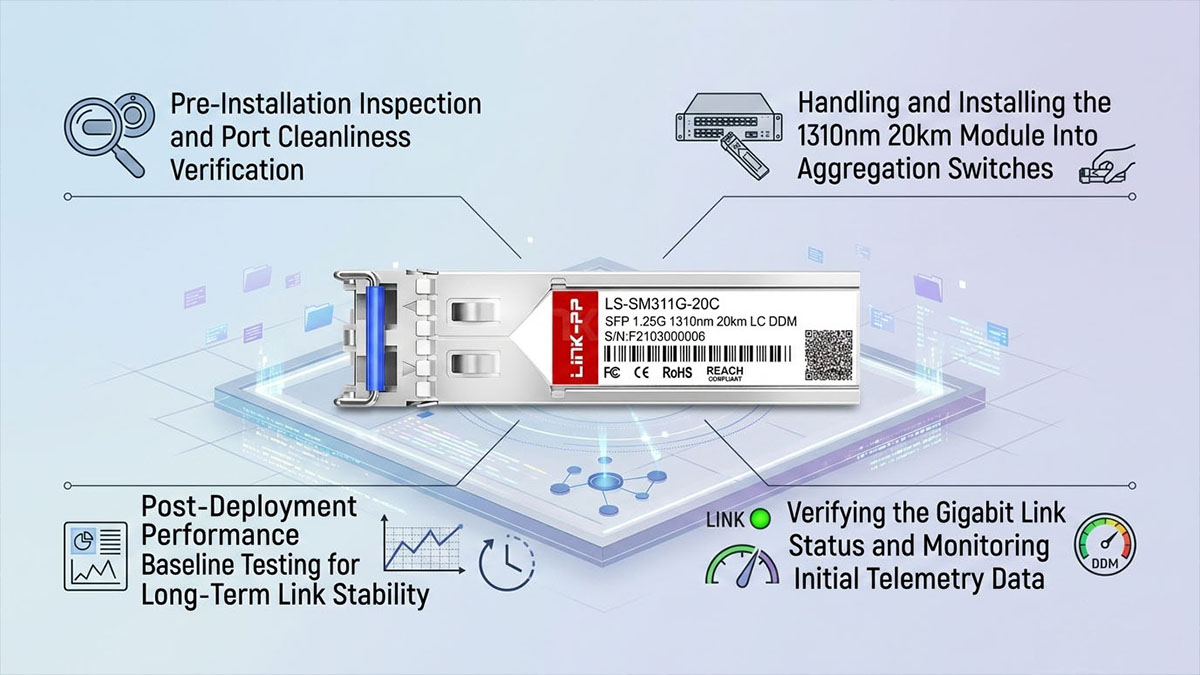
Pre-Installation Inspection and Port Cleanliness Verification
Before inserting any hardware, technicians must thoroughly inspect the physical infrastructure to prevent permanent optical core damage. Microscopic dust particles trapped inside a transceiver port or on a fiber patch cable can severely block the 1310nm light path, leading to intermittent link errors. Using dedicated fiber inspection scopes allows you to verify that all optical interfaces are completely pristine before final assembly.
Essential cleanliness and preparation steps include:
- Inspect the open switch port for any visible debris or dust.
- Examine the fiber patch cable tips with a specialized optical scope.
- Use a dedicated fiber click-cleaner to remove unseen microscopic contaminants.
- Keep protective dust caps installed until the exact moment of connection.
Handling and Installing the 1310nm 20km Module Into Aggregation Switches
Proper mechanical handling protects the delicate internal laser circuitry of the MGB-LX module from physical strain and electrostatic discharge. When inserting the transceiver, it should slide smoothly into the designated SFP slot without requiring excessive force. Ensuring the locking bail latch is fully engaged locks the module in place, preventing accidental dislodgement from physical cable tugs.
Key practices for safe physical installation include:
- Wear a grounded ESD wrist strap to prevent static electricity damage.
- Align the transceiver carefully with the orientation of the SFP slot.
- Slide the module firmly forward until you hear an audible click.
- Flip the integrated bail latch upward to securely lock it in place.
Verifying the Gigabit Link Status and Monitoring Initial Telemetry Data
Once the single-mode fiber patch cables are securely plugged in, technicians must immediately verify the link status via the switch management software. Checking the command-line interface confirms that the host system has successfully recognized the third-party module and brought the interface online. Reviewing the initial telemetry data ensures that the optical signals are within safe, factory-specified operating parameters.
Critical parameters to check during initial power-up include:
- Verify a solid green link light on the physical switch port.
- Check the interface status to confirm it reads "Up" and "Connected."
- Review real-time DDM levels for appropriate laser transmission and reception power.
- Confirm the port auto-negotiated to the correct 1Gbps full-duplex speed.
Post-Deployment Performance Baseline Testing for Long-Term Link Stability
Creating a comprehensive performance baseline immediately after installation is key to tracking the long-term health of your 20km fiber uplink. Running automated traffic simulation tests allows engineers to measure actual performance under maximum operational stress. Storing these initial data logs provides a helpful reference point that simplifies troubleshooting if the fiber network suffers physical degradation in the future.
Essential baseline metrics to document and save include:
- Record initial optical power levels for future reference.
- Run a short traffic test to confirm a zero bit error rate.
- Log the operating temperature under standard daily network loads.
- Save the baseline telemetry files directly into your central inventory database.
🔻 Conclusion: Upgrading Your Network Uplinks with Cost-Effective MGB-LX Alternatives

Transitioning to high-quality third-party optical transceivers is a highly strategic move for modern enterprise networks aiming to optimize hardware budgets. As detailed throughout this article, alternative MGB-LX modules deliver flawless hardware parity, full MSA compliance, and precise DDM telemetry. By making the switch, organizations can successfully eliminate prohibitive OEM price premiums while completely safeguarding network stability, uptime, and long-distance signal integrity.
For a seamless upgrade, the LINK-PP LS-SM311G-20C 1000BASE-LX SFP serves as an exceptional premium alternative designed for high-reliability campus backbones. This specific module operates perfectly over the 1310nm architecture to provide stable gigabit connectivity across single-mode fiber runs up to 20km. It undergoes rigorous multi-platform testing to guarantee complete host compatibility and carrier-grade performance within your high-density aggregation layers.
Ready to enhance your infrastructure with cost-effective, high-performance optics without the brand markup? Explore reliable, compatible transceivers and secure your infrastructure upgrades directly through the LINK-PP Official Store. Equipping your network switches with these enterprise-grade alternatives ensures immediate ROI, extensive long-term value, and predictable data distribution across your entire facility.