As data centers scale up to support massive bandwidth demands, network engineers face a critical MPO vs MTP dilemma when deploying high-density fiber trunks. While these two connector types look nearly identical on the surface, choosing the wrong one can lead to severe network bottlenecks and compatibility issues. Ultimately, selecting the right interface is paramount to ensuring the stability of your modern network infrastructure.
This choice matters because subtle design variations between standard MPO and premium MTP components directly impact signal integrity, insertion loss, and long-term durability. Failing to understand these architectural differences can result in costly downtime during critical 100G or 400G network upgrades. This review breaks down the technical and financial realities of MPO vs MTP to help you make an informed decision for your fiber trunks.
🚩 Introduction to MPO vs MTP in High-Density Fiber Trunks
High-density fiber trunks rely on multi-fiber connectors to pack maximum bandwidth into increasingly tight network spaces. Navigating the market requires a clear understanding of the industry-standard MPO interface and its premium counterpart, the MTP. Distinguishing between these two options is the first step toward building a reliable, high-performing cabling infrastructure.
What is an MPO Connector?
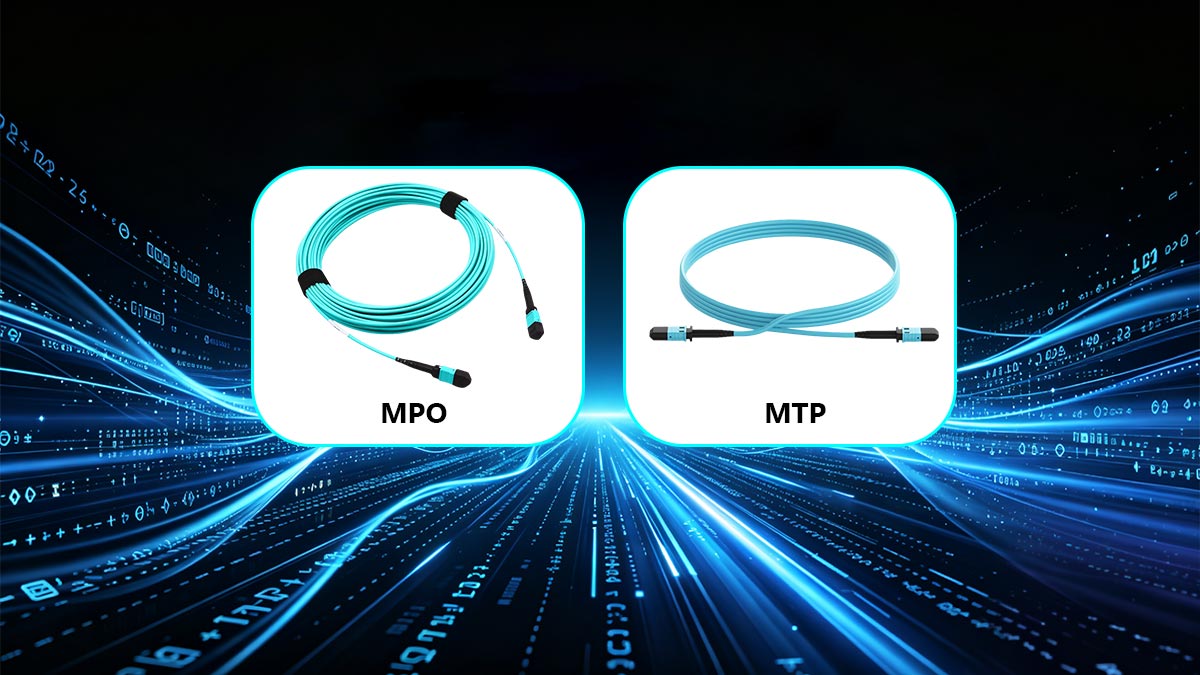
An MPO (Multi-Fiber Push-On) connector is an industry-standard fiber interface designed to combine multiple fibers into a single, compact plug. Most commonly supporting 8, 12, 16, 24, or 32 fibers in a single ferrule, it allows for rapid, high-density patch connections. It serves as the open-source foundational technology defined by international standards for parallel optics.
While standard MPO connectors offer a highly efficient way to save physical space in crowded network racks, they are generally manufactured with basic mechanical components. This widespread availability makes them a highly cost-effective choice for standard data center applications. However, basic designs sometimes struggle with performance consistency under heavy physical strain.
What is an MTP Connector and Who Makes It?
The MTP connector is a high-performance, premium version of the MPO connector, engineered and manufactured exclusively by US Conec. It is fully compatible with all standard MPO specifications but features significant mechanical and structural upgrades. Essentially, every MTP is an MPO connector, but not every MPO can match the premium engineering of a genuine MTP.
US Conec designed the MTP brand specifically to overcome the mechanical limitations of standard multi-fiber designs. By incorporating multiple patented enhancements, it provides smoother physical mating and superior durability. These precision-engineered components ensure that the connector maintains a stable, high-quality connection throughout its operational lifespan.
Why the MPO vs MTP Choice Matters for Fiber Trunks
Choosing between MPO and MTP connectors directly influences the overall reliability and signal quality of your entire fiber trunk infrastructure. Backbone cabling systems are expected to last for years, making the internal mechanical wear of the connectors a vital factor to consider. A cheaper initial choice can lead to micro-alignments shifting over time, resulting in unexpected signal degradation.
Furthermore, as networks transition to higher speeds like 400G and 800G, the margin for error regarding optical loss becomes incredibly slim. The MTP connector offers tighter tolerances and enhanced field usability that protect networks against costly downtime. Selecting the appropriate connector ensures your high-density trunks can support future hardware upgrades without requiring a complete overhaul.
🚩 Core Architectural Differences: MPO vs MTP Design Evolution
At first glance, standard MPO and premium MTP connectors look virtually identical, but their internal engineering tells a completely different story. The evolution from traditional multi-fiber designs to premium MTP architecture addresses critical mechanical weaknesses. Examining these internal differences reveals how subtle engineering upgrades translate into major real-world performance gains.
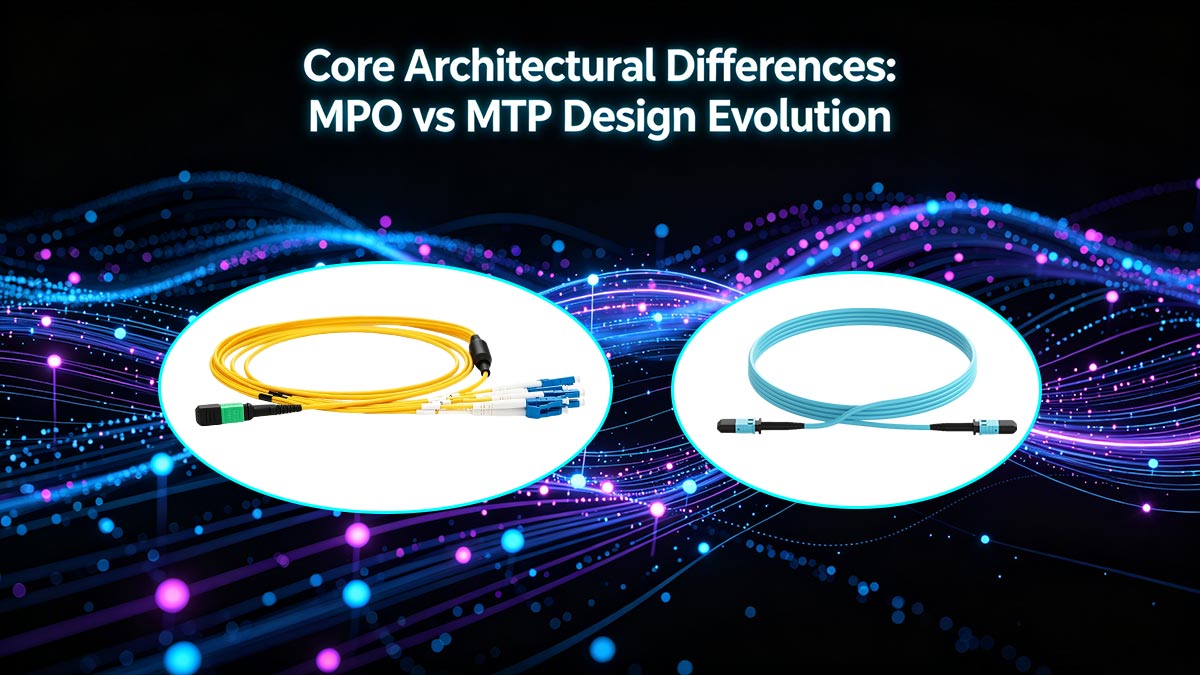
Floating Ferrule vs. Rigid Housing
The standard MPO connector generally uses a rigid housing structure that fixes the internal ferrule tightly in place. When a patch cord experiences an external pull or twist, this rigidity can cause physical stress to transfer directly to the optical connection. This often leads to momentary air gaps and sudden signal disruptions.
In contrast, the premium MTP connector features a patented floating ferrule design that allows the internal component to maintain physical contact independently of the outer housing. When the outer cable is pulled or moved under strain, the ferrules stay securely mated together. This advanced mechanism ensures exceptional physical stability and prevents optical performance drops during cable adjustments.
Mechanical Clamps and Stainless Steel Elliptical Guide Pins
Standard MPO connectors typically rely on sharp, rectangular pins and plastic clamps to hold internal alignment components. Over time, these sharp edges can wear down the mating holes and scrape plastic debris directly into the optical path. This debris is a primary cause of fiber contamination and permanent signal degradation.
The MTP design replaces these components with a metal pin clamp and highly polished, stainless steel elliptical guide pins. The rounded tips of these elliptical pins drastically reduce physical wear on the receiving connector holes. By eliminating plastic-on-plastic friction, this design prevents debris accumulation and preserves precise physical alignment over hundreds of matings.
Spring Design and Fiber Crimp Strength
The internal spring of a multi-fiber connector is responsible for providing consistent, even pressure to keep all fibers properly mated. Standard MPO connectors often use basic cylindrical springs that can unevenly distribute force, especially across high-count 24-fiber arrays. This uneven pressure can leave outer fibers poorly aligned, leading to elevated loss.
The MTP connector uses an advanced, flattened oval spring design to maximize internal clearance and structural support. This specialized shape applies perfectly balanced force across the entire fiber array while preventing the spring from physically touching and damaging the fiber ribbons. Additionally, an upgraded crimp mechanism secures the cable jacket with superior strength to prevent internal shifting.
How These Design Variations Impact Trunk Durability
The structural upgrades found in premium connectors directly dictate how well a high-density fiber trunk survives long-term deployment. To understand how these distinct design choices impact day-to-day operations, it helps to look at a direct mechanical comparison.
The table below breaks down how these architectural differences affect the physical longevity and field reliability of your cabling infrastructure.
| Architectural Feature | Standard MPO Connector | Premium MTP Connector |
| Ferrule Design | Rigid housing transfers external strain directly to fiber tips. | Floating ferrule remains safely isolated from outer cable pull. |
| Guide Pin Shape | Sharp rectangular pins scrape holes, creating plastic debris. | Smooth elliptical stainless steel pins eliminate debris. |
| Spring Type | Round spring leaves less room, risks damaging ribbon fibers. | Flat oval spring maximizes clearance and balances pressure. |
| Mating Cycles | Prone to minor physical alignment shifts after 100+ cycles. | Engineered to survive 500+ cycles with stable alignment. |
🚩 Optical Performance Comparison: MPO vs MTP Benchmarks
Mechanical design variations directly dictate how effectively these connectors transmit light through high-density links. Optical benchmarks, specifically insertion loss and return loss, reveal the true operational gap between standard and premium components. Analyzing these performance metrics demonstrates why premium engineering is essential for maintaining strict data budgets.
Insertion Loss (IL) Performance in High-Fiber Counts
Insertion loss measures the amount of signal power lost as light travels through a mated connector pair. In high-fiber counts like 24- or 32-fiber configurations, standard MPO connectors often encounter higher insertion loss due to minor variations across the wider ferrule face. This can result in unpredictable performance spikes that threaten tight optical loss budgets.
Premium MTP connectors utilize tighter manufacturing tolerances to significantly reduce insertion loss across all fibers in the array. Their specialized design ensures that light passes through the interface with minimal disruption, even in dense multi-fiber setups. This superior consistency provides network architects with the precise margins needed to build reliable, cascaded optical links.
Return Loss (RL) Stability Under Strain
Return loss indicates the amount of light reflected back toward the source, which can destabilize high-speed transceivers if not properly managed. Standard MPO connectors can experience fluctuating return loss when physical cables are bent or pulled tightly in crowded trays. These minor physical shifts create tiny air gaps between the mating fiber tips.
MTP connectors prevent these reflections by maintaining constant physical contact via their patented floating ferrule mechanism. Even under significant cable strain or physical vibration, the polished fiber faces remain securely pressed together. This continuous contact ensures exceptionally stable return loss performance under demanding real-world conditions.
Alignment Precision and Signal Integrity
Signal integrity depends entirely on how perfectly the microscopic fiber cores align with one another inside the connector. Standard MPO connectors rely on less precise alignment components, which can cause micro-misalignments that scatter light at the connection point. This scattering degrades the quality of the optical signal over time.
By incorporating polished, stainless steel elliptical guide pins, MTP connectors achieve unmatched alignment precision. This exact physical centering minimizes light scattering and ensures crisp, clean data transmission across the entire array. The resulting high signal integrity drastically reduces bit error rates in high-bandwidth applications.
Testing Data: Standard MPO vs. Premium MTP Connectors
Evaluating standard data sheets reveals a clear performance distinction between standard and premium fiber components. Lab testing consistently shows that premium MTP options yield lower average loss values and tighter statistical distributions than standard MPO alternatives. These physical testing results confirm that premium engineering delivers dependable real-world advantages.
Specifically, low-loss MTP connectors routinely achieve an average insertion loss of under 0.25dB, whereas standard MPO connectors often hover around 0.50dB or higher. Additionally, MTP connectors demonstrate remarkably stable return loss values exceeding 60dB for angled physical contact (APC) configurations. This data reinforces why premium connectors are favored for high-performance networks.
🚩 Usability and Field Maintainability: MPO vs MTP Reviews
Deploying high-density fiber trunks involves ongoing management, troubleshooting, and configuration adjustments out in the field. A connector's design directly dictates how easily technicians can modify, clean, and maintain complex network links under tight schedules. Evaluating field usability reveals major operational differences in day-to-day data center maintenance.
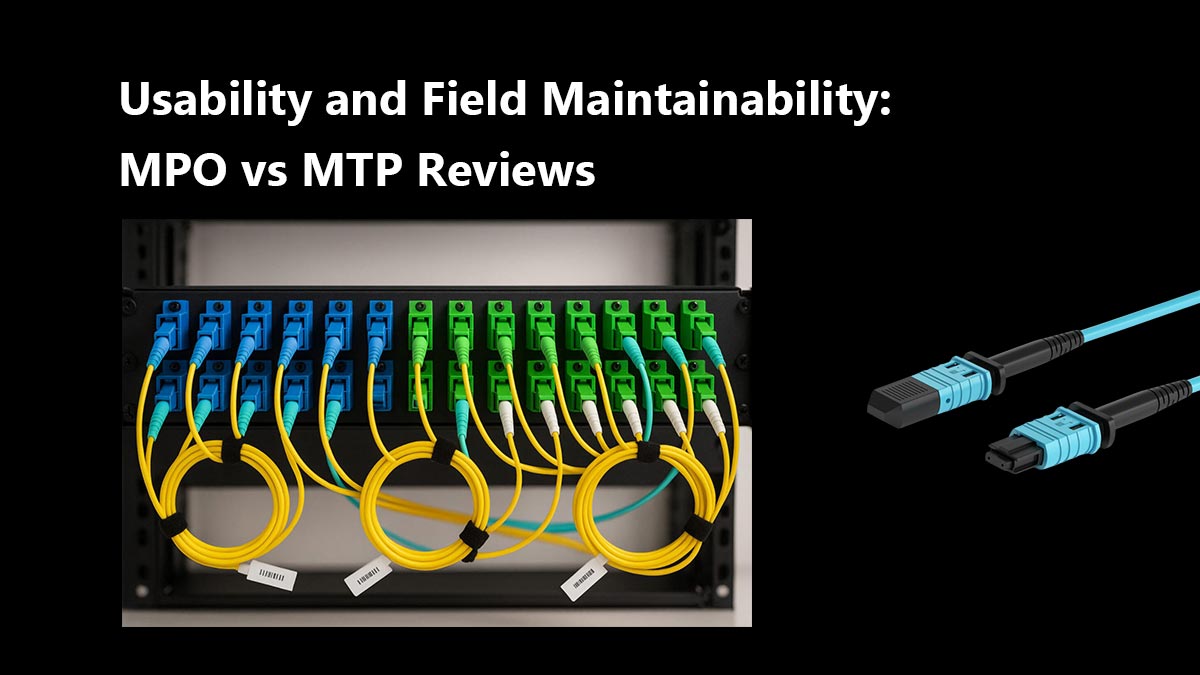
Gender Reversibility (Male/Female Pins) in the Field
Standard MPO connectors are manufactured with fixed genders, meaning a connector is permanently configured as either male with alignment pins or female without them. If a technician brings the wrong gendered cable to a patching site, the deployment immediately halts. Reconfiguring a standard MPO gender usually requires sending the cable back to a factory or scrapping it entirely.
Premium MTP connectors offer a specialized field-removable housing that allows for quick gender reversibility on-site. Technicians can safely change a connector from male to female or vice versa in less than a minute using a dedicated tool. This flexibility eliminates installation delays, drastically reduces the need to stock duplicate cable inventories, and keeps projects on track.
Polarity Changing Capabilities for Fiber Trunks
Managing fiber polarity — ensuring that the optical transmitter on one end connects to the receiver on the other — can get incredibly complicated in massive trunk runs. With traditional MPO systems, changing the cable polarity is a rigid process that usually requires physically flipping fiber ribbons or swapping out entire cassettes. This lack of flexibility increases the risk of human error and fiber damage during network reconfiguration.
Certain versions of the MTP connector feature an innovative design that allows technicians to change polarity safely directly in the field. By utilizing a specialized tool to remove the outer housing, technicians can rotate the key orientation or swap the internal fiber positions without exposing or touching the delicate glass fibers. This capability drastically simplifies complex upgrades and guarantees seamless configuration management across high-density fiber trunks.
Cleaning and Inspection Challenges for Each Connector
Keeping multi-fiber connectors clean is incredibly challenging because their wide surface areas easily attract dust, oils, and airborne debris. Standard MPO connectors can be difficult to clean effectively because their rigid housings restrict access to the ferrule edges. Debris trapped around the fixed alignment components often mingles with the optical paths during mating cycles.
MTP connectors streamline the maintenance process by allowing technicians to completely remove the outer housing for direct access to the ferrule face. This design makes it much easier to wipe away stubborn contaminants and inspect the entire array under a fiber microscope. Consequently, routine cleaning takes less time and yields much higher inspection pass rates.
Interoperability: Can You Mix MPO and MTP in One Trunk?
A common question among network engineers is whether standard MPO and premium MTP connectors can safely mate within the same fiber trunk. Because the MTP is designed to meet all international MPO specifications, the two types are fully interchangeable on a physical level. You can plug an MTP patch cord into a standard MPO adapter without causing immediate mechanical damage.
However, mixing these two grades within a single link means the entire connection will be limited by the lower-performing component. Mating a premium MTP with a standard MPO connector will likely result in the higher insertion loss and lower durability typical of standard MPO engineering. For optimal performance and predictability, keeping the entire trunk infrastructure standardized on premium components is highly recommended.
🚩 Network Standards and Compliance: MPO vs MTP Requirements
Building a future-proof enterprise infrastructure requires strict adherence to international telecommunications benchmarks. Network compliance guarantees that newly installed fiber trunks will seamlessly integrate with optical transceiver modules and switching hardware from various global manufacturers. Understanding how different connector types align with these rigorous criteria prevents costly deployment errors.
TIA-604-5 and IEC-61754 Standards Explained
The structural and dimensional requirements for multi-fiber interfaces are universally governed by two primary standards. The TIA-604-5 standard, commonly known as FOCIS 5, outlines compliance metrics within North America, while the IEC-61754 series defines international specifications. Standard MPO connectors are built to meet these basic dimensional baselines to ensure general physical compatibility.
The MTP connector is also fully compliant with these identical FOCIS 5 and IEC-61754 specifications. However, US Conec engineers the MTP to meet stricter mechanical tolerances than the bare minimums required by standard criteria. This enhanced compliance means the MTP delivers more predictable performance and tighter geometric alignment than a generic MPO interface.
Data Center Upgrade Paths (40G, 100G, 400G, and Beyond)
Modern data centers require clear, non-disruptive migration paths as speeds rapidly transition from legacy SFP+ 10G to QSFP+ 40G, QSFP28 100G, QSFP-DD 400G, and higher bandwidths. These high-speed upgrade paths demand ultra-low loss budgets because signal margins become incredibly thin at higher frequencies. Standard MPO connectors can introduce excessive loss variations that jeopardize these sensitive, high-speed optical links.
Premium MTP connectors are purpose-built to handle the strict optical requirements of next-generation hardware upgrades. Their low-loss characteristics allow network operators to cascade multiple connection points without exceeding maximum allowable loss limits. Investing in high-grade infrastructure from the start ensures your underlying fiber trunks can support future active equipment swaps.
Parallel Optics and Ribbon Fiber Architecture
Parallel optics technology splits a single data stream across multiple fibers simultaneously, rather than relying on a single fiber strand for transmission. This architecture heavily relies on ribbon fiber cables, which bundle flat rows of individual glass strands together inside a single jacket. Standard MPO connectors terminate these ribbons effectively but may apply uneven mechanical pressure across the flat array.
The MTP connector features internal enhancements, such as a specialized floating ferrule and flat spring, designed specifically to protect delicate ribbon matrices. This specialized architecture ensures that every single fiber core experiences uniform physical pressure when mated. By maintaining uniform contact, it prevents skew and ensures synchronized data arrival across parallel pathways.
Which Connector Guarantees Compliance for Future Networks?
While both options technically meet standard industry definitions, the premium MTP connector offers much stronger guarantees for emerging high-speed architectures. As networks push toward OSFP 800G and QSFP 1.6T systems, standard MPO interfaces often reach their performance limits due to wider manufacturing tolerances. The MTP provides the precision engineering required to meet these upcoming, highly restrictive physical layer demands.
Ultimately, choosing the MTP connector ensures complete compliance with both current regulations and future, higher-tier network specifications. It acts as an operational insurance policy for high-density trunk deployments by eliminating physical layer guesswork. For critical, long-term enterprise installations, premium engineering remains the safest bet for guaranteed compliance.
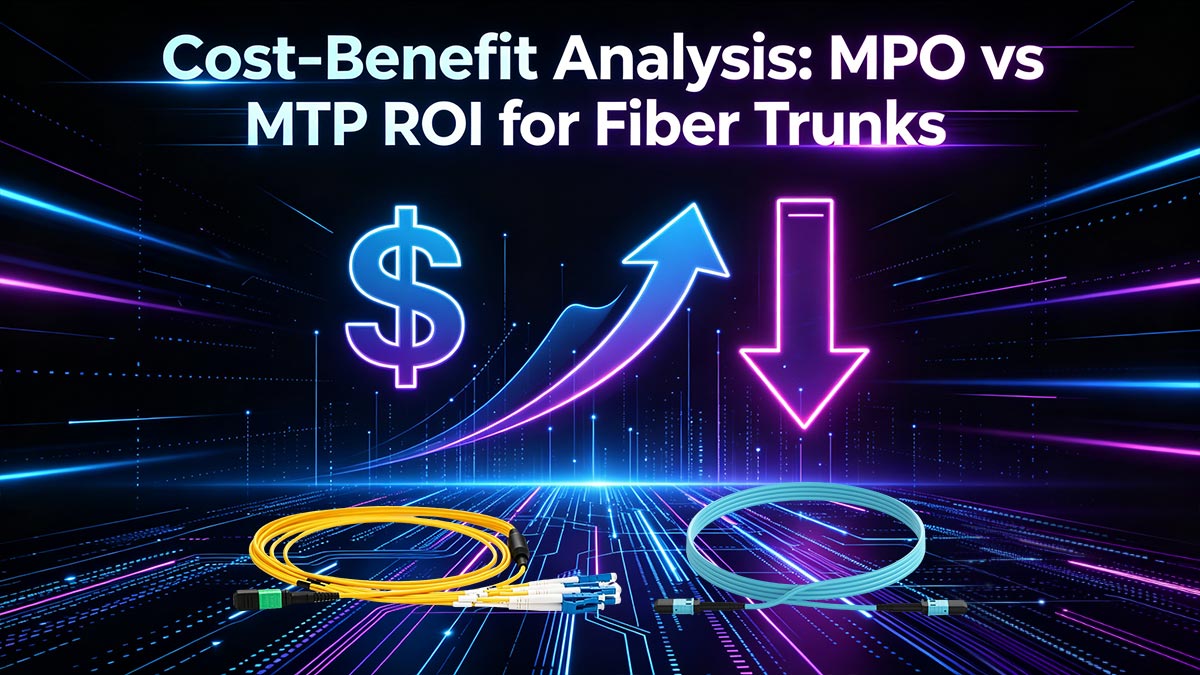
🚩 Cost-Benefit Analysis: MPO vs MTP ROI for Fiber Trunks
Evaluating the financial impact of your cabling infrastructure requires looking beyond the initial price tag of individual components. Balancing upfront capital expenditure against long-term operational costs reveals the true return on investment for your high-density fiber trunks. A comprehensive cost analysis demonstrates how choosing premium engineering can significantly lower expenses over time.
Initial Purchasing Cost of MPO vs. MTP Components
Standard MPO connectors feature a simpler manufacturing design, resulting in a noticeably lower upfront procurement cost for budget-conscious projects. Premium MTP components require a higher initial investment due to their patented mechanics and strict US Conec production tolerances. While standard MPO hardware appeals to short-term cost savings, the initial price gap represents only a fraction of the lifecycle expenses.
Long-term Maintenance and Troubleshooting Overhead
Standard MPO links routinely demand more frequent intervention because their fixed components are prone to wear, debris accumulation, and micro-alignment shifts. MTP connectors drastically reduce maintenance overhead by offering removable housings for easy cleaning and field-adjustable options for rapid reconfiguration. These specialized features mean technicians spend much less time troubleshooting signal issues, lowering overall labor costs.
Cost of Downtime vs. Investment in Premium Connectors
In high-capacity enterprise networks, unexpected network downtime can cost thousands of dollars per minute due to dropped data packets and disrupted services. Investing in premium MTP connectors acts as a reliable insurance policy against mechanical failures and sudden signal degradation under heavy cable strain. The small price premium paid upfront easily justifies itself by preventing a single catastrophic network outage.
Total Cost of Ownership (TCO) for Enterprise Networks
Calculating the Total Cost of Ownership (TCO) proves that premium MTP components are often the most economical choice over a five-to-ten-year lifecycle. Standard MPO installations frequently generate hidden costs through premature cable replacements, extended installation labor, and higher troubleshooting requirements during network upgrades. By eliminating these recurring operational expenses, the MTP architecture delivers a much stronger long-term return on investment.
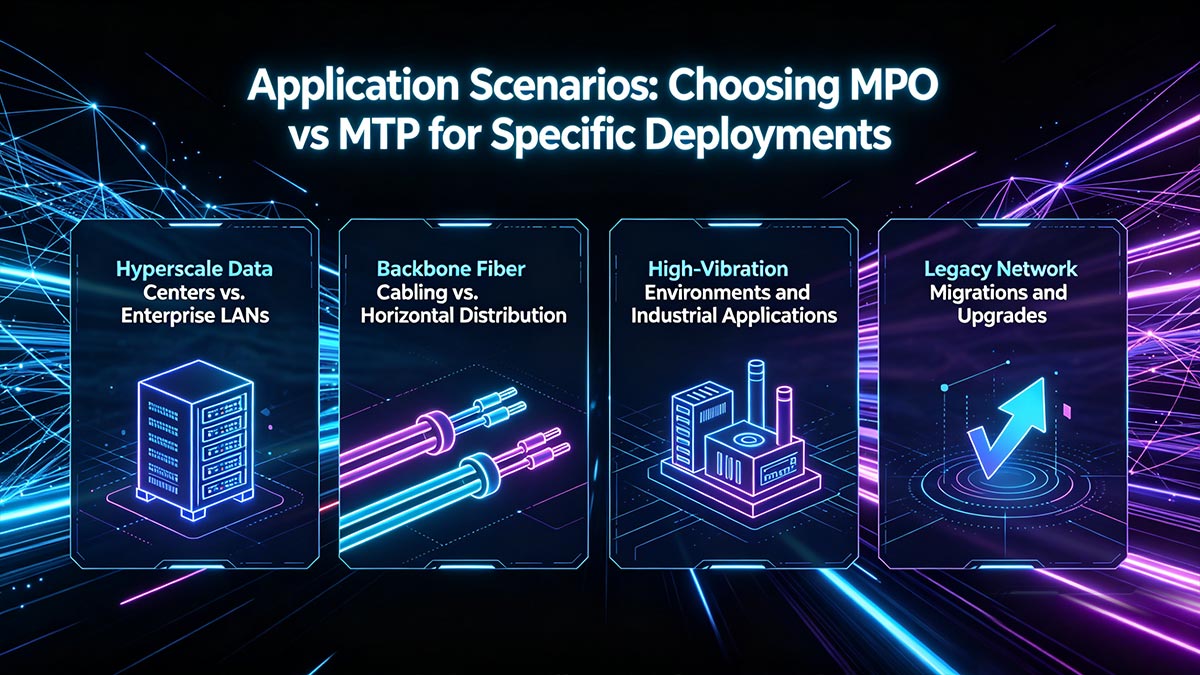
🚩 Application Scenarios: Choosing MPO vs MTP for Specific Deployments
The ultimate choice between standard MPO and premium MTP connectors depends heavily on your specific deployment environment. Different network architectures present unique physical challenges, optical loss budgets, and maintenance demands that influence your infrastructure strategy. Analyzing specific application scenarios ensures your chosen connector directly matches the operational reality of your facility.
Hyperscale Data Centers vs. Enterprise LANs
Hyperscale cloud facilities and traditional local enterprise networks operate under completely different scales and performance requirements. Massive cloud data centers demand absolute optical predictability and non-stop performance to handle millions of simultaneous data streams. The following list highlights how these deployment types divide their connector selections:
- Hyperscale Cloud Centers: Premium MTP components guarantee the ultra-low loss required for complex spine-leaf fabrics.
- Enterprise LANs: Standard MPO connectors offer a cost-effective alternative for simpler network layouts with loose loss budgets.
- Operational Density: MTP engineering prevents physical connector failures in tightly packed, high-density distribution racks.
Backbone Fiber Cabling vs. Horizontal Distribution
Main backbone links connect vital network distribution zones and are expected to remain undisturbed for many years. Horizontal distribution cabling handles the final connections to individual server racks and experiences much more frequent human interaction. The core requirements for these distinct cable segments break down as follows:
- Backbone Links: Premium MTP connectors provide maximum structural longevity for heavy, long-distance trunk cables.
- Horizontal Run Scenarios: MTP field-removable housings allow technicians to quickly adjust polarity at the server rack face.
- Routine Patching: Standard MPO can suffice for static, low-risk horizontal links that rarely undergo modifications.
High-Vibration Environments and Industrial Applications
Industrial environments and dense technical facilities expose sensitive fiber networks to continuous physical movement and vibration. Over time, constant mechanical shaking can loosen basic fiber clips and cause individual glass cores to drift out of alignment. Industrial deployments rely on specific engineering features to combat these environmental challenges:
- Vibration Immunity: The MTP floating ferrule keeps internal fibers perfectly mated during continuous external movement.
- Debris Prevention: Stainless steel elliptical pins eliminate plastic scraping caused by industrial vibration.
- Signal Stability: Premium internal springs prevent temporary air gaps that trigger data packet loss.
Legacy Network Migrations and Upgrades
Upgrading older network plants to modern high-speed configurations requires careful integration with existing fiber trunks. Technicians must balance the reusability of older hardware against the tight physical demands of next-generation transceivers. Legacy infrastructure migration paths typically depend on several key factors:
- Hardware Compatibility: Both MPO and MTP interfaces physically mate with older legacy parallel optics transceiver modules.
- Optical Budget Safety: Premium MTP low-loss components preserve enough signal margin to safely cascade older trunk segments.
- Future Proofing: Deploying MTP connectors during current retrofits ensures immediate compliance with upcoming 800G upgrades.
🚩 Final Verdict on MPO vs MTP for Fiber Trunks
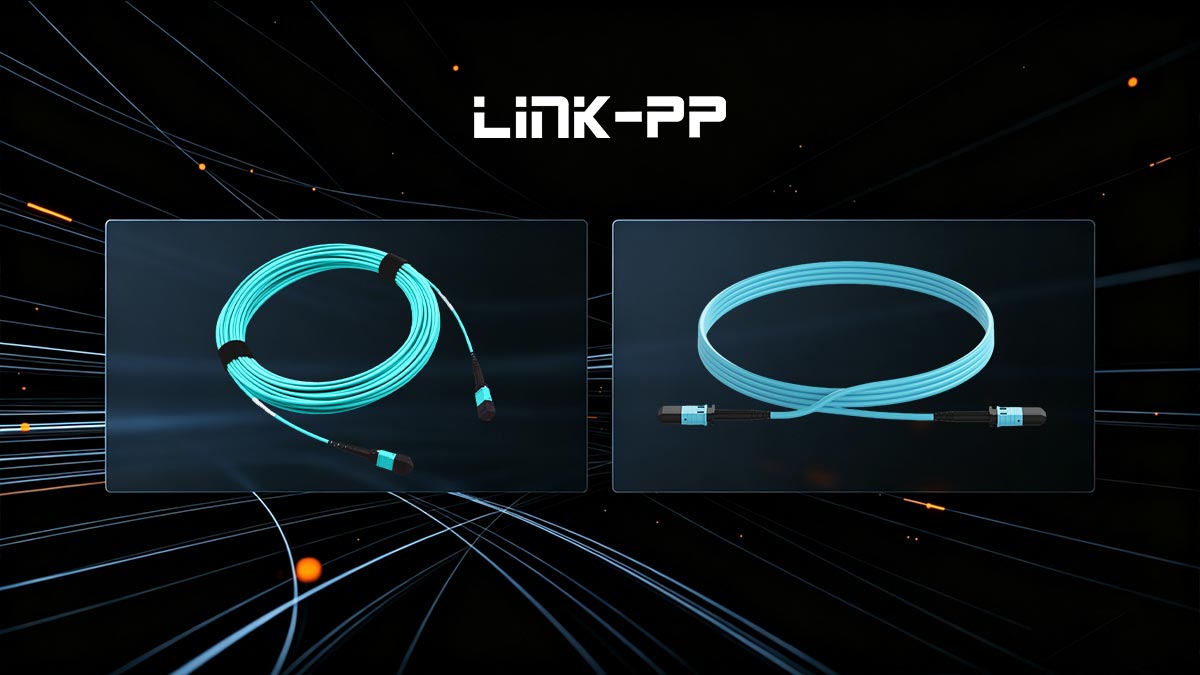
Ultimately, the choice in the MPO vs MTP debate comes down to balancing your immediate budget against your long-term network performance goals. Standard MPO connectors remain a viable, cost-effective option for basic, lower-speed networks with flexible optical loss budgets. However, for critical enterprise infrastructures and high-density fiber trunks transitioning to 400G and beyond, the premium engineering of the MTP connector provides indispensable durability and signal stability.
To maximize your infrastructure investment, it is equally vital to pair your high-performance fiber trunks with dependable, industry-compliant active hardware. Choosing precision-engineered optics transceivers ensures complete compatibility and flawless data transmission across all parallel optical pathways. Explore premium optical transceiver options directly at the LINK-PP Official Store to confidently future-proof your high-density network architecture today.