In modern enterprise and data center environments, 10GbE connectivity has become a foundational requirement for supporting high-density computing, virtualization, and low-latency applications. Among the commonly deployed short-reach interconnect solutions, Cisco SFP-H10GB-ACU10M is widely used as an active twinax direct attach copper (DAC) cable designed to deliver reliable 10Gbps links within and between adjacent racks. Its simplicity, low latency, and cost efficiency make it a practical choice for short-distance deployments where fiber infrastructure is not immediately required.
As network architectures continue to scale, the limitations of copper-based direct attach solutions become more apparent, particularly in scenarios that demand extended reach, flexible topology design, and cross-row or cross-room connectivity. This creates a natural transition point where organizations begin to evaluate optical connectivity options and broader network design strategies. In this context, reach extension considerations and optical migration planning become critical topics for maintaining performance while enabling infrastructure growth beyond the physical constraints of DAC cabling.
This article provides a structured overview of Cisco SFP-H10GB-ACU10M, its deployment boundaries, and the transition toward optical networking. It also explains key technical and design considerations to support network expansion. The discussion is organized into the following focus areas:
- Technical fundamentals and operating characteristics of Cisco SFP-H10GB-ACU10M
- Scenarios where reach extension becomes necessary in growing network environments
- Comparative analysis between DAC-based connectivity and optical transceivers
- Migration paths toward 10GBASE-SR and 10GBASE-LR fiber solutions
- Key evaluation factors for planning scalable and future-ready network architectures
Together, these sections provide a clear framework for understanding how short-reach copper connectivity fits into broader 10GbE infrastructure evolution and how to plan a smooth transition toward optical networking where required.
📖 Understanding Cisco SFP-H10GB-ACU10M
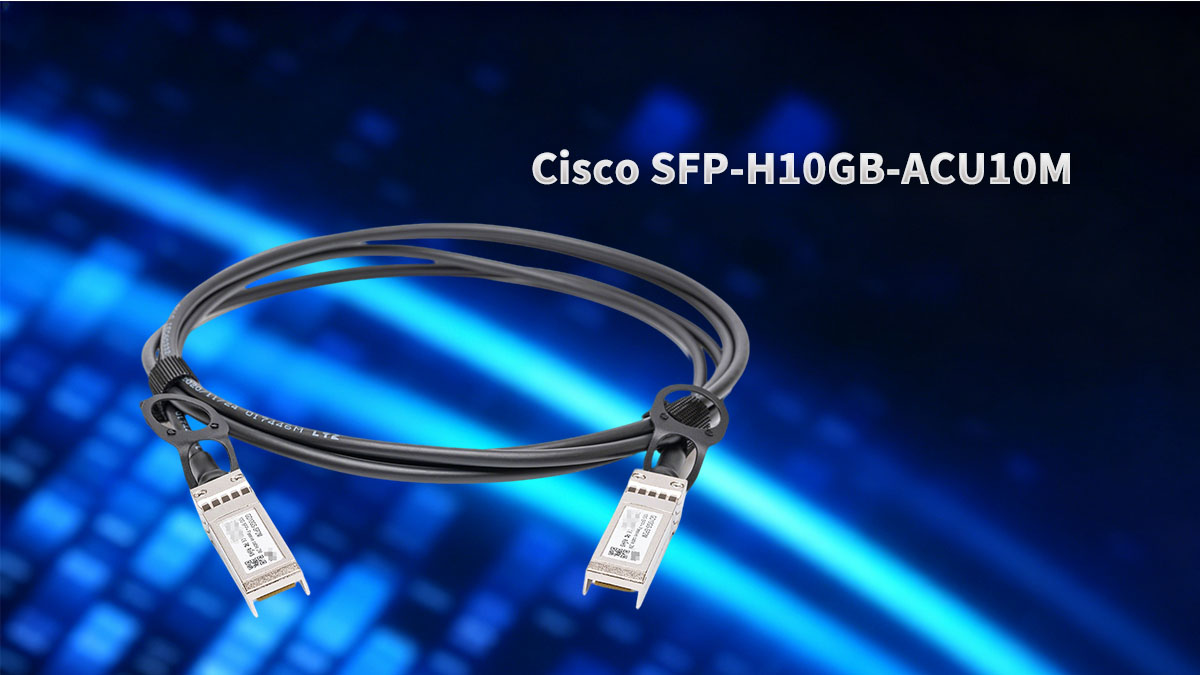
Cisco SFP-H10GB-ACU10M is a 10G SFP+ active direct attach copper (DAC) cable designed to provide short-range, high-speed connectivity between network devices. It is primarily used for point-to-point links such as switch-to-server or switch-to-switch connections within the same rack or between adjacent racks, where optical transceivers are not required. The key value of this module lies in its ability to deliver stable 10Gbps performance with minimal latency and simplified deployment.
What Is Cisco SFP-H10GB-ACU10M?
Cisco SFP-H10GB-ACU10M is an active twinax copper cable with integrated SFP+ connectors on both ends, supporting 10 Gigabit Ethernet transmission over a fixed 10-meter distance.
It is commonly used as a direct attach solution that eliminates the need for separate optical modules and fiber patch cords in short-reach environments.
Key functional characteristics include:
- Provides 10Gbps Ethernet connectivity over copper twinax cabling
- Integrates transceiver and cable into a single assembly
- Designed for low-latency, short-distance interconnects
- Compatible with Cisco SFP+ port-enabled networking equipment
This design makes it particularly effective in dense rack environments where simplicity and predictable performance are priorities.
Key Technical Specifications
Cisco SFP-H10GB-ACU10M is defined by a set of electrical and mechanical characteristics that support stable 10GbE operation in short-reach deployments.
The following table summarizes its core technical parameters:
| Specification Category | Description |
|---|---|
| Data Rate | 10Gbps (10 Gigabit Ethernet) |
| Cable Type | Active Twinax Copper (DAC) |
| Maximum Reach | 10 meters |
| Connector Type | SFP+ to SFP+ integrated modules |
These parameters highlight its positioning as a short-distance interconnect solution optimized for predictable performance rather than long-range transmission.
Additional operational attributes include:
- Low power consumption compared to optical transceivers
- Reduced signal conversion overhead due to integrated design
- Minimal latency suitable for high-performance computing environments
- Fixed-length architecture ensuring consistent signal behavior
Together, these specifications make it a stable and efficient option for intra-rack and adjacent-rack connectivity.
Typical Deployment Scenarios
Cisco SFP-H10GB-ACU10M is most effective in environments where devices are located in close physical proximity and high-speed communication is required.
Common deployment scenarios include:
- Server-to-top-of-rack (ToR) switch connections in data centers
- Switch-to-switch links within the same rack
- High-density virtualization clusters requiring fast east-west traffic
- Enterprise aggregation layers with short-distance interconnect needs
These scenarios typically prioritize simplicity, low latency, and ease of installation over long-distance reach.
In practice, it is widely deployed in environments where cabling complexity must be minimized while maintaining consistent 10GbE throughput across compute nodes.
📖 Why Reach Extension Becomes Necessary
Reach extension becomes necessary when the physical limitations of copper-based direct attach solutions can no longer support evolving network layouts and workload distribution. In the case of Cisco SFP-H10GB-ACU10M, the 10-meter fixed range is sufficient for intra-rack connections, but modern data center expansion patterns often exceed this boundary. As a result, organizations must plan for extended connectivity to maintain performance, flexibility, and scalability across larger infrastructure footprints.
Physical Distance Limitations of DAC Cables
The primary reason reach extension becomes necessary is the inherent distance constraint of copper-based DAC cables like Cisco SFP-H10GB-ACU10M. These cables are optimized for short-range transmission, and signal integrity degrades beyond their designed limits.
Key constraints include:
- Effective transmission range is typically limited to 10 meters
- Copper attenuation increases with distance, reducing signal reliability
- Physical routing constraints within racks and cabinets restrict flexibility
- Cross-rack or cross-row connections often exceed DAC capabilities
These limitations make DAC cables highly efficient for localized connectivity but unsuitable for broader network spans.
Data Center Expansion Trends
Modern data centers are continuously expanding in both scale and architectural complexity, which increases the demand for longer-reach connectivity solutions.
Common expansion-driven factors include:
- Growth in virtualized and containerized workloads
- Increasing adoption of distributed computing clusters
- Expansion of hyper-converged infrastructure (HCI) systems
- Migration toward multi-rack and multi-row server architectures
As a result, connectivity is no longer confined to a single rack or cabinet. Instead, networks must support:
- Cross-rack east-west traffic flows
- Inter-rack aggregation layers
- Modular data center scaling models
In these scenarios, fixed-length DAC solutions like Cisco SFP-H10GB-ACU10M quickly reach their operational boundaries, making reach extension a necessary design evolution rather than an optional upgrade.
Performance and Scalability Considerations
Beyond physical distance, reach extension is also driven by performance optimization and long-term scalability requirements. As workloads grow, network design must adapt to maintain consistent throughput and operational efficiency.
Key considerations include:
- Increasing bandwidth demand from compute-intensive applications
- Need for flexible topology changes without cabling redesign
- Reduced congestion in densely connected rack environments
- Future-proofing infrastructure for higher-speed Ethernet adoption
A short-reach copper-based approach may limit architectural flexibility in several ways:
- Fixed cable lengths restrict dynamic reconfiguration
- Dense cabling can complicate airflow and thermal management
- Scaling across multiple rows introduces physical constraints
By contrast, extending reach—typically through optical connectivity—enables:
- Greater physical separation between network nodes
- More flexible rack and row design strategies
- Improved scalability for future infrastructure growth
These factors make reach extension a critical step in aligning physical network design with long-term operational requirements.
📖 Comparing DAC and Optical Connectivity
Comparing DAC and optical connectivity is essential for understanding where Cisco SFP-H10GB-ACU10M fits within a broader 10GbE architecture. While both solutions support high-speed Ethernet transmission, they differ significantly in terms of physical medium, deployment flexibility, and scalability. This comparison helps clarify why DAC is typically used for short-range links, while optical solutions dominate longer-reach and scalable network designs.
Cisco SFP-H10GB-ACU10M vs SFP+ Optical Transceivers
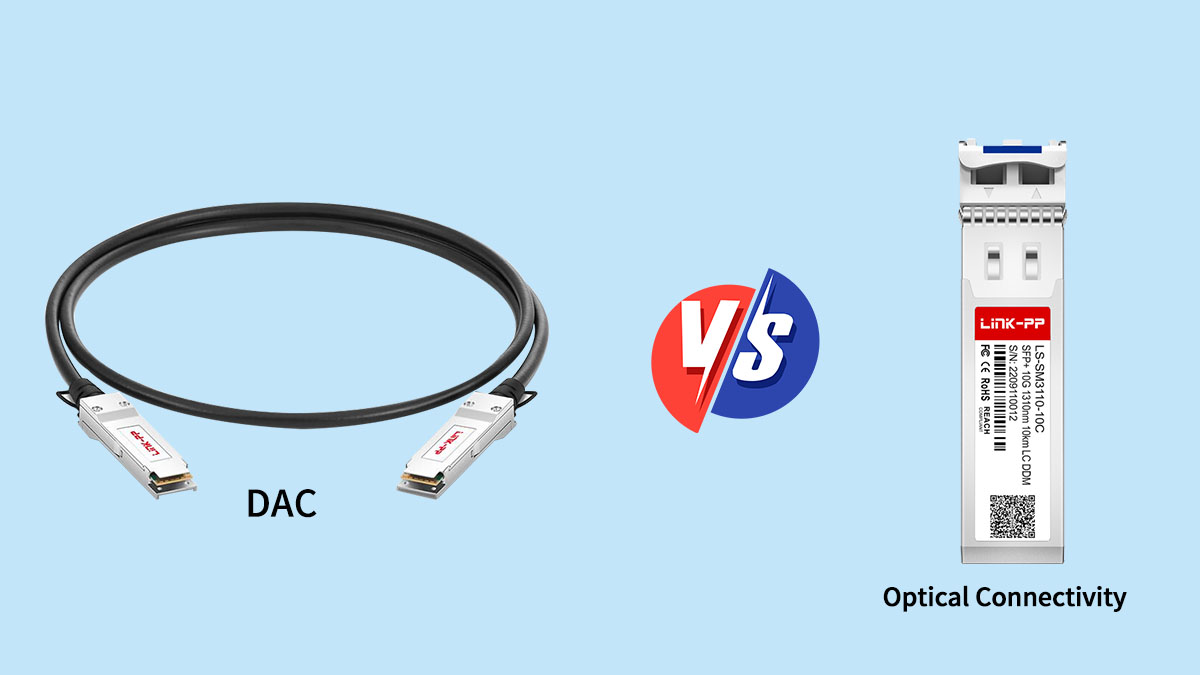
Cisco SFP-H10GB-ACU10M and SFP+ optical transceivers serve the same fundamental purpose—enabling 10GbE connectivity—but they achieve it through different transmission technologies and design philosophies.
Cisco SFP-H10GB-ACU10M is a direct attach copper solution designed for short-reach, fixed-distance connections. In contrast, SFP+ optical transceivers rely on fiber optic cabling, enabling significantly longer transmission distances and greater deployment flexibility.
Key functional differences include:
- DAC integrates cable and transceiver into a single assembly
- Optical solutions require separate transceivers and fiber patch cords
- DAC is optimized for intra-rack connectivity
- Optical modules are designed for inter-rack and inter-building connectivity
These distinctions define how each technology is applied within layered network architectures.
Key Differences in Network Design
From a network design perspective, DAC and optical connectivity influence topology planning, scalability, and physical infrastructure requirements. The differences are not only technical but also architectural, shaping how data centers evolve over time.
Before examining detailed parameters, it is important to understand that DAC prioritizes simplicity and short-range efficiency, while optical connectivity prioritizes distance, flexibility, and scalability.
The following table summarizes the key design differences:
| Comparison Factor | Cisco SFP-H10GB-ACU10M DAC | SFP+ Optical Transceivers |
|---|---|---|
| Transmission Medium | Twinax copper cable | Fiber optic cable |
| Typical Reach | Up to 10 meters | Hundreds of meters to 10+ kilometers |
| Deployment Scope | Intra-rack / adjacent rack | Inter-rack / campus / data center |
| Infrastructure Complexity | Low | Moderate to high |
| Cable Management | Simple and fixed length | Flexible routing options |
| Scalability | Limited by distance | Highly scalable across environments |
After reviewing these differences, it becomes clear that DAC is best suited for localized connectivity, while optical solutions provide the structural flexibility required for larger network expansion.
Total Infrastructure Considerations
When evaluating DAC versus optical connectivity, the decision extends beyond individual link performance and into overall infrastructure planning. The choice directly affects scalability, maintenance, and long-term network evolution.
Key infrastructure considerations include:
- Physical layout of racks and data center rows
- Expected growth in server and switch density
- Cable routing complexity and space constraints
- Long-term upgrade paths toward higher-speed Ethernet standards
To better understand real-world impact, organizations typically evaluate how each solution influences operational efficiency:
- DAC reduces cabling overhead in dense racks
- Optical systems improve cross-rack and cross-room flexibility
- Hybrid deployments balance simplicity and scalability
These factors highlight that DAC solutions such as Cisco SFP-H10GB-ACU10M are most effective when used strategically within a layered infrastructure model, rather than as a standalone connectivity strategy.
📖 Optical Migration Paths Beyond Cisco SFP-H10GB-ACU10M
Optical migration beyond Cisco SFP-H10GB-ACU10M becomes necessary when network connectivity requirements extend beyond the 10-meter limitation of direct attach copper. As data centers scale across multiple racks, rows, and rooms, fiber-based solutions provide the logical next step for maintaining 10G DAC performance while significantly expanding reach and architectural flexibility. This transition is not a replacement of DAC, but an extension strategy to support broader infrastructure growth.
Migrating to 10GBASE-SR Solutions
Migrating to 10GBASE-SR is one of the most common and practical steps when extending beyond Cisco SFP-H10GB-ACU10M. This optical solution uses multimode fiber to support short-to-medium range connectivity within data center environments.
Before evaluating deployment scenarios, it is important to understand that 10GBASE-SR is optimized for high-density, short-range optical links where cost efficiency and performance balance are both important.
Key characteristics include:
- Uses multimode fiber (typically OM3 or OM4)
- Supports 10Gbps transmission over optical medium
- Commonly used for intra–data center connectivity
- Requires separate SFP+ optical transceivers on both ends
Typical use cases include:
- Inter-rack connections within the same data center hall
- Aggregation layer uplinks from top-of-rack switches
- High-density server clusters requiring flexible cabling paths
After considering these scenarios, 10GBASE-SR (like Cisco SFP-10G-SR) becomes a natural extension path when DAC limitations are reached but long-distance campus connectivity is not yet required.
Migrating to 10GBASE-LR Solutions
For environments that require significantly greater reach, 10GBASE-LR provides a single-mode fiber solution designed for long-distance transmission. This option is typically adopted when network connectivity must extend across large facilities or between separate buildings.
Before examining deployment benefits, it is important to recognize that 10GBASE-LR prioritizes distance and signal integrity over cabling simplicity.
Key characteristics include:
- Uses single-mode fiber (SMF) for long-distance transmission
- Supports significantly extended reach compared to multimode solutions
- Designed for campus and inter-building connectivity
- Requires precision optical alignment and higher-quality fiber infrastructure
Common deployment scenarios include:
- Data center interconnection across separate buildings
- Campus backbone network links
- Disaster recovery site connectivity
- Long-distance aggregation between network cores
In these cases, 10GBASE-LR (like Cisco SFP-10G-LR) enables connectivity that is physically impossible for Cisco SFP-H10GB-ACU10M or other DAC-based solutions.
Preparing for Future Network Growth
Optical migration is not only about solving current distance limitations but also about preparing infrastructure for long-term scalability. As bandwidth demand increases and network architectures evolve, fiber-based systems provide a more adaptable foundation.
Key preparation strategies include:
- Designing fiber-ready pathways during initial infrastructure planning
- Installing multimode or single-mode fiber based on projected growth needs
- Ensuring switch platforms support modular SFP+ optical upgrades
- Aligning cabling infrastructure with future SFP28 25G, QSFP+ 40G, or QSFP28 100G transitions
Additional planning considerations:
- Fiber infrastructure reduces dependency on fixed-length cabling
- Optical systems simplify cross-domain network expansion
- Structured cabling enables easier future upgrades without major redesign
By anticipating these requirements early, organizations can reduce the cost and complexity of future network evolution while maintaining operational continuity.
📖 Factors to Evaluate Before Transitioning to Optical Networks
Transitioning from Cisco SFP-H10GB-ACU10M-based DAC connectivity to optical networks requires careful evaluation of both technical requirements and infrastructure readiness. This step is typically driven by reach limitations, but the decision itself depends on multiple design, compatibility, and scalability factors that influence long-term network performance. A structured assessment helps ensure that optical migration delivers measurable improvements rather than unnecessary complexity.
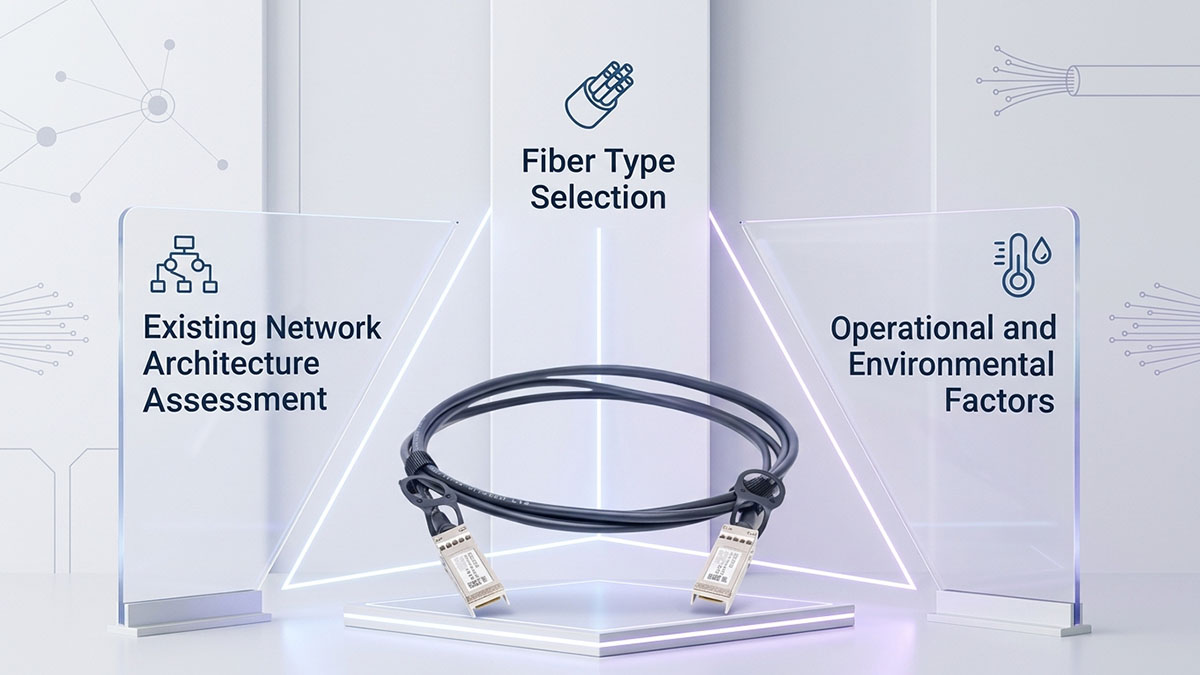
Existing Network Architecture Assessment
A clear understanding of the existing network architecture is the first step in evaluating optical transition readiness. Since Cisco SFP-H10GB-ACU10M is commonly used in short-reach topologies, its replacement must align with how current switching and server layers are structured.
Key evaluation points include:
- Switch models and their available SFP+ optical port support
- Current reliance on DAC for intra-rack or inter-rack connectivity
- Topology type (leaf-spine, hierarchical, or flat network design)
- Existing bandwidth distribution across aggregation layers
From a practical standpoint, optical transition becomes more relevant when:
- Multiple DAC links exceed physical cable routing limits
- Inter-rack traffic increases beyond local aggregation capacity
- Network expansion introduces cross-row or cross-room dependencies
These indicators help determine whether the current architecture is approaching the natural limits of copper-based interconnect design.
Fiber Type Selection
Selecting the appropriate fiber type is a critical factor in ensuring that optical transition delivers the expected performance and scalability benefits. The decision typically revolves around multimode and single-mode fiber technologies, each serving different deployment ranges.
Before selecting a fiber type, it is important to evaluate distance requirements and long-term scalability expectations.
Key selection considerations include:
- Multimode fiber (OM3/OM4) for short-to-medium range data center links
- Single-mode fiber (SMF) for long-distance or campus-wide connectivity
- Compatibility with 10GBASE-SR or 10GBASE-LR optical modules
- Existing fiber infrastructure availability within the facility
Additional practical factors:
- Multimode fiber is often more cost-efficient for intra-data center use
- Single-mode fiber provides greater future scalability for long-distance growth
- Fiber selection directly impacts transceiver type and upgrade paths
After evaluating these elements, organizations can align fiber choice with both current operational needs and anticipated network expansion.
Operational and Environmental Factors
Beyond technical specifications, operational and environmental conditions play a significant role in determining whether optical migration is appropriate. Unlike Cisco SFP-H10GB-ACU10M, which offers simple plug-and-play deployment, fiber-based systems introduce additional planning considerations.
Key operational factors include:
- Data center layout and rack spacing design
- Cable routing complexity across trays and pathways
- Maintenance procedures for fiber inspection and cleaning
- Physical protection requirements for fiber cabling infrastructure
Environmental considerations include:
- Airflow optimization and reduced cable congestion benefits
- Sensitivity of fiber connectors to contamination or bending
- Physical separation requirements between network zones
- Impact on long-term operational maintenance workflows
From a deployment perspective, fiber introduces both advantages and responsibilities:
- Improved scalability and flexibility in physical network design
- Increased need for structured cabling discipline
- More detailed installation and testing procedures
These factors ensure that optical transition is not only technically feasible but also operationally sustainable within existing IT environments.
📖 Best Practices for Extending Network Reach
Extending network reach beyond the limitations of Cisco SFP-H10GB-ACU10M requires a balanced approach that combines short-reach DAC efficiency with scalable optical connectivity. The goal is not to replace DAC entirely, but to apply each technology where it performs best. A well-planned strategy improves performance consistency, reduces operational complexity, and supports long-term infrastructure growth.
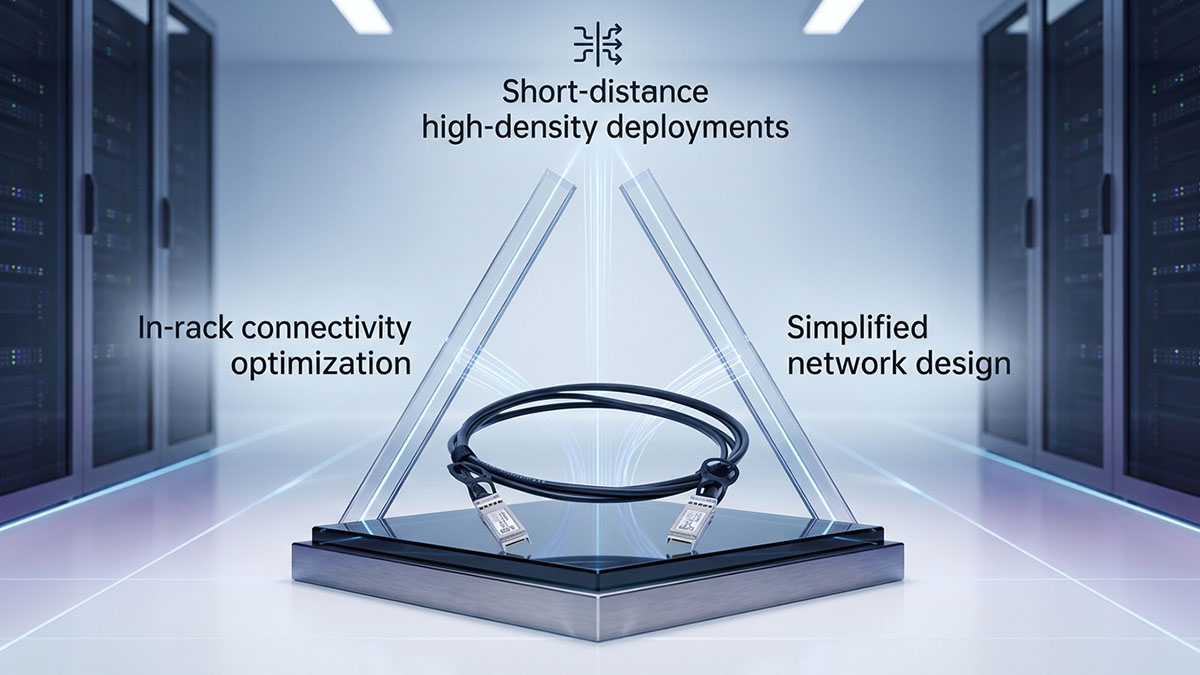
Use DAC Where It Delivers Maximum Value
Direct attach copper solutions such as Cisco SFP-H10GB-ACU10M are most effective in environments where devices are physically close and network design prioritizes simplicity and low latency. Retaining DAC in these scenarios ensures cost-efficient and stable short-range connectivity.
Typical optimal usage scenarios include:
- Intra-rack server-to-switch connections
- High-density compute clusters within a single rack
- Short-distance switch interconnects in adjacent ports
- Latency-sensitive applications within confined physical layouts
Practical benefits of maintaining DAC in these areas include:
- Reduced cabling complexity within racks
- Lower power consumption compared to optical modules
- Simplified deployment without separate transceivers
- Predictable performance in fixed-distance links
After evaluating these points, DAC remains a strong foundation for localized 10GbE connectivity where reach extension is not required.
Deploy Fiber for Inter-Rack and Long-Distance Links
As network distances increase beyond the 10-meter limitation of Cisco SFP-H10GB-ACU10M, fiber-based connectivity becomes the preferred solution for maintaining performance and flexibility across broader infrastructure zones.
Before implementing fiber links, it is important to define clear boundaries between short-range and extended-reach connectivity layers.
Key deployment scenarios include:
- Inter-rack connections across separate rows
- Aggregation layer uplinks in leaf-spine architectures
- Cross-room or cross-zone data center connectivity
- Campus or building-level network interconnection
Key advantages of fiber deployment include:
- Extended transmission distances without signal degradation concerns
- Greater flexibility in physical rack and row placement
- Improved scalability for future network expansion
- Reduced constraints in cable routing design
In practice, fiber acts as the backbone for scalable connectivity, complementing DAC-based short-range links.
Adopt a Hybrid Connectivity Strategy
A hybrid connectivity approach combines both DAC and optical solutions to optimize performance, cost efficiency, and scalability. This strategy ensures that each technology is used in its most appropriate context rather than forcing a single solution across all scenarios.
Before adopting a hybrid model, network planners typically evaluate workload distribution patterns and physical infrastructure constraints.
Key principles of hybrid deployment include:
- Using DAC for intra-rack and short-reach connections
- Using fiber for inter-rack, inter-row, and long-distance links
- Matching connection type to physical distance and topology layer
- Avoiding overuse of optical solutions where DAC is sufficient
Operational advantages of this approach include:
- Balanced infrastructure cost management
- Reduced unnecessary optical deployment complexity
- Improved adaptability to evolving network demands
- Simplified scaling across different infrastructure zones
After implementation, hybrid architectures typically result in more efficient resource utilization and better long-term scalability planning.
📖 Common Challenges During Optical Migration
Optical migration beyond Cisco SFP-H10GB-ACU10M introduces significant improvements in reach and scalability, but it also brings a new set of technical and operational challenges. These challenges are not typically related to performance limitations of fiber itself, but rather to compatibility, deployment complexity, and infrastructure readiness. Understanding these issues in advance helps ensure a smoother transition from DAC-based connectivity to optical networking.
Compatibility Verification
One of the most common challenges during optical migration is ensuring compatibility between network equipment, transceivers, and optical modules. Unlike Cisco SFP-H10GB-ACU10M, which integrates cable and transceiver into a single unit, optical deployments rely on multiple components working together.
Key compatibility risks include:
- Mismatch between SFP+ optical transceivers and switch platforms
- Vendor-specific coding restrictions or firmware requirements
- Inconsistent behavior across third-party optical modules
- Port-level compatibility limitations on legacy equipment
To reduce these risks, organizations typically validate:
- Switch model support for 10GBASE-SR and 10GBASE-LR modules
- Firmware versions across all networking devices
- Optical module coding and interoperability requirements
- End-to-end link testing before production deployment
These steps help ensure stable operation and prevent unexpected link failures during or after migration.
Fiber Infrastructure Deployment
Deploying fiber infrastructure introduces additional complexity compared to DAC-based solutions such as Cisco SFP-H10GB-ACU10M. Fiber requires more precise installation practices and structured planning to ensure signal integrity and long-term reliability.
Before deployment, it is important to evaluate physical infrastructure readiness and cabling pathways.
Common challenges include:
- Designing efficient fiber routing paths across racks and rooms
- Selecting appropriate connector types (LC, MPO, etc.)
- Ensuring correct fiber polarity and patching configuration
- Managing fiber slack and bend radius constraints
Additional operational considerations:
- Fiber cleanliness requirements are critical for signal performance
- Improper handling can introduce insertion loss or reflection issues
- Installation typically requires more specialized skills than DAC cabling
After addressing these factors, fiber deployment becomes significantly more reliable and scalable in production environments.
Managing Network Growth Without Disruption
Another major challenge during optical migration is maintaining uninterrupted network operations while transitioning from DAC-based connectivity to fiber infrastructure. Since Cisco SFP-H10GB-ACU10M links are often deeply embedded in active production environments, migration must be carefully phased.
Key risks include:
- Temporary link instability during replacement or reconfiguration
- Service interruption during cutover between DAC and fiber links
- Inconsistent traffic routing during partial migration stages
- Increased operational complexity in mixed environments
To minimize disruption, organizations typically adopt structured migration strategies:
- Gradual replacement of DAC links based on priority and traffic load
- Parallel operation of DAC and optical links during transition phases
- Scheduled maintenance windows for physical reconfiguration
- Pre-validation of all optical links before production activation
Operational best practices include:
- Documenting every link before migration begins
- Testing optical connectivity in staging environments
- Monitoring network performance during each migration phase
By following these approaches, organizations can maintain service continuity while progressively extending network reach.
📖 Conclusion
Cisco SFP-H10GB-ACU10M remains a practical and widely deployed solution for short-reach 10GbE connectivity, especially in dense data center environments where simplicity, low latency, and direct rack-to-rack connections are required. Its 10-meter active twinax design makes it highly effective for intra-rack networking, but its fixed reach also defines clear architectural boundaries as infrastructure scales.
As network environments expand across multiple racks, rows, and buildings, the need for extended connectivity naturally drives the transition toward optical networking. Fiber-based solutions such as 10GBASE-SR and 10GBASE-LR provide the flexibility and distance required to support evolving data center topologies, distributed workloads, and long-term scalability requirements. In this context, Cisco SFP-H10GB-ACU10M often serves as the starting point in a broader connectivity lifecycle rather than the endpoint.
From a strategic perspective, building a balanced network architecture involves:
- Using DAC solutions like Cisco SFP-H10GB-ACU10M for short-range, high-efficiency links
- Introducing optical transceivers when inter-rack or inter-building connectivity is required
- Designing hybrid infrastructures that align connectivity type with physical distance and workload distribution
- Planning fiber adoption early to support future bandwidth and topology expansion
This layered approach ensures that network performance remains stable while infrastructure continues to evolve without unnecessary redesign or disruption.
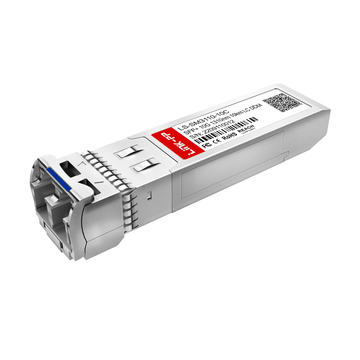
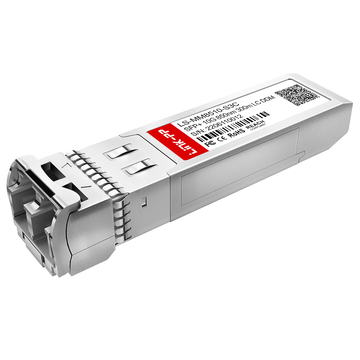
For organizations evaluating optical migration paths or seeking compatible 10GbE connectivity solutions, it is important to work with reliable sources that provide consistent product quality and technical support. Platforms such as the LINK-PP Official Store offer a broad range of optical transceivers and DAC alternatives designed to support Cisco-compatible environments, helping ensure smooth integration across different stages of network expansion.