The rapid growth of 100GbE networks in modern data centers has significantly changed how enterprises design their high-speed interconnect infrastructure. As workloads such as cloud computing, AI training, and large-scale virtualization continue to expand, network engineers are increasingly focused on achieving higher bandwidth, lower latency, and more efficient cabling architectures.
Within this evolution, different 100G connectivity options have emerged to meet varying deployment needs. Among them, the Cisco QSFP-100G-CU3M has become a widely used Direct Attach Copper (DAC) solution for short-reach, high-density environments. At the same time, 100G optical modules remain the dominant choice for longer-distance and more flexible network designs, making the comparison between these two technologies highly relevant for infrastructure planning.
This article provides a structured breakdown of Cisco QSFP-100G-CU3M versus optical 100G transceivers, helping readers understand their differences and ideal use cases:
- Technical fundamentals of Cisco QSFP-100G-CU3M and its role in short-reach 100G links
- Overview of major 100G optical module types and their transmission capabilities
- Key technical comparisons, including distance, power consumption, latency, and signal behavior
- Cost structure and deployment considerations across different network scales
- Performance and reliability differences in real-world data center environments
- Practical guidance on when to use DAC solutions versus optical transceivers
- Future trends shaping 100G and next-generation high-speed networking architectures
Understanding these aspects is essential for network architects and engineers aiming to design efficient, scalable, and future-ready 100G infrastructures, especially when balancing performance requirements with deployment cost and operational efficiency.
✔️ What Is Cisco QSFP-100G-CU3M?
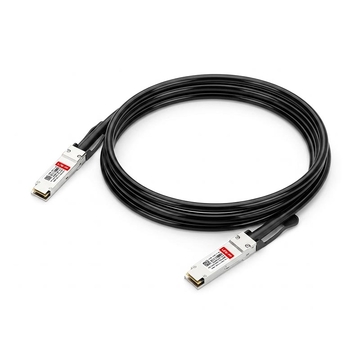
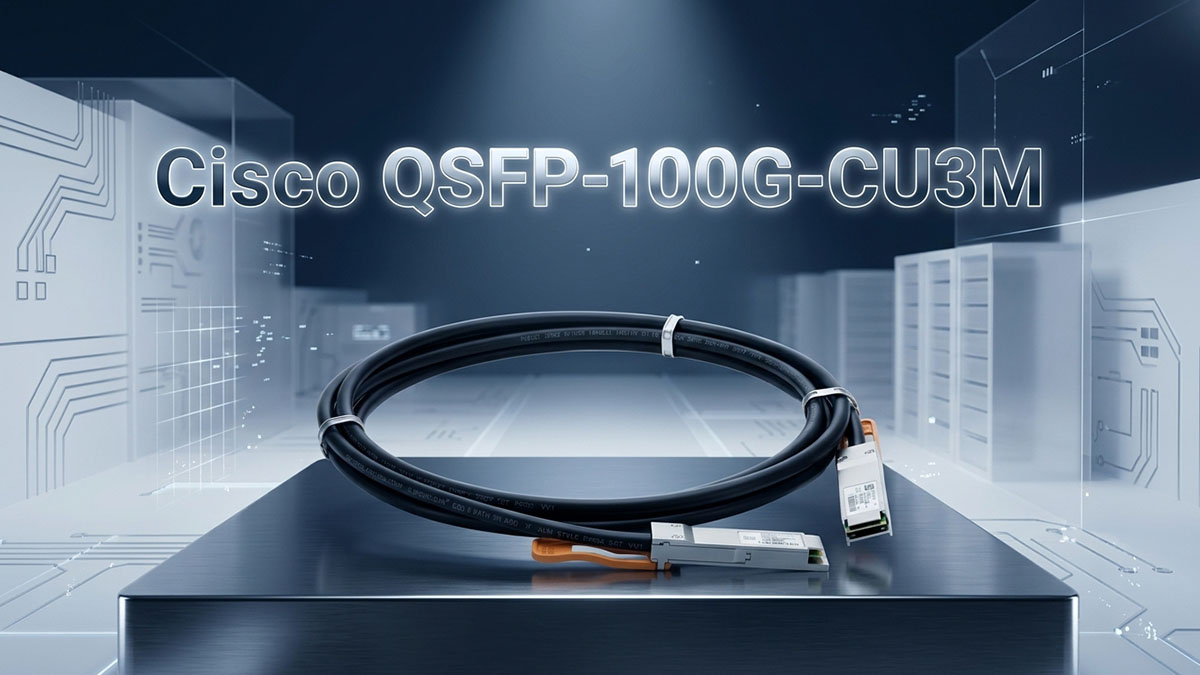
Cisco QSFP-100G-CU3M is a 100GbE Direct Attach Copper (DAC) cable designed for high-speed, short-reach interconnects in data center environments. It is used to connect QSFP28 ports directly between networking devices such as switches, routers, and servers without requiring optical transceivers or fiber cabling. Its primary value lies in providing a simple, low-power, and cost-efficient 100G connectivity option for intra-rack or adjacent-rack deployments.
In practical terms, Cisco QSFP-100G-CU3M is optimized for environments where devices are located very close to each other. Because it uses passive copper signaling rather than optical conversion, it eliminates the need for additional optical components, making it a straightforward plug-and-play solution for short-distance 100G Ethernet links.
Overview of Cisco QSFP-100G-CU3M
Cisco QSFP-100G-CU3M is a QSFP28-form-factor DAC cable that supports 100Gbps transmission over a fixed 3-meter copper assembly. It is designed specifically for direct port-to-port connectivity, typically between compatible Cisco networking equipment.
From a deployment perspective, its core characteristics include:
- QSFP28 interface supporting 100GbE data rates
- Passive copper cable construction with no active electronics
- Fixed 3-meter length optimized for rack-level or nearby connections
- Hot-pluggable design for simplified installation and replacement
This makes it a highly practical option for high-density environments where minimizing complexity and maximizing port utilization are key operational goals.
Key Technical Specifications
Cisco QSFP-100G-CU3M is defined by a set of technical parameters that align it with short-reach 100G Ethernet requirements. These specifications determine its performance boundaries and suitable deployment scenarios.
| Specification Category | Details |
|---|---|
| Data Rate | 100Gbps (QSFP28 compliant) |
| Cable Type | Passive twinax copper |
| Maximum Reach | 3 meters |
| Power Consumption | Extremely low (no active optics) |
| Interface Type | QSFP28 to QSFP28 |
| Signal Type | Electrical differential signaling |
Because it is a passive DAC solution, it does not perform optical-electrical conversion, which significantly reduces power usage and heat generation compared to optical modules.
Common Deployment Scenarios
Cisco QSFP-100G-CU3M is typically deployed in environments where short-distance, high-speed connectivity is required and physical layout constraints are minimal. Its usage is closely tied to modern data center rack architectures.
Common deployment scenarios include:
- Top-of-Rack (ToR) switching environments where servers connect directly to access switches
- Spine-leaf architectures for short inter-switch links within the same rack row
- High-density server clusters requiring multiple 100G connections in limited space
- Intra-rack and adjacent-rack connections where devices are within a few meters
In these scenarios, the DAC design helps simplify cabling infrastructure while maintaining full 100G performance. It is especially effective in environments prioritizing low latency and reduced power consumption over long-distance flexibility.
✔️ Understanding 100G Optical Modules
100G optical modules are high-speed transceiver devices that enable data transmission over fiber optic cables at 100Gbps rates. Unlike copper-based DAC solutions such as Cisco QSFP-100G-CU3M, optical modules convert electrical signals into optical signals, allowing data to travel over much longer distances with higher signal integrity. They are a foundational technology in modern data center, enterprise backbone, and metro network infrastructures.
In practical networking environments, 100G optical modules are used when distance, scalability, and flexibility are more critical than simplicity or minimal cost. Their ability to support multi-kilometer transmission makes them essential for inter-rack, inter-building, and even inter-city connectivity scenarios.
What Are 100G Optical Transceivers?
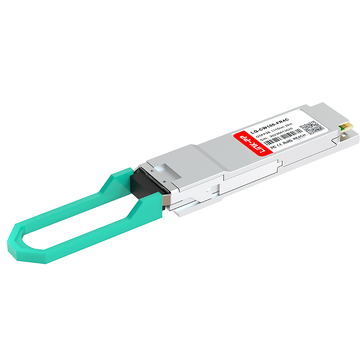
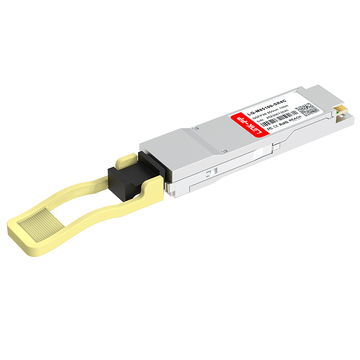
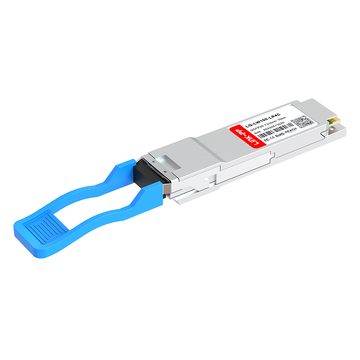
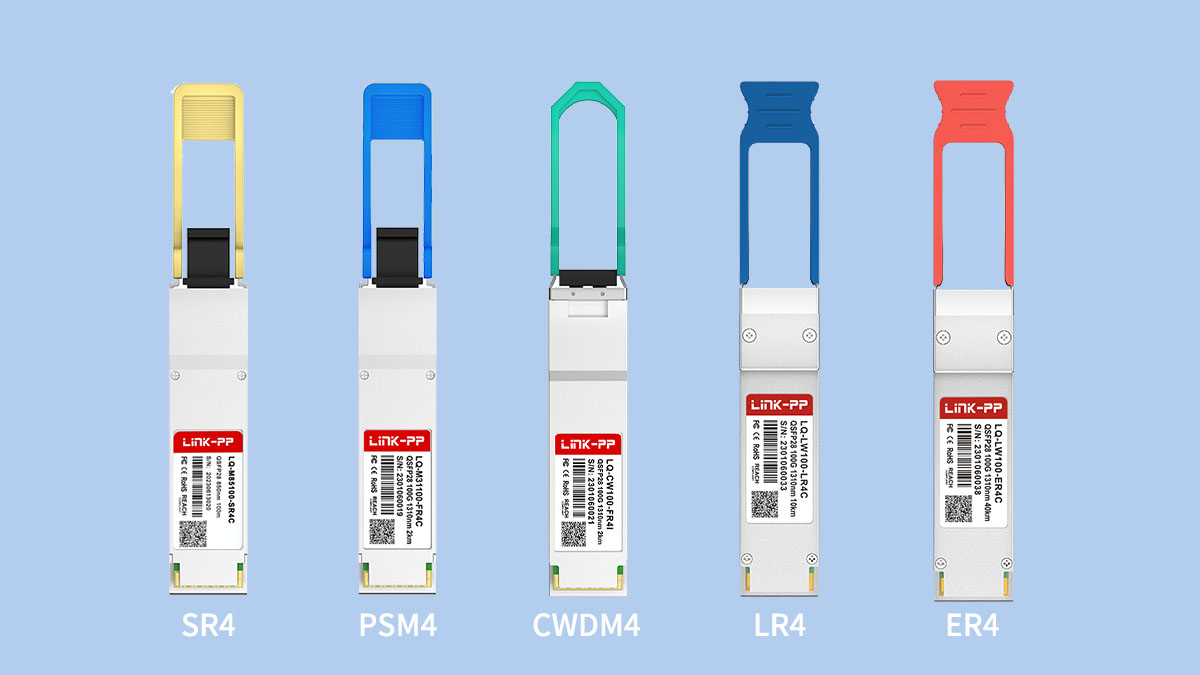
100G optical transceivers are pluggable QSFP28 modules that convert electrical signals from networking equipment into optical signals transmitted through fiber optic cables, and then convert them back at the receiving end.
From a functional standpoint, they are designed to enable:
- High-speed 100Gbps data transmission over optical fiber
- Signal conversion between electrical and optical domains
- Support for different fiber types (multimode and single-mode)
- Flexible deployment across short, medium, and long distances
These modules are widely adopted in scalable network architectures where performance consistency over distance is a key requirement.
Major Types of 100G Optical Modules
100G optical modules are available in multiple variants, each designed for specific transmission distances, fiber types, and application environments. Choosing the right type depends heavily on network topology and distance requirements.
| Module Type | Fiber Type | Typical Reach | Primary Use Case |
|---|---|---|---|
| 100GBASE-SR4 | Multimode fiber (MMF) | Up to 100m | Short-reach data center links |
| 100GBASE-PSM4 | Single-mode fiber (SMF) | Up to 500m | Parallel single-mode short links |
| 100GBASE-CWDM4 | Single-mode fiber (SMF) | Up to 2km | Data center interconnect |
| 100GBASE-LR4 | Single-mode fiber (SMF) | Up to 10km | Campus and metro networks |
| 100GBASE-ER4 | Single-mode fiber (SMF) | Up to 40km | Long-distance transmission |
These variations allow optical modules to cover a wide range of deployment needs, from short intra-data-center connections to long-haul backbone links.
Typical Optical Deployment Environments
100G optical modules are deployed in environments where flexibility, distance, and scalability are essential. They are particularly important in network layers where copper-based solutions cannot meet transmission requirements.
Common deployment environments include:
- Enterprise data centers, where optical modules connect aggregation and core switches across multiple rows or halls
- Campus networks, enabling connectivity between buildings or geographically separated facilities
- Data center interconnect (DCI) systems for linking distributed data centers
- Metro and backbone networks, supporting high-capacity traffic aggregation over long distances
In these environments, optical modules provide the reach and performance stability required for large-scale, mission-critical network infrastructures, making them a core component of modern 100G Ethernet deployment strategies.
✔️ Cisco QSFP-100G-CU3M vs 100G Optical Modules: Technology Comparison
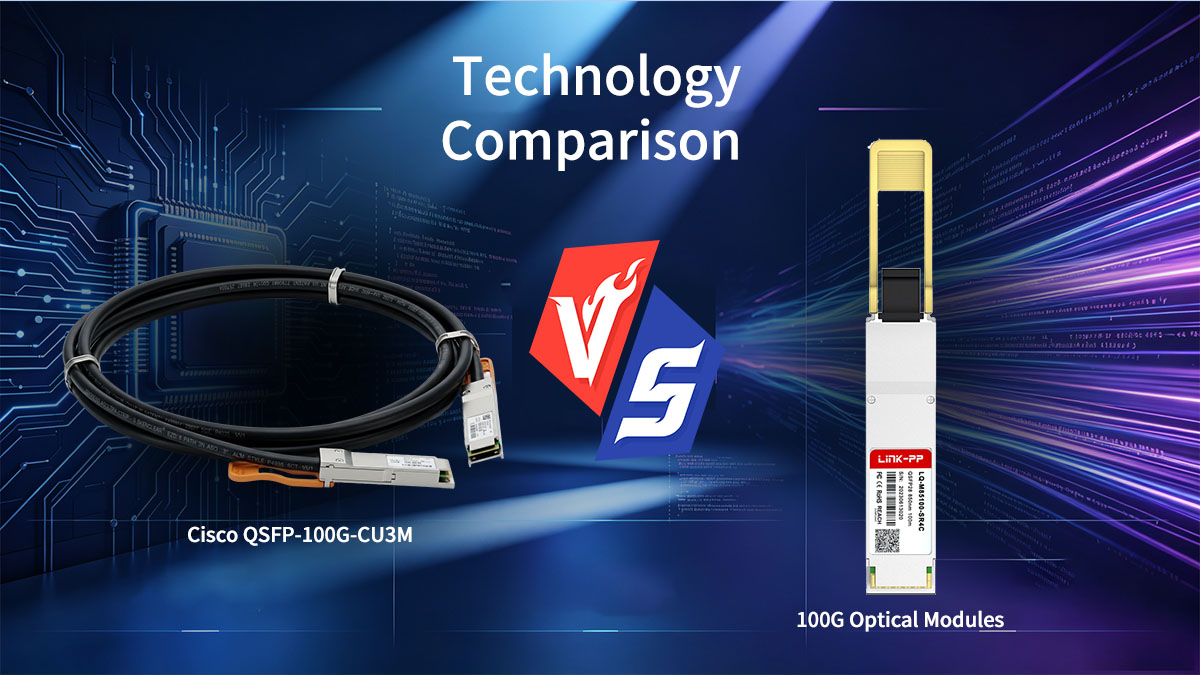
Cisco QSFP-100G-CU3M and 100G optical modules represent two fundamentally different approaches to achieving 100GbE connectivity. The core difference lies in their transmission medium and signal processing method: DAC uses electrical signaling over copper, while optical modules rely on electrical-to-optical conversion and fiber transmission. This architectural difference directly impacts distance, power consumption, deployment flexibility, and overall network design strategy.
Transmission Medium
The most fundamental distinction between Cisco QSFP-100G-CU3M and 100G optical modules is the transmission medium used for data transfer.
Cisco QSFP-100G-CU3M uses passive twinax copper cables, where electrical signals are transmitted directly between devices. This eliminates optical conversion but limits signal integrity over distance. In contrast, 100G optical modules use fiber optic cables, converting electrical signals into light pulses for transmission, enabling significantly longer reach and better isolation from electromagnetic interference.
Key characteristics include:
- Copper DAC: direct electrical signaling, low complexity, limited reach
- Optical fiber: light-based transmission, higher flexibility, extended distance capability
- EMI resistance: optical modules are inherently immune to electromagnetic interference
This difference defines their respective roles in network design, with DAC optimized for proximity and optics optimized for scalability.
Maximum Transmission Distance
Transmission distance is one of the most decisive factors when comparing these two technologies.
| Solution Type | Medium | Typical Maximum Distance | Deployment Scope |
|---|---|---|---|
| Cisco QSFP-100G-CU3M | Copper DAC | 3 meters | Intra-rack / adjacent rack |
| 100G SR4 | Multimode fiber | ~100 meters | Within data center |
| 100G CWDM4 | Single-mode fiber | ~2 kilometers | Campus or DC interconnect |
| 100G LR4 | Single-mode fiber | ~10 kilometers | Metro / backbone networks |
Cisco QSFP-100G-CU3M is intentionally limited to very short distances due to copper signal attenuation, while optical modules scale from tens of meters to tens of kilometers depending on variant. This makes optical solutions essential for any topology extending beyond rack-level connectivity.
Power Consumption
Power efficiency is another key differentiator between DAC and optical solutions.
Cisco QSFP-100G-CU3M is a passive solution, meaning it requires no active electrical components for signal amplification or conversion. As a result, its power consumption is extremely low, making it attractive for high-density deployments where thermal management is critical.
By comparison, 100G optical modules require active components such as lasers, photodiodes, and signal processing circuits, which naturally increases power consumption.
Typical characteristics include:
- DAC (QSFP-100G-CU3M): near-zero power draw from the cable itself
- Optical modules: higher power usage due to optical-electrical conversion
- Thermal impact: DAC contributes minimal heat, optics require airflow consideration
This difference becomes more significant in large-scale deployments with hundreds or thousands of ports.
Latency Performance
Latency differences between DAC and optical modules exist but are generally small in absolute terms, though still relevant in performance-sensitive environments.
Cisco QSFP-100G-CU3M provides slightly lower latency because it transmits electrical signals directly without conversion overhead. Optical modules introduce additional processing steps due to electrical-optical-electrical conversion, which can add marginal latency.
Key points include:
- DAC: minimal processing, near wire-speed latency
- Optical: slightly higher latency due to signal conversion stages
- Real-world impact: often negligible for most enterprise workloads, but relevant in HPC and trading systems
While both solutions support high-speed 100GbE transmission, DAC maintains a slight edge in ultra-low-latency scenarios.
Port Density and Cable Management
Physical cabling characteristics significantly influence rack design and airflow efficiency in data centers.
Cisco QSFP-100G-CU3M uses thick twinax copper cables, which can become bulky in high-density environments but are relatively short and easy to route within racks. Optical solutions use thin fiber cables, which offer better scalability for complex routing but require careful handling to avoid damage.
Key considerations include:
- DAC cables: thicker, less flexible over long routing paths, but simple for short connections
- Optical fiber: thinner, more flexible, better suited for large-scale structured cabling systems
- Airflow impact: DAC can slightly obstruct airflow in dense setups, while fiber minimizes blockage
- Cable management complexity: optical systems require structured patch panels for large deployments
Overall, DAC is simpler for small-scale or localized connections, while optical cabling is more scalable for complex multi-rack architectures.
✔️ Cost Structure Analysis: DAC vs Optical Solutions
Cost considerations play a major role in selecting between Cisco QSFP-100G-CU3M and 100G optical modules. While both solutions deliver 100GbE connectivity, their total cost structures differ significantly due to hardware composition, deployment complexity, and long-term operational requirements. Understanding these differences is essential for designing efficient and scalable network infrastructures.

Hardware Components Required
The cost structure begins with the number and type of components required to establish a working 100G link.
Cisco QSFP-100G-CU3M is a simplified solution because it integrates both ends of the connection into a single passive cable assembly. No separate transceivers or fiber patching components are required.
In contrast, 100G optical solutions require multiple hardware elements to function correctly, including transceiver modules on both ends and fiber optic cabling infrastructure.
Key cost-driving components include:
- DAC solution (QSFP-100G-CU3M):
- Single integrated cable assembly
- No separate transceivers required
- No fiber patch panels or connectors needed
- Optical solution:
- Two QSFP28 optical transceivers (one per end)
- Fiber optic cabling (MMF or SMF depending on type)
- Optional patch panels and cable management systems
This difference in component count directly influences initial deployment cost and logistical complexity.
Installation Complexity
Installation requirements significantly affect both direct labor costs and deployment time.
Cisco QSFP-100G-CU3M offers a straightforward plug-and-play experience. Since it is a fixed DAC cable, installation typically involves only connecting the two QSFP28 ports, with no additional alignment, cleaning, or fiber termination steps required.
Optical modules, however, require more careful handling and installation procedures due to the sensitivity of fiber optics and the need for proper transceiver pairing.
Key differences include:
- DAC installation:
- Direct port-to-port connection
- No fiber cleaning or inspection required
- Minimal configuration effort
- Optical installation:
- Transceiver insertion on both ends
- Fiber routing and connection management
- Careful handling to avoid contamination or signal degradation
As a result, DAC solutions generally reduce deployment time and technical labor requirements, especially in high-density rack environments.
Operational Expenses
Operational expenditure (OPEX) becomes increasingly important in large-scale deployments where hundreds or thousands of links are maintained over time.
Cisco QSFP-100G-CU3M contributes very little to ongoing operational costs because it is a passive solution with no power consumption at the cable level and minimal maintenance requirements.
In contrast, optical modules introduce ongoing costs associated with power usage, cooling requirements, and potential component replacement over time.
Key operational differences include:
- DAC solutions:
- No active power consumption
- Minimal cooling impact
- Low maintenance requirements
- Optical solutions:
- Higher power usage per transceiver
- Increased cooling demands in dense deployments
- Potential replacement costs for optical components over lifecycle
These differences can scale significantly in hyperscale environments, where energy efficiency becomes a critical operational metric.
Total Cost of Ownership (TCO)
Total cost of ownership provides a more complete view of economic impact by combining hardware, installation, and operational costs over time.
For small-scale or short-reach deployments, Cisco QSFP-100G-CU3M typically offers a lower TCO due to its simplicity and minimal infrastructure requirements. However, its limited reach restricts its applicability to intra-rack or adjacent-rack scenarios.
For medium to large-scale deployments, 100G optical solutions often become necessary despite higher upfront and operational costs, as they provide scalability and flexibility that DAC cannot support.
Key TCO considerations include:
- Small-scale deployments:
- DAC solutions often provide cost efficiency advantages
- Reduced installation and maintenance overhead
- Medium-scale deployments:
- Mixed environments may be used depending on topology
- Balance between DAC and optical usage becomes important
- Large-scale deployments:
- Optical solutions dominate due to distance and scalability needs
- Higher initial investment offset by architectural flexibility
Overall, cost efficiency is not determined by unit price alone but by how well each technology aligns with the physical and architectural requirements of the network design.
✔️ Performance Comparison Between Cisco QSFP-100G-CU3M and 100G Optical Modules
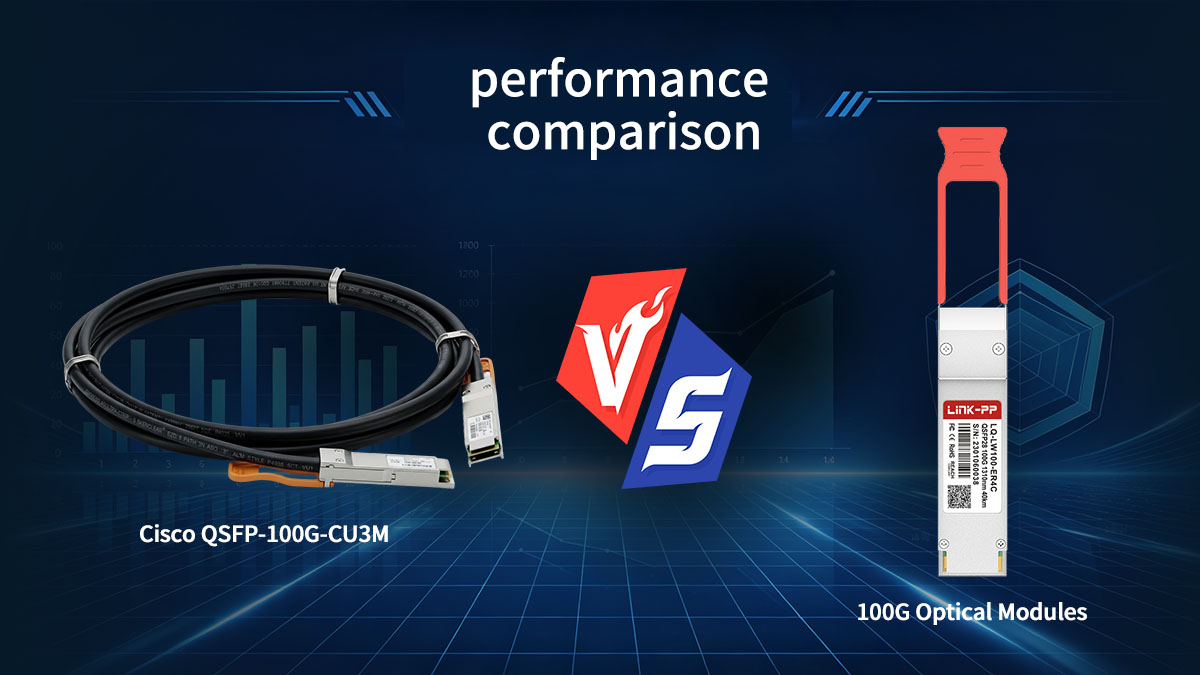
Performance differences between Cisco QSFP-100G-CU3M and 100G optical modules are primarily shaped by their transmission medium and signal processing mechanisms. While both solutions support 100GbE data rates, their behavior in real-world environments varies in terms of signal integrity, reliability, scalability, and environmental resilience. These factors directly influence how each technology performs under different deployment conditions.
Signal Integrity
Signal integrity is a key performance factor when evaluating high-speed 100G links, especially in dense networking environments.
Cisco QSFP-100G-CU3M uses direct electrical signaling over copper, which maintains strong signal quality over short distances but is more susceptible to attenuation as cable length increases. In contrast, 100G optical modules transmit data as light signals through fiber, which significantly reduces signal degradation over distance.
Key performance characteristics include:
- DAC (Cisco QSFP-100G-CU3M):
- High signal quality within short range (up to 3m)
- Increased attenuation beyond rated distance
- More sensitive to physical bending and cable routing constraints
- Optical modules:
- Stable signal transmission over long distances
- Minimal attenuation in fiber medium
- Strong resistance to electromagnetic interference (EMI)
In environments with high electrical noise or longer link requirements, optical modules provide more consistent signal integrity.
Reliability and Durability
Reliability is another important factor that determines long-term network stability and maintenance requirements.
Cisco QSFP-100G-CU3M benefits from a simpler design with fewer active components, which reduces potential points of failure. However, copper cables can be physically bulkier and may experience mechanical stress in tightly packed rack environments.
100G optical modules, while more complex, are designed for long-distance stability and are widely used in carrier-grade and enterprise backbone networks. However, they require careful handling due to the fragility of fiber connectors and sensitivity to contamination.
Key reliability considerations include:
- DAC solution:
- Fewer electronic components reduce failure probability
- Mechanical stress possible in dense cabling setups
- High reliability within short-range constraints
- Optical solution:
- Mature, carrier-grade reliability standards
- Sensitive to fiber cleanliness and connector quality
- Better suited for long-term backbone infrastructure
Overall, DAC excels in simplicity-driven reliability, while optical solutions excel in structured, long-distance stability.
Scalability for Future Expansion
Scalability determines how well each technology supports network growth and architectural evolution over time.
Cisco QSFP-100G-CU3M is inherently limited in scalability due to its short reach. It is optimized for intra-rack or adjacent-rack connections, which means it cannot support broader network expansion without introducing additional technologies.
100G optical modules, on the other hand, provide high scalability due to their wide range of transmission distances and compatibility with various fiber infrastructures.
Key scalability differences include:
- DAC solution:
- Limited to short-range physical topology
- Not suitable for cross-row or cross-building expansion
- Best for fixed, high-density rack environments
- Optical solution:
- Supports short, medium, and long-distance deployments
- Enables flexible network topology design
- Easily integrates into multi-tier data center architectures
In modern data center evolution, scalability requirements often push networks toward optical solutions as infrastructure complexity increases.
✔️ How to Choose Between Cisco QSFP-100G-CU3M and 100G Optical Modules
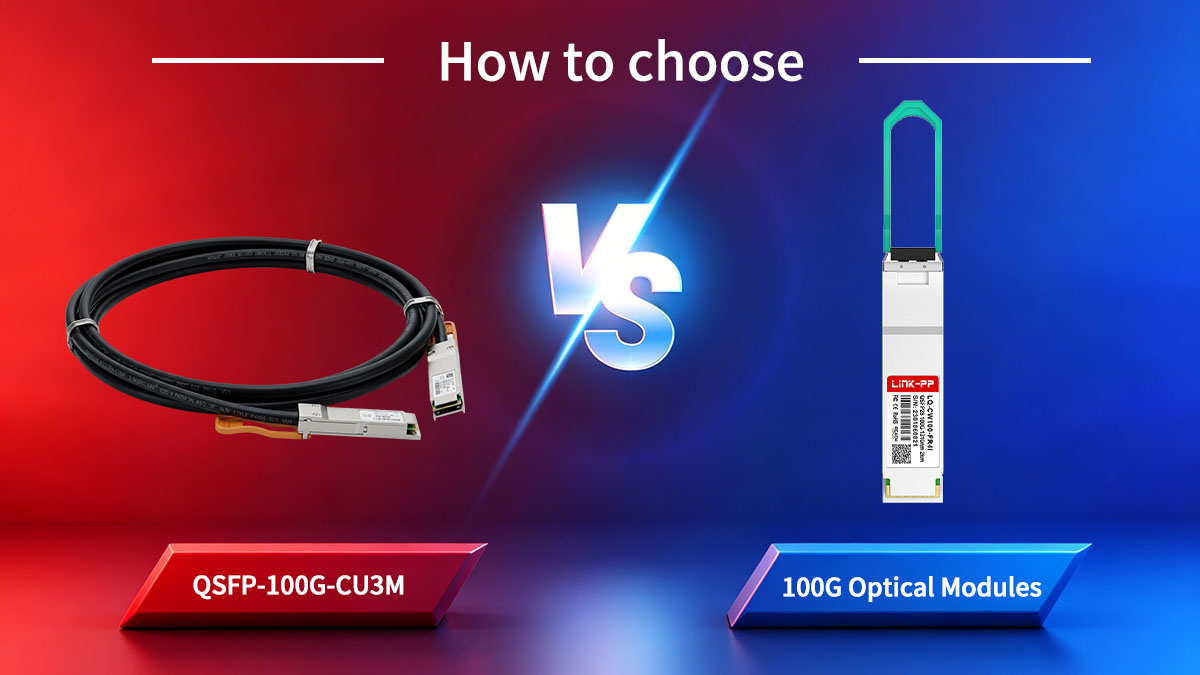
Choosing between Cisco QSFP-100G-CU3M and 100G optical modules depends primarily on physical distance requirements, network architecture design, power efficiency goals, and future scalability needs. Although both solutions support 100GbE connectivity, they are optimized for fundamentally different deployment scenarios. A clear understanding of these constraints helps ensure the selected technology aligns with both current infrastructure and long-term network evolution.
Evaluate Link Distance Requirements
The most important factor in selecting between DAC and optical solutions is the physical distance between connected devices.
Cisco QSFP-100G-CU3M is strictly designed for short-reach connections up to 3 meters, making it suitable only for intra-rack or adjacent-rack deployments. In contrast, 100G optical modules support a wide range of distances, from short data center links to long-haul metro connections.
Key considerations include:
- Short-range (≤3m): DAC solutions are typically sufficient
- Medium-range (10m–2km): optical modules such as SR4 or CWDM4 are required
- Long-range (>10km): LR4 or ER4 optical modules become necessary
This distance-based evaluation is the foundation of all 100G connectivity decisions.
Analyze Power and Cooling Constraints
Power consumption and thermal design are critical factors in high-density network environments where hundreds or thousands of ports are deployed.
Cisco QSFP-100G-CU3M offers extremely low power usage because it is a passive copper solution, generating minimal heat and reducing cooling demands. Optical modules, however, require active components that increase both power draw and thermal output.
Key trade-offs include:
- DAC solution:
- Minimal energy consumption
- Reduced cooling requirements
- Ideal for dense rack environments
- Optical solution:
- Higher per-port power usage
- Increased heat generation
- Requires more robust airflow design
In environments where energy efficiency is a priority, DAC can offer operational advantages, but only within its limited distance range.
Assess Budget and Infrastructure Goals
Budget considerations should not only focus on unit cost but also include supporting infrastructure requirements and long-term operational impact.
Cisco QSFP-100G-CU3M reduces infrastructure complexity by eliminating the need for separate transceivers and fiber cabling. Optical solutions require additional components and more structured cabling systems, which increases initial deployment complexity.
Key factors to evaluate:
- DAC deployments:
- Fewer components required
- Lower cabling infrastructure cost
- Simplified installation process
- Optical deployments:
- Additional cost for transceivers and fiber systems
- Higher installation and maintenance complexity
- Greater flexibility for future expansion
The optimal choice depends on whether the priority is minimizing deployment complexity or maximizing architectural flexibility.
Consider Future Network Growth
Scalability is a critical factor in modern network design, especially as organizations transition toward higher bandwidth requirements and distributed architectures.
Cisco QSFP-100G-CU3M is inherently limited to short-range applications, making it less suitable for environments expected to expand beyond rack-level connectivity. Optical modules, on the other hand, provide a scalable foundation for evolving network topologies.
Key considerations include:
- DAC limitations:
- Fixed short-distance applicability
- Limited role in multi-row or multi-site expansion
- Minimal flexibility for topology changes
- Optical advantages:
- Supports hierarchical and distributed architectures
- Enables seamless expansion across buildings or campuses
- Aligns with future migration toward QSFP-DD 400G/800G QSFP-DD networks
When long-term growth is a priority, optical modules generally provide a more future-proof foundation for network evolution.
✔️ Cisco QSFP-100G-CU3M vs Popular 100G Optical Modules
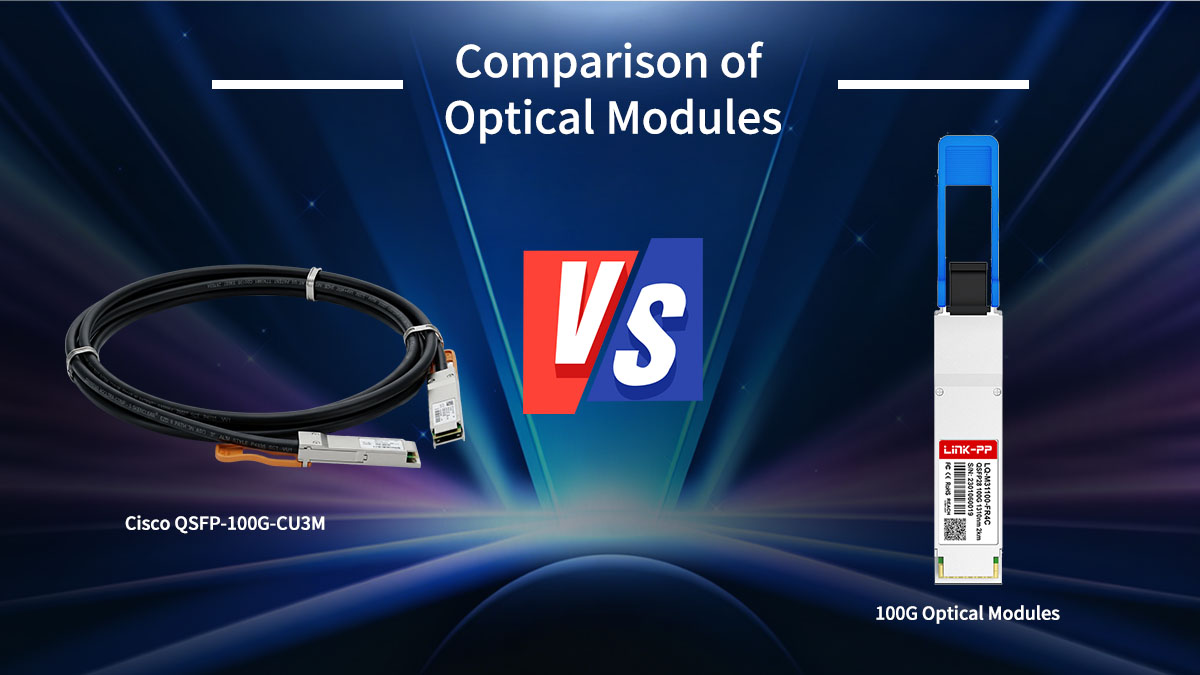
Cisco QSFP-100G-CU3M and popular 100G optical modules differ significantly in transmission medium, reach capability, and deployment flexibility. While DAC solutions focus on short-reach simplicity and low power consumption, optical modules are designed to support a wide range of distances and network architectures. A side-by-side comparison helps clarify how each solution fits into modern 100GbE infrastructure planning.
Comparison Table
The following table highlights the core technical differences between Cisco QSFP-100G-CU3M and widely used 100G optical module types.
| Feature | Cisco QSFP-100G-CU3M | QSFP-100G-SR4 | QSFP-100G-CWDM4 | QSFP-100G-LR4 |
|---|---|---|---|---|
| Transmission Medium | Copper (DAC) | Multimode fiber | Single-mode fiber | Single-mode fiber |
| Typical Reach | 3m | Up to 100m | Up to 2km | Up to 10km |
| Power Consumption | Very low (passive) | Moderate | Higher | Higher |
| Infrastructure Required | No fiber needed | MMF cabling | SMF cabling | SMF cabling |
| Installation Complexity | Very low | Medium | Medium | Medium–High |
| EMI Resistance | Low | High | High | High |
| Best Use Case | Intra-rack connections | Short data center links | Campus / DC interconnect | Metro / long-distance networks |
This comparison clearly shows that DAC and optical modules serve different layers of the network rather than competing directly in the same application space.
Key Takeaways from the Comparison
Beyond specifications, the real-world selection between Cisco QSFP-100G-CU3M and optical modules depends on how each technology aligns with deployment goals and physical constraints.
Key insights include:
- DAC advantages (Cisco QSFP-100G-CU3M):
- Simplified architecture with minimal components
- Extremely low power consumption and heat output
- Ideal for short, fixed-distance connections within racks
- Optical module advantages:
- Scalable across multiple distance ranges
- Better suited for structured and hierarchical network designs
- Higher flexibility for campus and inter-data-center connectivity
- Architectural positioning:
- DAC solutions operate at the rack or pod level
- Optical solutions support aggregation, core, and inter-site layers
In modern 100G network design, both technologies are often used together rather than independently, forming a layered connectivity model where each solution serves a distinct role in the overall infrastructure.
✔️ Future Trends in 100G and Next-Generation High-Speed Connectivity
The evolution of 100G networking is closely tied to the rapid growth of data-intensive workloads such as AI training, cloud-native applications, and hyperscale computing. While technologies like Cisco QSFP-100G-CU3M and 100G optical modules remain widely deployed today, the broader industry is already transitioning toward higher-speed architectures and more efficient interconnect designs. These trends are reshaping how copper and optical technologies are positioned within modern data center ecosystems.

Increasing Adoption of 400G and 800G Networks
The most significant trend in high-speed networking is the rapid shift toward 400G and 800G Ethernet. As bandwidth demands grow exponentially, especially in AI and machine learning clusters, 100G links are increasingly being aggregated or replaced by higher-speed interfaces.
Key developments include:
- Migration from 100G leaf-spine architectures to 400G backbone layers
- Increased deployment of high-density QSFP-DD and OSFP form factors
- Greater reliance on parallel optics and advanced modulation techniques
Implications for 100G infrastructure:
- 100G becomes a foundational access or aggregation layer
- Higher-speed links reduce overall cabling complexity
- Network designs prioritize scalability over incremental upgrades
This transition gradually shifts 100G from a cutting-edge standard to a baseline connectivity layer in large-scale environments.
Continued Role of DAC Technology
Despite the rise of higher-speed standards, DAC solutions such as Cisco QSFP-100G-CU3M continue to play an important role in short-reach connectivity scenarios. Their simplicity, low power consumption, and cost efficiency ensure they remain relevant in specific parts of the network architecture.
Key areas where DAC remains valuable:
- Intra-rack server-to-switch connections
- High-density compute clusters with fixed layouts
- Low-latency environments where distance is minimal
Important characteristics supporting long-term usage:
- No optical conversion overhead
- Minimal thermal impact in dense deployments
- Cost-effective for short, repetitive connections
While DAC will not replace optical solutions in scalable networks, it will continue to serve as an efficient solution for localized connectivity.
Advancements in Optical Networking
Optical technology continues to evolve rapidly, driven by the need for higher capacity, longer reach, and improved energy efficiency. These advancements directly impact how 100G and beyond networks are designed and deployed.
Key trends in optical networking include:
- Development of higher-density optical modules supporting 400G and 800G
- Adoption of more efficient modulation techniques to increase spectral efficiency
- Improved integration of silicon photonics for reduced power consumption
- Expansion of coherent optical technologies for long-haul transmission
These innovations strengthen the position of optical modules as the backbone of modern and future networks.
✔️ Conclusion
Cisco QSFP-100G-CU3M and 100G optical modules represent two complementary approaches to building modern 100GbE network infrastructures. Rather than competing directly, they serve different layers of the network architecture—DAC focusing on short-reach simplicity and optical solutions enabling scalable, long-distance connectivity. Understanding their roles helps ensure more efficient, stable, and future-ready network design decisions.
The most important takeaway from this comparison is that Cisco QSFP-100G-CU3M and 100G optical modules are optimized for different operational scenarios.
Key distinctions include:
- Cisco QSFP-100G-CU3M:
- Best suited for intra-rack and adjacent-rack connections
- Extremely low power consumption and minimal latency
- Simplified deployment with no fiber infrastructure required
- 100G optical modules:
- Designed for medium- to long-distance transmission
- Higher flexibility across diverse network topologies
- Required for campus, backbone, and inter-data-center connectivity
These differences highlight that selection is primarily driven by physical distance and network architecture rather than raw throughput capability.
As data center architectures continue to evolve toward higher speeds such as 400G and 800G, 100G connectivity remains a critical transitional and foundational layer. DAC solutions like Cisco QSFP-100G-CU3M will continue to support localized, high-density connections, while optical modules will dominate scalable and long-distance network segments.
For organizations evaluating deployment strategies or sourcing compatible 100G connectivity solutions, platforms such as LINK-PP Official Store can provide additional reference options and product availability insights that align with diverse infrastructure requirements.