







Gigabit Ethernet continues to play a vital role in enterprise, campus, and branch network environments. Even as higher-speed technologies gain adoption, many organizations still rely on copper-based Ethernet infrastructure because of its simplicity, widespread availability, and cost-efficient deployment.
One commonly used solution for connecting Gigabit Ethernet devices through SFP ports is the HPE JD089B. This 1000BASE-T copper SFP 1G module enables RJ45 connectivity over standard Cat5e or Cat6 cabling, making it a practical option for network expansion, equipment upgrades, and infrastructure optimization. Understanding its specifications, compatibility, and deployment considerations is essential for maintaining reliable network performance.
This article explores the key aspects of HPE JD089B, including:
- What HPE JD089B is and how it works
- Its technical specifications and performance characteristics
- Compatibility with HPE networking platforms
- Common deployment scenarios and applications
- Factors to consider when evaluating equivalent options
- Comparisons between original and compatible alternatives
- Best practices for installation and network validation
- Common troubleshooting challenges and solutions
- Future trends in Gigabit copper SFP connectivity
By understanding these areas, network professionals can make more informed decisions when deploying or evaluating HPE JD089B and similar 1000BASE-T SFP modules.
🏮 What Is HPE JD089B?
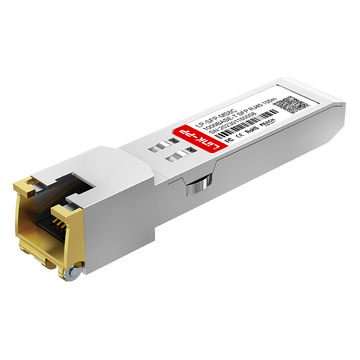
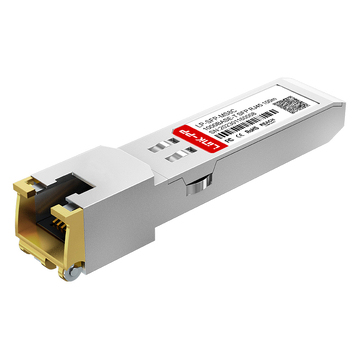
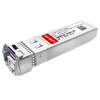
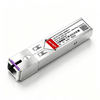
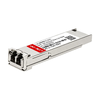
The HPE JD089B is a 1000BASE-T copper SFP transceiver designed to provide Gigabit Ethernet connectivity through a standard SFP interface. It enables network devices equipped with SFP ports to connect directly to RJ45-based copper Ethernet infrastructure, making it a practical solution for enterprise access networks, campus environments, and management connections where fiber optics are not required.
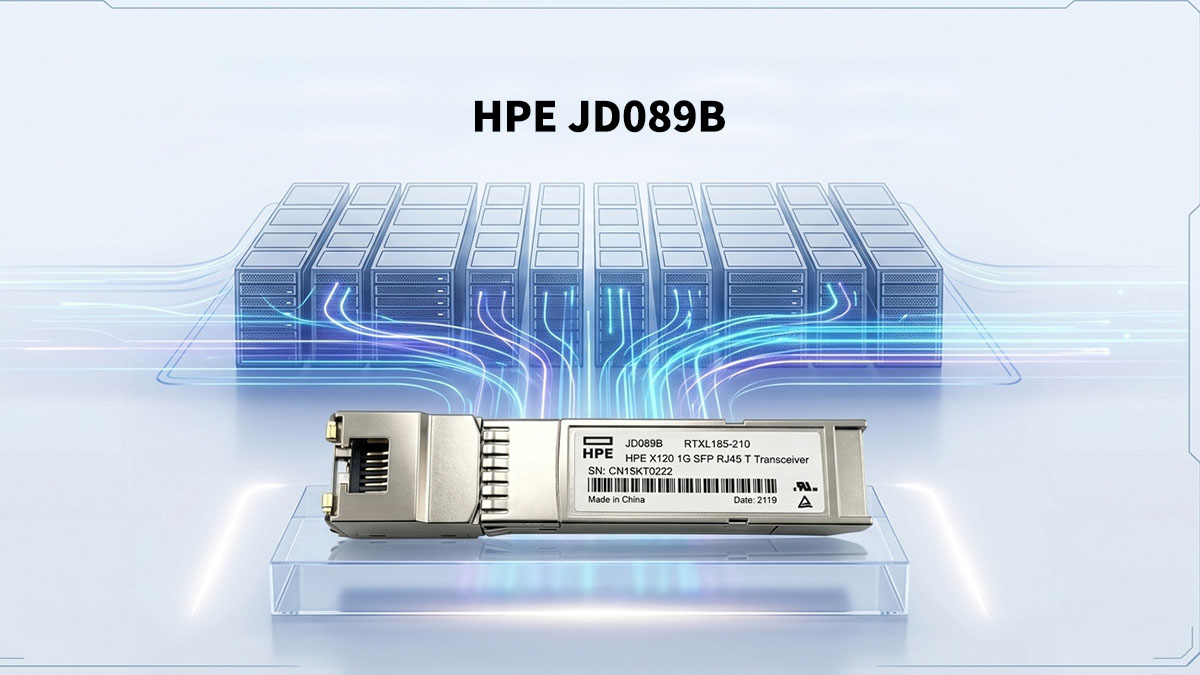
Overview of the HPE JD089B Transceiver
At its core, the HPE JD089B functions as a bridge between an SFP slot and a traditional RJ45 Ethernet connection. It converts electrical signals from the switch into Gigabit Ethernet transmission over copper cabling, supporting reliable communication between network devices.
Key characteristics of the HPE JD089B include:
- Gigabit Ethernet (1000BASE-T) connectivity
- Standard SFP form factor
- RJ45 copper interface
- Support for Cat5e and Cat6 cabling
- Hot-swappable operation
- Compatibility with supported HPE networking platforms
These features make the module particularly useful in environments where copper infrastructure is already deployed and extending fiber connectivity would add unnecessary complexity.
Key Features of HPE JD089B
The HPE JD089B offers several important capabilities that contribute to its widespread use in enterprise networking environments.
Key features include:
- 1Gbps transmission speed for standard Gigabit Ethernet applications
- RJ45 interface for direct connection to copper Ethernet cabling
- Up to 100m transmission distance over compliant twisted-pair cables
- Hot-pluggable design that allows installation or replacement without powering down equipment
- Auto-negotiation support for simplified link establishment
- Compact SFP form factor that maximizes switch port flexibility
- Standards-based operation for interoperability within Gigabit Ethernet networks
These capabilities help network administrators simplify deployments while maintaining reliable connectivity across access and aggregation layers.
Typical Deployment Environments
HPE JD089B is commonly deployed wherever Gigabit Ethernet connectivity over copper cabling is required through SFP-enabled networking equipment.
Typical deployment scenarios include:
- Enterprise office networks
- Campus LAN infrastructures
- Branch office connectivity
- Data center management networks
- Access-layer switch connections
- Server and appliance Ethernet connections
- Network testing and temporary deployment environments
Because many organizations already have extensive Cat5e and Cat6 cabling installed, the HPE JD089B provides a convenient way to integrate copper Ethernet connections into modern switch architectures without requiring new fiber infrastructure.
🏮 Technical Specifications of HPE JD089B
The HPE JD089B is a 1000BASE-T copper SFP transceiver designed to deliver Gigabit Ethernet connectivity over standard twisted-pair cabling. Its specifications are optimized for short- to medium-distance network connections, making it suitable for enterprise access layers, campus networks, and data center management applications. Understanding these technical parameters is essential for determining compatibility, performance expectations, and deployment suitability.
Core Performance Parameters
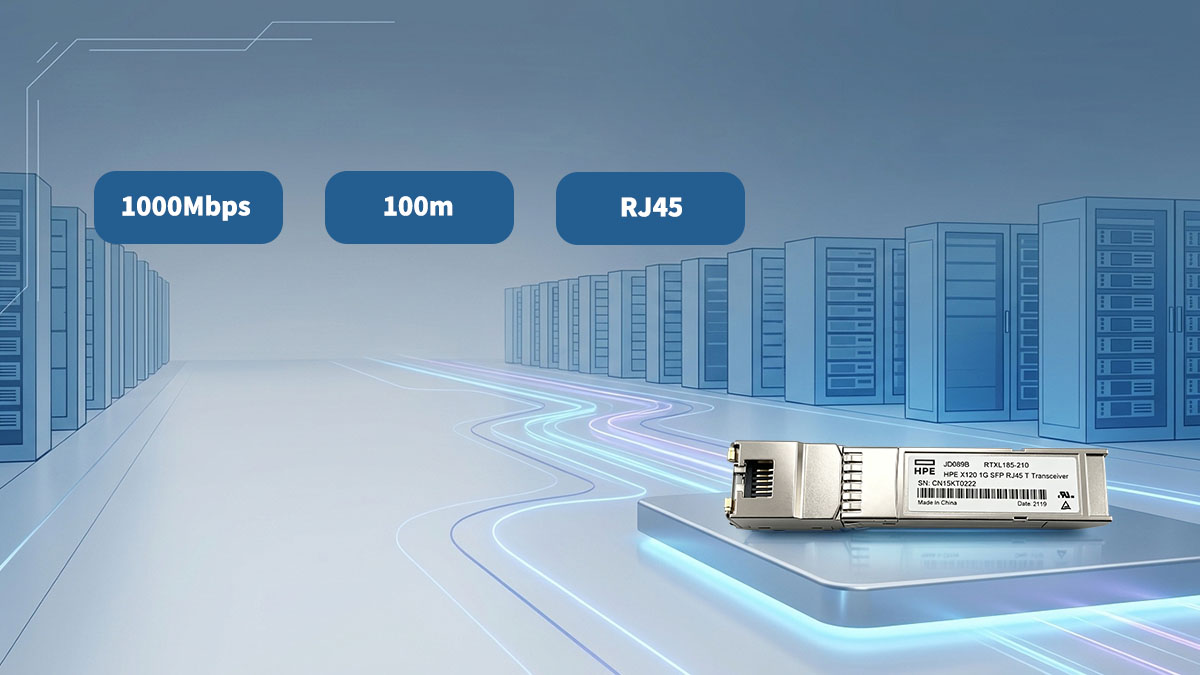
The primary function of the HPE JD089B is to provide reliable 1Gbps Ethernet communication through an RJ45 interface. Its core specifications align with widely adopted Gigabit Ethernet standards, enabling seamless integration into existing copper network infrastructures.
The table below summarizes the key performance characteristics of the module.
| Parameter | HPE JD089B Specification |
|---|---|
| Ethernet Standard | 1000BASE-T |
| Data Rate | 1Gbps |
| Connector Type | RJ45 |
| Form Factor | SFP |
| Supported Cabling | Cat5e, Cat6, Cat6a |
| Maximum Distance | 100m |
| Duplex Mode | Full Duplex |
| Hot Swappable | Yes |
| Auto Negotiation | Supported |
These specifications allow the module to support standard Gigabit Ethernet deployments without requiring specialized cabling or additional network equipment.
Physical and Environmental Characteristics
The HPE JD089B is designed for deployment in standard networking environments where space efficiency, reliability, and operational stability are important considerations.
Key physical and operational characteristics include:
- Compact SFP form factor for high port-density deployments
- Hot-pluggable design for simplified maintenance
- Low power consumption compared to many higher-speed copper transceivers
- Designed for continuous network operation
- Suitable for enterprise and data center environments
- Support for standard switch and router SFP interfaces
These characteristics help minimize downtime during installation and replacement while maintaining efficient use of switch port capacity.
Network Compatibility Standards
The HPE JD089B follows established Gigabit Ethernet standards, which contributes to predictable network performance and interoperability across supported platforms.
Important standards and compatibility considerations include:
- Compliance with IEEE 802.3ab Gigabit Ethernet specifications
- Support for 1000BASE-T copper transmission technology
- Operation through standard SFP interfaces
- Compatibility with supported HPE switching platforms
- Interoperability within standards-based Ethernet environments
- Support for structured cabling commonly used in enterprise networks
Because the module adheres to widely recognized Ethernet standards, it can be integrated into many Gigabit network architectures while maintaining stable and consistent connectivity.
🏮 How HPE JD089B Works in Copper Ethernet Networks
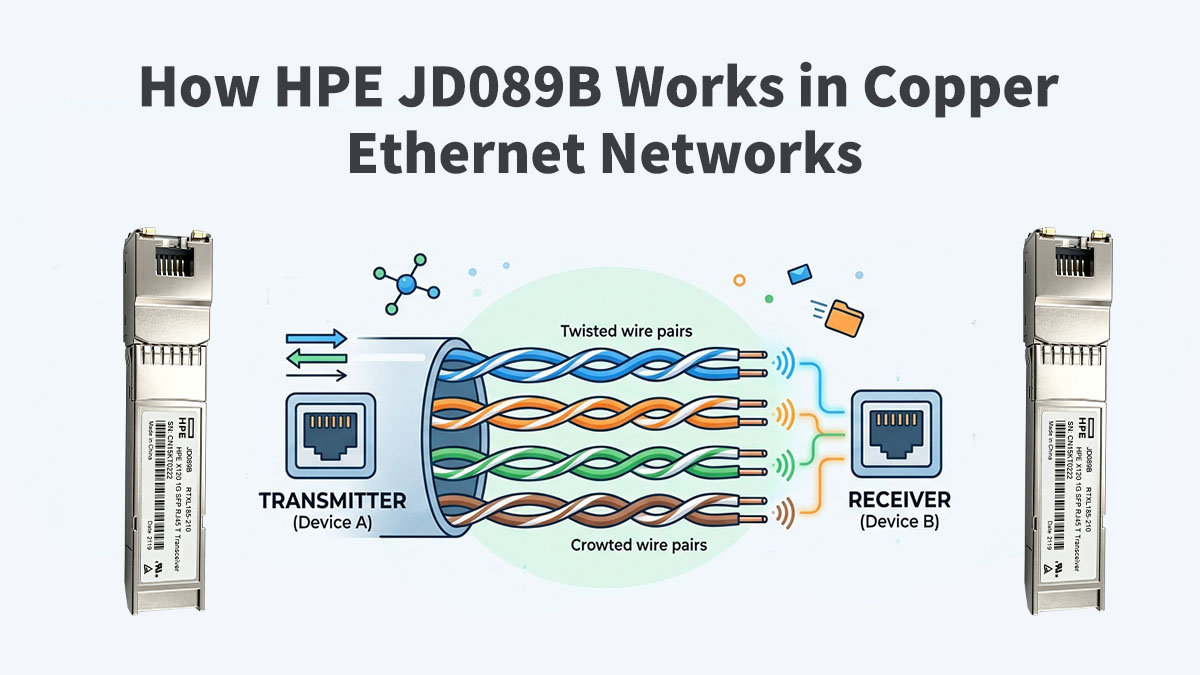
The HPE JD089B operates as a bridge between an SFP-enabled switch port and a standard copper Ethernet link. It converts electrical signals from the networking equipment into 1000BASE-T transmission over twisted-pair cabling, enabling Gigabit connectivity through RJ45 infrastructure without requiring fiber optics.
Understanding 1000BASE-T Technology
The HPE JD089B is built on 1000BASE-T Gigabit Ethernet standards, which define how data is transmitted over copper cabling at 1Gbps speeds. This technology uses all four wire pairs in a twisted-pair cable to simultaneously send and receive data, enabling full-duplex communication over a single cable.
From a functional perspective, the module ensures stable signal conversion between the SFP interface and copper medium, supporting consistent network performance across short-distance Ethernet links.
Key working principles include:
- Transmission of data over four twisted wire pairs simultaneously
- Full-duplex communication enabling send and receive at the same time
- Electrical signal encoding and decoding for Gigabit Ethernet
- Compatibility with auto-negotiation mechanisms in network devices
- Support for standard Cat5e/Cat6 structured cabling
These mechanisms allow the module to maintain stable 1Gbps throughput while using widely deployed copper infrastructure.
Advantages of Copper SFP Connectivity
Copper-based SFP modules like the HPE JD089B provide practical advantages in environments where fiber deployment is unnecessary or cost-inefficient. Their primary value lies in extending Gigabit connectivity through existing structured cabling systems.
Typical advantages include:
- Utilization of existing RJ45 copper cabling infrastructure
- Simplified deployment without fiber termination requirements
- Flexible integration into mixed-media network environments
- Support for short-range connections up to 100 meters
- Easy replacement and maintenance due to hot-swappable design
- Broad compatibility with access-layer networking scenarios
These advantages make copper SFP modules particularly effective for enterprise edge networks and internal building connectivity.
Comparison with Fiber-Based SFP Modules
While copper SFP modules offer flexibility, they differ significantly from fiber-based transceivers in terms of transmission medium, distance capability, and deployment scenarios. Understanding these differences helps clarify where HPE JD089B fits in network design.
Copper SFP vs 1000BASE-SX
The HPE JD089B uses copper cabling, whereas 1000BASE-SX modules (like SFP-1G-SX) rely on multimode fiber for data transmission. This results in distinct deployment characteristics.
Key differences include:
- Copper supports RJ45 cabling, while SX uses optical fiber
- Copper distance is limited to 100m, while SX can extend up to several hundred meters depending on fiber type
- Copper is easier to deploy in existing buildings, while fiber requires dedicated infrastructure
- Fiber typically provides better immunity to electromagnetic interference
These differences make copper SFPs more suitable for short-range access connections, while fiber is preferred for higher-performance or longer-distance links.
Copper SFP vs 1000BASE-LX
1000BASE-LX modules (like SFP-1G-LX) use single-mode fiber or multimode fiber to achieve longer transmission distances and more stable optical performance.
Key contrasts include:
- LX modules support much longer distances compared to copper SFPs
- Copper SFPs require no fiber patching or optical connectors
- LX is commonly used for inter-building or backbone links
- Copper is typically used for in-building or rack-level connections
As a result, HPE JD089B is generally deployed where fiber advantages are not required, and copper infrastructure already exists.
Overall, the HPE JD089B functions as a practical interface solution that enables Gigabit Ethernet connectivity over standard copper cabling while maintaining compatibility with SFP-based networking hardware.
🏮 HPE JD089B Compatibility and Supported Platforms
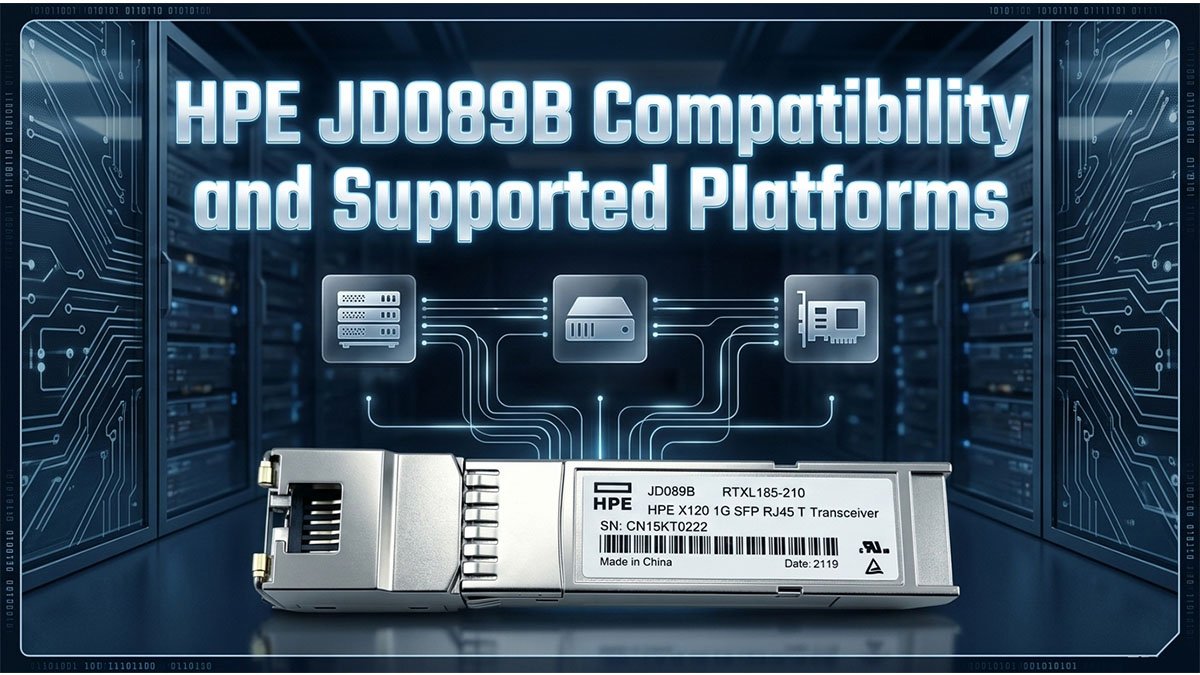
The HPE JD089B is widely supported across HPE networking environments that include SFP-based Gigabit Ethernet ports. However, actual compatibility depends on the switch series, firmware version, and transceiver validation policies implemented by the platform. In most standard deployments, it operates reliably in HPE enterprise and campus switching products that support 1000BASE-T SFP modules.
Compatible HPE Networking Equipment
The HPE JD089B is typically used in a broad range of HPE switch and routing platforms that support Gigabit SFP slots with copper transceiver capability. These platforms generally include enterprise access switches, aggregation switches, and some data center networking devices.
Common supported platform categories include:
- HPE ProCurve / HPE OfficeConnect Gigabit switches
- HPE Aruba access and campus switch series
- HPE FlexNetwork and FlexFabric switch families
- HPE data center switching platforms with SFP ports
- HPE routers and gateway devices supporting SFP interfaces
These environments are designed to support standards-based 1000BASE-T SFP modules, allowing the JD089B to function as a copper connectivity option for RJ45-based links.
The following table summarizes typical compatibility scope:
| Platform Category | Compatibility with JD089B |
|---|---|
| Access Layer Switches | Supported (varies by model) |
| Campus Aggregation Switches | Supported |
| Data Center Switches | Supported (model-dependent) |
| HPE Routers with SFP Ports | Supported |
| Legacy ProCurve Systems | Partially supported depending on firmware |
These compatibility conditions highlight that support is generally broad but still dependent on device-specific validation.
Firmware and Platform Dependency Considerations
Although the HPE JD089B is based on standard IEEE 802.3ab 1000BASE-T technology, platform firmware and transceiver coding can affect whether the module is fully recognized or accepted by the switch. HPE networking devices often validate optical and copper transceivers through EEPROM coding and firmware-level checks.
Important considerations include:
- Some HPE switches require specific firmware versions for stable operation
- Transceiver recognition may vary depending on platform generation
- Older firmware may show compatibility warnings or limited functionality
- Certain platforms enforce stricter validation for non-coded or alternative-coded modules
- Upgrading firmware can improve compatibility with newer revisions of JD089B
In practice, even when a module is electrically compatible, firmware-level policies can influence detection, monitoring features, and system logs.
Compatibility Validation in Real Deployments
Before deploying HPE JD089B modules in production networks, it is common practice to verify compatibility at both hardware and software levels. This helps ensure stable operation and prevents unexpected link or detection issues.
Typical validation steps include:
- Confirming SFP port support for 1000BASE-T copper modules
- Checking official platform transceiver compatibility documentation
- Verifying firmware version requirements before installation
- Testing link establishment under real traffic conditions
- Monitoring system logs for transceiver recognition status
These checks help ensure consistent performance across different switch models and network environments.
🏮 Common Use Cases for HPE JD089B
The HPE JD089B is commonly used in environments where Gigabit Ethernet connectivity over existing copper cabling is required through SFP-based network devices. Its flexibility makes it suitable for both enterprise and campus networks, especially in scenarios where fiber deployment is unnecessary or impractical.
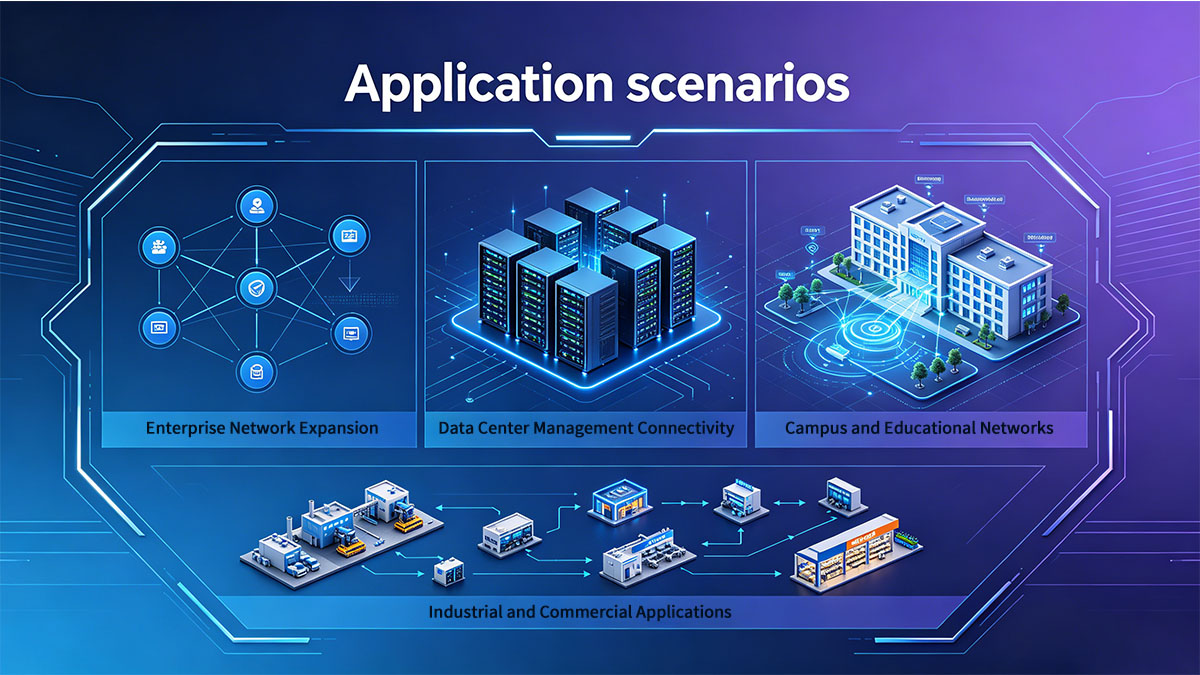
Enterprise Network Expansion
In enterprise environments, the HPE JD089B is frequently used to extend or modify existing network layouts without changing structured cabling systems. It enables organizations to connect access switches, distribution switches, and endpoint devices using standard RJ45 cabling.
Typical enterprise use scenarios include:
- Connecting access-layer switches within office floors
- Extending network connectivity to new departments or work areas
- Linking network closets using existing copper infrastructure
- Supporting incremental network growth without fiber upgrades
- Integrating mixed-media environments (fiber backbone + copper access)
These use cases are especially relevant in buildings where Cat5e or Cat6 cabling is already widely deployed, allowing network expansion with minimal infrastructure changes.
Data Center Management Connectivity
In data center environments, the HPE JD089B is often used for management and control networks rather than high-throughput production traffic. Its stable Gigabit performance is suitable for out-of-band access and monitoring systems.
Common applications include:
- Out-of-band management network connections
- Server iLO or remote management access links
- Network device configuration and monitoring interfaces
- Internal management VLAN connectivity
- Backup or secondary control network paths
These roles make the module valuable for maintaining visibility and control over infrastructure without consuming high-performance fiber ports.
Campus and Educational Networks
Campus environments such as universities, schools, and corporate campuses often rely on mixed network architectures. The HPE JD089B provides a practical way to extend Gigabit connectivity across buildings and departments using existing copper cabling.
Typical campus applications include:
- Classroom and office network access points
- Building-level switch interconnections
- Administrative and departmental network segments
- Library and lab connectivity extensions
- Temporary or flexible network deployments for events
Its ease of deployment makes it suitable for environments where network layouts change frequently or require scalable expansion.
Industrial and Commercial Applications
Beyond traditional IT environments, the HPE JD089B is also used in commercial and light industrial settings where copper Ethernet remains the primary connectivity medium. In these scenarios, robustness and simplicity are often more important than long-distance fiber performance.
Common deployment examples include:
- Retail store network infrastructure
- Warehouse and logistics system connectivity
- Point-of-sale (POS) network links
- Surveillance and security system integration
- Building automation and control networks
These applications benefit from the module’s ability to support stable Gigabit connectivity over short distances using existing cabling systems.
🏮 Why Organizations Consider HPE JD089B Equivalent Options
In many network environments, the HPE JD089B is deployed as a standard 1000BASE-T SFP solution. However, organizations often evaluate equivalent options to maintain flexibility in procurement, ensure long-term availability, and optimize network lifecycle management. These considerations are typically driven by operational, technical, and scalability requirements rather than changes in core functionality.
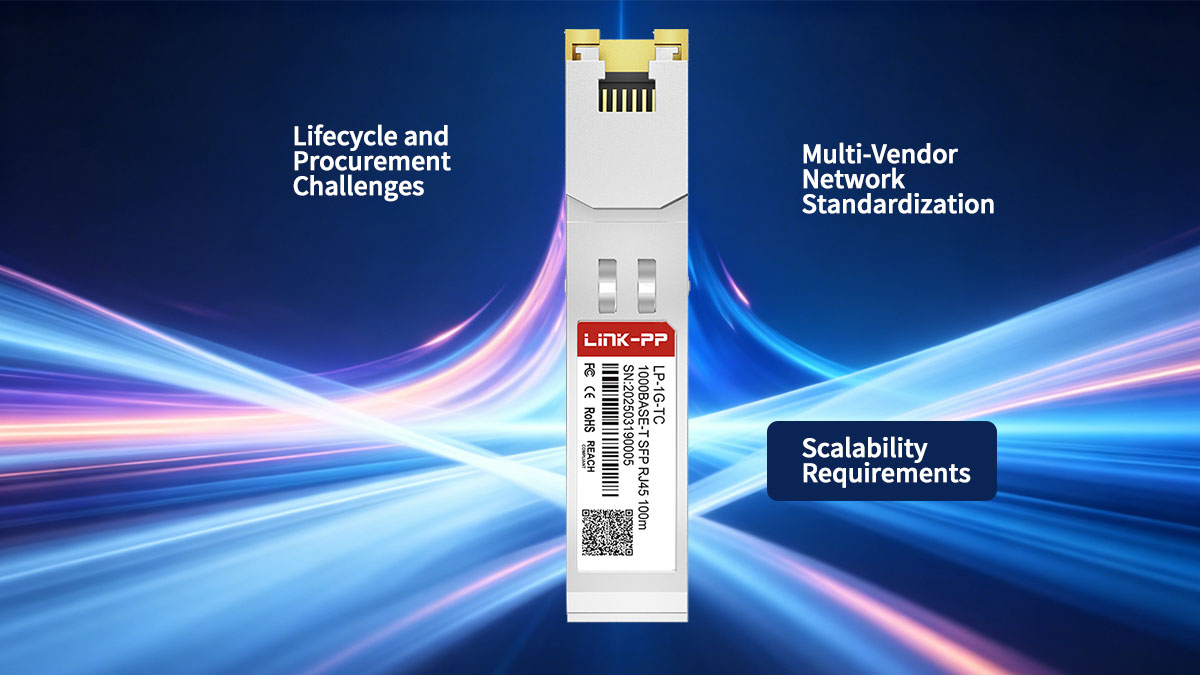
Lifecycle and Procurement Considerations
Network hardware lifecycle planning plays a major role in the decision to explore equivalent transceivers. As infrastructure ages or expands, ensuring consistent availability of compatible modules becomes an important operational concern.
Key factors include:
- Product lifecycle progression of original HPE components
- Inventory availability for large-scale deployments
- Need for long-term replacement consistency
- Budget planning across multiple network refresh cycles
- Standardization across multi-site environments
In practice, organizations often seek alternatives that maintain the same 1000BASE-T functionality while offering stable supply continuity for ongoing maintenance and expansion.
Multi-Vendor Network Standardization
Many enterprise networks are built using mixed hardware environments, where switches, routers, and transceivers may come from different vendors. In such cases, equivalent options help simplify integration and reduce dependency on a single product ecosystem.
Common motivations include:
- Integration across heterogeneous network infrastructures
- Simplification of spare parts management
- Reduction of vendor-specific constraints
- Alignment with standardized Gigabit Ethernet architecture
- Improved operational flexibility in multi-site deployments
This approach allows IT teams to maintain consistent network performance while avoiding excessive reliance on a single transceiver model.
Scalability and Large-Scale Deployment Needs
As networks grow, especially in campus or enterprise environments, the volume of required transceivers increases significantly. Equivalent options are often evaluated to support scaling requirements efficiently.
Typical scalability drivers include:
- Large switch port expansions across multiple sites
- High-density access layer deployments
- Bulk provisioning of network equipment
- Replacement of aging transceiver inventory at scale
- Optimization of deployment costs across distributed infrastructure
In these scenarios, maintaining identical technical specifications—such as 1000BASE-T support, RJ45 interface, and 100m reach—is more important than the brand-specific labeling of the module.
🏮 Key Factors When Evaluating HPE JD089B Equivalents
When assessing HPE JD089B equivalent options, the primary goal is to ensure that alternative 1000BASE-T SFP modules deliver stable Gigabit performance while remaining compatible with existing HPE switching environments. Evaluation is typically based on technical compatibility, performance consistency, and long-term operational reliability.
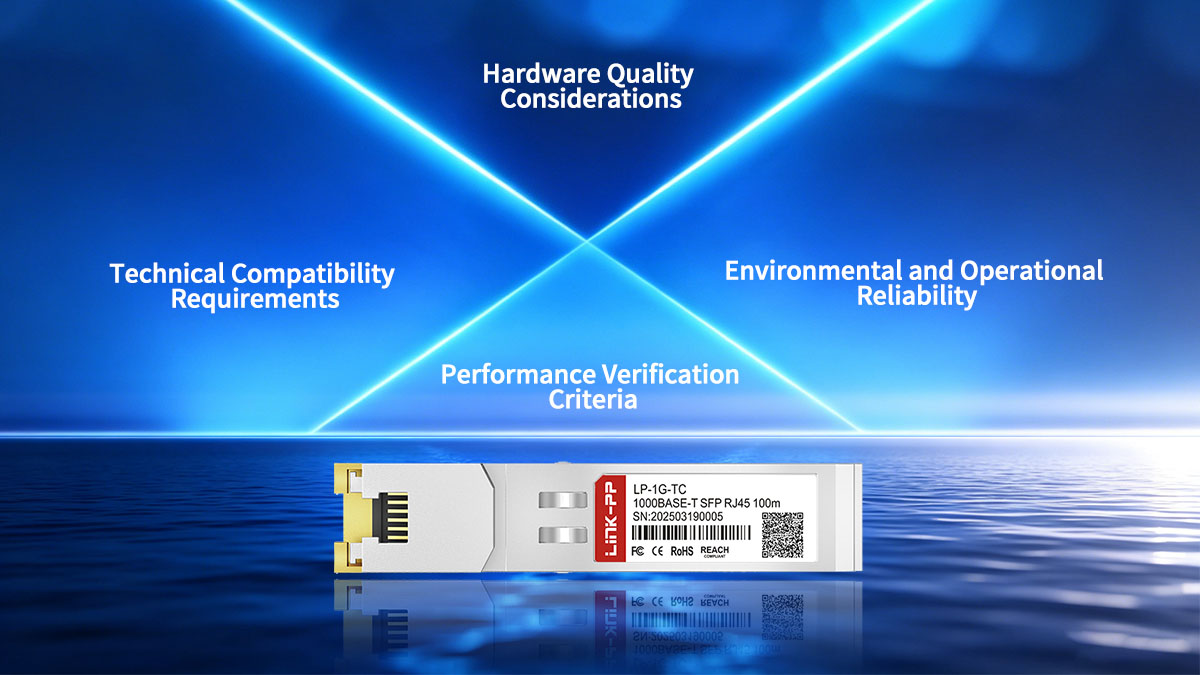
Technical Compatibility Requirements
Compatibility is the most critical factor when selecting an equivalent module, since even small differences in coding or standards implementation can affect device recognition or link stability.
Important technical checks include:
- IEEE 802.3ab compliance for 1000BASE-T operation
- Matching SFP form factor for physical port compatibility
- RJ45 interface support for copper Ethernet cabling
- Compatibility with HPE switch EEPROM identification rules
- Proper auto-negotiation support for Gigabit link establishment
- Verified operation with target switch firmware versions
These elements ensure that the equivalent module can function correctly within existing HPE network infrastructures without introducing interoperability issues.
Performance Verification Criteria
Beyond basic compatibility, performance stability is essential for maintaining consistent network behavior under real traffic conditions. Equivalent modules should deliver the same operational characteristics as the original JD089B.
Key performance indicators include:
- Stable 1Gbps throughput under sustained traffic loads
- Reliable full-duplex transmission over copper cabling
- Low error rates during continuous operation
- Consistent link establishment across different switch ports
- Support for up to 100m transmission distance on Cat5e/Cat6 cabling
These metrics help ensure that equivalent modules perform reliably in both access-layer and distribution-layer deployments.
| Evaluation Parameter | Expected Standard for Equivalents |
|---|---|
| Data Rate | 1Gbps |
| Interface Type | RJ45 |
| Maximum Distance | Up to 100m |
| Ethernet Standard | IEEE 802.3ab |
| Link Stability | Continuous operation under load |
| Duplex Mode | Full Duplex |
This comparison highlights the baseline performance requirements that must be met for safe substitution in production environments.
Hardware Quality and Manufacturing Consistency
Equivalent modules must also meet hardware quality expectations to ensure long-term reliability in enterprise networks. Variations in manufacturing quality can directly affect link stability and operational lifespan.
Important considerations include:
- Consistent component sourcing and assembly quality
- Thermal stability under continuous operation
- Electrical signal integrity across all ports
- Quality assurance testing before deployment
- Compliance with industry manufacturing standards
These factors are especially important in high-density switching environments where multiple modules operate simultaneously.
Environmental and Operational Reliability
Since HPE JD089B is commonly deployed in enterprise and campus environments, equivalents must be capable of operating reliably under similar environmental conditions.
Key requirements include:
- Stable performance across standard enterprise temperature ranges
- Resistance to electromagnetic interference in network closets
- Continuous operation in high-density switch environments
- Compatibility with rack-mounted and distributed deployments
- Long-term durability under 24/7 network workloads
Equivalent modules that meet these conditions can be safely used in production networks without compromising stability.
🏮 Comparing HPE JD089B and Compatible Alternatives
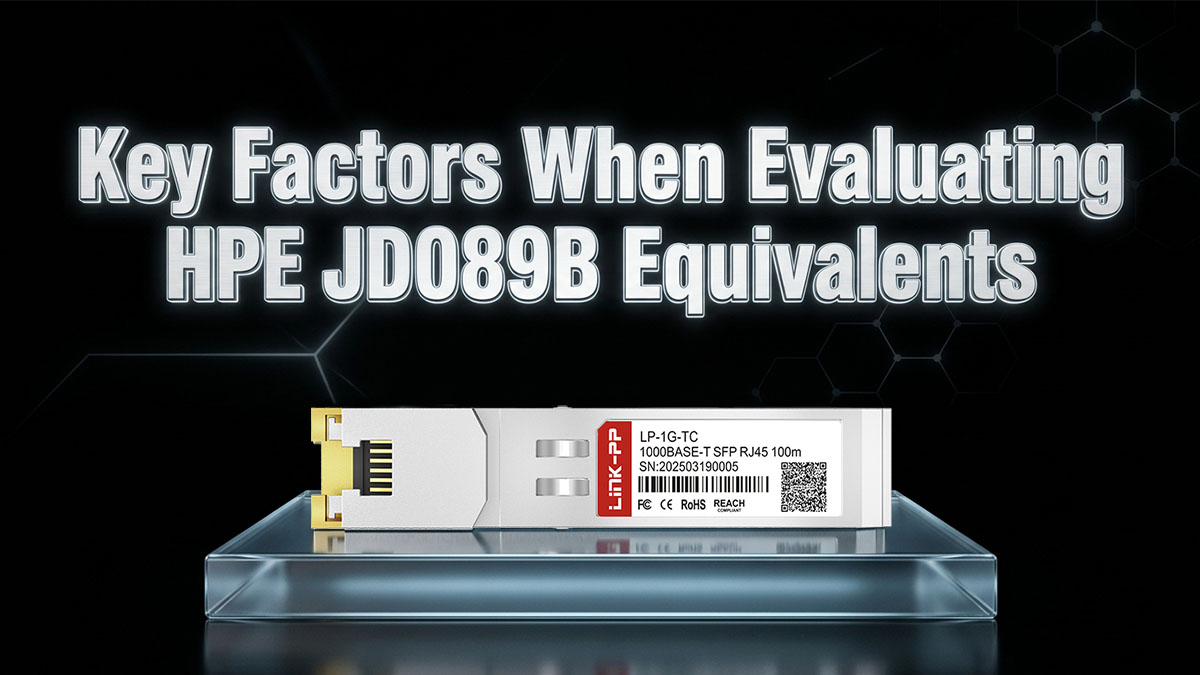
The HPE JD089B and its compatible alternatives are both designed to deliver 1000BASE-T Gigabit Ethernet connectivity through SFP ports. While their core function is identical, differences often appear in platform coding, manufacturing sources, and operational validation within specific HPE networking environments.
Key Technical Comparison Areas
From a functional perspective, both the original HPE JD089B and compatible modules follow the same Gigabit Ethernet standards. However, network behavior can differ depending on firmware recognition rules and hardware validation processes.
The most important comparison areas include:
- Physical form factor and interface type
- Gigabit Ethernet standard compliance
- Transmission distance over copper cabling
- Power consumption characteristics
- Platform recognition and coding behavior
- Long-term operational stability in switching environments
These factors determine whether a compatible module can serve as a seamless replacement in enterprise deployments.
Comparison of Core Specifications
Although performance specifications are generally aligned, a structured comparison helps clarify equivalence across key technical parameters.
| Evaluation Area | HPE JD089B | Compatible Alternative |
|---|---|---|
| Ethernet Standard | IEEE 802.3ab | IEEE 802.3ab |
| Data Rate | 1Gbps | 1Gbps |
| Interface Type | RJ45 | RJ45 |
| Form Factor | SFP | SFP |
| Maximum Distance | 100m | 100m |
| Cable Support | Cat5e/Cat6 | Cat5e/Cat6 |
| Hot Swappable | Yes | Yes |
| Auto Negotiation | Supported | Supported |
| Platform Coding | HPE-coded | Vendor-compatible coding |
These specifications show that both options operate on the same physical and protocol-level standards, ensuring functional equivalence in most deployment scenarios.
Deployment Scenarios Where Both Are Used
In real-world networks, both HPE JD089B and compatible alternatives are often deployed in similar environments. The selection usually depends on operational strategy rather than functional necessity.
Common shared use cases include:
- Enterprise access switch connectivity
- Campus network expansion over copper cabling
- Data center management network links
- Branch office Gigabit Ethernet deployment
- Mixed-vendor network infrastructures
- Short-distance server and device connections
These scenarios demonstrate that both solutions serve the same functional role in Gigabit Ethernet architectures.
🏮 Best Practices for Deploying HPE JD089B or Equivalent Modules
Deploying the HPE JD089B or its equivalent 1000BASE-T SFP modules requires careful attention to cabling, port configuration, and validation procedures. Although these modules are designed for plug-and-play operation, proper deployment practices help ensure stable Gigabit Ethernet performance and long-term network reliability.
Cabling Recommendations
Copper SFP modules depend heavily on cable quality and installation standards. Even though the module supports standard RJ45 connectivity, the physical cabling environment directly impacts signal stability and link quality.
Recommended practices include:
- Use Cat5e or Cat6 cabling for all Gigabit links
- Maintain cable lengths within 100m maximum specification
- Avoid excessive bending or tight cable routing in racks
- Keep copper cables away from high-interference power lines
- Ensure proper termination quality at RJ45 connectors
These practices help maintain stable signal transmission and reduce the risk of packet loss or link instability in production environments.
Network Validation and Testing
Before placing modules into full production use, it is important to verify link stability and performance under real operating conditions. This step ensures both original and equivalent modules function correctly within the target environment.
Typical validation steps include:
- Confirming successful link establishment at 1Gbps speed
- Running throughput tests under normal traffic conditions
- Checking for error counters on switch interfaces
- Verifying auto-negotiation behavior between connected devices
- Monitoring link stability over extended uptime periods
These checks help identify potential compatibility or cabling issues early in the deployment process.
| Validation Area | Recommended Check |
|---|---|
| Link Speed | 1Gbps confirmed |
| Error Rate | No abnormal frame errors |
| Cable Integrity | Within Cat5e/Cat6 standards |
| Link Stability | Continuous operation without drops |
| Auto Negotiation | Proper full-duplex establishment |
This structured validation process helps ensure consistent network performance after installation.
Maintenance and Lifecycle Management
Long-term stability of HPE JD089B or equivalent modules depends on proper maintenance and lifecycle planning. Even though these modules are hot-swappable, ongoing monitoring and documentation remain important in enterprise environments.
Key maintenance practices include:
- Keeping accurate inventory records of installed modules
- Tracking module locations across network topology
- Periodically reviewing switch port health statistics
- Replacing aging or overheating modules proactively
- Standardizing module types across similar network layers
These practices help reduce operational risks and simplify troubleshooting when network issues occur.
🏮 Common Deployment Challenges and Troubleshooting
Even though the HPE JD089B and its compatible 1000BASE-T SFP modules are designed for straightforward deployment, real-world network environments can introduce challenges related to cabling quality, firmware behavior, and platform compatibility. Identifying these issues early helps maintain stable Gigabit Ethernet performance and reduces operational downtime.
Link Detection Issues
One of the most common deployment challenges is the failure of a switch to detect the inserted SFP module or establish a valid link. This issue is typically related to physical connection problems or compatibility validation rules.
Typical causes include:
- Improperly seated SFP module in the port
- Unsupported or partially supported switch models
- Firmware restrictions on transceiver recognition
- Damaged or low-quality RJ45 cabling
- Auto-negotiation mismatch between connected devices
When this occurs, the first step is to verify physical installation, followed by checking switch compatibility documentation and firmware version requirements.
Performance Degradation Problems
In some cases, the link may establish successfully at 1Gbps, but performance issues such as latency spikes, packet loss, or inconsistent throughput may appear. These symptoms are often related to the transmission environment rather than the module itself.
Common contributing factors include:
- Poor-quality or aging Cat5e/Cat6 cabling
- Excessive cable length approaching the 100m limit
- Electromagnetic interference from nearby electrical equipment
- Faulty or inconsistent RJ45 termination
- Duplex or speed configuration inconsistencies
A structured cabling inspection combined with interface error monitoring is typically required to isolate the root cause.
Long-Term Operational Stability Issues
Over time, environmental and thermal conditions can impact the stability of copper SFP modules, especially in high-density switching environments where multiple ports operate continuously.
Key challenges include:
- Heat accumulation in densely populated switch chassis
- Increased error rates under sustained traffic loads
- Reduced performance due to aging cabling infrastructure
- Inconsistent behavior across mixed original and compatible modules
- Limited airflow in poorly ventilated network racks
Ensuring proper airflow management and periodic hardware review helps mitigate these long-term risks.
🏮 Conclusion
The HPE JD089B remains a widely used 1000BASE-T copper SFP module for organizations that rely on Gigabit Ethernet over existing RJ45 infrastructure. Its ability to bridge SFP-based networking equipment with standard twisted-pair cabling makes it a practical choice for enterprise access layers, campus networks, and data center management connectivity. Across its technical specifications, compatibility behavior, and deployment scenarios, the module consistently supports stable 1Gbps performance within standard Ethernet environments.
At the same time, evaluating equivalent options is a common practice in modern network operations. Factors such as lifecycle planning, multi-vendor environments, and large-scale deployment requirements often drive organizations to consider alternative 1000BASE-T SFP solutions. When doing so, ensuring compliance with IEEE 802.3ab standards, maintaining consistent electrical performance, and verifying platform compatibility are essential steps to achieve reliable long-term operation.
To summarize the key takeaways:
- HPE JD089B provides stable Gigabit Ethernet connectivity over copper cabling
- It is best suited for short-range links up to 100m in enterprise and campus environments
- Compatibility depends on switch platform, firmware version, and transceiver validation rules
- Equivalent modules can deliver similar performance when properly matched to technical requirements
- Deployment success relies heavily on cabling quality, configuration accuracy, and validation practices
- Long-term reliability depends on structured maintenance and consistent network management
In practical deployments, many organizations also evaluate third-party compatible transceivers that meet the same technical standards while supporting flexible supply and deployment strategies. Providers such as LINK-PP Official Store offer a range of standards-based 1000BASE-T SFP solutions designed to support interoperability in HPE networking environments, helping teams maintain continuity in Gigabit Ethernet infrastructures without compromising on performance or compatibility requirements.