



































As legacy fiber networks continue to age, many organizations still rely on 10BASE-FL to support basic connectivity. However, its limited 10Mbps bandwidth no longer meets the demands of modern applications, creating performance bottlenecks and restricting network scalability. This has driven the need for a cost-effective upgrade path that improves speed without requiring a complete infrastructure overhaul.
100BASE-SX emerges as a practical solution, leveraging affordable 850nm optics to deliver Fast Ethernet performance over existing multimode fiber. By enabling a seamless transition from 10BASE-FL to 100Mbps speeds, 100BASE-SX allows businesses to enhance network efficiency, extend the life of their cabling investments, and support growing data demands with minimal disruption.
🌟 What Is 100BASE-SX SFP Transceiver
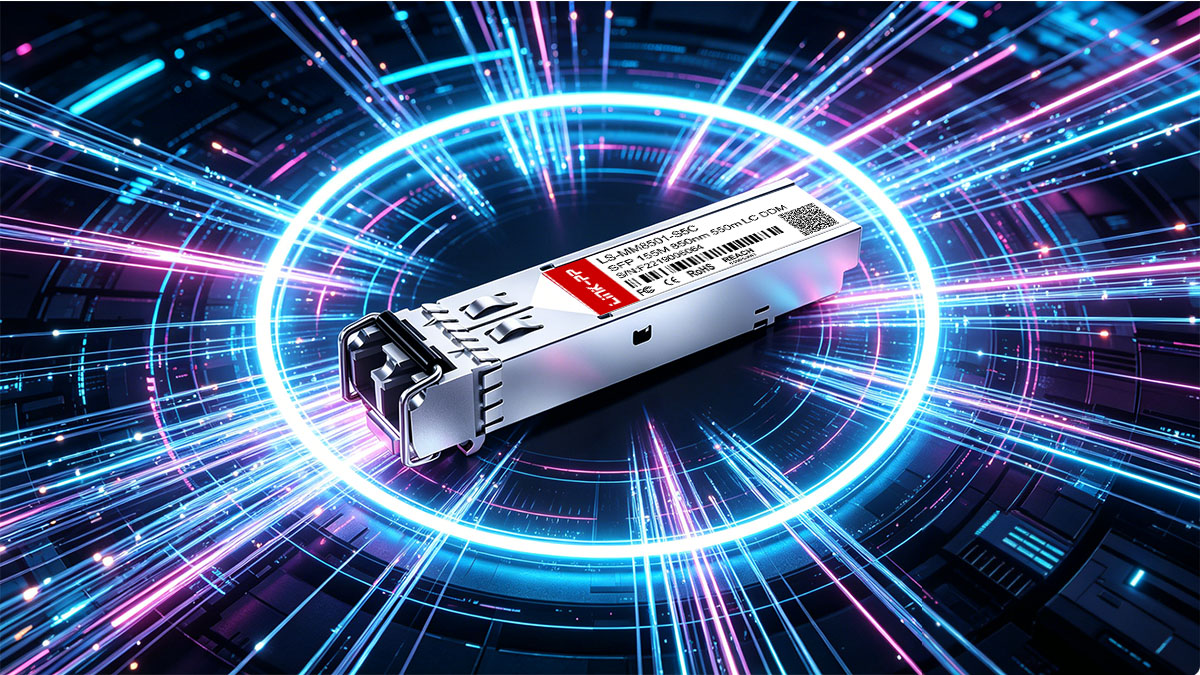
The 100BASE-SX SFP transceiver is a Fast Ethernet fiber optic SFP module designed to deliver 100Mbps data transmission over multimode fiber using 850nm wavelength optics. It is widely used as an efficient upgrade option for legacy fiber networks, especially those originally built on 10BASE-FL. By combining higher speed with cost-effective components, it enables reliable short-distance connectivity without major infrastructure changes.
Definition and Technical Overview
A 100BASE-SX 100M SFP is an optical module that supports Fast Ethernet transmission over multimode fiber (MMF). Operating at an 850nm wavelength, it uses short-wavelength optics to achieve efficient data transfer across relatively short distances, typically within buildings or campus environments. Its compact, hot-swappable design allows easy integration into switches and network devices.
Technically, 100BASE-SX follows the IEEE 802.3u Fast Ethernet standard and uses light pulses to transmit data over fiber. Compared to legacy 10BASE-FL, it offers a tenfold increase in bandwidth while maintaining compatibility with similar fiber infrastructure, making it a straightforward and practical upgrade path.
Core Specifications and Transmission Standards
The performance of 100BASE-SX SFP transceivers is defined by a set of standardized technical parameters that ensure interoperability and reliability across different network environments. These specifications cover data rate, wavelength, transmission distance, and supported fiber types.
To better understand its key characteristics, the following table summarizes the core specifications:
| Parameter | Specification |
| Data Rate | 100Mbps (Fast Ethernet) |
| Standard | IEEE 802.3u (100BASE-SX) |
| Wavelength | 850nm |
| Fiber Type | Multimode Fiber (MMF) |
| Typical Connector | LC Duplex |
| Maximum Distance | Up to 550m |
How It Fits into Fast Ethernet Evolution
100BASE-SX plays a transitional role in the evolution from early Ethernet technologies to more advanced network standards. While 10BASE-FL introduced fiber-based communication at 10Mbps, it quickly became insufficient as network demands increased. 100BASE-SX addresses this gap by providing a significant speed improvement while still operating within the Fast Ethernet framework.
In the broader context of Ethernet development, 100BASE-SX serves as a practical stepping stone between legacy systems and higher-speed solutions like Gigabit Ethernet. It allows organizations to modernize their networks incrementally, improving performance without immediately committing to more complex and costly upgrades.
🌟 Why 100BASE-SX Is a Practical Replacement for 10BASE-FL
As network demands continue to grow, 10BASE-FL increasingly struggles to meet modern performance requirements. Organizations need a solution that improves speed and reliability without requiring a complete redesign of existing fiber infrastructure. 100BASE-SX addresses this need by offering higher bandwidth, compatibility, and cost efficiency in a straightforward upgrade path.
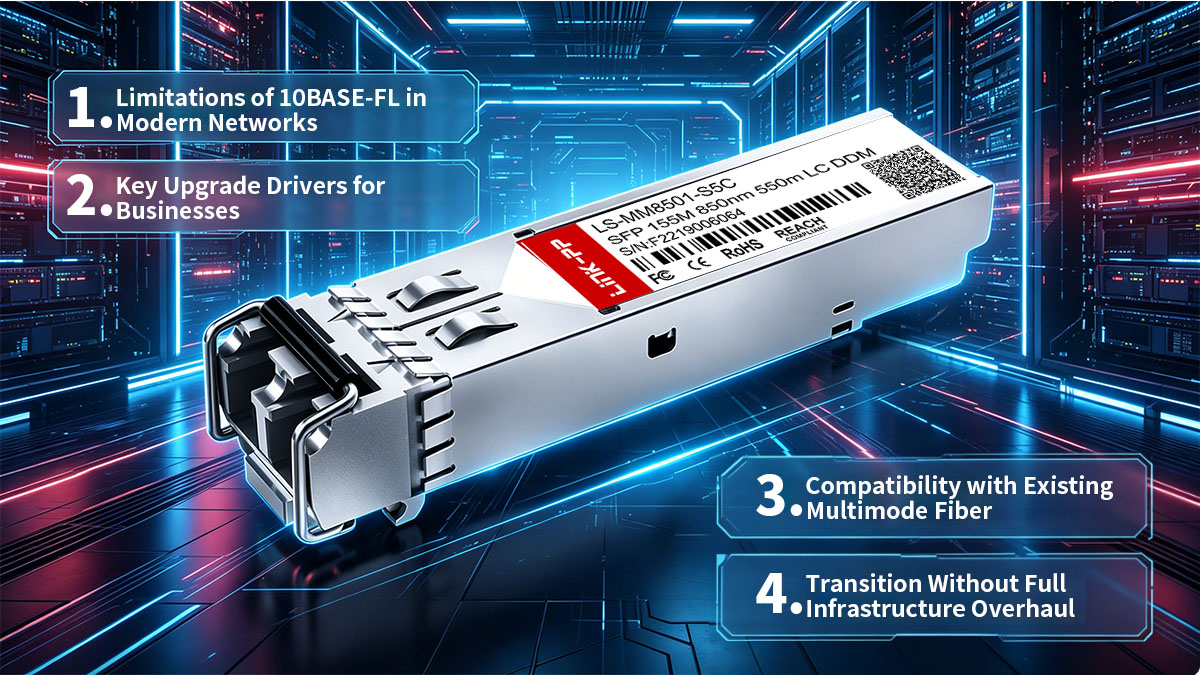
Limitations of 10BASE-FL in Modern Networks
10BASE-FL was originally designed for basic fiber connectivity at 10Mbps, which is now insufficient for today’s data-intensive applications. Tasks such as cloud access, video streaming, and real-time communication can quickly saturate its limited bandwidth, leading to noticeable slowdowns and reduced productivity.
In addition, aging 10BASE-FL equipment often lacks support for modern network features and integration with newer hardware. This creates compatibility challenges and increases maintenance complexity, making it harder for businesses to sustain efficient and scalable network operations.
Key Upgrade Drivers for Businesses
The primary driver for upgrading to 100BASE-SX is the need for higher bandwidth to support growing data traffic. As businesses adopt more digital tools and connected systems, the demand for faster and more stable network performance becomes essential rather than optional.
Cost efficiency is another important factor. Instead of investing in entirely new infrastructure, organizations prefer incremental upgrades that maximize existing assets. 100BASE-SX provides a balance between performance improvement and budget control, making it an attractive option for both small and medium-sized enterprises.
Compatibility with Existing Multimode Fiber
One of the key advantages of 100BASE-SX is its ability to operate over existing multimode fiber (MMF) infrastructure commonly used in 10BASE-FL deployments. This compatibility significantly reduces the need for new cabling, which is often one of the most expensive and disruptive aspects of network upgrades.
By reusing installed fiber, businesses can accelerate deployment timelines and minimize operational disruptions. This ensures that upgrades can be carried out efficiently, especially in environments where downtime must be kept to a minimum, such as offices, factories, and logistics facilities.
Transition Without Full Infrastructure Overhaul
Upgrading to 100BASE-SX does not require a complete replacement of network systems. In most cases, organizations only need to replace optical transceivers and ensure that switches or network interfaces support Fast Ethernet standards. This targeted upgrade approach simplifies the migration process.
Furthermore, the use of SFP modules allows for flexible and scalable deployment. Network administrators can upgrade links gradually, reducing risk and spreading costs over time. This makes the transition to 100BASE-SX both manageable and practical, especially for legacy networks seeking incremental modernization.
🌟 Performance Gains Achieved with 100BASE-SX Deployment
Deploying 100BASE-SX brings immediate and measurable improvements to network performance, especially in environments still relying on 10BASE-FL. By increasing bandwidth and optimizing data transmission efficiency, it enables smoother operations and better support for modern applications. These gains are particularly valuable for organizations seeking higher performance without complex upgrades.
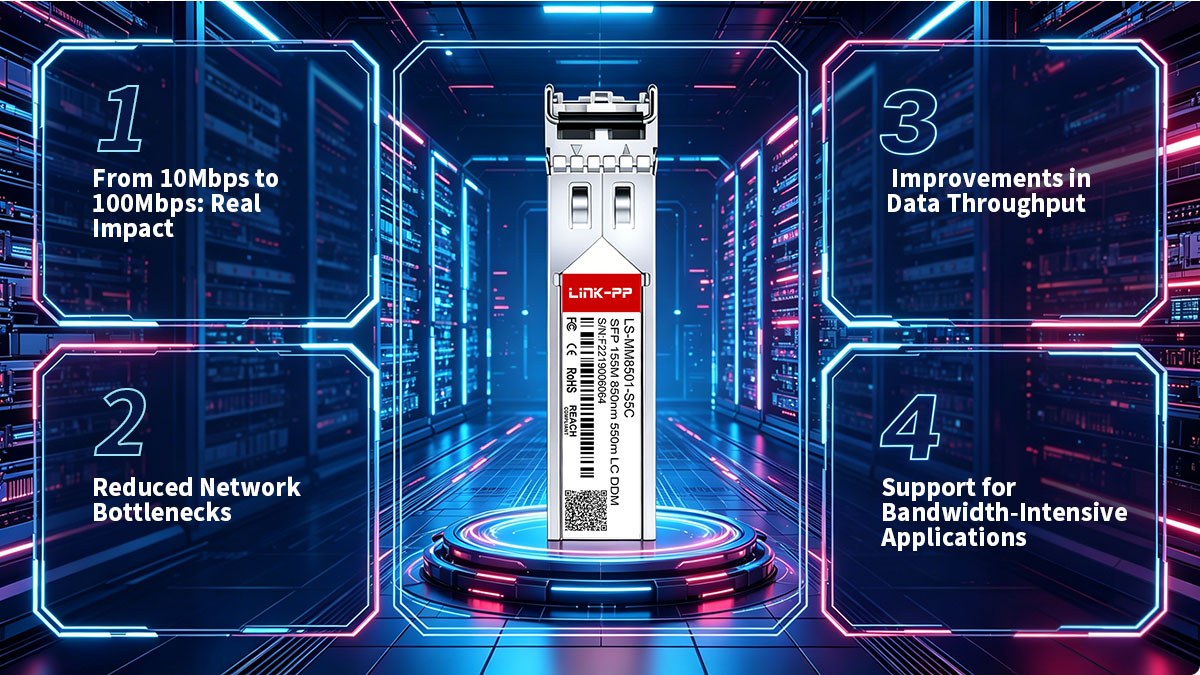
From 10Mbps to 100Mbps: Real Impact
The most noticeable improvement with 100BASE-SX is the tenfold increase in bandwidth — from 10Mbps to 100Mbps. This upgrade significantly enhances the network’s ability to handle multiple simultaneous tasks, reducing delays and improving overall responsiveness for end users.
In practical terms, this means faster file transfers, quicker system access, and improved performance for shared resources. Even routine operations such as accessing databases or loading web-based tools become more efficient, directly impacting productivity across the organization.
Improvements in Data Throughput
With higher bandwidth, 100BASE-SX allows more data to be transmitted within the same time frame, resulting in improved throughput. This is especially important in environments where multiple devices and applications compete for network resources.
In addition, the use of fiber optics ensures stable and consistent data transmission with minimal signal degradation. Compared to older systems, this leads to fewer retransmissions and more efficient use of available bandwidth, further enhancing overall network performance.
Reduced Network Bottlenecks
One of the key benefits of upgrading to 100BASE-SX is the reduction of network bottlenecks that commonly occur in 10BASE-FL environments. Limited bandwidth in legacy systems often causes congestion, particularly during peak usage periods.
By increasing capacity, 100BASE-SX alleviates these constraints, allowing data to flow more freely across the network. This results in smoother communication between devices and reduces latency issues that can disrupt critical operations.
Support for Bandwidth-Intensive Applications
Compared with 10BASE-FL, 100BASE-SX provides substantially more headroom for applications that generate frequent or sustained traffic on local fiber links. On a 10Mbps connection, even moderate data loads can consume available bandwidth quickly, causing slower response times when multiple services share the same segment. By moving to 100Mbps, 100BASE-SX reduces this limitation and allows the network to handle heavier day-to-day traffic more smoothly.
This improvement is especially relevant in environments where links are used for continuous file access, centralized data exchange, imaging systems, or multiple concurrent business applications. While 10BASE-FL is more easily constrained by rising traffic demands, 100BASE-SX is better suited to supporting these higher-throughput workloads over existing multimode fiber. As a result, it offers a more practical performance level for modern Fast Ethernet networks without changing the basic fiber infrastructure.
🌟 Cost Benefits of Choosing 100BASE-SX with 850nm Optics
100BASE-SX with 850nm optics provides a cost-effective solution for upgrading network performance without the need for a complete infrastructure overhaul. The lower cost of 850nm transceivers and the ability to reuse existing multimode fiber infrastructure help businesses achieve faster, more reliable connections while keeping costs manageable. This makes it an ideal choice for small to medium-sized businesses (SMBs) looking to modernize their network while staying within budget.

Lower Cost of 850nm Transceivers
One of the most significant cost advantages of 100BASE-SX is the affordability of the 850nm transceivers it uses. These transceivers are considerably less expensive than those that operate at longer wavelengths, such as 1310nm or 1550nm. The price difference arises from the fact that 850nm optics are commonly used in multimode fiber and have become standard for short-range fiber communications, making them more widely available and cost-efficient.
This reduction in transceiver costs helps companies minimize their overall upgrade expenses, especially when replacing large quantities of older 10BASE-FL transceivers. With 850nm transceivers, businesses can achieve significant performance improvements without a major capital outlay, making this an attractive option for network managers with tight budgets.
Reusing Existing Cabling Infrastructure
Another major cost-saving benefit of 100BASE-SX is its compatibility with existing multimode fiber infrastructure. Unlike other network upgrades that require the replacement of fiber cables or network hardware, 100BASE-SX allows businesses to leverage their current fiber setups, which reduces the cost of the upgrade and the amount of downtime required for implementation.
By reusing the existing fiber cables, companies can avoid the high costs associated with installing new fiber runs, which can be especially costly in large facilities or buildings with extensive wiring. This enables businesses to extend the lifespan of their current investments while achieving a substantial performance boost with minimal additional costs.
Reduced Maintenance and Operational Costs
With 100BASE-SX, businesses can expect reduced maintenance and operational costs compared to older 10BASE-FL systems. The improved performance and efficiency of 100BASE-SX reduce the likelihood of network issues, such as congestion and slowdowns, which often require costly troubleshooting and repair efforts. In addition, the reliability of fiber-based systems generally leads to fewer service interruptions and less frequent hardware replacements, further lowering maintenance expenses.
As network demands grow, 100BASE-SX ensures that companies can scale their infrastructure without facing the continuous costs associated with older, slower systems. This not only reduces operational overhead but also frees up resources to focus on more strategic business priorities.
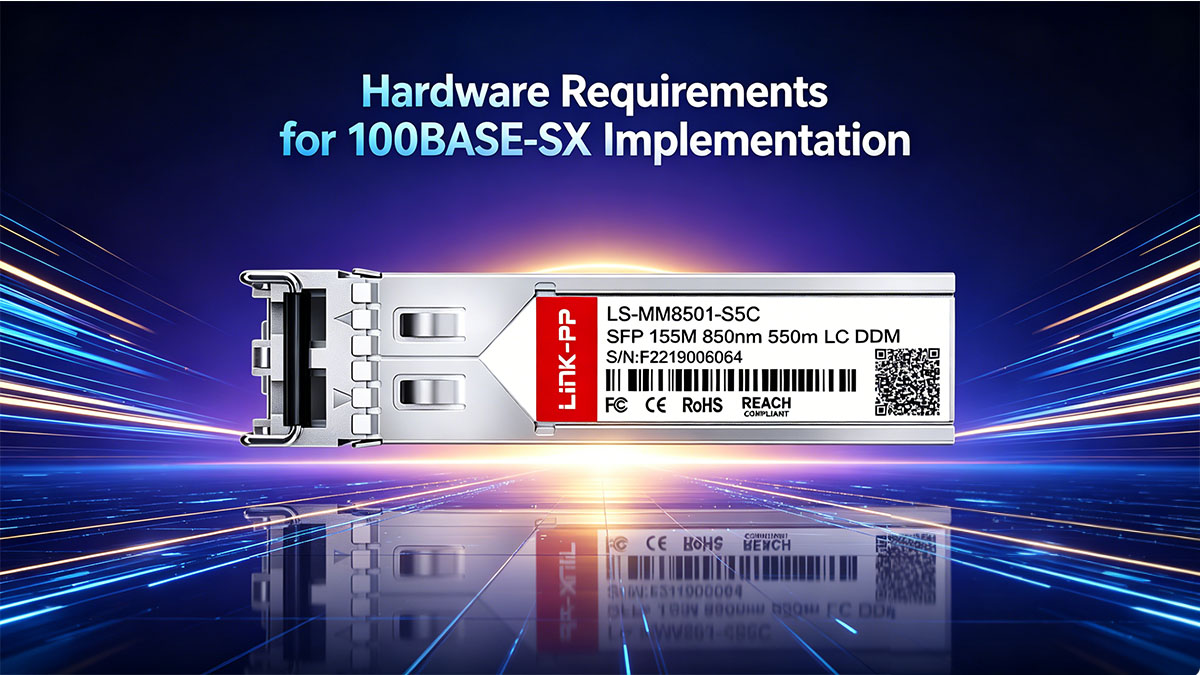
🌟 Hardware Requirements for 100BASE-SX Implementation
Implementing 100BASE-SX is relatively straightforward, but it still requires compatible hardware components to ensure stable and efficient operation. Most upgrades can be completed by updating specific transceiver modules rather than replacing the entire network. Understanding the key hardware elements helps ensure a smooth and reliable deployment.
Compatible Switches and Network Interfaces
To support 100BASE-SX, network devices must be compatible with Fast Ethernet standards and SFP-based optical connections. Not all legacy switches designed for 10BASE-FL can support higher speeds or modular transceivers, so verification is essential before deployment.
When evaluating compatibility, consider the following:
- Fast Ethernet Support (100Mbps): Ensure switches and network interface cards (NICs) support 100BASE standards, not just 10Mbps.
- SFP Ports Availability: Devices should include SFP slots or support SFP-based modules for flexibility.
- Auto-negotiation Capability: Helps ensure smooth communication between upgraded and existing network segments.
- Backward Compatibility: Some switches can operate in mixed environments, supporting both 10Mbps and 100Mbps links.
Selecting compatible switches and interfaces ensures that the upgraded links can operate at full performance without configuration conflicts or hardware limitations.
Transceiver Modules and Connectors
The core component of a 100BASE-SX deployment is the fiber SFP transceiver module itself. These optical modules convert electrical signals into optical signals and are responsible for enabling fiber-based communication at 100Mbps over short distances.
Key considerations include:
- 100BASE-SX SFP Modules: Must operate at 850nm wavelength and comply with IEEE 802.3u standards.
- Connector Type: Typically LC duplex connectors are used for multimode fiber connections.
- Hot-swappable Design: Allows installation or replacement without powering down equipment.
- Vendor Compatibility: Ensure transceivers are supported by the switch vendor to avoid interoperability issues.
Choosing the right transceiver and connector combination ensures stable signal transmission and simplifies installation.
Fiber Types and Distance Considerations
100BASE-SX is designed specifically for multimode fiber (MMF), which is widely used in existing 10BASE-FL deployments. However, the type and quality of fiber will directly affect achievable transmission distances.
In practice, the following factors should be evaluated:
- Fiber Type (OM1/OM2): Common legacy multimode fibers; performance may vary based on core size and quality.
- Maximum Distance: Typically up to 550m, depending on fiber grade and installation conditions.
- Link Quality: Older or degraded fibers may reduce signal performance and should be tested before reuse.
- Connector Cleanliness and Alignment: Poor termination can lead to signal loss.
By assessing fiber characteristics in advance, organizations can ensure that their existing infrastructure meets the requirements for reliable 100BASE-SX operation.
Power and Environmental Requirements
Although 100BASE-SX transceivers are generally low-power devices, proper environmental and operational conditions are still important for long-term reliability. These modules are designed for typical enterprise and industrial environments but must operate within specified limits.
Important factors to consider include:
- Power Consumption: SFP modules consume minimal power, but switches must provide sufficient power per port.
- Operating Temperature Range: Ensure deployment environments fall within the specified temperature limits of the hardware.
- Cooling and Ventilation: Adequate airflow is necessary to prevent overheating in high-density switch environments.
- Dust and Humidity Control: Fiber connections should be kept clean and protected to maintain signal integrity.
Maintaining proper environmental conditions helps extend hardware lifespan and ensures consistent network performance after deployment.
🌟 Step-by-Step Migration Plan to 100BASE-SX
Migrating from 10BASE-FL to 100BASE-SX can be achieved in a structured and low-risk manner when approached step by step. Since 100BASE-SX is compatible with existing multimode fiber, the transition mainly involves planning, hardware updates, and validation. A clear migration strategy helps minimize downtime and ensures consistent network performance after deployment.
Assessing Current Network Infrastructure
Before starting the upgrade, it is essential to evaluate the existing network environment to determine readiness for 100BASE-SX. This step helps identify potential limitations and ensures that current assets can support the transition.
Key assessment points include:
- Fiber Infrastructure Condition: Check whether existing multimode fiber (e.g., OM1/OM2) is intact and suitable for 100Mbps transmission.
- Current Hardware Capabilities: Identify switches, NICs, and transceivers that only support 10BASE-FL.
- Link Distances: Verify that all fiber links fall within the supported range of 100BASE-SX.
- Network Topology: Understand how devices are interconnected to plan phased upgrades.
A thorough assessment reduces uncertainty and provides a clear baseline for planning the upgrade.
Planning the Upgrade Path
Once the current infrastructure is assessed, the next step is to define a practical and efficient upgrade plan. The goal is to ensure minimal disruption while maximizing the use of existing resources.
A well-structured upgrade plan typically includes:
- Phased Migration Approach: Upgrade critical or high-traffic links first, followed by less critical segments.
- Hardware Selection: Choose compatible 100BASE-SX SFP modules and switches where necessary.
- Downtime Planning: Schedule upgrades during maintenance windows to avoid operational impact.
- Fallback Strategy: Prepare contingency plans in case issues arise during deployment.
Proper planning ensures that the migration process is controlled, predictable, and aligned with business needs.
Installation and Configuration Process
The actual deployment of 100BASE-SX involves replacing or installing transceivers and configuring network devices to support Fast Ethernet operation. This process is typically straightforward due to the modular nature of SFP-based systems.
During installation, consider the following steps:
- Insert 100BASE-SX SFP modules into compatible switch ports.
- Connect existing multimode fiber cables using appropriate LC connectors.
- Configure port settings (if required), such as speed and duplex mode.
- Verify link status indicators to confirm successful physical connections.
Because SFP modules are hot-swappable, installation can often be completed without shutting down the entire system, reducing service interruptions.
Testing and Validation After Deployment
After installation, thorough testing is critical to ensure that the upgraded network performs as expected. This step confirms both connectivity and performance improvements.
Validation should include:
- Link Verification: Ensure all upgraded connections are stable and operating at 100Mbps.
- Performance Testing: Measure throughput and latency to confirm improvements over 10BASE-FL.
- Error Monitoring: Check for packet loss, signal issues, or interface errors.
- Application Testing: Validate that key business applications function correctly on the upgraded network.
By completing proper testing and validation, organizations can ensure a smooth transition and confidently rely on the improved performance of 100BASE-SX.
🌟 Real-World Use Cases of 100BASE-SX in Enterprise Networks
100BASE-SX is widely adopted in enterprise networks where short-distance fiber links are common and performance needs have outgrown 10BASE-FL. Its compatibility with existing multimode fiber and affordable 850nm optics make it an ideal solution for upgrading legacy systems without major infrastructure changes. The following use cases illustrate practical applications in different enterprise environments.
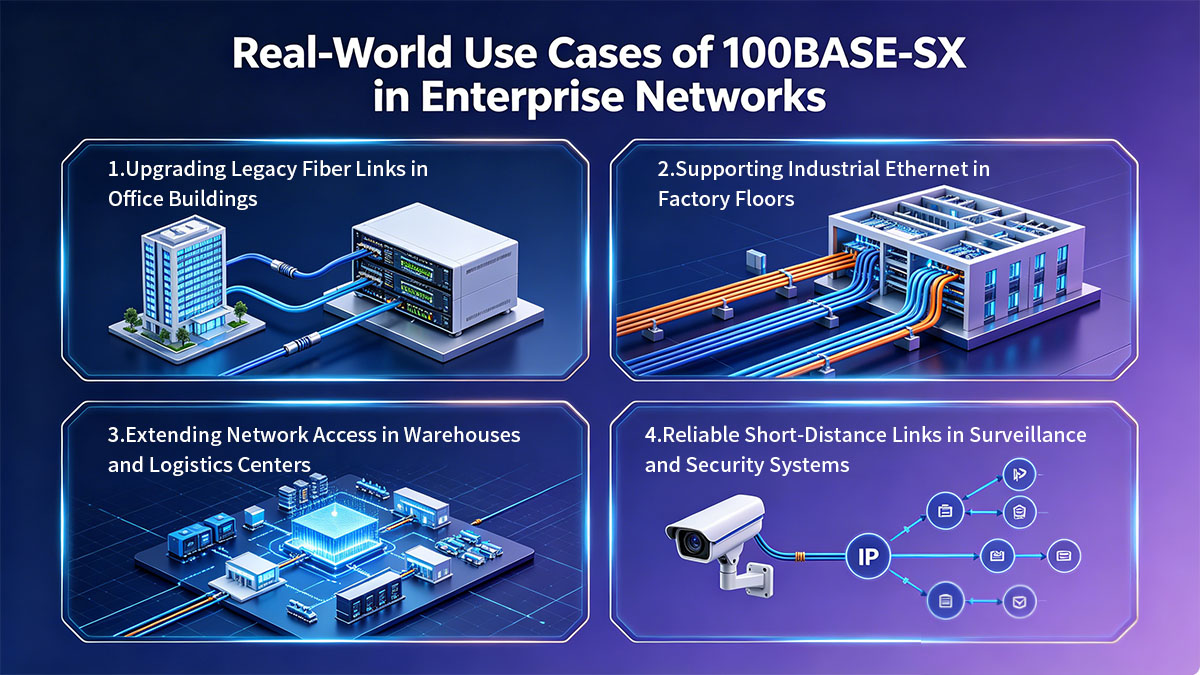
Upgrading Legacy Fiber Links in Office Buildings
Many office buildings still rely on 10BASE-FL for internal fiber connections, limiting network speed for employees. By replacing 10BASE-FL with 100BASE-SX, IT teams can significantly improve bandwidth without rewiring entire floors, enabling faster access to shared drives, intranet resources, and collaborative tools.
This upgrade is especially useful in multi-floor offices where short fiber runs connect switches and patch panels. The deployment can often be completed during off-hours, minimizing disruption to daily operations.
Supporting Industrial Ethernet in Factory Floors
Factory floors often require reliable and robust network links to support industrial control systems and automation devices. 100BASE-SX provides the necessary 100Mbps performance over short multimode fiber runs, ensuring stable data communication between controllers, sensors, and monitoring systems.
Compared to 10BASE-FL, it reduces latency and prevents network congestion during peak production periods. Its fiber-based design also provides better immunity to electromagnetic interference common in industrial environments.
Extending Network Access in Warehouses and Logistics Centers
Warehouses and logistics centers typically have long aisles and multiple zones where wired network coverage is needed. 100BASE-SX allows IT teams to extend network connectivity over existing multimode fiber, enabling reliable communication between scanners, inventory management systems, and centralized databases.
This use case improves operational efficiency, as staff can access real-time inventory data without relying on slower wireless alternatives or congested 10Mbps fiber links. The upgrade is both cost-effective and minimally disruptive.
Reliable Short-Distance Links in Surveillance and Security Systems
Enterprise security systems often require high-quality, short-distance fiber connections for IP cameras and access control devices. 100BASE-SX supports stable 100Mbps transmission over multimode fiber, ensuring smooth video streaming and timely alerts.
Upgrading from 10BASE-FL reduces the risk of dropped frames or latency issues in critical security applications. It also allows organizations to scale their surveillance infrastructure without replacing existing fiber cabling.
🌟 Key Takeaways for Migrating to 100BASE-SX in Legacy Fiber Networks
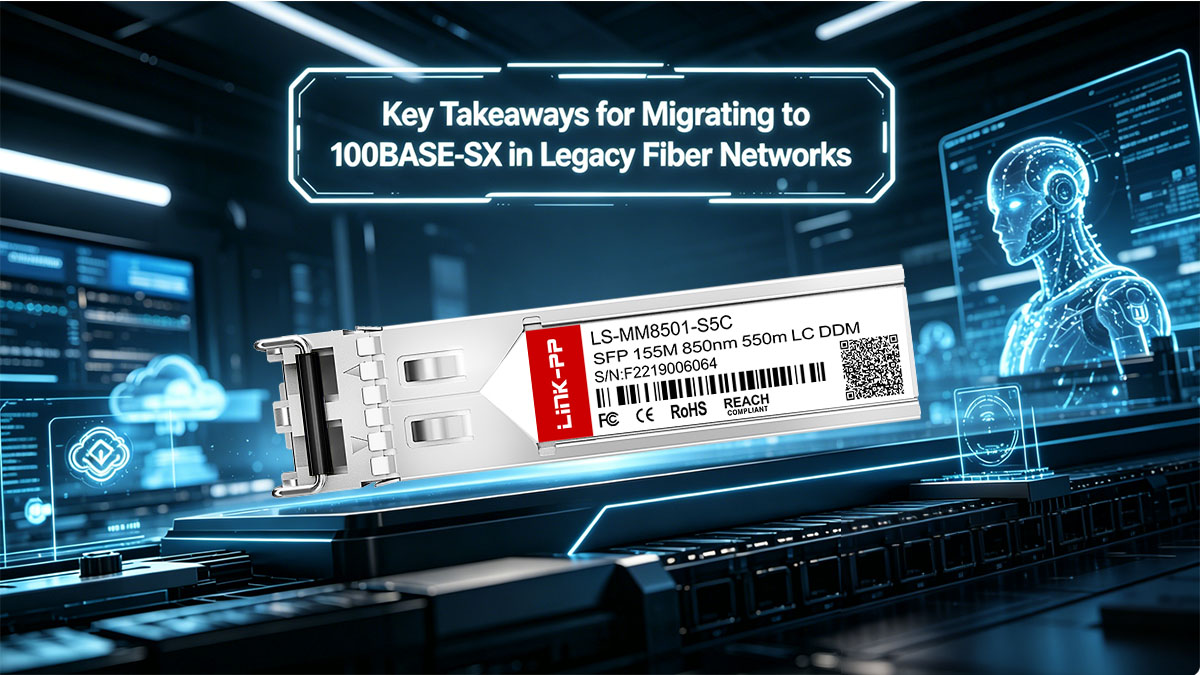
Upgrading from 10BASE-FL to 100BASE-SX is a practical and cost-effective way to modernize legacy fiber networks. By leveraging affordable 850nm optics and existing multimode fiber infrastructure, organizations can achieve a significant performance boost with minimal disruption. This makes 100BASE-SX an ideal solution for businesses seeking a balanced approach between performance, cost, and implementation complexity.
Several key points stand out from this upgrade path:
- Significant Performance Improvement: A direct upgrade from 10Mbps to 100Mbps enhances overall network responsiveness and efficiency.
- High Compatibility: 100BASE-SX works with existing multimode fiber, reducing the need for new cabling.
- Cost Efficiency: Lower-cost 850nm transceivers and reuse of infrastructure help control upgrade budgets.
- Simple Deployment: SFP-based modular design enables phased upgrades without full system replacement.
- Wide Applicability: Suitable for offices, industrial environments, warehouses, and security systems.
For organizations still operating on 10BASE-FL, transitioning to 100BASE-SX offers a clear and manageable path forward. It extends the value of existing infrastructure while meeting modern network demands, making it a smart intermediate step before moving to higher-speed technologies.
To explore compatible 100BASE-SX transceiver solutions and upgrade options, visit the LINK-PP Official Store and find the right components for your network modernization plan.







