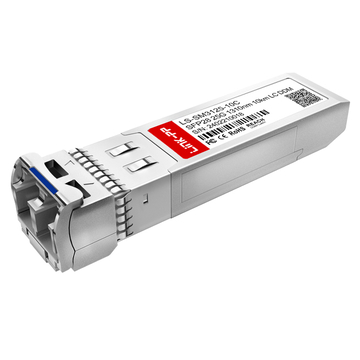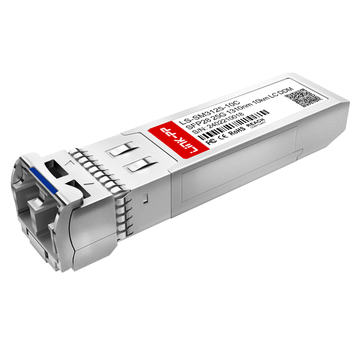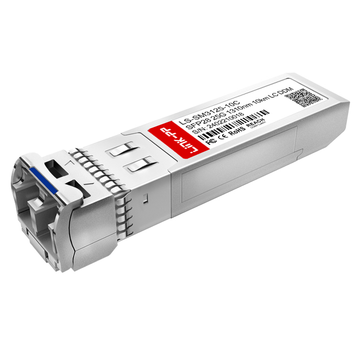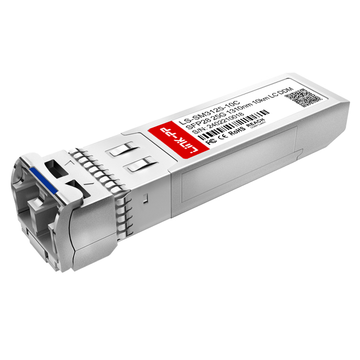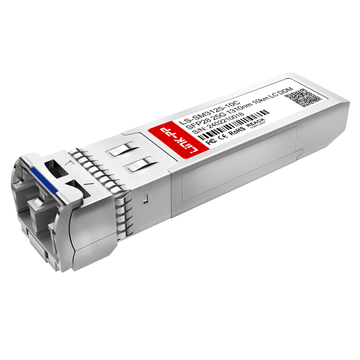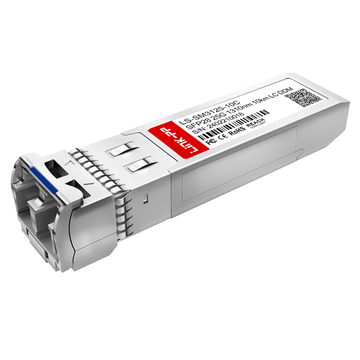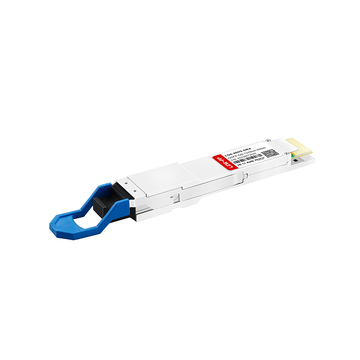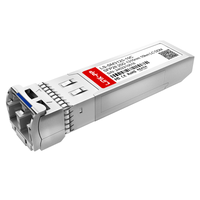






























The UACC-OM-SFP28-LR is Ubiquiti’s official 25GBASE-LR SFP28 optical transceiver, engineered for high-throughput single-mode fiber (SMF) enterprise networks. Operating at a 1310nm wavelength, it delivers a 25.78 Gbps data rate over distances up to 10 kilometers. Compliant with IEEE 802.3cc standards, this module is primarily deployed in UniFi Enterprise XG and Pro Aggregation switches to guarantee native controller integration, precise optical monitoring, and zero-packet-loss backbone connectivity.
As enterprise campus networks and high-density data centers transition from 10G to 25G backbones, selecting the correct optical transceiver is critical for maintaining optical budgets and hardware thermal stability. Upgrading a core network is no longer just about plugging in a cable; it requires precise alignment of fiber types, transceiver specifications, and switch compatibility.
While Ubiquiti provides robust switching infrastructure, network architects frequently evaluate whether the official UACC-OM-SFP28-LR justifies its OEM premium compared to Multi-Source Agreement (MSA) compliant alternatives. Understanding the exact physical layer parameters—such as insertion loss thresholds and Tx/Rx power ranges—is essential before deploying these optics in a 10km Long-Range (LR) topology.
Core Technical Overview
For network engineers building a Bill of Materials (BOM), here are the immediate physical and technical parameters of the UACC-OM-SFP28-LR:
- Standard Compliance: 25GBASE-LR (IEEE 802.3cc)
- Data Rate: 25.78 Gbps (Backward compatible with 10G SFP+)
- Wavelength: 1310nm (Optimized for low attenuation)
- Fiber Requirement: Single-Mode Fiber (SMF) – OS2 core specification highly recommended for 10km runs
- Connector Interface: Dual LC Duplex UPC
- Maximum Distance: 10 km (6.2 miles)
This technical documentation provides an in-depth, data-driven analysis of the UACC-OM-SFP28-LR. In the following sections, we will explore its 10km optical performance metrics, critical thermal management strategies under heavy switch loads, native compatibility with UniFi ecosystems, and a comprehensive procurement comparison between OEM and third-party optics to support your IT purchasing decisions.
⏩ What Is UACC-OM-SFP28-LR Ubiquiti SFP28 Module?
The UACC-OM-SFP28-LR is Ubiquiti’s proprietary 25 Gbps Long-Range (LR) optical transceiver. Utilizing the SFP28 form factor, its primary purpose is to establish high-capacity, low-latency backbone uplinks between enterprise switches. By leveraging a 1310nm laser over Single-Mode Fiber (SMF), it reliably transmits data up to 10 kilometers without signal degradation, making it the standard choice for UniFi-driven campus networks and distributed data centers.
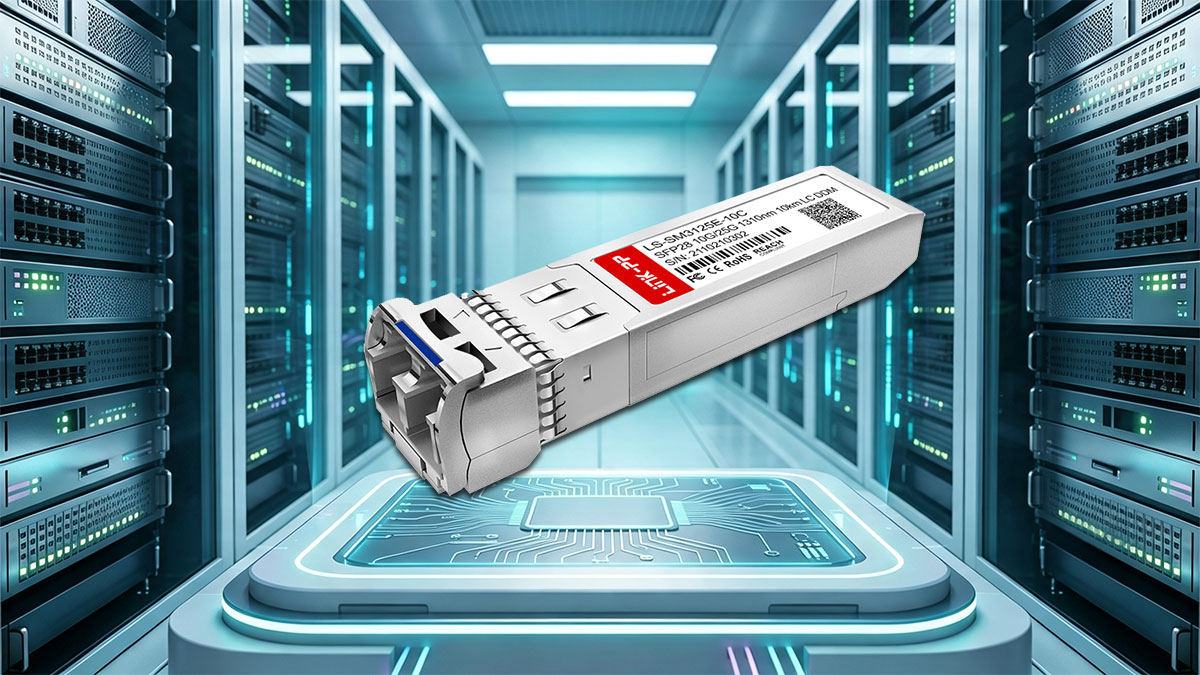
To understand the operational value of the UACC-OM-SFP28-LR, network architects must look beyond basic connectivity and evaluate its role in high-throughput infrastructure. SFP28 (Small Form-factor Pluggable 28) is a direct physical evolution of the widely used 10G SFP+ interface. However, instead of being capped at 10 Gbps, SFP28 hardware processes a single 25 Gbps electrical lane, delivering 2.5 times the bandwidth with a nearly identical physical footprint and similar power draw.
Core Specifications at a Glance
| Specification | Value |
|---|---|
| Form Factor | SFP28 (Hot-Swappable) |
| Ethernet Standard | 25GBASE-LR |
| Supported Data Rates | 1G / 10G / 25G |
| Maximum Throughput | 25.78 Gbps Line Rate |
| Fiber Type | OS2 Single-Mode Fiber (SMF) |
| Maximum Distance | 10 km (6.2 mi) |
| Connector | Duplex LC UPC |
| Operating Wavelength | 1310 nm |
| Transmitter | DFB (Distributed Feedback) Laser |
| Receiver | PIN Photodetector |
| Power Consumption | 1.3 W Max |
| Operating Temperature | 0°C to 70°C |
| Interface Compatibility | SFP, SFP+, SFP28 |
Target Use Case: The Enterprise Backbone
The target use case for the UACC-OM-SFP28-LR revolves around alleviating network bottlenecks at the distribution and core layers. In a typical enterprise deployment, edge switches (providing 1G or 2.5G PoE to access points and workstations) aggregate back to distribution switches.
When multiple distribution switches—such as the UniFi Enterprise XG 24—need to uplink to a core switch like the UniFi Switch Pro Aggregation, a standard 10G link quickly becomes a choke point. The UACC-OM-SFP28-LR facilitates a massive 25G pipe between these network tiers. Furthermore, its 10km range makes it purpose-built for inter-building connectivity, such as linking a university science building back to the central campus data center.
Why It Belongs in a 25G Single-Mode Link Strategy
In modern network architecture, 25G is rapidly replacing 10G as the de facto standard for switch-to-switch and switch-to-server connections. But why choose the LR (Long-Range / Single-Mode) variant over the cheaper SR (Short-Range / Multi-Mode) option?
The decision comes down to future-proofing and modal dispersion. Multi-Mode Fiber (MMF) suffers from modal dispersion at high speeds, strictly limiting 25G SR modules to a maximum distance of 100 meters. By standardizing on a 25G Single-Mode link strategy using the UACC-OM-SFP28-LR and OS2 fiber, IT administrators achieve three critical advantages:
- Distance Flexibility: Whether the switches are 50 meters apart in the same building or 5 kilometers apart across a city, the same OS2 fiber and UACC-OM-SFP28-LR transceivers can be utilized.
- Unlimited Bandwidth Potential: Single-Mode Fiber has virtually no bandwidth ceiling. Deploying SMF now means that when the network eventually upgrades to 100G or 400G, the physical cable plant will not need to be replaced.
- Simplicity in Sparing: Standardizing on a single transceiver SKU (the UACC-OM-SFP28-LR) across the entire campus eliminates the need to stock multiple varieties of SR and LR optics, simplifying procurement and IT inventory management.
⏩ UACC-OM-SFP28-LR 10km Performance Metrics
To guarantee a stable 25 Gbps link over 10 kilometers, the UACC-OM-SFP28-LR operates at a 1310nm wavelength with a Transmitter (Tx) power range of -8.4 to +2.4 dBm and a Receiver (Rx) sensitivity of -13.3 dBm. This establishes an optical power budget capable of easily overcoming the standard 0.4 dB/km attenuation inherent to OS2 single-mode fiber, ensuring zero-packet-loss transmission at maximum range.
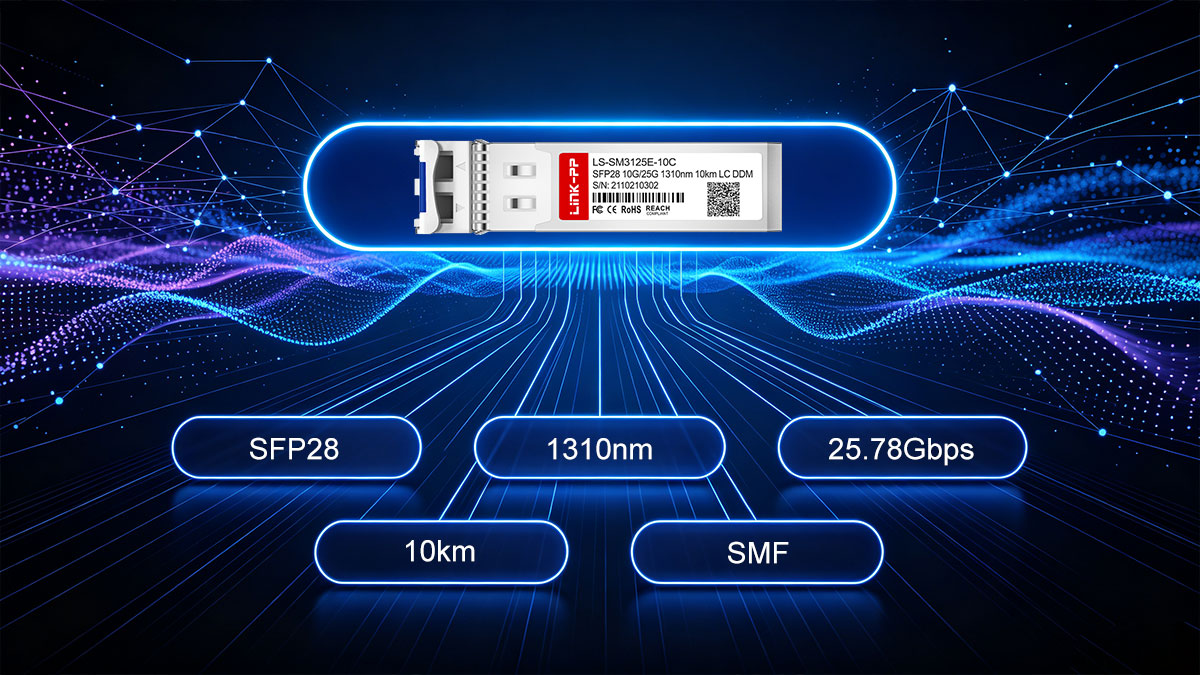
When deploying optical transceivers for long-haul enterprise uplinks, relying solely on the "10km" marketing specification is insufficient for robust network engineering. Real-world performance is dictated by the optical power budget—the difference between the minimum transmit power and the minimum receiver sensitivity. Network architects must calculate this budget against the physical insertion loss of the fiber plant.
Optical Power and Wavelength Parameters
The UACC-OM-SFP28-LR conforms strictly to IEEE 802.3cc 25GBASE-LR standards. Below are the precise optical metrics network engineers must reference when auditing their fiber infrastructure:
| Optical Parameter | Specification | Engineering Implication |
|---|---|---|
| Center Wavelength | 1310 nm | Optimized for zero chromatic dispersion in standard SMF. |
| Tx Output Power | -8.4 to +2.4 dBm | Sufficient launch power to drive the signal without overloading short-distance receivers. |
| Rx Sensitivity (Max) | -13.3 dBm | The minimum signal strength required to maintain link integrity before FEC intervention. |
| Receiver Overload | +2.4 dBm | Prevents photodiode burnout on ultra-short patch runs (under 2 meters). |
Calculating the 10km Optical Budget
To validate the UACC-OM-SFP28-LR for a maximum 10km deployment, we must analyze the physical link loss. Standard OS2 single-mode fiber exhibits an attenuation rate of approximately 0.35 to 0.4 dB per kilometer at the 1310nm wavelength.
- Fiber Attenuation: 10 km × 0.4 dB/km = 4.0 dB loss.
- Connector/Splice Loss: Assuming 4 LC connector pairs (0.2 dB each) and 2 fusion splices (0.1 dB each) = 1.0 dB loss.
- Total Estimated Link Loss: 5.0 dB.
Given the UACC-OM-SFP28-LR’s minimum Tx power (-8.4 dBm) and Rx sensitivity (-13.3 dBm), the module provides a minimum guaranteed optical budget of 4.9 dB. However, typical operational Tx power hovers around -2.0 dBm, providing a functional budget closer to 11 dB. This leaves a comfortable margin for aging fiber infrastructure and micro-bends, ensuring the 10km performance metric is consistently achievable in field deployments.
The Role of RS-FEC in 25G Transmission
Unlike 10G SFP+ modules, 25G transmission introduces a significantly higher risk of signal degradation over distance. To maintain a Bit Error Rate (BER) of less than 10-12 over a 10km SMF run, the UACC-OM-SFP28-LR relies on RS-FEC (Reed-Solomon Forward Error Correction).
Term Definition: RS-FEC is an advanced error-control coding technique implemented at the switch level. It allows the receiving UniFi switch to detect and mathematically correct bit errors induced by optical noise or dispersion without requesting a packet retransmission.
When deploying the UACC-OM-SFP28-LR in third-party switches or mixed environments, administrators must ensure that RS-FEC is enabled on both host ports. Disabling FEC on a 10km 25G link will result in dropped packets, degraded throughput, and frequent link flapping.
⏩ Ubiquiti SFP28 UACC-OM-SFP28-LR Compatibility Performance
The UACC-OM-SFP28-LR guarantees native, plug-and-play compatibility across Ubiquiti’s 25G-capable switching tier, most notably the UniFi Switch Pro Aggregation and UniFi Enterprise XG 24. As an official OEM module, it integrates seamlessly into the UniFi Network Controller to provide accurate Digital Optical Monitoring (DOM) telemetry. Additionally, it features backward compatibility with legacy 10G SFP+ ports, auto-negotiating to 10 Gbps to bridge legacy distribution layers with next-generation 25G cores.
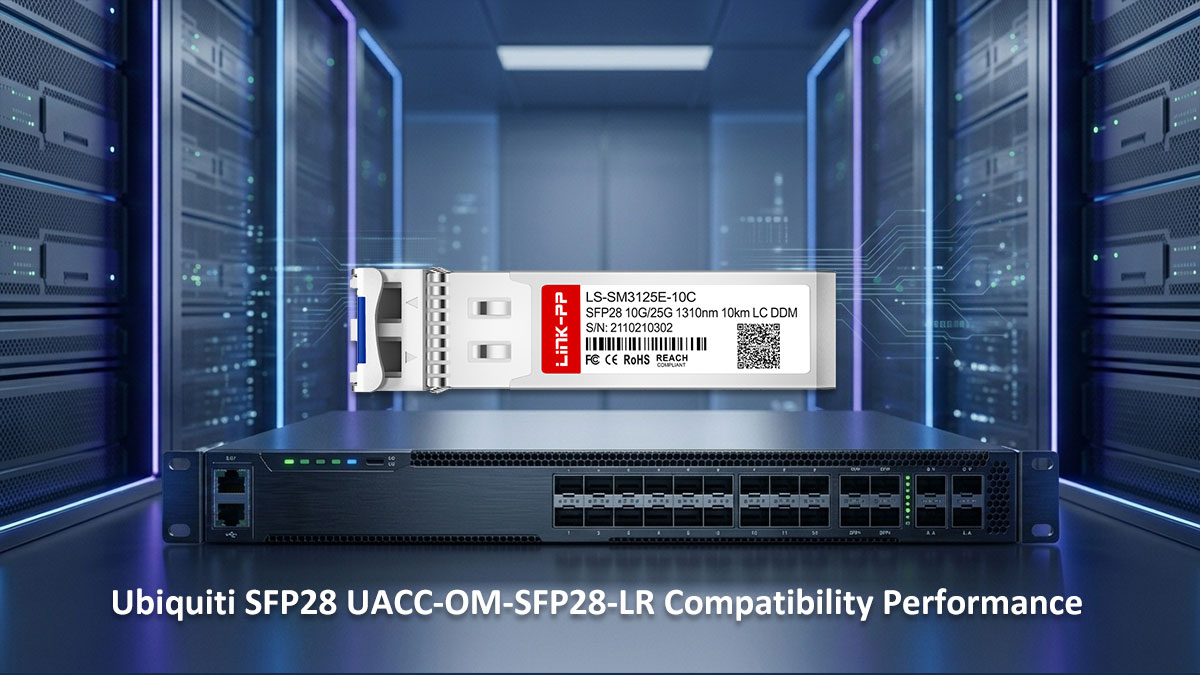
Hardware compatibility is often the primary friction point in optical deployments. Network engineers must ensure that the transceiver not only establishes a physical link but also communicates operational telemetry back to the switch OS. The UACC-OM-SFP28-LR is engineered to eliminate the firmware mismatches and "unsupported transceiver" errors frequently encountered in mixed-vendor environments.
Native UniFi Ecosystem Integration and DOM Telemetry
Deploying official Ubiquiti optics yields significant management advantages within the UniFi OS dashboard. The UACC-OM-SFP28-LR fully supports DOM (Digital Optical Monitoring), also referred to as DDMI (Digital Diagnostics Monitoring Interface).
Term Definition: DOM is an industry-standard feature that allows network administrators to monitor real-time physical layer telemetry—specifically module temperature, operating voltage, laser bias current, and Tx/Rx optical power levels.
When the UACC-OM-SFP28-LR is inserted into a UniFi Pro Aggregation switch, the UniFi Network Controller accurately populates this DOM data. This native integration is critical for remote troubleshooting. If a 10km link begins dropping packets, administrators can instantly view the Rx power levels in the controller to determine if the issue is a degrading fiber patch or a logical software fault, without needing a physical optical power meter.
Backward Compatibility: Bridging 25G and 10G Networks
A common architectural challenge during network upgrades is connecting new 25G core switches to existing 10G infrastructure. The SFP28 form factor is physically identical to the legacy SFP+ interface, allowing for inherent backward compatibility.
- SFP28 to SFP28 (25G to 25G): Full 25.78 Gbps throughput with RS-FEC enabled.
- SFP28 to SFP+ (25G to 10G): The UACC-OM-SFP28-LR can be inserted into a 10G SFP+ port (such as on a UDM-Pro or standard USW-Aggregation). In this scenario, the module dynamically downshifts its clock rate to operate as a standard 10GBASE-LR transceiver.
Engineering Note: While Auto-Negotiation generally handles this downshift smoothly, field deployments indicate that mixed-speed links (25G switch port to 10G switch port) achieve the highest stability when port speeds are statically assigned to 10 Gbps FDX (Full Duplex) within the UniFi Controller, rather than relying on Auto-Negotiate.
MSA Compliance and Cross-Vendor Deployments
While Ubiquiti designs the UACC-OM-SFP28-LR specifically for the UniFi ecosystem, the module complies strictly with the SFF-8402 MSA (Multi-Source Agreement) standard. This means the transceiver utilizes standard I2C EEPROM coding.
From a technical standpoint, this MSA compliance allows the module to establish Layer 1 links with third-party networking equipment (such as MikroTik, Aruba, or FS switches) that do not enforce strict vendor lock-in. However, IT procurement teams should note that Ubiquiti’s Technical Assistance Center (TAC) typically requires both ends of the fiber link to utilize Ubiquiti hardware for official warranty support and advanced troubleshooting.
⏩ 10km Fiber Performance: Single-Mode Fiber, Duplex LC UPC, and Installation Basics
To achieve the maximum 10km range with the UACC-OM-SFP28-LR, deployments must utilize OS2 Single-Mode Fiber (SMF) terminated with Duplex LC UPC connectors. OS2 fiber features a microscopic 9µm core that eliminates modal dispersion, allowing 25G signals to travel vast distances with minimal attenuation. Proper physical layer planning—specifically adhering to blue UPC connector standards and rigorous end-face cleaning—is mandatory to prevent insertion loss from degrading the optical budget.
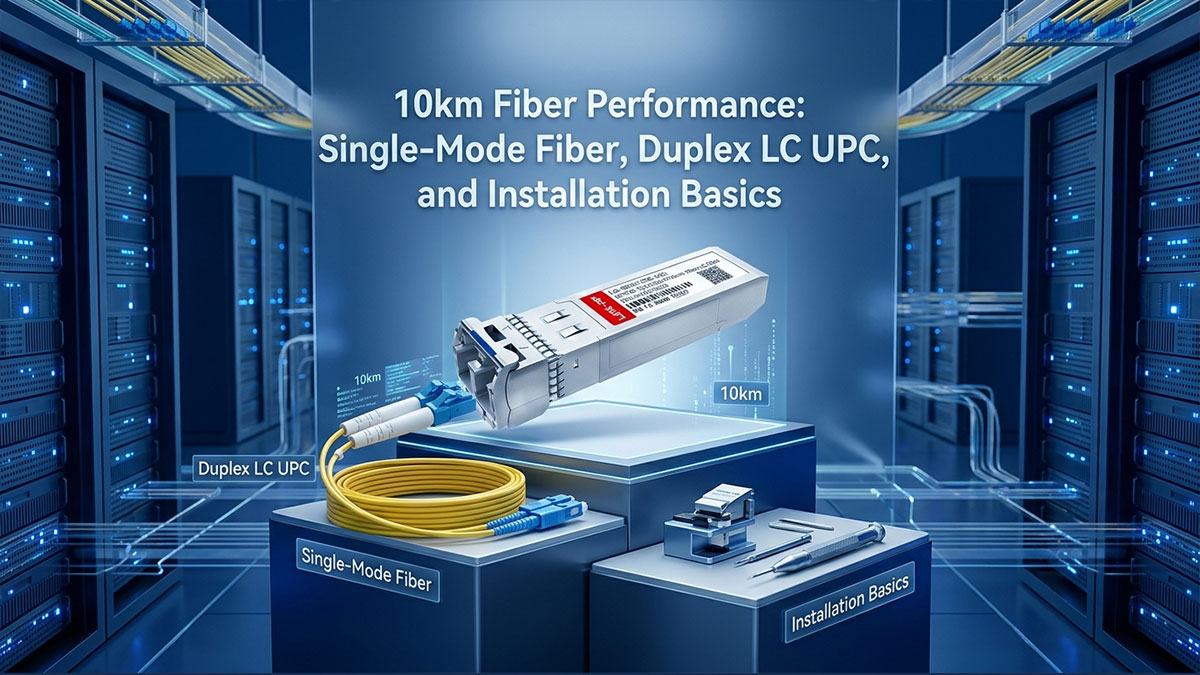
The performance of any 25G optical transceiver is fundamentally limited by the quality of the physical fiber plant. Transmitting data at 25.78 Gbps over 10 kilometers leaves virtually no room for error regarding cable selection, connector geometry, and installation hygiene. Network engineers must align their infrastructure with strict physical layer standards to guarantee stable links.
Why OS2 Single-Mode Fiber is Mandatory
The UACC-OM-SFP28-LR is engineered exclusively for Single-Mode Fiber (SMF), which features a 9/125µm core-to-cladding ratio. Unlike Multi-Mode Fiber (MMF), which allows multiple light modes to bounce down a wider core (causing modal dispersion over distance), SMF propagates a single, focused beam of laser light.
When planning a 10km deployment, administrators must specify OS2 fiber rather than legacy OS1.
- OS1 Fiber: Designed primarily for indoor, tight-buffered applications with a higher attenuation rate (up to 1.0 dB/km). Using OS1 can severely restrict the 10km maximum range.
- OS2 Fiber: Designed for loose-tube, outdoor, and long-haul applications. It offers dramatically lower attenuation (typically 0.35 to 0.4 dB/km at the 1310nm wavelength). OS2 is the industry standard for 25GBASE-LR deployments and guarantees the UACC-OM-SFP28-LR can reach its full 10km potential.
The Connector Format: Duplex LC UPC
The module interface utilizes a Duplex LC UPC connector format. Understanding this terminology is critical for avoiding catastrophic installation errors.
Term Definition: LC (Lucent Connector) is a small form-factor fiber connector that relies on a push-pull latching mechanism. Duplex simply means two parallel fibers are used—one for Transmit (Tx) and one for Receive (Rx).
The most critical specification is UPC (Ultra Physical Contact). UPC connectors feature a flat, machine-polished end-face designed to maximize surface area contact, yielding a return loss of -50dB or better. They are universally color-coded Blue. Network technicians must ensure they are matching the blue LC connectors of their patch cables to the transceiver.
Crucial Engineering Warning: Never insert an APC (Angled Physical Contact, color-coded Green) connector into the UACC-OM-SFP28-LR. APC connectors are polished at an 8-degree angle. Forcing a green APC connector into a flat UPC transceiver will crush the internal laser diode, permanently destroying the Ubiquiti module.
Installation Basics for 25G Long-Range Links
Because the SMF core is only 9 micrometers wide (roughly one-tenth the width of a human hair), even microscopic contaminants will cause massive signal reflection and insertion loss. To pass 25G traffic reliably, adherence to the IEC 61300-3-35 fiber inspection standard is highly recommended.
- Inspect and Clean: "If you don't inspect it, don't connect it." Always use a one-click LC fiber pen cleaner to wipe the connector end-faces immediately before inserting them into the UACC-OM-SFP28-LR.
- Manage Bend Radii: Single-mode fiber is susceptible to macro-bending loss. Ensure patch cables routing from the switch to the fiber distribution panel do not exceed their minimum bend radius (typically 10x the cable's outer diameter for standard cables, or tighter for bend-insensitive ITU-T G.657 fiber).
- Use High-Quality Patch Panels: For 10km runs, the optical budget is tight. Minimize the use of intermediate patch panels and ensure all bulkhead couplers are rated for UPC single-mode performance to keep total link insertion loss below the 5.0 dB threshold.
⏩ OEM UACC-OM-SFP28-LR vs. Third-Party Alternatives Performance Metrics
From a physical layer perspective, high-quality, MSA-compliant third-party 25GBASE-LR modules deliver identical 10km performance to the OEM UACC-OM-SFP28-LR. Because Ubiquiti does not enforce strict vendor lock-in within UniFi switch firmware, properly coded third-party transceivers seamlessly pass 25 Gbps traffic and report accurate DOM telemetry. The primary difference lies in enterprise support: OEM modules guarantee frictionless troubleshooting with Ubiquiti TAC, while third-party optics offer up to 70% cost savings.
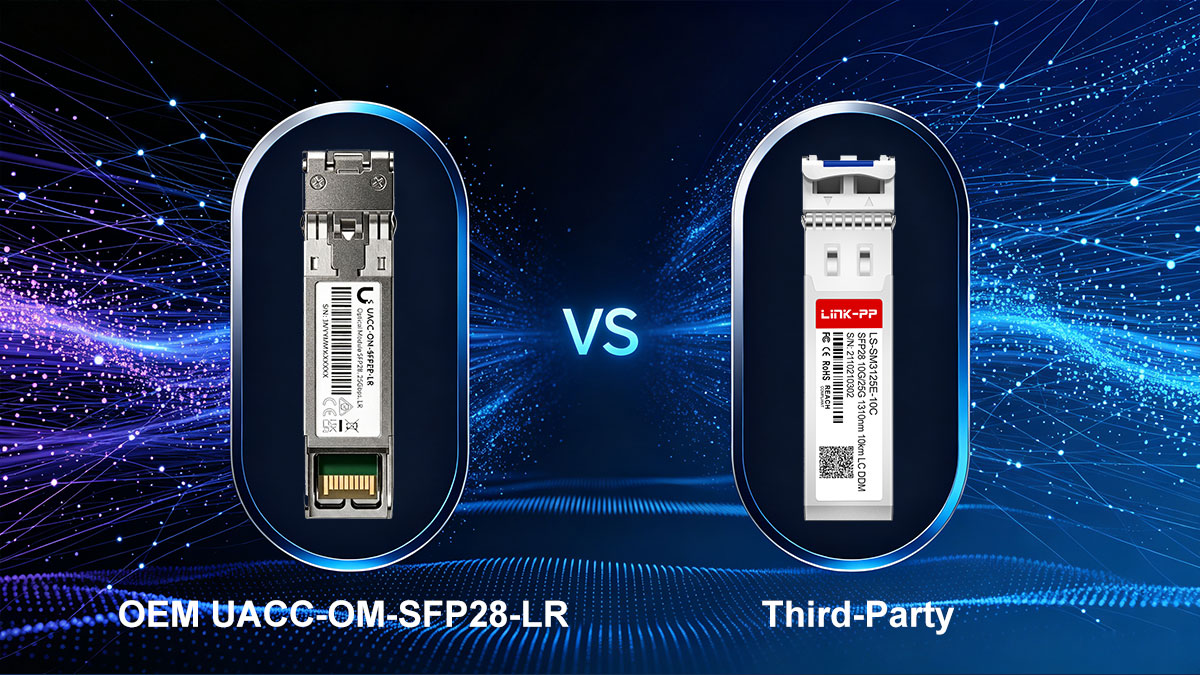
In enterprise IT procurement, optical transceivers often represent a disproportionate percentage of the networking budget. Retailing at approximately $149 per unit, fully populating a 24-port UniFi Enterprise XG or Pro Aggregation switch with official UACC-OM-SFP28-LR modules requires a capital expenditure of over $3,500—often exceeding the cost of the switch itself.
This financial reality forces network architects to evaluate third-party alternatives. By analyzing physical performance metrics, MSA (Multi-Source Agreement) standards, and real-world deployment data, we can objectively compare the OEM module against reputable compatible optics.
Physical Layer Performance Comparison
Optical communication relies on strict physics, not brand names. Both the Ubiquiti UACC-OM-SFP28-LR and premium third-party alternatives (from vendors specializing in Ubiquiti-coded optics) are built using identical underlying technologies: a 1310nm DFB laser, a PIN photodetector, and an I2C EEPROM chip for switch communication.
| Metric | OEM UACC-OM-SFP28-LR | Premium Third-Party (Ubiquiti Coded) |
|---|---|---|
| Data Rate & Range | 25.78 Gbps / 10 km | 25.78 Gbps / 10 km |
| Laser Type | 1310nm DFB | 1310nm DFB |
| DOM / DDMI Support | Native Integration | Fully Supported (if coded correctly) |
| RS-FEC Compatibility | Yes | Yes |
| Estimated Price (Per Unit) | ~$149.00 | ~$40.00 - $55.00 |
The Vendor Lock-in Reality in UniFi Networks
Unlike legacy enterprise vendors (such as Cisco or HPE) that actively disable third-party optics via firmware unless specific bypass commands are executed, Ubiquiti does not enforce strict vendor lock-in at the switch firmware level.
Extensive field data and IT community consensus confirm that as long as a third-party SFP28 module is flashed with standard MSA or specific Ubiquiti EEPROM coding, a UniFi switch will initialize the module, bring the link up, and display the optical Rx/Tx power accurately in the UniFi Network Controller.
Pros & Cons: Decision Support for Procurement
Choosing between OEM and third-party optics is ultimately an exercise in risk management versus budget optimization.
- Pros of OEM (UACC-OM-SFP28-LR): Provides a 100% compatibility guarantee. It acts as an "insurance policy" for mission-critical links. If a 25G backbone drops packets, Ubiquiti’s Technical Assistance Center (TAC) will require official optics to proceed with advanced troubleshooting. Using OEM removes the optic as a variable during support tickets.
- Cons of OEM: High capital cost and occasional supply chain shortages on the official Ubiquiti store.
- Pros of Third-Party Alternatives: Massive cost reduction (saving approximately 66% to 70% per port). High-quality vendors provide lifetime warranties and identical bit-error-rate (BER) performance.
- Cons of Third-Party Alternatives: Potential support friction. If a switch port fails, OEM support engineers may blame the third-party transceiver, requiring the IT team to swap in an official module to prove the switch hardware is at fault.
Engineering Recommendation: For high-stakes enterprise core links where downtime costs thousands of dollars per minute, the $149 OEM premium is justified. However, for SMB deployments, sprawling university campuses, and homelab environments, reputable third-party optics present an identical performance profile that protects the IT budget.
⏩ Thermal Management and Power Consumption in 25G Networks
The UACC-OM-SFP28-LR consumes a maximum of 1.5 Watts per module. Because 25G signaling requires robust Clock and Data Recovery (CDR) circuitry, these transceivers generate significantly more heat than legacy 10G optics. When fully populating high-density switches like the UniFi Pro Aggregation, network administrators must ensure rigorous rack ventilation; exceeding the module's 70°C commercial operating limit will trigger thermal throttling, elevated Bit Error Rates (BER), and premature failure of the DFB laser.
A frequently overlooked aspect of upgrading an enterprise backbone from 10G to 25G is the aggregate thermal load introduced by the optical transceivers. While the SFP28 form factor is physically identical to SFP+, the internal components required to process a 25.78 Gbps electrical lane draw substantially more current.
Power Draw and the 25G Hardware Penalty
Under the SFF-8431 and SFF-8402 Multi-Source Agreements, optical transceivers are classified by power tiers. Standard 10GBASE-LR modules typically consume less than 1.0W. In contrast, the UACC-OM-SFP28-LR operates closer to a 1.2W typical and 1.5W maximum power draw.
While 1.5W may seem trivial in isolation, the engineering challenge scales with port density. Consider the UniFi Switch Pro Aggregation, which features 28 SFP28 ports. Fully populating this chassis with 25G LR optics introduces over 40 Watts of concentrated heat directly at the front bezel of the switch—the exact location where intake fans are attempting to pull cool air over the internal switching ASIC.
The Consequences of Thermal Saturation
The DFB (Distributed Feedback) laser inside the UACC-OM-SFP28-LR is highly sensitive to ambient temperature. The transceiver is rated for a commercial case operating temperature of 0°C to 70°C (32°F to 158°F). If rack cooling is insufficient and the module temperature breaches this threshold, several physical layer failures will occur:
- Wavelength Drift: Excessive heat alters the refractive index of the laser diode, causing the 1310nm signal to drift. This increases attenuation and shrinks the viable 10km optical budget.
- Thermal Throttling & Packet Loss: To prevent catastrophic hardware failure, the switch firmware may throttle the port or the module's RS-FEC capabilities may fail to keep up with the heat-induced bit errors, resulting in dropped packets.
- Premature Component Degradation: Operating optical modules constantly near their 70°C limit drastically reduces their Mean Time Between Failures (MTBF).
Engineering Best Practices for 25G Cooling
To ensure the UACC-OM-SFP28-LR operates at peak performance, IT administrators must implement proactive thermal management strategies:
- Monitor DOM Temperatures: Utilize the UniFi Network Controller to actively monitor the Digital Optical Monitoring (DOM) temperature feeds. Set alerts if average module temperatures consistently exceed 60°C.
- Strict Hot/Cold Aisle Containment: Ensure the server rack has a steady supply of conditioned air at the front intake. Do not mount the UniFi Enterprise XG or Pro Aggregation switches directly above high-heat-generating appliances like SANs or heavy compute nodes without 1U blanking panels in between.
- Strategic Use of DAC Cables: Micro-definition: A DAC (Direct Attach Copper) cable is a twinax copper cable with permanently attached SFP28 ends used for ultra-short runs. For in-rack switch-to-server connections under 3 meters, do not use optical modules. Instead, deploy 25G DAC cables, which consume less than 0.1W of power and generate zero heat, drastically reducing the overall thermal load on the switch.
⏩ Conclusion: Is UACC-OM-SFP28-LR the Right Choice for My Network?
The UACC-OM-SFP28-LR is the definitive choice for network architects who require strict OEM compliance, guaranteed UniFi ecosystem integration, and zero-friction TAC support for their 25GBASE-LR 10km backbones. However, for enterprise deployments, sprawling campus networks, and high-density data centers looking to optimize their IT procurement budgets, premium MSA-compliant third-party alternatives provide identical physical layer performance and DOM telemetry at a significantly reduced cost.
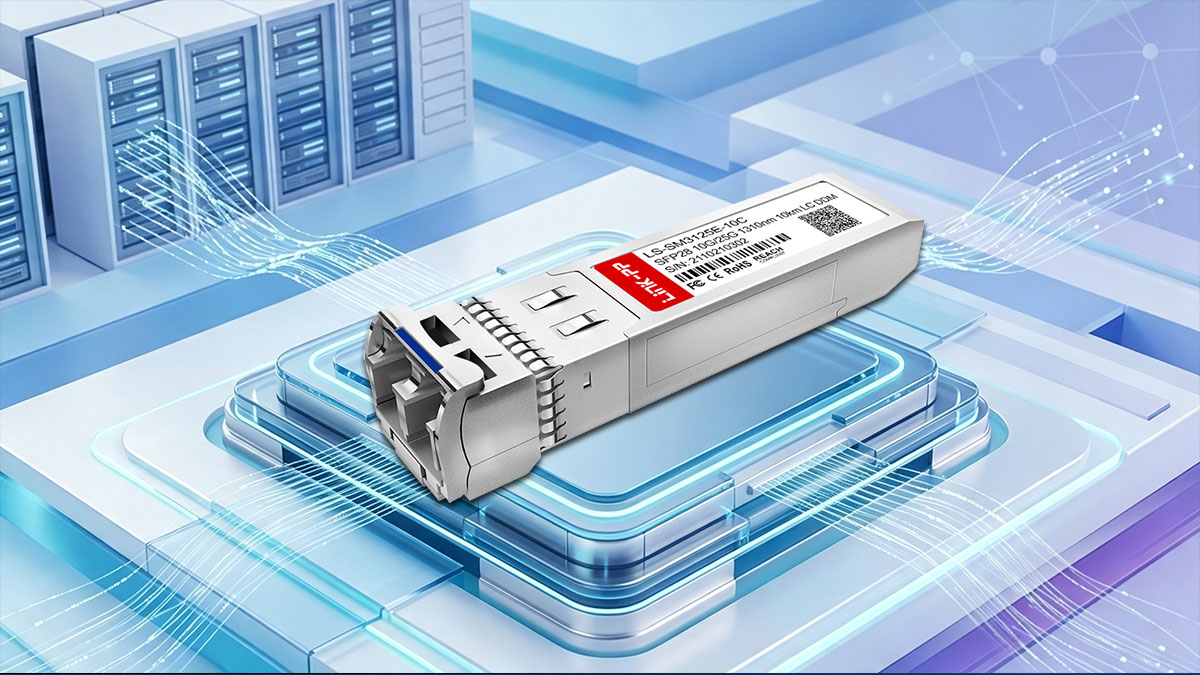
Transitioning a core network to 25 Gbps is a major architectural milestone. As outlined in this technical documentation, the physical parameters of the UACC-OM-SFP28-LR—specifically its 1310nm DFB laser, robust optical power budget, and RS-FEC compatibility—make it highly capable of driving zero-packet-loss traffic across 10 kilometers of OS2 single-mode fiber.
Final Procurement Recommendations
Ultimately, the decision to specify the OEM Ubiquiti module versus a compatible alternative comes down to your organization's risk tolerance and capital expenditure limits. Network engineers should base their Bill of Materials (BOM) on the following deployment profiles:
- Deploy OEM Optics When: Your enterprise enforces a strict "no third-party hardware" policy. If the cost of network downtime far exceeds the $149 per-module premium, utilizing the official UACC-OM-SFP28-LR ensures that Ubiquiti’s Technical Assistance Center (TAC) will provide immediate, frictionless support without blaming the physical layer.
- Deploy Compatible Optics When: You are outfitting high-density aggregation layers (such as fully populating a 28-port UniFi Switch Pro Aggregation). In these scenarios, the cost of OEM optics can easily eclipse the cost of the switch hardware. Utilizing correctly coded, MSA-compliant alternatives allows IT teams to allocate those massive budget savings toward additional switching capacity or redundant fiber runs.
Scale Your 25G Backbone Intelligently
When engineering a 25G single-mode backbone, hardware reliability should never be sacrificed for budget. Fortunately, because Ubiquiti switches embrace standard Multi-Source Agreement (MSA) protocols, you do not have to choose between performance and price. You can achieve the exact same 25.78 Gbps throughput, thermal stability, and native UniFi Controller telemetry using premium compatible optics.
If you are ready to upgrade your network backbone and optimize your IT procurement strategy, visit the LINK-PP Official Store for Compatible UACC-OM-SFP28-LR. Secure high-performance, fully tested 25G transceivers engineered for seamless UniFi integration, ensuring your network scales flawlessly while keeping your capital expenditure strictly in check.