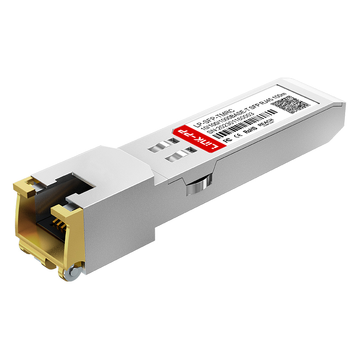
In modern enterprise networking, seamless hardware integration is the backbone of operational efficiency. The R9D17A — HPE Aruba’s official 1000BASE-T RJ45 copper SFP transceiver — serves as a critical bridge for organizations looking to extend their fiber-centric switch ports to standard copper patch cabling. Whether scaling edge deployments, connecting high-density stacks, or optimizing local workstations, this compact module plays a vital role in delivering reliable Gigabit Ethernet connectivity across diverse Aruba Instant On and AOS-CX hardware environments.
However, building and maintaining a robust network infrastructure often comes with distinct deployment challenges. While the OEM R9D17A guarantees flawless plug-and-play compatibility and stringent thermal performance, network engineers and IT procurement teams frequently face supply chain bottlenecks and high price-per-port costs. This article provides a comprehensive technical breakdown of the R9D17A’s specifications, cabling limits, and troubleshooting workflows, while also exploring the high-quality, MSA-compliant third-party compatible alternative that delivers the same enterprise-grade performance at a fraction of the cost.
💥 R9D17A Copper SFP Module Overview and Specifications
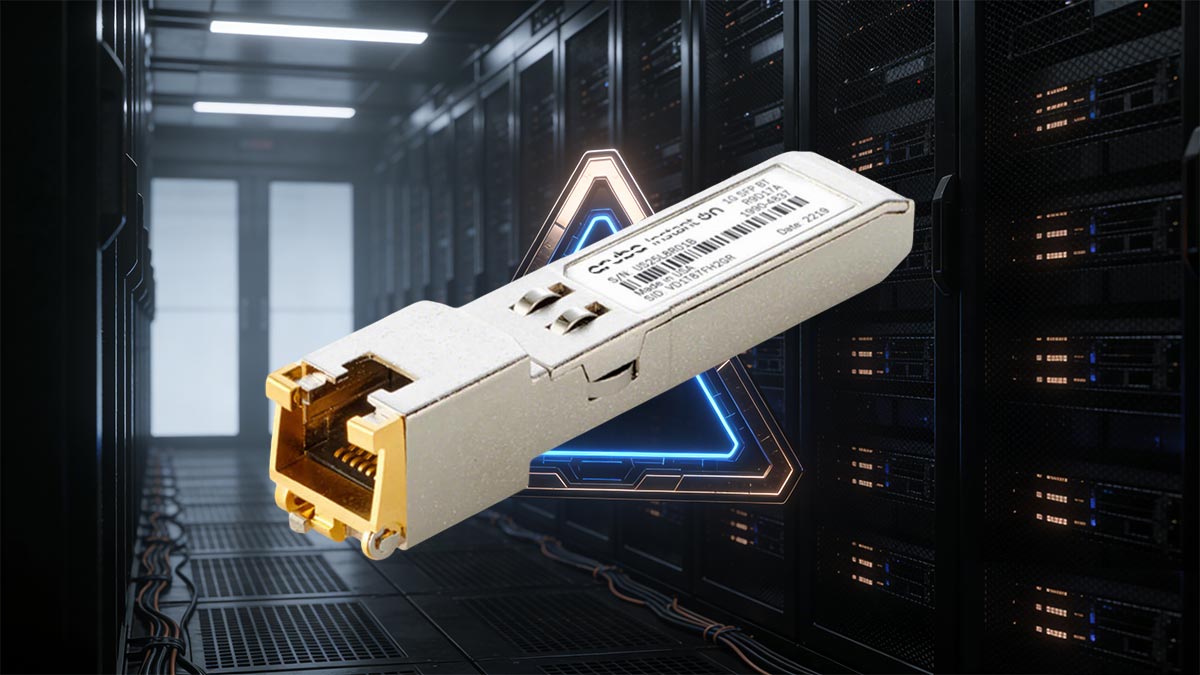
The R9D17A is a high-performance, hot-pluggable copper SFP transceiver designed specifically for Gigabit RJ45 Ethernet communication over existing copper cabling infrastructures. Engineered to meet the rigorous standards of HPE Aruba networking systems, this module seamlessly converts an fiber SFP port into a fully functional 10/100/1000BASE-T copper interface. It serves as an essential component for network administrators seeking to maximize hardware versatility without sacrificing transmission reliability.
Hardware Architecture of the 1000BASE-T SFP
At the core of the R9D17A hardware architecture is an advanced Integrated Circuit (IC) physical layer transceiver (PHY) and a highly integrated microprocessor. The PHY chip is responsible for translating the digital serialized data from the switch's host SFP interface into analog signals suitable for twisted-pair copper transmission. It features state-of-the-art digital signal processing (DSP) to handle echo cancellation, cross-talk reduction, and equalization, ensuring signal integrity even over maximum cable runs.
Housed within a robust, compact metal casing designed for low electromagnetic interference (EMI), the module also includes a non-volatile EEPROM. This EEPROM contains crucial vendor-specific identification codes, serial numbers, and configuration data that allow the host Aruba switch to instantaneously recognize and initialize the transceiver. The physical design complies strictly with the SFP Multi-Source Agreement (MSA), guaranteeing precise mechanical dimensions and reliable electrical contact points.
Interface and Physical Link Standards
The R9D17A is designed to bridge two distinct physical link standards, acting as an intermediary between the host switch's SFP cage and the local area network. On the host side, it utilizes a standard 20-pin gold-finger connector that interfaces with the switch's serial SerDes (Serializer/Deserializer). On the line side, the transceiver features a heavy-duty, standard RJ45 female connector designed to accept standard category copper patch cords.
To ensure global interoperability, the R9D17A strictly adheres to the IEEE 802.3ab standard for 1000BASE-T Gigabit Ethernet over copper. Additionally, it supports IEEE 802.3u (100BASE-TX) and IEEE 802.3 (10BASE-T) backward compatibility. This compliance guarantees that the module can seamlessly communicate with any standard-compliant network interface card (NIC) or switch port on the opposite end of the physical link.
Power Consumption and Thermal Dissipation Limits
One of the most critical considerations for dense switch deployments is the power and thermal profile of copper SFP modules. Because translating optical serial signals to twisted-pair copper signals requires significant digital signal processing, copper SFPs naturally generate more heat than their optical counterparts. The R9D17A copper SFP is optimized to operate efficiently within a standard power envelope, typically consuming under 1.0 Watt of power during active, full-duplex gigabit transmission.
To prevent localized overheating within high-density switch stacks, the module is engineered with a thermal-efficient zinc alloy housing that facilitates rapid heat dissipation. It is rated to operate safely within standard commercial temperature ranges (typically 0°C to 70°C). Keeping power consumption low not only reduces the overall thermal load on the host switch's power supply but also prevents thermal throttling, ensuring long-term hardware reliability in demanding enterprise environments.
Target Network Deployments and Edge Applications
The R9D17A is primarily targeted at enterprise edge access layers, small-to-medium business (SMB) networks, and distributed branch offices. In these environments, the module is frequently deployed to connect downstream devices — such as wireless access points, IP surveillance cameras, VoIP phones, and local workstations — directly to an Aruba core or distribution switch that lacks native RJ45 ports.
Additionally, it is highly utilized in server room top-of-rack (ToR) patching and localized cross-connects where distances between switches, storage area networks (SANs), and servers are under 100m. By utilizing the R9D17A copper 1G SFP, network architects can avoid the high costs of optical fiber patch cords and transceivers, leveraging their existing, cost-effective Category 5e or Category 6 copper cabling infrastructure at the network edge.
💥 Transmission Parameters and Cabling Limits of R9D17A
The physical performance of the R9D17A SFP transceiver is governed by strict transmission standards that dictate its distance, speed, and signal integrity boundaries over copper media. Understanding these parameters is essential for network engineers to prevent signal degradation, packet loss, or link instability in enterprise environments.
Maximum Link Distance and Media Requirements
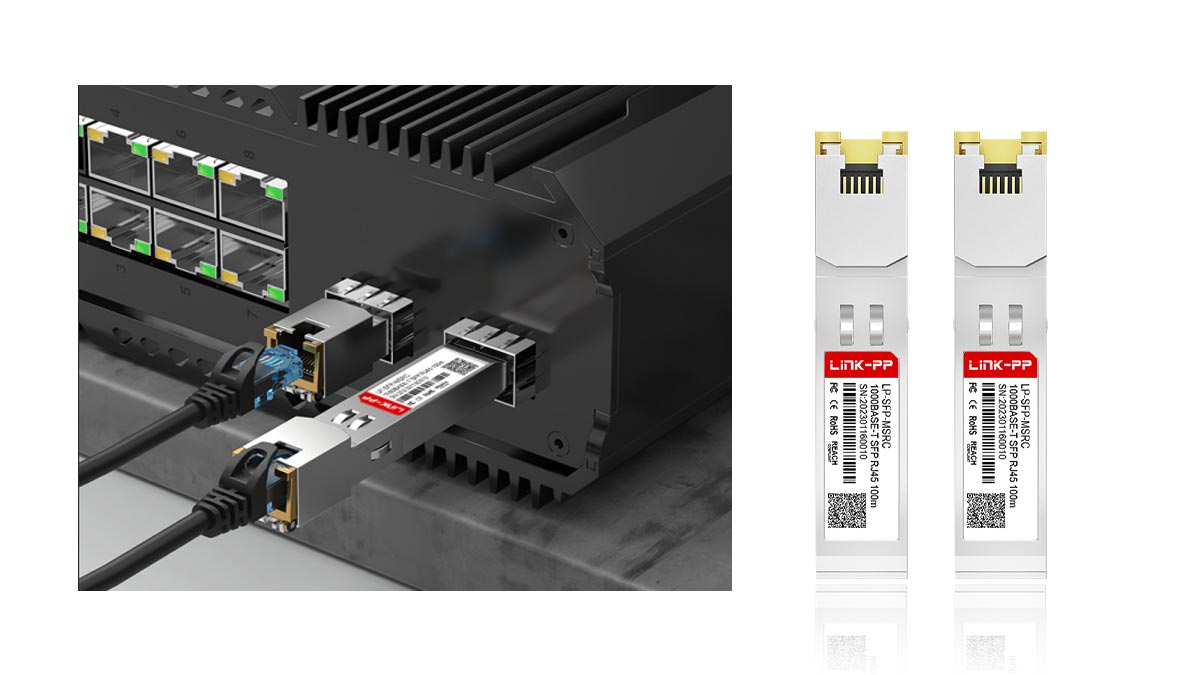
The R9D17A copper SFP module is engineered to transmit high-speed data over balanced twisted-pair copper cabling. To maintain compliance with Gigabit Ethernet standards, the module requires Category 5e (Cat5e) or Category 6 (Cat6/Cat6a) copper cabling. Using sub-standard or degraded cabling can result in packet retransmissions, link drops, or a forced downgrade in connection speed.
In terms of maximum reach, the physical layer transceiver (PHY) is optimized to drive signals across a standard copper run of up to 100m (328 feet). This distance limitation includes the combined length of the solid horizontal cabling and the stranded patch cords at both ends of the link.
The following table provides a quick reference for the supported cable categories, maximum transmission distances, and bandwidth capabilities when deploying the R9D17A 1G SFP:
| Cable Category | Maximum Supported Distance | Maximum Bandwidth | Best Use Case |
| Category 5e (Cat5e) | 100m | 100MHz | Standard Gigabit edge-to-switch connections |
| Category 6 (Cat6) | 100m | 250MHz | High-density stacks and reduced crosstalk environments |
| Category 6A (Cat6A) | 100m | 500MHz | Future-proofed edge links with superior EMI shielding |
Line Speed and Auto-Negotiation Settings
The R9D17A features a highly adaptable PHY that supports triple-speed auto-negotiation, conforming to the IEEE 802.3 standard. This allows the transceiver to automatically negotiate and establish a link at 10Mbps (10BASE-T), 100Mbps (100BASE-TX), or 1000Mbps (1000BASE-T) depending on the capabilities of the connected end-device. Auto-negotiation occurs during the initial physical-layer handshake, where the two connected interfaces exchange "Fast Link Pulses" (FLPs) to agree on the highest mutually supported speed and duplex mode.
In enterprise deployments, leaving both the Aruba switch port and the downstream device set to auto-negotiate is highly recommended to prevent duplex mismatches. However, if manual configuration is required for legacy systems, network administrators can use the Aruba AOS-CX CLI to hardcode speed and duplex settings. It is critical to note that while 10Mbps and 100Mbps can be forced to half-duplex or full-duplex, the Gigabit (1000Mbps) standard mandates auto-negotiation for proper clock synchronization (Master/Slave determination) between the physical interfaces.
Electromagnetic Compatibility (EMC) and Shielding Standards
Operating in dense IT environments exposes network hardware to various levels of electromagnetic interference (EMI) and radio frequency interference (RFI). The R9D17A is designed with a fully enclosed, gold-plated zinc alloy housing that provides superior shielding against external electromagnetic fields. This robust shielding prevents the module from emitting disruptive radiation and protects the sensitive internal circuitry from being influenced by neighboring electronics.
To achieve maximum protection against EMI, the R9D17A's RJ45 port features integrated grounding tabs that make direct contact with the shielding of STP (Shielded Twisted Pair) or FTP (Foiled Twisted Pair) patch cables. When properly grounded through the switch chassis, this shielding mechanism safely dissipates electrostatic discharges (ESD) and high-frequency noise. The transceiver is certified under major international EMC standards, including FCC Part 15 Class B and CE Mark, ensuring safe and quiet operation within commercial enterprise environments.
Port Latency and Bit Error Rate (BER) Characteristics
Because copper SFP modules must actively translate serialized digital signals from the host backplane into analog voltages for copper twisted-pairs, they introduce a small amount of propagation delay, known as port latency. The R9D17A contains a high-efficiency DSP that minimizes this latency to sub-microsecond levels. While slightly higher than the near-zero latency of DAC cables or fiber optics, the physical transceiver latency of the R9D17A remains virtually imperceptible for standard enterprise applications, VoIP, and video streaming.
In addition to low latency, the internal digital signal processor features advanced forward error correction (FEC) and adaptive equalization. These algorithms constantly analyze the incoming analog wave, compensating for signal attenuation, high-frequency roll-off, and crosstalk. Thanks to these active compensations, the R9D17A consistently maintains an exceptionally low Bit Error Rate (BER) of less than 10⁻¹² under standard operating conditions. This means less than one corrupted bit is transmitted for every one trillion bits processed, ensuring highly reliable data delivery.
💥 Switch Compatibility and Software Support for R9D17A
Within the HPE Aruba ecosystem, the R9D17A transceiver requires strict alignment with supported hardware models, precise CLI commands, and defined port-grouping policies. Aruba switches utilize intelligent operating systems that actively validate connected transceivers to ensure stable performance and prevent hardware conflicts. Ensuring your infrastructure meets these specific technical requirements is essential for a successful, stable deployment.
Compatible Aruba Instant On and AOS-CX Hardware Models
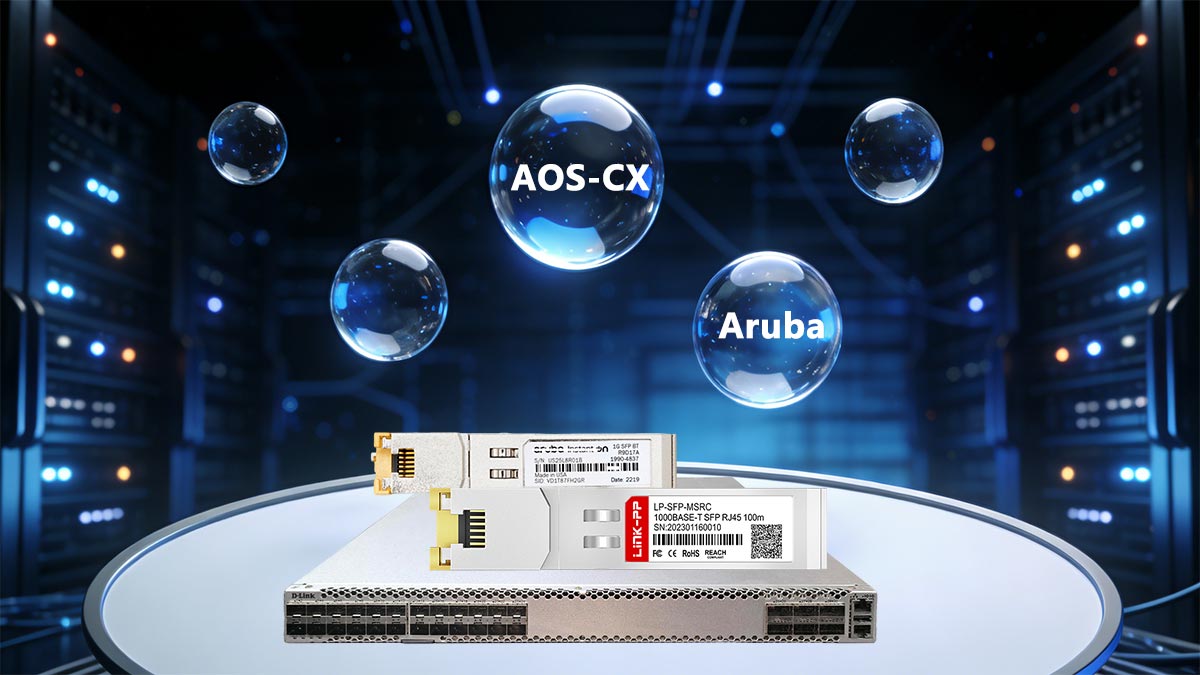
The R9D17A copper SFP module is engineered for broad compatibility across HPE Aruba's primary product lines. It is designed to work seamlessly in both small-business environments managed by the Instant On series and complex enterprise networks running the modular AOS-CX platform.
When planning your deployment, the module is officially supported across several major hardware families:
- Aruba Instant On Switch Series: The transceiver is fully compatible with the SFP uplink ports on popular smart-managed switches, including the Instant On 1930 and 1960 series. It allows small-to-medium businesses to easily convert their remaining SFP fiber uplinks into gigabit copper ports for local server patching.
- ArubaOS-CX (AOS-CX) Enterprise Series: For campus and data center environments, the R9D17A is supported on mainline enterprise switches. This includes the highly versatile Aruba 6000, 6100, and 6200F/M access switch series, as well as the high-performance Aruba 6300M/Y series where flexible uplink and stacking ports are required.
- AOS-CX Aggregation and Core Series: In more demanding layouts, the module can be deployed in the SFP+ or SFP28 slots of the Aruba 6400 modular chassis line cards and the Aruba 8100/8360 series switches, provided the port policies allow 1G speed configurations.
Port Configuration and Command Line (CLI) Identification
Once plugged into an Aruba switch, the R9D17A goes through an automatic initialization process. Network administrators can easily verify the transceiver's status and read its hardware information using standard Command Line Interface (CLI) commands. Running show interface transceiver in the CLI will immediately confirm if the switch recognizes the module as a valid R9D17A SFP.
For deeper troubleshooting, the command show interface transceiver detail can be used to read the module's internal EEPROM. This command displays important manufacturing details, such as the serial number, vendor name, and operating temperature. Additionally, if you are using a third-party compatible module instead of the original HPE hardware, the command allow-unsupported-transceiver can be configured globally to ensure the switch port remains enabled and fully operational.
SFP Port Grouping and Speed Negotiation Policies
On many Aruba switches, SFP slots are grouped in blocks that share an internal controller. Because the R9D17A is a 1G transceiver, inserting it into a high-speed (10G or 25G) slot can sometimes affect the other ports in that same group. Depending on the switch model, configuring one port to 1G speed might require all other ports in that group to run at the same speed, or it could temporarily disable the remaining slots.
Additionally, when you plug the 1G R9D17A into a 10G SFP+ port, the switch might not automatically adjust its speed. In this case, network administrators must manually log into the switch CLI and set the port speed to 1000 Mbps. Making sure both ends of the cable are set to auto-negotiation or matched manually is key to preventing speed mismatches and packet loss.
💥 Installation and Hardware Integration of R9D17A
For a successful physical deployment, the installation and cable management of the R9D17A transceiver must follow strict hardware integration protocols. Because copper SFP modules generate higher thermal loads and carry heavier cabling than optical transceivers, proper physical handling is essential. Adhering to standardized procedures for hot-swapping, RJ45 connection security, cable strain relief, and heat dissipation directly prevents physical port damage and long-term signal degradation.
Hot-Swapping Protocols and Safe Insertion/Removal
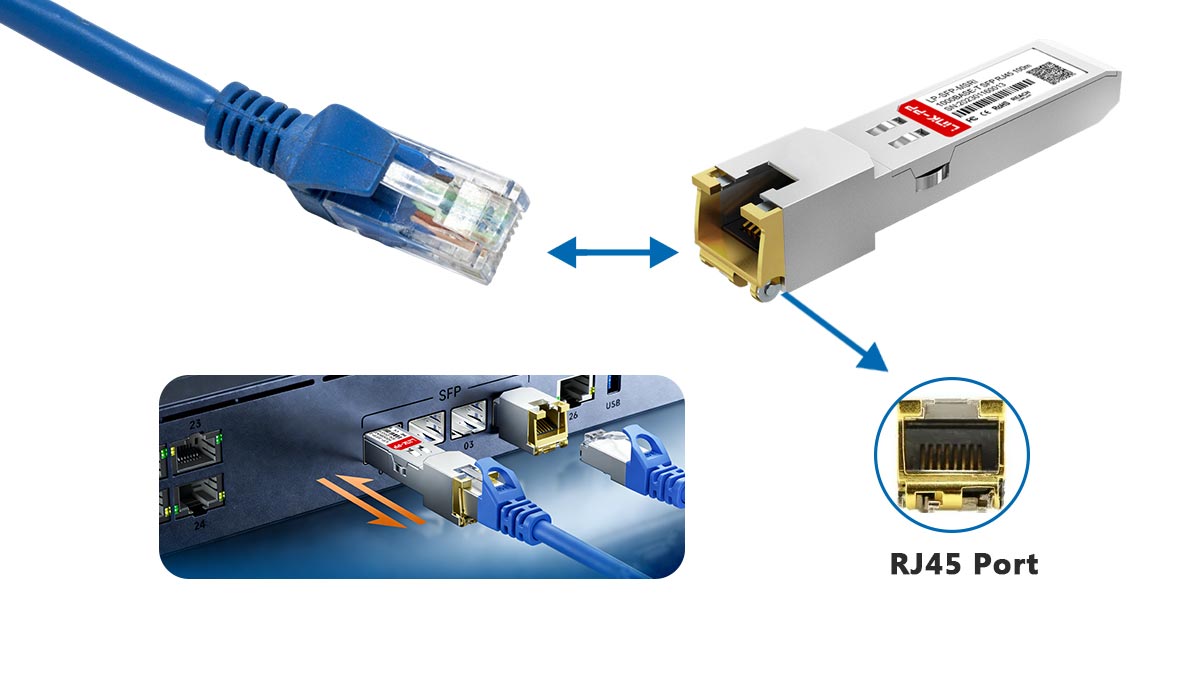
The R9D17A is designed to support hot-swapping, allowing network administrators to plug in or remove the transceiver without shutting down the host Aruba switch. This capability minimizes network downtime during upgrades or maintenance, but it requires careful physical handling to prevent electrical damage.
To ensure a safe installation and removal process, technicians should follow these structured steps:
- Electrostatic Discharge (ESD) Protection: Always wear a grounded ESD wrist strap before handling the transceiver. Sensitive internal circuits of the R9D17A can easily be damaged by static electricity, so avoiding direct contact with the gold-finger contacts on the back of the module is highly recommended.
- Proper Alignment and Insertion: Align the R9D17A with the target SFP port slot on the switch. Slide the module gently into the slot until you feel it click into place, which indicates that the internal connector has fully seated with the switch's backplane. Never force the transceiver; if there is resistance, check for debris or port misalignment.
- Safe Extraction and Removal: Before pulling the module out, always disconnect the RJ45 copper patch cable first. Next, locate the bale-clasp latch mechanism on the front of the R9D17A, pull it downward to release the internal lock, and then gently slide the transceiver out of the slot.
RJ45 Copper Patch Cord Insertion and Latch Mechanism
The physical link between the R9D17A and the local area network relies on a standard RJ45 connection. Ensuring a secure latch between the transceiver and the patch cable is vital to prevent intermittent connections or accidental physical link-down events caused by cable movement.
When inserting the RJ45 copper patch cord into the R9D17A, push the connector firmly into the port until you hear a distinct "click" from the plastic retention tab of the RJ45 plug. This click indicates that the latch mechanism has successfully engaged with the inner recess of the transceiver housing, locking the cable in place. To remove the patch cord, simply press down on the plastic release tab of the connector and pull the cable straight out, ensuring that you do not pull on the boot or the cable itself, which could stretch the copper wires.
Cable Strain Relief and Bend Radius Compliance
Copper Ethernet cables are significantly heavier and less flexible than fiber optic patch cords. When multiple R9D17A modules are deployed close together, the weight of the accumulated copper cabling can put mechanical stress on the SFP ports, potentially damaging the internal contacts of the switch cage over time.
To maintain structural integrity and optimize signal transmission, engineers must prioritize the following cabling guidelines:
- Implementing Cable Strain Relief: Utilize horizontal cable managers, lacing bars, or Velcro straps within the server rack to support the weight of the copper patch cables. Providing this structural support prevents the cables from pulling downward on the R9D17A RJ45 ports.
- Maintaining Minimum Bend Radius: Avoid sharp bends or kinks in the copper cables near the transceiver connection. For standard Category 6 cabling, a minimum bend radius of four times the outer cable diameter must be maintained to prevent signal degradation, near-end crosstalk (NEXT), and physical damage to the internal twisted copper pairs.
Port Heat Dissipation in Stacked Switch Deployments
Copper SFP modules run considerably warmer than optical modules because the physical layer transceiver (PHY) within the copper SFP requires extra power to drive electrical signals over twisted-pair cabling. When deploying multiple R9D17A modules in stacked switch environments or high-density patch configurations, managing heat dissipation becomes a key operational priority.
To prevent the switch chassis from overheating and to keep port temperatures within safe operating limits, it is highly recommended to avoid grouping copper SFPs directly adjacent to one another. Whenever possible, distribute the R9D17A modules across different port banks or alternate them with empty slots or low-heat fiber optic transceivers. Ensuring that the rack has proper horizontal airflow and that the switch's internal cooling fans are functioning optimally will prevent thermal throttling and extend the lifespan of both the transceivers and the host switch.
💥 Diagnostics and Troubleshooting for R9D17A Ports
When network issues arise, quick diagnostic workflows are essential to minimize downtime. Troubleshooting the R9D17A copper SFP port involves isolating physical layer faults, reading hardware telemetry, and correcting speed mismatches. By following structured testing steps and utilizing built-in switch diagnostics, network administrators can rapidly restore stable connectivity.
Performing Link Status and Cable Integrity Tests
The first step in troubleshooting a non-functional R9D17A port is to run basic link status and cable integrity tests. If the physical link is down, technicians should verify that both ends of the cable are plugged in securely and check the status using the switch interface. For a deeper check, modern Aruba switches feature built-in Time Domain Reflectometry (TDR) diagnostic tools.
By running a TDR cable test from the switch CLI, you can pinpoint the exact location of a copper cable failure, such as an open circuit, short circuit, or impedance mismatch. This diagnostic test sends electrical pulses down the Cat5e/Cat6 wire and measures the reflections, telling you precisely how many meters down the cable the break is located. This prevents technicians from wasting time swapping out the R9D17A module when the actual culprit is a damaged wall jack or patch cord.
Monitoring SFP Module Temperature and Voltage Levels
Unlike optical transceiver modules, the R9D17A copper SFP module does not support Digital Optical Monitoring (DOM) or Digital Diagnostics Monitoring (DDM). Because the module lacks these internal diagnostic sensors, running commands like show interface transceiver detail on the host Aruba switch will not display real-time operating temperature or voltage levels for this port.
To monitor thermal and power safety, network administrators must rely on the host switch's internal environmental sensors. Monitoring the overall chassis temperature and power supply unit (PSU) status through the switch CLI provides the necessary baseline to ensure the copper module is operating within a safe ambient environment and not causing localized overheating.
Identifying and Resolving Common Link Negotiation Failures
One of the most frequent issues with copper SFPs is a link negotiation failure, where the R9D17A and the connected end-device fail to agree on a speed or duplex mode. This typically shows up as a "link down" status or causes the connection to cycle up and down repeatedly.
To resolve negotiation failures, ensure that both the Aruba switch port and the downstream device are set to auto-negotiate. If you are connecting to a legacy device that requires a hardcoded speed, manually configure both sides to identical speed and duplex settings. Avoid "half-duplex" configurations whenever possible, as a duplex mismatch (one side auto and the other side forced full-duplex) will cause severe packet loss, late collisions, and sluggish network performance.
Interpreting Port Error Counters and Logs for Fault Isolation
When a link is up but performing poorly, the switch’s port error counters are invaluable for isolating the fault. Administrators should monitor the interface statistics for accumulating errors such as Cyclic Redundancy Check (CRC) errors, runts, giants, or alignment errors.
An accumulation of CRC errors is a classic sign of physical layer issues, such as electromagnetic interference, a damaged RJ45 connector, or a cable running too close to high-voltage power lines. If the error counters continue to climb rapidly under load, try replacing the patch cord first. If the errors persist across different cables, the issue may lie with a damaged R9D17A RJ45 port contact or a failing transceiver chip, indicating it is time to swap the module.
💥 Procurement Challenges and Cost Factors of OEM R9D17A
Acquiring original equipment manufacturer (OEM) R9D17A transceivers introduces significant budgetary and logistical hurdles for IT departments. While sourcing branded HPE Aruba hardware guarantees compatibility, it comes with a steep price premium and potential delivery delays. Navigating these procurement challenges requires a clear understanding of OEM pricing structures, supply chain dynamics, and industry standardization.

Price-per-Port Analysis of OEM Transceiver Hardware
Purchasing genuine OEM R9D17A modules carries a high price-per-port cost that can quickly inflate overall networking budgets. Branded transceivers are often priced multiple times higher than identical functional equivalents simply due to the manufacturer's logo and bundled support. When scaling edge deployments across dozens of switches, this cost premium accumulates rapidly, forcing budget-conscious network planners to carefully weigh the financial impact of buying exclusively OEM hardware versus more economical third-party compatible alternatives.
Supply Chain Lead Times and Inventory Constraints
Sourcing original R9D17A modules from official channels can easily disrupt tight project timelines due to unpredictable delivery schedules. When a network switch fails or an emergency expansion is needed, waiting weeks for official OEM stock to arrive is simply not an option. This supply chain unpredictability forces IT teams to tie up valuable budget by purchasing and storing extra R9D17A modules in advance as "safety stock" just to avoid potential downtime, highlighting the operational need for more readily available, immediate sourcing alternatives.
Understanding Multi-Source Agreement (MSA) Standardization
The Multi-Source Agreement (MSA) is an industry-wide standard that defines the physical dimensions, electrical interfaces, and signaling guidelines for SFP transceivers. Because the R9D17A is built to meet these cooperative standards, any MSA-compliant transceiver is physically and electrically identical to the OEM version. Understanding MSA guidelines empowers procurement teams, as it guarantees that third-party alternatives built to these open standards will safely fit and function in the exact same switch slots without damaging the host hardware.
💥 Introducing the Third-Party Compatible Alternative to R9D17A
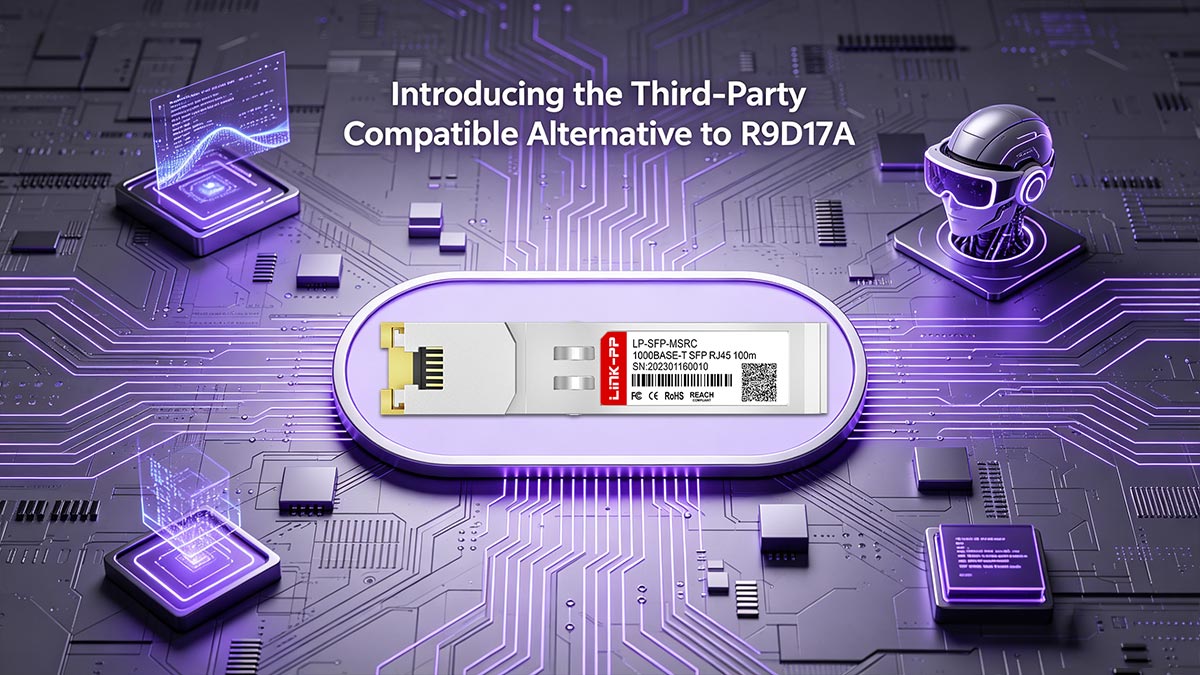
While the original HPE Aruba R9D17A provides guaranteed performance, deploying the LINK-PP LP-SFP-TMRC RJ45 module offers a seamless way to bypass OEM price premiums and supply chain delays. Engineered specifically to match the R9D17A specification, this MSA-compliant transceiver serves as a direct, high-quality alternative. Examining its technical architecture, firmware compatibility, and physical build quality demonstrates how it delivers identical gigabit performance at a significantly lower cost-per-port.
Technical Overview of the LINK-PP LP-SFP-TMRC RJ45 Module
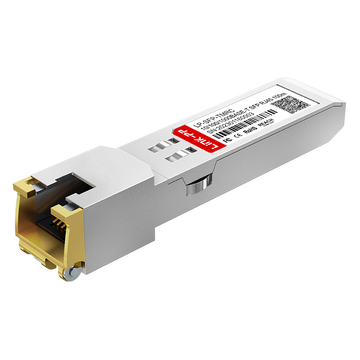
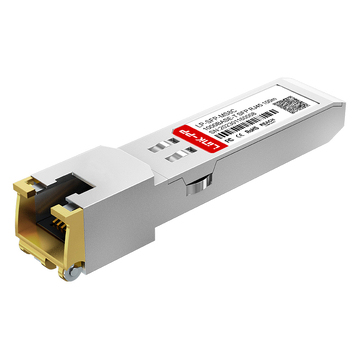
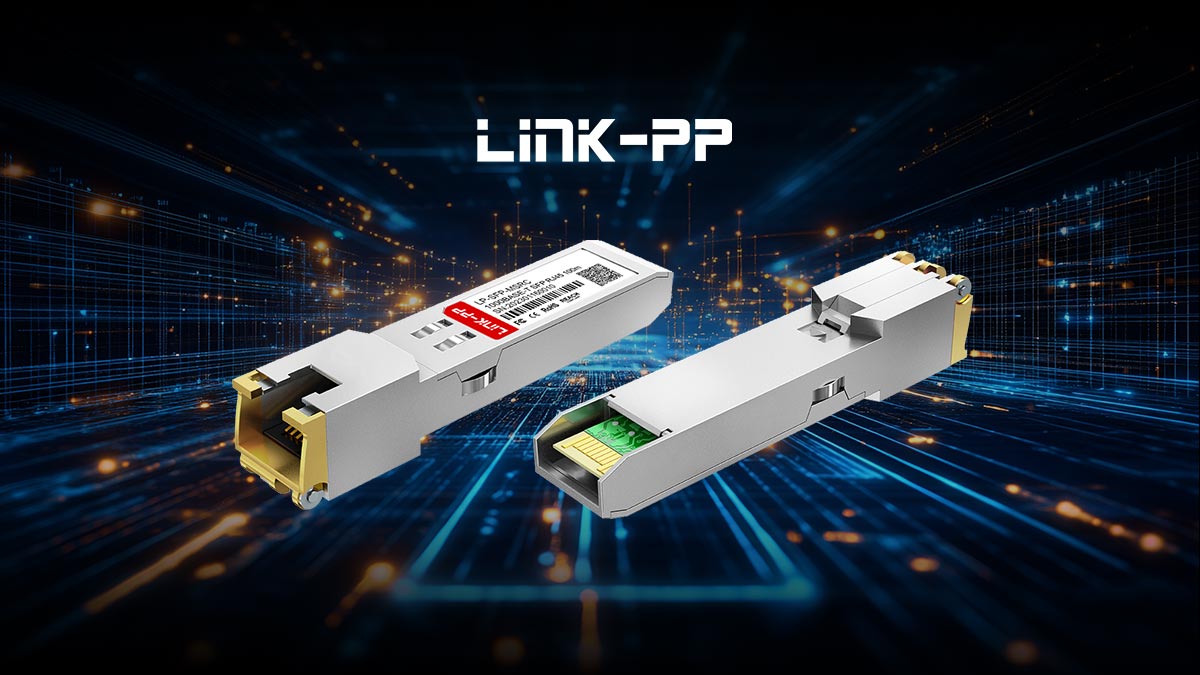
The LP-SFP-TMRC by LINK-PP is a 1000BASE-T copper SFP transceiver designed to act as a direct, drop-in replacement for the HPE Aruba R9D17A. Built on MSA (Multi-Source Agreement) standards, it features the same physical dimensions and host connector layout as the OEM module. It fully supports 10/100/1000Mbps auto-negotiation and delivers reliable gigabit speeds over standard Cat5e or Cat6 copper cables up to 100m.
Under the hood, the LP-SFP-TMRC utilizes high-grade, energy-efficient transceiver chips that keep power consumption well within the standard 1.0-Watt limit. This ensures that the module runs cool and integrates smoothly into existing switch ports without drawing excessive power or creating thermal hot spots, making it an incredibly reliable alternative for dense enterprise rack setups.
EEPROM Coding and Firmware Compatibility with Aruba Switches
The most critical factor for any third-party transceiver is how seamlessly it interfaces with the host switch’s operating system. The LP-SFP-TMRC is programmed with custom-coded EEPROM firmware that precisely matches the unique vendor identification keys and cryptographic signatures required by HPE Aruba. When inserted into an Aruba Instant On or AOS-CX switch, the host system instantly reads this integrated database and identifies the module as an authentic R9D17A equivalent.
This meticulous firmware matching ensures a true plug-and-play experience without triggering software blocks or warning messages in the switch console. By perfectly aligning with Aruba’s verification protocols, the LP-SFP-TMRC initializes immediately upon insertion, allowing the switch to apply correct port profiles, power limits, and speed negotiation behaviors automatically.
Physical Build Quality and Component-Level Comparison
In terms of physical construction, LINK-PP's LP-SFP-TMRC holds up exceptionally well against the OEM R9D17A. It features a heavy-duty, gold-plated zinc alloy housing that provides excellent protection against physical wear and electromagnetic interference (EMI). The RJ45 female connector is built with durable spring tabs that ensure a tight, secure latch with standard Ethernet patch cords.
At the component level, LINK-PP utilizes industry-standard, top-tier physical layer (PHY) chips and internal microprocessors. The PCB layouts are precision-engineered to minimize signal loss and maintain a low Bit Error Rate (BER) of less than 10⁻¹². This high level of build quality ensures that the third-party module performs identically to the OEM version under daily enterprise workloads.
Price-to-Performance Ratio of LINK-PP Solutions
The primary driver for choosing the LINK-PP LP-SFP-TMRC is its outstanding price-to-performance ratio. By stripping away the steep markup associated with OEM branding, LINK-PP offers the same gigabit performance, hardware compatibility, and build quality at a fraction of the cost of an original R9D17A.
For IT managers and procurement teams, this dramatic cost savings makes a massive difference, especially when upgrading dozens of switch ports across multiple branch offices. Choosing LINK-PP allows organizations to stretch their IT budgets further, redirecting saved funds toward core infrastructure needs while still maintaining a highly reliable, enterprise-grade copper network.
💥 Summary of R9D17A Technical Specifications and Alternative Integration
Deploying the R9D17A copper SFP module is an excellent way to bring gigabit copper connectivity to your fiber-centric Aruba switches, provided you manage its physical installation, thermal characteristics, and port policies correctly. While OEM hardware guarantees plug-and-play reliability, high-quality third-party alternatives like the LINK-PP LP-SFP-TMRC deliver identical performance, full firmware compatibility, and excellent physical build quality. By choosing MSA-compliant alternatives, network administrators can easily overcome budget constraints and supply chain delays without sacrificing network uptime or signal integrity.
If you are ready to scale your network infrastructure and maximize your IT budget, choosing high-quality, fully compatible transceivers is the smartest path forward. Explore our comprehensive range of high-performance networking solutions and secure your compatible copper SFP modules today by visiting the LINK-PP Official Store.