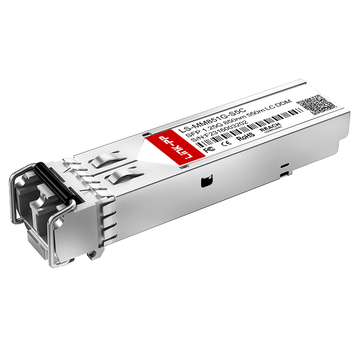
HP J4858C is a widely deployed 1G SFP optical transceiver designed for short-reach multimode fiber connectivity in enterprise and data center networks. As a 1000BASE-SX module operating at an 850nm wavelength, it plays a critical role in enabling stable, high-speed communication between switches, servers, and other network devices over distances typically up to 550m depending on fiber grade.
In modern network infrastructures, understanding the datasheet specifications of optical transceivers like HP J4858C is essential for ensuring proper compatibility, link stability, and optimal performance. Factors such as optical power budget, fiber type (OM1, OM2, OM3), and receiver sensitivity directly influence real-world deployment outcomes, making technical clarity more important than simple product identification.
This guide provides a detailed breakdown of HP J4858C specifications, including optical parameters, physical characteristics, performance behavior, and compatibility considerations. It also explains how these technical attributes translate into practical use cases across enterprise LANs, campus backbones, and data center interconnects.
By the end of this article, you will have a clear understanding of how HP J4858C performs in real networking environments, what its limitations are, and how to correctly evaluate it within a 1Gbps optical network design.
📃 What is HP J4858C?
HP J4858C is a 1000BASE-SX SFP optical transceiver module designed for Gigabit Ethernet communication over multimode fiber (MMF). It is widely used in enterprise and data center networks to provide short-range, high-speed optical connectivity between networking devices. Its design follows the IEEE 802.3z standard, ensuring consistent interoperability in standardized 1Gbps fiber environments.
Product Overview
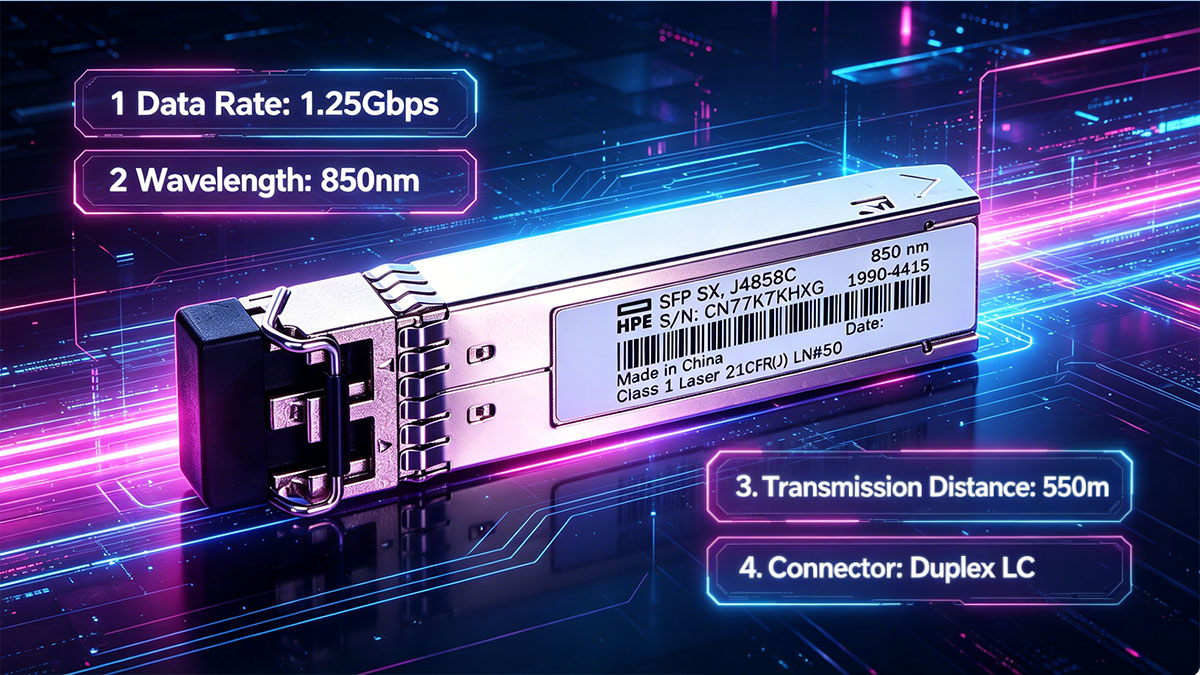
HP J4858C is defined as a 1Gbps SFP transceiver operating on the 1000BASE-SX standard, which is optimized for short-distance optical transmission using 850nm wavelength light. It is specifically engineered for multimode fiber infrastructure, where transmission distances are typically limited but require stable, high bandwidth performance.
In practical terms, this module functions as a media converter at the hardware level, converting electrical Ethernet signals into optical signals for transmission over fiber and then back into electrical signals at the receiving end. Its compact and hot-pluggable SFP form factor allows it to be installed or replaced without powering down network equipment, making it suitable for live network environments.
This combination of standard compliance, multimode optimization, and plug-and-play usability makes it a foundational component in many Gigabit Ethernet deployments.
Key Features at a Glance
The HP J4858C offers a set of clearly defined technical characteristics that determine its performance and deployment scope. These specifications are essential for matching the module with appropriate network infrastructure.
| Feature | Specification | Notes |
|---|---|---|
| Data Rate | 1Gbps | Supports Gigabit Ethernet (IEEE 802.3z) |
| Wavelength | 850nm | VCSEL-based optical transmission |
| Connector Type | LC Duplex | Standard for multimode fiber links |
| Transmission Distance | Up to 550m | Depends on fiber grade (OM2/OM3) |
| Power Consumption | Low power design | Suitable for high-density switches |
These features collectively define its role as a short-reach optical solution, where efficiency, stability, and compatibility are prioritized over long-distance transmission capability.
Typical Deployment Scenarios
HP J4858C is primarily used in environments where reliable short-range fiber connectivity is required between network devices. Its design makes it especially effective in structured cabling systems where multimode fiber is already deployed.
Common deployment scenarios include:
- Enterprise LAN environments where switches are interconnected across wiring closets or floors
- Campus network backbones linking multiple buildings within short distances
- Data center interconnects for rack-to-rack or row-to-row switch connections
- Switch-to-switch uplinks in aggregation or access layer architectures
These use cases highlight its role as a stable and cost-efficient solution for intra-network connectivity rather than long-haul transmission.
📃 HP J4858C Datasheet Specifications Breakdown
HP J4858C is defined by a set of optical, electrical, and physical specifications that determine its performance in 1Gbps multimode fiber networks. Understanding these datasheet parameters is essential for correct deployment, especially when evaluating link distance, compatibility, and signal reliability in real-world environments.
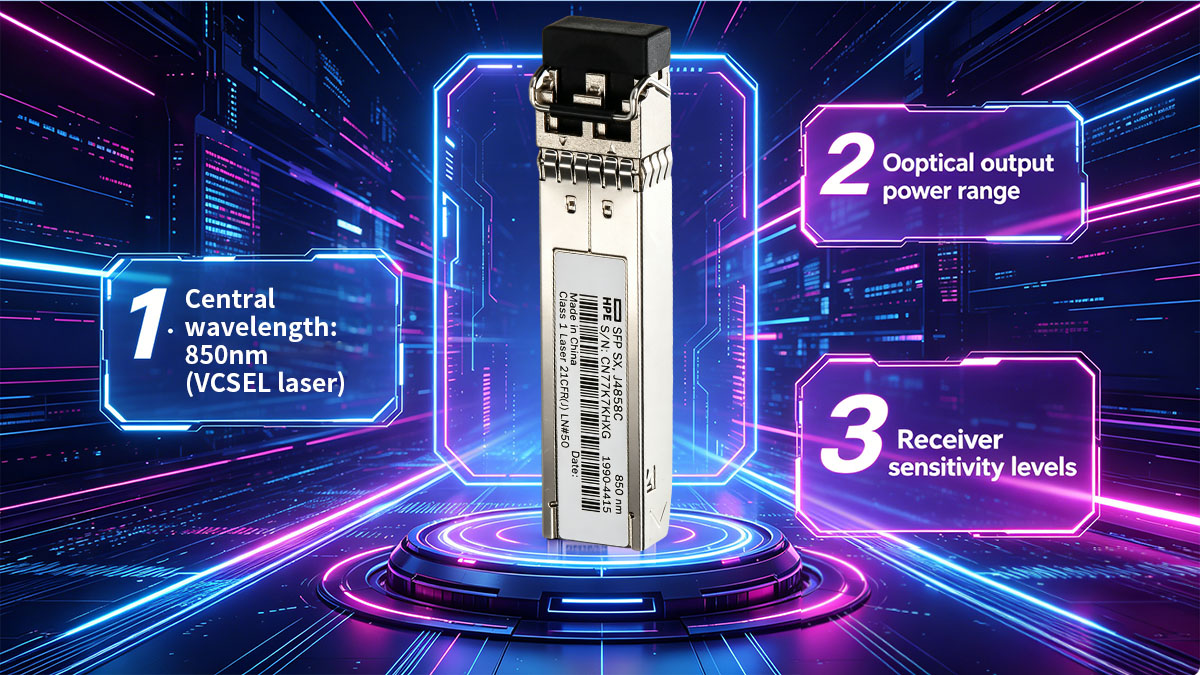
Optical Specifications
The optical characteristics of HP J4858C determine how effectively it transmits and receives light signals over multimode fiber. These parameters directly influence link distance and signal quality.
Before selecting or deploying the module, it is important to understand how wavelength, power levels, and sensitivity define its operational limits in a 1000BASE-SX environment.
| Parameter | Value | Description |
|---|---|---|
| Wavelength | 850nm | VCSEL laser optimized for multimode fiber |
| Fiber Type | MMF (OM1/OM2/OM3) | Designed for short-range transmission |
| Max Distance | Up to 550m | Achieved with OM2/OM3 fiber |
| Transmit Power | -9.5 to -3 dBm | Optical output range |
| Receiver Sensitivity | ≤ -17 dBm | Minimum detectable signal level |
These values show that HP J4858C is optimized for short-reach links where signal attenuation is relatively low. The 850nm wavelength ensures efficient transmission over multimode fiber, but it also limits its use to shorter distances compared to single mode transceivers.
After reviewing these optical limits, it becomes clear that proper fiber selection (especially OM3 or higher) plays a critical role in achieving the maximum supported transmission distance.
Interface and Compatibility
The interface design of HP J4858C ensures standardized integration into networking equipment while maintaining flexibility across supported platforms. It follows the SFP (Small Form-Factor Pluggable) form factor, which is widely adopted in Gigabit Ethernet switches and routers.
To better understand its compatibility scope, the following breakdown summarizes key interface-related attributes:
| Parameter | Specification | Notes |
|---|---|---|
| Form Factor | SFP | Hot-swappable module design |
| Connector Type | LC Duplex | Standard multimode fiber connector |
| Ethernet Standard | IEEE 802.3z | 1000BASE-SX compliance |
| Host Compatibility | HP/Aruba switches | Broad legacy support |
This standardized interface ensures that HP J4858C can be integrated into a wide range of network devices without requiring additional configuration at the hardware level. In most cases, it operates in a plug-and-play manner, provided the host device supports the same optical standard.
However, compatibility can vary across third-party networking equipment, especially when vendor-specific coding or firmware restrictions are present. This makes validation an important step in heterogeneous network environments.
Environmental and Physical Parameters
Beyond optical performance, the physical and environmental characteristics of HP J4858C determine its reliability in different operating conditions. These specifications are particularly important for high-density installations and controlled IT environments such as data centers.
Key operational parameters include temperature range, power consumption, and module form factor stability.
- Operating temperature: typically 0°C to 70°C (commercial grade)
- Storage temperature: extended range for non-operational conditions
- Power consumption: low-power design, typically below 1W
- Form factor: compact SFP module for high-density switch ports
These attributes make the module suitable for continuous operation in enterprise networking environments where thermal efficiency and space optimization are critical.
The combination of low power usage and stable thermal behavior allows multiple HP J4858C modules to be deployed in dense switch configurations without significant cooling overhead, contributing to overall network efficiency.
📃 Performance Characteristics of HP J4858C
HP J4858C delivers stable 1Gbps optical performance optimized for short-reach multimode fiber links. Its real-world behavior is determined by transmission distance capability, signal integrity, and power efficiency, all of which are critical for maintaining reliable Gigabit Ethernet connectivity in enterprise and data center environments.
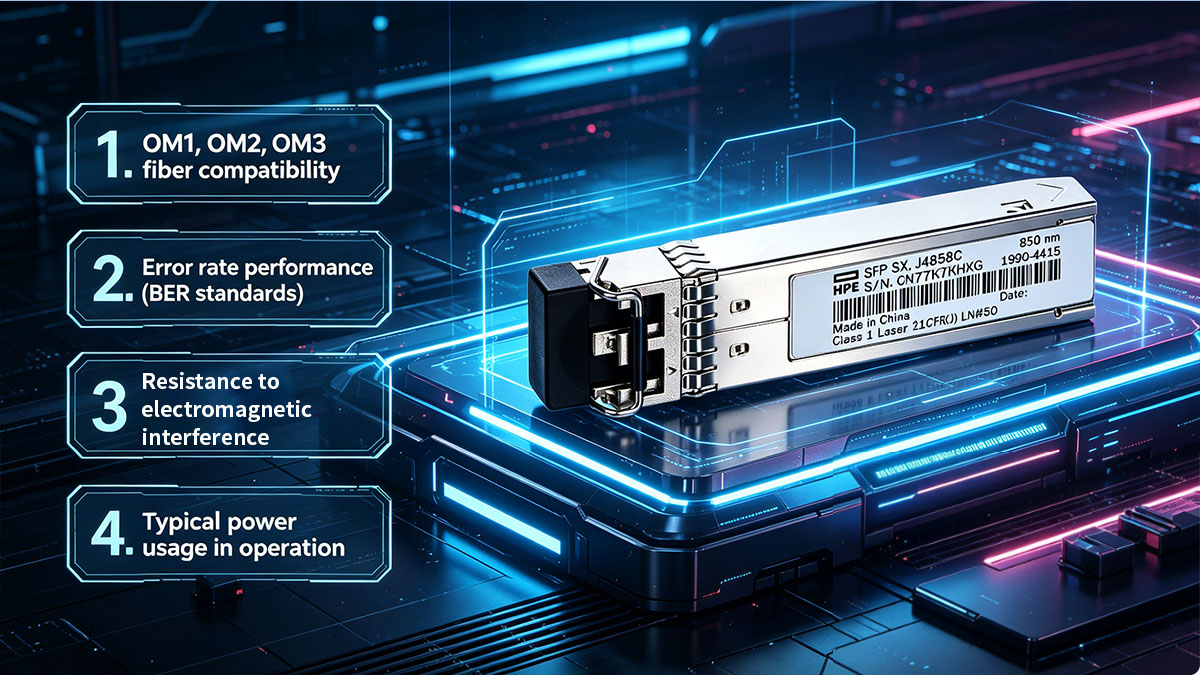
Transmission Distance and Fiber Types
The transmission distance of HP J4858C is directly influenced by the type of multimode fiber used. While the module is rated for up to 550m, this maximum value is only achievable under optimal fiber conditions, typically with OM2 or OM3 cabling.
Before selecting deployment scenarios, it is important to understand how fiber grade impacts usable link length and attenuation characteristics.
| Fiber Type | Core Size | Typical Reach (HP J4858C) | Performance Notes |
|---|---|---|---|
| OM1 | 62.5µm | Up to 275m | Higher attenuation, legacy use |
| OM2 | 50µm | Up to 550m | Standard compatibility range |
| OM3 | 50µm (laser optimized) | Up to 550m | Best performance and stability |
From a practical deployment perspective, OM3 fiber provides the most stable and future-proof performance, especially in environments with higher bandwidth density or longer intra-building runs. OM1, while still functional, significantly reduces effective transmission distance due to higher modal dispersion.
These differences highlight that HP J4858C performance is not only defined by the module itself but also heavily dependent on fiber infrastructure quality.
Signal Integrity and Reliability
HP J4858C is designed to maintain consistent signal quality under standard operating conditions, ensuring low bit error rates (BER) and stable Gigabit Ethernet transmission. Its VCSEL-based 850nm optical system is optimized for multimode fiber channels, where short-distance communication reduces signal degradation risks.
To better understand reliability factors, key performance attributes are summarized below:
- Maintains low bit error rate (BER ≤ 10⁻¹² under normal conditions)
- Stable operation in short-reach multimode fiber environments
- Reduced susceptibility to electromagnetic interference (EMI) compared to copper links
- Consistent performance across supported HP/Aruba switching platforms
Signal integrity is primarily influenced by connector cleanliness, fiber quality, and proper alignment. Even though the module itself is engineered for stability, contamination or improper cabling can significantly impact link quality.
In enterprise deployments, maintaining clean LC connectors and properly managed fiber routing is essential to preserving optimal performance levels.
Power Efficiency and Thermal Performance
One of the key advantages of HP J4858C is its low power consumption profile, which supports dense port deployments without excessive thermal load. This makes it particularly suitable for aggregation and access layer switches where multiple optical modules operate simultaneously.
Before examining operational benefits, it is useful to summarize its power-related characteristics:
- Typical power consumption: <1W per module
- Low heat output suitable for high-density switch environments
- Stable thermal behavior under continuous operation
- No active cooling requirement at module level
This efficient power profile directly contributes to reduced system-level cooling demands, especially in large-scale deployments where dozens of SFP modules may be active within a single chassis.
From a network design perspective, lower thermal output improves long-term reliability by reducing stress on surrounding components and maintaining stable operating temperatures within networking equipment enclosures.
As a result, HP J4858C is frequently chosen in environments where energy efficiency and predictable thermal behavior are as important as raw transmission capability.
📃 Compatibility and Interoperability
HP J4858C is widely recognized for its strong compatibility within HP (Aruba) networking ecosystems and its generally reliable interoperability with other vendor switches. Its design follows the IEEE 1000BASE-SX standard, which makes it functionally consistent across many Gigabit Ethernet platforms, but real-world compatibility can still depend on vendor coding and firmware policies.
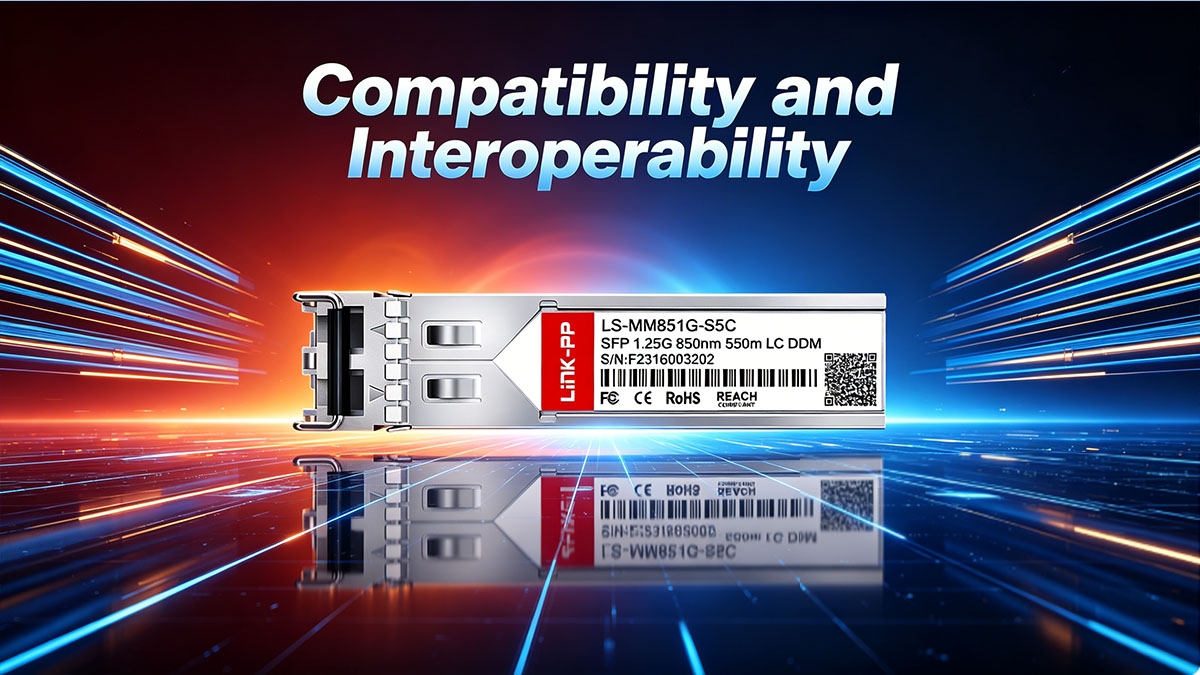
Supported HP/Aruba Devices
HP J4858C is primarily engineered for seamless integration with HP ProCurve and Aruba switch families. In these environments, it typically operates in a plug-and-play manner without additional configuration, provided the switch supports standard fiber SFP modules.
Before listing common supported platforms, it is important to understand that compatibility is strongest within the same vendor ecosystem due to optimized firmware recognition and validated optical parameters.
Typical compatible device categories include:
- HP ProCurve Gigabit Ethernet switches with SFP uplink ports
- Aruba access and aggregation switches supporting 1000BASE-SX modules
- Enterprise core/distribution switches with standard SFP slots
- Network devices explicitly supporting HP-coded optical transceivers
This strong native compatibility reduces deployment complexity and ensures stable link negotiation, making it a common choice in legacy HP-based infrastructures.
Third-Party Compatibility Considerations
Although HP J4858C is based on an open IEEE standard, interoperability with non-HP networking equipment can vary depending on how the host device validates transceiver modules.
To better understand real-world behavior, key compatibility factors include:
- Vendor coding or EEPROM restrictions
- Switch firmware version and optical module whitelist policies
- Auto-negotiation support for 1000BASE-SX optics
- Physical layer compliance with IEEE 802.3z standard
In many cases, the module can operate successfully in third-party switches that accept standard SFP optics. However, some vendors enforce strict compatibility checks that may block or limit non-branded modules.
From a deployment perspective, validation testing in the target environment is recommended before large-scale rollout, especially in mixed-vendor networks where interoperability consistency is critical.
Backward and Forward Compatibility
HP J4858C is designed for integration within established Gigabit Ethernet infrastructures, particularly those already using multimode fiber cabling. While it does not support higher-speed standards like 10Gbps or beyond, it remains highly relevant in 1G network architectures.
Its compatibility behavior can be understood across three key dimensions:
- Backward compatibility: Supports legacy HP Gigabit switches using standard SFP ports, ensuring continued usability in older infrastructure environments
- Forward limitation: Not compatible with SFP+ (10G) or higher-speed interfaces due to protocol and physical layer differences
- Infrastructure continuity: Works effectively in mixed-age networks where 1G remains the dominant access or aggregation speed
This positioning makes HP J4858C particularly valuable in network environments that prioritize stability and long-term reuse of existing multimode fiber infrastructure rather than upgrades to higher-speed optical standards.
📃 HP J4858C vs Other SFP Modules
HP J4858C is a 1Gbps 1000BASE-SX fiber optic SFP module optimized for short-range multimode fiber links, but in real network design it is often evaluated alongside other optical modules such as 1000BASE-LX SFPs and other high-speed transceivers. Understanding these differences is essential for selecting the right optical solution based on distance, fiber type, and bandwidth requirements.
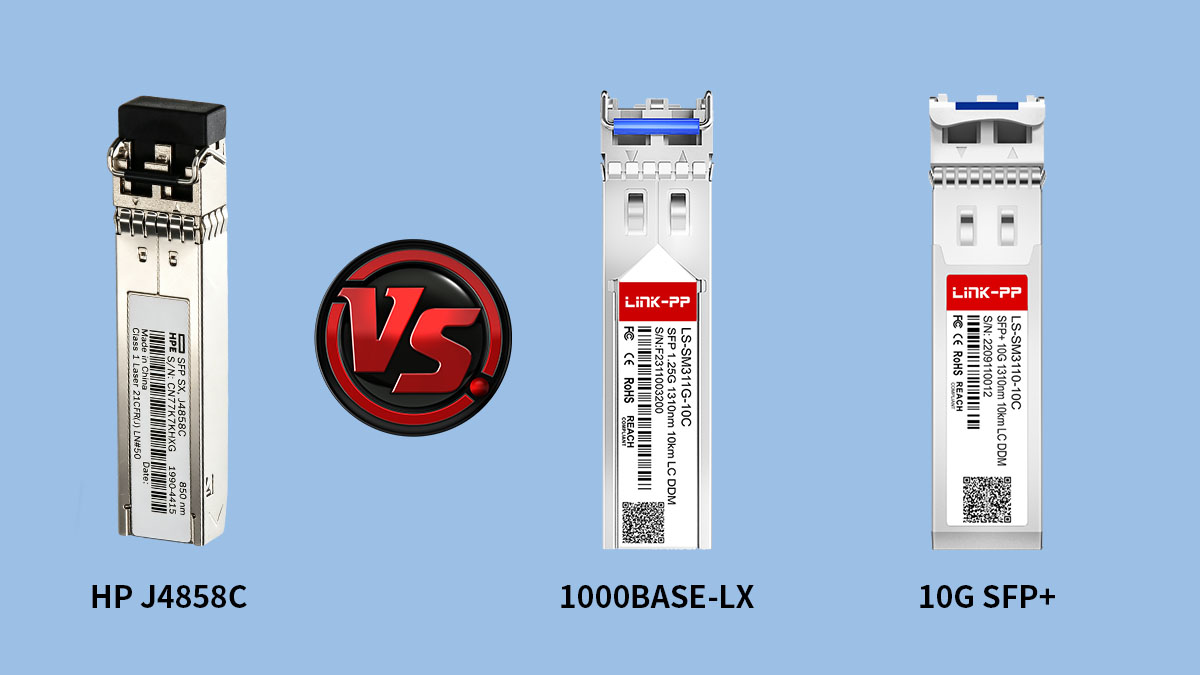
Comparison with 1000BASE-LX Modules
HP J4858C (1000BASE-SX) and 1000BASE-LX SFP modules serve the same Gigabit Ethernet purpose but differ significantly in optical characteristics and deployment scenarios.
Before comparing, it is important to note that SX and LX are not interchangeable in all environments without considering fiber type compatibility.
| Parameter | HP J4858C (SX) | 1000BASE-LX SFP |
|---|---|---|
| Wavelength | 850nm | 1310nm |
| Fiber Type | Multimode (MMF) | Single-mode (SMF) / MMF (limited) |
| Typical Reach | Up to 550m | Up to 10km (SMF) |
| Connector | LC Duplex | LC Duplex |
| Use Case | Short-range LAN | Long-range backbone links |
From a deployment perspective, HP J4858C is more suitable for short-distance intra-building connections, while LX modules are preferred for inter-building or campus backbone links. The wavelength difference also affects dispersion characteristics, making LX better suited for longer transmission stability.
Comparison with 10G SFP+ Modules
When compared with 10G SFP+ modules, HP J4858C represents a lower-speed but more cost-efficient and simpler optical solution. These two categories are designed for different performance tiers in modern network architectures.
To better understand their functional gap, the following comparison highlights key differences:
| Parameter | HP J4858C | 10G SFP+ SR |
|---|---|---|
| Data Rate | 1Gbps | 10Gbps |
| Wavelength | 850nm | 850nm |
| Fiber Type | MMF | MMF (OM3/OM4 recommended) |
| Power Consumption | <1W | ~1–1.5W |
| Network Role | Access/legacy networks | High-performance aggregation |
While both may use 850nm optics, the underlying modulation and signal processing differ significantly. 10G SFP+ modules require higher-quality fiber (typically OM3 or OM4) to maintain signal integrity at higher speeds, whereas HP J4858C is more tolerant of older multimode infrastructure.
As a result, HP J4858C remains relevant in environments where 1Gbps bandwidth is sufficient and infrastructure upgrades to 10G are not immediately required.
When to Choose HP J4858C
Selecting HP J4858C is primarily a decision based on distance, bandwidth requirements, and infrastructure compatibility rather than performance maximization.
It is most appropriate in the following scenarios:
- Short-range fiber connections within the same building
- Existing multimode fiber (OM1/OM2/OM3) deployments
- Gigabit Ethernet access or aggregation layer links
- Cost-sensitive environments where 1Gbps is sufficient
- Legacy HP/Aruba switch ecosystems requiring stable compatibility
In these environments, HP J4858C offers a balanced combination of stability, simplicity, and predictable performance without the complexity or overhead associated with higher-speed optical modules.
Ultimately, it remains a practical and widely used choice in 1G network architectures where reliability and infrastructure continuity are prioritized over bandwidth scaling.
📃 Common Applications and Use Cases
HP J4858C is widely deployed in 1Gbps multimode fiber networks where short-range, stable, and low latency connectivity is required. Its 1000BASE-SX design makes it especially suitable for structured cabling environments inside enterprise buildings, campuses, and data centers. In practice, its value comes from predictable performance over multimode fiber rather than long-distance transmission capability.

Enterprise Network Connectivity
In enterprise LAN environments, HP J4858C is commonly used to connect switches across different network layers within the same building. This includes access-to-distribution or distribution-to-core links where fiber is preferred over copper for reliability and interference resistance.
Typical enterprise deployment scenarios include:
- Connecting access layer switches on different floors
- Linking wiring closets within office buildings
- Providing stable uplinks for departmental network segments
- Supporting VoIP, enterprise applications, and internal data traffic
In these scenarios, the module ensures consistent Gigabit performance while maintaining low latency, which is critical for time-sensitive business applications and centralized network services.
Data Center Environments
In data center architectures, HP J4858C is often used for short-reach interconnects where high-density switch deployment is required but 10Gbps bandwidth is not necessary. Its compact SFP form factor allows efficient port utilization in space-constrained environments.
Before outlining specific use cases, it is important to highlight that data centers often rely on predictable short-distance fiber links to maintain internal traffic efficiency.
Common applications include:
- Rack-to-rack switch interconnections
- Top-of-rack (ToR) to aggregation switch uplinks
- Horizontal connectivity between server clusters
- Redundant link configurations for high availability
These deployments benefit from the module's stable optical performance and low power consumption, especially in environments where dozens or hundreds of transceivers operate simultaneously.
Campus and Industrial Networks
Beyond traditional enterprise and data center environments, HP J4858C is also widely used in campus networks and controlled industrial networking systems. Its ability to operate reliably over multimode fiber makes it suitable for structured environments with predefined cabling routes.
Key use cases include:
- Building-to-building connectivity within a campus network
- Educational institution backbone links between departments
- Industrial control network segmentation in manufacturing sites
- Security and surveillance system backhaul connections
In these environments, fiber-based connectivity provides resistance to electromagnetic interference (EMI), which is particularly important in industrial settings with heavy machinery or electrical noise.
The module's stability and ease of deployment make it a practical choice for maintaining consistent communication across distributed network zones.
📃 Installation and Usage Best Practices
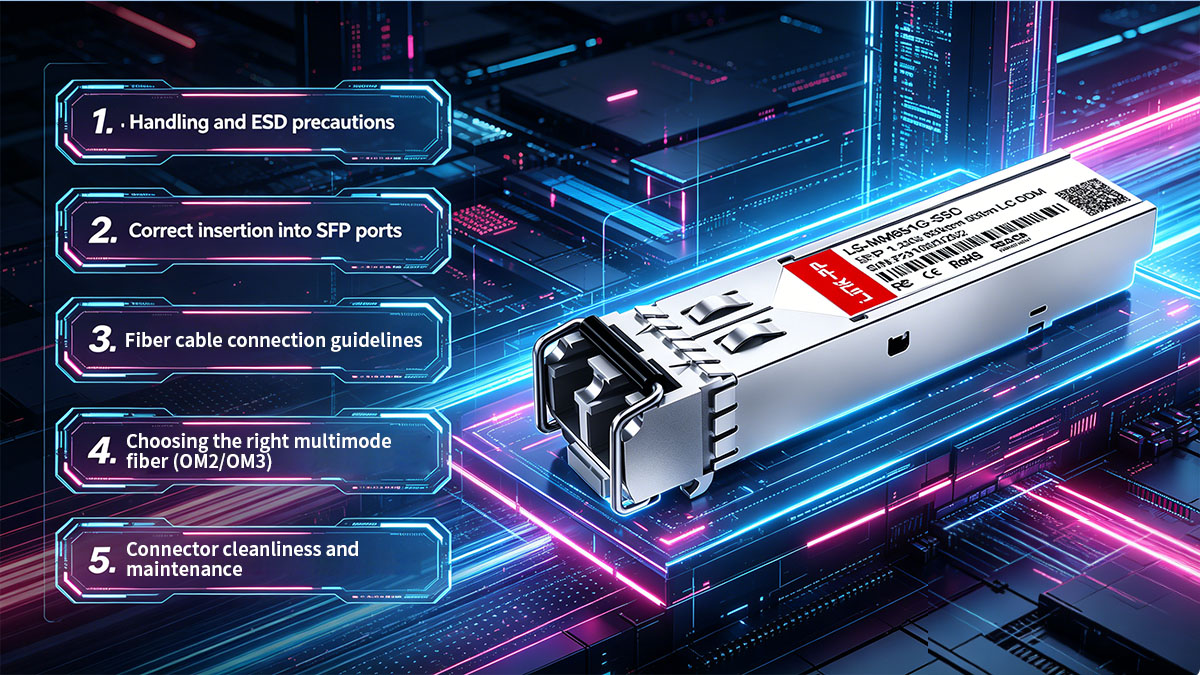
HP J4858C delivers stable performance only when it is installed and maintained under proper optical and mechanical conditions. While the module is hot-pluggable and generally easy to deploy, fiber cleanliness, correct handling, and compatible cabling practices are critical to ensuring optimal signal quality and long-term reliability.
Proper Installation Steps
Correct installation of HP J4858C helps prevent link failures, signal degradation, and compatibility issues. Although the module is designed for plug-and-play operation, following a structured installation process improves deployment consistency in enterprise environments.
Before listing the steps, it is important to note that electrostatic discharge (ESD) protection and fiber cleanliness are two of the most common factors affecting optical module performance.
Typical installation process:
- Power on the network device or confirm hot-swap support
- Remove protective dust caps from the SFP slot and module
- Insert HP J4858C firmly into the SFP port until it clicks into place
- Connect LC duplex fiber connectors into the module
- Verify link status indicators on the switch interface
After installation, link lights should indicate successful synchronization. If no link is detected, checking fiber polarity and connector cleanliness is typically the first troubleshooting step.
Fiber Cabling Recommendations
The performance of HP J4858C is highly dependent on the quality and type of multimode fiber used. Proper cabling practices ensure that the module operates within its intended optical budget and maintains stable transmission over time.
To better optimize deployment, the following guidelines should be considered:
- Use OM2 or OM3 multimode fiber for maximum supported distance (up to 550m)
- Avoid mixing fiber grades in the same link path
- Ensure LC connectors are clean and free from dust or contamination
- Maintain proper bend radius to prevent signal attenuation
- Keep fiber routing organized to avoid physical stress on connectors
These practices directly impact signal integrity. Even minor contamination or improper bending can significantly increase insertion loss, leading to unstable or intermittent connections.
After implementing proper cabling practices, the module is more likely to maintain consistent performance across long operational periods without requiring frequent maintenance.
Troubleshooting Common Issues
Even with correct installation, optical links may occasionally experience issues due to environmental factors, configuration mismatches, or physical layer problems. HP J4858C issues are typically related to fiber handling or compatibility rather than the module itself.
Common problems and their causes include:
- No link detected: Often caused by reversed fiber polarity or incorrect port configuration
- Intermittent connectivity: Usually related to dirty connectors or damaged fiber cables
- Reduced transmission distance: May result from using lower-grade fiber such as OM1
- Compatibility errors: Can occur on non-HP switches with strict transceiver validation
In troubleshooting scenarios, a systematic approach is recommended:
- Inspect and clean LC connectors using proper fiber cleaning tools
- Verify correct TX/RX alignment on both ends of the link
- Test with known-good fiber cables to isolate cable-related faults
- Confirm switch compatibility and firmware support for SFP modules
By addressing these factors, most HP J4858C-related issues can be resolved quickly without replacing the module itself, reinforcing its reputation as a stable and low-maintenance optical solution in Gigabit Ethernet networks.
📃 FAQs About HP J4858C

What type of fiber does HP J4858C use?
It uses multimode fiber (MMF), typically OM2 or OM3, optimized for short-distance 850nm optical transmission.
Is HP J4858C compatible with single-mode fiber?
No. It is designed for multimode fiber only, and using single-mode fiber will result in poor or no link performance.
What is the maximum supported distance?
The module supports up to 550m when used with OM2 or OM3 multimode fiber under ideal conditions.
Can HP J4858C work in non-HP switches?
Yes, in many cases it works with third-party switches that support standard 1000BASE-SX SFP modules, depending on vendor restrictions.
What wavelength does HP J4858C operate on?
It operates at 850nm using VCSEL laser technology for multimode fiber transmission.
What is the connector type used?
It uses LC duplex connectors, which are standard for Gigabit multimode fiber SFP modules.
Why is HP J4858C link unstable sometimes?
Instability is usually caused by dirty connectors, poor fiber quality, or incorrect fiber polarity rather than the module itself.
📃 Conclusion
HP J4858C is a 1000BASE-SX SFP optical transceiver designed for reliable 1Gbps multimode fiber connectivity, making it a stable and widely adopted solution for short-range enterprise, campus, and data center networks. As a core component in Gigabit Ethernet infrastructure, it delivers predictable performance over OM2 and OM3 fiber while maintaining low power consumption and broad compatibility within HP/Aruba ecosystems and many standard SFP-enabled devices.
Across its datasheet specifications and real-world behavior, HP J4858C consistently demonstrates that its strength lies in simplicity, stability, and interoperability rather than long-distance or high-speed transmission capabilities.
Key Takeaways
To summarize the most important aspects of HP J4858C performance and usage:
- Designed for 1Gbps 1000BASE-SX multimode fiber networks using 850nm VCSEL technology
- Supports transmission distances up to 550m depending on OM2/OM3 fiber quality
- Optimized for short-range links such as switch-to-switch and intra-building connections
- Compatible with HP/Aruba devices and many standard SFP-based networking platforms
- Best suited for stable, low-power, and cost-efficient Gigabit Ethernet deployments
Final Perspective and Practical Direction
In modern network planning, HP J4858C remains highly relevant wherever existing multimode fiber infrastructure is still in use and where 1Gbps bandwidth continues to meet operational requirements. Its predictable optical behavior and ease of deployment make it a dependable choice for maintaining network continuity without unnecessary architectural changes.
For network engineers and system integrators seeking reliable SFP solutions that align with proven 1Gbps multimode standards, selecting a well-matched optical module is essential for long-term stability and performance consistency.
For high-quality compatible optical transceivers and structured networking solutions, explore professional-grade options at LINK-PP Official Store, where a wide range of tested and standards-compliant fiber modules is available to support enterprise network deployments.