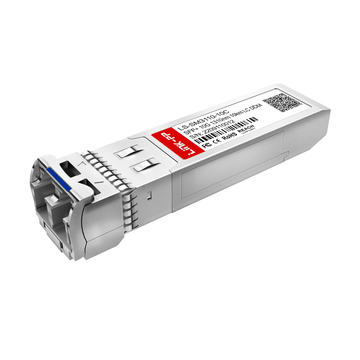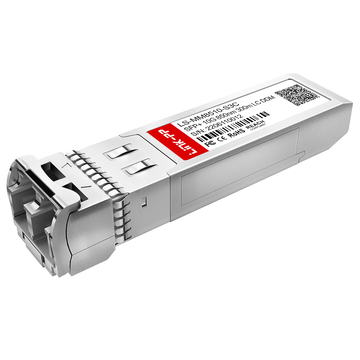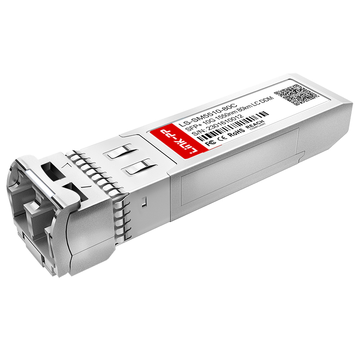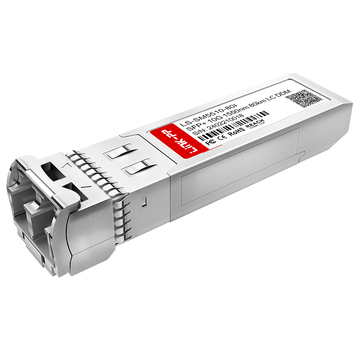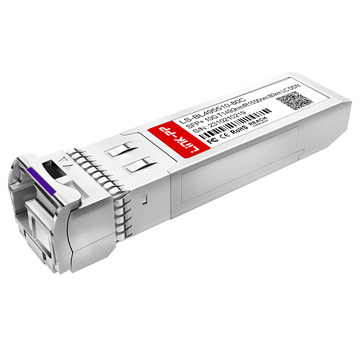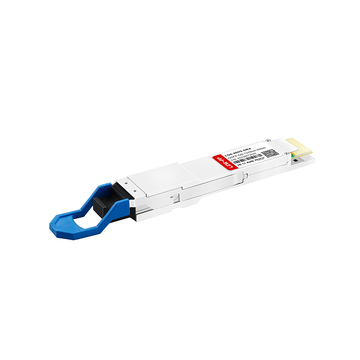
The primary difference is the operating temperature range. The SFP-10G-ZR-I is an Industrial-grade module designed for extreme environments (-40°C to 85°C), whereas the standard SFP-10G-ZR is a Commercial-grade module suited for climate-controlled data centers (0°C to 70°C). Both share identical 10.3 Gbps throughput and an 80km reach over single-mode fiber (SMF) using a 1550nm laser.
In the rapidly evolving landscape of 10G edge connectivity, selecting the correct 10GBASE-ZR SFP+ transceiver is no longer just about distance—it is about thermal resilience. As network deployments move from centralized data centers to unconditioned outdoor cabinets and industrial IoT hubs, the "Industrial" (-I) designation has become a critical specification for ensuring 99.999% uptime.
Before diving into the deployment specifics, here is how these two MSA-compliant (Multi-Source Agreement) optics compare in a lab environment. These specifications are critical for engineers adhering to IEEE 802.3ae standards.
| Feature | SFP-10G-ZR (Standard) | SFP-10G-ZR-I (Industrial) |
|---|---|---|
| Operating Temp Range | 0°C to 70°C (Commercial) | -40°C to 85°C (Hardened) |
| Max Reach / Fiber | 80km over SMF (G.652) | 80km over SMF (G.652) |
| Wavelength | 1550nm | 1550nm |
| Protocol Support | 10G Ethernet, CPRI, OTN | 10G Ethernet, CPRI, OTN |
| Power Consumption | < 1.5W | < 1.5W (Optimized Heat Sink) |
Based on our field experience with Cisco-compatible deployments, a common failure point in long-haul 80km links isn't the fiber itself, but thermal frequency drift.
Standard SFP-10G-ZR transceiver modules are engineered for the steady 25°C airflow of a Nexus-equipped rack. However, when placed in a 5G small cell enclosure or a roadside traffic control box, internal temperatures can quickly exceed 70°C, causing the laser's wavelength to shift and the link to drop.
In this guide, we will analyze why the SFP-10G-ZR-I is the definitive "future-proof" choice for service providers, the specific IEEE 802.3ae standards it adheres to, and the critical optical attenuation steps required to protect these high-power lasers from "burning out" the receiver on shorter spans.
✅ What is the SFP-10G-ZR-I Transceiver?
The SFP-10G-ZR-I is an Industrial-grade ZR 10G SFP+ (Small Form-factor Pluggable) optical transceiver. It is engineered for long-reach 10 Gigabit Ethernet links up to 80 kilometers over single-mode fiber (SMF) at a 1550nm wavelength. The "I" suffix designates Industrial Temperature (I-Temp) compliance, allowing the module to operate reliably in extreme environments from -40°C to +85°C.
The SFP-10G-ZR-I represents the pinnacle of long-haul edge connectivity. It is a hot-swappable I/O device that plugs into the SFP+ port of a switch or router, effectively bridging the gap between high-speed data transmission and extreme physical environments.
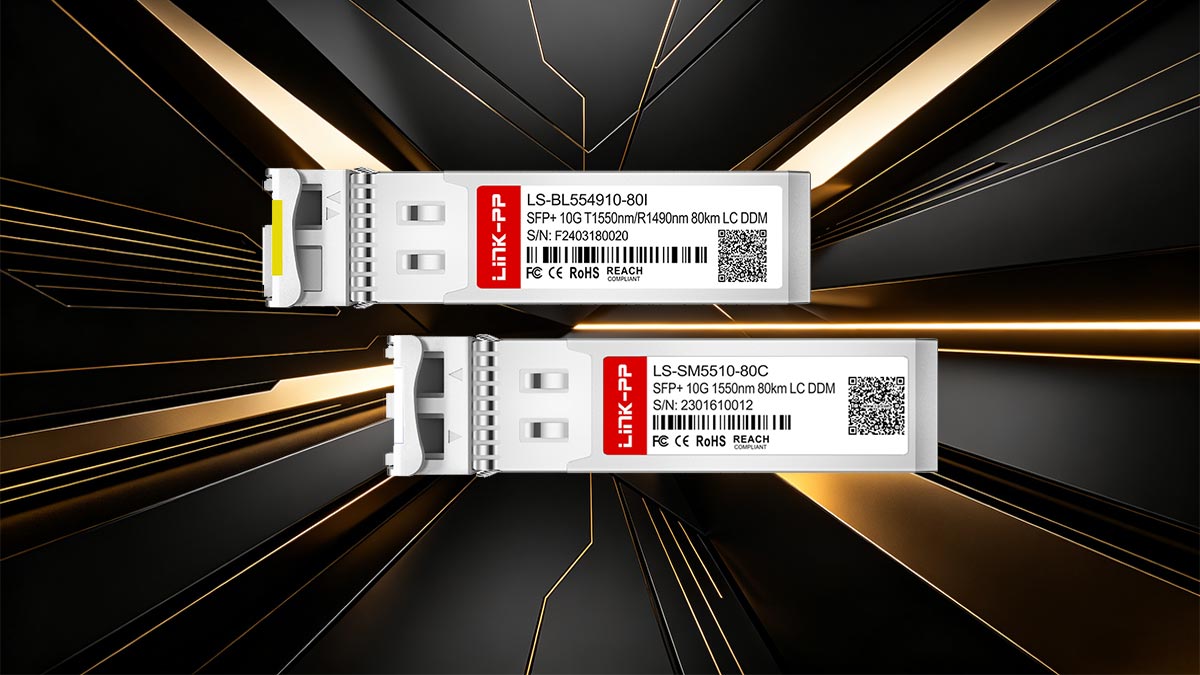
Core Specifications and Technical Parameters
To understand what makes the SFP-10G-ZR-I a specialized component, we must look at its internal architecture and adherence to IEEE 802.3ae and SFF standards:
- Laser Technology: Equipped with a high-performance 1550nm EML (Electro-absorption Modulated Laser), specifically designed to minimize chromatic dispersion over 80km spans.
- Receiver Type: Utilizes an APD (Avalanche Photodiode) receiver, which provides the superior sensitivity required to detect weak signals after long-distance fiber attenuation.
- Form Factor: SFP+ (Enhanced Small Form-factor Pluggable), allowing for high port density on modern switches like the Cisco Catalyst 9300 or Nexus 9000 series.
- Compliance: Fully compliant with SFF-8431, SFF-8432, and the 10GBASE-ZR physical layer standard.
- Digital Diagnostics (DOM): Includes DDM/DOM support for real-time monitoring of temperature, optical power (Tx/Rx), and laser bias current.
The "Industrial" Advantage: Thermal Hardening
The SFP-10G-ZR-I is not merely a "tougher" version of a standard optic; it is a hardened entity. While a commercial-grade SFP-10G-ZR is validated for the stable environments of a climate-controlled data center, the Industrial-I variant undergoes rigorous thermal cycle testing.
In field deployments, we’ve observed that the SFP-10G-ZR-I maintains a stable Side-Mode Suppression Ratio (SMSR) even when the ambient temperature fluctuates rapidly. This prevents "bit error rate" (BER) spikes that typically occur when standard optics are exposed to the heat of unventilated outdoor enclosures or the freezing temperatures of high-altitude telecommunications towers.
For network architects, the SFP-10G-ZR-I is a native entity within the Cisco IOS-XE and NX-OS ecosystems, ensuring seamless "plug-and-play" functionality while meeting the MSA (Multi-Source Agreement) standards for hardware interoperability.
✅ SFP-10G-ZR-I vs. SFP-10G-ZR: What Is the Difference?
The primary difference is environmental tolerance. The SFP-10G-ZR-I (Industrial) supports a wide temperature range of -40°C to 85°C, making it suitable for outdoor and rugged deployments. In contrast, the standard SFP-10G-ZR (Commercial) is limited to 0°C to 70°C, designed strictly for climate-controlled data centers. While both deliver 10G speeds over 80km, the Industrial version features higher-grade components to prevent signal drift in extreme heat or cold.
While the optical specifications (1550nm wavelength and 80km reach) remain identical between these two optical modules, their internal engineering and "use-case validation" differ significantly. Understanding these nuances is critical for avoiding premature hardware failure and costly network downtime.
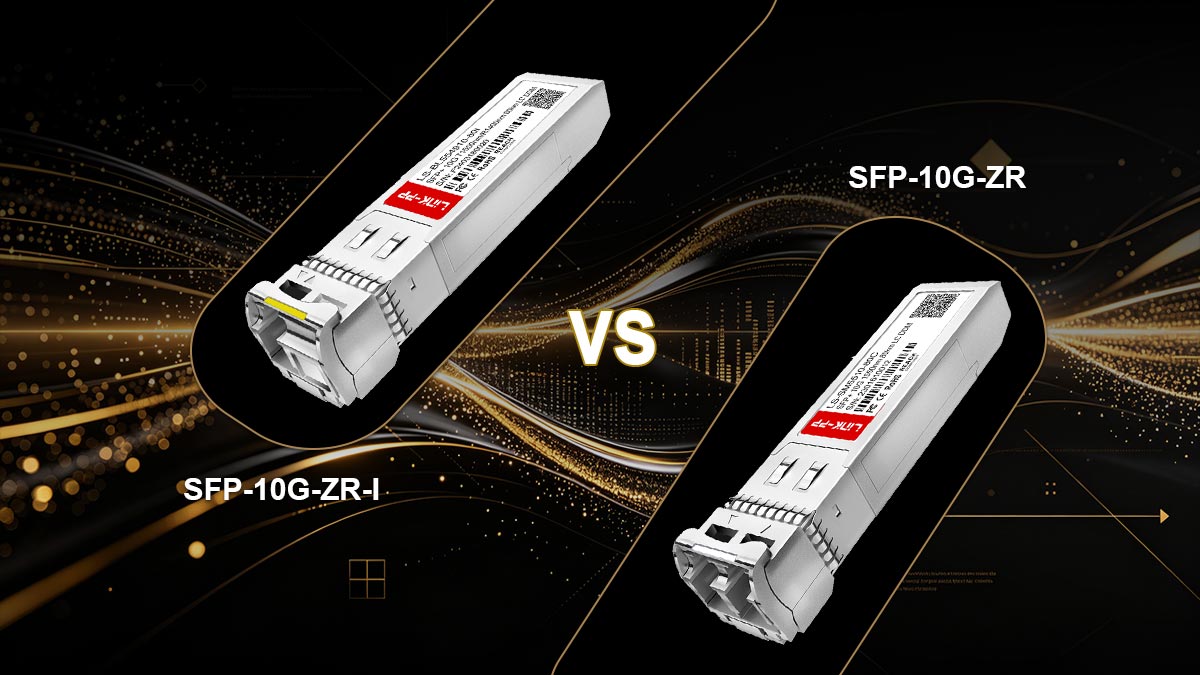
Side-by-Side Comparison
| Feature | SFP-10G-ZR (Commercial) | SFP-10G-ZR-I (Industrial) |
|---|---|---|
| Operating Temperature | 0°C to 70°C (32°F to 158°F) | -40°C to 85°C (-40°F to 185°F) |
| Deployment Environment | Indoor Data Centers / IT Rooms | Outdoor Cabinets / Industrial Sites |
| Internal Components | Standard Binning | Industrial-Grade "Hardened" Chips |
| Reliability (MTBF) | High (Indoor conditions) | Ultra-High (Variable conditions) |
| Cost Profile | Economical / Budget-Friendly | Premium (Due to testing/materials) |
Why Temperature Range Matters: The "Binning" Process
In our technical experience, the differentiator isn't just a sturdier casing. It comes down to Component Binning. During the manufacturing of the 1550nm EML laser, chips are tested across thermal gradients. Only those that maintain a stable Center Wavelength and Optical Signal-to-Noise Ratio (OSNR) at -40°C and +85°C are selected for the SFP-10G-ZR-I.
If you deploy a standard SFP-10G-ZR in an uncooled outdoor enclosure during a summer heatwave, you will likely experience:
- Wavelength Drift: The 1550nm signal shifts, causing increased dispersion and link flapping.
- Laser Degradation: Excessive heat accelerates the aging of the semiconductor, shortening the module's lifespan from years to months.
- Receiver Sensitivity Loss: The APD (Avalanche Photodiode) becomes "noisy" at high temperatures, reducing the effective reach below 80km.
A Note on Cisco S-Class (SFP-10G-ZR-S)
Many users confuse the SFP-10G-ZR-S with the Industrial version. The "-S" stands for "S-Class" (Commercial/Enterprise grade), which is often more affordable but lacks support for protocols like OTN (Optical Transport Network). Neither the standard ZR nor the ZR-S can replace the ZR-I in industrial environments. If your deployment involves roadside cabinets, oil & gas facilities, or cell towers, the SFP-10G-ZR-I is the only viable technical solution.
✅ When to Use Industrial Temperature (-I) Transceivers?
You should use Industrial Temperature (-I) transceivers whenever the network equipment is located in a non-climate-controlled environment. This includes outdoor telecommunications cabinets, industrial plants, and remote edge sites where ambient temperatures fluctuate between -40°C and 85°C. While the upfront cost is higher, the SFP-10G-ZR-I prevents link failures caused by thermal stress, which is common in 5G backhaul and Smart City deployments.
Choosing between a commercial and industrial module is a calculation of Risk vs. Reliability. In 10G long-haul (80km) deployments, the stakes are higher because remote sites are often difficult and expensive to access for maintenance.
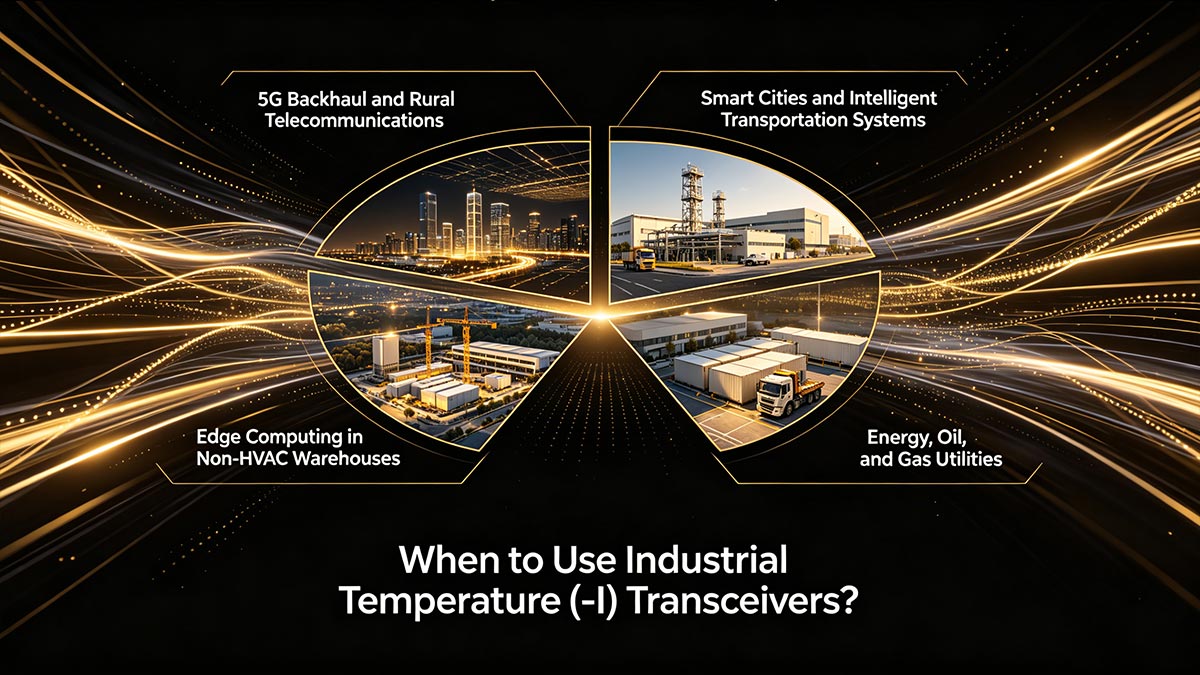
1. 5G Backhaul and Rural Telecommunications
In modern 5G architectures, the Cell Site Gateway (CSG) is often housed in small, outdoor "hush" cabinets or mounted directly on poles. These enclosures lack active HVAC cooling and are subject to solar radiation. The SFP-10G-ZR-I is essential here to maintain the 1550nm signal integrity during peak summer heat and sub-zero winter nights.
2. Smart Cities and Intelligent Transportation Systems (ITS)
Connecting traffic sensors, municipal Wi-Fi, and surveillance cameras across a city often requires 80km ZR optics. These transceivers are typically installed in roadside cabinets that endure high vibration and extreme temperature swings. A standard commercial optic would likely fail within its first season, whereas an I-Temp hardened module is designed for a 20-year service life in these conditions.
3. Energy, Oil, and Gas Utilities
Industrial environments like power substations or offshore rigs generate significant electromagnetic interference and localized heat. Furthermore, these sites are often hundreds of miles from the nearest IT hub. Using SFP-10G-ZR-I optics ensures that the "Critical Infrastructure" links stay active despite the harsh surrounding machinery.
Expert Insight: The "Truck Roll" ROI
In our field audits, the average cost of a "Truck Roll" (sending a technician to a remote site) ranges from $300 to $1,000 per incident. While an SFP-10G-ZR-I may cost 20-30% more than a standard module, it pays for itself by preventing a single temperature-related outage. For 80km spans, where the "far end" is truly remote, the ROI on industrial-grade optics is immediate.
4. Edge Computing in Non-HVAC Warehouses
As AI and IoT processing move to the "Edge," mini-data centers are being built inside manufacturing plants and warehouses. These areas are often "dusty and hot," sitting at the upper limit of commercial temperature specs (70°C). Moving to SFP-10G-ZR-I provides the necessary thermal headroom to ensure that the 10Gbps link remains stable even if the facility's ventilation fails.
Note on Thermal Headroom: This refers to the safety margin between the operating temperature of the transceiver and its maximum rated limit. A larger headroom reduces the probability of laser "clipping" and signal noise.
✅ Understanding Range and Link Budget for 10GBASE-ZR
The SFP-10G-ZR-I has a nominal range of 80 kilometers (49.7 miles) over G.652 Single-Mode Fiber (SMF). This distance is achieved through a Link Budget of approximately 23dB, calculated by the difference between the minimum Transmitter Power (+0 dBm) and the maximum Receiver Sensitivity (-23 dBm). Performance is highly dependent on fiber quality, patch panel loss, and chromatic dispersion at the 1550nm wavelength.
Designing a long-haul 10G link requires more than just connecting two 80km optics. Engineers must perform a precise Optical Link Budget calculation to ensure the signal is neither too weak to be read nor too strong to damage the equipment.
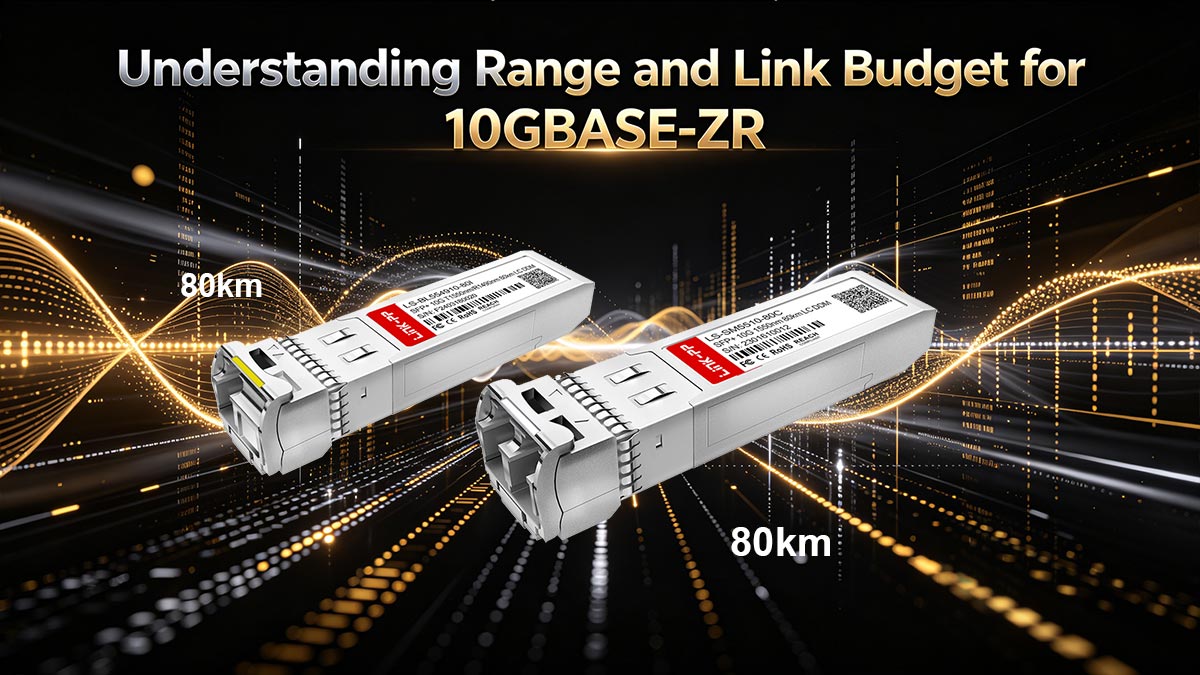
Optical Specifications for 10GBASE-ZR
| Parameter | Specification (Typical) |
|---|---|
| Transmit Power (Tx) | 0 dBm to +4 dBm |
| Receiver Sensitivity (Rx) | -23 dBm to -24 dBm |
| Receiver Overload (Max Rx) | -7 dBm (Safety Threshold) |
| Optical Wavelength | 1550 nm (C-Band) |
Factors Influencing the 80km Reach
While the IEEE 802.3ae standard defines the ZR reach as 80km, real-world conditions vary based on three critical factors:
- Fiber Attenuation: Standard G.652 single-mode fiber typically loses 0.22 dB to 0.25 dB per kilometer at the 1550nm wavelength. A 23dB budget safely covers 80km with some margin for splices and connectors.
- Chromatic Dispersion: At 1550nm, light signals spread out as they travel. The SFP-10G-ZR-I uses an EML (Electro-absorption Modulated Laser) to combat this, as standard DML lasers would suffer too much signal "blurring" at this distance.
- Optical Signal-to-Noise Ratio (OSNR): In industrial settings, high temperatures can increase noise. The "Industrial" hardening of the ZR-I ensures the laser maintains a narrow spectral width, keeping the OSNR stable.
⚠️ Mandatory Technical Requirement: Attenuation
Because 10GBASE-ZR transceivers are "high-power" optics, you must never connect two ZR modules over a short fiber cable (e.g., 1 meter) without an Optical Attenuator. The +0 dBm transmit power will immediately overwhelm and potentially burn out the sensitive APD receiver, which has a saturation point of -7 dBm. We recommend a minimum of 10dB attenuation for any lab testing under 20km.
Terminology Check: Link Budget is the total allowable signal loss in an optical link. If your fiber plant loss exceeds 23dB, the link will either fail or suffer from high Bit Error Rates (BER).
✅ Compatibility and Configuration for Cisco Switches and SFP+ Ports
The SFP-10G-ZR-I is natively compatible with a wide range of Cisco platforms, including the Catalyst 9000, Nexus 9000, and ASR 9000 series. While most Cisco switches recognize the module via its internal EEPROM coding, engineers may need to manually verify the port speed and "S-Class" vs. "Industrial" software identifiers. Configuration typically involves the show interfaces transceiver detail command to monitor optical health via DOM (Digital Optical Monitoring).
Ensuring that your 10GBASE-ZR optics are correctly recognized by your Cisco hardware is the first step toward a stable 80km link. Because ZR optics consume more power and generate more heat than standard SFP 10G LR or SFP 10G SR modules, host port compatibility is strictly enforced by Cisco’s software.
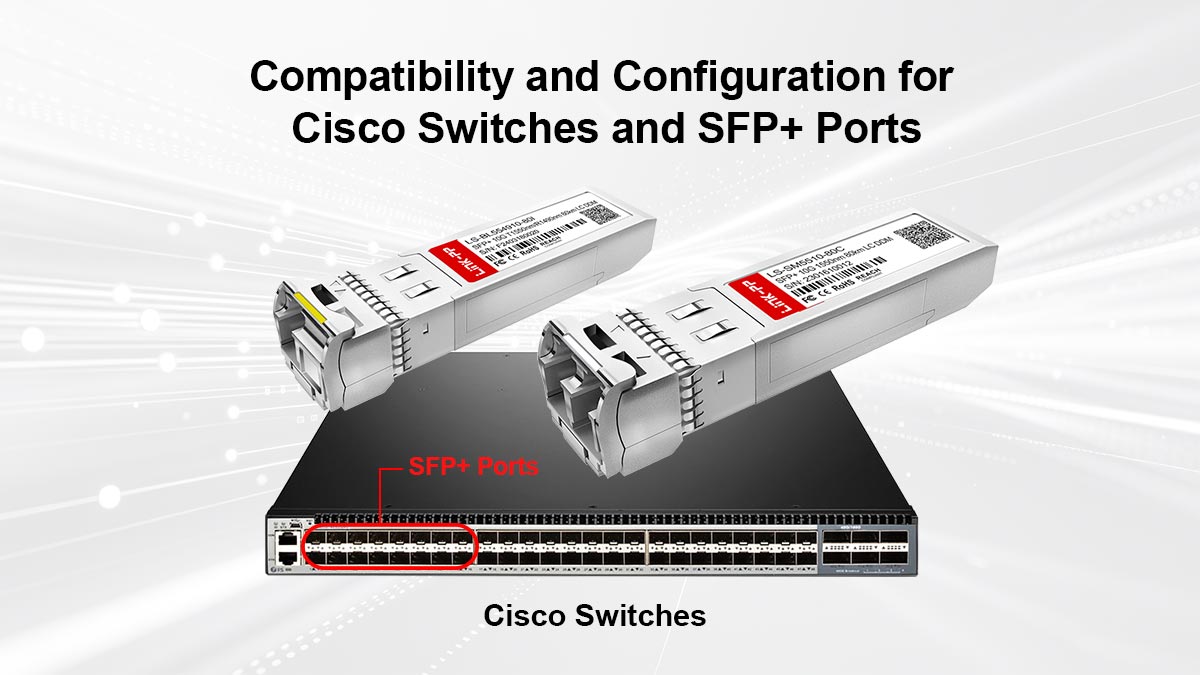
Verified Cisco Platform Support
The SFP-10G-ZR-I is frequently deployed on the following enterprise and carrier-grade platforms:
- Cisco Catalyst 9300 / 9500: Often used as a high-speed campus backbone.
- Cisco Nexus 9300 / 9500: Ideal for Data Center Interconnect (DCI) over 1550nm.
- Cisco ASR 9000 / 1000 Series: Common in Service Provider edge and aggregation.
- Cisco Industrial Ethernet (IE) 4000/5000: Where the -I temperature rating is mandatory.
Essential CLI Commands for Configuration & Monitoring
To verify the installation of an SFP-10G-ZR-I, use the following Cisco IOS-XE/NX-OS commands:
! Check if the switch recognizes the SFP-10G-ZR-I PID
# show interfaces GigabitEthernet1/0/1 transceiver detail
! View real-time Tx/Rx power levels and temperature
(config)# service unsupported-transceiver
! Required for some 3rd-party coded modules on older IOS
Expert Advice: Beware of Port Power Budgets
On some high-density Cisco line cards, the SFP-10G-ZR-I may be restricted to specific ports. Because ZR optics pull up to 1.5W, a switch may "error-disable" a port if the total power budget for that port group is exceeded. Always consult the Cisco Optics-to-Device Compatibility Matrix to ensure your specific line card supports 10GBASE-ZR in all slots.
What is DOM (Digital Optical Monitoring)?
DOM is a specialized technology that allows the SFP-10G-ZR-I to report its internal health to the switch. In 80km deployments, DOM is critical because it allows you to see if the Rx Power is dropping—indicating a fiber break or a dirty connector—before the link actually fails.
Pro-Tip: If your show int trans detail shows an Rx power lower than -24dBm, your link is operating outside of the IEEE 802.3ae safe margin and will likely experience packet loss.
✅ FAQ About SFP-10G-ZR-I vs. SFP-10G-ZR
1. What is the difference between SFP-10G-ZR and SFP-10G-ZR-S?
The main difference is protocol support. The standard SFP-10G-ZR supports Ethernet, OTN (Optical Transport Network), and WAN PHY scales, while the SFP-10G-ZR-S (S-Class) is an "Enterprise-grade" module that typically only supports Ethernet. S-Class modules are often more budget-friendly but are not recommended for Service Provider environments requiring OTN features.
2. Can I use an SFP-10G-ZR-I for a 10km link?
Yes, but you must use an optical attenuator. A 10GBASE-ZR module is designed for 80km; at a 10km distance, the signal will be too strong (above -7 dBm), which can saturate or permanently damage the APD receiver. A 10dB to 15dB fixed attenuator is typically required for links under 20km to keep the Rx power in a safe range.
3. What is the range of SFP-10G-ZR-I?
The nominal range is 80 kilometers (approx. 50 miles) over G.652 single-mode fiber (SMF). However, the actual distance depends on the link budget of 23dB. Factors like fiber age, number of splices, and patch panel loss can reduce the effective range. On ultra-high-quality fiber, it can reach up to 100km with Forward Error Correction (FEC) enabled.
4. Are SFP-10G-ZR and SFP-10G-ZR-I cross-compatible?
Yes. You can have an SFP-10G-ZR at one end (inside a climate-controlled data center) and an SFP-10G-ZR-I at the other end (in an outdoor cabinet). As long as both are 10GBASE-ZR compliant and use the 1550nm wavelength, they will form a stable link. The "Industrial" rating only applies to the environmental conditions at the installation point.
5. Can I connect an SFP-10G-ZR to an SFP-10G-LR?
No. They are optically incompatible. The SFP-10G-LR operates at a 1310nm wavelength, while the SFP-10G-ZR operates at 1550nm. Because they use different wavelengths, the receivers will not be able to detect the incoming signal from the opposite type of transceiver.
✅ Conclusion: Which 10G ZR Should You Choose?
Final Verdict: Your choice depends entirely on the operating environment. Select the standard SFP-10G-ZR for climate-controlled data centers where temperatures remain steady at 25°C. However, for outdoor cabinets, cell towers, or industrial facilities, the SFP-10G-ZR-I is the only reliable option. Its hardened components prevent wavelength drift and link failure in extreme temperatures (-40°C to 85°C).
Selecting the right 80km transceiver is a balance between initial capital expenditure (CAPEX) and long-term operational stability (OPEX). While the industrial version carries a premium, the cost is easily justified when compared to the expense of downtime or emergency site visits in remote locations.
Quick Selection Guide
| Requirement | Recommended Module |
|---|---|
| Standard indoor network environments | SFP-10G-ZR |
| Outdoor or industrial deployments | SFP-10G-ZR-I |
| Operating temperatures below 0°C or above 70°C | SFP-10G-ZR-I |
| Long-distance enterprise backbone links | SFP-10G-ZR |
| Utility, transportation, or manufacturing networks | SFP-10G-ZR-I |
| Lowest acquisition cost | SFP-10G-ZR |
| Maximum environmental reliability | SFP-10G-ZR-I |
For most enterprise networks, the SFP-10G-ZR delivers the best balance of performance and cost. For mission-critical infrastructure operating in challenging conditions, the SFP-10G-ZR-I provides the additional environmental protection needed to ensure stable long-term operation.
Before making a purchase, verify your switch compatibility, fiber type, optical budget, and environmental requirements. In many cases, selecting the correct module at the design stage can prevent costly downtime and future network upgrades. If budget is a concern, many organizations also consider Cisco-compatible SFP-10G-ZR-I and SFP-10G-ZR transceivers, which often provide equivalent functionality at a significantly lower cost while maintaining interoperability with supported Cisco platforms.
Ready to Secure Your 80km Link?
Whether you need the thermal resilience of industrial-grade optics or the cost-efficiency of standard ZR modules, finding a verified, high-quality manufacturer is key.
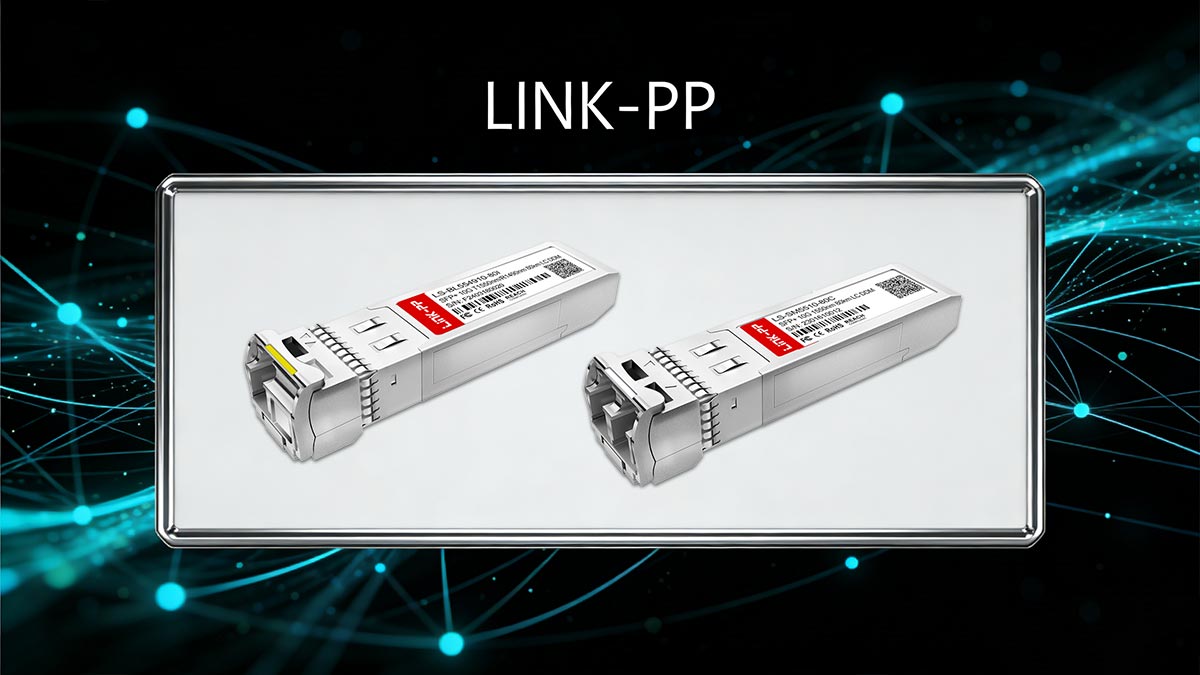
Explore the LINK-PP Official Store for a comprehensive selection of MSA-compliant SFP-10G-ZR-I transceivers, designed for 100% compatibility with Cisco, Juniper, and other major platforms.
Technical Summary: Both SFP-10G-ZR and SFP-10G-ZR-I utilize 1550nm C-Band wavelengths and 23dB link budgets to achieve 80km reach. Always verify your switch's power budget and thermal specs before deploying high-power ZR modules in high-density configurations.