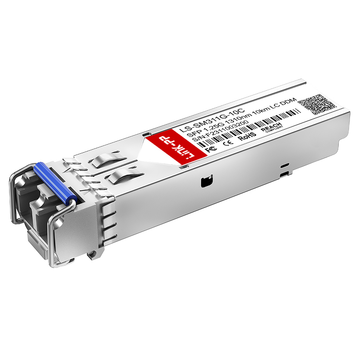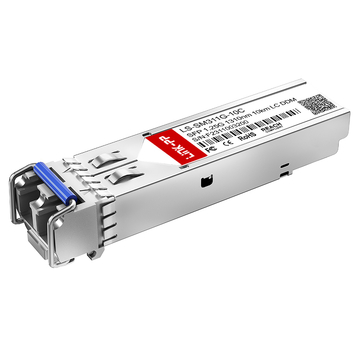
As enterprise and campus networks continue to depend on stable Gigabit Ethernet infrastructure, optical transceivers play a critical role in ensuring reliable fiber connectivity. The Huawei SFP-GE-LX-SM1310 is widely deployed in 1G SFP single-mode environments, offering 1310nm transmission and supporting distances up to 10km. Although higher-speed optical technologies are increasingly adopted, many organizations still rely on this module due to its long-standing stability and compatibility within legacy and mixed vendor networks.
In practical deployments, network teams often assess Huawei SFP-GE-LX-SM1310 replacement options to improve lifecycle management, maintain spare part availability, and support multi-vendor interoperability. These considerations are especially important in large-scale network environments where consistent performance, simplified maintenance, and predictable optical behavior directly influence operational efficiency and infrastructure stability.
This benchmark report systematically reviews Huawei SFP-GE-LX-SM1310 replacement evaluation from both technical and operational perspectives, including:
- Core specifications and operating characteristics of the original Huawei SFP-GE-LX-SM1310
- Typical deployment scenarios in enterprise, metro, and access-layer networks
- Key drivers influencing replacement and compatibility decisions
- Benchmark methodology used for optical and interoperability testing
- Performance comparison between original modules and compatible alternatives
- Critical evaluation factors such as hardware compatibility and optical quality
- Common deployment challenges and mitigation strategies
- Practical validation approaches and long-term network planning considerations
Together, these perspectives provide a structured foundation for understanding how Huawei SFP-GE-LX-SM1310 replacement modules are evaluated in real-world network environments and why careful benchmarking is essential for maintaining stable and efficient Gigabit optical connectivity.
↪️ Understanding Huawei SFP-GE-LX-SM1310
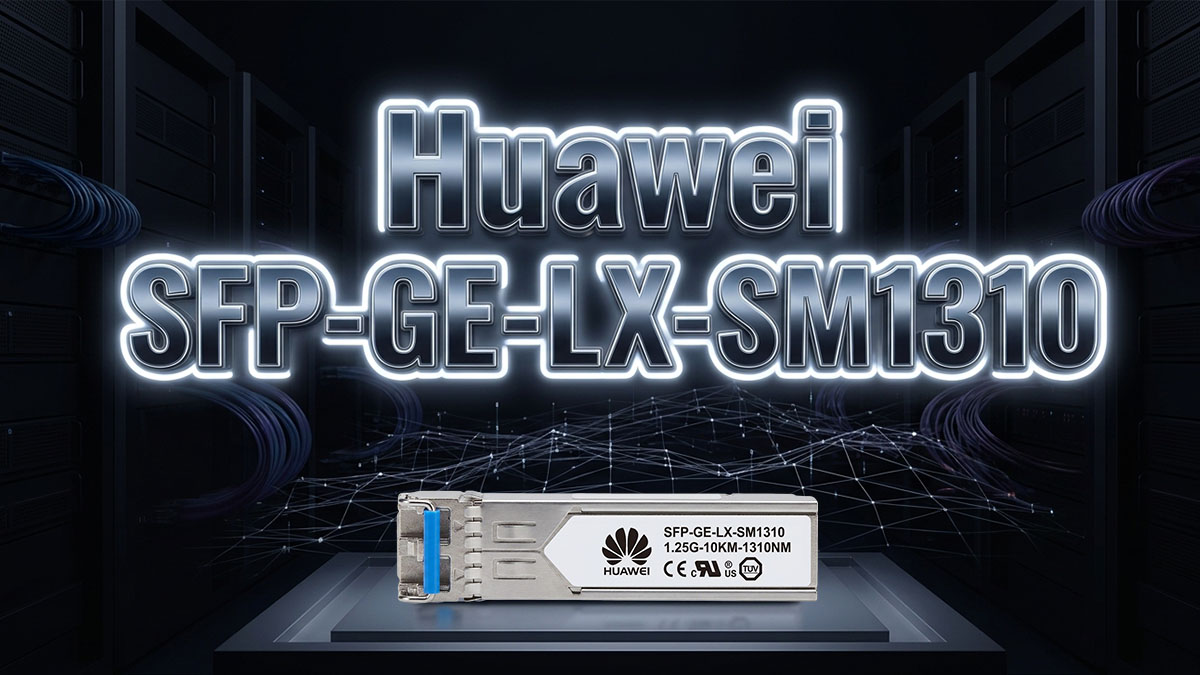
The Huawei SFP-GE-LX-SM1310 is a 1000BASE-LX SFP transceiver designed for Gigabit Ethernet transmission over single-mode fiber. It is commonly deployed in enterprise and campus networks where stable, long-distance optical connectivity is required. In practical use, it delivers consistent performance for access and aggregation-layer links, especially in Huawei-based switching environments.
What Is Huawei SFP-GE-LX-SM1310?
The Huawei SFP-GE-LX-SM1310 is a standard SFP module operating at 1310nm wavelength, enabling Gigabit Ethernet transmission over single-mode fiber. It is designed to support reliable point-to-point optical links, typically used in structured network topologies where predictable performance and stable optical budgets are required.
Its role in the network is mainly to provide a physical-layer interface between Ethernet equipment and fiber infrastructure, ensuring stable signal transmission across moderate distances in enterprise and service provider environments.
Key Technical Specifications
The performance of the Huawei SFP-GE-LX-SM1310 is defined by several core optical and electrical parameters. These parameters determine its compatibility, transmission capability, and deployment suitability in Gigabit Ethernet networks.
| Specification | Value |
|---|---|
| Data Rate | 1.25Gbps |
| Ethernet Standard | 1000BASE-LX |
| Wavelength | 1310nm |
| Fiber Type | Single-Mode Fiber (SMF) |
| Maximum Distance | 10km |
| Connector Type | LC Duplex |
| Form Factor | SFP |
These specifications ensure that the module can operate reliably within standard Gigabit optical link budgets. Proper fiber conditions and correct optical power levels are necessary to achieve optimal transmission stability.
Common Deployment Scenarios
The Huawei SFP-GE-LX-SM1310 is widely used in network environments that require stable and predictable single-mode fiber connectivity. It is typically deployed in structured enterprise networks where interconnection between switches or routers is required over building-to-building or campus-wide distances.
- Enterprise campus backbone links connecting multiple buildings over single-mode fiber
- Metro and access-layer networks requiring stable Gigabit Ethernet transport
- Government and education infrastructures with distributed network architecture
- Industrial environments where EMI resistance and long-distance fiber transmission are required
These scenarios highlight the module’s role in maintaining consistent Gigabit connectivity across physically distributed network segments.
↪️ Why Organizations Look for Huawei SFP-GE-LX-SM1310 Replacements
Organizations evaluate Huawei SFP-GE-LX-SM1310 replacement options mainly to support long-term network sustainability, improve supply flexibility, and maintain stable Gigabit fiber operations. In many enterprise environments, optical modules are deployed in large quantities, making lifecycle management and interoperability a practical concern rather than a purely technical one. Replacement planning helps ensure network continuity while adapting to evolving infrastructure requirements.

Lifecycle Management and Spare Inventory Planning
Huawei SFP-GE-LX-SM1310 modules are often deployed across multiple network layers, which makes spare part planning and lifecycle control an important operational task. As network infrastructures expand or age, organizations must ensure consistent availability of compatible optical modules to avoid service disruption.
- Maintaining spare inventory for distributed network sites
- Supporting long-term operation of legacy Gigabit infrastructure
- Reducing dependency on single sourcing for optical components
- Aligning replacement cycles with broader hardware refresh strategies
These factors help ensure that optical connectivity remains stable even as original hardware availability or procurement cycles change over time.
Cost Optimization Considerations
In large-scale deployments, optical transceivers represent a recurring hardware expense. Organizations therefore evaluate replacement options to optimize procurement efficiency while maintaining required performance standards. The focus is typically on balancing technical reliability with predictable operational costs across multiple network sites.
| Consideration | Impact on Deployment |
|---|---|
| Module sourcing flexibility | Improves supply continuity |
| Unit cost variation | Affects large-scale rollout budgets |
| Lifecycle availability | Reduces emergency replacement risks |
| Standardization efficiency | Simplifies network maintenance |
These considerations allow IT teams to maintain consistent network performance while managing infrastructure costs in a controlled and scalable manner.
Multi-Vendor Network Environments
Modern enterprise networks often include equipment from multiple vendors, which increases the importance of optical module interoperability. In such environments, Huawei SFP-GE-LX-SM1310 replacement evaluation becomes a key part of ensuring consistent cross-platform compatibility.
- Supporting mixed vendor switching and routing environments
- Ensuring consistent optical performance across different hardware platforms
- Reducing operational complexity in heterogeneous networks
- Improving flexibility during network expansion or upgrades
These factors make replacement evaluation a practical requirement for maintaining interoperability and avoiding vendor lock-in constraints in evolving network architectures.
↪️ Benchmark Evaluation Methodology
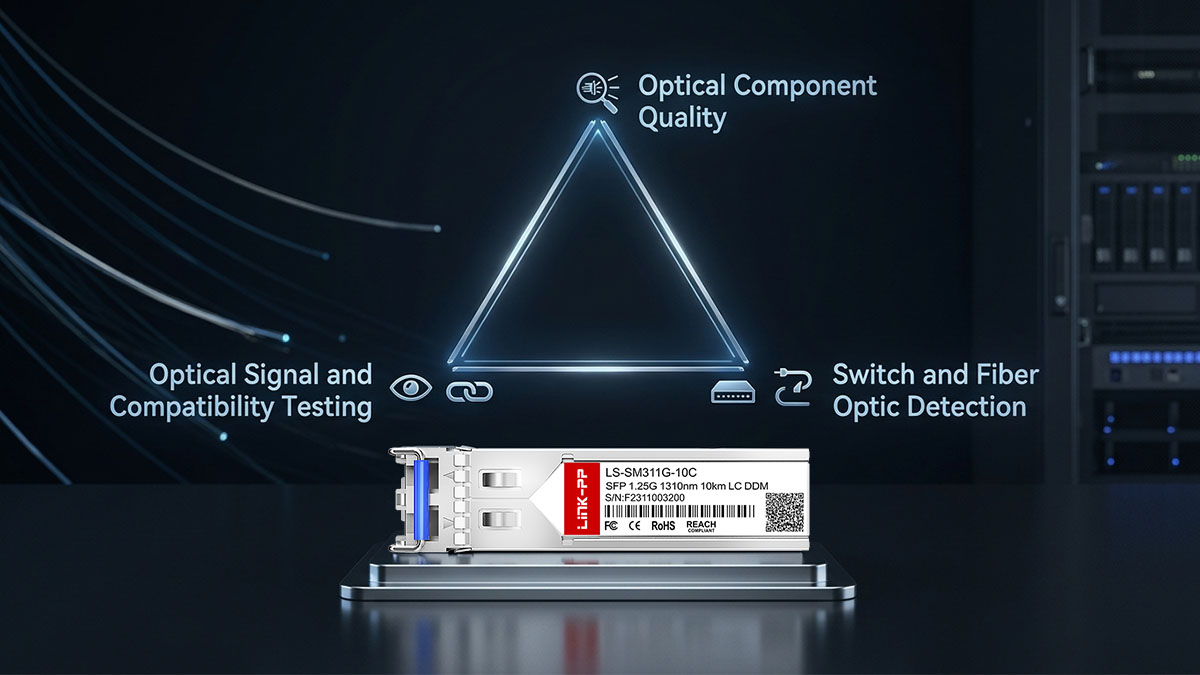
Benchmark evaluation of Huawei SFP-GE-LX-SM1310 replacement modules is designed to verify whether alternative transceivers can maintain equivalent optical performance and interoperability in real-world Gigabit Ethernet environments. The methodology focuses on controlled testing conditions that simulate enterprise and campus network scenarios, ensuring results reflect practical deployment behavior rather than isolated laboratory metrics.
Testing Environment
The testing environment is configured to replicate typical Huawei-based Gigabit Ethernet deployments using single-mode fiber infrastructure. This setup ensures that both original and replacement modules are evaluated under identical conditions to maintain result consistency.
- Huawei switches and routers with SFP-enabled ports
- Standard single-mode fiber links with controlled attenuation
- Point-to-point topology for stable link validation
- Consistent temperature and power supply conditions during testing
This controlled environment helps eliminate external variables that could distort optical performance comparisons.
Benchmark Metrics
The evaluation process focuses on key optical and network-level performance indicators that directly affect production stability. These metrics are selected to reflect both physical-layer and operational behavior.
| Metric | Evaluation Focus |
|---|---|
| Optical signal stability | Consistency of TX/RX power levels |
| Link establishment time | Speed of initial connection negotiation |
| Bit Error Rate (BER) | Transmission error integrity |
| DOM/DDM accuracy | Monitoring reliability of optical parameters |
| Temperature stability | Performance under thermal variation |
These metrics provide a comprehensive view of how replacement modules behave under continuous operational conditions.
Evaluation Criteria
To ensure objective assessment, replacement modules are measured against strict compatibility and performance thresholds. The goal is to determine whether they can function equivalently to Huawei original modules in production networks.
- Compliance with IEEE 1000BASE-LX standards for Gigabit Ethernet
- Stable optical power output within acceptable link budget range
- Reliable port recognition across Huawei hardware platforms
- Consistent DOM/DDM reporting where supported by the system
- Long-duration operational stability under continuous traffic load
These criteria ensure that only modules meeting both optical and system-level requirements are considered suitable for real deployment scenarios.
↪️ Huawei SFP-GE-LX-SM1310 vs Compatible Replacements
A direct comparison between the Huawei SFP-GE-LX-SM1310 and compatible replacement modules focuses on whether alternative transceivers can match original optical performance, maintain stable interoperability, and operate reliably within Huawei networking environments. In most benchmark scenarios, both categories aim to deliver equivalent Gigabit Ethernet functionality, but differences may appear in compatibility behavior, monitoring features, and manufacturing consistency.
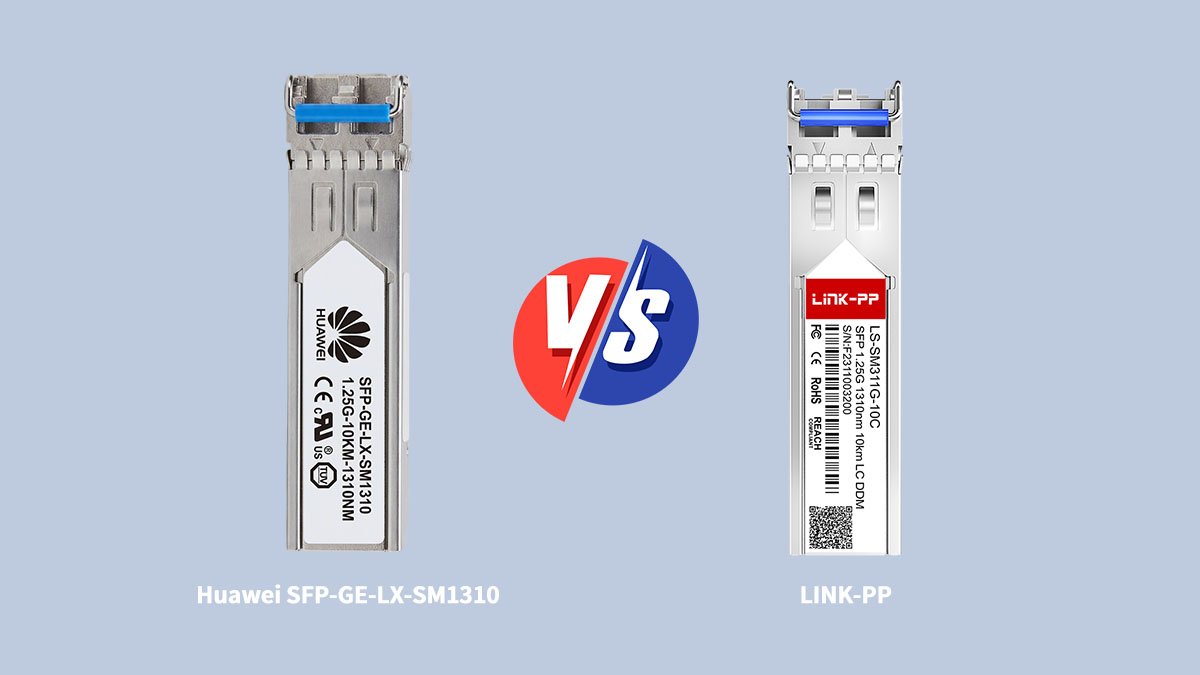
Technical Specification Comparison
From a pure optical and electrical standpoint, compatible replacements are typically designed to align with the same 1000BASE-LX standards as the original Huawei module. This ensures baseline interoperability in single-mode fiber networks while maintaining identical transmission requirements.
| Feature | Huawei SFP-GE-LX-SM1310 | Compatible Replacement |
|---|---|---|
| Data Rate | 1.25Gbps | 1.25Gbps |
| Ethernet Standard | 1000BASE-LX | 1000BASE-LX |
| Wavelength | 1310nm | 1310nm |
| Fiber Type | Single-Mode Fiber (SMF) | Single-Mode Fiber (SMF) |
| Maximum Distance | 10km | 10km |
| Connector Type | LC Duplex | LC Duplex |
| Form Factor | SFP | SFP |
These similarities indicate that both module types operate within the same Gigabit optical framework, ensuring functional alignment in standard deployment scenarios.
Compatibility Benchmark Results
In real-world testing environments, compatibility performance is a key differentiator. While Huawei original modules are inherently optimized for Huawei platforms, high-quality compatible replacements are designed to achieve comparable recognition and operational stability across the same hardware ecosystem.
- Device recognition performance is typically stable on both original and compatible modules
- Link initialization behavior remains consistent under standard Gigabit Ethernet conditions
- Port negotiation and optical handshake processes generally complete without interruption
- DOM/DDM monitoring support may vary depending on platform firmware and module design
- Long-term link stability is maintained when optical parameters remain within required thresholds
These results indicate that compatibility is not limited to optical signaling alone but also depends on system-level interaction between the module and host device.
Optical Performance Benchmark Results
Beyond compatibility, optical performance is a critical factor in evaluating replacement suitability. Both original and compatible modules are assessed under identical fiber conditions to measure signal integrity and transmission stability.
- TX/RX optical power levels generally remain within standard link budget ranges
- Bit Error Rate (BER) performance shows stable transmission under continuous load
- Signal attenuation behavior depends primarily on fiber quality rather than module origin
- Long-distance transmission up to 10km is achievable when installation conditions are optimal
- Temperature variation has minimal impact when modules operate within specified ranges
Overall, optical performance benchmarks indicate that properly designed compatible replacements can achieve behavior closely aligned with the original Huawei SFP-GE-LX-SM1310 in standard Gigabit Ethernet deployments.
↪️ Critical Factors When Selecting a Huawei SFP-GE-LX-SM1310 Replacement
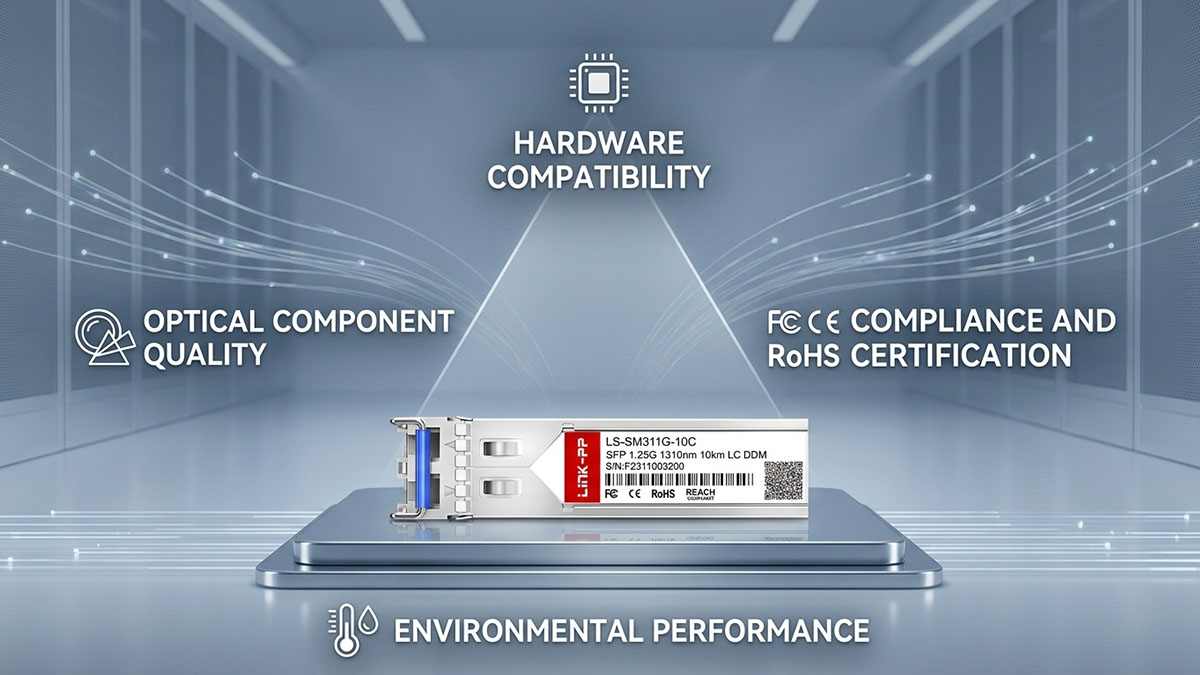
Selecting a suitable Huawei SFP-GE-LX-SM1310 replacement requires careful evaluation of both hardware-level compatibility and long-term operational stability. In real deployment environments, even small differences in optical behavior or system recognition can affect link reliability. For this reason, selection is typically based on a combination of compatibility validation, optical quality assurance, and environmental resilience.
Hardware Compatibility
Hardware compatibility is the first and most critical factor when evaluating replacement modules. Even if optical specifications match, improper system recognition can lead to link instability or port errors in Huawei networking devices.
- Ensure correct port recognition on Huawei switches and routers
- Verify compatibility with device firmware versions and platform models
- Confirm stable link negotiation during initial installation
- Check for consistent module identification across multiple ports
- Validate behavior under reboot and failover scenarios
These checks help ensure that the module integrates smoothly into existing Huawei infrastructure without requiring configuration changes or workaround solutions.
Optical Component Quality
Optical component quality directly influences signal stability, transmission accuracy, and long-term reliability. In Gigabit Ethernet environments, even minor variations in laser or receiver performance can impact link quality over time.
| Component Aspect | Impact on Performance |
|---|---|
| Laser source stability | Affects TX power consistency |
| Receiver sensitivity | Determines signal detection reliability |
| Manufacturing precision | Influences optical alignment accuracy |
| Component consistency | Ensures uniform performance across batches |
These parameters collectively determine whether a replacement module can maintain stable optical behavior under continuous network load conditions.
Compliance and Certification
Compliance with industry standards ensures that replacement modules operate safely and reliably within established network environments. It also reduces the risk of interoperability issues in mixed vendor deployments.
- IEEE 802.3 1000BASE-LX compliance for Gigabit Ethernet compatibility
- RoHS compliance to meet environmental and material safety requirements
- CE and FCC certification for regulatory alignment in global deployments
- Manufacturing quality assurance processes for consistent performance validation
These certifications provide a baseline guarantee that the module meets essential technical and regulatory requirements.
Environmental Performance
Environmental performance determines how well a replacement module operates under varying temperature and workload conditions. This is particularly important in distributed networks, industrial environments, and outdoor enclosures.
- Stable operation across defined industrial or commercial temperature ranges
- Resistance to performance degradation under sustained traffic load
- Thermal consistency during high-density switch deployments
- Long-term reliability under continuous 24/7 network operation
Reliable environmental performance ensures that the module can maintain stable connectivity even in challenging operational conditions where cooling or physical conditions vary.
↪️ Common Challenges During Replacement Deployment
Deploying Huawei SFP-GE-LX-SM1310 replacement modules in existing networks can introduce several practical challenges, especially in environments with strict hardware compatibility requirements or mixed vendor infrastructure. While most issues are manageable with proper validation, understanding these challenges in advance helps reduce downtime and avoid unnecessary troubleshooting cycles during deployment.
Module Recognition Issues
One of the most common challenges during replacement deployment is module recognition failure or inconsistent identification by Huawei networking devices. Even when optical specifications are fully aligned, system-level restrictions or firmware policies may prevent proper detection.
- Vendor coding restrictions may block third-party module identification
- Certain Huawei platforms enforce strict transceiver authentication rules
- Firmware versions may influence recognition behavior across devices
- Inconsistent module EEPROM coding can trigger warning messages
- Reboot or re-insertion may be required to stabilize detection
These issues often appear at the initial deployment stage and are typically resolved through compatibility validation or firmware alignment before large-scale rollout.
Optical Link Problems
Optical link instability can occur when physical fiber conditions or installation practices do not fully align with module operating requirements. These issues are not always related to the module itself but can significantly affect perceived performance.
| Issue Type | Typical Cause |
|---|---|
| High insertion loss | Dirty or improperly seated connectors |
| Link flapping | Marginal optical power budget |
| No link establishment | Fiber polarity mismatch |
| Signal degradation | Excessive fiber attenuation or bending |
These conditions highlight the importance of proper fiber inspection and link budget validation during deployment, especially in longer-distance 10km single-mode environments.
Monitoring and Diagnostics Limitations
Another challenge in replacement deployment involves differences in diagnostic visibility, particularly in DOM/DDM reporting accuracy and availability. Monitoring inconsistencies can limit visibility into real-time optical performance.
- DOM/DDM parameter reporting may vary between original and replacement modules
- Some platforms may restrict full telemetry access for non-original transceivers
- Temperature, TX power, and RX power readings may show slight deviations
- Alarm thresholds may behave differently depending on firmware configuration
- Centralized monitoring systems may require manual adjustment for consistency
These limitations do not always affect actual data transmission but can reduce operational visibility in managed network environments.
↪️ Best Practices for Evaluating and Validating Replacement Modules
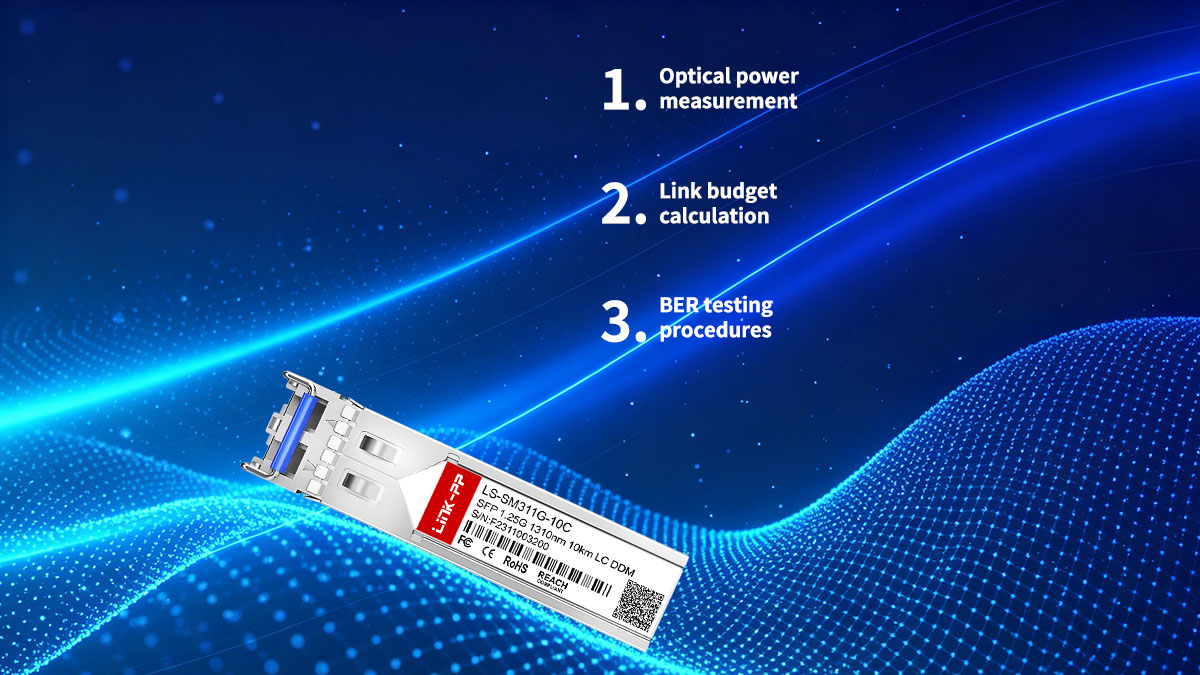
Evaluating and validating Huawei SFP-GE-LX-SM1310 replacement modules is a critical step before deployment in production networks. A structured validation process helps ensure that optical performance, compatibility behavior, and long-term stability meet operational requirements. In practice, most network issues can be avoided by applying a controlled and repeatable qualification process before large-scale rollout.
Conduct Compatibility Testing Before Large-Scale Deployment
Compatibility testing is the foundation of any replacement validation process. It ensures that the module can be correctly recognized and operate reliably within the target Huawei hardware environment.
- Perform initial testing on representative Huawei switches or routers
- Verify module recognition across multiple ports and device models
- Confirm stable link establishment under normal traffic conditions
- Test reboot behavior to ensure consistent reinitialization
- Validate performance across different firmware versions
This staged approach reduces deployment risk by identifying compatibility issues early, before they impact broader network segments.
Verify Optical Performance Metrics
Optical performance verification ensures that the replacement module operates within acceptable transmission parameters for 1000BASE-LX single-mode links. This step focuses on both signal quality and link stability under sustained operation.
| Test Item | Evaluation Focus |
|---|---|
| Optical power levels | TX/RX stability within link budget |
| Link stability | Continuous connectivity under load |
| BER performance | Error-free data transmission integrity |
| Distance validation | Stable operation up to 10km |
These measurements help confirm that the module maintains consistent optical behavior under real network conditions rather than only laboratory settings.
Choose Reliable Manufacturing Sources
The consistency and reliability of replacement modules are strongly influenced by manufacturing quality and supply chain control. Selecting modules from well-managed production sources helps reduce variability in performance.
- Ensure strict quality control across production batches
- Verify component traceability and optical component sourcing
- Evaluate consistency of EEPROM programming and module coding
- Check availability of technical support and documentation
- Confirm stable long-term supply capability for network planning
These factors contribute to predictable performance across multiple deployment sites and reduce operational uncertainty.
Establish Long-Term Qualification Procedures
Beyond initial testing, long-term qualification ensures that replacement modules remain stable throughout their operational lifecycle. This is especially important in continuously running enterprise and service provider networks.
- Implement ongoing monitoring of optical parameters during operation
- Conduct periodic validation of DOM/DDM data consistency
- Track failure rates across deployed modules over time
- Maintain documentation of tested firmware and hardware combinations
- Update qualification records when network infrastructure changes
These practices help maintain long-term network reliability and ensure that replacement modules continue to meet performance expectations under evolving operational conditions.
↪️ FAQs
What is Huawei SFP-GE-LX-SM1310 used for?
It is used for Gigabit Ethernet connections over single-mode fiber, typically in enterprise campus, access, and aggregation networks requiring up to 10km transmission.
What speed does Huawei SFP-GE-LX-SM1310 support?
It supports 1.25Gbps data transmission, which aligns with the 1000BASE-LX Gigabit Ethernet standard.
Can Huawei SFP-GE-LX-SM1310 work with single-mode fiber only?
Yes, it is designed primarily for single-mode fiber (SMF) applications to achieve long-distance transmission up to 10km.
Why do compatibility issues occur with replacement modules?
Compatibility issues usually arise from vendor coding restrictions, firmware limitations, or differences in module EEPROM configuration rather than optical signal mismatch.
What factors are most important when choosing a replacement module?
The most important factors are device recognition compatibility, optical power stability, and consistent performance under real network traffic conditions.
Do replacement modules affect network performance?
When properly designed and validated, replacement modules typically do not affect data transmission performance, as they follow the same 1000BASE-LX optical standards.
↪️ Conclusion
Huawei SFP-GE-LX-SM1310 remains a widely deployed Gigabit optical transceiver in enterprise, campus, and metro networks, primarily due to its stable 1000BASE-LX performance, 1310nm wavelength operation, and reliable 10km single-mode transmission capability. Even as network infrastructures evolve toward higher speeds, this module continues to serve as a foundational component in many legacy and mixed environments where predictable optical behavior is essential for uninterrupted connectivity.
Across all evaluation dimensions discussed in this benchmark report, replacement modules play an important role in extending the lifecycle and flexibility of existing optical infrastructures. When properly validated, they can provide comparable performance in key areas such as link stability, optical power consistency, and Gigabit Ethernet interoperability, while also supporting multi-vendor deployment strategies.
Key takeaways from the overall analysis include:
- Gigabit single-mode optical links remain essential in long-distance enterprise connectivity
- Replacement modules require structured validation to ensure compatibility and stability
- Optical performance consistency depends on both hardware quality and deployment conditions
- Multi-vendor environments benefit from carefully evaluated transceiver alternatives
- Long-term reliability is closely tied to testing methodology and operational monitoring practices
In practical deployments, selecting and validating compatible optical modules is not only a technical decision but also a strategic one that affects network scalability and maintenance efficiency. Solutions provided through established industry sources such as LINK-PP Official Store are often referenced in enterprise environments for maintaining consistent availability of optical components aligned with standard Gigabit Ethernet requirements, helping support ongoing infrastructure stability without disrupting existing network architectures.