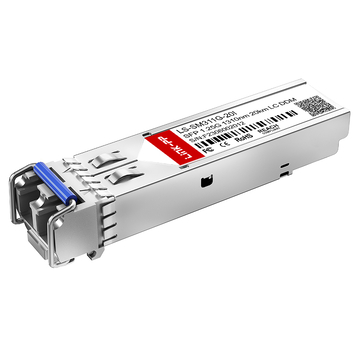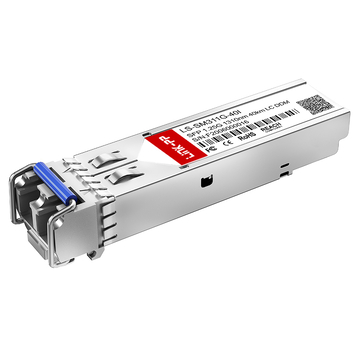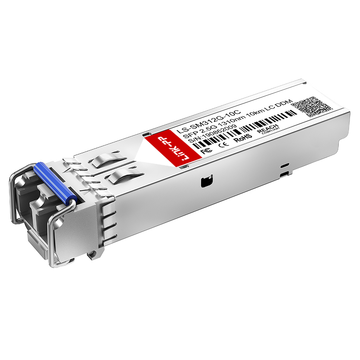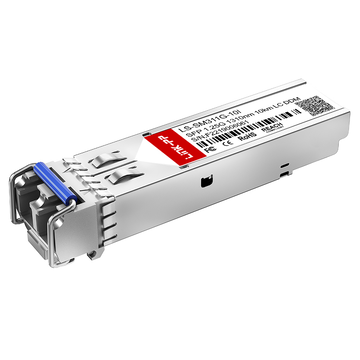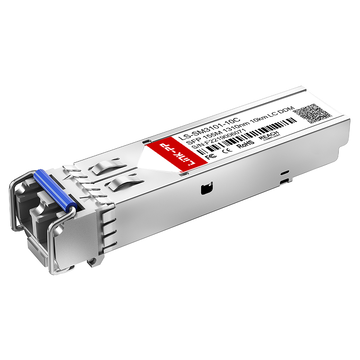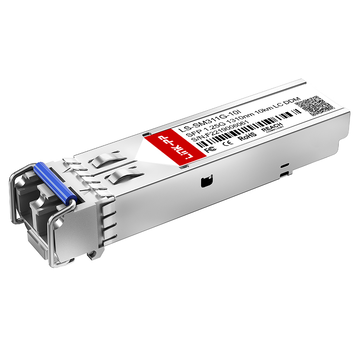
In modern enterprise and data center networks, high-speed optical connectivity has become a foundational requirement rather than an optional component. As bandwidth demands continue to grow across cloud computing, virtualization, and distributed applications, optical transceivers such as SFP transceivers play a critical role in ensuring stable, scalable, and low-latency data transmission across network infrastructures.
Against this background, Cisco Finisar SFP modules (100M SFP, 1G SFP, 2.5G SFP) have long been widely deployed due to their strong compatibility with Cisco networking equipment and proven optical performance. However, as network architectures evolve and cost efficiency becomes increasingly important, many organizations are also evaluating alternative SFP solutions that can deliver comparable performance while offering greater flexibility in sourcing, deployment, and lifecycle management.
This article provides a structured overview of Cisco Finisar SFP modules and their compatible transceivers, helping readers understand technical characteristics, practical differences, and deployment considerations. The content is organized to support both quick reference and deeper evaluation, as outlined below:
The following key areas will be covered in detail:
- Cisco Finisar SFP module fundamentals, including core definitions, technical characteristics, and common variants
- Reasons organizations consider alternative SFP solutions, focusing on operational, supply chain, and scalability factors
- Comparative analysis between original Cisco Finisar modules and compatible alternatives across performance, reliability, and interoperability dimensions
- Key technical factors to evaluate before deployment, including compatibility validation and optical performance metrics
- Overview of different types of Cisco-compatible SFP alternatives, such as third-party, refurbished, and white-label solutions
- Enterprise deployment strategies for optimizing optical module usage in large-scale networks
- Emerging trends in Cisco-compatible optical networking and future infrastructure direction
Together, these sections provide a comprehensive foundation for understanding how Cisco Finisar SFP modules compare with modern alternatives and how organizations can make more informed decisions for scalable and efficient network deployments.
📁 Understanding Cisco Finisar SFP Modules
Cisco Finisar SFP modules are widely used optical transceivers designed to deliver reliable short-range and long-range fiber connectivity in Cisco-based networking environments. They are built to ensure stable data transmission between network devices such as switches, routers, and optical transport systems. In practical terms, these modules serve as the physical interface that converts electrical signals into optical signals, enabling high-speed data communication across fiber infrastructure with consistent performance and low transmission loss.

What Is a Cisco Finisar SFP?
Cisco Finisar SFP modules are Small Form-factor Pluggable optical transceivers originally manufactured by Finisar and validated for use within Cisco networking ecosystems. They are designed to support modular, hot-swappable connectivity, allowing network operators to scale or modify optical links without disrupting system operation.
To better understand their role in network architecture, it is useful to break down their core functional characteristics:
- They act as a conversion interface between electrical and optical signals
- They support plug-and-play installation in Cisco-compatible ports
- They enable flexible fiber connectivity across different transmission distances
- They are widely used in enterprise LAN, data center, and telecom environments
These characteristics make Cisco Finisar SFP modules a foundational component in scalable and structured network deployments.
Core Technical Characteristics
Cisco Finisar SFP modules are defined by a set of standardized optical and electrical parameters that determine their performance in different network environments. These parameters directly influence transmission quality, compatibility, and deployment suitability.
Below is a technical overview of key specifications commonly associated with Cisco Finisar SFP modules:
| Parameter | Typical Specification Range | Functional Impact |
|---|---|---|
| Data Rate | 1Gbps (SFP), up to higher variants in related families | Determines network throughput capacity |
| Wavelength | 850nm / 1310nm / 1550nm | Affects transmission medium and distance capability |
| Transmission Distance | Up to 550m (multimode), up to 80km+ (single-mode variants) | Defines deployment range flexibility |
These technical attributes ensure that Cisco Finisar SFP modules can be deployed across a wide variety of network topologies, from short-range intra-rack connections to long-distance inter-building links. Their consistent optical performance is a key reason they remain widely adopted in enterprise-grade environments.
Common Cisco Finisar SFP Variants
Cisco Finisar SFP modules are available in multiple variants, each optimized for specific transmission distances, fiber types, and application requirements. Selecting the correct variant is essential for ensuring optimal network performance and compatibility.
The most commonly used categories include:
- SX (Short Range) modules for multimode fiber connections within data centers
- LX (Long Range) modules for single-mode fiber communication over extended distances
- ZX (Extended Range) modules for long-haul transmission scenarios
- Copper-based SFP modules for short-distance Ethernet over copper cabling
These variants are typically deployed based on infrastructure design requirements, including distance between nodes, fiber type availability, and required bandwidth consistency. Each variant is engineered to maintain signal integrity while adapting to specific network environments.
📁 Why Organizations Consider Cisco Finisar SFP Alternatives
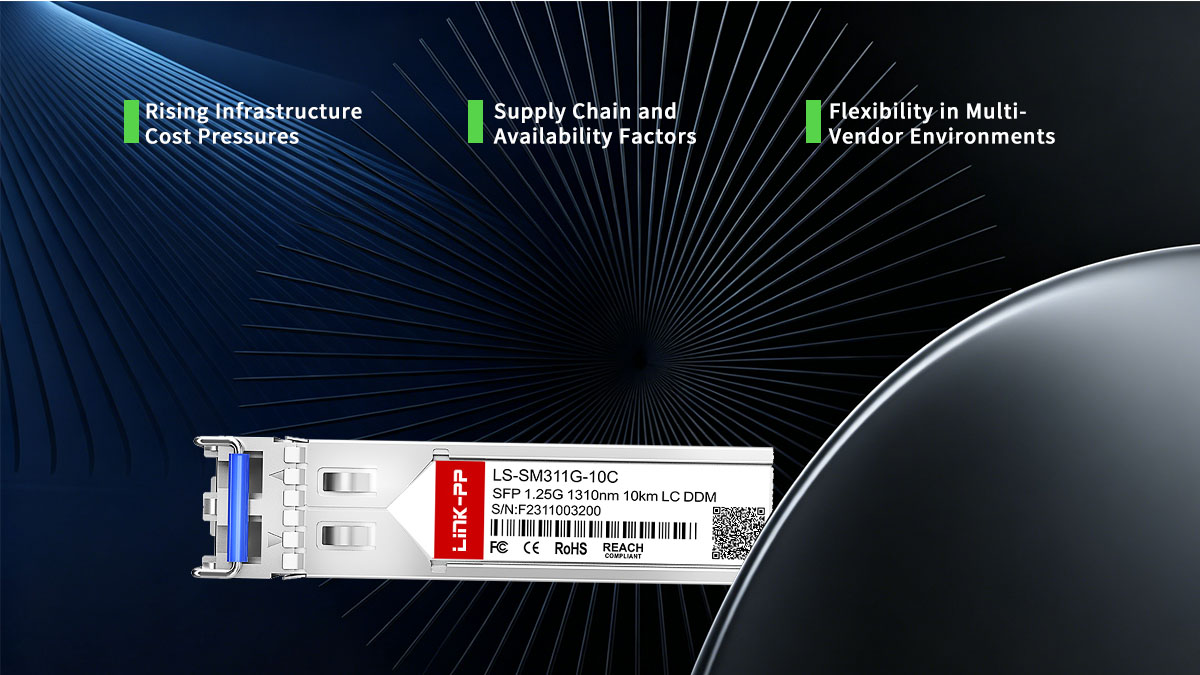
Organizations evaluate Cisco Finisar SFP alternatives primarily to improve flexibility in procurement, reduce operational constraints, and better align optical infrastructure with evolving network demands. While original modules are known for stability and compatibility, large-scale deployments often expose limitations related to cost, availability, and multi-vendor interoperability. As a result, alternative SFP solutions have become a practical consideration in modern enterprise network planning.
Rising Infrastructure Cost Pressures
One of the most common reasons organizations explore alternatives is the increasing cost associated with scaling optical networks. As network size grows, the cumulative expense of original transceivers can significantly impact IT budgets, especially in distributed or multi-site environments.
These cost pressures typically manifest in several ways:
- High per-unit pricing when deploying large quantities of SFP modules
- Budget constraints in data center expansion projects
- Increased operational expenditure for maintaining spare inventories
- Long-term cost accumulation across lifecycle replacement cycles
In many cases, organizations begin reassessing whether identical performance levels can be maintained while optimizing overall infrastructure spending.
Supply Chain and Availability Factors
Another key driver is the variability in global supply chains and product availability. Even widely used optical modules can experience procurement delays or discontinuation over time, particularly when specific models reach end-of-life stages.
Common supply-related challenges include:
- Extended lead times for certain Cisco-specific optical modules
- Limited availability of legacy Finisar-based SKUs
- Regional distribution constraints affecting delivery consistency
- Difficulty maintaining uniform stock across multiple sites
These factors can introduce operational risks, especially in environments that require rapid scaling or immediate replacement capabilities for mission-critical systems.
Multi-Vendor Network Flexibility
Modern enterprise networks are increasingly built on multi-vendor architectures rather than single-supplier ecosystems. In such environments, strict hardware binding can limit deployment flexibility and increase management complexity.
Organizations often seek alternatives to achieve:
- Broader compatibility across different networking platforms
- Simplified inventory management for optical components
- Reduced dependency on a single hardware vendor ecosystem
- Easier integration in hybrid or cloud-connected infrastructures
This flexibility becomes particularly important in large-scale deployments where standardization and interoperability are critical for operational efficiency.
📁 Cisco Finisar SFP vs Compatible Alternatives
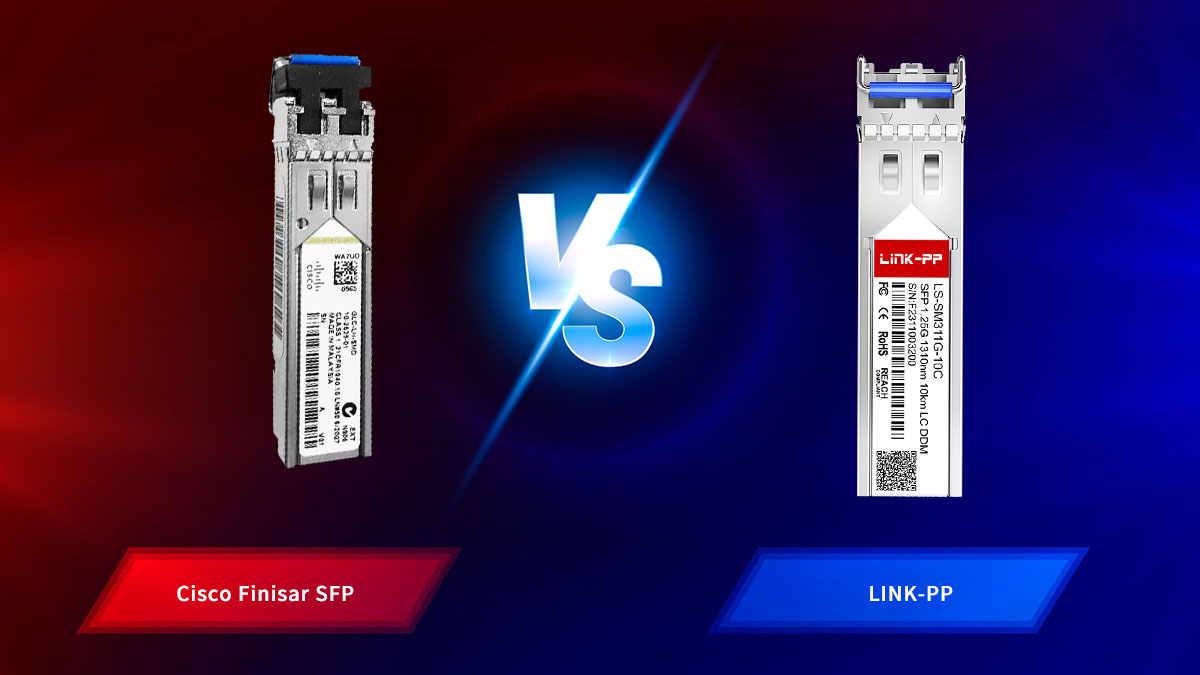
Cisco Finisar SFP modules and compatible alternatives are often evaluated side by side to determine which option better aligns with enterprise requirements for performance, cost efficiency, and deployment flexibility. While both categories can deliver similar optical connectivity functions, they differ in areas such as validation processes, supply chain structure, and lifecycle economics. A structured comparison helps clarify where each option fits best in real-world network environments.
Hardware and Performance Comparison
From a technical perspective, both Cisco Finisar SFP modules and compatible alternatives are designed to achieve stable optical signal transmission. However, differences may exist in component sourcing, quality control standards, and firmware-level optimization depending on the manufacturer.
Key performance-related distinctions include:
- Optical signal stability under high network load conditions
- Consistency of transmission quality across different production batches
- Thermal behavior in high-density switch environments
- Error rate performance under long-distance fiber links
These factors directly influence how each module performs in enterprise or data center deployments, especially in environments requiring continuous uptime and predictable throughput.
Compatibility and Interoperability
Compatibility is one of the most critical evaluation dimensions when comparing Cisco Finisar SFP modules with alternatives. Original modules are fully validated within Cisco ecosystems, while compatible solutions rely on third-party coding and interoperability testing to achieve similar functionality.
To better understand the differences, consider the following aspects:
| Compatibility Factor | Cisco Finisar SFP | Compatible Alternatives |
|---|---|---|
| Cisco Device Recognition | Fully validated | Requires coding alignment |
| Plug-and-Play Behavior | Native support | Generally supported with validation |
| Firmware Interaction | Cisco-optimized | Vendor-dependent behavior |
| Multi-Platform Use | Limited flexibility | Broader interoperability potential |
These differences highlight the importance of ensuring proper compatibility validation before large-scale deployment of alternative modules.
Reliability and Lifecycle Analysis
Reliability is a key concern in mission-critical networks where downtime can directly impact business operations. Cisco Finisar SFP modules are typically associated with highly controlled manufacturing and strict validation processes, while compatible alternatives vary depending on the supplier’s quality standards.
Important reliability considerations include:
- Long-term operational stability under continuous load
- Manufacturing consistency across different production batches
- Environmental tolerance in temperature-sensitive deployments
- Failure rate performance in high-density networking environments
In lifecycle terms, both options can support extended usage, but consistency and predictability may differ depending on sourcing and quality assurance practices.
Cost Structure Comparison
Cost is often the most influential factor when comparing Cisco Finisar SFP modules with compatible alternatives. While performance levels may be comparable in many scenarios, pricing structures can vary significantly depending on sourcing channels and brand positioning.
A simplified comparison is shown below:
| Cost Factor | Cisco Finisar SFP | Compatible Alternatives |
|---|---|---|
| Unit Acquisition Cost | Higher | Lower |
| Large-Scale Deployment Cost | Significant | More optimized |
| Spare Inventory Investment | Higher capital requirement | Reduced capital pressure |
| Total Lifecycle Cost | More stable but higher | More flexible and scalable |
Beyond unit pricing, organizations also evaluate long-term ownership costs, including maintenance, replacement cycles, and inventory management efficiency.
📁 Key Technical Factors Before Deploying Alternatives
Before deploying Cisco-compatible SFP alternatives in enterprise or data center environments, it is essential to evaluate a set of technical factors that directly impact network stability, interoperability, and long-term performance. Although many alternative modules are designed to match Cisco Finisar SFP specifications, successful deployment depends on careful validation across both hardware and software layers.
Compatibility Validation
Compatibility validation is the first and most critical step when introducing alternative SFP modules into a Cisco-based network. Even when optical specifications appear identical, device-level recognition and firmware interaction can vary depending on coding and vendor implementation.
To ensure stable integration, organizations typically focus on:
- Cisco switch and router model compatibility verification
- IOS / NX-OS version support alignment with SFP coding
- EEPROM programming consistency for device recognition
- Pre-deployment interoperability testing in lab environments
These validation steps help reduce the risk of link failure, unrecognized modules, or inconsistent optical behavior in production networks.
Optical Performance Metrics
Optical performance directly determines the quality and reliability of data transmission across fiber links. When evaluating alternatives, it is important to compare key optical parameters against Cisco Finisar reference specifications to ensure equivalent performance.
A structured comparison of critical metrics includes:
| Metric | Importance in Deployment | Typical Evaluation Focus |
|---|---|---|
| TX/RX Optical Power | Ensures signal integrity across distance | Power budget alignment with link design |
| Wavelength Accuracy | Prevents transmission mismatch | 850nm / 1310nm / 1550nm compliance |
| Link Distance Capability | Defines deployment range | Multimode vs single-mode performance |
| DOM/DDM Monitoring | Enables real-time diagnostics | Temperature, voltage, and signal reporting |
These parameters help determine whether an alternative module can maintain stable performance under real-world network conditions.
Network Stability Considerations
Network stability is a key concern when deploying optical modules at scale, particularly in high-density switching environments where heat, power, and traffic load are continuously fluctuating. Even minor inconsistencies in module behavior can affect overall system reliability.
Important stability factors include:
- Thermal performance under sustained high-throughput traffic
- Power consumption consistency across multiple modules
- Signal stability in high-density port configurations
- Failure behavior and recovery characteristics under stress conditions
Careful assessment of these factors ensures that alternative SFP modules can operate reliably in mission-critical environments without introducing unexpected network disruptions.
Compliance and Certification Standards
Compliance with industry and environmental standards is another essential factor when selecting Cisco-compatible SFP alternatives. Certified manufacturing processes help ensure consistency, safety, and interoperability across different deployment environments.
Key standards to evaluate include:
- MSA (Multi-Source Agreement) compliance for interoperability
- RoHS environmental compliance for hazardous substance restrictions
- IEEE Ethernet standards alignment for transmission consistency
- ISO-based manufacturing quality certifications for production control
These certifications provide additional assurance that alternative modules meet baseline industry requirements and can be safely integrated into existing network infrastructure.
📁 Comparing Common Cisco Finisar SFP Alternatives
Cisco Finisar SFP modules are often replaced or complemented by several categories of alternative optical transceivers in modern networks. These alternatives are not uniform in design or sourcing model, but they generally aim to deliver equivalent optical performance while improving flexibility in procurement, scalability, and lifecycle management. A clear comparison of these options helps organizations select the most suitable solution based on deployment requirements.
Third-Party Compatible Optical Modules
Third-party compatible SFP modules are the most widely used alternative to Cisco Finisar optics in enterprise environments. These modules are manufactured by independent vendors and are typically programmed to ensure compatibility with Cisco networking equipment.
From a deployment perspective, they are commonly selected for their balance between performance and flexibility:
- Designed to match Cisco optical and electrical specifications
- Support EEPROM coding for device recognition in Cisco systems
- Offer broad compatibility across multi-vendor network infrastructures
- Suitable for large-scale enterprise and data center deployments
These modules are often used in environments where network scalability and cost control are both important, while maintaining stable optical communication performance.
Refurbished and Recertified Modules
Refurbished and recertified SFP modules represent another category of Cisco Finisar SFP alternatives. These modules are typically original units that have been previously deployed, then tested, cleaned, and revalidated for reuse in secondary markets.
Their characteristics can be summarized as follows:
- Extended lifecycle usage through requalification processes
- Lower entry cost compared to brand-new original modules
- Availability depends on legacy inventory supply
- Performance consistency may vary based on refurbishment quality
While these modules can be suitable for non-critical or legacy environments, they require careful evaluation to ensure they meet current network performance expectations.
White-Label Optical Solutions
White-label SFP modules are produced by OEM manufacturers but distributed under different brand names. These solutions often originate from the same manufacturing ecosystem as original components but are sold through alternative channels.
Key features include:
- OEM-based production with standardized manufacturing processes
- Flexible branding and distribution models across global markets
- Consistent optical performance when sourced from reputable suppliers
- Compatibility with Cisco and other major networking platforms
White-label solutions are frequently used in enterprise deployments where consistency and supply chain flexibility are important considerations.
Comparative Overview of Cisco Finisar SFP Alternatives
To better understand the differences between major alternative categories, the following comparison highlights key deployment attributes relevant to enterprise networking environments.
| Category | Compatibility Level | Cost Efficiency | Reliability Consistency | Deployment Flexibility |
|---|---|---|---|---|
| Cisco Finisar SFP (Original) | Very High | Lower | Very High | Moderate |
| Third-Party Compatible Modules | High | High | High (supplier-dependent) | Very High |
| Refurbished / Recertified Modules | Medium | High | Variable | Limited |
| White-Label OEM Solutions | High | High | High | High |
Each category presents a different balance of performance stability, cost structure, and deployment flexibility. The selection often depends on network criticality, lifecycle expectations, and infrastructure scaling requirements.
📁 Enterprise Deployment Strategies for Cisco-Compatible SFPs
Deploying Cisco-compatible SFP modules at an enterprise scale requires more than simple hardware replacement. It involves structured planning across inventory management, network segmentation, validation processes, and lifecycle governance. A well-designed deployment strategy ensures stable optical performance while maintaining cost efficiency and operational continuity across distributed network environments.

Optimizing Optical Module Inventory
Effective inventory management is a foundational step in enterprise SFP deployment strategy. Without standardized control over optical modules, organizations often face compatibility confusion, overstocking, or inconsistent replacement cycles across sites.
A structured inventory approach typically includes:
- Standardizing a limited set of validated SFP models across the network
- Categorizing modules by speed, wavelength, and transmission distance
- Maintaining centralized visibility of spare modules across multiple locations
- Aligning procurement cycles with predictable network expansion plans
This approach reduces operational complexity and ensures that compatible modules are readily available when network expansion or replacement is required.
Balancing Cost and Network Reliability
Enterprises must carefully balance cost efficiency with network stability when deploying Cisco-compatible SFP modules. While alternative modules can reduce overall infrastructure expenses, they must still meet reliability thresholds for critical network paths.
Key considerations in this balance include:
- Prioritizing original or highly validated modules for core network links
- Using compatible alternatives in access or non-critical segments
- Conducting pre-deployment testing in controlled environments
- Defining redundancy policies for high-availability architectures
This layered deployment strategy helps maintain network integrity while allowing flexibility in cost optimization across different network tiers.
Best Practices for Large-Scale Rollouts
Large-scale deployment of Cisco-compatible SFP modules requires consistent procedures to avoid configuration inconsistencies and operational disruptions. Standardized rollout practices help ensure predictable behavior across all network nodes.
Recommended best practices include:
- Conducting pilot deployments before full-scale rollout
- Documenting compatibility results for each network device type
- Implementing structured labeling and asset tracking systems
- Monitoring optical performance metrics after deployment
- Verifying thermal and power stability in high-density environments
These practices support controlled expansion while minimizing the risk of unexpected compatibility or performance issues.
📁 Future Trends in Cisco-Compatible Optical Networking
Cisco-compatible optical networking is evolving rapidly as enterprises shift toward higher bandwidth demands, cloud-native architectures, and more flexible infrastructure models. The role of SFP modules is also expanding beyond basic connectivity, becoming part of a broader ecosystem focused on scalability, automation, and long-term operational efficiency. These trends are reshaping how organizations evaluate and deploy Cisco Finisar SFP modules and their compatible alternatives.
Increasing Adoption of Third-Party Optics
The adoption of third-party compatible SFP modules is expected to continue growing as organizations prioritize infrastructure flexibility and cost optimization. While original modules remain widely used in critical environments, compatible optics are becoming more accepted in mainstream enterprise deployments.
Key drivers behind this trend include:
- Expanding multi-vendor network architectures in enterprise IT environments
- Growing demand for scalable optical infrastructure at lower operational cost
- Improved compatibility validation and coding technologies for Cisco systems
- Wider acceptance of standardized optical performance across suppliers
This shift indicates a gradual move toward more open and flexible optical ecosystems where interoperability plays a central role in network design.
Advancements in Optical Module Technology
Technological improvements in optical transceivers are significantly enhancing performance, efficiency, and monitoring capabilities. Modern SFP modules are increasingly designed to support higher density environments while reducing power consumption and improving diagnostic accuracy.
Key technological developments include:
- Lower power consumption designs optimized for high-density switches
- Enhanced digital diagnostic monitoring (DDM) for real-time performance tracking
- Improved thermal stability in compact networking environments
- Evolution toward higher-speed optical form factors beyond traditional SFP standards
These advancements are enabling more efficient network architectures while supporting increasing data traffic demands in enterprise and cloud environments.
Sustainability and Lifecycle Efficiency
Sustainability is becoming a significant consideration in optical networking strategy, particularly in large-scale enterprise environments where hardware lifecycle management has both environmental and cost implications.
Emerging sustainability-focused trends include:
- Extended lifecycle usage of optical modules through reuse and recertification
- Reduced electronic waste through optimized replacement cycles
- Energy-efficient optical designs for lower operational power consumption
- Increased focus on circular supply chain models in networking hardware
These factors are encouraging organizations to evaluate not only performance and cost, but also long-term environmental impact when selecting Cisco-compatible optical solutions.
📁 Conclusion
Cisco Finisar SFP modules continue to serve as a trusted foundation for enterprise optical networking due to their strong compatibility with Cisco systems and consistent transmission performance. At the same time, the growing availability of Cisco-compatible alternatives has significantly expanded the options available to network designers, especially in environments where scalability, procurement flexibility, and lifecycle efficiency are key priorities.
Across technical evaluation, deployment strategy, and long-term operational planning, the comparison between original Cisco Finisar SFP modules and alternative solutions is no longer simply a question of performance. Instead, it reflects a broader decision-making framework that balances stability, interoperability, cost structure, and infrastructure growth requirements. When properly validated, compatible SFP modules can deliver reliable performance across a wide range of enterprise use cases, from access-layer connectivity to data center expansion.
In practice, organizations typically achieve the best results by aligning module selection with specific network roles rather than relying on a single uniform approach. A structured deployment strategy often includes:
- Using highly validated optics for core and mission-critical network links
- Applying compatible SFP alternatives in scalable access and aggregation layers
- Maintaining strict compatibility testing before large-scale rollout
- Continuously monitoring optical performance throughout the lifecycle
This layered approach helps ensure both operational stability and cost efficiency, while still supporting long-term network evolution.
For organizations seeking additional resources and Cisco-compatible optical module solutions, the LINK-PP Official Store provides a reference point for exploring a wide range of SFP products designed for enterprise and data center networking environments.