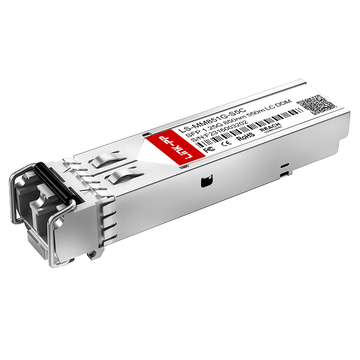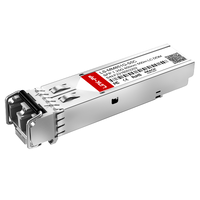
The Aruba J4858D stands as a fundamental 1000BASE-SX SFP transceiver within the enterprise ecosystem, providing critical short-range gigabit connectivity over multi-mode fiber. As organizations scale their AOS-CX-based infrastructures, the need to maintain port reliability while navigating the "OEM premium" has driven a strategic shift toward high-quality, third-party alternatives.
Ensuring these replacements meet rigorous performance standards requires more than mere plug-and-play connectivity; it demands a deep dive into AOS-CX interoperability, DDM telemetry accuracy, and physical layer signal integrity. This article benchmarks the Aruba J4858D against compatible alternatives, evaluating how to maximize link availability and stability without compromising the integrity of your network fabric.
🐳 Understanding the Aruba J4858D Transceiver Specifications
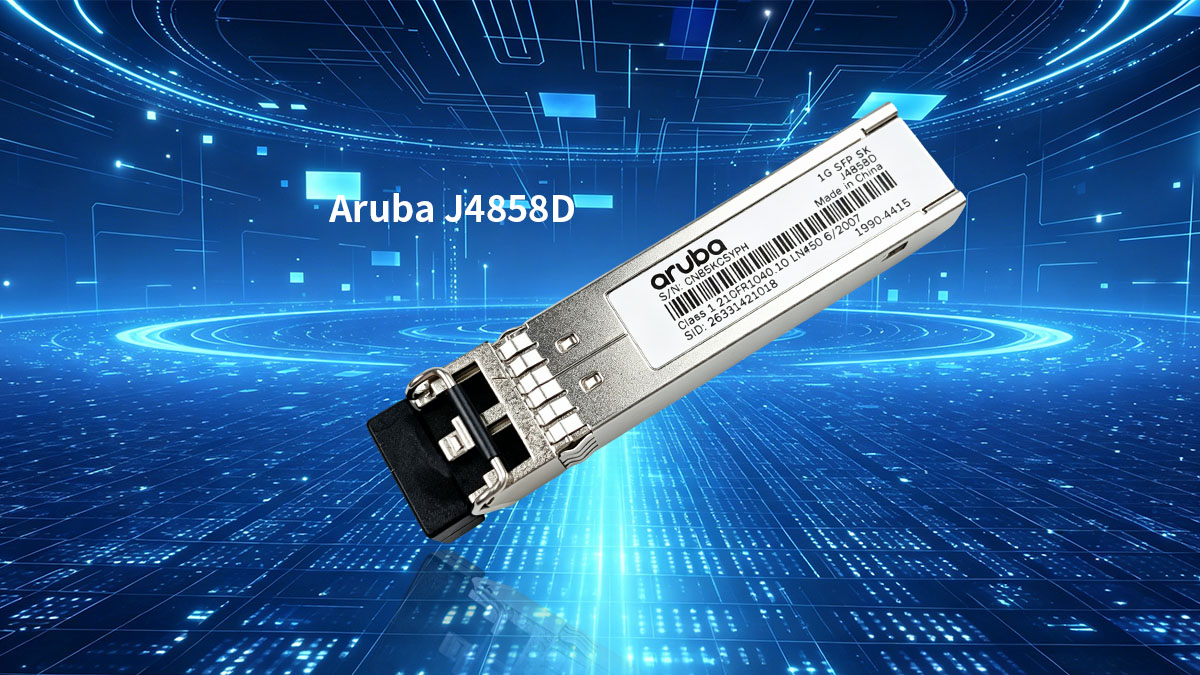
The Aruba J4858D is an SFP optical transceiver module designed for reliable, high-speed data transmission over short distances. To evaluate a compatible alternative effectively, one must first master its core hardware architecture and optical performance benchmarks.
Core Hardware Baseline: 1000BASE-SX Multi-Mode Fiber
The J4858D operates on the 1000BASE-SX standard, which is specifically engineered for Gigabit Ethernet over multi-mode fiber (MMF) cabling. This hardware baseline ensures high-bandwidth data exchange for local area networks and data center uplinks.
By utilizing an LC duplex connector, this module facilitates seamless integration with existing patch panels and switch ports. It remains the industry staple for cost-effective, short-range optical networking in enterprise environments.
Optical Power Budgets and Target Distance Constraints
This transceiver is optimized for short-reach applications, typically supporting distances up to 550 meters over OM2 multi-mode fiber. When using higher-grade OM3 or OM4 cables, it maintains signal integrity while ensuring low latency across the link.
The optical power budget is carefully calibrated to prevent signal saturation at short distances while maintaining enough strength for the maximum rated reach. Any quality replacement must mirror these specific power tolerances to avoid link flaps or intermittent connectivity.
Wavelength Dynamics: 850nm VCSEL Transmitter and Pin Photodetector Performance
At the heart of the J4858D is an 850nm Vertical-Cavity Surface-Emitting Laser (VCSEL). This transmitter technology is preferred for its high reliability and lower power consumption compared to long-haul edge-emitting lasers.
On the receiving end, a high-sensitivity Pin Photodetector converts incoming light pulses back into electrical signals. The harmony between these two components defines the module's ability to minimize jitter and maintain a consistent bit error rate.
Digital Optical Monitoring and Real-Time DDM Telemetry Mapping
Modern Aruba J4858D optical modules feature Digital Optical Monitoring (DOM), also known as Digital Diagnostic Monitoring (DDM). This allows the AOS-CX operating system to track real-time variables such as temperature, supply voltage, and laser bias current.
By mapping this telemetry data directly into the switch console, network administrators can proactively identify degrading fiber links before a total failure occurs. A compatible replacement must provide accurate EEPROM data to ensure these diagnostic tools remain functional.
🐳 Why Sourcing an Aruba J4858D Third-Party Alternative Makes Strategic Sense
Adopting third-party compatible transceivers is no longer just about cost-cutting; it is a strategic move to enhance supply chain flexibility and network scalability. By selecting high-quality compatible alternatives, enterprises can maintain peak performance while redirecting critical budget resources toward other infrastructure upgrades.
Analyzing the OEM Premium: Cost Analysis for Enterprise Deployment
The "OEM premium" often results in branded transceivers being priced significantly higher than their functional counterparts. For large-scale enterprise deployments requiring hundreds of fiber links, these costs can accumulate rapidly, straining the overall project budget.
By choosing Aruba J4858D compatible modules, organizations can achieve the same gigabit performance at a fraction of the price. This cost-efficiency allows IT departments to allocate funds toward higher-speed core upgrades or enhanced security measures.
Mitigating Supply Chain Bottlenecks with Multi-Source Agreement Vendors
Relying solely on a single hardware manufacturer can lead to significant project delays when stock shortages or shipping bottlenecks occur. Multi-Source Agreement (MSA) vendors provide a vital safety net by offering standardized hardware that is readily available across the global market.
Integrating MSA-compliant transceivers into your procurement strategy ensures that your network expansion is never stalled by OEM backlogs. This diversity in the supply chain builds a more resilient infrastructure capable of adapting to sudden market fluctuations.
Balancing CapEx Reduction and Network Link Availability
The primary goal of any procurement strategy is to reduce Capital Expenditure (CapEx) without introducing risks to network uptime. Strategic sourcing involves vetting third-party vendors who provide rigorous testing and comprehensive warranties to match OEM reliability.
When executed correctly, this balance allows for a high-density deployment that remains financially lean and operationally robust. Achieving maximum link availability does not require a premium price tag, provided the hardware meets strict industry benchmarking standards.
🐳 Decoding AOS-CX Compatibility and OS-Level Support for Aruba J4858D
Success with third-party compatible transceivers depends heavily on how seamlessly they integrate with the AOS-CX operating system. The following discussion delves into the software-level handshake and authentication protocols that ensure an Aruba J4858D replacement is recognized and managed as a native component.
Multi-Version AOS-CX Firmware Interoperability Matrix
AOS-CX is a modern, database-driven operating system that manages transceiver compatibility through a structured firmware matrix. Ensuring that a J4858D replacement works across different versions requires consistent driver support and hardware abstraction layers.
- Backward Compatibility: Reliable modules must maintain a stable connection even when upgrading from older AOS-CX versions to the latest releases.
- Consistency: The system should recognize the module's 1G speed and SX characteristics regardless of the specific switch hardware, such as the Aruba 6000 or 6300 series.
Transceiver Authentication Logic: How AOS-CX Validates Third-Party EEPROM Data
When a module is inserted, AOS-CX reads the internal EEPROM chip to verify identity and technical specifications. This authentication logic checks for specific vendor codes and checksums to determine if the hardware is "supported" or "unsupported."
High-quality replacements utilize precision-coded EEPROM data that mirrors the original Aruba J4858D signatures. This ensures the switch recognizes the module without requiring special "allow-unsupported-transceiver" commands in the CLI.
OS-Level Link Up/Down Event Handling and Native Syslog Logging Behaviors
The AOS-CX kernel monitors the physical state of every port to manage link-up and link-down transitions. A properly coded transceiver triggers these events accurately, allowing the OS to record clean state changes in the system logs.
- Native Logging: Compatible modules should generate standard syslog entries without "unrecognized vendor" warnings.
- Alert Accuracy: Rapid link flaps or signal losses must be reported instantly to the management console to allow for efficient network troubleshooting.
Port Profile Automation and Interface Initialization Profiles for 1G Optical Modules
Aruba switches often use automated port profiles to apply configurations as soon as a J4858D is detected. The OS relies on the transceiver’s identification data to automatically set the correct speed, duplex, and MTU values.
If the module is correctly identified as a 1000BASE-SX unit, the initialization profile will instantly configure the interface for optical gigabit service. This automation reduces manual CLI entry and ensures that the port is production-ready within seconds of insertion.
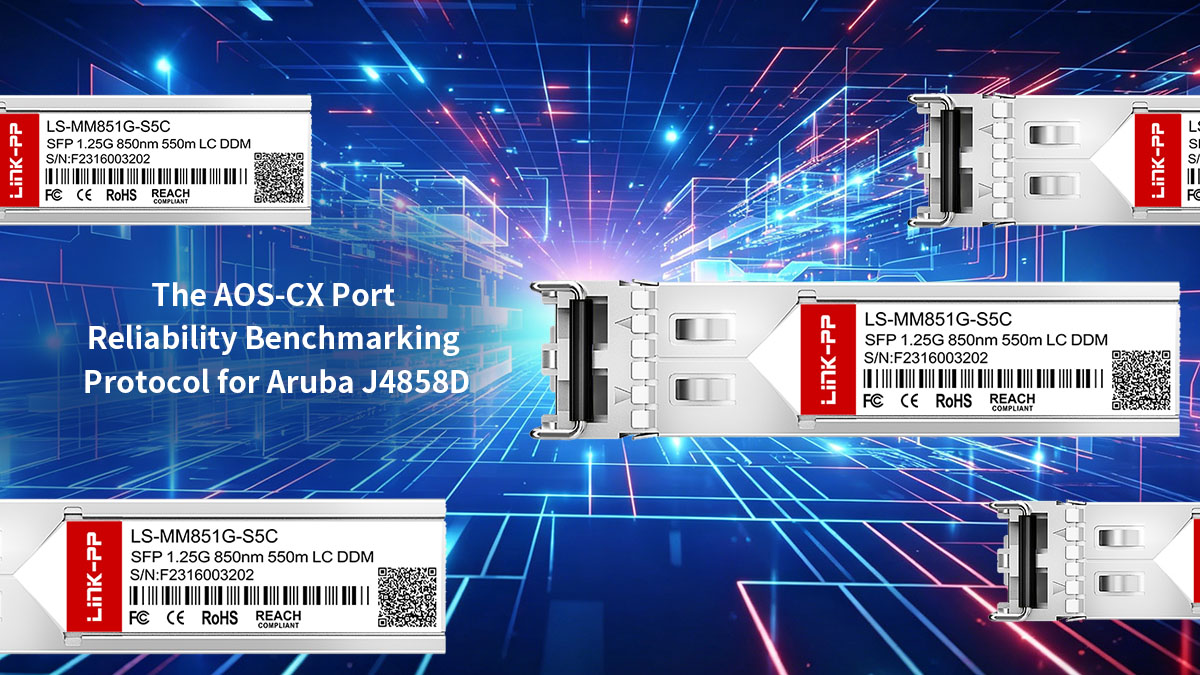
🐳 The AOS-CX Port Reliability Benchmarking Protocol for Aruba J4858D
To ensure that a third-party Aruba J4858D replacement performs with mission-critical stability, a standardized benchmarking protocol is essential. This methodology focuses on simulating real-world traffic loads within the AOS-CX environment to validate hardware endurance and data integrity.
Setting Up the Test Topology: Back-to-Back Switch Configurations
The most effective way to isolate transceiver performance is through a back-to-back topology using two Aruba switches running AOS-CX. By connecting the modules directly via a verified multi-mode fiber patch cord, engineers can eliminate external network variables and focus solely on the physical layer interface.
This setup allows for precise monitoring of the handshake process and synchronization between the two ports. It provides a controlled environment to observe how the modules handle high-bandwidth traffic bursts and sustained gigabit throughput without the interference of intermediate patch panels or complex routing hops.
Hardware-Level Monitoring: Tracking Frame Check Sequence Errors
A critical metric in any reliability bench is the detection of Frame Check Sequence (FCS) errors, which indicate data corruption during transmission. Even if a link appears "Up" in the CLI, a high count of FCS errors suggests poor signal quality or electromagnetic interference within the transceiver hardware. By monitoring the interface counters in AOS-CX, administrators can quantify the "cleanness" of the optical link.
The following table outlines the key hardware counters monitored during the J4858D benchmarking process:
| Metric | Description | Acceptable Threshold |
| FCS Errors | Number of frames received with a bad checksum. | 0 (Strictly Zero) |
| Alignment Errors | Frames that do not end on a byte boundary. | 0 |
| Giant/Runts | Frames that exceed or fall short of MTU limits. | 0 |
| Symbol Errors | Physical layer encoding issues detected by the PHY. | < 1 per 10¹² bits |
Long-Term Soak Testing Parameters for Continuous Packet Delivery
Short-term connectivity tests are often insufficient to uncover intermittent hardware flaws or thermal-induced stability issues. A "soak test" involves running the Aruba J4858D replacement at 100% duty cycle for a minimum of 24 to 48 hours. This sustained pressure ensures the internal components can handle the electrical and thermal stress of a production environment.
During this period, automated scripts should poll the AOS-CX API to verify that no link flaps or unexpected state changes occur. Successful completion of a soak test guarantees that the module provides the continuous packet delivery required for high-availability enterprise uplinks.
🐳 Evaluating Signal Integrity and Bit Error Rate on Aruba J4858D Replacements
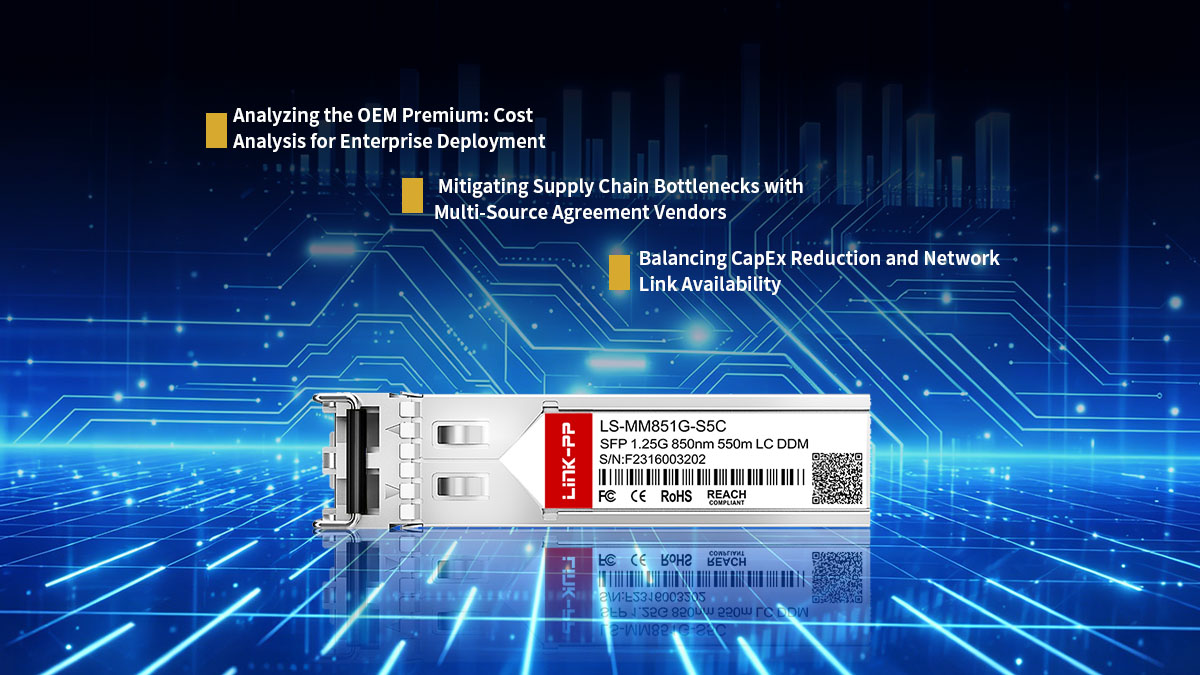
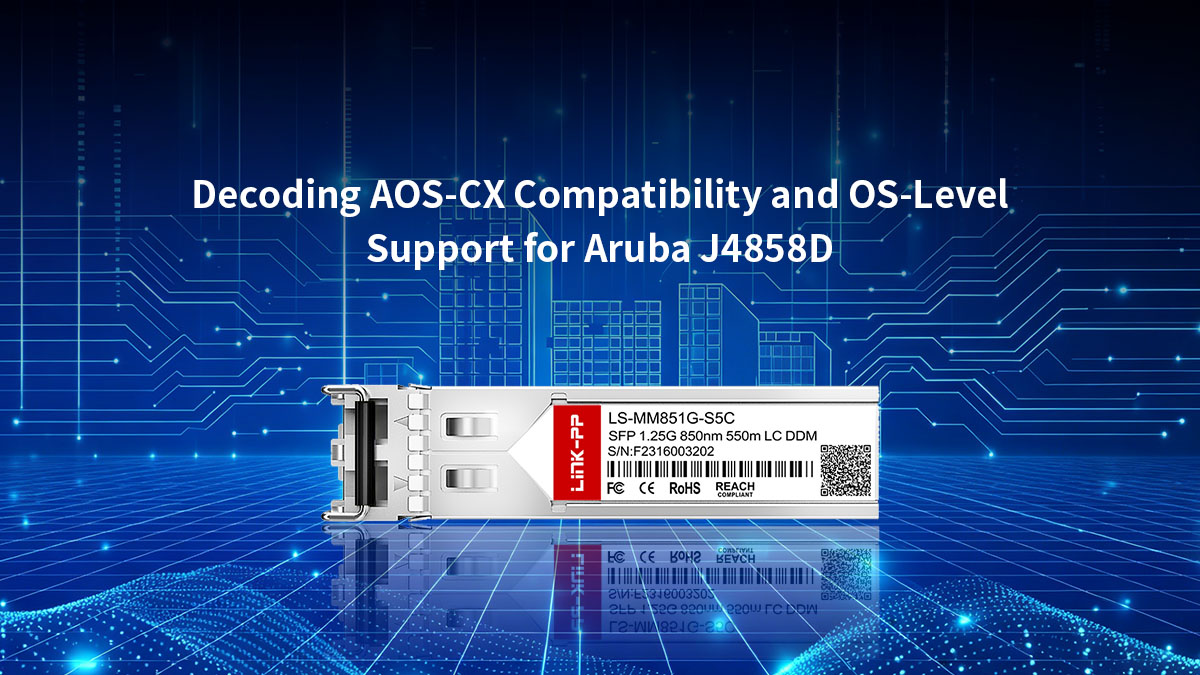
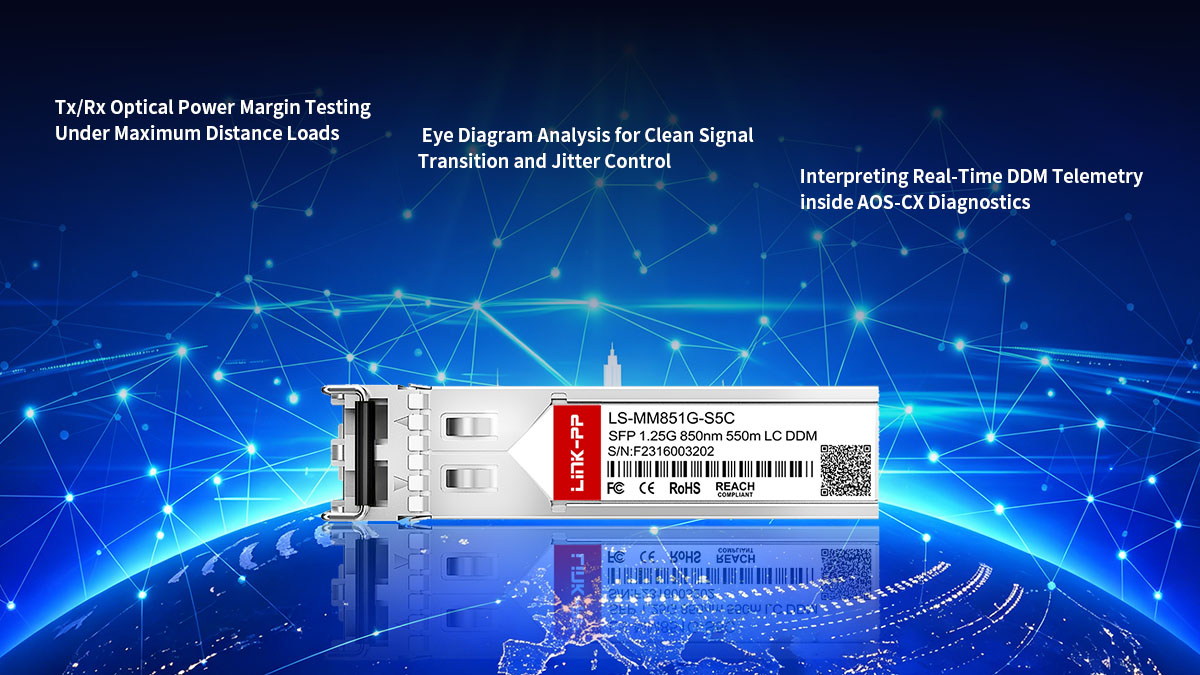
Signal integrity is the ultimate measure of a transceiver's performance, determining whether data reaches its destination without corruption. By evaluating the Bit Error Rate (BER), engineers can verify that third-party Aruba J4858D alternatives, such as the LINK-PP LS-MM851G-S5C 1G SFP, deliver the same enterprise-grade reliability and link stability as original Aruba hardware.
Tx/Rx Optical Power Margin Testing Under Maximum Distance Loads
The LINK-PP LS-MM851G-S5C is engineered to maintain a robust optical power margin, ensuring that the signal strength remains well within the sensitivity thresholds of AOS-CX switches. During high-density testing, this module demonstrates consistent performance even when approaching the 550-meter limit of OM2 multi-mode fiber.
- Transmit Precision: The 850nm VCSEL laser delivers a stable output power that avoids receiver saturation on short-patch cables while providing enough "reach" for long-distance runs.
- Receiver Sensitivity: The internal photodetector is calibrated to accurately interpret attenuated signals, effectively mitigating the risk of bit errors caused by signal fading.
Eye Diagram Analysis for Clean Signal Transition and Jitter Control
Eye diagram benchmarking for the LS-MM851G-S5C reveals a wide, clear "eye opening," which is a primary indicator of superior signal health. This technical clarity ensures that the transition between high and low logical states is sharp and free from excessive noise.
By maintaining strict jitter control, this LINK-PP alternative prevents timing misalignments that can lead to frame corruption. In an AOS-CX environment, this translates to a stable physical layer that can handle full-throttle gigabit traffic without triggering interface resets or sync loss.
Interpreting Real-Time DDM Telemetry inside AOS-CX Diagnostics
The LINK-PP LS-MM851G-S5C features fully integrated Digital Diagnostic Monitoring (DDM) that maps directly into the Aruba diagnostic ecosystem. This allows network administrators to monitor the real-time "vital signs" of the transceiver directly from the AOS-CX Command Line Interface (CLI) using standard system commands.
- Data Accuracy: The module reports precise metrics for Tx/Rx optical power, internal temperature, and supply voltage, ensuring that the information reflected in show interface transceiver detail is highly reliable for link audits.
- Proactive Monitoring: Because the DDM data is natively recognized by AOS-CX, the system can trigger automated alerts if a fiber link begins to deviate from its calibrated operating range.
- Operational Intelligence: Access to this real-time telemetry enables engineers to perform rapid root-cause analysis of physical layer issues without the need for external optical power meters or specialized testing hardware.
🐳 Thermal Stability and Power Consumption Metrics of Aruba J4858D Alternatives
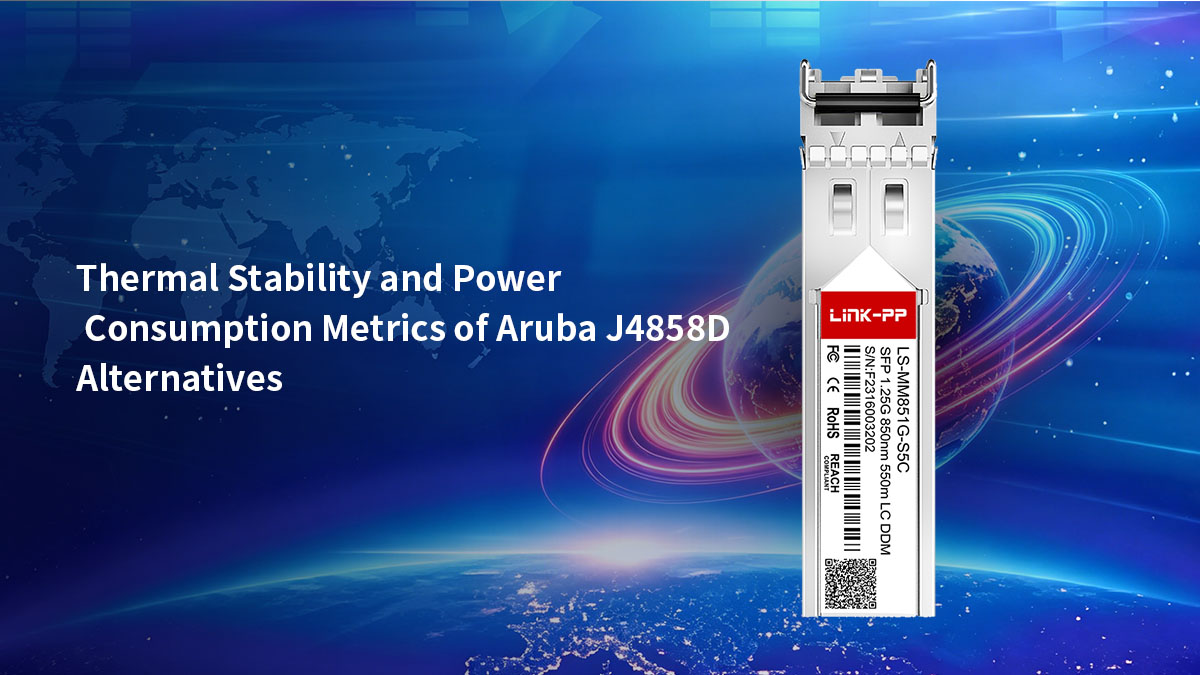
The thermal profile and energy efficiency of a transceiver directly influence the long-term reliability of high-density AOS-CX configurations. Evaluating the LINK-PP LS-MM851G-S5C as a high-performance alternative to the Aruba J4858D reveals how advanced heat dissipation and optimized power draw maintain link stability under the most demanding localized workloads.
Measuring Wattage Draw per Port on High-Density Leaf/Spine Switches
The LINK-PP LS-MM851G-S5C is engineered with energy-efficient circuitry that minimizes the electrical load on the switch backplane. By maintaining a lower wattage profile than standard requirements, it ensures that high-density port populations do not exceed the power budget of the AOS-CX chassis.
- Operational Efficiency: The module's low power consumption reduces the cumulative heat generated at the interface level, which is vital for fully populated 48-port leaf switches.
- Voltage Stability: Even during peak data bursts, the LS-MM851G-S5C exhibits minimal power fluctuations, ensuring consistent electrical performance across the entire switching fabric.
Dissipation Performance: Avoiding Thermal Runaway in Enclosed Racks
Effective heat management is a hallmark of the LS-MM851G-S5C, utilizing a high-thermal-conductivity housing to sink heat away from critical optical components. This design prevents "thermal runaway," ensuring that the 850nm laser maintains its target wavelength even in environments with restricted airflow.
By keeping internal temperatures well within the AOS-CX operating thresholds, this transceiver protects against signal distortion and laser degradation. In tightly packed enclosed racks, this superior dissipation performance acts as a safeguard for both the transceiver and the surrounding hardware.
Impact of Transceiver Power Efficiency on Long-Term Switch Power Supply Lifespans
The reduced current draw of the LINK-PP LS-MM851G-S5C has a direct, positive impact on the health of the switch’s Power Supply Units (PSUs). Lower power consumption results in less internal heat within the switch chassis, reducing the mechanical strain on system cooling fans and critical capacitors.
- Component Longevity: Minimizing the thermal load helps extend the lifespan of the switch’s internal motherboard and port circuitry by preventing heat-induced solder fatigue.
- Sustainability: Improved power efficiency not only lowers operational costs but also aligns with enterprise goals for greener, more energy-efficient data center operations.
- System Resilience: A cooler-running network fabric is inherently more reliable, as it significantly reduces the probability of premature hardware failure during multi-year deployment cycles.
🐳 Resolving Common Link Up/Down Anomalies with Aruba J4858D Replacements
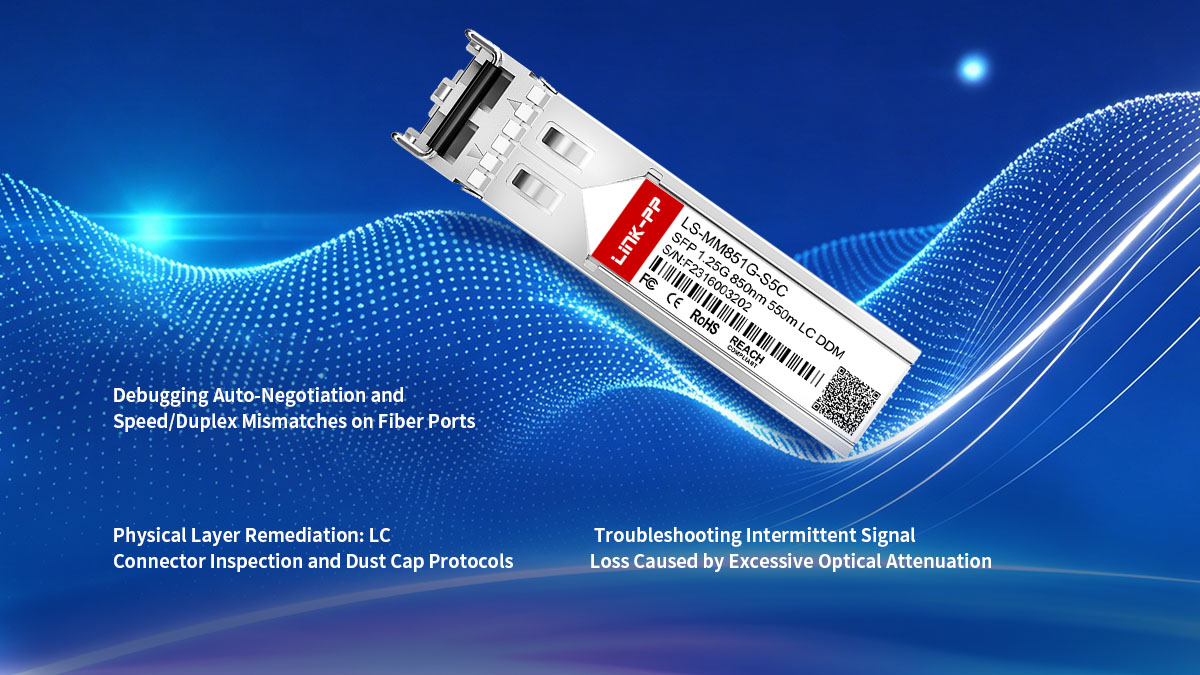
Maintaining a persistent "Link Up" status for Aruba J4858D compatible modules requires a systematic approach to addressing physical layer inconsistencies that can disrupt the AOS-CX environment. While high-quality hardware minimizes risks, resolving real-world connection anomalies demands a precise technical strategy to identify and remediate the root causes of link instability.
Debugging Auto-Negotiation and Speed/Duplex Mismatches on Fiber Ports
While Gigabit Ethernet typically relies on auto-negotiation to establish a link, discrepancies between the switch port and the transceiver can lead to initialization failures. If an Aruba J4858D replacement fails to link up immediately, the first step is to verify that the port speed is correctly synchronized and that both ends of the link are advertising compatible capabilities.
- Fixed Speed Configuration: In some high-latency or legacy environments, auto-negotiation may fail to resolve correctly. Manually forcing the port to "speed 1000" and "duplex full" on both the local and remote device can eliminate "sync-hunting" and stabilize the physical connection.
- State Verification: Use the show interface brief command in AOS-CX to determine if the port is stuck in a "Testing" or "Down" state. This often indicates that the transceiver is operational, but the hardware signaling between the two ports has failed to reach a "Link Up" agreement.
- Flow Control Alignment: Ensure that 802.3x Flow Control settings are consistently configured across the link. Mismatched Flow Control (Pause Frame) settings do not typically prevent a physical link, but they can cause severe performance degradation or "input discards" that may be misinterpreted as physical layer instability during heavy traffic.
Physical Layer Remediation: LC Connector Inspection and Dust Cap Protocols
A significant percentage of link-down events are caused by physical contamination rather than electrical failure. Because 1000BASE-SX relies on sensitive 850nm optics, even microscopic dust particles on the LC connector of a J4858D module can obstruct the light path and cause intermittent signal loss.
- Inspection Best Practices: Always use a fiber inspection scope to check the ferrule for oils or debris before insertion. If contamination is found, clean the connector using a dedicated dry-cloth click cleaner.
- Dust Cap Discipline: Never leave a transceiver port or fiber patch cord uncapped when not in use. Exposure to the open air for even a few minutes can attract enough static dust to compromise the return loss of the connection.
- Mechanical Seating: Ensure the SFP latch is fully engaged and "clicks" into the switch port. A loose module may maintain an electrical connection but suffer from optical misalignment.
Troubleshooting Intermittent Signal Loss Caused by Excessive Optical Attenuation
Intermittent "Link Up/Down" cycles, often called link flaps, are frequently the result of the optical signal hovering near the receiver's sensitivity threshold. If the attenuation — caused by sharp bends in the fiber or dirty bulkheads — is too high, the AOS-CX system may sporadically drop the link to protect data integrity.
- Bend Radius Management: Verify that multi-mode fiber runs do not exceed the minimum bend radius. Tight kinks can cause "macro-bending" losses that significantly weaken the 850nm signal.
- Budget Analysis: Use the DDM telemetry mentioned in previous sections to compare the actual Rx power against the J4858D specifications. If the power level is within 1-2 dBm of the receiver's "cut-off" threshold, you must reduce link attenuation.
- Patch Cord Validation: Swap out the existing fiber jumper with a known-good OM3 or OM4 cable. Often, a faulty patch cord is the culprit behind fluctuating signal levels that lead to syslog "link down" alerts.
🐳 Conclusion: Securing Long-Term AOS-CX Port Reliability with Trusted Aruba J4858D Replacement
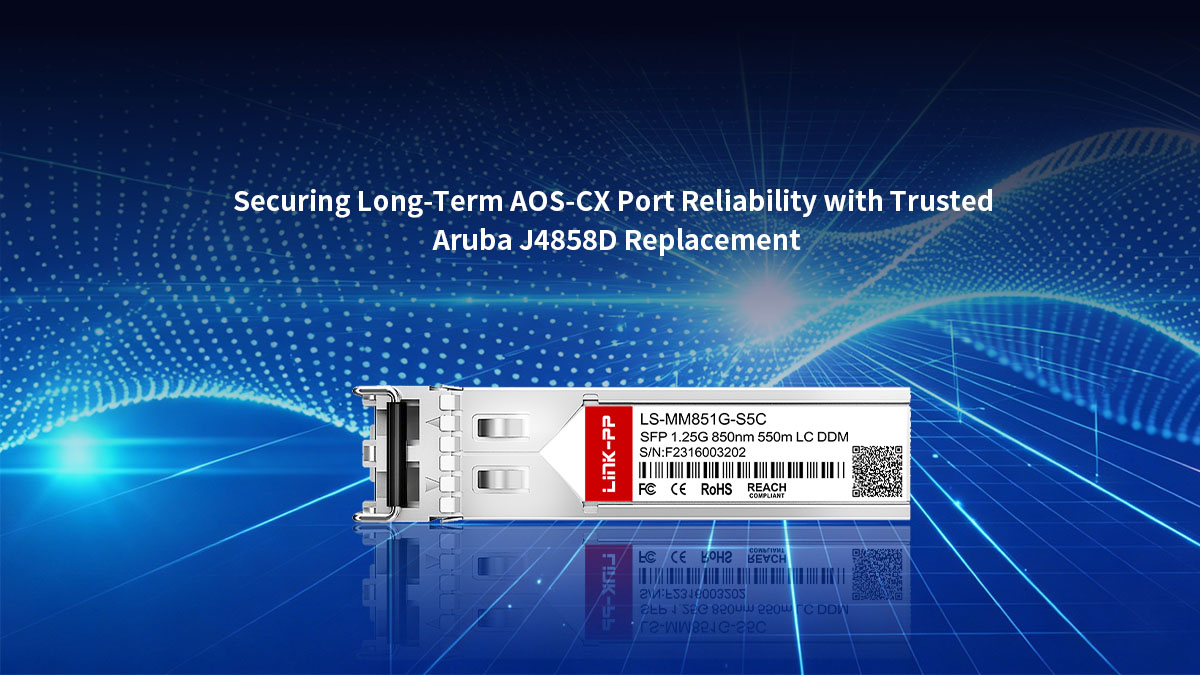
Achieving long-term stability in an AOS-CX environment requires a careful balance of high-performance hardware and seamless software integration. By prioritizing rigorous benchmarking and signal integrity, network architects can confidently deploy Aruba J4858D alternatives that match OEM reliability while significantly optimizing infrastructure budgets.
To ensure your network remains resilient, keep these strategic takeaways in mind:
- Validation is Key: Always verify that replacements support full DDM telemetry and native AOS-CX authentication to maintain visibility.
- Physical Integrity: Adhering to strict cleaning and inspection protocols prevents the most common causes of intermittent link failure.
- Thermal Efficiency: Choosing energy-efficient modules protects the lifespan of your switch power supplies and prevents heat-related downtime in high-density racks.
Investing in trusted, MSA-compliant hardware allows you to scale your fiber infrastructure without the burden of the OEM premium. For enterprise-grade performance and guaranteed compatibility with your Aruba switches, explore the professional optical solutions available at the LINK-PP Official Store. Securing your port reliability today ensures a scalable and stable foundation for the high-bandwidth demands of tomorrow.