10G optical networking has become a foundational technology in modern enterprise and data center infrastructures, enabling high-speed data transmission with improved stability and scalability. As bandwidth demands continue to grow due to cloud computing, virtualization, and high-density server deployments, selecting the right optical transceiver has become increasingly critical for network performance and long-term efficiency.
Among the most widely deployed 10GbE solutions, 10G Multimode SFP modules are often compared with single mode optical transceivers. These two technologies differ significantly in terms of transmission distance, fiber requirements, and overall deployment scenarios, making the selection process highly dependent on specific network architectures and infrastructure constraints. Understanding these differences is essential for building optimized and cost-effective fiber networks.
This article provides a structured comparison between 10G Multimode SFP and single mode optics, focusing on real-world performance and deployment considerations. It will help readers understand key technical and practical aspects, including:
- Core technology differences between multimode and single mode optical transmission
- Performance characteristics such as distance, wavelength, and signal behavior
- Infrastructure requirements and fiber compatibility considerations
- Typical enterprise and data center use cases for each solution
- Key decision factors for selecting the appropriate 10G optical module
By the end of this analysis, you will have a clear framework for evaluating which 10G optical solution best aligns with their network design and scalability requirements, especially in environments where performance consistency and infrastructure efficiency are critical.
💎 Understanding 10G Multimode SFP Technology
10G Multimode SFP technology is a short-reach optical transmission solution designed for high-speed 10GbE connectivity over multimode fiber within controlled environments such as data centers and enterprise networks. It is best understood as a cost-efficient, low-latency optical option optimized for short-distance links rather than long-haul transmission. This section explains its core definition, fiber dependency, and transmission behavior in practical deployments.
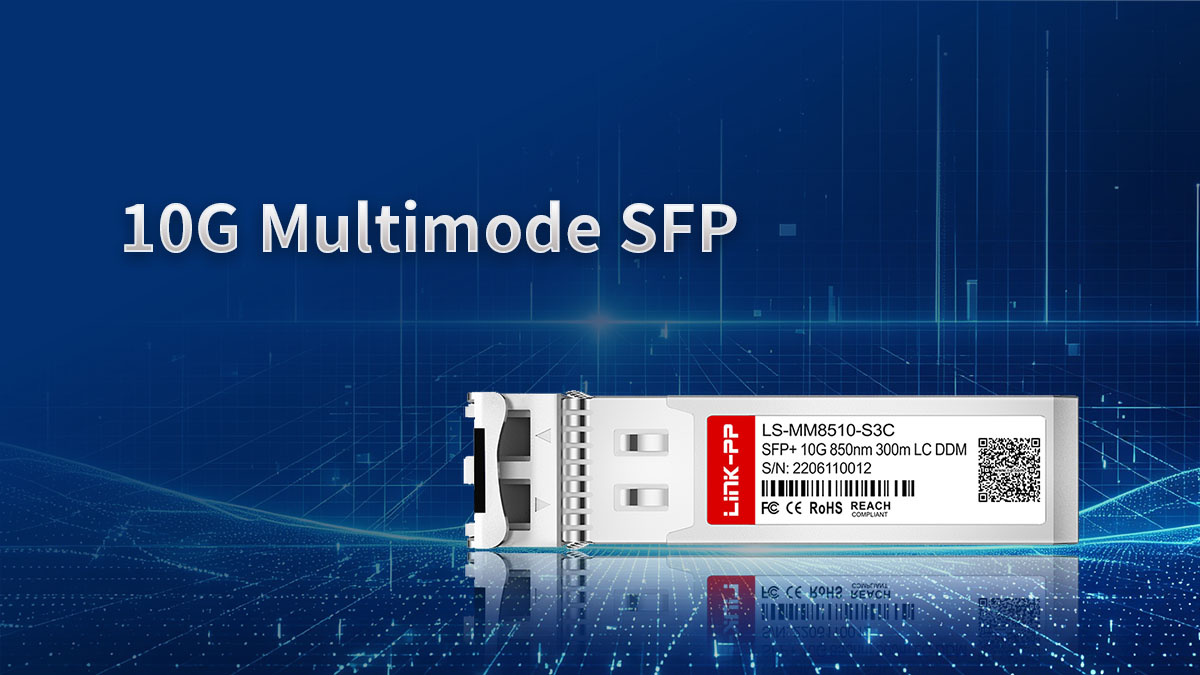
What Is a 10G Multimode SFP?
A 10G Multimode SFP is an optical transceiver that enables 10Gbps data transmission over multimode fiber using short-wavelength laser technology. It is primarily used in environments where devices are located within relatively close proximity, such as within racks or between adjacent networking equipment.
Technically, it converts electrical signals into optical signals and transmits them using VCSEL-based lasers at 850nm wavelength. This makes it suitable for high-speed internal networking where signal integrity can be maintained without long-distance amplification.
Key functional characteristics include:
- Supports 10Gbps Ethernet transmission over multimode fiber
- Operates using 850nm VCSEL laser technology
- Commonly aligned with 10GBASE-SR standards
- Designed for short-reach intra-data center connectivity
These attributes make it a standard component in high-density switching environments where short-range optical links dominate.
Fiber Types Used with Multimode SFPs
Multimode SFP performance depends heavily on the quality and classification of the fiber infrastructure it operates on. In general, this technology is optimized for multimode fibers that support short-range, high-bandwidth transmission.
In real-world deployments, the fiber type directly determines achievable distance and signal quality, making fiber selection a critical design factor rather than a secondary consideration.
Common multimode fiber categories and their typical performance characteristics include:
| Fiber Type | Core Size | Typical 10G Reach | Performance Characteristics |
|---|---|---|---|
| OM3 | 50µm | Up to 300m | Entry-level high-speed multimode support |
| OM4 | 50µm | Up to 400m | Improved bandwidth and lower dispersion |
Higher-grade multimode fibers like OM4 provide better signal stability and extended reach due to reduced modal dispersion and improved bandwidth efficiency.
Typical Transmission Characteristics
10G Multimode SFP modules are optimized for stable short-range optical communication where high throughput and low latency are required within confined network environments.
The core transmission mechanism relies on VCSEL laser technology operating at 850nm, which is specifically engineered for multimode fiber propagation. This design enables efficient signal transmission without the complexity required for long-distance optical compensation.
From a performance perspective, key transmission characteristics include:
- Optimized for short-distance data center and enterprise connectivity
- Efficient power usage due to VCSEL-based optical design
- High compatibility with structured cabling systems
- Stable performance within controlled temperature and physical environments
However, multimode transmission inherently experiences modal dispersion, which increases signal degradation over distance. This physical limitation is the primary reason why 10G Multimode SFP modules are not suitable for long-distance backbone or inter-building connections.
💎 Understanding Single Mode 10G SFP Technology
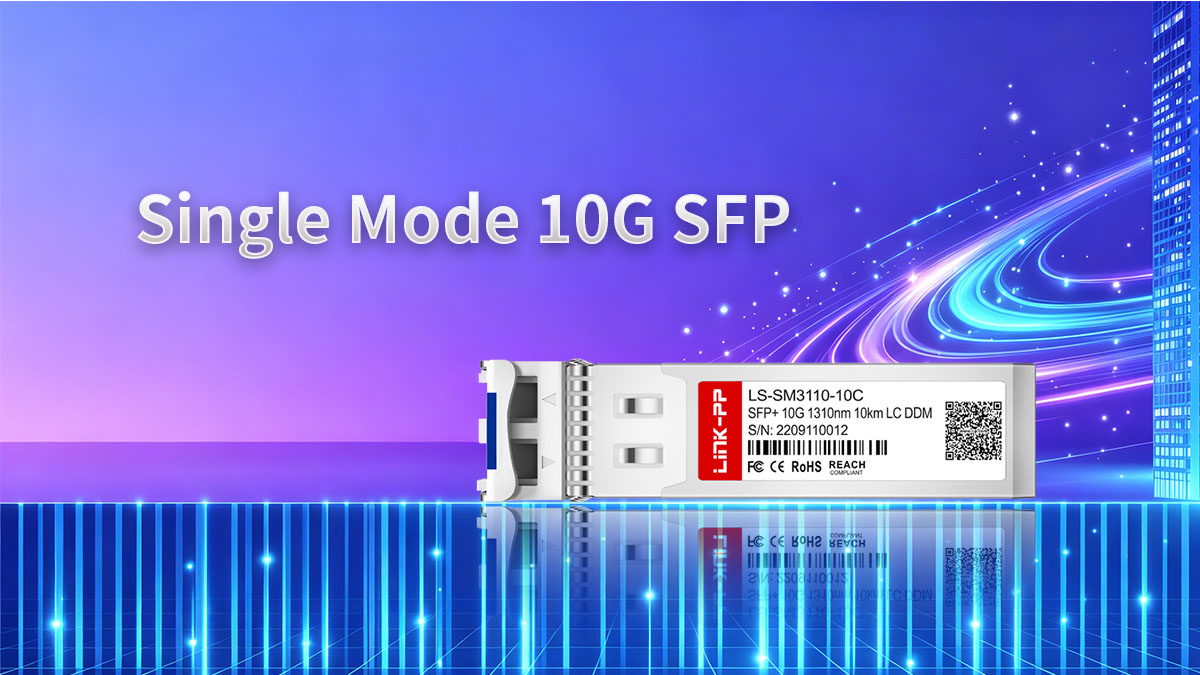
Single Mode 10G SFP technology is a long-reach optical transmission solution designed for stable 10GbE connectivity over long distances using single mode fiber. It is typically used in campus, metropolitan, and carrier-grade networks where links extend beyond the limitations of multimode systems. This section explains how single mode optics work, the fiber characteristics involved, and why they are preferred for long-distance networking.
What Is a Single Mode 10G SFP?
A Single Mode 10G SFP is an optical transceiver that supports 10Gbps Ethernet transmission over single mode fiber using narrow-beam laser technology. It is designed for long-distance data transmission with minimal signal loss, making it suitable for inter-building and wide-area network connections.
In operation, it transmits optical signals using tightly focused laser light, typically at 1310nm or 1550nm wavelengths. This allows the signal to travel long distances with reduced dispersion compared to multimode systems.
Key functional characteristics include:
- Supports 10Gbps Ethernet over single mode fiber
- Uses 1310nm or 1550nm laser wavelengths
- Commonly associated with 10GBASE-LR and 10GBASE-ER standards
- Designed for long-distance and backbone network connectivity
These properties make it a core component in scalable network architectures that require stable long-haul performance.
Single Mode Fiber Characteristics
Single mode fiber is optimized for long-distance optical transmission by allowing only one propagation mode of light through a very small core diameter. This design significantly reduces signal distortion and enables much greater transmission distances compared to multimode fiber.
Because of its physical structure, single mode fiber is widely used in telecom, ISP backbone, and enterprise interconnect environments where performance consistency over distance is critical.
Key characteristics include:
- Small core size (typically 9µm) enabling single light path propagation
- Minimal modal dispersion for improved signal integrity
- High suitability for long-distance transmission
- Requires precise alignment and higher-quality optical components
The reduced signal distortion in single mode fiber makes it fundamentally more efficient for maintaining data integrity over extended network spans.
Typical Long-Distance Capabilities
Single Mode 10G SFP modules are designed to support significantly longer transmission distances than multimode solutions, making them suitable for backbone and wide-area deployments where fiber runs extend across buildings, campuses, or metropolitan regions.
These modules achieve long-range performance by using narrow-beam lasers and low-loss single mode fiber optimized for minimal attenuation.
Typical transmission ranges include:
| Standard | Wavelength | Typical Reach | Application Scenario |
|---|---|---|---|
| 10GBASE-LR | 1310nm | Up to 10km | Enterprise and campus networks |
| 10GBASE-ER | 1550nm | Up to 40km | Metropolitan and carrier links |
These distance capabilities allow network architects to design highly scalable infrastructures without introducing signal repeaters or complex amplification systems in many cases.
💎 Core Differences Between 10G Multimode SFP and Single Mode
The core difference between 10G Multimode SFP and Single Mode SFP lies in their transmission design philosophy: multimode is optimized for short-distance, cost-efficient internal networking, while single mode is engineered for long-distance, high-integrity optical transmission. This fundamental distinction directly impacts fiber type, distance capability, wavelength usage, and infrastructure planning decisions.
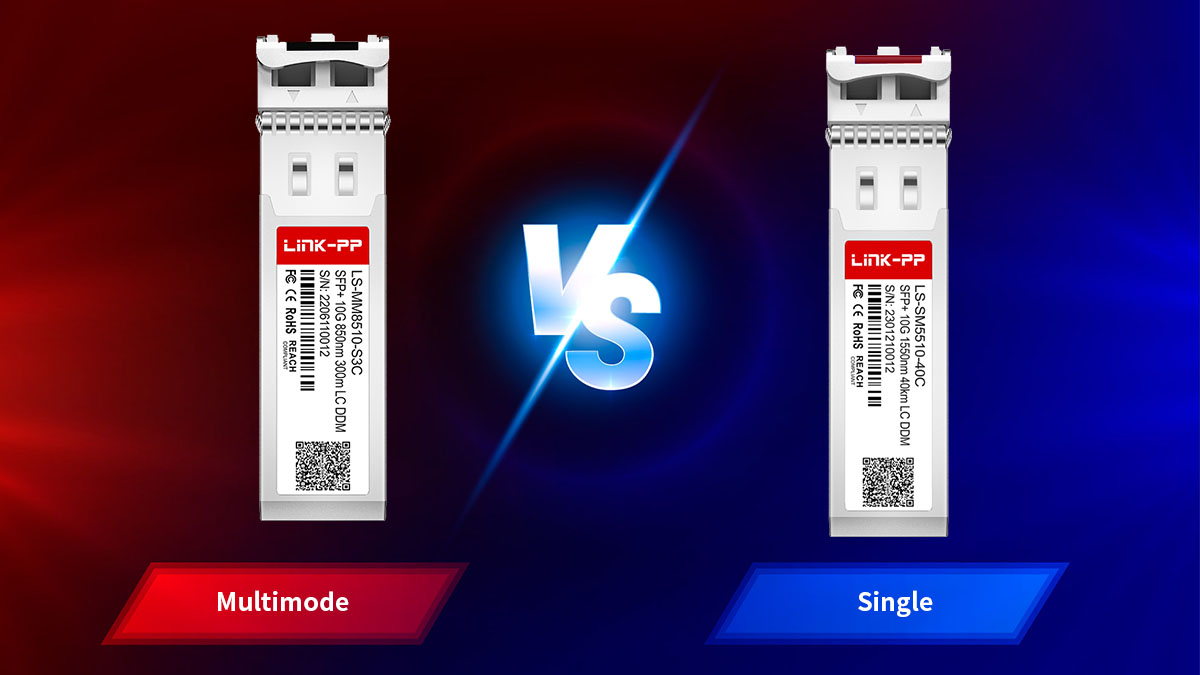
Understanding these differences is essential for selecting the correct optical solution based on real deployment requirements rather than theoretical performance alone.
Transmission Distance Comparison
The most critical difference between multimode and single mode 10G SFPs is transmission distance capability. Multimode is designed for short-range links inside controlled environments, while single mode supports long-haul connectivity across buildings or regions.
Typical distance performance is summarized below:
| Type | Typical Reach Range | Primary Use Case |
|---|---|---|
| Multimode (SR) | Up to 300–400m | Data center, rack-to-rack |
| Single Mode (LR/ER) | 10km to 40km+ | Campus, metro, backbone |
The practical implication is straightforward: multimode is ideal when physical proximity is guaranteed, while single mode is required when network nodes are geographically separated.
Optical Wavelength Differences
Another fundamental difference lies in operating wavelength, which directly affects signal behavior, attenuation, and transmission efficiency.
Multimode and single mode systems use different wavelength ranges optimized for their fiber structure:
| Technology | Typical Wavelength | Optical Behavior |
|---|---|---|
| Multimode SFP | 850nm | Higher dispersion, short reach |
| Single Mode SFP | 1310nm / 1550nm | Lower attenuation, long reach |
Shorter wavelengths in multimode systems are more sensitive to modal dispersion, limiting distance. In contrast, longer wavelengths in single mode systems maintain signal integrity over significantly greater distances.
Fiber Infrastructure Requirements
Fiber infrastructure design is one of the most practical differentiators between the two technologies. Multimode systems rely on larger-core fibers that are easier to align but limited in reach, while single mode systems require precise alignment but enable long-distance transmission.
Key infrastructure differences include:
- Multimode uses 50µm core fiber (OM3/OM4/OM5)
- Single mode uses 9µm core fiber
- Multimode is more tolerant to connector misalignment
- Single mode requires higher precision installation standards
From a deployment perspective, multimode is often used where structured cabling already exists, while single mode is selected for new or scalable backbone designs.
Power Consumption and Thermal Characteristics
Power efficiency and thermal behavior also differ due to underlying optical technologies and transmission design.
Key differences include:
- Multimode SFPs generally consume less power due to VCSEL-based short-range design
- Single mode modules may require higher laser power for long-distance transmission
- Heat output in single mode modules can be slightly higher depending on reach class (LR vs ER)
- Both are optimized for modern high-density switching environments, but thermal planning differs
In high-density data center deployments, multimode may offer marginal efficiency advantages, while single mode prioritizes reach over minimal power savings.
💎 Comparative Performance Analysis
The performance differences between 10G Multimode SFP and Single Mode SFP are primarily driven by optical transmission physics, fiber structure, and intended deployment range. In practical networking environments, neither technology is universally superior; instead, each excels under specific operational conditions such as distance, stability requirements, and scalability expectations.
This section compares both technologies across key performance dimensions to clarify how they behave under real-world workloads and infrastructure constraints.
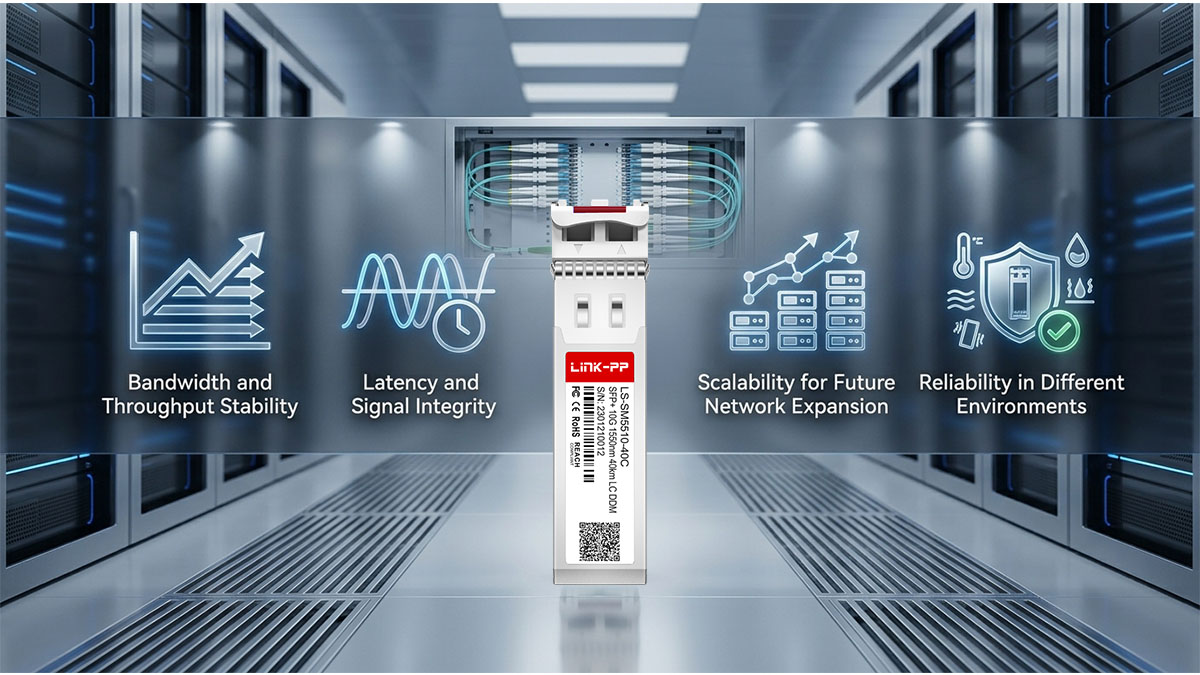
Bandwidth and Throughput Stability
Both 10G Multimode SFP and Single Mode SFP support identical nominal bandwidth at 10Gbps, but their throughput stability differs based on signal integrity and transmission environment.
In controlled short-range environments, multimode provides stable and predictable throughput. Single mode, however, maintains more consistent performance over long distances due to reduced optical dispersion.
Key observations include:
- Both support 10Gbps full-duplex transmission
- Multimode performs best in short, structured links
- Single mode maintains stability across extended link spans
- Signal degradation risk increases more rapidly in multimode over distance
In practice, throughput differences are not about raw speed but about maintaining consistent signal quality across varying distances and conditions.
Latency and Signal Integrity
Latency differences between multimode and single mode SFPs are minimal in ideal conditions, but signal integrity varies significantly as distance increases.
Multimode fiber is more susceptible to modal dispersion, which can introduce signal distortion over longer runs. Single mode fiber minimizes this issue by allowing only a single light propagation path.
| Factor | Multimode SFP | Single Mode SFP |
|---|---|---|
| Latency impact | Negligible (short range) | Negligible (even long range) |
| Signal dispersion | Higher | Very low |
| Distance sensitivity | High | Low |
The key takeaway is that latency is not the main differentiator—signal integrity over distance is the critical factor affecting real-world performance.
Scalability for Future Network Expansion
Scalability is one of the most important considerations when comparing these two technologies, especially in enterprise and data center planning.
Multimode networks are typically constrained by distance limits, while single mode infrastructure provides significantly greater flexibility for future growth.
Key scalability factors include:
- Single mode supports easier expansion across buildings and campuses
- Multimode is limited by fiber reach constraints (typically <400m)
- Single mode infrastructure is more adaptable to higher-speed upgrades (25G, 100G+)
- Multimode upgrades may require additional physical topology changes
From a long-term planning perspective, single mode provides a more future-proof foundation for expanding network architectures.
Reliability in Different Environments
Reliability varies depending on environmental conditions, installation quality, and distance requirements.
Multimode systems perform reliably in controlled environments such as data centers, where temperature, cabling, and distance are tightly managed. Single mode systems are designed for broader environmental variability, including outdoor ducts and inter-building links.
Key differences include:
- Multimode is optimized for stable indoor environments
- Single mode is better suited for extended and variable environments
- Connector cleanliness and alignment are more critical in single mode systems
- Environmental interference has a greater impact on multimode over distance
Overall, multimode reliability is high within its intended scope, while single mode reliability scales better across complex and distributed infrastructures.
💎 Common Deployment Scenarios
10G Multimode SFP and Single Mode SFP are deployed in distinctly different network environments because they are optimized for different distance ranges and infrastructure models. In practical network design, the choice is usually determined by physical layout, fiber availability, and long-term expansion requirements rather than performance alone.
This section outlines where each technology is most effectively applied in real-world deployments.

Where 10G Multimode SFP Performs Best
10G Multimode SFP is best suited for short-distance, high-density networking environments where devices are located within the same room or building. Its strength lies in cost-efficient, low-latency connectivity over structured cabling systems.
Typical deployment environments include:
- Data center intra-rack and inter-rack connections
- Top-of-Rack (ToR) switch to server links
- Enterprise access layer aggregation networks
- High-density switching environments within a single facility
In these scenarios, fiber runs are typically under a few hundred meters, which aligns well with multimode fiber limitations. This makes it a practical choice when infrastructure is already based on OM3 or OM4 cabling.
Where Single Mode SFP Is Preferred
Single Mode SFP is the preferred option for long-distance and backbone network connections where signal integrity must be maintained over extended ranges. It is widely used in environments where network nodes are distributed across multiple buildings or geographic locations.
Common deployment scenarios include:
- Campus backbone connections between buildings
- Metropolitan area network (MAN) links
- ISP and telecom backbone infrastructure
- Data center interconnection (DCI) over long distances
These environments require stable performance over kilometers rather than meters, making single mode fiber the only practical option in most cases.
Hybrid Network Architectures
In many modern enterprise and data center designs, multimode and single mode technologies are used together to create hybrid network architectures. This approach allows organizations to optimize both cost and performance across different layers of the network.
A typical hybrid design may include:
- Multimode SFPs for intra-data center or rack-level connectivity
- Single mode SFPs for inter-building or backbone links
- Aggregation layers bridging multimode access and single mode core networks
This combination enables network engineers to balance short-range efficiency with long-range scalability.
Key advantages of hybrid architectures include:
- Optimized cost allocation across network layers
- Flexibility in scaling different parts of the infrastructure
- Efficient reuse of existing fiber installations
- Improved separation between access and backbone domains
In practice, hybrid deployments are increasingly common in large-scale enterprise environments where network complexity and geographic distribution require multiple optical strategies working together.
💎 Compatibility and Interoperability Considerations
Compatibility and interoperability play a critical role in the deployment of both 10G Multimode SFP and Single Mode SFP modules, especially in multi-vendor network environments. Even when optical specifications are correct, improper device recognition or mismatched configurations can lead to link failures, unstable performance, or reduced optical budget efficiency.

Switch and Router Compatibility
10G SFP compatibility is primarily determined by how network devices recognize and validate optical transceivers at the hardware and firmware level. Different vendors may implement proprietary coding mechanisms, which can affect whether a module is accepted or rejected by a device.
In real-world deployments, compatibility depends on several key factors:
- Vendor coding and EEPROM identification of SFP modules
- Device firmware restrictions on third-party optics
- Support for multi-vendor interoperability modes
- Hardware validation policies in enterprise switches and routers
Many modern network devices support broader interoperability, but strict vendor-locking policies still exist in certain enterprise-grade platforms.
Digital Optical Monitoring (DOM) Support
Digital Optical Monitoring (DOM) is a key feature that enhances visibility into optical link health and performance. It allows network administrators to monitor real-time parameters of SFP modules, regardless of whether they are multimode or single mode.
DOM typically provides the following metrics:
- Transmit optical power (Tx Power)
- Receive optical power (Rx Power)
- Operating temperature
- Supply voltage
- Laser bias current
| Parameter | Function in Network Diagnostics |
|---|---|
| Tx/Rx Power | Detects signal strength and loss issues |
| Temperature | Identifies overheating risks in dense deployments |
| Voltage | Ensures stable module power conditions |
| Bias Current | Indicates laser performance and degradation trends |
These monitoring capabilities are essential for proactive maintenance, especially in high-density data centers where small optical deviations can lead to link instability.
In both multimode and single mode deployments, DOM helps ensure long-term reliability by enabling early detection of degradation before service disruption occurs.
Common Deployment Issues
Despite proper design, several common issues can affect both multimode and single mode SFP deployments. These problems are usually related to physical layer conditions rather than protocol-level incompatibility.
Typical issues include:
- Fiber type mismatch between transceiver and cabling
- Dirty or contaminated fiber connectors
- Excessive optical loss due to long or poorly routed fiber paths
- Incorrect distance assumptions during network planning
Among these, connector contamination is one of the most frequent causes of link degradation, especially in high-density patch panel environments.
Key troubleshooting considerations include:
- Regular inspection and cleaning of fiber connectors
- Verification of fiber type (OM3/OM4 vs OS2 single mode)
- Checking optical power levels against module specifications
- Ensuring correct transceiver pairing for link standards
In practice, most interoperability issues can be resolved through proper physical layer validation and adherence to optical budget requirements rather than changes to higher-layer configurations.
💎 Choosing Between 10G Multimode SFP and Single Mode
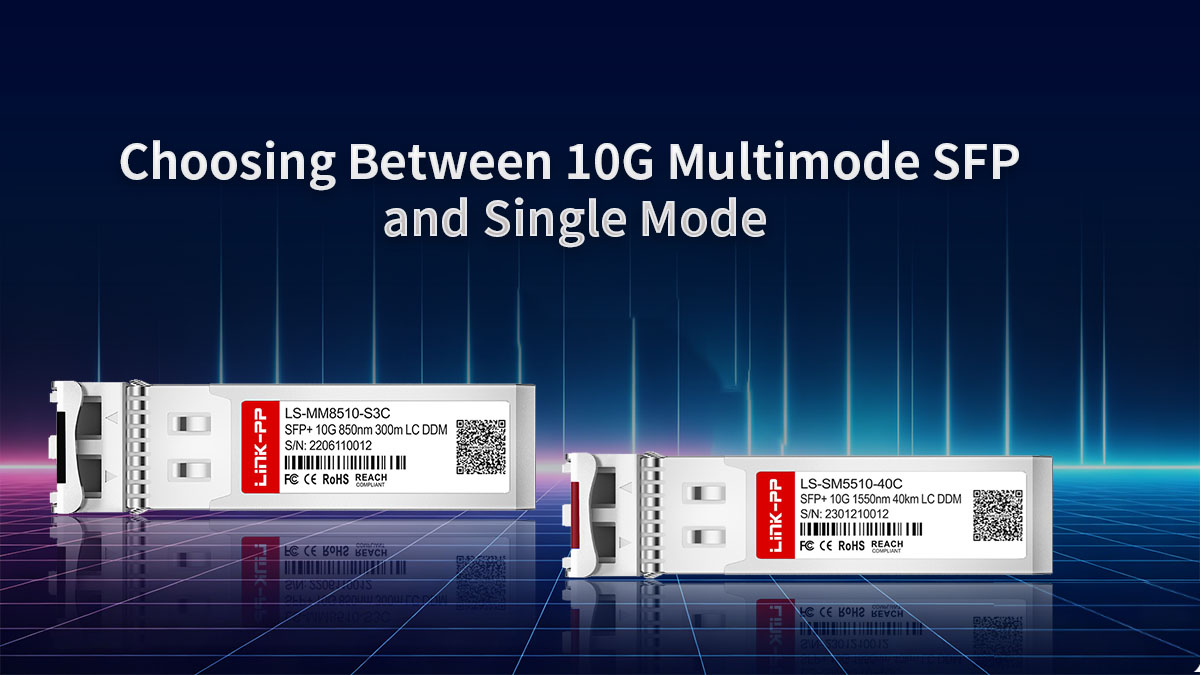
Selecting between 10G Multimode SFP and Single Mode SFP depends primarily on physical distance requirements, existing fiber infrastructure, and long-term network scalability needs. Neither option is universally better; instead, each is optimized for a specific deployment context. The correct choice is determined by aligning optical characteristics with real network topology constraints.
Key Decision Factors
The most important factors in selecting between multimode and single mode SFPs are related to distance, infrastructure readiness, and future expansion potential. These variables directly influence performance efficiency and total deployment cost.
The primary decision drivers include:
- Required transmission distance between endpoints
- Availability of existing multimode or single mode fiber infrastructure
- Expected bandwidth growth and scalability requirements
- Physical layout of network environments (single site vs multi-site)
To simplify selection logic, network engineers typically map requirements against optical capabilities before choosing a solution.
| Factor | Multimode SFP (10GBASE-SR) | Single Mode SFP (10GBASE-LR/ER) |
|---|---|---|
| Typical Distance | Up to 300–400m | 10km–40km+ |
| Fiber Type | OM3/OM4 multimode | OS2 single mode |
| Infrastructure Cost | Lower for short-range setup | Higher initial cabling precision |
| Scalability | Limited by distance | High scalability across sites |
From a practical standpoint, multimode is favored when infrastructure already exists within a confined space, while single mode is preferred when long-term expansion or multi-site connectivity is required.
Questions Network Engineers Should Evaluate
Before selecting an optical module type, network engineers typically evaluate a set of fundamental questions that define the appropriate transmission strategy. These questions help ensure the optical layer aligns with both current and future requirements.
Key evaluation questions include:
- What is the maximum physical distance between connected devices?
- Are all endpoints located within the same building or across multiple sites?
- Is there existing OM3/OM4 multimode cabling or OS2 single mode infrastructure?
- Will the network require expansion to higher speeds or additional locations?
Each of these questions directly influences whether multimode or single mode is the more appropriate choice for a given deployment.
Long-Term Network Planning Strategies
Effective optical selection is not only about immediate connectivity requirements but also about how the network will evolve over time. Choosing between multimode and single mode SFPs should therefore be aligned with long-term infrastructure strategy.
Common planning considerations include:
- Designing for future bandwidth upgrades such as 25G, 40G, or 100G
- Minimizing the need for physical fiber replacement during expansion
- Ensuring backbone architecture supports multi-site connectivity
- Balancing initial deployment cost with long-term scalability efficiency
In many enterprise environments, single mode fiber is increasingly adopted as a backbone standard due to its superior distance capability and upgrade flexibility. Multimode fiber, however, continues to be widely used in high-density data center environments where short-range performance remains sufficient.
💎 Conclusion
10G Multimode SFP and single mode SFP are designed for fundamentally different networking needs, and the right choice depends on matching optical technology with real deployment distance and infrastructure requirements. In summary, 10G Multimode SFP is best suited for short-reach, high-density environments such as data centers, while single mode solutions are optimized for long-distance connectivity across campuses, metropolitan networks, and backbone infrastructures.
To consolidate the key insights discussed in this article:
- 10G Multimode SFP delivers efficient performance for short-distance links (typically up to 300–400m) using OM3/OM4 fiber
- Single mode SFP supports long-reach transmission (10km to 40km+) with superior signal integrity over distance
- Multimode is more cost-efficient for intra-facility networking, while single mode offers stronger scalability for multi-site expansion
- Both technologies support the same 10Gbps data rate but differ in optical design, wavelength, and deployment scope
- Proper selection depends on distance, existing fiber infrastructure, and future network growth requirements
For network designers and IT infrastructure teams, selecting the right optical transceiver is critical to ensuring stable performance and long-term scalability. If you are planning or upgrading a 10GbE network, exploring high-quality and compatible optical solutions can help improve deployment efficiency and operational reliability. LINK-PP Official Store provides a full range of 10G optical transceivers supporting both multimode and single mode applications, helping build stable and scalable network infrastructures across diverse environments.