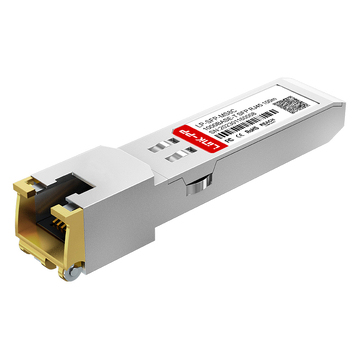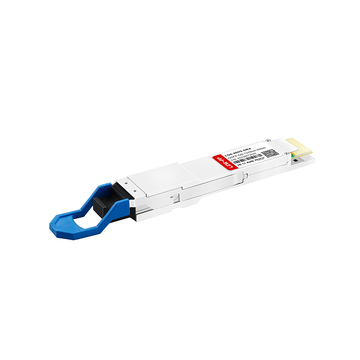
As data centers continue to evolve, the demand for high-speed, low-latency interconnects has grown exponentially. The QSFP-40G-CU1M direct attach copper cable has emerged as a reliable solution for short-reach 40G connectivity, particularly in Huawei-based leaf-spine network architectures. This cable offers an efficient, cost-effective, and energy-saving alternative to optical transceivers for server-to-switch and switch-to-switch connections. In this article, we will explore the key features, deployment scenarios, design considerations, and performance advantages of QSFP-40G-CU1M within modern 40G leaf-spine networks, helping network engineers make informed decisions for scalable and high-performance data center designs.
? Introduction to QSFP-40G-CU1M and 40G Networking
QSFP-40G-CU1M serves as a high-performance, short-reach solution that enables reliable 40Gbps connectivity between servers, switches, and network aggregation points. Its primary value lies in delivering low-latency, energy-efficient links for Huawei leaf-spine network architectures, where predictable performance and dense port utilization are critical. By leveraging passive direct attach copper (DAC) technology, QSFP-40G-CU1M reduces power consumption compared to optical modules while maintaining signal integrity over short distances, making it particularly suitable for intra-rack and top-of-rack connections.
What is QSFP-40G-CU1M?
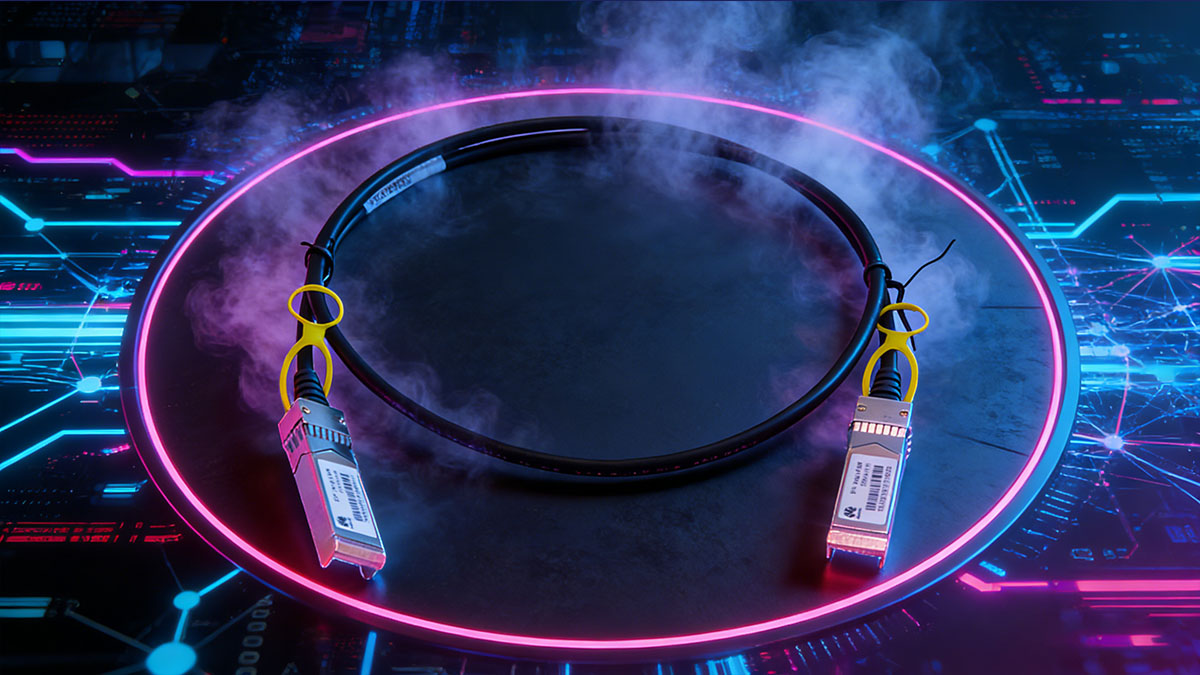
QSFP-40G-CU1M is a Quad Small Form-factor Pluggable Plus (QSFP+) passive copper cable rated for 40Gbps data transmission over a 1-meter distance. Key technical characteristics define its suitability for modern data center deployments:
- The cable supports 40Gbps aggregate throughput across four 10Gbps lanes, fully compatible with 40GBASE-CR4 standards.
- Its passive design eliminates the need for additional power or signal amplification, reducing both operational costs and heat generation in densely populated racks.
- The QSFP and QSFP+ connector interface ensures plug-and-play compatibility with Huawei switches and servers that feature QSFP+ ports, while its form factor supports high-density deployment scenarios.
The combination of high speed, short reach, and low power usage makes QSFP-40G-CU1M ideal for data centers requiring dense 40G interconnects without the complexity or expense of optical solutions.
Role of 40G in Modern Data Centers
The adoption of 40G networking addresses the increasing east-west traffic typical in large-scale cloud, enterprise, and hyperscale data centers. As workloads become more distributed and microservices-based, servers frequently communicate within the same rack or across adjacent racks, creating high-bandwidth, low-latency traffic patterns.
Key advantages of implementing 40G connectivity include:
- Increased bandwidth capacity: Supports multi-tenancy, virtualization, and high-volume storage traffic without bottlenecks.
- Reduced latency: Lower hop counts in leaf-spine architectures improve application performance.
- Scalability: Facilitates smooth migration paths from 10G SFP+ deployments to 40G QSFP+ and future QSFP+/QSFP28 data center infrastructures, while remaining compatible with future 100G QSFP28 upgrades via breakout or uplink strategies.
A simplified comparison of common 40G short-reach interconnects highlights why QSFP-40G-CU1M is often preferred for intra-rack and leaf-spine deployments:
| Feature | QSFP-40G-CU1M DAC | Active Optical Cable (AOC) | QSFP+ Optical Transceiver |
|---|---|---|---|
| Maximum Distance | 1m | 1–100m (depending on model) | 100–150m+ |
| Power Consumption | Very low | Moderate | Higher |
| Latency | Minimal | Low | Low–Moderate |
| Cost | Lower | Higher | Highest |
| Deployment Complexity | Simple | Moderate | Fiber management required |
This comparison illustrates that for short-reach, high-density applications, QSFP-40G-CU1M provides a balanced combination of cost efficiency, low latency, and ease of deployment, aligning well with the operational requirements of Huawei leaf-spine networks.
? Overview of Leaf-Spine Network Architecture
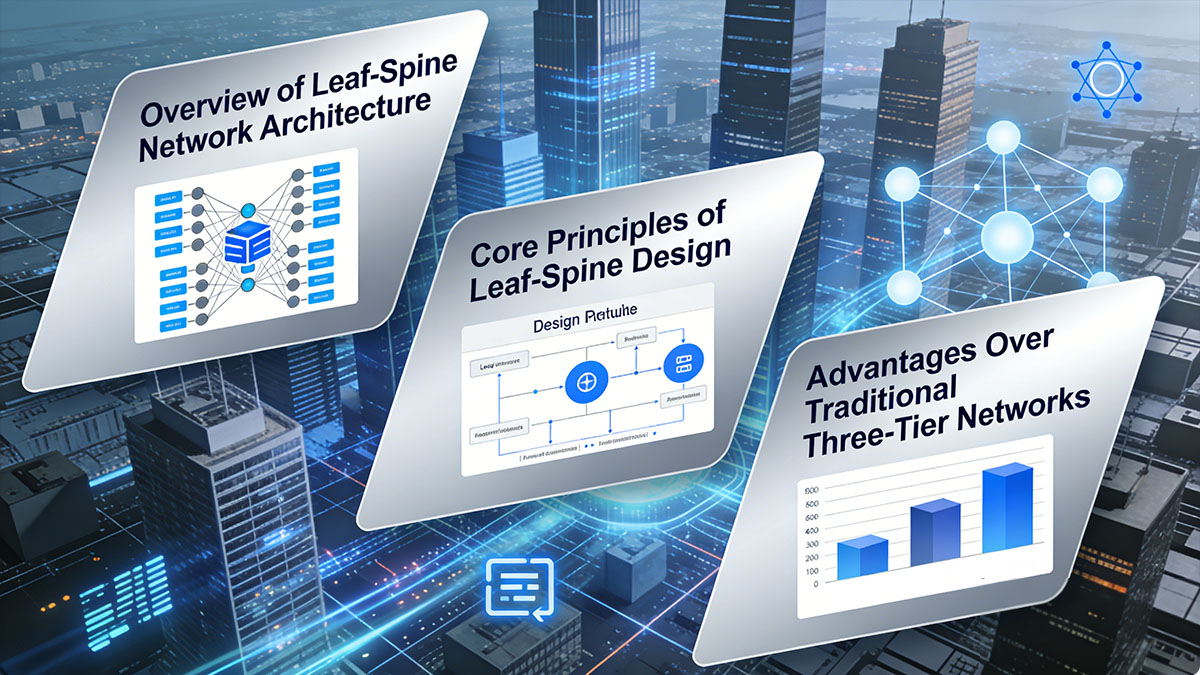
Leaf-spine architecture provides a highly predictable, low-latency, and scalable network topology for modern data centers. Its primary advantage is eliminating oversubscription commonly found in traditional three-tier networks, ensuring that all servers have uniform access to network resources. QSFP-40G-CU1M DAC cables are particularly suited for connecting leaf switches to spine switches, or servers to leaf switches, where short-reach, high-density interconnects are required.
Core Principles of Leaf-Spine Design
The leaf-spine topology is based on a two-tier structure consisting of leaf switches and spine switches. The core principles include:
- Non-blocking fabric: Every leaf switch connects to each spine switch, providing consistent bandwidth across the network.
- Predictable latency: The design guarantees a maximum of two hops between any endpoints, which is crucial for latency-sensitive applications.
- Equal-Cost Multi-Path (ECMP) routing: Traffic is automatically balanced across multiple paths, improving throughput and redundancy.
This architecture contrasts with traditional three-tier networks, where multiple layers of aggregation can create bottlenecks and variable latency.
Advantages Over Traditional Three-Tier Networks
Leaf-spine networks offer several operational and technical benefits:
- Reduced latency and hop count: Applications experience consistent low-latency communication due to direct leaf-to-spine connections.
- Simplified scalability: Adding new servers or leaf switches requires minimal reconfiguration; the spine layer can handle additional leaf switches without redesigning the network.
- Optimized bandwidth utilization: All links are active and evenly loaded, avoiding underutilized aggregation layers common in three-tier designs.
A simplified comparison table highlights key differences between leaf-spine and traditional three-tier architectures:
| Aspect | Leaf-Spine | Three-Tier |
|---|---|---|
| Latency | Predictable, minimal | Variable, higher |
| Scalability | Horizontal, easy | Limited by aggregation layer |
| Bandwidth Utilization | High, non-blocking | Often oversubscribed |
| Complexity | Moderate | Higher due to multiple tiers |
| Fault Tolerance | High (ECMP, multiple paths) | Moderate |
QSFP-40G-CU1M DAC cables are optimal in this architecture because their short-reach, low-latency characteristics perfectly match the dense interconnect requirements between leaf and spine layers. For intra-rack connections or ToR aggregation, these cables allow high port density without generating additional heat or power draw, which can be critical in large-scale deployments.
? Key Features of QSFP-40G-CU1M Huawei
QSFP-40G-CU1M provides a combination of high performance, energy efficiency, and seamless compatibility, making it an ideal choice for short-reach 40G connections in Huawei leaf-spine networks. Its key features enable low-latency, cost-effective, and reliable interconnects in high-density data center environments.
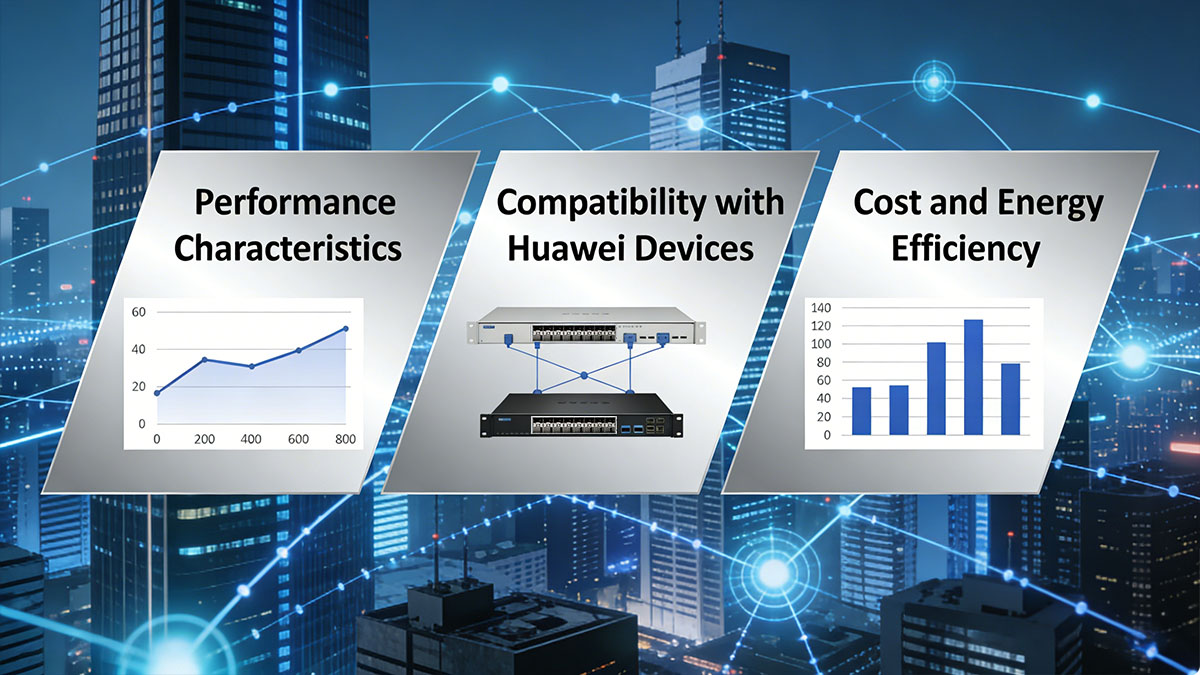
Performance Characteristics
QSFP-40G-CU1M delivers predictable, low-latency connectivity suitable for intra-rack or adjacent-rack deployments. The main performance advantages include:
- High throughput: Supports 40Gbps aggregate bandwidth via four 10Gbps lanes, fully compliant with 40GBASE-CR4 standards.
- Minimal latency: Passive copper design introduces negligible signal delay compared to active optical solutions, critical for latency-sensitive applications like virtualization and storage clusters.
- Signal integrity: Maintains consistent performance across short distances without the need for amplification or additional electronics.
A concise performance comparison with alternative short-reach 40G interconnects helps illustrate its advantages:
| Feature | QSFP-40G-CU1M | AOC 40G | Optical Transceiver 40G |
|---|---|---|---|
| Throughput | 40Gbps | 40Gbps | 40Gbps |
| Latency | <0.3µs | ~0.5µs | 0.5–1µs |
| Power Usage | <0.1W | ~1–2W | ~3–5W |
| Maximum Reach | 1m | 1–100m | 100–150m+ |
This table highlights that QSFP-40G-CU1M excels in ultra-low latency and power efficiency, especially for dense, short-distance deployments.
Compatibility with Huawei Devices
QSFP-40G-CU1M is fully compatible with a wide range of Huawei switches and servers, supporting plug-and-play operation through QSFP+ ports. Key compatibility considerations include:
- Supported switch models: Huawei CloudEngine series, S series, and certain NE series switches with QSFP+ ports.
- Vendor coding and EEPROM: Proper vendor coding ensures recognition by Huawei devices, avoiding link-down issues or reduced performance.
- Cross-vendor interoperability: While designed for Huawei equipment, interoperability with other vendors is possible if QSFP+ standard compliance is met.
Cost and Energy Efficiency
One of the primary reasons data centers prefer QSFP-40G-CU1M is its efficiency in both cost and power:
- Lower acquisition cost: Passive DAC cables are significantly cheaper than optical transceiver modules, reducing CapEx in large-scale deployments.
- Reduced operational power: No active components means minimal energy consumption, decreasing overall data center power load.
- Simplified deployment: Direct plug-and-play operation reduces configuration complexity and installation time.
For data centers focused on short-reach interconnects, QSFP-40G-CU1M provides a balance of cost, energy efficiency, and performance that is difficult to achieve with optical alternatives.
? Deployment Scenarios in Leaf-Spine Networks
QSFP-40G-CU1M excels in short-reach, high-density deployments within Huawei leaf-spine networks. Its low-latency, high-throughput characteristics make it ideal for connecting servers to leaf switches, leaf switches to spine switches, and intra-rack switch-to-switch links. Selecting the right deployment scenario ensures optimal bandwidth utilization and network reliability.
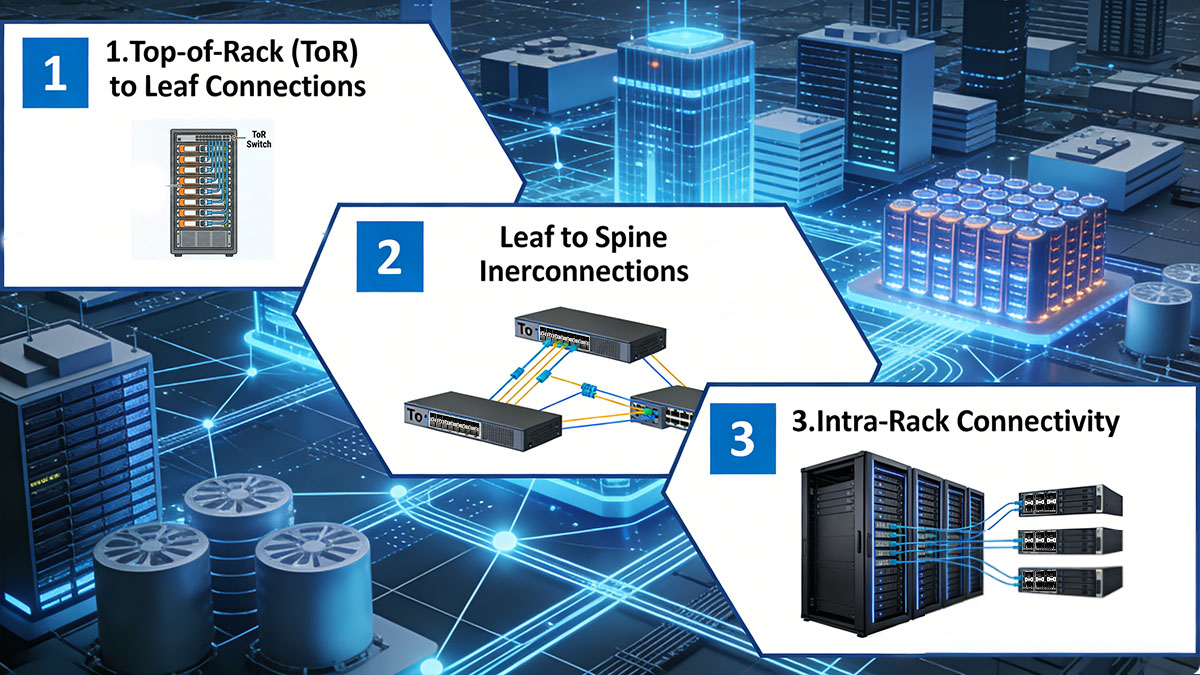
Top-of-Rack (ToR) to Leaf Connections
QSFP-40G-CU1M is widely used for ToR aggregation, connecting server racks to leaf switches. Key points include:
- High-density connectivity: Each leaf switch port can accommodate multiple DAC connections, supporting dense server deployments.
- Short distance suitability: The 1-meter cable length aligns with intra-rack distances, minimizing cable clutter and reducing airflow obstruction.
- Simplified cabling management: Passive DACs reduce power and heat, allowing better thermal management at the rack level.
Leaf to Spine Interconnections
For uplinks between leaf and spine switches, QSFP-40G-CU1M provides consistent, high-bandwidth links:
- Uniform bandwidth: Each leaf-to-spine connection offers 40Gbps, maintaining non-blocking performance across the fabric.
- Redundancy support: Multiple DAC links can be deployed to spine switches, enabling ECMP and fault-tolerant routing.
- Flexibility in switch placement: Short DAC cables allow switches to be positioned optimally for airflow and maintenance access.
Intra-Rack Connectivity
Within a single rack, QSFP-40G-CU1M enables server-to-server or switch-to-switch connections:
- Minimal latency: Direct connections ensure near-zero interconnect delay, crucial for storage clusters and high-frequency compute applications.
- Cable management: 1-meter DAC cables are easy to route without tangling or interfering with other rack components.
- High reliability: Passive design reduces failure points, offering stable, low-maintenance connectivity for critical applications.
A summarized deployment guideline illustrates optimal use cases:
| Deployment Type | Recommended Use | Cable Length | Key Advantage |
|---|---|---|---|
| ToR to Leaf | Server aggregation | 1m | Dense port utilization, low latency |
| Leaf to Spine | Fabric uplinks | 1m | Consistent 40Gbps bandwidth, ECMP support |
| Intra-Rack | Switch-to-switch or server interconnect | 1m | Minimal latency, easy cable management |
QSFP-40G-CU1M’s combination of short reach, low power, and high throughput ensures that it meets the demands of modern leaf-spine architectures, particularly in environments where high-density connections and minimal latency are critical.
? Design Considerations for Using QSFP-40G-CU1M
When deploying QSFP-40G-CU1M in Huawei leaf-spine networks, careful planning ensures optimal performance, reliability, and longevity. Key design considerations include distance limitations, port density planning, and thermal efficiency, all of which influence overall network stability and scalability.
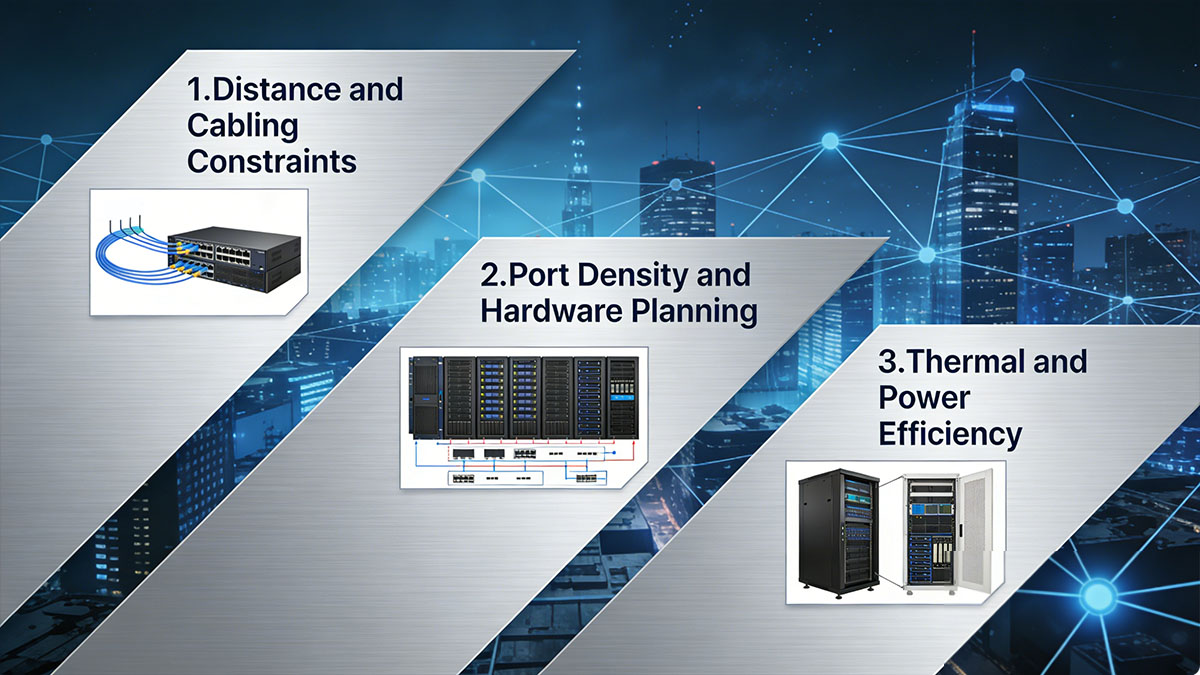
Distance and Cabling Constraints
QSFP-40G-CU1M is designed for short-reach applications, and exceeding its intended distance can lead to signal degradation or link failures. Key points include:
- Maximum effective range: The cable is rated for up to 1 meter; usage beyond this length is not recommended.
- DAC vs alternatives: For distances greater than 1 meter, consider Active Optical Cables (AOC) or optical transceivers to maintain signal integrity.
- Rack layout planning: Position leaf and spine switches to ensure DACs remain within recommended lengths, minimizing bends and stress on connectors.
Port Density and Hardware Planning
Efficient use of switch ports is critical in high-density leaf-spine deployments:
- Maximizing QSFP+ ports: Leaf switches often have dozens of QSFP+ ports; careful mapping ensures full utilization without congestion.
- Breakout configurations: Many switches support 4x10G SFP+ breakout from a 40G QSFP+ port, allowing flexible aggregation strategies for servers.
- Future scalability: Consider expansion when planning port allocation, ensuring new DACs can be accommodated without rerouting existing cables.
Thermal and Power Efficiency
QSFP-40G-CU1M offers thermal and energy advantages, but proper planning enhances these benefits:
- Passive DAC thermal characteristics: Low heat generation reduces cooling requirements compared to active optical solutions.
- Rack airflow management: Proper cable routing ensures unobstructed airflow, preventing localized hotspots.
- Energy savings: Passive design contributes to lower overall data center power consumption, which becomes significant at scale.
A summary of key design considerations is outlined below:
| Consideration | Key Points | Recommendation |
|---|---|---|
| Distance | Maximum 1m | Use within intra-rack or adjacent rack connections |
| Port Density | QSFP+ utilization and breakout | Plan mapping for scalability and ECMP paths |
| Thermal | Minimal heat generation | Maintain proper airflow and cable routing |
| Power Efficiency | Low power draw | Prefer DAC for short-reach over optical modules |
By carefully evaluating these factors during network planning, QSFP-40G-CU1M can deliver consistent performance, reduce operational costs, and simplify maintenance in dense Huawei leaf-spine architectures.
? Comparison with Alternative 40G Interconnect Options
QSFP-40G-CU1M provides a cost-effective, low-latency solution for short-reach 40G connections, but understanding its advantages and limitations compared to alternatives—such as Active Optical Cables (AOC) and optical transceivers—is essential for informed network design. For intra-rack and adjacent-rack links, passive DACs often deliver the best balance of performance, power efficiency, and ease of deployment.
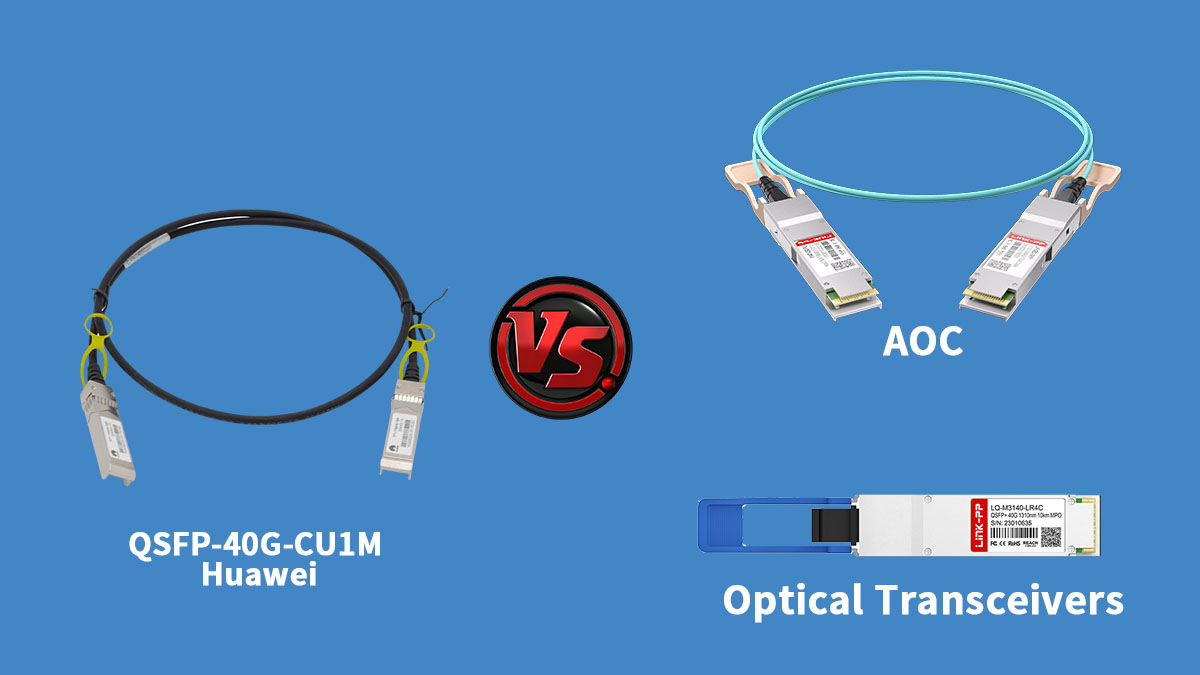
QSFP+ DAC vs Active Optical Cable (AOC)
- Distance and reach: Passive DACs are limited to 1–3 meters, while AOCs can extend up to 100 meters, enabling longer intra-data center connections.
- Power consumption: AOCs consume more power due to active electronics, while passive DACs draw minimal energy.
- Cost and deployment complexity: DACs are simpler to install and significantly less expensive, making them preferable for dense, short-reach applications.
- Flexibility: AOCs provide lighter cables and longer reach but may require additional planning for airflow and heat management in dense racks.
QSFP+ DAC vs Optical Transceivers
- Infrastructure requirements: Optical transceivers require fiber cabling, patch panels, and careful handling, whereas DACs plug directly into QSFP+ ports.
- Operational costs: Optical transceivers incur higher power consumption and maintenance overhead compared to passive DACs.
- Latency and reliability: DACs offer lower latency for short distances and fewer points of failure due to their simple passive design.
A summarized comparison illustrates the differences:
| Feature | QSFP-40G-CU1M DAC | Active Optical Cable (AOC) | QSFP+ Optical Transceiver |
|---|---|---|---|
| Maximum Reach | 1m | 1–100m | 100–150m+ |
| Power Consumption | Very low (<0.1W) | Moderate (1–2W) | Higher (3–5W) |
| Latency | Minimal (<0.3µs) | Low (~0.5µs) | Moderate (0.5–1µs) |
| Deployment Complexity | Plug-and-play | Requires careful routing | Fiber handling and patch panels |
| Cost | Low | Medium | High |
| Maintenance | Minimal | Moderate | Higher due to optical components |
In summary, QSFP-40G-CU1M DACs are the optimal choice for short-range, high-density leaf-spine deployments, offering the lowest latency and simplest installation. AOCs and optical transceivers are better suited for longer connections or where cable weight and flexibility are primary concerns. Selecting the right interconnect requires balancing distance, power, cost, and operational complexity relative to specific network requirements.
? Common Challenges and Best Practices
Deploying QSFP-40G-CU1M in Huawei leaf-spine networks is generally straightforward, but several common challenges can affect performance and reliability if not addressed. Understanding these issues and following best practices ensures optimal network operation, reduces downtime, and simplifies maintenance.
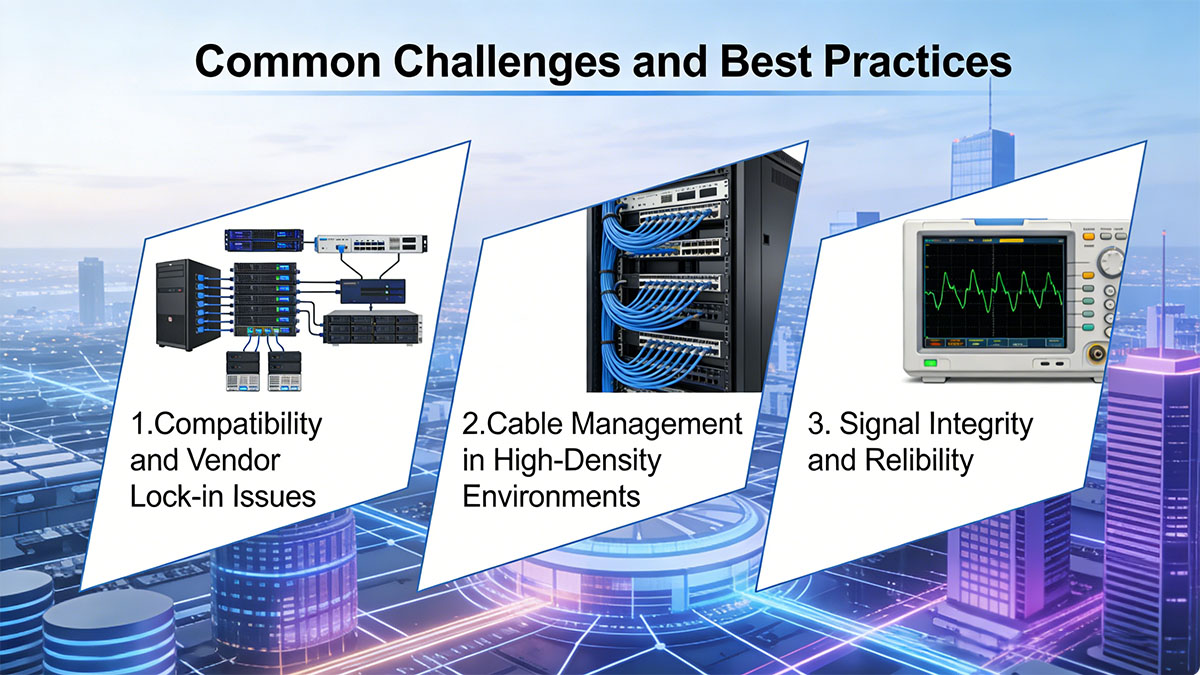
Compatibility and Vendor Considerations
QSFP-40G-CU1M cables are optimized for Huawei switches, but compatibility issues can arise:
- Firmware mismatches: Older firmware versions may fail to recognize DACs, causing link-down errors or reduced throughput.
- Vendor coding issues: Cables with non-standard or incorrect EEPROM coding may be rejected by switches.
- Cross-vendor interoperability: While DACs follow QSFP+ standards, differences in vendor implementations may require testing before deployment.
Best practices:
- Always verify switch firmware supports the intended DAC model.
- Use vendor-certified or standards-compliant DACs.
- Test cross-vendor connections in a lab environment before production deployment.
Cable Management in High-Density Environments
Dense leaf-spine networks require careful cable organization to prevent airflow blockage and maintain accessibility:
- Excessive bending: Sharp bends can damage DACs and degrade signal quality.
- Labeling and routing: Without proper labeling, troubleshooting and future upgrades become cumbersome.
- Airflow obstruction: Poorly routed cables can impede rack cooling, affecting overall network stability.
Best practices:
- Route DACs along designated cable management channels.
- Avoid bending cables beyond recommended radii.
- Label both ends of each cable for quick identification during maintenance.
Signal Integrity and Reliability
Maintaining signal integrity is critical for consistent 40G performance:
- Physical stress: Repeated insertion or rough handling can damage connectors.
- Interference: Although DACs are shielded, electromagnetic interference (EMI) can occur in densely packed racks.
- Temperature exposure: Excessive rack temperatures may slightly affect passive DAC performance, especially in high-density deployments.
Best practices:
- Handle connectors carefully during installation and maintenance.
- Maintain adequate separation from high-EMI sources.
- Monitor rack temperatures and ensure proper airflow to maintain optimal cable performance.
By proactively addressing compatibility, cable management, and signal integrity challenges, QSFP-40G-CU1M deployments can achieve consistent, low-latency performance with minimal operational risk. These best practices ensure that data center networks remain scalable, reliable, and efficient.
? Future Trends in 40G and Migration Paths
QSFP-40G-CU1M will continue to play a key role in data center deployments, particularly for short-reach, high-density connections, but evolving traffic demands and emerging network technologies are shaping its future applications. Understanding these trends helps network engineers plan upgrades and migration strategies while maintaining performance and scalability.
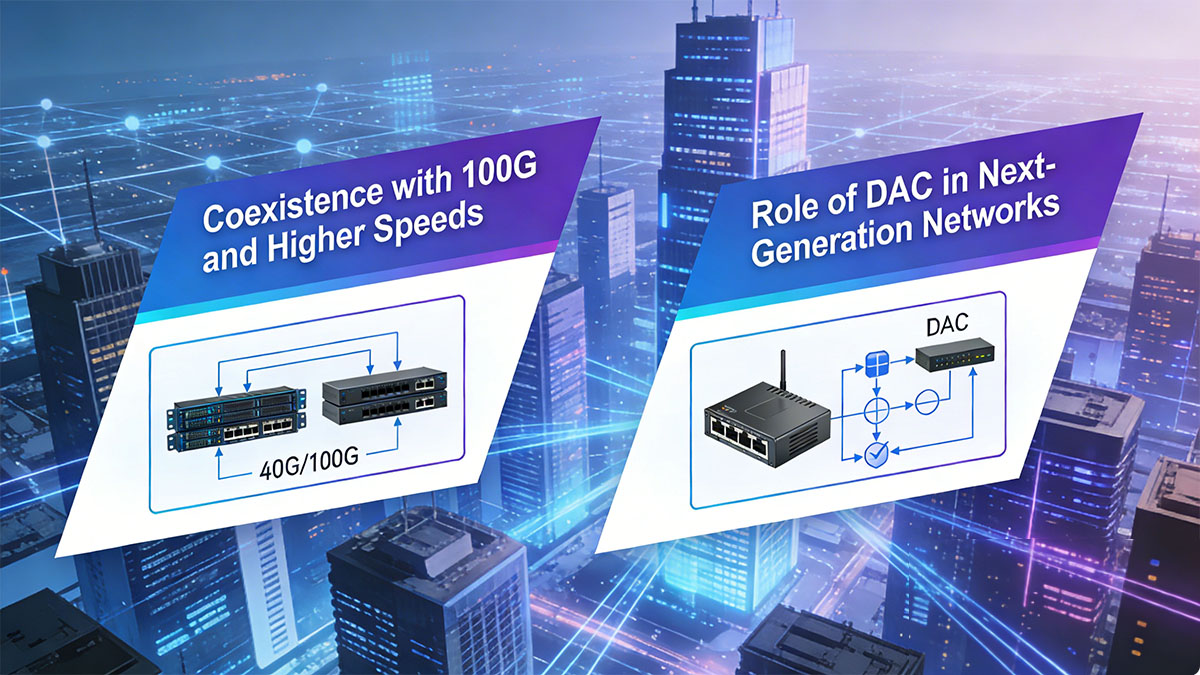
Coexistence with Higher-Speed Networks
While 40G remains widely deployed in leaf-spine architectures, many data centers are gradually integrating 100G or other high-speed transceivers:
- Hybrid deployments: Leaf switches may carry a mix of 40G DACs for short intra-rack connections and 100G optical uplinks for spine interconnects.
- Gradual migration: Organizations can upgrade spine layers to 100G while retaining existing 40G leaf-to-server links and lower-speed SFP access connections., avoiding full-scale replacement.
- Backward compatibility: DACs like QSFP-40G-CU1M remain compatible with breakout scenarios (4x10G), enabling incremental upgrades without disrupting operations.
Evolution of DAC Technology
Direct attach copper cables are also evolving to meet future demands:
- Higher-speed DACs: Next-generation DACs supporting 100G or 400G are emerging, leveraging improved signaling and copper materials.
- Extended reach options: Active DACs provide longer distances without sacrificing low latency.
- Energy efficiency focus: Future DACs continue to prioritize low power consumption, addressing rising operational energy costs in hyperscale data centers.
Role in Next-Generation Data Center Architectures
Even as optical speeds increase, QSFP-40G-CU1M remains relevant in specific scenarios:
- Short-reach connectivity: Intra-rack links still benefit from low-latency, high-density DACs.
- Cost-sensitive deployments: For environments where capital expenditure and operational efficiency are critical, DACs remain a cost-effective choice.
- Simplified management: Passive DACs reduce maintenance overhead compared to optical modules, ensuring operational simplicity in large-scale leaf-spine fabrics.
In summary, while higher-speed networks are gradually becoming mainstream, QSFP-40G-CU1M retains a critical role in short-reach, high-density deployments. Planning hybrid architectures, considering incremental upgrades, and leveraging DAC advantages allow data centers to scale effectively while maintaining performance, energy efficiency, and operational simplicity.
? FAQs About QSFP-40G-CU1M Huawei
Q1: What is the maximum supported distance of QSFP-40G-CU1M?
A1: QSFP-40G-CU1M supports a maximum reach of 1 meter, making it suitable for intra-rack or adjacent-rack connections.
Q2: Can QSFP-40G-CU1M be used with non-Huawei switches?
A2: It can be used with other vendors if the switches support QSFP+ DACs and proper coding, but compatibility should be verified before deployment.
Q3: Does QSFP-40G-CU1M support breakout configurations?
A3: Yes, a 40G QSFP+ port can typically be split into 4x10G lanes, depending on switch capabilities and firmware.
Q4: How does QSFP-40G-CU1M compare to optical transceivers in latency?
A4: QSFP-40G-CU1M offers lower latency due to its passive copper design, making it ideal for latency-sensitive short-reach links.
Q5: Is special maintenance required for QSFP-40G-CU1M cables?
A5: Minimal maintenance is required; ensure proper handling, avoid excessive bending, and keep cables free from airflow obstruction.
Q6: Can QSFP-40G-CU1M be used in high-density racks?
A6: Yes, its short length, low heat output, and plug-and-play design make it suitable for high-density leaf-spine deployments.
? Conclusion
QSFP-40G-CU1M provides an efficient, low-latency, and cost-effective solution for short-reach 40G connectivity in Huawei leaf-spine networks. Its passive design ensures minimal power consumption, simplified deployment, and reliable performance in high-density, intra-rack, and leaf-to-spine interconnect scenarios. By carefully considering compatibility, port density, and thermal management, network engineers can maximize the benefits of QSFP-40G-CU1M while supporting scalable and resilient data center architectures.
For those seeking reliable 40G DAC solutions and detailed product specifications, QSFP-40G-CU1M is available at the LINK-PP Official Store, providing certified compatibility and performance assurance for Huawei deployments.